Custom Pet Plush
Custom pet plush succeeds when durability, safety, and bulk repeatability are built in from the first sample. This guide explains how to lock an Approved Reference Sample, create a clear reinforcement map for bite and tug zones, secure squeakers or crinkle inserts in fixed pockets, and prevent deformation with defined carton density rules and clean carton marks. You’ll also get a copy-and-send RFQ template, key cost drivers, and procurement-focused FAQs—so quoting is faster, returns drop, and reorders scale with stable specifications.
Custom Pet Plush: Durable, Safe, Bulk-Ready
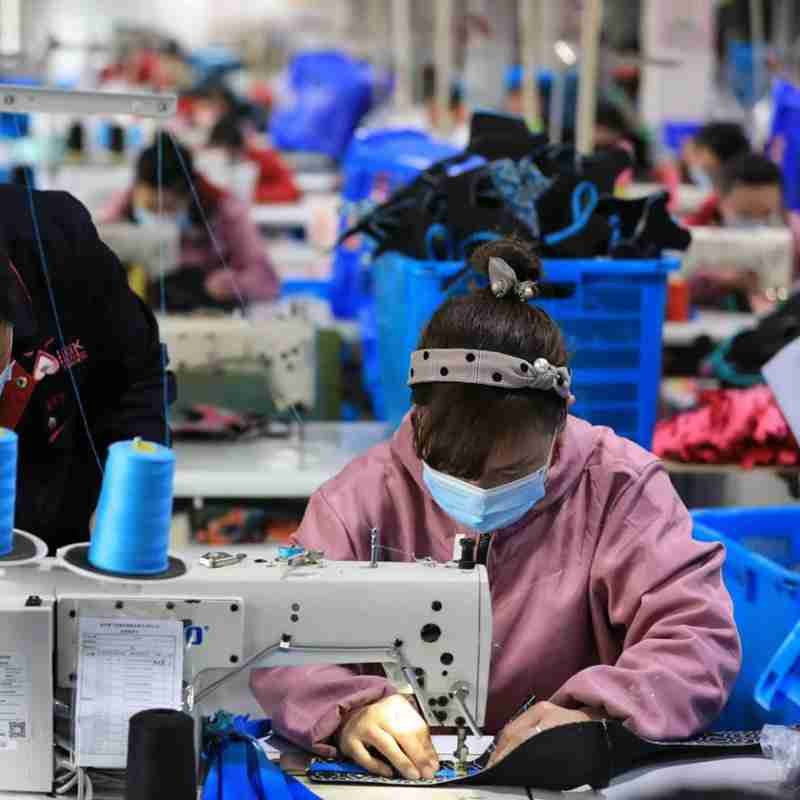
Pet plush programs fail for reasons that rarely show up on a render: seams pop after a week, squeakers shift and tear the lining, stuffing leaks at needle holes, and bulk shipments drift away from the approved sample. For pet brands, the true cost is not unit price—it’s returns, negative reviews, and reorder hesitation. A reliable factory must treat pet plush as a build system, not a soft toy with a logo. At Heyzizi in Guangdong, we support customers with a full workflow—development, pattern, sampling, QC checkpoints, and pack-out rules—so your pet plush can stay consistent from sample to bulk and across reorders. This guide is built as a practical sourcing guide: clear build options, safety-focused choices, and RFQ-ready checklists.
What you can expect from this guide
- Build-first choices: fabrics, lining, seams, reinforcement maps, squeaker or crinkle placements.
- Pet-safety thinking: choke-risk reduction, stitch security, part retention, stuffing control.
- Bulk readiness: spec lock, tolerance planning, QC checkpoints, carton rules, and reorder control.
Why Heyzizi for custom pet plush
- Scale and repeatability: a bulk-capable production team and a workflow designed for consistent output, not one-off samples.
- Cross-functional development: sales-to-engineering translation, so your use case becomes measurable specs (bite zones, pull zones, wash logic).
- QC discipline: inspections that focus on failure modes (seam opening, accessory detachment, stuffing migration, deformation in transit).
- Customization depth: size, pattern, color, embroidery, woven labels, hangtags, inner labels, gift packaging, and pack-out rules.
Pet Plush Types by Segment and Channel
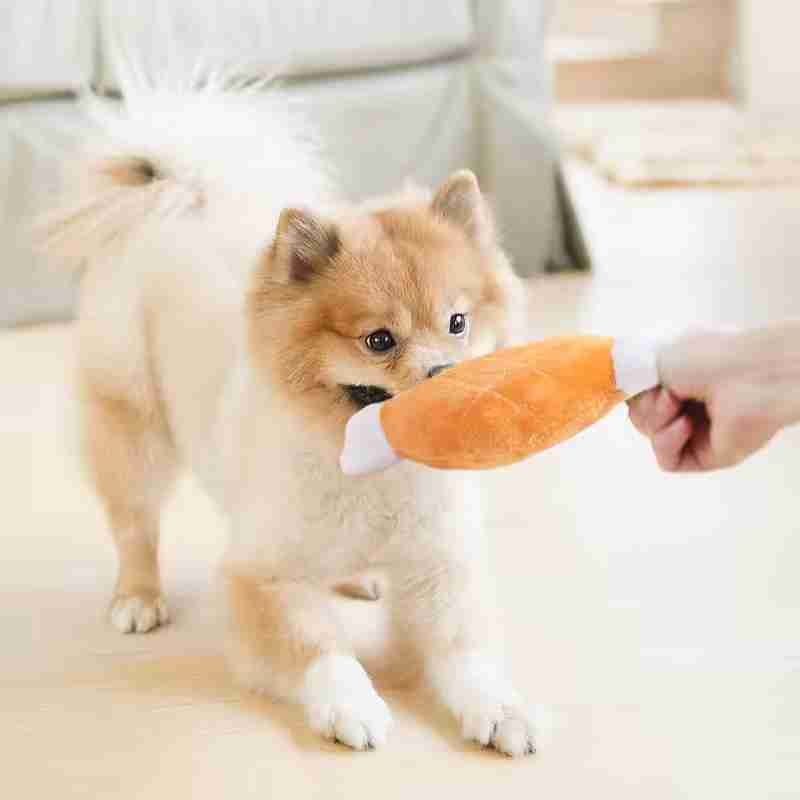
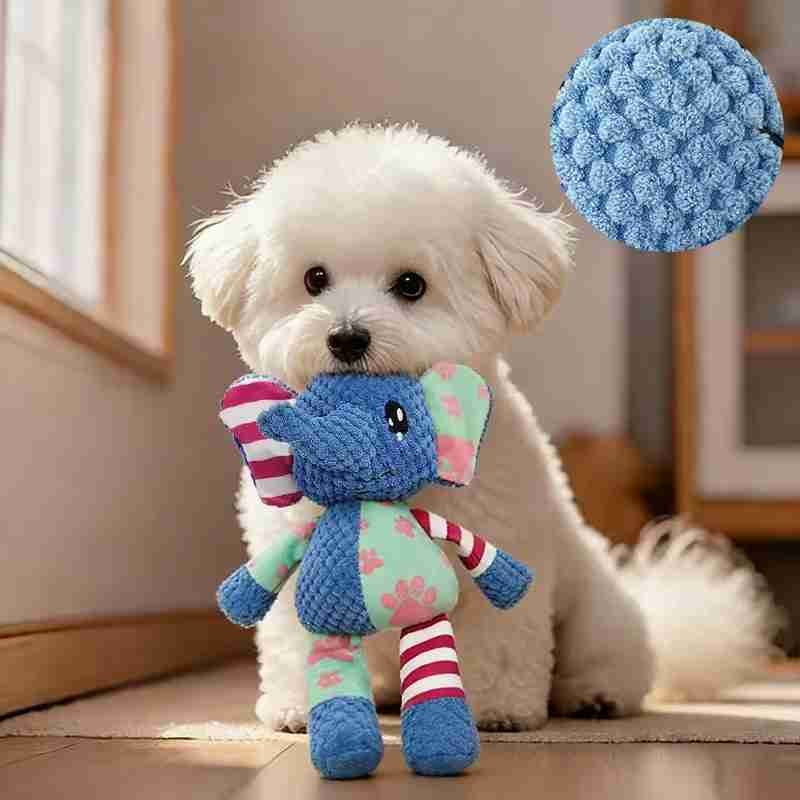
“Pet plush” is not one product category. A squeaky dog plush sold in pet stores faces different failure risks than a cat kicker plush sold online, and both differ from an IP character plush used for seasonal promotions. The fastest way to reduce sampling cycles is to choose the right product architecture upfront: where the stress zones are, what internal components exist, and which finishing options are safe for your target pet sizes.
Popular custom pet plush types:
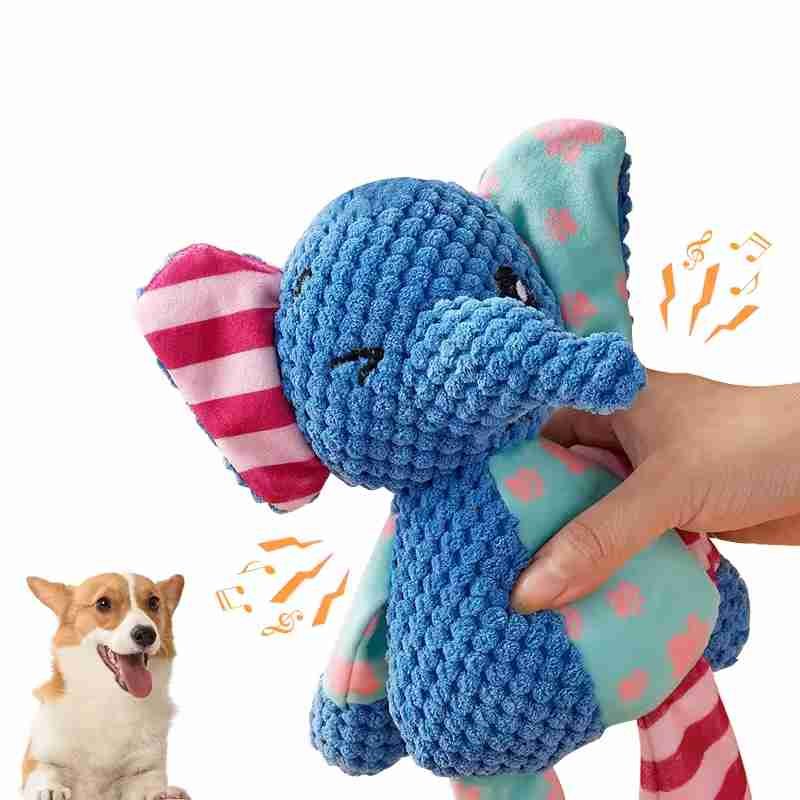
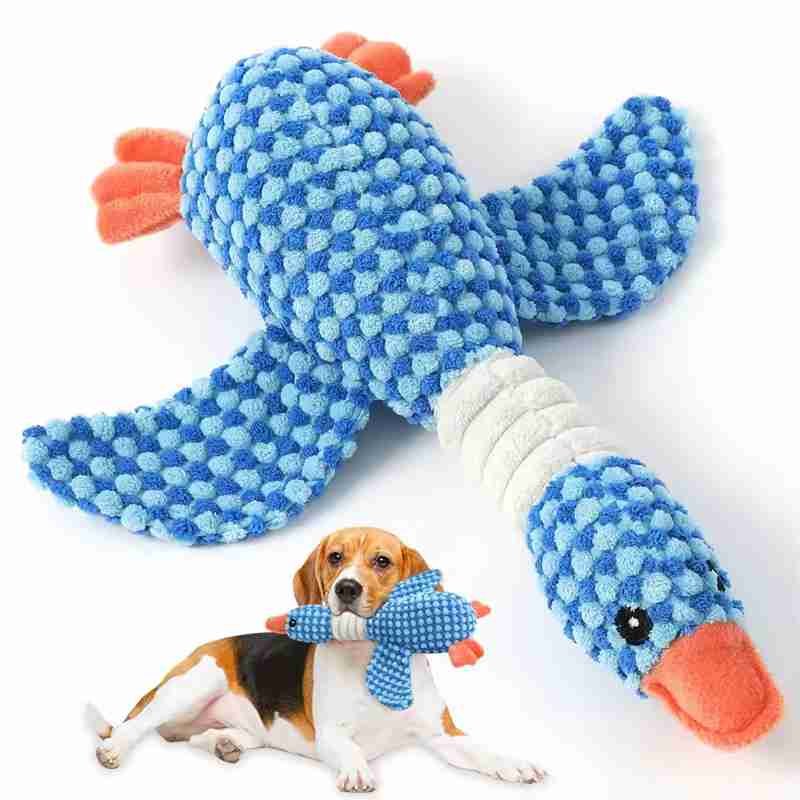
- Squeaky Dog Plush — internal squeaker pocket, reinforced seam routes, optional lining.
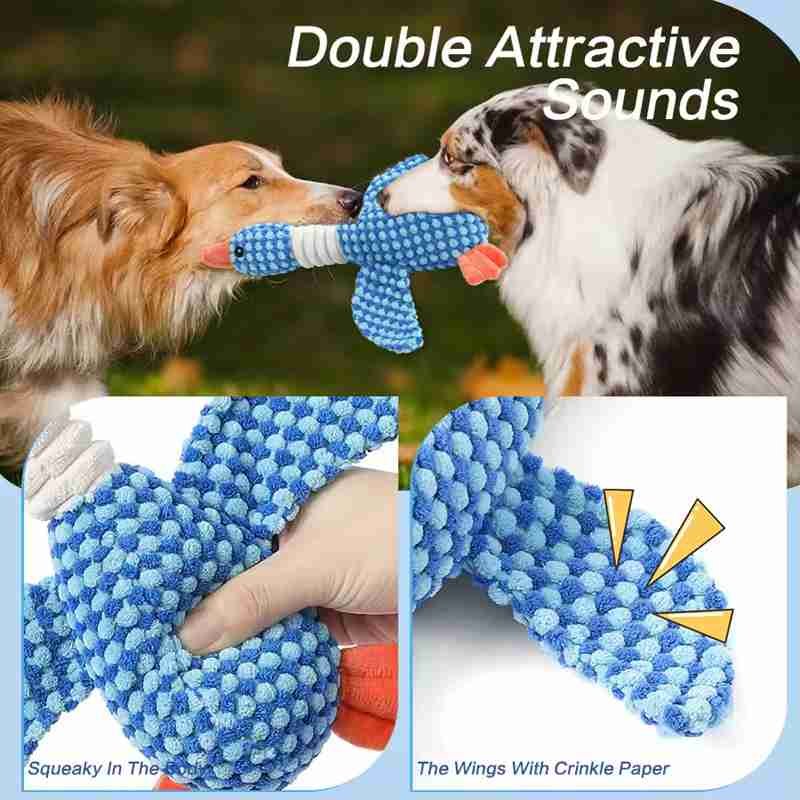
- Crinkle Plush — crinkle film inside secured layers to prevent shifting, noise loss.
- Rope and Plush Hybrid — rope limbs for tug play, plush body for giftable look.
- Tough-Seam Plush (No Hard Parts) — embroidery face and minimized detachable trims.
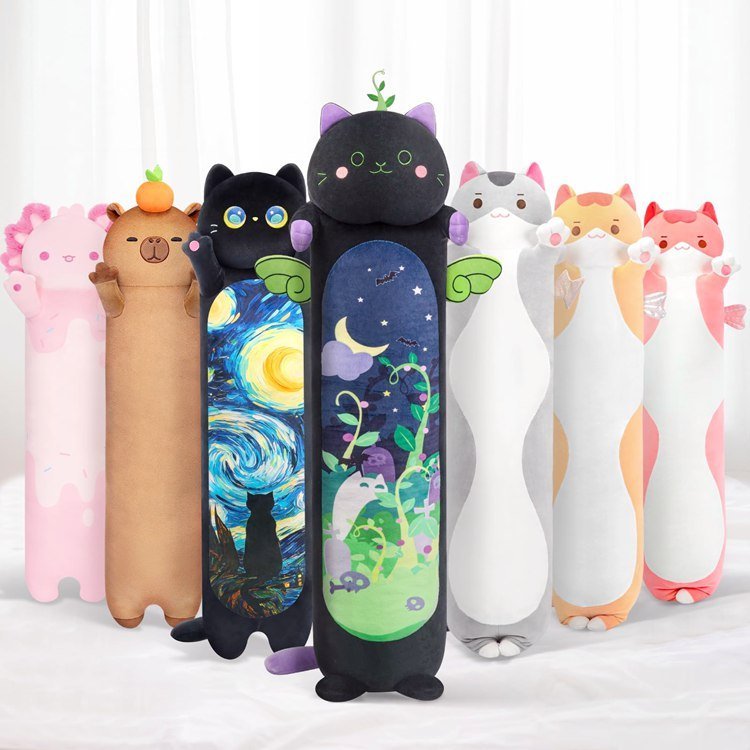
- Cat Kicker Plush — elongated body, stronger end seams, optional catnip pocket.
- Interactive Plush Set — multi-pack mini plush for bundle strategy and AOV lift.
- Seasonal or Promotional Plush — IP-friendly silhouette, fast packaging, barcode-ready.
- Plush Treat Pouch or Hide & Seek Toy — functional plush with internal compartments.
How to choose:
- Pet size: small vs medium vs large (affects seam strength, squeaker size, part retention)
- Play style: chew, tug, chase, kick (defines reinforcement map)
- Channel: Amazon, DTC, pet retail, promotional (defines packaging and label rules)
- Wash logic: spot clean vs machine wash (defines fabric, stitch, and stuffing)
| Type | Best For | Key Risk | Build Control |
|---|---|---|---|
| Squeaky plush | Dogs that love sound | squeaker tearing | internal pocket and double seam |
| Rope hybrid | Tug play | rope pull-out | anchor stitching and bartack zones |
| Cat kicker | Cats | end seam opening | end reinforcement and tighter stitch |
Pet Plush Materials: Fabric, Fill, Stitch, Parts
Pet plush quality isn’t decided by “softness” alone. The same outer fabric can perform well or fail quickly depending on stitch density, seam allowances, inner reinforcement, and how squeakers or crinkle inserts are secured. That’s why we treat materials as a system: outer fabric, reinforcement layers, inner containment, components, and finishing standards. For programs, this approach delivers predictable outcomes—fewer returns, more stable ratings, and repeatable reorders.
Common outer fabrics :
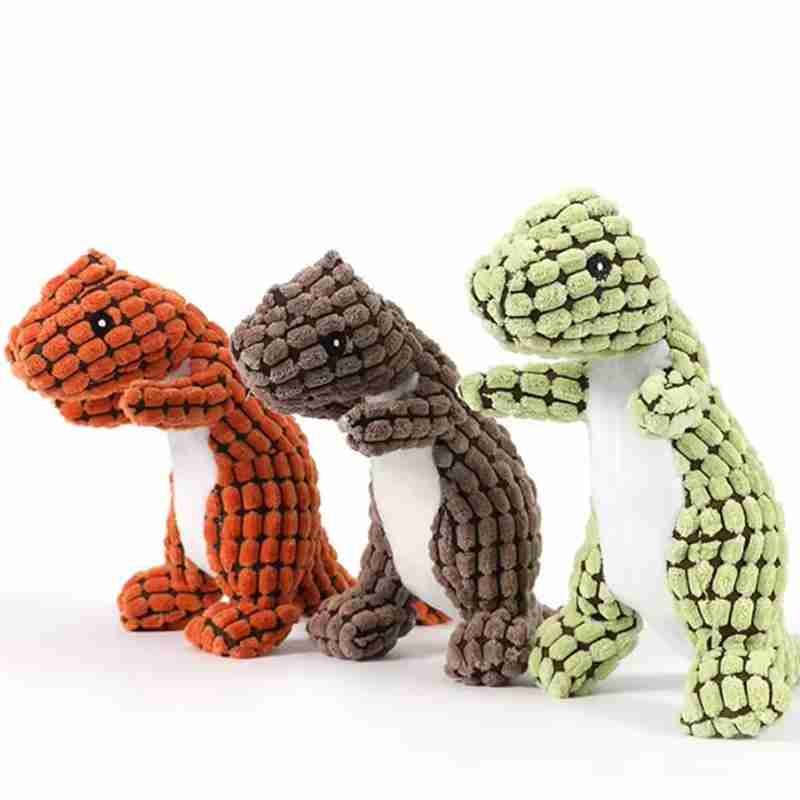
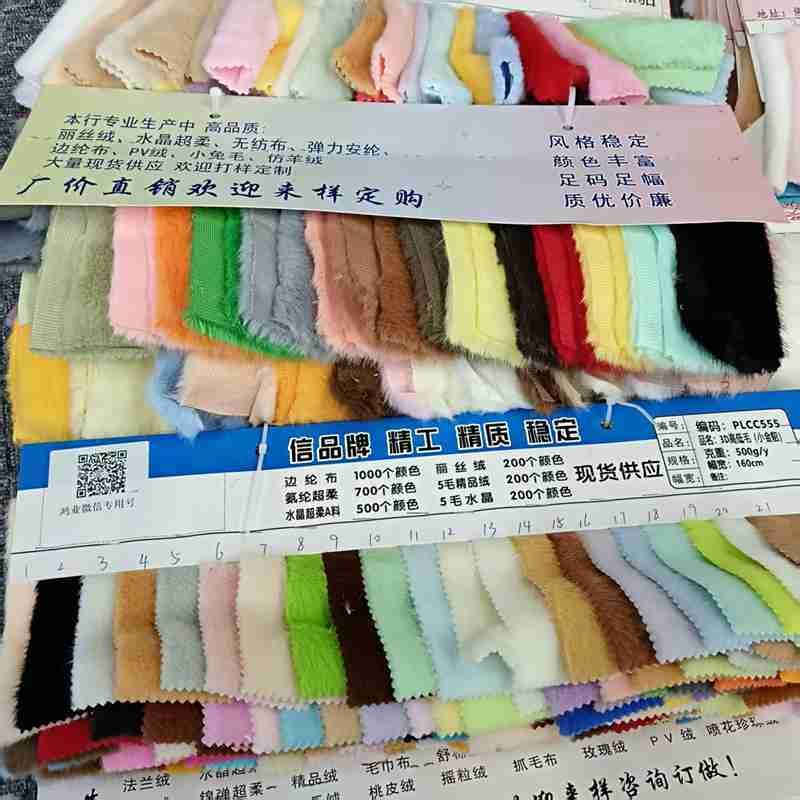
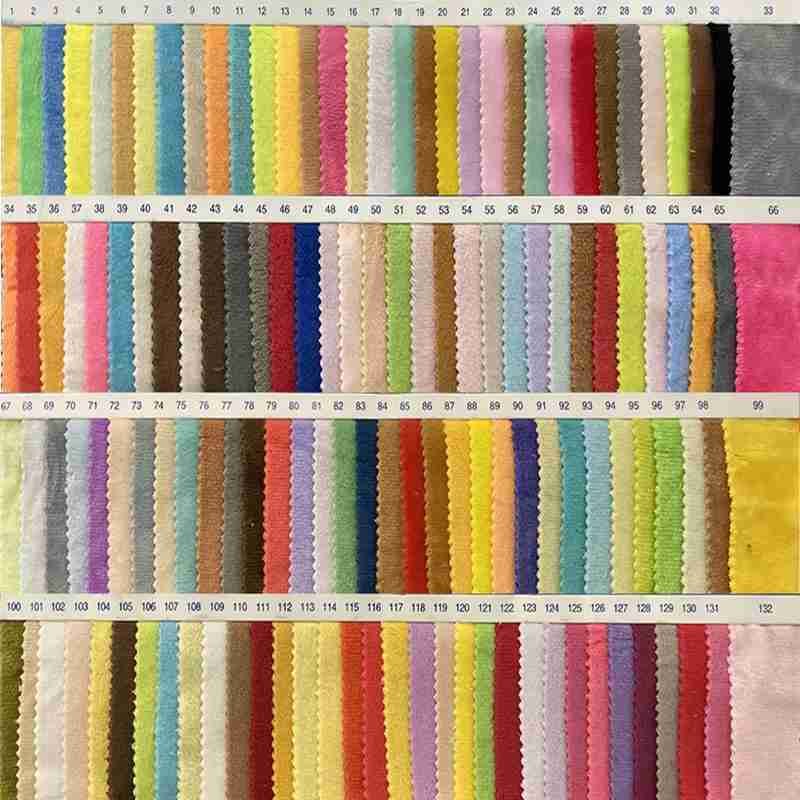
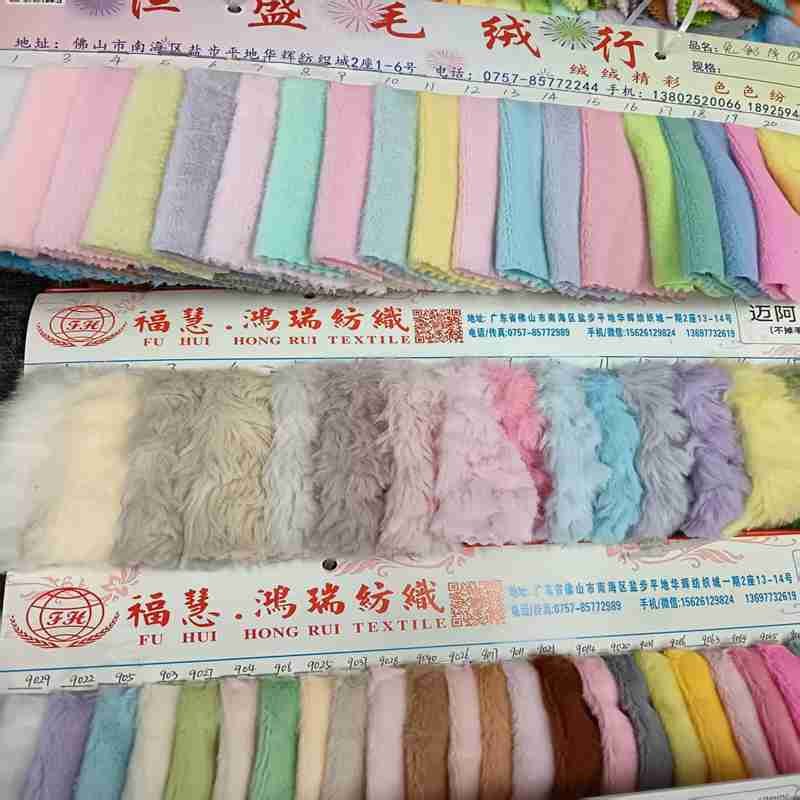
- Short plush or Velboa: clean printing or embroidery edges; good for detailed characters.
- Minky or Super-soft plush: premium hand feel; best for giftable lines; needs seam control.
- Sherpa or Teddy: textured look; hides minor handling marks; good for cozy aesthetics.
- Canvas and Plush mix: tough zones and soft zones; used for “durable plush” positioning.
Inside build controls that matter:
- Inner lining or containment layer: reduces stuffing migration and helps lock components.
- Reinforcement tape in stress zones: mouth area, limbs, tug points, handle areas.
- Stitch density planning: tighter stitches at pull zones; balanced density for soft areas.
- Component pockets: Squeakers and crinkle films should sit inside fixed pockets to reduce tearing.
Pet Plush Safety: Secure Parts, Strong Seams
Pet Safety Build Checklist:
- Avoid hard detachable parts for pet lines when possible; prefer embroidery for eyes/nose.
- Use component retention: squeakers/crinkle layers inside fixed pockets with stitch barriers.
- Add stress-zone reinforcement: mouth edges, limb roots, tug points, and handle areas.
- Plan stitch density by zone: tighter at pull zones, balanced elsewhere to avoid fabric tearing.
- Apply inner containment to reduce stuffing leakage and component exposure.
- Define wash/clean instructions early; it impacts fabric, print method, and seam choices.
Bulk QC checkpoints:
- Seam opening test points: pull at limb roots and mouth area (document pass/fail).
- Part retention checks: squeaker position, crinkle film stability, label stitching security.
- Stuffing control: no leakage at needle holes, no thin-fill zones causing early collapse.
- Appearance drift: compare bulk to one “approved reference sample” for shape and face placement.
| Risk | Common Cause | Build Solution |
|---|---|---|
| Choking hazard | small detachable trims | embroidery + minimal trims |
| Squeaker exposure | no internal pocket | fixed pocket + lining |
| Seam failure | weak seam route | double seam + reinforcement |
| Heavy shedding | unsuitable plush grade | fabric selection + finishing control |
If you want a quick risk review, send your target pet size range and preferred play style; we can suggest a baseline structure and inspection points (info@heyzizi.com).
Pet Plush Sampling: RFQ to Bulk Lock
Sampling is where most pet plush projects either gain momentum or get stuck. Delays rarely come from “production is slow”; they come from missing spec inputs, unclear durability expectations, or too many revisions that don’t change the core build risks. For pet plush, sampling must validate both appearance and failure resistance—seam routes, bite-zone reinforcement, squeaker retention, and stuffing control. At Heyzizi, we treat sampling as a structured conversion process: your idea becomes a manufacturable pattern set, then a controlled prototype, then an approved reference sample that drives bulk production and reorders.
RFQ inputs that speed up sampling:
- Target pet: dog or cat, size range (small, medium, large), play style (chew, tug, chase, kick)
- Product type: squeaker , crinkle , rope hybrid , kicker , set, seasonal
- Dimensions and target weight (or reference competitor SKU)
- Artwork: front or back views, embroidery or print preference, color references
- Durability expectation: “giftable” vs “active play” (defines reinforcement and lining)
- Packaging: unit pack, barcode or label placement, carton marks (if retail or warehouse)
Our sampling steps:
- Feasibility review: identify stress zones, component risks, and suggested baseline build.
- Pattern & structure plan: seam routes, allowances, inner pockets, reinforcement map.
- Prototype sample: confirm silhouette, face placement, material behavior.
- Durability-focused adjustments: stitch density by zone, pocket retention, stuffing containment.
- Approved reference sample: lock spec; define tolerance; confirm packaging approach.
- Pre-production check: bulk materials and workmanship alignment to reference.
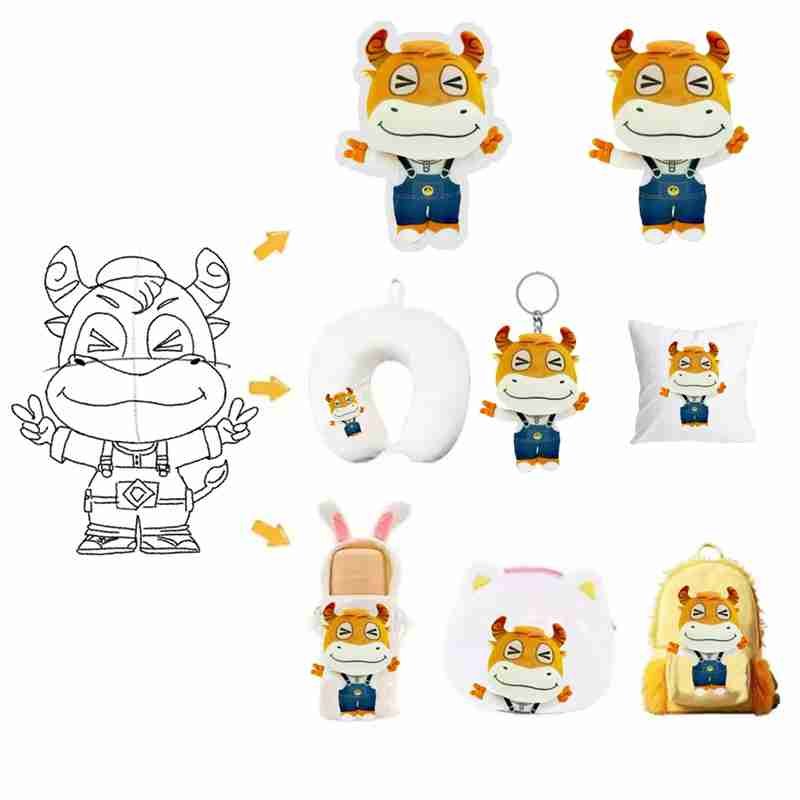
Pet Plush Reinforcement: Bite Zones and Pockets
Most factories mention “strong stitching,” but pet plush tends to fail in predictable zones: mouth edges, limb roots, rope anchors, and seam paths that carry tug force. Without a defined reinforcement map, sampling feedback becomes subjective, and bulk output can drift as different operators reinforce different areas. A reinforcement map turns durability into a repeatable specification: where to double-seam, where to add reinforcement tape, where to increase stitch density, and where to install fixed internal pockets for squeakers or crinkle inserts.
Key stress zones:
Mouth edge or bite zone: high abrasion and repeated pulling
Limb roots: seam opening risk under shake-and-tug play
Rope anchors: pull-out risk without stitch barriers and backing
Back seam or belly seam: long seam paths can split if the stitch route is weak
Component zone: squeaker or crinkle area must not expose the inner parts
Reinforcement actions:
Double seams in bite and tug zones
Reinforcement tape inside seam allowance in stress areas
Zone-based stitch density: tighter at pull points
Fixed internal pockets for squeakers or crinkle inserts with stitch barriers
Inner containment layer for stuffing control and component isolation
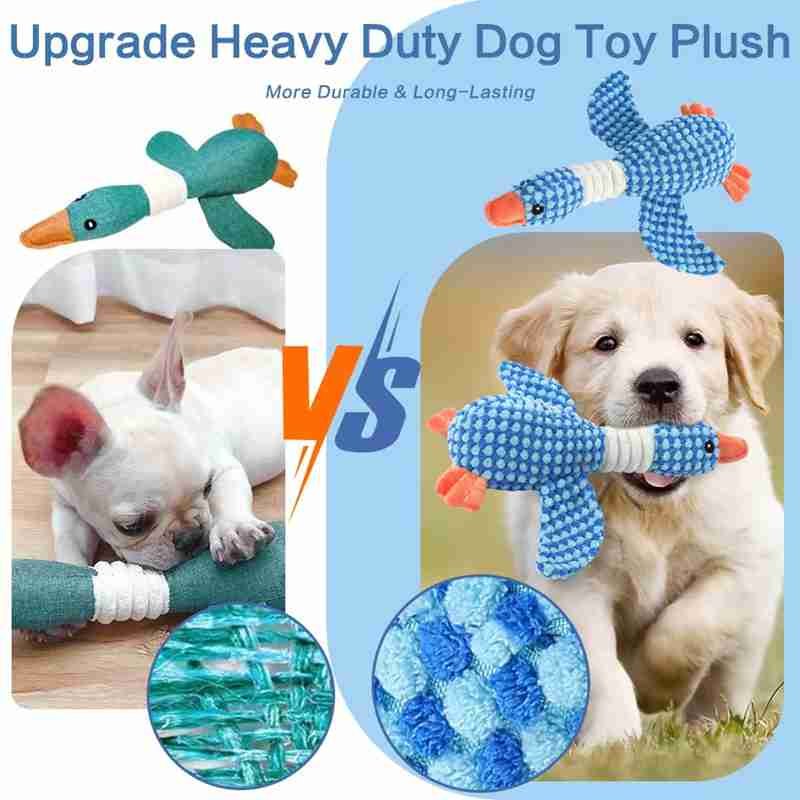
Pet Plush Branding: Embroidery, Labels, Barcode Layout
For pet brands, branding is more than a logo. It’s how fast your product can be listed, stocked, and reordered without confusion. Many “custom plush” pages focus on decoration options but ignore the operational side: where labels are stitched so they don’t irritate pets, how barcodes are positioned for scanning, how hangtags attach without becoming a hazard, and how cartons are marked for warehouse receiving. A factory that understands execution should help you design a sellable packaging system—unit pack, labeling logic, and carton marks—while maintaining safety and durability.
Branding options (pet-friendly)
- Embroidery: clean, durable, often preferred for pet lines (less risk than hard parts).
- Printed logo (fabric print or label print): good for colorful branding, controlled by wash logic.
- Woven label or satin label, or heat transfer label: choose based on skin contact and durability.
- Hangtags: attach method should avoid loose strings; define placement and removal guidance.
Packaging options (channel-ready)
- Individual polybag with warning text and barcode area
- Header card bag for peg display (pet stores)
- Gift box for premium seasonal lines
- Multi-pack bundle wrap for sets
Pet Plush MOQ and Lead Time Drivers
Customers often ask, “What’s your MOQ and lead time?” but the real answer depends on how customized the build is and how stable the material set can be. Pet plush adds complexity because durability features—lining, pockets, reinforcement tapes, component sourcing—change labor steps and material readiness.
Key drivers of MOQ:
Material uniqueness: custom-dyed plush, special prints, or unique trims raise minimums.
Build complexity: linings, pockets, and reinforcement add labor steps.
Component sourcing: squeaker types, crinkle inserts, rope diameter, and custom labels.
Packaging complexity: retail-ready packs, header cards, or gift boxes require extra setup.
Lead time drivers:
Sampling timing depends on artwork readiness, revision count, and clarity on build risks.
Bulk timing depends on material availability, production scheduling, and packaging readiness.
Reorders move faster when the spec is locked, and the material set stays stable.
Pilot order recommendation:
Lock one reference SKU with a reinforcement map.
Confirm internal pocket design for squeakers or crinkle inserts.
Approve packaging and barcode layout.
Run bulk with QC checkpoints tied to the approved reference sample
Pet Plush QC: Inspect by Failure Mode
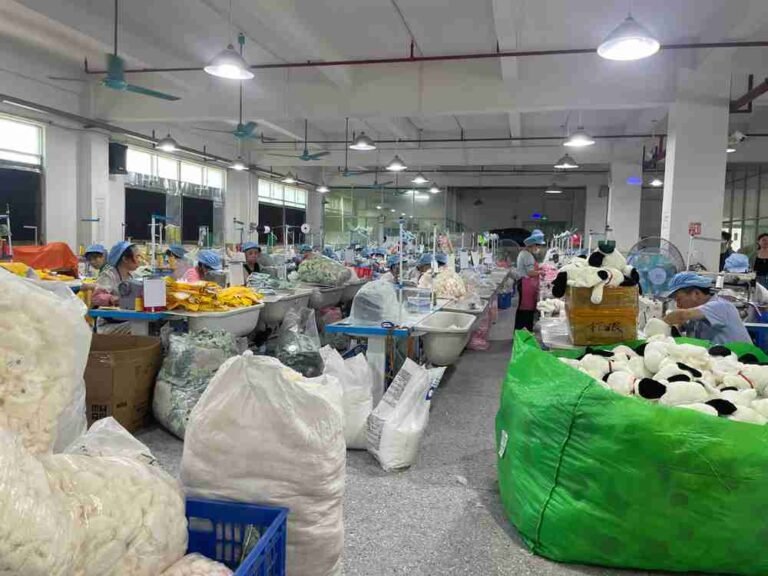
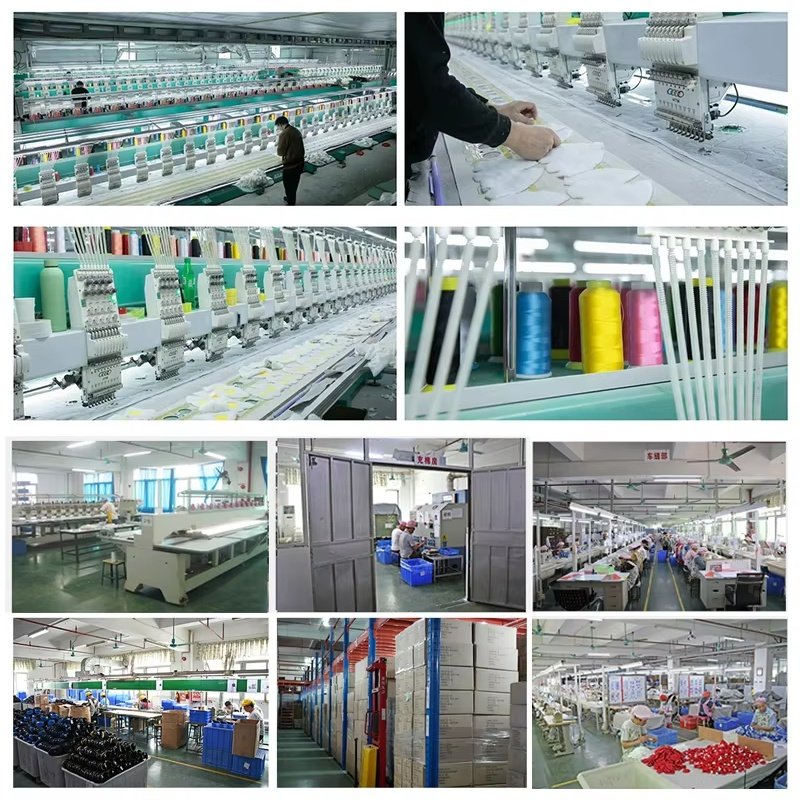
Many suppliers say “we do QC,” but customers still face the same problems: seams open after a few days, squeakers expose through thin fabric, stuffing leaks at needle holes, or bulk units drift from the approved sample. The issue is not whether QC exists—it’s whether QC is designed around pet plush failure modes. Pet toys fail under chew, tug, shake, and repeated impact. That means inspection must target stress points and internal component security, not only color and stitching neatness. At Heyzizi, we build QC around predictable risks: seam opening, part detachment, stuffing migration, component shifting, shape deformation, and appearance drift vs the reference sample.
QC checkpoints by failure mode
Seam opening risk
Inspect seam routes at the mouth edge, limb roots, and tug points
Verify double seams and reinforcement tape placement
Perform pull-checks at defined points and record pass or fail
Component exposure risk (squeaker, crinkle insert)
Confirm the component sits inside a fixed internal pocket
Check pocket stitch-barrier integrity
Verify there are no sharp edges or weak spots around the component zone
Stuffing migration or leakage
Check for needle-hole leakage under light tension
Confirm an inner containment layer when specified
Verify fill distribution with no thin-fill zones that collapse early
Part detachment (labels, trims)
Verify stitch security for labels, hangtag anchors, and decorative trims
For pet lines, prefer embroidered faces and verify embroidery density and backing
Appearance drift versus reference sample
Use one approved reference sample as the only baseline
Check key dimensions, face placement, and silhouette consistency
Packaging and Cartons: Prevent Deformation, Ease Receiving
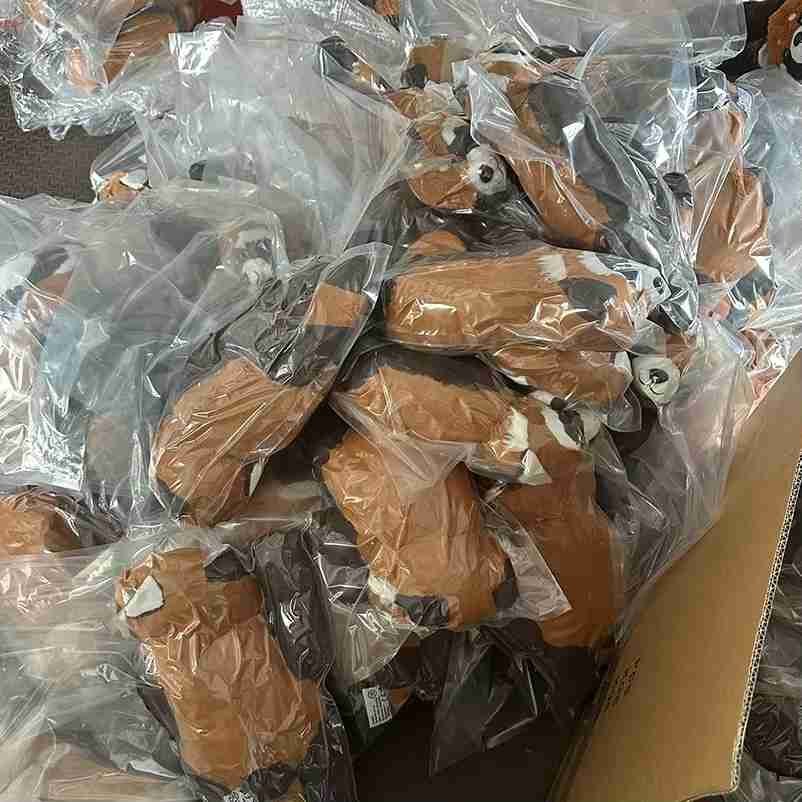
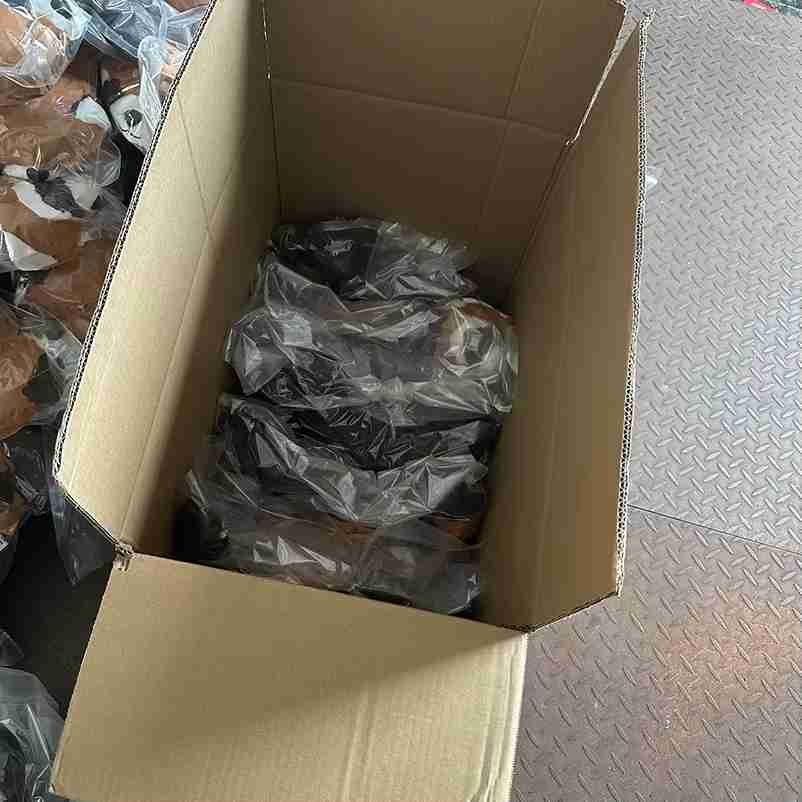
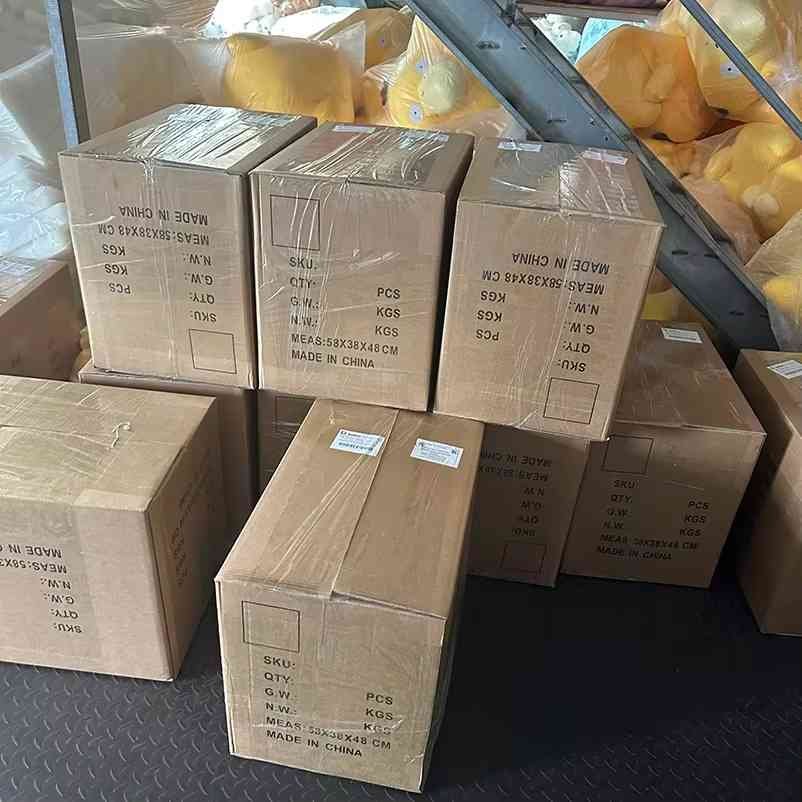
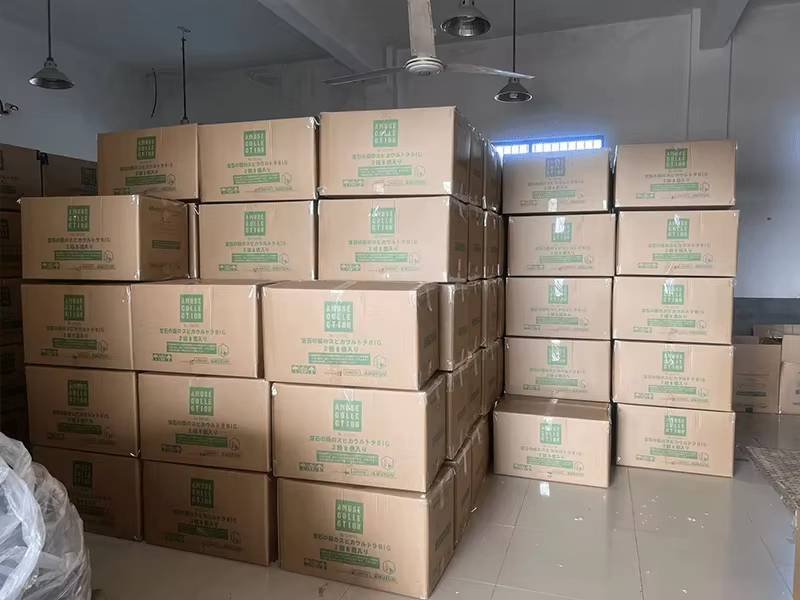
Pet plush looks soft, but it can be damaged in transit: flattened faces, distorted seams, creased fabric, and crushed accessory zones. When bulk shipments arrive deformed, brands lose time repacking, customers leave poor reviews, and warehouses file claims. Packaging is not an afterthought—it is a continuation of manufacturing control. The right carton size, internal packing method, and clear carton marks prevent deformation and reduce receiving confusion.
Deformation prevention rules:
Select carton size to avoid over-compression and keep controlled headspace.
Use shape-protection for face and feature zones, especially embroidered faces.
Standardize unit packing with defined polybag orientation and stacking direction.
For mixed orders, separate SKUs by carton when possible; if cartons are mixed, use clear carton identification labels.
Pack-out options:
Individual polybag: reduces scuffing and supports barcode placement.
Inner dividers or partial supports: protects premium shapes and reduces flattening.
Carton density control: set pieces per carton by size and volume, not “maximum fit.”
Moisture control when needed: desiccants or sealed bags depending on route and season.
Carton marks checklist:
SKU or Style, PO Number, Quantity, Carton Number, Gross and Net Weight, Dimensions, Country of Origin, and required handling marks.
Pet Plush Compliance: Build, Docs, Multi-Market
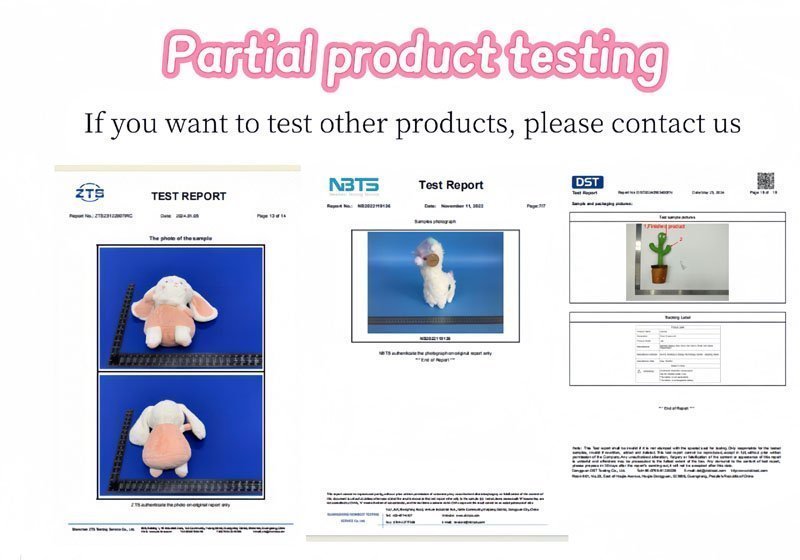
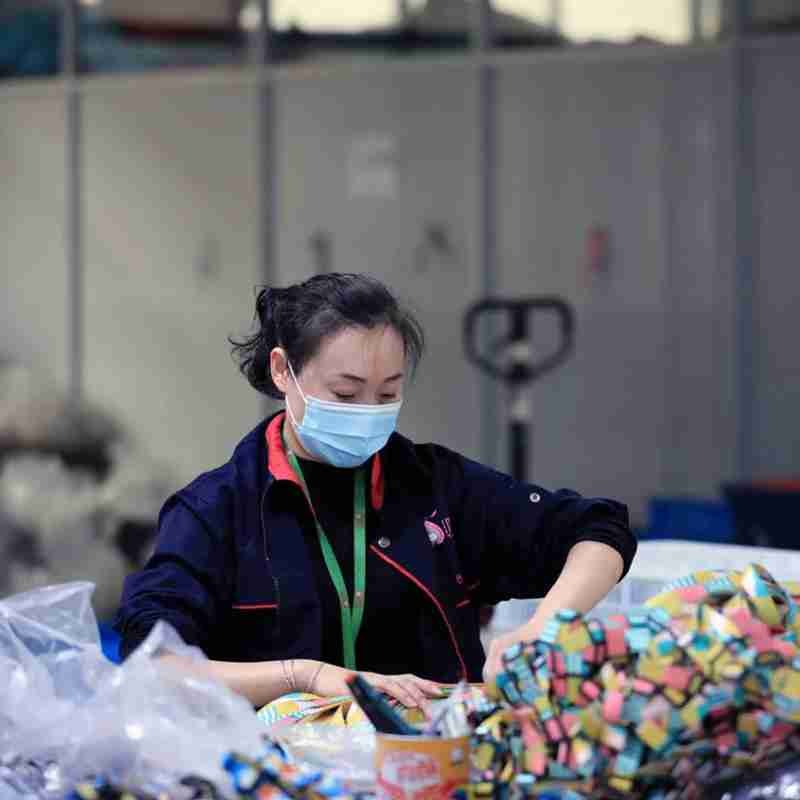
Compliance is not a single certificate—it is a planning process that starts with product design. For pet plush, brands often need to consider material safety, labeling rules, and market-specific requirements. Even when a brand manages testing through its lab partners, the factory must support compliance with the right build choices and documentation: material traceability, component declarations, and stable production that matches the tested sample. The biggest compliance risk is not “failing a test once”—it’s passing a test and then drifting in bulk production.
Factory-side compliance supports:
- Material consistency control: lock the material set (outer fabric, lining, stuffing, trims) used in the tested sample.
- Component declarations: squeaker, crinkle film, ropes, labels—record type and supplier batch when possible.
- Labeling coordination: barcode placement, warning text area, country-of-origin, and other channel requirements.
- Production alignment: ensure bulk follows the same seam routes, stitch density zones, and pocket designs as the tested reference.
compliance planning checklist:
- Define target markets and channels (Amazon, DTC, retail)
- Decide on a “no hard parts” design if your pet segment requires it
- Confirm cleaning or wash instruction approach (affects inks and fabrics)
- Lock reference sample and spec sheet before testing
- Run bulk with QC checkpoints tied to the tested sample
Pet Plush RFQ Template for Fast Quote
If you want faster quotes and fewer back-and-forth messages, your RFQ must answer the questions that drive materials, labor, and risk control. For custom pet plush, “cute design” is not enough; we need to understand pet size range, play style, internal components, and packaging channel.
Copy and Send RFQ Template
1) Product Type
Type: squeaker, crinkle, rope hybrid, cat kicker, set, or other
Target pet: dog or cat; size range: small, medium, or large
Play style: chew, tug, chase, or kick
Target dimensions (L × W × H) and target weight, or a competitor SKU link
2) Design and Branding
Artwork files (AI, PDF, PNG) with front and back views
Logo method: embroidery, print, or woven label
Color reference (Pantone code or physical swatch, plus photos if available)
Label needs: inner label, hangtag, barcode position
3) Build Expectations
Durability level: giftable, standard play, or higher durability
Hard parts policy: no hard parts preferred (yes or no)
Internal components: squeaker type, crinkle insert, rope diameter
Cleaning requirement: spot clean or machine wash
4) Packaging and Shipping
Unit pack: polybag, header card, or gift box
Bundle format: single unit or multipack (quantity per set)
Carton packing: single SKU per carton, or mixed cartons allowed
Carton mark requirements (if any)
5) Order Plan
Target quantity (pilot and bulk)
Target delivery window
Destination country and port (for packing and labeling suggestions)
Send the completed RFQ and artwork to info@heyzizi.com for a build proposal and sampling route.
Pet Plush Cost Drivers: Cut Returns, Then Cost
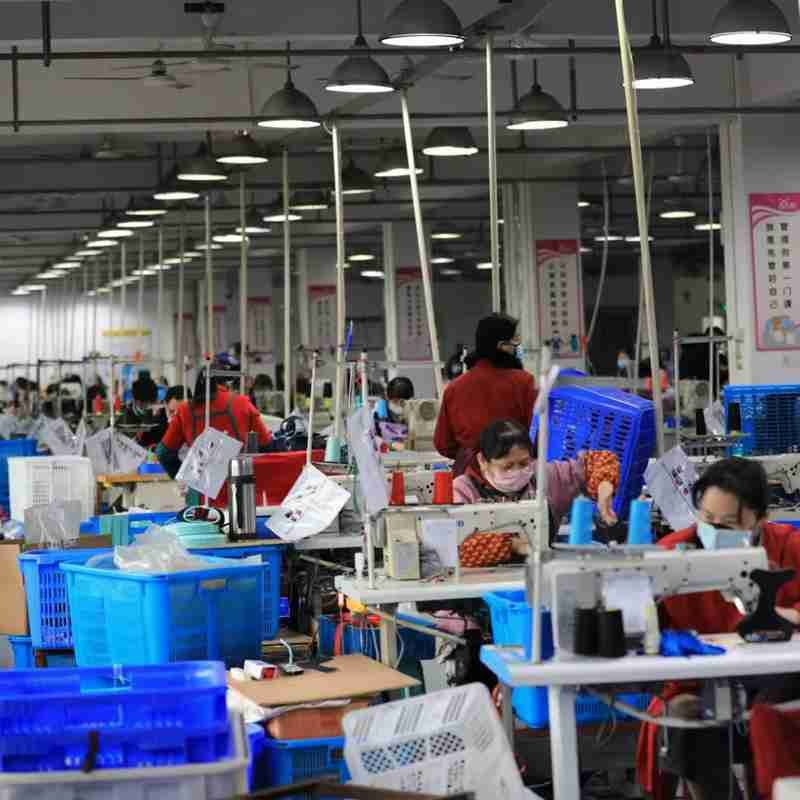
In pet products, “cheap” becomes expensive fast when a toy fails in the customer’s hands. For brands, the highest cost is often not the factory unit price—it’s returns, negative reviews, and reorder hesitation. So we approach cost with a value-engineering mindset: lock the build elements that protect durability and safety, then optimize materials and processes that don’t affect performance. This guide breaks down what actually drives cost in custom pet plush: fabric and trim system, internal components, labor steps added by reinforcement, packaging complexity, and quality requirements. It also shows practical ways to reduce cost without increasing failure risk—so your first order launches with confidence and your bulk runs stay stable.
Material system
Outer plush grade, lining or containment layer, rope or webbing, trims
Custom dye or printing increases minimums and unit cost
Internal components
Squeaker type or size, crinkle insert layers, internal pockets
Better retention designs add labor but reduce claims
Labor and reinforcement
Double seams, reinforcement tape, zone-based stitch density
More steps increase cost, but can reduce return rate significantly
Design complexity
Multiple color blocks, multiple embroidery areas, complex shapes
Higher risk of bulk drift unless the spec is locked
Packaging execution
Retail packs, header cards, gift boxes, multipack bundles
Packing labor and packaging materials add up
Value engineering: reduce cost without increasing risk:
- Keep reinforcement map unchanged, optimize non-stress panels (fabric grade options)
- Use embroidery face consistently (reduces hard parts and simplifies sourcing)
- Standardize component sizes across SKUs (same squeaker type; fewer supply variables)
- Choose stock fabric colors for pilot order, move to custom dye after validation
- Simplify packaging for pilot, upgrade packaging for bulk after performance is proven
“Cost vs Risk” table:
| Optimization | Saves Cost | Risk Impact | Recommendation |
|---|---|---|---|
| Lower plush grade everywhere | yes | high | avoid |
| Keep reinforcement, adjust non-stress fabric | moderate | low | good |
| Standardize squeaker type | moderate | low | good |
| Reduce packaging complexity for pilot | yes | low | good |
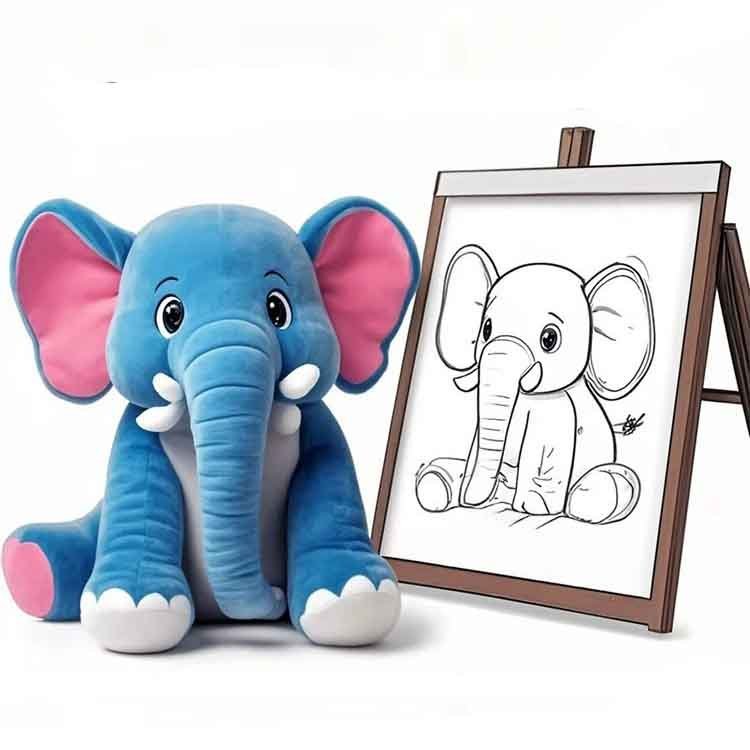
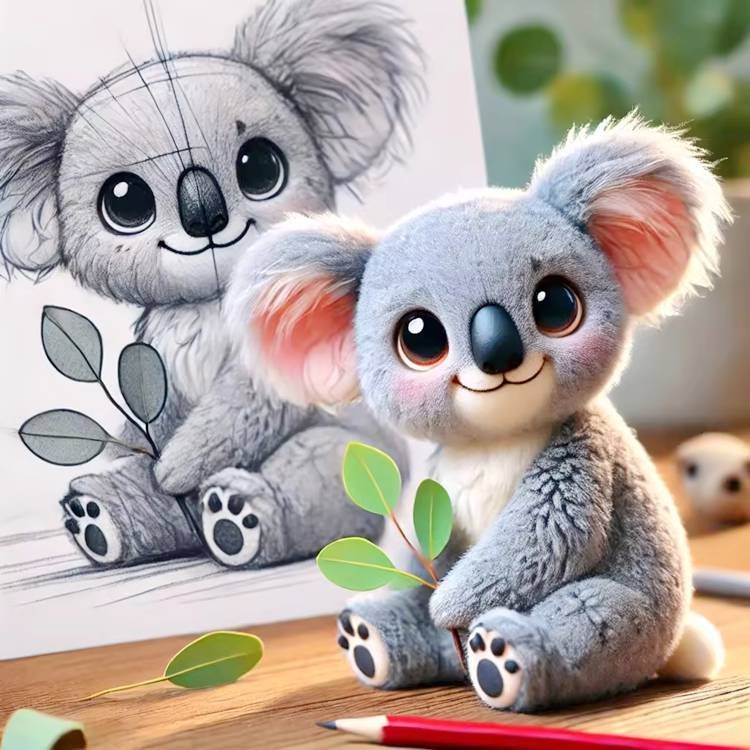
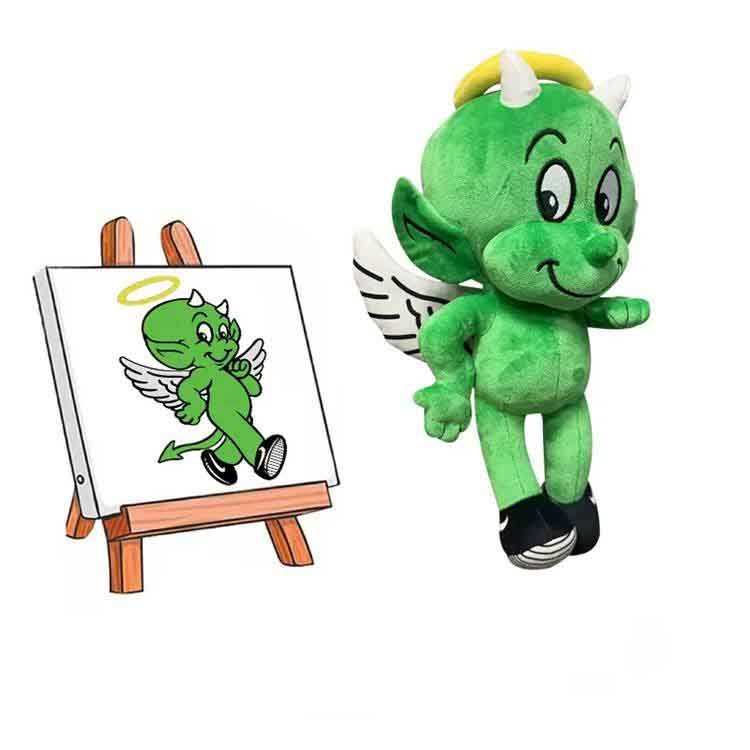
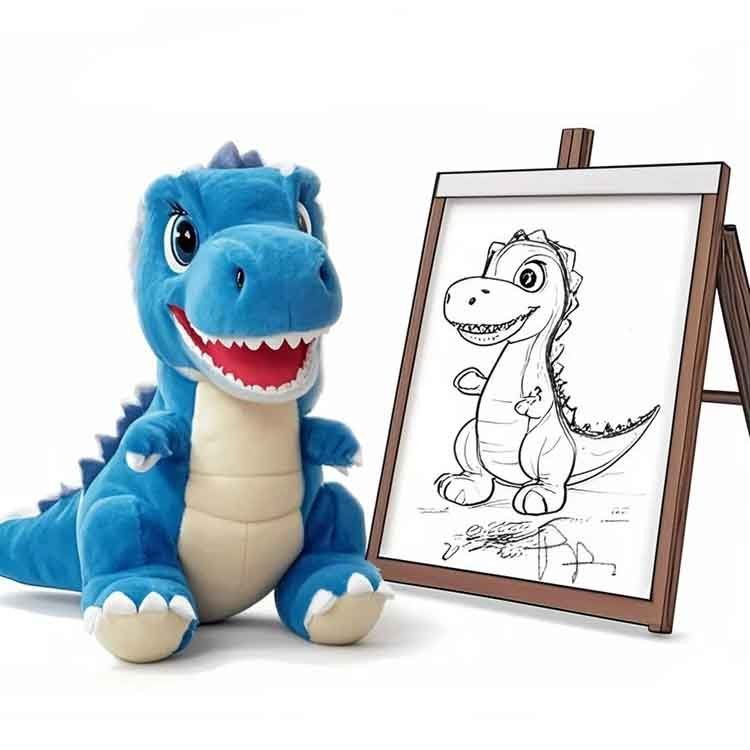
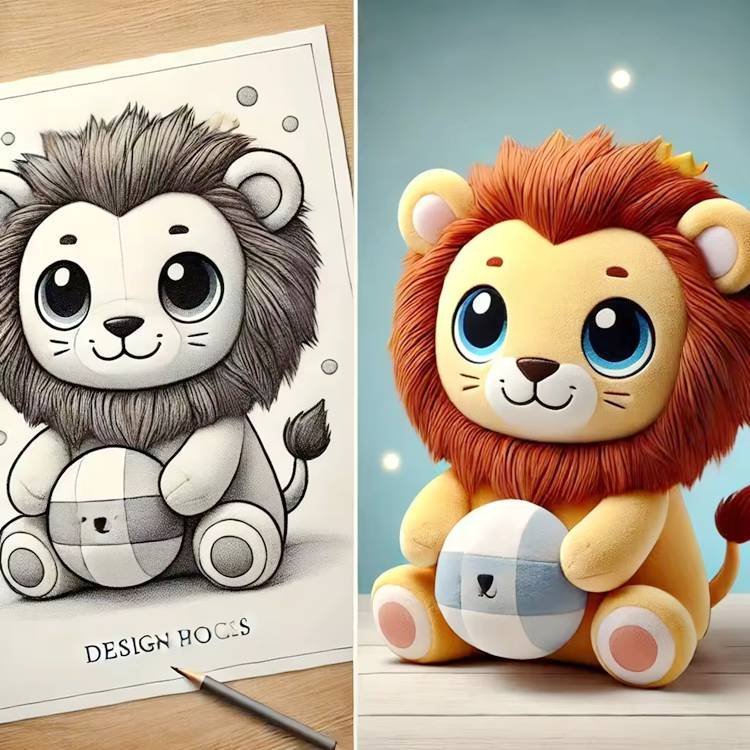
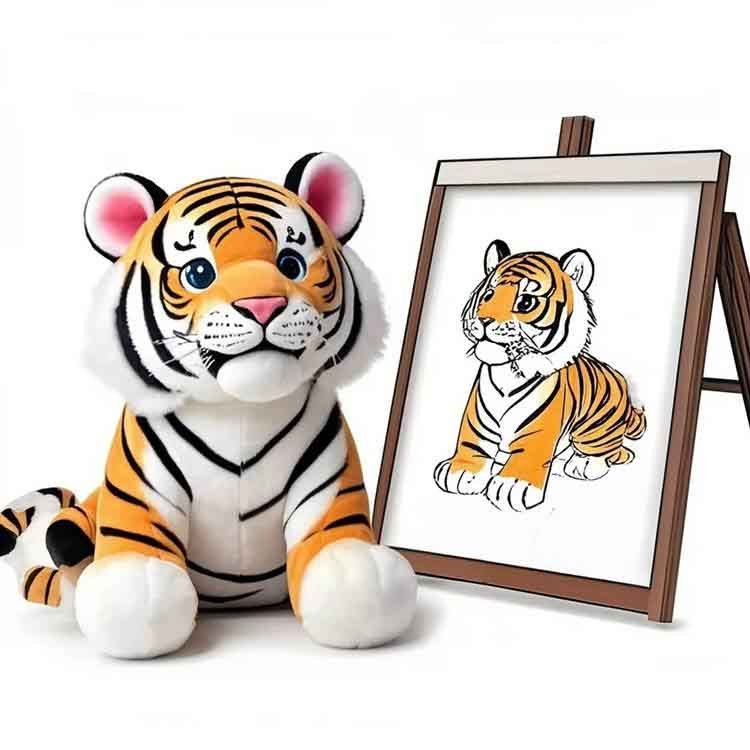
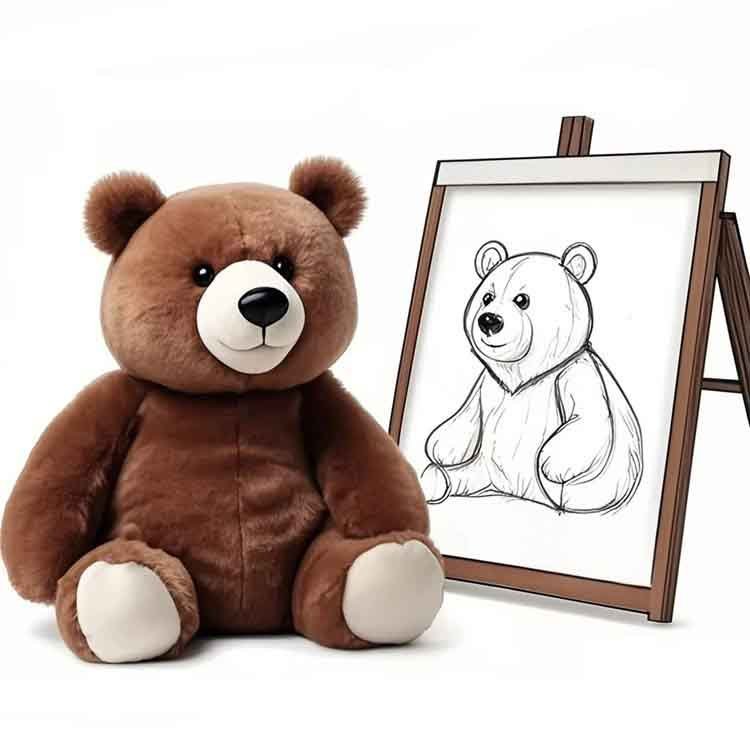
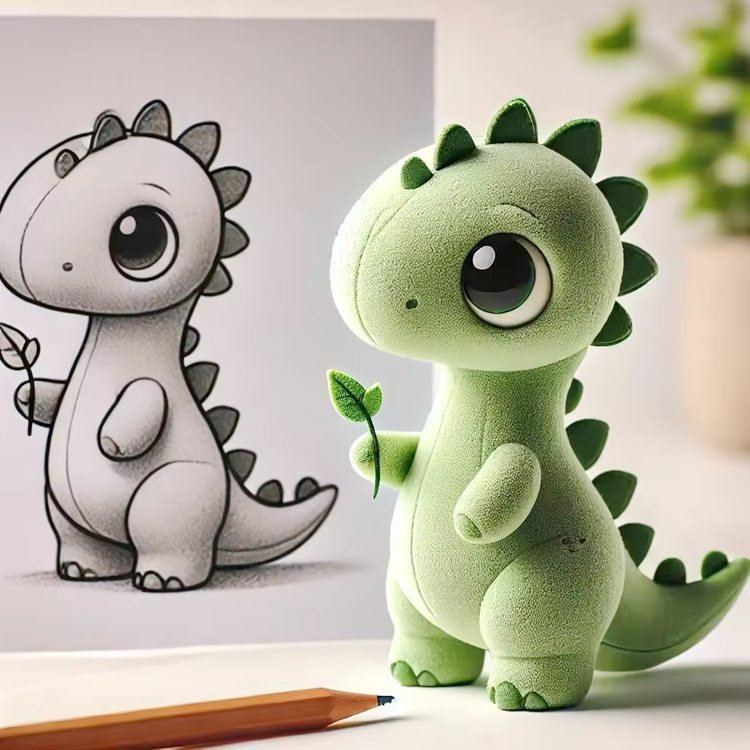
Request a Custom Sample First?
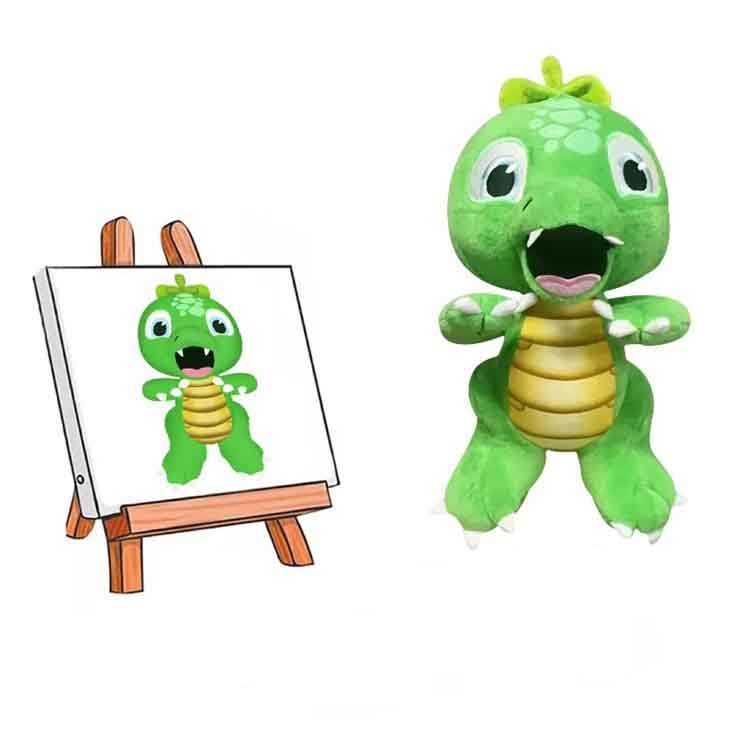
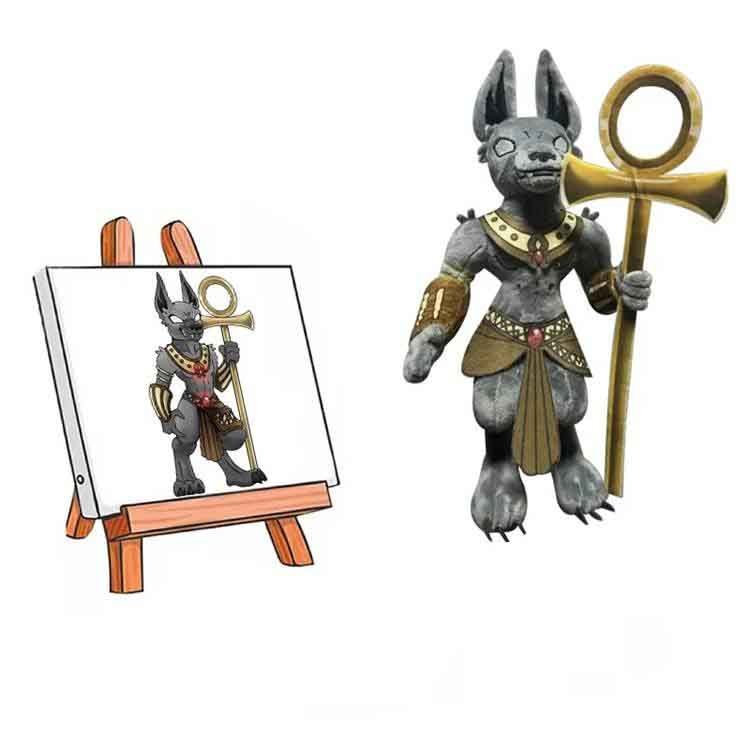
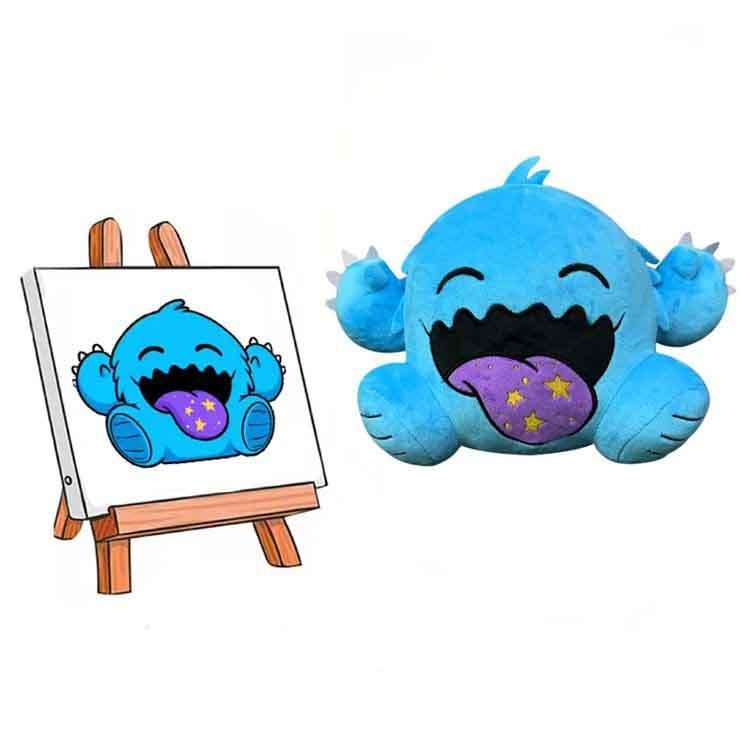
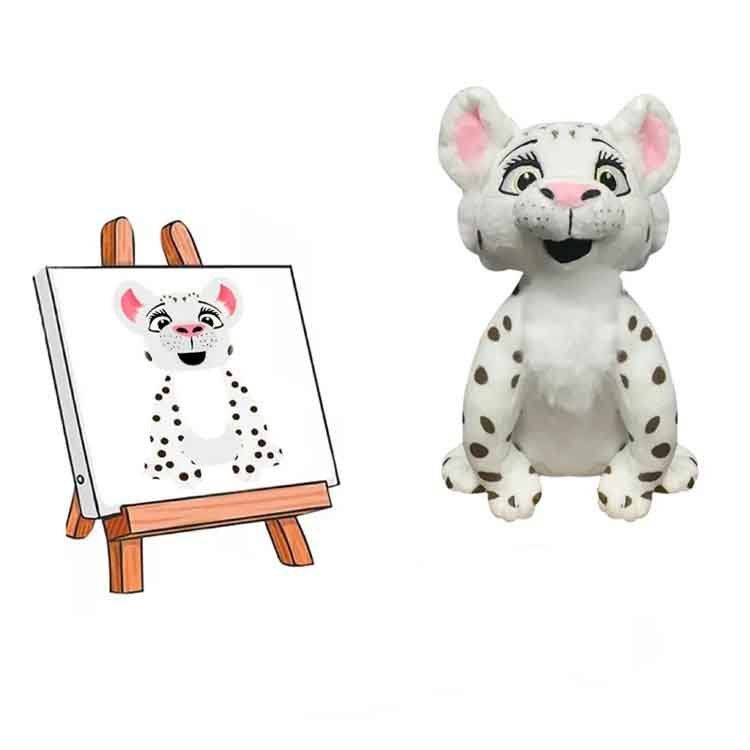
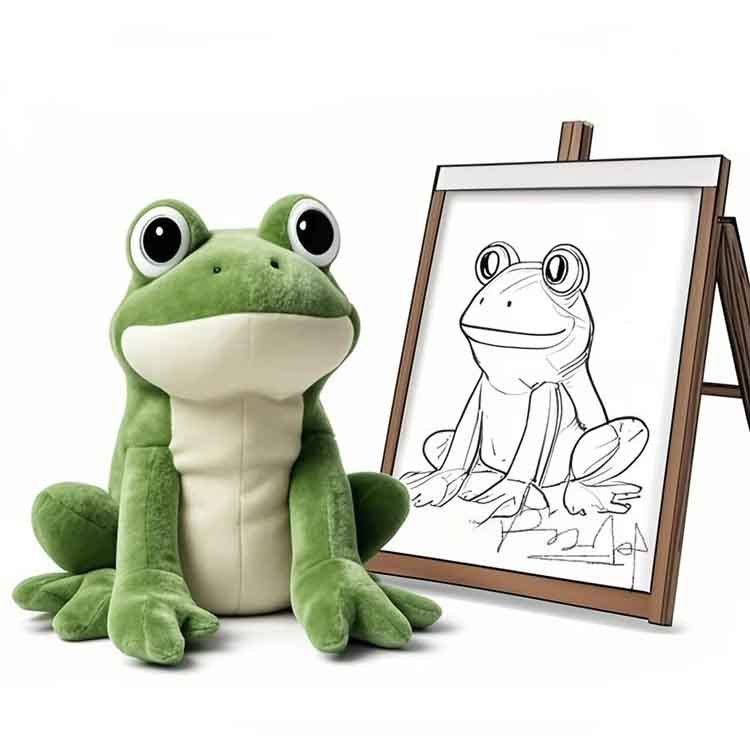
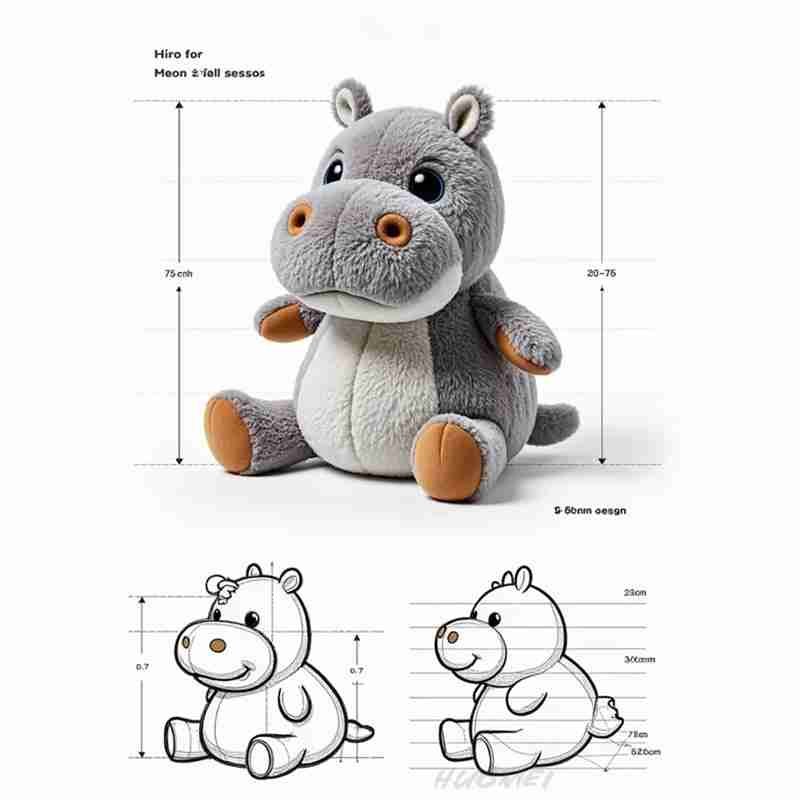
If you have artwork, logo files, or even just an idea, please share your project details—size, target fabric, color reference, and customization requirements. We’ll recommend suitable materials and provide a clear sampling plan to bring your custom plush toy design to life.
What Makes Our Custom Plush Production Reliable for B2B
Trust is built through predictable execution—clear approvals, documented specs, quality checkpoints, and packing confirmation. We focus on making your plush project easier to manage and safer to scale.
For B2B customers, “reliable” plush production is not about making one nice sample—it’s about delivering repeatable bulk quality, stable lead times, and clear project control from artwork review to shipment. What makes our custom plush program dependable is the way we manage the details that most often cause problems in mass production: face accuracy, proportion stability, embroidery/printing consistency, stuffing weight and firmness control, and secure attachment for keychains, clothing, and accessories.
We build reliability through a structured workflow: we confirm a practical spec checklist before sampling, document revision notes, and lock the final approval sample as a golden standard for production. During manufacturing, we apply multi-stage QC checkpoints (not just a final check) to prevent drift early, especially in character-critical zones like the face and silhouette. Before shipment, we also verify packaging and labeling—including hangtags, barcode/SKU labels, care/warning labels, and carton marks—so your receiving and retail handling are smoother and your products arrive with less risk of deformation.
Process Proof
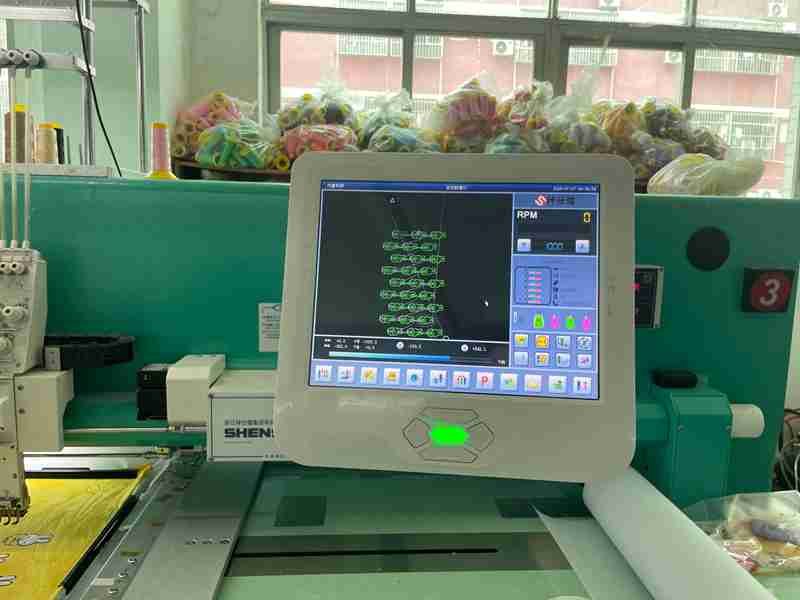
- Clear sampling-to-production approvals (prototype → revisions → final approval sample)
- Spec confirmation before bulk production (size, materials, logo placement, packaging)
- Revision notes that keep decisions traceable
- Golden standard concept for repeat orders
Quality Proof

- Multi-stage QC checkpoints across sewing, embroidery/printing, stuffing, finishing
- Needle control / needle detection option for finished plush (when required)
- Inspection focus on character-critical areas (face and silhouette) for IP plush
Delivery Proof
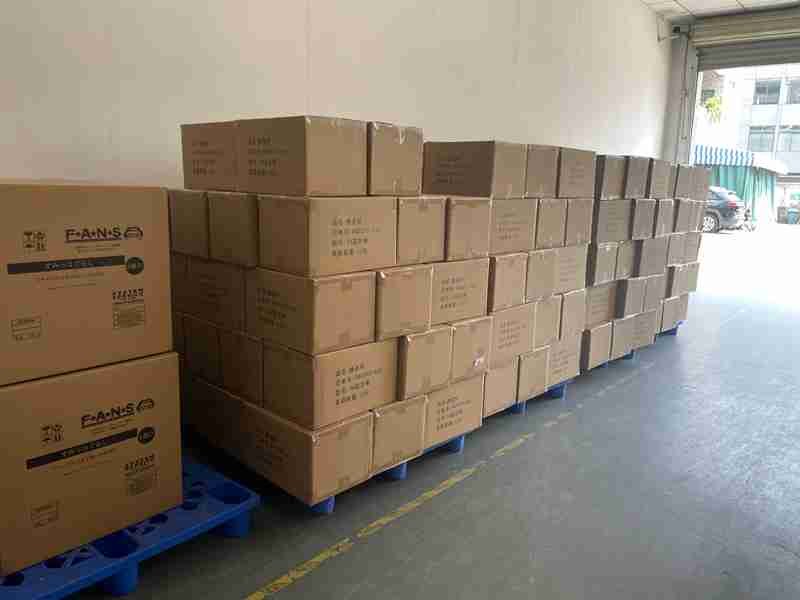
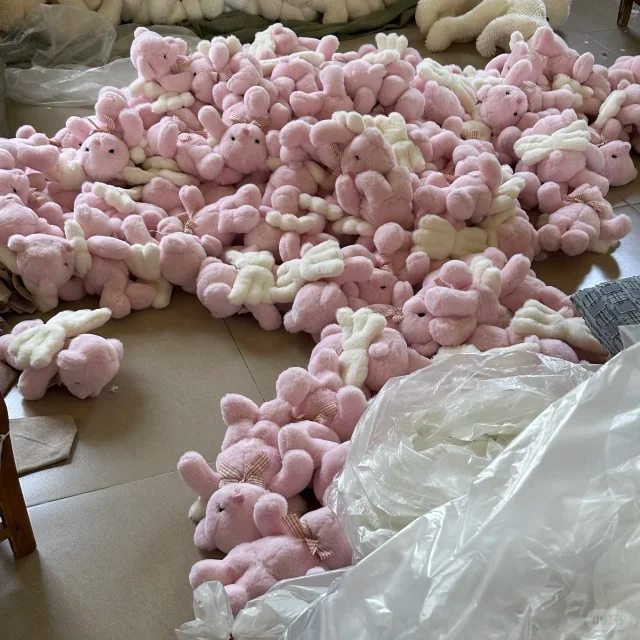
Packaging and labeling confirmation before shipment (photo proof + checklist)
Barcode and carton mark support (when required) (SKU/PO/qty/destination)
Packing suggestions to reduce deformation during transit (anti-crush, face protection)
Frequently Asked Questions
How do you prevent “approved sample vs bulk drift”?
We prevent drift by locking one Approved Reference Sample plus a Spec Lock Pack (reinforcement map, seam routes, pocket placement, stitch density zones), then running bulk QC that compares every lot back to that reference.
Bulk drift usually comes from “small changes” that don’t look small in production: a different plush grade, a substituted squeaker, a seam route altered by an operator, or pocket placement drifting by a few centimeters. Our control starts before production. After you confirm the final sample, we freeze the material set (outer plush + lining/containment + stuffing + trims), define the reinforcement map (bite zones, limb roots, tug anchors), and document component retention (squeaker/crinkle pockets + stitch barriers). During bulk, we check the points that cause returns: seam opening risk, component exposure, stuffing migration, and shape/face placement vs reference.
To make this measurable for procurement, we recommend a “Spec Lock Pack” with photo annotations, tolerance notes, and pack-out rules. When the baseline is clear, reorders become faster because the same pack becomes your repeatable standard, not “tribal knowledge.” This is the practical difference between a factory that can make a nice sample and a factory that can deliver repeatable bulk consistency.
What drives MOQ and unit price for custom pet plush?
MOQ and price are driven by material uniqueness, build complexity, component sourcing, and packaging execution—so the best first step is choosing a baseline build that meets durability targets without unnecessary customization.
For pet plush, unit cost is not just fabric weight. The biggest drivers are (1) whether you use stock materials or custom-dyed/printed plush, (2) whether the build requires lining/containment, reinforcement tape, and fixed pockets, (3) the types and sizes of internal parts like squeakers, crinkle film, or rope anchors, and (4) retail packaging complexity (header cards, gift boxes, multi-packs). Procurement can lower MOQ and stabilize cost by standardizing components across SKUs and using stock colors for a pilot order.
A practical procurement approach is to separate decisions into “must-have for performance” vs “nice-to-have for branding.” Reinforcement maps, pocket retention, and stitch density zones typically belong in “must-have,” because they reduce returns. Brand colors and premium packaging can be phased in after the pilot proves durability.
Quick decision table:
| Choice | MOQ Impact | Price Impact | Recommendation |
|---|---|---|---|
| Stock plush colors | Low | Stable | Good for pilot |
| Custom dye/print | Higher | Higher | Use after validation |
| Fixed squeaker pocket | Neutral–Med | Med | Protects reviews |
| Gift box packaging | Higher | Higher | For premium drops |
What is the realistic sampling + lead time timeline?
A realistic timeline depends on artwork readiness, revision count, and whether durability specs are clear; the fastest path is a structured sample plan that locks the reference sample and pack-out rules early.
Sampling slows down when the first prototype is asked to solve everything at once—look, feel, durability, packaging, and compliance. For pet plush, it’s more efficient to validate in phases: (1) shape/face placement, (2) reinforcement map and retention pockets, (3) packaging and barcode layout. Bulk lead time then depends on material availability (stock vs custom dye/print) and packaging readiness.
Here’s a practical planning grid procurement teams can use:
| Stage | Typical Goal | What You Approve | What Prevents Delays |
|---|---|---|---|
| Prototype | Shape + artwork | silhouette + face | clear dimensions |
| Reinforced sample | Durability controls | seams + pockets | defined play style |
| Final reference | Bulk lock | spec + pack-out | fixed labels/barcodes |
| Bulk | Consistency | lot vs reference | QC checkpoints |
If you need a tight launch window, consider a risk-reduction pilot: one reference SKU, stock materials, simplified packaging, then scale with upgrades after field feedback. That approach often beats rushing a fully customized launch that later faces returns.
How do you define “durability level” for pet plush in a purchase order?
Define durability by pet size range, play style, and a locked reinforcement + retention spec, not by vague words like “tough” or “heavy-duty.”
“Durable” means different things for a small dog squeaker plush vs a large-dog tug toy. Procurement should specify three items: (1) target pet size range and play behaviors (chew/tug/shake), (2) a reinforcement map (double seams, tape, stitch density zones), and (3) component retention rules (fixed pockets, stitch barriers, inner containment). These controls are what your factory can repeat consistently.
A helpful PO section is “Performance Build Requirements,” written like a checklist. Example: double seam at limb roots and mouth edge; reinforcement tape in tug zones; squeaker inside fixed pocket; inner lining/containment required; embroidery face preferred; pack-out prevents deformation. When these items are locked, QC becomes objective because pass/fail can be measured against the checklist and the reference sample.
If you want to add a field validation step, order a pilot quantity and collect real user feedback for 2–4 weeks, then upgrade only the items that affect returns (usually reinforcement and retention), while keeping aesthetics stable.
How do you secure squeakers/crinkle/rope so they don’t shift or expose?
We secure internal parts with fixed pockets, stitch barriers, and where needed an inner containment layer, so components stay stable and reduce exposure risk.
Component exposure is a top reason for negative reviews. A squeaker placed loosely will migrate toward a seam and eventually rub through, especially when dogs bite and shake. Crinkle film can fold and lose sound if it is not fixed. Rope limbs can pull out if the anchor seam is not engineered. The solution is not “stronger stitching everywhere”—it’s targeted retention design.
Our recommended retention approach is: (1) place squeakers and crinkle layers inside a fixed pocket with a defined pocket size and position, (2) add stitch barriers so the component cannot slide into stress seams, (3) use an inner lining/containment where the product segment requires it, and (4) lock these details in the reference sample and spec pack. Procurement should request pocket location photos and a short pocket spec so bulk operators repeat it correctly.
If you’re choosing between squeaker and crinkle, consider pet size and brand positioning: squeakers drive excitement but require stricter retention; crinkle can be safer-feeling but still needs stable layering. For tug toys, rope anchors need explicit anchor stitching zones and often reinforcement tape.
Why do many pet brands prefer embroidery-only faces?
How do you control shedding, pilling, and “fabric wear” complaints?
We control shedding and wear by selecting the right plush grade, matching it to the play style, and locking a material system (outer + lining + stitch plan) so bulk lots behave like the approved sample.
“Too much shedding” is usually not a single-factor issue. It can come from an outer plush grade that is too loose for the target pet segment, from stitch density that damages the fabric edge, or from abrasion at bite zones where reinforcement was missing. The practical approach is to choose fabrics by use case: giftable plush can use softer premium textures, but active-play lines often need tougher systems or mixed panels in stress zones. We also recommend stabilizing weak points with an inner lining/containment layer where appropriate, and using zone-based stitch density so seams stay strong without cutting the fabric.
Procurement should ask suppliers to propose the material set in writing: outer plush type, lining/containment yes/no, reinforcement tape placements, and any stress-zone panel strategy. Once this set is approved, it must stay consistent from testing to bulk. If a substitution is required, it should be re-approved, because even “similar-looking” plush can behave differently under chew abrasion and washing.
When needed, we can advise a pilot plan to verify wear performance before full packaging upgrades, so your reviews are protected early.
Can you support mixed SKUs and still keep packing and receiving clean?
Yes—our default is single-SKU cartons for clarity, and when mixed cartons are needed we use a pack-out list + carton mark rules to prevent warehouse errors and claims.
Mixed orders often fail at receiving. The product may be correct, but cartons arrive with unclear labels, mixed quantities, and no carton-by-carton breakdown. That creates scanning errors, mis-picks, and rework. The fix is to treat packing as part of production control. We recommend: (1) define whether cartons are single SKU or mixed; (2) if mixed, lock a carton recipe (which SKUs and quantities per carton) and print carton marks that show the breakdown; (3) standardize unit packing orientation; and (4) add carton numbering so procurement can reconcile quantities quickly.
Carton mark structure (example):
| Field | Why it matters |
|---|---|
| PO / SKU | receiving + traceability |
| Qty per SKU | avoids miscounts |
| Carton No. | reconciliation |
| G/N weight + size | logistics claims |
This approach makes mixed orders manageable without creating a “warehouse headache.” It’s also reorder-friendly because the same carton recipe can be reused.
What QC outputs can procurement request before shipment?
Procurement can request a simple, practical QC pack: inspection checklist, reference-sample comparison notes, carton mark confirmation, and photo evidence of key stress zones.
Buyers often get “QC passed” as a sentence, which isn’t actionable. A better approach is to define QC outputs that match your risk profile. For pet plush, the most useful evidence is not “general photos,” but targeted proof: mouth edge and limb-root seam checks, retention pocket integrity, stuffing leakage checks, and random unit comparisons against the approved reference sample.
We recommend procurement request four items before release:
- QC checklist showing the failure-mode points covered
- Deviation notes vs reference sample (if any)
- Packing confirmation: unit pack + pieces per carton + carton marks
- Photo set: reinforcement zones + pocket zone + finished packing
Lightweight QC table you can ask for:
| Item | Accept/Reject Rule |
|---|---|
| Seam opening points | no visible seam split |
| Pocket retention | pocket intact, no component migration |
| Shape vs reference | within agreed tolerance |
What files and information should we send to avoid sampling delays?
To avoid delays, send a complete Artwork + Dimension + Build Target package (front/back views, size/weight target, play style, logo method, and packaging channel) so the sample team can pattern correctly on the first pass.
Sampling slows down when the factory must guess what “matters most.” For custom pet plush, guessing is risky because the pattern and reinforcement plan depend on the pet segment and play behavior. A complete submission should include: (1) clear front/back artwork (AI/PDF/PNG) with key details called out, (2) target dimensions (L×W×H) and target weight range, (3) target pet size and play style (chew / tug / shake / light play), (4) face method preference (embroidery vs print), (5) component plan (squeaker, crinkle, rope), and (6) packaging channel (Amazon/DTC/retail), because it affects barcode layout and unit pack style.
Procurement can also reduce revisions by stating what is “non-negotiable” vs “flexible.” Example: “Must keep silhouette and face placement; flexible on inner lining choice.” That lets the factory optimize durability without changing brand look.
Fast RFQ file checklist
| Item | Why it matters |
|---|---|
| Front/Back Views | prevents face/shape mistakes |
| Target Size + Weight | drives pattern + stuffing |
| Play Style | drives reinforcement map |
| Logo Method | affects hand feel and repeatability |
| Packaging Channel | drives labels + carton marks |
How do we handle IP, licensed characters, and confidentiality?
The safest workflow is to set clear IP ownership, use NDA + file-control rules, and approve samples only from authorized artwork so your design is not reused or leaked.
For licensed pet plush (characters, brand mascots, campaign designs), procurement should treat confidentiality as part of the sourcing spec. Start by confirming who owns the artwork and whether the factory is allowed to store files. A practical approach is: sign a mutual NDA, define who can access the files (sales + sample team only), and require that production uses the approved artwork version only. For extra protection, you can provide artwork with watermarks for early feasibility review, then release final files only after sampling terms are confirmed.
It also helps to define “no-external-sharing” and “no-third-party-subcontracting” terms in your PO. If any outside process is needed (special print, special packaging), require pre-approval and a named vendor list. Procurement can request a simple record: file version name, date, and the approved sample photos, so there is one truth source during reorders.
If your project is sensitive, limit early discussions to a reference style and structural requirements first, then share full character details later. That still allows accurate build planning without exposing the complete IP too soon.
How do we control color consistency across batches?
Color stays consistent when you approve a color standard (Pantone or physical swatch), lock the material lot rule, and keep the same outer plush grade from sample to bulk.
Color mismatch is one of the most common bulk disputes. For plush, the risk is higher because pile direction, dye lots, and lighting make colors look different. Procurement should avoid “screen color approvals” as the only reference. The safest approach is to approve one physical standard: a Pantone target plus a fabric swatch, or a signed sample piece. Then define how bulk is matched: same material lot when possible, and clear rules if a new lot is required.
For pet plush, also consider how color interacts with wear. A softer plush in a darker dye may show abrasion marks faster. That’s why color control should be paired with the material set lock, not treated separately.
Color control checklist
- Approve Pantone + swatch (or physical sample)
- Confirm pile direction and lighting used for approval
- Lock outer plush grade and finish
- Define lot rules for reorders (same-lot priority, approval for change)
If your brand sells multi-color sets, define the “hero color” that must match strictly, and allow slightly wider tolerance on secondary colors to keep lead time stable.
Start Your Custom Plush Project Today
If You Can imagine it,We Will Create it!
Whether you are a brand, creator, retailer, or agency, our Guangdong plush factory is ready to support your OEM/ODM development. Send us your design, concept, or reference image — our team will reply with a free development proposal and quotation.
1. Tell Us What You Need
Tell us your requirements and share your artwork or reference images.
2.Get a Solution & Quote
We’ll suggest the best solution based on your requirements, and provide a detailed quote within 12 hours.
3.Approve for Mass Production
We will start mass production after getting your approval.
For all inquiries, please feel free to reach out at
- info@heyzizi.com
- (+86)13717153084
Ready to Grow Your Plush Product Line?
Brands and businesses from over 80 countries have chosen Jundong as their trusted plush manufacturing partner. Now it’s your turn. Work with us for reliable custom plush production, clear sampling support, and stable delivery for long-term programs.