Quality Control for Custom Plush Products: What Defects Matter, Which Checkpoints Work, and How Needle Control Prevents Recalls
Most plush programs don’t fail because the design is “bad.” They fail because the quality standard is vague, the process control is inconsistent, and the factory only tries to “catch defects” at the end. That’s a risky bet in plush manufacturing. Plush is soft, forgiving to the eye, and easy to make “look okay” in one sample. Then bulk production starts. A different operator stitches the neck seam. The stuffing density shifts. The embroidered face is slightly off-center. A zipper pull scratches the fur pile. A keychain loop tears after a few tugs. Suddenly you’re not dealing with a few imperfect units—you’re dealing with returns, chargebacks, or safety escalations.
You don’t want a supplier who says “we do 100% inspection” and stops there. You want a manufacturer who can explain, in plain language, what defects are most likely, where they are created, and how the factory prevents them before they become a shipment problem. This is where professional QC becomes less like “checking” and more like “engineering.” A strong system combines defect prevention, inspection checkpoints, process discipline, and, for many plush categories, a documented needle control / metal contamination policy to reduce hidden risk. Big brands ask for it because it shows maturity. Smaller benefit because it prevents expensive surprises.
A strong plush QC system reduces defects by controlling risk at three layers: prevention (clear specs, seam standards, operator methods), checkpoints (IQC/IPQC/FQC and pre-shipment), and verification controls like needle control and, when needed, metal detection. should define defect severity (critical/major/minor), lock a PP sample, track changes, and audit records. This protects bulk consistency and lowers returns.
What are the most common plush product defects, and which ones become “major” defects in bulk inspection?
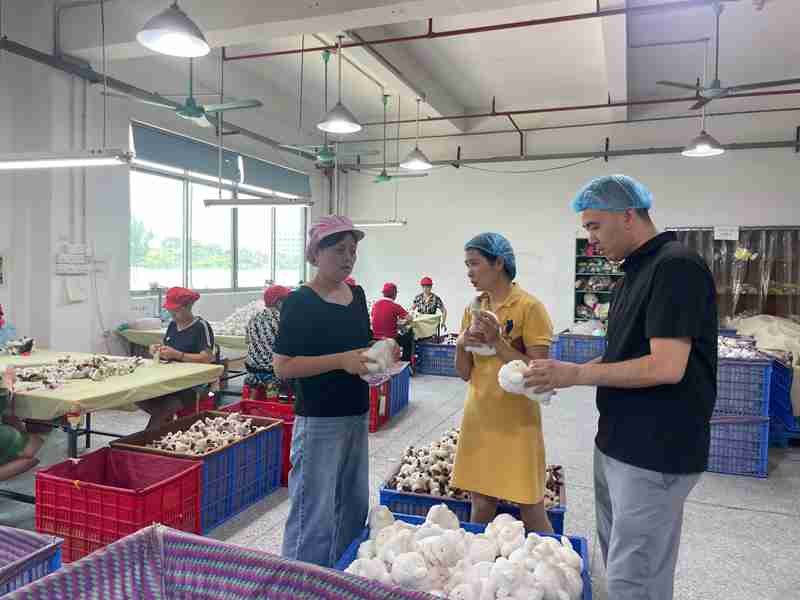
The most common plush defects fall into three buckets: appearance, function, and safety. In bulk inspection, “major defects” typically include open seams, weak stitching, misaligned embroidery/printing, stuffing leakage, and detached accessories. “Critical defects” are those that can create safety risk (like loose small parts), and many set critical acceptance at zero. This aligns with common AQL practice of classifying defects by severity.
Plush has a unique problem: many defects stay hidden until the product is handled in a real scenario—kids tugging, consumers squeezing, keychains swinging, or retail staff tossing items onto shelves. So the first step is a defect map that matches how your plush will be used and sold.
1) Defect map by type of plush product (toy vs charm vs pillow vs plush bag)
A classic plush toy is sensitive to face symmetry, seam alignment, and small-part security (eyes, noses, trims). A plush charm/keychain has extra stress on the hanging loop, hardware, and stitching around webbing. A plush pillow is sensitive to panel shape, stuffing distribution, and deformation after compression packing. A plush bag introduces zipper quality, lining alignment, and hardware control. Different categories can share “the same defect name” but have very different risk levels.
2) Critical vs major vs minor: what “severity” really means
Many use AQL-style thinking to define acceptance thresholds by defect type. A common pattern is: critical defects = not allowed, while major and minor have different tolerance levels (the exact numbers should be agreed in the PO/spec).
For plush, a practical rule is:
- Critical defects: safety hazards (loose small parts, sharp points, exposed wire/armature ends, contamination).
- Major defects: customer-visible or functional failures (open seams, seam burst risk, wrong size beyond tolerance, big embroidery misplacement, wrong label/barcode).
- Minor defects: small cosmetic issues that don’t affect use (tiny thread ends, slight pile direction variation, minor print shade drift if still within approved range).
3) A table your team can actually use (defect classification examples)
| Defect Example | Category | Why it matters |
|---|---|---|
| Eye/nose detaches under pull | Critical | Safety risk → recalls / claims |
| Open seam or skipped stitches on stress zone | Major | Returns, fast failure in market |
| Embroidery face off-center | Major | Brand image, resale rejection |
| Stuffing leakage from seam | Major | Visible quality issue, rework cost |
| Wrong barcode / missing hangtag | Major | Warehouse rejection, chargebacks |
| Minor thread tails (non-structural) | Minor | Easy trim, low user impact |
Standards and regulatory guidance for toy safety emphasize identifying applicable requirements and hazards (small parts, sharp points, mechanical risks), which is why treat some failures as “non-negotiable.”
4) “Defect history” is often more valuable than a perfect sample
A supplier can make a beautiful sample with their best technician. What you want is proof that the factory can keep defect rates stable across lines, weeks, and material lots. Patterns that should trigger concern: the same seam failure repeated across multiple orders, repeated embroidery placement issues, or recurring accessory detachment. That’s not “bad luck.” It’s a missing control point.
Why is “defect prevention” more effective than final inspection?
Final inspection can catch visible defects, but it cannot reliably prevent process-driven failures like seam weakness, stuffing inconsistency, or recurring accessory detachment. Defect prevention works better because it controls root causes early: clear specs, process standards, and in-line checkpoints. Ownership is shared: defines requirements, the factory controls workmanship and documentation, and third parties verify when needed. This is why many QC frameworks rely on inspection stages plus corrective action loops.
Think of plush QC like a seatbelt system. A seatbelt doesn’t “inspect accidents.” It prevents a small mistake from becoming a major injury. Final inspection is useful, yet it is still a late-stage filter. If your process is unstable, final inspection becomes a costly sorting exercise.
1) Prevention vs detection: why final inspection fails in plush
Plush defects often come from repeatable causes:
- Stitch density changes because operators use different habits.
- Seam allowance drifts because pattern notches aren’t followed.
- Stuffing weight varies because filling is done by feel, not by spec.
- Embroidery alignment shifts because hoop placement lacks guides.
You can catch some outcomes at the end, but you can’t “inspect in” seam strength if the stitch type is wrong or reinforcement is missing. You also can’t easily rework certain failures without damaging the plush appearance (needle marks, crushed pile, distorted panels). Prevention keeps you out of rework traps.
2) Who owns what: a practical responsibility map
Programs run smoother when each party has a defined job. Here’s a simple, useful model:
| Step | Customer | Factory | 3rd Party |
|---|---|---|---|
| Product spec & target market | Owns | Supports | — |
| Materials + accessory approval | Approves | Controls sourcing + lot tracking | Verifies if required |
| Workmanship standard (seams, stitch, stuffing) | Approves baseline | Executes + trains + monitors | Audits |
| PP sample / sealed sample | Approves | Builds to bulk standard | Witness/verify |
| Pre-shipment inspection | Receives report | Cooperates | Independent check |
This division also matches regulatory reality: companies must identify applicable safety requirements, and some tests may require third-party labs depending on jurisdiction and product type.
3) How to prevent sample-to-bulk deviation (the part of regret skipping)
If you only approve a sample by “looks good,” you leave too many variables open. A bulk-ready approval should lock:
- fabric type + pile direction + GSM range
- stuffing type + target weight per size
- stitch type, stitch density range, seam allowance
- reinforcement points (bartack/Box-X/binding)
- embroidery/print file version + placement guides
- accessory specs (eye type, keychain hardware, zipper brand)
- packaging method (compression limit, inner polybag, carton marks)
4) CAPA: what you should expect when defects are found
A mature factory doesn’t just “fix the bad pieces.” They run a corrective action loop: identify root cause, adjust method, retrain, and verify that the defect does not come back. Ask for evidence: photos, updated method sheet, and the next in-line audit record.
Which inspection checkpoints should a plush manufacturer use: IQC vs IPQC vs FQC vs Pre-shipment inspection?
A reliable plush QC system uses four checkpoints: IQC (incoming materials), IPQC (in-process control on the line), FQC (finished goods checks), and Pre-shipment inspection (carton, assortment, labeling, and shipment readiness). This structure fits acceptance sampling logic used in common AQL-based inspection planning, where lots are checked against an agreed defect limit rather than “hoping” final sorting will protect consistency. (ASQ)
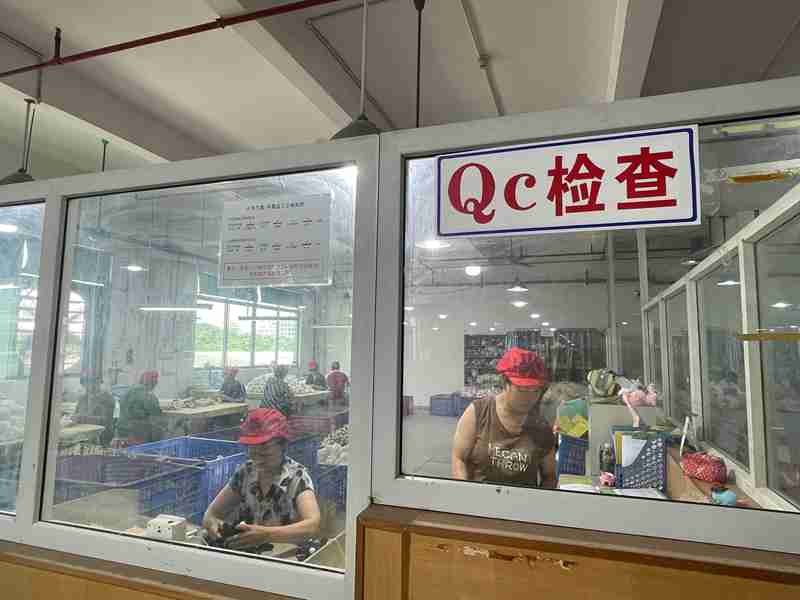
If you’ve ever had a shipment rejected for “too many defects,” the painful part is this: most defects were created days earlier, not in the carton. Checkpoints are how you catch problems close to the source, when rework is cheaper and the production line still remembers what happened.
What are the key control points in plush production? (process map)
A practical plush production map looks like this:
- Fabric & trims receiving → 2) Fabric spreading / cutting → 3) Embroidery / printing → 4) Sewing & assembly → 5) Stuffing & shaping → 6) Closing seam → 7) Finishing (brushing, trimming, cleaning) → 8) Accessory install → 9) Packing & carton marking
Defects cluster around three “risk zones”:
- Sewing/closing seams (strength + appearance)
- Accessories (attachment + safety)
- Packing (deformation + wrong labeling/SKU)
IQC (Incoming) — what to inspect for plush fabric, filling, trims, and accessories
IQC is where you block “bad inputs” from turning into thousands of defective units.
IQC checks that matter for plush
- Plush fabric: pile direction consistency, shade vs approved swatch, hand-feel, width, backing stability
- Filling: type confirmation, loft consistency, odor, contamination control
- Thread: matching colors, tensile suitability for seam type
- Trims/accessories: eyes, noses, labels, keychain hardware, zipper pulls—confirm spec, finish, and sharp edge risk
- Packaging items: polybags, hangtags, barcode labels, carton quality
A small table your QC team can use:
| Material | IQC “fast fail” signals | Why it matters |
|---|---|---|
| Plush fabric | shade drift, weak backing, pile shedding | bulk color complaints, seam distortion |
| Eyes/noses | loose fit, burrs, inconsistent size | safety + appearance rejection |
| Keychain hardware | plating scratches, weak spring gate | returns from breakage |
| Labels/barcodes | wrong item code, wrong country info | warehouse rejection/chargebacks |
IPQC (In-process) — when to measure, when to stop the line, and what sampling frequency works?
IPQC is where win back control. AQL systems exist because you can’t inspect every unit perfectly, yet you can control a line by sampling and switching plans when performance shifts. (ASQ)
IPQC should focus on “process drivers,” not just visible defects
- Stitch density range (stitches per inch) and thread tension stability
- Seam allowance control and notch alignment
- Stuffing weight control (per size) and shape standard
- Embroidery placement guides and file version
- Accessory attachment method (washer type, stitch pattern, reinforcement)
When to stop the line (real examples)
- repeated skipped stitches on the same operation
- seam allowance drifting beyond tolerance on a key seam
- frequent rework on the same panel zone
- accessory detachment failures in quick pull checks
FQC (Finished goods) — how to verify workmanship, dimensions, labeling, and packing
FQC should confirm:
- appearance: face symmetry, pile grooming, stain/mark checks
- workmanship: seam closure quality, thread tails, reinforcement points
- dimensions & weight: within agreed tolerances
- labels & compliance marks: correct placement, correct print, correct language
- pack standard: inner polybag, silica gel if needed, hangtag position, folding/shape
Pre-shipment inspection — how to align cartons, assortments, barcodes, and shipment marks
Pre-shipment is where avoid warehouse penalties. This stage checks:
- carton counts, size assortment, SKU accuracy
- barcode scan readability
- carton marks (PO, carton number, gross/net weight, country-of-origin if required)
- master carton strength and sealing method
When to add “special inspections”
Add extra checks when any of these change: new fabric lot, new embroidery file, new operator line, rush lead time, new accessory supplier. That is simple risk logic: changes create drift.
How do toy safety standards change what you inspect?
Safety standards reshape plush QC by forcing you to inspect for hazards, not just looks. In the U.S., ASTM F963 is a mandatory toy safety standard and CPSIA requires compliance and certification for children’s products (often with third-party testing and proper documentation such as a CPC when applicable). In the EU, EN 71-1 addresses mechanical/physical risks like small parts, tension, and torque tests.
Most say “we want safe plush,” but safety is not a vibe. It’s a checklist of hazards tied to age grade and market rules. The impact on QC is direct: you stop treating accessories and seams as “cosmetic” and start treating them as risk items that must stay secure under foreseeable handling.
Which safety-driven defects are most common (and why plush is tricky)
Plush often includes:
- plastic eyes/noses, felt pieces, ribbons, hang loops
- keychain hardware, zippers, buckles (for plush charms and plush bags)
- decorative stitching, patches, printed areas
The safety-driven defect patterns should watch:
- small parts detaching (choking hazard)
- sharp edges/burrs on hardware or eye components
- weak seams that expose stuffing
- contamination risk (including metal contamination concerns in needle-driven production)
CPSC guidance emphasizes that ASTM F963 has many sections and firms must identify which apply to their toy type. That’s a practical reminder: not every plush has the same risk profile.
When lab testing is required vs when in-house testing is not enough
This is where many sourcing teams get confused: “We did an internal pull test, so we’re fine.” Internal checks are valuable for process control, yet they don’t always replace formal compliance work.
- U.S. pathway (typical): children’s products often need third-party testing at CPSC-accepted labs for applicable rules, and certification. CPSC also notes CPC must cite the relevant sections of ASTM F963 that apply, not only a broad reference.
- EU pathway (typical): EN 71 is a series; EN 71-1 covers mechanical/physical properties and includes tests such as torque and tension in its methods.
A simple way to decide “lab vs in-house”:
- If the plush is clearly a children’s toy in a regulated market, plan for lab testing as part of your launch route.
- Use in-house tests to prevent defects day-to-day: quick pull checks, seam checks, accessory retention checks.
- Use lab tests to confirm formal compliance and produce audit-ready evidence.
What documents should request and why they matter?
often lose time asking for “certificates” without specifying what they need. A cleaner request list looks like:
- product spec pack + approved artwork/version control
- material declarations from suppliers (where relevant)
- test report(s) for the target market
- certification documentation (when required)
- traceability basics: lot info, production date range, carton IDs
How compliance affects factory process and inspection checkpoints?
Compliance reshapes the factory workflow in three ways:
- Accessory control tightens: you need clear attachment methods, retention checks, and consistent incoming inspection.
- Seam standards become non-negotiable: seam failure can become a safety issue, not only a “quality complaint.”
- Records become part of quality: if you can’t show what happened, assume the control didn’t exist.
A helpful reminder from the CPSC ecosystem: ASTM F963 is treated as mandatory for toys in the U.S. market, and inspection/testing needs depend on which sections apply.
What is needle control, why does it matter for plush factories, and which needle control options are “best” for different product types?
Needle control is a factory system that tracks sewing needles and sharp metal tools to prevent broken needle fragments from ending up inside finished goods. It matters in plush because thick pile fabrics and multi-layer seams can hide fragments, and plush is often handled closely by consumers. “Best” needle control depends on risk: baby plush, small charms, and products with hardware typically need stricter tracking, documentation, and verification.
Needle control sounds like a “garment factory thing,” but in plush it can be even more sensitive. Plush is compressible. It’s soft. People squeeze it, hug it, and put it close to faces. That’s why many , especially for children’s plush or gift programs, want more than “we’re careful.” They want a defined system that shows how the factory prevents, records, and responds to needle-related risk.
What needle control prevents (and why plush is special)
Needle control is designed to prevent:
- needle fragments remaining in a product
- sharp tool contamination (pins, blades, broken trimming needles)
- “unknown risk” shipments, where the factory can’t prove what happened
Plush adds extra complexity:
- thick pile can hide small metal fragments
- dense seams (corners, gussets, zipper ends) create higher needle stress
- accessories (keychains, zipper tape, webbing) introduce more metal-handling and more operations
Even if actual incidents are rare, worry about the downside: one incident can become a brand crisis. That’s why many compliance and audit frameworks in softline manufacturing emphasize sharp object control records and traceability.
Needle control options (type of system)
Here’s -friendly way to think about needle control levels. These are not official ISO “levels,” but they reflect how factories commonly structure capability.
Type 1 — Basic issuance + broken needle log (entry-level control)
Good for: low-risk plush for adult gifting, simple designs, low accessory content
What it includes:
- controlled needle issuance (operators don’t keep random spares)
- a broken needle record when an incident occurs (date/time, line, operator, machine)
- basic supervisor verification A strong version of this includes attaching broken needle pieces to the record and documenting disposal, which is a practice described in sharp-object management guidance.
Type 2 — Enhanced accountability (better for repeat bulk programs)
Good for: brand reorders, multiple lines, more complex plush shapes
What improves:
- two-person verification (operator + line leader/mechanic)
- tool counting discipline (needles issued/returned, controlled storage)
- clear “stop and isolate” rule when a needle breaks
- training records and periodic internal audits (who checked what, when)
This level is less about fancy equipment and more about discipline: the same rule on every line, every day.
Type 3 — Full contamination control program (risk-based + verification gate)
Good for: baby plush, plush charms, plush bags with hardware, tight compliance programs
What it adds:
- segregation of work-in-progress when an incident happens
- documented search protocol for fragments
- a defined verification gate before packing (often paired with detection, discussed next)
- stronger traceability (lot/date/line mapping so you can isolate impact quickly)
Which products need stricter needle control (practical view)
Stricter needle control is usually justified when any of the following are true:
- the plush is marketed for children (lower tolerance for risk)
- the product is small and handled close to the face (charms, mini plush)
- the design has high seam density (tiny curves, corners, multi-layer appliqué)
- there’s hardware (keychain rings, zippers, buckles)
How to audit needle control records (what “good” looks like)
If you want to audit needle control (even remotely), ask for:
- a recent month of broken needle logs
- evidence of supervisor/mechanic sign-off
- a simple needle inventory record (issued vs returned)
- the factory rule for “what happens if a fragment cannot be found”
Sharp-object safety guidance commonly calls out that records should include who/when/where, and that broken needle handling must be documented clearly enough to trace responsibility and response.
Needle control vs metal detection: what’s the difference, and when should you use one or both?
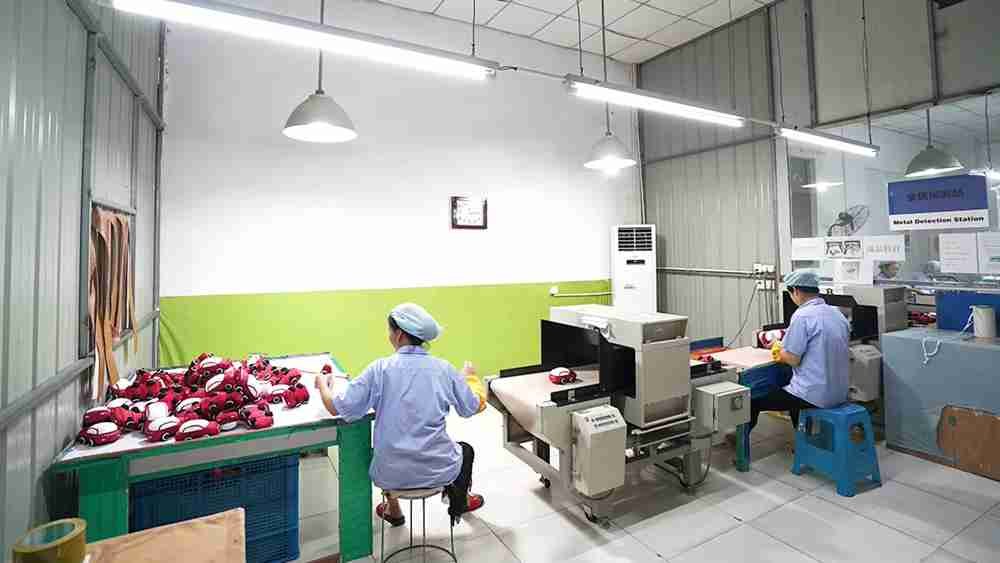
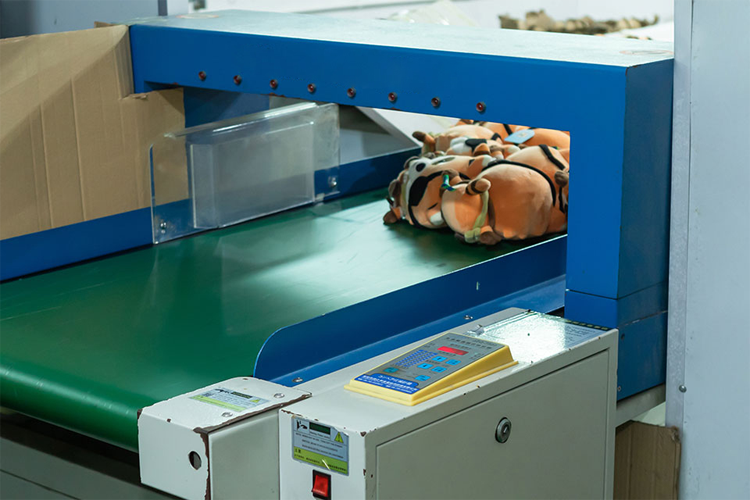
Needle control is a prevention and traceability system: it reduces the chance a fragment exists and documents response when a needle breaks. Metal detection is a verification step: it scans products to find metal contamination before packing or shipping. Many use both on higher-risk plush programs—needle control to manage behavior and records, metal detection to confirm shipments are clean.
A simple way to explain it to your team: needle control is the “why it shouldn’t happen,” metal detection is the “prove it didn’t happen.” Both matter because real factories have real incidents—needles break, blades chip, pins disappear—especially under high output.
Needle control = prevention + traceability; metal detection = verification
- Needle control answers: Who had the needle? When did it break? What was done?
- Metal detection answers: Is there metal in this unit right now?
A mature supplier can show you both the behavior system (needle control) and the verification gate (detection). The combination is common in softline manufacturing where hidden metal contamination is a known risk category.
When to use metal detection (risk-based triggers)
Metal detection is often used when:
- the program is for children or baby markets
- products have dense seams or multi-layer construction
- accessories/hardware are part of the build
- ’s vendor manual requires a detection step
It’s also used as a corrective action tool: if a needle breaks and fragments cannot be fully recovered, factories often isolate affected WIP and use detection as a safety gate before continuing. (This “isolate + verify” logic is described in broken needle handling procedures and sharp-object management guidance.)
How metal detection is managed (calibration, sensitivity, rejects, re-check flow)
If you’re , don’t just ask “do you have a metal detector?” Ask:
- How often do you calibrate?
- What sensitivity is used for this product type?
- What happens when the alarm triggers?
- Where do you record rejects and outcomes?
Industry discussions of detection highlight that detectors require calibration and defined sensitivity levels, and that a procedure is needed for alarms (isolation, re-check, locating contamination).
False alarms vs real risk — how factories avoid “pass-by-luck” shipments
False alarms happen. Foil packaging, certain trims, or nearby metal can cause triggers. The weak factories “wave it through.” The better factories do this instead:
- isolate the unit/carton
- re-scan under controlled conditions
- use a handheld detector if required
- document the outcome
- only release when the procedure is satisfied
For , the key isn’t perfection. It’s whether the factory’s response is consistent, documented, and repeatable.
How do you build a “defect prevention checklist” from sample approval to mass production, and how long should each step take?
Build a plush defect-prevention checklist by locking specs at sample stage (materials, stitch type, seam allowance, stuffing weight, artwork versions), then enforcing first-piece approval, in-line audits, and change control during mass production. The timeline depends on complexity, but a stable route usually includes: RFQ confirmation → proto sample → revision sample(s) → PP sample → bulk with documented checkpoints. The key is consistency, not speed alone.
If you only “approve a look,” bulk becomes a gamble. A prevention checklist is the opposite: it turns the project into a controlled process where the same product can be repeated across lines and reorders.
How to control stitch quality and seam strength from sample to bulk
Plush seam failure is rarely random. It comes from controllable variables. Here’s what experienced QC teams lock early:
1) Define stitch type + stitch density (not just “sew neatly”)
A spec should state:
- stitch type (e.g., lockstitch for assembly seams; overlock/serger where appropriate; cover/edge finishing if used)
- stitch density range for key seams (often expressed as stitches per inch / stitches per cm)
- thread type (polyester, bonded thread for stress zones, etc.)
Why this matters: if stitch density is too low, seam strength drops; if too high, fabric can pucker or cut into the backing, creating weakness later.
2) Control seam allowance with pattern notches + operator method sheets
For plush, seam allowance drift causes:
- shape distortion (especially in curved panels)
- uneven stuffing distribution
- seam stress concentration
A practical control method:
- notch-based alignment + visual marks
- first-piece review for seam allowance on critical seams
- in-line checks focused on the “risk seams” (head/neck seam, arm attachment, base seam, zipper corners for plush bags)
3) Reinforcement rules (where and how)
Plush needs reinforcement in predictable places:
- hang loops, keychain tabs, handle anchors
- zipper ends, corner turns, strap/webbing insert points
- accessory patches that create stiffness changes
Common reinforcement tools:
- bartack
- Box-X stitching
- binding/tape reinforcement on edges
- double-stitching only where it won’t damage appearance
4) Stress-zone map (a simple table helps your team move faster)
| Stress Zone | Typical Failure | Prevention Control |
|---|---|---|
| Hang loop / keychain tab | tearing at seam | Box-X, backing patch, stronger thread |
| Zipper end | seam burst | reinforcement stitch + seam allowance check |
| Handle anchor (plush bag) | stitch pull-out | bartack + webbing capture spec |
| Curved head seam | skipped stitches, puckers | stitch density range + notch alignment |
| Base seam / closing seam | stuffing leakage | seam finish rule + closure method |
Sample approval route (proto → revisions → PP sample → sealed sample)
A sampling route that reduces “bulk surprises” typically locks these checkpoints:
- Proto sample: confirm shape, proportions, basic construction feasibility
- Revision sample(s): confirm embroidery/printing placement, accessories, and stuffing feel
- PP sample (pre-production sample): built using intended bulk materials, bulk process, and near-bulk operators
- Sealed sample / golden sample: the “reference unit” tied to your spec sheet and photos
The PP sample is where you should freeze: materials, artwork version, stitching parameters, seam standards, and packing method.
How long should each step take? (realistic planning)
Timelines vary, but planning works best when you separate “development time” from “production time.”
Typical planning ranges (reality, not promises):
- RFQ review + feasibility feedback: 1–3 working days (depends on spec completeness)
- Proto sample: 3–7 days (complexity/material availability changes this)
- Each revision cycle: 5–12 days
- PP sample: 5–10 days (needs bulk-like materials and schedule slot)
- Mass production: based on quantity + complexity + season capacity
The biggest speed killer is unclear specs. The fastest programs are the ones where locks decisions early: fabric, face method (embroidered vs printed), accessory list, and packaging standard.
Change control — what happens when fabric lots, dye lots, or accessories change
Change control is where stable factories look different from “sample factories.” If anything changes, you need:
- a change record (what changed, why, when)
- a risk decision (needs re-approval vs internal confirm)
- photos or test evidence if the change impacts appearance or safety
- traceability mapping (which cartons are affected)
Training and workmanship standardization
A plush factory can have skilled workers and still drift in bulk if methods aren’t standardized. Look for:
- first-piece approval on each line start
- operator method sheets (photos + key steps)
- in-line audits with signatures and timestamps
- defect trend tracking (what defect, which line, which operation)
Which tests and inspections best reduce safety-related defects (pull test, seam strength, torque/tension, washability), and why are they common in plush QC?
The most useful plush QC tests focus on real failure modes: seam strength, pull/retention tests for eyes and trims, torque/tension for attached components, and washability/appearance retention where required. These tests are common because plush is frequently squeezed, tugged, and dropped—so small parts, seams, and hardware must stay secure under foreseeable handling. Standard selection depends on market, age grade, and product type.
Testing is not about creating paperwork. It’s about simulating predictable stress before your customer does it for you.
Seam strength testing — what it validates and when to test
Seam strength checks answer one question: “Will this seam hold under normal use?”
For plush, a practical approach is:
- test on high-risk seams (closing seam, arm/leg attachment seam, base seam)
- test when you change fabric lot, thread type, or stitch settings
- test at PP stage and early bulk (first production day)
Even a simple internal seam pull check (with defined method and pass/fail criteria) can catch weak settings before thousands of units are made.
Pull / torque / tension tests for eyes, noses, hang loops, keychains, and trims
Accessories are where small issues become big claims. Your QC plan should include:
- pull tests for eyes/noses and sewn-on parts
- tension tests for hang loops and keychain tabs
- torque tests for rotating components (where applicable)
What should ask for is not a vague “we test,” but:
- which parts are tested
- test frequency (per lot / per shift / per order)
- what happens if a unit fails (hold + investigate + corrective action)
Washability and appearance retention (pile, color bleed, deformation)
Not every plush requires wash testing, but when it does, it prevents the most common consumer complaints:
- pile matting or shedding after wash
- color bleeding or shade change
- deformation from improper stuffing density or fabric backing weakness
- print cracking or embroidery distortion
If your program is for retail or a branded line with care labels, wash behavior matters because it becomes part of customer expectations.
“Foreseeable use”— how decide what tests are necessary
Doesn’t copy random tests. They match tests to product reality:
- a baby plush needs stricter small-part retention logic
- a keychain charm needs tougher loop/hardware retention testing
- a plush bag needs zipper function + handle anchor durability checks
- an oversized plush needs seam control because loads and handling increase with weight
Test records and acceptance criteria — how factories document pass/fail for audits
The difference between “we do testing” and “we’re audit-ready” is documentation. Useful records include:
- test name, method, sample quantity
- lot/date/line info
- pass/fail criteria
- result + signature
- corrective action if failed
A simple “QC evidence pack” makes audits faster and reduces back-and-forth.
Example: Safety-related test matrix (easy to use)
| Product Type | Highest-Risk Parts | Suggested Routine Checks |
|---|---|---|
| Baby plush | eyes/nose, seams, trims | pull checks + seam checks + stricter needle control |
| Keychain plush | loop tab, ring, stitches | loop tension checks + reinforcement verification |
| Plush bag | zipper ends, handle anchors | seam checks + reinforcement checks + zipper function |
| Printed-face plush | print durability | wash/abrasion checks + artwork version control |
How to compare a plush manufacturer’s QC system (process, records, price impact), and what should you ask during supplier qualification?
Compare plush manufacturers by how well they control process, not how confidently they talk. Strong suppliers can show: IQC/IPQC/FQC structure, PP sample discipline, defect trend tracking, needle control documentation, and clear responses to failures (CAPA). should ask qualification questions that force specifics: which checkpoints, how often, who signs off, what records exist, and what happens when something fails. Price only makes sense after risk is visible.
When you source plush, you’re not just buying a product. You’re buying repeatability. The right QC system protects your brand, your timeline, and your reorder stability.
How to audit quality control in a plush factory (on-site or remote)
You don’t need to be a QC engineer to run a strong audit. You need a structure.
1) Walkthrough checkpoints (what to look for)
- Material storage: clear labeling, lot separation, clean environment
- Cutting area: pattern control, pile direction rules, defect marking
- Embroidery/printing: file version control, placement guides
- Sewing lines: first-piece approval display, in-line QC station presence
- Stuffing area: stuffing weight control method, cleanliness, shape references
- Finishing: trimming standards, cleaning process, defect repair discipline
- Packing: barcode accuracy checks, carton mark control, deformation prevention
2) Record review (the real proof)
Ask to see a recent:
- IQC report set (fabric/accessories)
- in-line audit logs (IPQC)
- finished goods inspection report (FQC)
- broken needle log + needle inventory control
- CAPA records for a recent defect
- training records (at least for key operations)
If they can’t show records, assume the control is weak—even if the sample looks good.
3) Sample-to-bulk consistency proof
Ask for:
- PP sample photos and sign-off process
- sealed sample handling (where stored, who can access)
- change history control (how changes are approved and recorded)
RFQ-stage questions that expose real capability (do/is/are/which)
These questions are designed to reduce “sales answers”:
- Which inspection checkpoints do you run (IQC/IPQC/FQC/pre-shipment), and who signs each report?
- Do you have a broken needle procedure, and what happens if a needle fragment cannot be found?
- Is stitch density defined for key seams, and how do you verify it on the line?
- Are stuffing weights controlled by target grams, and how often do you verify?
- Which defects are treated as critical (zero acceptance) for children’s plush?
- How long does PP sample + bulk scheduling typically take after materials are confirmed?
- Do you support third-party inspections, and which stage do you recommend for this product?
Price vs risk — what QC controls change cost and lead time
sometimes assume QC is “free.” In reality, higher control can increase cost, but it reduces expensive failures.
Controls that can increase cost/time:
- extra in-line audits and re-checks
- stricter needle control or metal verification
- added reinforcement steps
- upgraded accessories/hardware
- more protective packing to prevent deformation
- third-party inspections or lab testing (when required)
But here’s the trade-off: these controls reduce returns, reduce rework, and stabilize reorders. For many programs, stable bulk is cheaper than “cheap production + expensive problems.”
Best practices for long-term consistency (reorders and scaling)
If you want stable reorders, ask the factory how they do:
- lot tracking (fabric/accessory lots tied to production dates)
- defect trend tracking (defects by line/operation)
- repeat order process (reuse of sealed sample + spec pack)
- seasonal capacity planning (how they avoid rushing that breaks controls)
Supplier comparison scorecard (simple and useful)
| QC Area | What “good” looks like | What “risky” looks like |
|---|---|---|
| Checkpoints | IQC/IPQC/FQC + pre-shipment | “We do 100% check” only |
| Records | signed logs + traceability | no recent records available |
| PP discipline | PP + sealed sample control | sample looks good, bulk unclear |
| Needle control | clear procedure + logs | vague answers |
| Change control | documented approval | changes happen informally |
Ready to build a plush program with stable bulk quality?
If you’re tired of “nice samples” that turn into unstable bulk, start with a tighter QC route. Share your plush type, target market, approximate order quantity, and your branding plan (custom / private label / OEM/ODM). Our team in Guangdong can help you structure your spec pack, define inspection checkpoints, recommend the right needle control option, and build a practical defect-prevention checklist that keeps bulk consistent.
Send your inquiry to: info@heyzizi.com
Include (if available): reference photos, size, target fabric, logo method, and your expected delivery window.
FAQs — Quality Control for Custom Plush (Defect Prevention, Checkpoints, Needle Control)

What defects do most often miss during sampling, then regret in bulk?
Most sampling problems come from this gap: the sample looks fine, but the bulk process standard was never locked. The “missed” defects are usually not dramatic; they’re small drifts that pile up across thousands of units. Common ones include stitch density changes (seams look okay but weaken), seam allowance drift (shape changes, faces shift), stuffing weight variation (some units feel “flat,” some too hard), and embroidery placement drift (eyes or mouth slightly off-center). Another big one is accessory retention—eyes, noses, hang loops, keychain tabs, zipper ends. In a sample room, a skilled operator may reinforce by instinct. On the line, that instinct is not consistent unless it’s in writing.
If you want fewer surprises, treat the sample stage as a “standard-setting stage,” not a “beauty stage.” Ask your factory to define: stitch type + stitch density range, reinforcement points, stuffing target weight per size, placement guides, and packing method (compression limits). At Heyzizi, we recommend a PP sample built under bulk-like conditions so the approval unit matches real production, not a one-off perfect sample. For a fast review, send your reference photos and market info to info@heyzizi.com and we’ll propose a QC lock list for your plush type.
Which inspection checkpoints should a plush factory use, and why can’t “final inspection only” protect quality?
A plush factory that wants stable bulk should run checkpoints in layers: IQC (incoming materials), IPQC (in-line/in-process), FQC (finished goods), and pre-shipment checks (carton/SKU/labels). Final inspection only is late and expensive because it turns QC into sorting. Sorting can catch visible issues, but it does not stop repeat problems like weak seams, stuffing inconsistency, or embroidery drift—those come from how the line is running.
Here’s a simple way to see it:
| Checkpoint | What it prevents | Typical benefit |
|---|---|---|
| IQC | bad fabric lots, wrong accessories | fewer “whole-lot” failures |
| IPQC | process drift (stitch/seam/stuffing) | stable workmanship across lines |
| FQC | appearance + labeling + packing issues | fewer returns and rework |
| Pre-shipment | wrong SKU/carton marks | fewer warehouse rejections |
If your program is private label or retail-facing, “last-minute fixes” can damage pile, leave needle marks, or distort the plush shape. That’s why a layered checkpoint plan is the practical route. If you share your plush type and order size, Heyzizi can recommend a checkpoint plan that matches your risk level and budget—email info@heyzizi.com.
How do you control stitch quality and seam strength in a way that stays consistent across workers?
The short answer: you control seams by turning “sew neatly” into measurable rules, then checking those rules early. Seam strength is driven by stitch type, stitch density, thread choice, seam allowance, and reinforcement design. If any of those are left vague, different operators will fill the gap with personal habits, and bulk will drift.
A strong control approach usually includes:
- A written stitch standard for key seams (example: head/neck seam, limb attachment, closing seam, zipper ends on plush bags)
- A defined stitch density range for stress seams (not one number—use a range to allow machine tuning)
- A seam allowance target with visual alignment cues (pattern notches, marks, guides)
- A “stress-zone map” showing exactly where to add bartack, Box-X, binding, or backing patches
- First-piece approval at line start and after any machine adjustment
Most don’t need to become sewing engineers. You just need the factory to show you the standard in photos and records. If you want, send one sample photo and your product use case (toy vs keychain vs plush bag), and we’ll suggest the seam risk zones and reinforcement plan for your model. Contact: info@heyzizi.com.
What is needle control, and when should I require it for custom plush?
Needle control is a tracking system for sewing needles and sharp tools. The goal is simple: reduce the chance that a broken needle fragment ends up hidden inside the plush. Plush fabrics can be thick and forgiving, which is great for comfort—but it can also hide tiny metal fragments if the factory isn’t disciplined.
You should strongly consider needle control when:
- your plush is for children, baby, or sensitive markets
- your product is a small plush charm or mini plush (handled close to face)
- your design has dense seams, curves, or multi-layer appliqué
- your plush includes hardware (keychain ring, zipper, buckles)
A good needle control system includes: controlled issuance (operators don’t keep random spares), a broken needle log, supervisor verification, and a clear rule for what happens if a needle breaks. For higher-risk programs, factories often add an extra verification gate (sometimes combined with detection—see the next FAQ).
If you’re not sure what level to ask for, tell us your target market and product structure. Heyzizi can suggest a needle control option that matches your risk and requirements. Email info@heyzizi.com.
Needle control vs metal detection: do I need one or both?
Think of it like this: needle control is the behavior and traceability system; metal detection is a verification step. Needle control answers “who had the needle and what happened.” Detection answers “is there metal inside this unit right now.”
When choose both:
- high-volume programs where one incident could affect many cartons
- children’s plush programs
- products with dense seam areas, accessories, or hardware
- with strict vendor manuals
When choose needle control only:
- lower-risk adult gifting plush
- simple structures with fewer high-stress operations
- small orders with close in-line control
When choose detection only (less common as a standalone):
- factories that use detection as the last gate but lack strong needle discipline (this is not ideal)
If you want a practical approach, ask the factory for a written procedure: calibration checks (if using detection), what they do when the alarm triggers, how they isolate work-in-progress, and how they document outcomes. We can share -friendly checklist so you can compare suppliers on real controls, not marketing language. Contact info@heyzizi.com.
How do you prevent sample-to-bulk deviation in plush manufacturing?
Most “bulk surprises” come from missing controls, not bad intentions. Preventing sample-to-bulk deviation means locking the bulk standard before mass production starts and forcing every line to follow it.
A solid route includes:
- Confirm materials and accessories by spec (fabric type, pile direction, backing, filling type, eye/nose model, hardware finish)
- Lock artwork files and placement guides (embroidery/printing version control)
- Build and approve a PP sample that uses bulk materials and bulk methods
- Create a simple workmanship spec: stitch type, stitch density range, seam allowance, reinforcement points, stuffing target weight
- Use sealed sample storage and controlled access (so the reference unit doesn’t disappear)
- Apply change control: if a fabric lot or accessory changes, record it and decide whether re-approval is needed
Here’s a quick “lock list” like:
| Item to lock | What can drift | What to request |
|---|---|---|
| Fabric lot | shade/hand-feel | approved swatch + lot notes |
| Stitch settings | seam strength | density range + seam photos |
| Stuffing | feel/shape | target grams + tolerance |
| Embroidery files | facial alignment | file version + placement guide |
If you share your product type and the markets you sell to, Heyzizi can propose a lock list tailored to your plush so the bulk result matches what you approved. Email info@heyzizi.com.
What should be included in a “QC evidence pack” so my team can approve faster?A QC evidence pack is the fastest way to reduce back-and-forth. Instead of “trust us,” it gives your team proof that standards were checked and recorded. A strong pack is not huge—it’s clear.
Common items include:
- IQC reports (fabric/accessory checks with lot info)
- IPQC in-line audit logs (what was checked, when, by whom)
- FQC report summary (defects found, pass/fail, actions)
- needle control logs (if required)
- photos of key workmanship points (reinforcement zones, seam finish, face placement)
- packing check: barcode scan, carton marks, assortment count
- corrective action notes if an issue happened (what changed and how it was verified)
Why this helps: your team can approve based on evidence, not guesswork. It also helps when you reorder months later—your supplier can repeat a standard rather than “remembering.” If you want, we can share a simple template that fits custom plush programs (toy, charm, plush bag) and doesn’t overwhelm your inbox. Contact info@heyzizi.com.
How do you set defect standards (critical/major/minor) for plush, and what should be zero-tolerance?
Defect standards work best when they match your market and product risk. The usual structure is critical / major / minor. For plush, critical defects are often treated as zero-tolerance because they can create safety risk or compliance exposure—especially in children’s programs. Examples: loose small parts, sharp edges, contamination concerns, or any hazard that could harm a user.
Major defects are the ones that get your shipment rejected by cause high returns: open seams, obvious embroidery misplacement, wrong size beyond tolerance, missing labels, incorrect barcodes, wrong assortment. Minor defects are cosmetic issues that don’t impact function (small thread tails, tiny pile direction variation).
A practical approach is to define examples in your spec pack so inspectors don’t guess. If you want a clean start, share your product photos, target age grade (if relevant), and sales channel (retail vs gifting vs promo). Heyzizi can help you write a defect guide that your supplier, third-party inspector, and warehouse all interpret the same way. Email info@heyzizi.com.
What are the key control points in plush production that actually reduce defects?
The control points that matter are the ones that change outcomes, not the ones that “look organized.” In plush manufacturing, defects often come from a few repeat zones:
- fabric control (shade, pile direction, backing stability)
- cutting accuracy (panel symmetry, correct orientation)
- embroidery/printing placement (file version + location guides)
- sewing operations (stitch settings, seam allowance control)
- stuffing and shaping (target weight and shape reference)
- closing seam (leakage prevention and seam finish)
- accessory install (retention checks)
- packing (deformation prevention, label/barcode accuracy)
If you want quick wins, the most cost-effective controls are:
- first-piece approval at line start
- frequent in-line checks for high-risk seams
- simple stuffing weight checks by size
- accessory retention spot checks
- pre-shipment carton/SKU verification
These are small actions, but they stop “drift.” If you tell us your plush type and where you’ve had failures before, we can recommend which control points to tighten first—without overloading your schedule. Contact info@heyzizi.com.
How should I audit a plush factory’s QC system if I can’t visit in person?
Remote audits can still be strong if you ask for the right proof. The biggest mistake is asking for a “certificate list” and calling it a day. Instead, request a live video walkthrough plus recent records.
friendly remote audit package:
- Live video: material warehouse, cutting, embroidery/printing, sewing lines, QC stations, stuffing, packing
- Show first-piece approval on a line (not just a clean corner of the factory)
- Ask to see a real IQC report, IPQC log, FQC report, and (if relevant) needle control log from the last 30–60 days
- Ask one “failure scenario” question: What do you do if a needle breaks and the fragment can’t be found?
- Ask for a small set of “proof photos”: reinforcement zones, seam finish, packaging and carton marks
If a supplier can’t show recent records, assume the system is weak. Heyzizi can support remote audits with clear documentation and line-level proof so you can make decisions without guesswork. Email info@heyzizi.com.
What testing should I plan for plush: pull tests, seam checks, washability, torque/tension?
Testing should match your product’s real stress points and your market rules. The best tests are the ones that prevent common failures:
- seam strength checks on high-stress seams
- pull/retention checks for eyes, noses, trims, hang loops, keychain tabs
- torque/tension checks for parts that rotate or get twisted
- washability and appearance retention when your care labels or retail channel demands it
The mistake is either “test nothing” or “test everything.” A smarter route is a test matrix based on product type:
| Plush type | Highest risk | Suggested routine checks |
|---|---|---|
| Baby/children plush | small parts, seams | retention + seam checks + strict records |
| Keychain plush | loop/hardware | loop tension + reinforcement checks |
| Plush bag | zipper/handle anchors | seam checks + zipper function + anchor checks |
| Printed-face plush | print durability | abrasion/wash checks + file control |
If you share your target market and whether your plush is a children’s product, we can advise a practical testing plan that protects you without wasting time. Contact info@heyzizi.com.
Does stronger QC increase price? If yes, what parts drive cost the most?
Yes—sometimes. But the more useful question is: what costs more, better QC or fixing failures after shipment? Stronger QC can raise cost because it adds labor, time, and sometimes better materials. The biggest cost drivers are usually:
- extra in-line audits and re-checks
- more reinforcement steps (bartack, Box-X, backing patches)
- stricter needle control procedures (and verification steps if required)
- upgraded accessories (higher-grade eyes, hardware, zippers)
- stronger packaging to prevent deformation and retail damage
- third-party inspections or lab testing when the market requires it
Here’s a simple view:
| Spend area | Adds cost? | Saves money by reducing |
|---|---|---|
| Reinforcement | ✅ | seam failures, returns |
| Better accessories | ✅ | breakage claims |
| Better packing | ✅ | deformation complaints |
| Records + checkpoints | ✅ | bulk drift, rework |
If your budget is tight, we can prioritize controls that give the biggest risk reduction per dollar. Tell us your sales channel and complaint history, and we’ll tailor a QC plan that fits. Email info@heyzizi.com.
What information should I send to get a fast, accurate quote for a plush program with QC controls?
To quote correctly, a factory needs more than a picture. If the goal is stable bulk quality, the factory must understand what drives risk and cost. The most helpful info includes:
- plush type (toy/charm/pillow/plush bag) and target usage
- size, target weight/feel, and any “must keep” features
- target fabric type (or similar references) and color count
- face method: embroidery vs printing (or mixed)
- accessory list (eyes/nose, keychain, zipper, labels, hangtags)
- target market (children’s vs general), compliance expectations
- order quantity range and delivery window
- packing requirements (individual bag, hangtag, carton marks, barcodes)
If you don’t have all details, that’s okay. Send what you have and tell us what you’re unsure about. We can fill gaps by proposing options and showing the cost impact. Email your RFQ to info@heyzizi.com and we’ll reply with a clear build route, QC checkpoints, and a sampling plan.
How do I know if a plush manufacturer can handle private label / OEM/ODM without bulk inconsistency?
Private label success is not about “can they make it once.” It’s about repeating the same product over time. A capable OEM/ODM plush manufacturer can show:
- a controlled PP sample route and sealed sample handling
- defined workmanship standards (stitch density range, seam allowance, reinforcement map)
- checkpoint records (IQC/IPQC/FQC) with sign-offs
- a change control habit (fabric lot changes don’t happen silently)
- traceability basics (production dates, lot separation, carton ID mapping)
- a clear answer on needle control (if your market needs it)
If you want a quick test, ask one question: “If I reorder in 6 months, how do you keep the same feel, face placement, and seam strength?” The best factories will answer with process steps and records, not vague promises.
If you want Heyzizi to evaluate your plush design and propose a bulk-stable QC route, email info@heyzizi.com with your reference images and target market details.