 Skip to content
Custom Character Plush Manufacturer
Bulk-Ready, Repeatable, Brand-Safe
Custom character plush works best when the design is translated into a repeatable production system—materials, face method, pattern accuracy, and QC checkpoints stay consistent from sample to bulk. This page explains how we build brand-safe character plush with controlled embroidery/appliqué options, clear sampling stages, and documented specs to reduce sample-to-bulk drift. If you’re sourcing for retail, promotions, or IP programs, use the checklists and comparison tables here to evaluate feasibility, MOQ, lead time, packaging, and reorder stability.
Custom Character Plush Manufacturer (OEM/ODM)
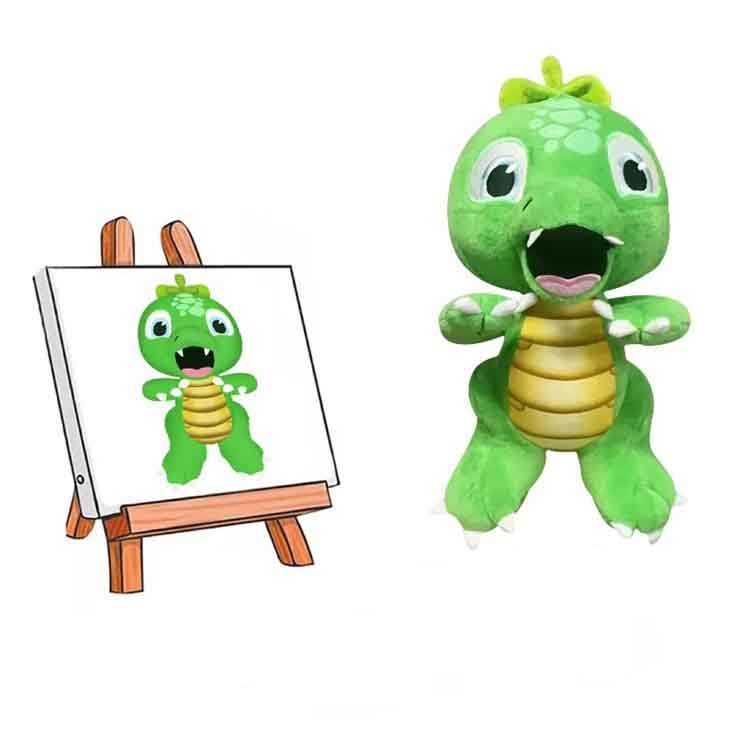
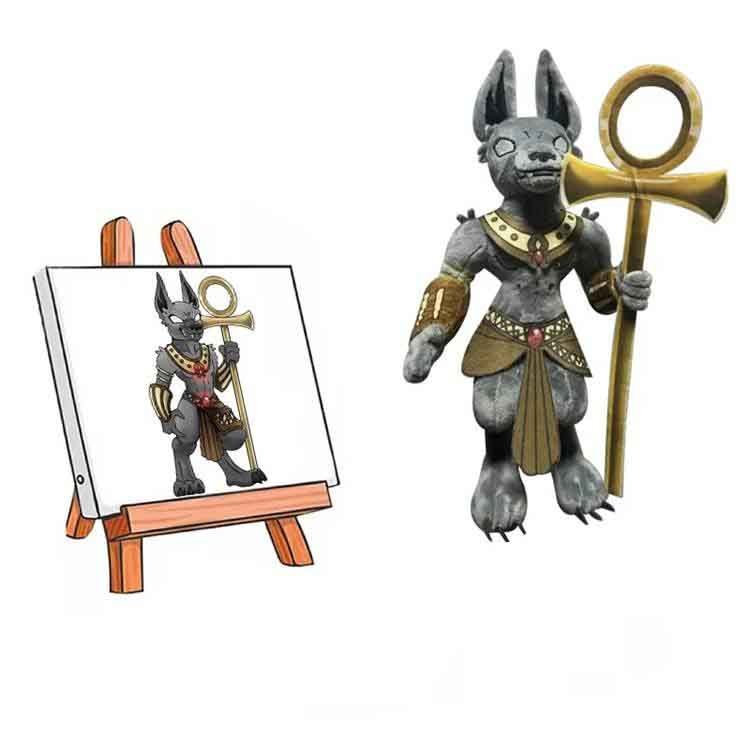
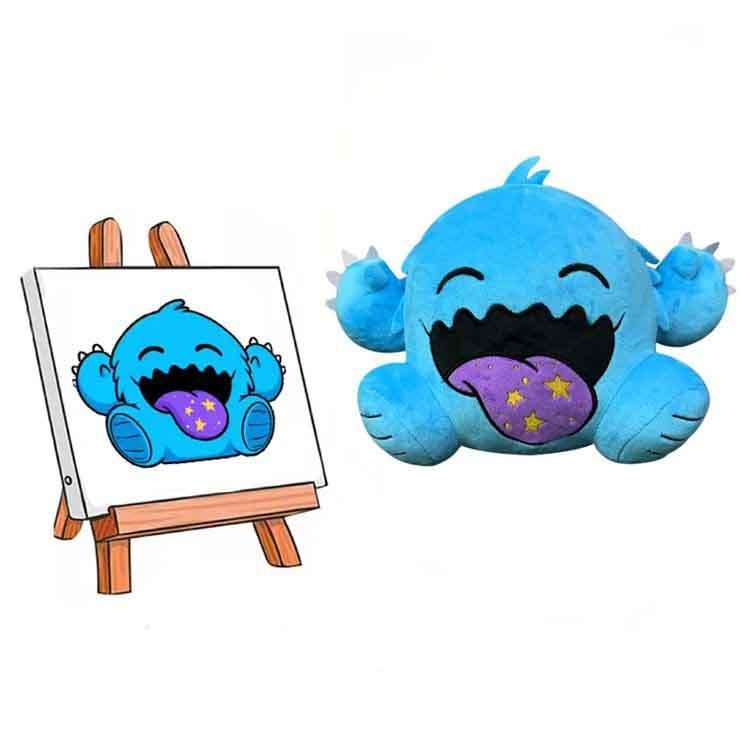
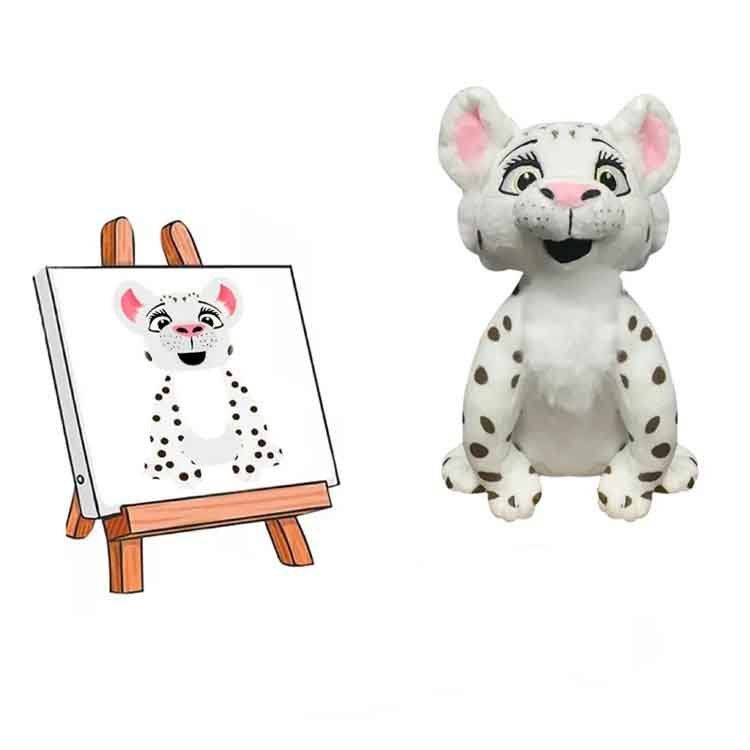
If your character plush looks great as a prototype but becomes inconsistent in bulk, the issue is rarely “luck.” It’s usually missing a production system: clear specs, stable patterns, controlled materials, and defined QC checkpoints. Heyzizi is a Guangdong, China–based B2B plush development and manufacturing partner built for overseas buyers who need repeatability, not one-off samples. We support brands, licensing projects, promotional programs, and retail collections by turning artwork into a manufacturable structure with controlled stitching, defined facial methods, and stable stuffing feel—so your bulk shipment matches your approved sample and your reorders stay consistent.
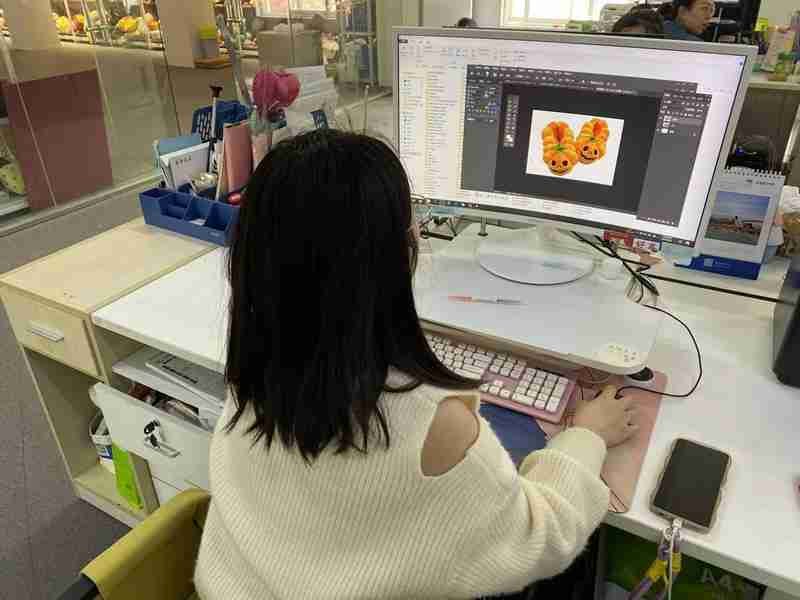
Character plush is a brand product, not a generic item. That means your buying decision should focus on bulk consistency, risk control, and execution speed—not only the unit price. Our model is built around in-house collaboration: an international sales team that understands RFQ logic and documentation, a product development team that checks manufacturability and cost breakdown, a design team that refines appearance details, and an in-house pattern & sampling room that prevents prototypes from becoming “one-time works.”
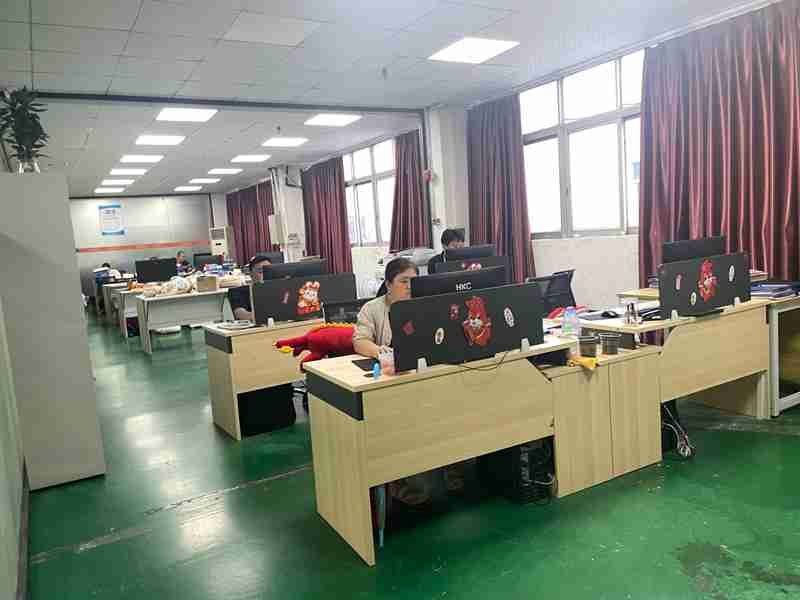
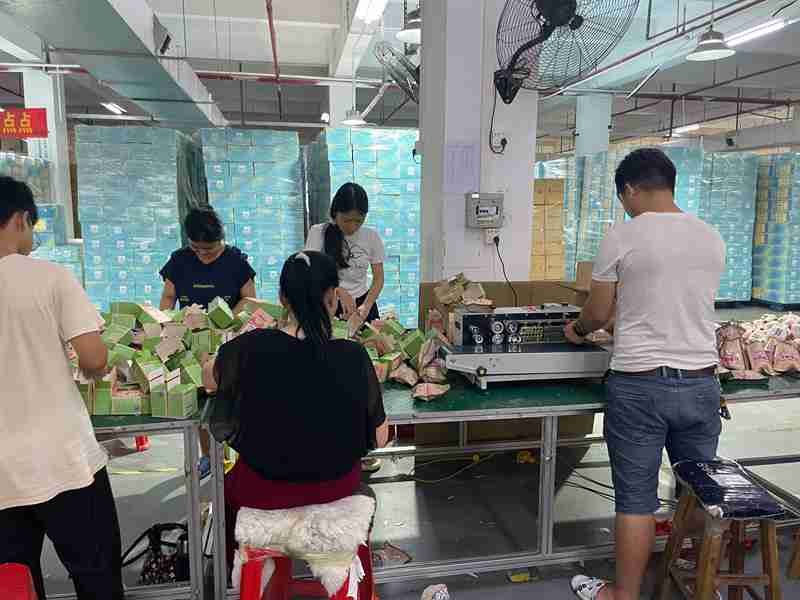
On the factory side, scale matters because character plush often has multiple materials, embroidery/printing combinations, and accessory safety points. Heyzizi operates with 600+ employees and an approximately 18,000㎡ facility to coordinate production, inspection, packing, and warehouse handling in one workflow.
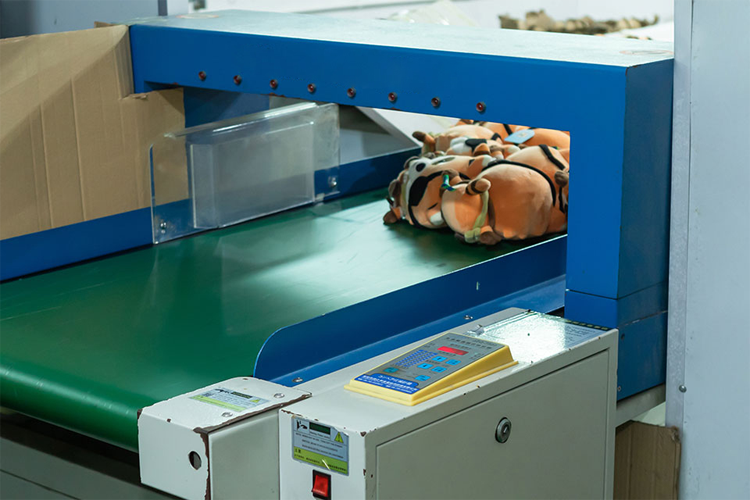
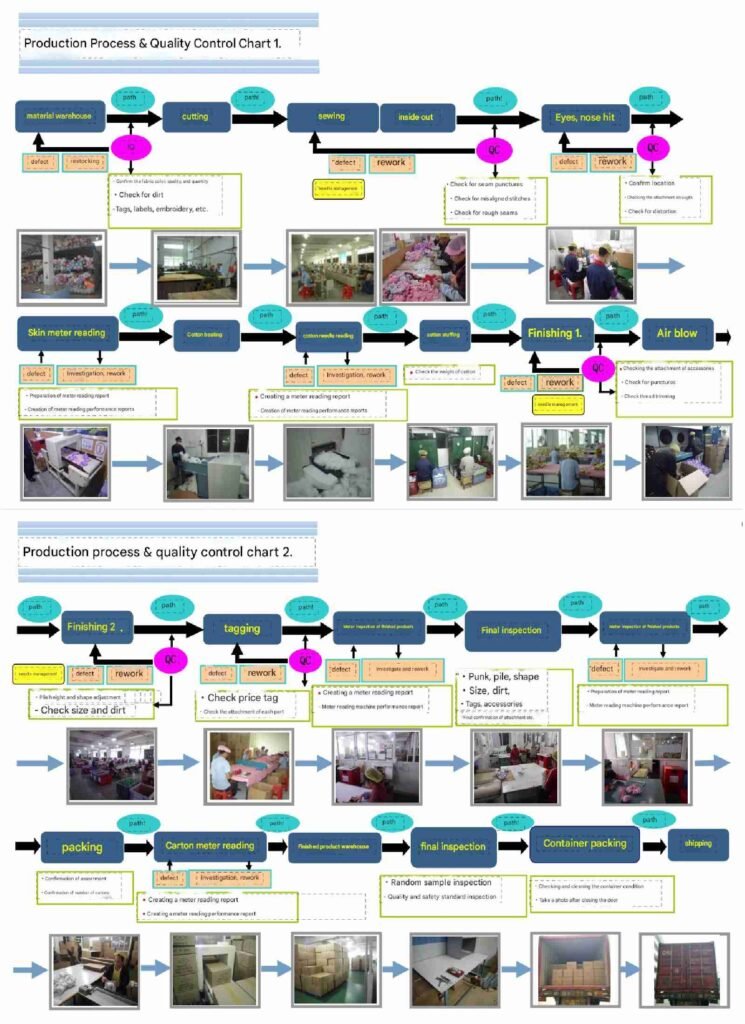
Quality is treated as a system, not a promise. Plush is easy to make once, but hard to reproduce at scale—so we drive inspections across incoming materials, in-process work, finished goods, and packing with a dedicated QC team and testing equipment focused on dimensions, stitching strength, and accessory safety.
If you want a fast evaluation, share your artwork + target size + target market + estimated order quantity. If needed, you can send files to info@heyzizi.com (use it when attachments are large).
Custom Character Plush
From Core Doll to Merch Collection (SKU Planning)
A character plush program becomes profitable when it’s planned as a SKU system, not a single item. Brands often start with one “hero plush,” then expand into keychains, pillow styles, mini versions, and seasonal variants. Without a plan, costs rise and approvals slow because each new version becomes a fresh development project. We help you build a character plush lineup that fits your channel: retail, e-commerce, events, licensing, or gifting. The goal is to standardize what should be standardized—face method, base pattern logic, material families—while leaving room for controlled variations like outfits, colorways, and packaging formats.
We support a wide range of plush forms because plush is not limited to toys. Plush fabrics plus accessories (zippers, webbing, buckles, linings, hangtags, labels) can be turned into classic plush dolls and functional plush merchandise.
For character plush, the most common commercial expansion path is:
Core Character Plush Doll (main seller)
Mini Plush / Keychain (high-frequency add-on)
Pillow / Body Pillow (higher ticket)
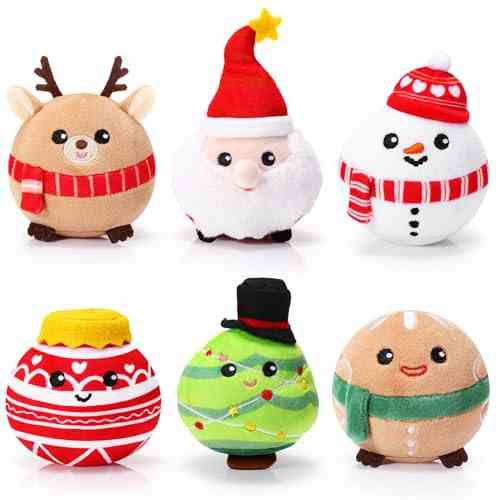
Outfit / Seasonal Variant (repeat purchase driver)
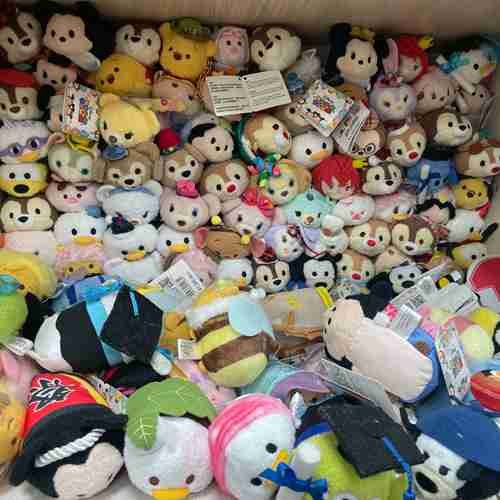
Gift set or bundle (program rollouts)
To make this workable, we recommend locking one reference sample as the master standard, then reusing its verified elements: face template, stitch route map, seam allowance rules, stuffing target feel, and accessory safety rules. Variants are then built by changing only what is needed: size scaling, clothing pieces, packaging, or material texture.
This approach reduces risk in two places that often suffer: (a) “approved sample vs bulk drift,” and (b) “new SKU = new defects.” It also improves your quoting accuracy because material usage and labor steps become predictable.
| SKU Type | Use Case | Notes for Production Stability |
|---|---|---|
| Core Plush Doll (15–30cm) | Retail / licensing | Lock face method + pattern first |
| Mini Plush (3–10cm) | Keychain / promo | Control tolerance + small embroidery |
| Pillow / Body Pillow | Premium / gift | Define inner structure + packing |
| Outfit Variant | Series launch | Standardize base body, change clothing only |
| Bundle / Gift Set | Programs / events | Plan pack-out, inserts, carton marks |
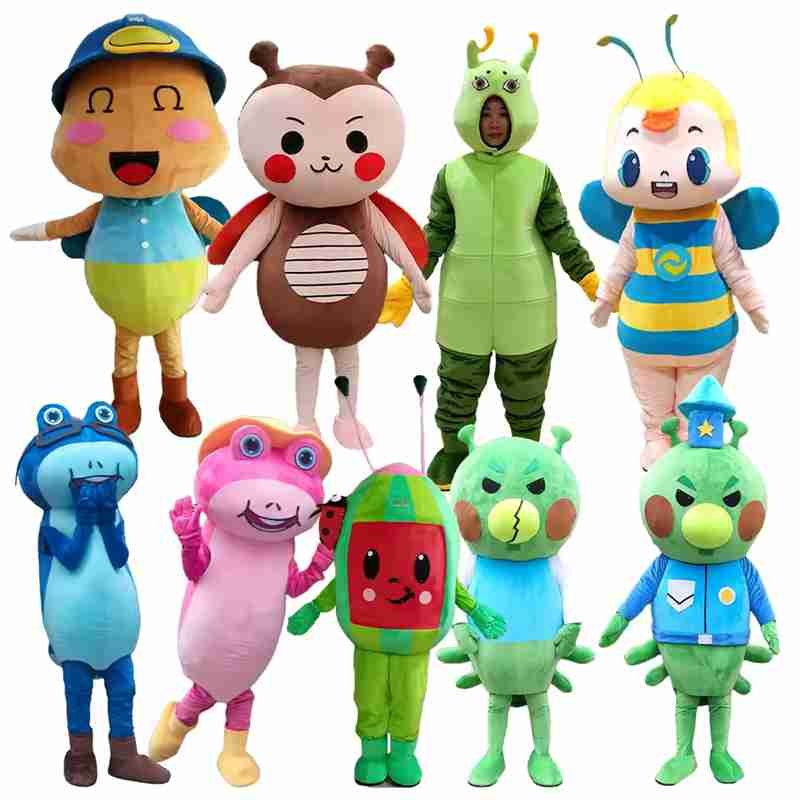
Core Character Plush Doll
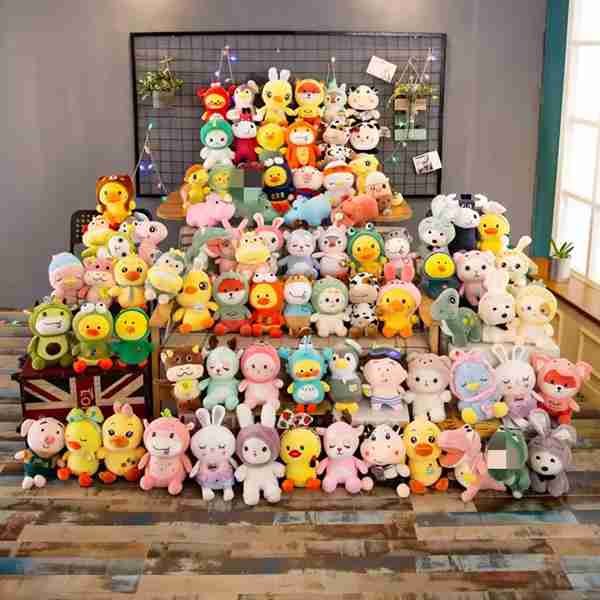
Mini Plush / Keychain
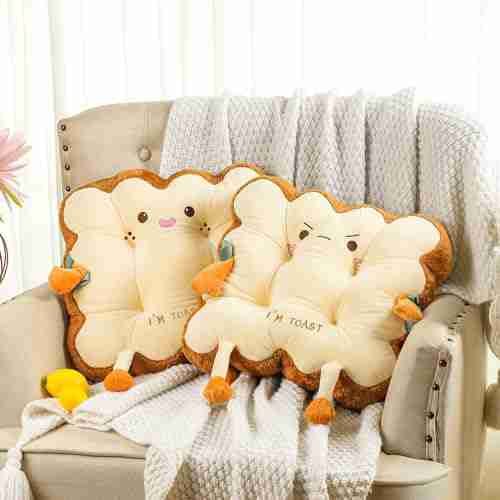
Pillow / Body Pillow
Outfit / Seasonal Variant
Gift set or bundle

Other Character Plush
Development Workflow
A Production-Ready Workflow — So the Sample Can Be Reproduced in Bulk
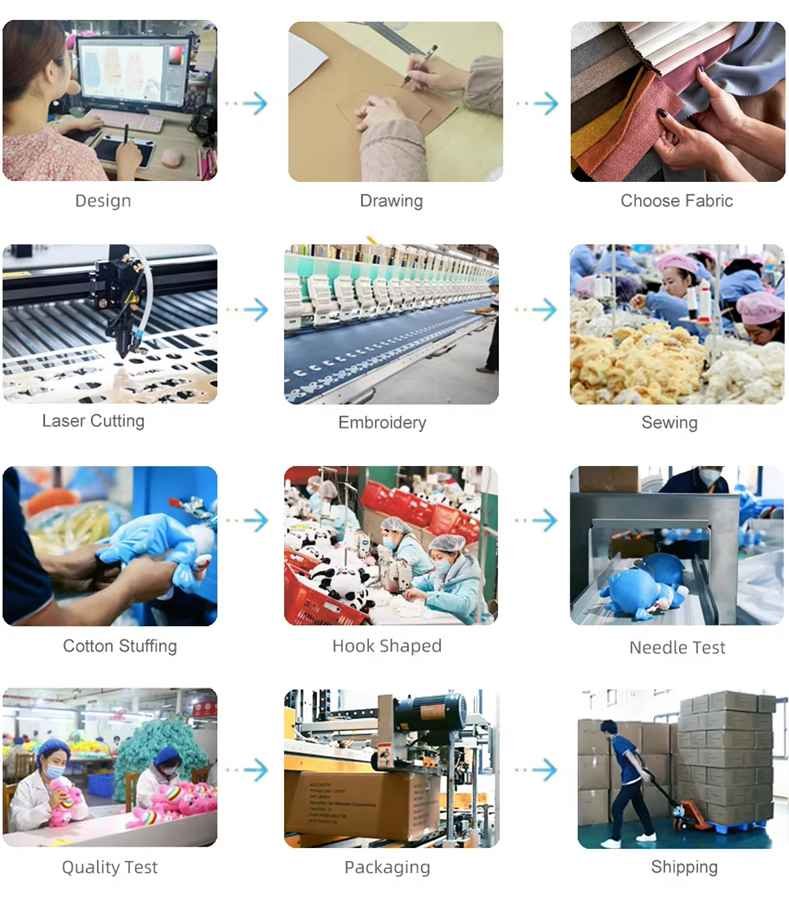
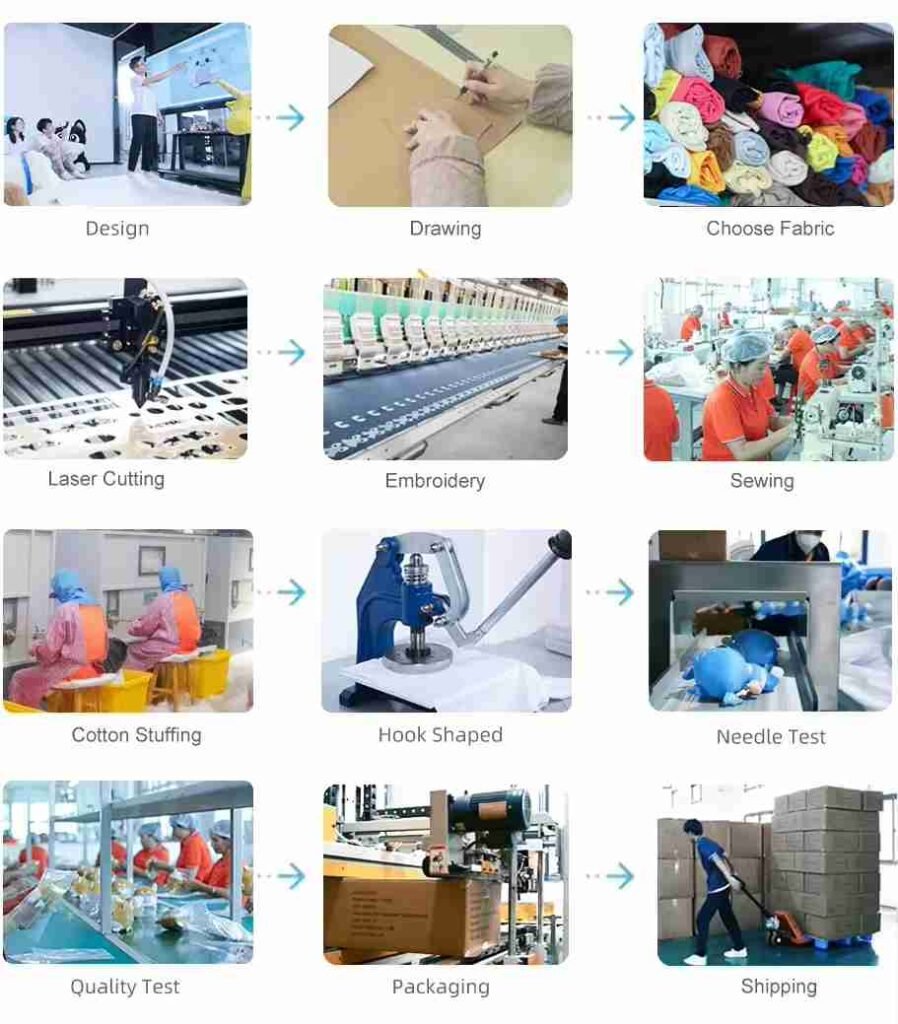
Most delays in character plush programs happen before mass production: unclear requirements, incomplete files, and repeated “small changes” that force pattern rework. A fast, stable project uses a workflow where each stage produces an output that becomes the next stage’s input—cleanly and consistently. We build development around clear roles: RFQ translation, manufacturability check, pattern development, sample build, sample revision lock, and bulk execution. This reduces avoidable back-and-forth and makes your approval decisions easier because changes are recorded as controlled updates, not vague chat history.
Our internal organization supports executable projects: international sales converts your requirements into a workable schedule and factory-executable specifications; product development reviews structure and process feasibility; design refines appearance details; and the in-house pattern & sampling room turns prototypes into repeatable production standards.
Below is a workflow that works well for character plush and also reads clearly to procurement teams:
| Stage | What You Provide | What We Deliver |
|---|---|---|
| RFQ | Artwork + size + market | Quote inputs + timeline plan |
| Feasibility | Brand rules + must-have details | Process plan + risk notes |
| Spec sheet | Approval for key standards | Dimension & tolerance + BOM |
| Sample | Feedback based on photos/video | Revised sample + change log |
| Bulk | PO + packing rules | QC plan + shipment-ready pack-out |
01 RFQ Intake
Target Size, Target Market, Expected Quantity, Required Compliance, Packaging Format
02 Feasibility Review
Facial Method Selection (Embroidery/Printing), Accessory Safety Plan, Material Options
03 Spec Sheet Draft
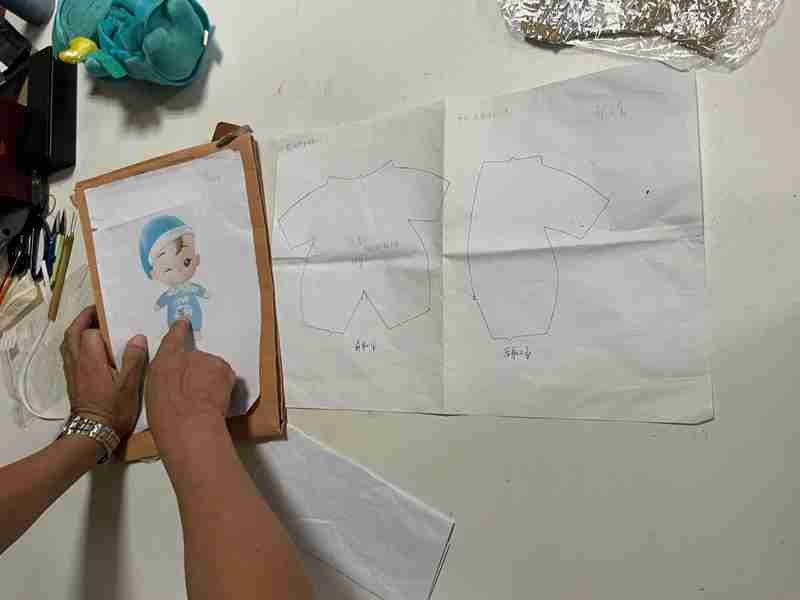
Dimensions + Tolerance, Stitching Map, Seam Allowances, Label Positions
04 Prototype Sample

First Sample Built From Controlled Materials and accessories
05 Revision Round

controlled change list (what changed, cost/lead time impact)
06 Golden Sample Lock
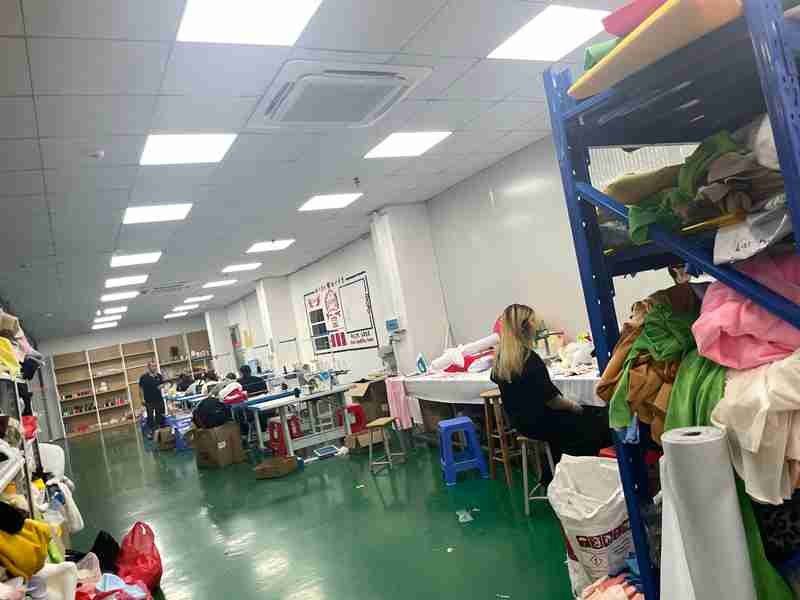
signed/dated reference sample + final BOM
07 Pilot Bulk
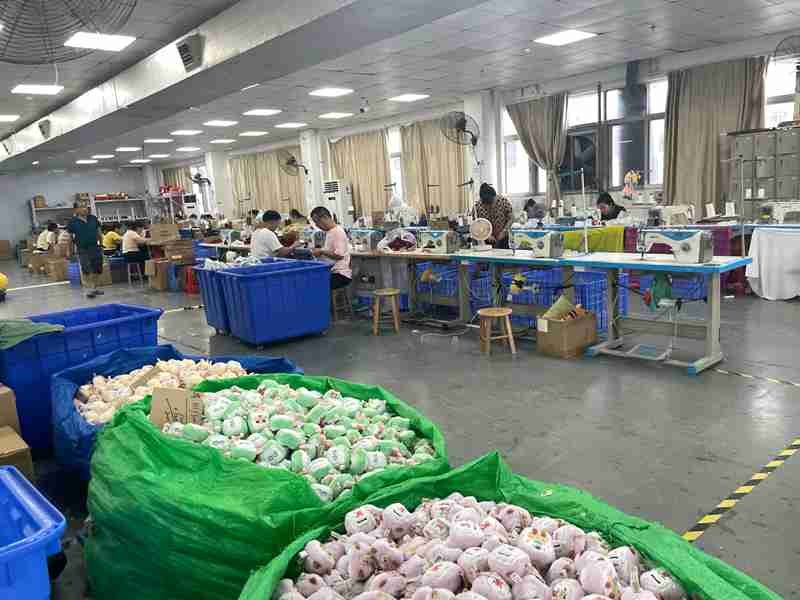
small run to verify repeatability
08 Mass Production + QC
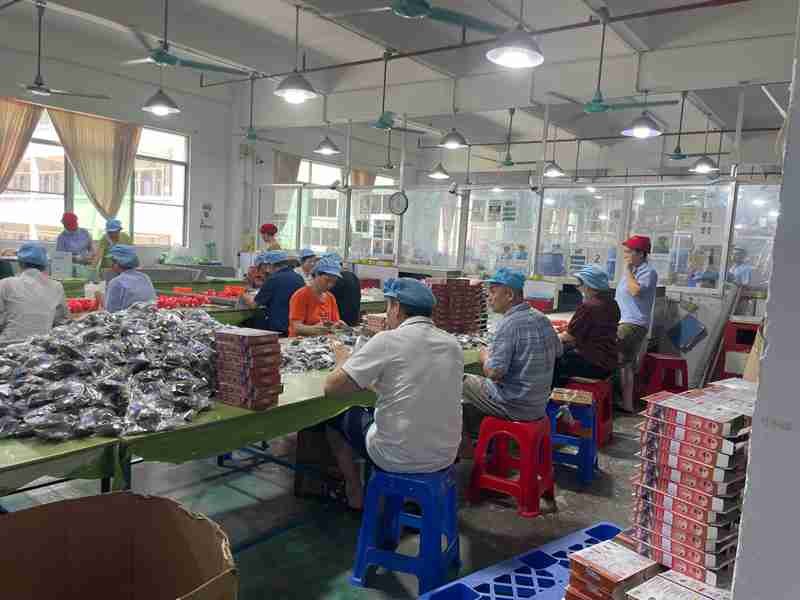
inspections across materials, process, finished goods, packing
This workflow prevents a common bulk failure: “the factory made what they understood,” not what you meant. When requirements are translated into a controlled spec sheet, your bulk outcome becomes predictable.
Embroidery vs Printing for Character Faces
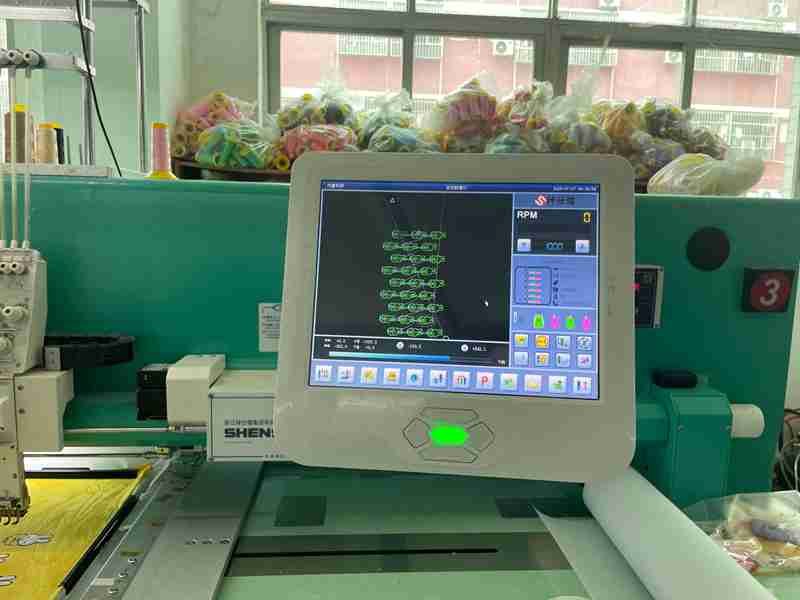
Your plush face decides customer perception in one second. In bulk production, the face is also the easiest place for inconsistency: misaligned embroidery, color shift in printing, or expression changes caused by seam stretch. Choosing the right face method is less about “which looks nicer” and more about matching your channel, budget, durability requirements, and compliance expectations. We help decide by turning the choice into a controllable standard: stitch density, thread color references, print files, placement tolerances, and QC checkpoints. Once the face method is locked, we build patterns and stitching routes to protect the expression across hundreds or thousands of units.
We recommend locking a “face master” file: stitch file or print file, placement coordinates, and a tolerance range. Then QC checks a small set of measurable points: eye-to-eye distance, brow angle, mouth centerline, and symmetry.
Comparison Table
| Method | Best For | Bulk Risks | How We Control It |
|---|---|---|---|
| Embroidery | Durable, textured faces | Distortion on plush pile | Stabilizer + hoop control + tolerance |
| Printing | Detailed art, gradients | Color drift, abrasion | Color reference + method match + tests |
| Hybrid | Balanced look | Mixed process alignment | Face panel standard + placement map |
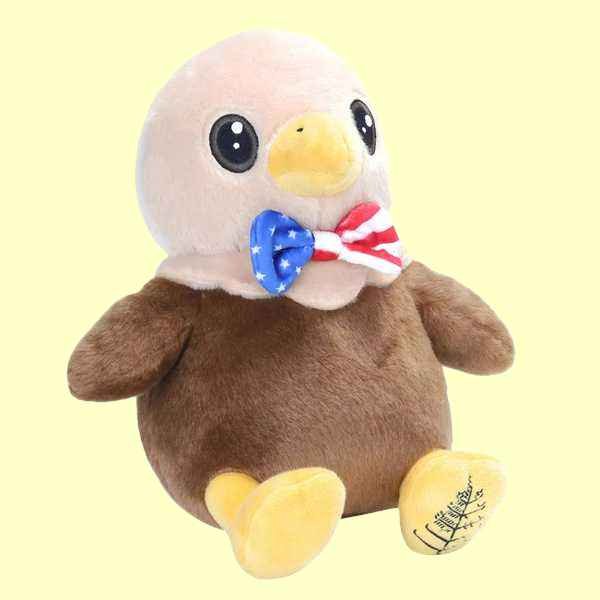
Embroidery
When to choose Embroidery
- You need a premium look with texture and strong durability
- You want consistent expression on a stable fabric surface
- Your character has simple shapes (eyes, brows, mouth) that suit stitch routes
Risk to manage: embroidery on stretchy plush can distort; solve with stabilizer backing, controlled hooping, and placement tolerance.
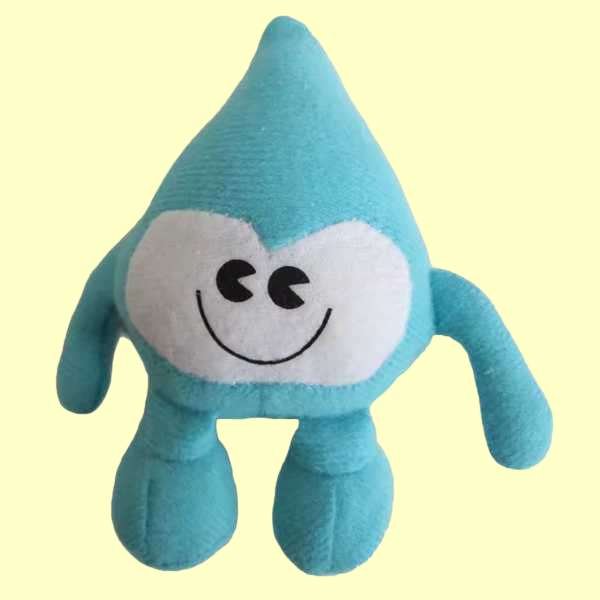
Printing
When to choose Printing
You need gradients, complex color blocks, or illustrated details
You want fast changes for seasonal variants
You need lower unit cost for high-volume promo items
Risk to manage: print color drift and abrasion; solve with approved color references, print method choice, and rubbing tests (as required by your market).
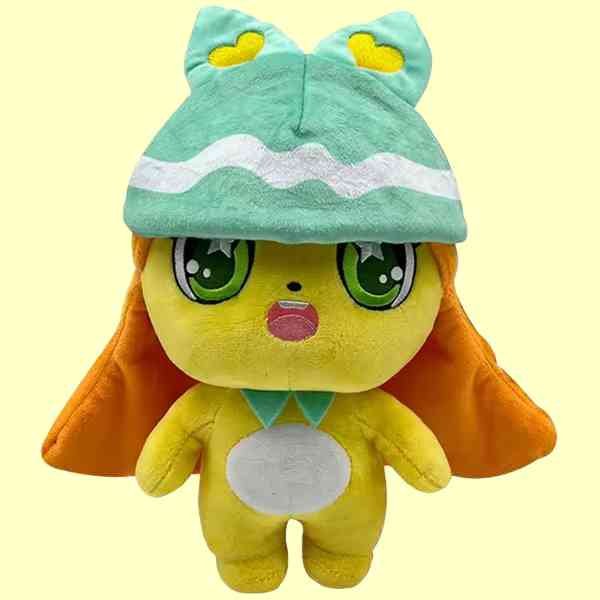
Hybrid
Hybrid (common for character plush)
Embroidered eyes + printed blush
Printed face panel + embroidered outline
Hybrid works well when you want both definition and color detail.
Use This Decision Logic To Reduce Bulk Risk
Pattern Engineering for Character Plush
Protecting Shape and Expression in Bulk
A character plush is judged by tiny details: the curve of a smile, the tilt of eyebrows, the distance between eyes. These details are not only “design”—they are outcomes of pattern geometry, seam allowances, stitching routes, and panel tension. When a plush moves from sample to mass production, expression drift usually comes from small pattern changes, inconsistent sewing tension, or uncontrolled stretch in key panels. That’s why character plush should be treated like structured soft goods: define the load paths, identify stress points, lock seam allowances, and create a clear stitch route map. If the pattern and construction rules are stable, bulk becomes repeatable.
Our internal workflow connects design intent to manufacturable structure: international sales collects RFQ and target market constraints; development checks feasibility; design refines appearance; and the in-house pattern & sampling team converts the character into a repeatable pattern set.
For character plush, we recommend building a construction map that includes:
Panel hierarchy: which panels define the face and silhouette (critical) vs which panels are cosmetic (non-critical)
Seam allowance rules: fixed seam widths for critical panels
Stitch route map: sewing order to reduce distortion
Stuffing sequence (added): fill order + density targets to protect symmetry and prevent panel pull
Symmetry checkpoints: measurable points (eye-to-eye, mouth centerline, brow angle)
Stress-zone reinforcement: attachment points for ears, tails, keychains, accessories
This is the difference between “one nice sample” and “a manufacturing standard.”
We also prevent common failure modes: twist seams in limbs, uneven stuffing causing asymmetry, and accessory anchors tearing out. We treat accessory points as engineered zones—define base fabric reinforcement, stitch pattern (box-X or bartack where needed), and QC pull-check criteria.
For multi-SKU families, we reuse verified pattern logic and only change what’s necessary (size scaling, clothing pieces). That reduces the risk of new defects every time you add a variant.
| Construction Element | What We Lock | Why It Matters |
|---|---|---|
| Critical Face Panels | Panel shape + seam allowance | Controls expression stability |
| Stitch Route Map | Sewing order + tension notes | Reduces distortion drift |
| Stuffing Sequence | Fill order + density targets | Prevents asymmetry and panel pull |
| Accessory Anchors | Reinforcement + stitch pattern | Prevents tear-out |
| Symmetry Checkpoints | Measurable points | QC can verify, not guess |
Plush Materials & Handfeel Control
How We Keep Bulk Feel Consistent?
For character plush, the “feel” is part of the IP experience. Two units can look similar in photos but feel completely different in hand: one is soft and resilient, the other feels flat, lumpy, or overstuffed. often discover this only after bulk arrives, because handfeel is affected by a full system—fabric pile, backing stability, stitching tension, seam allowances, and stuffing type/weight distribution. To avoid rework and customer complaints, you need a material system that is defined before sampling and enforced during production. We treat material selection as a repeatable spec, not a vague preference, and we document it in a way your team can approve.
We structure material decisions in three layers: outer fabric, inner structure, and filling system. Many character plush issues come from mixing “nice-looking” fabrics that are not stable for embroidery/printing or that shift under seam tension. Our development team helps translate the artwork into fabric families that can hold facial alignment and maintain shape in bulk.
For bulk consistency, we define measurable targets instead of subjective words: pile length range, fabric GSM, stretch direction, stitch density guidance, stuffing weight per size, and a stuffing distribution map (head vs body vs limbs). Then QC checks these inputs at receiving and during production to reduce drift.
We also plan for commercial realities: if you need cost control, we propose “material tiering” (A/B options) that keeps the face method stable while allowing controlled substitutions for non-critical panels. If you need premium feel, we prioritize stable plush piles and backing that protect embroidery edges and reduce printing blur.
Finally, we align material selection with packaging: a soft plush with long pile can crush easily, so we define anti-deformation packing early (inner bag, carton fill, stacking rules). This is where many lose consistency—packing is treated as an afterthought, but it changes the final customer experience.
| Material Layer | Decisions | Bulk Risk If Ignored | Control Method |
|---|---|---|---|
| Outer Fabric | Pile length, GSM, stretch direction | Face distortion, color shift | Fabric family lock + incoming check |
| Inner Structure | Reinforcement, panel stability | Shape collapse, seam twist | Panel rule + stitch route |
| Filling System | Fiber type, weight, distribution map | Lumps, flat feel, asymmetry | Weight target + stuffing zoning |
| Accessories | Thread, zippers, labels, keychain… | Safety/appearance issues | Approved BOM + placement |
Outer Fabric
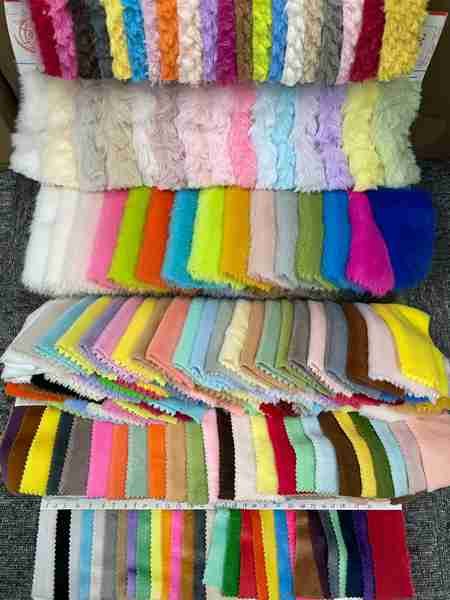
Pile length, GSM, stretch direction
Inner Structure
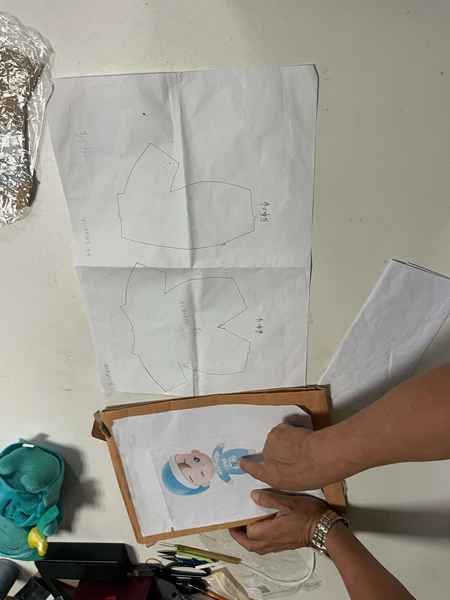
Reinforcement, panel stability
Filling System
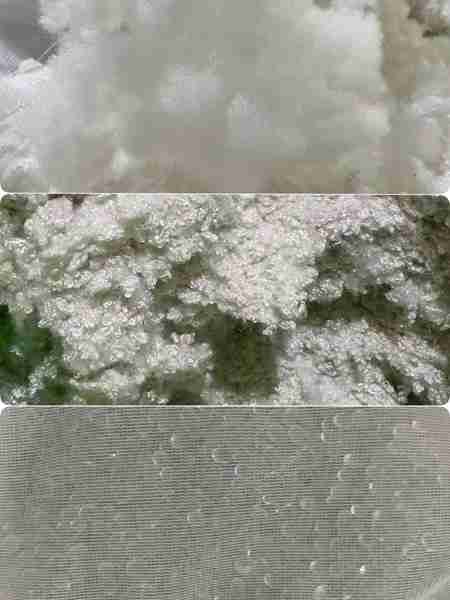
Reinforcement, panel stability
Accessories
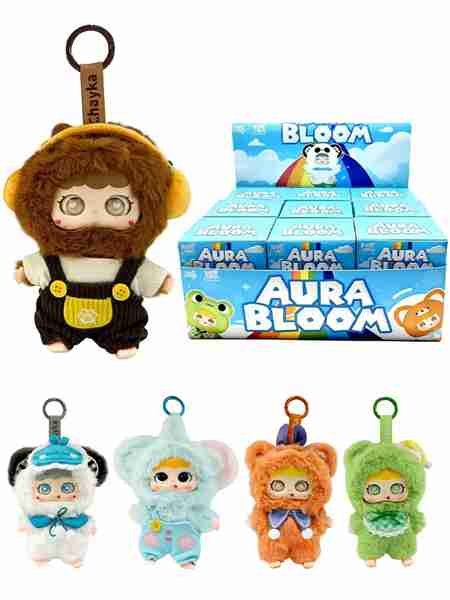
Thread, zippers, labels, keychain
IP Character Plush Development
(2D Artwork → 3D Production-Ready Plush)
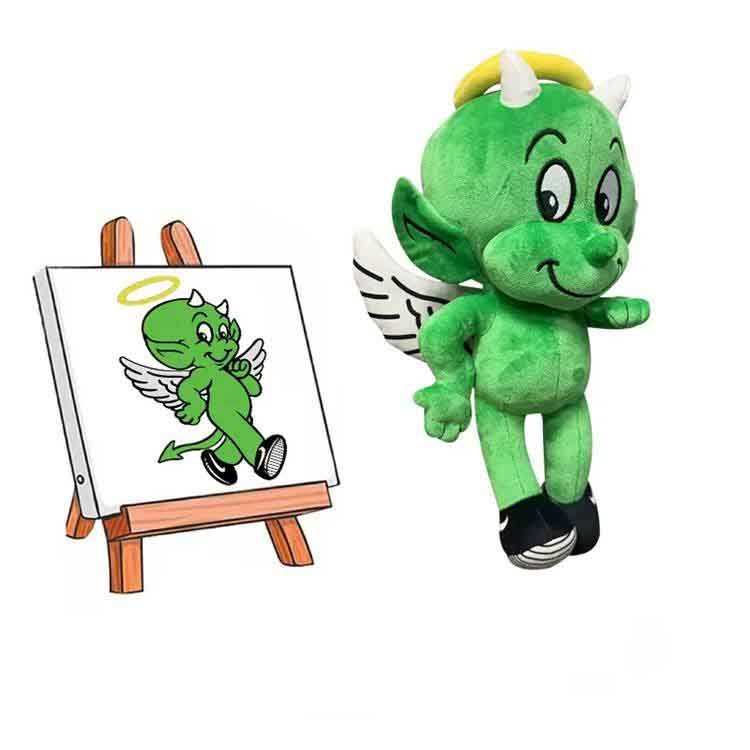
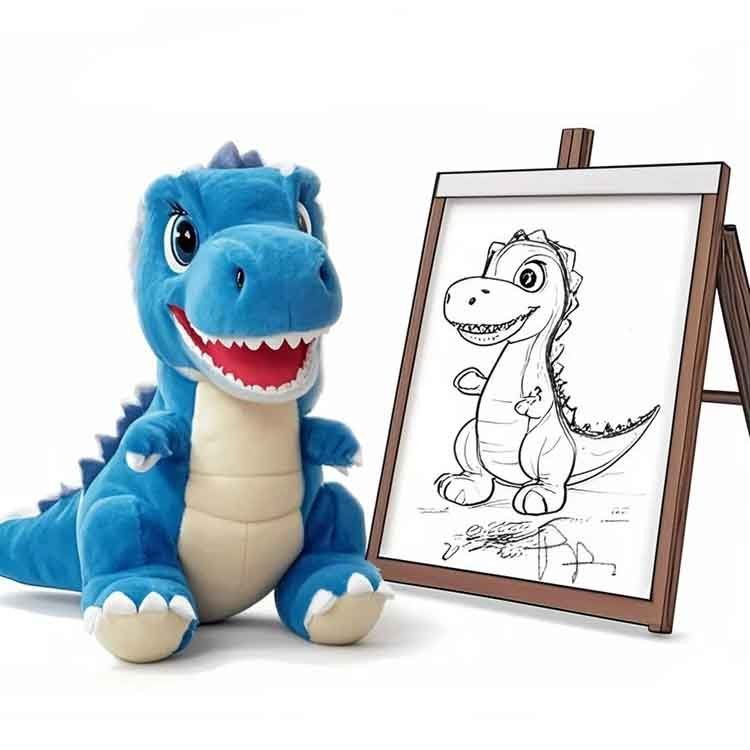
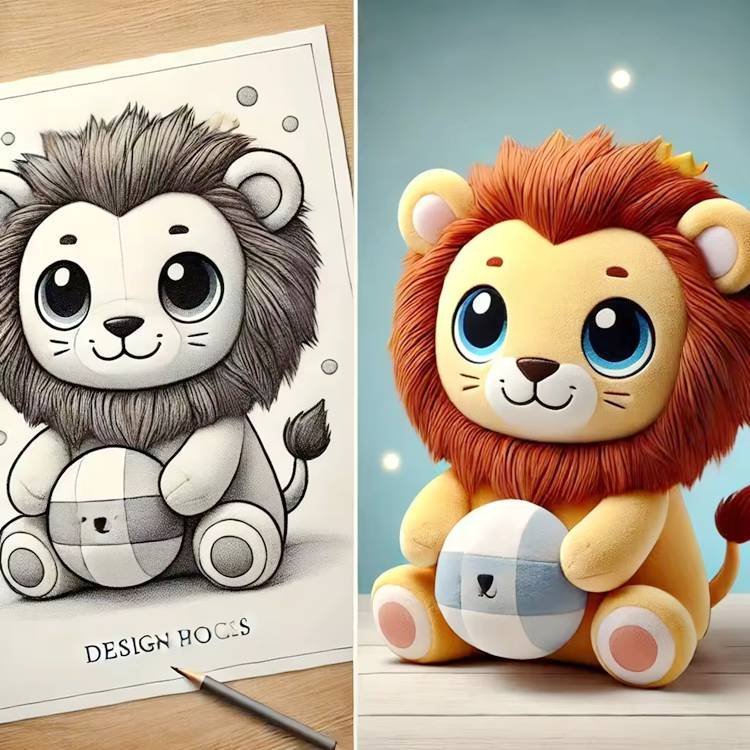
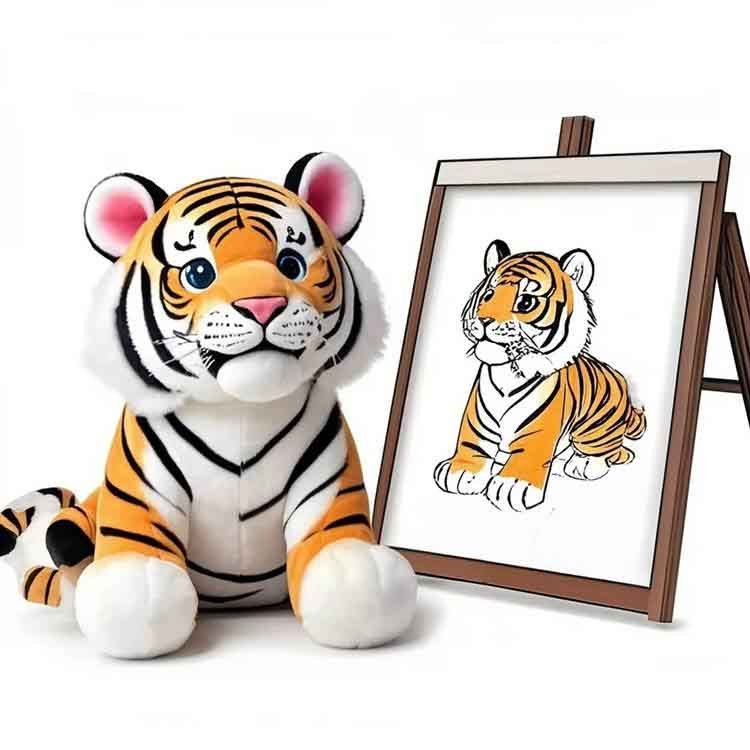
IP plush development is a translation process. The key is protecting recognizable character features while keeping the structure stable for mass production. A good factory does not only “make a sample”—it builds a repeatable spec standard.
Many character plush projects face common issues: proportions change, facial expressions drift, stitching lines look messy, or the bulk version doesn’t match the approved sample. We reduce those risks by defining clear feature priorities and building a production-ready spec.
- Pattern Engineering for Repeatability
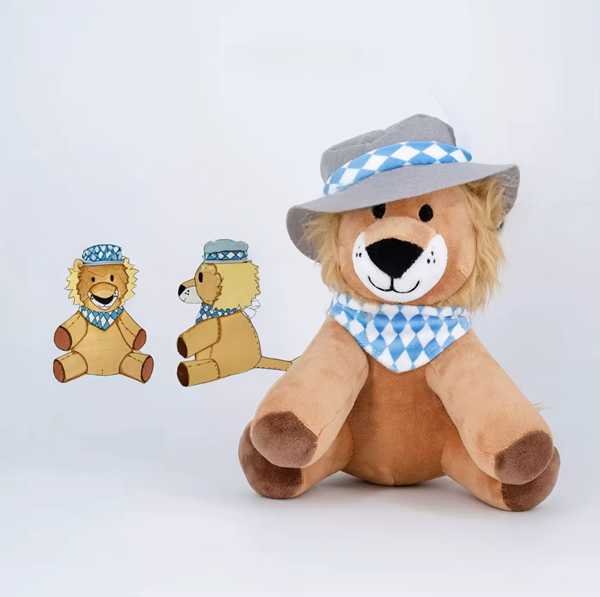
- Define seam lines and embroidery zones for clean finishing
- Create pattern templates that keep proportions stable
- Confirm material choice to match the character style (soft vs structured)
- What we confirm before sampling (feature priority)
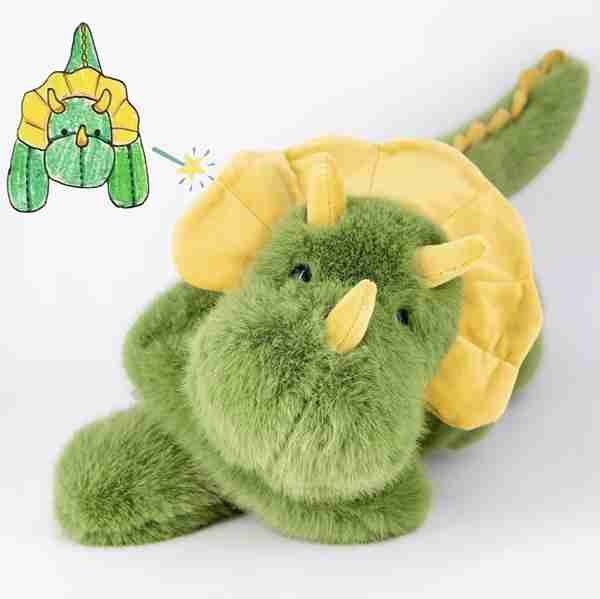
- Face recognition: eye shape/position, mouth expression, signature details
- Silhouette: head-to-body ratio, ear/limb size, tail shape
- Key identity elements: color blocks, accessories, clothing pieces
- Feasibility points: what should be embroidery, what should be print, what needs structure suppor
- What we confirm before sampling (feature priority)
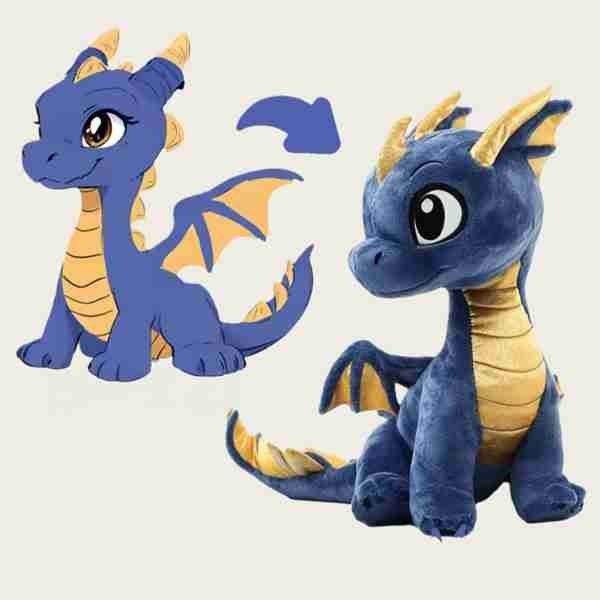
- Use the approved sample as a golden standard
- Lock measurements, embroidery placement, and accessory attachment methods
- Add QC checkpoints focused on the “character-critical” areas (face and silhouette)
Sampling, Revisions & Approval Points
Sampling is not only “making one plush.” It is the stage where specifications, appearance, durability, and packaging are confirmed. Clear approval points prevent bulk production surprises and protect your reorder consistency.
usually want predictable management: what you send, what we deliver, how revisions are tracked, and what becomes the final production standard. That’s why we document approvals and revision notes clearly.
Typical sampling flow
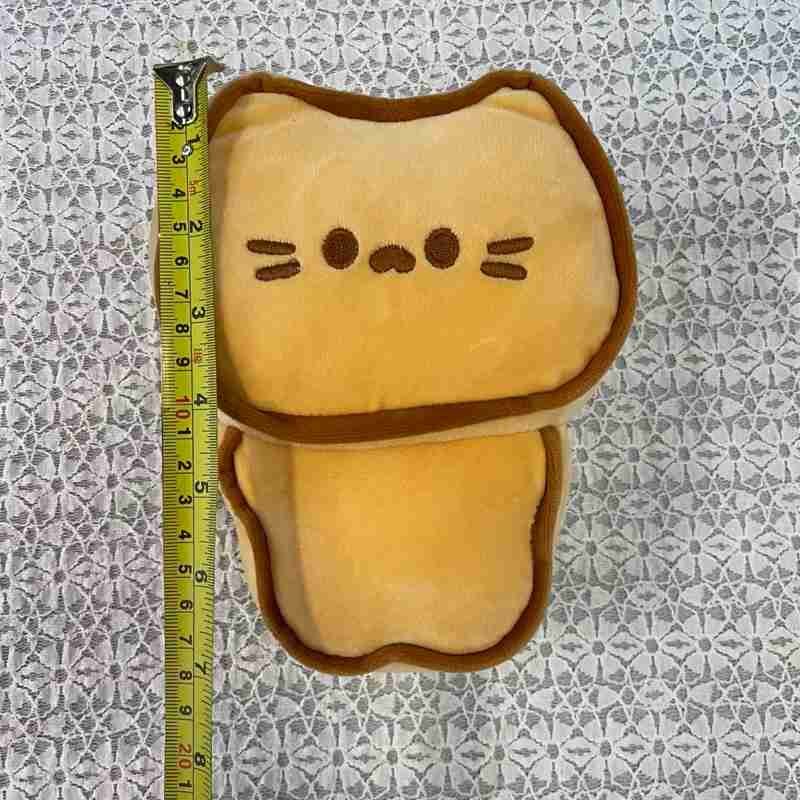
- Prototype sample — shape, face, embroidery/printing, handfeel
- Revision rounds — adjust proportion, details, stitching, color tone, accessories
- Final approval sample — locked as the golden standard for bulk
Common revision topics

- Face expression, embroidery density, eye/mouth placement
- Stitching lines and seam quality
- Fabric color tone and pile length feel
- Stuffing firmness and weight consistency
- Accessory attachment stability
- Packaging method to protect plush shape
What you receive
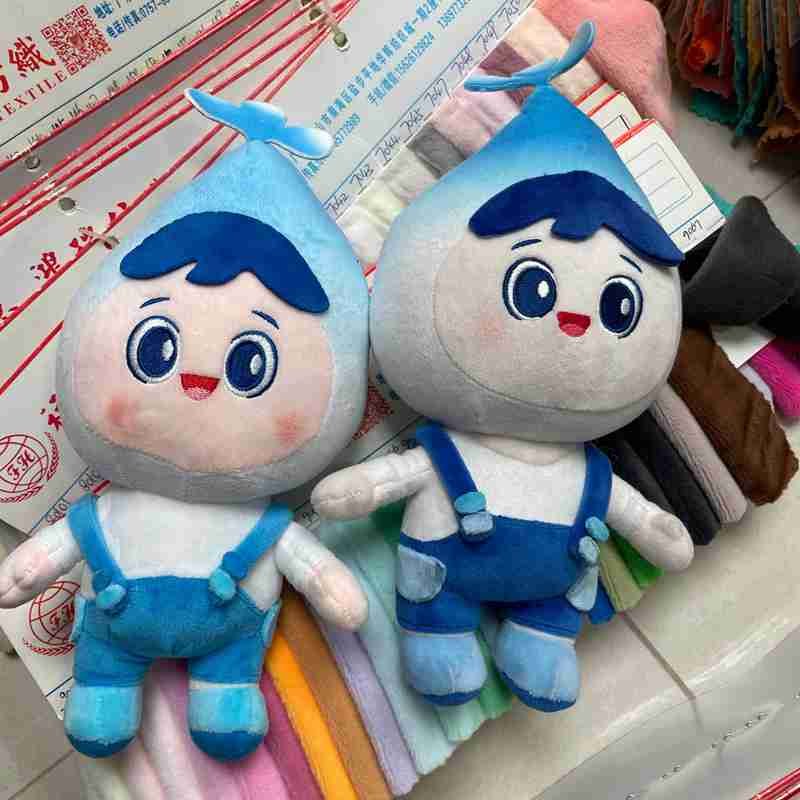
- Photos/videos for each sample stage
- Key measurements confirmation (size, proportion)
- Branding placement confirmation (logo/labels/hangtags)
- Revision notes (what changed and why)
- Approval checklist before bulk production
Manufacturing Details That Define Plush Quality
In custom plush manufacturing, quality is decided by repeatable details—stitching density, seam reinforcement, embroidery alignment, stuffing control, shaping, and finishing standards. These controls reduce defects and keep your bulk orders consistent with the approved sample.
Many factories describe plush as “soft and cute.” B2B buyers need something different: workmanship standards that can be repeated across thousands of units. Below are the production details we focus on because they directly affect durability, appearance, and customer experience.
Stitching & Seam Construction
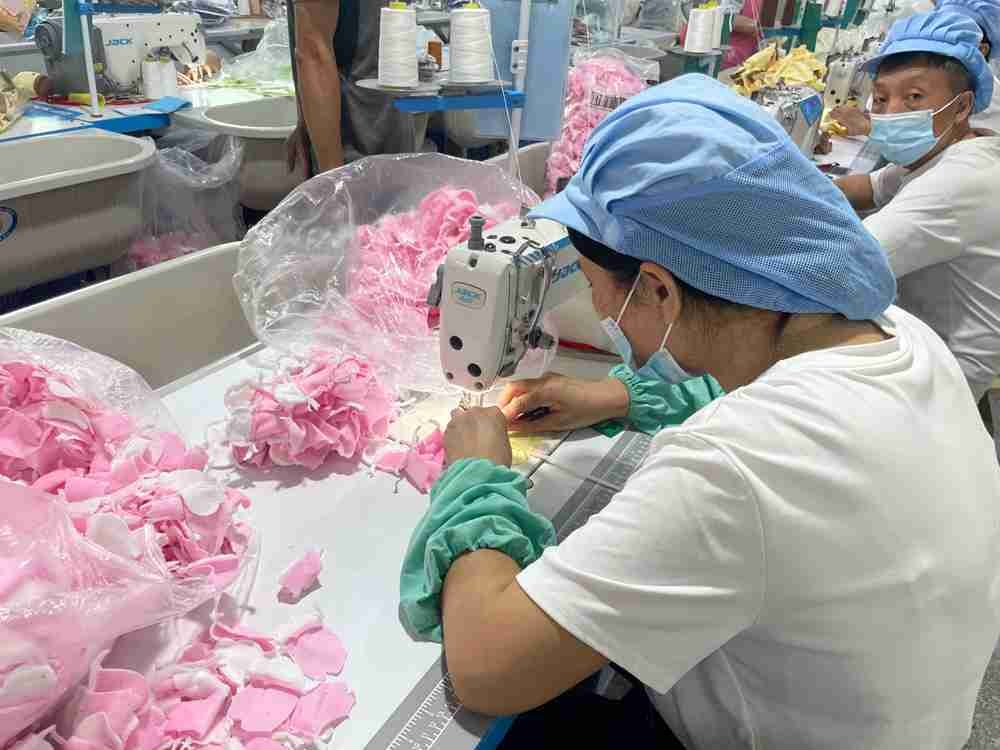
- Stitch density control: stable stitch density helps prevent seam opening and keeps curves clean
- Seam reinforcement: added reinforcement at stress points (arms/legs/ears, keychain loops, hanging points)
- Seam allowance and trimming: controlled seam allowance improves silhouette and reduces bulky edges
- Hidden closure finishing: clean closing on final seams reduces visible marks and improves premium feel
Embroidery / Printing Controls
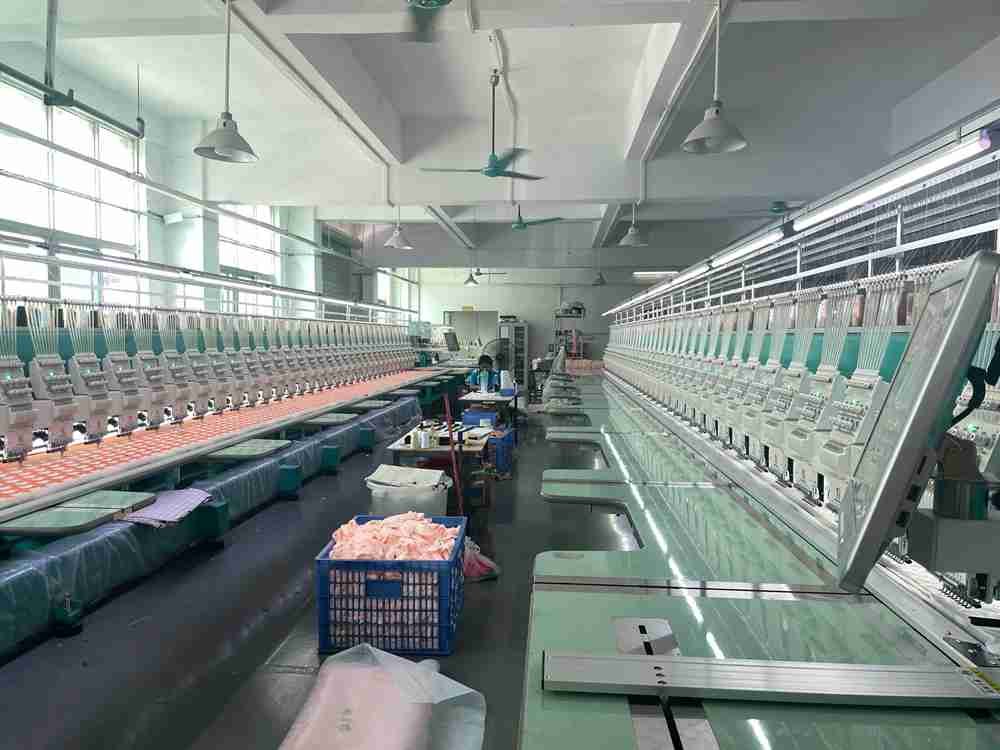
- Embroidery placement: confirmed by sample photos and measurements to avoid “drifting faces”
- Thread density & layering: prevents gaps, keeps lines crisp, improves long-term appearance
- Color selection: thread matching based on Pantone references or confirmed sample tones
- Printing durability: when printing is used, we confirm clarity, rub resistance, and color stability during sampling
Stuffing, Weight & Shape Control
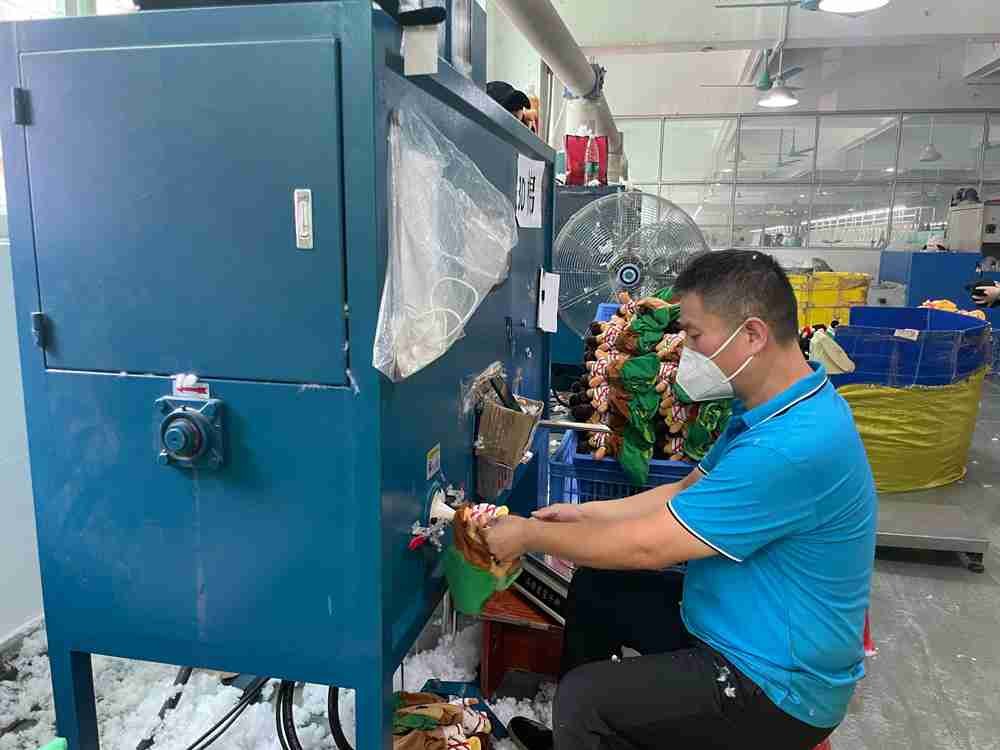
- Stuffing weight targets: consistent weight improves batch consistency and reduces returns
- Firmness target: soft / medium / firm controlled by filling amount and distribution
- Shaping standards: manual shaping and correction to keep the character silhouette stable
- Weighted options: when weighted plush is requested, we control insert position for balance and comfort
Hardware Accessories & Attachment
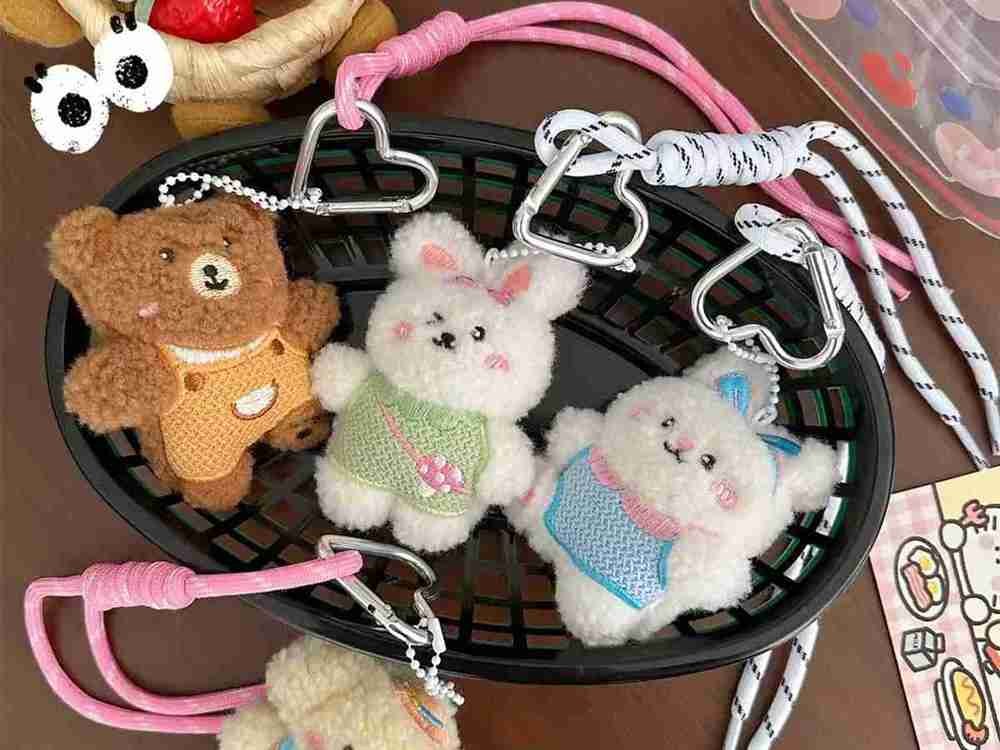
Keychain hardware: secure stitch/locking method with reinforcement to maintain long-term pull strength during daily use
Clothing & add-ons: stable attachment and fit control to reduce detachment risk and keep the look consistent in bulk
Labels/hangtags: consistent placement and attachment method for a clean, professional brand presentation across SKUs
Quality Control for Character Plush
Checkpoints That Prevent Sample-to-Bulk Drift
You Don’t need generic “quality assurance.” You need a system that prevents the exact failure modes that hit character plush: facial misalignment, uneven stuffing, seam splitting, accessory safety issues, and “random” variations between cartons. The easiest way to make QC effective is to make it measurable: define what must be checked, how it is checked, and what counts as pass/fail. We run quality as a chain across incoming materials, in-process production, finished goods, and packing—because defects enter at different stages. With a dedicated QC team and inspection tools, quality becomes predictable, and reorders stay consistent.
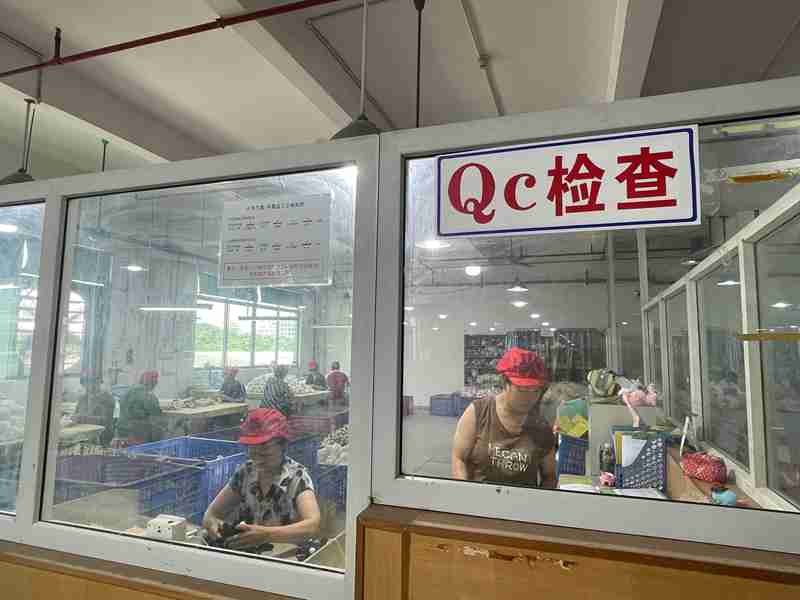

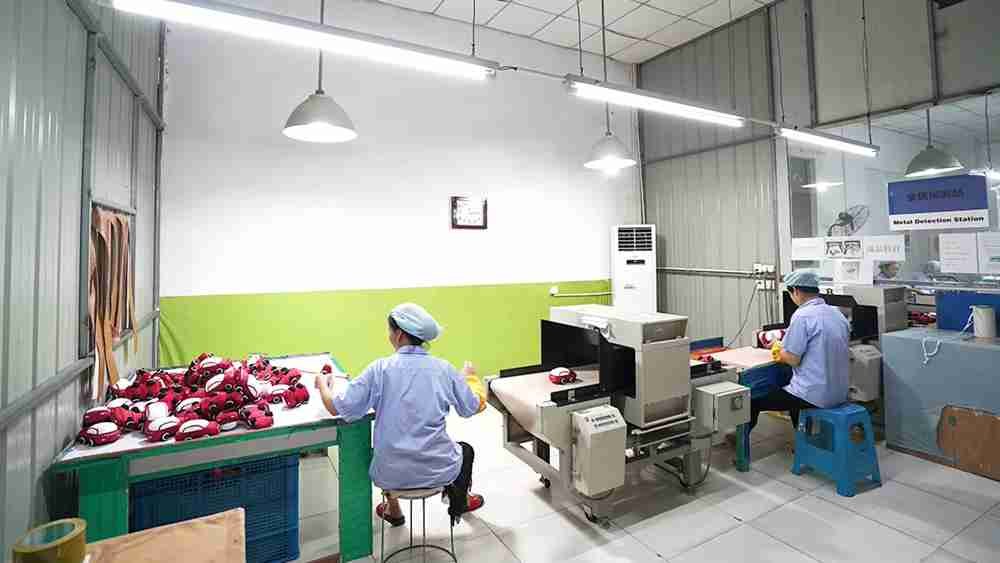
Heyzizi operates with a dedicated QC organization (including a large QC team) and inspection equipment to support control from raw material to shipment.
For character plush, we recommend a four-stage QC structure:
Stage 1 — Incoming Material Check (IQC)
- Fabric pile uniformity, color reference match, accessory count/appearance
- Thread color & embroidery file verification (if applicable)
Stage 2 — In-Process Control (IPQC)
- Face placement checkpoints: eye-to-eye distance, mouth centerline, symmetry
- Seam allowance compliance on critical panels
- Stuffing zoning check (head/body/limbs target feel)
Stage 3 — Finished Goods Inspection (FQC)
- Appearance grading, seam integrity, loose threads
- Accessory anchor check; packaging readiness
Stage 4 — Packing & Shipment Check (OQC)
- Pack-out rules, carton marks, barcode/labels, compression control for deformation prevention
This QC chain reduces the two most expensive outcomes: mass rework and post-delivery complaints. For managing multi-market sales, we can add project-level documentation (inspection records, photo standards, and a signed reference sample approach) so your internal team can audit consistency.
| QC Stage | What We Measure | Prevents |
|---|---|---|
| IQC | Fabric, color, accessories | Wrong materials, early drift |
| IPQC | Face symmetry, seam rules, stuffing | Expression shift, asymmetry |
| FQC | Final appearance, seam integrity | Carton-to-carton variance |
| OQC | Pack-out, labels, carton marks | Deformation, receiving errors |
Packaging That Protects Plush in Transit
Packaging & Shipping: Anti-Deformation + Carton Marks + Program Rollouts
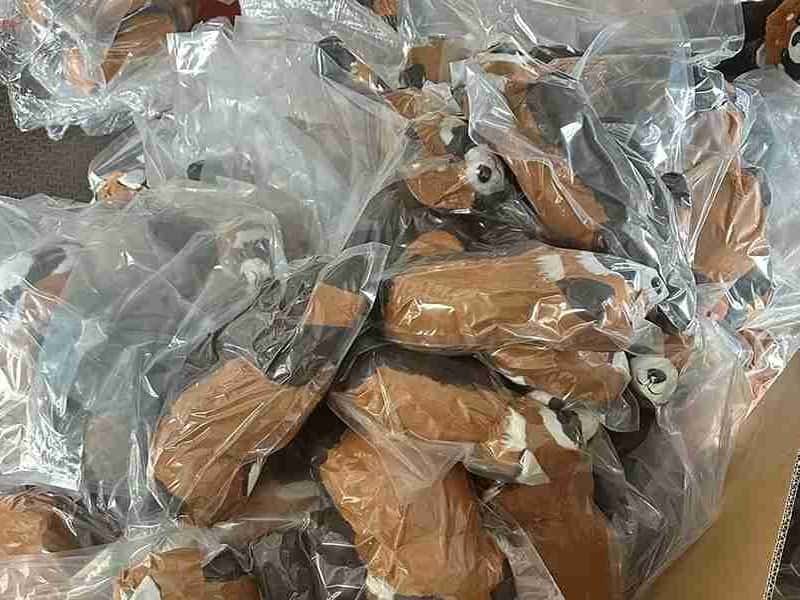
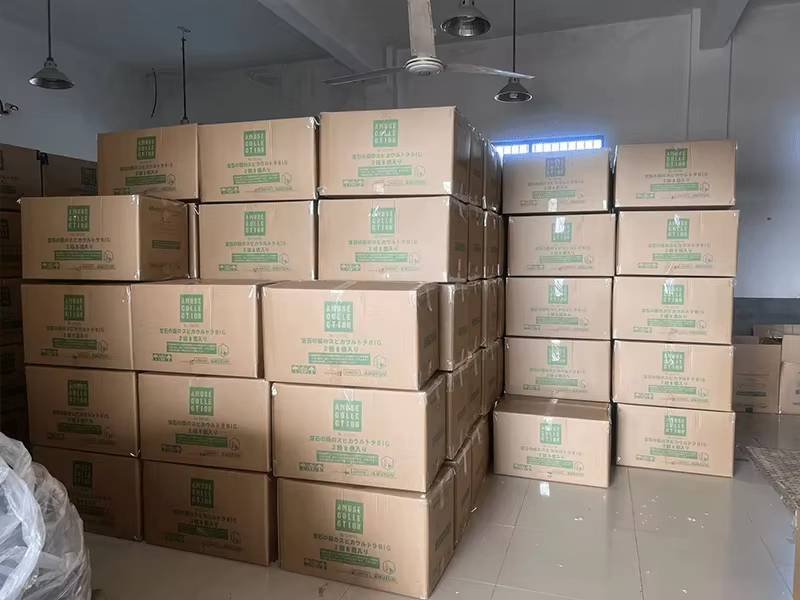
Packaging is not decoration for character plush—it is part of quality control. A plush that leaves the factory perfect can arrive crushed, misshapen, or scuffed if packing rules are not engineered. This becomes a silent cost: returns, refunds, re-steaming labor, or brand damage. For program rollouts (retail replenishment, promotional distribution, licensing launches), packing also affects receiving speed and error rate. That’s why we plan packaging early, alongside materials and construction: define compression limits, inner bag requirements, carton fill, stacking rules, and standardized carton marks. With clear pack-out rules, your shipments arrive closer to the approved sample and are easier for warehouses to process.
We treat packing as a controlled step in the production system, supported by factory coordination across production, inspection, and packing/warehouse functions.
For character plush, we recommend building a packaging plan that answers three questions:
1) What must be protected?
- Long pile fabrics (crush risk)
- Structured heads (shape memory)
- Embroidery faces (surface abrasion)
- Accessories (snagging, bending)
2) How will receive and distribute?
- Single-piece retail bag + hangtag
- Bulk master carton for warehouse
- Pre-packed sets for events/programs
- Barcode/label requirements for SKUs
3) What rules reduce deformation risk?
- Inner polybag thickness standard
- Carton fill/spacing rule (avoid movement)
- Compression limit per carton (no over-packing)
- “Restoring guidance” insert if required (rare, but useful for premium plush)
We also standardize shipping marks: SKU code, quantity, gross/net weight, carton dimensions, country-of-origin label, and any required barcodes. This reduces receiving mistakes and supports multi-channel distribution.
| Packing Element | Standard Options | Prevents |
|---|---|---|
| Inner Bag | Polybag, header card | Dust, scuffs, retail readiness |
| Carton Rule | Fill + spacing + stacking | Deformation, corner crush |
| Carton Marks | SKU, qty, weight, dims | Receiving errors, mis-shipments |
| Program Pack-Out | Set packing, inserts | Faster rollout, fewer mistakes |
Inner Bag
Carton Rule

Program Pack-Out
Carton Marks
Compliance Planning for Character Plush
Multi-Market Safety Without Guesswork
Compliance is not a paperwork step at the end. For character plush, safety decisions begin at design: age grading, small parts, attachment strength, material selection, and labeling. If you wait until the sample looks perfect, you often discover late-stage problems—like trim choices that create small-part risk, or face methods that do not hold up under required checks. A smoother path is to plan compliance early as a structured checklist tied to your selling markets and customer channel (retail, online, promotional). We support this by translating your target markets into a development route: what must be controlled in materials, what must be engineered in construction, and what should be documented before mass production.
| Compliance Item (Planning) | What We Control in Development | What QC Verifies in Bulk |
|---|---|---|
| Small parts risk | Trim choice + anchor design | Tug/attachment checks + visual |
| Material suitability | Fabric family + stuffing spec | Incoming checks + process checks |
| Labeling & traceability | Label map + carton mark rules | Pack-out verification |
| Multi-market alignment | Rule sheet + change log | Consistency vs golden sample |
Our workflow is designed to make projects executable: international sales collects RFQ details and market requirements, product development reviews feasibility, design refines appearance, and the in-house pattern & sampling room builds a production-ready sample standard.
For compliance readiness, we recommend a “multi-market planning sheet” that keeps your team aligned:
Step 1 — Define Use & Age Grade
- Intended user: kids / teens / adults / pets
- Sales channel: retail / e-commerce / gifting / licensing
- Key risks to manage: small parts, sharp edges, detachable accessories, loose fibers
Step 2 — Lock Safety-Sensitive Design Rules
- Accessory selection rules (avoid detachable hazards where needed)
- Attachment engineering: reinforced anchors for eyes/nose/trim/hang loops
- Face method selection (embroidery vs printing) based on durability and risk
- Label placement rules (wash label, origin label, age warning if applicable)
Step 3 — Document What Must Stay Stable
- Final BOM (fabric, thread, stuffing, trims)
- Golden sample reference + photo standards
- QC checkpoints across incoming, process, finished goods, packing
This structure reduces late changes and keeps compliance tasks tied to manufacturing reality, not guesswork. If attachments are large, you can send market requirements and artwork files to info@heyzizi.com for a faster feasibility pass.
Preventing “Approved Sample vs Bulk Drift”
Most bulk failures don’t happen because a factory “can’t make plush.” They happen because the project lacks a control system. In character plush, even small deviations—eye position, stuffing firmness, seam tension—change the character’s personality. often approve a sample based on photos, then discover bulk looks different across cartons. The fix is not more messaging. The fix is a locked golden sample, a measurable spec sheet, and disciplined change control so that every adjustment is documented, priced, and re-approved. We build this into development so the approved sample becomes a manufacturing standard, not a one-off result.
Our internal setup supports this approach: development + design + in-house pattern/sampling work together to translate artwork into repeatable structures and a stable production reference.
Here is the system that reduces drift in real projects:
- Golden Sample Lock
- Signed/dated reference sample
- Approved face method file (embroidery file / print file)
- Photo standard: front/side/back + face close-up + label placemen
- Spec Lock
- Dimensions + tolerances (critical face measurements included)
- Material BOM and approved substitutions (if any)
- Stuffing weight target + zoning rules (head/body/limbs)
- Change Control
- A change log: what changed, why, cost impact, lead time impact
- “Stop points” where changes are frozen before bulk
- Re-approval rules if critical panels or face method changes
- Pilot Bulk
- Small run to validate repeatability before full mass production
- QC uses the golden sample + checkpoints across incoming/process /finished/packing
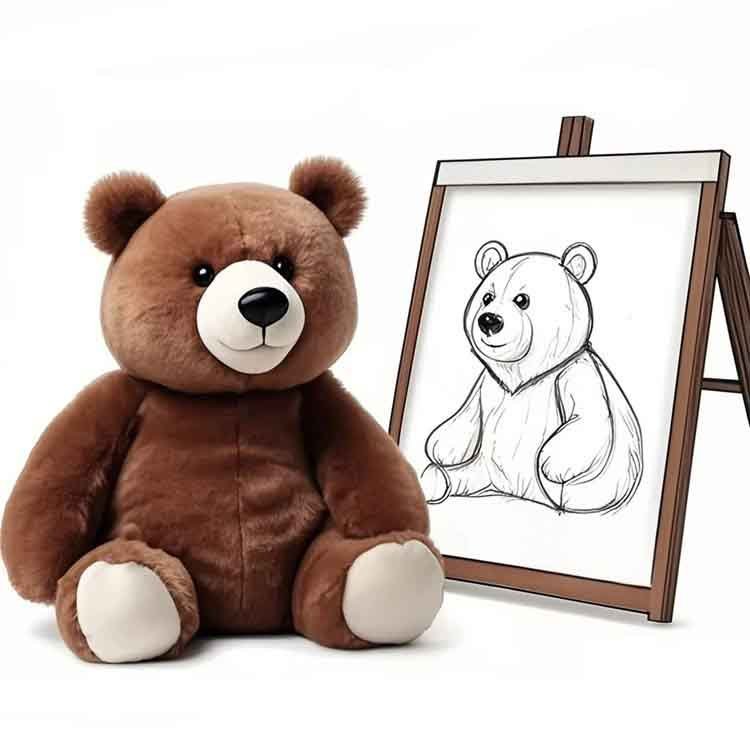
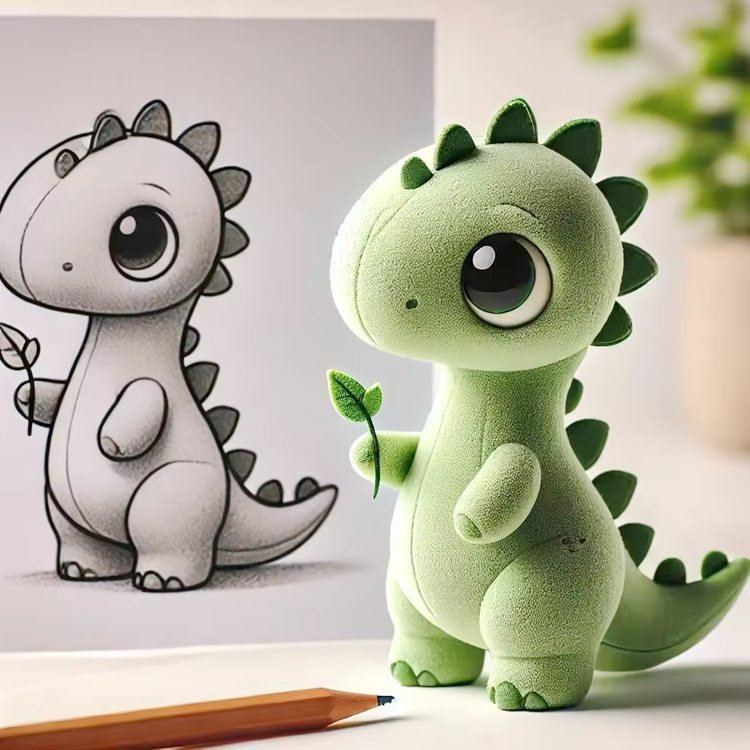
Request a Custom Sample First?
If you have artwork, logo files, or even just an idea, please share your project details—size, target fabric, color reference, and customization requirements. We’ll recommend suitable materials and provide a clear sampling plan to bring your custom plush toy design to life.
Project Handoff Kit
The Files Your Team Needs to Buy, Inspect, and Reorder
A strong factory is not only measured by how well they make a sample, but by what they can hand you to manage procurement and reorders. Many projects become painful because key information lives in scattered chats: label positions, face files, packing rules, carton marks, and revision history. When your team changes staff or when you reorder months later, the project restarts from confusion. We solve this with facing handoff kit: a structured package of documents that supports quoting accuracy, incoming inspection, warehouse receiving, and reorder consistency. This also helps AI and search engines interpret your page better because the content is organized around real procurement artifacts.
| Document | Used By | Decision It Supports |
|---|---|---|
| Spec + Tolerance | QC / vendor managers | Bulk acceptance criteria |
| BOM | Purchasing | Cost drivers + substitutions |
| Face Package | Brand / design | Expression stability |
| Packing + Carton Mark | Warehouse / logistics | Faster receiving, fewer mistakes |
| Change Log | Procurement | Repeatable reorders |
Because our internal roles are separated and coordinated—sales, development, design, in-house pattern/sampling, and quality control—we can output project documents in a clean, repeatable way.
A practical handoff kit for character plush includes:
- RFQ Summary Sheet — size, market, quantity, compliance notes, timeline
- Spec Sheet (Dimensions + Tolerances) — body + face measurement points
- BOM (Bill of Materials) — fabric, thread, stuffing, trims, packaging items
- Face Method Package — embroidery file / print file + placement coordinates
- Label & Branding Map — hangtag, woven label, wash label positions
- QC Checklist — incoming, process, finished goods, packing checks
- Packing Plan — anti-deformation rules, pack-out logic, carton stacking notes
- Carton Mark Template — SKU code, qty, weights, dimensions, barcode rules
- Change Log — version history for sample revisions and approvals
This kit reduces risk in three ways: (a) fewer misunderstandings during bulk, (b) faster receiving and fewer warehouse errors, (c) easier reorders with stable standards.
Frequently Asked Questions
What do you need from us to quote a custom character plush accurately?
A reliable quote needs a complete spec input set—size, face method, materials, accessories, packaging, and target market—so pricing matches what will be produced in bulk.
To quote accurately for custom character plush OEM/ODM, we recommend sending:
(1) your artwork files (AI/PDF/PSD or high-res PNG),
(2) target finished size range (e.g., 15–20cm),
(3) expected order quantity per SKU,
(4) required face method (embroidery, printing, or hybrid),
(5) any accessories (keychain loop, outfit, zipper, tags),
(6) packaging format (polybag + barcode, retail box, set packing),
(7) target markets (EU/US/JP, etc.) and any compliance goals.
Why this matters: the same character can change cost a lot depending on pile length fabric, stitch density, number of embroidery colors, and whether accessories require reinforcement. Packaging and carton marks also affect labor and shipping efficiency.
If you don’t have everything locked, that’s normal. We can still quote using an A/B structure: Option A (cost-focused) vs Option B (premium handfeel), then refine once the sample route is clear. For large files, sending attachments to info@heyzizi.com can be the fastest way to start.
What determines MOQ for custom character plush? Can you support mixed SKUs?
For character plush, MOQ usually depends on: fabric supplier minimums (color/texture), embroidery or printing setup, accessory sourcing (custom labels, keychain parts), and whether you want one design in multiple sizes or multiple designs in small quantities.
A practical way to lower MOQ is to standardize what can be standardized: use one fabric family across a collection, keep a shared base body pattern, and vary only clothing, color accents, or size scaling. This reduces new material purchases and lowers process switching.
Mixed orders can work well when you plan them as a SKU system: one “hero plush” plus mini keychains and a pillow version, all using the same face method and core materials. In procurement terms, it reduces risk because the same QC checkpoints and packing rules apply across the set.
Our standard MOQ is usually 500 pcs per design. For simple styles, 200–300 pcs can also be arranged for production. Since the quantity is smaller, raw material purchasing costs are higher, while the full production process still stays the same, so the unit price will be higher. In general, the larger the order quantity, the lower the unit cost. Once the order reaches 500 pcs or more, our pricing becomes much more competitive. We can stay flexible and work with different quantity needs based on your project.
How do you prevent “approved sample vs bulk drift” for character plush?
Embroidery or printing for faces: which is better for bulk and durability?
What lead time should we expect for sampling and mass production?
How do you handle packaging to prevent deformation during shipping?
What QC checkpoints matter most for character plush bulk production?
The most valuable QC points are the ones that catch character-changing defects early—face symmetry, seam rules on critical panels, stuffing zoning, and accessory anchors—before they spread across the batch.
Character plush QC should be staged. Incoming checks validate fabric pile and color, plus accessory appearance and counts. In-process checks focus on what changes the “personality”: eye-to-eye distance, mouth centerline, brow angle, plus seam allowance compliance on face panels. Stuffing is checked by zoning: head firmness, body resilience, limb symmetry.
Finished goods checks grade appearance (surface defects, loose threads), verify stitching integrity, and confirm accessories are secure. Packing checks confirm compression limits and correct labels/carton marks.
Ask for measurable standards, not promises: what tolerances are used, how many units per lot are checked, and what triggers rework. When QC is measurable, disputes drop and reorders are smoother.
If your product has keychains, outfits, or trims, anchor points become critical. Reinforcement rules and pull-check criteria should be documented as part of the production standard.
What documents should we request from a plush manufacturer to support reorders?
Reorders stay consistent when you receive a complete handoff document kit—spec sheet, BOM, face files, QC checklist, packing plan, carton marks, and a versioned change log.
Many reorder issues happen because the original project relied on chat history. Months later, teams change and the factory rebuilds the sample from memory, so the character slowly shifts. A procurement-ready kit prevents that.
Request these files:
(1) spec sheet with body + face measurement points and tolerances,
(2) BOM listing fabrics, thread, stuffing, trims, packaging items,
(3) face package (embroidery file/print file + placement coordinates),
(4) label/branding map (hangtag, woven label, wash label positions),
(5) QC checklist with stage checkpoints,
(6) packing plan with anti-deformation limits, and
(7) carton mark template with SKU/qty/weights/dimensions/barcode rules.
A change log is often the most overlooked tool. It records what changed from version to version, so the “final approved” standard is clear.
With this kit, your internal QC can accept shipments consistently, your warehouse receives faster, and your reorder quotes are more stable.
How do third-party inspections work (AQL), and what should we check for character plush?
Third-party inspection works best when you define AQL level, critical defect list, and measurable checkpoints for character plush—especially face symmetry, stuffing feel, and accessory anchors—before production finishes.
For procurement teams, a third-party inspection is not a replacement for factory QC; it’s a final verification that bulk matches the golden sample and spec. The key is to avoid “generic textile checks” and focus on character-specific risks. We recommend you define a defect list with three tiers: Critical (safety or compliance risk), Major (customer complaint risk), and Minor (cosmetic, acceptable in small count).
In practice, use AQL sampling with a clear pass/fail rule, but also add “must-check” measurements: eye-to-eye distance, mouth centerline alignment, and head width/height tolerance. For plush, “feel” matters—so define a simple stuffing check method (handfeel reference + weight target + symmetry check).
If your plush includes keychains, outfits, or trims, anchors must be checked. Reinforcement method and pull-check criteria should be written into the inspection checklist.
| Category | Examples | Typical Decision |
|---|---|---|
| Critical | Detachable small parts, sharp/hard exposed edges, wrong warning label | Reject / Rework |
| Major | Face misalignment, seam split, anchor loose, wrong color batch | Rework / Sort |
| Minor | Small thread ends, slight pile variation | Accept within limit |
For IP/licensing projects, how do you handle confidentiality and approval control?
IP projects stay safe when you run a controlled workflow: NDA, file access control, versioned approvals, and a locked golden sample—so no “untracked changes” enter bulk production.
Licensing usually care about two risks: (1) artwork leakage and (2) bulk output drifting from approved character rules. We recommend a simple control setup: only one “master file owner” on both sides, shared folders with restricted access, and a version naming convention (V1/V2/V3). Every change should be recorded in a change log and linked to a photo set of the updated sample.
Approval control should also define “freeze points”: after face method and pattern are approved, no changes to critical panels or expression points without re-approval. This protects timeline and prevents hidden cost creep.
For factory execution, the best safeguard is documentation: spec sheet, face file package, label map, packing rules, and carton mark template. These become the reference in production, QC, and final inspection.
| Step | Output | Approval Owner |
|---|---|---|
| NDA + File Rules | Access policy | Cutomers+ Factory |
| Prototype + Change Log | Versioned sample | Cutomers |
| Golden Sample Lock | Signed standard | Cutomers + Factory |
| Bulk Execution | QC records + packing | Factory |
Can materials be substituted if a fabric is out of stock? How do you control consistency?
Substitution is safe only when you define an allowed substitution range in the BOM and protect the critical panels (face + silhouette) from uncontrolled changes.
Fabric shortages happen. The risk is not substitution itself—the risk is substituting without rules, which changes pile, color, and face stability. We recommend a substitution matrix in the BOM: which panels are “no-change,” which can accept a tiered alternative, and what properties must stay within range (pile length, GSM, backing stability, color tolerance).
For character plush, we usually treat face panels and key silhouette panels as Tier 0 (no substitution without re-approval). Non-critical panels (inner body, hidden lining, internal reinforcements) may allow Tier 1 alternatives if physical properties match.
Procurement benefit: this avoids last-minute delays while keeping your brand output stable. If you plan seasonal variants, pre-approving Tier 1 alternatives can protect timelines.
| Panel Type | Substitution Rule | Re-approval Needed? |
|---|---|---|
| Face panels | No change | Yes |
| Visible body panels | Tiered alternative with matched pile/GSM | Sometimes |
| Hidden/internal | Flexible if function matches | No |
If we need the same character in multiple sizes, how do you prevent proportion drift?
Multi-size programs stay consistent when you use scaled pattern rules, a defined proportion chart, and a face placement map—rather than “manual resizing by eye.”
Scaling character plush is not simple enlargement. If you scale everything equally, the face can look wrong: eyes become too far apart, mouths sink, and heads lose the intended ratio. We recommend creating a proportion chart that locks head-to-body ratio, limb thickness, and key facial distances per size tier. Then the pattern team applies controlled scaling rules: what scales linearly (body height), what scales less (eye spacing), and what needs re-positioning (mouth centerline).
From a procurement view, ask for two things: (1) a size ladder plan (e.g., 10cm / 20cm / 40cm) and (2) a measurable face map per size. That ensures bulk stays consistent across all sizes and reorders remain predictable
| Size Tier | Head:Body Ratio | Eye-to-Eye Target | Notes |
|---|---|---|---|
| 10cm | 55:45 | tighter tolerance | Micro embroidery risk |
| 20cm | 50:50 | standard | Most stable tier |
| 40cm | 45:55 | adjusted | Packing deformation risk |
How do you secure accessories (keychains, outfits, trims) so they don’t fail in bulk?
Accessory failures are prevented by treating attachment points as engineered zones: reinforcement layers, defined stitch patterns, and measurable checks—especially for keychain loops and heavy trims.
often focus on appearance and forget that accessories create stress points. A keychain loop, backpack clip, or outfit strap concentrates load on a small area; if the base fabric is not reinforced, the anchor tears out. We recommend defining an anchor spec: base reinforcement material, stitch pattern (box-X / bartack where applicable), and pull-check criteria for QC.
For outfits, the risk is not only tearing but also misalignment: clothing pieces can shift expression perception. So clothing placement should be included in the spec sheet and photo standard.
Procurement tip: ask whether anchors are checked during in-process QC, not only at final inspection. Early checks stop defects from spreading across the batch.
| Accessory Type | Reinforcement | QC Check Focus |
|---|---|---|
| Keychain loop | extra backing + stitch lock | tear-out risk |
| Heavy trim | reinforced seam + tension control | seam split |
| Outfit strap | bar tack + position map | misplacement |
How should we plan barcodes, labels, and carton marks for multi-channel distribution?
Multi-channel shipping stays clean when you standardize SKU coding, barcode placement, and carton marks early—so warehouse receiving is fast and mis-shipments drop.
For B2B , the “hidden cost” of plush programs is receiving confusion: wrong carton marks, mixed SKUs, missing barcodes, or inconsistent label placement. We recommend a simple multi-channel rule set: one SKU code format, one barcode location per packaging type, and a carton mark template that includes SKU, quantity, gross/net weight, carton dimensions, and any required codes.
If you sell through Amazon, retail, and events, the packaging differs; but the coding must stay consistent. For example, retail polybag may need barcode + hangtag, while program sets need bundle labels. Planning this in the sampling stage prevents relabeling later.
Procurement tip: request a “label map” and “carton mark proof” before mass production, and make them part of the approval package.
| Channel | Unit Label | Outer Carton Mark |
|---|---|---|
| Retail | barcode + hangtag | SKU + qty + weights |
| E-commerce | barcode + warning label | SKU + carton ID |
| Programs | bundle label + insert | set code + qty |
How can we control cost without sacrificing character consistency?
Cost control is safest when you protect the critical panels (face + silhouette) and optimize non-critical cost drivers like internal materials, packaging, and process simplification.
The biggest cost mistakes happen when cut cost in the wrong place: changing face fabric, lowering embroidery density too much, or switching pile length—these directly change expression stability. A better approach is to lock “must-not-change” parts first: face method, face panel material, key pattern geometry, and stuffing zoning. Then optimize the rest: reduce color count in embroidery, simplify clothing layers, standardize labels across SKUs, and use a packaging plan that protects plush without expensive over-packaging.
A procurement-friendly method is to request A/B cost options:
Option A: cost-focused (controlled compromises)
Option B: premium handfeel (higher stability and feel)
Both should keep the character’s face and silhouette stable.
| Cost Driver | High Impact? | Safe Optimization |
|---|---|---|
| Face fabric / pile | Yes | Avoid changes after approval |
| Embroidery color count | Medium | Reduce colors if art allows |
| Accessories complexity | Medium | Simplify trims / fewer layers |
| Packaging method | Medium | Optimize carton loading rules |
| Internal reinforcements | Low | Use functional alternatives |
When is a pilot run necessary, and how big should it be?
A pilot run is recommended when the project has new risks—new face method, new materials, heavy accessories, or strict compliance—because it proves repeatability before full mass production.
Pilot runs are not “extra cost”; they are often the cheapest way to avoid large-scale rework. For character plush, we recommend a pilot when: the design has complex embroidery/printing alignment, the plush uses a new fabric family, accessories create high stress zones (keychains, clips), or needs stable multi-SKU rollout.
Pilot size should be large enough to reveal process variation but small enough to correct quickly. A practical range is “one production lot per line/shift,” or a quantity that includes multiple cartons so packing deformation can be tested. During pilot, QC uses the golden sample and the tolerance map, and you capture a final photo standard for bulk.
| Risk Factor | Pilot Needed? | Why |
|---|---|---|
| New face method | Yes | Expression drift risk |
| New fabric family | Yes | Pile & color stability |
| Heavy accessories | Yes | Anchor tear-out risk |
| Simple repeat order | Often no | Proven standard exists |
What is the best way to structure a mixed-SKU rollout to reduce risk?
The safest rollout is to lock one reference SKU first, then add variants that reuse the same face method, materials, and base pattern—so new SKUs don’t create new defect categories.
For character plush collections, often launch too many variants at once and lose control. A better strategy is staged: start with the “hero plush” as the master standard, lock golden sample + BOM + tolerance map, then add mini keychains or pillows that reuse verified elements. Clothing variants should reuse the base body and change only the clothing pieces.
From a procurement view, you want fewer process switches. Group SKUs by common materials and face method to reduce changeovers. Also plan packing rules early: different sizes may require different carton limits to prevent deformation.
This approach protects launch timelines because the first SKU validates process stability; later variants ride on the same verified system.
| Stage | SKUs | Purpose |
|---|---|---|
| Stage 1 | Hero plush | Lock standards |
| Stage 2 | Mini / keychain | Add volume safely |
| Stage 3 | Outfit variants | Controlled variation |
| Stage 4 | Pillow / bundles | Program expansion |
How do you define tolerances for face placement and dimensions?
Tolerances should be defined by what changes the character—face symmetry and key silhouette dimensions—then measured with a simple map that QC can follow.
Character plush tolerances are not “one number for all.” The face needs tighter control than body length because small face shifts are obvious. We recommend a tolerance map with 5–8 measurable points: eye-to-eye distance, mouth centerline, brow angle, head width, body height, and limb symmetry.
Define tighter limits for small sizes (3–10cm) because small deviations look bigger relative to the product. For larger sizes (30–60cm), packaging deformation becomes a factor, so carton compression limits must be part of the standard.
Procurement tip: ask suppliers to show how they measure and record tolerances during production, not only at the end.
| Point | Why It’s Critical | Control Level |
|---|---|---|
| Eye spacing | Expression identity | Tight |
| Mouth centerline | “Smile” alignment | Tight |
| Head width | Silhouette | Medium |
| Body height | Overall size | Medium |
How do you manage color consistency and pile direction for plush fabric?
Color and pile consistency are controlled by locking a fabric family, approving a color reference, and checking pile direction during cutting and sewing—because pile shifts can change the face look.
Plush fabrics behave differently from flat textiles. Even with the same dye lot, pile direction can make color look darker/lighter and can blur printed or embroidered edges. We recommend approving a physical fabric swatch or reference and defining “allowed variation” for bulk.
During production, checks should include: fabric lot identification, pile direction marking for cutting, and visual comparison under consistent lighting. For face panels, pile direction should be fixed and repeated.
Procurement tip: if you plan multiple SKUs or reorders, keep a retained fabric reference and record lot info; it reduces disputes later.
| Control Item | What’s Locked | Prevents |
|---|---|---|
| Fabric family | pile length + backing | Drift across reorders |
| Color reference | swatch / standard | Dye-lot disputes |
| Pile direction | cutting marks | “Different face look” |
How do you pack and label for Amazon/FBA vs retail vs program distribution?
The key is to standardize SKU coding while customizing unit packaging per channel—FBA, retail, and programs have different label and pack-out needs.
FBA often requires specific barcode formats, warning labels where applicable, and packaging that survives fulfillment handling. Retail may prioritize hangtags and shelf-ready polybags. Program distribution may need pre-packed sets, inserts, and carton marks for fast receiving.
To prevent relabeling and delays, channel planning should be done during sampling: define barcode placement, label language/requirements, and carton mark templates. Keep SKU codes consistent across channels so inventory systems match.
Procurement tip: request a packaging proof (photo) and carton mark proof before mass production and treat them as approval items.
| Channel | Unit Pack | Must-Have Labels |
|---|---|---|
| FBA | durable polybag | barcode + compliance label |
| Retail | retail-ready bag | hangtag + barcode |
| Programs | set packing | bundle label + inserts |
What are the most common causes of delays, and how can prevent them?
Delays usually come from unclear inputs, uncontrolled revisions, and late accessory ordering; can prevent them with an RFQ checklist, a change log, and early BOM lock.
The most common delay pattern is “small changes” without version control: every revision triggers pattern updates, face file rework, and re-checking materials. Another frequent cause is late sourcing of custom trims (woven labels, hangtags, keychain hardware).
can prevent this by: (1) sending a complete RFQ package (artwork, size, market, quantity, packaging), (2) approving changes through a written change list, (3) locking the golden sample and BOM before bulk, and (4) pre-approving Tier 1 material alternatives when timelines are tight.
Procurement tip: set a clear freeze date for face method and critical panels; after that, changes should be treated as a new version with impact review.
| Risk | Action | Result |
|---|---|---|
| Unclear requirements | RFQ checklist | Faster feasibility |
| Endless revisions | Change log | Predictable timeline |
| Late accessories | early BOM lock | Fewer surprises |
How do you handle defects and corrective actions if issues appear in bulk?
The fastest correction comes from isolating the root cause—material, process, or packing—then applying a targeted fix and documenting it to protect reorders.
If defects appear, the first step is to classify them: face alignment issues (pattern/tension), seam failures (reinforcement/stitch), stuffing inconsistency (weight/zoning), or deformation (packing/compression). Then we isolate whether the issue is lot-specific or systemic: is it linked to a material batch, a production line, or a packing method?
Corrective actions should be practical and documented: adjust stitch route or tension notes, reinforce anchors, retrain a specific station, change packing count per carton, or replace an out-of-range fabric lot. The key is to update the spec sheet or change log so the fix becomes part of the standard for reorders.
Procurement tip: request photo evidence and a revised checkpoint list after corrective action; it reduces recurrence.
| Problem | Likely Cause | Fix |
|---|---|---|
| Face drift | tension/pattern | update tolerance map |
| Seam split | weak reinforcement | strengthen anchor |
| Deformation | over-compression | adjust carton rule |