 Skip to content
Plush Toys Factory Tour
Plush Toys Factory Tour | Inside Our Sample Room, Production Lines & Quality Control
Take a closer look at how custom plush toys are made, from initial idea and artwork review to sample development, sewing, stuffing, finishing, inspection, and final packing. This factory tour helps brand teams, designers, and product developers understand what to check inside a plush toy workshop, including fabric selection, embroidery details, shape control, seam strength, filling softness, safety checks, packaging, and bulk order consistency. A great prototype is only the beginning. Stable plush production also depends on clear specifications, skilled workers, careful QC, and repeatable production standards.
What a Real Plush Factory Tour Should Show You
A useful plush factory tour should do more than impress you with a clean lobby, a wall of samples, or a few busy sewing tables. It should help you judge whether the team can take a design from reference image to sample, from sample approval to bulk production, and from bulk production to shipment without losing control along the way. That is the real value of a factory visit.
When visiting a plush workshop, the best question is not “Is this place big?” It is “Can this place keep results stable when my order moves from one stage to the next?” That is why a strong tour should show you the sample room, material handling, cutting and sewing flow, quality checkpoints, and packing readiness. These are the areas where delays, inconsistency, and preventable mistakes usually begin.
A strong visit also reveals whether the team works with structure. Can they explain how revisions are tracked? Can they show how a prototype becomes a production reference? Can they tell you what is checked before packing? A plush project becomes much easier to trust when the tour answers these questions clearly.
Instead of treating the visit as a photo opportunity, treat it as a decision tool. The right tour helps you see not only what is being made, but how control is maintained, how risk is reduced, and how repeat orders are supported.
Sample room

The sample room shows plush development ability, pattern accuracy, fabric choice, embroidery details, and how close the sample can match the original design.
Production flow

A clear production flow shows whether plush toy cutting, sewing, stuffing, shaping, checking, and packing move in an organized order.
QC checkpoints

QC checkpoints help find problems early, including seam strength, embroidery position, filling softness, shape consistency, safety details, and bulk quality stability.
Packing area

The packing area shows final shipment discipline, including label checking, carton marks, product protection, retail packing, and export-ready plush toy delivery.
Start at the Sample Room, Not the Reception Desk
If you want to understand a plush workshop properly, begin where ideas become workable, not where visitors are welcomed. The sample room tells you far more than the reception area ever will. This is where a sketch, reference photo, or rough concept starts turning into something that can actually be sewn, stuffed, adjusted, and repeated.
A good sample room is not just for making pretty prototypes. It is where shape, proportion, fabric behavior, embroidery placement, accessory attachment, and sewing methods are tested before bulk work begins. If a team takes this stage seriously, you can usually see it in the details: marked-up revisions, pattern updates, material notes, stitching adjustments, and controlled comparison between one version and the next.
What the Sample Room Can Reveal
| What you observe | What it tells you |
|---|---|
| Pattern revisions | The team improves structure, not just appearance |
| Material notes | They understand how fabric affects shape |
| Version tracking | Bulk work is less likely to drift from approval |
| Trial pieces | Problems are tested before larger commitment |


How a Sketch Becomes a Sewable Plush Pattern
Many people see plush development as a simple visual translation: take the drawing, match the colors, sew the shape, and fill it. In reality, the process is more technical. A plush concept has to be converted into a pattern system that can hold proportion, support stitching, accept stuffing, and repeat across more than one unit without drifting in shape.
That conversion stage is one of the most overlooked parts of a factory tour. It is also one of the most revealing. A well-developed plush pattern is not only about outline. It affects head balance, limb attachment, face placement, seam direction, fabric stretch behavior, and how the toy sits, stands, hangs, or hugs. A good team reads the design not as a picture, but as a structure.
This is why experienced plush development often involves trial adjustment before the sample looks “right.” Certain curves must be softened for sewing. Certain panels need extra allowance for stuffing. Some features that look symmetrical on screen need different treatment once the toy becomes three-dimensional. What matters is not whether the first version is perfect. What matters is whether the team knows how to move from concept to a stable pattern.
During a tour, it is worth asking to see pattern pieces, half-finished bodies, or early prototypes. These reveal whether the team works with real construction logic. When that logic is strong, later stages become easier: cleaner sewing, better consistency, smoother revisions, and less confusion during approval.
Reference review

Reference review confirms the plush toy’s shape, pose, facial features, colors, and key brand details before pattern work begins.
Pattern drafting
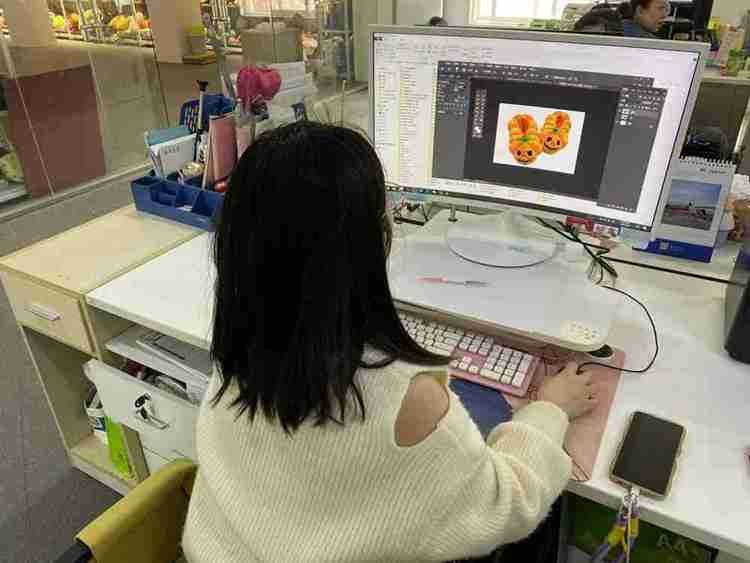
Pattern drafting turns a 3D plush idea into accurate 2D fabric pieces, helping control size, proportion, seams, and final shape.
Test sewing

Test sewing checks whether the plush structure works in real fabric, including curves, stuffing space, seam strength, and body balance.
Revision round
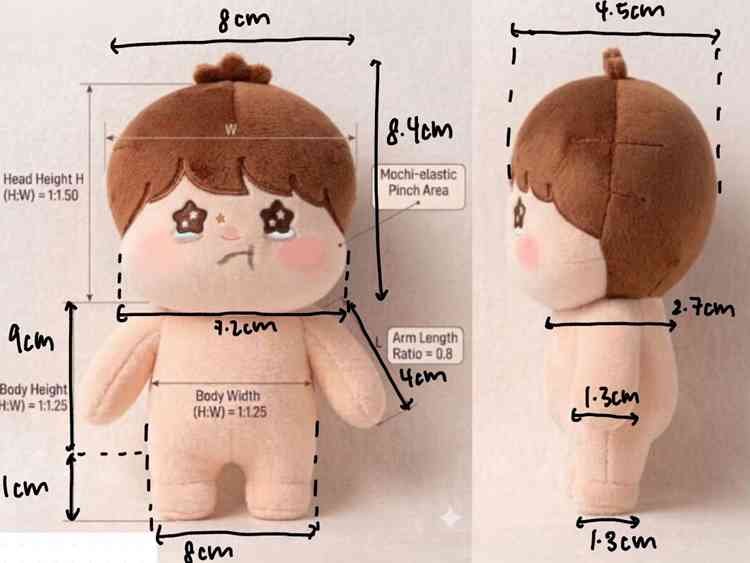
The revision round adjusts plush proportion, construction, embroidery details, fabric choice, and softness before moving toward approved sample production.
Fabric, Filling, Trims: Where Material Decisions Begin
Many plush projects look simple at sketch stage and become complicated only after real materials enter the process. That is why a factory tour should not skip the material side. Plush fabric, inner filling, embroidery thread, labels, hangtags, zipper pulls, ribbons, webbings, and small accessories all affect not only appearance, but also touch, shape retention, safety, weight, and packing behavior.
A soft toy that looks full and balanced in a sample may become too loose, too stiff, or too heavy if the wrong combination is used. Long pile fabric may soften the visual details of the face. Short pile fabric may hold embroidery more clearly but change the emotional feel. A body that seems stable in one filling density may collapse when packed tightly into cartons. Small trim choices can also create later trouble: weak attachment, poor label placement, color mismatch, or packaging interference.
This is why material review should be treated as a decision stage, not a sourcing afterthought. During a visit, it is useful to ask how fabric options are selected, how stuffing levels are tested, and how trims are checked before approval. A capable team should be able to explain why one choice is better for gift plush, retail plush, mascot plush, comfort plush, or promotional plush instead of offering one generic solution.
A plush item becomes easier to scale when the material logic is right from the start. Good material choices reduce avoidable revision, improve consistency, and support a more predictable finish once production begins.
Material Review Snapshot
| Area | What should be checked |
|---|---|
| Plush fabric | Pile length, color effect, touch, face clarity |
| Filling | Softness, rebound, shape support, packing response |
| Trims | Strength, placement, visual match, usability |
| Labels & tags | Position, readability, attachment method |


Inside the Cutting and Sewing Floor
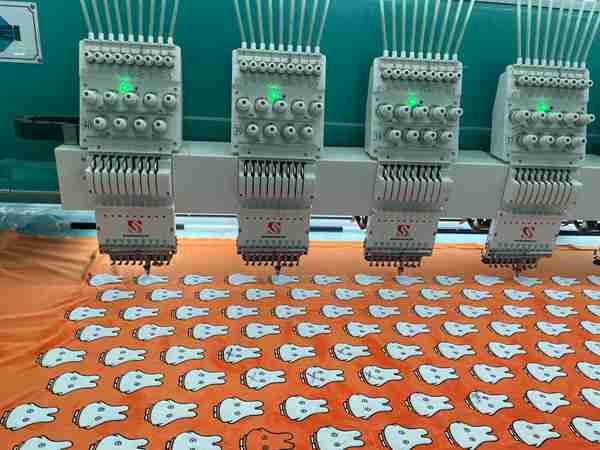
The cutting and sewing floor often tells you more about plush consistency than the finished sample shelf. This is where pattern pieces become repeatable components, and where small errors begin to multiply if process control is weak. A factory tour should show whether the work moves through a clear sequence or relies too heavily on individual improvisation.
Cutting quality matters because plush fabric is not always easy to control. Direction of pile, panel accuracy, fabric stretch, and marker planning all affect the final shape. Even before sewing starts, inconsistent cutting can cause later imbalance in heads, limbs, ears, or bodies. Once sewing begins, seam position, stitch density, edge handling, and alignment become equally important. A plush toy may look acceptable at first glance but still carry hidden risks if the sewing discipline is loose.
This part of the tour is also useful for judging workflow clarity. Are pieces grouped and labeled well? Are partial assemblies easy to identify? Can the team explain which operations need tighter control? Good sewing work is not only about neat stitches. It is about reducing variation from one unit to the next.
A strong workshop usually gives you a calmer feeling. Materials are moving with order. Components are easier to trace. Operators are working within a visible process instead of guessing through each step. That kind of sewing floor often leads to fewer surprises during mass production, especially for plush lines with embroidery faces, attached accessories, or multiple body panels.
What the Floor Should Reveal
| Area to observe | Why it matters |
|---|---|
| Cutting accuracy | Affects symmetry and shape balance |
| Pile direction control | Affects appearance and color consistency |
| Sewing discipline | Affects seam strength and clean finishing |
| Part identification | Reduces mix-up during assembly |
Stuffing and Shaping Bring Character Alive
This is often the stage where plush products stop looking like sewn shells and start becoming characters. It is also where many visual differences appear between a promising sample and an uneven bulk lot. Stuffing, shaping, and hand finishing may seem simple from a distance, but they have a major effect on expression, balance, touch, and overall personality.
A plush toy can be sewn correctly and still feel wrong if the stuffing is inconsistent. Too much filling can make the toy hard, swollen, or awkward. Too little can make it limp and tired. Uneven filling can distort the head, shift the face, or throw off the body posture. Hand shaping matters just as much. It helps settle curves, define volume, position limbs, and bring the intended silhouette into focus before the piece is closed and cleaned.
Hand finishing is also where many “small” details become major trust signals. A clean closing seam, stable accessory attachment, neat thread trimming, and tidy surface grooming all affect how finished the toy feels. These are details people may not mention first, but they notice them immediately.
During a tour, this is a very useful stage to observe closely. Ask how filling levels are guided, how shaping is checked, and what finishing standards are expected before a toy moves forward. Plush quality is not only built by machines. It is also built through controlled handwork. When this stage is done well, the toy looks more alive, feels more intentional, and holds its approved character more reliably in bulk.
Why This Stage Matters
| Element | Impact on the plush result |
|---|---|
| Stuffing level | Changes firmness, posture, and comfort |
| Shape adjustment | Defines silhouette and visual balance |
| Closing & trimming | Affects finish quality and neatness |
| Surface grooming | Improves appearance and presentability |


Embroidery, Printing, and Small Details That Change the Result
In plush development, small details are rarely small. Face embroidery, printed graphics, appliqué patches, ribbons, labels, zipper pulls, and tiny accessories often decide whether a toy feels polished, expressive, and trustworthy—or slightly off. A factory tour should not treat these details as decoration. They are part of the construction logic.
Embroidery is a good example. It affects not only visual style, but also expression clarity, consistency, and surface stability. Eyes placed a few millimeters too high can change the personality of a character. Mouth curves that look smooth on screen may stiffen or flatten once stitched into plush fabric. Printing brings its own checks: edge clarity, color fastness, alignment, and how the print sits on short pile or long pile surfaces. Even a well-shaped plush body can lose impact if the face or chest artwork is poorly handled.
Small accessories matter just as much. Bows, mini clothes, hang loops, tags, and attached props need secure placement, sensible scale, and a clean relationship with the plush body. If these details are rushed, the whole item can feel less refined.
During a tour, it helps to ask where embroidery files are checked, how print placement is confirmed, and how detail consistency is maintained from one unit to the next. These are the areas where “close enough” often creates visible drift. Strong detail control makes the toy feel more finished, more stable, and much closer to the approved look.
Embroidery
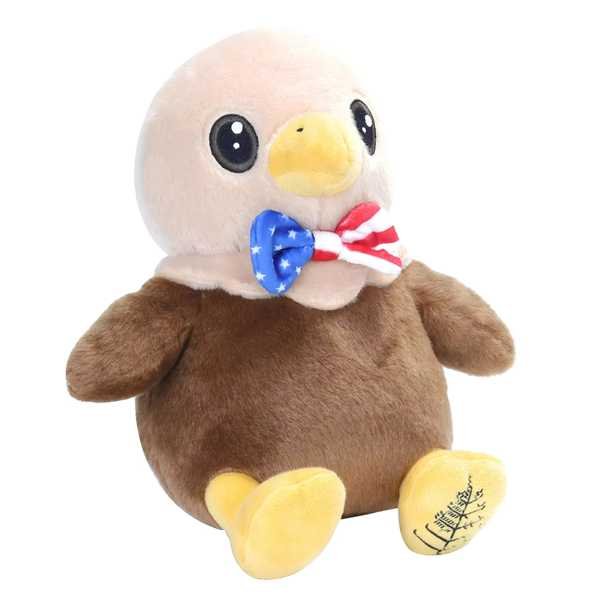
Embroidery should be checked for placement, stitch density, facial expression clarity, thread color, and durability to keep plush characters accurate.
Printing
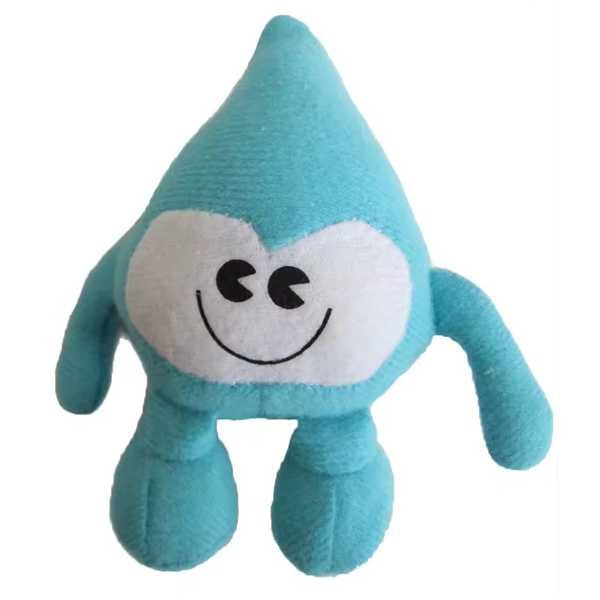
Printing needs accurate colors, sharp edges, smooth surface bonding, and washable durability, especially for plush faces, patterns, logos, and decorative details.
Appliqué & trims

Appliqué and trims must be firmly attached with clean edges, balanced proportion, neat stitching, and safe finishing for bulk plush quality.
Labels & props

Labels and props should match the plush scale, position, brand style, and safety needs while blending neatly into the final design.
How In-Process Quality Checks Prevent Bulk Problems
Many visitors pay attention to final inspection, but experienced plush teams know that quality control has to begin much earlier. Once a large batch is already finished, many problems are harder, slower, and more expensive to fix. A strong plush workshop uses in-process checks to catch drift while the order is still moving, not after everything is packed.
This matters because plush issues often grow gradually. A seam shifts slightly. A face embroidery file runs a little high. Stuffing becomes less even from one table to the next. A trim attachment starts loosening after repeated handling. None of these issues may look serious in the first few pieces, but across a larger run they can turn into visible inconsistency, rework pressure, or shipment delay.
That is why a factory tour should include more than a glance at finished toys. It should show where inspections happen during cutting, sewing, embroidery, stuffing, finishing, and packing preparation. A useful tour also explains what is checked, who checks it, and what happens when something falls outside the accepted standard.
In-process checks are one of the clearest signs that the factory is managing the order, not just reacting to mistakes. They help keep approved details from drifting, reduce avoidable waste, and protect the bulk lot before problems spread too far. For plush projects with multiple colors, accessories, or expression-sensitive faces, this control becomes even more important.
Cutting review

Cutting review helps prevent shape imbalance, fabric part mismatch, wrong direction, and size deviation before plush toy sewing begins.
Sewing check

Sewing check focuses on seam strength, assembly order, curve accuracy, and clean stitching to keep the plush structure stable.
Detail check

Detail check reviews face position, embroidery alignment, trim placement, color consistency, and character expression across bulk plush production.
Stuffing or finish check

Stuffing and finish checks control softness, body balance, posture, hand finishing, and final presentation before packing.


Why Final Inspection Is Only Part of the Story
Final inspection is important, but it should never be mistaken for the whole quality story. By the time plush toys reach the last check, most of the major decisions have already been made. Shape, embroidery placement, seam handling, stuffing balance, trim attachment, and packing readiness all reflect work that happened earlier. Final inspection can catch defects, but it cannot fully replace good development and controlled production.
This is why a thoughtful factory tour should look at final inspection with the right expectation. It is the last filter, not the main foundation. A well-run final check can confirm appearance, attachment security, cleanliness, label accuracy, count accuracy, and packing condition. It can also help separate accepted units from those needing rework. That matters. But if the earlier stages were loose, final inspection becomes a cleanup exercise instead of a control system.
A stronger factory treats final inspection as one layer inside a wider method. Earlier checkpoints reduce drift. Clear approval references reduce confusion. Organized packing standards reduce shipment mistakes. Final inspection works best when it is confirming discipline already built into the order.
During a tour, ask what is checked at the end, but also ask how that end-stage check connects back to the sample, the approved version, and the production standards used on the floor. That answer often tells you whether the team is simply sorting finished plush—or truly protecting shipment quality.
What Final Inspection Can and Cannot Do
| Final inspection can… | Final inspection cannot… |
|---|---|
| Find visible defects | Undo weak process control |
| Check labels and quantity | Correct a flawed sample base |
| Separate rework units | Restore lost consistency across the batch |
| Confirm packing readiness | Replace earlier checkpoints |
Packing Lines, Carton Planning, and Shipment Readiness
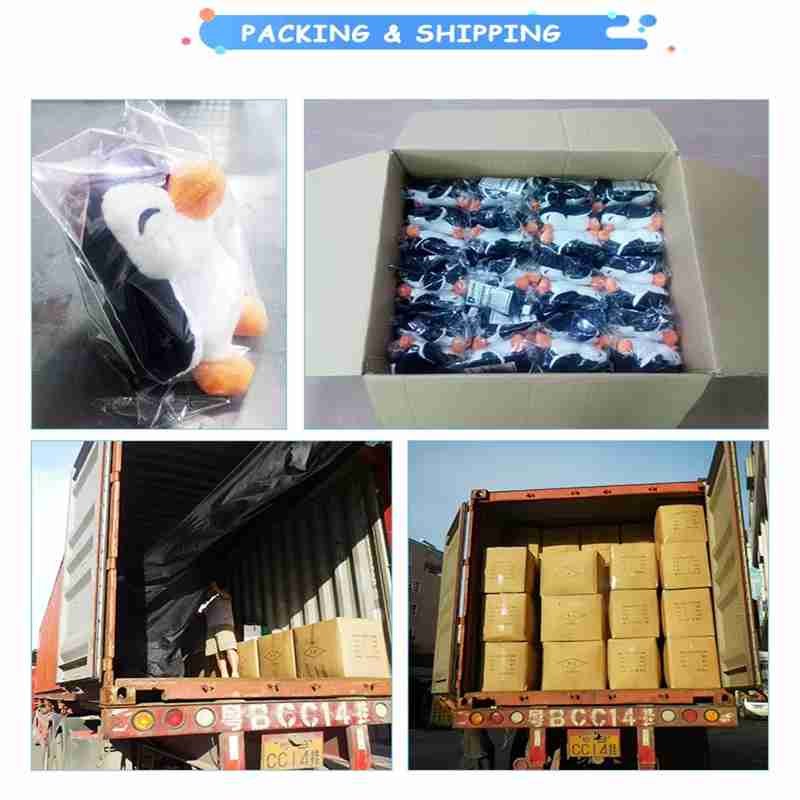
Many factory visits end too early. Visitors see the sample room, the sewing floor, maybe the finishing area, and then assume the story is complete. But plush projects do not end when the toy looks finished. They end when the goods are packed correctly, counted correctly, labeled correctly, and made ready for shipment without confusion. This is why the packing line deserves real attention during a factory tour.
Packing is where many avoidable problems quietly appear. A toy may be produced well but lose shape because carton pressure was not considered. Labels may be correct on the toy but wrong on the outer carton. Mixed sizes or colorways may be packed into the wrong assortment. Inner bags, barcode labels, warning labels, carton marks, and shipping counts all need alignment. For plush products with multiple SKUs, gift packaging, retail presentation, or promotional bundling, this stage becomes even more sensitive.
A strong packing area usually shows more than neat cartons. It shows clear sorting logic, count discipline, label control, and shipment readiness thinking. If the team can explain how packing instructions are followed, how outer carton details are checked, and how finished goods are organized before dispatch, that is a strong sign that the project is being handled with full-order awareness rather than last-minute improvisation.
During a tour, it helps to ask not only how toys are packed, but also how packing is matched to retail display, mailing protection, event distribution, or bulk export handling. A plush item is not truly ready until it can survive its next step after the factory.
Packing Readiness Table
| Packing area | What to verify |
|---|---|
| Inner packing | Shape protection, cleanliness, label placement |
| Unit count | Accurate quantities by style, color, or set |
| Outer cartons | Carton marks, barcode labels, shipment match |
| Pre-shipment staging | Organized storage and dispatch readiness |




Virtual Factory Tour vs On-Site Visit: What You Can Verify in Each
Not every plush project begins with an in-person factory visit. In many cases, the first review happens through video call, live walkthrough, recorded workshop footage, sample photos, and follow-up documentation. That does not make the review meaningless. It simply changes what can be verified directly and what needs stronger supporting evidence.
A virtual tour is useful for checking basic layout, sample room activity, production areas, equipment presence, packing setup, and the general rhythm of the workshop. It is also helpful for early conversations about sample flow, timeline expectations, and communication style. When done well, a remote walkthrough can already tell you whether the team is organized, responsive, and transparent enough to continue.
An on-site visit goes further. It gives you direct access to texture, handling quality, storage order, stitching cleanliness, filling feel, and small inconsistencies that video may hide. It also helps you judge whether the operation feels genuinely integrated from development to shipment or only selectively presented.
The best approach is not to treat one format as “real” and the other as “not enough.” Instead, use each properly. A virtual tour is strong for first screening and project discussion. An on-site visit is stronger for deeper verification before larger commitment. When both are used well, you gain a clearer view of how the plush workshop actually works.
Virtual vs On-Site
| Tour type | Best for |
|---|---|
| Virtual walkthrough | Early screening, layout check, communication review |
| On-site visit | Material feel, detail verification, deeper confidence building |
| Combined use | Faster first review plus stronger final judgment |
What a Strong Factory Tour Tells You About Repeat Orders
The real value of a plush factory tour is not limited to the first order. A strong visit should also help you judge whether the workshop can support repeat runs, line extensions, seasonal updates, and ongoing replenishment without turning every new order into a fresh start. That is often where long-term confidence is built.
Repeat orders depend on more than saved photos or a finished reference sample. They depend on whether the team keeps usable records, controls revisions carefully, and connects development decisions to production instructions in a way that can be followed again later. A workshop may produce a good first batch, but if version notes are loose, material substitutions are not tracked, or packing details live only in scattered chats, the next run can drift surprisingly fast.
This is why a factory tour should help you look beyond visible cleanliness or sample quality. It should help you ask whether the workshop has working habits that support continuity. Can they explain how approved details are recorded? Can they show how materials, trims, and measurements are locked? Can they tell you what helps them keep the second or third order close to the first?
For plush lines with multiple characters, bundle sets, retail assortments, or campaign-based replenishment, this matters even more. The stronger the internal order memory, the easier it becomes to maintain consistency without re-explaining everything each time. A useful tour should leave you with a clearer sense of whether the workshop is only good at making plush—or also good at keeping projects stable over time.
Approval records

Approval records keep repeat plush orders aligned with the accepted sample, including size, fabric, embroidery, filling, labels, and packing details.
Material tracking
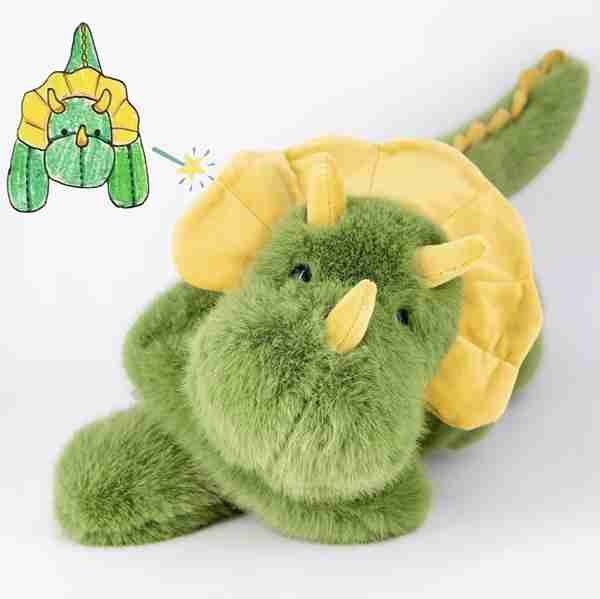
Material tracking reduces differences caused by fabric, filling, color, or trim changes, helping plush toys stay consistent across later production runs.
Process continuity
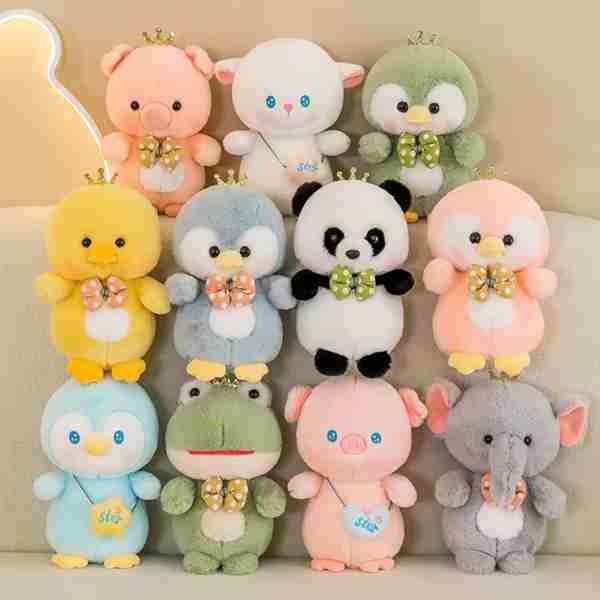
Process continuity keeps cutting, sewing, stuffing, finishing, and QC steps consistent, making repeat plush orders smoother and faster to manage.
Packing references
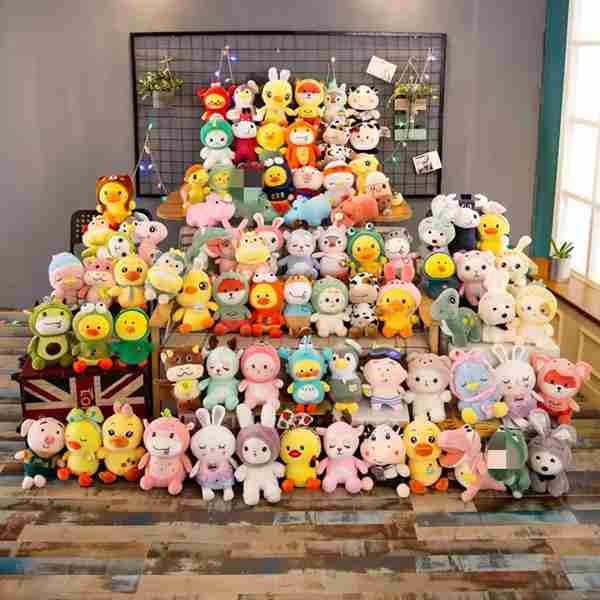
Packing references protect assortment accuracy, label placement, carton marks, retail packing, and shipment consistency across repeat plush toy deliveries.
Our Plush Toys Range
A selection of plush toy categories we commonly manufacture for OEM and brand clients.
Our factory manufactures a wide range of custom plush toys for OEM and brand clients across different industries.
Rather than fixed products, these categories represent the types of plush projects we commonly develop and produce, from character-based designs to large-scale promotional and retail plush.
Each category reflects our experience in custom development, process control, and stable mass production, allowing buyers to quickly identify whether their project fits our manufacturing capabilities.
Custom Baby Cloth Book
Custom baby cloth books designed for early learning, sensory play, and original development for OEM and private label production.
Custom Character Plush
Custom-made plush toys based on IP characters, mascots, and original artwork, developed for OEM and licensed production.
Yours Animal Plush Toys
Classic animal plush toys produced for retail and wholesale distribution, with custom materials and design variations.
Retail Plush Collections
Plush toy series developed for retail stores and gift shops, focusing on consistent quality and repeatable production.
custom Giant Plush Toys
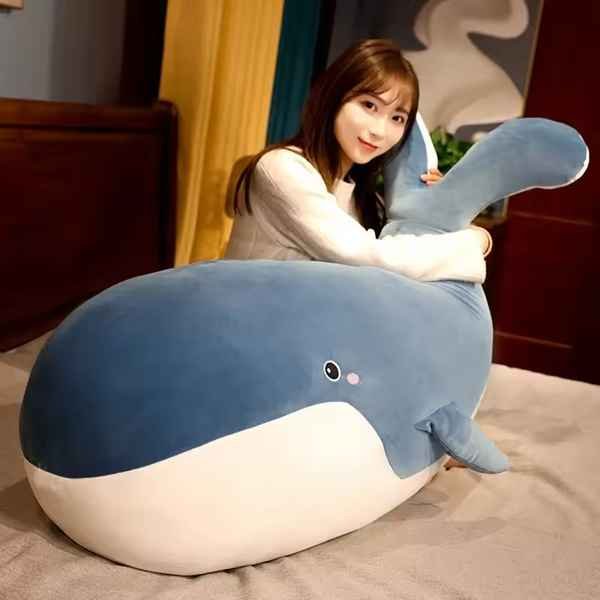
Large-scale plush toys requiring reinforced structure, controlled stuffing, and durability, commonly produced for events and display.
Promotional Plush Toys
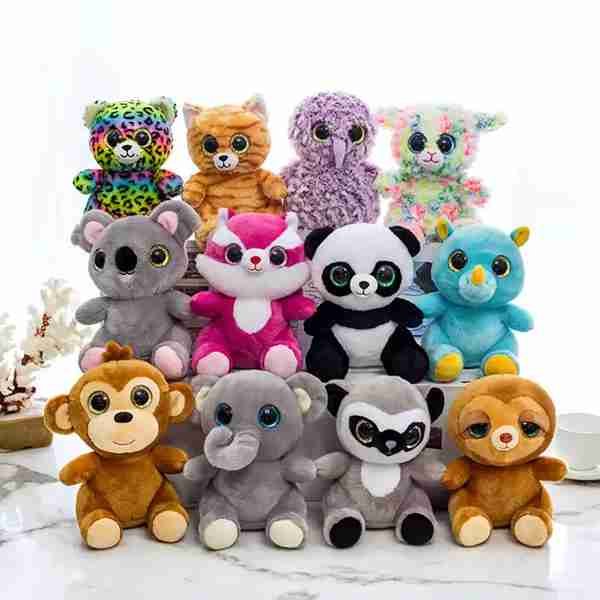
Plush toys designed for marketing campaigns, giveaways, and brand promotions, optimized for bulk orders and event use.
Custom Plush Mascots
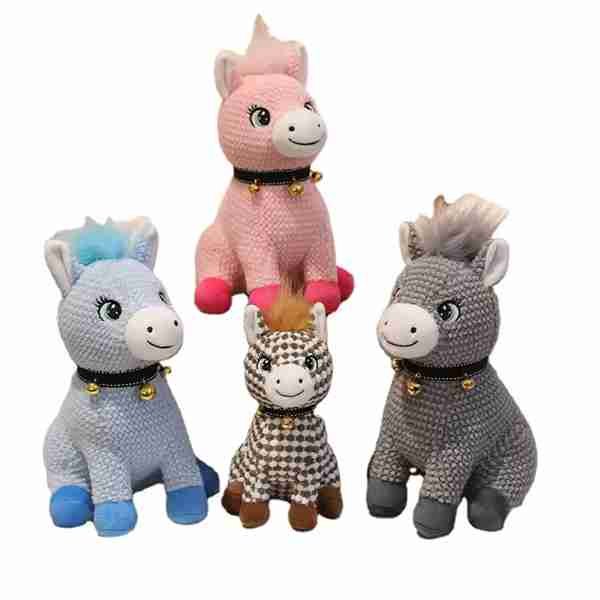
Wearable or display plush mascots developed for brand identity, exhibitions, and promotional use, with custom sizing and structure.
Seasonal & Holiday Plush
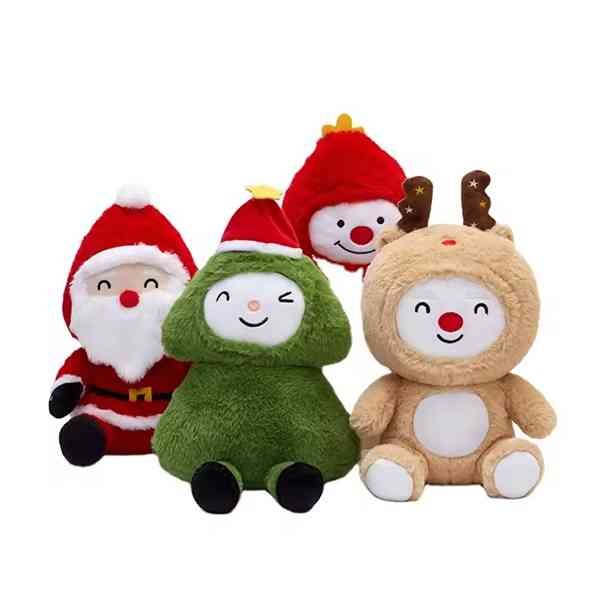
Plush toys developed for seasonal campaigns and holiday collections, such as Christmas, Halloween, and special events.
Plush Keychains & Mini Plush
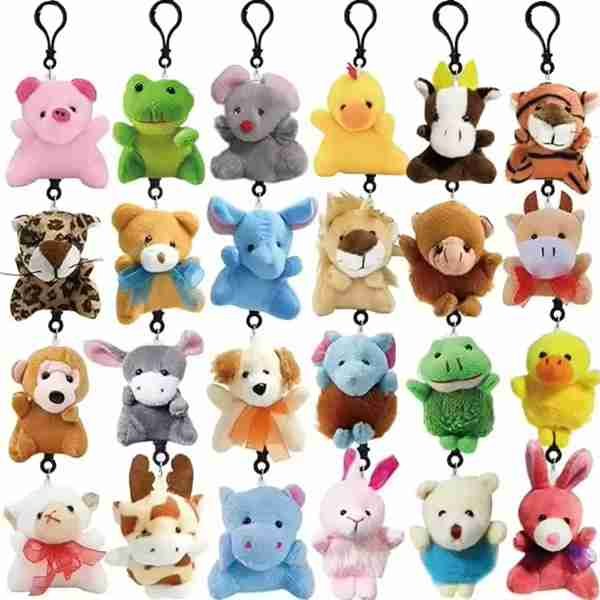
Small-size plush products designed for promotional bundles, accessories, and gift sets, suitable for large-volume production.
OEM Exclusive Plush Projects
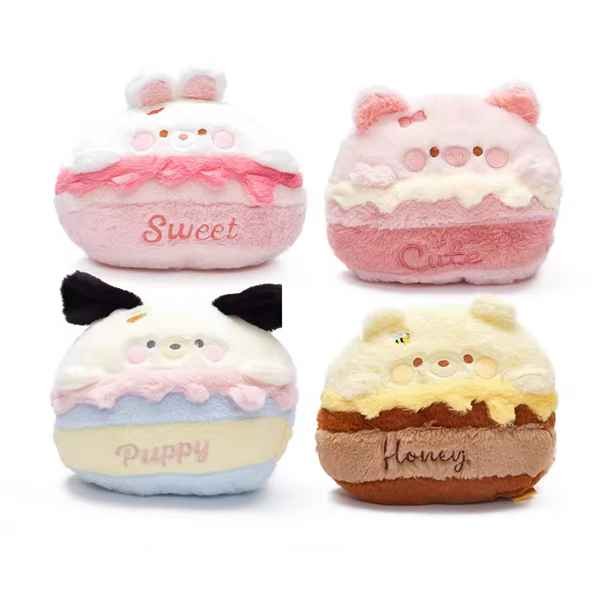
Fully customized plush projects developed under OEM or private-label agreements, from sample development to mass production.
Custom Soft Doll Plush
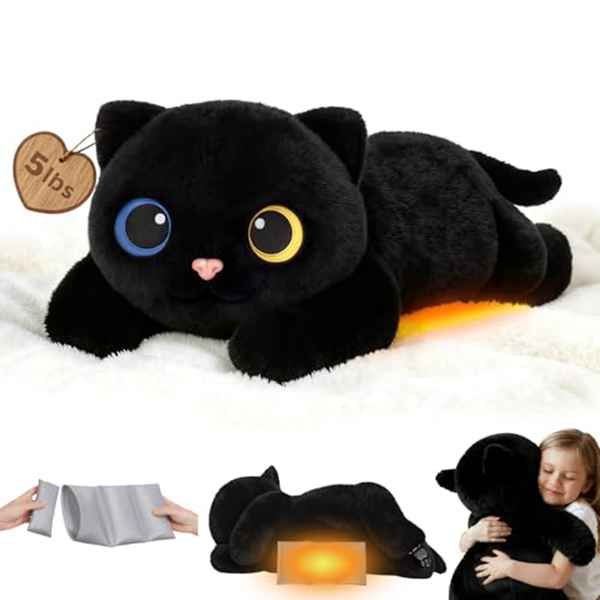
Human-style plush dolls developed for retail and branded collections, focusing on facial details and sewing accuracy.
Custom Plush Sets & Series
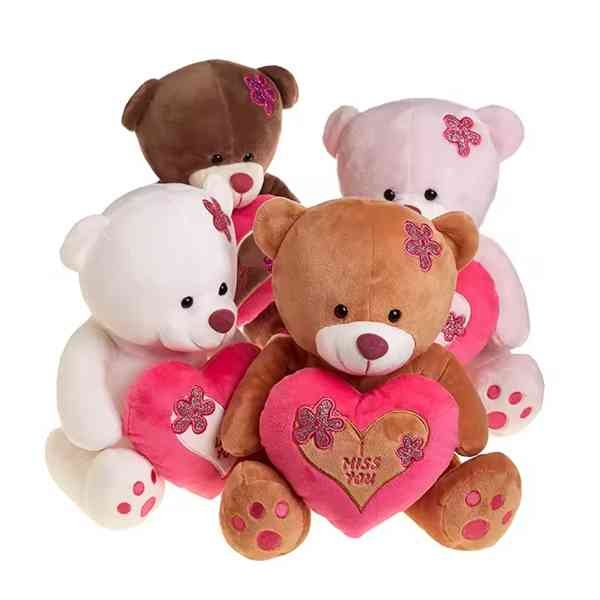
Multiple-design plush sets produced as series collections, requiring color control and batch consistency.
Inside Our Plush Toy Factory
Our Production Capabilities
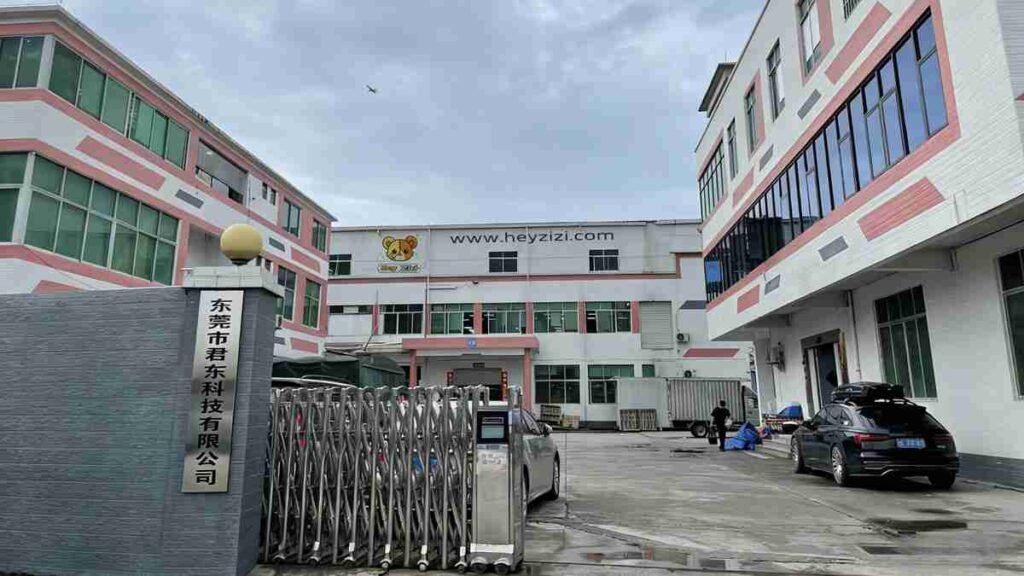
We believe transparency builds trust. By showing real production environments, buyers can better understand how plush toys are manufactured in our factory, rather than relying on descriptions alone.
Our factory videos and photos present actual sewing lines, stuffing operations, in-line quality inspections, needle detection, and packing processes. These visuals reflect our daily manufacturing workflow, helping buyers evaluate our production capability, process control, and working standards with confidence.
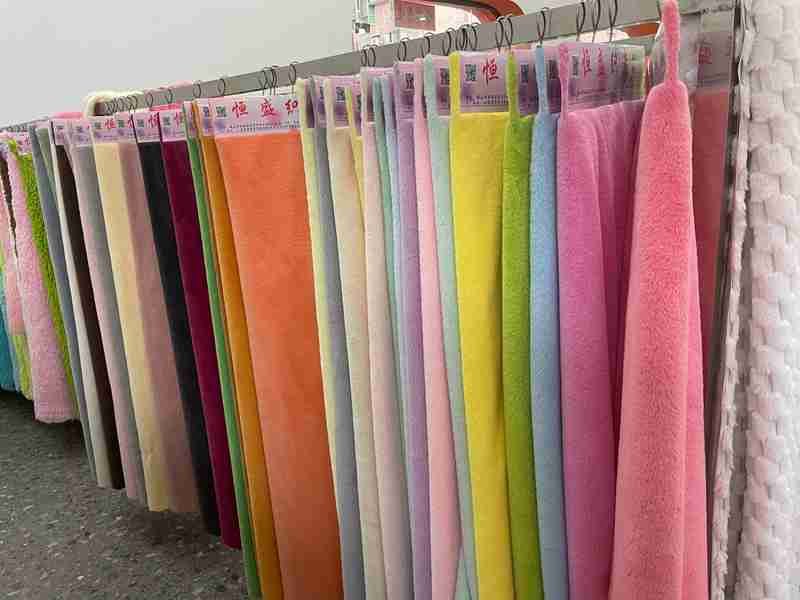
Selecting raw materials
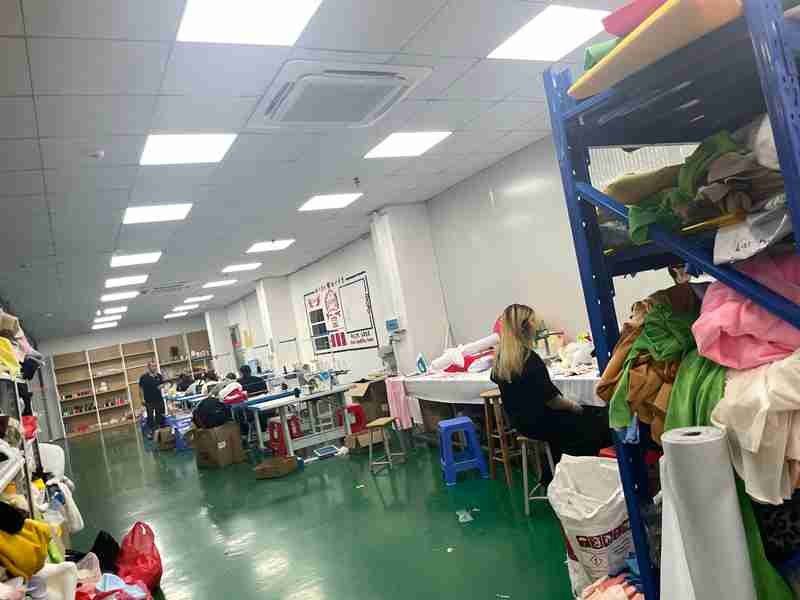
Customer sample production room
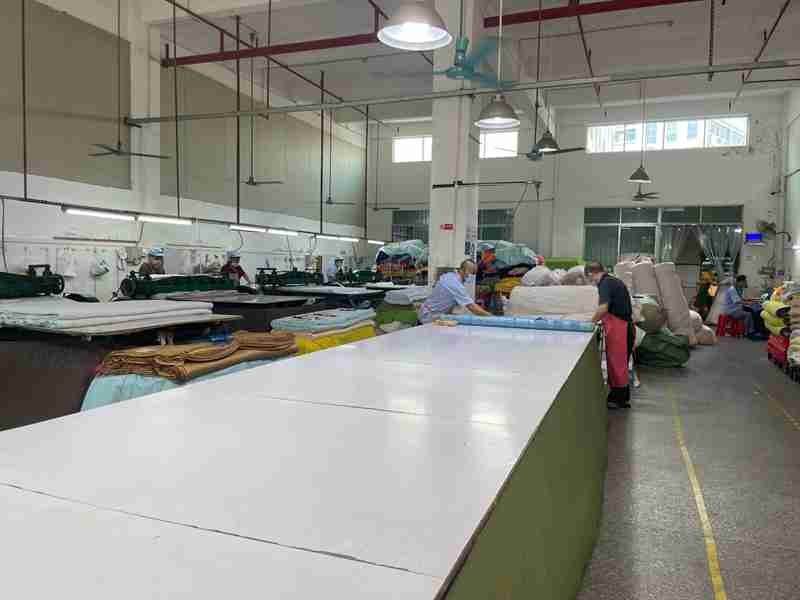
Selecting raw materials
Mechanical laser cutting
Batch computer embroidery
Sewing lines in operation
In-line quality inspection
Stuffing process control
Hand stitching & closure finishing
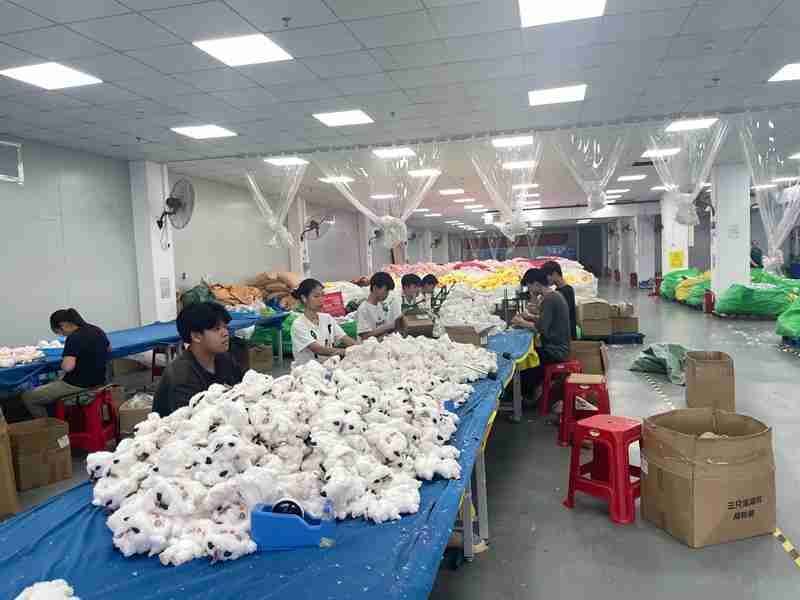
Shape adjustment & surface finishing
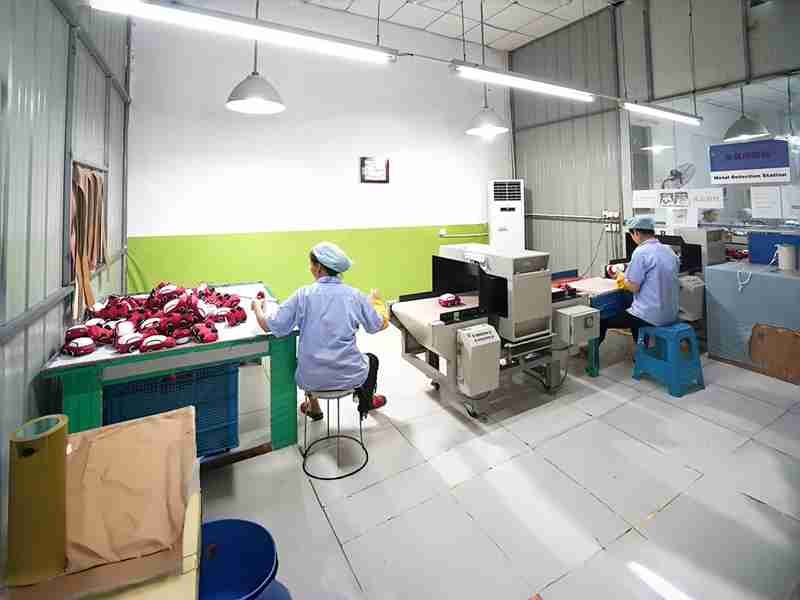
Needle detection & metal safety inspection
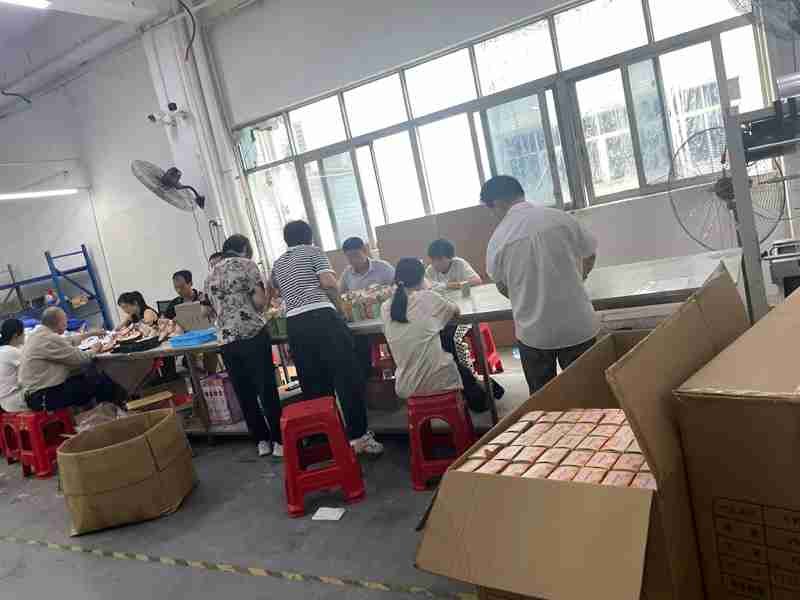
Packing & carton preparation
Client Testimonials
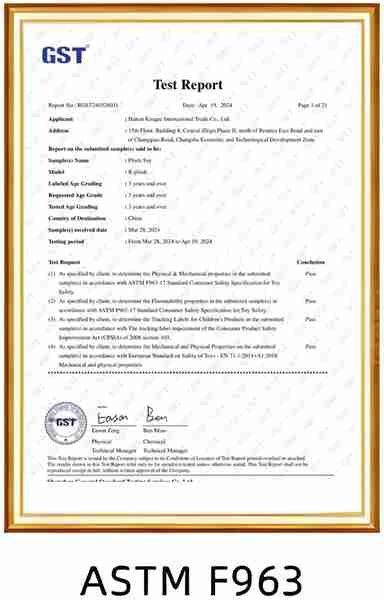
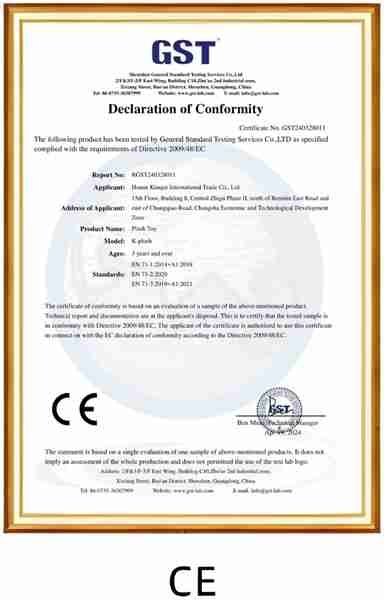
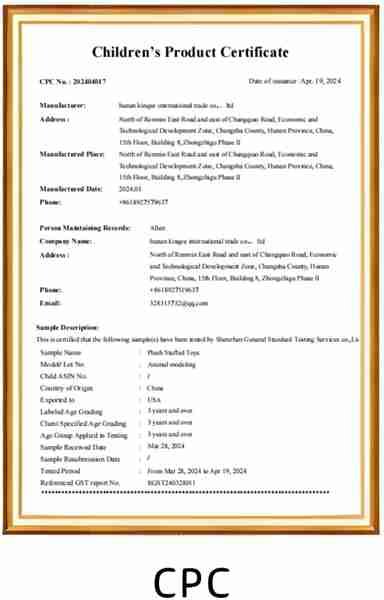
800+ brand Clients Trust heyzizi
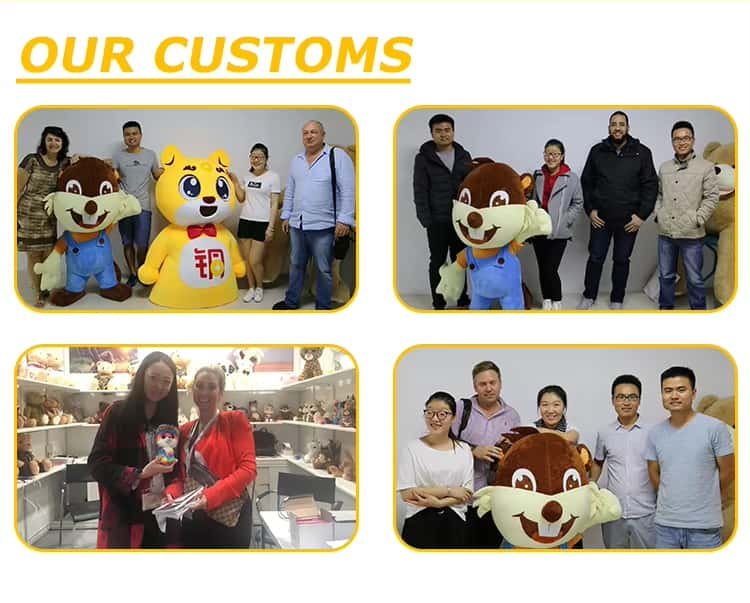
Cooperating Brands Trusted
We cooperate with brands across gift, retail, publishing, and promotional industries. Many of our partnerships are long-term and built on consistent quality, clear processes, and reliable delivery.
Rather than focusing on volume, we focus on stable cooperation and repeatable manufacturing results.













Our Story-From 2000 To Today
2000 – Jundong established in Guangdong
2005 – Began international export operations
2010 – Expanded to EU, US, and Middle East markets
2015 – Launched in-house design and sampling center
2020 – Upgraded automation and ERP system
2025 – Servicing 800+ global B2B clients
















Make a Sample Before Mass Production
Before moving into mass production, sample development allows verification of structure, materials, workmanship, and quality standards.
If you are planning a custom plush project or evaluating a reliable plush toy factory, we welcome you to discuss your requirements with our team.
- info@heyzizi.com
- (+86)13717153084
FAQs About Plush Toys Factory Tour
Is a plush factory tour worth arranging before placing an order?
Yes, a plush factory tour is worth arranging before placing an order because it helps brand teams judge process reliability, not only product appearance. A nice plush prototype can look promising, but stable bulk results depend on pattern accuracy, material control, sewing flow, stuffing consistency, detail checking, packing discipline, and clear project records.
A factory tour allows you to see how a custom plush project moves from concept review to sample development, then from sample approval to bulk production and shipment. This is especially useful for character plush toys, retail plush gifts, plush keychains, mascot dolls, campaign plush, and multi-SKU plush programs.
The real value is not simply seeing whether the workshop looks large or clean. The better value is judging whether the team can keep the approved design stable across different production stages. If your plush toy includes custom embroidery, special trims, branded labels, retail packaging, or repeat-order plans, a tour can help reduce later risk.
What areas should I check during a plush factory tour?
The most useful areas to check during a plush factory tour are the sample room, material area, cutting and sewing floor, stuffing and finishing area, QC checkpoints, and packing section. These areas show whether the workshop can manage a custom plush project in a clear and repeatable way.
The sample room shows development ability, pattern work, fabric trials, revision notes, and prototype accuracy. The material area helps you judge how plush fabric, filling, trims, labels, and accessories are stored and confirmed. The cutting and sewing floor shows whether work moves in a clear order. Stuffing and hand finishing are also worth checking because they affect body shape, softness, posture, and character expression.
QC checkpoints are where you can see whether issues are found early, not only at the end. The packing area shows shipment discipline, carton marks, label control, retail packing, and assortment accuracy. For plush projects with retail packaging, event deadlines, or mixed styles, this area can be as important as the sewing floor.
Is a virtual plush factory tour enough, or should I visit on site?
A virtual plush factory tour is useful for early screening, but an on-site visit is better when you need deeper verification before a larger order or long-term project. The two methods serve different purposes, and they can work well together.
A live virtual walkthrough can help you check whether the workshop is active, whether the sample room and packing area exist, and whether the team communicates clearly. It is also useful for reviewing sample progress, material options, and general workflow. For early-stage custom plush projects, this can save time and reduce unnecessary travel.
However, virtual viewing has limits. It is harder to judge fabric texture, filling feel, small finishing issues, hidden clutter, real workflow discipline, and small differences between pieces. For larger plush orders, retail launches, character series, gift programs, or repeat-order planning, an on-site visit gives stronger confidence.
A practical method is to start with a virtual tour, then arrange an on-site visit when the project becomes more serious.
When is the best time to arrange a plush factory tour?
The best time to arrange a plush factory tour is usually before final sample approval or before committing to a larger production run. If the visit happens too early, the discussion may stay too general. If it happens too late, many key decisions may already be fixed.
For a new plush project, a good timing is after the factory has reviewed your concept but before the project is fully locked. At this stage, you can compare the sample direction with real workshop capability and discuss fabric, structure, embroidery, trims, packing, timeline, and repeat-order needs more clearly.
For simple plush items, a virtual walkthrough before sampling may be enough. For custom character plush, retail plush sets, event plush toys, mascot dolls, hospital gifts, museum plush, or multi-SKU programs, it is better to check the workshop before the project becomes more costly or time-sensitive.
A factory tour is also useful before a second or third order, especially when you plan to add new styles, increase quantity, or upgrade packaging.
How should I match a factory tour to my plush project type?
You do not need to inspect every area equally. The better method is to match the factory tour to your plush project type and focus on the areas that carry the most risk.
For character plush toys, pay more attention to the sample room, pattern drafting, face embroidery, shaping, and expression consistency. For plush keychains or bag charms, focus on attachment strength, small-part safety, trim fixing, and packing accuracy. For retail plush toys, check labels, hangtags, barcodes, gift boxes, display packaging, and carton marks. For repeat-order plush programs, review approval records, material tracking, golden sample storage, and process continuity.
This makes the tour more practical. Instead of asking broad questions, you can ask project-specific questions, such as how embroidery placement is kept stable, how mixed colors are sorted, or how approved samples are saved for later runs.
A good factory tour is not about seeing everything. It is about checking the right details for your order.
Can a factory tour help judge sample-to-bulk consistency?
Yes, a factory tour can help judge sample-to-bulk consistency, but only if you check the system behind the sample. A display sample may look good, yet bulk quality depends on whether the workshop can repeat the approved details at scale.
The strongest sign is the connection between the sample room and production floor. Ask how the approved sample is recorded, how fabric choice is saved, how embroidery placement is confirmed, how filling level is controlled, and how trims, labels, measurements, and packing methods are documented.
It is also useful to check whether inspections happen during cutting, sewing, embroidery, stuffing, finishing, and packing preparation. If the team only relies on final inspection, problems may be found too late.
For plush toys with sensitive facial expressions, multiple fabric panels, special accessories, weighted filling, or retail packaging, sample-to-bulk control is especially important. Mature teams can explain normal tolerance and how they keep variation within an acceptable limit.
What should I prepare before visiting a plush factory?
Before visiting a plush factory, prepare concept visuals, reference images, target size, intended use, logo files, color direction, packaging ideas, and any details that may affect approval. You do not need a perfect technical file, but clear project information makes the visit much more useful.
Useful materials include sketches, photos of similar plush styles, size notes, fabric preferences, embroidery requirements, printing details, accessories, labels, hangtags, barcode needs, safety notes, and packing ideas. If the plush toy is for retail, campaign use, museum stores, schools, hospitals, events, or gift programs, mention that context early.
It is also helpful to prepare timing expectations. For example, confirm whether you need a sample for internal review, whether you have a holiday deadline, or whether the project may grow into a character series.
A short and clear project brief helps the factory give more relevant suggestions during the tour.
What mistakes should I avoid during a plush factory tour?
The most common mistake is looking only at finished samples and ignoring how those samples were developed, revised, approved, and turned into bulk references. A sample wall may look attractive, but it does not show the full working method.
Another mistake is asking questions that are too general, such as “Can you make this?” Better questions are more specific: “How do you keep face embroidery stable?” “How do you control mixed-color packing?” “How are approved samples saved for repeat runs?”
Many visitors also skip less attractive areas such as material storage, process inspection, finishing, and packing control. Yet these areas often affect bulk stability, shipment accuracy, and retail presentation.
The last mistake is visiting without priorities. If your project depends on softness, facial expression, safety finishing, retail packaging, or repeat-order continuity, those points should guide your tour.
A useful factory tour should turn what you see into a clearer project decision.
How can I evaluate a plush factory if I cannot visit in person?
If you cannot visit in person, you can still evaluate a plush factory through a live video walkthrough, close-up sample review, process questions, and supporting records. The key is to make the remote review structured.
Ask for a live walkthrough rather than only edited clips. Try to see the sample room, material area, sewing floor, finishing section, QC activity, and packing area in one connected session. This helps you judge whether the workshop has a real workflow.
Then request close-up photos or videos of details that matter to your project, such as embroidery, printing, trims, stuffing shape, label placement, and retail packing. Ask how approvals are saved, how revisions are tracked, how material changes are handled, and how carton marks match packed goods.
Sample comments, material references, packing instructions, and approval records can also show whether the factory manages projects with structure. Remote review works best when it checks evidence, not just photos.
What should I confirm after a plush factory tour?
After a plush factory tour, the next step is to confirm the working basis for sampling or bulk production. Do not stop at a general feeling that the visit went well. Clear follow-up details protect the project.
If you are moving into sampling, confirm reference files, target size, fabric direction, logo or face detail method, trims, safety requirements, and packaging direction. Clarify who will review the first sample, how comments will be collected, and what standard will be used for approval.
If you are moving toward bulk production, confirm the approved sample version, key measurements, material references, label needs, carton packing method, quantity split, timeline, inspection points, and update schedule.
The biggest risk after a tour is leaving with trust but without a clear next step. A short written recap after the visit can help both sides stay aligned and reduce later misunderstanding.
