 Skip to content
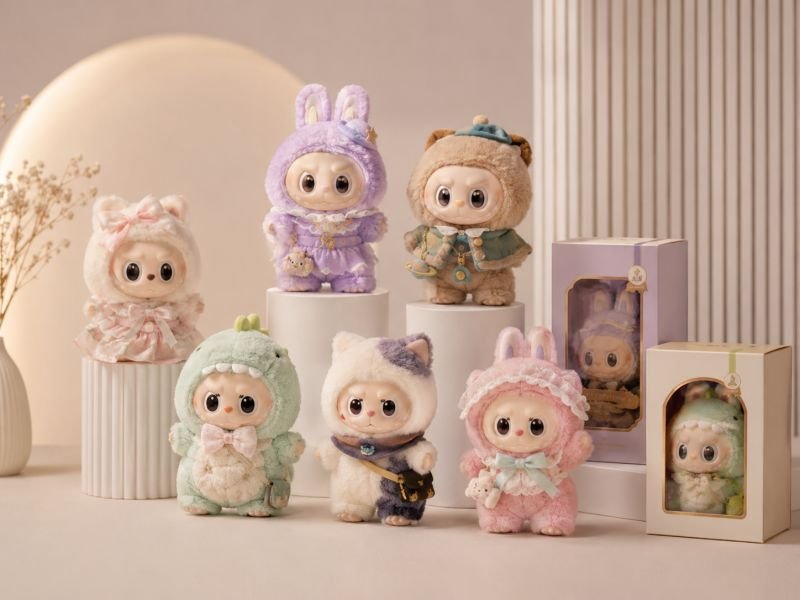
A blind box plush series is easy to love and surprisingly easy to misplan. From the outside, it looks like a cute product idea: several soft characters, one mystery box, a little surprise, and a fun unboxing moment. But once the project moves from artwork to sample, every small decision starts to matter. Character size affects box size. Box size affects shipping cost. Fabric affects hand feel. Embroidery affects facial expression. Hidden styles affect packing control. One unclear label rule can create SKU confusion. One overcomplicated character can push the cost of the whole series away from the original plan.
To plan a custom blind box plush toys series, start with a clear theme, decide the number of styles, separate common, rare, and hidden designs, prepare artwork and size references, choose suitable plush fabric and craft details, design blind packaging, confirm sample standards, review MOQ and cost factors, and control each SKU before bulk production.
The best blind box plush projects do not begin with “How many cute characters can we make?” They begin with a sharper: “Can this idea become a series people want to open, collect, share, and reorder without causing production chaos?” A team may come in with six lovely sketches, but the factory review may reveal that one character cannot stand, one hidden style needs a different pattern, one embroidery detail is too small, and the box is not deep enough for the ears. That is where real planning begins.
What Is A Blind Box Plush Series?
A blind box plush series is a group of plush toys packed in concealed boxes or bags so the exact style is unknown before opening. It works best when the characters share one theme, each style feels different, the packaging hides the contents properly, and the production system can control size, SKU, label, packing ratio, and quality across the whole series.
A blind box plush is not just a plush toy placed inside a box. It is a complete product experience. The plush gives softness and emotional value. The box creates mystery. The series structure creates a reason to collect. The hidden style adds excitement. The packaging, label, and SKU system keep the whole project organised.
This is why planning a blind box plush series requires a different mindset from making a single custom plush toy. A single plush project can focus deeply on one design. A blind box plush series must keep every design connected. All styles should look like they belong to the same collection, fit the same packaging direction, follow the same safety and label logic, and remain practical for cutting, sewing, stuffing, inspection, packing, and restocking.
In production, one series may include many small moving parts:
| Planning Area | What Needs To Be Controlled |
|---|---|
| Character Design | Theme, expression, pose, outfit, colour, accessory |
| Plush Structure | Size, balance, pattern, seams, filling, shaping |
| Surface Details | Embroidery, printing, appliqué, woven labels, patches |
| Packaging | Blind box, inner bag, hangtag, barcode, SKU label, carton mark |
| SKU Rules | Style code, packing ratio, hidden style rule, carton allocation |
| QC | Face accuracy, size tolerance, seam strength, cleanliness, needle detection |
| Reorder | Approved sample records, fabric notes, packaging files, production feedback |
When these pieces are planned early, the series feels smooth. When they are left until late, even a beautiful character concept can become difficult to produce.
What Is Blind Box Plush?
Blind box plush is a soft plush product packed in mystery packaging, where the final style is hidden until the package is opened. It can be a mini stuffed animal, character plush, mascot plush, plush keychain, bag charm, collectible plush, seasonal plush, or IP merchandise item.
The “blind” part usually comes from one of these packaging methods:
- A sealed paper box with no visible product window.
- A foil bag or inner mystery bag inside a box.
- A printed pouch that hides the plush style.
- A retail display box holding multiple individual blind boxes.
- A mixed carton prepared according to a style ratio.
The plush itself can be simple or highly detailed. A small 8–12cm plush charm may focus on face embroidery and keyring attachment. A 15–20cm collectible plush may allow more body shape, outfit detail, and storytelling. A sitting animal design may need stronger bottom balance. A character with tall ears may need deeper box space. A plush with accessories may need extra pull testing and packing review.
For a blind box format, every style should stay close in perceived value. If one style looks much richer and another looks too plain, opening becomes unfair. That does not mean every design must cost exactly the same, but the collection should feel balanced in size, detail, texture, and visual reward.
Why Do People Love Blind Boxes?
People love blind boxes because they turn a product into a small moment of suspense. A normal plush toy is chosen. A blind box plush toy is discovered. That discovery creates curiosity before opening, emotion during opening, and a reason to keep the series in mind afterwards.
The appeal usually comes from five forces working together:
- Surprise: the style is unknown before opening.
- Collection: the full set gives people a clear goal.
- Rarity: secret or rare styles create extra excitement.
- Identity: people connect with certain characters, colours, moods, or expressions.
- Sharing: unboxing photos and short videos make the product easier to spread.
A blind box format also lowers the pressure of choosing. Instead of comparing every style on a shelf, someone chooses the series and lets the result happen. This makes the purchase feel playful. It also works well for retail shelves, fan drops, event gifts, museum shops, tourism souvenirs, and online limited releases.
But the excitement only works when the product feels worth opening. A weak series may have mystery, but not enough reward. If the plush feels cheap, the face looks off, the box is damaged, or the styles are too similar, the opening moment loses power. The package creates attention, but the plush decides whether the series earns repeat interest.
A strong blind box plush should make someone think:
- “This style is cute enough even if it is not the hidden one.”
- “The full set looks good together.”
- “The secret style feels special, but not unfair.”
- “The quality feels consistent.”
- “I would open another one.”
What Makes Blind Boxes Appealing?
Blind boxes are appealing because they combine uncertainty with structure. The opening result is unknown, but the series itself should feel clear. The theme, style count, rarity logic, packaging design, and character differences all help people understand why the product is worth collecting.
A blind box series usually performs better when the appeal is built on more than one reason. Mystery alone is not enough. A series needs visual charm, repeat value, and a sense of completion.
| Appeal Factor | How It Works | Planning Focus |
|---|---|---|
| Mystery | Creates curiosity before opening | Concealed packaging and clear blind rules |
| Character Variety | Makes every opening feel different | Different faces, colours, poses, outfits, or accessories |
| Collection Goal | Encourages people to complete the set | Clear style number and series theme |
| Hidden Style | Adds a chase element | Special detail without breaking cost control |
| Soft Texture | Makes the item emotionally pleasant | Fabric, filling, hand feel, and shape |
| Display Value | Keeps the plush visible after opening | Size, sitting balance, hangtag, shelf look |
| Social Sharing | Helps the product travel online | Cute face, box design, unboxing detail |
For plush toys, the sense of touch is especially important. A plastic figure may win through sculpting and paint detail. A plush product wins through softness, expression, and emotional warmth. If the plush looks cute but feels thin, stiff, or poorly filled, the product loses its charm in the hand.
The best blind box plush designs often have:
- A clear silhouette, even at a small size.
- Large enough facial features for embroidery or printing.
- A consistent body size across styles.
- One or two memorable details per character.
- A shared colour system or story world.
- Packaging that looks good in photos.
- A hidden style that feels exciting, not random.
A common mistake is making every style too similar. If only the colour changes slightly, people may not feel the joy of discovery. Another mistake is making every style too different. If one plush has wings, another has a hat, another has long legs, and another has a complex outfit, the factory may need different patterns, different box depth, different labour time, and different QC rules. A collectable series needs both variety and control.
Who Should Launch This Series?
A blind box plush series works well for projects with repeat interest, visual identity, and a clear audience. It is especially suitable for original characters, mascot families, licensed IP, retail collectibles, online drops, event campaigns, cultural tourism souvenirs, museum products, sports fan items, and seasonal gift programs.
This format is a good fit when the project has at least one of these conditions:
- A character world that can expand into several styles.
- A fan group that enjoys collection and sharing.
- A retail channel that needs shelf curiosity.
- An event where surprise gifts can increase participation.
- A product line that needs limited editions or seasonal drops.
- A story or theme that can be divided into multiple moods, outfits, animals, or scenes.
Blind box plush is less suitable when the project only needs one exact mascot, one corporate gift style, or one low-cost giveaway with no collection purpose. In that case, a regular plush toy, plush keychain, or mascot plush may be more direct and easier to manage.
The format also needs enough time for planning. A blind box plush series is not just one design multiplied by six. It can involve several patterns, several embroidery files, several fabric colours, multiple labels, blind packing rules, and careful carton allocation. If the launch date is very close, the safest route may be a smaller style count or a simpler plush structure.
A practical first launch may look like this:
| Project Type | Suggested Style Count | Product Size Direction | Main Focus |
|---|---|---|---|
| Event Gift | 3–4 styles | 8–12cm charm or mini plush | Fast recognition and budget control |
| New IP Test | 4–6 styles | 10–15cm mini collectible | Character validation and social sharing |
| Retail Shelf Launch | 6–8 styles | 12–18cm plush | Strong packaging and repeat purchase |
| Fan Merchandise | 6–8 styles plus hidden | 10–15cm charm or plush | Emotional design and rarity |
| Museum Or Tourism | 4–6 styles | 12–20cm animal or mascot | Local story and souvenir value |
| Mature Collectible Line | 8–12 styles | Depends on channel | More complex series planning |
The safest principle is simple: do not make the first series more complex than the team can control. A clean 6-style series with strong characters is often better than a messy 12-style series with unclear production rules.
Blind Box Plush Vs Regular Plush
A regular plush toy is chosen before purchase. A blind box plush is revealed after purchase. That one difference changes the whole planning logic. Regular plush focuses on one visible product. Blind box plush focuses on a system of related products.
| Comparison Point | Regular Plush Toy | Blind Box Plush Series |
|---|---|---|
| Purchase Experience | Direct selection | Mystery reveal |
| Design Focus | One main character | Collection structure |
| Packaging | Polybag, hangtag, gift box, retail box | Concealed box or mystery bag |
| Repeat Interest | Depends on need | Built around collecting |
| SKU Control | Lower complexity | Higher complexity |
| Sampling Work | One style or visible styles | Multiple styles and packing logic |
| QC Focus | One approved sample standard | Multiple approved sample standards |
| Good For | Mascot, gift, display, single IP item | Collectibles, drops, retail series, fan programs |
A regular plush can spend more cost on one hero design because the exact style is known. A blind box series must spread the budget across the whole collection. That means design decisions should be balanced. If one character has too many extra parts, it may pull production cost away from the rest of the line.
There is also a difference in packaging value. For a regular plush, the package may protect and present the toy. For blind box plush, the package becomes part of the product experience. The box must hide the style, survive transport, look attractive on a shelf, and support barcode or SKU management.
Regular plush is often easier for first-time projects. Blind box plush offers stronger repeat interest, but needs more preparation. If the goal is one mascot for a campaign, choose regular plush. If the goal is opening excitement, style trading, fan discussion, and collection behaviour, blind box plush is the stronger format.
How To Build The Series Concept
A strong blind box plush concept starts with a simple theme, a clear character system, a controlled number of styles, and a practical production plan. The series should be easy to understand, fun to collect, visually varied, and realistic for sampling, packaging, quality control, and repeat orders.
The concept stage is where most future problems are either prevented or created. At this point, everything still looks flexible. It is tempting to add more characters, more accessories, more hidden styles, more fabrics, more box effects, and more story details. But every extra detail has a cost in development, sampling, production time, QC, and packing control.
A good concept should several practical before the first sample:
- What is the theme of the series?
- How many styles are included?
- What makes each style different?
- Which style is the visual hero?
- Is there a hidden style?
- Will all styles fit one box size?
- Can all faces be made clearly in plush form?
- Is the product meant for shelf display, bag hanging, gift use, or online sale?
- What is the target size range?
- Is the series likely to have a second release?
A blind box plush series should be described in one clear line. For example:
- Six forest animals dressed for a winter bakery theme.
- A mascot family showing different travel moods.
- Mini sea creatures inspired by a coastal museum shop.
- Cute game monsters with one hidden night edition.
- Food-shaped plush charms for a café anniversary drop.
If the concept is easy to say, it is easier to design, sample, photograph, sell, and restock. If the concept needs a long explanation, the final product may also feel unclear.
How Many Styles Work Best?
For a first blind box plush series, 4 to 8 styles is usually easier to control than a large 10 to 12 style launch. This range gives enough variety for collecting while keeping artwork review, sampling, fabric sourcing, embroidery files, packaging, QC, and packing rules manageable.
A 3-style series can feel too small unless it is for an event or short campaign. A 12-style series can feel exciting, but it requires stronger planning and a higher total production quantity. Since custom plush projects often work by quantity per design, each added style increases the total project size.
| Number Of Styles | Better Use Case | Advantage | Risk |
|---|---|---|---|
| 3–4 | Event gift, small test, limited campaign | Simple to manage, lower development pressure | Less collection depth |
| 5–6 | First IP plush line, retail test, online drop | Good balance between variety and control | Each style must be clearly different |
| 7–8 | Stronger retail or fan collection | Better repeat purchase potential | More SKU and QC management |
| 9–12 | Mature character world or large launch | Richer collection story | Higher sample cost, packing risk, and production complexity |
A 6-style structure is often a strong starting point because it gives enough room for personality. For example:
- Style 1: main character.
- Style 2: happy expression.
- Style 3: sleepy expression.
- Style 4: special outfit.
- Style 5: different colourway.
- Style 6: rare or seasonal version.
- Optional hidden: secret accessory or limited expression.
The final decision should connect with the launch goal. If the purpose is testing, fewer styles are safer. If the audience already has strong character attachment, more styles can make sense. If the series is for a museum shop or tourism store, 4 to 6 local animals or icons may be easier to understand than 10 unrelated designs.
Which Characters Fit Blind Boxes?
Characters that fit blind boxes usually have strong silhouettes, clear expressions, simple details, and enough variation to make each opening feel different. Animals, mascots, food characters, fantasy creatures, game characters, sports mascots, local icons, and emotional mood characters can all work well.
A good blind box plush character must survive the change from flat artwork to soft material. Not every drawing becomes a good plush toy automatically. Thin lines, tiny facial details, sharp corners, complex gradients, and delicate accessories may look beautiful on screen but become difficult in fabric, embroidery, printing, cutting, or sewing.
The best character directions often include:
- Round or compact body shapes.
- Large eyes or clear facial features.
- Simple colour blocks.
- Recognisable ears, tail, hat, outfit, or accessory.
- Expressions that can be shown through embroidery or printing.
- A body structure that can be repeated across styles.
- A size that fits the intended box and shipping plan.
For a blind box series, characters should feel related. They do not need to be identical, but they should belong to one world. The connection can come from:
- Same body base with different outfits.
- Same animal family with different expressions.
- Same mascot in different scenes.
- Same colour palette across all characters.
- Same theme, such as bakery, forest, ocean, travel, school, game, or festival.
- Same hangtag story or card design.
One useful test is to place all sketches in one row and ask: “Would someone understand this is one collection in three seconds?” If the is no, the series may need a stronger theme.
How To Plan Secret Styles?
A secret style should feel more exciting than the common styles, but it should not destroy the cost structure or production flow. The safest hidden style usually uses one or two special differences, such as a new colourway, small accessory, special embroidery, limited outfit, or different facial expression.
A hidden style does not have to be the most complicated plush in the series. In many cases, the most effective secret design is easy to recognise and easy to explain. For example:
- A night edition with star embroidery.
- A gold scarf version of the main mascot.
- A sleepy face version with a small pillow.
- A limited colour animal.
- A festival outfit version.
- A rare item held in the character’s hands.
Overcomplicated hidden styles can create several problems:
- Higher unit cost than other styles.
- Different pattern requirements.
- Slower sewing process.
- Special material sourcing.
- Higher defect risk.
- More difficult packing control.
- Unbalanced perceived value across the series.
The hidden style should be planned before sampling, not after the common styles are finished. If it is added too late, the box size, packing ratio, SKU list, label system, and quotation may all need adjustment.
A simple rarity structure may look like this:
| Style Type | Example Quantity Share | Design Role | Production Note |
|---|---|---|---|
| Common Styles | 70–85% | Main collection value | Keep cost and quality stable |
| Rare Styles | 10–25% | Add extra excitement | Use controlled special details |
| Hidden Style | 1–5% | Create surprise and discussion | Confirm packing rule early |
The exact ratio depends on the project. The important point is not the percentage itself, but the control rule behind it. The factory needs clear packing instructions, and the launch team needs a fair product plan.
Common Vs Rare Vs Hidden
Common, rare, and hidden styles should each have a different role. Common styles carry the main value of the collection. Rare styles add extra excitement. Hidden styles create the strongest surprise. If common styles are weak, the whole series becomes risky because most openings will feel less satisfying.
A good blind box series should not rely only on the hidden style. The common styles must be lovable enough on their own. Otherwise, people may feel disappointed when they do not get the rare one. This can hurt repeat purchase and product reviews.
A balanced structure may use the following logic:
| Style Level | Main Purpose | Design Method | What To Avoid |
|---|---|---|---|
| Common | Make the series worth buying | Strong main characters, good face, soft hand feel | Making them too plain |
| Rare | Add collecting interest | Special colour, outfit, mood, or accessory | Adding too much cost |
| Hidden | Create excitement | One clear surprise element | Making it impossible to control in production |
The hidden style should be special, but not so different that it feels like another product. If all common styles are 12cm mini plush charms and the hidden style becomes a 20cm standing plush with extra accessories, the packaging and cost plan may break. A more practical approach is to keep the same basic size and structure, then add a special fabric, embroidered mark, outfit change, or colour edition.
Common styles also deserve names and personality. A series with named characters is easier to remember than a series with “Style A, Style B, Style C.” Names can appear on insert cards, hangtags, product pages, social posts, or retail display material. This makes the collection easier to share and easier to reorder.
When To Plan Series Two?
Series two should be planned after the first series has a clear product system and enough launch feedback. The second series should expand the story, improve weak, and use production records from the first series to reduce mistakes.
Planning series two too early can waste design energy if the first series still has basic issues. Planning it too late can miss the momentum if the first launch performs well. A practical approach is to prepare concept ideas early, but wait for real feedback before locking final designs.
Useful feedback for series two includes:
- Which character received the most attention?
- Which style had the best photos or social sharing?
- Did the box size feel right?
- Was the hidden style exciting enough?
- Did any plush detail create quality issues?
- Did any style cost much more than expected?
- Did the shipping carton protect the retail boxes well?
- Were labels, barcodes, or SKU rules easy to manage?
- Did the approved sample match the final bulk result closely enough?
Production records are very important for future releases. A repeatable blind box line should keep:
- Approved sample photos.
- Pattern files.
- Fabric names and colour references.
- Embroidery and printing files.
- Filling notes.
- Accessory details.
- Box dielines.
- Label and barcode files.
- Carton marks.
- QC comments.
- Packing ratio records.
Without these records, series two may feel like starting again from the beginning. With good records, it becomes easier to keep the same hand feel, size logic, packaging system, and quality standard while adding new designs.
Which Design Files Does A Factory Need?
A custom blind box plush project becomes much easier when the design files are clear before sampling. The most useful files include character artwork, front view, side view, back view, target size, colour references, fabric direction, craft notes, accessory details, packaging idea, SKU list, and launch deadline. The more complete the files are, the easier it is to control sample accuracy, cost, and production timing.
Many plush projects start with a lovely sketch, but a sketch alone is rarely enough for production. Plush is a soft product. It has thickness, stuffing, seams, fabric pile, embroidery limits, shaping, and balance. A flat drawing may show the idea, but the factory still needs to understand how the character should look from different angles and how it should feel in the hand.
For a blind box series, this becomes even more important because there is not just one plush. A 6-style collection may need six character files, six face details, six colour plans, six SKU codes, one shared packaging system, and one hidden style rule. If the files are not organised from the beginning, confusion can appear later in sampling, quotation, packing, or reorder.
A useful design file does not need to be perfect. It needs to be clear. Even hand sketches, reference photos, mood boards, or rough digital drawings can help, as long as the key information is explained. The goal is not to make the artwork look impressive. The goal is to help the pattern team understand the product.
How To Make Custom Plushies?
To make custom plushies, start with a character idea, decide the target size, prepare artwork from different views, choose the intended fabric feel, mark important face and body details, confirm accessories, and send the files for sample review. The factory then reviews the structure, makes a pattern, develops the sample, adjusts details, and uses the approved sample as the production reference.
A normal development path usually looks like this:
| Step | What Happens | Why It Matters |
|---|---|---|
| Idea Review | Character, use scene, size, quantity, and packaging are reviewed | Prevents unrealistic sampling direction |
| Artwork Check | Front, side, back, colours, and details are checked | Helps the plush shape match the design |
| Pattern Making | A soft toy pattern is created from the artwork | Turns a flat idea into a 3D structure |
| Material Match | Fabric, filling, colour, and craft are reviewed | Controls hand feel, appearance, and cost |
| First Sample | A physical sample is made | Shows the real shape, face, size, and texture |
| Revision | Face, stuffing, proportion, details, or fabric may be adjusted | Improves accuracy before bulk production |
| Approved Sample | The final confirmed sample becomes the reference | Guides production, QC, and packing checks |
For blind box plush, it is better to review the whole series before making all samples. If every style is developed separately, the final collection may have uneven size, different stuffing feel, mismatched fabric texture, or inconsistent facial scale. A small difference may not matter for one plush toy, but it becomes obvious when six or eight styles are placed together.
A good first sample does not happen by luck. It happens when the files explain the important parts clearly: the expression, the body shape, the soft feel, the final use, the packaging size, and the style relationship inside the series.
What Artwork Should You Prepare?
The best artwork for custom plush production includes a clear front view, side view, back view, colour reference, size mark, material notes, face details, accessory notes, and packaging direction. If the plush is part of a blind box series, each style should have its own file name or SKU code to avoid confusion.
A practical artwork pack can include:
| File Type | Recommended Details |
|---|---|
| Character Artwork | Clean front view with colours and main features |
| Side View | Nose, ears, tail, arms, belly thickness, sitting angle |
| Back View | Back pattern, tail, hair, wings, clothes, label position |
| Detail View | Face embroidery, printed marks, small accessories, patches |
| Size Reference | Target height, width, thickness, or object comparison |
| Colour Reference | Pantone, fabric swatch, digital colour, or photo reference |
| Craft Notes | Embroidery, printing, appliqué, woven label, patch, heat transfer |
| Packaging Idea | Blind box, inner bag, hangtag, card, display box |
| SKU List | Style name, style number, hidden style rule, quantity per style |
The most common missing information is the side view. A front-view drawing can look cute, but it does not explain thickness. For example, a character may have a round belly, flat back, protruding nose, side ears, raised tail, or oversized head. All of these affect pattern making and stuffing.
Another common missing point is size. “Small plush” can mean 8cm, 12cm, 15cm, or 20cm depending on the project. Size affects fabric consumption, stuffing amount, embroidery space, packaging size, shipping volume, and perceived value. A 10cm plush charm and an 18cm shelf plush may share the same character, but they need different patterns and different detail handling.
Colour also needs care. Plush fabric reflects light differently because of pile height and pile direction. The same colour can look slightly different under different lighting or fabric batches. That is why colour references should be treated as a development guide, not just a screen colour.
Do You Need Three Views?
Three views are strongly recommended for custom plush development because they show the character from the front, side, and back. Plush is a 3D product, so the factory must understand thickness, posture, tail position, head shape, clothing structure, seam placement, and accessory position before making a reliable sample.
A front view alone often hides key problems. For example:
- A bear face may look round from the front, but the side view shows whether the nose should be flat or raised.
- A rabbit may look simple from the front, but the side view shows whether the ears stand, bend, or fall backward.
- A mascot may have a jacket in the front, but the back view shows the collar, hood, logo, or seam direction.
- A dinosaur may look balanced from the front, but the side view decides the tail angle and sitting stability.
- A plush charm may look fine in artwork, but the top loop position must be planned so it hangs straight.
Three views also help control style consistency across a blind box collection. If one character has a thick side body and another is very flat, the box fit and hand feel may become uneven. If one style has a large tail and another has no tail, the box depth may need to follow the largest shape.
When three views are not available, reference photos can help. A simple note such as “the ears should be soft and slightly folded” or “the character should sit without support” can save several rounds of misunderstanding. The goal is not artistic perfection. The goal is production clarity.
How To Set Size And Pose?
Size and pose should be decided based on the product use, packaging method, character detail, cost range, shipping plan, and display effect. A blind box plush charm may work well at 8–12cm, while a collectible plush for shelf display may need 12–20cm or more to show face details and body shape clearly.
Size is one of the biggest cost drivers in plush production. A larger plush uses more fabric, more filling, larger packaging, more carton space, and more shipping volume. A smaller plush may reduce material use, but it can make embroidery, sewing, and accessories harder to handle.
Here is a practical size comparison:
| Size Range | Better For | Strength | Watch Point |
|---|---|---|---|
| 6–8cm | Tiny charms, mini accessories | Cute and portable | Very limited face detail |
| 8–12cm | Blind box keychains, bag charms | Good for mystery boxes and gifts | Embroidery must stay simple |
| 12–15cm | Mini collectible plush | Better hand feel and display value | Box size starts to matter |
| 15–20cm | Retail plush series | Stronger character expression | Higher fabric and shipping cost |
| 20cm+ | Premium collectible or mascot plush | More detail and presence | Less suitable for small blind boxes |
Pose affects both appearance and production. Sitting poses are popular because they display well and pack more predictably. Standing poses may look lively but often need more balance review. Long arms, thin legs, oversized heads, and large tails can create shape or stability issues. For blind box packaging, the pose should fit the box without heavy compression.
A good rule is to design the pose around the final experience. If the plush will hang from a bag, the top loop and balance are critical. If it will sit on a shelf, the bottom shape and stuffing balance matter. If it will be opened from a box, the size should feel satisfying without making the box too large.
When Should NDA Be Confirmed?
NDA should be confirmed before sharing confidential artwork, unreleased character files, hidden style designs, launch packaging, or sensitive IP materials. For original IP projects, unreleased collections, licensed characters, or secret blind box styles, confidentiality should be discussed before detailed sample development begins.
Blind box projects often include unreleased designs. The hidden style may be the most sensitive part of the whole project. If the secret edition leaks before launch, the surprise value drops. If character files are used without permission, IP risk appears. If packaging artwork is shared publicly too early, launch timing can be affected.
A practical confidentiality plan may cover:
- Character artwork and design files.
- Hidden style details.
- Sample photos and videos.
- Packaging files and dielines.
- Barcode and SKU documents.
- Launch date and campaign plan.
- Prototype and revision records.
- Approved sample photos.
It is also important to confirm ownership and authorisation before production. Custom plush development should be based on original artwork, licensed characters, brand mascots, or designs that the project owner has the right to use. Copying famous characters without authorisation creates legal and commercial risk.
Confidentiality is not only about signing a document. It is also about project behaviour. Sensitive files should be named clearly, hidden style information should be shared only with relevant production staff, sample photos should not be used publicly without permission, and launch materials should be handled carefully.
How To Choose Materials And Craft

Material and craft choices decide how a blind box plush looks, feels, costs, photographs, and survives daily handling. The right choices depend on character size, detail level, target , age group, packaging plan, softness expectation, safety needs, and order quantity. A good material plan keeps the series cute, consistent, and realistic for bulk production.
Plush fabric is emotional. People touch it before they judge it fully. A nice hand feel can make a small plush feel valuable. Poor stuffing or rough fabric can make even a cute character feel disappointing. For blind box plush, the hand feel should be reasonably consistent across all styles, otherwise one style may feel premium and another may feel cheap.
Craft choices are just as important. Eyes, mouth, blush, logo, small marks, clothing details, and accessories can be made by embroidery, printing, appliqué, woven labels, patches, or other methods. Each method has strengths and limits. A tiny printed line may look clean on flat fabric but become less visible on high-pile plush. Embroidery may feel premium, but very small letters can become unclear. Appliqué can add dimension, but it adds sewing work and cost.
The material plan should be connected with the character design, not chosen separately. A round animal with simple facial features may work well with short plush and embroidery. A fancy character with colourful clothing may need printed fabric, appliqué, or multiple fabric types. A baby or child-related plush may need more careful safety review, label planning, and third-party testing based on the target .
Which Plush Fabric Works Best?
The best plush fabric depends on the style goal. Short plush is good for clean shapes and embroidery. Velboa can work for smooth small plush. Crystal super soft fabric gives a softer touch. Sherpa or fleece can create a cosy look. Faux fur can add texture, but it may hide small details and increase cutting or sewing difficulty.
Fabric should be chosen by function, not only by appearance. A fabric that looks beautiful in a photo may not be the best choice for a small blind box plush. Long pile fabric can make a toy feel soft, but it may cover embroidered eyes, blur small colour blocks, or make seams harder to control. Very short fabric can show details clearly, but may feel less fluffy.
A simple fabric comparison:
| Fabric Direction | Best For | Advantage | Watch Point |
|---|---|---|---|
| Short Plush | Character plush, mini collectibles | Good detail control, clean shape | Less fluffy than long pile |
| Velboa | Small plush, charms, simple animals | Smooth surface, stable for small shapes | Hand feel depends on quality level |
| Crystal Super Soft | Soft collectible plush | Very soft touch, nice photo effect | May need careful stuffing control |
| Fleece | Casual plush, cosy styles | Warm and friendly texture | Surface may pill depending on use |
| Sherpa | Winter themes, cosy characters | Strong texture and warm feeling | Small details may be less visible |
| Faux Fur | Premium animals, textured styles | Rich visual effect | More difficult for small face details |
For a series, fabric consistency matters. If one style uses short plush and another uses long fur, they may not feel like the same collection. Sometimes this contrast is intentional, but it should be planned. A hidden style may use a special texture to feel rare, but the difference should not make packaging or QC harder than necessary.
Colour matching should also be reviewed through material samples when possible. Plush pile direction can make the same colour look lighter or darker. This is why fabric swatches, real sample photos, and approved sample records are useful for repeat orders.
How Does Filling Affect Feel?
Filling affects softness, bounce, weight, shape, and display stability. PP cotton is commonly used for plush toys, while high-resilience fibre can create a fuller and more elastic feel. Special fillings, weighted beads, sound modules, or functional parts need extra structure and safety review.
A plush toy can look similar outside but feel very different inside. Too little stuffing makes the plush look weak and wrinkled. Too much stuffing can make it hard, stiff, or distorted. Uneven stuffing can make the head lean, the belly collapse, or the body twist. For blind box plush, this matters because all styles should feel close in quality.
Filling affects several:
- Face shape: enough support keeps the expression clear.
- Body balance: sitting plush needs stable bottom stuffing.
- Hand feel: soft but not empty is usually preferred.
- Recovery: plush compressed in packaging should recover well.
- Shipping: too much compression may affect shape.
- Safety: special filling needs review based on age group and .
Weighted plush or bead-filled parts should be planned carefully. Beads may require inner bags, stronger seams, leakage control, and additional testing review. For small blind box plush, weighted filling is less common unless the product is designed as a small desk plush or sensory item. For keychains and charms, lightweight filling is usually more practical.
For series consistency, the stuffing standard should be recorded after sample approval. If style one is soft and style two is firm, people will notice. The approved sample should guide the filling level, shape, and hand feel during production.
Which Craft Shows Small Details?
Embroidery is often strong for eyes, mouths, eyebrows, logos, and small facial features. Printing can work well for flat colour areas, blush, patterns, and detailed graphics. Appliqué adds layered fabric detail. Woven labels, patches, and heat transfer can support logos or clothing details depending on the design.
Small details need a method that matches fabric and size. The smaller the plush, the more careful the detail plan must be. A 6cm charm cannot carry the same amount of detail as a 20cm plush. If the artwork includes tiny text, thin eyelashes, small symbols, or complex clothing lines, some simplification may be needed.
A practical craft comparison:
| Craft Method | Good For | Strength | Limitation |
|---|---|---|---|
| Embroidery | Eyes, mouth, logo, simple marks | Durable, clean, premium feel | Tiny letters may lose clarity |
| Printing | Patterns, blush, gradients, flat details | Good for colourful artwork | May be affected by fabric surface |
| Appliqué | Clothing, belly patch, ears, big shapes | Adds dimension and texture | More sewing time and cost |
| Woven Label | Brand tag, side label, small identity mark | Clean for branding | Not ideal for detailed character art |
| Patch | Logo or decorative element | Strong visual identity | Needs placement and seam review |
| Heat Transfer | Some graphic or label uses | Clean surface result | Must match fabric and use scene |
The safest approach is to mark details by importance. Not every line in the artwork has to appear on the plush. Some details are essential to character identity. Some are decorative and can be simplified. During sample review, it is better to protect the important features first: eyes, mouth, expression, body shape, and one or two signature details.
For blind box plush, detail consistency is very important. If one style uses embroidered eyes and another uses printed eyes, the collection may feel uneven unless that contrast is intentional. A shared craft rule often makes the series look cleaner.
Embroidery Vs Printing Vs Appliqué
Embroidery is better for durable facial features and raised texture. Printing is better for detailed graphics, blush, patterns, and colour effects. Appliqué is better for larger fabric shapes, clothing pieces, belly panels, ears, badges, or layered details. The right choice depends on design size, fabric type, cost, and production quantity.
Embroidery gives a plush product a solid and finished look. It is especially common for eyes and mouths because these features shape the character’s emotion. However, embroidery has limits. Very small text, tiny curves, or dense colour changes may not look as clean as the digital file. Embroidery also adds stitch density, which can stiffen small fabric areas if not planned well.
Printing can show more detailed artwork, but the result depends heavily on fabric type. Shorter and smoother fabrics usually print more clearly than long-pile plush. Printing is useful for cheek blush, clothing patterns, small decorative marks, or flat graphics. For plush with heavy handling, durability and surface feel should be reviewed.
Appliqué creates a more dimensional look because one fabric piece is sewn onto another. It works well for belly patches, ears, clothing panels, paw pads, or large colour blocks. The drawback is added labour. Each appliqué part must be cut, positioned, sewn, and checked. For small blind box plush, too many appliqué pieces can slow production.
A smart series may combine methods:
- Embroidered eyes and mouth.
- Printed blush or small pattern.
- Appliqué belly patch or outfit detail.
- Woven side label for brand identity.
- Special embroidery mark for hidden style.
The key is not to use the most methods. The key is to use the fewest methods needed to make the character clear and appealing.
Are Safety Tests Required?
Safety testing depends on target , age group, product structure, materials, accessories, packaging, and sales channel. Plush toys intended for children, retail shelves, educational use, or regulated may need third-party testing and proper label review before shipment.
Testing should not be treated as an afterthought. It can affect material selection, accessory choice, label wording, warning statements, seam strength, small parts, flammability review, and packaging. A plush toy for adult collectors and a plush toy for young children may require very different safety planning.
Common areas that may need review include:
| Safety Area | Why It Matters |
|---|---|
| Small Parts | Eyes, noses, buttons, charms, magnets, hooks, or accessories may need testing |
| Seam Strength | Helps prevent filling or small parts from escaping |
| Filling Safety | Material should match the intended use and |
| Fabric Safety | May need chemical or flammability review depending on |
| Labels | Care label, warning label, age grade, barcode, and country rules |
| Needle Detection | Important before packing and shipment |
| Packaging | Plastic bags, warning text, retail labels, and carton marks |
For such as the USA, EU, UK, Canada, Australia, or other regulated regions, testing and documentation should be discussed early. Standards may vary by country, product type, age grade, and sales channel. It is safer to confirm requirements before sampling than to discover later that an accessory, label, or material needs to change.
For blind box plush, the sealed packaging adds another layer. The outside box should carry the right product information, warning text if needed, barcode, SKU, or retail label. If the product will go to e-commerce warehouses, platform-specific labels such as SKU or FNSKU may also be required.
How to Plan a Custom Blind Box Plush Toys Series
A blind box plush series looks small, cute, and simple when it appears on a retail shelf or in an online product photo. One sealed box. One soft toy. One surprise. But behind that little unboxing moment, there is a full product plan that has to work quietly in the background. The character theme must be clear. Each plush style needs its own shape, expression, fabric colour, craft detail, and style code. The packaging must hide the contents without damaging the plush. The box size has to fit every style, not only the smallest one. The hidden edition needs to feel special, but not so complicated that it breaks the cost plan. Even the packing ratio matters, because one small mistake can turn a fun mystery product into a warehouse headache.
To plan a custom blind box plush toys series, start by confirming the theme, style count, target size, character differences, hidden style rule, fabric direction, craft method, packaging structure, MOQ, sample process, quality checks, and packing ratio. A good plan should make the series attractive to open, easy to collect, realistic to produce, safe to ship, and organised enough for future restocks.
The biggest mistake is treating blind box plush as “several plush toys plus mystery packaging.” That is only the surface. A blind box plush series is closer to a small product system. The plush needs to look good. The box needs to sell the mystery. The SKU list needs to stay clean. The production line needs clear standards. The packaging team needs to know exactly how common, rare, and hidden styles are packed. The quality team needs an approved sample for every style. If any one part is unclear, the problem usually appears later, when changing it costs more time and money.
Before making samples, it helps to slow down and a few practical.
| Planning Question | Why It Matters |
|---|---|
| How many styles will be in the series? | Style count affects total MOQ, sample cost, fabric use, packaging, QC, and packing ratio. |
| Will there be a hidden style? | Hidden editions need secrecy, clear production codes, and controlled packing rules. |
| What size should each plush be? | Size affects perceived value, box size, carton volume, shipping cost, and detail clarity. |
| Can every style fit one box size? | Blind packaging works better when all styles use the same outer box structure. |
| Are the character details too small? | Tiny eyes, text, logos, and accessories may not translate well into fabric or embroidery. |
| What fabric feel is expected? | Fabric decides softness, photo effect, cost, colour matching, and repeat order consistency. |
| How will the styles be labelled? | SKU labels, barcodes, FNSKU labels, and carton marks prevent packing and warehouse mistakes. |
| What is the launch ? | Safety, warning labels, packaging text, and testing needs may differ by country and sales channel. |
| Is this a one-time drop or a repeat series? | Reorder planning needs approved samples, fabric records, pattern files, and packaging files. |
A blind box plush project also needs a realistic view of quantity. For custom plush production, MOQ is normally calculated per design, not only by the full series. If a series has 6 styles and the MOQ starts from 500pcs per design, the project should be planned around a minimum production structure of 3,000pcs before special ratio or packing rules are added. If there is a hidden style, the final production and packing plan needs to show whether the hidden edition is produced as part of the total quantity, packed at a lower ratio, or handled under a separate instruction.
Here is a simple way to think about style count before sampling.
| Series Plan | Example Structure | Estimated Production Logic | Suitable Use |
|---|---|---|---|
| Small Test Series | 4 styles | Easier artwork review, fewer samples, simpler packing | Event gift, small IP test, limited campaign |
| Standard First Series | 6 styles | Better collection value while keeping control reasonable | Retail test, online drop, museum shop, fan product |
| Strong Collection Series | 8 styles | More variety, stronger repeat opening interest | Larger retail launch, mature character project |
| Large Collectible Series | 10–12 styles | Richer world-building, but higher cost and management pressure | Established IP, long-term retail line, major launch |
For most first blind box plush projects, 5 to 6 regular styles plus one carefully designed hidden style is often easier to manage than a large 12-style collection. A smaller series can still feel complete if every character has a clear role. One can be the main character. One can show a different mood. One can use a special colour. One can have a seasonal outfit. One can carry the logo or story detail. The hidden style can add one surprise element, such as a rare expression, special embroidery, small accessory, or limited colourway.
The hidden style should feel exciting, but it should not become a completely different product. If all regular plush toys are 12cm sitting characters and the hidden one becomes a 20cm plush with extra clothing, hard accessories, and a different box size, the production plan becomes harder to control. A smarter hidden style usually keeps the same body size and packaging size, then changes one or two details that people can notice immediately.
Practical hidden style options include:
- A limited colour version of the main character.
- A special facial expression, such as sleepy, surprised, or smiling.
- A small accessory, such as a scarf, hat, pillow, bag, or star.
- A seasonal edition, such as holiday, night, winter, birthday, or travel.
- A premium detail, such as special embroidery, glitter-like fabric effect, or extra appliqué.
- A secret hangtag or collector card design.
The cost side should also be reviewed early. Plush toy cost is not decided by size alone. Two 12cm plush toys can have very different prices if one is a simple round animal and the other has multiple fabric colours, embroidered clothes, appliqué ears, small accessories, and retail packaging. In blind box plush, this becomes more important because the full series should feel balanced. If one style costs much more than the others, the average cost may rise or the style ratio may need adjustment.
Common cost factors include:
| Cost Factor | How It Affects The Project |
|---|---|
| Plush Size | Larger plush uses more fabric, filling, box space, and shipping volume. |
| Fabric Type | Softer or special texture fabrics may increase material cost and sourcing time. |
| Number Of Colours | More colours can mean more fabric matching, cutting, and sewing complexity. |
| Embroidery Area | Larger or denser embroidery takes more machine time and may raise cost. |
| Printing Method | Printing depends on fabric surface, artwork complexity, and durability needs. |
| Appliqué Parts | Each sewn fabric layer adds cutting, positioning, sewing, and inspection time. |
| Accessories | Keyrings, hooks, hats, bags, magnets, or sound modules need extra review. |
| Packaging | Blind box, inner bag, insert card, display box, barcode, and carton rules add cost. |
| Testing Needs | Third-party testing may be needed depending on age group and target . |
| Quantity Per Design | Lower quantity increases the cost share of development and production setup. |
| Timeline | Urgent schedules may limit material options or increase production pressure. |
A blind box plush series should also be planned from the packaging backwards. This sounds strange, but it prevents many mistakes. If the plush has long ears, big hair, wings, or a thick tail, the box size must follow the largest style. If the box is too tight, the plush may be compressed and look weak after opening. If the box is too large, the product may feel empty and shipping volume increases. For retail, a larger box also takes more shelf space. For e-commerce, carton volume affects storage and shipping cost.
A simple box planning check can include:
| Box Check | Practical Question |
|---|---|
| Internal Space | Can the largest plush fit without crushing the face, ears, or accessories? |
| Mystery Control | Can people identify the style by weight, shape, colour, or box deformation? |
| Shelf Display | Does the box stand well and look consistent in a display tray? |
| Label Space | Is there room for barcode, warning label, SKU, material info, or text? |
| Inner Protection | Does the plush need an inner bag to protect fabric and keep the reveal clean? |
| Carton Packing | How many boxes fit per carton, and does the carton protect corners well? |
| Warehouse Needs | Are FNSKU, SKU label, carton mark, or mixed-carton rules required? |
The sample stage is where the plan becomes real. A plush sample shows things that a drawing cannot show: whether the head is too large, whether the ears stand correctly, whether the face embroidery is cute enough, whether the body feels too flat, whether the plush sits properly, whether the fabric colour works under real light, and whether the box size feels right. For a blind box series, every style needs its own approved sample, because each one has different details.
A practical sample review should check:
- Overall size and proportion.
- Front, side, and back shape.
- Face expression and embroidery position.
- Fabric colour and pile direction.
- Stuffing level and hand feel.
- Sitting or hanging balance.
- Seam position and seam strength.
- Accessory position and attachment method.
- Label placement.
- Box fit and unboxing experience.
- Style code and packing instruction.
- Comparison with other styles in the same series.
The most useful approval method is not just saying “sample approved.” It is better to keep approved sample photos, size notes, fabric notes, craft files, and packaging files. This helps during bulk production and future reorders. If a second series is planned later, these records save time and reduce repeated mistakes.
For a custom blind box plush series, the goal is not to make the most complicated product possible. The goal is to make a series that feels fun, looks consistent, opens well, can be produced cleanly, and can be repeated if the launch works. A cute idea can get attention, but a well-planned series is what makes the product easier to sell, easier to manage, and easier to bring back for another release.
When the project is ready for factory review, the most helpful information includes:
| Information To Prepare | Example |
|---|---|
| Series Theme | Forest animals, game monsters, mascot moods, bakery cats, ocean creatures |
| Style Count | 4, 6, 8, or 12 styles |
| Hidden Style Plan | No hidden style, 1 hidden style, rare colour, special accessory |
| Artwork | Front view, side view, back view, detail view |
| Size | 8cm charm, 12cm mini plush, 15cm collectible, 20cm shelf plush |
| Fabric Direction | Short plush, velboa, crystal soft, sherpa, fleece, faux fur |
| Craft Details | Embroidery, printing, appliqué, woven label, patch |
| Accessories | Keyring, hook, scarf, hat, small bag, removable part |
| Packaging | Blind box, inner bag, insert card, display box, barcode label |
| Quantity | Quantity per style and total quantity |
| USA, EU, UK, Canada, Australia, Asia, or other | |
| Launch Date | Retail launch, event date, warehouse deadline, online drop date |
| Shipping Plan | Express, air, sea, forwarder, FOB, CIF, or DDP review |
A good custom blind box plush series is built before production starts. The clearer the design files, style structure, packaging rules, MOQ plan, cost expectations, and sample approval records are, the fewer surprises appear later. That does not remove all challenges, but it gives the project a much stronger foundation.
For Heyzizi, a useful project review normally starts with artwork, target size, quantity per design, material preference, packaging idea, target , and delivery deadline. From there, the team can review sampling feasibility, fabric options, craft details, blind box packaging, label needs, QC, and bulk production planning.
How To Plan Blind Box Packaging
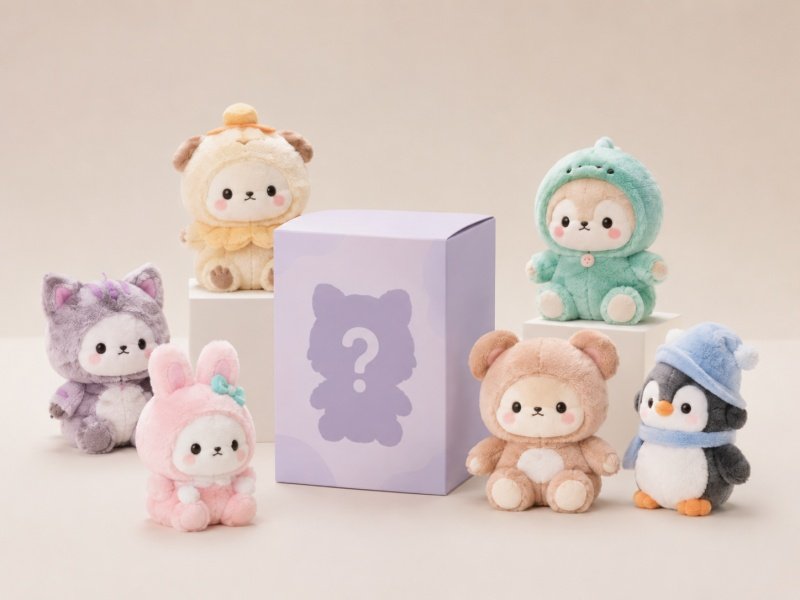
Blind box packaging has two jobs at the same time. It needs to create surprise, and it also needs to protect the plush during storage, shipping, display, and opening. A good box should hide the style, fit every plush in the series, leave enough room for labels and barcodes, look attractive on a shelf, and avoid crushing ears, tails, accessories, or embroidered faces.
For a custom blind box plush series, packaging should not be left until the end. The box size, inner bag, insert card, label area, carton quantity, and display tray can affect the whole project. A small 10cm plush charm may fit a compact box, while a 15cm sitting plush with ears may need a deeper box. If one style has wings or a large tail, the package must follow that largest shape, not the average shape.
Blind box packaging also affects cost and logistics. A box that is 1cm too large on every side may not look like a big issue in one sample. But in a 3,000pcs or 5,000pcs order, it can change carton size, warehouse space, freight volume, and retail shelf space. A box that is too tight can flatten the plush, bend accessories, or make the unboxing feel cheap. The goal is not simply “make a nice box.” The goal is to create a box that sells the mystery and still works in real production.
What Makes Good Blind Box Packaging?
Good blind box packaging should hide the style, protect the plush, support retail or e-commerce handling, and make the product feel worth opening. The structure should be strong enough for transport, the artwork should match the series theme, and the label area should be planned before printing.
A strong packaging plan usually includes these parts:
| Packaging Part | Purpose | Planning Notes |
|---|---|---|
| Outer Blind Box | Creates mystery and retail presentation | Should hide the style and fit the largest plush |
| Inner Bag | Keeps the plush clean and improves reveal | Useful for retail boxes, e-commerce, and dust protection |
| Insert Card | Adds character name, story, or collection map | Helps people understand the full series |
| Hangtag | Shows brand, character, care info, or barcode | Should not damage the plush shape inside the box |
| Barcode Label | Supports retail scanning and warehouse control | Needs enough flat area on the box |
| SKU Label | Separates styles and packing rules internally | Must be handled carefully if the outer box stays blind |
| Display Box | Holds multiple blind boxes on shelf | Good for retail counters and gift shops |
| Outer Carton | Protects bulk shipment | Needs carton mark, quantity, and style mix rule |
A good blind box should not reveal the plush through shape, weight, colour, or poor sealing. If one style has huge ears and another is round and compact, the outer box may deform differently. If one style is much heavier, people may guess the content by weighing it. This is why style balance matters before packaging starts.
Packaging artwork should also work at a glance. Blind box products are often seen quickly on a shelf, in a gift shop, or in an online thumbnail. The box needs one clear visual message. It can show the series theme, character silhouettes, collection map, mascot artwork, or mystery mood. Too much text on the front can make the box feel crowded. The side or back panel can carry more information, such as product details, warnings, barcode, material notes, or distributor information.
The best packaging feels playful without becoming confusing. The person opening it should know what series they are buying, but not which exact style is inside.
How To Hide Each Style?
To hide each style properly, the box should use the same outside structure for all designs, and the inner packing should prevent shape, colour, texture, or accessory clues from showing through. When necessary, an opaque inner bag can help keep the reveal clean and fair.
Blind box plush is more difficult to hide than small hard figures because plush can be soft, flexible, and uneven in shape. A long ear, large tail, hat, wing, or keyring attachment may press against the box. If the package is too thin or too tight, people may feel the shape. If the box is not fully opaque, colour may show through. If the package weight varies too much, some styles become easier to guess.
A practical hiding check can include:
| Possible Leak Point | What Can Go Wrong | How To Reduce Risk |
|---|---|---|
| Shape | Long ears, tails, wings, or hats press against the box | Use one box size based on the largest style |
| Weight | One style feels heavier than others | Keep filling and accessories balanced |
| Colour | Fabric colour shows through thin inner material | Use opaque box and inner bag |
| Sound | Accessories make noise inside the box | Secure small parts or use protective wrap |
| Box Deformation | One plush pushes one corner more than others | Check box fit with all approved samples |
| SKU Label | Style code is visible to the end user | Separate internal code from retail-facing label |
| Packing Ratio | Hidden styles are packed too predictably | Use clear randomisation or carton allocation rules |
For a secret style, extra care is needed. The secret style should have an internal code so the production and packing team can control it. But that code should not reveal the style on the outside retail box if the product is meant to stay blind. If a warehouse, retail partner, or platform requires labels, the label plan should be discussed early so the blind experience and inventory control can both work.
One common mistake is using different box sizes for different styles. This may solve fit problems, but it damages the blind format because people can guess the style from the box shape. If different structures are unavoidable, the project may be better presented as a visible series instead of a blind box series.
For plush with large accessories, an inner bag can help. It keeps the plush clean, hides colour, and creates a second reveal after the outer box opens. But the bag should not compress the plush too tightly. Soft toys need room to recover their shape.
Which Labels Are Needed?
Blind box plush packaging may need care labels, warning labels, barcode labels, SKU labels, FNSKU labels, hangtags, carton marks, and sometimes -specific information. The exact label plan depends on the sales channel, target country, age group, packaging style, and warehouse requirements.
Labels are not exciting, but they prevent expensive mistakes. A blind box series can have multiple styles that look similar in cartons. Without clear internal labels and packing records, style mix-ups can happen during production, packing, warehouse receiving, or restocking.
A useful label plan may include:
| Label Type | Where It Is Used | Why It Matters |
|---|---|---|
| Care Label | Sewn into plush seam | Shows material, care info, origin, or required text |
| Warning Label | Box, hangtag, or care label | Important for age grade and rules |
| Barcode Label | Outer box or retail label area | Needed for retail scanning |
| SKU Label | Box, carton, or internal record | Helps separate styles and quantities |
| FNSKU Label | Product packaging for Amazon-related channels | Needed when platform warehouse rules apply |
| Hangtag | Attached to plush or placed in packaging | Adds brand, story, character name, or barcode |
| Carton Mark | Outer shipping carton | Shows PO, quantity, style mix, destination, or carton number |
| Display Label | Retail display box | Helps shelf organisation and product presentation |
The label plan should be confirmed before packaging printing. If the box artwork has no room for barcode or warning text, adding it later may make the design look messy. If the barcode is placed on a curved or folded area, scanning may be difficult. If the label covers important artwork, the retail look becomes weaker.
For blind box plush series, the internal SKU rule is very important. There may be two layers of identity:
The retail-facing identity: the same blind box series, with no exact style shown.
The production-facing identity: style number, hidden style code, packing ratio, and carton allocation.
These two systems should not conflict. The outer box can stay mysterious, while the factory and warehouse still know how to control the production and packing plan.
How To Control Box Size?
Box size should be decided after reviewing the largest plush style, not the smallest one. The package needs enough space for the plush body, ears, tail, accessories, keyring, hangtag, and inner bag. At the same time, it should not be so large that the product feels empty or shipping volume becomes too high.
Box size affects four things immediately:
Product appearance after opening.
Retail shelf space.
Carton quantity.
Shipping volume.
A plush toy is soft, but it should not be forced into a box that damages the face or body. A light compression may be acceptable for some plush products, but heavy compression can flatten stuffing, bend ears, crease fabric, or make the product look tired when opened. This matters even more for blind box plush because the first opening moment should feel fresh.
A simple size check can work like this:
| Check Point | What To Measure |
|---|---|
| Plush Height | From lowest point to highest point, including ears or hair |
| Plush Width | Widest part, including arms, wings, or accessories |
| Plush Depth | Front-to-back thickness, including nose, belly, tail |
| Inner Bag Space | Extra room if an inner bag is used |
| Hangtag Space | Space for tag without bending the plush |
| Recovery Space | Space for plush to keep shape after packing |
| Carton Layout | How many boxes fit per carton without crushing |
| Shelf Display | Whether the box looks balanced in display trays |
A box that is too big also creates problems. If the plush moves too much inside, it may rub against the packaging, arrive with messy pile direction, or feel less premium when opened. If the box has too much empty space, people may feel the toy is smaller than expected. For retail, oversized boxes reduce the number of units that fit on a shelf. For shipping, larger volume can increase freight cost.
For a series, it is often best to create one box structure for all styles. If the characters vary greatly, the design should be adjusted before packaging. For example, long ears can be softened or folded. A tail can be shaped closer to the body. A hat can be simplified. A keyring can be positioned to avoid pressing against the box wall.
Best Unboxing Details
Good unboxing details make a blind box plush feel more complete. A clean inner bag, character card, collection map, small story note, printed hangtag, or display tray can add value without changing the plush itself. The key is to add details that support the series, not clutter the package.
Unboxing should feel smooth. The outside box creates curiosity. The inner bag keeps the reveal hidden. The plush comes out clean. The card explains the character. The person can quickly understand which style they received and what other styles are in the series.
Useful unboxing details include:
| Detail | Value |
|---|---|
| Inner Mystery Bag | Adds a second reveal and protects the plush |
| Collection Card | Shows all common, rare, and hidden styles |
| Character Name Card | Gives each plush identity and story |
| Small Insert Story | Connects the series theme |
| Printed Tissue Paper | Adds a gift feeling for premium drops |
| Hangtag With Artwork | Helps display and brand memory |
| Display Box | Makes retail presentation stronger |
| QR Code | Can link to collection page, story, or authenticity page |
For a plush series, the card design can be very useful. If every style has a name, short personality line, or collection number, the product becomes easier to remember. A simple card can also help people share the product online because they can show the character name with the plush.
The unboxing detail should match the product price level. A low-budget event blind box may only need a clean box and inner bag. A retail collectible may need a card and display box. A premium IP drop may use better paper, special printing, or a more designed insert. More packaging is not always better. The right amount of packaging should support the opening experience without wasting cost.
How To Manage Sample, Price, And Bulk Process

A blind box plush project should move through clear stages: design review, quotation review, sample development, revision, sample approval, material preparation, bulk production, QC, blind packing, carton checking, and shipment preparation. Price and timing should be reviewed with real project details because size, fabric, craft, packaging, testing, quantity, and schedule all affect the final result.
The sample is the bridge between a cute idea and a real product. It shows whether the artwork can become a plush toy, whether the size feels right, whether the face is cute enough, whether the body shape is stable, whether the fabric works, and whether the packaging fits. For blind box plush, sample approval should happen for every style, not only the main character.
Price should also be reviewed carefully. A plush toy is not priced only by height. A small toy with many details can cost more than a larger simple toy. A 12cm plush with complex embroidery, multiple fabric colours, accessories, an inner bag, printed blind box, insert card, barcode label, and display carton will not have the same cost as a plain 12cm plush in a polybag.
Bulk production is where the project needs discipline. Once the sample is approved, changes should be controlled. If the face size, fabric colour, filling level, or packaging artwork changes after approval, it may affect production timing and quality. A good project keeps records and checks each SKU against the approved sample.
How Long Does Sampling Take?
Sampling time depends on design complexity, number of styles, fabric availability, embroidery or printing details, accessories, packaging needs, and revision rounds. A simple plush sample can move faster, while a multi-style blind box series with hidden editions and retail packaging needs more time for review and adjustment.
A blind box plush sample schedule is not only about sewing the toy. It may include artwork review, pattern making, fabric matching, embroidery testing, printing testing, accessory sourcing, stuffing adjustment, box mock-up, and final sample comments.
A practical sampling flow may look like this:
| Sampling Stage | What Happens | Time Pressure Point |
|---|---|---|
| File Review | Artwork, size, quantity, fabric, packaging, and are checked | Missing views or unclear size can slow review |
| Pattern Making | Plush pattern is created for the 3D shape | Complex shapes need more adjustment |
| Material Matching | Fabric colour, pile, filling, and accessories are reviewed | Special colours or fabrics may need sourcing |
| Craft Testing | Embroidery, printing, appliqué, or labels are tested | Tiny details may need simplification |
| First Sample | Physical plush sample is made | Each style needs its own review |
| Revision | Shape, face, stuffing, colour, or details are adjusted | Multiple revision rounds add time |
| Packaging Sample | Box size, inner bag, card, and label are checked | Box structure and print files need accuracy |
| Approval | Final sample becomes production reference | Late changes should be avoided |
For a series, the first style often takes the most thinking because it sets the body base, fabric direction, face style, and overall quality level. Once the base style is confirmed, related styles may move more smoothly if they share a similar body structure. But if every style has a different body, the sample workload increases.
It is wise to build extra time into the schedule. A blind box launch has many linked parts. If packaging artwork is late, the box cannot be printed on time. If a fabric colour is changed after sample review, another confirmation may be needed. If the hidden style is added late, the packing plan may need to be updated.
How Much Does A Plush Toy Cost?
The cost of making a plush toy depends on size, fabric, filling, pattern complexity, embroidery or printing, number of colours, accessories, packaging, labels, testing, quantity, and delivery schedule. For blind box plush, the total cost also depends on the number of styles and whether the series has rare or hidden editions.
It is not accurate to price a custom plush toy only from a picture. Two designs with the same height can require very different work. For example, a simple round animal with embroidered eyes may be easy to control. A character with clothing, long ears, tail, printed pattern, small bag, keyring, and blind box packaging has many more cost.
A useful way to understand plush cost is to separate it into layers:
| Cost Layer | What It Includes |
|---|---|
| Product Body | Fabric, filling, cutting, sewing, shaping |
| Face And Details | Embroidery, printing, appliqué, patches, labels |
| Accessories | Keyrings, hooks, magnets, hats, scarves, small props |
| Development | Pattern, sample, revision, material matching |
| Packaging | Blind box, inner bag, card, hangtag, display box, carton |
| Compliance | Testing support, warning labels, documents if needed |
| Production Control | QC, needle detection, packing check, style separation |
| Logistics Impact | Carton size, shipping volume, delivery method |
A lower unit price is not always the same as a better project. If the plush becomes too small, too thin, or too simple, the opening experience may suffer. If the box is made too weak, it may arrive damaged. If the embroidery is simplified too much, the character may lose personality. Good cost control means keeping the important value and removing the parts that do not help the final product.
For a blind box series, the average cost should be reviewed across all styles. One rare or hidden style may cost slightly more, but if it is far above the common styles, the full project budget may shift. The style ratio can also affect the average cost. A hidden style packed at a low ratio may not change the total cost much, but it still needs its own sample, material, production instruction, and QC standard.
What Affects Custom Plush Price?
Custom plush price is affected by the physical product, the decoration method, the packaging system, and the production quantity. The biggest price drivers are usually size, fabric choice, embroidery area, number of parts, accessory complexity, packaging type, and quantity per design.
The following table shows common price drivers in a blind box plush project:
| Price Driver | Low Complexity | Higher Complexity |
|---|---|---|
| Size | 8–10cm mini plush | 18–25cm collectible plush |
| Body Shape | Simple round body | Special pose, wings, long tail, oversized head |
| Fabric | One common short plush | Multiple special fabrics or long-pile textures |
| Colour | 1–2 main colours | Many fabric colours and small contrast parts |
| Face | Simple embroidery | Dense embroidery, gradient print, special expression |
| Clothing | No clothing | Outfit, hat, scarf, bag, shoes |
| Accessories | None or simple keyring | Magnets, sound module, removable parts |
| Packaging | Inner bag or simple box | Printed blind box, card, display tray, barcode system |
| Testing | Not required for channel | Third-party testing and label review needed |
| Quantity | Higher quantity per design | Lower quantity per design |
Cost control should begin during design, not after quotation. If a design is too complex, the easiest way to reduce cost is not always changing the factory. It may be simplifying the structure, reducing fabric colours, shrinking embroidery area, removing unnecessary accessories, using one shared body base, or choosing a more efficient box size.
For example, a 6-style series can often save cost if all characters share one body pattern and only change face, colour, ears, outfit, or accessory. If every style needs a completely different pattern, the sample and production workload becomes much higher.
Packaging can also be a hidden cost driver. A premium blind box with inner bag, character card, display tray, barcode label, and colour carton may support a stronger retail price, but it adds material and management cost. The packaging level should match the selling channel. A museum shop series may need a more story-driven box. An event giveaway may need a simpler package. An e-commerce drop may need stronger shipping protection.
What MOQ Is Usually Needed?
For Heyzizi custom plush projects, the standard MOQ starts from 500pcs per design. For a blind box plush series, this means the total project quantity depends on the number of styles. A 6-style series at 500pcs per design would usually be planned around 3,000pcs before special hidden style or packing ratio details are finalised.
MOQ is important because custom plush production involves pattern making, material preparation, cutting, embroidery or printing, sewing, stuffing, shaping, inspection, packaging, and shipment preparation. These steps require setup time and production planning. When quantity is too low, the development and management cost is spread across too few pieces.
A simple MOQ planning table:
| Series Size | MOQ Logic At 500pcs Per Design | Planning Note |
|---|---|---|
| 4 styles | Around 2,000pcs total | Suitable for smaller collection tests |
| 5 styles | Around 2,500pcs total | Good for controlled first launches |
| 6 styles | Around 3,000pcs total | Common structure for blind box series |
| 8 styles | Around 4,000pcs total | Stronger collection but more management |
| 10 styles | Around 5,000pcs total | Better for mature series or larger channels |
Hidden style planning can change the final quantity structure. If the hidden style is treated as a separate design, it may also need its own production planning. If it is produced at a smaller ratio, the feasibility should be reviewed based on materials, production setup, and packing instructions.
MOQ should not be viewed only as a number. It is connected to cost, quality, and delivery stability. A cleaner quantity plan helps the factory prepare materials, organise production, and control each style properly. It also helps avoid awkward situations where one style runs short, one style has too much stock, or hidden style packing becomes unclear.
Sample Approval Vs Bulk Production
Sample approval means the physical sample has been confirmed as the reference for bulk production. Bulk production should then follow the approved sample as closely as possible, including size, shape, fabric, face details, filling level, accessories, labels, and packaging.
The approved sample is very important because it becomes the standard that everyone can see and compare. Artwork is useful, but the approved sample shows the real result in fabric. For blind box plush, every style should have its own approved sample or approved production reference. The hidden style should also be confirmed, even if it is not widely shared.
A proper approval record may include:
| Approval Item | What To Keep |
|---|---|
| Sample Photos | Front, side, back, detail views |
| Size Record | Height, width, depth, tolerance notes |
| Fabric Record | Fabric type, colour reference, pile direction |
| Craft Files | Embroidery, printing, appliqué, patch files |
| Filling Notes | Softness, firmness, sitting balance |
| Accessories | Keyring, hook, hat, scarf, props, placement |
| Label Files | Care label, warning label, SKU, barcode |
| Packaging Files | Box dieline, artwork, inner bag, card, carton mark |
| QC Notes | Important checkpoints for production |
| Packing Rule | Common, rare, hidden ratio and carton instruction |
Changes after approval should be handled carefully. A small change may look simple, but it can affect material use, pattern, packaging, or schedule. Changing fabric colour may require new material confirmation. Changing face embroidery may require new embroidery testing. Changing box size may affect carton quantity and shipping volume.
The approval sample is not only for the factory. It also protects the project team. When production is checked, the approved sample gives everyone the same reference. This reduces unclear comments such as “make it cuter” or “make it softer” during bulk production, when changes are much harder.
How Should QC Control Each SKU?
QC for a blind box plush series should check each style against its own approved sample and also check the series as a group. Important include face accuracy, fabric colour, size, stuffing, seam strength, accessory placement, cleanliness, needle detection, label accuracy, box fit, packing ratio, and carton marks.
Blind box plush QC is more complex than single-style plush QC because there are multiple designs and hidden packing rules. If style A and style B have similar colours, they can be mixed. If hidden style cartons are not clearly controlled, the launch ratio may be wrong. If barcode labels are placed incorrectly, retail or warehouse receiving can become difficult.
A practical QC checklist can include:
| QC Area | What To Check |
|---|---|
| Style Identity | Correct character, colour, expression, SKU code |
| Size | Height, width, thickness within agreed tolerance |
| Face | Eye position, mouth shape, embroidery density, print clarity |
| Fabric | Correct fabric, pile direction, colour consistency |
| Sewing | Seam strength, loose threads, clean curves |
| Filling | Softness, fullness, balance, no empty corners |
| Accessories | Secure attachment, correct position, no sharp risk |
| Cleanliness | No stains, dust, loose threads, or fabric marks |
| Needle Detection | Checked according to project and production requirements |
| Label | Correct care label, warning label, barcode, SKU |
| Packaging | Correct box, inner bag, card, hangtag, box condition |
| Packing Ratio | Common, rare, hidden styles packed as instructed |
| Carton | Correct carton mark, quantity, mix rule, sealing |
Series-level QC is also important. Put all approved styles together and check whether the collection feels consistent. Do the heads look similar in scale? Is one plush much firmer than the others? Does one colour look off? Does one style look cheaper? Does one box feel too tight? These group checks help catch problems that may not be obvious when each plush is checked alone.
For shipment, packing photos and carton information are helpful. A blind box project often needs clear records of carton number, quantity, packing ratio, label placement, and outer carton marks. This becomes even more important if the goods go to retail warehouses, Amazon-related channels, overseas warehouses, or event venues.
What To Send For A Quote?
For an accurate quote, prepare the series theme, artwork, style count, target size, quantity per design, fabric preference, craft details, accessories, packaging plan, labels, target , delivery deadline, shipping method, and whether there is a hidden style or future restock plan.
A quote based only on one picture is usually not reliable because custom plush price depends on many details. The more complete the information is, the easier it is to review cost, sample process, packaging, testing needs, and production schedule.
A useful quote pack can include:
| Information | Example |
|---|---|
| Product Type | Blind box plush, plush keychain, mini collectible, mascot plush |
| Series Theme | Ocean animals, game characters, mascot moods, bakery pets |
| Style Count | 4, 6, 8, 10, or 12 styles |
| Artwork | Front view, side view, back view, detail view |
| Size | 8cm, 10cm, 12cm, 15cm, 20cm |
| Quantity | Quantity per style and total quantity |
| Hidden Style | No hidden, 1 hidden, rare colour, secret accessory |
| Fabric | Short plush, velboa, crystal soft, sherpa, fleece, faux fur |
| Filling | PP cotton, high-resilience fibre, weighted filling if needed |
| Craft | Embroidery, printing, appliqué, woven label, patch |
| Accessories | Keyring, hook, scarf, hat, small bag, magnet, sound module |
| Packaging | Blind box, inner bag, insert card, display box, carton mark |
| Labels | Care label, warning label, barcode, SKU, FNSKU |
| Deadline | Launch date, event date, warehouse deadline |
| Shipping | Express, air, sea, forwarder, FOB, CIF, DDP review |
| Repeat Plan | One-time drop, seasonal series, long-term collection |
If some details are not ready, send what is available first. A rough sketch, reference photo, target size, and estimated quantity are enough for an early review. The quote can become more accurate after fabric, craft, packaging, and labels are confirmed.
For a blind box series, it is also helpful to send a style table like this:
| Style Code | Character Name | Size | Main Fabric | Craft | Accessory | Packing Note |
|---|---|---|---|---|---|---|
| A01 | Main Character | 12cm | Short plush | Embroidery | None | Common |
| A02 | Happy Style | 12cm | Short plush | Embroidery | Small scarf | Common |
| A03 | Sleepy Style | 12cm | Short plush | Embroidery | Pillow | Common |
| A04 | Travel Style | 12cm | Short plush | Print + embroidery | Mini bag | Rare |
| A05 | Night Style | 12cm | Crystal soft | Embroidery | Star patch | Rare |
| A06 | Secret Style | 12cm | Special colour fabric | Embroidery | Hidden accessory | Hidden |
This type of table saves time because everyone can see the full collection structure. It also helps with quotation, sample development, QC, and packing later.
Final Project Review
A custom blind box plush series works best when the idea, style plan, packaging, sample, price, MOQ, and production rules are reviewed together. A cute character can attract attention, but a clean project plan is what keeps the series from becoming confusing during sampling or bulk production.
Before starting, prepare the core information:
- Series theme.
- Character artwork.
- Number of styles.
- Hidden style plan.
- Target plush size.
- Fabric and hand feel direction.
- Embroidery, printing, or appliqué details.
- Accessory needs.
- Blind box packaging idea.
- Inner bag, card, hangtag, barcode, or display box needs.
- Quantity per design.
- Target .
- Safety or testing needs.
- Launch date or warehouse deadline.
- Shipping method.
- Repeat order plan.
Heyzizi can review custom blind box plush projects from artwork to sample, packaging, bulk production, QC, and shipment preparation. Standard MOQ starts from 500pcs per design. Custom plush samples usually require a sample fee, and for projects with a clear bulk plan, the sample fee can be refunded or deducted when the single-style bulk order reaches 2,000pcs.
Send your artwork, target size, style count, quantity per design, packaging idea, target , and delivery deadline to info@heyzizi.com for project review. A clear file pack helps the team check sample feasibility, material options, packaging structure, cost factors, MOQ plan, QC, and production schedule before the project moves too far.