 Skip to content
Custom Plush Keychains
Small plush charms developed for brand gifts, IP merchandise, retail add-ons, tourism souvenirs, and event giveaway programs.
Develop plush keychains from mascots, characters, animals, logos, anime roles, game figures, or tourism icons with stronger control over small details. Heyzizi supports artwork review, mini paper pattern work, embroidery, fabric choice, keyring hardware, logo placement, hangtags, barcode stickers, individual packing, bulk quality checks, and shipment preparation. For 500 pcs and above, early review of size, face detail, hardware, label, and packing method helps keep each piece clear, durable, and ready for planned release.

Plush Keychains For Serious Brand And Character Programs
Plush keychains are small, but the project is not simple. Size, face clarity, hardware strength, label position, barcode use, packing style, and bulk consistency all need early review before a keychain can become a reliable product.
IP Brands
IP brands often need plush keychains as an easy way to extend a main character into a smaller, portable product. A keychain can support fan merchandise, limited drops, gift-with-purchase plans, retail counters, convention sales, and multi-character collections. The biggest challenge is keeping the character recognizable after size reduction. Heyzizi reviews face embroidery, head shape, color blocks, ear position, costume detail, fabric choice, and hanging structure before sampling. For series programs, style codes, character names, tag artwork, barcode files, and packing rules should be organized from the first round.
Anime And Game Teams
Anime and game plush keychains often carry expressive faces, special hairstyles, outfits, weapons, wings, tails, badges, or fantasy shapes. Small-size conversion needs careful detail selection. Not every line from a full-size character can move into a 10 cm or 12 cm plush charm.
The product should keep the most recognizable features while removing details that create weak sewing, crowded embroidery, or unstable accessories. Heyzizi can help review which details should be embroidered, appliqued, printed, simplified, or built as small stuffed parts.
Retail Brands
Retail plush keychains need clear shelf value. The product should look neat in an individual bag, on a header card, inside a display box, or beside a larger plush product line. Retail teams often need barcode stickers, SKU labels, hangtags, carton marks, and repeat order records.
A small plush charm may be used as a checkout add-on, seasonal collection item, gift set insert, or collectible accessory. Heyzizi supports size planning, label placement, packing fit, scan-ready barcode position, and style grouping, so each item is easier to receive, display, and reorder.
Event Teams
Event plush keychains are often used for trade shows, sports events, product launches, company celebrations, school programs, museum days, and brand campaigns. They need strong visual memory, controlled cost, fast packing, clear carton marks, and reliable delivery planning. A keychain may be placed in an event bag, handed out at registration, used as a membership gift, or sold at the venue.
Heyzizi reviews artwork, quantity, size, hardware type, hangtag, individual packing, carton grouping, and deadline before production planning so the project can move with fewer late changes.
Tourism Shops
Tourism plush keychains are useful for museum stores, zoo shops, aquarium shops, amusement parks, city gift stores, cultural sites, and visitor centers. These products often turn local animals, mascots, landmark icons, cultural symbols, or seasonal characters into portable souvenirs.
The design should be small enough to carry, strong enough for frequent handling, and clear enough to represent the destination. Heyzizi can review animal shape, location colors, hangtag story, woven label, barcode sticker, display box, and carton mark to support retail and souvenir programs.
Gift Companies
Gift companies often use plush keychains for corporate gifts, member rewards, school gifts, seasonal packs, brand collaborations, and promotional gift sets. A strong plush keychain should be easy to understand, easy to pack, and easy to distribute in bulk. Logo placement, fabric choice, hardware, hangtag, barcode, and carton grouping should be reviewed early.
Heyzizi can help balance character detail, unit cost direction, sample timing, packing method, and shipment preparation, especially when the order includes several styles, color versions, or event-specific packaging.
Small Plush Items Can Carry Big Brand Value
Plush keychains are easy to carry, easy to display, and easy to connect with characters. They work well when a brand wants a soft product that can move through daily life, events, stores, and fan communities.
Strong Character Memory

A soft mini plush can create a stronger memory than flat printed items when the character depends on face, body shape, ears, tail, costume, or texture. The product is touchable, rounded, and easy to photograph. For IP brands, mascot programs, anime roles, tourism icons, and animal characters, plush texture gives a warmer emotional signal.
The key is not adding every tiny detail. The best result often comes from selecting one clear face expression, one strong body outline, one main color story, and one memorable accessory. Small product, sharp identity.
Good For Bulk Programs

Plush keychains are useful for programs where quantity, portability, and repeatability matter. A retail brand may sell them as add-on accessories. An event team may place them in welcome bags. A tourism shop may create local animal charms. An IP program may launch several characters with shared packaging.
A gift company may combine them with cards, boxes, or campaign kits. For 500 pcs and above, Heyzizi reviews artwork, small pattern structure, fabric, embroidery, hardware, labels, and packing plans together. This helps each style stay easier to produce, inspect, pack, and reorder.
Easy To Carry

A plush keychain is small enough to stay with people after an event, store visit, fan purchase, or travel experience. It can hang on keys, bags, backpacks, pouches, display hooks, lanyards, or gift sets.
Compared with a full-size plush toy, it needs less storage space and can be planned for wider distribution. Size still needs control. A 6 cm design may work for a simple animal shape, while 10–12 cm often gives more room for facial embroidery and character detail. A 15 cm plush charm can feel more premium when used for retail or bag decoration.
Small Plush Keychains Need Early Risk Control
Plush keychains look simple, yet their small size makes every detail less forgiving. Face embroidery, body shape, hardware attachment, label position, packing fit, and bulk consistency should be checked before the first sample moves too far.
Face Looks Blurry
Small plush keychains often fail when the face becomes too crowded. A large plush can carry several eye highlights, eyebrow lines, mouth curves, cheek marks, and color layers, but a 10 cm charm has far less embroidery space. If every small line is copied directly, the face may look heavy or unclear. Before sampling, Heyzizi reviews which facial details must stay, which can be enlarged, and which should be simplified for cleaner embroidery.
Shape Loses Identity
A plush keychain can lose character identity when the outline becomes too round, too flat, or too similar to a generic animal shape. Ears, tail, hair, hat, wings, arms, and body posture may need small pattern planning instead of direct shrinking. A mascot with large ears may need a slightly exaggerated ear shape. A game role with a tail may need enough seam allowance and stuffing support. The goal is not full detail but clear recognition at a small size.
Hardware Feels Weak
The hanging part is the working area of a plush keychain. If the fabric loop, ribbon loop, metal ring, ball chain, lobster clasp, or hook is not planned well, the charm may look nice but feel unreliable. Attachment position affects balance, hanging angle, packing direction, and daily use. Heyzizi reviews the connection method during sample development, including seam strength, loop length, metal size, and whether the hardware pulls the plush body out of shape.
Logo Looks Tiny
A logo that works on a full plush toy may become unreadable on a small keychain. Logo embroidery, woven label, printed patch, or hangtag placement should be chosen based on available space. For some designs, a footpad logo is too small; a side woven label or hangtag may work better. For mascot programs, the logo should support the character, not cover the expression. Early logo review prevents a branded keychain from looking crowded or poorly scaled.
Packing Feels Cheap
Plush keychains are often displayed, gifted, scanned, or packed in sets. If packing is treated as an afterthought, the product may lose value before it reaches the shelf or event bag. Individual polybag, hangtag, header card, barcode sticker, gift box, display box, and carton mark should match product size and use. A premium charm with a weak bag or unclear tag can feel unfinished. Packing should protect the shape and explain the product clearly.
Bulk Looks Uneven
Small plush products show inconsistency quickly because each piece has little space for error. A 2 mm embroidery shift, uneven filling, loose thread, tilted loop, wrong chain length, or dirty fabric mark may become obvious. For orders from 500 pcs and above, approved samples, pattern records, embroidery files, hardware standards, label positions, and packing rules should be clear before production. Process checking helps keep each piece closer to the same finished standard.
Keep Small Plush Clear, Cute, and Durable
Small plush keychains need a balance between detail and production stability. A good-sized plan keeps the character visible, the hardware secure, the embroidery clean, and the packing method suitable for retail, events, gifts, or souvenirs.
Common Sizes And Best Uses
Custom plush keychains are often planned around 8 cm, 10 cm, 12 cm, 15 cm, and sometimes 18 cm. Each size has a different role. An 8 cm plush can work for simple animal shapes, small icons, or compact giveaway items, but it offers limited face and clothing space. A 10 cm plush is more common for event giveaways, simple mascots, and lightweight bag charms. A 12 cm size gives better room for face embroidery, ears, tails, small outfits, and hangtag placement. A 15 cm plush charm can feel more premium for retail sales, IP merchandise, or tourism stores. An 18 cm charm may work as a larger bag accessory or gift item, but packing and shipping volume should be reviewed.


What To Keep And What To Simplify
A plush keychain should not carry every detail from a large plush toy. The most successful small designs usually keep one clear face, one strong outline, one main color story, and one memorable accessory. Extra lines, tiny buttons, narrow stripes, small jewelry, thin weapons, and layered clothing may need to be enlarged, embroidered differently, changed into printed fabric, or removed.
For example, an animal mascot may keep its ear shape, nose embroidery, tail, and brand color but simplify tiny fur markings. An anime character may keep large eyes, hair color, and jacket shape but reduce small sleeve lines. A tourism icon may keep the local animal body shape and destination color while using the hangtag to carry the story. Good simplification does not weaken the product; it makes the keychain easier to recognize at a small size.
Hardware Position And Hanging Balance
A plush keychain must hang well. If the hardware is too heavy, too large, too short, or placed in the wrong position, the plush may tilt, fold, pull the seam, or look awkward on a bag. The hanging point should match the body’s center of gravity. A round animal may hang well from the top center. A long character may need a loop near the head. A plush with a large tail or side accessory may need balance checking before approval.
Hardware planning should cover:
- Keyring, ball chain, lobster clasp, hook, or fabric loop
- Loop length and seam attachment area
- Metal size compared with plush size
- Hanging angle on bags and display hooks
- Packing position to avoid bending ears or accessories

Plush Keychain Formats For Different Programs
A plush keychain can be a mascot charm, anime role, animal souvenir, mini doll, bag charm, blind box accessory, or retail add-on. Choosing the right format helps control detail level, cost, hardware, and packaging.
Character Plush Keychains

Character plush keychains are made from original roles, brand figures, mascot drawings, animation designs, or story characters. They need strong face recognition and a clear body outline, because the product is often small and viewed quickly.
Face embroidery, color blocking, ears, hair, tail, clothing, and one memorable accessory should be reviewed first. They work well for fan merchandise, retail counters, event gifts, online product drops, and character series where a portable soft item creates stronger daily visibility.
Animal Plush Keychains

Animal plush keychains are useful for zoo shops, aquariums, pet brands, tourism stores, wildlife programs, rescue campaigns, and retail gift lines. The design can be cute, realistic, cartoon, or mascot-style depending on the target use. Ear shape, tail length, paw position, nose embroidery, eye style, and fur texture shape the final feeling. Small animals need careful fabric choice because long fur may hide facial embroidery. Short plush or mixed fabric areas often help keep the animal face clearer.
Anime Plush Keychains

Anime plush keychains often need expressive eyes, small mouths, special hair, clothing layers, bows, hats, shoes, or tiny accessories. They are suitable for fan goods, convention products, manga projects, online drops, and character merchandise. The challenge is choosing which details can survive at a 10–12 cm size. Oversized eyes, simplified hair blocks, clear color areas, and selective outfit details often work better than copying every line. Packaging may include hang tags, character names, barcode stickers, or series numbering.
Game Plush Charms

Game plush charms can feature fantasy creatures, avatars, pets, sidekicks, weapons, badges, wings, tails, helmets, or pixel-style faces. The product should keep the strongest game identity while avoiding fragile parts. Soft weapons, flat badges, embroidered symbols, printed panels, or stuffed mini parts may be used depending on the design. For game merchandise, multi-style planning is common, so style codes, character names, barcode files, and carton grouping should be organized before bulk work begins.
Tourism Plush Keychains

Tourism plush keychains are made for destinations, museums, theme parks, zoos, aquariums, cultural stores, and local gift programs. Common ideas include local animals, landmark mascots, festival icons, city symbols, marine life, mountain animals, and cultural characters. The design should be easy to understand for visitors and strong enough for frequent handling. Hangtags can tell the destination story, while barcode stickers, display boxes, and carton marks help store operations stay organized during peak seasons.
Mascot Plush Keychains

Mascot plush keychains are suited for company characters, school mascots, sports teams, hotel icons, museum guides, event figures, and campaign symbols. A mascot keychain should stay simple, bold, and easy to understand from a short distance. Logo color, head shape, smile, uniform, cap, badge, or brand accessory may be more important than tiny decorative lines. For corporate and event use, hardware strength, hangtag message, carton mark, and delivery timing should be reviewed early.
Plush Bag Charms

Plush bag charms are designed more like accessories than ordinary keychains. They need decorative value, attractive color, good handfeel, and a hanging structure that works on handbags, backpacks, pouches, or retail display hooks. Fabric texture, ribbon loops, metal hooks, woven labels, hangtags, and gift packaging can make the product feel more premium. Bag charms are especially suitable for lifestyle brands, fashion collaborations, IP programs, tourism shops, and character collections with a strong visual identity.
Mini Plush Dolls

Mini plush dolls are small soft figures with a doll-like body, usually used for character merchandise, bag accessories, collectible sets, and gift programs. They may include clothing, hair, shoes, printed faces, or embroidered expressions. A mini doll should not be treated as a full-size doll simply reduced in scale. Body proportion, arm length, leg shape, and outfit layers need careful adjustment. If the doll includes removable or layered clothing, safety, sewing strength, and packing method should be reviewed early.
Blind Box Plush Charms

Blind box plush charms work well for collectible character programs, surprise drops, seasonal launches, and fan merchandise. A blind box project needs style ratio control, an inner bag, a character code, outer box artwork, a barcode rule, and carton grouping. Small plush charms should look consistent in size while keeping each character different enough to feel collectible. The development team should review shape, embroidery, hardware, and packing together because a packing mistake can affect the full series experience.
Materials Decide Small Plush Clarity And Touch
For plush keychains, fabric is not only about softness. Pile length, stretch, color depth, surface texture, filling support, and hardware compatibility all affect how clear, neat, and durable a small plush charm feels in real use.


| Material / Part | Best For | Keychain Effect | Control Details |
|---|---|---|---|
| Short Plush | Mascot keychains, event giveaways, animal charms, clean character shapes | Clear surface, sharper embroidery, easier shape reading | Short plush is often a safe choice for small plush keychains because it keeps facial embroidery, logo details, and color blocks more visible. It works well for 8–12 cm charms where long pile may hide the face. Cutting direction, fabric color, seam allowance, and small panel shape should be checked before sampling. |
| Minky / Velboa | Retail charms, cute animal keychains, soft mini characters | Smooth touch, soft surface, gentle look | Minky and velboa give a neat surface and friendly handfeel. They work well for round faces, simple limbs, and embroidered eyes. Because the surface is smooth, uneven filling or weak body curves can become easier to see. Filling amount and seam shape should follow the approved sample closely. |
| Crystal Velvet | Premium gift charms, IP keychains, polished retail items | Bright color, refined finish, clean product photos | Crystal velvet helps small plush keychains look more polished, especially for bright characters or gift-ready programs. It photographs well and can give a higher-grade finish. Smooth fabric makes stitching, stuffing, and surface marks more visible, so sewing quality and packing protection need careful review. |
| Faux Fur | Animal keychains, monster charms, fantasy creatures, fluffy mascots | Strong fur texture, lively animal feeling, higher volume | Faux fur can make small animal or creature charms more expressive, but long pile may cover eyes, mouth, and small color areas. Fur direction should be marked before cutting. For faces, shorter-pile areas, mixed fabrics, or embroidered patches may help keep expression clear. |
| Felt | Ears, horns, wings, badges, small accessories, flat details | Lightweight structure, clean shape, easy color blocking | Felt is useful for small parts that need shape without too much filling. It can support ears, wings, labels, small badges, and decorative panels. Edge cleanliness, thickness, colorfastness, and attachment method should be checked because small felt parts can look rough if cutting and sewing are not clean. |
| Ribbon / Webbing | Hanging loops, brand loops, decorative straps, event colors | Stronger attachment area, clearer hanging direction | Ribbon or webbing can support the hanging area better than soft plush fabric alone. It also creates a neat place for brand color or logo use. Width, length, stitch area, loop angle, and packing direction should be reviewed during sampling, especially when the charm will hang on bags or display hooks. |
| PP Cotton Filling | Standard plush keychains, mascot charms, mini plush dolls | Light, soft, easy to shape | PP cotton is widely used for plush keychains because it gives soft volume without making the product too heavy. Filling level affects face shape, body curve, and hanging balance. A small charm can become flat if underfilled or distorted if overfilled, so the approved sample should record softness direction. |
| Metal Hardware | Keyrings, ball chains, lobster clasps, hooks, bag charm fittings | Main use function, stronger product value | Hardware decides how the plush keychain is used. A keyring feels classic, a ball chain feels light and casual, and a lobster clasp feels more accessory-like. Metal size, finish, weight, rust resistance, loop opening, and attachment strength should be checked with the plush body, not selected separately. |
Hardware Decides How Plush Keychains Are Used
A plush keychain is not complete until the hanging structure works. Keyring type, loop material, seam strength, metal size, hanging angle, and packing direction should be checked together with the plush body.
Keyring

A classic metal keyring is suitable for mascot keychains, event gifts, tourism souvenirs, school gifts, corporate programs, and standard retail items. It gives the product a clear keychain function and feels familiar to most users. The ring size should match the plush size. A large ring may overpower an 8 cm charm, while a small ring may feel weak on a 15 cm plush accessory.
Ball Chain

Ball chain is light, flexible, and easy to attach to header cards, hangtags, zipper pulls, display hooks, or small retail packs. It works well for anime charms, tourism plush keychains, event giveaways, and mini character collections where a lighter, hanging style is preferred. The chain length should allow easy opening and closing without pulling the plush body too tightly.
Lobster Clasp

A lobster clasp gives a plush keychain a more accessory-like feeling. It is useful for bag charms, lifestyle products, fashion collaborations, retail accessories, and gift sets. The clasp can be attached to handbags, backpacks, pouches, zipper pulls, or display fixtures more easily than a tight keyring. The metal size and opening width should match the intended use.
Metal Hook

Metal hooks are often chosen when plush keychains are positioned as bag charms, premium accessories, or retail gifts. A hook can make the item easier to remove and reposition. It may also look more polished than a simple chain. However, a larger hook can increase weight and change how the plush hangs. The hook should be tested with the finished body and tag attached.
Fabric Loop

A fabric loop can create a softer connection between the plush body and metal hardware. It is often useful when the charm needs stronger seam support or when metal should not touch the plush surface directly. Fabric loops can be made from matching plush fabric, woven tape, cotton tape, or reinforced ribbon. The loop should be strong enough without looking bulky.
Ribbon Loop

A ribbon loop adds color, softness, and decorative value to plush keychains. It is useful for gift lines, seasonal items, tourism products, character collections, and brand programs where presentation matters. Ribbon can carry brand color or create a more playful finish. The material must still hold up under repeated handling. A beautiful ribbon loop is not enough if it twists, frays, or pulls loose after use.
Small Craft Choices Shape The Finished Charm
For plush keychains, craft choice decides whether the face is readable, the logo is clear, the accessory is stable, and the product still looks neat after shrinking into a small portable size.
Face Embroidery
Face embroidery is one of the most important areas for plush keychains. Eyes, mouth, nose, eyebrows, cheeks, and expression lines must stay readable on a small surface. Thread color, stitch density, eye distance, line thickness, and fabric pile length should be tested together.
When the face is too small, fewer clean lines often look better than many crowded details. Embroidered eyes also help reduce hard, small parts when the product may be handled by children.

Logo Embroidery

Logo embroidery can make a plush keychain feel more premium and durable, but the available space is limited. A logo that looks clear on a 30 cm plush may be unreadable on a 10 cm charm.
Placement should be chosen carefully: foot pad, chest panel, scarf, clothing, back patch, or separate tag. For small logos, simplified artwork, thicker lines, or woven labels may work better. The goal is a clear brand presence without damaging the character’s face.
Applique Details
Applique is useful for color blocks, cheeks, belly patches, clothing pieces, badges, ears, wings, or simple decorative shapes. It can create cleaner color areas than embroidery when the surface is too large for dense stitches.
On small plush keychains, applique pieces must be sized carefully. If the piece is too tiny, the edge may look rough or become hard to sew consistently. Seam edge, fabric thickness, and placement should be checked in the first sample.

Fabric Printing
Fabric printing can show small patterns, icons, gradients, stripes, logos, or clothing details that are difficult to embroider. It is useful for uniforms, printed scarves, character symbols, or tourism graphics. Printing should be matched with the fabric type and pile length.
Long pile may reduce clarity. Printed panels also need cutting, alignment, and color review. If printing is used near a face or logo, sample proofing is important before bulk work begins.

Stuffed Parts

Small 3D stuffed parts can create stronger character identities, such as ears, tails, horns, wings, paws, hats, bows, tiny bags, or mascot accessories. They make the charm more dimensional but also add sewing and QC complexity.
Each part must have enough seam allowance, safe attachment, and stable filling. Very thin parts may twist or collapse. During development, the team should decide which accessories deserve a stuffed structure and which should become embroidery, applique, or printing.
Patch Or Label
A patch or label can carry brand identity, character name, limited edition mark, event name, or collection code without crowding the small plush body. Woven labels, printed patches, side labels, foot labels, or hangtag-supported branding can be used depending on the product style.
For retail and IP programs, label placement should stay consistent across styles. A good patch or label gives product identity while keeping the small plush face clean and easy to recognize.

Packaging Helps Plush Keychains Arrive Ready To Use
Plush keychain packaging should protect the small shape, show the brand message, support barcode use, and keep cartons easy to identify. Packing decisions affect display, storage, delivery timing, and repeat order control.


| Packaging Type | Best For | What To Confirm | Why It Matters |
|---|---|---|---|
| Individual Polybag | Event packs, retail storage, warehouse-ready plush keychains, gift set inserts | Bag size, warning text, suffocation notice, barcode sticker, SKU label, and packing direction | A fitted polybag keeps fabric clean, prevents loose hardware from rubbing nearby items, and helps each piece stay easy to count. If the bag is too tight, ears, tails, bows, or small stuffed parts may bend. If too loose, the charm may look less neat when opened or displayed. |
| Hangtag | IP plush keychains, mascot charms, tourism souvenirs, fan merchandise, gift programs | Character name, story text, logo, QR code, barcode, tag size, string type, and attachment position | A hangtag gives the charm a clear identity. It can explain the character, collection, event, destination, or gift meaning. For small plush items, the tag should be visible without covering the face or pulling the product out of shape. |
| Header Card | Retail hanging displays, museum shops, convenience counters, event booths, anime goods | Card size, hole position, product attachment, artwork, barcode, warning text, and display hook fit | Header cards help small plush keychains hang cleanly on retail hooks. They are useful when the store needs a clear front-facing product with barcode and brand artwork. The hole position and hanging angle should be checked with the finished plush and hardware attached. |
| Retail Card | Lifestyle accessories, plush bag charms, character collections, gift shop displays | Card thickness, front layout, logo, product window, attachment method, and barcode position | A retail card can make a small plush charm feel more complete and easier to display. It works well when the product is sold as a branded accessory rather than a loose giveaway item. Card strength matters because metal hardware can pull or scratch weak paper. |
| Gift Box | Premium keychain sets, holiday gifts, brand collaborations, membership gifts, collector items | Box structure, insert support, plush position, hardware protection, artwork files, and carton quantity | A gift box raises presentation value, but it also increases packing time, carton volume, and freight volume. The box should hold the plush without pressing the face, ears, tail, or chain. Box size should be tested with the approved sample before printing. |
| Display Box | Multi-style retail sets, tourism stores, museum counters, blind box series, venue shops | Product count, style grouping, display angle, front opening, barcode rule, and carton marks | Display boxes help stores present several plush keychains together. They are useful for animal series, IP series, city souvenirs, and seasonal charms. Style grouping should be controlled, especially when several designs look similar in size or color. |
| Blind Box | Hidden-style plush charms, collectible drops, fan merchandise, seasonal series | Style ratio, inner bag, outer box code, barcode plan, carton grouping, and packing records | Blind box projects need stricter packing records. A charm can be well made, but the series can still fail if hidden-style ratios, box codes, or carton grouping are wrong. Style records should be clear before packing begins. |
| Master Carton | Export delivery, event delivery, retail receiving, warehouse intake, repeat orders | Carton size, quantity per carton, gross weight, net weight, carton mark, SKU grouping, and mixed-carton rule | Correct carton information helps receiving teams identify products quickly. For multi-style plush keychains, carton marks should match style codes and packing lists. Wrong marks may delay warehouse intake even when the product itself is ready. |
Sampling Turns A Plush Charm Into A Production Standard
A plush keychain sample is not only a cute preview. It confirms small-size detail, fabric choice, embroidery, hardware, filling, label position, packaging fit, and the standard used for later bulk production.
Artwork And Size Review
Sampling starts with artwork and size review. A plush keychain may come from a mascot, IP character, animal drawing, game role, anime figure, tourism icon, or logo-based design. Before pattern work begins, Heyzizi reviews whether the artwork can remain clear at the intended size. A design planned at 10 cm needs different detail control from one planned at 15 cm. The face, outline, color blocks, accessories, and hanging position should all be reviewed together.
A useful review usually checks:
- Main recognition: face, body outline, ear shape, tail, hairstyle, or costume
- Size target: 6 cm, 8 cm, 10 cm, 12 cm, 15 cm, or larger charm size
- Detail priority: which features must stay, which can be simplified
- Logo position: embroidery, woven label, patch, hangtag, or retail card
- Use plan: event gift, retail sale, IP merchandise, tourism souvenir, or bag charm

Hardware And Material Setup
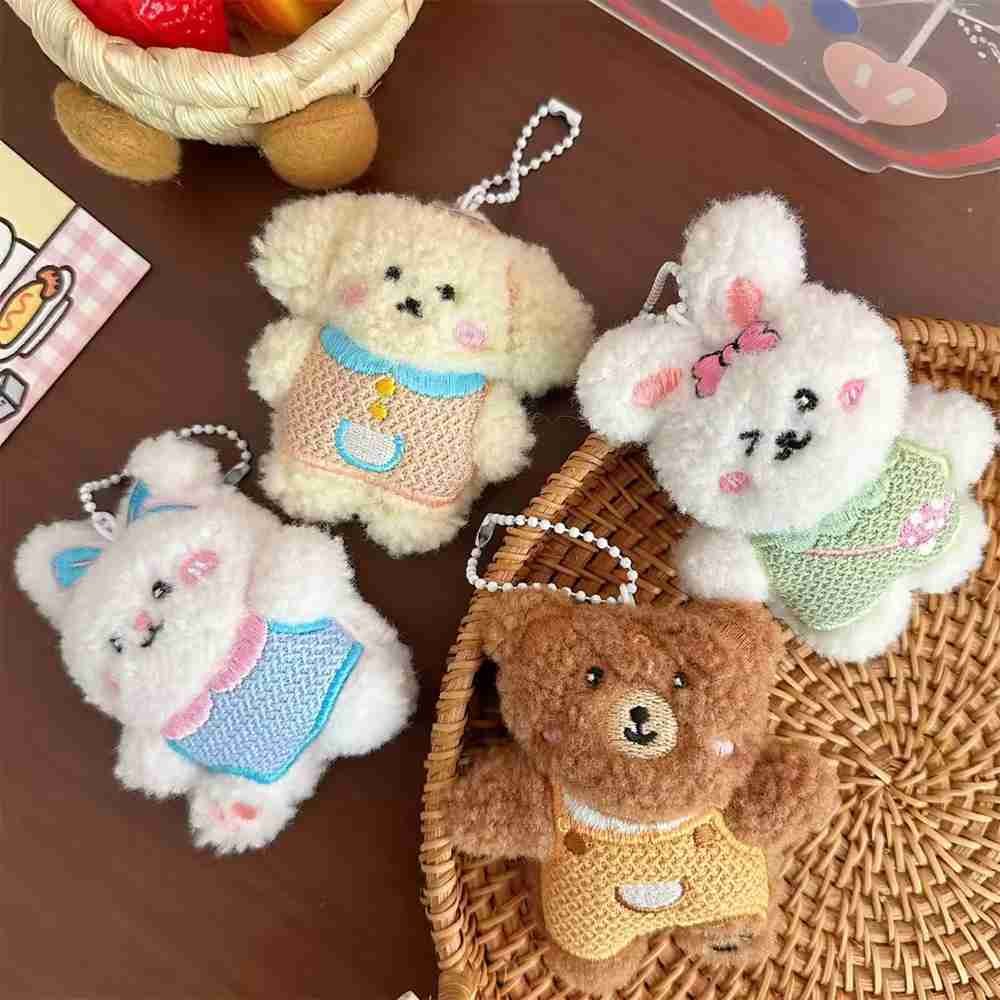
After artwork review, the sample moves into hardware and material setup. The plush body, fabric, filling, embroidery thread, loop material, metal fitting, hangtag, and packing method should be prepared together. A keychain is a working plush item; the hanging part must be checked as carefully as the face. A good sample should show how the charm looks in hand, how it hangs on a bag, and how it sits inside the planned packaging.
Hardware and material setup normally includes the following:
- Fabric choice: short plush, minky, velboa, crystal velvet, faux fur, felt, or mixed fabrics
- Filling choice: PP cotton or firmer filling direction based on shape and handfeel
- Hardware choice: keyring, ball chain, lobster clasp, metal hook, fabric loop, or ribbon loop
- Face craft: embroidery, applique, printed fabric, or simplified small-line artwork
- Packing fit: individual bag, hangtag, header card, gift box, display box, or carton plan
First Sample And Approval
The first sample should be reviewed from several angles, not only from one front photo. A plush keychain must look clear when held in hand, neat when hanging, stable when packed, and consistent enough for bulk production. The review should cover face expression, size, body shape, hardware strength, hanging angle, filling level, label placement, tag position, polybag fit, barcode position, and carton plan. If the design is part of a series, the style, size, and packing rule should also be compared with the other designs.
Revision may take 5–10 days depending on the change level. A simple embroidery color update may be faster. A pattern remake, fabric change, hardware replacement, or packing structure change needs more time. Clear comments help the revision stay focused. Marked photos, size notes, hardware comments, and packing remarks are easier to follow than loose messages. Once approved, the sample becomes the working standard. It guides material purchase, cutting, embroidery, sewing, filling, hardware attachment, QC, label placement, packing, and later repeat orders.

Clear details make the quotation and timing more accurate
The plush keychain cost depends on size, fabric, embroidery, hardware, logo method, packing, testing, quantity, and delivery plan. A clear project file helps the review become faster and reduces cost changes after sampling.
| Planning Item | Standard Direction | What Changes The Cost Or Time | Details To Prepare |
|---|---|---|---|
| MOQ | Standard MOQ starts from 500 pcs per design | Each style needs pattern work, material preparation, embroidery setup, hardware planning, packing checks, and QC standards | Prepare quantity per design, total style count, repeat plan, and whether all styles share the same hardware and packaging |
| Sample Fee | Custom plush samples usually require a sample fee | Sample work covers mini pattern development, material preparation, embroidery trial, hardware setup, sewing, filling, shaping, and revision handling | Prepare artwork, target size, fabric direction, hardware type, logo need, and packing idea before sample quotation |
| Sample Fee Refund | Sample fee can be refunded or deducted when the single-style bulk order reaches 2,000 pcs | Larger confirmed orders help balance development cost with later production | Confirm whether the order is one keychain design, several colors, or a multi-style charm series |
| First Sample Time | Usually 7–14 days after core details are clear | Complex embroidery, special fabric, small stuffed parts, custom hardware, or packaging tests may add time | Share artwork, size, keyring type, face details, logo position, and packing plan early |
| Revision Time | Usually 5–10 days depending on change level | Thread color change is faster than pattern remake, fabric replacement, hardware change, or box adjustment | Mark revision comments on photos and separate must-change items from optional preferences |
| Bulk Production Time | Usually 30–45 days after approved sample and confirmed order details | Quantity, material availability, embroidery, hardware, labels, packaging, testing, and production schedule affect timing | Confirm approved sample, final quantity, SKU list, packing files, carton marks, and delivery destination |
| Size | 6 cm / 8 cm / 10 cm / 12 cm / 15 cm are common for keychains | Larger size uses more fabric and filling; smaller size may need more careful embroidery and simplified detail | Prepare target height, width, thickness, or reference product size |
| Hardware | Keyring, ball chain, lobster clasp, metal hook, fabric loop, or ribbon loop | Metal size, finish, weight, assembly method, and attachment strength affect cost and sample review | Confirm use scene: keys, bags, backpacks, retail hook, gift box, or event pack |
| Logo Method | Embroidery, woven label, printed patch, hangtag, retail card, or side label | Tiny logos may need simplified artwork or a different position to remain readable | Provide logo file, color reference, preferred position, and whether the logo must appear on the plush body |
| Packaging | Polybag, hangtag, header card, retail card, gift box, display box, or master carton | Printed packaging, box structure, barcode labels, and SKU grouping affect cost, time, and carton volume | Prepare packaging artwork, barcode file, SKU list, carton mark rule, and delivery deadline |
| Testing Direction | Testing review depends on sales region, age direction, material, hardware, small parts, and label text | Small metal parts, magnets, sound modules, printed material, or special filling may affect the review path | Share target sales region, age direction, product use, and required test plan where available |
| Quotation Details | Complete files help prepare a clearer quotation direction within 24 hours | A price based only on one image may change after size, quantity, material, hardware, and packing are confirmed | Send product type, artwork, size, quantity, fabric, craft, hardware, packaging, target sales region, and deadline |
Bulk Plush Keychains Need More Than A Good Sample
A plush keychain may be small, but bulk production has many checkpoints. Face position, stitch shape, filling, hardware, label, packing, carton marks, and needle control must stay close to the approved sample.
From Approved Sample To Bulk Work
Bulk work should begin from an approved sample. For plush keychains, the approved sample should confirm size, body shape, face embroidery, fabric, filling level, hardware type, loop position, logo placement, label use, hangtag, packing method, and carton rule. A 10 cm charm has very little room for error, so small shifts can be more visible than on a large plush toy.
Before cutting, the team reviews the pattern version, material record, embroidery file, hardware standard, label file, and packing instruction. Short plush, minky, faux fur, felt, ribbon, and metal fittings all behave differently during production. If a fabric pile direction changes, the face may look lighter or darker. If the loop placement shifts, the keychain may hang at the wrong angle. If embroidery is not checked before sewing, later repair becomes slower.


Sewing, Filling, and Hardware Checks
Small plush keychains need tidy sewing because the seam is close to the face, ears, tail, loop, or accessory part. A weak stitch can affect shape. A crooked seam can change expression. A loose loop can affect real use. A poorly placed chain can scratch fabric or twist the charm in the bag. During production, sewing and hardware checks should happen before the item is fully packed.
Filling must also follow the approved sample. Too little filling makes the charm flat. Too much filling can pull the face out of shape or stretch the seams. Hardware checks focus on the working part of the product. Keyrings, ball chains, lobster clasps, metal hooks, ribbon loops, and fabric loops should be checked for position, movement, edge smoothness, attachment strength, and packing fit. A charm may look right on the table, but hang poorly on a backpack or display hook. Heyzizi reviews these details before final packing, especially for orders with several styles or mixed hardware types.
Final QC, Needle Control, and Packing Review
Final checking compares bulk goods with the approved sample. For plush keychains, inspection should cover face embroidery, body shape, seam cleanliness, loose threads, fabric stains, filling level, loop angle, hardware finish, tag position, barcode label, polybag fit, and carton mark. A small charm can look messy if even one of these details is ignored.
Needle and metal control is important for plush products. Keychains involve sewing, turning, filling, hand finishing, hardware attachment, label placement, and packing. Each step can create risk if tools, broken needles, loose metal parts, or sharp hardware edges are not controlled. For children’s items, extra attention should go to seam strength, small accessories, embroidery security, and warning labels. Packing review closes the project loop. The team checks whether each style matches the SKU list, whether barcode labels scan clearly, whether polybags protect the product shape, whether mixed cartons follow the rule, and whether carton marks match the packing list.

Common Plush Keychain Project Scenarios
Plush keychains are used in many programs, but the planning logic changes by purpose. A fan series, event gift, and tourism retail charm may look similar in size, yet each one needs different detail control, packing, and delivery planning.
IP Character Series
A licensed character program may develop 4 plush keychain styles at 1,000 pcs per style, each around 12 cm, using short plush, face embroidery, ball chain, hangtag, barcode sticker, and an individual polybag. The main challenge is keeping every character consistent in size while preserving different expressions, colors, and accessories.
Event Giveaway Program
A brand event may prepare 3,000 pcs. of mascot plush keychains for welcome bags, product launch kits, sports events, school programs, or company celebrations. A common setup may use a 10 cm size, short plush, simplified face embroidery, a keyring, a hangtag, an individual polybag, and clear carton marks for venue delivery.
Tourism Retail Charms
A museum, zoo, aquarium, theme park, or city gift shop may develop 2 animal or landmark plush charms at 1,500 pcs per style, around 12–15 cm, with faux fur accents, a woven label, a header card, a barcode sticker, and a display box. The goal is not only a cute charm but also a souvenir that carries local memory.











Request a Custom Sample First?
If you have artwork, logo files, or even just an idea, please share your project details—size, target fabric, color reference, and customization requirements. We’ll recommend suitable materials and provide a clear sampling plan to bring your custom plush toy design to life.
FAQ For Custom Plush Keychains
Plush keychains may look small, yet successful programs depend on clear size planning, readable embroidery, strong hardware, clean labels, suitable packaging, and stable bulk control. These FAQ items cover the details most brand, IP, retail, gift, event, and tourism teams usually review before moving into sampling or bulk production.

Can you make custom plush keychains from our character artwork?
Absolutely. Heyzizi can develop custom plush keychains from mascot artwork, IP characters, animal drawings, anime roles, game figures, tourism icons, event characters, or logo-based designs. The review starts with size, face clarity, body shape, color blocks, hanging position, hardware type, and packing direction. A large plush design cannot always be reduced directly into a 10 cm or 12 cm keychain, so the team checks which details should stay, which should be simplified, and which should move to a hangtag or label. Clear artwork helps the first sample become closer to the intended product.
What size works best for custom plush keychains?
Generally, 10–12 cm is a strong size for many custom plush keychains because it gives enough room for face embroidery, body shape, hardware, and hangtag placement. An 8 cm charm can work for simple animals, icons, or event giveaways with minimal detail. A 15 cm charm gives more presence for retail, IP merchandise, tourism shops, or bag accessories. Size choice should follow purpose, not only price. Smaller sizes may lower material use but require stricter detail control. Larger sizes may look more premium, yet packing volume and freight cost need review before final approval.
What is the MOQ for custom plush keychains?
Yes, the standard MOQ starts from 500 pcs per design. Plush keychains require real custom setup, including mini paper pattern work, fabric preparation, embroidery testing, hardware selection, sewing, filling, label placement, packing checks, and QC standards. For a multi-style series, each style should be reviewed separately because size, face details, colors, hardware, and packaging may differ. If one program includes 4 styles at 1,000 pcs each, the review will be clearer than one total quantity without style breakdown. Quantity per design helps price, schedule, material planning, and carton grouping become more accurate.
Do you charge a sample fee for plush keychains?
Certainly. Custom plush keychain samples usually require a sample fee because each design needs pattern work, material setup, embroidery trial, hardware fitting, sewing, filling, and sample review. A sample is not only a visual preview; it confirms whether the charm can hang well, fit packaging, keep facial details clear, and move into stable bulk production. The sample fee can be refunded or deducted when the single-style bulk order reaches 2,000 pcs. For serious brand or IP projects, paid sampling protects development time and helps the final product follow a clear approved standard.
How long does sampling and bulk production take?
Usually, the first plush keychain sample takes 7–14 days after core details are clear, and revision often takes 5–10 days depending on the change level. A thread color update may be faster than changing the paper pattern, fabric, hardware, or packaging structure. Bulk production normally takes 30–45 days after the approved sample and confirmed order details. Timing may change with quantity, fabric availability, embroidery complexity, hardware type, labels, printed packaging, testing needs, and production schedule. Sharing artwork, size, quantity, hardware, and packing needs early helps the schedule become more realistic.
Which hardware options can we choose?
Of course. Common options include keyrings, ball chains, lobster clasps, metal hooks, fabric loops, and ribbon loops. A keyring gives a classic keychain functionality. A ball chain is light and suitable for retail cards or anime charms. A lobster clasp feels more like a bag accessory. A metal hook can make a plush charm look more premium. Fabric loops and ribbon loops create a softer connection between the plush body and metal part. Hardware should be tested with the actual plush body because weight, loop position, hanging angle, and packing direction all affect final use.
Can small plush keychains keep clear face embroidery?
Definitely. Clear face embroidery is possible when the artwork is adjusted for small size. The key is not to copy every line from a large plush or flat illustration. Eye shape, mouth curve, eyebrow angle, nose detail, cheek mark, and thread thickness should be reviewed according to charm size. For 8–10 cm designs, fewer clean lines often look better than many crowded details. Short plush, minky, or velboa can help keep the face readable. Long fur may need shorter face panels or mixed fabric areas to prevent embroidery from being hidden.
Can you add a logo, hangtag, barcode, and retail packaging?
Absolutely. Heyzizi can support logo embroidery, woven labels, side labels, printed patches, hangtags, header cards, barcode stickers, SKU labels, FNSKU labels, individual polybags, gift boxes, display boxes, and master carton marks. For plush keychains, brand information should not overload the small body. Sometimes a hangtag, header card, or woven label works better than placing everything on the plush itself. Retail and event programs should confirm barcode position, carton quantity, style code, and packing rule before bulk production. Good packaging helps the product arrive ready for storage, display, scanning, and distribution.
How do you check attachment strength and safety?
Sure. Attachment strength is checked by reviewing loop position, seam area, thread strength, hardware size, metal edge smoothness, and hanging balance. A plush keychain is used differently from a standard plush toy because it is pulled, clipped, hung, packed, and carried. The loop must not be treated as decoration only. For safety review, Heyzizi also checks loose threads, small accessories, embroidery security, metal parts, needle control, label text, and packing warnings. If a project targets children’s channels or stricter sales regions, testing direction should be discussed before bulk production, not after goods are finished.
What details should we send for quotation?
The fastest way to get a useful quotation is to send product artwork, target size, quantity per design, number of styles, fabric preference, hardware type, logo method, label needs, packaging type, target sales region, and delivery deadline. If only one artwork is ready, send it first; the team can still review early feasibility and list missing details. Complete files help Heyzizi prepare a clearer quotation direction within 24 hours. For protected IP, unreleased event designs, or private character programs, privacy needs can be mentioned at the beginning. Files and project notes may be sent to info@heyzizi.com.
Start Your Custom Plush Project Today
If You Can imagine it,We Will Create it!
Whether you are a brand, creator, retailer, or agency, our Guangdong plush factory is ready to support your OEM/ODM development. Send us your design, concept, or reference image — our team will reply with a free development proposal and quotation.
1. Tell Us What You Need
Tell us your requirements and share your artwork or reference images.
2.Get a Solution & Quote
We’ll suggest the best solution based on your requirements, and provide a detailed quote within 12 hours.
3.Approve for Mass Production
We will start mass production after getting your approval.