 Skip to content
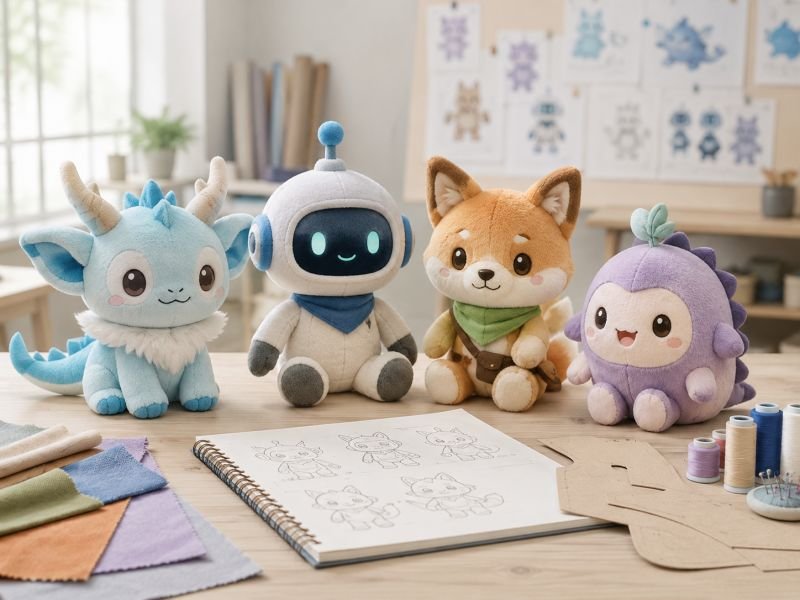
A game character or animation figure does not stop at the screen. The right plush can sit on a fan’s desk, hang from a backpack, appear inside a collector box, support a launch event, strengthen a licensing program, or become part of a long-term merchandise line. But character plush is not just “soft merchandise.” It is a physical translation of an IP asset, and that translation must protect the role’s face, color, silhouette, personality, and emotional value.
Custom character plush toys for game and animation projects are developed by reviewing IP artwork, identifying must-keep visual details, converting 2D art into a soft 3D shape, choosing fabric and craft methods, making a sample, approving a golden sample, then controlling bulk production, QC, packaging, labels, and shipment preparation. The best plush keeps fan recognition while staying practical to produce.
A plush that looks “almost right” can still feel wrong. The eyes may be 3mm too close. The mouth may lose the character’s attitude. The blue may feel colder than the official palette. The costume may look too flat. Fans notice these things fast because they already know the character. So before any fabric is cut, one should lead the project: what makes this character impossible to mistake for anyone else?
What Makes Game Character Plush Work?
A game character plush works when it keeps the original role recognizable after becoming fabric, filling, stitching, and packaging. The face, color, silhouette, pose, outfit, and signature details should stay strong, while tiny or fragile parts may need smart adjustment. A strong plush feels official, photographs well, fits the package, and can be repeated with stable quality.
Game and animation characters carry memory. Fans may remember a creature from a level, a mascot from a trailer, a sidekick from a cutscene, or a hero from an animation season. When that role becomes plush, people do not only judge softness. They judge whether the item feels like the character they already know.
That is why character plush planning should begin with recognition, not decoration. A plush can have nice fabric and clean stitching, yet still fail if the eyes feel wrong, the color looks off, or the body shape loses the original charm. In many game and animation projects, the most important design decision is not adding more detail. It is choosing which details must stay strong.
A good character plush usually protects these six areas:
| Area | Why It Matters | Practical Check |
|---|---|---|
| Face | Carries emotion and identity | Eye size, mouth angle, brow position, cheek marks |
| Color | Creates instant recall | Main fabric, thread, print, tag, package color |
| Silhouette | Helps the character read from a distance | Head shape, ears, horns, hair, tail, body outline |
| Proportion | Keeps the original style | Head-body ratio, limb length, side thickness |
| Signature detail | Links the plush to the IP | Scarf, badge, wings, horn, pet collar, tail tip |
| Use format | Decides structure | Keychain, mascot plush, blind box, full body, gift plush |
The plush should also fit the release plan. A launch giveaway needs fast recognition. A fan collectible needs better character accuracy. A blind box line needs consistent size and SKU control. A bag charm needs a strong loop and stable hanging angle. A premium gift plush needs softness, cleaner finish, and stronger package presentation.
A game character plush works best when the project team decides three things early:
| Decision | Why It Should Be Decided Early |
|---|---|
| What fans must recognize first | Protects the character’s core identity |
| What can be adjusted for plush | Avoids forcing impossible 2D details into fabric |
| What can move to packaging | Keeps tiny logos, text, and story notes readable |
A strong plush is not a flat copy. It is a careful translation. The final piece should look like the same character, but softer, rounder, safer to handle, easier to pack, and stable enough for bulk production.
Can You Make A Stuffed Animal From A Picture?
A stuffed animal can be made from a picture, but one picture rarely tells the whole product story. A front image can show the character’s face, color, and first impression, yet it may not show side depth, tail placement, back color, hair volume, accessory structure, label area, or package fit.
For simple roles, one clean picture may be enough for early review. This often works for round mascots, simple creature icons, small game pets, or logo-style characters. For detailed animation figures or game heroes, more views are usually needed before sample work begins.
| Picture Type | Useful For | What May Still Be Missing |
|---|---|---|
| Front picture | Face, color, front body shape | Side depth, back view, tail, posture |
| Front and back views | Main and rear details | Body thickness and balance |
| Turnaround art | Full character view | Fabric, craft, and package decisions |
| Game screenshot | Mood, pose, fan context | Clear colors and hidden parts |
| Animation still | Expression and style | Back, side, and construction details |
| 3D render | Volume reference | Plush-friendly simplification |
A picture becomes useful when it is paired with product details:
| Detail Needed | Example |
|---|---|
| Size | 10cm charm, 15cm blind box plush, 25cm full-body plush |
| Use | Retail plush, event gift, fan collectible, bag charm |
| Quantity | Per character or per SKU |
| Craft | Embroidery, printing, applique, fabric parts |
| Package | Polybag, hangtag, blind box, gift box |
| Must-keep features | Eye shape, scarf, horn, tail, color mark |
If only one picture is available, the project can still begin. The missing details should be clarified before sampling so the first sample does not rely on guessing. A few notes such as “tail is dark blue,” “character should sit,” “mouth should be embroidered,” or “ears must stay oversized” can prevent avoidable revisions.
What Character Files Are Needed?
Useful character files include front view, side view, back view, expression references, color guide, close-up details, accessory notes, official style guide, 3D render, packaging direction, and size target. The best file set makes the plush easier to review, sample, revise, and approve.
Game and animation teams often have many visual assets: concept art, character cards, rigging views, 3D renders, gameplay captures, promo art, icon art, and style guides. Not every asset is equally helpful. A dramatic poster may show energy, but a clean character sheet is usually better for product development.
| File Or Reference | Best Use |
|---|---|
| Front view | Face, main shape, main colors |
| Side view | Snout, belly, posture, tail, side thickness |
| Back view | Rear colors, hair, tail, clothing, label area |
| Expression sheet | Eye, mouth, brow, emotion options |
| Color guide | Fabric, thread, print, and package matching |
| 3D render | Volume, side curve, body structure |
| Accessory close-up | Badge, scarf, horn, wing, collar, prop |
| Style guide | Official visual rules |
| Package reference | Hangtag, blind box, insert card, display needs |
A strong file set should make these details easy to understand:
- Which expression should be used?
- Which color must match closely?
- Which parts are fabric pieces?
- Which parts can be embroidery or print?
- Which details must be visible at small size?
- Which accessories can be softened or simplified?
- Which view should lead the sample review?
Files do not need to be perfect before discussion starts. A missing side view can be replaced with a simple sketch. A unclear back view can be described with notes. A tiny badge can be enlarged or moved to a hangtag. The key is to identify missing information early enough to avoid sample rework.
Which Details Define The IP?
The details that define the IP are the ones fans notice first and remember longest: eye shape, mouth expression, color palette, head shape, hairstyle, ears, horns, tail, outfit, badge, scarf, symbol, or mascot silhouette. These details should guide the sample review.
Not every detail has the same value. A tiny sleeve fold may be less important than the eyes. A small shoe line may be less important than the body shape. A micro logo may be better on a hangtag than on the plush body. For plush development, the task is to keep the character’s strongest signals and simplify weaker details when needed.
| IP Feature | Why It Matters | Plush Treatment |
|---|---|---|
| Eye shape | Sets emotion | Embroidery, applique, print, or mixed craft |
| Mouth | Changes personality fast | Control line weight and position |
| Main color | Creates quick recognition | Match fabric and thread carefully |
| Hair or ears | Builds silhouette | Review side and back shape |
| Outfit | Connects to story | Sewn panel, print, embroidery, applique |
| Tail, horn, wings | Defines body outline | Check thickness and attachment |
| Symbol or badge | Adds official identity | Enlarge, simplify, or move to tag |
| Signature accessory | Supports character memory | Review safety, size, and package fit |
A simple detail ranking helps during sample review:
| Detail Level | Meaning | Treatment |
|---|---|---|
| Core | The character feels wrong without it | Keep as close as possible |
| Support | Adds personality but can be adjusted | Modify for plush size and fabric |
| Optional | Small, hidden, or hard to repeat | Simplify or move to packaging |
This ranking is useful when cost, size, or craft limits appear. Instead of cutting details randomly, the project protects the character’s identity first.
Why Does Fan Recognition Matter?
Fan recognition matters because game and animation plush toys are judged by people who already know the character. Fans compare the plush with game art, screenshots, animation scenes, trailers, character cards, and official visuals. If the expression, color, shape, or outfit feels wrong, the plush may lose emotional value.
A plush can be soft, well sewn, and neatly packed, yet still feel off if the face is not right. Character merchandise depends on emotional accuracy. The plush should make fans think, “That is the character,” not “This is a similar toy.”
Common recognition risks include:
| Recognition Area | Common Risk | What To Check |
|---|---|---|
| Eye spacing | Face feels blank or unfamiliar | Compare with official expression |
| Mouth angle | Mood changes | Check sample close-up |
| Color tone | Character feels off-model | Review fabric and thread together |
| Head-body ratio | Style becomes generic | Confirm proportion before approval |
| Hair shape | Identity weakens | Review side and back |
| Ears or horns | Silhouette changes | Check thickness and angle |
| Outfit | Story link weakens | Keep visible signature parts |
| Accessory | Character mark disappears | Protect key accessory or symbol |
Fan recognition should be checked at several distances:
| Viewing Distance | What Should Work |
|---|---|
| 2 meters | Silhouette and main color |
| 1 meter | Face, body shape, outfit color |
| Handheld view | Stitching, fabric, accessory, label |
| Photo view | Expression, symmetry, package presentation |
A plush does not need every tiny line from the original artwork. It needs the emotional signals to land correctly. The face should feel alive. The colors should feel familiar. The shape should read fast. The package should make the plush feel official.
2D Art vs Plush Shape
2D art and plush shape differ because artwork can use flat lines, dramatic angles, shadows, and sharp details, while plush needs fabric thickness, seams, filling, softness, and physical balance. A strong plush translates the design into soft volume instead of copying the flat image literally.
The biggest changes usually happen in shape, detail, and posture. Thin limbs become thicker. Sharp hair becomes rounded or layered. Tiny symbols become larger or move to tags. Gradients become fabric zones or printed areas. Extreme action poses become sitting, standing, lying, or hanging forms.
| 2D Feature | Plush Shape Change | Why It Helps |
|---|---|---|
| Sharp corners | Rounded soft parts | Fabric needs width to sew and fill |
| Thin limbs | Thicker or shorter parts | Improves sewing and stuffing |
| Tiny marks | Larger embroidery, print, or tag detail | Keeps visibility |
| Gradients | Fabric color, print, or solid zones | Works better with plush texture |
| Action pose | Stable plush posture | Helps balance and packing |
| Floating prop | Attached, simplified, or removed | Needs physical connection |
| Fine text | Hangtag or package detail | Keeps text readable |
| Flat body | Added side depth | Improves hand feel |
These changes should look intentional. A fantasy creature can become rounder while keeping its attitude. An animation mascot can lose tiny linework while keeping the face and color. A game pet can become softer while staying recognizable.
The best plush shape keeps the role’s personality while making it work in real fabric.
Can Game Screenshots Work?
Game screenshots can work as useful references, but they should not be the only source for production review when the character is complex. Screenshots can show mood, pose, scale, outfit, and in-game personality. They can also include lighting effects, motion blur, perspective distortion, shadows, UI elements, and hidden body parts.
A screenshot is strongest when paired with clean character art, a 3D render, a turnaround sheet, or written notes. This gives the development team both context and structure.
| Screenshot Type | Useful For | Limitation |
|---|---|---|
| Gameplay pose | Personality and motion | May hide body parts |
| Cutscene image | Emotion and facial attitude | Lighting may change color |
| 3D model capture | Volume and side shape | Needs soft-toy adjustment |
| Inventory icon | Clean silhouette | Usually lacks back and side |
| Character card | Official styling | May include effects or shadows |
| Trailer still | Fan memory | May not show full structure |
If screenshots are the only files available, add simple written notes:
- “The character should sit.”
- “The back has two dark stripes.”
- “The tail should be short and rounded.”
- “The mouth should stay as a small smirk.”
- “The blue should match the official character card.”
- “The accessory can be simplified if needed.”
- “The plush will be packed in a blind box.”
Screenshots help explain why the character matters. Clean views and notes help turn that character into a plush that can be sampled and repeated.
Which Plush Type Fits The Brand?
The right plush type depends on the character’s visual complexity, fan use, size target, packaging style, release plan, and quantity per design. Mascot plush, collectible plush, keychains, bag charms, blind box plush, pillow plush, and full-body plush each serve a different purpose. The strongest choice protects character identity while matching how the item will be used, displayed, carried, stored, or collected.
A game or animation character can become many plush formats. The same IP may work as a 10cm keychain for launch events, a 12cm blind box plush for collectible drops, a 20cm full-body plush for fan merchandise, and a 30cm premium plush for limited releases. These formats should not be chosen only because they look cute in a mockup. Each one changes pattern difficulty, material use, face detail, packing method, shipping volume, and SKU control.
A simple creature with a round body may look strong even at small size. A detailed hero character with hair, jacket, boots, wings, or several colors may need more size to keep its expression and outfit readable. A mascot with a bold face may work as a plush head. A fan-favorite side character may need a full-body plush because posture and outfit are part of the appeal. A creature collection may work better as a blind box set if the shapes can share a common size and package.
The first decision should be the product role. Is the plush meant to be carried, collected, displayed, gifted, sold as a limited item, placed in a retail box, or shipped as part of a campaign kit? The role decides the format more than the artwork alone.
| Plush Type | Better For | Main Planning Focus | Common Risk |
|---|---|---|---|
| Mascot plush | Campaigns, events, quick recognition | Face, color, silhouette | Over-simplification |
| Full-body plush | Main roles, heroes, animation figures | Proportion, outfit, expression | Too many small parts |
| Plush keychain | Launch gifts, bag use, small fan items | Hardware, loop strength, compact shape | Face too small |
| Bag charm | Lifestyle accessory, fandom carry item | Clasp, visible detail, weight | Poor hanging angle |
| Blind box plush | Character series, surprise releases | Size consistency, SKU control, box fit | Packing mistakes |
| Collectible plush | Fan merchandise and limited drops | Character accuracy, tag, package | Weak facial likeness |
| Pillow plush | Simple icons, creatures, mascots | Flat-friendly shape, soft filling | Loss of detail |
| Premium gift plush | Special campaigns, anniversaries | Hand feel, finishing, presentation | Higher carton volume |
The best format does not force the artwork into a shape it cannot support. It gives the character enough space to stay recognizable while keeping the product practical for production, packing, and repeat orders.
How To Turn Your OC Into A Plushie?
To turn an OC into a plushie, start by deciding what the character must communicate in physical form. An original character may come from a game concept, animation pitch, webcomic, creator universe, fan community, or mascot project. Before size and fabric are chosen, the team should identify the character’s must-keep features: eyes, mouth, hair, ears, color block, outfit, tail, symbol, or accessory.
An OC plush project works best when the first version is focused. Trying to place every small drawing detail into a small plush can create a crowded result. A cleaner first plush usually protects the strongest identity features, then moves smaller details into embroidery, print, hangtag artwork, insert card, or packaging.
| OC Feature | Plush Planning Choice |
|---|---|
| Large eyes | Use embroidery, applique, or print with enough space |
| Special mouth | Keep line weight and placement close to the art |
| Hair shape | Build with fabric panels, applique, stitch lines, or simplified volume |
| Signature color | Match fabric and thread early |
| Tail or ears | Check thickness, angle, stuffing, and package fit |
| Outfit | Use sewn panels, print, embroidery, or applique |
| Small logo | Enlarge, simplify, or move to tag/card |
| Prop | Soften, attach, print, or show on package |
A good OC-to-plush plan should include:
| Project Detail | Why It Helps |
|---|---|
| Front view | Shows main face and first impression |
| Side/back notes | Explains depth, tail, hair, and rear details |
| Target size | Decides detail space |
| Plush format | Keychain, blind box, mascot, full-body, pillow |
| Quantity per design | Affects cost and MOQ planning |
| Must-keep list | Keeps sample review focused |
| Package idea | Helps size and presentation review |
| Release timing | Helps plan sample and bulk schedule |
For a first OC plush, it is often smarter to create one strong version instead of launching too many complex formats at once. Once the face, body, material, and package are proven, later versions can add seasonal outfits, new expressions, color variants, hidden styles, or larger sizes.
The best OC plush feels like the character has stepped into the real world, not like every drawn detail was forced into fabric.
Mascot Plush vs Collectible Plush
Mascot plush and collectible plush serve different goals. A mascot plush needs fast recognition, simple shape, bold color, and a face that reads clearly from a distance. A collectible plush needs deeper character accuracy, stronger detail control, better package experience, and often a more careful release plan.
A mascot plush is usually built around instant memory. It may support a game launch, animation campaign, school program, brand event, sports program, festival release, or promotional set. It should be easy to identify quickly. The shape should not be overloaded with tiny details. The face, color, and silhouette should carry most of the impact.
A collectible plush is judged more closely. Fans may look at eye shape, hair position, color accuracy, outfit details, tag art, and packaging. A collectible can be smaller or larger, but it should feel intentional. It often benefits from a hangtag, story card, blind box, window box, or limited-edition mark.
| Format | Main Purpose | Strong Choice | Watch Area |
|---|---|---|---|
| Mascot plush | Quick recognition | Bold face, simple body, strong color | Losing personality through over-simplification |
| Collectible plush | Fan attachment | Accurate expression, signature detail, package | Cost rising from too many details |
| Mascot keychain | Carry and visibility | Compact body, strong loop | Hardware pulling the plush forward |
| Collectible blind box | Surprise and series interest | Consistent size, clear SKU rules | Style mix-ups during packing |
| Premium collectible | Higher perceived value | Softer fabric, better tag/box, cleaner finishing | Larger carton space |
A mascot plush can be simplified more aggressively if the main face and color remain strong. A collectible plush needs more care in proportion and facial detail. A mascot may focus on “recognize me fast.” A collectible often needs “keep me, display me, complete the set.”
Some IP programs use both formats. A simplified mascot plush may support events, while a detailed collectible line serves dedicated fans. The formats should connect visually, but they do not need identical construction.
Which Size Works Best?
The best size depends on character detail, use, package, cost target, and display value. Small sizes work well for keychains and blind box plush. Medium sizes support stronger face and outfit detail. Larger sizes create more emotional presence, but they also need more fabric, filling, package space, carton planning, and shipping review.
Size should never be chosen only by height. Width, thickness, ears, horns, tail, hair, wings, and accessories all affect the final product. A 12cm plush with tall ears may need a larger box than a 15cm round plush. A 10cm keychain with a metal clasp may need more package space than expected. A 20cm character with a cape may require careful folding or package protection.
| Size Direction | Better For | Strong Advantage | Watch Area |
|---|---|---|---|
| 7–10cm | Keychains, bag charms, small add-ons | Easy to carry, light, compact | Limited face and outfit detail |
| 10–12cm | Blind box plush, mini collectibles | Good for series and surprise drops | Box fit and SKU control |
| 15–20cm | Standard character plush | Better face, body, and outfit balance | Higher material and packing space |
| 20–30cm | Main fan merchandise, gift plush | Strong display and hand feel | More filling and carton volume |
| 30cm+ | Premium plush, pillows, display items | Strong visual presence | Shipping and storage pressure |
Complex characters usually need more size. A character with hair, jacket, shoes, wings, tail, and several facial details may not work well as a 7cm charm. The face may lose emotion, and the outfit may become messy. Simple creatures can stay small because their charm comes from shape and expression.
For size planning, review these details together:
- Face space: Are eyes and mouth readable?
- Body depth: Will the plush feel full?
- Limb thickness: Can arms, legs, tail, or wings be sewn and filled?
- Package fit: Will ears, horns, or hair deform inside the package?
- Label space: Can care label or barcode be placed cleanly?
- Hardware: Will a keyring or clasp pull the plush out of balance?
- Carton quantity: How much space will the packed plush take?
A slightly larger plush can sometimes be more cost-effective than a tiny complex plush because it reduces detail pressure and sample revisions. The best size gives the character enough room to breathe.
What Type Of Plush Sells Well?
A plush type tends to perform well when it fits the character, fan behavior, release moment, package style, and price level. For game and animation projects, strong formats often include mascot plush, mini plush, plush keychains, blind box plush, full-body character plush, pillow plush, and limited-edition gift plush.
Different release moments call for different plush formats. A launch event may need compact plush keychains. A creature-based game may work well with blind box plush because multiple characters can share one collectible structure. An animation anniversary may fit a premium full-body plush. A mascot campaign may need a simple plush head that photographs well and can be recognized quickly.
| Release Use | Plush Format That Often Fits | Why It Works |
|---|---|---|
| Game launch | Plush keychain, mini plush | Easy to distribute and carry |
| Animation season release | Full-body plush, mascot plush | Strong character visibility |
| Fan convention | Keychain, collectible plush | Easy to display and transport |
| Blind box drop | 8–12cm mini plush set | Supports surprise and series collection |
| Anniversary release | Premium plush, gift box plush | Higher emotional value |
| Retail shelf | Hangtag plush, boxed plush | Easier presentation and scanning |
| Subscription box | Compact mini plush | Fits inside kits and themed boxes |
| Creator merch | OC plush, bag charm, collectible plush | Personal character connection |
The best-performing plush is not always the most complex one. A simple creature with a perfect face and strong package can be more attractive than a highly detailed plush that loses recognition. Fans usually respond to three things first: “Does it look like the character?” “Does it feel good?” “Do I want to keep or display it?”
For game and animation brands, plush success often depends on release timing. A character plush released with a new season, new level, anniversary, event, or limited drop can carry more emotional weight than a random product launch. Product format should connect to that moment.
How To Plan Multi-SKU Series?
A multi-SKU plush series should be planned with shared size rules, consistent fabric level, clear character differences, SKU labels, package rules, carton separation, and future reorder logic. Game and animation projects often include main roles, side characters, pets, creatures, skins, seasonal outfits, hidden versions, or boss characters, so the series plan should be organized early.
A strong series needs both unity and variety. Unity makes the line feel official. Variety gives each style a reason to exist. If every character uses a different size, fabric level, package style, and craft method, the series becomes difficult to control. If all styles look too similar, fans may not feel enough reason to collect them.
| Series Planning Item | Good Practice | Why It Helps |
|---|---|---|
| Size rule | Keep styles within a controlled size zone | Makes package and display easier |
| Body base | Share base shapes where suitable | Improves consistency |
| Fabric level | Keep similar material quality | Prevents uneven perceived value |
| Face craft | Use a consistent visual language | Makes the set feel connected |
| Unique detail | Change ears, tail, color, expression, accessory | Gives each SKU identity |
| Package format | Use one box or tag rule for the series | Reduces packing complexity |
| SKU labels | Assign clear item codes and barcodes | Helps sorting and warehouse handling |
| Hidden style | Plan ratio, package, and carton control | Protects surprise without confusion |
| Reorder notes | Keep sample and material records | Supports future releases |
A first series does not need too many styles. In many cases, 3–6 strong designs are easier to control than 10 weaker styles. More characters can be added after the first release proves size, fabric, face craft, package size, and fan response.
For blind box plush, extra care is needed. The box size should fit every style without crushing unique details. Hidden styles should be controlled without revealing the surprise through labels or carton marks. Insert cards should match the series list. Each SKU should have clear packing records.
A well-planned series can grow over time. Main characters can launch first. Side characters can follow later. Seasonal outfits, color variants, and event editions can extend the line without rebuilding the whole product system.
How Do Materials And Crafts Protect Characters?

Materials and crafts protect a character by keeping its face, color, texture, outfit, pose, and signature details recognizable after the artwork becomes fabric. Fabric shapes the hand feel and body volume. Embroidery, printing, applique, filling, accessories, and labels decide whether the plush still feels like the original game or animation role.
For game and animation plush, material choice should not begin with “softest fabric” or “most detailed craft.” The better starting place is the character’s identity. A round mascot needs a clean surface and stable shape. A fantasy creature may need fur texture. A robot-style character may need crisp panels and printed lines. A cute game pet may need a smooth face, strong color, and a body that feels good when held.
The same character can look very different depending on fabric pile, thread color, stitch density, print method, and filling level. A long-pile fabric can make a creature feel warmer and more animal-like, but it can hide small eyes or mouth lines. A smooth fabric can keep embroidery clear, but it may show seam pressure if the pattern is too tight. A dense embroidered eye can look premium, but on a small plush it may make the face stiff.
A strong material plan should protect five things: recognition, touch, shape, safety, and repeat consistency.
| Character Need | Better Material Or Craft Direction | What To Check |
|---|---|---|
| Clear mascot face | Short-pile or minky-style fabric with embroidery | Eye spacing, stitch density, fabric stretch |
| Fuzzy creature | Faux fur or textured plush | Pile direction, trimming, hidden seams |
| Mini collectible | Smooth fabric, compact filling, clean face craft | Face readability at small size |
| Full-body animation role | Mixed craft for face, outfit, and symbols | Detail clarity at final size |
| Game pet series | Shared material quality and controlled colors | Consistency across all styles |
| Plush keychain | Compact fabric, reinforced loop, light hardware | Hanging angle and pull strength |
| Blind box plush | Controlled body size, neat package fit | Box pressure and SKU separation |
| Premium gift plush | Softer fabric, fuller filling, polished package | Shape recovery after packing |
Too many materials can weaken a character. A plush with five fabrics, six thread colors, several tiny fabric panels, metal hardware, and a fragile accessory may look rich on a design sheet but become difficult to keep clean in bulk work. The strongest plush often uses fewer choices with better control: one main fabric, one support fabric, clear face craft, one signature detail, and package artwork that carries extra story.
Which Fabric Matches The Style?
Fabric should match the character’s personality, detail level, size, and use. Smooth fabrics work well for clean game mascots and animation characters with simple faces. Textured fabrics work better for monsters, animals, fantasy creatures, or cozy characters. Small plush formats usually need shorter fabric so the face and body shape remain clear.
A fabric that works for a 25cm plush may not work for a 9cm charm. Thick sherpa-like fabric can make a large plush feel warm and premium, but it may swallow small embroidery on a mini plush. Faux fur can give a creature strong personality, but the pile direction must be controlled so the color and shape do not look uneven. Minky-style fabric gives a smooth, soft touch and can support clean embroidery, but stretch needs attention during sewing.
| Fabric Direction | Better For | Strength | Watch Area |
|---|---|---|---|
| Short-pile plush | Mascots, mini plush, keychains | Clear face craft and stable outline | May feel plain if quality is low |
| Minky-style fabric | Character plush, gift plush, collectibles | Soft touch and smooth color | Stretch and seam control |
| Velboa-style fabric | Small plush and simple forms | Short surface and neat finish | Hand feel can vary by grade |
| Faux fur | Animals, monsters, fantasy creatures | Rich texture and strong personality | Trimming and pile direction |
| Sherpa-like fabric | Cozy roles, winter themes, comfort plush | Warm, soft appearance | Can hide small details |
| Fleece-like fabric | Simple icons and pillow plush | Friendly surface and soft feel | May show pressure around seams |
| Printed fabric | Clothing, patterns, markings | Adds graphic detail without many panels | Print clarity and surface match |
Fabric also affects color. The same pink, blue, or yellow can look different on smooth plush, faux fur, and printed fabric. Long pile may create light and dark areas depending on direction. A color that looks correct on a small swatch may feel different on a full plush body. For important character colors, a material swatch or approved sample should be used as the control reference.
For a character series, fabric quality should feel balanced across styles. If one character uses a soft, smooth fabric and another uses a flat, thin fabric, the series may feel uneven even when the shapes are correct. Shared fabric levels help a multi-SKU line feel intentional.
A fabric review should include:
| Fabric Check | Why It Matters |
|---|---|
| Surface length | Affects face clarity and seam visibility |
| Hand feel | Affects perceived value |
| Stretch | Affects symmetry and shape stability |
| Thickness | Affects small parts, stuffing, and package fit |
| Color under light | Affects character recognition |
| Pile direction | Affects shade and texture |
| Availability | Affects bulk work and possible reorders |
The best fabric does not simply feel soft. It helps the character look right, feel right, and stay repeatable.
Embroidery vs Printing
Embroidery and printing protect different kinds of character detail. Embroidery is strong for durable eyes, mouth, nose, brows, blush, paw pads, simple symbols, and bold facial marks. Printing is better for fine lines, gradients, costume patterns, small graphics, and flat design effects that would become too stiff or too crowded if stitched.
For character plush, the face is often the highest-value area. Embroidery can give the face a clean and lasting feel. It also holds up well during handling. But embroidery needs enough space. A tiny 8cm charm with dense stitched eyes may become stiff around the face. A large 25cm plush can carry more thread detail without losing softness.
Printing gives more freedom for fine artwork. A game character’s jacket pattern, soft gradient cheek, tiny emblem, or decorative body mark may look cleaner as print. Printing can also reduce thickness on small plush. The tradeoff is that print quality depends on fabric surface, color setup, and testing on real material.
| Detail Type | Better Craft Direction | Reason |
|---|---|---|
| Simple eyes | Embroidery | Durable and clean |
| Eyes with shine or gradient | Print or mixed craft | Better fine detail |
| Small mouth | Embroidery | Strong expression line |
| Thin decorative lines | Printing | Avoids bulky stitching |
| Blush | Embroidery or print | Depends on softness and style |
| Outfit pattern | Printing | Keeps fabric lighter |
| Belly patch | Applique or embroidery | Adds clear visual area |
| Small logo | Woven label, tag, or package card | Better readability |
| Paw pads | Embroidery or applique | Good tactile detail |
| Multi-color symbol | Printing or applique | Keeps shape clean |
Applique adds another option. It uses fabric pieces sewn onto the plush body. It works well for belly panels, large eyes, badges, wing markings, patches, and outfit parts. It can add depth and texture, but it also adds cutting, placement, edge control, and sewing time. On small plush, too much applique can make the surface bulky.
A practical craft review should ask:
| Review Item | What To Decide |
|---|---|
| Detail size | Can it be seen clearly at final size? |
| Surface type | Will the fabric support embroidery or print? |
| Touch | Will the craft make the plush stiff? |
| Repeat accuracy | Can placement stay stable in bulk work? |
| Color | Does thread or print match the character? |
| Cost impact | Does the detail add visible value? |
| Package role | Could the detail work better on a tag or card? |
The best craft method is the one that makes the character clearer. A tiny printed symbol that no one notices may add less value than a better eye shape. A simplified embroidered mouth may be more powerful than a complex face that loses expression.
How Are Outfits And Props Made?
Outfits and props can be made with sewn fabric panels, embroidery, printing, applique, soft attachments, ribbons, patches, or simplified plush shapes. The right method depends on size, safety, softness, strength, package fit, and how important the detail is to the character.
Game and animation roles often include jackets, scarves, hats, armor-like panels, wings, horns, tails, belts, badges, shoes, gloves, capes, collars, tools, or magical items. These details may look dramatic in digital art, but plush construction needs softness and stability. Very thin props, sharp shapes, hard-looking parts, and floating objects often need redesign.
| Original Detail | Plush-Friendly Method | What To Watch |
|---|---|---|
| Jacket | Sewn panel, embroidery, print | Bulk around arms and body |
| Cape | Soft fabric layer attached at back | Folding and package pressure |
| Scarf | Sewn fabric strip or applique | Face coverage after packing |
| Hat | Soft structured fabric | Fit, seam, and shape recovery |
| Belt | Print, embroidery, or narrow fabric strip | Tiny buckle readability |
| Armor panel | Applique or printed graphic | Avoiding hard feel |
| Wings | Stuffed fabric part or applique | Attachment strength and thickness |
| Horns | Soft stuffed fabric | Size, symmetry, and firmness |
| Tail | Stuffed fabric with controlled angle | Package fit and body balance |
| Badge | Embroidery, applique, woven patch | Clear shape at final size |
| Weapon or tool | Soften, simplify, attach, or move to package art | Safety and breakage risk |
Props should have a clear purpose. A scarf that defines the character deserves careful planning. A tiny belt buckle may be better as a print. A sword may need to become a soft embroidered icon, a simplified fabric shape, or part of the package artwork. This does not remove the story; it makes the product safer and easier to handle.
Outfit detail should match size. At 10cm, separate clothing pieces may look messy. At 20cm, sewn panels and applique can create a better layered look. At 30cm, more structure can be added, but package volume and shipping space increase.
A useful outfit and prop review includes:
| Check Area | Practical |
|---|---|
| Character importance | Is this detail essential to recognition? |
| Size | Can it be made cleanly at final height? |
| Softness | Will it make the plush uncomfortable? |
| Strength | Will it survive handling and packing? |
| Safety | Are there sharp, hard, or tiny parts? |
| Package | Will it bend, cover the face, or deform? |
| Bulk control | Can placement stay consistent? |
The strongest outfit and prop plan keeps visible character value while avoiding fragile construction.
How Do Colors Stay Stable?
Colors stay stable when fabric, thread, print, applique, accessories, labels, and packaging are checked together against approved references. Plush color is affected by material surface, pile direction, lighting, dye lot, thread sheen, print method, and package printing. A color that looks correct on screen may not look the same on fabric.
Game and animation characters often have strict color identity. A slightly wrong blue, green, red, yellow, brown, or pink can make the plush feel unfamiliar. This is especially important for main characters, mascot icons, game creatures, and collectible series. Color should be treated as part of character recognition, not decoration.
| Color Area | Control Method | Why It Matters |
|---|---|---|
| Main fabric | Swatch and approved sample | Controls overall character look |
| Face thread | Compare on real fabric | Protects expression clarity |
| Printed detail | Check print sample | Controls line and color accuracy |
| Applique fabric | Match with body fabric | Keeps layered detail neat |
| Accessories | Review ribbon, patch, metal tone | Maintains visual harmony |
| Packaging | Compare plush and package art | Keeps product presentation connected |
| Multi-SKU line | Use shared color rules | Keeps the series balanced |
Color should be reviewed under normal lighting and photo conditions. A plush may be displayed on a desk, shelf, event table, or online store photo. If fabric pile changes shade strongly under light, that should be known before approval. Dark embroidery on dark fabric may disappear. Light thread on pale fabric may look weak. Contrast matters more on small plush because every facial detail is smaller.
A practical color review should check:
| Color Check | What To Review |
|---|---|
| Fabric vs artwork | Does the main color still feel like the character? |
| Thread vs fabric | Can the face be read clearly? |
| Print on fabric | Are edges and tones acceptable? |
| Light and shadow | Does pile direction change the look too much? |
| Package match | Does the plush feel connected to tag or box art? |
| Series consistency | Do all styles feel like one line? |
| Reorder risk | Can the same material be sourced again later? |
For collectible lines, color records help future releases. A first series may introduce main characters. Later releases may add skins, seasonal editions, or rare styles. If material references are not kept clearly, the second release may look disconnected from the first.
Stable color makes the plush feel official, polished, and easier to trust.
What Safety Details Matter?
Safety details matter when the plush will be handled by children, sold through retail channels, used as a keychain, packed with accessories, or shipped to regions with toy safety requirements. Safety planning should cover fabric, filling, seams, small parts, accessories, labels, packaging, and testing needs.
Game and animation plush may reach many age groups. Some items are collectible display plush for older fans. Others may be sold as toys, event gifts, mascot items, or retail merchandise that children may handle. The intended use should be clear before material and accessory choices are finalized.
| Safety Area | What To Review |
|---|---|
| Fabric | Material suitability, colorfastness, skin contact |
| Filling | Clean filling, even distribution, no sharp internal parts |
| Seams | Strength at stress areas |
| Small parts | Eyes, beads, buttons, chains, clips, magnets |
| Accessories | Pull strength, edge safety, attachment method |
| Hardware | Keyrings, clasps, zippers, metal parts |
| Labels | Care label, warning label, age-related notice |
| Packaging | Suffocation warnings when needed |
| Testing | Region, age group, material, and structure |
For younger-age use, embroidered or fabric eyes are often safer than hard parts. If magnets, sound parts, plastic eyes, metal chains, or small accessories are included, they should be reviewed early. A plush keychain needs strong attachment. A ribbon or scarf should not become loose easily. A wing, horn, or tail should be attached firmly enough for normal handling.
Testing needs depend on target region, age group, product structure, fabric, filling, accessories, and sales channel. Depending on the project, common standards may include EN71, CE, ASTM F963, CPSIA, 16 CFR 1610, REACH, Prop 65, ISO 8124, or UKCA. The suitable testing path should be reviewed before final approval, especially when the plush includes special materials, accessories, or younger-age use.
A safety review should happen before the sample is locked. If a part needs to change after bulk material is prepared, timing and cost may both be affected. Early review keeps the plush safer, cleaner, and easier to finish.
The best character plush protects both emotion and use. It should look like the character, feel good in the hand, and be planned with real-world handling in mind.
How Does A Factory Manage Bulk Orders?

A factory manages bulk orders by turning the approved sample into clear production records, then controlling fabric, embroidery, sewing, filling, accessories, labels, packaging, cartons, and shipment preparation step by step. For game and animation plush projects, bulk control is not only about quantity. It is about keeping character accuracy stable across every piece.
Bulk work is where a character plush project becomes serious. A sample may look excellent alone, but the full order needs repeatable accuracy. The eyes cannot shift from batch to batch. The body cannot become flatter than the approved sample. The scarf cannot move into the face area. The color cannot feel different from one carton to another. The barcode cannot go onto the wrong style. These are small details on one piece, but they become major issues when repeated across hundreds or thousands of units.
Game and animation plush often includes multiple characters, skins, expressions, hidden styles, or package versions. This makes order control more complex than a single simple plush toy. Each SKU may need its own pattern, embroidery file, fabric combination, label, package artwork, carton mark, and inspection focus.
A strong bulk plan should include:
| Bulk Control Area | What It Protects |
|---|---|
| Approved sample | Size, shape, face, fabric, filling, and final look |
| Pattern record | Cutting shape and body proportion |
| Material record | Fabric type, color, pile direction, thread color |
| Craft record | Embroidery, printing, applique, patch placement |
| Accessory record | Loop, clasp, scarf, ribbon, magnet, zipper, sound part |
| Label record | Care label, barcode, SKU label, warning label |
| Package record | Polybag, hangtag, blind box, gift box, insert card |
| QC checklist | Face, sewing, filling, shape, cleanliness, packing |
| Carton plan | Quantity, SKU separation, carton mark, packing list |
| Shipment support | Packing photos, carton details, forwarder coordination |
The approved sample should become the physical reference for bulk work. Photos help, but the real sample shows hand feel, face curve, body fullness, fabric direction, and package fit more clearly. For character plush, this matters because identity depends on small details. A 3mm eye shift can change emotion. A slightly weaker body can make the plush feel less valuable. A wrong package fit can bend ears, wings, or tail before the product reaches fans.
What Is The Production Process?
The production process starts after the approved sample is confirmed. Main steps usually include order review, material preparation, cutting, embroidery or printing, sewing, stuffing, shaping, in-line checking, final inspection, needle detection, packing, carton preparation, and shipment support.
A clean process helps prevent confusion. Character plush work involves many details, so each stage should follow the approved sample and related production records. The pattern guides cutting. The embroidery file guides face work. The material record guides fabric and thread. The package record guides hangtags, labels, boxes, inserts, and cartons.
| Stage | Main Work | What Should Be Controlled |
|---|---|---|
| Order review | Confirm style list, quantity, size, package | Avoid missing details |
| Material preparation | Fabric, filling, thread, accessories | Color, touch, availability |
| Cutting | Cut fabric pieces by approved pattern | Shape, direction, waste control |
| Embroidery / printing | Create face, symbols, outfit effects | Placement, clarity, color |
| Sewing | Join body parts and details | Seam strength, curves, symmetry |
| Stuffing | Fill head, body, limbs, tail, wings | Softness, fullness, balance |
| Shaping | Adjust ears, face, posture, body | Character accuracy |
| In-line checking | Review during production | Catch issues early |
| Final inspection | Check finished plush before packing | Reduce defects |
| Needle detection | Safety-related control before shipment | Product readiness |
| Packing | Add label, tag, box, insert, carton | SKU and package accuracy |
| Shipment prep | Carton marks, packing list, photos | Clear delivery handover |
For game and animation plush, the face and silhouette should receive extra attention during production. If the face changes, the character changes. If the ear angle, horn size, tail shape, or hair volume is unstable, the plush may no longer feel connected to the original role.
In-line checking is especially important. If embroidery placement is slightly off, it should be found before sewing continues. If filling is too soft, it should be corrected before the full batch is packed. If labels are placed in the wrong position, the issue should be solved before it repeats across the order.
How Does QC Keep Character Accuracy?
QC keeps character accuracy by checking whether the full order stays close to the approved sample in face expression, color, shape, fabric, filling, sewing, accessories, labels, packaging, and SKU control. For character plush, QC is not only defect checking. It is recognition protection.
A regular plush defect may be a loose thread or open seam. A character plush issue can be more subtle. The mouth may be too high. The eyes may be too close. The blush may be too dark. The scarf may cover part of the face. The tail may tilt at the wrong angle. The body may feel too flat. These issues may not break the plush, but they can weaken fan trust.
Important QC checks include:
| QC Area | What To Check |
|---|---|
| Face | Eye distance, mouth angle, nose size, expression |
| Embroidery | Thread color, stitch density, placement, loose threads |
| Fabric | Color, pile direction, stains, damage, hand feel |
| Sewing | Open seams, skipped stitches, uneven curves |
| Filling | Softness, fullness, lump control, shape recovery |
| Shape | Head, ears, horns, wings, tail, posture |
| Accessories | Loop, clasp, scarf, ribbon, magnet, zipper |
| Labels | Care label, barcode, SKU label, warning label |
| Packaging | Correct bag, tag, box, insert card |
| Cartons | Quantity, style separation, carton mark, packing list |
| Needle detection | Safety-related check before shipment |
Multi-SKU projects need even more care. A blind box plush line may include regular styles, rare styles, hidden styles, or different character skins. A wrong insert card, wrong barcode, wrong carton mark, or mixed style can create serious problems after delivery. The plush may look perfect, but if it enters the wrong package, the order still has risk.
QC should happen in stages. Material should be checked before cutting. Embroidery should be checked before full sewing. Semi-finished pieces should be reviewed before stuffing is complete. Finished pieces should be checked before packing. Packed goods should be reviewed before cartons are closed.
Character accuracy depends on small controls done at the right time.
How Are Labels And Packaging Planned?
Labels and packaging are planned by reviewing product type, target region, age group, SKU structure, package style, warehouse needs, barcode rules, and final presentation. For game and animation plush, packaging does more than protect the product. It supports identity, collection value, scanning, sorting, and carton control.
A plush keychain may need a hangtag or header card. A blind box plush may need a printed box, insert card, and hidden-style handling. A collectible plush may need a story card, limited-edition label, barcode sticker, or gift box. A retail plush may need care labels, warning labels, barcode labels, carton marks, and packing lists.
| Packaging Type | Better Use | Planning Focus |
|---|---|---|
| Polybag | Basic protection | Clean handling and compact packing |
| Hangtag | Mascot, collectible, retail plush | Artwork, barcode area, attachment |
| Header card | Keychains and bag charms | Hanging display and package width |
| Insert card | Character story or series list | Box fit and print content |
| Blind box | Mystery plush and collectible series | SKU control and box size |
| Gift box | Premium plush or campaign set | Face protection and opening experience |
| Display box | Multi-style retail presentation | Arrangement and carton planning |
| Carton mark | Bulk shipment and warehouse handling | Style, quantity, destination clarity |
Labels should be planned before final sample approval. A care label on a small plush can look oversized if it is placed poorly. A barcode sticker may not scan well if placed on a curved box corner. A blind box label may reveal a hidden style if handled incorrectly. A hangtag may cover the face if the attachment is wrong.
A useful package review should include:
| Package Check | Why It Matters |
|---|---|
| Plush fit | Prevents crushed ears, horns, wings, tail |
| Face visibility | Protects first impression |
| Label placement | Supports scanning and clean appearance |
| Hardware protection | Prevents clasps from scratching cards or boxes |
| SKU clarity | Reduces sorting and warehouse mistakes |
| Carton quantity | Affects storage and shipping volume |
| Box strength | Protects product during delivery |
| Series consistency | Keeps a multi-style line visually connected |
Packaging should be tested with the real sample whenever possible. A plush that looks good alone may not sit well inside a box. A scarf may fold over the mouth. A tail may bend. A long ear may press against the lid. These problems are much easier to solve before bulk packing starts.
How Is IP And NDA Protected?
IP and NDA protection starts with respecting artwork ownership, limiting file access, controlling sample photos, avoiding unauthorized public display, and confirming whether the project involves licensed or original character assets. Game and animation plush often involves unreleased designs, hidden styles, licensed characters, or seasonal launch plans, so privacy should be discussed early.
Character files may include original game creatures, animation roles, unreleased mascot updates, event-only designs, limited drops, or blind box hidden characters. These assets carry commercial value before the plush even exists. A careful production partner should use the files only for project development and avoid using sample photos, package art, or character images publicly without permission.
Useful IP protection practices include:
| IP Area | Practical Control |
|---|---|
| Artwork files | Used only for the project |
| Internal access | Shared only with related project staff |
| Sample photos | Not posted publicly without permission |
| Hidden styles | Kept separate from regular SKU files |
| Licensed characters | Authorization should be clear before production |
| NDA projects | Confidential terms should be discussed early |
| Reorder records | Approved sample and material notes kept for future work |
| Public case use | Only shared with written approval |
IP protection also includes avoiding unauthorized copying. If the character is licensed, the project should have the right to produce it. If the design belongs to a game studio, animation team, artist, or brand owner, ownership and permission should be clear before production begins. This protects the character, the project, and the final product.
For confidential launches, sample photos and carton labels should also be handled with care. A carton mark, package mockup, or sample photo can reveal a character before release. Privacy should cover the full project flow, not only the first artwork file.
A plush project is stronger when creativity and confidentiality are protected together.
What Makes The Best Plush Manufacturer?
The best plush manufacturer for game and animation character projects should have strong pattern ability, sample development experience, material knowledge, craft options, QC control, packaging support, IP awareness, MOQ clarity, and bulk production capacity. It should understand both character accuracy and practical production.
A good partner should not only say “yes” to every detail. It should also explain which details are realistic, which need adjustment, and which may create cost, safety, or packaging risks. If a 9cm character has tiny text, sharp props, long hair, and multiple accessories, the right team should suggest better plush-friendly methods instead of blindly copying the artwork.
A practical evaluation list:
| Evaluation Area | What To Look For |
|---|---|
| Pattern skill | Ability to turn 2D art into soft 3D shape |
| Sample process | Clear development, revision, and approval steps |
| Character accuracy | Careful face, color, proportion, and detail review |
| Material options | Fabric, filling, thread, print, applique, accessories |
| QC resources | In-line checks, final checks, packing checks |
| Packaging ability | Hangtag, box, blind box, labels, carton planning |
| Multi-SKU control | Style records, barcode rules, carton separation |
| Testing support | Region, age group, material, accessory review |
| IP awareness | NDA, file privacy, licensed design respect |
| Capacity | Ability to support both sample and bulk work |
Heyzizi’s confirmed project base includes 600+ staff, around 18,000㎡ of production space, 35+ pattern makers, 80 QC inspectors, and 30+ production lines. These details matter when a project needs more than one nice sample. They support sample development, multi-SKU coordination, quality checks, packaging review, and repeat plush programs.
The best partner should make the project easier to control: clearer sample review, fewer avoidable revisions, stronger character accuracy, cleaner packing, and more stable bulk delivery.
How Do Sample, Price, And MOQ Work?

Samples, price, and MOQ work together. The sample proves the character in real fabric. The price reflects size, structure, fabric, craft, accessories, packaging, labels, quantity, testing needs, and delivery timing. MOQ supports the setup work needed for custom plush development and stable bulk production.
A custom character plush should not be priced only from one image. The image can start early review, but accurate pricing needs more product detail. Size, body depth, embroidery, fabric, clothing, hardware, packaging, labels, testing needs, and quantity per design all affect the final cost. Two 20cm plush toys can have very different budgets if one is a simple mascot and the other is a full-body character with jacket, shoes, tail, hangtag, and retail box.
For Heyzizi custom plush projects, standard MOQ starts from 500 pieces per design. Custom samples usually require a sample fee because sample development may include pattern work, material preparation, embroidery or printing setup, cutting, sewing, stuffing, shaping, accessory work, package review, and revision. When a single-style bulk order reaches 2,000 pieces, the sample fee can be refunded or deducted.
A useful sample and price discussion should cover:
| Review Item | Why It Affects The Project |
|---|---|
| Artwork clarity | Reduces guessing and revision |
| Target size | Affects detail space and material use |
| Plush type | Keychain, mascot, full-body, blind box, pillow |
| Fabric choice | Controls hand feel, cost, and color |
| Face method | Embroidery, print, applique, mixed craft |
| Structure | Limbs, tail, ears, hair, clothes, posture |
| Accessories | Hardware, ribbons, magnets, zippers, sound parts |
| Packaging | Polybag, hangtag, blind box, gift box |
| Labels | Care label, warning label, barcode, SKU label |
| Quantity | Per design and total quantity |
| Region or use | Testing and label planning |
| Timing | Sample revision, bulk schedule, shipping method |
The goal is to make cost visible before production starts. A quote is more useful when it shows what is included and what still needs confirmation.
How To Make A Custom Plush Toy?
To make a custom plush toy, start with artwork and project details, then review feasibility, confirm size and product type, select fabric and craft methods, create a sample, revise key details, approve the final sample, prepare bulk production, check quality, pack correctly, and arrange shipment.
A practical process can be shown like this:
| Step | Main Work | What Should Be Confirmed |
|---|---|---|
| 1 | Artwork review | Character identity, missing views, key features |
| 2 | Size planning | Height, width, depth, package fit |
| 3 | Structure review | Body shape, limbs, tail, ears, posture |
| 4 | Material planning | Fabric, filling, thread, accessories |
| 5 | Craft planning | Embroidery, print, applique, patches |
| 6 | Sample making | Pattern, cutting, sewing, stuffing, shaping |
| 7 | Sample revision | Face, proportion, color, filling, details |
| 8 | Approved sample | Final reference for bulk work |
| 9 | Bulk production | Material, sewing, filling, checking |
| 10 | Packing and delivery | Labels, cartons, shipment preparation |
The most important stage is sample approval. The approved sample becomes the reference for size, face, body fullness, fabric, color, stitching, accessories, labels, and package fit. If a detail matters, it should be confirmed before bulk work begins.
How Long Does A Plush Sample Take?
A plush sample usually takes longer when the character has complex structure, many colors, dense embroidery, special fabric, accessories, packaging, or several revision rounds. A simple mascot head can move faster than a full-body character with clothes, hair, tail, keyring, printed tag, and box review.
Sample time is affected by:
| Sample Factor | Time Impact |
|---|---|
| Artwork clarity | Clear views reduce early back-and-forth |
| Pattern difficulty | Full-body shapes need more work |
| Fabric sourcing | Special textures may take longer |
| Embroidery setup | Dense or colorful face details need testing |
| Printing | Artwork and color approval are needed |
| Accessories | Hardware or props need sourcing and attachment |
| Packaging | Box, card, or label fit may need mockup |
| Revisions | Each revision adds time |
A sample should be judged by real product details, not only by whether it looks “cute.” A proper sample review checks size, side thickness, face expression, body fullness, fabric feel, thread color, label position, accessory strength, package fit, and overall character recognition.
Specific feedback improves revision speed. “Move the eyes 3mm apart,” “make the ears thicker,” “increase belly fullness,” “shorten the tail,” or “change blush color” is much more useful than general comments. Clear feedback reduces repeated changes and helps the project move closer to approval.
What Does A Sample Check?
A plush sample checks whether the character art works as a physical soft product. It should confirm shape, size, fabric, color, face details, filling, sewing, accessories, labels, packaging, and overall character recognition. For bulk orders, it also helps set the production standard.
A sample should be reviewed from several angles:
| Sample Check | What To Look For |
|---|---|
| Front look | Does the face match the character? |
| Side look | Does the plush have enough depth? |
| Back look | Are rear details and colors correct? |
| Size | Does it match the target height and width? |
| Face | Are eyes, mouth, nose, and blush correct? |
| Fabric | Is the touch and color suitable? |
| Filling | Is the body soft, full, and balanced? |
| Sewing | Are seams clean and curves smooth? |
| Accessories | Are loops, clasps, bows, or props secure? |
| Labels | Are label size and position acceptable? |
| Packaging | Does the plush fit without damage? |
| Character feel | Does it still feel like the original art? |
For character plush, the face deserves extra attention. A small difference in eye distance, mouth height, or eyebrow angle can change the entire emotion. The sample should be photographed from front, side, back, and close-up views so the review is clear.
The approved sample should be kept as the physical reference. Bulk production should follow it as closely as practical, with normal plush production tolerances.
How Much Do Custom Character Plush Toys Cost?
Custom character plush toys cost different amounts because each design has different size, fabric, structure, craft, accessories, packaging, labels, quantity, testing needs, and delivery timing. A simple mascot plush and a detailed character plush can have very different cost structures, even at the same height.
Cost usually rises when the plush includes:
- Larger size or thicker body
- More fabric colors
- Long-pile or specialty fabric
- Dense embroidery
- Printed patterns
- Applique or patches
- Small limbs, horns, tail, wings, or hair
- Clothing pieces
- Metal hardware
- Special packaging
- Barcode or SKU labels
- Multi-style collection control
- Testing support
| Cost Level | Plush Features |
|---|---|
| Lower complexity | Simple shape, one or two colors, basic embroidery, polybag |
| Medium complexity | Character body, several colors, embroidery, hangtag, simple accessory |
| Higher complexity | Full-body structure, clothing, hardware, detailed face, custom box |
| Series complexity | Multiple SKUs, blind boxes, labels, display cartons, style separation |
The best way to control cost is to protect the main character features and simplify details that do not improve recognition. For example, keep the eyes, body shape, and signature scarf, but simplify tiny clothing folds. Move micro logos to hangtags. Use shared body size across a series. Use one package format where possible.
A realistic cost review needs artwork, size, quantity per design, material preference, craft details, accessories, package format, labels, region, and timing.
How Does MOQ Affect The Project?
MOQ affects the project because each custom plush design needs setup work before bulk production can begin. Pattern development, material preparation, embroidery or printing files, cutting, sewing setup, sample review, labels, and packaging all require time and coordination. When quantity is too low, each piece carries more setup pressure.
For Heyzizi custom plush projects, standard MOQ starts from 500 pieces per design. This is important because a multi-character order should be calculated by quantity per design, not only total quantity. A five-style plush series with 500 pieces each is very different from one design with 2,500 pieces.
| MOQ Factor | What It Affects |
|---|---|
| Quantity per design | Cost sharing and setup efficiency |
| Number of styles | Sample, pattern, label, and packing records |
| Fabric use | Material planning and color consistency |
| Embroidery setup | File preparation and stitch testing |
| Packaging | Box, card, barcode, SKU label planning |
| QC | Style separation and bulk consistency |
| Reorder plan | Future production stability |
MOQ also affects product planning. If the first launch has too many styles, each style may have lower quantity, higher setup pressure, and more complex packing. A focused first release with fewer strong characters can be easier to control. More styles can be added later when sample records, material references, and sales feedback are clearer.
MOQ should not be viewed only as a number. It is part of the production structure that helps a custom plush project move from idea to repeatable finished product.
Closing
Custom character plush toys for game and animation projects are not ordinary soft toys. They are physical versions of roles that fans already know. The plush must protect expression, color, silhouette, outfit details, body shape, accessories, packaging, and release timing. It also needs a stable process behind it: artwork review, sample work, approved sample, production records, QC, labels, cartons, and delivery preparation.
A strong project starts with clear priorities. Keep the face, main color, silhouette, and signature detail strong. Simplify details that are too tiny, fragile, hidden, or difficult to repeat. Choose a plush type that fits the character’s purpose: keychain, mascot plush, collectible plush, blind box plush, gift plush, or full-body character plush. Match the package to the use, not only to the artwork.
For game studios, animation teams, IP owners, creators, and merchandise teams, the strongest plush program is usually the one that protects fan recognition while making production practical. If a character feels right in the sample, fits the package, holds its shape, and can be repeated in bulk, the project has a much safer path.
Heyzizi can review custom character plush toys, game character plush, animation mascot plush, plush keychains, bag charms, blind box plush, collectible plush, and multi-SKU plush programs. To begin a practical project review, send artwork, size target, quantity per design, material direction, packaging needs, target region, and delivery timing to info@heyzizi.com.