 Skip to content
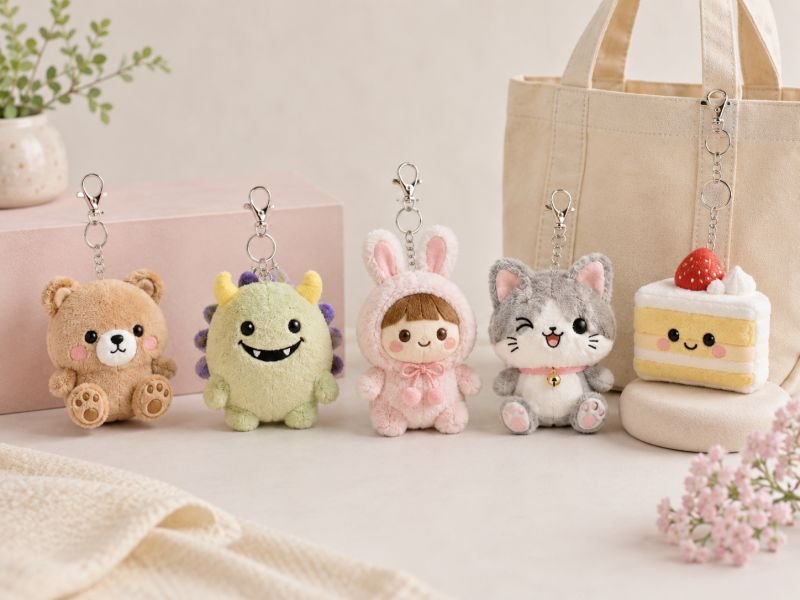
A small plush charm can do more than decorate a bag. It can turn a school backpack into a personal statement, make a retail tote feel more playful, or help a brand character travel through everyday life. That is why plush bag charms have become popular across youth fashion, fan goods, school gifts, event items, theme shops, and online stores.
Still, a charm that looks cute in artwork is not always ready for real use. Small plush products have limits. Tiny eyes may lose shape. Long fabric may cover embroidery. A weak hanging loop may break. A large logo may make the charm feel like a giveaway instead of something people want to carry.
Custom plush bag charms for youth markets should be designed around clear character identity, soft handfeel, visible bag styling, safe attachment, collectible value, and repeatable production. The best designs are not just cute. They balance youth taste with size, fabric, face method, hardware, logo placement, packaging, cost control, sample approval, and future reorder needs.
This guide is written for brand teams, IP owners, retailers, school programs, event planners, gift companies, and product developers who want plush charms that are attractive, practical, and ready for custom production.
What Are Custom Plush Bag Charms?
Custom plush bag charms are small soft accessories made to hang from backpacks, handbags, tote bags, school bags, luggage, or retail display hooks. They can be designed as animals, mascots, mini dolls, food shapes, letters, seasonal icons, or character figures. For commercial projects, they often include custom fabric, embroidery, labels, hangtags, barcode stickers, packaging, and carton marks.
A plush bag charm is different from a normal plush toy because it has to work while hanging. The shape, weight, viewing angle, hardware, back view, and attachment position all affect how it looks in daily use.
A full-size plush doll can sit on a shelf. A bag charm moves, swings, twists, touches fabric, and gets pulled many times. That means the design has to be attractive and practical at the same time.
Plush Bag Charms Vs Plush Keychains
| Item | Plush Bag Charm | Plush Keychain |
|---|---|---|
| Main use | Bag decoration and style expression | Key holding and simple attachment |
| Visual focus | Front view, hanging angle, bag styling | Small size and basic function |
| Common users | Youth fashion, fans, retail, gifts | General daily use |
| Design focus | Character, color, face, soft shape | Durability, size, hardware |
| Brand value | Better for mascot, IP, and collections | Better for simple logo items |
Many projects mix these two product names, but the design logic is not the same.
If the product will be worn on a bag, the charm should be visible, expressive, and balanced. If it will mostly hold keys, size and hardware strength may matter more.
Common Use Scenes
Plush bag charms are often used for:
- Brand mascot campaigns
- IP character goods
- School and campus gifts
- Theme park souvenirs
- Museum and cultural gifts
- Retail gift shop collections
- Event giveaways
- Fan club products
- Holiday limited editions
- Online store drops
- Membership gifts
- Youth lifestyle accessories
The strongest projects usually start with a simple match: a memorable character plus a clear use scene.
Why Are Plush Bag Charms Popular With Young Audiences?
Plush bag charms are popular with young audiences because they are soft, small, expressive, easy to carry, and easy to personalize. They let people show taste, humor, fandom, mood, or identity without changing the bag itself. For brands and retailers, this makes plush charms useful for character promotion, gift programs, retail add-ons, and collectible series.
Young shoppers often like products that feel personal. A plush charm can say “this is my favorite character,” “this fits my style,” or “this makes my bag feel mine.”
That emotional value is why plush charms can work better than many flat accessories. They have texture. They have faces. They can feel like a tiny companion.
Youth Appeal Checklist
| Design Check | Why It Matters |
|---|---|
| Clear emotion | A charm should feel cute, funny, bold, soft, or nostalgic at first sight |
| Strong face | Small products need quick recognition |
| Soft touch | Handfeel adds value beyond appearance |
| Visible color | The charm should stand out on common bag colors |
| Simple story | A name, theme, or character mood helps memory |
| Collectible style | Series designs can support repeat interest |
| Photo-friendly look | Youth products often spread through pictures |
| Easy carrying | The charm should not feel too heavy or bulky |
A plush charm does not need to be complicated to be loved. It needs to be easy to understand.
Why Character Matters More Than Decoration
A plain logo charm may work for some corporate gifts, but youth-focused products usually need more personality. A face, expression, small outfit, special ear shape, tiny bag, funny tail, or character name can make the charm feel more like an object people choose, not just a free item.
This is important for mascot, IP, and retail programs. The stronger the character identity, the more likely the charm is to be kept, photographed, collected, or gifted.
How Bag Charms Support Personal Style
One bag can look cute, sporty, funny, seasonal, or premium with a different charm. This gives young users a low-risk way to change style.
For brands, that creates room for collections. A character can have a back-to-school version, winter version, birthday version, travel version, or limited event version. This is why plush bag charms often work better as a small series than as one isolated design.
Which Types Of Plush Bag Charms Work Best?

The best plush bag charm type depends on the audience, brand style, use scene, and budget. Cute animals, mascots, odd-cute monsters, mini dolls, food shapes, letters, seasonal icons, and collectible character series can all work well. The safest choice is the one that looks attractive, stays recognizable at small size, and can be produced consistently.
Not every design direction fits every brand. A cute animal may work well for a school gift. An odd-cute monster may work better for a fashion accessory or fan product. A mascot charm may be best for a brand campaign. A food charm may be perfect for a café, snack brand, or theme shop.
Plush Charm Type Selection Table
| Charm Type | Best For | Design Notes |
|---|---|---|
| Cute animal charm | Schools, gift shops, lifestyle brands | Round shape, simple face, soft colors |
| Mascot charm | Brand events, company gifts, fan programs | Must keep the most recognizable features |
| IP character charm | Animation, games, books, fan goods | Face accuracy matters most |
| Odd-cute monster charm | Youth fashion, trend-led drops | Funny but still lovable |
| Food-shaped charm | Cafés, snack brands, museums, novelty gifts | Strong color and clear shape help |
| Letter charm | Name gifts, clubs, campus stores | Can pair with colors and mini icons |
| Seasonal charm | Holiday programs, limited editions | Small accessories can create the theme |
| Collectible series | Retail, online stores, fan releases | Shared size and style rules are needed |
Cute Animal Plush Charms
Animal designs are easy to understand. Cats, dogs, bears, rabbits, pandas, frogs, ducks, and dinosaurs often work well because their shapes are familiar.
For younger users, round shapes and softer colors usually feel friendly. For older youth style, a slightly strange proportion, vintage color, or humorous expression can feel fresher.
Mascot And Character Plush Charms
Mascot and character charms need stronger accuracy. Fans and brand followers will notice small changes in the eyes, mouth, ears, hair, outfit, and colors.
At small size, the best method is not to copy every detail. Keep the strongest identity features. Remove or simplify the parts that make production unstable.
A good rule is this: if a person can recognize the character from one meter away, the charm is probably heading in the right direction.
Seasonal And Limited-Edition Charms
Seasonal charms work well because they give people a reason to act now. Christmas hats, Halloween pumpkins, school bags, hearts, scarves, medals, snowflakes, or birthday tags can change the mood without changing the whole body pattern.
This keeps development easier while still giving the product a fresh purpose.
How Should Brands Design Plush Bag Charms For Young Users?
Brands should design plush bag charms by starting with the feeling they want the charm to create. Should it feel cute, funny, strange, soft, nostalgic, sporty, premium, or collectible? Once the feeling is clear, the team can choose shape, color, fabric, face method, logo position, and attachment style with fewer mistakes.
A charm is small, so every design choice becomes more visible. The wrong eye size, poor hanging angle, or weak color contrast can reduce the whole product value.
Step-By-Step Design Flow
| Step | What To Decide | Why It Matters |
|---|---|---|
| 1 | Use scene | Bag type, event, retail, school, fan, or gift use |
| 2 | Main emotion | Cute, funny, soft, bold, nostalgic, premium |
| 3 | Character shape | Determines recognition and pattern difficulty |
| 4 | Face method | Controls expression, cost, safety, and consistency |
| 5 | Fabric direction | Affects handfeel, color, and embroidery clarity |
| 6 | Attachment style | Affects safety, use, and hanging angle |
| 7 | Branding method | Logo, tag, label, scarf, patch, or package |
| 8 | Packing plan | Protects shape and supports display or delivery |
Choose A Shape That Reads Fast
Small plush charms need clear silhouettes. Big ears, round heads, short bodies, bold tails, and simple poses often work better than thin limbs or complex clothes.
A charm should still look like something before people see every detail. If the outline is confusing, the face will have to work too hard.
For bag charms, also think about the side and back. The product may spin while hanging. A nice back detail, tail, label, or color block can make the charm feel more finished.
Use Color With Purpose
Bright colors can attract attention. Soft colors can feel gentle. Retro colors can feel stylish. Brand colors can build recognition.
The mistake is choosing a color only because it is trendy. A color should work with the character, the fabric, the bag color, and the intended use.
If the brand color is strong but does not suit the plush body, use it on a scarf, mini outfit, woven label, hangtag, backing card, or packaging.
Keep The Face Simple And Strong
The face is usually the most important part of a plush charm. At small size, a 2 mm shift can change the expression.
Embroidery is often strong for eyes, mouth lines, brows, blush, and simple marks. Printing can help with flat graphic effects or tiny color details. Applique can work for bigger color blocks.
The face method should be decided before sampling, not after the first sample looks wrong.
What Custom Details Matter Most?
The custom details that matter most are size, shape, fabric, filling, face method, logo position, attachment, hangtag, label, barcode, packing, and carton rules. These details affect appearance, safety, price, sample time, production stability, retail handling, and repeat orders.
Small plush items can look simple from the outside, but they often involve many small decisions. A charm with a tiny outfit, face embroidery, custom hook, tag, and retail card may require more control than a larger simple doll.
Material And Method Selection Table
| Detail | Common Options | What It Affects |
|---|---|---|
| Outer fabric | Short plush, minky, velboa, fleece, super soft fabric | Handfeel, color, face clarity |
| Filling | PP cotton or similar soft filling | Shape, softness, weight |
| Face method | Embroidery, printing, applique, mixed method | Expression, cost, safety, consistency |
| Logo method | Woven label, hangtag, patch, small embroidery, package print | Brand presence |
| Attachment | Keyring, lobster clasp, ball chain, cord, fabric loop | Use strength and hanging effect |
| Packing | Polybag, hangtag, backing card, gift box, display box | Protection, display, delivery |
| Retail data | Barcode, SKU label, carton mark | Sorting, scanning, reorder control |
Size, Shape, And Hanging Position
Size affects almost everything. A 6 cm charm and a 12 cm charm may need different embroidery, fabric, filling, and hardware.
Hanging position matters too. A charm attached at the head may hang differently from one attached at the back or top loop. During sample review, check whether the charm naturally faces forward.
Fabric, Filling, And Handfeel
Longer pile fabric feels fluffy, but it can hide face details. Shorter fabric keeps the expression cleaner. Very soft fabric feels good in the hand, but it must still hold the shape.
Filling should be balanced. Too little filling makes the charm flat. Too much filling makes it hard and can pull the seams.
Embroidery Vs Printing For Small Faces
| Face Method | Works Well For | Watch Out For |
|---|---|---|
| Embroidery | Eyes, brows, mouth lines, simple logo marks | Dense stitching may make small areas stiff |
| Printing | Tiny graphics, color gradients, flat cartoon details | Plush texture may affect sharpness |
| Applique | Larger eyes, cheeks, color blocks | Edges and sewing need clean control |
| Mixed method | More expressive character faces | Needs clear approval before production |
For small charms, the face method should be tested early. A face that works on paper may not work on plush fabric.
Logo, Hangtag, Label, And Packaging
The logo does not always need to sit on the plush body. In many youth programs, a large front logo can reduce charm appeal.
Better options may include:
- Woven side label
- Mini scarf with logo
- Small outfit patch
- Hangtag
- Backing card
- Barcode sticker
- Retail box
- Inner label
This keeps the product desirable while still carrying brand identity.
What Design Mistakes Should Teams Avoid?
Teams should avoid tiny face details, weak attachment , poor logo placement, copied trend styles, unclear face methods, and packing that flattens the plush shape. These mistakes can create more sample revisions, higher cost, weaker shelf appeal, delayed launch timing, and less stable repeat production.
Good design is not only about adding more. It is often about knowing what to remove.
Common Mistakes Table
| Mistake | What Can Happen | Better Choice |
|---|---|---|
| Too many tiny face lines | Expression becomes messy | Keep the strongest face features |
| Thin limbs or fingers | Hard to sew and shape | Use simpler rounded forms |
| Weak fabric loop | Charm may tear off | Review loop strength early |
| Logo too large | Product feels like a giveaway | Use tag, label, scarf, or package |
| Trend copying | Product feels generic or risky | Adapt the mood to your own character |
| Wrong fabric pile | Embroidery gets hidden | Match pile height to face detail |
| Tight packing | Shape gets flattened | Test packing before shipment |
| No version control | Sample changes become confusing | Record approved details |
Too Many Tiny Face Details
Small charms cannot carry every line from a full artwork. Thin lashes, tiny teeth, small logos, and narrow color blocks may not stay clear after embroidery, sewing, and filling.
A bold, simple face usually works better. Keep the details that define the character. Simplify the rest.
Weak Attachment
A bag charm is touched, pulled, clipped, and twisted many times. The loop, hook, ring, or cord must be treated as part of the structure.
If the attachment fails, the whole product fails.
Logo Placement That Hurts The Design
Young users often want a charm that feels like a character first, not an advertisement. A woven label, tag, small patch, or package mark can carry brand value without overwhelming the design.
Packing That Damages Shape
A charm can look good before packing and poor after shipping. Tight bags, heavy compression, or poor carton planning can bend ears, flatten faces, and deform small accessories.
Packing should be tested with the charm, not decided at the end.
How Does A Plush Bag Charm Factory Review A Design?

A plush bag charm factory reviews a design by checking artwork, structure, size, fabric, face method, attachment, safety, packing, and production stability before sampling. The goal is not only to make one nice sample. The goal is to create a confirmed sample that can guide larger production with fewer surprises.
This is where a factory differs from a simple catalog seller. For original characters, mascots, retail programs, and multi-style collections, product review before sampling is often what protects the project.
Design Review Process
| Stage | What Gets Reviewed | Output |
|---|---|---|
| Artwork review | Character, use scene, must-keep details | Feasibility notes |
| Size review | Height, width, hanging balance | Size direction |
| Structure review | Head, body, limbs, ears, tail, outfit | Pattern direction |
| Material review | Fabric, filling, color, texture | Material plan |
| Face review | Embroidery, printing, applique | Face method |
| Attachment review | Ring, hook, loop, cord, chain | Use and safety check |
| Packing review | Polybag, card, box, carton | Packing direction |
| Sample review | Shape, expression, details, labels | Approved standard |
Artwork And Reference Review
The first step is to understand what the charm is for. Is it a retail item, school gift, event item, mascot piece, IP release, or fan product?
Then the design team reviews reference images, target size, quantity, brand details, and timing. If the artwork is flat, the factory needs to judge how it will become a soft 3D object.
Structure And Size Check
A plush charm is affected by seam allowance, fabric stretch, filling pressure, and small sewing areas. This means artwork may need adjustment.
For example, very sharp corners may become round. Thin tails may need to be wider. Tiny clothes may need simplified construction. A skilled factory should raise these issues before the first sample.
Face Method And Fabric Review
Face method and fabric should be reviewed together. Long fabric may make the charm softer, but it may blur small embroidery. Short fabric may keep the face cleaner, but it may feel less fluffy.
This choice should match the character, not just the price.
Sample Plan Before Larger Production
A useful sample should confirm:
- Shape
- Face
- Fabric
- Color
- Filling
- Attachment
- Logo placement
- Hangtag and label
- Packing method
- Inspection focus
Heyzizi has its own pattern and sample room, so design review, sample work, structure adjustment, and later production records can be connected more clearly.
How Long Does Custom Plush Bag Charm Sampling Take?
Sampling time depends on design complexity, fabric sourcing, face method, accessory needs, label design, packing, and revision rounds. A simple animal charm can move faster. A detailed IP charm with several fabrics, embroidery, hardware, and retail packing needs more time for review and approval.
Small does not always mean fast. A small charm can involve many tiny decisions.
What Affects Sample Time?
Sampling may take longer when the design includes:
- New character pattern
- Special fabric
- Custom color matching
- Dense embroidery
- Printed face details
- Mini clothing or accessories
- Metal or plastic hardware
- Custom hangtag
- Barcode or backing card
- Gift box or display packing
- Multiple style versions
A clear first brief can reduce wasted time.
Sample Development Flow
| Step | Action | Why It Helps |
|---|---|---|
| 1 | Send artwork or reference | Gives the factory a visual starting file |
| 2 | Confirm size and use scene | Helps review structure and cost |
| 3 | Select fabric and face method | Reduces sample guesswork |
| 4 | Make pattern | Turns flat artwork into plush structure |
| 5 | Create first sample | Tests shape, face, and handfeel |
| 6 | Review and revise | Adjusts details before approval |
| 7 | Approve final sample | Creates the production standard |
| 8 | Record details | Helps future orders stay consistent |
When Should Teams Start?
Start early if the charm is tied to a holiday, event, retail drop, school program, or campaign date. Sampling, revision, approval, material preparation, inspection, packing, and shipment all need time.
A delayed charm can miss the entire purpose of the project, even if the final product looks good.
What Affects The Price Of Custom Plush Bag Charms?
The price of custom plush bag charms is affected by quantity, size, fabric, filling, face method, embroidery area, printing, hardware, accessories, labels, packaging, testing needs, and production complexity. A small charm with detailed embroidery and retail packaging may cost more than a larger simple plush item.
Price should be reviewed through structure, not only size. The number of steps often matters more than the number of centimeters.
Cost Factor Table
| Cost Factor | Why It Changes Price |
|---|---|
| Quantity | Setup, materials, labor, and packing are shared across more pieces |
| Size | Larger items use more fabric and filling |
| Fabric | Special texture or custom color may cost more |
| Face method | Embroidery, printing, and applique have different costs |
| Stitch density | Dense embroidery increases time and thread use |
| Accessories | Clothing, bows, chains, rings, and hooks add steps |
| Packaging | Retail cards, boxes, and labels add material and labor |
| Testing | Safety or channel requirements may add cost |
| Multi-style work | More styles mean more records and checking |
Quantity And MOQ
For many custom plush projects, 500 pieces per style is a practical starting quantity. For simple designs with common materials, 200–300 pieces may sometimes be possible after review.
Small quantity usually means higher unit price because the main work still exists: pattern, material preparation, cutting, embroidery or printing, sewing, filling, checking, packing, and management.
Size And Detail Balance
A larger charm uses more material. But a very small charm with many tiny details can be harder to make.
If cost is sensitive, simplify the structure before reducing quality. A cleaner face, fewer mini accessories, and smarter logo placement can reduce cost while keeping charm appeal.
Packing And Label Costs
Retail packing adds cost, but it can also add value. A backing card, hangtag, barcode sticker, or gift box can help display, scanning, sorting, and gifting.
For event use, simple packing may be enough. For retail use, packaging often becomes part of the product.
Are Plush Bag Charms Safe For Youth And Retail Channels?
Plush bag charms can be suitable for youth and retail channels when materials, sewing, small parts, attachments, needle detection, labels, warnings, and target country requirements are reviewed early. Safety planning should begin during design and sampling, especially for school, child-related, retail, and gift programs.
Safety should not be an afterthought. It affects design, hardware, face method, labels, and testing decisions.
Safety Review Checklist
| Review Item | What To Check |
|---|---|
| Fabric | Softness, color, surface condition |
| Filling | Clean filling and stable shape |
| Sewing | Seam strength and closing quality |
| Face method | Safer use of embroidery or fabric details where needed |
| Small parts | Buttons, beads, plastic eyes, charms, chains |
| Attachment | Loop, hook, ring, cord, pull strength |
| Needle detection | Finished product should pass needle control |
| Label content | Age, warning, care, material, barcode if needed |
| Packing | Avoid damage, deformation, or mixed styles |
Small Parts And Attachment Review
Small bows, beads, buttons, plastic parts, hooks, chains, and metal rings may need extra review. If the charm may be used by younger children, the risk becomes more serious.
For many plush charm designs, embroidered eyes and sewn fabric details are safer than hard plastic parts.
Needle Detection And Sewing Checks
Needle detection is a necessary control step for plush products. Sewing strength, closing seams, accessory stitching, and hardware attachment should also be checked before packing.
A charm can be cute and still fail if construction is weak.
Labels, Warnings, And Testing
Retail and school-related projects may need clear labels, warning text, age guidance, barcode, SKU information, or destination-specific details.
If third-party testing is needed, discuss it before larger production begins. Late testing can cause delays, label changes, or design changes.
How Should Packaging Be Planned For Plush Bag Charms?

Packaging should protect the plush shape, support the sales or delivery scene, and keep styles easy to identify. The right packing method depends on whether the charm is for retail display, online sale, event distribution, school gifts, IP drops, or gift sets.
Packaging is not only the last step. It can affect appearance, shelf value, sorting accuracy, and experience.
Packaging Options Table
| Packing Type | Best For | Notes |
|---|---|---|
| Individual polybag | Events, simple gifts, bulk distribution | Cost-friendly and easy to sort |
| Hangtag only | Gift shops, simple retail | Keeps charm visible |
| Backing card | Retail shelves, character series | Good for barcode and story |
| Gift box | Premium gifts, limited editions | Adds value but raises cost |
| Display box | Store counters, theme shops | Helps group a series |
| Mixed carton plan | Multi-style programs | Needs clear SKU and carton marks |
| Barcode sticker | Retail and warehouse handling | Must match SKU rules |
| Carton mark | Shipment and sorting | Reduces delivery errors |
Packing Should Protect Shape
Plush charms can be damaged by tight bags, heavy compression, or poor carton stacking. Ears, tails, bows, and small accessories are easy to bend.
If the charm needs a full face and soft body shape, the packaging should be tested before shipment.
Packing Should Support Sorting
Multi-style programs need clear packing rules. If one project includes five characters, three colors, and two packaging versions, labels and carton marks must be accurate.
A cute product can still create trouble if the wrong style goes into the wrong carton.
What Should Teams Send For A Custom Sample?
To start a custom plush bag charm sample, send character artwork or reference images, target size, quantity, fabric preference, face method, logo needs, attachment style, packaging request, use scene, deadline, and destination country. Clear starting details help the factory review structure, cost, sample difficulty, safety needs, and production risk more accurately.
A complete brief does not need to be perfect. It only needs to be clear enough for the first review.
Inquiry Preparation Checklist
| Information To Send | Why It Helps |
|---|---|
| Product type or reference photo | Shows the expected style |
| Character artwork or logo file | Helps review shape and brand details |
| Target size | Affects pattern, cost, packing, and visibility |
| Quantity | Helps review MOQ and cost direction |
| Fabric preference | Guides handfeel and appearance |
| Face method idea | Helps review embroidery or printing |
| Attachment request | Affects use and safety |
| Packaging request | Affects retail, event, or delivery setup |
| Target use scene | Helps choose structure and packing |
| Deadline | Helps review timing |
| Destination country | Helps review label and testing direction |
What If The Design Is Not Complete?
You can still start with a reference image, rough sketch, character file, or mascot picture. The first review can help identify what is missing.
For early projects, the most useful details are:
- What the charm should represent
- Approximate size
- Expected quantity
- How it will be used
- Whether it is for retail, event, school, or IP goods
- Any packaging or label needs
What Heyzizi Can Review Before Sampling
Heyzizi can help review character shape, fabric direction, face method, logo position, attachment style, packing needs, safety concerns, and production feasibility before the first sample.
To start a review, send your artwork, target size, quantity, packing request, and delivery plan to info@heyzizi.com.
How Can A Confirmed Sample Protect Future Orders?
A confirmed sample protects future orders by creating a clear standard for shape, fabric, color, face, filling, attachment, label, packaging, and inspection. Without this standard, later production can drift, especially in multi-style plush charm programs or repeat orders.
A sample is not the end of development. It is the bridge between design and repeatable production.
Approved Sample Record
| Record Item | Why It Matters |
|---|---|
| Final sample photos | Keeps visual reference clear |
| Pattern version | Helps repeat the same shape |
| Fabric details | Controls color and handfeel |
| Embroidery file | Keeps face position and stitch style |
| Filling level | Controls softness and shape |
| Hardware details | Keeps attachment consistent |
| Label and hangtag files | Prevents packaging mistakes |
| Packing method | Protects product appearance |
| Carton marks | Supports shipment accuracy |
| QC notes | Guides future inspection |
Why Version Control Matters
A plush charm may go through several revisions. The face may change, the fabric may change, the hook may change, or the tag may change.
If these changes are not recorded, the final approved version can become unclear. That creates risk during larger production or repeat orders.
Multi-Style Programs Need Extra Control
A series with several characters needs stronger records. Each style should have its own artwork, pattern, face file, material record, label, barcode, packing rule, and carton mark.
This prevents style mixing and keeps the series organized.
How Does Quality Control Work Before Shipment?

Quality control for plush bag charms should check fabric color, cutting, embroidery, sewing, filling, shape, attachment strength, needle detection, labels, barcode, packing, and carton marks. For youth-related programs, small parts and attachment details deserve extra care.
Quality is not one final look. It is a chain of checks from material to packed carton.
Quality Check Table
| Check Area | What To Review |
|---|---|
| Fabric | Color, texture, surface, pile direction |
| Cutting | Shape accuracy and matched parts |
| Embroidery | Position, thread color, density, expression |
| Sewing | Seam strength, clean edges, closing |
| Filling | Balance, softness, shape recovery |
| Attachment | Ring, hook, loop, cord, pull strength |
| Small parts | Secure sewing and safety review |
| Needle detection | Finished goods pass needle control |
| Label | Correct content and placement |
| Barcode | Correct SKU and scanning needs |
| Packing | Correct bag, card, box, or grouping |
| Carton mark | Correct style, quantity, and destination info |
Why QC Should Match The Product Use
A retail charm needs strong appearance and correct barcode. An event charm needs correct quantity and sorting. A school charm needs stronger safety review. An IP charm needs accurate face details.
The inspection focus should match the use scene.
Why Heyzizi Fits Complex Plush Charm Projects
Heyzizi is a Guangdong-based plush product factory with 600+ employees, about 18,000㎡ factory space, 35+ pattern staff, 300+ production-related machines, 80 QC inspectors, 30+ production lines, and over 20 years of OEM and ODM plush project experience.
This structure supports design review, sample development, bulk production, inspection, packing, and repeat-order records for brand, retail, IP, event, and long-term plush programs.
Do Plush Bag Charms Fit Your Youth Project?
Plush bag charms fit youth projects when the product needs personality, portability, soft touch, character value, and daily visibility. They work well for brand mascots, IP goods, retail gifts, school programs, event giveaways, online drops, and seasonal collections.
Before starting, define the project goal.
Is the charm meant to sell in stores, support a campaign, reward students, promote a mascot, extend an IP character, or become part of a gift set? That goal should guide the design.
A retail charm needs display and barcode planning. A school charm needs safety and simple distribution. A mascot charm needs recognition. An IP charm needs face accuracy. An event charm needs cost control and timing. A collectible series needs style records and repeat-order planning.
A small plush charm can carry a big idea when design, structure, fabric, face, attachment, packing, and production records work together.
If you are preparing a plush bag charm program, send your character artwork, target size, quantity, use scene, packaging needs, deadline, and destination country to info@heyzizi.com. Heyzizi can review the structure, sample path, cost direction, and production details before the first sample.
Frequently Asked Questions About Custom Plush Bag Charms
FAQ 1: What Size Works Best For Custom Plush Bag Charms?
A practical custom plush bag charm should be large enough to show the face clearly, yet light enough to hang comfortably on backpacks, tote bags, handbags, or luggage.
Sure, size may sound like a simple decision, but it affects pattern work, face detail, cost, packing, and daily use. If the charm is too small, tiny eyes, mouth lines, ears, tails, or logo details may not stay clean after embroidery, sewing, and filling. If the charm is too large, it may feel bulky, swing too much, or become harder to pack for retail or event delivery.
For youth-focused designs, the best size depends on the use scene. A school giveaway may need a lighter charm that is easy to distribute. A retail gift shop item can be slightly larger because shelf appeal matters. An IP character charm may need more face area to keep the expression accurate.
| Use Scene | Size Direction | What To Watch |
|---|---|---|
| Event Gift | Small To Medium | Easy Packing And Fast Distribution |
| School Backpack Charm | Medium | Light Weight And Safe Attachment |
| Retail Charm | Medium To Larger | Clear Face And Strong Shelf Look |
| IP Character Charm | Depends On Face Detail | Expression Accuracy |
| Premium Gift Charm | Larger Or More Detailed | Better Fabric And Packaging |
Before sampling, review height, width, thickness, hanging position, and packed size together. These details help Heyzizi judge structure, material use, cost direction, and whether the charm will still look good after packing and transport.
FAQ 2: Can Our Brand Mascot Or IP Character Be Made Into A Plush Bag Charm?
Certainly, most brand mascots and IP characters can be developed into plush bag charms, but the design often needs smart simplification before sampling.
The goal is not to copy every small line from the artwork. The real goal is to keep the strongest character features in a small, soft, hangable format. For mascot projects, the most valuable details are usually head shape, eye style, main color, mouth expression, signature accessory, and one clear brand detail. If the character has very thin arms, tiny fingers, layered clothing, complex hair, or many small marks, some details may need to be adjusted.
Plush fabric has thickness. Sewing needs seam allowance. Filling changes the final shape. A flat drawing rarely becomes a soft 3D product without changes. For IP projects, the face usually deserves the most careful review because fans notice small changes quickly.
| Character Detail | Usual Decision |
|---|---|
| Main Head Shape | Keep |
| Eye Style | Keep Carefully |
| Mouth Expression | Keep Or Adjust For Embroidery |
| Hair Or Ears | Keep If Recognizable |
| Small Logo | Move To Tag, Label, Scarf, Or Packaging |
| Tiny Accessories | Review Safety And Sewing Difficulty |
If you have front, side, and back artwork, send all views. If only one image is available, Heyzizi can still begin a first structure review and identify what needs to be confirmed before sampling.
FAQ 3: Should We Use Embroidery Or Printing For Small Plush Charm Faces?
Embroidery is usually better for clean eyes, brows, mouths, blush marks, and simple character details, while printing works well for tiny graphic effects, gradients, and flat cartoon details.
Of course, there is no single face method for every plush charm. Embroidery often feels more durable, textured, and premium. It is a strong choice for charms that will be clipped to school bags, totes, or handbags and touched often. But if the artwork has very fine lines, many colors, or soft shading, embroidery may become too dense or stiff.
Printing can help with small graphic details, but it needs careful review on plush fabric. Long-pile fabric may blur printed edges. Short-pile fabric can keep the surface cleaner. Some characters work best with mixed methods, such as embroidered eyes with printed blush, applique eyes with embroidered mouth lines, or printed patches combined with soft plush parts.
| Face Method | Best For | Watch Out |
|---|---|---|
| Embroidery | Eyes, Mouth, Brows, Simple Marks | Dense Stitching Can Feel Stiff |
| Printing | Tiny Graphics, Gradients, Flat Artwork | Fabric Texture May Affect Clarity |
| Applique | Larger Eyes, Cheeks, Color Blocks | Edge Sewing Must Stay Clean |
| Mixed Method | Rich Character Faces | Needs Clear Sample Approval |
For small charms, a 1–2 mm shift can change the whole expression. Face size, stitch density, fabric pile direction, and filling pressure should be checked together during sample development.
FAQ 4: What Materials Are Best For Plush Bag Charms?
The best material for a plush bag charm depends on the desired handfeel, face clarity, character style, color effect, and use scene.
Absolutely, fabric choice is not only about softness. It also affects how clearly embroidery appears, how well the body keeps shape, how the charm looks on a bag, and how premium it feels in the hand. Long or fluffy fabric can feel warm and cute, but it may hide tiny eyes or mouth lines. Shorter fabric keeps facial details cleaner and may work better for mascot or IP charms that need accurate expressions.
Filling is also part of the material decision. Too little filling makes the charm look flat. Too much filling can pull the seams and make the body too hard. For bag charms, the filling should help the product hold shape without making it heavy.
| Material Direction | Best Use | Notes |
|---|---|---|
| Short Plush | Character Faces, Mascot Charms | Better For Clean Embroidery |
| Minky | Soft Retail Charms | Smooth Handfeel |
| Velboa | Simple Shapes And Cost-Sensitive Styles | Clean Surface |
| Super Soft Fabric | Cute Animals And Gift Styles | Strong Handfeel Appeal |
| Fleece | Casual Or Seasonal Designs | Good For Simple Shapes |
| PP Cotton Filling | Most Soft Charm Bodies | Helps Shape And Softness |
If the charm has tiny face details, start with face clarity first, then choose fabric. If the charm is mainly about soft touch, texture can take priority. A strong design balances both.
FAQ 5: What MOQ Is Suitable For Custom Plush Bag Charms?
For many custom plush projects, 500 pieces per style is a practical starting quantity because it helps share pattern, material, setup, sewing, checking, and packing costs.
Definitely, quantity affects more than unit price. Even a small plush bag charm still needs artwork review, pattern development, fabric preparation, cutting, embroidery or printing, sewing, filling, shaping, checking, packing, and shipment preparation. These steps do not disappear when the quantity is lower.
For simple charm styles, 200–300 pieces may sometimes be possible after reviewing structure, fabric, decoration, and packaging needs. Small runs usually have a higher unit price because the same development work is divided across fewer pieces. If the design includes special fabric, custom embroidery, metal hardware, several colors, retail packaging, or multiple styles, a higher quantity is usually more practical.
| Quantity Level | Best For | Notes |
|---|---|---|
| 200–300 Pcs | Simple Test Projects | Possible For Easier Styles After Review |
| 500 Pcs | Standard Custom Plush Charm Start | Better Cost Sharing And Smoother Setup |
| 1,000+ Pcs | Retail, Events, IP Drops | Better For Packing And Label Planning |
| 2,000+ Pcs | Larger Single-Style Programs | Sample Fee May Be Returned Or Deducted Under Heyzizi’s Rule |
| Multi-Style Orders | Series Programs | Each Style Needs Separate Review |
Heyzizi reviews MOQ based on product structure, material availability, decoration difficulty, packaging, and future order plans.
FAQ 6: How Long Does Sampling Take For Custom Plush Bag Charms?
Custom plush bag charm sampling time depends on artwork clarity, character complexity, fabric sourcing, face method, hardware selection, packaging needs, and revision rounds.
Sure, a charm may be small, but small does not always mean simple. The team still needs to turn flat artwork into a 3D soft product. This may include paper pattern development, fabric matching, embroidery file setup, printing tests, hardware sourcing, sewing, filling, shaping, and finishing.
The first sample is not only for appearance. It helps confirm whether the charm can become a stable standard for larger production. During sample review, the team should check face accuracy, hanging angle, fabric handfeel, filling balance, hardware strength, logo position, tag design, and packing effect.
| Step | What Happens | Why It Matters |
|---|---|---|
| 1 | Send Artwork Or Reference | Gives A Visual Startingrange |
| 2 | Review Size And Use Scene | Helps Judge Pattern And Cost |
| 3 | Confirm Fabric And Face Method | Reduces Sample Guesswork |
| 4 | Develop Pattern | Turns Artwork Into Plush Structure |
| 5 | Make First Sample | Tests Shape, Face, And Handfeel |
| 6 | Revise Details | Improves Accuracy And Practicality |
| 7 | Approve Final Sample | Creates The Production Standard |
| 8 | Record Details | Helps Repeat Orders Stay Consistent |
If the charm is tied to a retail launch, school event, or holiday program, start early. Delays often come from unclear artwork, late logo changes, packaging changes, or repeated face revisions.
FAQ 7: What Affects The Price Of Custom Plush Bag Charms?
The price of custom plush bag charms is affected by size, quantity, fabric, filling, embroidery, printing, hardware, accessories, labels, packaging, testing needs, and style count.
Of course, many teams first look at size when estimating cost. Size matters, but it is only one part. The number of production steps can matter even more. A small charm with ears, tail, bow, mini outfit, embroidered face, woven label, metal clasp, barcode sticker, and retail backing card may cost more than a larger but simpler plush item.
A smart way to control cost is not to make the charm look cheaper. It is to simplify the right details. Keep the face strong. Keep the main shape clear. Move brand details to the tag or packaging if needed. Remove tiny features that add sewing risk but do not add much value.
| Cost Factor | How It Affects Cost |
|---|---|
| Quantity | More Pieces Help Share Setup And Material Costs |
| Size | Larger Charms Use More Fabric And Filling |
| Fabric | Special Texture Or Custom Color May Raise Cost |
| Face Method | Dense Embroidery Or Mixed Methods Add Work |
| Hardware | Metal Hooks, Rings, And Chains Add Sourcing And Checking |
| Accessories | Clothes, Bows, Tags, And Small Parts Add Labor |
| Packaging | Retail Cards, Boxes, And Labels Add Cost |
| Style Count | More Styles Need More Records And Checking |
| Testing | Safety Or Retail Rules May Add Time And Cost |
The best price plan keeps the product attractive while removing details that do not improve the user experience.
FAQ 8: Are Custom Plush Bag Charms Safe For Youth, School, And Retail Programs?
Custom plush bag charms can be suitable for youth, school, and retail programs when materials, sewing, attachments, small parts, needle detection, labels, warnings, and destination requirements are reviewed early.
Certainly, this is an area where project teams should not guess. Bag charms may be used by teens, students, younger children, fans, or retail shoppers. The intended age group and distribution channel should be clear before sampling.
If the charm includes plastic eyes, beads, buttons, chains, metal hooks, bells, tiny bows, or decorative parts, those parts need extra review. In many cases, embroidered eyes and sewn fabric details are safer choices than hard parts, especially for younger users.
| Safety Area | What To Review |
|---|---|
| Fabric | Softness, Color, Surface Condition |
| Filling | Clean Material And Stable Shape |
| Sewing | Seam Strength And Closing Quality |
| Small Parts | Buttons, Beads, Plastic Eyes, Chains |
| Attachment | Ring, Hook, Loop, Cord, Pull Strength |
| Needle Detection | Finished Goods Pass Needle Control |
| Labels | Age, Care, Warning, Material, Barcode If Needed |
| Packing | Avoid Deformation And Style Mixing |
Heyzizi has 80 QC inspectors and checks fabric, sewing, filling, accessory attachment, needle detection, labels, packing, and carton marks. For youth, school, or retail-related products, safety planning should be discussed before production begins.
FAQ 9: What Packaging Works Best For Plush Bag Charms?
The best packaging for plush bag charms depends on how the product will be sold, gifted, shipped, displayed, or distributed.
Absolutely, packaging is not only the final wrapping choice. It affects product shape, shelf look, sorting, scanning, delivery, and first impression. A charm with soft ears, a small bow, tail, or mini accessory can be damaged by tight packing or heavy compression.
For event gifts, a simple individual polybag may be enough. For retail shelves, hangtags, backing cards, display boxes, barcode labels, or gift boxes may be better. For IP programs, packaging may need character names, series numbers, warning text, barcode stickers, and matching visual style.
| Packaging Type | Best For | Notes |
|---|---|---|
| Individual Polybag | Events, Bulk Gifts, School Programs | Simple And Cost-Friendly |
| Hangtag | Gift Shops, Simple Retail | Keeps Charm Visible |
| Backing Card | Character Series And Retail Shelves | Good For Story, Barcode, And Display |
| Gift Box | Premium Drops And Special Editions | Adds Value But Raises Cost |
| Display Box | Counter Sales And Series Programs | Helps Group Several Styles |
| Barcode Sticker | Retail And Warehouse Handling | Should Match SKU Rules |
| Mixed Carton Plan | Multi-Style Projects | Reduces Sorting Mistakes |
| Carton Marks | Shipping And Warehouse Receiving | Helps Avoid Delivery Confusion |
Packing should be tested with the actual sample. A charm that looks great on the table should still look good after packing, shipment, unpacking, and hanging on a bag.
FAQ 10: What Should We Send Before Asking For A Custom Plush Bag Charm Quote?
To get a useful custom plush bag charm review, send character artwork or reference images, target size, quantity, fabric preference, face method idea, logo needs, attachment style, packaging request, use scene, deadline, and destination country.
Definitely, you do not need a perfect technical file to start. Many strong plush projects begin with a mascot drawing, brand image, rough sketch, product photo, or simple mood board. What matters is giving enough context so the factory team can ask the right follow-up items.
The more clearly the starting details are shared, the easier it is to review structure, cost direction, sample difficulty, safety needs, and production risk. This also helps avoid vague pricing and repeated revisions later.
| Information To Send | Why It Helps |
|---|---|
| Character Artwork Or Reference Photo | Shows Expected Style And Shape |
| Target Size | Affects Pattern, Cost, Packing, And Visibility |
| Quantity | Helps Review MOQ And Cost Direction |
| Use Scene | Retail, Event, School, Fan Goods, Gift, Or Campaign |
| Fabric Preference | Guides Handfeel And Appearance |
| Face Method Idea | Helps Review Embroidery Or Printing |
| Logo File | Helps Plan Brand Placement |
| Attachment Request | Affects Use And Safety |
| Packaging Need | Affects Display, Sorting, And Delivery |
| Deadline | Helps Review Timing |
| Destination Country | Helps Review Labels And Testing Direction |
If the project is still early, send what you have. Heyzizi can review character structure, fabric direction, face method, attachment, packing, and production feasibility before the first sample. For project review, send your artwork, target size, quantity, packaging needs, and delivery plan to info@heyzizi.com.