 Skip to content
Custom Teddy Bears Plush
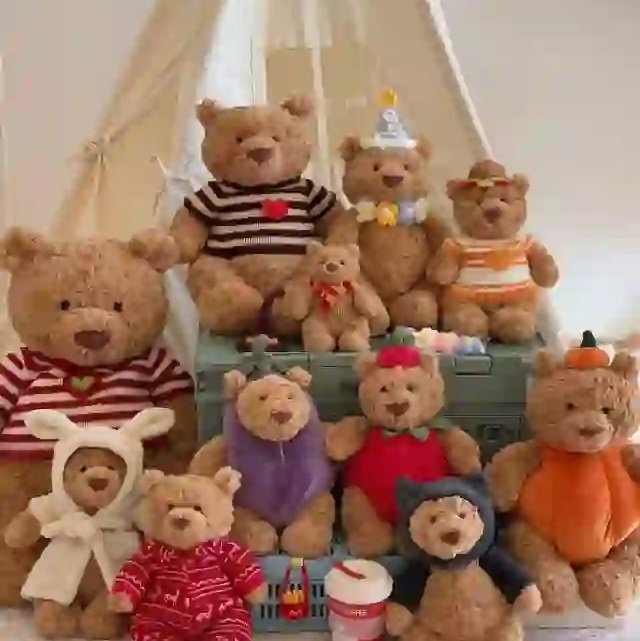
Custom teddy bears shouldn’t be judged by a single sample—bulk consistency is what protects your brand. At Heyzizi, we build teddy bear programs with clear controls: a locked material system (BOM), measurable face symmetry checkpoints, the right logo method (often patch for small text), and anti-deformation pack-out with warehouse-friendly carton marks. You get a structured sampling route (V1 → PPS → Golden Sample) that reduces sample-to-bulk drift and makes reorders stable. Share your size, quantity, channel, and logo file to start.
Teddy Bear Builds by Channel
Teddy bears appear in many procurement scenarios, and each scenario has different “success metrics.” The fastest way to reduce risk is to start from channel requirements, not from a random style photo.
(1) Retail & boutique teddy bears
Retail bears are judged by consistency and presentation. They should stand or sit cleanly, keep face symmetry, and maintain a premium look across units. Retail packaging may include hangtags, header cards, or boxes, but shape protection matters more than decoration. For retail, you should lock measurable points: eye spacing tolerance, nose alignment, ear symmetry, and seam route.
(2) Corporate gifts & employee programs
Gift bears are “touched” more than they are inspected. The hand-feel must match the brand image. Partners usually prefer softer plush, clean trim finishing, and premium branding elements like woven labels, neat embroidery, and gift messaging. The bear must survive transit without looking crushed; otherwise, the unboxing moment fails.
(3) Fundraising & charity bears
Fundraising bears need a cost-effective base that still looks meaningful. The best strategy is often one reference SKU with a stable material system, then adding tiered branding options (different ribbons, hangtags, donor messages). Operationally, you may need kitting (bear, card, and QR code). The key is to define a kit BOM and packing logic so parts don’t go missing.
(4) Hospitality & comfort bears
Hotels and comfort programs care about safe trims, durability, and repeatability across reorders. That means fewer fragile accessories and clearer care or label planning. If bears will be handled by many people, choose a build that resists seam opening and keeps its shape after squeezing.


Teddy Formats & Size Planning
Choosing the right teddy bear type is not only about appearance. It affects pattern complexity, sewing routes, stuffing stability, packaging, and reorder repeatability. Below are the common teddy bear types we build and how procurement teams should decide.
(1) Classic teddy bear
A classic bear needs stable proportions: head-to-body ratio, ear shape, muzzle profile, and sitting posture. It is the best foundation for private label retail because it reorders well and can evolve with seasonal details (ribbons, clothes, tags). For classic bears, we recommend locking “identity points”: muzzle curve, eye spacing reference, nose position reference, and seam allowance.
(2) Jointed teddy bears
Jointed bears (with movable arms or legs) feel more premium but require a stronger attachment design and tighter tolerance control. They also influence packaging and handling. Jointed bears are best for boutiques and premium gifting where perceived value is a priority.
(3) Mini teddy bears & teddy bear keychains
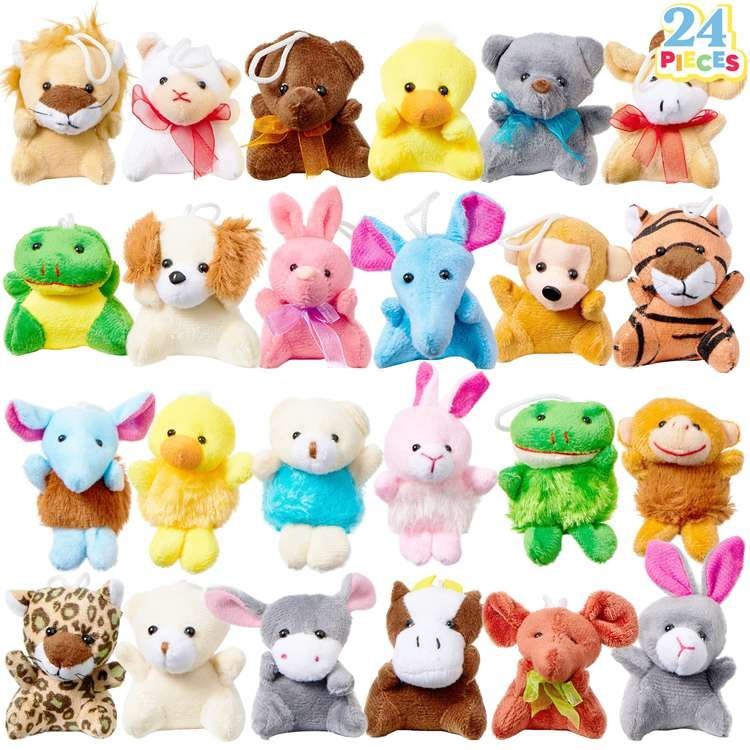
These are ideal for events, sponsors, and mass giveaways. The success metric is not “artisan detail,” it’s logo clarity, fast packing, and low mix-up risk. Mini bears should use simplified construction and stable accessory attachment rules (keyrings, hangtags).
(4) Giant teddy bears
Giant bears are mostly for photo and emotional impact. The risk is deformation, seam stress, and shipping volume. Partners need a clear plan for stuffing recovery and packing method.
(5) Memory bears
Memory bears use partner-provided fabrics (shirts, uniforms, blankets). The risk is fabric inconsistency and stretch. Success requires clear rules: fabric reinforcement, lining use, and pattern adaptation.


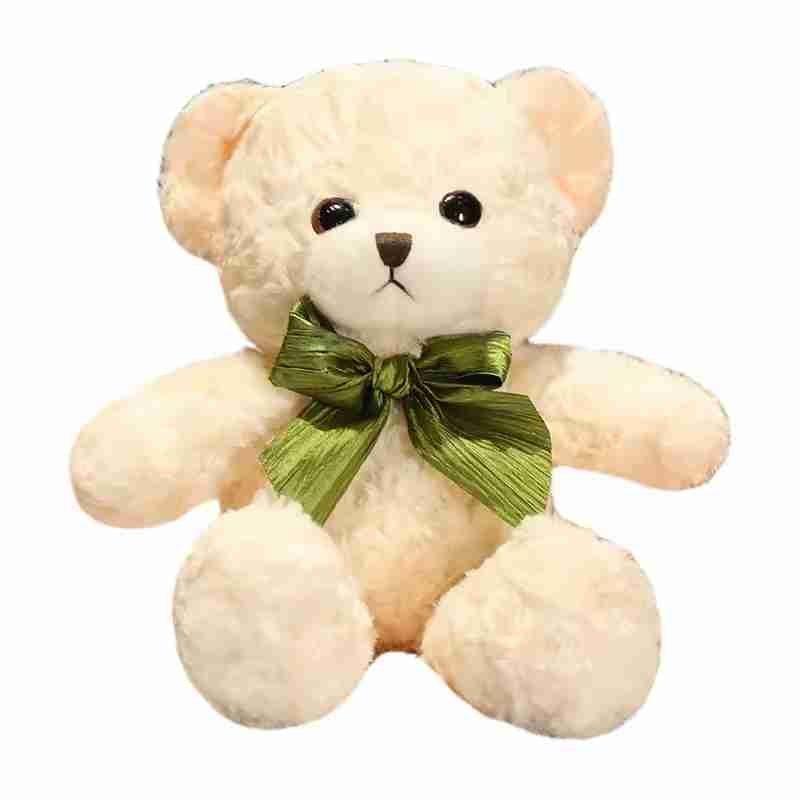


Teddy Material System: Feel & Durability
A teddy bear is a system: outer plush + filling + lining or support + accessories. Procurement success comes from choosing the system that matches use, budget, and bulk repeatability.
(1) Outer plush (what people feel first)
Outer plush defines the teddy bear’s perceived value. A higher pile can look premium but hides detail; a lower pile can look clean and improve logo clarity. For retail bears, consistency of pile direction and color lot is crucial. For gifting, softness matters more. For campaign bears, stability and speed often matter.
(2) Filling (shape stability and long-term feel)
Stuffing is not just “more or less.” It affects silhouette, posture, and face expression. Overstuffing can warp seams; under-stuffing can make the bear look cheap and collapsible. For shelf bears, you may want firmer zones at the base and head. For comfort bears, you may want softer squeeze zones.
(3) Lining or support (what partners usually ignore)
When clients want premium look and stable shape, lining or reinforcement in key panels can help: the muzzle panel, belly logo panel, and joint attachment points. This is especially helpful for memory bears (variable fabrics) and for bears with accessories.
(4) Accessories (branding and perceived value)
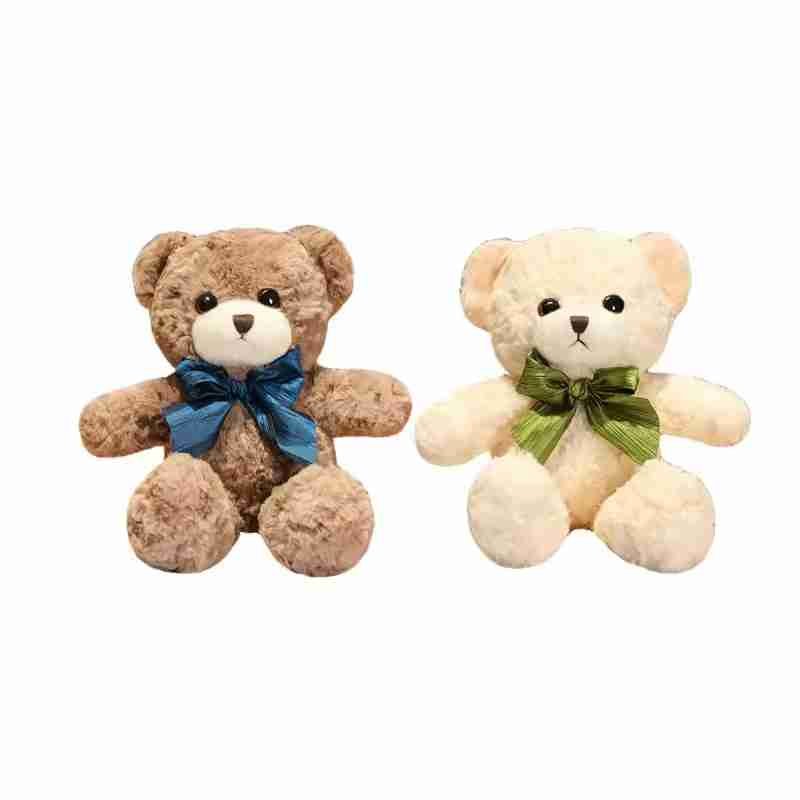
Accessories create differentiation: ribbons, scarves, T-shirts, woven labels, hangtags, gift messages, keychains. They also create risk if not controlled: fraying ribbons, weak keychain anchors, misapplied labels. Plan accessories early and lock specs.


Teddy Pattern Engineering for Bulk Repeatability
A teddy bear is “simple” only when you look at it quickly. In production, teddy bear consistency depends on pattern geometry + seam route + tension control + stuffing rules. If any one of these is vague, you get “expression drift”: bears that look like different characters.
We build teddy bears with a principle: make it look measurable. Instead of approving “cute,” we define what “cute” means in production language.
(1) Teddy Bear Identity Points
These are the checkpoints that define the teddy’s face and silhouette:
- Eye spacing reference (center-to-center)
- Nose position reference (vertical alignment to muzzle seam)
- Muzzle curvature (panel shape and seam allowance lock)
- Ear symmetry (left or right placement, distance from head seams)
- Head-to-body ratio (pattern proportion lock)
(2) Seam Route Map (how to reduce operator drift)
A consistent teddy bear needs a consistent stitch route. We define:
- which seams are sewn first
- where to start or stop around curves
- how to control seam allowance at high-curvature areas (muzzle, ear base)
- which areas require back-tacking or reinforcement
(3) Stuffing Rules (shape and posture, not just “more or less”)
Stuffing is a system decision. We define a stuffing plan by zones:
Head zone: enough stability so the face stays aligned
Body zone: balanced density for premium hand-feel
Base zone: firmer support, so the teddy sits and photographs well
This reduces “collapsed bears” in shipping and improves shelf presence.
(4) Reinforcement Logic (where teddy bears fail in real use)
Even soft teddy bears have stress points: arm roots, leg roots, ear bases, and accessory anchors. For gift bears with scarves or clothing, we lock attachment methods so accessories do not shift in bulk.


Teddy Logos and Labels That Stay Consistent
For teddy bears, branding must solve two problems at the same time: visual clarity and bulk repeatability. The best branding system is not “the fanciest method.” It’s the method that stays readable and consistent across thousands of units.
(1) Logo method selection
- Embroidery: durable, premium. Best for bold icons and simple text. Risk: fine text can blur on a high pile.
- Patch or appliqué: best for small text and crisp edges. Adds a flat base so the detail stays clean.
- Print or transfer: best for gradients and full-color art, but needs rub/bend checks and careful zone selection.
(2) Placement control
Teddy bear placement should be measured from seams, not “looks centered.” We recommend a simple placement map:
- distance from side seam
- distance from bottom seam
- alignment to muzzle seam centerline
(3) Woven label and hangtag system
A teddy bear can look more “brand-owned” with a woven label in a consistent seam and a hangtag that carries barcode zones for retail or inventory. This also reduces scanning problems because barcodes should be on a flat carrier, not on plush.
(4) Clothing and accessories
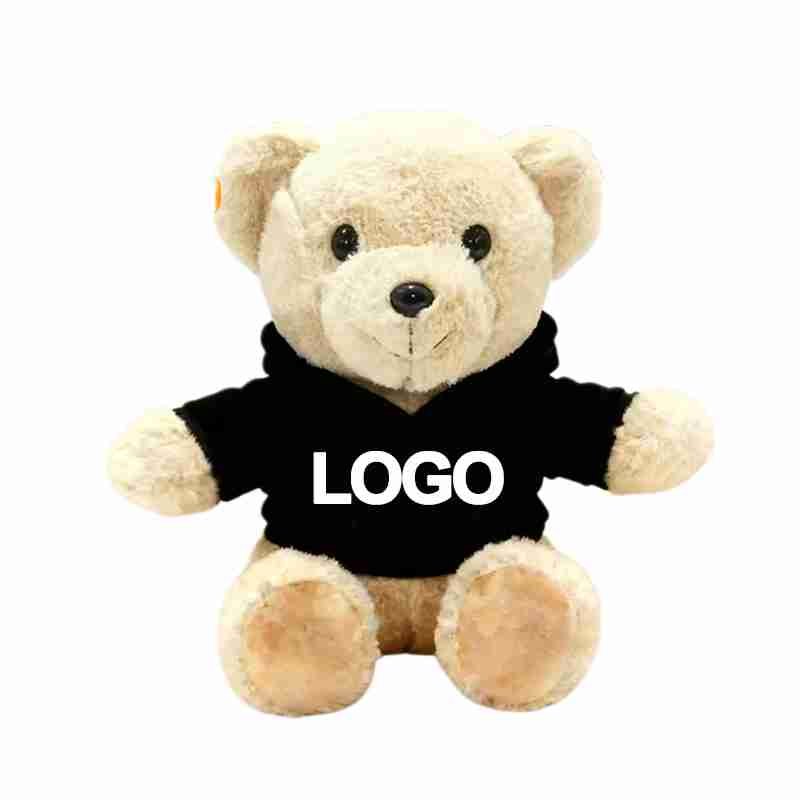
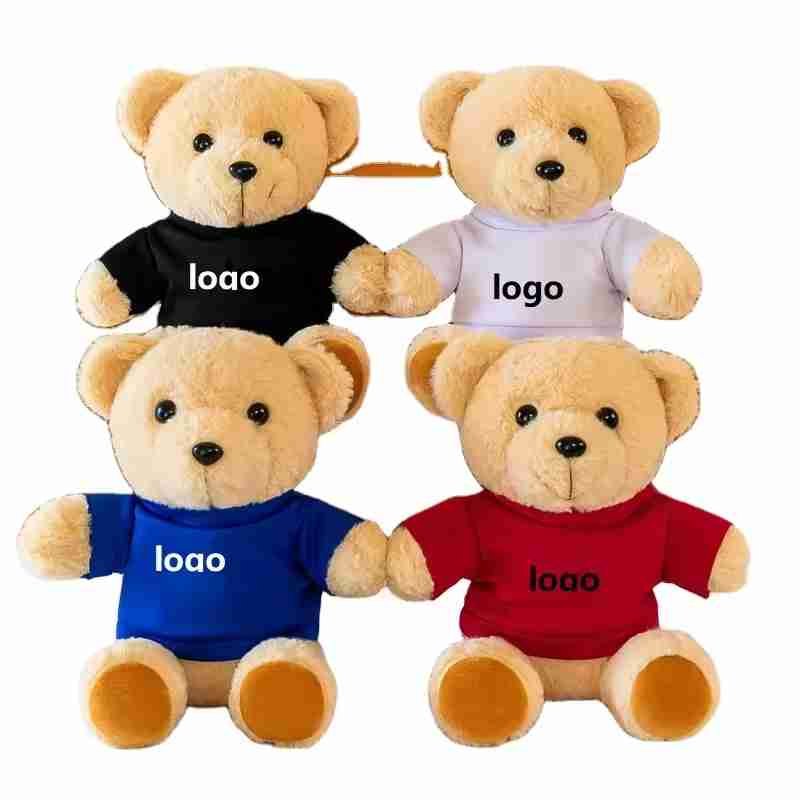
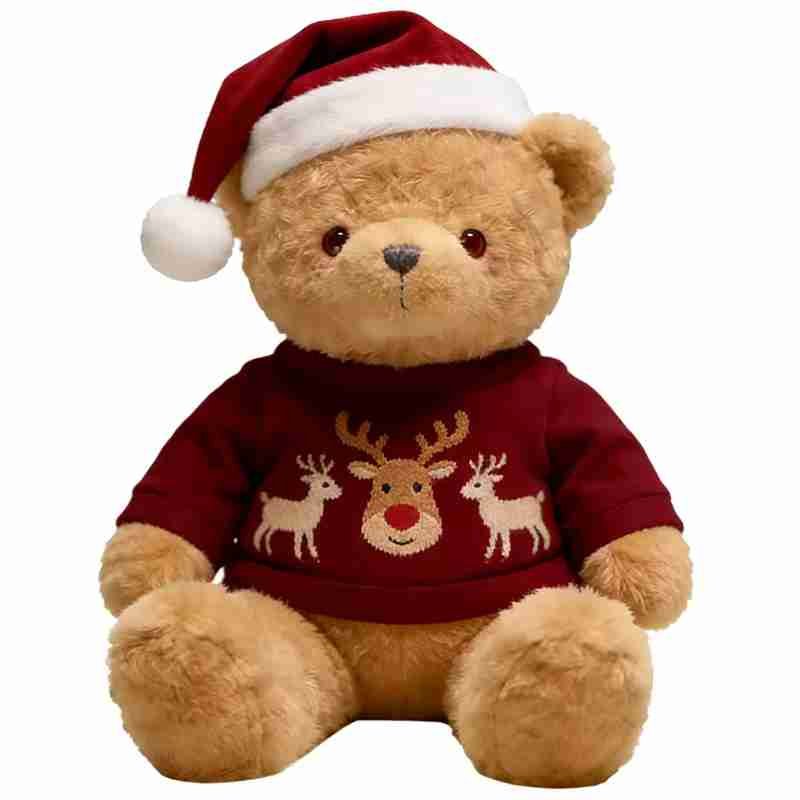
T-shirts, scarves, ribbons, and mini backpacks can dramatically raise perceived value. They also create more failure points. A reliable rule: keep accessory specs locked (fabric, color reference, stitching method), and plan packing so accessories don’t shift and distort the bear.


Teddy Safety and Compliance: Reduce Risk
Compliance and safety for teddy bears is not only about “passing a test.” It’s about avoiding channel rejections, negative reviews, and recall-level risk. The practical way to manage this is to treat teddy bear safety as three layers: design choices, attachment security, and inspection discipline.
Layer 1: Design choices that reduce risk
- Avoid fragile trims in high-stress zones (arm roots, face seams).
- Keep decorative elements simple when the bear is intended for children.
- Choose safer branding carriers (patch or embroidery) instead of small hard parts.
Layer 2: Attachment security
Small parts and accessories are the most common failure points. Teddy bear partners should define:
- eye type (embroidered vs plastic), and attachment method
- nose method (embroidered vs plastic)
- ribbon or scarf attachment rules
- hangtag anchoring method
- keychain ring reinforcement if applicable
Layer 3: Inspection discipline
A consistent QC system should cover: incoming inspection, in-process checks, and packing checks. Your own factory intro emphasizes that quality is about bulk consistency, supported by dedicated QC inspectors and inspection equipment for dimensions, strength, stitching, and accessory safety.


Teddy Sampling Route: V1 to Golden
A teddy bear program becomes stable when sampling is structured. Your factory introduction already lists a full sampling service chain that includes V1 pattern prototypes, revision samples, fabric swatch confirmation, technique samples, packaging sampling, PPS, and Golden Sample sealing. We apply that chain to teddy bears with procurement-friendly checkpoints.
Step 1: V1 Sample (Pattern Prototype)
Goal: confirm silhouette, face direction, hand-feel, and basic branding feasibility.
What they should check: overall proportions, face symmetry, fabric pile effect on details, and base posture.
Step 2: Revision Samples (V2/V3…)
Goal: fix what causes drift in bulk.
Typical revision items: muzzle curve, eye spacing, ear symmetry, stuffing density range, logo placement distances.
Step 3: Technique & Fabric Confirmation
Goal: confirm embroidery, patch, print behavior on the chosen plush, plus color swatches. This prevents “logo looks different on real pile.”
Step 4: Packaging Sampling
Goal: confirm pack-out method early (bag/box/insert) so the bear arrives giftable, not crushed.
Step 5: PPS (Pre-Production Sample)
Goal: approve a sample produced using bulk materials, real operators, and real packing. PPS is where “sample vs bulk” risk is reduced the most.
Step 6: Golden Sample Sealing
Goal: lock a physical reference for bulk and reorders. This is how reorders stay consistent year after year.

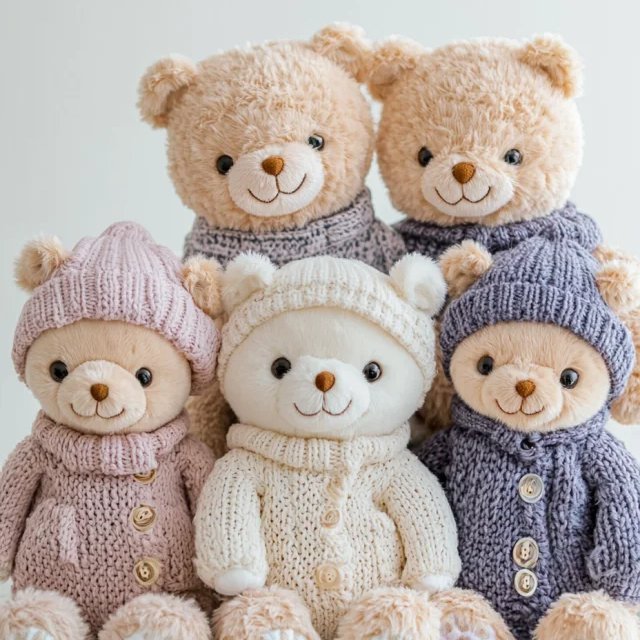

Teddy Quality Control: IQC to Pack-Out
A reliable teddy bear partner should treat quality control as a full-process control system, not something checked only at the final stage. Plush products are highly perception-driven—even small differences in fabric feel, filling density, or facial alignment can directly affect perceived value.
At Heyzizi, inspection covers Incoming Quality Control (IQC), In-Process Quality Control (IPQC), Final Quality Control (FQC), and packaging shipment checks. This is especially critical for teddy bears, because any drift in outer plush batch, stuffing density, or facial placement will be immediately noticeable—partners can tell when “it doesn’t feel like the same bear.”
- IQC: Controls plush pile direction and color variation, trims and accessory specifications, label and hangtag versions, and stuffing resilience.
- IPQC: Focuses on high-risk zones—eye spacing, nose placement, mouth stitching, ear seam allowance, stuffing distribution, attachment points, and logo positioning.
- FQC and Packing Check: Evaluates not only individual compliance but also group consistency; confirms logo clarity, clean finishing, and that the bear maintains shape and rebound after packing.
With over 600 employees and 80 dedicated QC specialists, we manage inspections across incoming materials, production stages, finished goods, and shipment packaging.

Teddy Packaging: Anti-Deformation, Barcode Control
Packaging must solve three core problems: anti-deformation protection, SKU separation, and receiving efficiency. Using the right method is usually more effective than simply switching to bigger cartons, because bigger cartons can increase dimensional weight and still allow movement that crushes plush.
For teddy bears, we recommend a controlled pack-out plan: proper fill and spacing, optional inner supports for large heads, and a carton pack ratio that avoids over-compression. Barcodes should be placed on a flat carrier (polybag label or hangtag), not directly on plush pile, so scanners read it fast and warehouses don’t relabel. Outer carton marks should clearly list SKU or style, color, quantity per carton, PO number, carton number (1/xx), destination, and carton dimensions or weight to reduce receiving errors, rejections, and chargebacks.
For oversized bears, plan shipping early: carton density, carton size, and dimensional weight can change landed cost more than the factory unit price. For multi-SKU or multi-warehouse programs, send your carton mark template and packing list format to info@heyzizi.com. We can align the pack-out logic during sampling, so bulk runs stay clean, scan-ready, and easy to receive.


Teddy Bear Pricing: Stability Before Savings
The cost of a custom teddy bear is the result of multiple layered decisions. The biggest cost drivers are usually: size, fabric grade and pile height, number of panels and sewing steps, logo method and coverage area, clothing or accessories, gift box sets and labeling, and—when required—testing and compliance.
More important than cutting cost is balancing cost and risk. Do not reduce foundational stability factors such as facial symmetry control, stitch strength, logo clarity standards, or anti-compression packing plans. These “invisible controls” protect bulk consistency. Removing them may lower the initial unit price, but often leads to higher hidden costs later through returns, complaints, or rework.
Safer cost optimization methods include: reducing panel count without changing the core silhouette; replacing fine embroidery on high-pile plush with a clean appliqué patch for small text; selecting stable in-stock colors to reduce shade variation and delays; standardizing accessory specifications; and designing packaging that protects against compression without becoming unnecessarily premium.
Cost control works best when stability comes first—then efficiency is optimized on top of a reliable foundation.

Teddy Bear RFQ Checklist for Quotes
A Strong RFQ Is a Risk-Control Tool
A well-structured RFQ is not just a price request — it is a tool for preventing misunderstandings and ensuring accurate costing from the start. A clear RFQ helps partners recommend the right build, align expectations early, and reduce sampling revisions later.
(1) Copy-Paste RFQ Checklist
Product Basics
Product: Custom Teddy Bear Plush Toy
Target channel: retail, gifting, fundraising, hospitality, or other
Target quantity: per SKU and total volume
Target size: height in cm plus tolerance preference
Desired hand feel: standard, soft, or premium
Design & Structure
Face style reference: photos or sketch
Eye and nose method: embroidery, plastic parts, or other
Filling preference: soft squeeze, structured sitting, or balanced
Accessories: scarf, ribbon, T-shirt, keychain, or none
Brand System
Logo method: embroidery, patch, or print
Placement: belly, chest, foot, or label, plus logo size
Private labeling: woven label, hangtag, barcode required or not
Packaging & Shipping
Packaging type: polybag, box, or gift set
Carton marks needed: SKU, PO number, destination, carton number
Destination market and target ship date
Compliance (if required)
Target market and user group
Any testing or certification required by your sales channel
(2) Sample Approval Checklist
To protect bulk consistency, samples should be approved against measurable checkpoints rather than general impressions:
Face symmetry: eye spacing and nose alignment must match the approved reference
Logo clarity: artwork should remain readable on real plush texture
Sewing quality: clean seams, no loose threads, reinforced stress points
Filling consistency: density balanced across head, body, and base
Packaging recovery: bear should regain shape after unpacking
This checklist helps prevent the common issue where the sample looks acceptable, but bulk units feel inconsistent.
(3) Version-Control Habits
Our workflow includes version tracking, PPS approval, and Golden Sample sealing, supported by BOM and process documentation. This system ensures that repeat orders follow the same standard and prevents the classic problem of “reorders looking different.”
A practical tip on your side: label approvals clearly as V1, V2, PPS, or Golden, and store photos plus key measurements for each stage. This single habit can save weeks of time on future replenishment and helps both sides keep production aligned.


Pilot-to-Scale Planning for Safer Production
Teddy bear projects move fast when the plan reduces uncertainty. A strong plan includes three pieces: timeline, Variable control, and shipping strategy.
(1) Timeline structure
A typical program moves through:
- RFQ review (confirm size, channel, branding)
- V1 sample (shape, face, and hand-feel direction)
- Revisions (measurable fixes: eye spacing, muzzle curve, logo placement)
- Technique confirmation (embroidery, patch, print on real pile)
- Packaging confirmation (anti-crush method)
- PPS (bulk-realistic approval)
- Bulk production, packing, and shipment
Your fastest path is not “skip steps.” It is “reduce variables early.”
(2) Variables that slow projects
- Late fabric changes (pile height changes, logo clarity)
- Late logo method changes (fine text embroidery on high pile)
- Late packaging changes (box or inserts added after bulk started)
- Multi-SKU labeling not aligned to warehouse processes
- Destination changes that require new carton mark rules
(3) Pilot order strategy
A pilot order is not a small order “for discount.” It is a controlled test. For teddy bears, a pilot can validate:
bulk face consistency across multiple units
pack-out recovery after compression
barcode scan reliability
carton mark readability and SKU separation
After pilot approval, scale into bulk with less drama and fewer surprises.
(4) Shipping strategy
Large bears can cause shipping volume spikes. Planning should confirm carton size, packing density, and whether controlled compression is acceptable. If timeline is tight, consider staged shipment: ship the first batch to meet your event date while the remainder follows the locked spec.
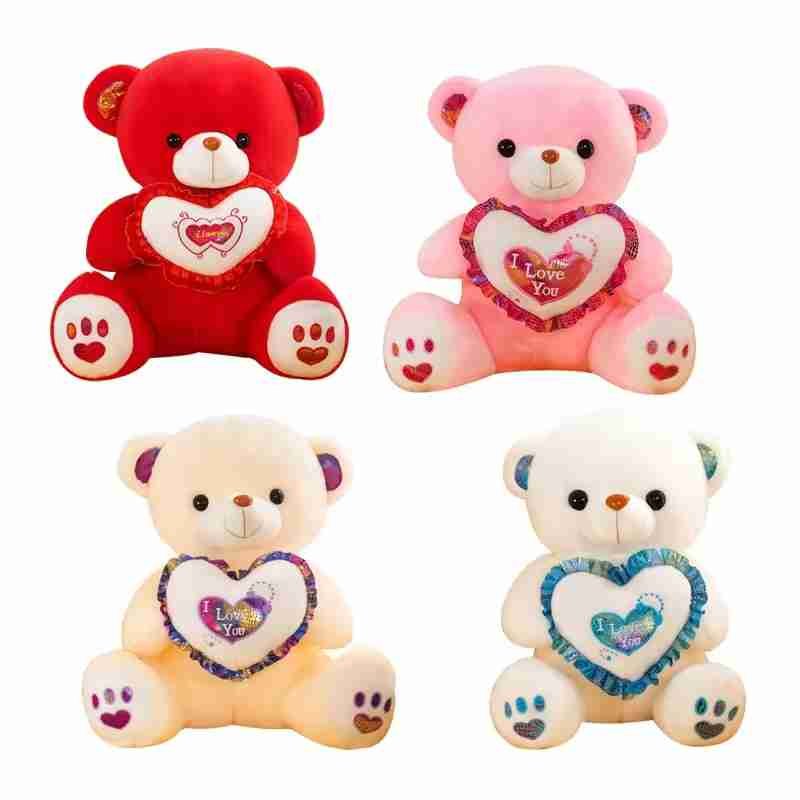
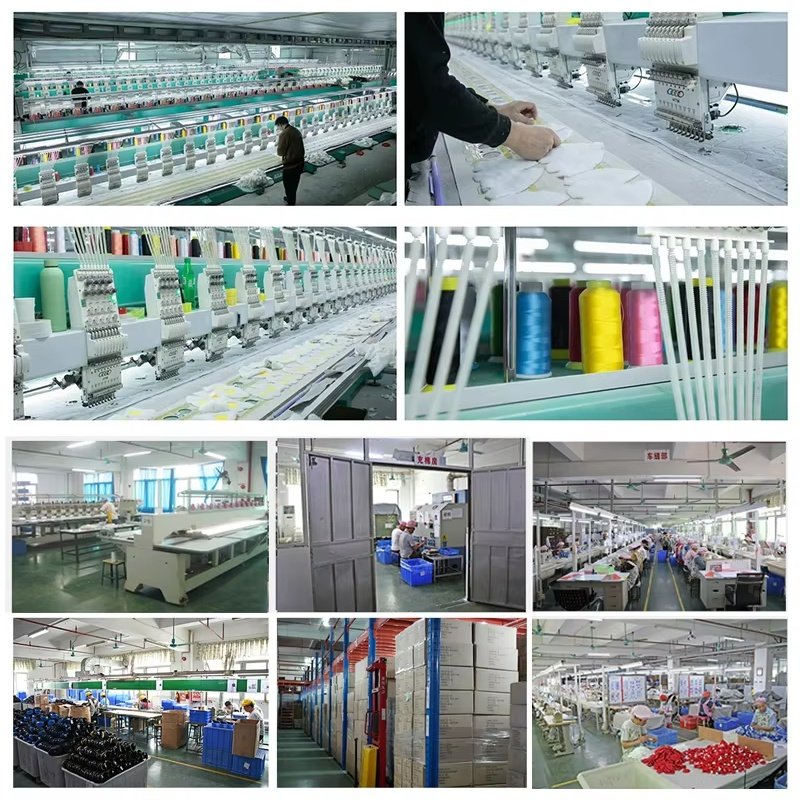
What Makes Our Custom Plush Production Reliable for Partners
Trust is built through predictable execution—clear approvals, documented specs, quality checkpoints, and packing confirmation. We focus on making your plush project easier to manage and safer to scale.
“Reliable” plush production is not about making one nice sample—it’s about delivering repeatable bulk quality, stable lead times, and clear project control from artwork review to shipment. What makes our custom plush program dependable is the way we manage the details that most often cause problems in mass production: face accuracy, proportion stability, embroidery/printing consistency, stuffing weight and firmness control, and secure attachment for keychains, clothing, and accessories.
We build reliability through a structured workflow: we confirm a practical spec checklist before sampling, document revision notes, and lock the final approval sample as a golden standard for production. During manufacturing, we apply multi-stage QC checkpoints (not just a final check) to prevent drift early, especially in character-critical zones like the face and silhouette. Before shipment, we also verify packaging and labeling—including hangtags, barcode/SKU labels, care/warning labels, and carton marks—so your receiving and retail handling are smoother and your products arrive with less risk of deformation.
Process Proof
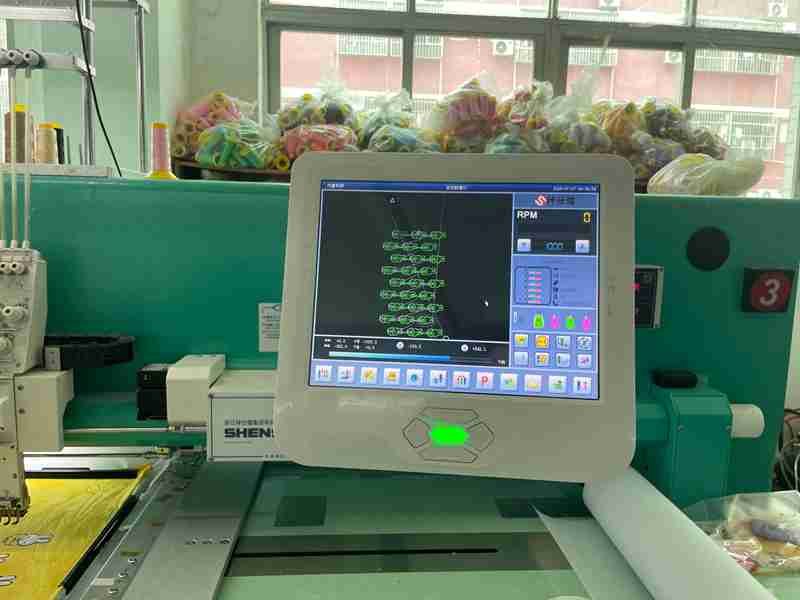
- Clear sampling-to-production approvals (prototype → revisions → final approval sample)
- Spec confirmation before bulk production (size, materials, logo placement, packaging)
- Revision notes that keep decisions traceable
- Golden standard concept for repeat orders
Quality Proof

- Multi-stage QC checkpoints across sewing, embroidery/printing, stuffing, finishing
- Needle control / needle detection option for finished plush (when required)
- Inspection focus on character-critical areas (face and silhouette) for IP plush
Delivery Proof
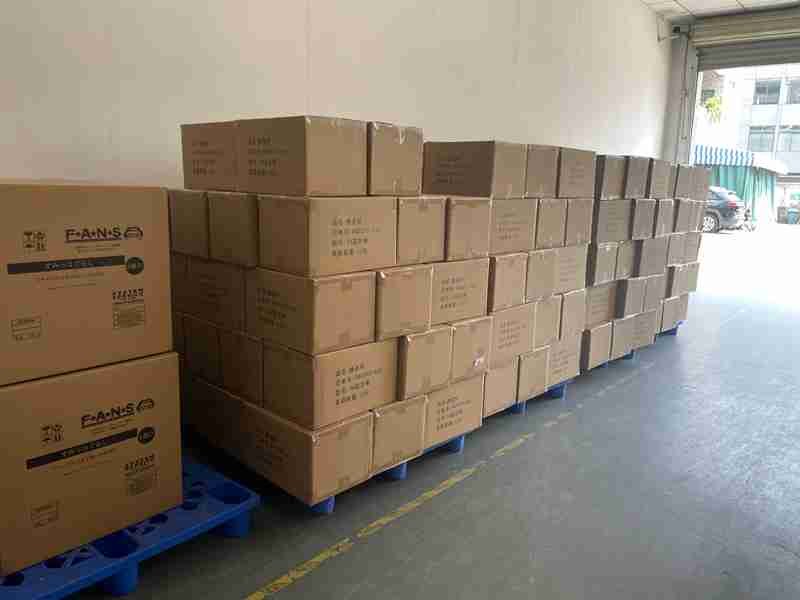
Packaging and labeling confirmation before shipment (photo proof + checklist)
Barcode and carton mark support (when required) (SKU/PO/qty/destination)
Packing suggestions to reduce deformation during transit (anti-crush, face protection)
Frequently Asked Questions
How do you prevent “sample looks great, bulk looks different” for teddy bears?
The most reliable way to prevent sample-to-bulk deviation is to lock measurable face reference points, approve a PPS made under bulk conditions, and seal a Golden Sample that becomes the physical standard for production and reorders.
Teddy bears drift in bulk for predictable reasons. Once you know the drift points, prevention becomes systematic—not luck.
Where bulk drift usually happens:
- Face symmetry: eye spacing shifts, nose sits slightly off-center, muzzle curve changes due to seam allowance drift.
- Hand-feel: plush pile changes by batch, stuffing density shifts, or operators pack tighter/looser.
- Logo placement: logo looks “centered” by eye, but ends up inconsistent across units.
- Packing deformation: the bear arrives crushed, so the first impression fails.
What we lock (factory-executable controls):
Face reference points
We define simple measurable checkpoints, like eye center-to-center distance and nose alignment to a center seam. This turns “cute” into repeatable production targets.
Stuffing zone rules
Instead of “stuff more,” we define head, body, base, density, and direction. This stabilizes posture and reduces “collapsed bear” complaints.
Placement map for logos and labels
Measured from seams, not from visual judgment. This is the easiest way to reduce placement arguments.
PPS and Golden Sample discipline
A PPS (pre-production sample) should use bulk materials, real operators, and real packing. Then the Golden Sample is sealed as the reference. Reorders become easier because the reference is physical, not subjective.
Which logo method is best for teddy bears: embroidery, patch, or print?
For teddy bears, the “best” logo method is the one that stays readable on plush pile and remains consistent in bulk. Fine text usually performs better with a patch, bold icons often work well with embroidery, and full-color art may fit print or transfer with proper rub and bend checks.
Plush is not flat paper. Teddy bear surfaces are fuzzy and curved, which can blur small details. Here’s how they should decide:
Logo method decision table
| Logo need | Best method | Why it works | Watch-outs |
|---|---|---|---|
| Small text | Patch | crisp edge on flat carrier | patch size limits |
| Bold icon | Embroidery | durable, premium look | Fine lines may blur on high pile |
| Full-color artwork | Print or transfer | good color reproduction | needs rub or bend checks |
| Private label feel | Woven label and hangtag | brand ownership signals | barcode on flat carrier |
Placement tip that avoids arguments:
Always measure from seams: distance from the side seam and the bottom seam. “Centered by eye” is the fastest path to inconsistent bulk.
If you are unsure:
Send your logo file and plush preference (low/mid/high pile). We can propose a logo method that balances readability, cost, and production stability—so your branding is not wasted on a fuzzy surface.
Are custom teddy bears safe for kids, and what design choices reduce risk?
Teddy bears can be made kid-friendly, but safety depends on your trim choices and attachment rules—embroidered facial features, controlled accessories, reinforced seams in stress zones, and clear QC checks reduce complaint and recall risk.
They often assume teddy bears are naturally safe. Real safety issues usually come from:
- small parts (plastic eyes or nose, buttons)
- loose accessories (ribbons, keychains)
- weak seams at arm or leg roots
- unclear labeling and age grading expectations
Safer build choices (practical, not complicated):
- Embroidered eyes and nose for younger user groups
- Simplified accessories (or secure attachment methods)
- Reinforcement at stress zones (arm roots, leg roots, ear base)
- Avoid fragile decorations that can tear off
- Add a QC routine that includes seam checks and accessory security checks
Safety planning table:
| Intended user | Recommended trim direction | Packaging note |
|---|---|---|
| Kids-focused | embroidered facial features | Avoid loose small parts |
| General gifting | balanced trims | Keep The accessories controlled |
| Retail collectible | premium details allowed | label system must be consistent |
If your teddy bears will be used across multiple markets, share your target markets and channel requirements early. That allows the build to be aligned from the start, instead of patching safety later.
How do you pack teddy bears so they arrive giftable and not crushed?
Teddy bears arrive giftable when packing is treated as shape protection + SKU control + receiving efficiency—choose an anti-deformation pack-out, keep barcodes on flat carriers, and use clear carton marks to prevent mix-ups and warehouse delays.
Even a well-made bear can look “cheap” if it arrives crushed. Crushing comes from over-compression and uncontrolled movement inside the carton. The fix is not always expensive packaging. It’s the right pack-out choice for your channel.
Pack-out options:
- Polybag + controlled compression (cost-efficient, high-volume, still needs recovery checks)
- Box + insert (premium gifting, stronger shelf presence)
- Divider cartons (reduces pressure points for medium/large bears)
- For kits: inner separation to prevent missing parts
Receiving-friendly rules (reduces claims):
- Put barcodes on hangtags or bag labels, not on fuzzy plush.
- Use carton marks with SKU, qty, carton number (1/20…), PO/batch, destination if needed.
Packing decision table:
| Channel | Best packing direction | Main risk it solves |
|---|---|---|
| Corporate gifts | box/insert or protected bag | unboxing impression |
| Retail | clean tags + shape protection | shelf look + consistency |
| Fundraising kits | separated inner packs | missing parts |
| Multi-SKU | strong carton marks | mix-ups/chargebacks |
If you already have a carton mark template, sharing it early speeds production and reduces warehouse confusion.
What is the typical lead time for custom teddy bears, and what usually delays projects?
Lead time for custom teddy bears plush is fastest when you lock materials, logo method, and pack-out early, then approve PPS before mass production—most delays come from late changes (fabric, branding, packaging) rather than sewing speed.
They often ask for “the fastest timeline,” but the more useful question is: “How do we prevent avoidable delays?” For teddy bears, production itself is predictable; uncertainty is what adds weeks.
What a stable lead-time plan includes
RFQ clarity upfront
If you provide target size, quantity, channel (retail, gift, fundraising), and logo detail level, the partner can propose the correct build route without guessing.
Sampling route that reduces rework
A clean route is: V1 sample → revision(s) → technique confirmation → packaging confirmation → PPS → bulk. PPS matters because it validates bulk realism (real operators, real materials, real packing).
Packing and carton marks early
If you decide “gift box and insert” after bulk begins, you create a second project: new materials, new packing steps, and new receiving rules.
The top reasons teddy bear projects get delayed
- Late fabric decisions (pile height, logo clarity, and hand-feel)
- Late logo method changes (tiny text embroidery on high pile becomes unreadable)
- Late packaging changes (box, insert, kitting added after the quote)
- Multi-SKU labeling not aligned (barcodes, carton marks, inner separation unclear)
- Destination or timeline changes that require new carton rules
How do you ensure reorders stay consistent year after year (materials, face, and branding)?
Reorder consistency is achieved by locking a BOM snapshot, sealing a Golden Sample, and keeping a one-page SKU spec sheet that includes measurable face points, logo placement distances, and packing or carton mark rules.
Reorders fail when the “spec” lives only in conversations and photos. A professional teddy bear program treats the reorder standard as a package:
The 4-part reorder lock
BOM snapshot
Not just names—include fabric swatch reference, pile direction notes, stuffing type, accessory specs, label materials, and packaging components. This prevents “similar but different” substitutions.
Golden Sample
A physical reference removes subjective debates. It protects face shape, posture, and hand-feel.
Measurable checkpoints
Simple numbers matter: eye spacing, nose alignment to the center seam, logo distance from seams, label distance from base seam. This reduces “by eye” decisions.
Packing and carton marks
Treat pack-out and carton marks as part of the SKU. If packing changes, perceived quality changes—even if the bear is identical.
Are you a custom teddy bear partner or a trading company? How can partners verify?
The most reliable way to verify a custom teddy bear partner is to check whether the partner can show a complete chain—sampling, PPS, Golden Sample, in-house QC checkpoints, and production evidence (workshop photos, inspection records), not just sales claims.
Many clients ask this because risk is different. A partner can control consistency; a pure trader often relies on external factories, making “sample vs bulk” drift harder to manage. Verification does not need to be complicated. You can ask for proof tied to your project:
What a real partner should be able to show
- A structured sampling route: V1 → revisions → PPS → Golden Sample
- A QC framework: IQC, IPQC, FQC, plus packing checks
- Clear capability in materials, embroidery or patch process, and packaging execution
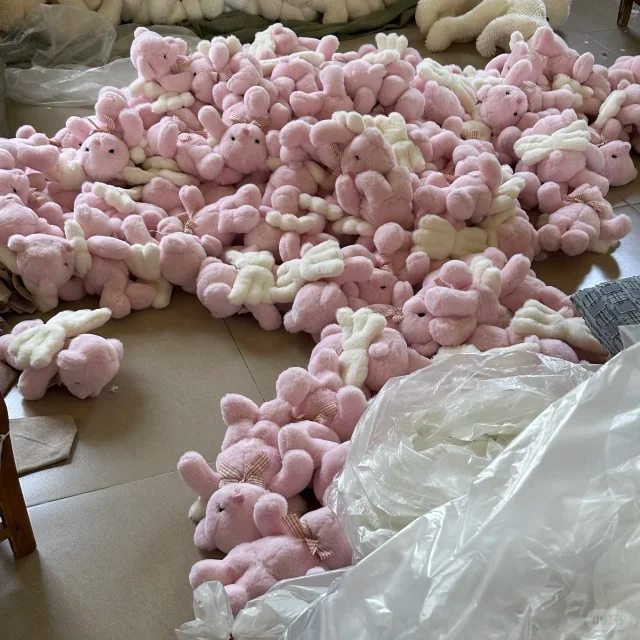
- Bulk consistency evidence (photo grids of multiple units, not one perfect sample)
What partners should request (easy, procurement-friendly)
- “Show me how you record sample revisions and prevent drift.”
- “Can you provide PPS with bulk materials and real packing?”
- “How do you manage multi-SKU separation and carton marks?”
- “What inspection checkpoints protect face symmetry and logo placement?”
Can you match Pantone colors for teddy bears, and what affects color accuracy?
Pantone color matching for teddy bears is achievable, but accuracy depends on fabric type, pile direction, dye lot control, and whether your reference is a printed guide or a real fabric swatch—so the safest workflow is swatch confirmation before bulk.
Plush color is tricky because pile reflects light differently from flat paper. Two fabrics with the same dye can look different due to pile height and pile direction. To avoid surprises, partners should treat color as a system:
What affects color accuracy
- Plush fiber type (polyester vs blended)
- Pile height & direction (changes how color reads)
- Dye lot variation (needs lot control for bulk + reorder)
- Lighting conditions (studio vs warehouse vs store shelf)
Best practice workflow
- Provide Pantone target + usage context (retail lighting, online photo, etc.)
- Approve fabric swatches on the actual plush type (not only digital)
- Confirm whether different bear panels share the same fabric lot
- Save the approved swatch as part of the BOM snapshot for reorders
Color control table
| client input | Best partner output | Why |
|---|---|---|
| Pantone code only | swatch options | paper ≠ plush |
| Photo only | swatch + tolerance note | photos lie |
| Strict color program | lot tracking | protects reorders |
If color is mission-critical (brand mascot, retail launch), plan one extra step: approve the swatch under the lighting closest to your selling environment.
What sizes are most popular for bulk teddy bears (retail vs gifting vs fundraising)?
The “best” teddy bear size depends on channel goals—retail favors shelf-friendly sizes, corporate gifting favors presentation impact, and fundraising favors cost and shipping efficiency—so size should be chosen with packaging and freight in mind.
Size affects not only material and labor but also carton volume and perceived value. A practical selection method is to define your channel and your “must-have” outcome.
Channel-driven size selection
- Retail: easy to display, consistent posture, clean tag system
- Corporate gifts: stronger impact, often paired with clothing or message card
- Fundraising: balance perceived value vs unit cost and shipping
Size decision table
| Channel | Typical priority | Size strategy |
|---|---|---|
| Retail | shelf + repeatability | stable posture, easy tags |
| Gifts | unboxing impact | size that photographs well |
| Fundraising | efficiency | optimize packing density |
If you tell us your channel and budget expectation, we can propose two size routes (value vs premium impression) with packing and freight considerations.
Do you offer weighted teddy bears? What changes in the build and QC?
Yes—weighted teddy bears require a different internal structure (weight bags, compartment design, reinforcement) and stricter QC for weight distribution, seam strength, and safety—so partners should confirm the intended user group and compliance needs early.
Weighted builds add failure points: internal weight bags can shift, seams can stress, and the bear’s posture can collapse if structure is not planned. A stable weighted teddy bear should include:
- secured weight compartments (anti-shift design)
- reinforcement at stress zones (base seams, anchor points)
- defined weight tolerance and distribution target
- packing that prevents weight shift damage
Weighted build checklist
- Define target weight and tolerance
- Confirm internal bag material and sealing method
- Confirm compartment anchoring
- Run drop or handling simulation if needed
Can you produce teddy bears with clothing (T-shirts, hoodies, scarves)? How do you keep sizes consistent?
Yes—teddy bears with clothing are best controlled by locking clothing as a separate mini-BOM (fabric, size spec, stitching method) and planning packing so clothing does not deform the bear or get mixed across SKUs.
Clothing increases perceived value but also increases errors. The most common problems are wrong sizes, wrong color tees, misprinted logos, and clothing shifting during packing.
What partners should lock
- Clothing size spec (garment dimensions, fit intent)
- Fabric and color reference
- Logo method (print/embroidery/patch)
- Attachment rule (removable vs fixed)
- Packing method to prevent shifting
Clothing risk table
| Risk | Outcome | Control |
|---|---|---|
| wrong garment size | looks cheap | size spec sheet |
| mixed garments | chargebacks | SKU separation |
| print cracks | returns | rub/bend test |
Can you make teddy bears with voice boxes or sound modules? What should procurement confirm?
Teddy bears with sound modules are feasible, but partners must confirm module specs, placement, battery and access rules, safety expectations, and packing protection—because electronics create new failure modes and rework costs.
Sound modules add value for promotions and seasonal gifts, but they can fail in transit if not protected. Procurement should confirm:
- module type (press-to-play, motion trigger)
- sound length and quality target
- placement zone (safe and durable)
- battery access rules and labeling requirements
- pre-shipment function checks
Procurement checklist
- define partner or spec
- confirm where the module sits (and how it’s secured)
- confirm function test percentage and process
Start Your Custom Plush Project Today
If You Can imagine it,We Will Create it!
Whether you are a brand, creator, retailer, or agency, our Guangdong plush factory is ready to support your OEM/ODM development. Send us your design, concept, or reference image — our team will reply with a free development proposal and quotation.
1. Tell Us What You Need
Tell us your requirements and share your artwork or reference images.
2.Get a Solution & Quote
We’ll suggest the best solution based on your requirements, and provide a detailed quote within 12 hours.
3.Approve for Mass Production
We will start mass production after getting your approval.