 Skip to content
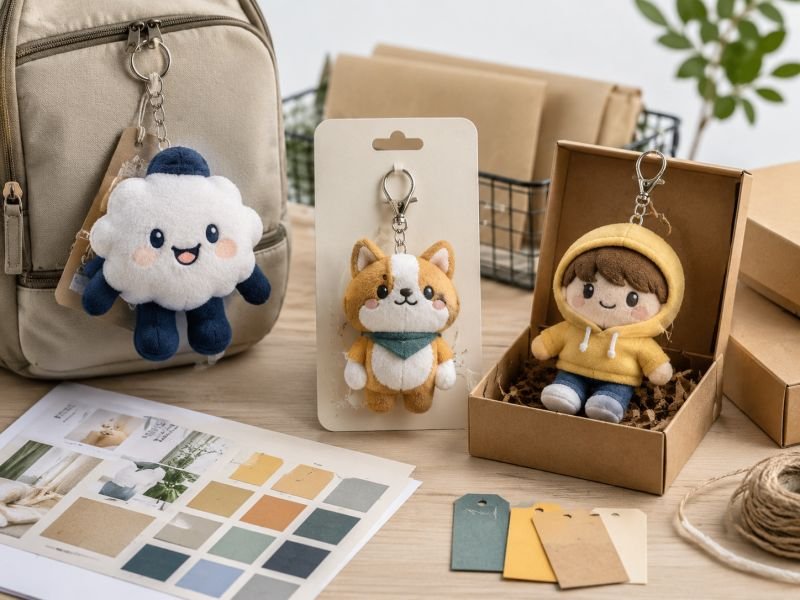
Many brand teams do not struggle because their mascot, IP character, or campaign idea is weak. They struggle because the product format is not easy to keep, carry, share, or repeat. A large plush toy can be impressive, but it may not fit every event, store, gift set, or fan program. A sticker may travel far, but it may not feel valuable enough. A plastic keychain may be practical, but it may not carry much warmth.
That is why custom plush keychains have become a smart middle choice.
They are small enough to hang on a bag, key set, backpack, school pouch, suitcase, retail display, or fan shelf. They are soft enough to feel personal. They are shaped enough to carry a mascot or character. They are also easier to pack, ship, hand out, and turn into a series than many larger plush formats.
Custom plush keychains work for brand merchandise because they combine daily visibility, soft touch, character expression, collectible value, and practical distribution. They can serve as mascot gifts, IP merchandise, event giveaways, retail add-ons, fan goods, school souvenirs, and seasonal drops. The strongest results come when size, fabric, face method, attachment, label, packing, safety review, and bulk standards are planned before sampling.
The product may be small. The project decisions behind it are not.
Why Do Custom Plush Keychains Work for Brand Merchandise?
Custom plush keychains work because they turn a brand character into something people can carry, touch, keep, and display. Unlike many flat giveaways, they create a warmer connection through shape, fabric, stuffing, and expression. For mascot brands, IP projects, retail programs, events, schools, museums, and fan communities, they offer a small format with strong daily visibility and repeat potential.
Plush keychains sit in a useful space between gift, accessory, and collectible. They are not only used once. A good one can stay on a bag or shelf for months.
For brand teams, that matters. A campaign item has more value when people choose to keep it. A character item has more value when people can recognize it quickly. A small merchandise product has more value when it can be packed, shipped, displayed, and repeated without creating heavy storage pressure.
Why are plush keychains so popular?
Plush keychains are popular because they fit how people use small personal items today. They can decorate a bag, hold keys, show a favorite character, support a fandom, or act as a soft mini collectible.
Their appeal is simple:
- Easy to carry
- Easy to display
- Easy to gift
- Easy to collect
- Easy to pair with other products
- Easier to ship than larger plush toys
For brand projects, this gives plush keychains wide use. They can work for events, online stores, retail shelves, school programs, tourism gifts, membership kits, and limited character drops.
Why are plush keychains more memorable than flat promotional items?
Flat items can show a logo or artwork. Plush keychains add body, texture, shape, touch, and expression.
That is a big difference.
A flat acrylic charm may show a mascot. A plush keychain can make that mascot feel more alive. Users can hold it, squeeze it, hang it, photograph it, and keep it with other daily items.
This makes plush keychains useful when the brand goal is not only visibility, but memory. If the item feels friendly, funny, cute, nostalgic, or collectible, people are more likely to keep it.
How do plush keychains create daily brand exposure?
Daily exposure happens when an item joins the user’s real routine. A plush keychain can be attached to a bag, keys, luggage, school pouch, sports bag, gift box, or store display.
That gives the brand more than one moment of attention.
| Use Scene | How Plush Keychains Help |
|---|---|
| Trade shows | Easy to hand out and more memorable than flat flyers |
| Retail stores | Works as a low-price add-on or gift-with-purchase item |
| IP merchandise | Turns characters into portable fan goods |
| Schools | Works for mascots, clubs, events, and student gifts |
| Tourism and museums | Fits souvenir shops and cultural character products |
| Online stores | Ships easier than larger plush formats |
| Membership programs | Adds soft character value to welcome packs |
Why does soft touch matter in brand merchandise?
Soft touch changes the way people feel about a product. It makes the item warmer, more personal, and less like an advertisement.
This is why plush works well for mascots, children’s brands, education programs, entertainment, food brands, pet brands, family products, tourism, fan goods, and lifestyle campaigns.
A hard item may be useful. A soft character item can feel more emotional. That feeling helps people keep it longer.
Who Should Use Custom Plush Keychains?

Custom plush keychains are suitable for brands that need small, portable, character-based merchandise. They work well for mascot projects, IP goods, anime and game characters, event giveaways, retail stores, gift shops, school programs, tourism souvenirs, museum shops, fan clubs, online stores, and seasonal campaigns.
Not every project needs to start with a large plush toy. A plush keychain is often a smarter first format when the team wants to test a character, control cost, reduce storage pressure, and see how users respond.
It can also become part of a larger product system later: mini keychain, standard plush, pillow, pouch, seasonal version, and gift set.
Are plush keychains suitable for mascot brands?
Yes. A mascot is designed to be remembered. A plush keychain gives it a physical form that people can carry.
The main challenge is simplification. A mascot that looks perfect in a flat drawing may need adjustment when made at a small plush size. Thin limbs, tiny eyes, small letters, complex hair, glasses, horns, hats, or clothing details may need a clearer production-friendly version.
For mascot plush keychains, the first review should check:
- Head and body proportion
- Face size
- Eye and mouth method
- Fabric color
- Logo position
- Attachment position
- Stuffing balance
- Tag and packing plan
A mascot keychain should be recognizable at first glance. If users need to look twice, the design may be too crowded.
Are they a good fit for IP, anime, game, and fan merchandise?
They are a strong fit because fan products depend on emotional recognition. Fans care about expression, color, face position, hair shape, outfit details, and character attitude.
Small plush keychains are useful for:
- Anime characters
- Game characters
- Mascot series
- Book characters
- Artist characters
- Sports mascots
- Theme park figures
- Limited fan drops
- Multi-character collections
For IP goods, sample approval should be careful. A small change in eye position can make a cute character look tired, angry, or unlike the original design. This is why embroidery placement, stitch density, fabric direction, and stuffing pressure should be checked before bulk work.
Why is Gen Z obsessed with stuffed animals and character goods?
Many younger consumers use plush goods and character accessories as personal expression. A plush charm on a bag can show taste, mood, fandom, humor, nostalgia, or identity.
This trend is not only about children. Adults also collect plush items, decorate bags, follow character drops, and use soft accessories as part of daily styling.
For brand teams, this means plush keychains can reach more than one age group. The same format can feel playful for a school event, stylish for a bag charm, collectible for a fan product, or warm for a family brand.
Which retail and event projects use plush keychains most often?
Plush keychains often appear in projects where small size, high retention, and easy distribution matter.
| Project Type | Why Plush Keychains Fit |
|---|---|
| Brand mascot gifts | Turns a character into a daily-use item |
| Event giveaways | Easy to pack, count, and hand out |
| Retail gift shops | Works as a small paid product |
| Online stores | Lower shipping pressure than large plush |
| IP fan goods | Supports character collections |
| School programs | Useful for mascots, clubs, and prizes |
| Museum shops | Works well for animals, icons, and cultural characters |
| Holiday campaigns | Easy to make seasonal colors or outfits |
The format is flexible, but the design should match the channel. An event gift should be simple and fast to distribute. A retail product needs stronger hangtag, barcode, display, and packing planning.
What Makes Plush Keychains Different From Ordinary Giveaways?
Plush keychains feel more like small products than disposable gifts. They offer softness, shape, character value, daily use, and collectible appeal. Compared with many ordinary giveaways, they are more likely to be kept, displayed, photographed, or collected, especially when the brand has a mascot, IP character, or story element.
Many promotional items fail because they feel generic. A plush keychain has a better chance of feeling personal.
It can still carry a logo, but the logo should not be the only value. The character, fabric, face, shape, and small details should work together.
Plush keychains vs acrylic keychains: which feels more collectible?
Acrylic keychains are good for flat artwork, detailed illustrations, and colorful graphics. They are light and easy to make in many shapes.
Plush keychains feel softer, warmer, and more dimensional. They are better when the brand wants the character to feel more like a mini product.
| Comparison | Acrylic Keychains | Plush Keychains |
|---|---|---|
| Best for | Flat artwork, colorful graphics | Mascots, animals, soft characters |
| Main feel | Clean, graphic, light | Soft, warm, collectible |
| Detail style | Printed surface detail | Shape, fabric, embroidery, stuffing |
| Use scene | Art goods, fan items, simple charms | Mascot gifts, IP goods, bag charms, event gifts |
| Risk | Scratches, print wear | Shape control, stitching, attachment strength |
One is not always better than the other. The right choice depends on the brand goal.
Plush keychains vs stickers and pins: which has stronger product value?
Stickers and pins are excellent for low-cost distribution. They are easy to ship and useful for broad campaigns.
Plush keychains usually have stronger perceived value because they involve pattern work, fabric, stuffing, stitching, face method, attachment, inspection, and packing. They feel closer to a product than a simple flat giveaway.
If the goal is wide reach, stickers may work well. If the goal is stronger retention and character value, plush keychains often perform better.
Plush keychains vs full-size plush toys: when is the smaller format better?
A plush keychain is often better when the team needs a lower-risk first product, easier shipping, easier event distribution, or a smaller retail item.
A full-size plush toy is better when the goal is stronger shelf presence, premium gifting, children’s play value, or a higher-price fan product.
| Format | Better For | Watch Out For |
|---|---|---|
| Plush keychain | Events, add-ons, fan drops, bag charms | Small details may need simplification |
| Full-size plush | Retail, gifting, display, children’s use | Higher packing, freight, and storage pressure |
| Both together | Product line building | Style and material standards must match |
Many strong projects start with a keychain, then extend into larger plush once the character has proven demand.
What Type Of Brand Merchandise Can Plush Keychains Support?

Plush keychains can support mascot gifts, IP merchandise, retail add-ons, event giveaways, fan drops, tourism souvenirs, school items, museum gifts, online store products, seasonal campaigns, and gift sets. Their small format lets brands test, sell, gift, and repeat character products with more flexibility.
One character can become many product forms.
A mascot may start as a plush keychain, then become a standard plush, pillow, pouch, bag charm, festival version, or gift box item. This is why the first keychain should not be treated as a random small item. It should be designed as part of a possible product family.
Mascot plush keychains for corporate branding
A mascot plush keychain helps a brand become easier to remember. It works well when the mascot is already used in packaging, events, videos, apps, stores, or social posts.
The goal is not to include every tiny design detail. The goal is to keep the mascot recognizable in a small soft format.
Practical choices often include:
- Larger eyes
- Cleaner mouth shape
- Simplified limbs
- Stable body shape
- Logo on tag or small clothing
- Strong top attachment
- Simple packing for easy distribution
Character plush keychains for IP merchandise
IP character plush keychains need stronger accuracy. Fans notice small differences quickly.
Before sampling, it is useful to confirm:
- Which expression matters most
- Which colors cannot shift
- Which costume details must stay
- Which small details can be simplified
- Whether the first item may become a series
- How tags and packaging should protect the IP feeling
If the plan includes future characters, style rules should be set early. Same height, same fabric feel, same hook, same tag style, and similar face method can help a series feel unified.
Mini plush keychains for event giveaways
Event plush keychains should be clear, durable, fast to pack, and easy to hand out. Complicated shapes may look attractive in a design file, but they can slow sampling and bulk work.
For event projects, confirm the deadline before approving complex details. If the event date is fixed, the design should support that schedule.
For quick review, send artwork, size, quantity, event date, destination, and packing needs to info@heyzizi.com.
Retail plush keychains for gift shops and online stores
Retail plush keychains need more control than giveaway items. They should look good on display, scan correctly, pack neatly, and stay consistent across repeat orders.
Retail teams should check:
- Hangtag design
- Barcode sticker
- SKU sticker
- Warning label
- Display method
- Individual packing
- Carton quantity
- Mixed carton plan
- Product photo look
- Shape recovery after shipping
A cute item can lose value if tags, barcodes, or packing are not ready for the channel.
Which Design Details Affect The Final Plush Keychain?
The final result depends on size, shape, fabric, filling, face method, attachment, logo placement, tag, barcode, packing, and bulk tolerance. Small plush keychains leave little room for error. Tiny embroidery shifts, weak attachments, uneven stuffing, or crowded details can change the whole look.
Small plush products should not copy every detail from artwork without review. The goal is to protect the character while making it stable for bulk work.
What size works best for custom plush keychains?
Many plush keychains work well at 8–15 cm, depending on shape and use. Smaller sizes are more portable, but can limit face detail and sewing space. Larger sizes can show more character, but may feel less practical on keys.
| Use Scene | Suggested Size Thinking |
|---|---|
| Event giveaway | Smaller, lighter, easier to hand out |
| Bag charm | Medium size with stronger visual impact |
| Retail item | Medium size with better face detail |
| Fan collection | Consistent size across characters |
| School mascot | Safe, durable, easy to identify |
| Gift set | Size should match the box and other items |
The best size is not the smallest size. It is the size that keeps the character clear.
Which face method works better: embroidery, printing, or applique?
Embroidery is often strong for eyes, brows, mouths, small logos, and durable expression. Printing can handle colorful graphics or gradients. Applique can add layered texture, but needs enough space for cutting and sewing.
| Face Method | Best For | Risk To Review |
|---|---|---|
| Embroidery | Eyes, mouth, brows, simple logos | Too dense stitching can stiffen the face |
| Printing | Colorful graphics, gradients, tiny artwork | May feel flatter than embroidery |
| Applique | Color blocks, texture, larger shapes | Needs clean sewing and enough space |
| Mixed method | Character projects with varied details | Must control position and cost |
For small plush keychains, embroidery size, stitch density, fabric pile direction, and face position should be reviewed before sampling.
Which attachment is better: keyring, chain, hook, cord, or carabiner?
The attachment should match use. A metal keyring fits keys. A chain is common for character charms. A hook or clip works well for bags. A cord feels soft and light. A carabiner fits outdoor, travel, or sports themes.
| Attachment | Good For | Check Before Bulk |
|---|---|---|
| Keyring | Classic key use | Ring strength and plating |
| Ball chain | Small character goods | Closure strength |
| Hook or clip | Bags and pouches | Opening tension |
| Cord | Light soft accessories | Knot and sewing strength |
| Carabiner | Sports, travel, outdoor themes | Size, weight, and finish |
The attachment is a functional detail. If it fails, the product fails.
How much detail can a small plush keychain keep?
A small plush keychain can keep strong character identity, but not every fine detail. Tiny letters, thin outlines, narrow fingers, small glasses, fragile horns, layered hair, or detailed clothing may need adjustment.
Common design adjustments include:
- Enlarging eyes
- Simplifying hands
- Moving logo to tag
- Changing plastic parts to embroidery
- Reducing layered accessories
- Making limbs thicker
- Using color blocks instead of tiny printed areas
A good small plush product is not a weaker version of the artwork. It is a smarter soft version of the artwork.
How Does A Factory Turn Artwork Into A Plush Keychain Sample?

A factory turns artwork into a plush keychain sample through structure review, size planning, fabric selection, face method testing, pattern work, attachment planning, sewing, stuffing, shaping, revision, and approved sample control. The goal is to create a sample that looks right and can guide bulk work.
A nice sample is not enough. It must become a usable standard.
If the sample approval only focuses on cuteness, later problems may appear in face consistency, attachment strength, packing, labels, or repeat orders.
What files should teams send before sampling?
A team can start with basic information. A full technical file is helpful, but not always needed at the first step.
| Project Detail | Why It Matters |
|---|---|
| Character artwork or reference | Shows shape, color, face, and style |
| Target size | Affects pattern, cost, packing, and detail level |
| Quantity | Affects price and bulk planning |
| Use scene | Helps choose attachment, fabric, and packing |
| Face method preference | Affects expression and durability |
| Attachment style | Affects function and safety |
| Label and tag needs | Affects retail and channel readiness |
| Packing request | Affects shipping, display, and storage |
| Destination | Helps review label and delivery needs |
| Deadline | Helps judge sampling and bulk schedule |
If the idea is early, send the best reference image, expected size, quantity, and use scene first.
How does the factory review character structure?
The factory checks whether the design can become a stable soft product. For plush keychains, the review should include head weight, body balance, seam position, face area, fabric direction, stuffing support, and attachment placement.
A keychain that hangs crooked may look poorly made even if the face is cute. A head that is too heavy may pull forward. A body that is too narrow may not hold stuffing well. A tiny accessory may increase small parts risk.
Heyzizi usually reviews these details before sampling so the first sample has a clearer direction.
How long does plush keychain sampling take?
Sampling time depends on character complexity, fabric availability, face method, attachment type, revision rounds, and packaging needs.
A simple plush keychain with common fabric may move faster. A detailed mascot, special fabric, multi-color embroidery, small outfit, or custom hardware may need more time.
For brand launches, event dates, and retail schedules, sampling should start before the timeline becomes tight. Rushed development often creates avoidable mistakes.
What should teams check before approving the sample?
Before approval, check the sample as if it will become the bulk standard.
| Sample Approval Checklist | Check Carefully |
|---|---|
| Character look | Does it match the intended style? |
| Face | Are eyes, mouth, brows, and expression correct? |
| Size | Does it fit the planned use? |
| Fabric | Does color and handfeel fit the brand? |
| Stuffing | Is shape balanced and not too flat? |
| Attachment | Is placement strong and balanced? |
| Logo | Is it clear and in the right position? |
| Labels | Are care, warning, SKU, or barcode needs clear? |
| Packing | Does the product fit the bag, card, or box? |
| Bulk standard | Can this sample guide future orders? |
Approve the sample only when it can guide production, inspection, packing, and repeat orders.
What Affects Custom Plush Keychain Price?
Custom plush keychain price is affected by size, fabric, filling, face method, embroidery density, color count, attachment, logo method, labels, packaging, quantity, testing needs, and schedule. A low price can look attractive, but brand merchandise should be reviewed by total risk, not unit cost alone.
A small item still requires pattern work, material sourcing, cutting, embroidery, sewing, stuffing, shaping, inspection, needle detection, packing, and carton preparation.
That is why a small quantity may carry a higher unit cost. The process does not disappear when the order is small.
How do size, fabric, filling, and face method affect cost?
| Cost Factor | How It Affects The Project |
|---|---|
| Size | Affects fabric use, filling, sewing time, and packing volume |
| Fabric | Affects handfeel, color, availability, and material minimums |
| Filling | Affects shape, recovery, and touch |
| Embroidery | Affects expression, durability, and stitch cost |
| Printing | Affects graphic detail and surface effect |
| Applique | Adds texture but increases cutting and sewing work |
| Attachment | Metal, cord, hook, and clip choices affect cost |
| Packing | Retail packing costs more than simple polybag |
The goal is not to remove every cost. The goal is to protect details users notice first.
Why does MOQ change the unit price?
MOQ affects price because setup work happens before bulk work starts. Pattern work, sampling, material preparation, embroidery setup, cutting planning, and packing setup all require time.
When quantity is low, those costs spread across fewer pieces.
For many custom plush projects, 500 pcs per design is a more efficient starting quantity. Simpler designs may be reviewed at 200–300 pcs. Larger quantities often help the unit cost become more balanced.
Do custom labels, hangtags, barcodes, and packaging affect price?
Yes. Labels and packaging affect both price and workflow.
Simple packing is different from retail-ready packing. A retail plush keychain may need hangtag, care label, barcode sticker, SKU sticker, warning label, display card, individual bag, or retail box.
These details matter because they affect receiving, shelving, scanning, sorting, shipping, and repeat orders.
When is a low price risky for brand merchandise?
A low price becomes risky when it weakens the product details users notice or the process details that protect the project.
Common low-price risks include:
- Thin fabric
- Flat stuffing
- Weak sewing
- Loose attachment
- Poor face alignment
- Inaccurate color
- Missing label details
- Wrong barcode or SKU
- Packing that damages the shape
- No clear approved sample control
A better price plan simplifies the right details, not the details that protect the brand look.
How Should Teams Choose A Custom Plush Keychain Factory?
A custom plush keychain factory should be judged by sample skill, pattern control, face accuracy, fabric planning, attachment strength, label support, safety review, packing control, multi-SKU handling, and repeat order records. Small plush products look simple, but their small size makes quality control more demanding.
A strong factory does more than quote from a picture. It should help review whether the design is suitable for a small plush format, which details should be simplified, how the sample should be checked, and what records should be kept for bulk and repeat orders.
Is there a company that makes custom plushies for brand projects?
Yes. Many factories make custom plush products, but brand projects need more than basic sewing. They need project review, pattern work, sample development, material planning, safety thinking, label support, packing control, and stable communication.
Heyzizi is a Guangdong-based plush product factory with product development, pattern, sample, production, inspection, packing, and shipment preparation support. The team works with mascot plush, IP plush, event gifts, retail plush series, educational plush, plush keychains, plush pillows, plush pouches, and other soft character products.
What factory capabilities matter for small plush products?
| Factory Capability | Why It Matters |
|---|---|
| Pattern development | Builds the correct small plush shape |
| Face control | Protects expression and character accuracy |
| Fabric planning | Controls touch, color, and product feel |
| Embroidery setup | Keeps eyes, mouth, and logo stable |
| Attachment review | Reduces breakage and return risk |
| Needle detection | Helps protect safety before shipment |
| Label support | Supports retail, online, and regional needs |
| Packing planning | Protects shape and improves distribution |
| Record keeping | Supports repeat orders and new versions |
For a first review, teams can send artwork, size, quantity, attachment idea, packaging needs, deadline, and destination to info@heyzizi.com.
Is the factory able to control sample-to-bulk consistency?
This is one of the most important checks.
A sample may look good, but bulk work must remain close to the approved standard. Consistency depends on pattern records, embroidery files, fabric records, stuffing control, attachment method, label details, packing style, and inspection notes.
For small plush keychains, face and attachment consistency matter most. If the face shifts or the hook position changes, the whole item looks different.
Can the factory support multi-SKU and repeat orders?
Many brand projects grow from one character into a collection. A plush keychain may later become a larger plush, bag charm, holiday version, limited colorway, gift set, or multi-character series.
Repeat stability depends on clear records:
- Pattern version
- Approved sample photos
- Fabric reference
- Embroidery file
- Attachment method
- Label content
- Barcode logic
- Packing method
- Carton mark
- QC focus
Good records reduce repeated communication and help later versions stay consistent.
What Quality Checks Matter Before Bulk Shipment?
Before bulk shipment, teams should check character accuracy, embroidery position, fabric color, sewing strength, filling balance, attachment security, needle detection, label accuracy, barcode or SKU stickers, packing method, carton marks, and destination requirements. Plush keychains are small, but quality mistakes can affect brand trust quickly.
Quality should not start at the end. It should be planned from sample approval.
The approved sample should guide the inspection team. Without a clear sample standard, quality checks become subjective.
Are plush keychains considered toys?
Plush keychains may be treated as toys depending on design, label, intended age, sales channel, and destination rules. Even if a brand sees them as accessories, they may still need toy-like safety review if children may use them.
Teams should review:
- Fabric safety
- Small parts
- Attachment strength
- Seam strength
- Needle detection
- Warning label
- Age grading
- Destination rules
- Retail channel needs
For children’s projects, safety review should happen before sampling, not after the product is finished.
Are embroidery position and facial expression consistent?
Face consistency is critical. Small changes in eye or mouth position can change the character mood.
For bulk checks, compare against the approved sample:
- Eye position
- Mouth shape
- Brow angle
- Embroidery color
- Stitch density
- Fabric pile direction
- Stuffing pressure
- Face symmetry
For IP goods, this protects character value. For mascot gifts, it protects recognition.
Is the keychain attachment strong enough?
The attachment must support real use. It may be pulled, twisted, clipped, packed, and handled many times.
Attachment checks should include:
- Sewing strength
- Metal or cord quality
- Pull resistance
- Placement balance
- Rust or coating risk
- Sharp edge risk
- Packing pressure
- Small part risk
A weak attachment can turn a good-looking item into a complaint.
Are labels, barcodes, SKU stickers, and carton marks correct?
For retail, online stores, warehouses, and multi-destination projects, label accuracy is not a small detail.
Check before shipment:
- Hangtag content
- Care label
- Warning label
- SKU sticker
- Barcode readability
- Mixed carton plan
- Carton quantity
- Carton marks
- Destination labels
- Retail packing match
A wrong sticker can cause more trouble than a small sewing flaw.
Is the packing method suitable for retail, events, or warehouse delivery?
Packing should fit the project use. Event gifts need easy distribution. Retail items need display and scanning readiness. Online store products need shape protection. Gift sets need better presentation.
| Packing Confirmation Checklist | Why It Matters |
|---|---|
| Individual bag | Keeps products clean |
| Hangtag | Supports display and branding |
| Barcode sticker | Supports retail and warehouse scanning |
| SKU sticker | Helps multi-style control |
| Retail box | Improves shelf and gift value |
| Display card | Helps hanging display |
| Carton quantity | Affects counting and delivery |
| Mixed carton plan | Reduces sorting mistakes |
| Carton mark | Supports warehouse receiving |
| Compression level | Protects plush shape recovery |
Packing should protect both cost and appearance.
How Can Plush Keychains Become A Long-Term Merchandise Program?

Plush keychains can become a long-term merchandise program when brands treat the first design as the start of a product system. Approved samples, material records, embroidery files, label rules, packing standards, SKU logic, and carton details help teams create new characters, seasonal versions, limited drops, and repeat orders with less confusion.
A first order should not be treated as a one-time task if the brand may expand later.
A clear standard today saves time on every future version.
How can brands build multi-character collections?
A collection needs shared rules. Characters can be different, but the product family should feel connected.
Collection Planning Checklist:
- Same or planned size logic
- Similar fabric quality
- Consistent face method
- Matching attachment style
- Unified tag format
- Clear barcode structure
- Similar packing method
- Character-specific color control
- Shared carton mark style
- Version record for each design
Without shared rules, a series can look random.
When should teams plan seasonal or limited versions?
Seasonal and limited versions should be planned early. Fabric colors, accessories, hangtags, packaging, labels, and delivery windows all affect timing.
Good fit for seasonal or limited versions:
- Christmas
- Halloween
- Valentine’s Day
- Back-to-school season
- Sports events
- Game releases
- Anime events
- Museum exhibitions
- Brand anniversaries
- Fan club drops
For limited versions, small differences can create value: special color, small outfit, numbered tag, display box, or story card.
How can approved samples, material records, and packaging files support repeat orders?
Repeat orders become easier when the first project leaves clear records.
| Record To Keep | How It Helps Later |
|---|---|
| Approved sample | Shows shape, touch, and standard |
| Pattern file | Keeps size and structure stable |
| Fabric record | Helps match color and handfeel |
| Embroidery file | Protects face consistency |
| Attachment record | Keeps use and strength consistent |
| Label file | Reduces content mistakes |
| Barcode file | Supports SKU control |
| Packing file | Keeps retail or event format stable |
| Carton mark | Supports warehouse receiving |
| QC notes | Helps avoid repeated problems |
Heyzizi keeps project records to make later repeat orders, new sizes, new characters, and packaging versions easier to manage.
What Should Teams Send For Project Review?
For a custom plush keychain review, send character artwork or reference photos, target size, quantity, use scene, fabric preference, face method, attachment style, logo needs, label and packaging request, destination, deadline, and delivery details. These details help the factory review structure, sampling difficulty, price direction, safety needs, packing plan, and bulk feasibility.
The starting file does not need to be perfect. But the clearer the starting information is, the faster the first review can move.
Character artwork or reference photo
Send the best artwork available. Front view is helpful. Side view is better. If there are special details, mark them clearly.
If the character is still early, send a rough concept. The first review can help decide whether the design should become a flat plush keychain, mini stuffed body, bag charm, or larger plush later.
Target size, quantity, and use scene
Size, quantity, and use scene affect nearly every decision.
A 9 cm event item and a 15 cm retail bag charm may need different fabric, attachment, face method, packing, and inspection focus.
Tell the factory whether the product is for an event, store, online shop, school, fan club, museum, theme park, gift set, or membership kit.
Fabric, face method, and attachment preference
If the team has a preferred fabric, share it. If not, the factory can suggest options based on touch, look, price, and schedule.
For the face, explain whether embroidery, printing, applique, or a mixed method is preferred. For the attachment, share whether the product needs a keyring, chain, hook, cord, clip, or carabiner.
Label, packaging, destination, deadline, and delivery details
Labels and packaging should be discussed early. Hangtags, woven labels, care labels, warning labels, barcode stickers, SKU stickers, individual bags, retail boxes, display cards, carton marks, and warehouse labels may affect both cost and schedule.
Send artwork, target size, quantity, use scene, attachment idea, packing needs, deadline, and destination to info@heyzizi.com. Heyzizi can review the structure, sample path, price direction, safety details, packing plan, and bulk production needs before the project moves too far.
Closing
Custom plush keychains work because they are small enough to travel with the user, soft enough to feel personal, and flexible enough to support many brand goals. They can serve as event gifts, mascot items, fan goods, retail add-ons, school souvenirs, museum gifts, and the first step in a larger plush product family.
The best projects do not start with “make it cute.”
They start with better decisions:
- What size keeps the character clear?
- Which face method protects expression?
- Which fabric fits the brand feeling?
- Which attachment fits real use?
- Which labels and packing fit the channel?
- Which safety checks are needed?
- Which records will support repeat orders?
When these details are reviewed before sampling, a small plush keychain can become much more than a small gift. It can become a brand asset people keep, carry, and remember.
FAQs About Custom Plush Keychains for Brand Merchandise
1. Are custom plush keychains a good choice for brand merchandise?
Certainly. Custom plush keychains are a strong choice when a brand wants a small item that people can carry, keep, display, and remember. They work especially well for mascot brands, IP projects, fan goods, event gifts, retail add-ons, school programs, museum shops, tourism souvenirs, and membership kits.
The biggest strength is daily visibility. A plush keychain can hang on a backpack, handbag, suitcase, key set, pencil pouch, or retail display. That means the brand stays visible after the event or sale is over. Compared with many flat gifts, plush keychains also feel warmer because they have soft fabric, stuffing, character shape, and facial expression.
For a brand team, the practical value is also clear. Plush keychains are easier to pack and ship than large plush toys. They can be tested in smaller product programs before moving into larger plush items. They can also be expanded into multi-character sets, seasonal editions, limited colors, and gift bundles.
The key is not to treat them as “just small toys.” A successful plush keychain needs clear size planning, face method review, strong attachment, accurate tags, safe construction, and stable bulk control. When these details are handled well, a small plush keychain can become a long-term brand asset.
2. What size is best for custom plush keychains?
In most cases, 8–15 cm is a practical size zone for custom plush keychains, but the right size depends on the character shape, use scene, attachment style, packing method, and detail level. A very small keychain is easier to carry and may cost less, but it gives less space for embroidery, stuffing, logo placement, and small accessories. A larger keychain can show more character detail, but it may feel less convenient on keys or small bags.
Here is a simple size guide:
| Use Scene | Practical Size Thinking | Main Focus |
|---|---|---|
| Event giveaway | 8–10 cm | Light, easy to hand out |
| Bag charm | 10–13 cm | Strong visual impact |
| Retail add-on | 10–15 cm | Better face and tag display |
| Fan collection | 9–12 cm | Consistent series look |
| Gift box item | Based on box size | Fit, presentation, packing |
| School mascot item | 9–13 cm | Durability and clear identity |
The right size should protect the character, not just reduce cost. For example, a mascot with large eyes and simple body shape may work well at 9 cm. A character with hair, outfit, ears, tail, or small props may need 12–15 cm to keep the design readable.
Before sampling, it is smart to review the artwork with the factory. Heyzizi usually checks whether the face area, body width, seam position, filling space, and attachment position can stay stable at the selected size.
3. How long does a custom plush keychain sample take?
Usually, plush keychain sampling depends on design complexity, fabric availability, face method, attachment type, revision needs, and packing plan. A simple plush keychain with common fabric and embroidery can move faster. A detailed mascot, multi-color IP character, tiny outfit, special fabric, custom hardware, or retail packing sample may need more time.
A good sample is not only a cute first piece. It should become the reference for bulk work. That means the sample needs to confirm shape, fabric, face expression, stuffing, attachment strength, logo position, tag style, and packing fit.
A practical sampling flow looks like this:
| Step | What Happens | Why It Matters |
|---|---|---|
| Artwork review | Check shape, size, face, details | Reduces blind sampling |
| Material planning | Choose fabric, filling, attachment | Affects touch, look, and cost |
| Pattern work | Build the soft structure | Controls shape and proportion |
| First sample | Sew, stuff, attach, finish | Shows real product direction |
| Revision | Adjust face, shape, stuffing, tag | Improves accuracy |
| Approved sample | Confirm final standard | Guides bulk inspection |
The most common delay does not come from sewing. It comes from unclear artwork, late packaging decisions, uncertain size, or repeated changes after the first sample. If the project has a fixed event date or retail launch window, start sampling early and confirm the key details before the schedule becomes tight.
4. What affects the price of custom plush keychains?
Definitely, price is shaped by more than size. A custom plush keychain price can be affected by fabric, filling, face method, embroidery density, color count, attachment, logo method, tag, barcode sticker, packing style, safety review, quantity, and delivery timing.
A small plush item still needs pattern work, cutting, embroidery or printing, sewing, stuffing, shaping, inspection, needle detection, labeling, packing, and carton preparation. This is why a small product does not always mean a very low price.
Here is a quick cost review table:
| Cost Factor | How It Changes The Project |
|---|---|
| Size | Larger size uses more fabric, filling, and packing space |
| Fabric | Softer or special fabric may raise material cost |
| Embroidery | Dense stitching can improve look but adds work |
| Printing | Useful for small graphics, but needs surface testing |
| Attachment | Metal ring, chain, hook, cord, or clip changes cost |
| Tag and label | Retail tags, warning labels, and barcodes add setup |
| Packing | Simple bag costs less than box or display card |
| Quantity | Higher quantity spreads setup cost better |
| Deadline | Rush timing may limit material and process choices |
The safest approach is to decide which details must stay and which can be simplified. For a mascot or IP keychain, the face, color, attachment, and tag usually deserve more attention than hidden details. A low price that damages expression, fabric feel, or attachment strength can hurt the whole project.
5. What MOQ should brands expect for custom plush keychains?
For many custom plush keychain projects, 500 pcs per design is a practical starting quantity because it helps balance pattern work, material sourcing, production setup, labor, packing, and inspection. Simpler designs may sometimes be reviewed at 200–300 pcs, depending on fabric, structure, accessories, and packing needs.
The reason is simple: small quantity does not remove the main development steps. The factory still needs to review artwork, make patterns, source material, test embroidery or printing, cut fabric, sew, stuff, attach hardware, inspect, pack, and prepare cartons. If the order is small, those setup costs are spread across fewer pieces.
A helpful way to think about quantity:
| Quantity Level | Usually Suitable For | What To Expect |
|---|---|---|
| 200–300 pcs | Simple trial, small event, early test | Higher unit cost, limited options |
| 500 pcs | Common custom start | Better balance of cost and process |
| 1,000+ pcs | Brand program, retail run, fan goods | More stable cost planning |
| 2,000+ pcs | Larger repeat or launch program | Better setup value and sample fee planning |
The right quantity should match the goal. A small test can be useful, but if the product is for retail, fans, or repeat use, planning from 500 pcs or higher often creates a smoother path.
6. Are plush keychains considered toys or accessories?
They can be treated as toys, accessories, or novelty items depending on design, label, intended age, sales channel, and destination rules. Even if a brand plans to use them as bag charms or event gifts, they may still need toy-style safety review if children may use them or if retailers classify them that way.
This is a key detail many teams miss. A plush keychain may look like a simple accessory, but it has fabric, stuffing, seams, small parts, metal hardware, and sometimes plastic details. These parts need careful review.
Safety review should include:
- Fabric and filling safety
- Sewing strength
- Small parts risk
- Attachment strength
- Needle detection
- Sharp edge review
- Warning label
- Age grading
- Destination requirements
- Retail channel rules
For children’s programs, school gifts, education projects, family brands, and retail plush items, safety should be discussed before sampling. It is much easier to adjust a design early than to fix a risk after bulk production.
A plush keychain does not need to look complicated to require safety thinking. The smaller the product, the more carefully the attachment, seams, and small details should be reviewed.
7. Which face method is better for custom plush keychains: embroidery, printing, or applique?
Of course, the best face method depends on the artwork, size, expression, fabric, safety needs, and budget. For many plush keychains, embroidery is a strong choice because it is durable, clean, and suitable for eyes, brows, mouths, and simple logos. Printing can work well for colorful graphics, gradients, tiny details, or flat artwork effects. Applique is useful for larger color blocks and layered texture, but it needs enough space and clean sewing.
Here is a quick comparison:
| Face Method | Best For | Watch Carefully |
|---|---|---|
| Embroidery | Eyes, mouth, brows, simple logos | Stitch density and face stiffness |
| Printing | Small graphics, gradients, colorful details | Surface feel and long-term look |
| Applique | Color blocks, fabric layers, larger shapes | Sewing edge and placement |
| Mixed method | Character goods with varied details | Cost, alignment, and consistency |
For small plush keychains, too many tiny details can make the face crowded. A character that looks good on screen may need a cleaner face layout after stuffing. Fabric stretch, pile direction, embroidery density, and filling pressure can all change the final expression.
For IP and mascot projects, the safest method is to test the face in sample form before approving bulk. A small eye shift can change the whole character mood.
8. What attachment works best for plush keychains?
Absolutely, the attachment should be chosen based on real use, not only appearance. A classic metal keyring works well for keys. A ball chain is common for small character goods. A hook or clip is better for bags and pouches. A cord feels softer and lighter. A carabiner can fit sports, travel, outdoor, or youth projects.
The attachment is not a decoration. It is a functional part that will be pulled, twisted, clipped, packed, and handled repeatedly.
Attachment options:
| Attachment | Good For | Key Check |
|---|---|---|
| Metal keyring | Key sets and classic use | Ring strength, plating, size |
| Ball chain | Small character charms | Closure strength |
| Hook or clip | Bags, pouches, backpacks | Opening tension |
| Cord loop | Lightweight soft charms | Knot and sewing strength |
| Carabiner | Sports, travel, outdoor themes | Weight, finish, safety edge |
Placement matters too. If the hanging is too far forward or too far back, the plush may hang crooked. If the head is too heavy, the keychain may tilt. If the attachment area is not reinforced, it may loosen during use.
Before bulk work, the factory should review attachment position, sewing strength, metal quality, balance, and packing pressure. A strong attachment protects the product and reduces after-sale complaints.
9. What quality checks are most important before shipment?
Sure. The most important checks are character accuracy, face consistency, fabric color, sewing strength, filling balance, attachment security, needle detection, label accuracy, barcode readability, packing method, carton marks, and mixed-style control.
For plush keychains, face and attachment are usually the first things people notice. If the eyes are uneven, the character feels wrong. If the hook is weak, the product fails in real use. If the barcode is wrong, retail or warehouse teams may have receiving problems.
A practical quality checklist:
| Check Area | What To Review |
|---|---|
| Character look | Shape, proportion, expression |
| Face | Eye position, mouth, stitch color, symmetry |
| Fabric | Color, handfeel, pile direction |
| Sewing | Seam strength, clean edges, loose threads |
| Filling | Balance, recovery, shape stability |
| Attachment | Pull strength, placement, metal quality |
| Safety | Needle detection, small parts, sharp edges |
| Label | Care label, warning label, tag content |
| Barcode/SKU | Readability and correct placement |
| Packing | Individual bag, retail card, box, carton mark |
Quality should not start only at shipment. It starts when the approved sample is confirmed. The approved sample should guide cutting, embroidery, sewing, inspection, packing, and repeat orders. Without a clear sample standard, every person may judge the product differently.
10. What should we send to start a custom plush keychain project?
Certainly. To start a custom plush keychain project, send character artwork or reference images, target size, quantity, use scene, fabric preference, face method, attachment style, logo needs, label request, packing plan, destination, and deadline. These details help the factory review structure, sample direction, cost, safety, packing, and bulk feasibility.
You do not need a perfect file at the beginning. A clear reference image and basic project direction are enough to start the first review. The factory can then help identify missing details.
Helpful starting details:
| Detail To Send | Why It Helps |
|---|---|
| Artwork or reference | Shows character shape and style |
| Target size | Helps judge detail and cost |
| Quantity | Helps review production setup |
| Use scene | Event, retail, fan goods, school, gift set |
| Fabric idea | Affects touch and appearance |
| Face method | Embroidery, printing, applique, or mixed |
| Attachment | Ring, chain, hook, cord, clip, carabiner |
| Logo need | Body, tag, clothing, or label placement |
| Packing | Polybag, display card, box, gift set |
| Destination and deadline | Helps review schedule and shipping plan |
If your team is still early, send what you have. Heyzizi can review whether the character is suitable for a plush keychain, what size may work, which details may need simplification, and what should be confirmed before sampling. Project details can be sent to info@heyzizi.com for review.