 Skip to content
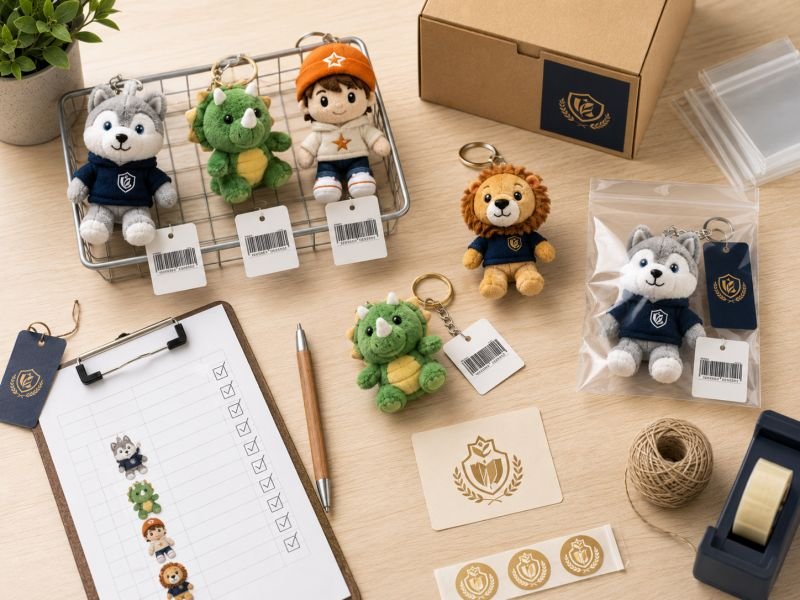
A custom plush keychain may be one of the smallest items in a brand program, but it often solves a very practical problem: how to make a character, mascot, event theme, or retail gift easy to carry, easy to keep, and easy to notice after the first handoff.
Many program teams do not need a large plush doll for every campaign. A full plush toy may be too big for an event kit, too costly for wide distribution, or too difficult to pack for multiple locations. A plush keychain gives the same soft, character-based feeling in a smaller form. It can hang on a backpack, sit on a retail hook, travel with keys, decorate luggage, join an online bundle, or become part of a collectible series.
Custom plush keychains are best used in programs that need a small, portable, character-based item with daily visibility. They work well for brand promotions, IP merchandise, retail gifts, event giveaways, school mascot projects, loyalty rewards, e-commerce bundles, and seasonal campaigns. Strong results depend on early checks for size, fabric, face method, keyring strength, labels, barcodes, packing, safety needs, and bulk consistency.
For serious brand teams, the value is not only cuteness. The value is repeatability. One mascot can become a mini keychain, a standard plush doll, a bag charm, a holiday version, a retail add-on, or a gift set item. When the first small plush product is planned with clear files and production standards, future versions become easier to manage.
What Are Custom Plush Keychains Used For in Brand Programs?
Custom plush keychains are used when a program needs a small soft item that people can carry, keep, display, or collect. They are often used as mascot gifts, IP merchandise, retail add-ons, event handouts, school souvenirs, member rewards, and seasonal campaign items. Their strength comes from combining soft touch, character value, and everyday visibility in one compact product.
A plush keychain sits between a small promotional item and a soft toy. It is not as flat as a sticker, not as hard as a metal tag, and not as large as a full plush doll. That makes it useful for projects where the item needs to feel friendly, but still be easy to pack, ship, and hand out.
Why Are Plush Keychains So Popular?
Plush keychains are popular because they feel personal. A soft mascot clipped to a backpack creates a different reaction from a flat logo. People touch it, notice it, and often keep it longer because it feels more like a small companion than a throwaway item.
They are also easy to carry. A large plush toy may stay at home, but a plush keychain can travel on a bag, keyring, pencil case, lunch bag, luggage pull, or retail gift set. This gives the brand more chances to be seen in daily life.
The small size also makes them collectable. A series with five characters, three colors, or seasonal outfits can create more interest than one larger plush item, especially for fans, students, gift shops, and event guests.
Why Are They More Than Small Giveaways?
A giveaway is often judged by unit cost. A program item should be judged by what it helps the project achieve.
A custom plush keychain can support several goals at once. It can make a mascot more memorable, add warmth to an event kit, create a small retail item, support fan collection, or give a school mascot a daily-use format.
The difference is planning. If the product is treated as a cheap extra, it may look cheap. If it is planned as a small brand product, details such as face expression, fabric touch, hanging position, hangtag, barcode, and packing method all support the final result.
Which Programs Need Portable Plush Items?
Portable plush items fit programs where products must move easily from brand to user. That includes trade shows, conferences, retail checkout counters, school events, fan meetings, museum shops, theme park stores, membership packs, online bundles, and holiday gift campaigns.
The more a program depends on easy distribution, carry value, and repeated visibility, the more useful a plush keychain becomes.
Which Programs Are Best for Custom Plush Keychains?

Custom plush keychains are best for programs that need a small, memorable, character-friendly product. They fit brand promotion, IP merchandise, retail gifts, event giveaways, school and club projects, loyalty rewards, museum souvenirs, theme park shops, and online bundles. Each program should choose size, materials, label, and packing based on how the item will be used.
The wrong way to start is to ask, “Can we put our logo on it?”
The better way is to ask, “What job should this product do in the program?”
If it is for retail, it needs display and barcode control. If it is for school use, it needs durability and a clear mascot shape. If it is for an event, it needs quick packing and easy distribution. If it is for IP merchandise, character accuracy matters most.
Program Fit Table
| Program Type | Best Use | Key Product Focus | Common Risk To Avoid |
|---|---|---|---|
| Brand promotion | Mascot gift, launch item, campaign giveaway | Recognizable shape, brand color, clear hangtag | Product looks like a random toy, not a brand item |
| IP merchandise | Fan item, collectible drop, character series | Face accuracy, body ratio, style unity | Small details become unclear after stitching |
| Retail gift | Checkout add-on, souvenir, themed collection | Barcode, hangtag, display hook, SKU control | Mixed labels or poor shelf presentation |
| Event giveaway | Booth gift, welcome kit item, conference handout | Fast packing, carton marks, delivery timing | Late arrival or confusing carton sorting |
| School program | Mascot keychain, student reward, club item | Strong stitching, safe parts, durable hardware | Weak ring or small part risk |
| Loyalty reward | Member gift, VIP pack item, limited edition | Gift feeling, special tag, seasonal design | Item feels generic and lacks program meaning |
Brand Promotion Programs
For brand promotion, plush keychains work best when the brand has a mascot, animal symbol, friendly product character, campaign figure, or rounded logo shape. They can be used at product launches, pop-up stores, brand anniversaries, community events, and retail activations.
A strong brand plush keychain should not feel like a logo pasted onto a toy. It should feel like a small product that belongs to the brand. Color, face, shape, tag, and packaging should follow one visual direction.
IP and Character Merchandise Programs
IP teams often need smaller products fans can collect without the higher cost of a large plush doll. Plush keychains are a good fit because they turn characters into portable items.
They can also test demand. If one character performs well as a small plush keychain, that character may later become a larger plush doll, pillow, bag charm, holiday edition, or gift set item.
For IP projects, accuracy matters. Eyes, mouth, body ratio, hair, ears, tail, clothing, colors, and small accessories should be checked before sampling. On a small item, a tiny shift can change the expression.
Retail Gift and Souvenir Programs
Retailers can use plush keychains as low-space products with strong visual appeal. They can hang near checkout, sit in gift sections, appear in museum shops, join seasonal displays, or become part of themed collections.
For retail, the item must be easy to identify and easy to manage. Hangtags, barcode stickers, SKU labels, color versions, carton marks, and packing methods should be planned early.
A plush keychain may look great, but if barcodes or styles are mixed during packing, retail teams face extra work later.
Event and Trade Show Giveaway Programs
At events, people receive many items. Most are flat, printed, or forgotten quickly. A plush keychain can stand out because it has texture, shape, and personality.
It also works well for event teams because it is small enough to pack in cartons, hand out at booths, include in welcome kits, or sort by venue. For high-volume events, the key details are quantity planning, delivery date, carton marks, packing method, and distribution logic.
If your team is preparing an event plush keychain project, send the character image, target size, quantity, event date, packing needs, and destination country to info@heyzizi.com. Heyzizi can review whether the design is suitable for sampling and bulk production.
School, Club, and Campus Programs
Schools and clubs often need items that create identity. A mascot plush keychain can be used for school stores, sports teams, graduation gifts, club events, student rewards, alumni gifts, and campus fairs.
For these programs, durability matters. The product may be attached to bags, pencil cases, sports bags, or keys. Stitching, keyring strength, small parts, and label content should be checked carefully, especially when the item may be used by younger students.
Loyalty, Membership, and Reward Programs
A plush keychain can work as a reward because it feels warmer than a coupon or flat card. It can be given to members, VIP guests, fans, repeat shoppers, or community participants.
The best loyalty items are not random. They feel connected to the program. A mascot version, limited color, anniversary tag, or seasonal outfit can make a small product feel more meaningful.
Why Do Brands Use Plush Keychains Instead of Standard Promotional Gifts?
Brands use plush keychains instead of standard promotional gifts when they want a soft, character-based item that people are more likely to keep, carry, and notice. Compared with stickers, pens, pins, badges, or flat tags, plush keychains offer texture, emotion, personality, and stronger daily visibility, especially for mascot, school, event, retail, and fan programs.
The best promotional item is not always the cheapest one. It is the one people remember, keep, and connect with the brand.
A plush keychain has a different kind of value because it feels less like an advertisement and more like a small object someone chooses to use.
They Are Easier to Keep
People often keep items that feel useful, cute, or personal. A plush keychain can do all three. It can hold keys, decorate a bag, represent a favorite character, or remind someone of an event.
This is why it works well for trade shows, schools, fan programs, museums, tourism shops, charity events, and retail gifts. The item carries a story, not just a logo.
They Carry a Character Better Than Flat Gifts
A flat sticker can show a character. A plush keychain can give it shape.
For brands with mascots, animals, cartoon characters, or story figures, plush gives the character a soft body, rounded form, and touchable feel. This makes the character feel more alive.
That does not mean plush suits every logo. A sharp technical logo may work better as metal, PVC, or woven patch. But a friendly mascot, animal icon, school character, or fan figure often works better in plush.
They Can Stay Visible on Bags, Keys, and Backpacks
Visibility matters. A plush keychain can appear on school bags, handbags, travel backpacks, luggage, zipper pulls, gym bags, pencil cases, lunch bags, and retail display hooks.
For a brand program, this means the product can keep working after the event ends. A guest may leave the booth, but the mascot keeps appearing in daily life.
Where Else Can I Put Keychains?
Plush keychains do not need to stay only on keys. They can be used as bag charms, zipper pulls, welcome kit accessories, event badge decorations, retail gift tags, mascot hangers, school bag ornaments, suitcase identifiers, holiday stocking stuffers, gift set add-ons, or collectible mini items.
For online shops, they can be added to bundles. For retail, they can hang near checkout. For schools, they can attach to student bags. For events, they can sit inside welcome kits. For IP teams, they can become part of a full merchandise release.
Quick Comparison Table
| Item Type | Strength | Best For | When It May Fall Short |
|---|---|---|---|
| Plush keychain | Soft, character-rich, easy to keep | Mascots, schools, IP, events, retail gifts | Not ideal for very formal or flat-only designs |
| Metal keychain | Durable, slim, polished | Corporate gifts, tech brands, automotive gifts | Less emotional for cute characters |
| PVC keychain | Colorful, flat, flexible | Graphic icons, bright artwork, simple logos | Less soft and less gift-like |
| Sticker | Low cost, easy to distribute | Short campaigns, fan packs, packaging inserts | Lower perceived value |
| Pin or badge | Wearable, collectible | Clubs, fandoms, events | Smaller daily-use area than bag charms |
How Do Custom Plush Keychains Help Mascot and IP Programs?

Custom plush keychains help mascot and IP programs by turning a character into a portable product that fans, students, staff, or shoppers can carry every day. They are useful for testing character demand, extending product lines, creating affordable collectibles, and keeping brand identity visible through a soft, easy-to-share item.
Mascot and IP projects need more care than simple logo items. The product must still feel like the original character after it becomes small, soft, stuffed, and attached to hardware.
That is not automatic. A drawing can look perfect on screen but change after fabric stretch, embroidery density, filling pressure, and seam position are added.
How Can a Mascot Become a Small Plush Keychain?
A mascot becomes a plush keychain through simplification and structure review. The factory studies the character shape, face details, body ratio, color blocks, fabric choices, and hanging position.
Some mascots can become full-body keychains. Others work better as head-only plush charms, round plush pendants, mini animal shapes, flat-back plush figures, or small stuffed characters with a woven loop.
The goal is not to copy every tiny detail. The goal is to keep the parts that make the mascot recognizable.
What Details Affect Character Accuracy?
Face placement is usually the first detail people notice. Eye spacing, mouth curve, eyebrow angle, nose shape, and cheek position can change the whole expression.
Fabric also matters. Long-pile plush may feel soft, but it can hide small embroidery. Short plush may show facial details more clearly. Felt, applique, embroidery, and printing can all be used, but each creates a different look.
For small plush keychains, embroidery size and stitch density should be reviewed before sampling. If the face is too small, the expression may become unclear. If the stitch area is too dense, the face may feel stiff.
When Should a Character Be Simplified for Small Size?
A character should be simplified when it has too many tiny accessories, thin lines, small facial details, sharp corners, layered clothes, or delicate props.
This does not mean removing personality. It means protecting the parts that matter most. A tiny belt buckle may not be worth keeping if it makes production unstable. A clear face and strong silhouette may matter much more.
A mature custom plush project often improves the design before sampling. This helps reduce repeated revisions and lowers the risk of a weak bulk result.
Character Review Checklist
| Detail To Review | Why It Matters | Common Adjustment |
|---|---|---|
| Eye size | Small eyes may disappear in embroidery | Enlarge slightly or simplify shape |
| Mouth curve | Expression changes easily at small scale | Use clearer stitch direction |
| Body ratio | Tiny bodies may lose character balance | Adjust head-to-body proportion |
| Fabric pile | Long pile can cover small details | Use shorter plush on face area |
| Accessories | Small parts may raise safety or sewing risk | Convert into embroidery or applique |
| Hanging position | Poor balance can make the item tilt | Test loop position before approval |
What Types of Custom Plush Keychains Can a Factory Make?

A plush factory can make mascot plush keychains, animal plush keychains, logo-shaped plush keychains, mini character keychains, seasonal keychains, plush bag charms, zipper pulls, plush pendants, and small collectible series. The right type depends on the program goal, target user, design complexity, packing method, and repeat plan.
The product type should follow the program. A school mascot keychain may need durability. An IP keychain may need high face accuracy. A retail souvenir may need strong shelf display. An event giveaway may need simple packing and fast distribution.
Mascot Plush Keychains
Mascot plush keychains are suitable for brands, schools, sports teams, museums, charities, and company events. They are strongest when the mascot already has a clear face, body shape, or brand color.
Animal Plush Keychains
Animal keychains work well for zoos, pet brands, wildlife projects, children’s programs, tourism shops, and gift stores. Animals are easy to understand and often fit younger users or family-focused programs.
Logo Plush Keychains
Logo plush keychains work best when the logo has a rounded, friendly, or character-like shape. If the logo is very thin, sharp, or text-heavy, it may need to become a simplified plush icon instead of a direct copy.
Mini Character Plush Keychains
Mini characters are useful for IP merchandise, animation projects, fan releases, game characters, and story-based products. These often need more sample review because face details and body proportions are more sensitive.
Seasonal Plush Keychains
Seasonal keychains can support Christmas gifts, Halloween events, Valentine’s promotions, Easter sets, summer programs, and anniversary campaigns. They are also good for limited editions.
Plush Bag Charms and Zipper Pulls
Bag charms and zipper pulls are close relatives of plush keychains. They may use hooks, ball chains, cords, clips, or loops instead of a standard keyring. These work well for bags, pencil cases, makeup pouches, luggage, and retail accessories.
What Else Can You Do With Keychains?
Keychains can become more than key holders. They can be used as collectible drops, gift set add-ons, bag decorations, event kit items, zipper decorations, school spirit items, retail checkout products, membership gifts, blind box extras, or small rewards in loyalty programs.
This is where planning becomes useful. If the first design is created with future versions in mind, the same character can later appear in different outfits, sizes, colors, packaging versions, and product forms.
Custom Plush Keychains vs Regular Keychains: Which Is Better for Programs?
Custom plush keychains are better for programs that need softness, character value, emotional connection, and higher gift feeling. Regular keychains may be better for very thin, hard, technical, luxury, or ultra-low-cost programs. The best choice depends on the audience, use scene, brand image, budget, packing method, and safety needs.
A smart project does not choose plush just because it is cute. It chooses plush because the material matches the message.
Plush Keychains vs Metal Keychains
Metal keychains feel strong, slim, and durable. They can work well for company gifts, technical products, luxury branding, car-related gifts, and adult professional use.
Plush keychains feel softer and more emotional. They are better for mascots, children’s programs, schools, fan merchandise, event giveaways, character products, and brands that want warmth rather than a formal feel.
Plush Keychains vs PVC Keychains
PVC keychains can show flat graphics clearly. They are good for bright colors, simple shapes, waterproof needs, and lower-profile designs.
Plush keychains are better when the design needs touch, volume, softness, and a more playful character feel. If the program is built around a mascot, animal, or cute character, plush often creates a stronger reaction.
Plush Keychains vs Stickers, Pins, or Badges
Stickers, pins, and badges are easy to distribute and often cost less. They are good for simple campaigns, fan packs, and flat artwork.
Plush keychains cost more than many flat items, but they can feel more substantial. They are easier to notice and can become a small product rather than just a small printed piece.
What Should Teams Customize Before Sampling?
Before sampling custom plush keychains, teams should confirm size, shape, fabric, filling, face method, keyring style, hanging position, logo details, hangtag, label, barcode, packing method, carton marks, safety direction, quantity, and delivery schedule. These details affect appearance, cost, durability, packing, and bulk consistency.
Small plush products still need clear project files. In fact, because they are small, unclear details can cause bigger problems. A face that is only 2 mm off-center may be obvious. A weak ring may affect daily use. A wrong barcode may disrupt retail handling.
Key Custom Details Table
| Detail | What It Affects | Better To Confirm Before Sampling |
|---|---|---|
| Size | Shape, cost, packing, display, carry comfort | Target height and width |
| Shape | Character recognition and hanging balance | Full body, head-only, flat-back, round charm |
| Fabric | Touch, color look, embroidery clarity | Short plush, long plush, minky, velboa, felt |
| Filling | Softness, recovery, shape stability | Firm, soft, flat, rounded |
| Face method | Expression, cost, safety, repeatability | Embroidery, printing, applique |
| Hardware | Daily use and pull strength | Split ring, clip, ball chain, cord, hook |
| Hangtag | Retail feel and brand story | Size, shape, artwork, hole position |
| Barcode | SKU and retail handling | Code file, sticker size, placement |
| Packing | Shape protection and distribution | Polybag, gift box, display card, mixed carton |
Size and Shape
Size affects almost everything: character accuracy, stitch detail, filling, hardware strength, packing volume, carton quantity, and perceived value.
A 6 cm keychain may be easy to carry, but some face details may be hard to show. A 12 cm keychain may look better, but it needs more material and larger packing. The right size should match the use scene.
Fabric and Filling
Common fabric choices include short plush, long plush, minky, velboa, fleece, felt, and other soft materials. Filling should be balanced so the item feels soft but not bulky.
For keychains, stuffing should help the shape recover after packing. Overstuffing can make the item look hard. Understuffing can make it look flat.
Embroidery, Printing, or Applique
Embroidery is often used for faces because it is stable and premium-looking. Printing can work for small graphic details, gradients, or flat areas. Applique can help show larger color blocks or special shapes.
The choice depends on the character. A simple smile may work well with embroidery. A colorful clothing pattern may need printing. A large cheek patch may work better as applique.
Keyring, Chain, Hook, or Cord
Hardware should match the use. A standard split ring works for keys. A lobster clasp may work better as a bag charm. A ball chain may suit retail display. A cord loop may suit softer children’s products, depending on safety needs.
The attachment area should be reviewed carefully. If the ring pulls on a weak seam, the product may fail during use.
Hangtag, Label, Barcode, and Packing
For retail and multi-style programs, labels matter. Hangtags, sewn labels, barcode stickers, SKU labels, warning labels, age labels, and carton marks should be planned before production.
Packing also changes the product result. Tight packing may flatten the shape. Retail boxes may improve display but increase cost and volume. Polybags may be simple and efficient, but label placement still needs control.
How Does the Factory Sample Process Work for Plush Keychain Programs?
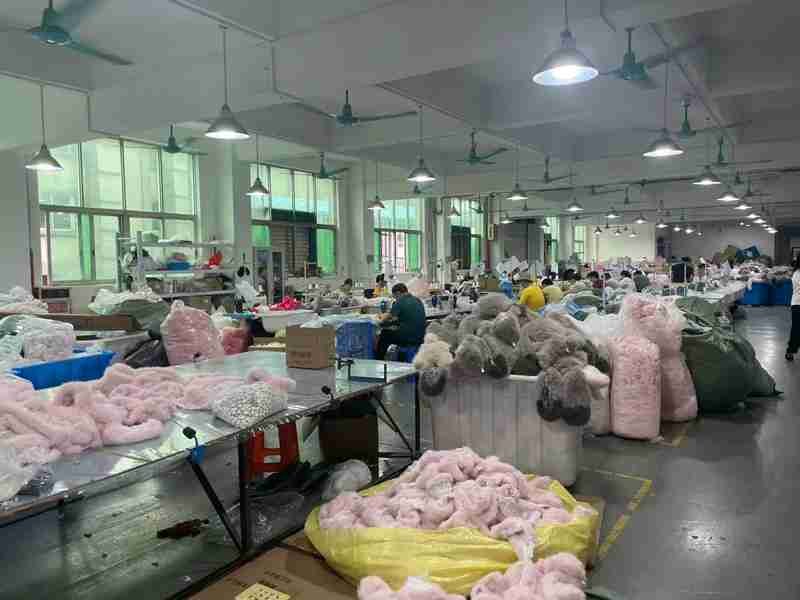
The sample process usually starts with artwork or a reference image, then moves through size review, structure check, fabric planning, face method selection, pattern development, first sample, revision, final approval, and bulk standard setup. A good sample should not only look right; it should also guide production, inspection, packing, and future repeat orders.
A sample is not only a photo for approval. For custom plush keychains, the approved sample becomes the reference for shape, face, fabric, filling, hardware, label, and packing.
What Should Teams Send First?
The best starting files include character artwork, front and side views if available, target size, quantity, fabric preference, logo files, use scene, packaging needs, target country, and deadline.
If the design is not complete, a reference image can still help. A good factory can review the idea and list what should be confirmed before sampling.
How Long Can Sampling Take?
Sampling time depends on complexity. A simple plush keychain may move faster than a detailed mascot with clothes, accessories, special embroidery, or custom packaging.
As a practical planning reference, simple samples may take about 3–5 days when the design and material direction are clear. Standard custom samples often need about 7–14 days. Revisions may take several more days depending on what changes. Bulk production for plush projects commonly needs about 30–45 days after final approval, depending on quantity, material, process, packing, and schedule.
These numbers are planning references, not fixed promises. A design with complex embroidery, special fabric, multiple accessories, or retail packaging needs more time than a simple mini mascot.
How Are Revisions and Approved Samples Controlled?
Revisions should be recorded clearly. The team should know which version changed the eye shape, mouth curve, body ratio, fabric, ring position, hangtag, or packing method.
Once the final sample is approved, it should become the working standard for bulk production. This helps reduce the risk of sample-to-bulk differences.
If you are preparing a plush keychain program, send your artwork, target size, quantity, use scene, packing needs, and deadline to info@heyzizi.com. Heyzizi can review the project path before the first sample.
Sample Path Table
| Step | What Happens | Why It Matters |
|---|---|---|
| 1. Artwork review | Character, logo, size, and use scene are reviewed | Checks whether the idea suits small plush form |
| 2. Structure check | Shape, hanging point, and body balance are reviewed | Reduces risk of tilted or unstable products |
| 3. Material direction | Fabric, filling, and color are discussed | Affects touch, cost, and character look |
| 4. Face method | Embroidery, printing, or applique is selected | Affects expression and repeatability |
| 5. First sample | Pattern, sewing, filling, and hardware are tested | Turns the concept into a real product |
| 6. Revision | Face, shape, size, tag, or hardware may be adjusted | Improves accuracy before bulk work |
| 7. Approved sample | Final sample becomes the bulk reference | Protects consistency |
| 8. Production files | Pattern, fabric, embroidery, tag, barcode, packing rules are saved | Supports repeat orders and future versions |
What Affects the Price of Custom Plush Keychains?
The price of custom plush keychains is affected by size, fabric, filling, face method, embroidery density, shape complexity, accessory structure, keyring strength, hangtags, labels, barcode needs, packing method, quantity, safety checks, and delivery schedule. Similar-looking items may have different costs because the hidden structure and production details are not the same.
A low price can be attractive, but for brand programs, the cheaper option can become expensive if the ring breaks, the face looks wrong, the packing damages the shape, or labels are mixed.
Price should be reviewed together with project risk.
Practical Quantity Notes
| Quantity Situation | What Usually Happens | Project Meaning |
|---|---|---|
| 200–300 pcs for simple styles | May be reviewed when structure and material are simple | Useful for small trials, but unit cost is usually higher |
| 500 pcs per style | Common starting point for many custom plush projects | Better for material, labor, and line planning |
| 2,000 pcs per style | Sample fee may be credited or returned in the order | Better for planned programs and repeat potential |
| Multi-style orders | Each style needs its own file control | SKU, label, and carton planning become more important |
Size, Fabric, and Filling
Larger sizes use more fabric and filling. Higher-density fabric may feel better and hold shape more nicely, but it may also raise cost. Special colors or mixed fabrics can also affect sourcing and timing.
Face Method and Stitch Density
A small face with complex embroidery takes more work than a simple printed logo. Dense embroidery may look clean, but it can stiffen the fabric if not planned well.
For character programs, face quality is often worth the extra attention because the face decides whether people recognize the character.
Accessory Structure and Keyring Strength
The hardware may seem like a small detail, but it affects daily use. Rings, clips, chains, hooks, cords, and reinforced loops all carry different costs and performance levels.
A low-cost attachment that fails during use can damage the program more than a slightly higher accessory cost.
Packaging, Labels, and Quantity
Quantity affects unit cost because many early steps are needed no matter how many pieces are made. Pattern work, sample review, embroidery setup, material preparation, cutting, sewing, inspection, and packing all take time.
Packaging and labels also matter. A retail-ready item with hangtag, barcode, warning label, individual bag, and carton mark needs more control than a simple bulk-packed giveaway.
What Quality Checks Matter for Plush Keychain Programs?
Quality checks for plush keychain programs should cover face position, shape consistency, fabric color, stitching, filling balance, accessory strength, small parts, needle detection, hangtag accuracy, barcode placement, packing method, SKU sorting, and carton marks. These checks help protect the program from visible defects, safety risks, retail errors, and delivery confusion.
Small products can still create big problems. A loose keyring may lead to complaints. A wrong tag may block retail handling. A mixed carton may delay distribution. A face that looks slightly wrong may disappoint fans.
Quality Control Checklist
| Check Item | What To Review | Risk If Missed |
|---|---|---|
| Face position | Eyes, mouth, nose, embroidery placement | Character looks wrong |
| Shape consistency | Body balance, stuffing, seam position | Bulk pieces look uneven |
| Fabric color | Main fabric, contrast fabric, pile direction | Brand color looks inconsistent |
| Stitching | Seams, loop area, edge finish | Product opens or pulls loose |
| Hardware strength | Ring, clip, chain, cord, reinforced loop | Keychain breaks during use |
| Small parts | Bows, plastic eyes, bells, charms | Safety and durability concerns |
| Needle detection | Metal contamination control | Safety risk |
| Hangtag | Artwork, hole position, style match | Retail presentation errors |
| Barcode | Code, sticker size, style match | SKU and inventory confusion |
| Packing | Shape recovery, pressure, sorting | Product arrives flat or mixed |
| Carton mark | Style, quantity, destination, batch info | Delivery and sorting confusion |
Face Position and Shape Consistency
The face must stay in the right position across bulk production. This includes eye spacing, mouth shape, embroidery alignment, fabric direction, and stuffing pressure.
For character products, small differences are easy to notice. A mascot can look friendly in one sample and strange in bulk if the face shifts.
Stitching, Pull Strength, and Small Parts
Stitching should be clean and strong, especially around the hardware attachment area. If the product has plastic parts, bells, bows, clothes, or small accessories, pull strength and small-parts risk should be reviewed.
This is especially relevant for school, children’s, education, and family-focused programs.
Needle Detection and Packing Review
Needle detection is a key part of plush safety control. Packing review is also needed because pressure, folding, or mixed packing can affect shape and presentation.
A plush keychain may pass sewing review but still look poor after tight packing. That is why packing should be checked before full shipment.
Label, Barcode, and Carton Mark Checking
For retail, online store, event, and multi-destination projects, correct labeling is not optional. Hangtags, care labels, barcodes, SKU stickers, warehouse labels, warning labels, and carton marks should match each style.
When there are many characters or color versions, label control becomes even more important.
Are Custom Plush Keychains Good for Multi-SKU and Repeat Programs?
Custom plush keychains are very suitable for multi-SKU and repeat programs because they can be developed in different characters, sizes, colors, outfits, seasons, packages, and country versions. To make repeat orders stable, teams should keep pattern files, approved sample records, material standards, label rules, barcode files, packing plans, and carton information organized from the first project.
Many large programs do not stop at one plush keychain. They begin with one character, then expand into a series.
This is where a factory partner matters. The first project should create a base that future products can follow.
Multi-Character Series
A multi-character series may include five mascots, several animals, a full IP cast, or one character in different expressions.
The challenge is style unity. Characters should look like they belong to the same family. Fabric texture, face method, body ratio, hangtag format, and packing style should be aligned.
Seasonal and Limited Editions
Seasonal editions can create repeat interest. A mascot can wear a winter scarf, Halloween costume, graduation cap, summer outfit, or anniversary tag.
These versions are good for campaigns, school stores, tourism shops, fan events, and loyalty programs. The key is to keep the base character stable while changing the seasonal parts.
Repeat Orders and Version Control
Repeat orders are easier when files are managed from the start. Pattern version, fabric color, embroidery file, approved sample photos, hangtag artwork, barcode file, carton mark, and packing method should all be stored clearly.
Without version control, repeat orders may slowly drift away from the approved standard.
What to Do With a Lot of Plushies?
When a program orders many plush keychains, they can be used in several ways: event kits, retail bundles, school reward packs, member welcome boxes, fan boxes, trade show handouts, museum shop displays, holiday gift sets, or multi-location distribution.
Large quantities need sorting. Styles may need to be separated by SKU, color, language label, destination, campaign date, or store location. This should be planned before packing begins.
Multi-SKU Planning Table
| Planning Area | What To Prepare | Why It Helps |
|---|---|---|
| Style code | Code for each character, color, or size | Prevents mixed styles |
| Approved sample | Photo and physical standard | Keeps bulk pieces consistent |
| Pattern version | Final pattern file and revision record | Protects repeat orders |
| Material record | Fabric type, color, pile direction | Reduces batch difference |
| Label rule | Hangtag, sewn label, warning text | Supports retail and regional needs |
| Barcode file | Code for each SKU | Prevents scanning errors |
| Packing rule | Pieces per bag, box, carton, or set | Helps sorting and delivery |
| Carton mark | Style, quantity, destination, batch | Speeds warehouse handling |
Who Should Use Custom Plush Keychains in Their Programs?

Custom plush keychains are suitable for brands with mascots, IP and entertainment teams, retailers, gift shops, schools, clubs, museums, event planners, promotion teams, online stores, tourism shops, and loyalty programs. They are best for teams that need a small, soft, portable item with character value and repeat development potential.
The right user is not defined by company size alone. It is defined by project need. If the program needs a small product that people can carry and remember, a plush keychain may fit.
Brands With Mascots
Mascot brands can use plush keychains to make their identity more touchable. A mascot on screen is seen. A mascot keychain is carried.
This is useful for brand events, employee gifts, store openings, product launches, and community campaigns.
IP and Entertainment Teams
IP teams can use plush keychains as entry-level merchandise. Fans may collect them, attach them to bags, or pair them with larger plush toys.
They are also helpful for testing which character has stronger appeal before developing larger products.
Retailers and Gift Shops
Retailers can use plush keychains as small shelf items, checkout add-ons, souvenir products, seasonal gifts, or themed collection pieces.
For this group, barcode, display, hangtag, and packing are very important.
Event and Promotion Teams
Event teams need items that are easy to distribute and memorable enough to keep. Plush keychains can work in welcome bags, booth giveaways, launch kits, conference packs, and community events.
Schools, Museums, and Clubs
Schools, museums, and clubs often need identity items. A mascot plush keychain can make a community feel more connected. It can be used for team events, student rewards, gift shops, field trips, fundraising, or membership gifts.
When Are Custom Plush Keychains Not the Best Choice?
Custom plush keychains may not be the best choice when the design has too many tiny details, the program only needs the lowest-cost flat item, the target user requires a very formal product, or safety, labeling, packing, and delivery have not been planned. A good factory should help review fit before sampling instead of saying every design is suitable.
This section matters because not every idea should become a plush keychain. A careful “not yet” can save time, money, and disappointment.
When the Character Has Too Many Tiny Details
If a character has very small eyes, thin lines, complex clothing, tiny tools, layered hair, sharp wings, or many small parts, the keychain may need simplification.
The issue is not only whether it can be made. The better check is whether it can be made clearly and consistently at this size.
When the Program Needs a Very Low-Cost Flat Gift
If the only goal is the lowest possible cost, and the design does not need softness or character value, a sticker, badge, card, PVC tag, or flat keychain may fit better.
Plush is strongest when touch, character, and gift feeling matter.
When Safety, Labeling, or Packing Has Not Been Planned
If the product will be used by children, sold in retail, shipped to different regions, or packed in mixed cartons, safety and label planning should happen early.
Ignoring these details can create problems later, even when the plush itself looks good.
Risk Check Table
| Situation | Why It May Be Risky | Better Direction |
|---|---|---|
| Too many tiny accessories | Harder sewing, higher small-part concern | Simplify into embroidery or applique |
| Very detailed face at tiny size | Expression may become unclear | Increase size or simplify features |
| Only lowest-cost goal | Plush may not match budget logic | Consider flat gifts |
| Retail program without barcode plan | Store handling may become messy | Prepare SKU and barcode files early |
| Event with tight deadline | Sampling and revision time may be too short | Use simpler structure and clear packing |
| Multi-style order without sorting rules | Styles may mix during packing | Set style code and carton rules |
How Should Teams Start a Custom Plush Keychain Project?
To start a custom plush keychain project, prepare artwork or a reference photo, target size, quantity, use scene, fabric preference, face method, hardware style, logo details, hangtag or label needs, barcode files, packing request, target country, delivery deadline, and any safety requirements. Clear details help the factory review structure, cost, sampling difficulty, packing, and production risk faster.
Starting well saves revisions. It also helps both sides make better decisions before time and money are spent on the wrong sample direction.
What Files Should You Prepare?
Useful files include character artwork, logo file, color reference, size target, product examples, packaging references, label files, barcode files, and any previous sample photos.
If you do not have all files ready, start with what you have. A clear reference image, target quantity, and use scene are enough for an early review.
What Details Help the Factory Quote Faster?
The fastest quotes usually come from clear information: product type, target size, quantity, fabric direction, embroidery or printing needs, accessory choice, packing method, destination country, and deadline.
If these details are missing, the quote may only be a rough direction. For custom plush work, a careful early review is more useful than a fast but weak price.
What Should Be Confirmed Before Bulk Production?
Before bulk production, confirm the final sample, pattern version, fabric color, embroidery file, hardware, pull-strength needs, hangtag, barcode, label, packing method, carton quantity, carton mark, inspection standard, and shipment plan.
A plush keychain program succeeds when small details are not treated as small problems. The product may be tiny, but the project behind it can involve brand approval, retail handling, event timing, fan expectations, safety needs, and repeat order planning.
Project Start Checklist
| Information To Send | Example |
|---|---|
| Product type | Mascot plush keychain, animal charm, mini character pendant |
| Reference file | Character artwork, logo, sample photo, color guide |
| Target size | 8 cm, 10 cm, 12 cm, or custom size |
| Quantity | Per style and total quantity |
| Use scene | Event gift, retail sale, school reward, IP release |
| Fabric direction | Short plush, minky, velboa, felt, mixed materials |
| Face method | Embroidery, printing, applique |
| Hardware | Split ring, clip, ball chain, cord, hook |
| Label needs | Hangtag, sewn label, warning text, barcode |
| Packing | Polybag, display card, gift box, mixed carton |
| Target country | Needed for label and safety direction |
| Deadline | Event date, retail launch, warehouse arrival date |
Heyzizi supports custom plush keychain projects for brands, IP teams, retailers, event programs, schools, gift programs, and online stores. You can send artwork, target size, quantity, packing needs, target country, and delivery deadline to info@heyzizi.com for a project review.
Closing
Custom plush keychains work best when they are planned as small brand products, not random giveaways. They can help a mascot travel further, make an event kit feel warmer, support retail add-on sales, give fans a collectible item, and help schools or clubs create stronger identity.
For program teams, the most useful thinking starts before sampling. Size, fabric, face method, hardware, label, barcode, packing, safety direction, quantity, and timeline all shape the final result.
A good plush keychain should be easy to carry, easy to recognize, and easy to repeat. When those three things come together, a small item can become a long-term product tool for brand, retail, event, school, IP, and loyalty programs.
FAQs About Custom Plush Keychains for Programs
FAQ 1: Are custom plush keychains good for brand programs?
Certainly, custom plush keychains work well for brand programs that need a small, soft, portable item people can carry, keep, and recognize. They are especially useful when a brand already has a mascot, animal icon, friendly logo, cartoon figure, campaign character, or event theme. Compared with flat items, a plush keychain gives the design texture and shape, so it feels more like a small product than a simple giveaway.
For brand teams, the real value is daily visibility. A plush keychain can hang on a backpack, purse, keyring, luggage pull, pencil case, lunch bag, or event badge. That means the brand image can stay visible after the event, store visit, or campaign handoff.
The best programs do not treat plush keychains as random small gifts. They plan them around a clear role: mascot recall, fan engagement, retail add-on sales, school identity, membership reward, or event memory. Size, fabric, face method, hangtag, packing, and hardware should all support that role. When these details are aligned, a custom plush keychain can become a practical brand item with repeat potential.
FAQ 2: What size is best for custom plush keychains?
Sure, most custom plush keychains work best between 6 cm and 12 cm, depending on the character detail, use scene, packing method, and budget direction. A smaller size is easier to carry and better for event handouts, but it may limit embroidery detail. A larger size gives more space for facial expression, clothing, and brand colors, but it increases material use, packing volume, and carton space.
For mascot and IP projects, size should not be chosen only by cost. A 6 cm plush keychain may look cute, but if the eyes, mouth, logo, or small accessories become unclear, the final product may lose the character feeling. For many brand programs, 8–10 cm is a practical starting size because it balances visibility, carry comfort, and production stability.
| Size | Best For | What To Watch |
|---|---|---|
| 6–7 cm | Simple logos, mini charms, low-space gifts | Limited face detail |
| 8–10 cm | Mascots, animals, school items, event gifts | Good balance of cost and clarity |
| 11–12 cm | IP characters, retail gifts, detailed mascots | Higher packing volume |
| 13 cm+ | Premium gifts or display-led programs | Less convenient as a keychain |
Before sampling, it helps to review the character artwork at actual size. What looks clear on a screen may feel crowded when stitched on a small plush body.
FAQ 3: Can a mascot or IP character be made into a plush keychain?
Of course, many mascots and IP characters can be made into plush keychains, but the design may need smart simplification before sampling. A character that looks perfect in artwork may not work the same way after it becomes small, soft, stuffed, and attached to a ring or clip. Fabric thickness, embroidery density, stuffing pressure, seam position, and hanging balance can all change the final look.
The key is to protect the most recognizable features. These may include the eye shape, mouth curve, head outline, ears, color blocks, clothing style, tail, or signature accessory. Not every tiny detail needs to be kept. In fact, too many small parts can make the product harder to sew, less stable in bulk, and less safe for younger users.
For mascot projects, a factory should review whether the design works better as a full-body keychain, head-only charm, round plush pendant, flat-back figure, or plush bag charm. A good review before sampling can reduce repeated changes and help the final product stay closer to the approved character style.
FAQ 4: What affects the price of custom plush keychains?
Definitely, the price of custom plush keychains is shaped by more than size. Fabric, filling, embroidery density, printing area, applique details, accessories, keyring strength, hangtag, barcode, packing method, quantity, safety checks, and deadline can all affect the final cost. Two plush keychains may look similar in a photo but have very different work behind them.
For example, a simple animal head with two embroidered eyes costs less than a mini character with layered hair, clothing, multiple colors, custom hook, printed tag, barcode label, and retail packing. A lower price may look attractive at first, but weak hardware, poor face alignment, wrong labels, or tight packing can create bigger losses later.
| Cost Factor | Why It Changes Price |
|---|---|
| Size | More fabric, filling, packing space, and carton volume |
| Face method | Embroidery, printing, and applique need different setup work |
| Accessories | Hooks, chains, clips, cords, and reinforced loops vary in cost |
| Quantity | Small runs divide setup work across fewer pieces |
| Packing | Retail-ready packing needs more material and checking |
| Safety review | Children’s or retail items may need extra control |
A clear quote should be based on artwork, target size, quantity, material direction, face method, hardware, packing, and destination region.
FAQ 5: How long does a custom plush keychain sample take?
Absolutely, sample timing depends on design complexity, but simple plush keychains may take about 3–5 days when artwork, size, fabric, and face method are clear. Standard custom samples often need about 7–14 days. If the design includes special fabric, complex embroidery, clothes, small accessories, custom hooks, hangtags, or retail packaging, the sample stage can take longer.
The first sample is not only for appearance. It checks whether the character can hold its shape, whether the face is clear at small size, whether the ring position keeps the item balanced, and whether the packing method protects the product. If changes are needed, each revision may take extra time.
Program teams with event dates, store launches, or seasonal windows should not wait until the final month. A safe schedule should allow time for artwork review, material confirmation, first sample, revision, final approval, bulk production, inspection, packing, and delivery. When timing is tight, the safest design is usually simpler: fewer tiny parts, clear embroidery, common fabric, and straightforward packing.
FAQ 6: What details should be confirmed before sampling?
Certainly, the most useful details to confirm before sampling are product type, target size, character artwork, quantity, fabric direction, face method, hardware style, hangtag, label, barcode, packing request, destination region, and delivery date. These details help the factory review structure, cost, sampling difficulty, and bulk production risk before making the first piece.
Many sample problems start from unclear inputs. If the target size is missing, the face may be too small. If the use scene is unclear, the wrong hardware may be selected. If packing is discussed too late, the product may look good but arrive flattened. If barcode and style codes are not planned early, multi-style programs may become hard to sort.
A practical starter file can be simple:
| File Or Detail | Why It Helps |
|---|---|
| Character artwork or photo | Shows shape, face, color, and key features |
| Target size | Guides pattern, cost, and packing |
| Quantity per style | Affects cost and production planning |
| Use scene | Helps choose hardware and packing |
| Packing need | Supports retail, event, or gift use |
| Destination region | Helps review label and safety direction |
| Deadline | Helps judge whether the schedule is realistic |
Clear details do not slow a project down. They make the first sample more useful.
FAQ 7: Are custom plush keychains suitable for retail programs?
Sure, custom plush keychains are suitable for retail programs when they are planned with display, barcode, packaging, and SKU control in mind. They work well as checkout add-ons, museum shop souvenirs, theme park gifts, tourism items, fan merchandise, seasonal accessories, and small gift products. Their small size helps save shelf space while still giving shoppers a soft and visible item.
Retail use needs more control than simple event handouts. A retail plush keychain should have a clear hangtag, scannable barcode, correct style code, clean stitching, stable shape, and packing that protects the product during transport. If the item will hang on a display hook, the hangtag hole position and product balance should also be reviewed.
Multi-style retail programs need extra planning. If one series has five animals, three colors, or several character versions, each style should have its own code, barcode, label rule, carton mark, and packing count. This prevents mixed cartons and helps stores manage stock more easily. For retail teams, these details are not decoration. They affect store handling, shelf presentation, and repeat orders.
FAQ 8: What quality checks matter most for plush keychain programs?
Absolutely, the most important checks are face position, shape consistency, fabric color, stitching strength, hardware attachment, pull strength, small parts, needle detection, label accuracy, barcode placement, packing pressure, SKU sorting, and carton marks. A plush keychain may be small, but a loose ring, wrong tag, mixed style, or shifted face can damage the whole program.
The face is the first thing people notice. If the eyes move slightly, the character may look strange. The hardware is the part users pull most often, so ring and loop strength must be checked. Packing also matters because tight compression can flatten the plush shape or bend small parts.
| Check Area | What To Review | Risk If Missed |
|---|---|---|
| Face | Eye spacing, mouth curve, embroidery position | Character looks wrong |
| Shape | Stuffing balance, seam line, body symmetry | Bulk pieces look uneven |
| Hardware | Ring, clip, chain, cord, loop strength | Product breaks during use |
| Safety | Small parts, sharp edges, needle detection | Safety concerns |
| Labels | Hangtag, barcode, style code, warning text | Retail or warehouse issues |
| Packing | Compression, sorting, carton marks | Flattened items or mixed styles |
Good inspection should happen through the process, not only at the end.
FAQ 9: Can plush keychains be made as a multi-character series?
Definitely, plush keychains are very suitable for multi-character series because their small size makes them easier to collect, display, pack, and repeat. A brand can create several mascots, one character in different outfits, a seasonal set, a school club series, a fan set, or a retail collection. This is one reason plush keychains are useful beyond one-time giveaways.
The key challenge is style unity. If five characters are made together, they should feel like one family. Fabric texture, face method, body proportion, tag style, hardware, and packing should be aligned. Without clear rules, one character may look premium while another looks flat or inconsistent.
Multi-character programs should use style codes from the beginning. Each character needs its own approved sample, barcode, label file, packing rule, and carton mark. If the program may repeat later, pattern files, embroidery files, material records, and sample photos should be saved clearly. This makes future orders easier and helps keep each new batch close to the original approved standard.
FAQ 10: How should we start a custom plush keychain project with Heyzizi?
Certainly, the best way to start is to send your character artwork or reference photo, target size, quantity, use scene, fabric preference, face method, hardware style, packing request, destination region, and deadline. With these details, Heyzizi can review whether the design fits a plush keychain format, what may need simplification, which process may work better, and what details should be confirmed before sampling.
Heyzizi supports custom plush keychain projects for brands, IP teams, retailers, schools, events, gift programs, and online stores. The team can help review character structure, fabric choice, embroidery or printing direction, ring position, hangtag, barcode, packing, safety direction, and bulk consistency.
You do not need perfect files to start. A reference image, target size, rough quantity, and use scene are enough for an early review. Better files can be added later as the project becomes clearer.
To start, send your project details to info@heyzizi.com. A clear first review can help avoid weak samples, unclear pricing, wrong packing, and unnecessary revisions before the project moves forward.