 Skip to content
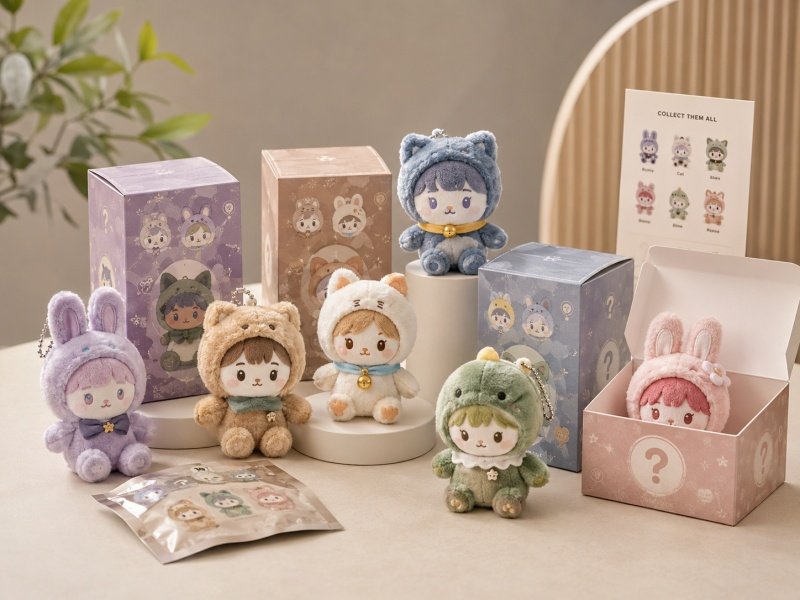
A blind box plush toy looks small at first glance. A soft character. A sealed box. A surprise inside. Yet for brands, IP owners, retailers, and event teams, this small product can carry a much larger business idea.
The reason is simple: people do not collect only objects. They collect feelings, stories, memories, identity, and the fun of not knowing exactly what they will get. A regular plush toy can be cute. A blind box plush toy can be cute, surprising, shareable, repeatable, and part of a full series.
Custom blind box plush toys fit collectible programs because they combine surprise, rarity, soft emotional value, character storytelling, small-format packaging, and repeat purchase logic. For brand teams, the real value is not only the plush item inside the box. It is the full product system behind it: character planning, hidden edition rules, sample control, retail packaging, barcode labels, mixed-style packing, safety review, and bulk consistency.
That is why this product format has moved far beyond simple novelty gifts. It now sits between plush toys, IP merchandise, fashion accessories, retail collectibles, fan culture, and social sharing. For a serious plush project, the product must look good, feel good, pack well, scan correctly, ship safely, and stay consistent from sample to bulk order. This is where the difference between a simple promo platform and a real plush factory becomes clear.
Heyzizi supports custom plush projects from idea review, structure evaluation, pattern making, sampling, revision, bulk production, inspection, needle detection, packing, labeling, and shipment preparation. For blind box plush series, that process matters even more because one mistake can affect not only one toy, but the whole collection.
What Are Custom Blind Box Plush Toys?
Custom blind box plush toys are small plush items designed as sealed surprise products for collectible, retail, gift, IP, or event programs. Each box usually contains one character or style from a planned series. The product may be a mini plush doll, plush keychain, bag charm, pendant, mascot, or soft character figure. The value comes from the mix of mystery, character design, series planning, packaging, and controlled production.
A blind box plush is not just a plush toy placed inside a box. That is the common mistake.
A strong blind box project starts before the box design. It begins with the collection idea. How many characters will be in the set? Which one is the main style? Will there be a rare edition? Does the plush need a keyring, chain, cord, loop, hangtag, or retail label? Is the item for a toy store, gift shop, online store, theme park, museum shop, or brand event?
These choices affect the pattern, size, fabric, face method, packaging, carton plan, cost, and safety review.
What Makes A Plush Blind Box Different From A Regular Plush Toy?
A regular plush toy is usually selected by appearance. The shopper sees the toy, likes it, and takes it home.
A plush blind box adds one more layer: uncertainty. The shopper sees the series, but not the exact style inside. That small gap creates curiosity. It also gives the collection a reason to continue.
For B2C shoppers, the difference feels emotional. For brand teams, the difference is structural.
A regular plush project may have one SKU. A blind box plush project may involve six characters, one hidden edition, several colorways, different labels, matching boxes, inner bags, carton marks, and packing rules. The work behind it is closer to managing a small product line than making one toy.
What Is The Difference Between A Collectible And A Toy?
A toy is mainly used for play, comfort, decoration, or gifting. A collectible carries extra meaning because it belongs to a series, has character value, shows identity, or becomes harder to find over time.
This difference matters when developing blind box plush toys.
A toy can be cute and still sell once. A collectible needs a reason to be kept, displayed, discussed, traded, or completed as a set. That reason may come from rarity, story, design, hidden styles, serial themes, packaging, or emotional connection.
For a brand, this changes the development goal. The product should not only pass the “is it cute?” test. It should also pass the “will people want the next one?” test.
Which Plush Toy Types Fit Blind Box Packaging Best?
Small and lightweight plush formats usually work best for blind boxes.
Common options include:
| Plush Format | Why It Works |
|---|---|
| Mini Plush Dolls | Easy to collect and display |
| Plush Keychains | Useful, visible, and easy to carry |
| Plush Bag Charms | Strong fit for lifestyle and fashion use |
| Plush Pendants | Good for gifts, events, and IP items |
| Mascot Plush Minis | Strong brand recognition |
| Soft Character Figures | Good for series and hidden editions |
Large plush toys can still be sold in mystery-style packaging, but they are less efficient for collectible blind box programs. They need larger boxes, higher shipping cost, more shelf space, and higher retail price. For most brand and retail programs, 8–15 cm plush toys, plush keychains, and bag charms are easier to test, repeat, and expand.
Is A Blind Box Plush Toy A Toy, Gift, Or Collectible?
It can be all three, but the role depends on how the project is designed.
If the focus is low price and mass distribution, it behaves like a gift item. If the focus is play value and child use, it behaves like a toy. If the focus is characters, series, rarity, hidden editions, packaging, and repeat purchase, it becomes a collectible.
This is why the early product planning stage is so useful. Before sampling, the team should decide the role of the product. A plush blind box for a museum shop will not follow the same logic as one for an anime IP launch, a retail gift series, or a brand event giveaway.
Why Do Blind Box Plush Toys Work For Collectors?

Blind box plush toys work for collectors because they mix surprise, scarcity, identity, softness, and completion desire. People are not only paying for the item. They are paying for the opening moment, the chance of getting a rare style, and the feeling of moving closer to a full set. The plush texture adds warmth, while the sealed format adds suspense.
A normal collectible says, “Here is the item.”
A blind box says, “Let’s see what you got.”
That small change can shift how people behave.
They may purchase again. They may trade with friends. They may post the result. They may keep the box. They may try to complete the full series. For product teams, that behavior is exactly what makes blind box plush toys attractive.
What Is The Psychology Behind Blind Boxes?
Blind boxes are built around uncertainty. The shopper knows the series but not the exact item. This creates curiosity before opening and emotional reaction after opening.
The psychology is not only about chance. It is also about identity and belonging. Collectors often want to feel part of a group. They want the style that matches their taste. They want to show what they got. They may feel proud if they open a rare edition.
For brands, this psychology should be used carefully. A good blind box program should feel fun, fair, and well-designed. If rarity feels manipulative or quality feels poor, the excitement can turn into disappointment quickly.
What Factors Make Blind Box Toys Appealing To Purchase?
Several factors make blind box toys attractive:
| Appeal Factor | What It Creates |
|---|---|
| Surprise | Curiosity before opening |
| Rarity | Stronger desire for special styles |
| Series Design | A reason to collect more |
| Character Story | Emotional connection |
| Small Size | Lower entry cost and easy display |
| Social Sharing | Opening moments worth posting |
| Trade Potential | Interaction between collectors |
| Packaging Design | Stronger shelf and gift value |
For plush blind boxes, softness adds one more layer. A vinyl figure may look cool. A plush item can feel warm, friendly, and easy to carry. That is why plush keychains and bag charms often fit blind box programs so well.
Why Does Surprise Drive Repeat Purchase?
Surprise gives the product a second life after payment. The purchase is not finished when the shopper pays. It continues until the box is opened.
That experience can create a loop:
See the series.
Pick a box.
Open it.
React.
Compare with others.
Try again.
This loop is the reason blind box plush toys can work better than one-off small plush gifts. The product is not only a single item. It is part of a collecting path.
For brand teams, this also means the series must be planned with care. If every style feels too similar, repeat interest drops. If the rare style is exciting but the regular styles feel weak, the set may feel unfair. The whole collection needs balance.
How Do Rare And Hidden Editions Build Collectible Value?
Rare and hidden editions give collectors a target.
A common style keeps the collection accessible. A rare style creates excitement. A hidden edition creates conversation. A limited edition creates urgency. A seasonal edition gives the program a fresh reason to return.
But rarity only works when the base series is strong. A hidden style cannot save a weak collection. The regular characters still need good design, clean expressions, soft handfeel, and stable production quality.
For plush products, hidden editions may include:
- Special color fabric
- Different facial expression
- Small outfit change
- Limited accessory
- Metallic tag
- Special hangtag
- Numbered card
- Event-only version
What Are The Rarest Blind Box Items?
The rarest blind box items are usually secret editions, chase styles, event exclusives, limited colorways, artist collaboration versions, or styles produced in smaller quantities than the main series.
In plush blind boxes, rarity should be visible but still practical to produce. A hidden version may have a different embroidered expression, special fabric, small accessory, unique clothing detail, or special package mark.
The key is not to make the rare item impossible to manufacture smoothly. If the hidden edition requires too many unstable details, the factory risk increases. The rare style should feel special to collectors but still be suitable for bulk production.
Are Plush Blind Boxes Better For Emotional Collecting?
Plush blind boxes are especially strong for emotional collecting because the product feels soft, friendly, and personal. Many collectors do not keep plush items only for display. They attach them to bags, keys, shelves, cars, desks, or store displays.
This gives plush collectibles a daily-use advantage.
A small plush charm can travel with the owner. A mini mascot can sit on a desk. A soft character can become part of a personal style. That emotional closeness is harder to create with a cold, hard product.
Who Should Use Custom Blind Box Plush Toys?
Custom blind box plush toys are suitable for brands, IP teams, retailers, theme stores, gift programs, schools, museums, event teams, and online shops that want a small product with strong character value and repeat purchase potential. They work best when the project has a clear theme, a defined audience, and enough character variation to support a series.
This product is not right for every project. If the goal is only the lowest possible unit price, a simple logo gift may be easier. If the goal is collectible value, brand memory, fan engagement, and retail shelf appeal, blind box plush toys become much more useful.
Are They Good For IP Owners And Character Brands?
Yes, they are a strong fit for IP owners and character brands because blind boxes allow one character universe to become many small products.
An IP team can create different expressions, outfits, poses, colors, themes, or seasonal versions. A mascot can become a mini plush series. A story character can become a mystery collection. A fan product can become something people trade and display.
For IP projects, character accuracy is not optional. The face, shape, proportion, fabric color, and expression must feel right. Heyzizi reviews these details before sampling so the product direction is clearer before time and sample cost are spent.
Do Retailers Benefit From Plush Blind Box Series?
Retailers benefit because blind box plush toys are easy to display, easy to explain, and easy to refresh.
A good series can sit near a checkout counter, in a gift section, beside licensed products, or inside a themed display. The box design carries the visual message, while the series structure encourages shoppers to return.
Retail teams also care about practical details. Barcode labels, SKU rules, carton quantity, mixed carton plans, display boxes, and shelf-ready packing all affect execution. A cute plush without clean retail preparation can create problems after delivery.
When Do Event And Gift Teams Use Blind Box Plush?
Event and gift teams use blind box plush toys when they want a giveaway to feel more engaging than a standard free item.
They can work for:
- Brand anniversary events
- Theme park campaigns
- Museum activities
- School programs
- Sports events
- Fan meetings
- Trade shows
- Membership rewards
- Holiday promotions
For event use, timing is critical. The project should confirm artwork, size, quantity, packing, and delivery date early. A blind box series usually has more parts than a simple plush gift, so late changes can affect the full schedule.
Which Type Of Plush Blind Box Product Should Brands Choose?

Brands should choose the plush blind box type based on product use, price target, audience, packaging size, and retail channel. Mini plush dolls are good for display. Plush keychains and bag charms are better for daily visibility. Soft plush and vinyl plush styles create different looks, costs, safety needs, and production paths.
The right choice is not always the most complex one. Many strong collectible products are simple in structure but strong in character.
Mini Plush Toys Vs Plush Keychains
Mini plush toys are better when the product is mainly for display or shelf collection. They usually have more body shape and stronger toy value.
Plush keychains are better when the item should travel with the user. They work well for bags, backpacks, keys, purses, and event merchandise. They also give the brand more public visibility because the product leaves the shelf and enters daily life.
For blind box projects, plush keychains often give a better balance between size, cost, visibility, and repeat purchase.
Plush Bag Charms Vs Standard Plush Dolls
Plush bag charms are more lifestyle-driven. They fit fashion, youth culture, character brands, fan goods, and social media sharing.
Standard plush dolls feel more like classic toys. They may work better for children’s products, gift shops, or character collections where sitting shape and softness matter more.
If the target audience likes accessories, outfits, bags, and visible identity, bag charms are often stronger. If the target audience values cuddly display, standard mini plush may work better.
Soft Plush Vs Vinyl Plush Blind Boxes
Soft plush blind boxes feel warm and friendly. Vinyl plush or mixed-material blind boxes can create a sharper collectible look, but they may also require extra attention to hard parts, paint durability, attachment strength, and safety checks.
For children’s products, soft plush often gives a safer and more approachable direction. For art toy projects, mixed materials can be attractive, but they need stronger engineering review before sampling.
How Does Custom Design Affect Collectible Success?
Custom design affects collectible success because the series must look recognizable, balanced, and worth keeping. A small plush blind box has limited space for details, so every design choice matters. Face method, fabric color, proportion, accessories, and packaging must work together. If the character looks wrong, collectors will not care how good the box looks.
Blind box plush toys are small, but they are not simple.
A 10 cm plush keychain may need a face embroidery file, fabric color match, cutting pattern, filling balance, accessory attachment, hangtag, inner bag, blind box, barcode, carton mark, and packing record. Each part can affect the final result.
Why Character Accuracy Matters In A Collectible Series
Collectors notice small differences. If the eyes are too far apart, the mouth is too low, the head shape is wrong, or the fabric color misses the brand tone, the product may feel “off.”
This is especially true for mascot, IP, anime, game, and fan products. These may not explain the problem in technical language, but they can feel when a character does not look right.
Heyzizi works with paper patterns, sample review, material selection, embroidery placement, and revision records to help keep the character direction clear before bulk production.
How Face Method Affects Expression And Cost
The face is usually the most sensitive part of a small plush blind box.
Common methods include embroidery, applique, printing, or a mix of methods. Embroidery is stable and premium, but tiny lines can become thick on small products. Printing can handle more color detail, but it needs the right fabric and testing. Applique can add texture, but it increases sewing complexity.
A smart factory review will check face size, stitch density, line thickness, fabric pile direction, and placement before sampling. This reduces repeated revisions and helps keep the final expression close to the approved sample.
What Details Should Be Fixed Before Sampling?
Before sampling, the project should fix or at least discuss:
- Target product size
- Number of styles in the series
- Main character shapes
- Fabric direction
- Face method
- Keychain, loop, or charm accessory
- Rare edition plan
- Box size
- Label and barcode needs
- Target age group
- Test destination country
- Delivery schedule
If your team already has artwork, size, quantity, and packaging ideas, you can send them to info@heyzizi.com for an early project review.
What Makes A Blind Box Plush Series Feel Collectible?
A blind box plush series feels collectible when every style belongs to the same world but still has its own reason to exist. The set needs balance: clear theme, different characters, strong regular styles, rare editions, good packaging, and repeatable quality. Collectors should feel that completing the set is enjoyable, not confusing.
A weak series looks like random plush toys placed in similar boxes.
A strong series feels like a planned collection.
How Many Characters Should A Series Include?
Many first blind box plush projects work well with 6 to 12 styles. This gives enough variety without making the project too difficult to manage.
A smaller set is easier to control for testing. A larger set may look more exciting, but it increases sample time, material control, packing risk, and inventory complexity.
For a first launch, it is often better to create a tight set with strong characters than a large set with weak differences.
Which Edition Rules Work For Common, Rare, And Secret Styles?
A practical structure may include:
| Edition Type | Role In The Series |
|---|---|
| Common Styles | Build the main collection |
| Rare Styles | Add excitement and chase value |
| Secret Style | Creates conversation and surprise |
| Event Style | Connects with campaigns |
| Seasonal Style | Supports repeat launches |
The rules should be easy to explain. If shoppers cannot understand the collection, the product becomes less fun. If the hidden style is too hard to identify or too similar to a regular one, the excitement drops.
How Do Colorways, Outfits, And Accessories Add Value?
Colorways, outfits, and accessories help one character become a series.
A mascot can wear different uniforms. A character can have holiday outfits. An animal can appear in different moods. A plush keychain can use different charms, scarves, hats, bags, or embroidery details.
These changes should not be added randomly. They need to support the character story and stay practical for bulk production. Tiny accessories that fall off, twist, or fail pull tests can create quality risk.
How Does Packaging Shape The Blind Box Experience?

Packaging shapes the blind box experience because the box is the first thing people see, touch, scan, display, and open. Good packaging creates mystery and retail value while protecting the plush inside. For B2B projects, packaging must also support barcodes, SKU control, warnings, carton marks, mixed packing, e-commerce shipment, and repeat orders.
For blind box plush toys, the box is not only a container. It is part of the product.
Why The Box Is Part Of The Collectible Product
Collectors often keep the box, photograph it, or display it with the item. That means the box should match the product story.
A strong box usually includes series artwork, character silhouettes, edition hints, brand elements, safety information, and clean opening structure. It should be attractive without revealing too much.
The box also needs to fit the plush properly. If the box is too tight, the product may deform. If it is too large, shipping cost and shelf space increase.
What Labels, Barcodes, And SKU Details Are Needed?
Blind box projects often need more label control than regular plush orders.
Common items include:
- Barcode sticker
- SKU label
- Hangtag
- Care label
- Warning label
- Age grade note
- Country label
- Carton mark
- Mixed carton list
- Retail box code
- FBA or warehouse label if needed
If a series has multiple characters, packing records are very important. One wrong label can create warehouse, retail, or online listing problems.
How Should Retail, E-Commerce, And Gift Packaging Differ?
Retail packaging should focus on shelf display, barcode scanning, and strong visual identity.
E-commerce packaging should focus on shipping protection, label accuracy, and product recovery after compression or transit.
Gift packaging should focus on opening experience, brand message, and easy distribution.
A plush blind box for a retail chain may need different outer carton rules from a brand event kit. The earlier these needs are confirmed, the easier it is to avoid packing changes late in production.
How Much Do Custom Blind Box Plush Toys Cost?
Custom blind box plush toy cost depends on size, fabric, number of styles, face method, accessory type, edition plan, sample complexity, packaging, labels, testing needs, and order quantity. Small orders often have higher unit cost because pattern making, material preparation, embroidery setup, packaging setup, and labor are shared across fewer pieces.
Price is not only about the plush item. It is about the whole system.
A blind box plush project may include plush production, custom box printing, inner bag packing, hangtags, labels, barcode stickers, carton marks, and sometimes display boxes. Each part affects cost.
What Affects The Price Of A Custom Plush Blind Box?
Main cost factors include:
| Cost Factor | Why It Matters |
|---|---|
| Product Size | Affects fabric, filling, box, and shipping |
| Number Of Styles | More styles mean more samples and records |
| Fabric Type | Affects handfeel, color, and cost |
| Face Method | Embroidery, printing, and applique cost differently |
| Accessories | Keyrings, chains, outfits, and charms add labor |
| Packaging | Blind boxes need design, printing, and assembly |
| Labels | Barcode, SKU, warning, and care labels add steps |
| Testing | Needed for certain age groups and destinations |
| Quantity | Higher quantities share setup cost better |
Why Do Small Orders Cost More Than Bulk Orders?
A small order still needs the same basic development steps.
The factory still needs to review artwork, make patterns, prepare materials, create samples, revise details, arrange cutting, embroidery or printing, sewing, filling, inspection, packing, and shipment preparation.
If the quantity is low, those fixed efforts are shared across fewer pieces. That is why a 200-piece test run usually costs more per unit than a larger bulk order.
Heyzizi usually reviews MOQ based on product structure, material, process, and project goal. Standard custom plush projects are often more stable from 500 pieces per style, while simpler designs may be reviewed at 200–300 pieces depending on feasibility.
How Can Brands Balance Cost And Collectible Quality?
The best way is not to remove every detail. It is to protect the details that collectors care about most.
Keep the face right.
Keep the fabric pleasant.
Keep the box clean.
Keep the series clear.
Simplify parts that do not add value.
For example, a tiny removable accessory may add cost and risk without improving the collection. A well-placed embroidered expression may be more valuable than several unstable decorations.
How Long Does The Sample And Production Process Take?
The sample and production process depends on the number of styles, character complexity, fabric availability, face method, packaging, and revision rounds. A blind box plush series usually takes longer than a single plush item because each style needs pattern review, sample checking, edition control, box planning, packing rules, and approved records before bulk production.
Time planning is one of the most common weak spots in plush blind box projects.
A series may look simple in artwork, but each style needs review. If there are six characters and one secret edition, that is not one sample. It is a set of samples with matching standards.
What Happens Before The First Plush Sample?
Before the first sample, the factory should review:
- Artwork feasibility
- Product size
- Character proportion
- Sitting, standing, or hanging structure
- Fabric direction
- Face method
- Accessory attachment
- Box size
- Safety concerns
- Cost direction
- Bulk production risk
This early review can save time. Many sample problems come from skipping this step.
How Long Does A Blind Box Plush Sample Usually Take?
Sample time depends on complexity. Simple plush items may move faster, while IP characters, special fabrics, tiny embroidery, outfits, and blind box packaging take longer.
A practical project should allow time for first sample review and revision. The first sample rarely becomes the final approved version for a serious collectible series. Small changes to face, body shape, filling, and accessory placement are normal.
For project planning, send artwork, target size, quantity, packaging request, and deadline to info@heyzizi.com so the team can review the likely sample path.
Why Does A Series Need Approved Sample Records?
A blind box series needs approved sample records because every style must be repeated correctly in bulk.
Records may include:
- Approved sample photos
- Pattern version
- Fabric color
- Embroidery file
- Face placement
- Filling standard
- Accessory details
- Box artwork
- Label rule
- Packing method
- Carton mark
Without these records, small differences can grow during production. For collectors, those differences are easy to notice.
What Should A Factory Check Before Bulk Production?

Before bulk production, a factory should check character accuracy, fabric color, cutting pattern, embroidery position, sewing strength, filling balance, accessory attachment, needle detection, label accuracy, box fit, SKU control, carton marks, and packing method. For children’s items, safety review and target country requirements should be discussed early.
Blind box plush projects have two layers of quality control.
The first is product quality.
The second is series accuracy.
A single plush can pass inspection but still fail as part of a series if the wrong label, box, barcode, or carton rule is used.
How Do Factories Control Character Consistency?
Consistency starts with approved standards.
A factory should control paper patterns, fabric batches, embroidery files, sewing positions, filling weight, shaping method, and final inspection photos.
For plush collectibles, face and body shape matter most. A slight change in eye position can change the character mood. A different fabric pile direction can change color appearance. A loose filling standard can make one style look cheaper than another.
Heyzizi has in-house pattern and sampling support, production coordination, and 80 QC inspectors to help control these details across sample and bulk stages.
What QC Matter For Small Plush Blind Boxes?
Small plush blind boxes need close attention to:
- Embroidery clarity
- Small part attachment
- Keychain strength
- Seam strength
- Filling balance
- Size tolerance
- Fabric color
- Shape recovery
- Label accuracy
- Box matching
- Barcode placement
- Needle detection
Small products have less room to hide mistakes. A crooked face or weak loop is easy to see.
Do Blind Box Plush Toys Need Safety Review?
Safety review depends on the target use, age group, destination, and product structure.
If the product is for children, the review should include fabric safety, sewing strength, small parts, pull strength, warning labels, needle detection, and possible third-party testing.
If the product is for adult collectors, safety still matters. Loose metal parts, sharp edges, weak chains, and poor stitching can still damage the product experience and create complaints.
Factory Vs Promo Platform: Which Is Better For B2B Blind Box Plush Projects?
A factory is usually better for custom blind box plush projects that require character accuracy, multiple styles, samples, packaging, labels, safety review, and repeat production. A promo platform may work for simple logo gifts, but it often cannot manage complex plush patterns, edition rules, face details, box matching, or long-term collection standards.
This does not mean every project needs a large factory.
It means the project type should match the partner type.
A simple stock plush with a printed logo can be handled one way. A custom blind box plush series with six characters, rare editions, printed boxes, barcode labels, and repeat orders needs deeper control.
Why A Factory Is Better For Character And Series Control
A plush factory can review structure, create patterns, make samples, adjust expressions, manage material records, control sewing details, and prepare bulk standards.
This is useful for blind box projects because every style must work alone and as part of the series.
A platform may help source a product. A factory helps build the product.
When Is A Promo Platform Not Enough?
A promo platform may not be enough when the project involves:
- Original characters
- IP approval
- Multiple plush styles
- Hidden editions
- Custom boxes
- Barcode labels
- Retail packing
- Safety review
- Repeat orders
- Tight character accuracy
- Multi-country versions
If the project has many moving parts, the cost of mistakes can be higher than the savings from choosing the easiest option.
What Should Ask A Plush Blind Box Manufacturer?
Teams should ask:
- Can you make custom plush patterns?
- Can you control multiple styles in one series?
- How do you manage approved samples?
- Can you make plush keychains or bag charms?
- Can you support custom blind box packaging?
- Can you add barcode, SKU, hangtag, and carton marks?
- How do you check embroidery, sewing, filling, and accessories?
- Can you support safety review for target countries?
- Can you keep records for repeat orders?
These reveal whether the partner can manage a collectible plush program, not just quote a toy.
How Can Brands Start A Custom Blind Box Plush Project?
Brands can start a custom blind box plush project by sending character artwork, reference images, target size, number of styles, quantity, fabric ideas, face method, accessory needs, packaging plan, target country, age group, and delivery schedule. The clearer the starting details, the faster the factory can review structure, cost, sampling path, and production risk.
The first step does not need to be perfect.
It needs to be clear enough to begin.
A good factory can help organize the missing details. But if the team only sends “we want a blind box plush,” the review will stay too general.
What Files Should Send For Review?
Useful starting files include:
- Character artwork
- Front, side, or back views if available
- Brand logo file
- Size reference
- Series list
- Color reference
- Packaging idea
- Label requirements
- Quantity plan
- Target delivery date
- Destination country
If only a rough idea exists, a reference image and product goal can still start the discussion.
Which Project Details Help The Factory Quote Faster?
The fastest quotes usually come from clear information:
| Detail | Why It Helps |
|---|---|
| Size | Controls material, box, and shipping direction |
| Quantity | Affects unit cost and production plan |
| Style Count | Shows sample and packing complexity |
| Fabric Preference | Guides handfeel and cost |
| Face Method | Affects expression and setup |
| Packaging | Affects box cost and schedule |
| Target Country | Helps review label and safety needs |
| Deadline | Helps judge project feasibility |
For early review, send your artwork, size, quantity, style count, packaging request, and target date to info@heyzizi.com.
How Can A First Series Become A Long-Term Collectible Line?
A first blind box plush series becomes a long-term line when the project records are kept clearly.
The team should keep pattern files, approved sample photos, fabric standards, embroidery files, color references, box artwork, label rules, packing methods, and carton marks. These records allow the next series to move faster.
The first set might include six characters. The next set may add holiday outfits. The third may add a limited collaboration. Over time, the same character world can support plush keychains, bag charms, mini dolls, pillows, gift sets, and event editions.
This is the real value of custom blind box plush toys. They do not have to stay as one small product. With the right planning, they can become a repeatable, collectible product line that carries brand identity, fan emotion, retail value, and long-term order potential.
Closing Note
Custom blind box plush toys fit collectible programs because they turn a soft toy into a repeatable product experience. The strongest projects do not rely on surprise alone. They combine character value, series balance, rare edition planning, clean packaging, careful sampling, stable production, safety awareness, and clear packing records.
For brands, IP teams, retailers, and event groups, the opportunity is not just to make something cute. It is to create a small product that people want to open, keep, show, trade, and collect.
Heyzizi helps turn early plush ideas into clearer project plans, from structure review and sample making to bulk quality control, labeling, packaging, and shipment preparation. When the collection is planned well, a blind box plush toy can become more than a mystery item. It can become a product line people remember.
FAQs About Custom Blind Box Plush Toys For Collectible Programs
1. Can custom blind box plush toys really help a brand create repeat sales?
Absolutely. Custom blind box plush toys can support repeat sales because the product is designed around series collecting, surprise opening, rare styles, and emotional attachment, not just one-time gift use.
A regular plush toy is usually selected once. A blind box plush series gives people a reason to come back. They may want the full set, a secret style, a special color, a seasonal edition, or a character that matches their favorite personality. This is why series planning matters so much. If the set only has random plush toys inside similar boxes, the repeat value will be weak. If every style has a clear role, different expression, strong character identity, and good packaging, the collection becomes much more interesting.
For brand teams, the practical value is also clear. A first series can test which characters perform better. Later, the same product world can grow into holiday editions, event editions, plush keychains, bag charms, mini dolls, gift sets, or retail display packs. That gives the project a longer life instead of ending after one launch.
The key is to plan the collection before sampling. Decide how many styles you need, which styles are common, whether a rare style is needed, and how the packaging should show the full series without revealing the exact toy inside. Heyzizi can help review these details before sample development so the product has stronger repeat potential from the start.
2. What type of plush toy works best for a blind box collection?
Sure. Small plush formats usually work best for blind box collections because they are easier to pack, display, ship, collect, and repeat.
For most collectible plush programs, the strongest choices are mini plush toys, plush keychains, plush bag charms, plush pendants, small mascot dolls, and soft character figures. These formats are compact enough for blind box packaging and still give enough room for character expression, fabric texture, and small accessories.
A good size often sits around 8–15 cm, depending on the character structure and package plan. Smaller products can reduce box size and shipping volume, but they also make embroidery, facial expression, and accessories harder to control. Larger plush toys can look more impressive, but they increase carton size, shelf space, shipping cost, and retail price.
Here is a simple planning table:
| Plush Format | Best Use | Main Review Detail |
|---|---|---|
| Mini Plush Doll | Shelf collection | Shape and filling balance |
| Plush Keychain | Bag and daily carry | Loop strength and face size |
| Plush Bag Charm | Lifestyle accessory | Attachment and visual style |
| Plush Pendant | Events and gifts | Weight and hanging position |
| Mascot Mini | Brand series | Character accuracy |
The best choice depends on the project goal. If the product should live on a shelf, mini dolls work well. If the product should travel with the user, plush keychains and bag charms usually perform better.
3. How many styles should a blind box plush series include?
Certainly. A first blind box plush series often works best with 6 to 12 styles, because this gives enough variety without making sampling, packing, and quality control too difficult.
A series with only 3 or 4 styles may feel too simple for collectors. A series with 20 styles may look exciting, but it also increases development time, sample revisions, packaging control, label management, carton planning, and production risk. For a brand’s first custom plush blind box project, a focused set is usually safer than a large but loose collection.
A practical setup may look like this:
| Series Size | Suitable Project Type |
|---|---|
| 4–6 styles | Small test launch, event gift, simple mascot program |
| 6–8 styles | First retail collection, IP character test, online shop launch |
| 8–12 styles | Stronger collectible series, gift shop program, fan merchandise |
| 12+ styles | Mature IP line, large retail program, long-term collection plan |
The style count should match budget, timeline, character depth, and sales channel. If each style has a unique expression, color, outfit, or accessory, a smaller set can still feel rich. If the styles look too similar, even a larger set may feel weak.
Before sampling, it is smart to confirm the series list, common styles, possible rare style, box artwork, label rule, and carton packing method. This avoids confusion later when the project moves from sample approval to bulk order.
4. Do blind box plush toys need rare or secret editions?
Definitely. Rare or secret editions are not required for every project, but they can make a collectible plush series much more exciting when they are planned well.
A secret style gives collectors a chase target. A rare colorway creates conversation. A seasonal edition gives the brand a reason to refresh the product later. An event-only style can make a campaign feel more special. These details can turn a simple plush set into a stronger collectible program.
But there is one rule: the regular styles must still be good. A weak collection cannot rely only on one secret item. If the common styles look plain or feel cheap, collectors may lose interest after the first opening. The best blind box sets make every style worth keeping, while the rare style adds extra excitement.
For plush products, rare styles can be created through:
- Special fabric color
- Different embroidered expression
- Small outfit change
- Limited accessory
- Special hangtag
- Event label
- Numbered card
- Different package artwork
The rare style should also be practical for bulk production. If it uses too many unstable parts, weak attachments, or tiny decorations, it may create quality risk. Heyzizi usually reviews rare edition details together with pattern, face method, accessory strength, and packing plan before sampling, so the rare style feels special without becoming difficult to produce consistently.
5. What affects the price of custom blind box plush toys?
Of course. The price of custom blind box plush toys is affected by product size, number of styles, fabric, face method, accessories, packaging, labels, safety needs, sample complexity, and order quantity.
A blind box plush project is not priced like a simple stock toy. It may include several character patterns, embroidery files, fabric colors, keyrings, hangtags, inner bags, printed blind boxes, barcode stickers, carton marks, and mixed packing rules. Each detail adds work.
The main price factors include:
| Cost Factor | Why It Affects Price |
|---|---|
| Size | Affects fabric, filling, box size, and shipping volume |
| Style Count | More styles mean more samples and records |
| Face Method | Embroidery, printing, and applique require different setup |
| Accessories | Keyrings, chains, outfits, and charms add labor |
| Packaging | Printed boxes, inner bags, labels, and cartons add cost |
| Quantity | Larger orders share setup cost better |
| Testing | Children’s products or target countries may need extra checks |
Small orders usually have a higher unit price because the factory still needs to complete pattern making, material preparation, sampling, cutting, sewing, filling, inspection, packaging, and shipment preparation. The process does not disappear because the order is small.
For Heyzizi, regular custom plush projects are usually more stable from 500 pcs per style. Simpler designs may be reviewed at 200–300 pcs, depending on structure, fabric, and process. If one style reaches 2,000 pcs in bulk order, the sample fee can be returned or deducted according to the project rule.
6. How long does it take to sample and produce a blind box plush series?
Sure. The timeline depends on character complexity, number of styles, fabric availability, face method, packaging design, revision rounds, and order quantity.
A blind box plush series usually takes longer than one single plush toy because the factory needs to manage multiple styles as one collection. Each style may need a separate pattern, embroidery file, fabric check, filling standard, and sample review. The box, label, barcode, and packing rule also need to match the series plan.
A practical timeline often includes:
| Stage | What Happens |
|---|---|
| Project Review | Artwork, size, quantity, style count, packaging, and target use are checked |
| First Sample | Pattern, fabric, face method, filling, and structure are tested |
| Revision | Face, shape, color, accessories, or box details may be adjusted |
| Approved Sample | Final sample records are confirmed before bulk order |
| Bulk Production | Cutting, embroidery or printing, sewing, filling, finishing, inspection |
| Packing | Blind boxes, labels, carton marks, and mixed packing rules are checked |
The fastest path starts with clear materials. Artwork, target size, quantity, style count, packaging needs, target country, and delivery date all help reduce back-and-forth communication.
Blind box plush projects should not rush the sample record step. The approved sample is not just for appearance. It becomes the bulk production standard. If your project has multiple styles, hidden editions, and retail labels, that standard protects the whole collection.
7. What should we prepare before asking for a quote?
Absolutely. To get a useful quote for custom blind box plush toys, prepare character artwork, target size, estimated quantity, number of styles, fabric preference, face method, accessory needs, packaging idea, target country, and delivery deadline.
A quote without enough details can only be rough. For example, a 10 cm plush keychain with embroidery and a custom blind box will not have the same cost as a 15 cm mini plush doll with outfit, printed face, inner bag, barcode sticker, and retail display box. Style count also matters. Six styles and twelve styles are very different projects.
Useful starting details include:
- Character artwork or reference image
- Front, side, and back views if available
- Target size
- Number of styles in the collection
- Estimated quantity per style
- Fabric direction
- Embroidery, printing, or applique preference
- Keyring, chain, loop, or bag charm hardware
- Blind box size or packaging idea
- Label, barcode, hangtag, or SKU needs
- Target age group
- Destination country
- Required delivery date
If the project is still early, you do not need everything perfect. A reference image, target size, planned quantity, and use scene are enough to start the first review. Clear starting information helps Heyzizi judge structure, cost direction, sample path, and production risk faster. Project details can be sent to info@heyzizi.com for review.
8. How can we make sure the bulk plush toys match the approved sample?
Certainly. The best way to keep bulk blind box plush toys close to the approved sample is to create clear sample records before production begins.
For collectible plush products, consistency matters a lot. Collectors notice when the face is slightly off, the head shape changes, the fabric color shifts, or one style feels softer than another. In a blind box series, the risk is higher because there are several styles, labels, and packing rules to manage at the same time.
A strong bulk standard should include:
| Record Type | Why It Matters |
|---|---|
| Approved Sample Photos | Confirms final appearance |
| Pattern Version | Keeps body shape consistent |
| Fabric Record | Controls color and texture |
| Embroidery File | Controls face expression |
| Filling Standard | Keeps handfeel and shape stable |
| Accessory Details | Controls keyrings, chains, loops, and outfits |
| Packaging File | Keeps box and label matching |
| Packing Rule | Avoids SKU and carton mistakes |
Heyzizi supports sample review, pattern records, material confirmation, production coordination, inspection, and packing checks. With 80 QC inspectors and a structured project process, the goal is not only to make a nice sample, but to make the approved standard repeatable in bulk.
This is especially useful for brands planning repeat orders. If records are kept clearly from the first run, future series, restocks, and seasonal editions become easier to manage.
9. Are custom blind box plush toys safe for children?
Of course, they can be developed with child safety in mind, but safety depends on the target age group, materials, structure, accessories, labels, and test requirements.
Blind box plush toys for children need more review than adult collectible items. Small parts, keychains, plastic accessories, loose decorations, long cords, detachable items, and weak seams can all create risk. Even if the product looks cute, it still needs to be reviewed as a physical product that children may pull, chew, throw, or sleep with.
For children’s plush projects, important checks may include:
- Fabric safety
- Filling safety
- Seam strength
- Small part risk
- Pull strength
- Needle detection
- Warning labels
- Age grading
- Target country testing needs
- Packing and choking hazard review
Heyzizi can support projects that need CE, ASTM, EN71, CPSIA, ISO 8124, or related safety review depending on the destination and product use. Finished products go through needle detection as part of the safety process, and quality checks cover materials, stitching, accessories, shape, labels, and packing.
If the plush blind box is mainly for adult collectors, safety still matters. Weak metal hardware, sharp corners, loose chains, and poor sewing can damage user experience and lead to complaints. A safer product is also a more reliable product.
10. Why work with a plush factory instead of a promo product platform for blind box plush toys?
Absolutely. A plush factory is usually a better fit when the project needs original character development, multiple styles, rare editions, custom packaging, sample revisions, safety review, labels, and repeat order control.
A promo platform may work for simple stock gifts with a logo. But a collectible blind box plush series is more complex. It often needs pattern development, fabric matching, face embroidery, accessory strength review, blind box printing, barcode control, SKU management, mixed carton packing, and approved sample records.
Here is the difference:
| Project Need | Promo Platform | Plush Factory |
|---|---|---|
| Stock plush with logo | Usually suitable | Suitable |
| Original character plush | Limited support | Stronger support |
| Multi-style blind box series | Often difficult | More suitable |
| Face and shape adjustment | Limited | Direct sample control |
| Custom box and label plan | Basic support | Detailed project control |
| Safety and needle detection | Varies | Can be built into process |
| Repeat order standard | Often weak | Easier to keep records |
For brand, IP, retail, and event teams, the real risk is not only whether the product can be made. It is whether the whole series can stay clear, consistent, safe, and ready for the sales channel.
Heyzizi is a Guangdong-based plush product factory-type partner with 600+ employees, about 18,000㎡ factory area, 35+ professional pattern makers, 300+ pieces of equipment, 80 QC inspectors, 30+ production lines, and over 20 years of OEM and ODM plush project experience. That background is valuable when a blind box plush project moves from idea to sample, and from approved sample to bulk production.