 Skip to content
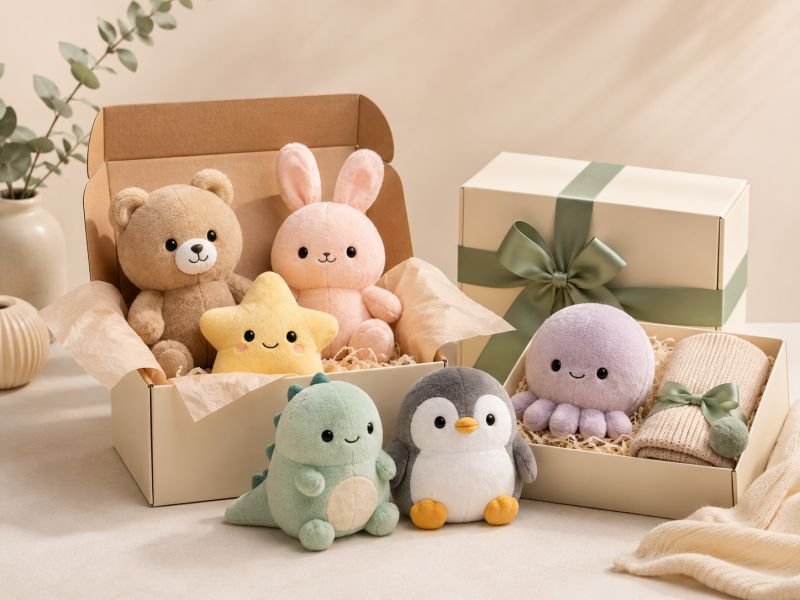
A subscription box is judged in seconds. The lid opens, tissue paper moves, the insert card appears, and one item usually decides whether the whole set feels special. Mini plush toys are often chosen for that role because they are soft, emotional, easy to photograph, and easy to collect. Yet a plush item inside a box is not just “a cute add-on.” Its size, stuffing, face detail, fabric, packing position, weight, label, and future style plan all affect the final feeling.
Custom mini plush toys work best in subscription boxes and bundles when they match the box size, theme, weight target, packing layout, and future release plan. 8–12cm is often suitable for monthly boxes and mystery sets, while 10–15cm works better for gift bundles, character collections, and higher-value themed packs.
Think about a cozy reading box. It may include a bookmark, sticker sheet, tea sachet, enamel pin, and a small owl plush. If the plush is too small, it feels like filler. If it is too large, it crushes the other items and increases shipping volume. If the face is unclear, the theme loses warmth. The right plush does more than sit inside the box. It gives the whole set a face, a memory, and a reason to be kept.
What Makes Mini Plush Work In Boxes?

Mini plush works in boxes because it gives a product set something soft, memorable, and easy to keep. A well-planned plush item can turn a simple collection of small goods into a themed experience. The best result comes from matching the plush size, face, texture, story, packing position, label placement, and box space before the first sample begins.
A box often contains several small pieces: cards, stickers, stationery, snacks, pins, patches, samples, coupons, keychains, or small accessories. These items may be useful, but many of them are flat, hard, or quickly used. A mini plush changes the feeling of the whole set because it adds touch, shape, warmth, and a character people can hold. This is why a small soft toy often becomes the piece that stays on a desk, shelf, bag, bed, or collection display after the rest of the box has been opened.
The plush does not need to be large to create value. A 9–10cm animal with a clean face and good fabric can feel stronger than a larger plush with unclear embroidery and poor packing. For box use, the most important factor is not only size. It is whether the plush supports the theme, fits the inner space, keeps its shape after transport, and feels worthy beside the other items.
A strong plush item in a box usually does one of four jobs:
- It gives the set a main character.
- It adds a soft item among flat or hard goods.
- It creates a repeatable collection across future releases.
- It makes the opening moment easier to remember and photograph.
Box-ready plush planning should begin with the full set layout. A plush that looks beautiful alone may not work well once placed beside a mug, book, candle, snack pouch, pin card, small bottle, or folded textile. The body may get pressed. The ears may bend. The face may be hidden. The hardware may scratch other items. The care label may show in the wrong place. These issues can be solved early when plush size and box layout are reviewed together.
| Box Factor | Why It Matters | Practical Review |
|---|---|---|
| Inner box size | Controls safe plush height, width, and depth | Measure usable inside space, not outside box size |
| Opening view | Decides the first impression | Place the plush where the face can be seen |
| Other items | Prevents pressure, scratching, or staining | Check hard, heavy, sharp, or scented items |
| Plush thickness | Affects box height and compression | Review front-to-back depth after stuffing |
| Fabric pile | Affects shape recovery and visual fullness | Check if the plush still looks good after packing |
| Hardware | May scratch cards, windows, or coated boxes | Separate metal parts or use softer attachments |
| Labels | Can disturb the look if placed poorly | Decide care label and tag position before sampling |
| Insert card | Adds story and collection value | Use it to name the character or theme |
| Outer carton | Affects storage and transport efficiency | Test how many complete boxes fit per carton |
A mini plush works best when it feels intentional. It should not look like a random soft toy added at the end. It should connect with the box through color, shape, expression, texture, and position. When this is done well, the plush becomes the piece that gives the whole set a personality.
What Are Mini Stuffed Animals Called?
Mini stuffed animals may be called mini plush toys, mini plushies, pocket plush, small stuffed animals, plush charms, plush keychains, plush bag charms, blind box plush, collectible plush, mascot plush, or character plush. The right name depends on the product’s use, structure, and packing style.
A soft toy with a metal ring, lobster clasp, or ball chain is usually called a plush keychain. A small plush made for handbags, backpacks, cosmetic bags, or totes is often called a plush bag charm. A small soft figure placed inside a mystery-style package can be called blind box plush. A soft character released across several themes may be called a collectible plush. A small animal designed for comfort or gifting may simply be called a mini stuffed animal.
Clear naming is useful because it affects expectations. A plush keychain should hang well and survive movement. A bag charm should look good when attached to a larger item. A blind box plush should feel collectible and equal in value across different styles. A pocket plush should feel comfortable to hold and carry. A mascot plush should keep the recognizable features of the original character.
| Name | Best Use | Main Feature |
|---|---|---|
| Mini Plush Toy | General box use, themed sets, soft add-ons | Compact, soft, flexible |
| Mini Stuffed Animal | Animal-themed gifts, children’s sets, pet themes | Familiar and easy to understand |
| Pocket Plush | Comfort sets, wellness boxes, small keepsakes | Small enough to carry |
| Plush Keychain | School sets, travel sets, fan boxes, event packs | Ring, clasp, or chain included |
| Plush Bag Charm | Lifestyle sets, fashion bundles, handbag gifts | More visible and decorative |
| Blind Box Plush | Mystery packs and collectible series | Built around surprise and repeat value |
| Collectible Plush | Character lines and themed releases | Encourages collecting several styles |
| Mascot Plush | School, team, event, brand, or campaign themes | Carries a recognizable character |
| Character Plush | Story, game, anime, fan, or IP-inspired sets | Focuses on personality and design details |
The name should match the real product. Calling a plush a keychain when it has weak hanging balance creates disappointment. Calling a tiny charm a collectible plush may feel too strong if the item lacks character detail or package support. Good naming keeps the product promise clear from the sample stage to final packing.
What Type Of Mini Plush Fits A Box?
The best mini plush type for a box is compact, easy to position, clear from the front, and able to recover after transport. Rounded animals, mascot heads, simple full-body characters, plush keychains, sitting plush toys, soft icons, and compact bag charms often work well because they fit smaller spaces without losing shape.
Box use creates different demands from standalone plush sales. The plush may sit beside paper goods, food items, mugs, candles, books, apparel, bottles, or small accessories. It may be seen only from one angle when the lid opens. It may need to stay clean inside a polybag. It may need to avoid pressing against printed cards or delicate packaging. Because of this, the best box plush is not always the most detailed plush. It is the one that holds its shape, shows its face clearly, and fits the full set without causing problems.
Several plush types are especially practical:
| Plush Type | Best Box Use | Suggested Size | Key Check |
|---|---|---|---|
| Plush Head Charm | Tiny gifts, mascot icons, compact sets | 5–8cm | Face clarity and loop strength |
| Round Animal Plush | Kawaii boxes, kids sets, pet themes | 8–12cm | Shape fullness and embroidery alignment |
| Sitting Plush | Cozy boxes, book boxes, desk themes | 10–15cm | Depth and bottom stability |
| Full-Body Mini Plush | Character sets, fan packs, gift bundles | 8–12cm | Body proportion and seam control |
| Plush Keychain | School, travel, event, fan boxes | 8–12cm | Hanging angle and hardware safety |
| Bag Charm Plush | Lifestyle and fashion bundles | 10–15cm | Clasp size and visible presence |
| Blind Box Plush | Mystery sets and collectible programs | 8–12cm | Series consistency and box fit |
Designs with long ears, wide wings, tall hats, thin horns, large tails, stiff accessories, or heavy metal hardware need extra review. These features may look attractive in a drawing but can cause packing issues. Long ears may bend. Wings may increase box width. A thick tail may require more depth. A heavy clasp may scratch cards or press against a window box.
A box-friendly plush should pass four simple checks:
- The face is visible when the box opens.
- The plush fits without being squeezed.
- The body recovers after light pressure.
- No part damages nearby items.
A compact plush can still feel rich. Soft fabric, clean embroidery, a good silhouette, a small hangtag, or a story card can add value without increasing the size too much. For many sets, a clear 10cm plush will perform better than a crowded 14cm plush that fights for space.
Why Does Plush Become The Hero Item?
Mini plush often becomes the hero item because it gives the box a face. It creates emotional value faster than flat goods because it can be held, squeezed, named, displayed, clipped to a bag, or collected. When people remember a box, they often remember the piece that felt most personal, not the piece with the most complex print or highest count.
The hero item is not always the largest item. It is the item that makes the set feel complete. A 10cm plush with a warm expression and a matching insert card can create more memory than several small accessories placed together. A tiny fox in a forest-themed set, a moon bear in a sleep box, a puppy charm in a pet bundle, or a ghost cat in a Halloween pack can all become the center of the experience.
A plush becomes stronger when it connects with the story of the set:
- A book box plush can represent a creature from the story theme.
- A wellness box plush can act as a small comfort companion.
- A pet-themed box can include a cute animal character.
- A school set can use a backpack charm.
- A holiday bundle can include a seasonal mascot.
- A museum set can use a dinosaur, art mascot, or historical character.
- A fan box can use a character sidekick or themed charm.
A strong hero plush usually has several traits:
| Trait | Why It Works |
|---|---|
| Clear expression | Creates emotional connection at first glance |
| Good hand feel | Makes the item pleasant to hold |
| Simple but distinct shape | Helps the character stay memorable |
| Theme color match | Makes the set feel coordinated |
| Correct size | Feels valuable without taking over the box |
| Protected packing | Keeps face and body shape clean |
| Character name or card | Adds story and collection value |
| Future variation potential | Supports repeat releases |
The plush should feel like the reason someone opens the next box. This does not require excessive detail. Often, one memorable face, one signature shape, one soft material choice, and one small story detail are enough.
A hero plush also creates photo value. When the set is shared online or shown in an unboxing video, the plush becomes the visual anchor. Flat goods may be arranged around it, but the plush gives the photo warmth and dimension. This matters for subscription boxes, gift sets, limited drops, and collectible bundles where visual sharing helps the product travel beyond the first recipient.
Which Bundle Themes Need Plush?
Plush works best in themes built around comfort, character, play, collection, gifting, fandom, pets, children, holidays, story, or emotional memory. The more the theme benefits from warmth and personality, the more naturally a mini plush fits.
Some product themes almost ask for a soft toy. A baby gift set feels warmer with a gentle animal. A pet-themed box feels more charming with a dog, cat, paw, or bone plush. A fantasy book box becomes more memorable with a dragon, owl, fox, or forest creature. A wellness set gains comfort from a sleep mascot or pocket plush. A school bundle feels more useful when the plush can attach to a backpack.
| Theme Type | Plush Direction | Why It Fits |
|---|---|---|
| Kawaii Box | Pastel animal, snack mascot, soft creature | Adds cuteness and collection value |
| Book Box | Owl, dragon, fox, forest animal, story creature | Gives the theme a character |
| Pet Box | Dog, cat, paw, bone, pet mascot | Connects with pet lovers |
| Baby Gift Set | Soft animal, comfort plush, sensory plush | Adds warmth and tenderness |
| Holiday Bundle | Bunny, pumpkin, snowman, reindeer, heart | Builds seasonal emotion |
| Anime Or Fan Set | Character charm, mascot, sidekick plush | Supports fan identity |
| Wellness Box | Sleep animal, calm mascot, pocket plush | Creates comfort and softness |
| School Bundle | Backpack charm, pencil mascot, mini animal | Adds daily-use value |
| Museum Gift Set | Dinosaur, art mascot, historical character | Makes learning playful |
| Travel Bundle | Local animal, luggage charm, city mascot | Creates souvenir feeling |
| Food-Themed Box | Dessert animal, fruit mascot, snack character | Makes the set more playful |
| Sports Or Team Set | Team mascot, mini animal, uniform plush | Supports group identity |
The theme should guide fabric, color, size, and pose. A winter set may need soft fleece-like texture and warm colors. A spring set may use lighter pastels and small flower details. A school set may work better as a plush keychain. A baby-related set may need careful review of materials, seams, small parts, labels, and age-related requirements. A fan set may need stronger character detail and closer attention to expression.
A theme can also guide future releases. For example:
- Forest Friends: fox, bear, owl, squirrel, mushroom
- Dream Pets: moon rabbit, star cat, cloud bear, sleepy puppy
- Bakery Animals: croissant dog, cake bunny, donut cat, pudding bear
- Holiday Minis: pumpkin ghost, snow deer, heart lamb, flower duck
- Travel Charms: city bear, beach seal, mountain fox, airport penguin
A clear theme makes the plush easier to expand. It also helps each release feel connected instead of random.
What Box Details Should Be Checked First?
Box details should be checked before plush size and structure are finalized. The most important items are usable inner space, other products inside the set, plush placement, opening view, packing method, label position, barcode needs, total set weight, outer carton quantity, and launch timing.
The outside box size can be misleading. The usable space inside may be reduced by tissue paper, sleeves, cards, trays, dividers, inner cartons, or other items. A 12cm plush may fit the empty box perfectly but fail once a mug, notebook, candle, pouch, or snack pack is added. A plush with long ears may need more height. A sitting plush may need more depth. A plush with wings or wide arms may need more width.
The first check should use the real box or a sample mockup. If that is not ready, a size drawing can still help. Mark the inner length, width, and height. Then place the estimated plush size and other items inside the layout. This step often reveals problems before sampling starts.
| Detail To Check | What Can Go Wrong | Better Planning Choice |
|---|---|---|
| Inner box height | Ears, head, or hat may bend | Check the tallest finished style |
| Inner box depth | Sitting plush may be squeezed | Measure front-to-back body thickness |
| Other hard items | Plush may be crushed or marked | Add divider, wrap, or safer placement |
| Food or scented items | Fabric may absorb odor | Use separate bag or barrier |
| Metal hardware | Ring may scratch cards or coated surfaces | Use protective bag or softer loop |
| Opening view | Plush may be hidden under flat items | Place face upward or near top layer |
| Care label | Label may cover the face or main detail | Set label position before sampling |
| Barcode and SKU | Packing may become confusing | Plan label rules by style |
| Box weight | Shipping cost may increase | Weigh the full set, not only the plush |
| Carton quantity | Storage and transport may change | Test how many full sets fit per carton |
Box-ready plush should also be checked after light compression. Many plush items recover well, but some fabrics, ears, hats, tails, or filled shapes may need more time. If the plush is packed too tightly, the face may press against the package. If the plush is loose in a large box, it may move around and arrive in a messy position.
A good box plan should make the opening moment feel clean. The plush should appear in the right place, with the face visible and the body protected. The label should stay away from the main visual area. The other items should feel arranged around the plush instead of piled on top of it.
The best plush size is the size that works inside the real set. A beautiful sample that cannot fit the box creates extra work later. A plush designed around the full package from the beginning can protect the theme, reduce revision pressure, and make the final bundle feel more polished.
Which Size Fits Each Bundle Use?

Different bundle formats need different plush sizes. 5–8cm works well for light add-on gifts, 8–12cm is often the safest size for monthly boxes and mystery sets, while 10–15cm gives stronger hand feel for gift bundles, retail sets, and character-based collections where the plush should feel like the main soft item.
Size changes how the whole set feels. A 6cm plush feels playful and easy to include, but it may not carry enough value if the box is positioned as a special gift. A 10cm plush feels collectible and easy to fit with other small items. A 14cm plush feels more generous, but it can change the box layout, carton count, and shipping volume. The right size is not only about the plush itself. It must fit the full set: box size, other items, opening view, packing method, weight target, and release plan.
The plush should also match the role it plays inside the box. Is it a small surprise? A soft bonus? The main emotional item? A daily-use charm? A collectible piece in a series? Each role creates a different size direction. A monthly stationery set may need a compact 8cm charm so there is still space for notebooks, stickers, and cards. A holiday gift bundle may need a 12–15cm plush so the recipient feels the warmth of a real gift. A mystery set may need 8–12cm so every style feels collectible without forcing oversized packaging.
A practical size plan should check three layers together:
- The plush alone: face clarity, fabric, body fullness, and hand feel
- The plush inside the box: fit, opening view, pressure, and label position
- The full shipment: packed weight, carton quantity, storage, and delivery schedule
| Bundle Use | Suggested Size | Best Role | Main Watch Area |
|---|---|---|---|
| Tiny add-on gift | 5–8cm | Small soft extra | May feel too small if details are weak |
| Monthly box | 8–12cm | Recurring collectible | Needs stable size across releases |
| Mystery plush set | 8–12cm | Surprise character | Each style should feel equal in value |
| Plush keychain bundle | 8–12cm | Daily-use charm | Hardware should not scratch other items |
| Gift bundle | 10–15cm | Warm core item | More box space and protection needed |
| Character set | 10–15cm | Recognizable figure | Face and outfit need real-size review |
| Premium seasonal box | 12–15cm | Photo-ready gift item | Carton volume may increase |
| Desk or shelf set | 12–15cm | Display plush | Body should sit or stand well |
Even a 1–2cm size change can affect how a full set is arranged. A 10cm plush may fit neatly beside a sticker sheet and snack pack. A 12cm version of the same plush may press against the insert card. A 15cm version may require a new box height. The safest approach is to test the plush size inside a sample box or carton mockup before the final sample is approved.
Which Size Works For Monthly Boxes?
Monthly boxes usually work best with 8–12cm mini plush toys. This size feels collectible without taking over the box. It gives enough room for a clear face, simple body shape, small tag, and theme color, while leaving space for cards, stationery, stickers, snacks, pins, samples, small accessories, or printed inserts.
An 8cm plush works well when the box contains many items and the plush acts as a soft bonus. It can sit near the top layer, attach to a card, or fit into a small polybag without pushing the rest of the set. This size is useful for kawaii boxes, school packs, small fan drops, and light monthly surprises.
A 10cm plush is often the strongest middle size for recurring box programs. It is big enough to feel like a real item and small enough to keep the package controlled. It can support a simple body, clear facial embroidery, short ears, a tail, or a soft loop. For many monthly releases, 10cm gives the best balance between cuteness, fit, and shipping practicality.
A 12cm plush works better when the plush is the main item of the month. It feels fuller in the hand and gives more room for character details. The trade-off is space. If the set also includes a mug, book, candle, pouch, or folded fabric item, the box layout should be tested early.
| Monthly Plush Role | Suggested Size | Design Direction | Packing Note |
|---|---|---|---|
| Soft bonus item | 6–8cm | Plush head, simple animal, tiny charm | Good for crowded boxes |
| Main collectible | 8–10cm | Compact body, clear face, theme colors | Good for monthly rotation |
| Main soft item | 10–12cm | Fuller body, hangtag, story card | Needs top-layer placement |
| Higher-value release | 12–15cm | Richer fabric, stronger detail | Test box height and carton count |
Monthly sets need rhythm. If every release includes a new plush, each style should follow similar size and volume rules. A ghost, cat, mushroom, bunny, and bear may all have different shapes, but they should feel balanced when collected together. Similar body fullness, stitching level, tag size, and fabric quality keep the series feeling steady.
A recurring plush line also needs early planning for future characters. If the first release uses a 10cm round animal and the second release uses a 14cm character with tall ears, the same box may no longer work. It is better to set a maximum size zone first, then design each character inside it.
Which Size Works For Gift Bundles?
Gift bundles often need a fuller plush because the item should feel meaningful when held. 10–15cm usually works better than very tiny sizes for birthday boxes, holiday sets, care packages, welcome kits, baby gifts, fan gifts, school gifts, and seasonal bundles. At this size, the plush can show softer body volume, clearer face details, stronger expression, and better gift presence.
A gift bundle is judged by how warm and complete it feels. A 6cm charm can be cute, but it may feel too small if the box is positioned as a main gift. A 12cm plush with clean embroidery, soft fabric, and a matching insert card can feel much more thoughtful. A 15cm plush can become the core gift, especially when paired with a greeting card, blanket, book, notebook, candy, candle, or themed accessory.
The plush should also be protected from pressure. If the set includes hard items such as a mug, bottle, candle, toy figure, or metal tin, the plush may need tissue wrapping, a polybag, a divider, or a safer top-layer position. If the plush is hidden under heavy items, the opening moment loses warmth. The first view should feel soft and inviting.
| Gift Bundle Type | Better Plush Size | Why It Works | Packing Focus |
|---|---|---|---|
| Birthday gift box | 10–15cm | Stronger hand feel and photo appeal | Keep plush visible at opening |
| Holiday set | 10–15cm | Seasonal characters feel warmer | Protect ears, hat, bow, or tail |
| Care package | 10–12cm | Comfort plush should feel soft and easy to hold | Avoid pressure from hard items |
| Baby gift set | 10–15cm | Soft animal adds tenderness | Review seams, labels, and small parts |
| Fan gift box | 12–15cm | More room for character identity | Face and outfit must stay clear |
| Welcome kit | 8–12cm | Mascot plush or charm works well | Match tag and box message |
| Corporate-style gift set | 8–12cm | Mascot or symbol plush adds warmth | Keep logo placement clean |
For gift bundles, the plush and package should feel like one unit. Matching box colors, tissue paper, hangtags, character cards, ribbons, or printed sleeves can make a simple plush feel much more polished. The plush does not need excessive detail. A clear expression, soft material, and thoughtful presentation often create better gift value than a complicated structure.
The size should also match the emotional level of the gift. A small thank-you kit may only need an 8cm charm. A holiday gift set may deserve a 12cm plush. A premium character gift may need 15cm so the design can show stronger personality.
Which Size Works For Blind Box Sets?
Blind box sets usually fit best with 8–12cm plush toys. This size keeps the package compact while giving enough space for a clear face and collectible body shape. A 6–8cm plush can work for simple mini series, but it may feel light if the product is positioned as the main collectible. A 12cm plush feels richer, but it needs more box space.
Blind box plush should be planned across the whole series, not one style at a time. If one character has tall ears, another has wings, another is round, and another has a hat, the box must work for the largest or thickest style. Each item should feel fair when opened. A simple character should not feel smaller or less valuable than a more detailed style.
The package also shapes the reveal. If the plush is too tightly packed, the face may press against the inner wall. If the box is too large, the plush may move around and feel poorly fitted. If the package uses an insert card, it can add story and collection value without making the plush itself too complex.
| Blind Box Plush Size | Best Use | Package Impact | Design Note |
|---|---|---|---|
| 6–8cm | Very small surprise sets | Very compact | Keep shapes simple and bold |
| 8–10cm | Standard mini mystery plush | Easy to pack and collect | Good for animal heads and compact bodies |
| 10–12cm | Richer collectible plush | Larger but still manageable | Better for character bodies and accessories |
| 12–15cm | Higher-value mystery plush | Bigger box and carton volume | Best for special releases |
Useful checks before finalizing blind box plush size include:
- Tallest style in the full set
- Widest style in the full set
- Thickest style after stuffing
- Ear, hat, wing, bow, or tail placement
- Whether the face is pressed inside the box
- Whether an insert card or checklist is included
- Whether styles need barcode or SKU control
- Whether a hidden style needs separate packing control
- Whether future series can reuse the same box size
Blind box plush should feel satisfying right after opening. The body should recover well, the face should be clear, and the size should feel worth the box. The best blind box plush is compact enough to collect and strong enough to stand alone as a desirable item.
Mini Plush vs Plush Keychain: Which Fits Better?
Mini plush and plush keychains both work well in bundles, but they create different experiences. A mini plush without hardware feels more like a soft collectible, desk item, comfort piece, or gift. A plush keychain adds daily-use value because it can attach to bags, keys, pencil cases, backpacks, lanyards, or travel items.
A standard mini plush works better for gift boxes, mystery plush sets, desk collections, baby sets, cozy themes, story-based bundles, and soft display sets. It feels more toy-like and gentle. It can sit inside the box without metal parts touching other contents. It is also easier to arrange with tissue paper, printed cards, inner trays, or gift sleeves.
A plush keychain works better for school sets, fan boxes, travel kits, event packs, backpack bundles, and lifestyle sets. It gives the item a second life after unboxing. People can clip it to a bag, hang it on a zipper, or use it as a daily accessory. The challenge is hardware. Metal rings and clasps need controlled placement so they do not scratch cards, plastic windows, coated boxes, or delicate products.
| Option | Better For | Strength | Watch Area |
|---|---|---|---|
| Mini plush | Gift sets, desk themes, comfort boxes, mystery plush | Soft, displayable, easy to style in box | Shape recovery and box fit |
| Plush keychain | School, fan, travel, event, backpack sets | Daily-use value | Hardware weight and scratch risk |
| Bag charm plush | Lifestyle, fashion, premium add-ons | Strong visual presence | Clasp scale and hanging balance |
| Plush head charm | Compact boxes and simple themes | Light, cute, easy to include | May feel too small if face is weak |
| Sitting plush | Cozy boxes, gift packs, shelf display | Better hand feel | Needs more depth |
The best choice depends on what happens after the box is opened. If the plush should be displayed, a standard mini plush is stronger. If it should travel with the person, a keychain or bag charm is more useful. If the box includes delicate printed items, a standard plush may be safer. If the box is built around school, travel, fandom, or daily accessories, hardware can add real value.
For keychain bundles, 8–12cm is usually practical. For standard mini plush in gift or collectible boxes, 10–15cm can feel richer. For tiny add-ons, 5–8cm can work if the face and shape stay clear.
How Does Size Affect Shipping Weight?
Size affects shipping through actual weight and volume. A larger plush uses more fabric and filling, but the bigger impact often comes from package size. Ears, tails, thick bodies, sitting poses, gift boxes, and protective wrapping can increase box height or depth. In recurring box programs, this can affect storage, carton count, and delivery cost over many shipments.
A 10cm plush may seem light alone, but the full set includes the plush, tag, polybag, insert card, tissue paper, other items, inner box, outer carton, and any warehouse labels. A 12cm round plush may require a taller box than a 14cm flat plush. A 15cm plush may reduce the number of complete boxes per outer carton. Long ears may increase package height even when the body is compact.
A size and weight check should include:
- Plush weight after stuffing
- Plush packed weight with bag, tag, card, or small box
- Full bundle weight with every item included
- Box inner size and final closed size
- Outer carton size and complete box count
- Whether the plush can be lightly compressed
- Whether the face, ears, body, and tail recover after transport
- Whether the set will ship by express, air, sea, or warehouse transfer
- Whether the product is going directly to recipients or to a fulfillment center
| Plush Size | Shipping Impact | Best Use | Practical Note |
|---|---|---|---|
| 5–8cm | Lower weight and compact packing | High-volume small sets | Good for add-ons and simple charms |
| 8–12cm | Balanced value and carton use | Monthly boxes and mystery sets | Often the most flexible option |
| 12–15cm | Stronger gift feel, larger volume | Gift bundles and premium themes | Test carton count early |
| 15cm+ | Strong visual impact, higher volume | Special release or hero gift | May require new box planning |
Shipping is not only about cost. It also affects how the plush arrives. A plush that is too tightly compressed may need time to recover. A plush with long ears or a delicate bow may arrive bent. A plush packed loosely may shift and look messy when opened. The best size supports both the experience and the logistics.
For many bundle programs, a slightly smaller plush with better shape recovery can perform better than a larger plush that arrives flattened or forces a new carton setup. The goal is a full set that packs cleanly, ships efficiently, opens beautifully, and keeps the plush in good condition.
How To Plan Multi-SKU Plush Sets?

Multi-SKU plush sets need clear rules before artwork moves into sample work. Each style can have a different character, color, pose, outfit, or accessory, but the whole collection should still feel connected. Size, body fullness, fabric level, face style, packing format, label placement, and release rhythm should be planned together so every plush feels equal in value.
A single mini plush can be judged by one design. A multi-SKU plush set is judged by comparison. People will place the rabbit next to the bear, the bear next to the cat, and the cat next to the hidden style. If one piece feels richer while another feels thin or plain, the set loses balance. This is especially important for subscription boxes, mystery sets, fan bundles, seasonal drops, and gift collections where several styles appear together or over several releases.
Good planning starts by setting “collection rules.” These are not meant to make every plush look the same. They make sure every style belongs to the same world. A dragon may have wings, a fox may have a tail, and a bunny may have tall ears, but they can still share similar body volume, embroidery style, fabric quality, hangtag format, and packing size. That is what makes the set feel organized instead of random.
A multi-SKU set should be reviewed through three layers:
- Character layer: face, body shape, expression, color, accessory
- Box layer: size fit, opening view, label position, packing method
- Repeat layer: future releases, reorder records, material consistency, SKU control
The most common problem is planning every style separately. One design gets more details. Another uses different fabric. A third becomes too tall for the same box. A fourth needs a new label position. These small differences can grow into bigger issues during packing, checking, and repeat releases. A better approach is to set the system first, then design each character inside it.
| Planning Item | What To Decide Early | Why It Matters |
|---|---|---|
| Finished size | Height, width, depth limit for each style | Keeps every plush fitting the same box format |
| Body volume | Round, flat, sitting, standing, or charm form | Keeps value feeling equal across styles |
| Face style | Eye size, mouth style, embroidery density | Makes the collection visually connected |
| Fabric rule | Main fabric type, pile length, color direction | Supports similar hand feel and appearance |
| Accessory limit | Hats, bows, scarves, wings, tails, hardware | Controls cost, size, and packing risk |
| Label position | Care label, warning label, SKU label, hangtag | Avoids messy appearance and sorting errors |
| Packing rule | Polybag, blind box, gift box, display tray | Keeps layout stable across releases |
| SKU naming | Style code, color code, series code | Reduces mix-ups during sorting and packing |
| Sample record | Approved sample photos and notes | Helps future repeat releases stay close |
A strong multi-SKU plush set does not feel repetitive. It feels intentional. Each new character should bring a small surprise, while the collection still keeps a steady size, softness, shape quality, and display value.
How Do Monthly Themes Stay Fresh?
Monthly themes stay fresh when each release brings a visible change without breaking the collection system. A strong mini plush series can rotate through seasons, character roles, colors, outfits, animals, moods, or story settings. The goal is to create newness that people notice immediately, while keeping size, quality, and packing stable enough for repeat production.
Freshness does not always require a completely new structure. In many cases, the smartest change is one that creates strong visual difference with controlled production risk. A new embroidery expression, scarf color, ear shape, small hat, printed card, or seasonal hangtag can make the plush feel new without rebuilding the entire pattern every month.
Several theme systems work well for mini plush collections:
| Theme System | Example Plush Releases | Why It Works |
|---|---|---|
| Seasonal animals | Spring bunny, summer seal, autumn fox, winter bear | Easy to understand and repeat yearly |
| Story world | Forest friends, bakery pets, space animals, dream creatures | Builds a collectible universe |
| Color mood | Pastel month, ocean month, candy month, sunset month | Strong visual change with stable shapes |
| Role-based mascot | Sleepy, chef, artist, explorer, gardener | Keeps the same character fresh |
| Holiday drops | Pumpkin cat, snow deer, heart puppy, flower lamb | Good for limited gift boxes |
| Location theme | Beach seal, mountain fox, city bear, travel penguin | Works for travel, museum, and souvenir sets |
A stable base body can carry many fresh ideas. For example, a 10cm round animal base can become a fox, bear, cat, puppy, or bunny through ear shape, tail, embroidery, and color change. A 12cm character base can rotate outfits or accessories. A plush keychain base can change the charm shape and hangtag theme.
Monthly plush planning should avoid overloading every release. If January has a scarf, February has a hat, March has wings, and April has a jacket, the size and labor level may shift too much. A better method is to set a detail level for the whole series. For example, each style may have one signature accessory, one main fabric color, one accent color, and one story card. This keeps every release fresh but fair.
When Should You Use Limited Editions?
Limited editions work best when the plush has a real reason to feel special. A limited plush should not only use a different color and call itself rare. It should connect with a season, anniversary, event, membership program, character milestone, gift launch, or special box theme. When the reason is clear, the item feels more meaningful and easier to collect.
Limited editions can be created in several practical ways:
| Limited Feature | Effect | Production Review Needed |
|---|---|---|
| Special fabric color | Strong visual difference | Material availability and color match |
| Embroidered date or icon | Adds release memory | Clear stitch size and placement |
| Seasonal outfit | Makes the release feel festive | Extra sewing steps and size effect |
| Metallic or special thread | Adds shine and premium detail | Thread stability and clarity |
| Unique hangtag | Adds story with low structure change | Tag artwork and packing accuracy |
| Numbered card | Supports collection value | Accurate pairing during packing |
| Special box sleeve | Makes the whole set feel limited | Print time and box size |
| Hidden colorway | Adds surprise | Clear SKU control and packing separation |
Limited editions should be planned with timing in mind. Seasonal releases often have fixed launch dates. If the plush uses special fabric, custom accessories, special packaging, or several style variations, sample approval should begin early. A limited plush that misses the seasonal moment loses much of its value.
The cleanest limited plush often keeps the core pattern stable and changes visible surface elements. For example, a regular 10cm bear can become a Valentine bear with heart embroidery and a pink scarf. A winter version can use a snowflake hangtag and soft blue accent. A Halloween version can use a pumpkin charm and orange stitching. These changes feel special without rebuilding the whole plush.
Limited editions are also useful for testing future demand. A small seasonal run can reveal which character, color, or theme gets the strongest response before a wider collection is planned. The important part is to keep records: fabric code, thread color, pattern revision, accessory note, packing file, and SKU name.
Who Needs Multi-SKU Plush Collections?
Multi-SKU plush collections are useful for subscription boxes, mystery sets, fan programs, retail gift sets, museum shops, school programs, pet themes, seasonal campaigns, and private label plush lines. They work especially well when the product plan depends on repeat releases, collecting behavior, or a themed world with several characters.
Different programs use multi-SKU plush in different ways:
| Program Type | How Multi-SKU Plush Helps |
|---|---|
| Monthly subscription box | A new plush can refresh each release |
| Mystery plush set | Several designs create surprise and collection value |
| Fan box | Multiple characters support stronger emotional attachment |
| Gift bundle | Matching plush styles make the set feel richer |
| Museum or zoo shop | Animal or exhibit themes become collectible souvenirs |
| School program | Mascot variations can match events, grades, or teams |
| Pet-themed bundle | Dog, cat, paw, bone, breed-inspired styles work together |
| Holiday line | Seasonal characters encourage repeat gifting |
| Character IP set | Main character, sidekick, and hidden style can form a series |
| Lifestyle bundle | Bag charms, pocket plush, and keychains can rotate by theme |
A multi-SKU collection is not always the right first step. If the concept is new, starting with one strong style may be safer. Once the size, fabric, face style, packing, and audience response are confirmed, additional SKUs can be added with better control. Launching too many styles too early can stretch design review, sample work, packing, and inventory planning.
A collection becomes stronger when every SKU has a clear role. A six-style set may include four regular characters, one seasonal version, and one hidden style. A monthly set may rotate animals but keep the same body size. A gift set may include two matching plush toys in different colors. A fan set may include hero character, sidekick, mascot, and accessory charm.
Before starting a multi-SKU plush collection, define:
- How many styles will launch first
- Whether all styles share one body base
- Whether there will be hidden or limited styles
- Whether each style needs its own box or shared box
- How the SKU names will be shown on labels and cartons
- Whether future styles will reuse the same package size
- Which design elements must stay consistent across the line
Good multi-SKU planning makes the collection easier to grow. Without these rules, each new plush may solve one design problem but create another packing or consistency problem.
What Is The History Of Surprise Plush?
Surprise plush grew from familiar collectible formats: capsule toys, mystery figures, trading cards, blind boxes, seasonal gift packs, and fan merchandise drops. The attraction is simple. People enjoy opening something when every possible style feels cute, complete, and worth keeping. Mini plush fits this format naturally because it is soft, small, emotional, and easy to collect.
Hard figures often win on sharp detail. Plush wins on touch. A small soft character can feel warmer and more personal than a plastic figure. It can be clipped to a bag, placed on a desk, kept beside a bed, or displayed with other characters. This makes mini plush especially suitable for mystery boxes, subscription sets, themed bundles, and limited releases.
The success of surprise plush depends on fairness. If only one design looks strong and the others feel plain, the opening moment can disappoint. Every style should feel like a good result. That does not mean every style needs the same number of accessories. One character may have wings, another may use richer fabric, and another may have stronger embroidery. The value should feel balanced.
A strong surprise plush set usually has:
- A shared size zone
- Similar body fullness
- Consistent fabric level
- Clear face embroidery
- Distinct character differences
- Similar packing protection
- Clean SKU control
- A checklist or insert card if collecting is part of the experience
Surprise plush is not only about randomness. It is about repeat trust. People return to a collection when each reveal feels pleasant, not only when there is a rare hidden style. The regular styles must be strong enough to carry the whole set.
How To Keep Size And Quality Consistent?
Consistency starts with records and approved samples. Each plush style should have clear size specs, sample photos, fabric notes, embroidery files, color references, filling notes, accessory details, label placement, packing files, and carton rules. These records help future releases and repeat runs stay close to the approved version.
For a multi-SKU plush set, consistency does not mean every character must look identical. It means every style should feel equally cared for. A rabbit can have taller ears, a bear can have a rounder body, and a fox can have a longer tail, but they should share a similar level of softness, face clarity, stitch quality, label control, and packing finish.
Useful consistency controls include:
| Control Item | What To Record |
|---|---|
| Finished size | Height, width, depth, weight |
| Pattern | Version number and revision notes |
| Fabric | Material type, pile direction, color reference |
| Embroidery | Thread colors, file version, placement |
| Filling | Softness level, fullness, recovery |
| Accessories | Size, color, placement, attachment method |
| Label | Care label, warning label, SKU label position |
| Packing | Polybag, hangtag, box, insert, carton format |
| Approved sample | Photos and physical reference when available |
| Inspection focus | Face, seam, shape, hardware, label, cleanliness |
Size tolerance should be realistic for soft goods. Plush fabric stretches, filling changes volume, and hand-shaped details may have small variation. The goal is controlled consistency, not rigid machine-like sameness. The approved sample should be used as the visual and tactile reference.
For recurring box programs, consistency becomes more important over time. The first plush sets the expectation. If later styles feel flatter, smaller, rougher, or differently packed, the collection loses its polished feeling. Keeping project files organized helps prevent drift across months, seasons, or reorder cycles.
Practical checks before bulk packing include:
- Compare each style against its approved sample
- Check face position and expression
- Measure finished height, width, and depth
- Review fabric color and pile direction
- Check filling level and recovery
- Confirm accessory strength and position
- Confirm care label and SKU label placement
- Match each style with the correct box, card, or insert
- Verify carton mark and quantity per carton
A multi-SKU plush set should feel exciting, but not unpredictable in quality. The best collections combine surprise in design with steadiness in size, fabric, stitching, packing, and final presentation.
How Do Price, MOQ, And Samples Work?
Price, MOQ, and samples for custom mini plush toys depend on the full product plan, not only the finished height. Size, fabric, filling, embroidery, parts count, hardware, labels, packaging, testing needs, quantity, and delivery timing all affect the final review. Mini plush can look simple, but a box-ready plush still needs pattern work, material preparation, stitching, filling, shape control, checking, and packing.
A small plush is not automatically a low-cost plush. A 7cm full-body character with tiny clothing, five fabric colors, face embroidery, a metal clasp, and a blind box may require more careful work than a 12cm round animal with one fabric, simple eyes, and a polybag. The amount of fabric may be lower, but the process is still complete. Tiny parts can take more attention because cutting, sewing, turning, and filling are harder at small size.
For subscription boxes and bundles, cost should be reviewed together with the whole set. The plush may need its own polybag, hangtag, insert card, SKU label, barcode, blind box, gift box, or display tray. These details can change both unit cost and carton volume. A clean plush body with smart package support may perform better than an over-detailed toy squeezed into a box that was not planned for it.
Standard MOQ starts from 500pcs per design. This quantity is more suitable for most custom plush work because each design needs its own pattern, materials, embroidery or printing setup, cutting, sewing, filling, inspection, packing, and shipment preparation. Custom plush samples usually require a sample fee because the first sample includes real development work, not only a simple mockup. When a single-style bulk order reaches 2,000pcs, the sample fee can be refunded or deducted.
| Cost Area | What Usually Changes The Price | Practical Note |
|---|---|---|
| Finished size | Fabric use, filling amount, package size | Height, width, and depth should be reviewed together |
| Body shape | Round, sitting, standing, flat, long-limbed | More parts usually mean more work |
| Fabric | Plush, minky, velboa, faux fur, special texture | Pile height affects look and cutting |
| Face craft | Embroidery, print, applique, patch | Small faces need clean, bold details |
| Color count | More fabric colors create more cutting and matching | Keep tiny panels under control |
| Accessories | Keyring, clasp, hook, ribbon, magnet, zipper | Adds weight, cost, and checking needs |
| Packing | Polybag, hangtag, blind box, gift box | Changes material cost and carton volume |
| Labels | Care label, warning label, SKU, barcode | Important for sets and warehouse handling |
| Testing | Depends on region, age grade, material, parts | Should be confirmed by project details |
| Quantity | Affects cost sharing across development steps | MOQ is usually counted per design |
| Timing | Rush plans may limit material and process choices | Schedule should be reviewed early |
The best way to manage price is to decide what the plush must achieve. If the plush is a small soft bonus, the design can stay simple. If it is the core item in a gift box, more space can be given to fabric touch, facial expression, and package presentation. If it is part of a recurring series, the first design should create a stable base for future styles.
How Much Do Custom Plushies Cost?
Custom plushies cost different amounts because each project has a different size, structure, fabric, craft, quantity, packing style, and timeline. A small plush with simple structure may be economical. A mini plush with many tiny parts, custom hardware, detailed embroidery, special labels, and printed box packaging will cost more because there are more steps to control.
For box programs, the real cost is rarely only the plush body. The full product may include:
- Pattern development
- Fabric sourcing and color review
- Embroidery or printing setup
- Cutting, sewing, stuffing, and shaping
- Keyring, clasp, hook, ribbon, magnet, or other accessory
- Care label, warning label, barcode, or SKU label
- Polybag, hangtag, blind box, gift box, or insert card
- Packing review and carton preparation
- Sample development and revision
- Third-party testing support when required
A 10cm plush keychain with simple eyes and a polybag will not be priced like a 10cm mystery-box plush with six styles, custom printed boxes, insert cards, barcode labels, and different accessories. The size may look the same, but the work behind it is different.
A practical price review should separate the plush into four layers:
| Layer | What It Includes | Why It Matters |
|---|---|---|
| Plush body | Size, shape, fabric, filling | Controls the base cost |
| Visual craft | Embroidery, print, applique, patches | Controls identity and detail |
| Add-ons | Hardware, clothing, accessories, labels | Adds function and complexity |
| Box system | Inner packing, gift box, barcode, carton | Affects final presentation and freight space |
When a target budget is fixed, the best adjustments usually come from structure, fabric, embroidery area, hardware, and packaging. Reducing size alone may not solve the issue if the design remains too complex.
Why Is Mini Plush Not Always Cheaper?
Mini plush is not always cheaper because small size can increase handling difficulty. Tiny ears, narrow tails, thin limbs, small shoes, little hats, detailed embroidery, and small fabric panels require careful cutting and sewing. The plush may use less fabric, but the number of production steps often stays the same.
A very small plush can also create more sample revisions. If the eyes look too crowded, the face may need redesign. If the arms are too thin, the pattern may need adjustment. If the clothing looks bulky, it may need to become a simpler color block. If the logo is unreadable, it may need to move to a hangtag, woven label, or package card.
For example, compare two products:
| Product Plan | Why Cost May Differ |
|---|---|
| 8cm full-body character with outfit, tail, metal clasp, and custom box | Small size, but many parts and more checking |
| 12cm round animal with one fabric color, simple face, and polybag | Larger size, but fewer parts and smoother process |
The 8cm style saves material, but the smaller parts may require more work. The 12cm style uses more fabric and filling, but the structure may be simpler and the final look may be cleaner. This is why cost should be reviewed by product complexity, not just centimeters.
Smart cost control does not mean removing all details. It means keeping the details that matter most. For mini plush, the face, silhouette, fabric feel, and box presentation usually carry more value than tiny decorations.
Practical ways to control cost include:
| Adjustment | Cost Benefit | Visual Impact |
|---|---|---|
| Use one stable body base | Reduces pattern complexity | Keeps series consistent |
| Keep embroidery bold | Reduces tiny stitch issues | Improves face clarity |
| Limit fabric color blocks | Reduces cutting and matching work | Cleaner shape |
| Use fixed clothing effects | Avoids tiny removable parts | Still shows outfit style |
| Choose one key accessory | Controls labor and weight | Keeps character distinct |
| Use a story card | Adds value without changing plush structure | Helps theme expression |
| Keep packaging compact | Reduces box and carton volume | Better for recurring sets |
A mini plush should look intentionally designed for its size. When a detailed large plush is simply shrunk down, the result often becomes crowded and harder to produce well.
How Does Packing Change Price?
Packing can change price because it adds material, printing, labor, space, labels, and carton volume. A plush in a simple polybag is very different from a plush in a printed blind box with an insert card, barcode label, and display tray. For subscription boxes and bundles, packing is part of the product experience.
A plush packed inside a bundle may need several layers of preparation. It may have its own polybag for cleanliness, a hangtag for identity, a card for story, a barcode for scanning, and a carton mark for sorting. If it is part of a blind box set, each style may need controlled packing so the right item goes into the right package.
Common packing options include:
| Packing Type | Best Use | Cost And Space Impact |
|---|---|---|
| Polybag | Basic cleanliness and protection | Compact and practical |
| Hangtag | Character name, logo, theme note | Adds identity with low space use |
| Header card | Keychains and hanging display | Good for small charms |
| Insert card | Story, checklist, care note | Adds value without changing plush |
| Blind box | Mystery sets and collectible lines | Adds print cost and box volume |
| Gift box | Holiday bundles and premium sets | Higher presentation, more space |
| Window box | Retail display and photo appeal | Needs structure review |
| Display tray | Multi-style sets or counter display | Useful for grouped products |
Packing should be reviewed with plush shape. A 10cm sitting plush may need more depth than a 12cm flat plush. A bunny with ears may need extra height. A plush with metal hardware may need a separate bag so it does not scratch printed cards. A plush with long pile may need more space so the fur does not look crushed.
Packing also affects shipping. A small upgrade from polybag to gift box can increase carton volume more than expected. If a program ships thousands of complete boxes, even a small box size change can affect storage and freight planning. Good packing should protect the plush, support the theme, and avoid unnecessary empty space.
What Details Help A Better Quote?
A useful quote needs real product details. A single picture can start a conversation, but it cannot confirm final price. The same 10cm plush can change greatly depending on fabric, face craft, parts count, hardware, labels, packaging, testing needs, quantity, and schedule.
Prepare these details before requesting a quote:
| Detail Needed | Why It Helps |
|---|---|
| Product type | Mini plush, keychain, bag charm, blind box plush, mascot, character |
| Artwork | Front, side, back, and detail views if available |
| Target size | Height, width, depth, or box size limit |
| Quantity | Per design, per SKU, and total quantity |
| Fabric idea | Plush, minky, velboa, faux fur, or reference swatch |
| Filling need | Soft PP cotton, firmer fill, weighted bead, or special fill |
| Face craft | Embroidery, printing, applique, patch, mixed craft |
| Accessories | Ring, clasp, hook, ribbon, magnet, zipper, sound part |
| Packaging | Polybag, hangtag, blind box, gift box, retail box |
| Labels | Care label, warning label, barcode, SKU label, FNSKU, carton mark |
| Destination | USA, EU, UK, Canada, Australia, Asia, or other region |
| Timeline | Launch date, event date, warehouse date, shipping plan |
| Repeat plan | One release, seasonal set, monthly series, long-term line |
If the box size is already fixed, share the inner dimensions early. If the plush must fit with other products, share the full bundle list. If the program includes several styles, include the quantity per style. If a target price exists, share it with the design goal so the product can be adjusted properly.
A strong quote should help reveal trade-offs. For example:
- A 12cm plush may improve face detail but increase package size.
- A metal clasp may add function but create packing scratches if not separated.
- A blind box may improve surprise value but increase print and packing cost.
- A simpler body base may make future styles easier to repeat.
- A hangtag may add story without changing the plush structure.
Better input leads to better planning, fewer revisions, and fewer cost surprises later.
How Long Does A Plush Sample Take?
Plush sample timing depends on design complexity, pattern development, material preparation, embroidery or printing, accessories, packing needs, and revision rounds. A simple plush head can move faster than a detailed full-body character with clothing, hardware, custom box, and exact color requirements.
A sample is used to check the real product before bulk production. It should confirm:
- Finished size
- Face expression
- Body proportion
- Fabric touch and color
- Embroidery or print clarity
- Stuffing level
- Ears, tail, limbs, clothing, or accessories
- Hardware position
- Care label or hangtag placement
- Fit inside the box
- Shape recovery after light pressure
For box programs, the plush sample should be reviewed with the actual box or a close box mockup. A plush that looks cute alone may sit poorly inside the set. The face may be hidden, the ears may bend, the body may press against another item, or the metal clasp may touch a printed card. These issues should be corrected before bulk production.
A practical sample review path can look like this:
| Stage | What To Check |
|---|---|
| Artwork review | Size, structure, fabric, details |
| First sample | Shape, face, body, filling, craft |
| Box fit review | Opening view, pressure, placement |
| Revision notes | Eye position, body fullness, ears, label |
| Revised sample | Confirm corrected details |
| Approved sample | Use as the bulk reference |
Revision is normal. Moving the eyes by a few millimeters, widening the ears, reducing stuffing, adjusting the tail, or changing label position can greatly improve the final result. It is better to solve these details during sampling than after all pieces are already in production.
What MOQ Fits Custom Plush Projects?
For custom plush projects, standard MOQ starts from 500pcs per design. This quantity is more suitable because each design needs its own pattern, material preparation, cutting, embroidery or printing, sewing, filling, checking, packing, and shipment preparation.
MOQ is usually counted per design, not only by total project quantity. A six-style plush collection has six different styles. Even if they share the same theme, each one may need its own pattern, embroidery file, fabric colors, accessory rules, labels, and packing checks.
For subscription boxes and bundles, MOQ planning should match the release structure.
| Project Type | MOQ Planning Direction |
|---|---|
| One plush for one monthly box | Plan from 500pcs per design |
| Three-style gift set | Confirm quantity per style |
| Six-style blind box set | Review each style as its own design |
| Seasonal limited plush | Confirm quantity before material booking |
| Reorder program | Keep sample and material records |
| Long-term series | Plan future sizes and package rules early |
A low total quantity spread across too many designs can create pressure. For example, 600 total pieces split into six styles means only 100pcs per style, but each style still carries separate development work. A cleaner approach is often to start with fewer styles, stronger design, and enough quantity per style. After the first release performs well, the series can expand with better records and smoother repeat planning.
Sample fee should also be understood as part of development. A custom plush sample usually requires a sample fee because it includes pattern work, materials, craft setup, sewing, filling, shaping, accessories, and revision. When a single-style bulk order reaches 2,000pcs, the sample fee can be refunded or deducted.
A realistic MOQ plan protects the whole project. It keeps production organized, supports better unit cost control, and makes future releases easier to manage.
How Does A Factory Develop Box-Ready Plush?

Box-ready plush development connects design, size, material, sample review, packing, labels, checking steps, and delivery planning from the beginning. A mini plush for a subscription box or bundle must look good on its own, fit the box without pressure, protect nearby items, carry the right labels, and stay consistent across future releases.
A plush made for a box has a different job from a plush sold alone. It may need to sit beside a book, mug, candle, snack pack, bottle, sticker sheet, enamel pin, stationery set, apparel item, or printed insert. The plush may need its own polybag, hangtag, barcode, care label, warning label, blind box, gift box, or display tray. These details affect the product from the first sample, not only during final packing.
A good development flow starts with the full box plan. The plush size should be checked together with the inner box dimensions, other items, opening view, weight target, label rules, and release timing. A cute plush sample can still fail if the face is hidden inside the box, the ears are bent, the metal ring scratches a card, the care label shows at the front, or the body becomes flat after transport.
Box-ready plush should be reviewed through three practical layers:
- Product layer: shape, face, fabric, filling, stitching, accessories
- Box layer: fit, pressure, opening view, label position, packed shape
- Program layer: SKU control, repeat releases, carton rules, delivery timing
| Development Area | What To Confirm Early | Why It Matters |
|---|---|---|
| Artwork | Front, side, back, and close-up details | Reduces guessing during sample work |
| Size | Height, width, depth, and packed fit | Prevents box pressure and wasted space |
| Pose | Sitting, standing, round, flat, charm, or keychain | Affects box depth and visual display |
| Fabric | Texture, pile height, color, stretch, softness | Changes shape, touch, and recovery |
| Face craft | Embroidery, printing, applique, patch | Controls expression and detail clarity |
| Accessories | Ring, clasp, ribbon, magnet, zipper, sound part | Changes weight, safety review, and packing |
| Labels | Care label, warning label, SKU, barcode | Supports sorting, scanning, and compliance needs |
| Packing | Polybag, hangtag, blind box, gift box, display tray | Shapes the opening experience |
| QC focus | Face, seams, stuffing, labels, accessories, packing | Keeps finished goods close to the approved sample |
| Repeat plan | Seasonal line, monthly set, reorder, multi-SKU release | Helps future styles stay consistent |
The goal is not only to create one attractive plush. The goal is to create a plush item that can move smoothly from concept to sample, from approved sample to bulk run, from bulk run to packing, and from packing to repeat releases.
Where Can You Get A Custom Plush Toy Made?
A custom plush toy should be made with a production partner that can review artwork, structure, material, sample quality, packing fit, label needs, and delivery planning together. For subscription boxes and bundles, the partner should also understand how the plush works inside a complete set, not only as a standalone soft toy.
The best early discussion is not only about price. It should cover whether the design can work at the target size, whether the plush should be a standing figure, sitting plush, plush head, keychain, bag charm, or blind box item, and whether the selected fabric can protect the intended look. If the item needs to fit inside a fixed box, the inner dimensions should be checked before the sample starts.
A strong plush partner should be able to discuss:
- Whether the artwork is suitable for the target size
- Which details should become embroidery, print, applique, or fabric blocks
- Whether the design needs simplification at mini size
- Whether a keyring, clasp, hook, or loop will affect balance
- Which fabric gives the right softness and shape
- Whether the plush fits the box with other items inside
- Whether labels and barcodes need to be sewn, attached, or stickered
- Whether several styles can share one package size
- How sample revisions will be recorded
- How approved samples help future repeat releases
For box programs, the plush should be developed with the real use scene in mind. A keychain plush may need stronger top stitching. A blind box plush needs consistent volume across several styles. A gift bundle plush needs better opening presentation. A monthly box plush needs repeatable size and material records.
How To Make Your Own Mini Plush?
Making your own mini plush starts with a clear design direction and a realistic size plan. The design file does not need to be perfect at the beginning, but it should show the main character shape, face, colors, and intended use. A mini plush for a box also needs a plan for thickness, packing, labels, and how it will sit beside other products.
A useful project file may include:
- Front view, side view, and back view
- Close-up face details
- Color references
- Target height, width, and depth
- Box inner size if already available
- Quantity per style
- Fabric preference or touch reference
- Embroidery, printing, applique, or patch details
- Keyring, clasp, ribbon, magnet, zipper, or sound part
- Polybag, hangtag, blind box, gift box, or display box needs
- Care label, warning label, barcode, SKU label, or carton mark needs
- Destination region and expected delivery timing
- Repeat plan, if future styles are planned
A practical development path can look like this:
| Step | What Happens | What To Prepare |
|---|---|---|
| 1 | Concept review | Theme, character role, box use |
| 2 | Artwork check | Front, side, back, color, expression |
| 3 | Size planning | Plush dimensions and box fit |
| 4 | Structure review | Pose, limbs, ears, tail, loop, hardware |
| 5 | Material choice | Fabric, pile height, color, filling |
| 6 | Craft planning | Embroidery, print, applique, patch, label |
| 7 | First sample | Pattern, cutting, sewing, filling, shaping |
| 8 | Sample review | Face, body, softness, labels, box fit |
| 9 | Revision | Adjust proportion, craft, filling, position |
| 10 | Approved sample | Reference for bulk run |
| 11 | Bulk run | Material, cutting, craft, sewing, filling, checking |
| 12 | Packing | Polybag, tag, box, insert, barcode, carton |
| 13 | Shipment prep | Carton marks, packing list, photos, forwarder details |
The first sample should be reviewed in three ways. First, view the plush alone to check face, body, softness, and shape. Second, hold it to judge size, filling, and fabric feel. Third, place it inside the box or mockup to check pressure, visibility, and nearby items. This prevents a common problem: the plush looks nice on a table but does not work well inside the final set.
What Is The Custom Plush Process?
The custom plush process turns a design into a soft product through artwork review, pattern work, material preparation, sample making, revision, approved sample confirmation, bulk run, checking, packing, and shipment preparation. Each stage helps control risk before the full quantity begins.
The process usually starts with design review. The design is checked for size, structure, fabric, face craft, accessories, label needs, and packing method. At mini size, small details need extra attention. Thin limbs, tiny logos, small clothing, long ears, or narrow tails may need to be enlarged, simplified, or changed into embroidery or applique.
After design review, pattern work begins. A plush pattern translates the drawing into fabric pieces that can be cut, sewn, turned, filled, and shaped. A flat drawing does not automatically become a good plush. The body needs seam allowance, thickness, filling room, and shape control. The sample then shows whether the pattern works in real fabric.
| Stage | Main Check | Box Program Note |
|---|---|---|
| Artwork review | Can the character work at the target size? | Check box role and opening view |
| Pattern work | Can the shape be sewn and filled? | Check thickness and pose |
| Material prep | Does the fabric match the look and feel? | Check recovery after packing |
| Craft setup | Are embroidery or print details clear? | Check face visibility |
| First sample | Does the plush look balanced? | Place it inside the box |
| Revision | What needs adjustment? | Fix label, hardware, or box pressure |
| Approved sample | Is this the bulk reference? | Keep sample photos and notes |
| Bulk run | Are specs followed? | Control SKU and style separation |
| In-line check | Are issues caught early? | Check face, seams, filling, labels |
| Final check | Is the plush clean and correct? | Confirm packing before carton |
| Packing check | Does each plush match the right box? | Check barcode, insert, carton mark |
| Shipment prep | Are carton details ready? | Match packing list and delivery plan |
For subscription boxes and bundles, sample approval should not happen only by looking at the plush alone. The plush should be placed inside the planned package. If the face disappears under the insert card, if the ears bend against the lid, if the clasp scratches a printed card, or if the product shifts inside the box, those issues should be solved before bulk work begins.
How Are Labels And Barcodes Planned?
Labels and barcodes should be planned before the sample is finalized. They affect appearance, packing, scanning, sorting, warehouse handling, and sometimes safety information. On a mini plush, label placement matters because the product is small. A care label placed too close to the face can make the plush look messy. A barcode placed in the wrong area can slow packing or cause scanning problems.
Common label and code items include:
| Item | Common Use | Placement Concern |
|---|---|---|
| Care label | Material and care information | Should not cover the main design |
| Warning label | Age or safety notes when required | Must match project needs |
| Hangtag | Character name, theme, story, logo | Should fit the size and style |
| Barcode label | Retail or warehouse scanning | Should scan easily without damaging presentation |
| SKU label | Style control and packing accuracy | Important for multi-SKU sets |
| FNSKU label | E-commerce warehouse use when needed | Needs correct size and placement |
| Insert card | Story, checklist, set message | Adds value without changing plush structure |
| Carton mark | Outer carton identification | Helps sorting and shipment |
| Packing list | Quantity and SKU details | Helps check carton accuracy |
For blind box or mystery plush, SKU control needs careful planning. If the release includes hidden styles, the packing plan must separate styles accurately without spoiling the surprise. For gift bundles, the label should not disturb the opening view. For keychains or bag charms, the care label should not interfere with hanging or look too large for the body.
A label plan should confirm:
- Which labels are needed
- Label size and material
- Sewn, stickered, printed, or attached method
- Position on the plush or package
- Barcode size and scan requirements
- SKU naming rule
- Carton mark format
- Whether labels differ by region or sales channel
- Whether labels affect the look of the set
Good label planning keeps the plush clean, the box organized, and the packing process easier to control.
How Does QC Protect Box Programs?
QC protects box programs by checking the plush, the package, the labels, the SKU match, and the final box presentation. A box program can involve several plush styles, multiple small products, fixed delivery timing, and exact packing rules. One wrong SKU, misplaced label, bent ear, weak clasp, or unclear face can affect the final set.
Plush checking should include material, color, embroidery, print, stitching, seam strength, stuffing, shape, accessories, cleanliness, labels, and packing. For keychains and bag charms, the ring, clasp, hook, or loop should be checked for placement and strength. For blind box plush, style accuracy and package accuracy are especially important. For gift bundles, the opening view and box condition should also be reviewed.
| QC Area | What To Check | Why It Matters |
|---|---|---|
| Face | Eye position, mouth shape, embroidery clarity | The face creates the first impression |
| Shape | Head, body, ears, tail, limbs, pose | Keeps the plush close to the approved sample |
| Stitching | Loose thread, open seam, skipped stitch | Protects durability |
| Filling | Softness, fullness, lumps, recovery | Affects hand feel and packed appearance |
| Fabric | Color, pile direction, stains, damage | Keeps the product clean and consistent |
| Accessories | Ring, clasp, hook, ribbon, magnet, zipper | Prevents functional issues |
| Labels | Care label, warning label, SKU, barcode | Supports compliance, scanning, and sorting |
| Packing | Polybag, tag, box fit, insert, carton | Protects the final presentation |
| Cleanliness | Dust, thread, odor, stains | Important for boxed gifts |
| SKU match | Correct style in correct package | Prevents packing errors |
| Carton details | Quantity, carton mark, packing list | Supports shipment accuracy |
Needle detection and safety-related checks should be reviewed according to the product structure and project requirements, especially before final packing and shipment. Testing needs may differ by destination region, age group, material, accessories, and sales channel.
For repeat programs, QC also protects consistency over time. The first release sets the standard. Later releases should stay close in softness, size, face quality, label placement, and packing style. Approved samples, photos, material records, embroidery files, and packing notes help each new release stay controlled.
Box-ready plush should leave production clean, correctly labeled, properly packed, and close to the approved sample. That is what makes the product ready not only for one shipment, but also for future releases and repeat orders.