 Skip to content
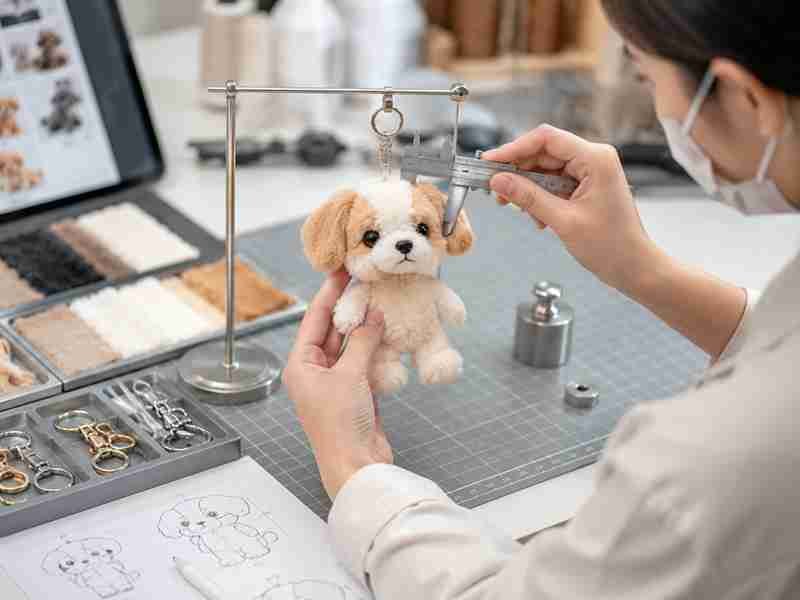
A custom character plush often fails approval for reasons that are smaller than expected. The artwork may be beautiful. The first sample may look close in one photo. The material may feel soft. Yet the brand team still hesitates because something does not feel right. The eyes may be slightly too high. The mouth may look less confident than the original role. The head may feel too flat from the side. A tail may twist inside the package. A barcode may be missing. A fabric color may look different from the approved character guide.
Common approval problems in custom character plush toys usually come from unclear artwork, weak character priority, wrong fabric choice, face placement errors, color gaps, poor filling control, risky accessories, missing labels, package pressure, and unclear sample feedback. A golden sample should confirm size, shape, face, material, craft, safety details, labels, packaging, and bulk standards before production begins.
Sample approval is not only a design check. It is the moment when creative intent, product safety, cost control, package planning, and bulk repeatability meet. A sample may sit on a meeting table for ten minutes, but the approved version may guide 500, 2,000, or 20,000 pieces later. If the wrong detail slips through, it does not stay small. It repeats.
What Causes Plush Approval Problems?
Plush approval problems happen when artwork, size, fabric, face craft, filling, accessories, labels, packaging, and bulk expectations are not reviewed together. A sample may look close from the front but fail from the side, back, hand feel, package fit, safety review, or SKU control. Approval should protect both character likeness and repeatable production.
Most approval delays are not caused by one huge error. They are usually caused by several small gaps that were not solved early. A front view is sent without side details. A smile is copied from artwork but changes after the head is filled. A fabric looks fine as a swatch but too fuzzy on the full sample. A box is created after the sample, then the plush ears bend inside it. A hangtag is added late and covers part of the face. These small issues add up fast.
For custom character plush, approval risk is higher than for simple soft toys because the sample must pass more than basic sewing review. It must protect the character. That means face expression, body proportion, official colors, signature details, soft structure, package presentation, and bulk records all matter. A clean seam does not help if the character no longer looks like itself.
Approval also becomes more complex when several internal teams review the same sample. Design may care most about face likeness. Product may focus on size, hand feel, and cost. Licensing may check style guide accuracy. Quality teams may check seams, attachments, and safety. Packaging may check box fit, barcode, insert card, and carton rules. If everyone comments separately without priority, the sample can enter repeated revision without a clear direction.
A better review starts by placing each problem into a practical group:
| Approval Area | Common Problem | Why It Matters |
|---|---|---|
| Artwork | Only one front image is available | Side depth, back view, and tail shape may be guessed |
| Face | Eyes, mouth, nose, or brows shift | Character emotion changes quickly |
| Proportion | Head, body, arms, or legs feel off | Original style becomes weaker |
| Fabric | Texture changes the character mood | Plush may feel too fuzzy, flat, shiny, or thin |
| Color | Fabric, thread, and print do not match | Official character identity feels unstable |
| Filling | Head, body, or limbs feel flat or hard | Shape and hand feel suffer |
| Craft | Embroidery, print, or applique lacks clarity | Small details may not read at final size |
| Accessories | Weak, heavy, sharp, or poorly placed parts | Use, safety, and package risks increase |
| Labels | Care, warning, barcode, SKU, or carton details are missing | Retail, warehouse, or shipment issues may appear |
| Packaging | Box or bag presses the plush shape | Final presentation becomes weaker |
| Bulk standard | Approval notes are unclear | The full order has no stable reference |
The strongest approval process separates personal taste from product risk. A hidden seam difference may not require a new sample. A wrong eye position usually does. A slightly softer hand feel may be acceptable if shape stays stable. A missing warning label cannot be ignored if the target channel requires it. A package that bends the character’s ears should be corrected before packing is confirmed.
A practical sample review should include:
| Review Method | What It Reveals |
|---|---|
| Front photo | Face, first impression, character expression |
| Side photo | Body depth, posture, snout, belly, tail angle |
| Back photo | Hair, tail, rear color blocks, label position |
| Close-up photo | Embroidery, print, seams, applique, accessory detail |
| Measurement photo | Height, width, thickness, package fit |
| Hand-feel review | Softness, fullness, balance, firmness |
| Package test | Ear, horn, tail, scarf, tag, and box pressure |
| Label check | Care label, warning label, barcode, SKU, carton mark |
| Bulk note review | What must remain unchanged after approval |
The sample should not be approved only because it looks acceptable in one front-facing image. It should be approved because it can become a clear physical standard.
Why Does Character Accuracy Fail?
Character accuracy fails when the sample protects the wrong details or treats all artwork details as equally important. A plush can have soft fabric, neat sewing, and clean packaging, but still feel wrong if the face, color, body outline, or signature feature does not match the original role.
The first risk is weak priority. A character may have dozens of details, but only a few create instant recognition. For one mascot, it may be oversized eyes and a rounded head. For a game creature, it may be short horns, belly color, small smile, and tail tip. For an animation role, it may be hairstyle, jacket color, and eyebrow angle. If these details are not named before sampling, revision feedback becomes scattered.
The second risk is physical change. A flat illustration can use thin lines, sharp corners, and dramatic angles. Plush needs seam allowance, fabric thickness, filling, and rounded form. After stuffing, the face surface changes. Embroidery may pull slightly. A smile may curve differently. Side depth may make the character look younger, wider, or softer than expected.
| Accuracy Risk | What Usually Causes It | Approval Check |
|---|---|---|
| Face feels wrong | Eye spacing, mouth angle, brow height | Compare close-up with character reference |
| Body feels generic | Head-body ratio is changed too much | Check full front and side views |
| Character looks too young | Face position or body fullness changes style | Compare with original mood |
| Silhouette weakens | Ears, horns, tail, hair, or wings simplified too far | View from 1–2 meters |
| Outfit loses identity | Small but important details are removed | Keep visible signature features |
| Character color feels off | Fabric and thread do not match the approved guide | Review under normal lighting |
| Texture changes mood | Fabric pile is too long, too flat, or too shiny | Compare material with character style |
A useful method is to create a must-keep list before the sample. This list may include five to eight details, such as eye shape, mouth position, scarf color, tail length, ear angle, and belly color. During approval, this list prevents the team from spending too much time on minor hidden details while missing the main identity issues.
A sample should pass the “quick recognition” test. If someone who knows the character can identify it from a short distance without reading the tag, the core likeness is working. If they need the package art to understand who it is, the plush probably needs revision.
Can A Picture Create Sample Risk?
A picture can create sample risk when it shows only one angle, one pose, or one lighting condition. A front image may show the face and main color, but it often hides body thickness, back details, tail placement, hair volume, accessory structure, label area, and package space.
Many approval issues begin before a needle touches fabric. The visual file may be beautiful, but incomplete for product development. A game screenshot may show mood, but lighting can distort color. A concept sketch may show personality, but not the back view. A front-facing mascot may look simple, but the side depth may still need planning. If these gaps are guessed, the first sample may move in the wrong direction.
| Reference Type | Useful For | Risk If Used Alone |
|---|---|---|
| Front image | Face, color, first impression | No side thickness, back view, or posture |
| Back view | Tail, rear color, hair, label area | No face or front proportion |
| Side view | Body depth, snout, belly, sitting angle | May not show full expression |
| 3D render | Volume and structural hints | Hard surfaces still need soft conversion |
| Game screenshot | Mood, pose, fan context | Lighting, shadow, and motion can mislead |
| Character style guide | Official colors and rules | May not show soft product structure |
| Packaging mockup | Shelf look and label area | May not fit the real plush shape |
A picture becomes safer when paired with direct notes. These notes do not need to be complicated. They should define size, use, quantity per design, material direction, must-keep details, and package style.
| Missing Detail | Helpful Note |
|---|---|
| Side depth | “Body should be rounded, not flat.” |
| Tail | “Tail curves upward and stays short.” |
| Hair | “Hair should be soft raised fabric, not printed only.” |
| Mouth | “Keep a small confident smile.” |
| Color | “Blue should follow the approved character guide.” |
| Package | “Plush will go into a 12cm blind box.” |
| Use | “This style will be a bag charm with metal clasp.” |
A picture can start the discussion, but it should not become the only approval reference. A production-ready brief reduces guessing, revision rounds, and sample frustration.
Which Details Are Often Missed?
The details most often missed are side thickness, back view, tail angle, ear thickness, mouth height, brow position, fabric pile direction, label placement, package pressure, and accessory strength. These details are easy to overlook in artwork review, but they become obvious once the physical sample arrives.
Front-view approval is not enough because a plush is not viewed only from the front. It is held, turned, packed, displayed, shipped, scanned, and photographed. A character may look good in a front photo but feel too flat in the hand. A tail may look cute on the table but bend inside the box. A tag may look fine separately but cover the face when attached. A care label may be placed where it disturbs the character’s back design.
| Missed Detail | Why It Is Often Missed | What To Check |
|---|---|---|
| Side depth | Artwork is usually flat | Body fullness and hand feel |
| Back design | Main art often shows only front | Tail, hair, color blocks, label area |
| Ear thickness | Looks simple in drawing | Filling, angle, and package pressure |
| Tail angle | Treated as minor detail | Sitting balance and package fit |
| Mouth height | A small shift feels subtle at first | Character mood and expression |
| Brow angle | Easy to ignore | Emotion and attitude |
| Fabric direction | Hard to judge from photos | Pile shade and texture |
| Label position | Added late | Comfort, look, and compliance |
| Hardware weight | Checked after attachment | Hanging angle and pull strength |
| Package fit | Reviewed after plush approval | Shape recovery after packing |
A stronger approval habit is to check the sample in the order people experience it: first glance, close look, hand feel, side view, back view, package opening, and final display. This sequence reveals problems that flat photos hide.
For mini plush, missed details are often related to readability. For larger plush, they are often related to proportion and filling. For blind box plush, missed issues often appear in package fit and SKU handling. For keychains, hanging angle and loop strength are easy to underestimate.
What Problems Delay Approval?
Approval is delayed by unclear feedback, changing artwork, missing views, wrong material direction, repeated face changes, unfinished packaging, late label requirements, uncertain testing needs, and internal review conflicts. A single issue may be easy to solve, but several late changes can add days or weeks.
The most common delay is vague feedback. Comments like “make it cuter,” “make it closer,” or “something feels off” are hard to revise. Better feedback names the part, direction, and expected result. For example, “move the eyes 3mm lower,” “increase body thickness,” “make the tail shorter,” or “change mouth thread to dark brown.”
| Delay Source | Why It Slows Approval | Better Control |
|---|---|---|
| Vague feedback | Revision direction is unclear | Use marked photos and numbered comments |
| Changing artwork | Target keeps moving | Lock character art before sample |
| Face disagreement | Different teams judge likeness differently | Agree on must-keep facial features |
| Material change | New fabric changes color and craft | Confirm fabric direction early |
| Late package design | Plush may not fit | Review package before final approval |
| Missing labels | Care, barcode, warning, SKU not ready | Prepare label list before sample lock |
| Accessory change | Attachment and safety need review | Confirm function and placement early |
| Testing uncertainty | Materials or parts may need changes | Review target region and age group early |
A clean revision file should include photos, notes, and priority. It should show what must change, what can stay, and what needs confirmation. If five people review the same plush, one combined feedback document is usually better than separate comment chains.
A sample approval plan should also leave time for review. If a launch date is fixed, sample rounds cannot be planned casually. First sample, revision, package review, testing support, bulk production, and shipping all need time. Rushing approval often moves risk from sample stage into bulk production.
Is A Small Change Serious?
A small change is serious when it affects character recognition, safety, bulk consistency, packaging, label accuracy, or approved cost. A 2mm eye shift may matter more than a small hidden seam difference. A slight fabric shade gap may be serious if the color defines the character.
Not all differences deserve the same reaction. Approval should separate identity risks from preference differences. A mouth line that changes the character’s personality should be revised. A hidden stitch line inside an outfit may not need a new sample. A tail that twists in the package should be corrected because the issue will repeat in bulk.
| Change Type | Serious Level | Why |
|---|---|---|
| Eye position shift | High | Changes expression quickly |
| Mouth angle change | High | Changes personality |
| Main fabric color gap | High if color is iconic | Weakens character identity |
| Slight hidden seam difference | Low to medium | Depends on visibility |
| Filling softness change | Medium to high | Affects shape and hand feel |
| Label missing | High | Affects product readiness |
| Package crushing ears | High | Damages final presentation |
| Tiny logo unreadable | Medium | May move to hangtag or card |
| Hardware weight change | Medium to high | Affects hanging and use |
| Carton mark error | High | Creates warehouse and delivery risk |
A useful approval rule is this: if the change will be repeated across bulk pieces and visible during normal use, review it carefully. If it affects safety, label needs, or package fit, pause approval. If it is hidden, stable, and does not affect function or character identity, it may not require a new sample.
The goal is not to chase endless perfection. The goal is to approve the right standard before production begins.
Which Character Details Fail Most Often?

The details that fail most often are face expression, body proportion, color matching, fabric texture, craft clarity, filling balance, accessory placement, labels, and packaging. These issues matter because custom character plush is judged by likeness, touch, safety, presentation, and bulk consistency, not only by sewing quality.
Approval problems often appear where flat design becomes physical structure. A line in artwork has no thickness. Fabric does. A flat color block has no pile direction. Plush fabric does. A tiny symbol may look clear on a screen but disappear on a 10cm plush. A cape may look dramatic in concept art but fold over the face inside the package.
The most important thing is that these problems are connected. A fabric change can affect embroidery. A filling change can affect face shape. A package change can affect ears, horns, and tails. A label change can affect appearance and comfort. A craft decision can affect safety. This is why sample approval should review the full product, not isolated parts.
| Detail Area | Common Failure | Approval Focus |
|---|---|---|
| Face | Wrong expression | Eye, mouth, brow, nose placement |
| Body | Wrong proportion | Head-body ratio, side thickness, posture |
| Color | Shade mismatch | Fabric, thread, print, package color |
| Fabric | Wrong texture | Hand feel, pile, stitch compatibility |
| Craft | Detail not clear | Embroidery, print, applique readability |
| Filling | Flat, stiff, or uneven | Hand feel, recovery, balance |
| Accessories | Weak or awkward | Placement, safety, package fit |
| Labels | Missing or misplaced | Care, warning, barcode, SKU |
| Packaging | Crushes plush or hides detail | Box size, hangtag position, carton plan |
A plush should first pass character recognition, then product readiness. If it does not look like the character, it should not move forward. If it looks right but cannot be packed, labeled, tested, or repeated, it still needs correction.
Face Problems vs Body Problems
Face problems affect emotion. Body problems affect form, size, and presence. Both can block approval, but face issues are usually noticed faster because eyes and mouth carry personality. A plush with a wrong face may fail even if the fabric and body are well made.
Face issues often include eye spacing, eye size, mouth height, nose size, brow angle, cheek mark placement, embroidery density, and thread color. Body issues include head-body ratio, side depth, arm length, leg fullness, ear angle, tail thickness, sitting balance, and posture.
| Problem Type | Common Issue | Review Method |
|---|---|---|
| Face | Eyes too close or too far | Compare with artwork close-up |
| Face | Mouth too high or too low | Review mood from front view |
| Face | Embroidery too dense | Touch and bend the face area |
| Face | Thread color too bright or dull | Check under normal light |
| Body | Head too large or too small | Compare full-body proportion |
| Body | Side too flat | Review side view and hand feel |
| Body | Tail or ears unstable | Check filling, angle, and package |
| Body | Sitting angle off | Place sample on flat surface |
Face and body should be approved together. A good face on a weak body still feels unfinished. A strong body with a wrong expression still feels off-character. Approval should use the finished sample, not only embroidery panels or unfinished sewing pieces.
For character plush, a face should be checked at three distances: close-up, handheld distance, and shelf distance. If it only works in a close-up photo, it may not work in real use.
How Do Colors Go Wrong?
Colors go wrong because digital artwork, fabric, embroidery thread, print, applique, lighting, and package printing do not behave the same way. A color that looks correct on screen may look warmer, cooler, darker, lighter, or softer on plush material.
For character plush, color is part of identity. A mascot known for bright yellow cannot drift into dull mustard. A blue game creature cannot look too gray. A pink character cannot become too orange under indoor light. Color gaps become more obvious in a character series, where several styles are displayed together.
| Color Source | Common Problem | Approval Check |
|---|---|---|
| Main fabric | Shade too light, dark, warm, or cold | Compare swatch and sample |
| Embroidery thread | Too bright or low contrast | Check on real fabric |
| Printed detail | Edges soft or tone shifted | Review print on final material |
| Applique fabric | Patch color does not match body | Check next to body fabric |
| Accessories | Ribbon, clasp, or patch color clashes | Review full sample |
| Packaging | Box art and plush color do not connect | Compare package proof and plush |
Color should be approved under normal lighting and photo conditions. A fabric may look different under office light, daylight, or camera flash. Pile direction can also create a light-dark effect. This matters for plush bodies, ears, tails, and belly panels.
A safer approval method is to compare fabric, thread, print, and package together. Approving them separately can create a final product where every part is “close,” but the whole item feels inconsistent.
Why Do Materials Change The Look?
Materials change the look because fabric has thickness, pile, stretch, texture, and direction. A character drawn with clean lines may look too fuzzy if the pile is long. A smooth mascot may look wrinkled if the fabric stretches too much. A small embroidered face may disappear in thick fabric.
Material also changes perceived value. A fabric may be soft but not stable. Another fabric may hold shape well but feel less warm. A textured fabric may fit a monster but weaken a clean character face. The material should match character style, size, craft, and package.
| Material Factor | Effect On Plush | Approval Focus |
|---|---|---|
| Pile length | Can hide or reveal details | Face clarity and seam visibility |
| Stretch | Can shift face placement | Symmetry and shape control |
| Thickness | Affects small parts and seams | Ear, tail, horn, limb structure |
| Texture | Changes character mood | Match with IP style |
| Color behavior | Looks different under light | Compare real sample |
| Surface smoothness | Affects embroidery and print | Craft clarity |
Material approval should not happen separately from craft approval. Fabric affects embroidery, printing, stuffing, and shape. A fabric that feels nice may not support a clean face. A fabric that prints well may not feel premium enough for a gift plush. The best material supports both likeness and practical use.
For small plush, shorter fabric often gives clearer detail. For larger plush, softer or richer textures may add value. For multi-style projects, fabric level should stay balanced so the collection does not feel uneven.
What Type Of Craft Causes Risk?
Craft risk usually comes from embroidery that is too dense, printing that is unclear, applique that is too thick, tiny logos that cannot be read, accessories that are hard to attach, or mixed craft that creates uneven surfaces. Craft should improve character recognition, not overload the plush.
Embroidery works well for eyes, mouth, brows, nose, paw pads, and simple marks. Printing works well for patterns, gradients, and fine lines. Applique works well for belly panels, badges, patches, and larger fabric details. Each craft has limits at small sizes.
| Craft Type | Risk | Approval Check |
|---|---|---|
| Embroidery | Stiff face, shifted placement | Stitch density and expression |
| Printing | Blurry edges, weak color | Print sample on final fabric |
| Applique | Bulky edges or uneven placement | Edge finish and symmetry |
| Woven label | Too large or rough | Size and placement |
| Patch | Covers soft feel | Thickness and attachment |
| Mixed craft | Busy or uneven look | Full sample balance |
Craft approval should be based on final size. A detail that works on a 25cm plush may fail on a 9cm keychain. A logo that looks readable in art may need to move to a hangtag, insert card, or package.
The right craft plan protects the most visible details first. The face deserves more care than a hidden seam. A signature badge may deserve applique or embroidery. Tiny decorative lines may work better as print.
Are Accessories And Labels Checked?
Accessories and labels should be checked before approval because they affect safety, appearance, packaging, retail readiness, SKU control, and carton handling. A plush body may look approved, but the full product can still fail if hardware, tags, labels, or package details are not reviewed.
Accessories include keyrings, clasps, ball chains, ribbons, hats, scarves, magnets, zippers, sound parts, tails, wings, and soft props. Labels may include care labels, warning labels, barcode labels, SKU labels, FNSKU labels, carton marks, and insert cards.
| Item | What To Check |
|---|---|
| Keyring or clasp | Pull strength, weight, hanging angle |
| Ribbon or scarf | Position, attachment, package shape |
| Magnet or sound part | Placement, safety, testing needs |
| Care label | Size, material, position |
| Warning label | Region and age-related needs |
| Barcode/SKU label | Scanning, item separation |
| Hangtag | Attachment point and face coverage |
| Carton mark | Quantity, style, destination clarity |
Accessories and labels should be reviewed with the package. A clasp may scratch a card. A hangtag may cover the face. A care label may look too large on a mini plush. A box may bend ears or tail. These are not small finishing details. They affect the approved product.
For multi-SKU projects, labels carry extra risk. A perfect plush with the wrong barcode, insert card, or carton mark can still create major problems after delivery.
What Are Common Safety Concerns With Stuffed Animals?
Common safety concerns with stuffed animals include small detachable parts, weak seams, loose filling, hard accessories, sharp edges, poor attachment strength, unsuitable materials, colorfastness concerns, unclear warning labels, and package warnings. These concerns become more important when the plush may be handled by children or sold through retail channels.
Custom character plush should be reviewed based on its real design. A mascot plush with embroidered eyes has different concerns from a keychain plush with metal hardware. A blind box plush with small accessories needs different checks from a pillow plush. A plush with magnets, sound parts, plastic eyes, beads, or chains should receive earlier review.
| Safety Concern | Example | Approval Action |
|---|---|---|
| Small parts | Buttons, beads, plastic eyes | Review age use and attachment |
| Weak seams | Tail, ears, wings opening | Check stress areas |
| Loose filling | Uneven or leaking filling | Check seams and filling quality |
| Hard accessories | Metal clasp, zipper, magnet | Review placement and edge safety |
| Sharp feel | Rough label, stiff patch, exposed edge | Check hand contact areas |
| Label issues | Missing warning or care label | Confirm region needs |
| Packaging risk | Polybag warning missing | Check package requirements |
| Material concern | Fabric or colorfastness issue | Review testing path |
Safety standards depend on target region, age group, material, structure, accessories, and sales channel. Depending on the project, testing may involve EN71, CE, ASTM F963, CPSIA, 16 CFR 1610, REACH, Prop 65, ISO 8124, or UKCA. The suitable testing path should be discussed before approval so the sample does not need late structural changes.
Safety should not be treated as a final checkpoint only. It should shape decisions about eyes, accessories, seams, labels, fabric, filling, package, and age-related information from the start.
How Should Sample Revisions Be Managed?

Sample revisions should be managed with clear priorities, marked photos, measurable comments, and one combined feedback file. The review should separate must-fix issues from small improvements, then confirm whether changes affect face, size, material, safety, packaging, cost, or timing. Good revision control reduces repeated sample rounds and keeps the project moving toward a reliable golden sample.
A plush sample is not only a creative object. It is a physical test of pattern, fabric, embroidery, printing, filling, accessories, labels, and packaging. If the review only says “make it closer,” the next sample may improve one area but miss the real issue. If feedback is specific, the revision becomes much easier to execute.
The strongest sample feedback usually includes three parts: where the issue is, what should change, and how much it should change. “Move the eyes slightly” is not as useful as “move both eyes 3mm lower and 2mm wider.” “Make the body better” is not as useful as “increase side thickness by about 10% and keep the front width unchanged.”
When several people review one sample, feedback should be combined before sending. If design, product, licensing, safety, and packaging comments arrive separately, the revision can become messy. One team may ask for a larger head, while another asks to reduce size for the box. One person may request a softer fabric, while another needs sharper embroidery. These conflicts should be solved before revision begins.
| Revision Item | Weak Feedback | Strong Feedback |
|---|---|---|
| Eyes | Eyes look wrong | Move eyes 3mm lower; keep same eye shape |
| Mouth | Make it cuter | Lower mouth 2mm and shorten both ends |
| Body | Too flat | Add side thickness, especially belly and back |
| Ears | Ears not good | Make ears 15% thicker and keep upward angle |
| Color | Color is off | Use warmer pink closer to approved swatch |
| Filling | Feels strange | Make head fuller but keep body softer |
| Tag | Tag placement bad | Move hangtag to left ear seam, away from face |
| Box | Package is tight | Increase box depth or reduce ear compression |
A sample revision should also consider what the change affects. Moving the eyes may require a new embroidery file. Changing fabric may affect thread color, print clarity, and seam shape. Increasing body size may affect box size and carton quantity. Adding a scarf may affect safety, packing, and cost. No change stands alone.
How To Review A Plush Sample?
A plush sample should be reviewed from the front, side, back, close-up, hand feel, measurement, package fit, label position, and bulk repeatability. A front photo can show the face, but it cannot confirm thickness, filling, back details, package pressure, or hanging balance.
The best review starts with character recognition. Does the plush look like the original role? Then check product readiness. Can it be handled, packed, labeled, shipped, and repeated? Both sides matter. A plush that looks accurate but cannot fit its box needs revision. A plush that is well packed but does not resemble the character also needs correction.
| Review Angle | What To Check |
|---|---|
| Front view | Face, expression, color, first impression |
| Side view | Body depth, posture, snout, belly, tail |
| Back view | Hair, tail, rear color, care label position |
| Close-up | Embroidery, printing, applique, seam finish |
| Hand feel | Softness, filling, firmness, balance |
| Measurement | Height, width, thickness, package fit |
| Package test | Ear, horn, tail, scarf, hangtag, box pressure |
| Label check | Care label, warning label, barcode, SKU |
| Use check | Sitting, hanging, display, collection, storage |
For small plush, pay extra attention to face readability. For larger plush, check fullness and shape recovery. For keychains, test hanging angle and loop strength. For blind box plush, check whether every style can fit the same box without deformation. For retail-style projects, labels and barcode placement should be reviewed before final approval.
Must-Fix vs Nice-To-Adjust
Must-fix issues affect character identity, safety, packaging, bulk consistency, labels, or approved function. Nice-to-adjust issues are small improvements that may improve appearance but do not block production if all main standards are met. Separating these two groups prevents endless sample revisions.
A must-fix item should not be ignored because it will repeat in bulk. Wrong eye placement, incorrect main fabric color, weak keyring loop, missing warning label, or box pressure on ears can create real trouble later. A nice-to-adjust item may include a hidden seam line, a slight fabric touch preference, or a tiny decorative detail that does not affect recognition.
| Issue | Category | Why |
|---|---|---|
| Wrong eye spacing | Must-fix | Changes character expression |
| Main body color mismatch | Must-fix | Weakens identity |
| Tail twists inside package | Must-fix | Repeats after packing |
| Missing care label | Must-fix | Product information incomplete |
| Weak clasp loop | Must-fix | Use risk |
| Tiny hidden stitch line | Nice-to-adjust | Low visual impact |
| Slight tag artwork preference | Nice-to-adjust | Does not affect plush body |
| Minor back seam appearance | Depends | Serious if visible or weak |
| Logo unreadable on mini plush | Depends | May move to tag or card |
A practical review can use three levels: “must change,” “change if possible,” and “approved.” This helps the development team focus on the most important issues first. It also helps avoid one sample round being spent on tiny details while the face or package fit remains unresolved.
How Many Sample Rounds Are Normal?
Many custom character plush projects need one first sample plus one or more revision rounds, depending on complexity. Simple mascot plush may be approved faster. Detailed character plush with face embroidery, outfit parts, accessories, special fabric, or packaging often needs more review. The goal is not to limit revisions blindly, but to make each round solve real issues.
A first sample often tests shape, proportion, fabric direction, face craft, and overall feasibility. A second sample may correct expression, filling, color, detail placement, or package fit. Further rounds may be needed if the artwork changes, material changes, or a complex accessory does not work as expected.
| Project Type | Common Review Pressure | Revision Focus |
|---|---|---|
| Simple mascot plush | Lower | Face, color, body fullness |
| Mini plush keychain | Medium | Readable face, loop strength, compact shape |
| Full-body character plush | Medium to high | Proportion, outfit, hair, limbs, tail |
| Blind box plush series | High | Size consistency, SKU, package fit |
| Premium plush gift | Medium to high | Fabric, filling, finishing, presentation |
| Plush with accessories | High | Attachment, strength, package pressure |
| Safety-sensitive plush | High | Parts, seams, labels, testing path |
A better way to control sample rounds is to avoid changing the target after each sample. If the artwork, size, package, and material direction keep changing, the sample process becomes unstable. Lock the core details early: size, plush type, face style, main fabric, package plan, and must-keep features.
A good revision round should move the project closer to approval. If the same issue appears again, the feedback may not have been clear enough, or the chosen structure may not support the requested result.
How Long Does Approval Take?
Approval timing depends on sample complexity, revision depth, feedback speed, material changes, accessory sourcing, packaging review, label requirements, testing needs, and internal decision flow. Many custom plush samples are reviewed around 7–14 days for first development, while revision work may need additional time depending on what must change.
Not all changes take the same effort. Moving a hangtag may be simple. Rebuilding the head pattern takes more time. Changing embroidery placement may require a new embroidery file. Switching fabric can affect color, sewing, and print results. Changing box size can affect carton quantity and shipping volume.
| Approval Factor | Timing Impact |
|---|---|
| Complete artwork | Fewer clarification steps |
| Clear feedback | Faster revision |
| Face embroidery change | May require file and sample update |
| Fabric change | Affects color, sewing, and craft |
| Filling change | May need shape and package retest |
| Accessory change | Requires attachment and strength review |
| Package change | May require new box mockup |
| Label update | Needs layout, placement, and SKU check |
| Testing needs | May affect materials or structure |
| Multi-style project | More samples and records to review |
The review speed also depends on how quickly internal comments are combined. If each department reviews on different days, approval slows down. A planned review window helps. For example, the project team may review face, body, material, and package within two working days, combine comments, and send one revision file.
Approval should not be rushed past critical issues. A delayed sample is inconvenient. A wrong golden sample is far more expensive.
What Files Help Faster Approval?
Files that help faster approval include original artwork, front/side/back views, marked sample photos, measurement notes, color references, embroidery comments, package mockups, label requirements, SKU list, and target region details. Clear files reduce guessing and make sample revisions easier to verify.
A strong approval file does not need to be complicated. It should make the issue visible. Marked photos are especially useful. Instead of writing several paragraphs about the face, mark the exact area: “move eye lower,” “shorten mouth,” “make cheek mark smaller,” “increase side thickness here.” Visual feedback is faster and harder to misunderstand.
| File Or Note | How It Helps |
|---|---|
| Original artwork | Confirms character target |
| Front/side/back view | Supports shape and proportion review |
| Marked sample photo | Shows exact revision area |
| Measurement notes | Clarifies height, width, thickness |
| Color reference | Supports fabric and thread matching |
| Embroidery note | Controls face and symbols |
| Package mockup | Confirms box, card, tag, insert |
| Label list | Confirms care, warning, barcode, SKU needs |
| SKU sheet | Prevents style mix-ups |
| Target region | Helps safety and label planning |
| Delivery timing | Helps plan approval and bulk schedule |
A useful feedback file can be short if it is specific. One marked photo with ten clear notes is often better than a long email. The goal is not to describe feelings only. The goal is to show what should change so the next sample can be judged fairly.
How Does Golden Sample Protect Bulk Orders?

A golden sample protects bulk orders by becoming the physical standard for size, shape, face, fabric, color, filling, craft, accessories, labels, packaging, and QC. Once approved, it guides production and inspection. Without a clear golden sample, bulk pieces may drift from the original character even if each single piece looks acceptable.
A golden sample is more than the best-looking sample. It is the approved version that can be repeated. It should not only satisfy the front view. It should work from all angles, fit the package, hold the correct hand feel, include correct labels, and support the final production records.
For custom character plush, the golden sample protects emotional accuracy. A character plush is often judged by small details: eye position, mouth angle, color, body fullness, tail shape, and accessory placement. If those details are not locked in a physical standard, bulk work becomes too dependent on memory, photos, or loose written notes.
| Golden Sample Area | What It Locks |
|---|---|
| Size | Height, width, thickness |
| Shape | Head, body, limbs, tail, ears, posture |
| Face | Eye, mouth, nose, brow, cheek placement |
| Material | Fabric type, color, pile, touch |
| Craft | Embroidery, print, applique, patch position |
| Filling | Softness, fullness, recovery |
| Accessories | Loop, clasp, ribbon, magnet, zipper, prop |
| Labels | Care, warning, barcode, SKU placement |
| Packaging | Bag, hangtag, box, insert, carton rule |
| QC | What bulk pieces should match |
A golden sample should be kept safely and used during production checks. Photos help, but physical comparison is stronger because hand feel, filling, surface texture, and shape are hard to judge from images alone.
What Is A Golden Sample?
A golden sample is the approved physical sample used as the standard for bulk production and inspection. It confirms the final plush size, shape, fabric, color, face craft, filling, accessories, labels, and packaging. For custom character plush, it is the sample that says, “This is the version to repeat.”
The golden sample should not be approved while major decisions remain open. If the package is still not tested, labels are missing, fabric color is uncertain, or accessories are not final, the approval is incomplete. A partial approval may create confusion later.
| Golden Sample Check | What To Confirm |
|---|---|
| Front view | Face, color, first impression |
| Side view | Body depth, posture, snout, tail |
| Back view | Rear details, label position |
| Hand feel | Filling, softness, balance |
| Craft | Embroidery, printing, applique clarity |
| Accessories | Strength, placement, safety |
| Package | Fit, pressure, display |
| Labels | Correct content and placement |
| SKU | Character name, barcode, carton details |
A good golden sample should also include written records. The sample itself is the physical reference; the records explain details that may not be visible, such as fabric code, thread color, package version, label file, and carton packing rule.
Why Is Sample Approval A Bulk Standard?
Sample approval becomes a bulk standard because production needs one clear reference to repeat. The approved sample tells the production and QC teams what shape, material, face, filling, and finish should look like. Without it, bulk output may vary from piece to piece.
The golden sample turns subjective approval into practical control. Instead of saying “make it cute,” the team can compare each part against the approved standard. Is the eye position close? Is the body full enough? Is the tail angle correct? Is the fabric color right? Does the package fit the same way?
| Bulk Area | How Golden Sample Helps |
|---|---|
| Cutting | Confirms pattern shape |
| Sewing | Confirms seam curves and part placement |
| Embroidery | Confirms face position and thread effect |
| Filling | Confirms softness and fullness |
| Shaping | Confirms ears, tail, horns, posture |
| Accessories | Confirms placement and strength target |
| Labels | Confirms position and item identity |
| Packaging | Confirms fit and presentation |
| QC | Confirms final comparison standard |
If the golden sample has unresolved issues, those issues may repeat across the full order. That is why approval should not be rushed. A small problem on one sample becomes a larger problem when copied many times.
How Do QC Teams Use The Sample?
QC teams use the golden sample to compare bulk pieces against the approved standard during material checks, sewing review, filling review, final inspection, and packing inspection. The goal is to keep character likeness, product safety, and package accuracy stable across the full order.
QC should not only look for obvious defects. For character plush, QC also checks whether the character still looks right. A seam can be strong, but the face may still be off. The body can be clean, but the tail may tilt differently. The fabric may be correct, but the filling may feel weaker than the golden sample.
| QC Stage | What To Compare With Golden Sample |
|---|---|
| Material check | Fabric color, touch, pile direction |
| Embroidery check | Eye, mouth, symbol position |
| Sewing check | Body shape, seam curve, part placement |
| Filling check | Softness, fullness, balance |
| Accessory check | Loop, clasp, ribbon, tail, wing, prop |
| Final check | Full character appearance |
| Packing check | Label, tag, box, SKU, carton mark |
For multi-SKU orders, QC also needs style separation. Each character should have its own approved sample, label record, and package rule. A plush may be well made, but if it enters the wrong box or carries the wrong barcode, the order still has risk.
What Are The Safety Standards For Plush Toys?
Plush toy safety standards depend on target region, age group, material, structure, accessories, and sales channel. Common standards may include EN71, CE, ASTM F963, CPSIA, 16 CFR 1610, REACH, Prop 65, ISO 8124, or UKCA, depending on where the plush will be sold and how it will be used.
Safety review should happen before final approval because a late change can affect the sample. If a hard part, magnet, chain, button, plastic eye, or sound part does not fit the intended age group or target region, the design may need adjustment. Labels and package warnings may also need to change.
| Standard Or Requirement | Often Related To |
|---|---|
| EN71 / CE | European toy safety needs |
| ASTM F963 | U.S. toy safety needs |
| CPSIA | U.S. children’s product requirements |
| 16 CFR 1610 | Flammability of clothing textiles, relevant in some textile reviews |
| REACH | Chemical substance restrictions in the EU |
| Prop 65 | California warning requirements |
| ISO 8124 | International toy safety reference |
| UKCA | UK product compliance marking |
Not every plush automatically needs the same testing path. A collectible item for older fans and a plush intended for young children may have different requirements. A simple embroidered plush and a plush with magnets or hard parts also have different risk levels.
The right testing path should be discussed before the golden sample is locked.
When Do Emotional Support Plush Claims Need Review?
Emotional support plush claims need review when the product is described in a way that suggests health, therapy, disability support, anxiety treatment, trauma relief, or medical benefit. A soft plush can provide comfort, but product copy should avoid claims that require professional or legal support unless the project has proper documentation and review.
The topic “what disabilities qualify for an emotional support stuffed animal” often appears in online searches, but a plush product team should handle this carefully. A stuffed animal may be comforting, but it is not the same as a medical device or certified assistance animal. Emotional support language can affect product description, packaging claims, advertising, and compliance review.
| Claim Type | Risk Level | Safer Direction |
|---|---|---|
| “Soft comfort plush” | Lower | Describes feel and use |
| “Calming plush gift” | Medium | Avoid medical promise |
| “Helps with anxiety” | Higher | Needs careful review |
| “For disability support” | Higher | Legal and medical implications |
| “Therapy plush” | Higher | May imply professional treatment |
| “Sensory-friendly design” | Medium | Needs material and use clarity |
If a plush is intended for comfort, focus on physical features: soft fabric, gentle weight if applicable, washable design, easy grip, safe seams, age-related review, and label clarity. Avoid promising treatment outcomes. When weighted filling, magnets, special textures, or calming claims are involved, safety and copy should be reviewed together.
For most custom character plush projects, it is better to describe the product honestly as a soft collectible, mascot plush, gift plush, comfort item, or plush companion rather than making medical-style claims.
What Happens After Approval?
After approval, the golden sample is used to prepare production records, material confirmation, craft files, QC standards, labels, packaging, carton marks, and shipment preparation. This stage should keep the approved character details stable while moving the project into bulk production.
Approval does not mean changes become easier. In many cases, changes after approval create more risk because materials, patterns, embroidery files, and packaging may already be prepared. A late change to face size may require new embroidery. A package change may affect carton space. A label change may affect warehouse handling.
| After Approval Step | What Should Be Controlled |
|---|---|
| Production record | Size, material, craft, filling, package |
| Material preparation | Fabric, thread, filling, accessories |
| Pattern and cutting | Approved shape and part direction |
| Craft files | Embroidery, print, applique placement |
| Label files | Care, warning, barcode, SKU |
| Package files | Hangtag, box, insert card, carton mark |
| QC checklist | Match golden sample and records |
| Shipment prep | Carton quantity, marks, packing list |
A clean post-approval handover reduces sample-to-bulk differences. The approved sample should be treated as the standard, not as inspiration. If a change is needed after approval, it should be recorded clearly and reviewed for cost, timing, package, and quality impact.
Golden sample approval should feel like a controlled handoff, not the end of communication.
How To Choose The Best Factory For Approval Control?

The best factory for approval control should turn artwork into a clear sample path, explain risk before it becomes costly, support revisions with specific records, and control the approved sample through materials, sewing, filling, labels, packaging, and QC. For character plush, the right partner should protect likeness, safety, timing, and bulk consistency together.
Choosing a plush factory only by a low quote is risky when the project involves character IP, mascot design, game roles, animation figures, blind box styles, or retail-ready packaging. Approval control needs more than sewing ability. It needs pattern skill, face craft control, fabric knowledge, sample revision discipline, label planning, package testing, and clear communication.
A good approval partner should be able to look at artwork and explain what may change when it becomes plush. Thin arms may need width. A tiny logo may need to move to a tag. Long hair may need separate fabric panels. A tail may need stronger attachment. A blind box plush may need size control within a few millimeters so all styles fit the same box. This type of early warning can save sample rounds.
The real test is not whether the first sample is cute. The test is whether the team can guide the sample from “close” to “approved,” then keep bulk work close to that approved version.
| Evaluation Area | What To Check | Why It Matters |
|---|---|---|
| Artwork review | Does the team ask for size, views, use, quantity, package, and region? | Reduces guessing before sampling |
| Pattern skill | Can 2D art become a soft 3D shape? | Protects proportion and silhouette |
| Face craft | Can eyes, mouth, brows, and marks be placed accurately? | Protects character emotion |
| Material advice | Are fabric, filling, and craft choices explained clearly? | Avoids wrong texture and color choices |
| Sample record | Are revision notes, photos, and approved details controlled? | Reduces repeated changes |
| Package planning | Are box, hangtag, label, SKU, and carton needs checked? | Prevents late package problems |
| QC support | Is there a clear comparison against the golden sample? | Protects bulk consistency |
| Safety awareness | Are region, age group, material, and accessory risks discussed? | Prevents late structural changes |
| IP care | Are artwork files and sample photos handled carefully? | Protects confidential characters |
Heyzizi’s project base includes 600+ staff, around 18,000㎡ production space, 35+ pattern makers, 80 QC inspectors, 30+ production lines, and 20+ years of custom plush work. These numbers matter because approval control is not handled by one sample maker alone. It requires pattern, sample, material, sewing, QC, packaging, and shipment support working from the same approved standard.
What Company Turns Drawings Into Stuffed Animals?
A company that turns drawings into stuffed animals should be able to review artwork, identify must-keep character features, create a plush pattern, choose suitable fabric and craft, make a sample, revise it, confirm a golden sample, and support bulk production. It should not simply copy a drawing into fabric without explaining soft-toy limits.
Drawings are often flat, but stuffed animals need depth, seams, filling, balance, and safe construction. A strong company should explain how the drawing will change: sharp corners become rounder, thin limbs become thicker, tiny details become embroidery or print, and fragile props may become soft attachments or package artwork.
| Drawing Detail | Plush Review Needed |
|---|---|
| Face | Eye shape, mouth position, nose size, expression |
| Head shape | Front shape, side depth, filling level |
| Body | Sitting, standing, lying, hanging, or pillow form |
| Arms and legs | Thickness, length, stuffing, seam position |
| Hair, ears, horns | Shape, fabric panels, angle, package pressure |
| Tail or wings | Attachment strength and balance |
| Clothing | Sewn panels, print, applique, embroidery |
| Small logo | Plush body, label, hangtag, or package |
| Colors | Fabric, thread, print, accessory match |
For professional custom plush work, the first review should not only ask “Can this be made?” It should ask “What will make this character recognizable after it becomes soft?” This is where many approval problems can be avoided.
A strong project request should include artwork, target size, quantity per design, fabric preference if any, face craft expectation, accessories, package format, target region, and delivery timing. With these details, the sample direction becomes much clearer.
Is Custom Plush Maker Legit?
A custom plush maker is more trustworthy when it gives clear project steps, realistic limits, transparent MOQ, sample fee rules, material options, sample revision expectations, safety support, packaging guidance, and proof of bulk order control. A reliable partner should not promise that every drawing detail can be copied perfectly at any size.
A real custom plush project has physical constraints. A 7cm keychain cannot carry the same detail as a 25cm full-body plush. A tiny printed logo may not stay readable. A complex hairstyle may need simplification. A magnetic part, plastic eye, or metal clasp may require safety review. A legitimate team should explain these limits early instead of hiding them until approval becomes difficult.
| Trust Signal | What It Shows |
|---|---|
| Clear MOQ | The project has a realistic production base |
| Sample fee explanation | Sample development has real pattern and craft work |
| Detailed quote request | The team understands what affects cost |
| Material advice | Fabric choice is linked to character style |
| Revision method | Feedback can be handled without confusion |
| Golden sample control | Bulk work has a physical standard |
| QC process | Finished goods are compared against approved details |
| Packaging support | Tags, boxes, labels, and cartons are considered |
| Testing support | Region and age-related needs are not ignored |
| IP privacy | Artwork and sample images are handled carefully |
For Heyzizi custom plush projects, standard MOQ starts from 500 pieces per design. Samples usually require a fee because pattern work, material preparation, craft setup, sewing, filling, shaping, and revision all take real development time. When a single-style bulk order reaches 2,000 pieces, the sample fee can be refunded or deducted.
A trustworthy custom plush partner should make decisions clearer, not more confusing. If a team only gives a low number without asking about size, fabric, accessories, package, labels, region, or quantity per design, the quote may not reflect the real project.
Which Factory Process Reduces Risk?
A factory process reduces risk when each step has a clear record: artwork review, sample brief, material confirmation, craft setup, sample revision, golden sample approval, production file, QC checklist, package record, carton plan, and shipment preparation. The process should catch problems before they repeat.
The approval stage should not depend on memory. A sample may go through several changes: eye position, fabric, filling, tail angle, tag placement, box depth, label size. If those changes are not recorded clearly, bulk production may follow an older version by mistake.
A practical risk-control process can look like this:
| Stage | Key Control | Risk Reduced |
|---|---|---|
| Artwork review | Confirm views, size, use, quantity, package | Wrong sample direction |
| Feasibility check | Identify tiny, sharp, fragile, or hard-to-repeat details | Over-complex sample |
| Material planning | Confirm fabric, thread, filling, accessory direction | Wrong texture or color |
| First sample | Test shape, face, fabric, craft, filling | Early structure risk |
| Revision file | Mark changes with photos and notes | Repeated misunderstanding |
| Golden sample | Lock approved physical standard | Sample-to-bulk drift |
| Pre-production record | Confirm pattern, craft files, labels, package | Wrong production version |
| In-line checking | Review during sewing and filling | Large-scale repeated defects |
| Final inspection | Compare finished plush to approved sample | Character and quality risk |
| Packing check | Confirm label, SKU, tag, box, carton | Delivery and sorting errors |
This process matters most for multi-SKU plush. A blind box series with six styles may need six samples, six face files, six SKU labels, one shared box size, one insert card rule, hidden-style handling, and separated carton records. Without clear control, even a well-made plush can enter the wrong package.
A risk-reducing process should make approval visible. Everyone should know which version is approved, what changed, and what must not change.
How Does A Factory Support Testing?
A factory supports testing by reviewing target region, age group, material, filling, accessories, labels, and package requirements before the final sample is approved. Testing needs can affect fabric choice, eye type, small parts, seams, warning labels, polybags, and packaging copy.
Plush safety review is not one-size-fits-all. A collectible plush for older fans may have different requirements from a plush toy intended for young children. A simple embroidered plush has fewer part-related risks than a plush with magnets, plastic eyes, metal chains, or sound parts. A keychain plush needs hardware review. A plush with a long ribbon or scarf needs attachment and length checks.
| Testing-Related Area | What To Review |
|---|---|
| Target region | EU, U.S., UK, Japan, or other destination |
| Age group | Infant, child, teen, adult collectible |
| Fabric | Fiber content, colorfastness, chemical limits |
| Filling | Clean filling, even distribution, no sharp inner part |
| Small parts | Eyes, buttons, beads, chains, magnets |
| Accessories | Pull strength, edge safety, attachment |
| Seams | Stress areas around tail, ears, wings, limbs |
| Labels | Care, warning, age-related notices |
| Packaging | Polybag warning, barcode, retail information |
Depending on the project, common references may include EN71, CE, ASTM F963, CPSIA, 16 CFR 1610, REACH, Prop 65, ISO 8124, or UKCA. The correct path depends on where the plush will be sold, who may handle it, how it is described, and what materials or parts are used.
Testing support should be discussed before golden sample approval. If a hard part or accessory needs to be changed after approval, the sample may need revision. If labels are missing, package approval may pause. Early testing review keeps approval cleaner.
What Price Risks Hide In Revisions?
Price risks hide in revisions when changes affect pattern work, fabric, embroidery, printing, accessories, packaging, labels, testing, carton volume, or delivery timing. A small-looking change can affect several cost areas if it changes the approved structure.
For example, increasing head size may require more fabric, more filling, a larger box, and fewer pieces per carton. Changing fabric may require new color matching and embroidery review. Adding a metal clasp may increase accessory cost and require strength checks. Moving from polybag to gift box can change packaging cost and shipping volume. Adding several SKU labels can affect packing records and warehouse preparation.
| Revision Change | Hidden Cost Area |
|---|---|
| Larger body | Fabric, filling, box size, carton volume |
| New fabric | Material sourcing, color review, craft testing |
| Denser embroidery | Stitch time, setup, face stiffness review |
| Extra applique | Cutting, placement, sewing time |
| Added accessory | Sourcing, attachment, safety, package fit |
| New package | Box cost, print file, carton quantity |
| Added barcode/SKU labels | Label printing, packing control |
| Testing change | Material or structure adjustment |
| Urgent timeline | Schedule pressure and freight choice |
A clear quote should explain which details are included and which are optional. This helps the project team make trade-offs. If the budget is tight, the face, main color, silhouette, and signature detail should stay protected. Lower-value details may move to hangtag, insert card, or package artwork.
Revision cost is easier to manage when decisions are grouped before sample work begins. Late changes are usually more expensive than early choices.
Who Should Approve Final Plush Details?
Final plush details should be approved by the team members responsible for character accuracy, product function, quality, packaging, labeling, and delivery readiness. For character IP projects, one person or one clear project owner should combine feedback so the factory receives a single approved direction.
Too many separate opinions can slow approval. A designer may request more detail. Packaging may need smaller dimensions. Quality may reject a weak accessory. Retail operations may need barcode placement. Licensing may require exact color. All of these concerns matter, but they should be organized before feedback is sent.
A practical approval group may include:
| Role | What They Should Approve |
|---|---|
| IP or design lead | Face, colors, silhouette, signature details |
| Product lead | Size, hand feel, function, cost direction |
| Quality lead | Seams, parts, safety, inspection needs |
| Packaging lead | Box, hangtag, label position, carton rules |
| Commercial lead | Quantity, launch timing, delivery plan |
| Operations lead | Barcode, SKU, warehouse handling |
The final approval should confirm:
- Character face and expression are acceptable.
- Size and body shape match the intended use.
- Fabric, color, and filling are approved.
- Accessories are safe and practical.
- Labels and packaging are correct.
- Golden sample can become the bulk standard.
- Any remaining small differences are documented.
- No major artwork, material, or package decisions remain open.
After approval, changes should be controlled carefully. The golden sample should not keep moving. If a change is needed, it should be recorded as a formal update because it may affect cost, timing, packaging, labels, and bulk consistency.
Closing
Custom character plush approval is not about chasing perfect sewing alone. It is about protecting the character before hundreds or thousands of pieces are made. The sample should prove that the plush looks like the role, feels right in the hand, fits the package, carries the correct labels, meets the intended safety path, and can be repeated in bulk.
Most approval problems are avoidable when the project starts with clear artwork, must-keep details, realistic plush conversion, material review, sample priority, package planning, and golden sample control. Face, color, proportion, fabric, filling, accessories, labels, and packaging should be checked together, not one by one at the last minute.
For character plush toys, mascot plush, plush keychains, blind box plush, collectible plush, plush gifts, and multi-SKU projects, Heyzizi can review artwork, size, quantity per design, material direction, sample needs, packaging, target region, and delivery timing. Send the project details to info@heyzizi.com for a practical review.