 Skip to content
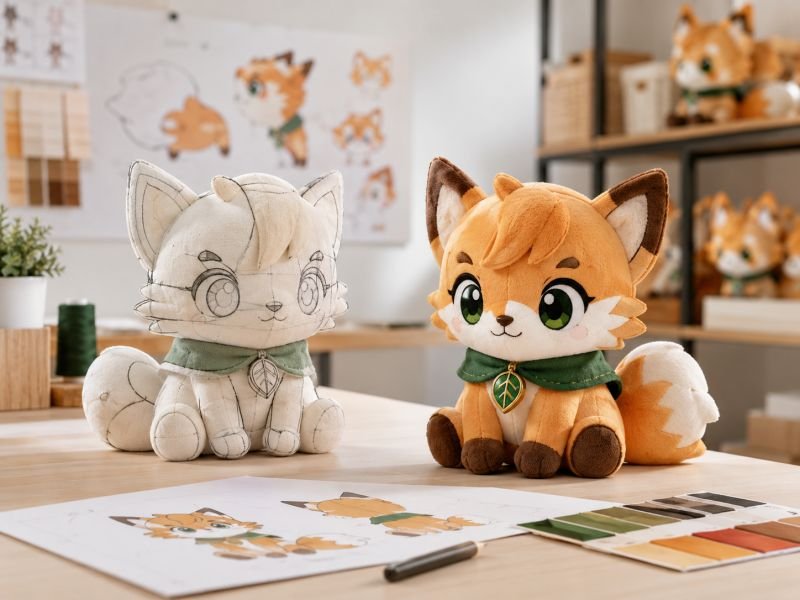
A character plush does not fail only when the stitching breaks or the filling feels uneven. It can fail much earlier, when the face looks “almost right” but does not carry the same personality as the original design. The eyes may be slightly too wide. The mouth may look flatter than expected. The head may become too round after stuffing. The hair shape may lose its sharp outline. The color may look close in a fabric swatch but different under retail lighting or camera flash.
For a brand mascot, game character, animation figure, collectible series, museum gift, event character, or licensed product line, this is not a small visual problem. A plush product may be soft, clean, and well finished, yet still feel wrong if the audience cannot recognize the character immediately. Recognition affects approval speed, retail presentation, fan response, repeat order stability, and long-term product value.
Character recognition in plush production is protected by controlling the full path from artwork review to pattern making, fabric choice, facial embroidery, sample revision, approved sample control, bulk inspection, packing method, care labeling, and repeat-order records. The goal is to keep the character’s face, body ratio, color, expression, outfit, and signature details clear while making the plush safe, durable, and practical for real production.
The hardest part is that a drawing can do things fabric cannot. A flat illustration can have thin lines, sharp angles, perfect symmetry, tiny accessories, floating hair, and color gradients. A plush product must deal with pile direction, seam allowance, stuffing pressure, embroidery density, fabric stretch, safety requirements, packing compression, and handwork tolerance. The best result usually comes from thoughtful translation, not blind copying.
Imagine a child, a fan, or a retail visitor seeing the plush from two meters away. They may not notice every stitch at first glance, but they will notice the head shape, face, color, ears, hair, posture, and expression. If those signals are protected, the plush feels like the character. If they are weakened, even a neat product may feel generic.
What Is Character Recognition In Plush Production?
Character recognition in plush production means a plush product can still be recognized as the original character after the design becomes a soft three-dimensional item. It is controlled through face proportion, eye position, mouth shape, body ratio, color, fabric texture, embroidery placement, stuffing level, and repeatable sample standards. A plush can be well sewn and still fail if the character no longer feels familiar.
Why Does Character Recognition Matter For IP Plush?
Character plush carries emotional value before it carries material value. People often recognize a character within one or two seconds, long before they touch the fabric or check the stitching. They notice the head shape, eyes, expression, color, ears, hair, posture, or one memorable symbol. If those details feel wrong, the plush may look clean but still lose the character’s identity.
This matters most for mascots, licensed characters, animation figures, game characters, museum gifts, collectible series, fan products, and retail plush lines. These products are not judged as ordinary stuffed animals. They are compared against a known image in people’s minds. A small change in the face can feel much bigger than a small change in body size.
For example, a 2–3mm shift in eye spacing may not sound serious on paper. On a 15–20cm plush face, it can change the whole mood. The character may look sleepy, surprised, angry, blank, younger, older, or simply unfamiliar. The same problem can happen when the mouth line is too thick, the cheeks are too full, the nose is too low, or the ears lean outward.
Strong character recognition also protects approval speed. When the first sample already captures the face and shape well, the review process becomes more direct. When the sample feels “close but not right,” every revision becomes harder because the feedback often turns emotional: “make it cuter,” “make it more like the original,” or “the feeling is not correct.” Clear recognition control turns those comments into practical changes.
Recognition also affects long-term product value. If the first batch looks right but the next batch slowly changes, a series can lose consistency. For character plush, the goal is not only to make one good sample. The goal is to keep the same visual identity from sample to bulk, from first order to repeat order, and from one size to another size when the character becomes a wider product line.
| Recognition Area | What People Notice | If It Changes |
|---|---|---|
| Eyes | Size, spacing, angle, height | Expression changes quickly |
| Mouth | Curve, position, line thickness | Mood becomes wrong |
| Head shape | Width, height, cheeks, forehead | Character feels unfamiliar |
| Body ratio | Head size, limb length, belly shape | Style becomes distorted |
| Main color | Body, face patch, outfit color | Brand or IP identity weakens |
| Silhouette | Ears, horns, hair, tail, posture | Character is harder to read from a distance |
| Signature detail | Bow, scarf, badge, scar, belly mark | Product loses its strongest memory cue |
A plush project should therefore protect the character’s most recognizable signals first. Extra decoration can make the product richer, but it cannot repair a wrong face or weak silhouette.
Which Features Define A Character First?
Most character recognition begins with large visual signals, not tiny decoration. People usually notice the face, head outline, body shape, main color, posture, and signature parts before they notice small stitching details. For this reason, a character plush should be reviewed from big to small.
The first layer is the identity layer. This includes the eyes, mouth, head shape, body ratio, main color, and overall silhouette. These details decide whether people recognize the character immediately. If this layer fails, the plush may need major revision even if the sewing quality is good.
The second layer is the style layer. This includes hair, ears, horns, wings, tail, outfit, belly patch, cheek marks, gloves, shoes, scarf, bow, or other visible features. These details help the character feel complete. They are especially important when several characters share a similar body base.
The third layer is the detail layer. This includes tiny symbols, fine print, small accessories, decorative stitching, pocket marks, jewelry, badges, small teeth, or fabric texture details. These details improve richness, but they should not control the whole development if the core face and body shape are not yet correct.
| Layer | Main Details | Review Priority |
|---|---|---|
| Identity layer | Face, head, color, body ratio, silhouette | Must be protected first |
| Style layer | Hair, ears, outfit, tail, patches, posture | Should be adjusted carefully |
| Detail layer | Small symbols, props, prints, accessories | Can be simplified when needed |
A useful test is to reduce the character to a shadow shape. If the outline alone is recognizable, the plush has a strong base. If the outline is generic, then the face and accessories must work much harder. This is risky, especially for small plush sizes.
Another useful test is the “two-meter view.” Place the plush at normal room distance. If the character still reads clearly, the main shape is working. If it only looks correct in a close-up photo, the design may need stronger silhouette, clearer color blocks, or better facial balance.
Face details deserve strict review. Eye distance, eye height, mouth curve, cheek shape, and nose position should not be left to visual guessing. For small and medium plush sizes, even a few millimeters can create a different personality. A design note such as “eyes slightly tilted upward” is less useful than a marked reference showing exact placement and expression.
Body ratio should also be protected early. Many characters are recognized by proportions: oversized head, short legs, round belly, narrow shoulders, long ears, wide cheeks, or compact posture. If those proportions are softened too much, the plush may become easier to sew but weaker as a character product.
Custom Plush vs Original Artwork
A flat character drawing can use sharp lines, perfect color blocks, thin fingers, tiny marks, floating hair, bright gradients, and impossible proportions. Plush production has to convert those details into fabric, seams, embroidery, filling, accessories, and packaging. The goal is not to copy every line exactly. The goal is to keep the character recognizable after it becomes soft, touchable, and repeatable.
This conversion often requires controlled adjustment. A thin mouth line may need thicker embroidery so it remains visible on plush fabric. A sharp hair strand may need to become a wider fabric panel so it does not collapse. A tiny cheek mark may need to be enlarged slightly. A narrow tail may need more width so it can hold shape. A complex outfit print may need applique or simplified color blocks.
The key is knowing what can change and what cannot. Eye shape may be untouchable because it defines the character. A tiny sleeve line may be flexible because it does not affect recognition much. A scarf color may need strict matching because it is part of brand memory. A tiny zipper detail may be simplified if it causes cost, safety, or durability issues.
| Artwork Feature | Plush Reality | Better Treatment |
|---|---|---|
| Thin black outline | May disappear in fabric pile | Use suitable embroidery thickness |
| Sharp corners | Become soft after sewing and filling | Use wider shaped panels |
| Tiny facial marks | Hard to place and keep clean | Enlarge or simplify carefully |
| Gradient color | Difficult on plush fabric | Test printing or choose solid color blocks |
| Very thin limbs | May twist or collapse | Increase width while keeping style |
| Floating accessory | Needs secure attachment | Review safety and balance |
| Complex outfit | Adds many sewing steps | Keep main shape, simplify small lines |
Size changes the decision. A 10cm plush keychain cannot hold the same level of facial detail as a 30cm collectible plush. A small plush needs stronger visual priority: larger eyes, cleaner mouth, fewer tiny accessories, and clearer color blocks. A larger plush can carry more structure, outfit detail, layered parts, and richer embroidery.
Fabric choice also changes the result. Long-pile plush can make a character warmer and softer, but it may hide small facial details. Short-pile plush may feel cleaner and support sharp embroidery. Smooth fabric can help modern characters look neat, but it may show seam tension more clearly. Textured fabric can work well for monsters or animals, but it can weaken fine print.
The safest approach is to treat artwork as the character source, not as a sewing map. A sewing map must be created through pattern work, material testing, and sample review. If a project tries to force every flat detail into plush form without adjustment, the product can become heavy, crowded, costly, or difficult to repeat.
A strong plush interpretation keeps the character’s soul intact while making the product practical. That means the face feels right, the body reads clearly, the color stays recognizable, and the details support the design instead of overwhelming it.
What Type Of Details Are Hard To Keep?
The hardest details to keep are usually small, thin, sharp, highly symmetrical, or sensitive to placement. Plush is soft, so fabric movement, seam allowance, pile direction, stuffing pressure, and hand finishing can all change the final look. This does not mean difficult details must be removed. It means they need the right method.
Facial details are the most sensitive. Eyes, pupils, eyebrows, mouth, cheeks, nose, teeth, and blush marks can change the character’s whole expression. A slight change in eyebrow angle can make a gentle character look angry. A mouth line that is too low can make the character look tired. A nose that is too large can make the face feel less cute or less accurate.
Hair, ears, horns, wings, tails, and crowns are also difficult because they affect silhouette. If they are too thin, they may twist or collapse. If they are too thick, they may change the character style. The right pattern must balance shape, softness, and stability.
Small accessories can create strong visual value but also add risk. Bells, beads, chains, plastic charms, buttons, magnets, sound modules, removable parts, and metal keyrings need careful review. They can affect safety, weight, durability, inspection, packing, and cleaning. On child-related plush, small parts need extra caution. On collectible plush, more detail may be acceptable, but attachment and appearance stability still matter.
| Detail Type | Common Problem | Practical Control |
|---|---|---|
| Small pupils | Expression becomes uneven | Use clear embroidery file and position marks |
| Thin mouth | Gets hidden by fabric pile | Increase line thickness slightly |
| Tiny teeth | Look crowded or messy | Reduce quantity or adjust spacing |
| Long eyelashes | Hard to keep even | Simplify or use embroidery with stable line weight |
| Hair spikes | Collapse after filling | Use wider pattern pieces |
| Thin tail | Twists during packing | Add structure or width |
| Small charm | May detach or scratch fabric | Review attachment and safety |
| Fine print | Loses sharpness on pile fabric | Test printing on actual material |
Symmetry is another challenge. Two ears, two eyes, two cheeks, two arms, and two feet must look balanced. Even when the measurements are close, soft fabric can make one side appear different. This is why marked samples, placement guides, and in-line checks matter.
Color boundary details also need care. Face patches, belly patches, gloves, shoes, masks, and outfit blocks must sit in the right position. If the boundary shifts, the character may look distorted. Applique, seam placement, and cutting accuracy all affect this result.
The best way to handle difficult details is to decide early whether they should be embroidered, printed, appliqued, sewn as separate fabric, simplified, enlarged, or removed. A detail should not be kept only because it exists in the artwork. It should be kept because it helps the plush remain recognizable and appropriate for its use.
What Is The History Of Character Plush?
Character plush has evolved from simple stuffed animals into a physical form of storytelling, brand identity, fan culture, and collectible value. Earlier plush products were often general animals or dolls. A bear only needed to feel soft and look friendly. A rabbit needed long ears. A puppy needed a cute face. The standard was comfort and general appeal.
As animation, comics, games, mascots, sports clubs, museums, designer characters, and creator-owned IP grew, plush became more specific. People no longer wanted just “a cute animal.” They wanted a known character in soft form. That shift changed the entire development standard. A plush now needed to match a visual identity, not only a product category.
The growth of online retail and social media also changed expectations. A character plush must look good in photos, unboxing videos, store displays, gift sets, fan collections, and close-up product shots. A face that looks slightly wrong may be noticed quickly. A color that does not match the character may feel weaker in online images. A plush that arrives flattened may create a poor first impression even if the sewing is fine.
Collectible culture made consistency even more important. Many character plush projects now include multiple sizes, seasonal outfits, keychains, bag charms, pillows, blind box styles, limited editions, or repeat releases. If the first version has one face shape and the next version changes too much, the series loses visual unity.
This is why modern character plush development needs records. Approved samples, fabric notes, embroidery files, pattern versions, filling standards, label files, packaging photos, and review comments all help future orders stay close to the original look. Without these records, each new batch may slowly drift.
The role of plush has changed. It is no longer only a soft toy. For many projects, it is a memory object, brand symbol, collectible item, event gift, retail product, or emotional bridge between a character and its audience. The more valuable the character is, the more carefully its recognition should be protected.
How Does A Factory Protect The Character Before Sampling?

A factory protects the character before sampling by checking the artwork, views, size, color, fabric, face details, structure, safety limits, packing needs, and approval risks before any fabric is cut. This early work prevents the most expensive mistakes: wrong face shape, weak silhouette, unclear colors, unsafe accessories, unstable details, and repeated sample revisions that could have been avoided.
What Files Should A Factory Review?
A character plush project should not start from one front image unless the design is extremely simple. A front image shows the face, but it does not show thickness, side curve, back details, tail angle, ear depth, hair volume, clothing layers, sitting posture, or how the body should feel in hand. When those details are missing, the sample team must guess. Guessing is where many plush characters start to lose identity.
The most useful design package includes front view, side view, back view, close-up face view, color reference, size target, accessory notes, logo files, outfit details, intended use, packing plan, sales region, and delivery date. If the plush is part of a series, the SKU list is also important because all characters may need shared body proportions, similar sitting height, matching packaging, or consistent hangtag placement.
The target size should be confirmed early. A 10cm plush keychain, a 20cm character plush, and a 35cm collectible plush cannot carry the same amount of detail. Small plush products need bolder visual signals. Medium plush sizes can hold more face embroidery and body shape. Larger plush products can show richer outfits, layered fabric, and stronger side volume, but they also need more stuffing control and larger cartons.
| File Or Detail | Why It Matters Before Sampling | Risk If Missing |
|---|---|---|
| Front view | Controls face, expression, main shape | Face may be interpreted incorrectly |
| Side view | Shows thickness, snout, belly, hair, tail | Plush may become too flat or too bulky |
| Back view | Shows rear color blocks, outfit, tail, seams | Back may look unfinished |
| Close-up face | Helps control eyes, mouth, cheeks, nose | Expression may drift |
| Color reference | Guides fabric and thread selection | Color may look close but not accurate |
| Target size | Decides detail level and sewing structure | Details may be too small to produce well |
| Accessory notes | Helps review safety and attachment | Parts may loosen, twist, or add risk |
| Packing plan | Protects shape after shipment | Face, ears, or body may be compressed |
| Sales region | Affects labels and testing needs | Safety or care information may be incomplete |
| Delivery date | Helps judge real timing | Sampling and bulk schedule may conflict |
A strong file review also separates fixed details from flexible details. The fixed details are the parts that carry recognition: eye shape, mouth curve, head outline, body ratio, main color, ear angle, tail position, outfit silhouette, or one signature symbol. Flexible details may include tiny sleeve lines, small shadows, minor printed marks, or decorative elements that do not change recognition much.
Before sampling, it is useful to prepare a short recognition note:
The eyes must stay oval and slightly tilted.
The mouth should look gentle, not wide.
The head must stay wider than the body.
The ears should stand upright.
The belly patch must stay centered.
The blue fabric should stay close to the approved swatch.
This kind of note gives the sample team clear direction. It also prevents vague revision comments later.
Which Pattern Process Keeps Proportion?
Pattern work protects character proportion by turning a flat design into fabric panels that can hold shape after sewing, stuffing, and packing. A plush character is not shaped by fabric alone. It is shaped by panel size, seam position, fabric stretch, filling level, and hand finishing. If the pattern is wrong, even beautiful fabric and clean embroidery cannot fully save the character.
The first pattern decision is volume. The team needs to decide head width, head height, head depth, body length, belly thickness, limb position, snout projection, ear angle, tail attachment, and sitting balance. These details decide whether the plush still feels like the original character. A mascot with a short round body should not become long and narrow. A fox-like character should not become too round like a bear. A shy character should not get oversized eyes that make it look surprised.
The second decision is seam position. Seams are not only construction lines. They affect appearance. A seam across the face can break the expression. A seam hidden under the chin, behind the ear, along the side, or around a color block is usually cleaner. For characters with face patches, belly patches, masks, gloves, shoes, or layered clothing, seam planning and color-block planning should happen together.
The third decision is stuffing behavior. Flat patterns expand after filling. A head may become too round, cheeks may grow wider, arms may turn outward, and the body may lean backward. Good pattern work predicts this. The sample should not depend on one person manually squeezing the shape into place. If the character only looks correct after heavy hand shaping, bulk pieces may not stay consistent.
| Pattern Area | Recognition Effect | What To Control |
|---|---|---|
| Head width | Changes cuteness and character age | Width-to-body ratio |
| Head depth | Affects side profile and face volume | Forehead, snout, cheek thickness |
| Eye area | Controls mood and focus | Embroidery placement and panel curve |
| Mouth area | Changes expression quickly | Line height and fabric tension |
| Body length | Affects posture and character style | Sitting or standing balance |
| Ear angle | Strong silhouette signal | Attachment position and filling |
| Tail or wings | Defines side/back view | Size, angle, seam strength |
| Outfit panels | Carries story and identity | Color block alignment |
A practical proportion check should include four views:
Front view: face balance, head width, eye position, body ratio.
Side view: thickness, snout, belly, tail, posture.
Back view: color blocks, seam neatness, outfit, tail placement.
Top view: head roundness, ears, horns, hair, symmetry.
For repeat orders, pattern records are valuable. If a plush style returns months later, the approved pattern should guide the next run. Without pattern records, the same character may slowly change from one batch to the next.
How Do Fabric And Color Affect Recognition?
Fabric and color can change the character even when the pattern is accurate. Plush fabric is not a flat surface. It has pile height, pile direction, density, shine, stretch, thickness, and hand feel. These features affect how the face reads, how the color looks, how clean the embroidery appears, and how the body holds shape.
Short-pile plush is often better for characters with clear facial details because eyes, mouths, cheek marks, and small patches remain easier to see. Long-pile plush feels warmer and softer, but it may cover fine embroidery, blur color edges, and make small facial details less sharp. Smooth minky-style fabric can create a clean, modern look, but it may show seam tension or wrinkles more clearly. Textured plush can add personality for animals, monsters, and fantasy characters, but it may not suit tiny printed graphics.
Color matching should be reviewed on actual material. A digital color value does not always translate to plush fabric. Pile direction can make one fabric look darker from one angle and lighter from another. Lighting can change how the color feels in photos, retail display, and real use. Thread color can also look different after embroidery because it sits above the fabric and catches light differently.
| Material Choice | Good For | Recognition Risk | Before-Sample Check |
|---|---|---|---|
| Short-pile plush | Small faces, clean mascots, keychains | May feel less fluffy | Check softness and face clarity together |
| Long-pile plush | Furry animals, warm characters | May hide eyes or mouth lines | Test facial embroidery on real fabric |
| Minky-style fabric | Smooth modern characters | May show seam tension | Check wrinkles after stuffing |
| Textured plush | Monsters, animals, fantasy designs | Fine details may disappear | Use texture on body if face needs clarity |
| Printed fabric | Patterns, clothing, gradients | Print may blur or fade | Make fabric print test |
| Applique fabric | Bold patches and color blocks | Edges may shift | Check placement tolerance |
The face area may need a different fabric from the body. For example, a long-pile body can give a soft animal feeling, while a shorter face fabric can keep eyes and mouth clear. This mixed-material choice can protect both hand feel and recognition.
Color blocks should also be planned before sampling. A face patch, belly patch, mask, glove, shoe, or outfit panel must sit in the right position. If a color boundary shifts by a few millimeters, the character may look unbalanced. Cutting marks, sewing guides, and inspection photos help keep these areas stable later.
The best fabric decision is not always the most expensive one. It is the one that keeps the character recognizable, supports the intended use, fits the target size, and can be repeated in bulk without constant variation.
Can Stuffed Animals Be Copyrighted?
Stuffed animals can involve copyright, trademark, design rights, character rights, artwork ownership, and licensing rules. A plain animal shape may not always carry the same protection as a unique character, but an original mascot, animation figure, game character, illustrated creature, logo-based plush, or character with a special outfit and expression may be protected.
For a character plush project, the safest starting place is clear ownership. The artwork should be original, owned, licensed, or approved for production. If the design is based on a famous character, trending toy, game figure, movie mascot, or public retail product without permission, the risk is not only legal. It can also affect sales channels, payment security, retail acceptance, platform listing, shipment documents, and long-term reputation.
A factory can review structure and production feasibility, but design ownership should be confirmed by the project owner. This is especially important when the plush will be sold online, placed in retail stores, used in events, included in blind boxes, shipped internationally, or attached to a licensed product program.
Copyright also connects to sample handling. A prototype photo may reveal an unreleased character. A packaging file may reveal a launch date. An embroidery file may contain protected face details. A SKU list may reveal a future series plan. These materials should not be used publicly without permission.
A safe pre-sample review should include:
Confirm the artwork is original, owned, or licensed.
Avoid copying protected public characters.
Use reference photos only for technical direction, not direct duplication.
Keep unreleased artwork and sample photos private.
Discuss NDA needs before sensitive files are exchanged.
Confirm whether sample photos may be used publicly after approval.
Keep packaging, label, and SKU files inside the project scope.
For character plush, rights protection and recognition protection often move together. The more valuable the character is, the more carefully its artwork, face details, color, sample photos, and product files should be handled.
When Should NDA Rules Be Confirmed?
NDA rules should be discussed before sending unreleased artwork, mascot files, licensed character guides, packaging designs, sample photos, launch plans, or confidential SKU information. Waiting until after sampling starts can create avoidable risk because the files may already have moved through artwork review, pattern work, embroidery setup, sample sewing, photography, and internal communication.
A good confidentiality discussion should make the rules simple and clear. Which files are private? Who may view them? Can sample photos be shared? Can the plush appear in a portfolio after release? Can packaging be shown? How should unused artwork be handled? Are revised versions also confidential? These details are easy to clarify early and much harder to fix later.
For unreleased IP programs, confidentiality protects timing. If a sample photo appears too early, viewers may see an unfinished product before approval. Fans may react to a prototype that is not final. Retail teams may see a version that still needs correction. A limited-edition product may lose surprise value. All of these risks can be reduced by setting clear file and photo rules before sampling.
| Confidential Material | Why It Needs Care | Suggested Handling |
|---|---|---|
| Character artwork | Core creative asset | Share only with project-related staff |
| Style guide | Contains official colors and rules | Keep within approved use |
| Sample photos | May reveal unreleased product | Do not publish without permission |
| Embroidery files | Contains face and logo details | Keep tied to the approved style |
| Pattern files | Supports repeat production | Store with version control |
| Packaging design | May reveal sales plan or launch date | Keep private before release |
| SKU list | Shows series size and structure | Use only for production preparation |
| Delivery schedule | May reveal campaign timing | Limit access when needed |
NDA planning should not slow the project if handled properly. It simply creates a safer path for sharing sensitive files. Once file rules are clear, artwork review, structure review, sampling, revision, and approval can move with less concern.
For character plush, trust is built before the first sample is made. A team that respects artwork, protects sample photos, handles style guides carefully, and avoids unauthorized public use of project materials is better suited for long-term character work.
How Is The Sample Process Used To Protect Recognition?

The sample process protects character recognition by turning artwork into a physical reference that can be checked, measured, revised, and repeated. A strong sample confirms the face, body ratio, color, fabric, embroidery, filling, accessories, safety details, and packing behavior before bulk work begins. For character plush, the sample is not just a preview. It is the control piece that decides whether the final plush still feels like the original character.
A character may look perfect as a flat drawing, but fabric changes everything. Plush fabric has pile direction. Filling expands the head and body. Embroidery adds thickness. Seams pull fabric inward. Small parts may shift during sewing. Packing can flatten ears, hair, horns, wings, or face volume. The sample stage reveals these issues before they become expensive.
The best sample review is not based on “cute” or “not cute” alone. It should check whether the plush can still be recognized within the first few seconds. If the eyes, mouth, head shape, color, and silhouette feel right, smaller details can be improved more easily. If the face already feels wrong, decoration cannot fix the product.
For character plush, the sample should also prove that the design can be repeated. A handmade prototype that looks good only because one person shaped it carefully may not stay consistent later. The goal is a sample with clear pattern structure, stable embroidery placement, practical fabric choice, and review notes that can guide bulk production.
How Long Does A Character Plush Sample Take?
A character plush sample usually takes more time than a simple plush because it needs artwork review, pattern making, fabric selection, embroidery or print setup, cutting, sewing, stuffing, shaping, and revision. The timeline depends on character complexity, size, material availability, number of colors, accessory structure, safety needs, and how many changes are needed after the first sample.
A simple rounded mascot with a clean face may move faster. A detailed IP plush with special hair, layered clothing, horns, wings, printed fabric, removable accessories, or multiple facial expressions needs more development time. Small plush keychains may look simple, but tiny facial details can take extra care because every millimeter changes the expression.
The target size strongly affects sample difficulty. A 10–12cm plush has limited space for eyes, mouth, patches, and accessories. A 20cm plush gives more room for embroidery and shape control. A 30cm or larger plush can carry richer structure, but the body balance, stuffing volume, packing size, and freight volume need closer review.
| Sample Type | Common Structure | Main Time Factors |
|---|---|---|
| Simple mascot plush | Round body, simple face, few colors | Pattern, basic embroidery, fabric match |
| Character plush | Face details, outfit, ears, tail, patches | Face placement, color blocks, sewing order |
| Collectible plush | Rich expression, layered details, display value | Fine embroidery, fabric quality, shaping |
| Plush keychain | Small size, metal fitting, compact face | Mini detail control, attachment strength |
| Multi-style series | Several characters or sizes | Shared body base, color consistency, SKU records |
| Special structure plush | Sound, magnet, weighted filling, removable parts | Safety review, inner structure, testing plan |
The sample stage should not be rushed only to meet a date. A fast sample that misses the character may lead to more revisions later. A slightly more careful first sample can reduce repeated corrections, material waste, and approval delays.
For a serious character plush project, sample time should be viewed as risk control. It helps check whether the design is production-ready before larger quantities are started. If the sample exposes problems early, the project still has room to adjust the face, fabric, pattern, embroidery, filling, and packing method.
What Should Be Checked On The First Sample?
The first sample should be checked from all important angles: front, side, back, top, close-up face, hand-held view, packed view, and photo view. A character plush may look correct from the front but too flat from the side. It may look cute in close-up photos but lose identity from a normal viewing distance.
The face should be reviewed first because it carries the strongest recognition. Check eye shape, eye distance, eye height, eyebrow angle, mouth curve, nose size, cheek position, snout length, forehead shape, and overall mood. A small shift in the face can change the whole personality. For a 15–20cm plush, even a 2–3mm change in eye spacing or mouth height can be visible.
The second check is body ratio. Look at head size, body width, arm length, leg position, belly volume, ear angle, tail placement, and sitting or standing balance. Some characters are recognized by their oversized head, short body, long ears, round belly, or compact posture. If these proportions change too much, the plush may become generic.
The third check is material and color. Fabric should be reviewed under different lighting where possible. Plush pile direction can make color appear lighter or darker. Thread color may also look different after embroidery. If the character depends on a specific blue, red, yellow, pink, or brown, the color should be checked on real fabric, not only on a screen.
| Review Area | What To Check | Why It Matters |
|---|---|---|
| Face | Eyes, mouth, nose, cheeks, expression | Decides first-glance recognition |
| Head | Width, height, side depth, forehead | Controls character style |
| Body | Ratio, posture, belly, limb position | Protects silhouette |
| Fabric | Pile height, softness, stretch, texture | Affects detail clarity and hand feel |
| Color | Fabric, thread, patches, outfit blocks | Protects visual identity |
| Embroidery | Line thickness, density, placement | Controls face accuracy |
| Accessories | Size, angle, attachment, safety | Affects story and durability |
| Filling | Softness, balance, shape recovery | Protects volume and posture |
| Packing | Compression, recovery, display look | Protects arrival condition |
The first sample review should be specific. “Make it better” is not enough. Clear notes such as “move eyes 2mm lower,” “reduce cheek width,” “raise mouth curve,” “make ears stand more upright,” or “increase head depth from side view” are easier to act on.
Marked photos are useful. Arrows, circles, comparison lines, and side-by-side views can help the sample team understand the issue quickly. This is especially helpful when several people review the same character from different locations.
The first sample does not need to be perfect, but it should reveal whether the direction is right. If the face, structure, and fabric are far from the intended character, the project may need a deeper reset rather than small decoration changes.
Sample vs Golden Sample
A sample is part of development. A golden sample is the approved physical standard for bulk production. The difference is important because a development sample can still change, while a golden sample should lock the final look, material, size, embroidery, filling, accessories, labels, and finishing direction.
A first sample may show the main shape but still need changes. A revised sample may fix the face, color, or body ratio. The golden sample should represent the approved version that later products are compared against. It should be checked carefully before bulk work begins because it becomes the main visual reference.
For character plush, the golden sample should not be approved only through one front photo. The sample should be reviewed from multiple angles. The face should carry the right personality. The side view should have the correct thickness. The back view should not feel unfinished. The fabric and thread should be confirmed. The filling should match the desired softness and body shape.
| Item | Development Sample | Golden Sample |
|---|---|---|
| Main purpose | Review and correction | Bulk reference |
| Change status | Can still be revised | Should be fixed |
| Face | May need adjustment | Approved expression |
| Pattern | May still be improved | Final version |
| Fabric | May be trial fabric | Approved material direction |
| Embroidery | May need placement changes | Approved file and position |
| Filling | May need softness correction | Approved filling level |
| Accessories | May need size or attachment review | Approved structure |
| Inspection use | Limited | Main comparison piece |
| Repeat value | Low to medium | High |
A golden sample should be supported by records. Useful records include front, side, back, and close-up photos; approved measurements; fabric notes; thread colors; embroidery file version; pattern version; accessory placement; packing method; label requirements; and key tolerance notes.
The golden sample helps prevent vague debates later. Instead of relying on memory, the product can be compared with the approved reference. If the face becomes wider, the eyes move, the ears lean outward, or the filling becomes too firm, the difference can be seen clearly.
For repeat orders, the golden sample is even more important. A character may return months later with the same artwork, but fabric batches, sewing staff, or packing plans may change. The approved sample and records help keep the next batch close to the original style.
How Do Revisions Protect The Face?
Revisions protect the face by correcting small visual shifts before they become repeated across bulk production. The face is the most sensitive part of a character plush. Eyes, eyebrows, mouth, cheeks, nose, and head shape all work together to create personality. If one part moves too far, the mood can change quickly.
Common face revisions include eye spacing, eye height, eye angle, mouth curve, nose size, cheek width, snout shape, forehead volume, eyebrow angle, and embroidery thickness. These changes may look small on a note, but they can make the plush feel much closer to the original character.
For small and medium plush sizes, millimeter-level changes matter. A mouth line that moves slightly upward can make the character look happier. Eyes placed slightly lower can make a face softer. A narrower cheek can make the head look less babyish. A thinner eyebrow may make the expression less harsh.
A good face revision should connect the visual issue to the right technical action.
| Face Problem | Possible Cause | Practical Revision |
|---|---|---|
| Face looks too blank | Eyes too far apart or too high | Adjust eye distance and height |
| Character looks sleepy | Mouth too low or eyes too flat | Raise mouth curve or change eye angle |
| Face looks too wide | Head panel too broad or stuffing too full | Adjust pattern or filling level |
| Eyes look heavy | Embroidery too thick or too dense | Reduce stitch density or line width |
| Mouth disappears | Line too thin or pile too long | Increase line weight or adjust fabric |
| Expression looks angry | Eyebrow angle too sharp | Soften angle or change thread direction |
| Nose feels too strong | Nose too large or too low | Reduce size or adjust placement |
| Cheeks look uneven | Patch placement shifted | Add positioning guide |
Revisions should be documented with marked photos and updated files. If an eye is moved, the embroidery file should be updated. If the face shape changes, the pattern should be updated. If the mouth is too hidden, the fabric or stitch setting may need review. A visual correction should become a production instruction, not just a one-time manual adjustment.
It is also important not to revise the face endlessly without priority. Too many small changes can create confusion. The strongest approach is to protect the main recognition signals first: eye shape, mouth mood, head shape, main color, and silhouette. Once those are right, smaller details can be refined.
A face revision is successful when the character feels familiar at first glance and the correction can be repeated later.
When Is The Sample Ready For Bulk?
A sample is ready for bulk when the character is recognizable, the structure is stable, the materials are approved, the face details are fixed, the size is acceptable, the accessories are secure, safety concerns are reviewed, packing is planned, and the sample can guide repeated production. It should not move forward only because the schedule is tight.
Bulk readiness means the sample is no longer just attractive. It must be practical. The pattern should hold the shape without excessive hand correction. The embroidery should be clear and positioned. The fabric should match the intended hand feel and color. The filling should give the right softness and recovery. The accessories should be attached in a way that suits the product use.
The sample should also be checked after gentle handling. Squeeze the head lightly. Move the ears or limbs carefully. Check whether the face wrinkles, whether the body leans, whether the filling shifts, whether the accessories loosen, and whether the plush returns to shape. A sample that looks good only when untouched may not perform well during packing, shipping, display, or daily handling.
Before bulk work begins, key files and standards should be fixed.
| Bulk-Ready Item | What Should Be Confirmed |
|---|---|
| Approved sample | Final look, shape, expression, size |
| Pattern | Final version and shape notes |
| Fabric | Type, color, pile direction, hand feel |
| Embroidery | File version, thread color, placement |
| Printing | Print test, color, position, durability direction |
| Accessories | Size, material, placement, attachment |
| Filling | Softness, volume, weight, recovery |
| Label | Care, warning, barcode, SKU, or other needs |
| Packing | Bag size, carton load, shape protection |
| Inspection focus | Face, symmetry, color blocks, seam quality |
If any major item is still uncertain, bulk work may carry risk. For example, if fabric color is not approved, the finished product may look different from the character. If packaging is not reviewed, the plush may arrive flattened. If the face embroidery file is not final, the expression may vary. If the target region and use scene are unclear, label or safety planning may be incomplete.
The final sample approval should be careful but not endless. Once the character identity, structure, materials, and production details are clear, the sample can move forward. The best approval is not based on perfection in every tiny decoration. It is based on whether the plush can protect the character’s identity in a stable, safe, and repeatable way.
How Is Bulk Production Controlled After Approval?

Bulk production is controlled by using the approved sample, final pattern, material notes, embroidery files, sewing guides, filling standard, inspection photos, label files, and packing rules as the working reference. The goal is to keep the face, shape, color, softness, accessories, safety details, and carton presentation close to the approved plush, not just to finish the quantity.
After the sample is approved, the project moves from creative adjustment into repeat control. This stage looks simple from the outside: cut fabric, sew, fill, inspect, pack, ship. In real plush work, every stage can change the character. Fabric pile direction can change color. Cutting direction can change texture. Sewing tension can narrow the face. Filling can make the head too round. Packing pressure can flatten ears or hair. A small drift repeated across hundreds or thousands of pieces can become a visible issue.
The approved sample should be placed at the center of control. The production team should not rely only on memory, photos, or written notes. A physical sample gives a clear reference for the face, body proportion, softness, embroidery placement, fabric feel, and overall expression. For character plush, this is especially important because a product can pass normal stitching checks but still look different from the approved character.
Bulk control works best when the project is divided into key visual checkpoints:
Material arrival
Cutting direction
Embroidery or print placement
Sewing symmetry
Filling and shaping
Accessory attachment
Final appearance
Needle detection where required
Label and packing review
Carton loading and shipment preparation
Each step should protect the same goal: the plush should still feel like the approved character when it reaches the shelf, event, collection, warehouse, or end user.
Why Do Bulk Plushies Drift From The Sample?
Bulk plushies drift from the sample because plush is soft, flexible, and partly hand-finished. It is not a hard product shaped by one rigid mold. Fabric behavior, sewing tension, stuffing volume, human handling, packing pressure, and material batches all affect the final look. A small change in any one area may be minor. Several small changes together can make the character look different.
Fabric is one of the first causes. Plush fabric has pile direction, thickness, stretch, density, and surface shine. If panels are cut in different directions, the same fabric may appear lighter or darker from different angles. A character with a blue body, cream face, pink cheeks, or red scarf may look inconsistent if pile direction is not controlled. Color can also shift slightly between material batches, so fabric review before cutting is important.
Sewing tension is another common cause. If the face panel is pulled too tightly, the head may become narrow or wrinkled. If the seam is loose, the shape may become soft and uneven. If both ears are not positioned evenly, the silhouette changes immediately. On a small plush, even a few millimeters can affect expression.
Filling also changes recognition. Too much filling can make the head rounder, cheeks wider, body stiffer, or limbs point outward. Too little filling can make the face collapse, the body lean, or the plush look tired. The filling level should match the approved sample, not just a general softness preference.
Packing can create the final visible drift. A plush may look correct before packing but arrive flattened if the polybag is too tight, the carton is overloaded, or raised parts are pressed for too long. Ears, horns, hair, bows, wings, tails, and snouts need special protection if they are part of the character’s silhouette.
| Drift Cause | What May Change | Control Method |
|---|---|---|
| Fabric pile direction | Color, texture, brightness | Mark cutting direction before cutting |
| Material batch change | Shade and hand feel | Compare new fabric with approved reference |
| Sewing tension | Face width, wrinkles, seam shape | Check key seams during sewing |
| Embroidery placement | Eye balance, mouth position, expression | Use approved file and positioning guide |
| Filling level | Head roundness, body posture, softness | Compare with approved sample during filling |
| Hand shaping | Cheeks, ears, limbs, sitting balance | Use sample photos and shaping notes |
| Accessory attachment | Outfit, bow, tail, keyring, props | Check placement and strength |
| Packing pressure | Face volume, ear angle, body recovery | Review bag size and carton loading |
The main risk is not one dramatic mistake. It is slow visual drift. A batch may start close to the approved sample, then gradually become wider, softer, darker, flatter, or less symmetrical. This is why inspection should happen during the process, not only after all pieces are finished.
Which QC Checks Protect Face And Shape?
QC checks that protect face and shape should focus on the parts people recognize first: eyes, mouth, head, body ratio, color blocks, ears, hair, tail, outfit, and posture. General checks such as stitching, loose threads, cleanliness, and packing are important, but character plush also needs visual comparison against the approved sample.
Incoming material inspection should check fabric color, pile direction, texture, thickness, and defects. This stage protects the base appearance. If the fabric color is wrong, later sewing cannot fix it. If pile direction is mixed, the character may look uneven under light. If the fabric stretches more than expected, the final shape may change after filling.
Embroidery and printing checks should happen before large-scale sewing. The face should be compared with the approved sample. Check eye distance, eye height, mouth curve, thread color, line thickness, print sharpness, and patch position. A face error should not be discovered after the body is fully assembled.
During sewing, inspectors should review symmetry and panel alignment. Ears should sit at the same angle unless the design is intentionally asymmetrical. Face patches should not shift. Snouts should not twist. Arms and legs should match the approved posture. Color blocks should meet cleanly, especially on masks, bellies, gloves, shoes, or clothing.
During filling, shape control becomes critical. The plush should be compared by hand and by sight. Does the head match the approved roundness? Are the cheeks too full? Is the body too firm? Does the plush sit correctly? Do the ears or tail hold shape? Is the face still smooth after stuffing?
| Inspection Stage | Recognition Check | General Quality Check |
|---|---|---|
| Material arrival | Color, pile direction, texture | Stains, holes, shade variation |
| Cutting | Panel direction, shape accuracy | Wrong panels, rough edges |
| Embroidery/printing | Face placement, thread color, line clarity | Thread breaks, print defects |
| Sewing | Symmetry, color block alignment, posture | Open seams, skipped stitches |
| Filling | Head shape, softness, body balance | Lumps, uneven filling, leakage |
| Finishing | Expression, trimming, surface cleaning | Loose threads, dirt, wrinkles |
| Needle detection | Safety before packing where required | Metal contamination risk |
| Packing | Shape protection, label accuracy, carton load | Wrong bag, wrong label, wrong carton mark |
Final inspection should compare finished pieces with the approved sample, not only with a checklist. Inspectors should look for face drift, uneven ears, tilted mouths, twisted bodies, color mismatch, missing labels, weak accessories, poor cleaning, and packing pressure.
Needle detection is also an important safety step for plush products where required by the project. It helps reduce the risk of broken needle fragments or metal contamination before final packing and shipment.
A strong check plan asks two things at the same time: Is the plush well made? Does it still look like the approved character?
What Are Common Safety Concerns With Stuffed Animals?
Common safety concerns with stuffed animals include loose small parts, weak seams, exposed filling, sharp accessories, long cords, fabric shedding, unsuitable plastic pieces, magnets, sound modules, batteries, weighted filling, unclear care labels, missing warning labels, and product structure that does not match the intended age group.
Character plush often includes extra details that make safety review more important. A bow, bell, plastic charm, keyring, button, embroidered badge, removable outfit, magnet, sound module, or zipper may improve the design, but each part needs review. A decorative piece that looks attractive on a sample may create risk if it can detach, scratch fabric, break during transport, or be pulled by children.
Age group matters. A plush intended for collectors can include more decorative details than a plush intended for babies or young children. A school mascot plush, baby cloth book, educational plush, or plush used in child-related activities should receive stricter review for seams, small parts, fabric, filling, labels, and testing needs.
Seam strength is a basic but serious issue. If a seam opens, filling can leak. If a weighted filling is used, leakage control becomes even more important. If a sound module or battery component is inside the plush, the inner pocket and closure method should be reviewed carefully. If a keychain plush is carried on bags, the metal ring and attachment loop must handle pulling and daily movement.
| Safety Concern | Why It Matters | Practical Review |
|---|---|---|
| Small parts | May detach during use | Check pull strength and attachment |
| Weak seams | Filling may leak | Review seam strength and stress areas |
| Long cords or loops | May create use risk | Review length and placement |
| Sharp accessories | May scratch or hurt | Use soft shape or safer material |
| Plastic eyes or nose | Detachment risk | Consider embroidery for younger age groups |
| Magnets or sound modules | Inner structure risk | Review pocket, sealing, and label needs |
| Weighted beads | Leakage and drying risk | Use secure inner bag and seam control |
| Fabric shedding | Surface quality issue | Check fabric type and finishing |
| Wrong labels | Misuse or channel rejection | Confirm care and warning details |
Testing needs can vary by sales region, product structure, age group, material, accessories, and sales channel. EN71, CE, ASTM F963, CPSIA, REACH, Prop 65, UKCA, or other requirements may be discussed based on the real project. The exact testing path should be confirmed before bulk packing, especially for child-related products.
Safety should not be treated as separate from character design. The safest version should still protect recognition. For example, plastic eyes may be replaced by embroidered eyes while keeping the same shape and expression. A sharp crown may become a soft padded crown. A tiny necklace may become an embroidered detail. A removable part may become a sewn-on feature. Good safety review protects the product without weakening the character.
How To Tell If A Plush Is Machine Washable?
A plush is machine washable only when the fabric, filling, embroidery, printing, accessories, inner structure, and care label support machine washing. Many plush products should be surface cleaned only, especially if they include long-pile fabric, delicate accessories, sound modules, batteries, magnets, weighted beads, glued parts, metallic fabric, special trims, or structured shaping.
The care label should be checked first. It may include instructions such as machine wash, hand wash, surface wash only, do not bleach, do not tumble dry, air dry, or do not iron. If the label says surface wash only, machine washing may damage the fabric, shift the filling, wrinkle the face, loosen accessories, or change the product shape.
Machine washing can affect recognition. A plush face may lose smoothness after spinning. Long pile may mat. Printed details may fade or crack. Filling may move to one side. Ears or hair may bend. A bow or accessory may loosen. For character plush, washing damage is not only a cleanliness issue. It can change the face and silhouette.
Washability should be considered before bulk work, not after. If the plush is intended for children, schools, hospitals, frequent handling, or reusable promotional programs, washable materials and stronger construction may be needed. If the plush is intended for collectors, surface cleaning may protect appearance better.
| Product Feature | Machine Wash Risk | Better Direction |
|---|---|---|
| Short-pile fabric | Usually easier to clean | Check label and stitching |
| Long-pile fabric | May mat or lose softness | Surface cleaning or gentle care review |
| Embroidered face | Generally more durable than print | Still check thread and fabric reaction |
| Printed face | May fade or crack | Test print durability |
| Sound module | Water damage risk | Usually not machine washable |
| Weighted filling | Drying and leakage risk | Follow special care instruction |
| Keyring or metal part | Scratching and rust risk | Remove if possible or surface clean |
| Delicate outfit | Deformation or color bleeding | Surface clean or hand clean review |
A plush can only be labeled washable when the actual product supports it. One fabric may tolerate washing, but the full product may not if it includes electronics, glued accessories, special filling, or delicate structure. Care claims should match the final sample.
For product planning, washability affects fabric choice, seam strength, filling, embroidery, printing, accessory selection, label wording, and after-sale expectations. A clear care label reduces misuse and helps the plush stay closer to its approved appearance.
Are Care Labels Part Of Quality Control?
Care labels are part of quality control because they guide how the plush should be cleaned, handled, and used after delivery. A plush may be well made, but if the label is missing, unclear, or wrong, the product can be washed incorrectly, damaged quickly, rejected by a sales channel, or misunderstood by end users.
A care label can include washing instructions, fiber content, warning information, age-related caution, origin details, tracking code, batch reference, barcode, SKU, or other required information depending on the project. The exact content should match the product structure and destination requirements.
For character plush, care labels protect the approved look. If the product is surface clean only, the label should not suggest normal machine washing. If gentle machine washing is allowed, the label should reflect temperature, drying, bleach, and ironing limits. If the plush contains a sound module, magnet, weighted filling, battery, keyring, or delicate accessory, special care instructions may be needed.
Label placement also matters. A large label near a small plush face can hurt appearance. A label placed where it rubs against fabric may affect user comfort. A label hidden too deeply may be hard to find. For retail and online sales, care labels, warning labels, barcode labels, SKU labels, FNSKU labels, hangtags, and carton marks should be reviewed as a complete packing system.
| Label Type | Main Use | Risk If Wrong |
|---|---|---|
| Care label | Cleaning and handling instruction | Product may be washed incorrectly |
| Warning label | Age or safety information | Channel or safety concern |
| Barcode label | Retail scanning | Inventory or sales issue |
| SKU label | Style identification | Mixed styles or wrong dispatch |
| FNSKU label | Warehouse identification | Receiving or storage error |
| Hangtag | Product and brand presentation | Poor shelf impression |
| Carton mark | Shipment and warehouse handling | Sorting or delivery issue |
Care labels should be reviewed before final packing. If a label issue is found after cartons are packed, relabeling can delay shipment and increase labor. For multi-style plush series, label consistency is especially important. Different styles may share similar bodies but need different names, SKUs, warnings, or care instructions.
Quality control is not only about finding defects. It is also about protecting the product after it leaves the factory. Clear care labels help the plush stay clean, safe, recognizable, and easier to manage through retail, storage, use, and repeat orders.
How Do Brands Protect Plushies After Delivery?
Plush recognition protection continues after the product leaves the sewing line. Storage, carton pressure, display, cleaning, packing recovery, label accuracy, and repeat-order records can all affect how a character plush looks in real use. The face, silhouette, color, softness, accessories, and care instructions should stay clear from warehouse arrival to shelf display, event use, online dispatch, or future reorder.
A character plush may pass inspection and still lose visual quality later if it is stored poorly, packed too tightly, washed incorrectly, or reordered without records. The approved face may look tired after compression. Ears may bend inside cartons. Long-pile fabric may mat. A keyring may scratch the fabric. A care label may not match the actual materials. A repeat batch may use a slightly different fabric and weaken the original look.
This stage matters because many plush products do not go directly from carton to end user. They may pass through a warehouse, retail stockroom, event venue, display shelf, photography studio, online fulfillment center, gift set assembly area, or seasonal storage. Each step can protect or damage the approved appearance.
Post-delivery protection should focus on five practical areas:
Keep the plush clean and dry before display.
Avoid heavy compression that changes the face or body shape.
Use packing that supports raised parts such as ears, horns, hair, bows, wings, or tails.
Follow care labels instead of guessing cleaning methods.
Save approved samples, material notes, photos, and packing records for repeat production.
Character plush is soft, but its identity is built from precise visual signals. The better those signals are protected after delivery, the longer the product keeps its intended value.
How Do I Protect My Plushies?
Plushies are best protected through dry storage, gentle handling, correct cleaning, and shape recovery after transport. For character plush, the goal is not only to prevent dirt or damage. It is also to keep the face, ears, body shape, fabric texture, embroidery, accessories, and color close to the approved appearance.
Storage should be clean, dry, and away from strong sunlight. Plush fabric can absorb odor, dust, and moisture. Direct sunlight may fade color over time, especially on bright fabrics, pastel fabrics, printed areas, or color-blocked characters. Humid storage can affect carton condition, fabric smell, and surface cleanliness.
Compression should be controlled. Plush products may recover after short-term packing pressure, but raised parts can be more sensitive. Long ears, horns, wings, hair spikes, bows, snouts, tails, and shaped outfits may bend if pressed for too long. Large cartons should not be stacked in a way that crushes the lower cartons, especially when the plush has strict face or silhouette requirements.
After opening cartons, the plush may need recovery time. Light hand reshaping can help restore the head, body, ears, and limbs. For retail display or product photography, allow the plush to sit naturally before shooting or shelving. A freshly unpacked plush may look flatter than its true approved shape.
Cleaning should follow the care label. Some plush products can handle gentle machine washing. Some need hand washing. Some should be surface cleaned only. Products with electronics, magnets, weighted filling, long-pile fabric, metallic fabric, glued decoration, delicate clothing, keyrings, or special accessories often need extra care.
| Protection Area | Practical Method | What It Protects |
|---|---|---|
| Storage | Keep dry, clean, and away from strong sunlight | Color, smell, fabric surface |
| Compression | Avoid heavy stacking or tight long-term packing | Face, ears, body shape |
| Handling | Hold by the body, not by small accessories | Attachments, seams, keyrings |
| Display | Allow recovery before shelf or photo use | Silhouette and first impression |
| Cleaning | Follow the care label | Fabric, filling, embroidery, accessories |
| Long-term storage | Keep one approved sample separately | Future visual comparison |
For event plush, store samples and bulk pieces separately if possible. The display sample may be handled often, while unopened pieces should stay clean and carton-protected. For collectible plush, dust protection and gentle storage matter more than frequent washing. For school or child-related plush, cleaning method and safety labels should be checked before regular use.
A plush character lasts longer when it is treated as a shaped soft product, not as a simple cushion. The face and silhouette deserve the same care as the fabric.
Which Packaging Protects Character Shape?
Packaging protects character shape by reducing compression, friction, bending, moisture exposure, and poor shelf presentation. The right packing method depends on plush size, raised parts, fabric type, accessories, shipping method, display needs, and how strict the character’s face and silhouette must remain after opening.
A basic individual polybag works for many plush products, but it may not be enough for characters with special shapes. Tall ears, soft horns, hair spikes, wings, bows, tails, snouts, or round faces can be affected if the bag is too tight or the carton is overloaded. The product may still recover, but recovery time can affect warehouse inspection, photography, and retail display.
The bag size should allow the plush to fit naturally. A bag that is too small can flatten the face or bend raised parts. A bag that is too large may allow too much movement, causing friction, dust marks, or accessory scratches. For keychain plush and bag charms, metal rings should be positioned so they do not press into the face or fabric.
Gift boxes and display boxes offer stronger shape protection and better presentation for premium plush, collectible sets, licensed series, museum gifts, and retail programs. A box can protect the face and posture, but it also increases packing volume and freight space. The extra cost should be weighed against product value, shelf appearance, and damage risk.
| Packing Method | Suitable Use | Shape Protection | Notes |
|---|---|---|---|
| Individual polybag | Standard plush, event gifts | Basic | Bag size must not crush face or ears |
| Polybag with hangtag | Retail-ready plush | Basic to medium | Hangtag should not cover key face details |
| Card backing | Plush keychains, bag charms | Medium | Helps control metal fitting position |
| Gift box | Premium plush, gift sets | Medium to high | Better display value and less compression |
| Display box | Collectible or licensed series | High | Supports shelf presentation and barcode placement |
| Inner divider | Delicate accessories or multi-SKU sets | Medium to high | Reduces friction and bending |
| Vacuum packing | Select large simple plush only | Low for strict character shapes | Risky for faces, ears, hair, wings, and outfits |
Carton planning is just as important as individual packing. Too many pieces in one carton can flatten the lower layer. Heavy stacking during storage may deform the face or body. For plush with strict shape requirements, carton load, product direction, and inner support should be reviewed before bulk packing.
Vacuum packing should be used carefully. It may reduce volume, but it can damage immediate appearance. It is usually not ideal for character plush with strict face shape, standing ears, hair structure, wings, horns, bows, or display value. If vacuum packing is considered, a packing recovery test should be done before larger quantities are packed.
Good packaging does not always mean the most expensive option. It means the packaging protects the weak areas of that specific character. If the face is the core, protect the face. If the ears define the character, protect the ears. If the product has metal fittings, prevent scratches. If the plush is part of a gift set, keep position stable.
What Price Factors Affect Recognition Control?
The cost of protecting character recognition depends on size, fabric, pattern difficulty, embroidery area, color blocks, accessories, sample revision, safety needs, packing method, label requirements, quantity, and delivery timing. A simple character can stay accurate with efficient structure. A complex character needs more development control because more details can shift during production and use.
Recognition control is not a single added cost. It appears across many decisions. A more accurate face may require detailed embroidery. A complex head shape may need more pattern pieces. A special outfit may need layered sewing. A color-blocked face may need careful cutting and alignment. A premium display box may protect shape better but increase packing cost and freight volume.
Size affects both detail and cost. A small plush uses less material, but tiny facial details are harder to control. A 10–12cm plush keychain may need simplified eyes, fewer accessories, and clearer color blocks. A 20cm plush often gives better balance between detail, cost, hand feel, and display value. A 30cm or larger plush can support richer structure, but it uses more fabric, filling, sewing time, carton space, and freight volume.
Fabric choice affects both appearance and price. Short-pile plush may keep the face clear and efficient. Long-pile plush may feel warmer but can hide small embroidery. Special texture, custom color, printed fabric, metallic fabric, or multi-material design can improve the character but may add sourcing time and process control.
| Cost Area | Recognition Benefit | Cost Pressure |
|---|---|---|
| More pattern pieces | Better head, body, and silhouette control | More cutting and sewing time |
| Short-pile face fabric | Clearer facial embroidery | May require mixed-material planning |
| Dense embroidery | Stronger eyes, mouth, logo, small marks | More thread and machine time |
| Applique patches | Bold color blocks and clean identity areas | More placement and sewing checks |
| Special accessories | Stronger character story | Safety review and attachment control |
| Extra sample revision | Better accuracy before bulk | More development time |
| Gift or display box | Better shelf look and shape protection | Higher packing and freight volume |
| Lower carton compression | Better arrival shape | Larger cartons and more shipping volume |
| Label system | Cleaner retail or warehouse handling | More file review and packing control |
The lowest unit cost is not always the lowest project risk. Removing the wrong detail may weaken the character. For example, reducing embroidery quality on the eyes may save cost but damage the face. Choosing a cheaper fabric may change the color or hide details. Compressing the carton too much may reduce freight cost but create shape complaints.
A better approach is to protect recognition-critical areas first:
Face and eye placement
Head and body proportion
Main color and color blocks
Signature accessories
Fabric surface for the face
Packing method for raised parts
Care label accuracy
Less important decoration can be simplified if needed. A tiny sleeve line, hidden back detail, or small printed shadow may have less impact than eye shape or head proportion. Good cost planning keeps the character strong while avoiding unnecessary complexity.
Who Is The Best Factory For Character Plush?
The best factory for character plush is one that can protect the character from artwork review through sample approval, bulk control, packing, labels, delivery, and repeat orders. It should understand face accuracy, pattern structure, fabric behavior, embroidery placement, safety concerns, file confidentiality, care labels, packing recovery, and production records.
A strong plush partner should ask practical questions before the sample begins:
What size should the plush be?
Which details must never change?
Is the design original or licensed?
Which region will receive the product?
Will the plush be used by children, collectors, fans, schools, or event audiences?
Does it need barcode labels, SKU labels, warning labels, care labels, or FNSKU labels?
Will the product need repeat orders or multiple styles later?
The right team should also understand the difference between “looks cute” and “looks like the character.” Many plush products can look cute. Fewer can keep a known character’s face, body, color, and posture stable across a full order.
Important capabilities include pattern development, sample revision, fabric matching, face embroidery, sewing control, filling control, inspection, needle detection where required, label preparation, packing planning, and repeat-order records. For character plush, these capabilities work together. A good pattern can be weakened by poor filling. Clean embroidery can be weakened by wrong placement. Good sewing can be weakened by tight packing. Strong control requires the full process to connect.
| Capability | Why It Matters |
|---|---|
| Artwork review | Finds structure and detail risks early |
| Pattern work | Protects face, body, and silhouette |
| Sample revision | Fixes recognition issues before bulk |
| Fabric review | Controls color, hand feel, and detail clarity |
| Embroidery setup | Protects eyes, mouth, logo, and small marks |
| Sewing control | Keeps symmetry and color blocks aligned |
| Filling control | Protects softness, face volume, and posture |
| QC stages | Finds drift before it spreads |
| Needle detection | Supports product safety where required |
| Packing planning | Protects shape after shipment |
| Record keeping | Helps repeat orders stay consistent |
The best fit is not always the cheapest or fastest option. Character plush has creative value, approval risk, and long-term product value. A team that handles the design carefully, communicates clearly, protects files, controls samples, and saves records is better prepared for ongoing character programs.
For projects with mascots, IP plush, collectible series, plush keychains, bag charms, or multi-style product lines, experience with both development and repeated production matters more than a simple low price.
How Can Repeat Orders Keep The Same Look?
Repeat orders keep the same look through approved samples, pattern records, fabric notes, embroidery files, filling standards, accessory records, label files, packing photos, and feedback from earlier production. Without these records, a repeat order may slowly drift even when the same artwork is used.
Soft products are especially easy to change over time. Fabric batches may vary. A replacement fabric may have different pile height. Sewing tension may change. Filling may become softer or firmer. The carton plan may be adjusted. A new accessory may replace the old one. Each change may seem small, but the final product may no longer match the approved look.
The approved sample should be saved as the main physical reference. Photos are useful, but they cannot fully show hand feel, filling level, pile direction, thickness, and real shape. If possible, keep one approved sample sealed and protected for repeat comparison. For long-term programs, keep records with the sample so the next order does not depend on memory.
Useful repeat-order records include:
Approved sample photos from front, side, back, top, and close-up face.
Final pattern version.
Fabric swatch and material note.
Thread color and embroidery file.
Filling level and weight note when needed.
Accessory size, material, and placement.
Care label, warning label, barcode, SKU, or FNSKU files.
Packing method and carton loading photo.
Inspection focus from the last order.
Feedback from warehouse, retail, event, or end user experience.
| Repeat Record | What It Protects |
|---|---|
| Approved sample | Overall face, body, softness, and shape |
| Pattern version | Head, body, ears, limbs, tail, posture |
| Fabric swatch | Color, pile, texture, hand feel |
| Embroidery file | Eyes, mouth, expression, logo details |
| Filling note | Softness, volume, shape recovery |
| Accessory record | Bow, scarf, keyring, badge, outfit parts |
| Label file | Care, warning, barcode, SKU, FNSKU accuracy |
| Packing photo | Shape protection and carton consistency |
| Feedback record | Future improvements without losing identity |
For multi-style character lines, repeat consistency becomes more important. Several characters may share a base body but use different faces, outfits, colors, or accessories. If the base body changes, the whole line may look uneven. If one style uses a different fabric texture, the series may lose visual unity.
Repeat orders should not blindly copy mistakes. If the first order had slight packing compression, the next order can improve the carton plan. If the ears were too soft, the structure can be reviewed. If the fabric color looked different in retail lighting, the new batch can be checked more carefully. The key is to improve without losing the approved character identity.
A repeat order stays reliable when every batch leaves behind clear records for the next one. That is how a plush character can remain recognizable across seasons, collections, and long-term product plans.