 Skip to content
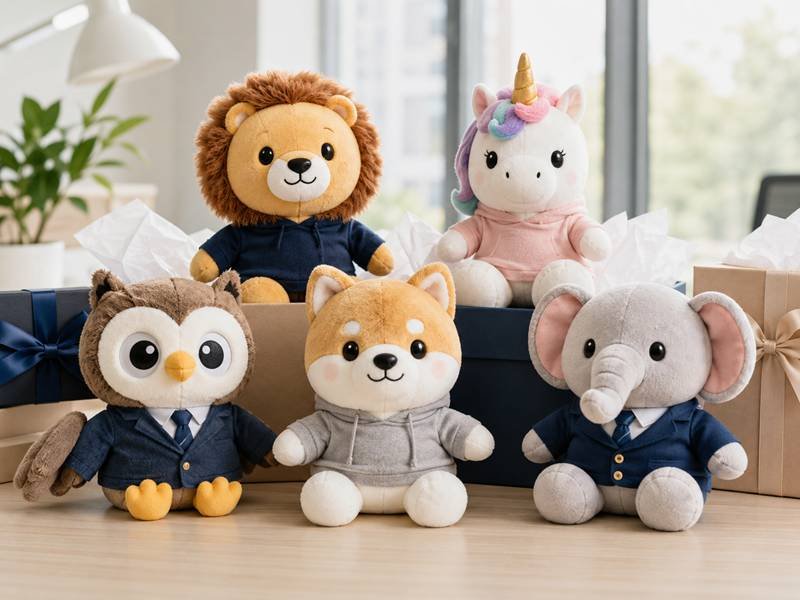
A mascot can be more than a graphic on a booth wall, a sticker, or a slide deck. When it becomes a plush toy, it gains weight, softness, scale, and personality. People can hold it, place it on a desk, give it to a child, pack it into a welcome kit, carry it at an event, or keep it as a small memory of a company, school, team, or campaign.
Custom brand mascot plush toys are becoming popular corporate gifts because they combine character identity, emotional value, photo appeal, and long-term retention. A well-planned mascot plush can support events, employee gifts, retail programs, fan engagement, school spirit, tourism souvenirs, and seasonal campaigns when design, size, material, packaging, safety review, and delivery timing are handled early.
The charm is easy to understand. A notebook may be useful, and a mug may sit in the kitchen, but a plush mascot can start a conversation. Someone sees the face, smiles, asks where it came from, and suddenly the gift has done something most corporate items struggle to do: it has made the brand feel alive.
How To Choose A Mascot Plush Factory?

A suitable mascot plush factory should help turn artwork into a stable plush product, not only sew a soft toy. The right partner should review mascot files, pattern structure, fabric, filling, embroidery, accessories, packaging, testing needs, QC, carton rules, and delivery timing before bulk work begins. This reduces sample changes, packing mistakes, and late cost surprises.
Choosing a plush factory for mascot gifts is different from choosing a simple promotional item source. A mascot plush has to carry a recognizable character. If the face is wrong, the whole gift feels wrong. If the body collapses after shipping, the product loses value. If the logo is unclear, the brand detail is wasted. If labels or packaging are added late, the schedule becomes stressful.
The right factory fit should be judged through real project steps. Can the team read 2D mascot sketches? Can they create a 3D soft shape from front, side, and back views? Can they explain which details should be embroidered, printed, simplified, or made as fabric parts? Can they review material choices before sampling? Can they protect artwork and unreleased files? Can they support labels, branded boxes, carton marks, and shipment documents?
A strong factory should also be able to say “this detail may not work well in plush” when needed. That honesty matters. Some flat design details become too small after sewing. Thin arms may be hard to stuff. Long-pile fabric may hide facial embroidery. A tiny logo may become unreadable. A box may look premium but double carton volume. Practical review protects both the mascot’s look and the budget.
For corporate gift programs, the factory should support not only product development but also repeatable delivery. A single sample can look nice, but bulk pieces need consistency. The approved sample should guide fabric color, filling level, face position, clothing fit, label placement, package fit, and final checking.
| Review Area | What To Check | Why It Matters |
|---|---|---|
| Artwork reading | Front, side, back views, logo, colors, mascot expression | Keeps the plush close to the original character |
| Pattern skill | Head shape, body balance, limbs, clothing, accessories | Turns the mascot into a stable 3D product |
| Material support | Fabric, filling, hardware, recycled options | Affects touch, cost, color, and repeat consistency |
| Craft control | Embroidery, printing, applique, patch, woven label | Protects face details and brand elements |
| Sample process | First sample, revisions, approved sample records | Reduces confusion before bulk work |
| QC system | Material check, in-line check, final check, packing review | Helps protect bulk consistency |
| Packaging ability | Polybag, hangtag, gift box, retail box, blind box | Affects presentation, carton volume, and freight |
| Testing support | ASTM, CE, EN71, CPSIA, REACH, Prop 65 when needed | Helps prepare for region and channel requirements |
| Shipment prep | Carton marks, packing list, commercial invoice, forwarder support | Reduces delivery and receiving issues |
| Repeat records | Pattern, fabric, embroidery, label, carton, feedback files | Helps future runs stay closer to the approved standard |
Which Factory Capability Matters?
The most important factory capability is the ability to translate a mascot design into a soft product that can be repeated in bulk. This includes pattern work, sample development, material selection, craft planning, QC, packaging, and delivery preparation. A mascot plush is not judged only by whether it looks cute in one photo. It must look right, feel right, pack safely, and stay consistent across the full order.
Pattern capability is the first major checkpoint. The pattern decides how the head, body, arms, legs, ears, tail, clothing, and accessories become a three-dimensional plush. A weak pattern can make the mascot look flat, crooked, too wide, too stiff, or unlike the original character. Strong pattern work helps the plush keep its expression after stuffing.
Material judgment is just as important. A mascot with a clean face may need short-pile plush or minky to keep embroidery sharp. An animal mascot may need textured fabric or faux fur. A desk plush may need balanced softness and shape recovery. A keychain needs small-size stability and secure hardware. Recycled materials can be reviewed if sustainability is part of the program, but they should still be tested for color, touch, sewing, and embroidery clarity.
Factory scale can also support complex programs. A team with 35+ pattern makers, 300+ pieces of equipment, 80 QC inspectors, and 30+ production lines can better handle multi-style development, sample revisions, bulk checking, packing review, and repeat programs. Scale alone does not guarantee a perfect result, but scale combined with careful process control gives more room for organized delivery.
A useful capability checklist:
| Capability | Strong Sign |
|---|---|
| Mascot interpretation | Can discuss which flat details need plush adjustment |
| Pattern work | Can build head depth, body proportion, clothing fit, and stable pose |
| Sample development | Can make first sample and revised sample with clear change notes |
| Material planning | Can compare fabric hand feel, pile length, color, and filling |
| Craft support | Can review embroidery, printing, applique, logo, patch, and label method |
| Bulk control | Can follow approved sample through cutting, sewing, stuffing, and shaping |
| QC team | Can check size, face, stitching, filling, accessories, labels, and packing |
| Packing support | Can handle hangtags, boxes, barcodes, carton marks, and shipment prep |
A good factory does not simply accept every artwork detail as-is. It helps decide which details should stay, which should be adjusted, and which should be simplified so the plush remains attractive and practical.
How Does QC Protect Bulk Orders?
QC protects bulk orders by checking the product before problems multiply. Mascot plush products pass through many steps: material preparation, cutting, embroidery, printing, sewing, stuffing, shaping, trimming, cleaning, labeling, packing, and carton sealing. A small mistake at the early stage can become expensive if it is found after hundreds or thousands of pieces are finished.
The first QC stage is material review. Fabric color, pile direction, hand feel, visible defects, and accessory materials should be checked before cutting. A slight color issue may look small on fabric rolls but become obvious across finished mascot faces. Pile direction can also change how the color appears under light.
The next stage is process checking. During embroidery or printing, face placement, logo clarity, and color accuracy should be reviewed. During sewing, seam strength, limb position, clothing fit, and body balance should be checked. During stuffing, softness and firmness should follow the approved sample. During shaping, the mascot should keep its expression.
Final QC should check both the plush and its delivery setup. The plush should be clean, properly shaped, and free from obvious defects. Accessories should be secure. Labels should be in the correct position. Hangtags, barcode labels, SKU labels, care labels, warning labels, and carton marks should match the style. For projects that require needle detection, it should be arranged before final packing and shipment according to product and production needs.
A practical QC table:
| QC Stage | What Gets Checked | What It Prevents |
|---|---|---|
| Incoming material | Fabric color, pile, texture, accessories | Wrong material or visible defects |
| Cutting review | Pattern direction, color panels, fabric waste | Shape mismatch and sewing trouble |
| Embroidery / print check | Face, logo, color, placement | Wrong expression or unclear brand detail |
| Sewing check | Seams, limbs, clothing, accessory position | Weak structure and uneven shape |
| Filling check | Softness, firmness, balance, recovery | Flat, hard, or distorted pieces |
| Final inspection | Appearance, size, cleanliness, loose threads | Defective finished pieces |
| Needle detection | Metal risk control when required | Safety-related risk before packing |
| Packing review | Label, barcode, carton mark, quantity | Warehouse and delivery confusion |
QC also protects the delivery schedule. If face embroidery is wrong after sewing, rework takes time. If labels are mixed, cartons may need to be reopened. If accessories are loose, finished goods may need additional repair. Early checking is less costly than late correction.
For mascot gifts, QC should pay special attention to the face. People notice eyes, mouth, proportion, and expression first. If these elements drift too far from the approved sample, the plush may still be soft, but it will not carry the mascot identity well.
Why Does Packaging Support Matter?
Packaging support matters because a mascot plush is often presented as a gift, event item, retail product, or welcome-kit piece. Packaging affects how the product is received, stored, displayed, scanned, shipped, and remembered. A good plush can lose value if the package looks weak, crushes the toy, hides the mascot, or creates freight pressure.
Packaging should match the use scene. A large event may only need a polybag and hangtag. A premium corporate gift may need a branded box. A retail plush may need a hangtag, barcode, care label, and display-ready carton. A blind box plush needs hidden packaging, ratio control, and SKU separation. A plush keychain may need a header card or display carton.
Packaging also affects cost and delivery. A rigid gift box may improve perceived value, but it increases carton volume. A window box may look strong on shelves, but it needs careful fit testing. A blind box series may create more label and carton control work. A hangtag may look simple, but barcode placement, warning text, language, and attachment position should be reviewed.
| Packaging Type | Best Use | What To Review |
|---|---|---|
| Polybag | Simple event gifts, bulk distribution | Bag size, closure, label needs |
| Hangtag | Retail plush, mascot gifts, fan items | Logo, barcode, QR code, string, attachment point |
| Care label | Most plush products | Material, care symbols, language, position |
| Warning label | Children’s or regulated use | Age grade, wording, destination needs |
| Gift box | VIP gifts, holiday kits, anniversary programs | Box size, artwork, insert, carton volume |
| Retail box | Store display, collectibles | Window size, shelf look, scan position |
| Blind box | Mystery series, limited drops | Ratio control, sealing, outer carton |
| Display carton | Keychains, small plush, retail counters | Style count, barcode, display strength |
Packaging should be reviewed during sample development, not after bulk pieces are finished. The plush must fit the box without crushed ears, bent tail, flattened face, or damaged accessories. If the package is too large, freight may rise. If it is too tight, the gift experience suffers.
Branded packaging can include logo, campaign name, mascot story, QR code, care details, barcode, seasonal artwork, or inner card. The best package supports the mascot’s story without making the shipping carton inefficient.
How To Check Project Experience
Project experience should be checked by product type, use scene, packaging need, testing need, delivery timing, and repeat potential. General plush experience is useful, but mascot gift projects need more specific handling. A mascot plush for a corporate welcome kit is different from a blind box series, a school mascot, a sports fan item, or a premium boxed gift.
A factory with relevant experience can often prevent avoidable cost and delay. For example, a plush keychain program needs small-size embroidery control and secure hardware. A retail mascot plush needs hangtag and barcode planning. A boxed gift needs plush-to-box fit review. A children’s plush may need early testing discussion. A multi-style series needs SKU control and approved sample records for every design.
A practical way to check experience is to discuss project scenarios:
- Has the team handled mascot plush with clothing or logo patches?
- Can they develop prototypes from 2D sketches?
- Can they manage several mascot styles in one program?
- Can they support hangtags, barcode labels, gift boxes, and carton marks?
- Can they review ASTM, CE, EN71, CPSIA, or other testing needs when required?
- Can they protect unreleased artwork and sample photos?
- Can they support repeat production records?
Experience should also be measured by how clearly the team asks for information. A good review usually requests artwork, views, target size, quantity per design, fabric direction, craft details, accessories, packaging, labels, destination, and delivery deadline. If a quote is given without asking these details, the first number may not hold once real production requirements appear.
| Project Type | Experience To Look For |
|---|---|
| Corporate gift plush | Gift packaging, logo placement, delivery schedule |
| Mascot keychain | Small embroidery, hardware attachment, display packing |
| Retail collectible | Shelf presentation, barcode, hangtag, repeat files |
| School mascot | Durable stitching, color matching, event timing |
| Sports mascot | Team colors, fan merchandise, logo control |
| Blind box plush | Multi-style consistency, hidden packing, SKU records |
| Premium boxed plush | Fabric feel, box fit, insert design, carton planning |
| Children’s plush | Material review, label planning, testing support |
The best project experience shows up in practical suggestions. A factory may recommend a different fabric for cleaner embroidery, a slightly larger size for better face detail, a simplified accessory for safety, or a smaller box to reduce freight. These suggestions can protect the product before money is spent on the wrong direction.
Best Factory Fit For Mascot Gifts
The best factory fit for mascot gifts is one that balances creative interpretation with production discipline. The mascot should look close to the original design, feel good in hand, pack correctly, pass the required checks, arrive on schedule, and remain repeatable for future runs. A low price without this control can create more cost later.
A suitable factory should be comfortable working with the full life of the product: concept, artwork review, sample, revision, approved sample, material records, bulk production, QC, packaging, labels, carton marks, shipment preparation, and repeat records. Each stage protects the next one.
A strong fit usually provides:
- Clear review of mascot artwork and 3D plush feasibility
- Pattern work that keeps the face and body balanced
- Material suggestions based on touch, color, cost, and use
- Craft advice for embroidery, printing, applique, patches, and labels
- Sampling with practical revision control
- Approved sample records for bulk checking
- QC across materials, process, finished goods, and packing
- Needle detection planning when required
- Packaging support for polybag, hangtag, gift box, retail box, blind box, and carton marks
- Third-party testing support based on destination, age grade, structure, materials, and accessories
- File protection for mascot artwork, logo files, packaging artwork, and sample photos
- Repeat-order records for future runs
Heyzizi is a Guangdong-based custom plush products factory serving brand mascot plush, character plush, plush keychains, bag charms, retail plush, gift plush, blind box plush, weighted plush, baby cloth books, and multi-style plush programs. Standard MOQ starts from 500pcs per design. Custom plush samples usually require a sample fee, and for a clear single-style bulk plan, the sample fee can be deducted or refunded when the order reaches 2,000pcs.
When reviewing a mascot plush program, helpful details include:
| Information To Prepare | Why It Helps |
|---|---|
| Mascot artwork | Supports likeness and shape review |
| Front / side / back views | Helps build a better 3D pattern |
| Target size | Affects pattern, cost, packing, and freight |
| Quantity per design | Helps review MOQ and cost structure |
| Fabric preference | Guides hand feel, color, and craft choices |
| Logo and brand color files | Supports brand accuracy |
| Accessories | Helps review attachment, safety, and labor |
| Packaging plan | Affects gift value, carton size, and delivery |
| Label needs | Helps prepare care label, warning label, barcode, SKU |
| Destination region | Helps review testing and label direction |
| Delivery deadline | Supports sample, bulk, packing, and shipping planning |
Start A Custom Brand Mascot Plush Project
A strong mascot plush gift starts with a clear product purpose. Is it for a launch event, employee welcome kit, school campaign, retail counter, fan program, tourism gift, holiday package, or limited collectible? Once the purpose is clear, decisions around size, fabric, embroidery, accessories, packaging, labels, quantity, testing, and delivery become easier to control.
The most successful mascot plush projects usually protect a few key details: the face, body shape, main colors, logo position, hand feel, and packaging experience. They do not need every tiny design element copied exactly if that element adds cost but little value. They need the mascot to feel recognizable, well-made, and suitable for the moment where it will be given or sold.
Before starting, prepare the mascot artwork, target size, quantity per design, fabric ideas, logo files, packaging needs, destination region, and delivery date. If side or back views are not ready, front artwork can still begin the review, but added views will make sampling more accurate.
For project review, send artwork, size, quantity, packaging, and delivery details to info@heyzizi.com. The team can review product structure, material options, sample path, packaging needs, testing direction, and bulk production feasibility based on the actual mascot program.
Why Are Mascot Plush Gifts Trending?

Mascot plush gifts are growing because they give a brand character a real-life presence. A mascot plush can sit on a desk, travel in a welcome kit, appear in event photos, hang from a backpack, or become part of a fan collection. Compared with common giveaway items, it carries more emotion, more visual identity, and a stronger reason to be kept.
Many companies are moving away from gifts that feel too ordinary. A pen can write. A bottle can hold water. A tote can carry items. These are useful, but they do not always create a lasting memory. A plush mascot works differently because it has a face, a body, a soft texture, and a small story. It can represent a campaign, a school, a sports team, a character, a service team, a product launch, or a company culture in a form that feels warm and approachable.
The rise of mascot plush gifts is also connected to how people interact with objects now. A gift is not only received; it may be photographed, shared, displayed, collected, resold, or saved for years. A good mascot plush can appear in office photos, event recaps, unboxing posts, retail shelves, and team celebrations without feeling forced. It can carry identity quietly, through color, expression, clothing, logo placement, and packaging.
Another reason is flexibility. One mascot can be developed into several gift forms: a 10cm keychain, a 15cm event plush, a 25cm desk plush, a boxed holiday gift, a blind box mini series, or a retail collectible. This gives the same character a longer product life. Instead of making one short campaign item, a team can build a mascot product family for different occasions and budgets.
The strongest mascot plush programs usually balance five things:
- A recognizable face
- A practical size
- Soft but stable material
- Clear brand color or logo detail
- Packaging that fits the gift moment
The trend is not only about cuteness. It is about making a character easier to remember, easier to gift, and easier to keep.
| Why It Is Trending | What It Means In Real Programs | Mascot Plush Advantage |
|---|---|---|
| More emotional gifts | People keep items that feel personal | Softness, face, and character create attachment |
| More visual events | Gifts need to look good in photos | Mascot plush works well in booths, kits, and displays |
| More character-led branding | Companies use mascots to feel more approachable | Plush turns a flat mascot into a physical object |
| More collectible behavior | People like limited characters and small series | Plush can become a set, keychain, blind box, or retail item |
| More internal culture focus | Teams want gifts with shared identity | Mascot plush can represent belonging and team spirit |
| More gift-kit planning | Companies build welcome kits and seasonal boxes | Plush adds warmth to otherwise practical kits |
| More retail crossover | Mascots can become paid merchandise or add-on gifts | Plush supports shelf, fan, and souvenir programs |
What Makes Mascot Plush Memorable?
A mascot plush is memorable because it uses more senses than a flat visual. People see the face, feel the fabric, notice the shape, and connect it with a moment: an event, a school, a team, a launch, a trip, or a gift package. That combination makes the mascot easier to remember.
A strong mascot plush usually has a clear expression. The eyes, mouth, head shape, and body proportion matter more than most small decorations. If the face feels right, the plush has personality. If the face feels wrong, even expensive fabric may not save the product.
The most memorable details are usually simple and visible:
- A signature color
- A logo patch or embroidered mark
- A scarf, hat, uniform, or small outfit
- A unique body shape
- A friendly expression
- A tag or box that explains the mascot story
- A texture that matches the character mood
It is easy to add too much. Tiny pockets, small text, thin accessories, and hidden trims can raise cost without making the plush more memorable. A good mascot plush should be recognized quickly from a desk, shelf, or event table. When people can identify the character in three seconds, the design is doing its job.
A practical memory check:
| Detail | Strong Direction | Risky Direction |
|---|---|---|
| Face | Clear eyes, balanced mouth, friendly expression | Too many tiny lines or crowded features |
| Shape | Recognizable head and body proportion | Thin limbs or unstable pose |
| Color | Close brand color match | Too many color blocks on a small plush |
| Logo | Natural placement on chest, tag, outfit, or patch | Oversized or awkward placement |
| Fabric | Supports the mascot’s mood | Long pile hiding face details |
| Packaging | Adds story and gift value | Box too large or too plain for the purpose |
A mascot plush becomes memorable when it feels intentional, not overloaded.
Why Do Companies Use Plush Mascots?
Companies use plush mascots because they make identity feel human. A mascot can soften a serious industry, make a technical product easier to approach, or give a campaign a friendly face. When that mascot becomes plush, the character moves from screen to real life.
A plush mascot works well in many situations:
- Employee welcome kits
- Company anniversary gifts
- Trade show giveaways
- VIP gift boxes
- Product launch kits
- School spirit events
- Sports fan programs
- Tourism and museum souvenirs
- Retail add-ons
- Charity and fundraising events
- Seasonal gift campaigns
- Internal culture programs
The reason is simple: a mascot plush can carry both emotion and recognition. It is not just a logo item. It has a character. People may name it, place it on a desk, give it to a child, put it in a photo, or keep it as a symbol of belonging.
Different uses need different plush formats:
| Use Scene | Better Format | What To Prioritize |
|---|---|---|
| Employee welcome kit | 15–25cm desk plush | Friendly face, compact size, simple gift packing |
| Trade show | Plush keychain or small plush | Easy handout, clear logo, stable cost |
| VIP gift | Boxed 20–30cm plush | Soft fabric, clean embroidery, premium box |
| School campaign | Mascot plush or keychain | Durability, school color, event timing |
| Sports fan item | Retail plush or bag charm | Team color, hangtag, barcode, repeat stock |
| Product launch | Mascot plush in kit | Campaign story, package fit, photo appeal |
| Tourism gift | Character plush or charm | Local identity, shelf display, souvenir feel |
The best choice depends on the moment. A small keychain may be perfect for a crowd. A boxed plush may be better for high-value gifting. A retail version may need stronger packaging and repeat-order records.
Corporate Gifts vs Standard Swag
Standard swag usually wins on function. A tote bag carries things. A notebook is useful. A bottle is practical. A T-shirt creates visibility. These items still have value, but they are common. A mascot plush adds a different kind of value: personality.
A plush mascot does not need to compete with every practical item. It works best when the goal is warmth, recognition, story, or memory. It can sit beside a notebook in a welcome kit, inside a holiday package, next to product samples, or on a retail shelf. It gives the gift set a character instead of just a logo.
The difference is easiest to see after the event. Many practical items disappear into daily life. A mascot plush often stays visible because it is not purely practical. It becomes a small desk object, a collectible, a shelf item, or a gift to a family member. That staying power is why plush can feel more valuable than its material cost alone.
A practical comparison:
| Gift Type | Main Strength | Common Limitation | Where Mascot Plush Wins |
|---|---|---|---|
| Pen | Low cost, easy to hand out | Low memory value | Plush feels more intentional |
| Bottle | Useful, common | Many people already have one | Plush adds character and emotion |
| Tote bag | Visible and practical | Often repeated across events | Plush feels more collectible |
| Notebook | Useful in work settings | Less personal | Plush makes a kit warmer |
| T-shirt | High visibility | Size and fit issues | Plush avoids sizing problems |
| Sticker | Easy and fun | Low perceived value alone | Plush gives the character a real form |
| Mascot plush | Emotional, visual, collectible | Needs proper sampling | Strong for launches, events, gifts, fans |
Mascot plush can also support layered gift planning. A welcome kit may include a notebook, badge, stickers, and a desk plush. A holiday box may include a plush, card, and product sample. A fan set may include a mascot plush, scarf, and collectible tag. In these cases, the plush becomes the emotional center of the kit.
Who Uses Brand Mascot Plush?
Brand mascot plush is useful for any group with a recognizable character, animal, icon, team figure, service symbol, or campaign mascot. It works especially well when the mascot already appears in events, social content, packaging, school life, sports culture, retail displays, or internal programs.
Common users include:
- Technology companies with character mascots
- Schools, universities, and campus clubs
- Sports teams and fan communities
- Hotels, resorts, museums, and tourism groups
- Food and beverage companies
- Banks, insurance teams, and service groups with mascots
- Game, animation, and licensed character teams
- Nonprofit and fundraising programs
- Retail and lifestyle companies
- Event teams and trade show organizers
- HR and internal culture teams
Each group uses mascot plush differently. A tech company may want a desk-size character for employees and events. A school may need a mascot plush for fundraising and spirit gifts. A sports team may need a retail-ready version with hangtag and barcode. A hotel may want a premium room gift. A museum may want a souvenir that connects with a local story.
The most important decision is not the organization type. It is the role of the plush:
| Plush Role | Best Format | Main Focus |
|---|---|---|
| Gift | Standard plush or boxed plush | Presentation and emotional value |
| Event handout | Plush keychain or small plush | Easy distribution and cost control |
| Retail item | Plush with hangtag or box | Shelf look, barcode, repeat records |
| Fan item | Mascot plush or charm | Character accuracy and collectibility |
| Employee culture item | Desk plush | Warmth, identity, gift-kit fit |
| Souvenir | Character plush or bag charm | Local story and display appeal |
| Fundraising item | Medium plush or keychain | Recognizable design and clear quantity plan |
A mascot plush works best when the product format matches the audience’s behavior. If people will carry it, make it portable. If they will display it, protect shape and face. If they will collect it, plan packaging and future versions.
What Is The History Of Mascot Gifts?
Mascots have always helped people remember groups, teams, and stories. Sports teams used mascots to energize fans. Schools used mascots to create spirit. Food companies used characters to make products familiar. Events used mascots to give a campaign a face. The reason has not changed: people remember characters more easily than abstract messages.
Mascot gifts grew from that same idea. Once a mascot becomes familiar, people want a physical version. Plush became one of the most natural forms because it adds softness and warmth. A mascot costume appears at an event for a short time. A plush mascot stays after the event ends.
Over time, mascot gifts moved through several stages:
| Stage | Common Mascot Format | Main Use |
|---|---|---|
| Event symbol | Costume, poster, banner | Recognition during events |
| Printed gift | Sticker, badge, card, T-shirt | Light promotion and fan use |
| Plush souvenir | Mascot plush toy | Physical memory and keepsake |
| Retail product | Tagged plush, boxed plush | Shelf sales and collectible value |
| Product family | Keychain, plush, blind box, bag charm | Long-term character extension |
Today, mascot plush can serve many roles at once. It can be a gift, souvenir, collectible, retail item, desk object, fan symbol, or campaign anchor. That is why it remains relevant even when gift trends change.
The history also shows a useful rule: mascots become stronger through repetition. A mascot plush used once can be charming. A mascot used across events, packaging, staff gifts, retail items, and seasonal campaigns becomes recognizable. Over time, the plush is not just a product. It becomes part of the mascot’s world.
Why Do Mascot Plush Gifts Work Across Age Groups?
Mascot plush gifts work across age groups because they are not only toys. For children, they feel soft and friendly. For students, they can represent school pride. For employees, they can become desk companions. For fans, they become collectibles. For travelers, they become souvenirs. For executives, a well-designed boxed plush can feel like a thoughtful campaign piece instead of a common giveaway.
The format also allows different levels of seriousness. A mascot plush can be playful for an event, elegant inside a premium box, sporty for a team store, cute for a school fundraiser, or minimal for a tech company desk gift. The same character can shift tone through size, fabric, packaging, and accessories.
Age group planning should consider:
| Audience | Better Direction | Detail To Watch |
|---|---|---|
| Children | Soft body, safe structure, simple face | Small parts and label review |
| Students | School colors, mascot identity, durability | Event quantity and cost control |
| Employees | Desk-friendly size, clean design | Gift-kit fit and packaging |
| Sports fans | Team colors, hangtag, collectible look | Logo placement and repeat records |
| Retail shoppers | Strong shelf look, barcode, packaging | Photo appeal and display size |
| VIP recipients | Premium fabric, branded box, refined finish | Box fit and presentation |
| Travelers | Local story, compact size | Easy packing and souvenir value |
This wide appeal is one reason mascot plush has become a strong gift option. It can be serious enough for a brand program and still warm enough to make people smile.
How Do Mascot Plush Gifts Create Photo Value?
Mascot plush gifts create photo value because they are physical, expressive, and easy to stage. A mascot plush can sit beside a product, hold a small prop, appear in a gift box, stand on a booth counter, or become part of an event display. Unlike flat printed items, it adds depth and personality to photos.
This matters because many gifts are seen twice: once when received, and again when photographed. A plush mascot with a clear face, good fabric, and neat packaging can appear in launch photos, welcome kit photos, office posts, event recaps, store displays, and fan content.
To create stronger photo value, the design should include:
- A face that reads clearly from the front
- A stable sitting or standing posture
- Clean logo placement
- Brand colors that photograph well
- Fabric with good surface texture
- Packaging that frames the plush neatly
- A size that fits desks, hands, kits, or shelves
Photo value should be considered during sample review. A plush may feel good in hand but look flat in photos if the face is too low, the body is too soft, or the fabric reflects light poorly. Simple front, side, and packaging photos can reveal these issues before bulk production starts.
A mascot plush that photographs well becomes more useful beyond the gift moment. It can support event content, internal culture photos, product storytelling, retail display, and fan sharing.
Which Mascot Plush Type Works Best?
The best mascot plush type depends on how the item will be used, how it will be delivered, and how much detail the mascot needs to show. Small plush keychains work well for large events and portable gifts. Standard-size plush toys work better for desks, shelves, welcome kits, and retail displays. Premium boxed plush suits VIP gifts, anniversaries, holiday sets, and limited character drops.
Choosing the right mascot plush type is not only a design choice. It affects cost, sample time, embroidery detail, carton volume, gift presentation, storage, and reorder planning. A mascot with a simple round face may work well as a keychain. A mascot with clothing, hair, shoes, glasses, logo patches, or a special pose may need a larger size so the details can breathe.
A good mascot plush format should match three things: the role of the gift, the detail level of the mascot, and the delivery plan. A small item is easier to hand out but has less space for craft detail. A larger plush has stronger presence but increases fabric use, filling weight, carton size, and freight. A branded box can lift perceived value, but it must fit the plush without crushing the face, ears, tail, or accessories.
Before choosing the type, it helps to define the real use scene:
- Is it for a trade show, welcome kit, school event, sports fan program, retail counter, holiday gift, tourism souvenir, or limited character set?
- Will people carry it, display it, collect it, or give it to someone else?
- Does the mascot need clothing, a logo, a tag, a pose, or special accessories?
- Will the plush be packed in a polybag, hangtag, box, blind box, or display carton?
- Will the order include one design or several mascot versions?
- Does the design need child-use safety review or only adult display use?
- Is the launch date tight, or is there enough time for sampling and revisions?
A mascot plush type is best when it supports the brand moment without making production too complicated. A simple event gift should not become too heavy, too fragile, or too hard to pack. A premium gift should not feel plain or underfilled. A collectible should not lose character likeness. A keychain should not carry more detail than its small size can show.
| Mascot Plush Type | Best Use | Strong Advantage | Main Risk To Check |
|---|---|---|---|
| Plush keychain | Events, fan packs, tourism gifts, bag charms | Easy to carry and distribute | Small details may lose clarity |
| 15cm plush | Mailers, welcome kits, school gifts | Compact with more detail than a keychain | Size may limit clothing or logo detail |
| 20–30cm plush | Desk gifts, retail displays, mascot programs | Good balance of expression, size, and gift value | Carton size and filling level need review |
| 35cm+ plush | VIP gifts, display items, hero mascot launches | Strong visual impact | Higher fabric, filling, packing, and freight cost |
| Boxed plush | Holiday gifts, premium sets, anniversaries | Higher presentation value | Box fit and carton volume matter |
| Blind box plush | Collectible series, fan programs | Creates surprise and repeat interest | Style ratio, hidden packing, and SKU control |
| Plush bag charm | Lifestyle, sports, tourism, fashion add-ons | Daily visibility | Hanging balance and hardware strength |
| Functional plush | Plush pouch, backpack, pillow, cloth book | Adds daily use | Structure, lining, zipper, seam strength |
Type Of Mascot Plush
Mascot plush can be developed into several product types. The right type depends on quantity, budget, target use, character complexity, and presentation level. A standard plush toy is the most flexible choice because it can show the mascot’s face, body, color, and logo clearly. It works well for company events, school mascots, sports teams, retail counters, desk gifts, and holiday kits.
A plush keychain is better for high-volume programs and portable gifts. It is easy to hand out, pack, ship, and display. The design must be simplified because the face and logo space are smaller. If the mascot has many details, the keychain version should keep only the strongest features: eyes, mouth, main color, and one clear brand detail.
A bag charm works well when the gift should be used after the event. It may hang on backpacks, handbags, luggage, or lanyards. Compared with a keychain, a bag charm can feel more lifestyle-focused, but it needs secure hardware and good hanging balance.
A boxed plush is suited for higher-value gifting. The box may include a logo, campaign name, mascot story, insert card, seasonal sleeve, or QR code. This type works well for anniversaries, holiday sets, VIP gifts, employee milestone gifts, and premium retail programs.
A blind box plush is useful when the mascot has several expressions, outfits, or character versions. It adds surprise and collectibility, but it needs careful planning: style count, ratio, box size, outer carton, hidden packing, barcode, and SKU records.
Functional plush, such as plush backpacks, pouches, pillows, or cloth books, can be powerful when the mascot needs daily use. These products need more structure review because they may include zippers, lining, straps, stitching strength, or child-related safety planning.
| Product Type | Good Fit | Design Advice |
|---|---|---|
| Standard mascot plush | General gifts, retail, desks, shelves | Keep face and body shape clean |
| Plush keychain | Events, mailers, fan packs | Use bold features and reduce tiny details |
| Bag charm | Lifestyle gifts and tourism items | Check hardware and hanging angle |
| Boxed plush | Premium corporate gifts | Match box size to plush shape |
| Blind box plush | Collectible sets | Keep all styles similar in size |
| Plush backpack or pouch | Functional character products | Review lining, zipper, and seam strength |
| Plush pillow | Comfort gifts and lifestyle items | Use soft filling and simple shape |
| Cloth book mascot | Education or baby-related programs | Review stitching, labels, and safety needs |
Plush Keychain vs Full-Size Plush
A plush keychain works best when portability matters. It is suitable for trade shows, campus events, tourism shops, sports fan packs, mailers, product launch kits, and large-scale gift distribution. It takes less storage space and is easy to carry after the event. The key challenge is small-size detail control.
A full-size plush works better when the mascot needs stronger emotional value and a more complete character shape. It gives more space for facial embroidery, clothing, logo placement, accessories, and body proportion. It is easier to make the mascot look close to the original artwork when the plush has enough size.
The decision should not be based only on budget. A small keychain can look excellent if the mascot is simple and iconic. A larger plush can feel disappointing if it is poorly shaped or underfilled. The type should match the mascot’s design complexity.
A plush keychain is usually better when:
- The mascot has a simple face and bold color blocks
- The gift must be easy to carry
- The order will be used for events or mailers
- Hardware can be attached securely
- The logo can fit on a tag, patch, or simple embroidery
- Packaging needs to stay compact
A full-size plush is usually better when:
- The mascot has clothing, hair, shoes, or detailed features
- The gift should sit on a desk or shelf
- The plush needs stronger hand feel
- A boxed presentation is planned
- The design may become a retail item
- Future versions or repeat runs are possible
| Comparison | Plush Keychain | Full-Size Plush |
|---|---|---|
| Portability | Very strong | Medium |
| Detail space | Limited | Strong |
| Cost control | Good for simple designs | Depends on size and structure |
| Gift value | Light and practical | More emotional and complete |
| Packaging | Polybag, header card, display carton | Polybag, hangtag, gift box, retail box |
| Best size | 8–12cm often works well | 20–30cm often gives balance |
| Main risk | Tiny details becoming unclear | Higher carton volume and freight |
For a mascot gift program, both types can be used together. A keychain may work for event distribution, while a 25cm version can be used for VIP gifts, retail shelves, or employee kits.
Event Giveaway vs Retail Collectible
An event giveaway should be easy to understand, easy to carry, and easy to distribute. It should avoid fragile parts, heavy packaging, overly complex clothing, and details that slow production. The design should focus on a clear face, strong color, simple shape, and stable craft.
A retail collectible needs more detail and better presentation. It should feel worth keeping or displaying. The hand feel, embroidery, body shape, hangtag, barcode, gift box, and shelf appearance become more important. If the item may be reordered, approved sample records, fabric notes, label files, and carton rules should be saved carefully.
The same mascot can have two product levels. A 10cm mascot keychain may support a large event, while a 25cm boxed plush supports retail or premium gifting. A mini blind box version may support a limited character series, while a larger plush becomes the hero product.
| Use Type | Product Direction | Cost Focus | Detail Focus |
|---|---|---|---|
| Event giveaway | Small plush or keychain | Stable unit cost, fast distribution | Clear face, simple logo |
| Employee kit | 15–25cm plush | Kit size, packing method | Friendly expression, desk fit |
| VIP gift | Boxed 20–30cm plush | Fabric quality, box structure | Premium finish, story card |
| Retail collectible | Tagged or boxed plush | Shelf value, barcode, repeat files | Likeness, hangtag, packaging |
| Fan drop | Limited plush or blind box | Style ratio, packaging, timing | Collectibility, character versions |
| Tourism gift | Keychain, charm, or medium plush | Display, storage, freight | Local story, compact size |
Event items should reduce friction. Retail items should increase perceived value. Trying to make one product serve both goals can work, but only if the design and packaging are planned early.
Which Size Fits Corporate Gifts?
The best size for corporate mascot plush depends on how the gift will be handed out, packed, shipped, displayed, and kept. A small plush is easier to distribute. A medium plush gives better character detail. A large plush creates stronger impact but needs more budget for fabric, filling, carton volume, and freight.
For many mascot gift programs, 20–30cm is a balanced size for desk display, welcome kits, fan gifts, and retail shelves. It gives enough space for expression, body shape, clothing, and logo placement without becoming too hard to pack. For event gifts and mailers, 8–15cm may be more practical. For premium display or VIP gifting, 35cm or larger can work, but carton planning should start early.
A size decision should include more than height. Width, thickness, sitting pose, standing pose, tail, ears, wings, hat, or accessories can change carton volume. A 25cm sitting plush may pack more efficiently than a 25cm standing plush with long ears and a wide tail.
| Size Direction | Good Use | What To Watch |
|---|---|---|
| 8–10cm | Keychains, bag charms, blind box minis | Face detail and hardware strength |
| 12–15cm | Event gifts, mailers, small kits | Simple body shape works best |
| 18–22cm | Employee kits, desk gifts, school gifts | Good balance of size and cost |
| 25–30cm | Retail, mascot gifts, fan programs | Strong face and outfit detail |
| 35cm+ | VIP gifts, display, premium campaign | Higher filling, carton, and freight cost |
A practical size test should ask:
- Can the face be embroidered clearly?
- Can the logo be shown without looking forced?
- Does the plush fit inside the planned package?
- How many pieces fit per carton?
- Can the plush recover shape after shipping?
- Does the size match the perceived gift value?
- Can future versions use the same size standard?
The best size is not always the largest. It is the size that keeps the mascot recognizable while keeping packing and delivery under control.
Which Materials Feel More Premium?
Premium feel comes from fabric, filling, embroidery, stitching, shaping, and finishing working together. A plush can use soft fabric and still feel weak if the filling is poor, the seams are rough, or the face embroidery is unclear. A strong material plan should match the mascot’s look, use, and gift level.
Minky and soft short-pile plush often work well for clean mascot characters because they allow clear embroidery and smooth color blocks. Velboa can work for cost-controlled programs with simple shapes. Faux fur adds animal-like texture, but it may hide small facial details. Sherpa gives a cozy feeling and can suit winter or lifestyle gifts, but fine embroidery may become less visible. Textured fabrics can create a memorable touch but should be checked by sample.
Filling also affects premium feel. Standard PP cotton works for many plush toys. Higher-resilience filling can improve shape recovery and fullness. Weighted filling creates a heavier feel, but it needs careful distribution and seam review.
| Material Choice | Best Fit | Premium Benefit | Risk To Review |
|---|---|---|---|
| Short-pile plush | Clean mascots, logos, facial embroidery | Clear detail and stable surface | May feel less fluffy |
| Minky | Soft desk plush, baby-style mascots | Smooth and premium touch | Color and stretch should be checked |
| Velboa | Cost-controlled event plush | Stable surface | Less rich hand feel |
| Faux fur | Animal mascots | Rich texture | Can hide small embroidery |
| Sherpa | Cozy seasonal gifts | Warm and lifestyle feel | Fine details may blur |
| Recycled plush fabric | Sustainability-focused programs | Supports eco story | Color and touch need sample review |
| PP cotton | General plush filling | Soft and common | Filling level must be controlled |
| High-resilience fiber | Premium plush shape | Better recovery | Higher cost than standard filling |
| Weighted beads | Comfort plush or special gifts | Heavier, calming hand feel | Seam strength and leakage review |
A premium mascot plush should be checked in real sample form. Photos cannot fully show softness, filling balance, fabric direction, or how the mascot feels in hand.
Do Eco-Friendly Materials Work?
Eco-friendly and recycled materials can work for mascot plush when they match the design, hand feel, color needs, testing direction, and delivery schedule. Recycled plush fabric, recycled filling, kraft hangtags, paper-based gift boxes, reduced-plastic packing, and reusable packaging can all be considered.
Eco choices should be planned carefully. Some recycled fabrics feel close to standard plush fabrics. Others may have fewer color choices, longer sourcing time, or a different surface texture. If the mascot depends on clean embroidery, the fabric must support clear stitching. If the gift needs a premium feel, the recycled material should be checked in sample form.
Eco planning can happen in several areas:
| Eco Direction | What It Can Include | What To Check |
|---|---|---|
| Recycled fabric | RPET plush or other recycled textile | Touch, color, pile, embroidery clarity |
| Recycled filling | Recycled polyester filling | Softness, recovery, safety review |
| Paper hangtag | Kraft paper, FSC-style paper if available | Print clarity and gift look |
| Paper box | Gift box, retail box, blind box | Strength, artwork, carton volume |
| Reduced plastic | Less polybag use, paper wrap, carton planning | Product protection during shipping |
| Reusable packing | Drawstring pouch, keepsake box | Added cost and gift value |
Eco-friendly design should not be treated as only a label claim. It should be visible in material choice, packaging choice, and product planning. If the plush uses recycled fabric but arrives in excessive plastic packaging, the message becomes weaker. If the eco package damages the plush during shipping, the program also suffers.
A good eco mascot plush balances values with practicality. It should still look good, feel good, pass the needed review, and arrive in good condition.
Which Packaging Type Fits Each Plush Type?
Packaging should match the plush type, gift level, and delivery method. A plush keychain may only need a polybag, header card, or display carton. A standard desk plush may need a hangtag and care label. A premium mascot gift may need a branded box, insert card, or seasonal sleeve. A blind box plush needs sealed packaging and SKU control.
Packaging affects more than appearance. It changes packing speed, carton quantity, freight, storage, and receiving. A rigid gift box may increase perceived value, but it can also increase carton volume. A soft plush in a polybag may be easier to ship, but it may feel less premium. The right choice depends on the gift moment.
| Plush Type | Suitable Packaging | Main Benefit | Main Risk |
|---|---|---|---|
| Plush keychain | Polybag, header card, display carton | Easy display and distribution | Small label area |
| 15cm event plush | Polybag, hangtag | Fast packing, controlled cost | Lower premium feel |
| 20–30cm desk plush | Hangtag, care label, branded polybag | Balanced presentation | Needs carton size review |
| Retail collectible | Hangtag, barcode, retail box | Shelf-ready look | More packing work |
| VIP plush | Gift box, insert card, sleeve | Higher gift value | Higher freight volume |
| Blind box plush | Blind box, outer display carton | Collectible experience | Ratio and SKU control |
| Eco plush | Kraft tag, paper box, reduced plastic | Sustainability message | Product protection needs checking |
Packaging should be checked with the physical sample. The box should not flatten the face, bend the ears, crush the tail, or hide the mascot’s main visual feature. If the plush is compressed during shipping, recovery should be reviewed before bulk packing.
How Should Mascot Details Be Simplified For Each Type?
Mascot details should be simplified according to size and use. A full-size plush can carry more features than a keychain. A boxed collectible can use more refined details than a high-volume event gift. A small blind box plush needs compact features and similar outer dimensions across styles.
The goal is not to remove personality. The goal is to keep the details that people will notice and reduce details that create cost, risk, or confusion.
For a small keychain, keep:
- Eye shape
- Main mouth line
- Main body color
- One logo or tag
- One signature accessory if large enough
For a 20–30cm plush, keep:
- Face expression
- Body shape
- Brand colors
- Clothing or scarf
- Logo patch or embroidery
- Tail, ears, shoes, or hat if important
For a premium boxed plush, keep:
- Refined embroidery
- Better fabric
- Fuller filling
- Neat clothing fit
- Clean label placement
- Branded packaging story
| Detail Type | Keychain | Standard Plush | Premium Plush |
|---|---|---|---|
| Face | Bold and simple | More expressive | Highly refined |
| Logo | Tag or small patch | Embroidery or patch | Embroidery, patch, or branded box |
| Clothing | Very simple | Basic outfit possible | More detailed fit |
| Accessories | Only if secure | Moderate detail | Stronger presentation |
| Fabric | Stable and clean | Soft and practical | Premium hand feel |
| Packaging | Compact | Hangtag or polybag | Branded box |
A mascot plush works best when the format supports the character instead of fighting it. The right type, size, material, and package should make the mascot feel natural in the hand, not forced into a shape that does not suit the design.
How Does A Factory Develop Mascot Plush?
A mascot plush is developed by turning flat artwork into a soft 3D product through artwork review, structure planning, pattern work, material selection, embroidery or printing tests, sample making, revision, approved sample control, and bulk preparation. The process should protect mascot likeness, brand colors, logo placement, fabric feel, packaging fit, and delivery timing before larger production starts.
A mascot plush begins with a simple goal: make the character feel real without losing its identity. That sounds easy until the artwork meets fabric. A flat smile needs embroidery placement. A round head needs side depth. A logo needs the right craft method. A tail, hat, scarf, shoe, wing, or removable accessory needs attachment planning. A mascot that looks perfect on a screen may need small adjustments before it works as a soft product.
The development process should never treat the mascot as just a “cute shape.” It should treat the mascot as a character with rules. The face must stay recognizable. The body should keep the correct proportion. The colors should stay close to the reference. The fabric should match the intended gift level. The logo should be visible without looking forced. The final plush should also fit the planned packaging, shipping carton, and use scene.
A strong development path usually includes these steps:
| Development Step | What Gets Reviewed | Why It Matters |
|---|---|---|
| Artwork reading | Front view, side view, back view, logo, colors, expression | Helps convert a flat design into a soft 3D form |
| Structure planning | Sitting, standing, hanging, boxed, keychain, bag charm | Affects pattern, stuffing, packing, and cost |
| Size check | Height, width, thickness, hand feel, display purpose | Influences detail clarity, carton volume, and gift value |
| Material choice | Fabric type, pile length, color, filling, accessories | Controls touch, visual style, and consistency |
| Craft planning | Embroidery, printing, applique, woven label, patch, heat transfer | Protects face, logo, and key details |
| First sample | Pattern, cutting, sewing, stuffing, shaping | Shows the first real version of the mascot |
| Revision | Face, body ratio, fabric, filling, clothing, packaging fit | Refines the sample before approval |
| Approved sample | Final physical reference | Guides bulk checking and repeat orders |
| Bulk preparation | Pattern, fabric notes, embroidery files, labels, carton rules | Reduces mistakes during production |
The best mascot plush development is not about adding every detail from the drawing. It is about deciding which details must stay and which details should be adapted. Tiny text, thin lines, sharp corners, very narrow limbs, and hidden decorations may not translate well into plush. A good sample keeps the spirit of the mascot while making the product stable, attractive, and repeatable.
Can 2D Mascot Sketches Become Prototypes?
Yes, 2D mascot sketches can become prototypes when the artwork gives enough direction for shape, expression, color, and key details. A front sketch can begin the review, but side and back views make the prototype more accurate. If side and back views are not available, the missing structure should be discussed before pattern work starts.
A 2D mascot sketch usually shows the most attractive front angle. Plush development needs more than the front. The head needs thickness. The body needs a side profile. Arms and legs need volume. A nose, tail, ears, hat, bag, hoodie, or shoe needs attachment and seam planning. If those details are not defined early, the first sample may require more changes.
A useful mascot file package includes:
- Front view of the mascot
- Side view if available
- Back view if available
- Close-up of face
- Logo file
- Brand color reference
- Target height and width
- Notes on clothing or accessories
- Existing mascot costume or 3D figure photos if available
- Packaging idea if already planned
- Event date or delivery deadline
A 2D sketch does not need to be perfect. What matters is clarity. If the mascot has a signature eyebrow, scarf, horn, paw mark, shoe, or logo badge, that detail should be marked. If the mascot must feel funny, calm, sporty, premium, or child-friendly, that mood should also be described. Plush is not only a shape conversion; it is a character translation.
When the sketch is too simple, a prototype can still be made, but the first sample should be treated as a creative interpretation. More revisions may be needed to tune the face, body depth, fabric choice, and proportions.
How Does Sampling Work?
Sampling turns the reviewed mascot design into a physical sample. The process usually starts with pattern development, then moves into fabric preparation, embroidery or printing tests, cutting, sewing, stuffing, shaping, accessory attachment, and sample review. After feedback, revisions are made until the approved sample is confirmed.
A mascot plush sample should be reviewed from more than one angle. A front photo alone is not enough. The side view may show whether the head is too flat. The back view may reveal tail placement, clothing closure, or label position. A close-up can show embroidery quality, logo clarity, and fabric texture. A packaging check can show whether the plush fits the box or polybag without being crushed.
Custom plush samples usually require a sample fee because the first sample involves real development work: pattern making, material preparation, craft testing, cutting, sewing, stuffing, shaping, accessories, and revision time. For a clear single-style bulk plan, the sample fee can be deducted or refunded when the order reaches 2,000pcs.
A practical sample review can follow this table:
| Review Area | What To Check | Common Issue |
|---|---|---|
| Face | Eye position, mouth curve, eyebrow shape, expression | Looks different from artwork |
| Head shape | Front width, side depth, stuffing level | Too flat, too wide, or too stiff |
| Body proportion | Head-to-body ratio, arm and leg length | Character feels unbalanced |
| Fabric | Texture, color, pile direction, softness | Color shifts under light or details get hidden |
| Embroidery | Thread color, density, placement, clarity | Logo or face too small to read |
| Clothing | Fit, thickness, seam position, movement | Outfit looks bulky or tight |
| Accessories | Security, scale, position, safety concern | Too loose or too small |
| Filling | Firmness, softness, recovery, balance | Too hard, too flat, or uneven |
| Packaging | Box fit, hangtag position, carton space | Plush gets crushed or package wastes space |
Good sample feedback should be specific. “Make it closer” is too vague. Better notes are: move eyes 5mm lower, make cheeks rounder, reduce stuffing in the ears, adjust scarf width, change logo to embroidery, or make the body 2cm wider. Specific changes save time and reduce repeated sample rounds.
What Is The Total Turnaround Time?
Total turnaround time depends on mascot complexity, artwork clarity, sample revisions, material sourcing, craft details, packaging development, testing needs, quantity, season, and shipping method. A simple mascot with common fabric and basic packaging moves faster than a detailed character with clothing, accessories, special material, boxed packaging, and testing review.
For many custom plush projects, the first sample may take about 7–14 days after the main details are ready. Simple structures may be faster. Complex mascots may take longer, especially when the product includes shaped heads, layered outfits, special fabric, dense embroidery, removable parts, sound modules, weighted filling, gift boxes, or multiple styles.
A realistic timeline should include more than sample making. It should include artwork review, first sample, revision, approved sample, material preparation, bulk production, QC, packing, and shipping. If retail packaging, labels, or testing are needed, those steps should be added early.
| Stage | What Can Affect Timing |
|---|---|
| Artwork review | Missing side view, unclear colors, undefined size |
| Pattern work | Complex head shape, standing pose, clothing, small parts |
| First sample | Material availability, embroidery test, accessories |
| Revision | Face changes, size changes, fabric change, logo change |
| Approved sample | Waiting for physical review or internal approval |
| Material preparation | Custom color, special fabric, hardware, packaging |
| Bulk production | Quantity per design, style count, craft complexity |
| QC and packing | Labels, barcode, carton marks, needle detection when required |
| Shipping | Express, air, sea, forwarder schedule, destination |
The most common delay does not come from sewing. It comes from decisions that arrive late. A logo file changes after embroidery is tested. A gift box is added after the sample size is confirmed. A warning label is requested after packing starts. A new deadline forces faster shipping. These changes can affect cost and schedule more than the plush body itself.
A safer schedule locks these items before the final sample is approved:
- Mascot artwork and approved colors
- Target size
- Fabric direction
- Embroidery or printing method
- Accessory list
- Packaging type
- Hangtag and label content
- Destination region
- Delivery deadline
- Shipping method
When the schedule is tight, the design should stay practical. A clean mascot with fewer tiny parts, stable fabric, and simple packaging is easier to control than a detailed plush with multiple late changes.
How To Control Mascot Likeness
Mascot likeness is controlled through clear artwork, good pattern work, correct fabric choice, accurate embroidery placement, balanced filling, and careful sample approval. The face usually carries the most recognition, but body proportion, brand colors, posture, outfit, logo, and accessories also shape how close the plush feels to the original mascot.
The first step is to decide which details are non-negotiable. For a school mascot, this may be the head shape, team color, and uniform. For a tech mascot, it may be the facial expression and clean body shape. For a tourism mascot, it may be local clothing, animal features, or a symbolic accessory. These key features should be protected during sampling.
The second step is to adapt details that do not work well in plush. Thin outlines, tiny fingers, sharp hair edges, very small text, and floating accessories often need adjustment. Making a detail larger, rounder, embroidered, or simplified can improve the final look. This is not a loss of identity; it is how the mascot becomes suitable for fabric and filling.
A likeness control table can help during review:
| Mascot Detail | What To Protect | What May Need Adjustment |
|---|---|---|
| Eyes | Shape, size, direction, expression | Position after stuffing |
| Mouth | Curve, emotion, distance from eyes | Embroidery density and softness |
| Head | Main silhouette and proportion | Side depth and stuffing level |
| Body | Height, width, posture | Panel shape for better balance |
| Color | Brand color reference | Fabric batch and pile direction |
| Logo | Placement and readability | Craft method or size |
| Outfit | Signature clothing or uniform | Thickness and sewing fit |
| Accessories | Meaningful item or character cue | Attachment method and safety |
The approved sample should be recorded with front, side, back, and detail photos. Size measurements, fabric notes, embroidery files, filling level, logo placement, and packaging details should also be saved. These records help bulk pieces follow the approved direction and support repeat production later.
Likeness also needs realistic tolerance. Plush is soft, and soft products naturally have small variations in fabric pile, stuffing, shaping, and sewing. The goal is to follow the approved sample as closely as possible, not to expect every finished piece to behave like a hard plastic figure.
How To Protect Brand Files
Brand files should be protected from the start of the mascot plush project. Mascot artwork, logo files, character sketches, packaging designs, sample photos, unreleased campaign concepts, and internal notes should not be shared publicly without permission. This is especially important for licensed characters, confidential launches, school mascots, game characters, retail collections, and new brand campaigns.
File protection is not only about privacy. It also prevents production mistakes. If several versions of the mascot exist, the wrong file can lead to wrong colors, wrong expression, wrong logo placement, or wrong outfit details. Each design version should be named clearly, and the approved file should be separated from earlier drafts.
Useful file protection habits include:
- Use only owned or properly licensed artwork
- Confirm permission before producing character goods
- Name files by version and date
- Separate draft artwork from approved artwork
- Keep logo files in usable formats
- Mark approved colors clearly
- Avoid sharing sample photos publicly before approval
- Discuss NDA support when needed
- Keep packaging artwork and barcode files organized
- Save final sample records for repeat orders
If the mascot belongs to a licensed program, the production files should match the approved license scope. If the project uses an original character, ownership should still be clear before sample work. If the project is based on a famous character without permission, it should not be treated as a suitable direction.
A simple file control table can reduce confusion:
| File Type | What To Save | Why It Matters |
|---|---|---|
| Mascot artwork | Approved front, side, back views | Guides pattern and sample work |
| Logo file | Vector or high-resolution file | Helps embroidery, printing, patch, or label work |
| Color reference | Pantone, fabric swatch, or approved visual | Supports material matching |
| Sample photos | Front, side, back, details, packaging | Supports bulk checking |
| Embroidery file | Face, logo, patch, badge details | Protects craft accuracy |
| Packaging file | Hangtag, box, label, carton mark | Prevents packing delays |
| Approval record | Version, date, change notes | Reduces repeat-order confusion |
A mascot plush is often tied to a public identity. Protecting files, versions, and approvals helps keep that identity accurate from the first prototype to later repeat runs.
How To Move From Prototype To Bulk Production
After the prototype is approved, the project should move into bulk preparation with clear records. The approved sample becomes the main reference for shape, face, fabric, filling, stitching, logo placement, accessories, labels, and packaging. Without a clear approved sample, bulk production can drift.
Bulk preparation usually includes pattern confirmation, material preparation, embroidery or printing file confirmation, accessory preparation, packing method review, label file review, carton mark setup, and QC planning. Multi-style mascot projects need this information by style, not only as one combined project.
A practical bulk preparation checklist includes:
| Bulk Item | What To Confirm Before Production |
|---|---|
| Approved sample | Physical sample or clear photo record |
| Pattern | Final body and clothing pattern |
| Fabric | Type, color, pile direction, batch notes |
| Filling | Softness, firmness, weight balance |
| Embroidery / print | Approved file, thread colors, placement |
| Accessories | Size, material, attachment method |
| Labels | Care label, warning label, barcode, SKU, FNSKU if needed |
| Packaging | Polybag, hangtag, retail box, gift box, blind box |
| Carton rules | Pieces per carton, carton marks, destination |
| QC focus | Face, size, stitching, filling, logo, cleanliness |
| Shipping plan | Express, air, sea, or forwarder schedule |
The transition from sample to bulk is where many small details matter. If the hangtag file arrives late, packing slows down. If carton marks are unclear, delivery records become messy. If the logo file changes after sample approval, embroidery may need another review. Preparing these items early keeps the mascot plush project moving smoothly.
A well-developed mascot plush should not feel like a one-time guess. It should have a clear path: artwork, sample, revision, approval, bulk standard, packing record, and future repeat reference.
What Affects Price And MOQ?

Mascot plush price and MOQ are shaped by size, structure, fabric, filling, embroidery, printing, clothing, accessories, packaging, labels, testing needs, quantity per design, and delivery timing. Standard MOQ starts from 500pcs per design because a fully custom plush requires pattern work, sampling, material preparation, cutting, stitching, filling, QC, packing, and shipment preparation.
A mascot plush is rarely priced by height alone. A 25cm plush with a round body, short-pile fabric, simple embroidery, and polybag packing is very different from a 25cm mascot with a jacket, shoes, shaped ears, long tail, logo patch, gift box, barcode label, and testing needs. The visible size may be the same, but the production work behind it is not.
The real budget starts with the product structure. A simple sitting mascot may need fewer pattern pieces and less shaping work. A standing mascot with thin arms, long legs, shoes, or a wide tail needs more pattern control and more filling review. If the mascot has clothing, the outfit may need its own pattern, fabric, cutting, sewing, and fitting. If the mascot includes a keyring, hook, magnet, zipper, or sound part, the attachment and safety review become part of the cost.
MOQ also changes the cost logic. A fully custom plush cannot skip the early work just because the order is smaller. The artwork still needs review. The pattern still needs to be created. The first sample still needs to be made and adjusted. Materials, embroidery files, labels, packing method, and carton rules still need preparation. When quantity per design is too low, each piece carries a heavier share of that work.
A better way to review the budget is to separate the plush into cost layers:
| Cost Layer | What It Includes | Why It Changes Budget |
|---|---|---|
| Character structure | Head shape, body, limbs, ears, tail, pose | More pattern pieces and sewing work |
| Surface details | Eyes, mouth, logo, color blocks, embroidery, printing | More craft setup and placement control |
| Material level | Fabric texture, pile length, filling type, color | Affects hand feel, sourcing, and consistency |
| Added parts | Clothes, shoes, keyring, hook, zipper, magnet, sound module | Adds assembly, checking, and safety review |
| Packaging | Polybag, hangtag, gift box, blind box, display box | Changes packing labor, carton size, and freight |
| Labels | Care label, warning label, barcode, SKU, FNSKU | Adds file control and packing checks |
| Testing | ASTM, CE, EN71, CPSIA, REACH, Prop 65 review if needed | Depends on region, age grade, materials, and parts |
| Timing | Sampling, revisions, bulk schedule, shipping method | Urgent work can limit options and raise cost |
The most useful price discussion starts with clear files and real project details. A single front image can support an early review, but it cannot produce a stable final number. A more accurate review needs mascot artwork, target size, quantity per design, fabric preference, craft details, accessory list, packaging plan, destination region, and delivery date.
What Changes Mascot Plush Price?
Mascot plush price changes when the design needs more material, more labor, more craft control, more packaging, or more checking. The biggest cost drivers are usually structure, fabric, embroidery, clothing, accessories, packaging, and testing needs.
A simple mascot with a rounded body and clean face embroidery is easier to control. A mascot with a large shaped head, layered hair, tiny shoes, jacket, tail, removable accessory, and multiple logos needs more sample work and more production time. The difference is not only material cost; it is the number of steps needed to make the plush look right.
Fabric also changes price. Short-pile plush or minky may work well for clean mascot faces because embroidery stays clear. Faux fur can make animal mascots feel richer, but it can hide small facial details and require more trimming. Sherpa creates a cozy look, but fine lines may become less visible. Recycled fabric may support sustainability goals, but color, touch, and availability should be checked with real samples.
Embroidery and printing affect price through size, color count, density, placement, and fabric behavior. A small eye and mouth are easier than a large chest logo, tiny text, detailed badge, or multi-color face. If the logo must stay sharp, the craft method should be chosen early: embroidery, printing, woven label, patch, applique, or heat transfer.
| Price Factor | Lower-Cost Direction | Higher-Cost Direction |
|---|---|---|
| Body shape | Sitting, round, fewer panels | Standing, long limbs, complex head |
| Fabric | Common short-pile fabric | Long-pile fur, special texture, recycled material with sourcing needs |
| Face details | Simple embroidery | Dense embroidery, many colors, tiny features |
| Clothing | No outfit or simple scarf | Full jacket, shoes, hat, layered clothing |
| Logo method | Hangtag or simple patch | Dense embroidery, woven label, applique |
| Accessory | None or simple fabric part | Keyring, hook, zipper, magnet, sound, LED |
| Packaging | Polybag and hangtag | Gift box, blind box, display box |
| Testing | Basic project review | ASTM, CE, EN71, CPSIA, REACH, or other third-party review |
A smart budget protects the details that people notice first: the face, main body shape, color, hand feel, and brand detail. Tiny trims on the back, unreadable small text, or fragile accessories may add cost without adding much visible value.
What Is The MOQ For Fully Custom Plush Toys?
The standard MOQ for fully custom plush toys starts from 500pcs per design. This quantity is practical because each fully custom plush needs artwork review, pattern development, sample work, material preparation, cutting, embroidery or printing, sewing, stuffing, shaping, QC, packing, and shipment preparation.
The important detail is “per design.” A 2,000pcs order of one mascot is not the same as 2,000pcs divided across four mascot versions. Each version may need its own pattern, first sample, revised sample, embroidery file, fabric record, logo placement, label setup, packaging rule, and approved sample.
For mascot plush programs, 500pcs per design can support many common uses:
| Use Scene | Why 500pcs Per Design Can Work |
|---|---|
| Company mascot launch | Enough pieces for internal rollout and event use |
| Trade show gift | Supports planned distribution with controlled stock |
| School mascot plush | Useful for campus events, clubs, or fundraising |
| Sports team gift | Suitable for fan gifts or store testing |
| Tourism souvenir | Allows a first run before expanding styles |
| Plush keychain program | Good for portable gift testing |
| Employee welcome kit | Can support scheduled onboarding volume |
| Retail test | Helps review real product response before larger runs |
Special project review may depend on structure, material availability, craft complexity, packaging, deadline, and production planning. A simple mascot plush with common materials is usually easier to review than a detailed plush with custom fabric, removable parts, and branded box packaging.
MOQ should also be connected to the sample-fee plan. Custom plush samples usually require a sample fee because each sample involves pattern work, material preparation, craft testing, sewing, stuffing, shaping, and revisions. For a clear single-style bulk plan, the sample fee can be deducted or refunded when the order reaches 2,000pcs.
How Does MOQ Affect Budget?
MOQ affects budget by spreading fixed development work across the finished pieces. Pattern work, sample making, material matching, embroidery setup, label setup, packaging review, and production planning happen before the plush pieces are packed. When quantity per design is higher, those fixed steps are shared across more units.
This is why total quantity alone can be misleading. A 3,000pcs single-style mascot has one main sample path. A 3,000pcs collection with six mascot versions may have six sample paths, six approved samples, six label files, several embroidery files, and separate SKU control. The second program may feel larger, but each design only carries 500pcs.
A practical MOQ view:
| Quantity Plan | Production Meaning | Budget Behavior |
|---|---|---|
| 500pcs × 1 design | One pattern, one sample path, one packing rule | Practical start for custom mascot plush |
| 1,000pcs × 1 design | More pieces share fixed development work | Unit cost often becomes easier to manage |
| 2,000pcs × 1 design | Larger single-style plan | Sample fee may be deducted or refunded |
| 500pcs × 4 designs | Four patterns and four sample paths | More coordination and record control |
| 2,000pcs total across 8 designs | Many styles with low quantity each | Higher complexity despite the total quantity |
| Uneven style split | Some designs carry low volume | Low-volume styles may raise blended cost |
MOQ planning should match the gift purpose. If the goal is one strong mascot gift, one design at a healthier quantity may be better. If the goal is a character series, each design should have enough quantity to support its own development. If the budget is tight, fewer stronger styles often work better than many low-volume styles.
MOQ also affects future options. Starting with one hero mascot can create a strong sample record. Later, the same character can expand into a keychain, bag charm, holiday outfit, retail version, or blind box mini. This path often protects budget better than launching too many versions before the main plush has been proven.
Can Custom Plush Toys Include Branded Boxes?
Yes, custom plush toys can include branded packaging boxes. Packaging options can include polybags, hangtags, care labels, warning labels, barcode labels, SKU labels, gift boxes, retail boxes, blind boxes, display cartons, and carton marks. The best packaging depends on the gift role, plush size, quantity, destination, and delivery method.
A branded box can make a mascot plush feel more complete. It is useful for holiday kits, VIP gifts, anniversaries, employee welcome packs, product launch boxes, retail collectibles, and limited-edition mascot drops. The box can include a logo, mascot name, campaign artwork, short story, QR code, barcode, sleeve, insert card, or inner tray.
Packaging should be planned before the final sample is approved because the box and plush affect each other. A box that is too tight can crush the mascot’s face, ears, tail, or accessories. A box that is too large can raise carton volume and freight. A window box may improve shelf display, but it needs stronger structure and artwork planning.
| Packaging Type | Best Use | Main Cost Driver |
|---|---|---|
| Polybag | Event gifts, simple distribution | Bag size, label, packing speed |
| Hangtag | Retail plush, mascot gifts | Paper, print, string, barcode area |
| Gift box | VIP gifts, holiday kits | Box material, artwork, insert, carton volume |
| Retail window box | Store display, collectibles | Structure, window size, shelf look |
| Blind box | Mystery mascot series | Style ratio, hidden packing, outer carton |
| Display carton | Keychains and small plush | Counter display, style separation |
| Eco packaging | Sustainability-focused programs | Paper choice, protection, print quality |
For boxed mascot plush, the package should be checked with the real sample. The review should include box fit, face visibility, folding pressure, hangtag position, carton count, and recovery after transport. A beautiful box that doubles freight cost may not be practical. A plain package that weakens the gift moment may also be the wrong choice.
Are Custom Plushies ASTM And CE Certified?
Custom plushies can be prepared for ASTM, CE, EN71, CPSIA, REACH, Prop 65, UKCA, ISO 8124, or other third-party review based on destination region, age grade, product structure, material, accessories, labels, packaging, and sales channel. Certification should be confirmed by project, not assumed automatically for every plush.
A mascot plush intended for adult desk display may not need the same review as a plush for children. A plush keychain with metal hardware has different review needs from a 25cm soft desk plush. A mascot with magnets, sound module, battery, LED part, plastic accessory, removable item, or weighted filling may require more careful checking.
Testing should be discussed before the final sample is approved. Late changes can affect materials, accessories, warning labels, packaging artwork, and delivery timing. If a small part is not suitable, it is easier to adjust during sampling than after bulk work begins.
A practical testing review includes:
| Review Item | What To Check |
|---|---|
| Destination region | USA, EU, UK, Canada, Australia, Asia, or other region |
| Age grade | Child-use, teen, adult collectible, promotional use |
| Fabric and filling | Material composition, hand feel, safety suitability |
| Small parts | Eyes, nose, buttons, hooks, magnets, removable pieces |
| Special function | Sound, battery, LED, zipper, weighted beads |
| Labels | Care label, warning label, language, placement |
| Packaging | Claims, barcode, safety text, retail needs |
| Third-party testing | ASTM, CE, EN71, CPSIA, REACH, or other relevant standard |
Testing support is most useful when it is part of early planning. It helps guide material choice, accessory design, label content, and packaging direction. It should not be treated as a final step after all design choices are already fixed.
How To Plan Gift Quantity
Gift quantity should be planned by use scene, number of designs, audience size, packaging type, delivery deadline, storage plan, and repeat potential. A one-day trade show, employee onboarding program, school fundraiser, retail launch, fan event, tourism shop, and holiday kit will each need a different quantity plan.
The first step is to count the real distribution need. How many people will receive the plush? Will it be given to everyone or only VIPs? Will some pieces be reserved for photos, internal teams, display, press kits, or replacement? Will the plush be sent to one location or several locations? Will each location need a fixed carton quantity?
The second step is to count designs separately. If there is one mascot, the quantity plan is simple. If there are multiple mascot outfits, colors, sizes, or character versions, each style needs its own quantity review.
A practical gift quantity table:
| Program Type | Quantity Planning Focus | Extra Reserve To Consider |
|---|---|---|
| Trade show gift | Expected visitors, booth traffic, VIP meetings | Display pieces and last-day reserve |
| Employee welcome kit | New hire plan, office locations, remote teams | Replacement and future onboarding |
| School mascot plush | Student body, event booths, alumni sales | Fundraising reserve |
| Sports fan plush | Match days, team store, sponsor gifts | Display and photo pieces |
| Holiday gift box | Recipient list, packing schedule, shipping cutoff | Damaged box reserve |
| Retail test | Store count, online stock, display units | Reorder signal tracking |
| Blind box series | Style ratio, total cartons, hidden packing | Extra pieces per style |
| Tourism souvenir | Store traffic, seasonality, shelf space | Peak-season buffer |
A small reserve can prevent stress. Events may have last-minute guests. Retail displays may need sample units. A gift box may be damaged in packing. A press kit may need extra pieces. It is better to plan this early than to request urgent extra stock after production is finished.
Gift quantity also connects to freight. A large plush may require more cartons and more storage. A keychain may fit more pieces per carton. A boxed plush may increase volume even if the plush itself is small. Quantity planning should include both product count and carton count.
How Should Budget Be Split Across Product, Packaging, And Delivery?
A healthy mascot plush budget should be split across product, packaging, and delivery instead of focusing only on the plush unit cost. Product cost gives the mascot its shape and feel. Packaging creates the gift moment. Delivery planning protects timing and total landed cost.
For a simple event gift, most of the budget may go into the plush itself, with basic packing. For a premium gift box, packaging may take a larger share. For a retail collectible, hangtag, barcode, care label, display box, and carton control should be included. For an urgent event, shipping may become a major cost area.
A practical budget split can be reviewed like this:
| Budget Area | What It Covers | When It Becomes Important |
|---|---|---|
| Product | Fabric, filling, cutting, embroidery, sewing, stuffing | Always important |
| Development | Pattern, sample, revision, approved sample | New custom designs |
| Packaging | Polybag, hangtag, gift box, blind box, display carton | Gifts, retail, limited drops |
| Labels | Care label, warning label, barcode, SKU, FNSKU | Retail, e-commerce, regulated use |
| Testing | Third-party review if required | Children’s use, retail review, destination rules |
| QC | Material, in-line, final, packing review | Bulk consistency |
| Freight | Express, air, sea, forwarder plan | Delivery deadline and landed cost |
| Reserve | Extra pieces, display units, replacements | Events, retail, gifts |
If the budget is tight, do not reduce everything equally. Protect the face, body shape, fabric feel, and logo clarity first. Then simplify lower-impact details such as hidden trims, tiny accessories, oversized box structures, or decorations that do not affect recognition.
How Can Price Stay Stable From Sample To Bulk?
Price stays more stable when the sample is based on real production details from the beginning. If size, fabric, embroidery, accessories, labels, packaging, and destination needs are unclear during sampling, the price may change later when these details are added.
The most common reasons for price changes after sampling are:
| Change After Sample | Why It Changes Price |
|---|---|
| Size increase | More fabric, filling, carton volume |
| Fabric change | Different material cost, sourcing, sewing behavior |
| Added embroidery | More stitch time and setup |
| Added clothing | Separate pattern, cutting, sewing, fitting |
| Added accessory | Assembly, safety review, packing change |
| New gift box | Packaging cost and freight volume |
| New barcode or label | File setup, printing, placement check |
| Testing requirement | Third-party review and possible material changes |
| Urgent delivery | Faster shipping or production pressure |
To keep the price stable, prepare the core details before sample work begins:
- Final mascot artwork
- Target size
- Quantity per design
- Fabric direction
- Filling preference
- Embroidery or print details
- Accessories
- Packaging type
- Labels and barcode needs
- Destination region
- Delivery date
- Shipping method
A stable budget does not mean no changes are allowed. It means each change is reviewed clearly. If a larger box is added, carton volume should be reviewed. If an accessory is added, safety and labor should be reviewed. If the mascot size changes, fabric, filling, packing, and freight should be recalculated.
Mascot plush price and MOQ become easier to manage when the project starts with clear product rules. The more complete the early details are, the fewer surprises appear between sample approval and bulk delivery.
How To Choose A Mascot Plush Manufacturer?

Choosing a mascot plush manufacturer is not only about finding someone who can sew a soft toy. The right factory should understand character likeness, pattern structure, fabric behavior, embroidery limits, logo placement, packaging fit, QC, testing needs, and delivery timing. A mascot plush carries identity, so the factory must protect both the design and the final gift experience.
A mascot plush can fail in quiet ways. The face may look slightly off. The body may become too flat after stuffing. The logo may sit in an awkward position. A long-pile fabric may hide the eyes. A gift box may crush the ears. A barcode label may be placed in the wrong spot. The plush may still be “made,” but it may not feel like the intended mascot.
A strong factory helps reduce these risks before they become costly. It should ask for mascot artwork, logo file, brand color reference, size, quantity, event date, packaging needs, and target region before giving a serious review. If the product needs retail packaging, third-party testing, barcodes, warning labels, or carton marks, these details should be discussed before the sample is locked.
For mascot gifts, the factory should be able to connect creative details with production reality. A flat mascot sketch may need rounder features. A small logo may need to become a woven label or patch. A standing pose may need to become a sitting pose for better stability. A premium gift box may need to be resized so it does not increase freight too much. These practical suggestions protect the final result.
| What To Check | Why It Matters | What A Capable Factory Should Review |
|---|---|---|
| Mascot likeness | The gift must feel like the real character | Face, body shape, color, outfit, logo, expression |
| Pattern ability | The mascot must become a stable 3D plush | Head depth, body balance, limbs, clothing, accessories |
| Material knowledge | Fabric changes touch, color, and detail clarity | Pile length, texture, filling, color, repeat availability |
| Craft control | Face and logo need clean execution | Embroidery, printing, applique, woven label, patch |
| Sample process | The first version may need refinement | First sample, revised sample, approved sample record |
| QC process | Bulk pieces must follow the approved sample | Material, in-line, final, packing review |
| Packaging support | Gift value and delivery cost depend on packing | Polybag, hangtag, gift box, retail box, blind box |
| Testing support | Some programs need third-party review | Region, age grade, materials, small parts, labels |
| File protection | Mascot files may be confidential | Artwork, logo, packaging, sample photos, NDA discussion |
| Reorder records | Future runs need consistency | Pattern, material, embroidery, label, carton files |
The best choice is the factory that can make the mascot look right, feel right, pack right, and repeat right.
Which Factory Capability Matters?
The most important factory capability is the ability to translate a mascot from artwork into a repeatable plush product. This includes pattern work, sample development, fabric selection, embroidery or printing review, accessory planning, QC, packaging, and shipment preparation. A good sample photo is not enough if the bulk pieces cannot follow the same standard.
Pattern capability should be checked first. A mascot may have a round head, short body, ears, tail, scarf, shoes, cap, or logo patch. All of these details need pattern decisions. If the head is too flat, the face loses personality. If the arms are too thin, they may twist after stuffing. If the clothing is too tight, the plush looks bulky or uneven.
Material judgment is also critical. Fabric affects more than softness. It changes color, pile direction, embroidery visibility, sewing difficulty, and photo appearance. Short-pile plush or minky may help keep facial embroidery clean. Faux fur may work for animal mascots but can hide small details. Recycled fabric may support a sustainability theme, but touch, color, and embroidery clarity need sample confirmation.
Factory scale can also matter when the project includes several mascot versions, retail packaging, tight timing, or repeat runs. A team with strong pattern, equipment, QC, and packing capacity can handle more moving parts without turning the project into guesswork. Scale alone does not guarantee a perfect plush, but scale with disciplined process control gives the project more stability.
| Capability Area | What To Ask Or Check |
|---|---|
| Artwork review | Can front, side, and back views be reviewed before sampling? |
| Pattern work | Can the mascot’s head, body, clothing, and pose be converted into plush form? |
| Sample revision | Can changes be recorded clearly after the first sample? |
| Fabric advice | Can fabric be matched to hand feel, color, embroidery, and use scene? |
| Logo method | Can embroidery, patch, woven label, print, or applique be compared? |
| Accessory review | Can keyrings, hooks, zippers, magnets, or removable items be checked? |
| Bulk control | Can the approved sample guide cutting, sewing, filling, and shaping? |
| Packing support | Can labels, hangtags, boxes, carton marks, and barcodes be prepared? |
| Delivery support | Can carton details and shipment documents be organized? |
A capable factory should also be willing to challenge risky details. If tiny text will not read clearly on a 10cm keychain, it should say so. If long fur hides the mascot’s eyes, it should suggest another fabric. If a large box wastes too much space, it should review a better structure.
How Does QC Protect Bulk Orders?
QC protects bulk mascot orders by catching issues before they spread across hundreds or thousands of pieces. Mascot plush products pass through many hands: material preparation, cutting, embroidery, sewing, stuffing, shaping, trimming, cleaning, labeling, packing, and carton sealing. Each step can affect the final gift.
The face is usually the highest-risk area because it carries the mascot’s identity. Eye placement, mouth curve, eyebrow angle, nose shape, and expression must stay close to the approved sample. A small shift can change the character from friendly to strange. Logo placement is another key area. A logo that is too high, too low, too small, or hidden by fabric pile can weaken the brand detail.
QC should happen throughout production, not only after all plush pieces are finished. Material checks help catch color and texture issues before cutting. In-line checks help control embroidery position, sewing, filling, and shape. Final checks review appearance, cleanliness, size, accessories, labels, packaging, and carton marks.
Needle detection may also be required depending on product type and production needs, especially for safety-sensitive plush. It should be planned before final packing when needed, not added casually at the end.
| QC Stage | What Gets Checked | What It Helps Prevent |
|---|---|---|
| Material check | Fabric color, pile direction, texture, defects | Wrong color, visible defects, inconsistent touch |
| Cutting review | Pattern direction, color blocks, fabric panels | Shape mismatch, wrong fabric direction |
| Embroidery check | Eyes, mouth, logo, badge, thread color | Wrong expression, unclear logo |
| Sewing check | Seams, limbs, outfit, tail, ears | Weak seams, uneven body, crooked parts |
| Filling check | Softness, firmness, balance, recovery | Flat body, hard body, uneven shape |
| Final inspection | Size, face, cleanliness, loose threads | Poor finished appearance |
| Needle detection | Metal risk control when required | Safety-related risk before packing |
| Packing review | Hangtag, barcode, label, carton mark, quantity | Mixed SKU, wrong label, receiving delay |
QC also protects timing. If the wrong barcode is found after cartons are sealed, the cartons may need to be opened. If the face embroidery is found wrong after sewing, parts may need rework. If the package does not fit, shipping may be delayed. Early checking is usually less expensive than late correction.
For mascot gifts, QC should focus on the details people notice first: face, color, logo, shape, softness, accessories, and packaging. These details decide whether the plush feels like a polished gift or a rushed item.
Why Does Packaging Support Matter?
Packaging support matters because mascot plush is often used as a gift, event item, retail product, welcome-kit piece, or collectible. The package affects the first impression, carton volume, freight, shelf display, barcode scanning, and storage. A good plush can lose value if the package feels plain, crushes the shape, hides the face, or creates unnecessary delivery cost.
Packaging should match the use scene. A trade show gift may only need a polybag and hangtag. A retail plush may need a hangtag, barcode label, care label, and display carton. A VIP gift may need a branded box, insert card, sleeve, or story card. A blind box series needs hidden packing, style ratio control, and careful SKU records.
A branded box can improve perceived value, but it must be practical. A box that is too tight may crush ears, tail, horns, wings, or clothing. A box that is too large may increase carton volume and freight. A window box may help shelf display, but it needs stronger structure and careful artwork placement.
| Packaging Type | Suitable Use | What To Review |
|---|---|---|
| Polybag | Event gifts, basic distribution | Bag size, label, closure, packing speed |
| Hangtag | Mascot gifts, retail plush, fan items | Logo, story, barcode, QR code, attachment |
| Care label | Most plush products | Material, care symbols, language, position |
| Warning label | Child-use or regulated programs | Age grade, wording, target region |
| Gift box | VIP gifts, holiday kits, anniversary gifts | Box size, insert, artwork, carton volume |
| Retail box | Store display, collectible plush | Shelf look, barcode position, protection |
| Blind box | Mystery series, mini mascot plush | Style control, sealing, outer carton |
| Display carton | Keychains, small plush, counter sales | Mixed style control, carton strength |
Packaging should be checked with the physical sample. It is not enough to design a box from the plush height alone. Width, thickness, ears, tail, clothing, and accessories all affect fit. A sample-in-package test can reveal whether the plush face is visible, whether the fabric is compressed, whether the box closes properly, and how many pieces fit per carton.
Good packaging support also helps with delivery documents. Carton marks, packing list details, commercial invoice details, carton photos, and packing photos may be needed for shipment and receiving.
How To Check Project Experience
Project experience should be checked by product type, gift scene, packaging needs, testing needs, timeline, and repeat potential. General plush experience is useful, but mascot gift projects need more specific handling because the character must remain recognizable and the product often has a fixed event or launch date.
A factory with relevant experience will ask better questions. It will want to know the mascot file, target size, quantity per design, fabric preference, logo method, accessories, packaging type, target region, and event deadline. If several mascot styles are involved, it will also ask about SKU separation, label files, carton rules, and style ratio.
The clearest sign of experience is practical advice. A factory may suggest making the mascot 20cm instead of 12cm because the logo and face details need more space. It may suggest embroidery for eyes but a woven patch for the logo. It may suggest changing a standing pose to a sitting pose for stability. It may suggest avoiding a rigid gift box if freight pressure is too high.
| Project Type | Experience To Check | Risk If Missing |
|---|---|---|
| Corporate mascot plush | Logo placement, event timing, gift packaging | Weak brand detail, late delivery |
| Plush keychain | Small embroidery, hardware security | Unclear face, weak attachment |
| Retail collectible | Hangtag, barcode, shelf presentation | Not ready for retail handling |
| School mascot | Color matching, durability, fundraising timing | Poor spirit identity or missed event |
| Sports mascot | Team colors, fan use, repeat stock | Color or logo mismatch |
| Blind box plush | Multi-style control, hidden packing | Mixed styles, wrong ratio |
| Premium boxed plush | Box fit, insert, premium fabric | Crushed plush or oversized cartons |
| Child-use plush | Label and testing review | Late safety or label changes |
Experience should also include file control. Mascot projects often involve unreleased artwork, licensed characters, internal campaigns, or brand files. The factory should protect those files and avoid public sharing without approval. NDA support can be discussed when needed.
A strong experience check is not about hearing “we can do it.” It is about seeing whether the project review is detailed enough to prevent mistakes before the sample begins.
Best Factory Fit For Mascot Gifts
The best factory fit for mascot gifts is one that balances creativity with production discipline. The mascot should look close to the original design, feel good in hand, pack correctly, pass the required checks, arrive on schedule, and remain repeatable for future runs. These outcomes depend on clear process control, not only sewing ability.
A strong fit should cover the full path:
- Mascot artwork review
- Front, side, and back view interpretation
- Pattern development
- Material and filling selection
- Embroidery, printing, applique, patch, or woven label review
- Sample making and revisions
- Approved sample records
- Bulk production control
- QC and packing review
- Label, barcode, and carton mark support
- Third-party testing support when required
- Shipment preparation
- Repeat-order records
The factory should also understand the gift purpose. A plush for a school event should prioritize mascot identity, durability, timing, and quantity. A VIP boxed plush should prioritize fabric, embroidery, packaging, and presentation. A retail plush should prioritize shelf look, barcode, care label, carton rules, and repeat records. A fan keychain should prioritize small-size clarity and hardware strength.
| Gift Purpose | Factory Fit Should Focus On |
|---|---|
| Event giveaway | Fast distribution, simple structure, stable quantity |
| Employee gift | Desk size, friendly expression, kit-friendly packing |
| VIP gift | Premium material, refined embroidery, branded box |
| Retail plush | Hangtag, barcode, shelf look, repeat records |
| Fan merchandise | Likeness, collectibility, style consistency |
| School mascot | Color accuracy, durability, event timing |
| Tourism souvenir | Local story, compact display, packaging |
| Blind box program | Style control, hidden packing, SKU records |
A good factory fit also means the project records can support future growth. One mascot plush may later become a keychain, bag charm, mini blind box, boxed gift, seasonal outfit, or retail series. Saving pattern files, embroidery files, material notes, label files, packaging artwork, and carton records makes future versions easier to control.
What Project Details Should Be Prepared?
A more accurate review needs clear project details. A front image can start the discussion, but a stable quote and sample plan need more information. The more complete the details are, the less guesswork is needed.
Helpful details include:
| Detail To Prepare | Why It Helps |
|---|---|
| Mascot artwork | Shows face, body, color, and character style |
| Front / side / back views | Helps build a better 3D pattern |
| Logo file | Supports embroidery, patch, woven label, or print review |
| Brand color reference | Helps fabric and thread color review |
| Target size | Affects detail clarity, cost, packing, and freight |
| Quantity per design | Helps review MOQ and bulk cost |
| Use scene | Event, retail, employee kit, VIP gift, fan item |
| Fabric idea | Guides hand feel, surface look, and cost |
| Filling preference | Controls softness, firmness, and recovery |
| Accessories | Keyring, hook, zipper, magnet, sound, removable item |
| Packaging plan | Polybag, hangtag, gift box, retail box, blind box |
| Label needs | Care label, warning label, barcode, SKU, FNSKU |
| Destination region | Helps review testing and label direction |
| Delivery date | Guides sampling, bulk schedule, and shipping method |
If some details are not ready, the project can still begin with the available artwork. But the final price and timeline should be treated as flexible until size, quantity, materials, craft, packaging, and delivery needs are confirmed.
How Can A Mascot Plush Project Stay On Track?
A mascot plush project stays on track when key decisions are made before the sample is approved. Late changes are the most common reason for cost movement and timing pressure. A new logo placement, added gift box, changed fabric, extra accessory, or updated label file can affect both price and schedule.
A smoother path usually follows this order:
| Step | Best Practice |
|---|---|
| 1. Confirm mascot file | Use approved artwork and clear colors |
| 2. Set product role | Event gift, retail item, employee kit, VIP gift, etc. |
| 3. Choose size | Match detail level, packaging, and delivery method |
| 4. Select fabric | Review touch, color, embroidery clarity, and availability |
| 5. Confirm craft | Decide embroidery, print, patch, applique, or woven label |
| 6. Review accessories | Check security, function, and safety needs |
| 7. Plan packaging | Decide polybag, hangtag, box, blind box, or display carton |
| 8. Prepare labels | Care label, warning label, barcode, SKU, carton mark |
| 9. Approve sample | Save photos, measurements, fabric notes, and change records |
| 10. Move to bulk | Follow approved sample, QC plan, packing rules, and shipment schedule |
The approved sample should become the production standard. It should not be treated as only a photo for approval. It should guide material, pattern, face placement, filling, accessories, labels, and packaging.
When every stage has a clear reference, the mascot plush project becomes easier to manage. The final product has a better chance of looking like the original character, arriving in the right package, and supporting future repeat orders.