 Skip to content
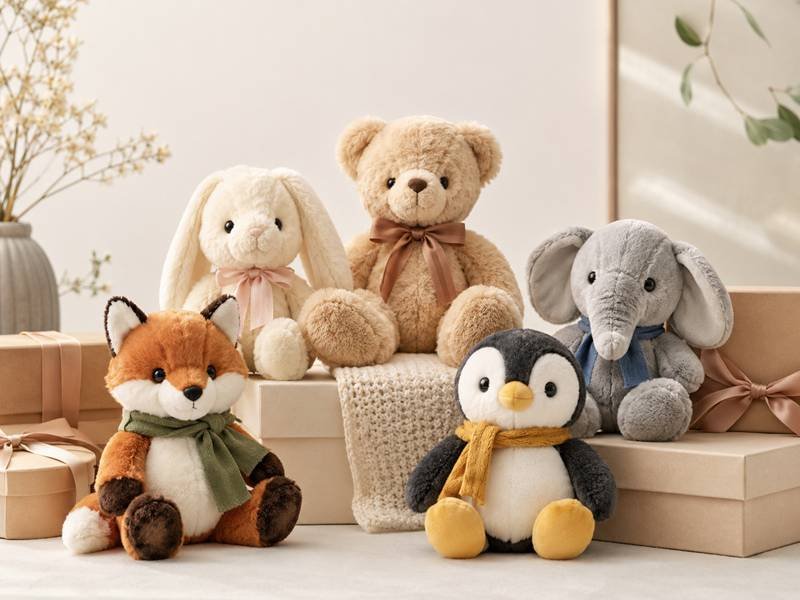
Some products become popular because they are new. Animal plush toys remain popular because they feel familiar. A soft bear, rabbit, dog, cat, panda, dinosaur, whale, cow, or fox does not need a long explanation. People already know how to react to it. It can feel comforting, funny, collectible, nostalgic, educational, premium, or deeply personal depending on the design. That flexibility is why animal plush products continue to appear in retail stores, museum shops, pet programs, school events, tourism gift areas, charity campaigns, and licensed collections.
Customized animal plush toys stay popular in the medium to long term because animal forms carry lasting emotional recognition, cross-age appeal, and strong gift value. When the design is adapted through fabric, shape, embroidery, filling, accessories, packaging, and safety control, one animal concept can become a warm keepsake, a retail item, a mascot product, or a seasonal collection with real staying power.
A plush animal often enters someone’s life through a small moment: a child choosing one after a zoo visit, a pet lover keeping a soft version of a beloved dog, a team turning its mascot into a product people can hold, or a brand creating a limited animal character that appears in photos long after the campaign ends. That is the quiet strength of this category. The product does not only sit on a shelf. It carries a memory.
Why Do Animal Plush Toys Last?
Animal plush toys last because they sit in a rare space between comfort, memory, design, and everyday use. A soft animal can be a child’s bedtime companion, an adult’s desk object, a pet-related keepsake, a museum souvenir, a school mascot item, or a limited collection piece. The form is simple, but the emotional use is wide.
The long life of animal plush products comes from four forces working together: people naturally understand animals, soft texture creates comfort, character design creates attachment, and custom details connect the product to a place, story, event, or identity. When these forces are supported by safe materials, controlled stitching, balanced filling, and a clear visual style, an animal plush is less likely to be treated as a throwaway item.
Why Are Plushies So Popular Now?
Plushies are popular now because modern life has made soft, low-pressure objects more appealing. People spend more time with screens, short-lived trends, and fast product cycles. A plush animal gives the opposite feeling. It is physical, warm, quiet, and easy to understand. It does not need charging, updating, explaining, or learning. Someone can simply hold it, display it, gift it, or collect it.
Animal plush toys also fit current lifestyle habits. They appear as small bag charms, desk companions, car decorations, pet memorial items, cozy home objects, holiday gifts, school spirit products, and fan collectibles. This makes them flexible enough for many project types, from retail launches to cultural gift shops and brand character programs.
The strongest plush projects often use a clear emotional role rather than relying only on cuteness. A dog plush may carry loyalty and pet affection. A bear may carry comfort. A rabbit may carry gentleness. A panda may carry softness and friendliness. A dinosaur may carry adventure. A penguin may feel clean, wintery, and giftable. These associations help the product feel familiar within seconds.
| Current Plush Use | Why It Works | Design Focus |
|---|---|---|
| Bag charms | Portable, visible, collectible | Small size, strong loop, clear face |
| Desk plush | Comfort during work or study | Stable sitting pose, soft texture |
| Pet keepsakes | Emotional memory | Fur color, markings, gentle expression |
| Museum gifts | Visit memory and learning | Species features, story tag |
| Mascot items | Shared identity | Recognizable shape, color control |
| Holiday gifts | Warm seasonal feeling | Soft fabric, giftable packaging |
The growing popularity of plushies is not only about children. It is also about adults choosing small comfort objects with personality. A well-designed plush animal feels less like a toy locked to one age group and more like a soft character that can belong in different spaces. That is one reason animal plush products can remain useful across several seasons instead of disappearing after one short promotion.
For a custom animal plush project, this means the first decision should not be only “which animal looks cute.” A stronger starting place is: what feeling should the animal carry, where will it be used, how long should people keep it, and what level of finish will make it feel worth saving?
What Makes Animal Shapes Easy To Love?
Animal shapes are easy to love because people understand them before any text or explanation appears. A rabbit’s ears, a fox’s tail, a bear’s round body, a dog’s muzzle, a penguin’s belly, or a dinosaur’s back shape can create recognition immediately. This instant recognition gives animal plush products a practical advantage. The design does not need to work hard to introduce itself.
Animal forms also allow wide style variation. The same animal can look realistic, cartoon-like, premium, playful, sleepy, elegant, funny, or collectible. A cat can become a cozy home gift, a stylish bag charm, a pet-themed product, or a character in a retail series. A bear can become classic, luxury, sporty, festive, or school-related depending on fabric, expression, size, and accessories.
The shape itself does much of the emotional work. Round bodies feel safer and more huggable. Larger heads often feel cuter. Short limbs can feel more charming. Long ears create softness and movement. Big tails add personality. A sitting pose can feel calm and giftable. A standing pose can feel active and mascot-like. These small structure decisions affect how people respond to the product.
| Animal Feature | Emotional Effect | Production Concern |
|---|---|---|
| Long ears | Gentle, soft, expressive | Symmetry and support |
| Round belly | Huggable, child-friendly | Filling balance |
| Big tail | Playful, recognizable | Weight and packing volume |
| Small paws | Cute, compact | Sewing accuracy |
| Embroidered face | Safe, clean, expressive | Stitch size and placement |
| Patterned body | Species recognition | Print or panel alignment |
| Sitting pose | Stable and displayable | Bottom weight and shape |
| Standing pose | Active and character-led | Foot support and balance |
Animal shapes also work well across cultures. A written slogan may need translation. A joke may not work everywhere. A local phrase may lose meaning abroad. A soft animal usually travels more easily because its emotional language is visual and tactile. This is useful for projects intended for international retail, tourism, licensing, school programs, or cross-border gifts.
Still, a lovable animal shape requires careful soft-structure planning. A cute sketch can lose charm if the head becomes too heavy, the face shifts during sewing, the ears collapse, or the body cannot sit properly. The final plush must keep the charm of the original idea after cutting, sewing, stuffing, finishing, packing, and transport. That is where strong pattern work becomes essential.
Why Does Emotional Value Stay Strong?
Emotional value stays strong because animal plush toys are often tied to memories, not just product features. A plush may remind someone of a pet, a trip, a school, a sports team, a childhood story, a zoo visit, a museum exhibit, a charity event, or a favorite character. Once a plush carries a memory, it becomes harder to discard.
This is one of the main reasons animal plush products can outlast many other gifts. A pen may be useful but easy to replace. A printed card may be meaningful but short-lived. A plush animal can stay on a bed, shelf, desk, sofa, backpack, or display area for years. It remains visible because it feels personal.
Different emotional uses require different design choices.
| Emotional Role | Product Example | Key Details |
|---|---|---|
| Comfort | Bedtime bear, rabbit, dog | Soft fabric, rounded body, secure stitching |
| Memory | Pet plush, travel animal | Accurate markings, story tag, warm expression |
| Identity | Team mascot, school animal | Color match, logo placement, strong silhouette |
| Education | Museum dinosaur, zoo panda | Species features, educational hangtag |
| Collecting | Mini animal set, limited edition | Series design, packaging, numbering |
| Cause Support | Endangered animal plush | Animal story, gentle face, meaningful tag |
For pet-related plush, emotional value is especially strong. The product may represent a real dog, cat, rabbit, or other companion animal. Small details can matter deeply: the white patch on the nose, the bent ear, the short tail, the body color, or a collar. In this type of project, likeness creates emotional trust.
For zoo, museum, or tourism projects, the plush often connects to a place. A child may not remember every exhibit detail, but the animal plush brought home can keep the visit alive. For school and team projects, the plush can hold group identity. For retail collections, emotional value may come from a character family or seasonal story.
A plush that carries emotion should not feel careless in finish. Loose seams, uneven eyes, weak filling, messy trimming, or poor packaging can weaken the feeling. People may not always know the technical reason, but they can sense when a plush feels rushed. A warm design needs careful execution to protect its emotional role.
Why Do Millennials Like Plushies?
Millennials often like plushies because they connect nostalgia, comfort, collecting, personal style, and playful identity. Many grew up around animated characters, school mascots, game figures, soft toys, theme parks, pet culture, and early internet communities. As adults, they may still respond to soft characters, but the reason is no longer only childhood play. A plush can become a cozy object, a collectible, a desk companion, a pet-related keepsake, or a small expression of taste.
This group also accepts cuteness when it feels intentional. A plush animal for adults does not need to look childish. It can use quieter colors, softer textures, clever facial expressions, limited packaging, or a more refined character shape. The difference between “childlike” and “collectible” often comes from proportion, fabric, color, and finish.
For example, a children’s rabbit plush may use a bright smile, pastel colors, and a simple huggable body. A rabbit plush for adult gifting may use a muted cream fabric, smaller embroidered eyes, a calm expression, a linen-style ribbon, and a neat hangtag. The animal is still gentle and soft, but the tone is more mature.
Adult interest has expanded the possible use of animal plush:
Mini plush charms can be used on bags or key rings.
Desk animals can provide comfort in work or study spaces.
Pet plush can preserve a personal bond.
Limited animal sets can encourage collecting.
Mascot plush can connect fans to a team, game, event, or place.
Seasonal plush can create warmth for holidays and gift boxes.
Millennials also respond to story. A plush with a name, species note, character background, limited colorway, or place connection can feel more complete. Packaging matters here. A good hangtag, card, or box can turn a plush from “soft item” into “keepsake.”
For custom animal plush planning, adult appeal should be considered early. A design aimed only at children may miss texture, packaging, and style choices that make the product work for older audiences. At the same time, a plush aimed at adults still needs softness and charm. If it becomes too stiff, too complex, or too serious, it may lose the emotional ease that makes plush appealing in the first place.
The most successful adult-oriented plush designs often feel simple at first glance and carefully considered up close.
Are Animal Plush Toys Only For Children?
Animal plush toys are not only for children. Children remain one of the strongest groups because plush animals provide comfort, play, bedtime support, and safe companionship. But animal plush products now serve many other settings: college rooms, offices, pet programs, museum stores, tourism shops, team events, charity programs, collector shelves, lifestyle retail, and seasonal gift collections.
The key difference is that each setting needs a different product logic. A plush for young children must prioritize safety, soft construction, secure parts, strong seams, and washable or easy-care materials. A plush for adult collectors may need better fabric texture, refined expression, limited details, and packaging that feels special. A zoo plush may need animal accuracy. A pet plush may need likeness. A mascot plush may need identity control.
| End Use | Main Audience | Practical Size | Most Important Detail |
|---|---|---|---|
| Bedtime comfort | Children | 20–35 cm | Softness, safe seams, washable feel |
| Bag charm | Teens and adults | 8–12 cm | Clear face, durable loop |
| Pet keepsake | Pet lovers | 15–30 cm | Markings, expression, fur color |
| Museum souvenir | Families and visitors | 15–25 cm | Species features, story tag |
| Team mascot | Fans and schools | 20–40 cm | Color match, recognizable shape |
| Retail gift | Broad gift audience | 12–30 cm | Shelf appeal, soft touch |
| Premium display | Collectors and events | 35–60 cm | Shape stability, packing protection |
This wide use is why animal plush toys have medium to long-term strength. A product category tied only to one age group can rise and fall quickly. Animal plush can move between age groups, price levels, and use scenes. The same animal idea can become a small charm, a children’s toy, a retail gift, a display piece, or a limited collection.
To make that flexibility work, the project should be designed around real use. Will the plush be hugged daily? Hung on a bag? Sold in a shop? Given at an event? Packed in a gift box? Placed in a museum store? Shipped in large cartons? Used by young children? Each use affects size, material, stitching, safety, packaging, and cost.
Animal plush toys last because they are not locked into one meaning. A bear can be comfort. A dog can be memory. A panda can be a souvenir. A fox can be a style object. A dinosaur can be learning. A rabbit can be a gift. The product stays relevant because people keep finding new reasons to bring soft animals into their lives.
Which Type Of Animal Plush Works Best?

The best animal plush is the one that matches the purpose, audience, selling setting, safety needs, and expected feeling. A pet plush needs likeness. A mascot plush needs recognition. A zoo plush needs species connection. A retail gift needs quick visual charm. A premium collection needs better texture, cleaner finishing, and packaging that makes the product feel worth keeping.
Choosing the right animal plush is not only a design decision. It affects sample timing, unit cost, fabric choice, stitching difficulty, carton volume, safety review, retail display, and long-term product value. A cute animal drawing may look attractive on screen, but the final plush must still sit well, hold its shape, show a clear face, pass handling, and remain consistent across bulk production.
The best choice usually comes from three practical checks:
Does the animal shape create instant recognition?
Can the details be repeated clearly in soft fabric?
Does the final plush fit the price level, age group, and use scene?
When these three checks are handled early, the product has a better chance of feeling intentional rather than generic.
Custom Pet Plush vs Mascot Plush
Custom pet plush and mascot plush both use animal forms, but they serve very different emotional needs.
A custom pet plush is built around likeness. It may represent a real dog, cat, rabbit, bird, horse, or other companion animal. The details are personal: the shape of one ear, a white patch on the chest, a darker tail, a short muzzle, a special collar, or a soft sleepy expression. The goal is not simply to create a cute animal. The goal is to create a plush that reminds someone of a specific pet.
A mascot plush is built around recognition. It may represent a school, sports team, resort, children’s brand, game character, charity animal, or event identity. The plush must keep the approved character style across size, color, face, clothing, logo position, and accessories. Even small changes can affect recognition. If the eyes move too far apart, if the body becomes too round, or if the color is slightly off, the mascot may no longer feel correct.
| Comparison Area | Custom Pet Plush | Mascot Plush |
|---|---|---|
| Main Purpose | Personal memory and likeness | Identity and recognition |
| Starting Material | Pet photos, videos, notes | Character art, mascot photos, color files |
| Most Important Details | Fur color, markings, ears, face, tail | Shape, outfit, expression, logo, color |
| Sample Review Focus | “Does it feel like this pet?” | “Does it match the approved character?” |
| Detail Risk | Markings may be hard to match | Character may lose its original style |
| Better Size Choice | 15–30 cm for clear features | 20–40 cm for stronger identity |
| Stronger Finish | Soft fur, embroidered face, collar detail | Stable body, clean embroidery, approved colors |
Pet plush often needs more emotional sensitivity. A small feature that looks minor to a production team may matter deeply to the person who knows the pet. The face shape, eye feeling, and color placement should be reviewed carefully. For some designs, realistic fur texture is useful. For others, a softer cartoon style works better because it feels warmer and less stiff.
Mascot plush needs stronger technical discipline. The approved sample should become a clear production standard. Fabric color, embroidery file, body proportion, accessory placement, label position, and packing method should be recorded before bulk work begins. Mascot plush is often used in events, schools, retail programs, fan gifts, or character collections, so consistency carries real value.
A practical rule works well: pet plush should protect memory; mascot plush should protect identity.
Which Animals Fit Retail Gifts?
Animals that fit retail gifts usually have broad recognition, easy emotional appeal, and a shape that works well in plush form. Bears, rabbits, cats, dogs, pandas, penguins, dinosaurs, foxes, turtles, whales, elephants, cows, lions, otters, and giraffes are common choices because people understand them quickly. They do not need a long explanation on the shelf.
Retail plush must win attention fast. In a gift shop, bookstore, museum store, toy aisle, resort shop, or event booth, people often notice the face and body shape before reading the tag. The animal must look friendly from a short distance, feel good in the hand, and sit or hang neatly in display.
The strongest retail animal plush designs usually share these features:
Clear face: the eyes, nose, and mouth create an instant feeling.
Clean silhouette: the animal can be recognized from the front and side.
Balanced size: the plush feels giftable without becoming hard to pack.
Good hand feel: the fabric supports the price level.
Simple display: it can sit, stand, hang, or fit a shelf without awkward support.
Low detail conflict: the animal has enough features to be special, but not so many that production becomes unstable.
| Animal | Why It Works For Retail | What Needs Care |
|---|---|---|
| Bear | Classic comfort gift, wide age appeal | Face must avoid looking too plain |
| Rabbit | Gentle, soft, seasonal, baby-friendly | Ears need symmetry and support |
| Cat | Strong pet and lifestyle appeal | Eye shape decides personality |
| Dog | Warm, loyal, familiar | Breed features can raise complexity |
| Panda | High recognition, strong contrast | Black-white fabric alignment |
| Penguin | Clean, cute, winter or travel appeal | Belly shape and standing balance |
| Dinosaur | Playful, collectible, unisex | Tail balance and back details |
| Fox | Stylish, clever, characterful | Tail volume and color contrast |
| Turtle | Calm, educational, ocean-linked | Shell shape and printed pattern |
| Whale | Simple, soft, modern gift look | Body curve and seam placement |
| Elephant | Warm, gentle, learning-friendly | Ear size and trunk support |
| Cow | Soft, nostalgic, farm or food theme | Spot placement and fabric contrast |
Size has a strong effect on retail use. Mini animal plush works well as impulse gifts, keychains, blind box items, and event pieces. Medium sizes work better for classic gifts and children’s products. Large plush feels premium, but shipping volume, shelf space, and packing pressure need careful planning.
| Size | Best Use | Design Limit |
|---|---|---|
| 8–12 cm | Keychains, blind boxes, small gifts | Details must be simplified |
| 15–20 cm | Gift shop items, event gifts | Face and pose must be very clear |
| 22–30 cm | Standard retail plush | Good balance of detail and cost |
| 35–45 cm | Premium gifts, display pieces | Filling and carton volume increase |
| 50 cm+ | Large display or special edition | Shipping and storage need planning |
The best retail plush is not always the rarest animal. A familiar animal with stronger texture, better expression, and cleaner finishing can perform better than an unusual animal that is hard to recognize. Retail success often comes from a fast emotional reaction: “That’s cute,” “That feels nice,” or “This would make a good gift.”
For animal collections, it is also useful to think in families. A forest set might include fox, bear, deer, rabbit, and owl. An ocean set might include turtle, whale, dolphin, seal, and octopus. A farm set might include cow, sheep, pig, chicken, and horse. A zoo set might include panda, giraffe, elephant, lion, and penguin. A series gives people a reason to return, collect, or choose different animals for different recipients.
What Type Of Plush Suits Zoos?
Zoo plush needs to feel lovable while still reminding visitors of real animals. It should not look like a random soft toy that could be sold anywhere. It should connect to the zoo visit, the featured animal, the conservation message, or the local wildlife story.
A good zoo plush usually balances three things: species recognition, safe softness, and gift shop display. If the design is too realistic, it may feel stiff or less friendly for children. If it is too cartoon-like, it may lose the educational link. The strongest zoo plush often sits between accuracy and warmth.
Common animals for zoo plush include panda, tiger, lion, elephant, giraffe, penguin, dolphin, sea turtle, red panda, koala, seal, otter, monkey, meerkat, rhino, flamingo, owl, polar bear, and local endangered species. The choice should reflect the zoo’s signature animals, popular exhibits, conservation programs, and seasonal events.
| Zoo Animal | Key Design Feature | Common Product Style |
|---|---|---|
| Panda | Black-white face, round body | Soft sitting plush, medium size |
| Red Panda | Long fluffy tail, rust color | Premium fur texture, story tag |
| Tiger | Stripe rhythm, strong face | Printed or panel stripe design |
| Giraffe | Long neck, spots, small horns | Sitting plush with neck support |
| Elephant | Large ears, soft trunk | Rounded body, child-friendly style |
| Penguin | White belly, dark back | Standing plush or winter gift |
| Sea Turtle | Shell pattern, soft flippers | Ocean gift, educational tag |
| Dolphin | Smooth body curve | Simple modern plush |
| Otter | Long body, small paws | Cute sitting or lying pose |
| Rhino | Horn shape, sturdy body | Soft simplified structure |
Zoo plush also needs strong handling durability. In gift shops, children often pick up, squeeze, drop, and compare plush toys before a family chooses one. The product must hold shape after repeated touching. Ears, tails, wings, horns, fins, and accessories should be secured properly. Hangtags must stay attached without damaging the plush surface.
A zoo plush can also carry learning through small details rather than heavy text. A short species card, habitat note, conservation message, or location tag can increase meaning. The tag should be short enough to read quickly, but specific enough to make the plush feel connected to the animal and place.
Packaging usually depends on price level. Small plush may use a hangtag and shelf basket. Medium plush can use a branded tag or belly band. Premium plush can use a display box or themed card. For eco-conscious themes, simple paper tags and restrained packaging may feel more suitable than heavy plastic.
A zoo plush series can be especially strong when it is planned carefully. Instead of creating many animals at once, it is often better to start with a focused set of signature animals and keep the same design language across them: similar eye style, body proportion, tag format, and fabric quality. This gives the collection a more polished look.
Which Style Works Best For Brands?
The best animal plush style for a brand is one that feels natural to the brand world and easy for people to remember. It should not look like a logo attached to a generic toy. It should feel like a soft character with its own expression, body shape, color, and purpose.
Different styles serve different goals.
A clean mascot style works well when identity must be recognized quickly.
A cute rounded style works well for family gifts, children’s activities, and warm campaigns.
A premium soft style works well for limited gifts, lifestyle collections, and higher-price retail.
A realistic animal style works well for zoos, museums, wildlife projects, and pet-related items.
A mini charm style works well for bags, key rings, blind boxes, and travel gifts.
A character series style works well when multiple animals may be released over time.
| Style | Best Use | Design Priority |
|---|---|---|
| Rounded Cute | Children’s gifts, school programs, family events | Soft face, safe body, simple shape |
| Premium Soft | Limited collections, lifestyle gifts | Fabric texture, refined colors, elegant tag |
| Mascot Style | Team, event, resort, brand character | Recognizable shape and color |
| Realistic Soft | Zoo, museum, wildlife, pet themes | Species or likeness accuracy |
| Mini Charm | Bags, keychains, small gifts | Clear face at small size |
| Collectible Series | Retail sets, seasonal drops | Consistent design language |
Style choice should begin with the final scene. A plush for a premium gift box needs a different feeling from a plush used at a crowded event. A mascot plush for fans needs stronger identity than a soft animal for a baby gift set. A museum animal should respect species features, while a lifestyle plush may use softer colors and simpler proportions.
Color is especially important. Bright colors can help event products stand out, but muted colors can feel more refined. Natural colors help animal recognition, while brand colors help identity. The right balance depends on whether the plush must look like a real animal, a mascot, or a stylized character.
Logo placement also needs restraint. A plush animal should remain lovable first. A large logo on the face or belly can make the product feel less natural. Better options often include a scarf, woven label, small patch, hangtag, clothing detail, collar, or foot embroidery. These placements allow identity to appear without weakening the animal’s charm.
The strongest brand plush designs usually keep one or two signature details:
A bear with a scarf in the brand color.
A dog with a collar and embroidered tag.
A fox with a special tail pattern.
A panda with a themed story card.
A rabbit with a subtle ribbon and soft custom color.
A mascot animal with approved clothing and clean logo placement.
When a plush feels over-decorated, people may see it as a promotional object. When it feels thoughtfully designed, they are more likely to keep it. That difference matters.
How Did Stuffed Animals Become Popular?
Stuffed animals became popular because they turned animal affection into something soft, safe, and personal. People have always connected with animals through stories, pets, myths, cartoons, school mascots, books, and childhood memories. Stuffed animals made those connections physical. A child could hold a bear. A traveler could bring home a panda. A fan could keep a team mascot. A pet lover could preserve a memory.
The teddy bear played a major role in early plush animal popularity during the early 1900s, but the category did not stop with bears. Over time, rabbits, cats, dogs, farm animals, wild animals, sea animals, dinosaurs, fantasy creatures, and character animals became part of gift culture, children’s rooms, museum shops, theme parks, retail shelves, and licensed collections.
Stuffed animals changed because society changed. Early plush toys were often simpler in structure, material, and facial detail. Modern animal plush can use better fabrics, safer construction, refined embroidery, shaped patterns, printed markings, accessories, labels, story cards, display boxes, and series planning. The product has become more precise, but the emotional core remains the same.
| Earlier Plush Focus | Modern Plush Focus |
|---|---|
| Simple comfort toy | Character, story, and gift value |
| Basic animal shapes | More refined silhouettes and expressions |
| Plain materials | Softer fabric choices and texture levels |
| Children’s play | Cross-age collecting and lifestyle use |
| Limited packaging | Hangtags, gift boxes, story cards |
| Single item | Series, seasonal sets, mascot families |
The history of stuffed animals also explains why animal plush remains strong in the medium to long term. Each generation finds a new way to use soft animals. One generation keeps teddy bears. Another collects character plush. Another attaches plush charms to bags. Another orders pet likeness plush. Another gives museum animals as educational gifts. The form changes, but the need for softness, memory, and character continues.
For custom animal plush planning, this history carries a practical message: products last longer when they have story and structure. A plain animal may sell for a moment if it is cute. A well-developed animal can last longer when it has a recognizable shape, a clear use, a meaningful tag, a proper size, and a finish that feels worth keeping.
A plush animal does not need to be complicated to feel valuable. It needs to be clear, soft, well-shaped, and emotionally easy to connect with. That is why the category keeps returning in new forms, even as design styles and retail habits change.
How Does Custom Design Add Value?

Custom design adds value by turning a familiar animal shape into a product with its own identity, texture, expression, and use scene. The value is not created by decoration alone. It comes from accurate structure, suitable fabric, safe detailing, sample control, packaging, and a finished plush that feels intentional from the first touch.
A custom animal plush can begin with a pet photo, mascot drawing, character sketch, zoo animal, museum exhibit, game figure, children’s story, or retail concept. The difference between an ordinary plush and a strong custom plush is how well the idea survives the move from flat artwork into soft three-dimensional form. A good design must look clear, feel pleasant, keep its shape, pass handling, and remain stable across bulk production.
How Does A Factory Build A Character?
A plush character is built through shape, proportion, expression, fabric, filling, and detail control. The process is not the same as printing artwork on a flat item. A plush animal has volume. Fabric stretches. Filling pushes outward. Seams change curves. Embroidery has size limits. Long fur may cover small features. A detail that looks beautiful in artwork may become weak, messy, or invisible after stuffing.
The first task is to decide what makes the animal recognizable. For a rabbit, the ears may be the strongest feature. For a fox, the tail and face shape matter most. For a panda, the black eye patches and round body must be handled carefully. For a dog, the muzzle, ears, markings, and expression may decide whether the design feels warm or generic. For a dinosaur, the tail, back line, legs, and head shape must stay clear.
A strong custom plush character usually needs five visible strengths.
Clear silhouette. The animal should be recognizable from the front and side. If the outline is weak, the plush may lose identity even when the face is well made.
Balanced expression. Eye spacing, nose size, mouth curve, cheek shape, and eyebrow angle can change the whole feeling. A few millimeters may turn a gentle animal into a strange one.
Correct posture. The plush may need to sit, stand, lie down, hang from a keychain, or fit inside a gift box. Each posture needs different pattern structure and filling support.
Suitable fabric. Short plush works well for clean details. Long plush feels warm but can hide embroidery. Minky feels smooth and soft. Faux fur can help pet plush and wildlife designs. Printed fabric can show stripes, spots, or special markings.
Repeatable detail. The final design should not only look good once. It must be repeatable, with stable facial placement, body shape, fabric color, filling level, and accessory position.
| Character Area | What It Creates | Common Risk | Better Choice |
|---|---|---|---|
| Silhouette | Animal recognition | Shape looks unclear after stuffing | Review front, side, and sitting views |
| Face | Emotional reaction | Eyes or mouth feel uneven | Use fixed embroidery placement marks |
| Body | Hugging, display, balance | Head too heavy, legs too weak | Adjust pattern and filling density |
| Fabric | Touch and perceived quality | Detail hidden by pile length | Test fabric before approval |
| Tail, ears, horns | Species identity | Collapse, twist, or lose symmetry | Add proper seam and support planning |
| Clothing or accessories | Story and visual identity | Adds cost or safety risk | Keep only details with clear value |
A custom animal plush should not look like a flat logo forced onto a toy. It should feel like a character with its own body language. A bear can feel calm. A cat can feel clever. A dog can feel loyal. A penguin can feel clean and giftable. A dinosaur can feel playful. The design gains value when every choice supports that feeling.
What Is The Sample Process?
The sample process is where the idea becomes real enough to judge. It helps reveal shape, touch, scale, facial expression, material effect, detail clarity, safety concerns, and packing volume before the full run begins. A proper sample is not only a preview. It is the physical standard that protects the final plush.
A practical sample path often begins with artwork review. This includes checking animal type, target size, pose, color, fabric direction, facial expression, accessories, label needs, packaging, and final use. If the design is based on a pet, clear photos from front, side, back, and sitting views are useful. If the design is based on a mascot or character, approved colors, logo files, and character proportions are needed.
After review, the pattern is created. This step decides how the plush body will be cut and sewn. A good pattern controls roundness, balance, seam direction, limb position, head shape, ear angle, and tail placement. For animal plush, pattern quality is critical because many species features are structural, not decorative.
Then comes material selection. Fabric should match both appearance and touch. A pet plush may need faux fur or printed fabric to show markings. A museum animal may need accurate species colors. A baby-friendly plush may need softer hand feel and simple embroidered features. A mascot plush may need precise color matching and durable accessories.
The first sample is then made, reviewed, and revised. Review should include front view, side view, back view, sitting or standing view, hand feel, weight, facial placement, stitching, filling, accessory strength, tag position, and packing fit.
| Sample Step | Main Check | What Can Be Adjusted |
|---|---|---|
| Artwork review | Is the idea suitable for plush form? | Size, pose, detail level |
| Pattern making | Can the animal shape hold volume? | Head, body, ears, limbs, tail |
| Material matching | Does the touch fit the product role? | Fabric, color, filling, trims |
| First sample | Does the plush carry the intended feeling? | Expression, proportion, structure |
| Revision | What needs correction? | Face, size, posture, detail clarity |
| Approval sample | Is this ready to guide bulk work? | Final measurement, material, packing |
| Pre-run check | Are all details locked? | Labels, cartons, inspection notes |
Sample feedback should be specific. “Make it cuter” is hard to execute. Better feedback sounds like this: move the eyes 3 mm lower, make the ears 1 cm shorter, reduce the belly width, soften the mouth curve, increase tail filling, change the nose embroidery, adjust the black eye patch, or make the sitting base flatter.
For custom animal plush, the face often needs the closest review. The body may be acceptable, but the face decides whether the plush feels alive. Eye height, mouth shape, cheek roundness, nose angle, and embroidery density should be checked carefully under normal light and from a natural viewing distance.
A sample is ready for approval only when it can guide the full run clearly. That means the size, fabric, color, embroidery, filling, stitching, labels, accessories, and packaging should all be recorded. Without this record, bulk pieces may slowly drift away from the approved look.
How Long Does Sampling Take?
Sampling time depends on the animal shape, size, detail level, fabric availability, embroidery work, printing, accessories, safety needs, and the number of revisions. A simple plush animal can move quickly. A pet likeness plush, mascot plush, detailed wildlife plush, or premium retail plush often needs more time because the design must be closer to a specific reference.
A general timing plan for custom plush development can look like this:
| Project Type | Common Sample Time | Why It Needs That Time |
|---|---|---|
| Simple animal plush | 3–5 days | Basic body, few custom details |
| Standard custom animal plush | 7–14 days | New pattern, fabric match, embroidery |
| Revised sample | 5–10 days | Shape, face, color, or detail changes |
| Mascot plush | 10–20 days | Approved identity, outfit, logo, color |
| Pet likeness plush | 10–20 days | Markings, fur color, expression |
| Complex retail plush | 14–25 days | Accessories, packaging, refined finish |
Timing should be planned backward from the final use date. A plush for a holiday gift set, school season, museum opening, sports event, retail launch, exhibition, or charity program should not leave sampling to the last moment. Plush products need time for pattern correction, material confirmation, packaging decisions, and bulk preparation.
A safe schedule often includes four phases.
Design confirmation. Artwork, size, use, destination, quantity, and packaging direction are clarified.
First sample. The first physical version is created and reviewed.
Revision. The shape, face, fabric, or details are corrected.
Final approval. The approved sample becomes the production standard.
For regular custom plush projects, bulk production after sample approval often takes about 30–45 days. Urgent projects may move faster when the design is simple, material is ready, approvals are quick, and packaging is not complex. But rushing a detailed animal plush can create problems: uneven faces, wrong proportions, loose accessories, poor sitting balance, or late packaging issues.
| Decision That Affects Timing | Faster Path | Slower Path |
|---|---|---|
| Artwork | Clear final files | Multiple changing designs |
| Fabric | Available material | Custom dyed or rare fabric |
| Face details | Simple embroidery | Multi-color, tiny, dense embroidery |
| Animal markings | Few panels | Complex stripes or spots |
| Accessories | One fixed detail | Clothing, hats, bags, removable parts |
| Packaging | Hangtag or polybag | Custom box, insert, printed card |
| Approval | Clear comments | Vague or repeated changes |
The fastest project is not always the simplest animal. It is the project with clear decisions. When size, fabric, facial style, logo placement, label type, packaging, and safety needs are decided early, sampling becomes smoother and the finished plush has a better chance of staying true to the idea.
When Should Details Be Simplified?
Details should be simplified when they make the plush harder to read, harder to produce, less safe, too costly, or unstable in bulk production. In custom plush design, more detail is not always better. A strong plush often wins through a clean shape, charming face, good fabric, and one or two memorable features.
Small plush needs the most simplification. A 10 cm animal charm cannot carry the same level of detail as a 30 cm plush. Tiny claws, narrow whiskers, small shoe details, delicate facial lines, complex clothing seams, or tiny logos may look fine in artwork but become unclear in fabric. At small sizes, every millimeter matters.
Safety is another reason to simplify. Plush intended for young children should avoid loose parts, sharp trims, weakly attached accessories, hard components, and small decorations that could detach. Embroidery is often a better choice for eyes, noses, mouth lines, and small facial details. If plastic eyes, buttons, bells, zippers, or metal parts are used, attachment strength and age suitability need careful review.
Details should also be simplified when they increase labor without improving visible value. For example, a tiger does not need every stripe from a photo. It needs enough stripe rhythm to read as a tiger. A dog plush may not need every fur patch on the body if the face and main markings are correct. A mascot plush may not need every seam from the costume if the key color, face, and accessory are clear.
| Detail Type | Keep It When | Simplify It When |
|---|---|---|
| Embroidered eyes | Expression depends on precision | Size is too small for clean stitching |
| Printed spots or stripes | Species recognition needs pattern | Alignment crosses many seams |
| Clothing | Outfit defines the character | Garment adds too much labor |
| Small logo | Identity must be visible | Stitch size becomes unclear |
| Long fur | Warmth and premium touch matter | Face details become hidden |
| Tail | Animal needs it for recognition | It creates packing or balance trouble |
| Horns, wings, fins | Silhouette depends on them | They collapse or twist easily |
| Removable parts | Adult collectible use | Children’s safety is a priority |
Simplification does not reduce value when it is done with taste. It can make the plush cleaner, softer, safer, and easier to recognize. A refined animal plush should feel complete, not crowded.
A good design review should separate details into three groups.
Essential details: without them, the animal or character loses identity.
Support details: useful, but adjustable in size, material, or position.
Removable details: nice in artwork, but weak in fabric or unnecessary for the final product.
This helps protect the design while controlling cost and production risk. The best custom plush often looks simple because the hardest decisions have already been made.
How Have Stuffed Animals Changed Over Time?
Stuffed animals have changed from simple comfort toys into a broad category that includes character products, pet keepsakes, mascot items, museum gifts, collectible series, event plush, plush charms, and premium soft goods. The emotional base remains the same, but the design, materials, safety expectations, and presentation have become much more refined.
Earlier stuffed animals often used simpler patterns, basic fabrics, and limited facial details. Modern custom plush can include detailed embroidery, shaped bodies, printed markings, faux fur, minky, long plush, inner support, accessory design, hangtags, story cards, gift boxes, and strict quality control. This allows one animal concept to become many different products.
A single animal design can now be adapted into several formats.
| Format | Common Size | Best Use | Design Focus |
|---|---|---|---|
| Mini charm | 8–12 cm | Bags, keychains, event gifts | Simple face, strong loop |
| Small plush | 12–18 cm | Gift shops, blind boxes, travel | Clear shape, compact cost |
| Standard plush | 20–30 cm | Retail gifts, children’s products | Soft touch, strong expression |
| Large plush | 35–60 cm | Premium gifts, display | Filling control, carton planning |
| Pet likeness plush | 15–30 cm | Memorial and pet programs | Markings, fur color, face |
| Mascot plush | 20–40 cm | Teams, events, character use | Identity, color, accessory control |
| Museum plush | 15–25 cm | Educational gifts | Species features, story tag |
The way people use stuffed animals has also changed. A plush is no longer only placed in a child’s room. It can be photographed, displayed, collected, gifted, carried, used in fan events, connected to a pet memory, placed in a museum shop, or released as part of a limited collection. This wider use has raised expectations. People notice texture, face quality, stitching, packaging, and originality more than before.
Safety expectations have also become stronger. Child-friendly plush products need secure stitching, safe parts, suitable fabric, clean filling, and proper testing based on the selling area. Designs with hard parts, small accessories, or special trims need extra care. Needle control may be required for strict programs, especially children’s items and high-standard retail products.
Presentation has changed too. A hangtag, story card, woven label, belly band, or gift box can make a plush feel more complete. Packaging does not need to be expensive, but it should match the product role. A museum plush may need a species tag. A pet plush may need a simple keepsake card. A mascot plush may need approved colors and a branded tag. A premium collection may need a box or special label.
The long-term value of custom design comes from this evolution. Stuffed animals still give comfort, but now they can also carry identity, memory, education, retail value, and collectible appeal. A well-developed animal plush is no longer just a soft object. It is a designed product with a clear place in people’s lives.
What Affects Price And Bulk Quality?
Price and bulk quality are shaped by size, fabric, filling, stitching structure, facial details, accessories, safety needs, packaging, quantity, and inspection depth. A custom animal plush may look simple from the outside, but small design choices can change labor time, material use, carton volume, testing needs, and final consistency.
For animal plush projects, the goal is not to chase the lowest number. The real goal is to protect the character, the hand feel, the safety level, and the delivery plan within a sensible cost structure. A plush that looks cute in one approved sample but loses its face shape, softness, or seam strength in bulk will create more risk than value. A strong project controls cost early while keeping the details that people notice most: face, touch, shape, stitching, filling, and packaging.
Which Materials Change Price?
Materials affect both price and perceived value. Two animal plush toys with the same size can feel completely different if one uses basic short plush and the other uses long fur, faux fur, minky, printed fabric, or mixed textures. Material choice also affects cutting waste, sewing difficulty, embroidery clarity, safety review, and color consistency.
Short plush is often used when a clean surface and clear facial embroidery are needed. It works well for mini animals, mascot plush, simple retail animals, and designs with small eyes, noses, logos, or markings. Long plush feels warmer and more premium, especially for bears, dogs, cats, rabbits, and cozy gift items, but it can cover small details and may require trimming around the face.
Minky has a smooth, soft surface and is often used for baby-friendly styles, simple animal characters, and clean color-block designs. Faux fur can help pet plush or wildlife styles feel more realistic, but pile length, shedding, and trimming should be checked carefully. Printed fabric is useful for tigers, cows, turtles, dinosaurs, fantasy animals, and patterned species, but print placement near seams needs planning.
| Material Choice | Visual And Touch Effect | Cost Pressure | Best Use |
|---|---|---|---|
| Short plush | Clean, neat, detail-friendly | Low to medium | Mini animals, mascot plush, clear embroidery |
| Long plush | Warm, fluffy, premium | Medium to high | Bears, dogs, cats, rabbits, comfort gifts |
| Minky | Smooth, soft, gentle | Medium | Baby-style plush, simple character animals |
| Faux fur | More natural animal texture | Medium to high | Pet plush, wildlife plush, premium styles |
| Printed fabric | Spots, stripes, custom patterns | Medium | Tiger, cow, turtle, dinosaur, fantasy designs |
| Sherpa fabric | Cozy, wool-like surface | Medium to high | Winter gifts, sheep, bear, lifestyle plush |
| Embroidery thread | Durable facial and logo detail | Medium | Eyes, nose, mouth, name, small identity marks |
| Applique fabric | Layered markings or belly patches | Medium | Panda eyes, belly shapes, ear details |
| Soft filling | Shape and hand feel | Medium | Huggable plush, retail gifts, children’s items |
Filling is another major factor. Too little filling makes the plush look weak. Too much filling makes it stiff and less pleasant to hold. A sitting animal needs enough bottom support to stay upright. A long animal, such as a dachshund, crocodile, whale, or dinosaur, needs filling control along the body so it does not twist or collapse. A large plush needs careful stuffing distribution to prevent a heavy head or flat limbs.
Size also changes material cost quickly. A 30 cm plush may use far more fabric and filling than a 20 cm plush, and carton volume rises as well. Large plush toys may look impressive but can create higher storage, freight, and packaging pressure. For many retail and gift projects, 18–30 cm is a practical sweet spot because it allows visible details without becoming too bulky.
| Size | Common Use | Cost And Quality Concern |
|---|---|---|
| 8–12 cm | Keychains, blind boxes, small gifts | Details must be simplified |
| 15–20 cm | Gift shops, events, travel items | Face clarity and sewing accuracy |
| 22–30 cm | Standard animal plush | Balanced detail, cost, and shelf appeal |
| 35–45 cm | Premium gifts, display plush | Filling support and carton volume |
| 50 cm+ | Large displays or special editions | Shipping size, shape protection, storage |
The smartest material choice is not always the most expensive one. A zoo turtle may need printed shell fabric. A pet dog plush may need faux fur for warmth and likeness. A small mascot animal may need short plush to keep the face sharp. A children’s comfort plush may need soft fabric and embroidered parts. The material should serve the product role first.
Do Small Details Raise Cost?
Small details can raise cost when they add extra cutting, embroidery, printing, sewing, hand placement, trimming, inspection, safety review, or packaging work. Some details create strong value because they define the animal. Others make the plush harder to produce without improving the final feeling.
Animal plush toys often contain details that seem small but are labor-intensive. Examples include striped tails, separate toes, tiny claws, wing panels, horns, antlers, stitched whiskers, layered eye patches, clothing, scarves, collars, hats, small bags, name tags, printed spots, and embroidered logos. Each detail may require extra material, sewing time, positioning accuracy, and quality checks.
The key is to decide which details are essential.
A panda needs black eye patches, black ears, and a round body.
A tiger needs enough stripe rhythm to be recognized.
A giraffe needs spots, small horns, and a long neck.
A rabbit needs clear ears and a gentle face.
A dog plush based on a real pet may need unique fur markings.
A mascot animal may need approved colors and one clear identity detail.
Not every detail from the artwork should move into the plush. A flat illustration can carry tiny lines, shading, and decorations that soft fabric cannot express well. When these details are forced into a plush, the result may become crowded, expensive, or unstable.
| Detail Type | Adds Value When | Raises Risk When |
|---|---|---|
| Embroidered eyes | Expression needs precision and safety | Too tiny or too dense |
| Printed stripes | Species recognition depends on them | Pattern crosses many curved seams |
| Applique patches | Large markings need clean shape | Edges become uneven |
| Small logo | Identity needs subtle placement | Stitch size becomes unreadable |
| Clothing | Outfit defines the character | Garment adds too many seams |
| Collar or scarf | One accessory tells the story | Loose part risk increases |
| Horns or antlers | Animal shape needs them | They bend or twist easily |
| Long tail | Species identity depends on it | Carton volume and weight increase |
| Separate fingers or toes | Character style needs detail | Sewing labor rises sharply |
Logo and identity placement also affect cost and final appearance. A large embroidered logo on the belly may be visible, but it can make the plush feel less natural. A smaller woven label, foot embroidery, scarf, collar tag, hangtag, or patch may look more refined. These choices can reduce visual clutter while still giving the plush a clear connection to the project.
There is also a hidden cost in inspection. More small parts mean more to check. Every ear, eye, nose, tail, clothing seam, accessory, label, and printed marking needs position and strength review. The more complex the design, the more important it becomes to set clear tolerance before bulk production.
A practical way to control detail cost is to divide design features into three groups:
Essential details: without them, the animal or character loses identity.
Support details: useful, but can be adjusted in size, method, or position.
Optional details: nice on artwork, but not needed for the plush to work.
This keeps the design expressive without allowing small features to weaken price control, safety, or bulk stability.
Is Safety Testing Needed?
Safety testing may be needed depending on the age group, destination, sales channel, and product structure. Plush toys for children, schools, museums, major retail programs, pet-themed gifts, and licensed collections usually need careful safety planning. The safest approach is to define the use and destination before finalizing materials and details.
Common safety areas include fabric, filling, thread, embroidery, plastic parts, small accessories, seam strength, flammability, chemical content, labeling, and needle control. If the plush is intended for young children, loose parts and hard components should be avoided or reviewed carefully. Embroidered eyes and noses are often preferred for child-friendly plush because they reduce small-part risk.
Different destinations may require different standards. Commonly discussed plush safety references include EN71 and CE for European use, ASTM F963 and CPSIA for the United States, 16 CFR 1610 for flammability, and REACH or Prop 65 considerations depending on materials and sales area. The exact requirement should match the final destination and product use.
| Safety Area | Why It Matters | Safer Design Choice |
|---|---|---|
| Eyes and nose | Small part risk | Embroidery for young children |
| Fabric | Skin contact and durability | Tested soft fabric when needed |
| Filling | Cleanliness and hand feel | Suitable stuffing with stable shape |
| Seams | Prevent tearing and leakage | Reinforced stress areas |
| Accessories | Detachment risk | Fewer parts, stronger attachment |
| Long fur | Shedding concern | Pull test and trimming review |
| Printing | Surface contact and durability | Material and colorfastness review |
| Flammability | Retail and import requirements | Confirm early for target destination |
| Needle control | Metal safety | Needle detection for strict programs |
Safety planning affects design choices. For example, a plush lion with long fur may look beautiful, but pile shedding needs review if the item is for children. A mascot plush with a small removable badge may be acceptable for adult collectibles but not suitable for younger children. A plush keychain with metal hardware may need different positioning and packing from a soft bedtime animal.
Testing should not be left until the end. Late safety changes can affect the face, fabric, accessories, labels, or packaging after the design has already been approved. That can create delays and extra sample work. A better path is to decide early:
Who will use the plush?
Where will it be sold or distributed?
Does it need to suit children under a certain age?
Will it include plastic parts, metal parts, sound units, magnets, or removable items?
Which labeling and test documents may be required?
Safety is not only about passing a report. It protects the product’s trust. A plush animal may look friendly, but if the stitching is weak, the eyes detach, the filling leaks, or accessories loosen, the entire project is weakened. Good safety planning makes the plush more dependable from first touch to long-term use.
How Is Bulk Quality Controlled?
Bulk quality is controlled by turning the approved sample into a clear standard and checking the product at each stage: material, cutting, embroidery, printing, sewing, filling, finishing, labeling, needle detection when required, packing, and carton review. For animal plush, final appearance depends on many small steps, so quality cannot rely only on the last inspection.
Animal plush has several common bulk risks.
The face may shift during embroidery or sewing.
Ears may become uneven.
The tail may twist or pull to one side.
The body may sit poorly.
Filling may be too soft in some pieces and too firm in others.
Long fur may cover the eyes or mouth.
Printed patterns may not align across seams.
Accessories may loosen during handling.
Cartons may compress large plush and flatten the shape.
Each risk should be controlled through clear instructions and repeatable checks.
| Stage | What To Check | Why It Matters |
|---|---|---|
| Material arrival | Color, texture, pile length, fabric weight | Prevents batch difference |
| Cutting | Pattern direction, size, fabric grain | Protects body shape |
| Embroidery | Eye, nose, mouth, logo, patches | Controls expression |
| Printing | Color, placement, durability | Protects species markings |
| Sewing | Seam strength, symmetry, accessory position | Keeps structure stable |
| Filling | Weight, softness, body balance | Maintains touch and posture |
| Shaping | Face, limbs, tail, ears | Protects character feeling |
| Trimming | Long fur around face and details | Improves clean appearance |
| Labels and tags | Placement, content, attachment | Supports retail readiness |
| Needle detection | Metal safety when required | Important for strict programs |
| Packing | Bag, tag, box, carton, compression | Protects final presentation |
The approved sample should not be treated as a visual suggestion. It should become the standard for production. Measurements, fabric references, embroidery file, color references, filling level, label position, accessory placement, and packing method should be recorded. Photos from front, side, back, and detail views help keep the bulk run aligned.
Tolerances should also be realistic. Plush toys are soft products, so a small natural variation may occur. The important is which variations affect the product’s perceived value. A tiny difference in tail angle may be acceptable. Uneven eyes may not be. Slight filling softness may be acceptable. A collapsed neck may not be. Clear tolerance avoids confusion during inspection.
Face control is especially important. People connect with the face first. If the eyes are uneven, the mouth is misplaced, or the nose shape changes, the plush may lose charm even when the material is good. For animal plush, a few millimeters can change expression. This is why embroidery positioning, sewing alignment, and stuffing pressure around the head need close attention.
Bulk quality also depends on order structure. A simple 20 cm bear in one fabric is easier to keep stable than a 30 cm mascot plush with clothing, logo embroidery, printed fabric, and accessories. A pet plush with many color patches needs stronger cutting and sewing control than a plain rabbit. A zoo tiger with printed stripes needs careful pattern placement.
| Complexity Level | Example | Main Control Need |
|---|---|---|
| Simple | Plain bear, rabbit, dog | Shape, softness, seam strength |
| Medium | Panda, penguin, turtle | Color block alignment, face placement |
| Detailed | Tiger, giraffe, fox, mascot | Printing, accessories, embroidery, symmetry |
| High | Pet likeness, licensed-style character | Strict color, markings, expression, approval record |
Packing is often underestimated. Plush is soft, but it can lose shape if compressed too heavily. Long fur may become messy. Ears may bend. Large heads may flatten. Gift boxes may crush if cartons are not planned well. For retail or gift programs, packing should protect the first impression.
A well-controlled bulk run keeps the approved sample’s feeling alive across every piece. The plush should not only pass technical checks. It should still look lovable, feel soft, sit correctly, and carry the character it was designed to represent.
Who Needs A Plush Manufacturer?

A plush production partner is useful when an animal character needs to become a real product with soft texture, clear shape, safe construction, stable bulk quality, and packaging that fits the final use. This applies to brands, museums, zoos, schools, pet programs, tourism projects, sports teams, charity programs, game studios, book publishers, event teams, and retail collections.
Animal plush works especially well when the product must carry emotion. A soft dog can carry pet affection. A panda can carry conservation meaning. A bear can carry comfort. A fox can carry cleverness. A dinosaur can carry curiosity. A mascot animal can carry identity for a team, place, or event. The right production partner helps protect that feeling through structure, fabric, sample review, safety planning, and bulk control.
Why Do Brands Use Animal Plush?
Brands use animal plush because a soft character can make identity more memorable and easier to keep. A logo may be noticed for a moment, but a plush animal can stay on a desk, shelf, bed, bag, car seat, or display area for months or years. It can be held, photographed, gifted, collected, and shared in a way many flat items cannot.
Animal plush is also useful because animals already carry emotional meaning. A bear feels warm and protective. A rabbit feels gentle. A dog feels loyal. A cat feels playful and independent. A fox feels smart. A panda feels soft and friendly. A dinosaur feels adventurous. When the animal fits the personality of the brand, the plush feels natural instead of forced.
This is why animal plush is often used for:
Character products connected to a brand mascot.
Limited gift sets for seasonal events.
Retail collections built around animal characters.
Pet-related campaigns using dogs, cats, rabbits, or custom pet likeness.
School spirit items using animal mascots.
Sports team plush mascots for fans.
Game, animation, or publishing character products.
Charity plush connected to endangered animals or animal welfare.
Tourism and hospitality gifts linked to a local animal or story.
The strongest brand plush projects usually have one clear idea. A bear with a scarf in a signature color. A dog with a small embroidered collar tag. A fox with a special tail pattern. A panda with a conservation story card. A rabbit with a refined ribbon and soft color palette. A mascot animal with approved colors and a clean pose.
| Use Scene | Animal Plush Role | Key Design Focus |
|---|---|---|
| Seasonal gift set | Warm, giftable memory item | Soft fabric, pleasant size, neat package |
| Mascot product | Physical version of character identity | Shape accuracy, color match, stable face |
| Pet-related program | Emotional connection with animal lovers | Dog or cat details, soft expression |
| Fan merchandise | Collectible symbol of belonging | Strong silhouette, durable stitching |
| Retail collection | Repeatable animal family | Consistent style, series planning |
| Charity program | Story object tied to a cause | Animal meaning, tag copy, gentle design |
| Hospitality gift | Place-based keepsake | Local animal, tasteful package |
Animal plush also has a longer visible life than many throwaway gifts. People often keep a plush if it feels warm, cute, personal, or collectible. That staying power gives the item more value than something used once and forgotten.
Still, the product must feel well made. A brand plush with uneven eyes, weak seams, poor stuffing, loose accessories, or rough packaging can weaken the feeling it was meant to create. Quality is not only technical here. It affects emotion. If the plush feels cheap, the story feels weaker. If it feels soft, balanced, and carefully finished, the brand message feels warmer and more credible.
Good animal plush design usually balances four things:
The animal must fit the brand personality.
The face must create a fast emotional reaction.
The details must be simple enough to repeat clearly.
The final product must feel worth keeping.
When these four parts work together, animal plush becomes more than a promotional object. It becomes a small character people may actually keep in daily life.
When Do Museums Need Custom Plush?
Museums need custom plush when a soft product can extend the experience beyond the visit. A dinosaur from a fossil exhibit, a whale from an ocean gallery, a red panda from a conservation display, a mammoth from a natural history collection, or a local bird from a regional wildlife program can turn learning into something visitors can hold and take home.
Museum plush works best when it connects to a clear subject. It should not feel like a random toy placed in the shop. It should connect with an exhibit, species, location, educational theme, children’s program, or seasonal event. The plush becomes stronger when visitors can say, “I saw this animal today,” or “This reminds me of that exhibit.”
For natural history museums, science centers, aquariums, zoos, wildlife parks, children’s museums, and cultural spaces with animal themes, plush products can support both memory and learning. A short hangtag can include a species name, habitat note, exhibit connection, or conservation message. This small detail often makes the product feel more meaningful without making the plush itself too complex.
| Museum Setting | Suitable Plush Idea | Important Detail |
|---|---|---|
| Natural history museum | Dinosaur, mammoth, saber-tooth cat | Recognizable shape and exhibit link |
| Aquarium | Turtle, whale, dolphin, octopus, penguin | Ocean color, soft body, habitat tag |
| Wildlife gallery | Bear, fox, owl, otter, deer | Local species features |
| Conservation exhibit | Panda, red panda, tiger, rhino | Story tag and respectful styling |
| Children’s museum | Simple animal characters | Safe parts and huggable shape |
| Science center | Animal linked to learning theme | Clean design and educational note |
| Zoo gift shop | Signature zoo animals | Species accuracy and shelf display |
Museum plush needs a careful balance between accuracy and warmth. If the animal is too realistic, it may feel stiff or less approachable. If it is too cartoon-like, it may lose the connection to the exhibit. The best style often sits between the two: clear species features, softened body shape, friendly expression, and safe construction.
For example, a red panda plush should have a warm rust color, fluffy tail, white face markings, and a gentle expression. A sea turtle plush should show the shell, flippers, and ocean feeling without becoming hard or flat. A giraffe plush needs the neck, spots, small horns, and stable sitting shape. A dinosaur plush needs the head, tail, body posture, and back detail to stay recognizable after stuffing.
Museum shops also need durability. Plush items may be handled many times before they are chosen. Children may squeeze, drop, compare, and carry them around. Strong seams, secure eyes, good filling, and proper tag attachment matter. Packaging should protect the plush while keeping it easy to display.
A museum animal plush can also be planned as a series. A dinosaur set, ocean animal set, local wildlife set, or endangered animal set can create stronger repeat interest than a single isolated item. A series should share a consistent face style, fabric level, tag format, and size logic so the products look connected on the shelf.
A good museum plush does not only decorate the shop. It carries the memory of the visit home.
How Do Gift Programs Use Plush?
Gift programs use plush because soft animal products feel personal, warm, and easy to keep. They are suitable for holidays, school events, membership gifts, charity programs, employee gifts, product launches, fan events, tourism gifts, subscription boxes, children’s programs, and seasonal retail sets.
The first step is to define the role of the plush. Is it meant to be a small giveaway, a keepsake, a premium gift, a collectible item, a retail add-on, or a child-friendly comfort product? The role decides size, fabric, detail level, package, and cost structure.
| Gift Program Type | Better Plush Direction | Main Planning Focus |
|---|---|---|
| Holiday gift | Warm animal with soft fabric | Seasonal color, package, timing |
| School event | Mascot animal or friendly character | Safety, strong seams, clear identity |
| Charity program | Animal linked to cause | Story tag, gentle expression |
| Membership gift | Limited animal design | Perceived value and collectibility |
| Product launch | Animal tied to campaign theme | Fast recognition and package fit |
| Tourism gift | Local or symbolic animal | Place memory and retail display |
| Pet program | Dog, cat, or custom pet style | Emotional likeness and soft touch |
| Fan event | Mascot plush or animal charm | Color match and durable structure |
| Subscription box | Mini or medium plush | Size control and surprise appeal |
Size is one of the biggest planning decisions. A small plush charm can be distributed easily and packed efficiently, but small details must be simplified. A 20–25 cm plush feels more complete and giftable, but takes more carton space. A larger plush has stronger premium impact, but shipping, storage, and shape protection must be planned carefully.
| Size | Suitable Gift Use | Main Risk |
|---|---|---|
| 8–12 cm | Keychain, mini gift, box insert | Small details may blur |
| 15–18 cm | Event gift, travel item, small retail gift | Face and pose must be clear |
| 20–25 cm | Standard gift plush | Cost and carton volume need balance |
| 30–40 cm | Premium gift or display item | Filling and packing need more control |
| 50 cm+ | Special display or limited edition | Freight and storage pressure |
Packaging affects how the plush is received. A simple polybag may work for low-cost event distribution. A hangtag is useful for retail and museum shops. A belly band can add a story without much added bulk. A window box or gift box can raise perceived value for premium or limited programs. The packaging should match the purpose, not overpower the plush.
Gift programs also need realistic timelines. Plush development includes sample creation, revision, final approval, material preparation, bulk production, inspection, packing, and shipping. A simple plush may move faster, while a mascot plush, pet likeness, detailed animal, or custom boxed set needs more time. If the gift is tied to a fixed date, design decisions should be locked early.
The most effective plush gifts share three qualities:
They feel connected to the occasion.
They are pleasant enough to keep.
They can be produced consistently within the required time and cost.
Animal plush works well in gift programs because it brings emotion without needing a long explanation. A soft animal can say “thank you,” “welcome,” “remember this place,” “support this cause,” or “join this group” in a way that feels warmer than many ordinary items.
What Makes A Plush Manufacturer Reliable?
A reliable plush manufacturer is not defined only by price. Reliability shows in how well the team understands soft structure, reviews animal details, manages samples, controls fabric, protects safety, keeps bulk quality stable, and prepares products for delivery. Animal plush looks simple, but small differences in face, filling, fabric, and seam position can change the whole product.
A strong plush production partner should be able to study a design before sampling and explain which parts may need adjustment. For example:
A mini dog plush may need simplified markings.
A long-fur cat plush may need trimming around the eyes.
A giraffe plush may need neck support.
A turtle plush may need shell pattern planning.
A mascot bear may need strict color and logo placement.
A panda plush may need careful black-white panel alignment.
A dinosaur plush may need tail balance and back detail control.
This kind of early review helps avoid wasted time. It also protects the final plush from looking different from the approved idea.
| Reliability Area | What To Look For | Why It Matters |
|---|---|---|
| Design review | Practical comments before sampling | Reduces weak structure and unclear details |
| Pattern skill | Animal shape keeps volume | Protects silhouette and posture |
| Material matching | Fabric supports touch and appearance | Prevents wrong hand feel or hidden details |
| Sample control | Approved sample is recorded clearly | Keeps bulk pieces consistent |
| Face accuracy | Eye, nose, mouth placement is controlled | Protects emotional appeal |
| Safety planning | Age group and destination are considered | Reduces late-stage changes |
| Bulk checking | Each process has quality review | Prevents repeated defects |
| Packing planning | Shape and presentation are protected | Keeps plush attractive on arrival |
Sample control is one of the clearest signs of reliability. The approved sample should become a detailed standard, not just a photo. Size, fabric, embroidery, filling level, label position, accessory placement, color references, and packaging should be recorded. Without that control, bulk pieces can drift from the approved sample.
Quality control should also happen in stages. Material inspection, cutting checks, embroidery review, sewing inspection, filling control, finishing, needle detection when required, tag checking, packing review, and carton inspection all help protect the final result. For animal plush, the face deserves special attention because people connect with it first. Uneven eyes or a misplaced mouth can make the plush feel wrong even when everything else is acceptable.
Scale can also support stability when it is paired with skilled process control. Heyzizi works with 600+ workers, 18,000㎡ of production space, 30+ production lines, 35+ pattern staff, 80 quality staff, and 300+ machines. For custom animal plush projects with detailed characters, strict timing, or larger quantities, this kind of setup helps support sampling, bulk production, inspection, and packing more smoothly.
Certifications and safety awareness are also important for projects entering children’s retail, school programs, museum shops, and larger distribution channels. Relevant plush projects may involve EN71/CE, ASTM F963, CPSIA, 16 CFR 1610, REACH, or Prop 65 considerations depending on destination and use. The exact requirement should be clarified early so the design, materials, and accessories can support it.
A reliable plush manufacturer should also know when to simplify. Not every artwork detail belongs on a plush body. Some tiny parts may be unsafe. Some complex markings may not repeat well. Some accessories may raise cost without adding enough value. Honest technical feedback helps protect the finished product.
A practical pre-project checklist:
| What To Confirm | Why It Helps |
|---|---|
| Animal type and style | Defines shape, fabric, and detail level |
| Target size | Affects detail clarity, cost, and carton volume |
| Use scene | Helps decide safety, packaging, and structure |
| Quantity | Affects material planning and production setup |
| Destination | Helps confirm testing and labeling needs |
| Artwork or reference photos | Guides pattern and face design |
| Packaging needs | Affects timeline, cost, and presentation |
| Delivery date | Helps plan sampling and bulk schedule |
A strong production partner makes the process feel organized. The plush still needs creativity, but the path from idea to finished product should be clear. Good communication, sample discipline, material control, safety awareness, and bulk inspection turn a soft animal concept into a product that looks right, feels right, and arrives ready for use.