 Skip to content
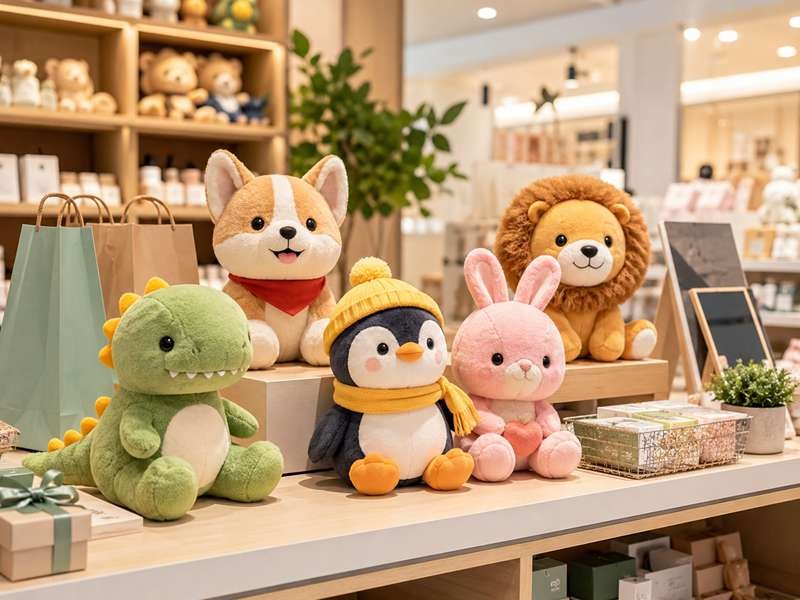
A strong store promotion is not always built around a lower price. In many cases, the stronger memory comes from a small object people want to keep. A mascot plush toy can sit beside a new drink, appear near the cashier, clip onto a backpack, become a member reward, or turn into a limited seasonal collectible. It gives a campaign a face, a texture, and a reason for shoppers to stop, smile, take a photo, and talk about the brand after leaving the store.
Brand mascot plush toys can be used in store promotions as gifts with purchase, member rewards, opening gifts, holiday collectibles, launch items, shelf display props, photo-area accessories, and social sharing triggers. The best results come when the plush clearly matches the brand character, the reward rule is simple, the store placement is visible, and the custom process controls sample approval, safety, price, quantity, and delivery timing.
That is why mascot plush often performs better than ordinary giveaway items. A coupon disappears. A flyer gets folded. A low-value gift may be forgotten. But a well-made plush toy can stay on a desk, bed, shelf, car seat, backpack, or office cabinet for months. It becomes a reminder of the store visit, the campaign, and the feeling linked to that brand. For retail teams, the real opportunity is not just making something cute. It is creating a small character item that supports foot traffic, repeat visits, member activity, social sharing, and long-term recognition.
What Are Brand Mascot Plush Toys?

Brand mascot plush toys are custom soft character products created from a brand’s visual identity, mascot artwork, product icon, animal symbol, event character, sports figure, food character, or licensed IP. They are not simply ordinary stuffed toys with a logo added. Their value comes from character accuracy, emotional appeal, safe structure, pleasant handfeel, and the ability to become a visible part of store promotions, loyalty programs, launch events, and limited seasonal campaigns.
What Is A Mascot Plush Toy?
A mascot plush toy is a soft, three-dimensional version of a brand character. It can be a cartoon animal, a food-shaped character, a sports mascot, a fantasy creature, a product-inspired figure, a pet icon, or a friendly human-like figure connected to a brand story. In store promotions, this kind of plush acts like a physical spokesperson. It gives a campaign a face, a body, a texture, and a keepsake value that flat graphics cannot fully provide.
A strong mascot plush usually includes several recognizable parts. The face should keep the same personality as the original artwork. The color should stay close to brand references. The body shape should match the character’s identity. The outfit, hat, scarf, badge, shoes, ears, tail, or small accessory should help people recognize the character quickly. Even the filling level matters, because a plush that is too flat may look weak, while one that is overfilled may lose the softness people expect.
For store use, the plush should be easy to understand within three seconds. A shopper passing a shelf, counter, or display table should be able to notice the character without reading a long description. That means the design needs clear shapes, clear colors, clean facial details, and a stable pose. The more quickly the character is recognized, the stronger the promotion feels.
Not every artwork detail needs to be copied exactly. Plush production has its own visual language. Very thin lines, sharp corners, tiny fingers, heavy gradients, small printed words, and complex shadows may not translate well into fabric and stitching. A practical plush design keeps the spirit of the character while simplifying details that would become unclear in soft form.
For example, a mascot with thin arms may need slightly wider arms so they can hold shape after filling. A character with a tiny mouth may need embroidery instead of print. A shiny metal detail in artwork may become satin fabric, metallic embroidery, or a small woven patch. These choices are not shortcuts. They help the plush look cleaner, safer, and more consistent when produced in quantity.
Mascot Plush vs Logo Plush
Mascot plush and logo plush are often used in similar promotion settings, but they create very different impressions. A logo plush usually starts with a standard animal or toy shape, then adds a logo on a shirt, scarf, belly patch, woven label, hangtag, or packaging. It is useful when the goal is a simple promotional gift with fast development and stable cost.
A mascot plush goes further. The whole toy is shaped around a specific brand character. The body, face, color, pose, clothing, and accessories are all developed to match a known identity. This makes the item more memorable, especially when the mascot already appears in stores, packaging, apps, menus, videos, gift cards, or event graphics.
The choice between these two styles depends on the campaign purpose. A logo plush works well for broad giveaways, school events, charity programs, staff gifts, or simple seasonal activities. A mascot plush is better suited for store launches, loyalty rewards, licensed IP campaigns, fan programs, food chain promotions, children’s retail activities, tourism gifts, and collectible drops.
| Plush Type | Visual Style | Best Store Use | Development Need | Brand Memory |
|---|---|---|---|---|
| Logo Plush | Standard plush with logo decoration | Simple gift, school event, staff activity, broad giveaway | Lower | Medium |
| Mascot Plush | Fully shaped around a brand character | Store campaign, product launch, loyalty reward, limited drop | Higher | Strong |
| Mascot Keychain | Mini plush with ring, clip, or chain | Bag charm gift, low-unit-cost campaign, repeat visit reward | Medium | Strong if character is clear |
| Limited Edition Plush | Special outfit, tag, color, or packaging | Holiday release, anniversary event, fan program | Higher | Very strong |
| Display Plush | Larger plush for store display | Window setup, photo area, counter attraction | Medium to higher | Strong in-store visibility |
A mascot plush also gives more room for storytelling. A coffee mascot can wear a winter scarf during a seasonal drink campaign. A bakery mascot can hold a small bread accessory. A sports mascot can wear a team jersey. A pet brand mascot can carry a small adoption-themed tag. These details help the plush feel connected to a real campaign rather than a random gift.
However, mascot plush requires more careful planning. The sample should be checked for shape accuracy, facial expression, color matching, fabric feel, embroidery quality, size balance, accessory safety, and packaging fit. If the toy is intended for children, safety rules also become a serious part of the plan. A beautiful mascot design still needs safe seams, secure eyes, strong stitching, suitable filling, proper labels, and age-appropriate construction.
How Are Mascots Used In Marketing?
Mascots are used to make a brand more recognizable, more emotional, and easier to remember. They can appear on packaging, store posters, product displays, staff uniforms, social posts, loyalty apps, delivery bags, event booths, children’s activities, and limited gift programs. Once the mascot becomes a plush toy, it moves from a visual character into a physical object people can touch, keep, photograph, and display.
This is why mascot plush toys are valuable in stores. They turn a promotion from “look at this offer” into “take this character home.” That change matters. A discount may be useful for one purchase, but a plush toy can stay visible long after the campaign ends. It can sit on a shelf, hang from a backpack, decorate a desk, appear in photos, or become part of a child’s daily life.
Mascots are especially useful when a brand wants to feel warmer, friendlier, more playful, or more memorable. Food and beverage brands often use them to make menu launches more fun. Sports teams use them to build fan emotion. Retail chains use them as seasonal gifts or loyalty rewards. Tourism stores use them as local keepsakes. Pet brands use them to build affection and trust. Schools use them to strengthen identity and spirit.
A mascot can also simplify communication. Instead of explaining a campaign only through text, the character can guide the activity. It can “introduce” a new product, “invite” shoppers to join a challenge, “reward” members, or “appear” in different store locations. This makes the promotion feel lighter and easier to remember.
| Marketing Use | Plush Role | Store Example |
|---|---|---|
| Product launch | Gives the new item a friendly character | Mascot plush beside a new drink or snack |
| Loyalty reward | Makes or spending milestones feel valuable | Members redeem a limited plush |
| Holiday campaign | Adds seasonal emotion | Mascot wearing a scarf, hat, or festive outfit |
| Store opening | Creates a keepsake from the first visit | Opening edition plush with special tag |
| Kids’ activity | Helps families engage in-store | Find-the-mascot game or photo activity |
| Fan program | Strengthens group identity | Team mascot plush in event colors |
| Social sharing | Gives people a photo prop | Plush displayed near a branded photo corner |
| Collectible program | Encourages repeat visits | Four mini mascots released across several weeks |
The most effective mascot use is not random decoration. It gives the character a role. The plush may represent a reward, a guide, a memory, a collectible, or a limited item. When the character has a clear job in the campaign, the store promotion feels more complete.
How To Use Brand Mascot?
A brand mascot should be used with a clear purpose. Before creating a plush version, the campaign should define what the mascot needs to do in stores. Is it meant to drive store visits, support a new launch, increase member activity, encourage repeat purchases, create photo sharing, reward VIP members, attract families, or strengthen brand recognition?
Once that purpose is clear, the plush format becomes easier to choose. A mini plush keychain is suitable for high-volume gift campaigns because it is easy to carry and distribute. A medium plush works well as a gift with purchase or member reward. A large plush can support displays, photo corners, and store openings. A limited edition plush with special packaging can fit holidays, anniversary events, or fan campaigns.
A practical store rule should be easy to explain. If staff need a long script, the campaign may feel heavy. The best rules are simple and visible:
Spend over a set amount and receive the mascot plush.
Redeem membership credits for the limited plush.
Collect stamps from several visits to complete the mini plush set.
Purchase the launch product and receive a mascot keychain.
Take a photo with the display plush and join the weekend draw.
Visit during the opening week and receive the special edition plush.
The plush design should match the activity. A gift-with-purchase plush should feel giftable and stable in cost. A member reward plush should feel slightly more premium. A repeat-visit plush can be released as a small set. A launch campaign plush should include one product-related detail. A photo-area plush should be larger, expressive, and easy to place. A bag charm should have strong hardware and reinforced stitching around the hanging area.
Store placement should also be planned early. Plush toys perform better when people can see them before they make a decision. Strong locations include the entrance table, checkout counter, membership desk, new product shelf, window display, event booth, kids’ area, or photo corner. If the plush is hidden behind packaging or placed too far from the promotion message, its impact becomes weaker.
A useful planning method is to match the plush with the store journey:
| Store Journey Stage | Mascot Plush Use | Goal |
|---|---|---|
| Before entry | Window display plush | Attract passersby |
| First 10 seconds | Entrance mascot setup | Make the campaign visible |
| Product browsing | Shelf mascot beside promoted item | Connect plush with product |
| Checkout | Counter sample plush | Help staff explain reward rule |
| Membership area | Redeemable plush display | Encourage member activity |
| After purchase | Gift packaging or hangtag | Make the reward feel complete |
| After leaving | Keychain or collectible plush | Keep brand visible in daily life |
A mascot plush promotion works best when the toy, rule, display, staff explanation, packaging, and timing all support the same idea. When these parts connect, the plush does more than decorate the store. It helps move people from noticing, to engaging, to keeping, to remembering.
Are Plushies Copyrighted?
Plush toys can involve copyright, trademark rights, character licensing, design ownership, and brand usage permissions. This is especially important when the plush is based on a mascot, cartoon, sports character, game figure, entertainment IP, artist illustration, celebrity-like image, or another protected design.
For a brand-owned mascot, the safest path is to prepare approved artwork and clear usage guidelines before development begins. Useful materials include front-view artwork, side-view artwork if available, color references, logo placement rules, character expression standards, outfit details, approved accessories, packaging copy, hangtag content, and any restrictions on how the character may appear.
For licensed characters, the process can be stricter. A rights holder may need to approve the sample, fabric color, embroidery, facial expression, body shape, size, packaging, product photos, and even the final selling or giveaway channel. This can add time, so licensing approval should be planned before the store launch date is fixed.
Rights review is not only a legal formality. It protects the campaign. Store promotions are public. People may photograph the plush, share it online, resell it, collect it, or compare it with the original character artwork. If the plush looks too different from the approved character, the promotion may look unprofessional. If it looks too similar to another protected character, it may create risk.
A careful plush project should check these areas before bulk work starts:
| Check Area | What To Confirm | Why It Matters |
|---|---|---|
| Character ownership | Who owns the mascot artwork | Prevents unauthorized use |
| Logo rights | Correct logo version and placement | Protects brand consistency |
| Character similarity | Avoids confusion with other known characters | Reduces legal and reputation risk |
| Licensed IP approval | Confirms permission from the rights holder | Required for public campaigns |
| Packaging copy | Checks names, claims, warnings, and age guidance | Avoids incorrect product information |
| Final sample approval | Confirms appearance before quantity production | Prevents costly corrections |
For store promotions, the plush may also need proper labeling and safety review. If children may receive or play with the toy, details such as small parts, seams, embroidery, filling, fabric, labels, and age grading need attention. A mascot plush is still a soft toy, even when used as a promotional item. The more public the campaign, the more important clear rights and safe construction become.
A well-planned mascot plush protects the brand on both sides: it looks true to the character and it feels safe, complete, and reliable in the hands of real people.
Why Do Mascot Plush Toys Work In Stores?
Mascot plush toys work in stores because they combine visibility, softness, emotion, memory, and collection value. They help a campaign feel more personal than a printed sign or short-term discount. When the character is placed well and connected to a simple store activity, it can attract attention, support staff interaction, encourage repeat visits, and stay visible after the shopper leaves.
Why Do Shoppers Notice Plush?
Shoppers notice plush toys because they break the visual pattern of a store. Most retail spaces are full of flat signs, shelves, hard packaging, screens, labels, and product blocks. A plush mascot has a face, body shape, soft texture, and emotional expression. It looks warmer than ordinary display materials, so people naturally pause for a second longer.
That small pause matters. In a busy store, many promotions are ignored because they look similar: red tags, shelf cards, discount stickers, banners, and posters. A mascot plush creates a different kind of signal. It feels like a character, not just a sales message.
For families, plush toys often attract children first. For young shoppers, mini plush and bag charms can feel cute, collectible, and photo-friendly. For fans, a mascot plush can represent identity and belonging. For gift-focused shoppers, it can make the promotion feel more valuable than a paper coupon or small plastic item.
Store placement has a major effect on visibility. A good mascot plush should appear where people naturally slow down, ask staff, compare products, or make decisions.
| Store Area | Why It Works | Suitable Plush Style |
|---|---|---|
| Entrance table | Catches attention in the first few seconds | Larger mascot plush, seasonal display plush |
| Checkout counter | Helps staff explain the reward rule | Medium plush, sample plush |
| New product shelf | Links the character with the promoted item | Sitting plush, mini plush |
| Membership desk | Makes redemption value visible | Premium plush, limited plush |
| Window display | Attracts passersby before entry | Oversized plush, themed plush |
| Photo corner | Encourages social sharing | Large plush, character set |
| Kids’ section | Keeps families engaged longer | Soft doll, hand puppet, mini set |
| Event booth | Makes the campaign easier to spot | Mascot plush with campaign props |
A plush item should not be hidden inside deep packaging during the campaign. If shoppers cannot see the face, color, or size clearly, the emotional pull becomes weaker. For store promotion use, the display sample should be clean, full-shaped, easy to touch if allowed, and placed close to the rule or product it supports.
The strongest plush display usually follows three simple ideas:
The character should be seen before the promotion is explained.
The plush should sit close to the item or activity it supports.
The store team should be able to use the plush as a natural conversation starter.
When those three parts work together, the mascot becomes more than a decoration. It becomes a visible reason to ask, join, redeem, or return.
How Do Plush Toys Build Recall?
Plush toys build recall because they stay in daily life longer than most promotion materials. A leaflet may be thrown away. A receipt may disappear. A coupon may expire. A plush mascot can stay on a desk, shelf, bed, backpack, car seat, office cabinet, or child’s room for months.
This longer presence helps the brand remain visible after the store visit. Each time the plush is seen, the character appears again. That repeated exposure can be especially useful for food, beverage, sports, children’s products, tourism, entertainment, lifestyle, pet, and seasonal retail brands where emotion and recognition matter.
Recall is strongest when the plush has a clear link to the campaign. A generic bear with a small logo may be pleasant, but it may not create deep memory. A brand mascot wearing a holiday scarf for a winter drink launch, holding a mini snack for a food campaign, or wearing a team jersey for a fan event gives shoppers a clearer story to remember.
| Recall Factor | Strong Execution | Weak Execution |
|---|---|---|
| Character match | Looks close to the known mascot | Looks like a generic toy |
| Color accuracy | Matches the brand color system | Color feels random or dull |
| Face clarity | Expression is easy to recognize | Eyes or mouth feel unclear |
| Campaign link | Outfit, tag, or prop connects to the event | No clear reason for the plush |
| Keep value | Feels giftable and displayable | Feels disposable |
| Size choice | Fits the intended use | Too large for daily use or too small to notice |
| Material feel | Soft, clean, pleasant in hand | Rough, thin, or uneven |
| Packaging | Supports the gift feeling | Looks unfinished or low-value |
A plush mascot can also help build character familiarity over time. The first version may introduce the mascot. A seasonal version may show personality. A keychain version may bring the mascot into daily travel. A limited set may create collection behavior. Over several campaigns, the character becomes part of how people remember the store.
For brands with recurring promotions, this long-term character value is important. A single plush can support one event, but a planned mascot series can support multiple store activities across a year. For example:
Spring: mascot with flower accessory
Summer: mascot with drink or beach detail
Back-to-school season: mascot with backpack or notebook
Holiday season: mascot with scarf, hat, or gift box
Anniversary campaign: mascot with special tag or numbered card
This kind of planning makes the plush feel intentional rather than random. It gives shoppers a reason to expect the next release, which can support repeat visits and stronger brand attachment.
How Do Plush Toys Increase Interaction?
Mascot plush toys increase interaction because they give people something to touch, ask about, photograph, collect, redeem, or share. A store sign only communicates information. A plush mascot invites action.
Interaction does not need to be complicated. A staff member can hold the plush while explaining a gift rule. A sample can sit beside the product display. A member counter can show the reward item clearly. A photo area can invite visitors to pose with a larger mascot. A child can point at the character while parents browse. A fan can ask when the next version will arrive.
The best store interactions are easy to join and easy for staff to explain. If the rule is too complex, the plush may attract attention but fail to drive participation.
Useful interaction formats include:
“Find the mascot” activity inside the store.
Photo with the mascot display.
Member credit redemption.
Weekend-only plush release.
Launch product plus mascot gift.
Plush color voting before release.
Store anniversary keepsake.
Character naming activity.
Seasonal outfit collection.
Stamp card exchange for a mini plush set.
Different stores need different interaction styles. A high-traffic food chain may need a fast reward rule. A lifestyle store may use a beautiful display and limited member gift. A tourism store may position the plush as a souvenir. A sports store may connect the mascot with match days or team colors. A children’s brand may build the activity around play, photos, and family participation.
| Store Type | Interaction Style | Plush Format |
|---|---|---|
| Food and beverage | Meal set reward, seasonal drink launch | Mini mascot, sitting plush |
| Sports retail | Fan day gift, team mascot collectible | Jersey plush, keychain plush |
| Pet retail | Adoption event, loyalty reward | Animal mascot plush |
| Tourism store | Local character souvenir | Medium plush, gift-box plush |
| Children’s retail | Photo activity, birthday reward | Soft doll, puppet, mini set |
| Beauty or lifestyle | Limited gift tier, launch display | Small premium plush, charm |
| Bookstore or gift shop | Character display, themed collection | Sitting plush, series plush |
| Convenience store | Quick redemption, stamp card | Mini plush, keychain plush |
The plush should make the store team’s job easier. If staff can point to the plush and explain the rule in one sentence, the promotion has a better chance of working smoothly. Good campaign language is short and direct:
Spend over a set amount and receive the mascot plush.
Collect three stamps to redeem the mini mascot.
Members can exchange credits for the limited plush.
Purchase the launch item and receive the mascot keychain.
Take a photo with the display plush to join the weekend draw.
Interaction also depends on product durability. A display plush may be touched many times during the campaign. A keychain may be pulled, clipped, and carried daily. A child-facing plush may face rougher handling. That means seams, stitching, embroidery, filling, hanging hardware, and accessories should be selected according to real use, not only appearance.
Do Plush Gifts Improve Loyalty?
Plush gifts can improve loyalty when they feel earned, limited, and connected to the brand story. People are more likely to value a plush when it is tied to a membership level, repeat visit, seasonal drop, fan event, birthday reward, or special launch. The gift should feel like a small achievement, not an afterthought.
A good loyalty plush gives shoppers a reason to come back. This is especially true when the plush is released as a series. One character may create interest. A set can create completion desire. For example, a café may release four drink mascots across four weeks. A bakery may release bread, cake, cookie, and chef characters. A sports brand may release home jersey and away jersey versions. A pet brand may create dog, cat, rabbit, and bird mascots.
The loyalty effect depends on perceived value. The plush does not always need to be large. A small item can feel premium if the face is clean, fabric is soft, stitching is neat, hangtag is well-designed, and packaging feels intentional.
A store team should plan plush gifts around both emotion and operations.
| Loyalty Use | Best Plush Style | Why It Works |
|---|---|---|
| Member redemption | Medium plush or premium mini plush | Makes feel more valuable |
| Birthday reward | Soft character plush | Creates personal emotion |
| Repeat visit stamp card | Mini plush series | Encourages return visits |
| Holiday campaign | Limited outfit plush | Adds urgency and seasonal charm |
| VIP tier gift | Gift-box plush | Feels more special |
| Fan release | Jersey or event plush | Builds identity and pride |
| Product launch | Mascot with product accessory | Connects memory to the new item |
| Kids’ club reward | Safe soft doll | Builds family connection |
Quantity planning also affects loyalty. If the plush runs out too early, people may feel disappointed. If too many remain after the event, the item may feel less special. A practical campaign plan often divides stock into three parts.
| Stock Type | Purpose | Planning Note |
|---|---|---|
| Display stock | Used for window, counter, shelf, or photo area | Keep clean and separated from giveaway stock |
| Redemption stock | Given to shoppers during the campaign | Match store traffic and reward rule |
| Reserve stock | Covers store differences, late demand, or VIP needs | Helps avoid sudden shortage |
A balanced plush campaign should not rely only on scarcity. If the item is too hard to get, frustration can reduce goodwill. If it is too easy to get, the reward may feel ordinary. The sweet spot is a gift that feels achievable, meaningful, and worth keeping.
Plush gifts can also support loyalty after the event. A shopper who keeps the mascot may remember the store each time they see it. A child may ask to return. A fan may look for the next release. A member may check future rewards more often. These are small behaviors, but store loyalty is often built from small repeated moments.
Are Mascot Plush Toys Shareable?
Mascot plush toys are shareable when they look good in photos, feel connected to a story, and give people something simple to show. Shareability does not come from cuteness alone. It comes from clear character design, strong color contrast, good posture, campaign detail, and easy placement in real life.
A plush that sits well can appear beside food, drinks, books, cosmetics, gift boxes, laptops, shelves, or store displays. A keychain plush can appear on backpacks, tote bags, luggage, car keys, and school bags. A larger plush can become the center of a photo corner. A limited plush can be shared by fans because it feels rare.
For store campaigns, the plush should be designed with phone photos in mind. Most people will photograph it quickly under indoor lighting. That means the face must stay clear, colors must not look muddy, and the posture must hold shape. If the toy collapses, hides its face, or looks flat on camera, the sharing effect becomes weaker.
Share-ready details include:
Stable sitting or standing posture.
Clear embroidered eyes and mouth.
Strong color contrast under store lighting.
One easy-to-recognize accessory.
Campaign hangtag or small story card.
Gift box or window box for premium campaigns.
Keychain hardware for daily carrying.
Mini set logic for collection photos.
Display props that match the store theme.
Packaging that shows the character face clearly.
The best shareable plush items often feel simple, not overdesigned. A clean character with one strong feature can work better than a complicated toy with too many details. People should be able to understand the mascot in one photo.
Shareability also depends on the activity around the plush. A store can encourage natural sharing without making the campaign feel forced. A photo corner, weekend release, limited tag, mascot name, seasonal outfit, or collection card can give people a reason to post. The plush itself carries the emotional value; the activity gives them a reason to show it.
| Share Trigger | How It Works | Plush Detail That Helps |
|---|---|---|
| Limited release | People share before it sells out | Numbered tag, special color |
| Seasonal outfit | Fits holiday or event mood | Scarf, hat, costume, prop |
| Photo spot | Makes taking pictures easy | Larger plush, stable pose |
| Collectible set | Encourages group photos | Matching sizes and tags |
| Bag charm use | Appears in daily life | Secure clip, strong stitching |
| Gift-box reveal | Feels more premium | Window box, ribbon, insert card |
| Fan identity | Shows belonging | Team colors, mascot costume |
| Kids’ moment | Creates family photos | Soft shape, friendly face |
A mascot plush does not need to shout for attention. If it looks good, feels good, and carries a story people enjoy, it can travel from the store to homes, desks, bags, photos, and online conversations. That is why a small plush toy can create value far beyond its physical size.
Which Type Of Mascot Plush Works Best?

The best mascot plush type depends on the campaign goal, store traffic, age group, reward value, display space, and planned quantity. A large display plush attracts attention, a medium mascot doll feels giftable, a mini plush supports repeat visits, a keychain travels daily, and a limited edition version creates collection desire. The right choice should match how people will see, receive, carry, and remember the character.
Classic Mascot Plush
Classic mascot plush is the most balanced choice for store promotions. It usually appears as a sitting or standing soft doll in a size that feels giftable but still practical for storage, display, and delivery. Common sizes for store gifts often fall between 15 cm and 30 cm, depending on the character shape, filling volume, packaging, and campaign value.
This type works well when the brand wants the mascot to feel like a complete character rather than a small accessory. It gives enough space for embroidered eyes, shaped ears, outfit details, body color blocks, small props, and a clear hangtag. A well-developed classic plush can sit on a counter, shelf, sofa, desk, or child’s bed, which gives it a longer life after the store visit.
Classic mascot plush is suitable for:
Store opening gifts.
Gift-with-purchase campaigns.
Member reward programs.
Holiday promotions.
Product launch gifts.
Fan or community events.
Family-focused store activities.
The main advantage is perceived value. A medium-size mascot plush feels more generous than a small plastic item, paper coupon, or flat sticker. It can also carry more character detail, which helps recognition.
However, classic plush needs careful planning. A 20 cm plush may look simple, but cost can change quickly depending on fabric type, embroidery area, fabric color count, accessories, inner structure, labels, and packaging. A mascot with five fabric colors, embroidered facial detail, clothing, and a small accessory will cost more than a simple animal shape with two fabrics.
| Classic Plush Detail | Effect On Store Use | Planning Note |
|---|---|---|
| 15–20 cm size | Easier to gift and store | Good for high-volume promotions |
| 20–30 cm size | Stronger perceived value | Better for member rewards or premium campaigns |
| Sitting pose | Stable on counters and shelves | Often easier to display |
| Standing pose | More character-like | May need better balance or inner support |
| Embroidered face | Clean and durable | Better for child-facing campaigns |
| Printed detail | Works for gradients or small artwork areas | Needs rub and color testing |
| Outfit or prop | Adds story value | Keep small parts secure |
| Hangtag | Explains campaign story | Useful for limited or seasonal gifts |
A classic plush is often the safest option when the campaign needs one strong character item. It should not be overdesigned. The face, color, body shape, and one signature detail usually matter more than many tiny decorations.
Mini Mascot Plush
Mini mascot plush is ideal when a campaign needs higher quantity, easier carrying, lower storage pressure, and stronger collection potential. These plush toys are often around 8 cm to 15 cm, though the size should be chosen based on the character’s shape and how much detail must remain clear.
Mini plush works especially well for repeat-visit campaigns. A store can release several mini characters over time, such as four seasonal outfits, different product-inspired characters, or a set of mascot friends. The smaller size makes collection easier. People can place them on desks, shelves, bags, car interiors, or small display corners at home.
Mini mascot plush is suitable for:
Stamp card redemption.
Weekly character drops.
Kids’ meal-style campaigns.
Store anniversary sets.
Seasonal collectible programs.
Small gift-with-purchase campaigns.
Travel, tourism, and souvenir stores.
The biggest challenge with mini plush is detail control. When the toy becomes smaller, every design choice becomes more sensitive. Small eyes may look unclear. Tiny limbs may become hard to sew. Small accessories may create safety concerns. Thin embroidery may lose shape. Printed facial details may need adjustment to avoid distortion.
For mini plush, character simplification is not a weakness. It is often the key to success. A good mini version keeps the strongest identity elements and removes details that will not survive at small size.
| Mini Plush Design Area | Recommended Direction | Reason |
|---|---|---|
| Face | Use bold eyes and simple mouth | Easier recognition at small size |
| Body shape | Keep one strong silhouette | Helps the mascot remain identifiable |
| Color | Use fewer main color blocks | Cleaner sewing and better consistency |
| Accessories | Choose one signature item | Avoids clutter |
| Logo | Use woven label or hangtag if too small | Prevents unreadable decoration |
| Filling | Keep shape firm but soft | Helps display and handfeel |
| Packaging | Use simple bag, card, or small box | Controls bulk packing volume |
Mini plush is a strong choice when the promotion needs repeat excitement. A single mini plush is cute. A well-planned series can create stronger interest because people may return to complete the set. For example, a beverage chain can release lemon, peach, grape, and strawberry mascot plush toys. A pet brand can create dog, cat, rabbit, and bird versions. A bakery can create bread, cake, cookie, and chef characters.
The main decision is whether the mini plush should be a standalone doll or a hanging accessory. If people will carry it daily, a keychain or bag charm structure may perform better. If the goal is a collectible shelf item, a small sitting plush may feel cleaner.
Mascot Plush Keychains
Mascot plush keychains are one of the most practical formats for store promotions because they are small, portable, visible in daily life, and easy to connect with repeat visits. They can hang on backpacks, handbags, tote bags, school bags, luggage, car keys, pencil cases, or store membership lanyards. This makes the mascot travel beyond the store.
Keychain plush is especially strong when the audience includes students, young adults, fans, tourists, families, or anyone who likes small collectible accessories. It also works well when a brand wants a lower unit cost than a medium plush but still wants a soft, character-driven item.
Mascot plush keychains are suitable for:
Low-threshold gift campaigns.
Launch product add-ons.
Bag charm promotions.
Travel and tourism gifts.
Fan events.
School and youth programs.
Convenience store redemption.
Multi-character collectible sets.
A plush keychain needs more structure control than many people expect. The hanging area must be reinforced because it takes repeated pulling and swinging. The chain, ring, lobster clasp, ball chain, cord loop, or plastic hook should match the expected use. For children’s campaigns, hardware choice and small part safety need careful review.
| Keychain Part | Common Option | Planning Note |
|---|---|---|
| Hanging loop | Fabric loop or cord | Soft and lightweight |
| Metal keyring | Ring plus short chain | Stronger daily use |
| Lobster clasp | Easy to attach and remove | Good for bags |
| Ball chain | Light and simple | Common for small plush charms |
| Plastic hook | Lightweight and colorful | Check strength for repeated use |
| Reinforcement | Extra stitching at top seam | Important for durability |
| Back label | Woven or printed label | Useful when logo is too small on the face |
The keychain format also affects character design. Since the plush will hang, the top balance matters. If the head is too heavy or the body is too long, the charm may tilt awkwardly. If the hanging loop is placed too far back, the character may face downward. A good sample should be checked while hanging, not only lying flat on a table.
Mascot keychains are also strong for collection. A store can release several characters across weeks, colors, outfits, or product themes. Because keychains are carried outside the store, they can create daily visibility without feeling like an ad. The best versions look cute enough to use, not only keep.
Limited Edition Plush
Limited edition mascot plush is designed to feel special. It may use seasonal clothing, a campaign tag, exclusive color, numbered card, gift box, embroidered date, anniversary mark, special fabric, or a unique accessory. Its strength comes from timing, story, scarcity, and emotional value.
This format works well when a store wants to create urgency. People may visit during a certain week, join a member event, redeem early, or collect before the release ends. A limited plush can also support holiday periods, store anniversaries, new product launches, fan events, tourism seasons, and IP-related drops.
Limited edition plush is suitable for:
Holiday campaigns.
Anniversary events.
VIP member gifts.
Store opening editions.
Fan releases.
Product launch bundles.
Seasonal character outfits.
Numbered collectible programs.
The value of limited edition plush depends on how real the difference feels. Simply changing the hangtag may not be enough. A stronger version usually includes at least one visible design change, such as a scarf, hat, jersey, food prop, metallic fabric detail, special embroidery, unique colorway, or gift packaging.
| Limited Feature | Value Created | Cost Impact |
|---|---|---|
| Seasonal outfit | Stronger campaign story | Medium |
| Numbered card | Collection value | Low to medium |
| Gift box | Premium presentation | Medium |
| Special fabric | More tactile interest | Medium to high |
| Embroidered date | Keepsake feeling | Low to medium |
| Unique accessory | Better photo value | Medium |
| Exclusive color | Easier recognition | Low to medium |
| Complete set | Repeat visit desire | Medium to high |
Quantity planning is very important for limited plush. If the quantity is too small, the campaign may create frustration. If the quantity is too large, the item may lose its special feeling. A practical approach is to separate expected redemption, store display needs, reserve stock, and VIP allocation before production.
Limited plush also needs timeline control. A seasonal plush must arrive before the campaign window. If the item arrives late, much of the emotional value is lost. Artwork approval, sample revision, material sourcing, testing, packaging, bulk production, inspection, and shipping should all be planned backward from the store launch date.
For high-visibility promotions, limited plush should feel finished from every angle. The face should be expressive, the outfit should fit cleanly, the hangtag should tell the campaign story, and the packaging should protect the shape. When people post or display the plush, it should look like a deliberate collectible, not a last-minute gift.
Interactive Plush Toys
Interactive plush toys add a functional or sensory element beyond the soft shape. This can include sound, squeaker parts, crinkle fabric, detachable accessories, hand puppet structure, finger puppet form, reversible design, magnetic parts, sensory textures, backpack clip function, or simple motion-friendly construction. For store promotions, interaction should be meaningful, safe, and easy to understand.
Interactive plush can create stronger engagement, especially for children’s events, food chain campaigns, educational programs, fan experiences, pet-related promotions, and photo activities. It gives people a reason to play with the mascot rather than only look at it.
Interactive plush is suitable for:
Children’s store activities.
Family-focused promotions.
Education or museum stores.
Food chain character campaigns.
Event booths.
Photo-area props.
Pet-themed campaigns.
Premium member rewards.
However, interactive features can add complexity. Sound modules, magnets, plastic parts, detachable accessories, and small components may affect safety review, durability, cost, and production time. If the campaign is intended for young children, simple sewn or embroidered elements are often safer than hard parts or detachable pieces.
| Interactive Feature | Best Use | Risk To Review |
|---|---|---|
| Sound module | Character voice, song, phrase | Battery safety, sound quality, placement |
| Squeaker | Pet or kids’ playful item | Durability and age suitability |
| Crinkle fabric | Baby or sensory product | Material safety and noise level |
| Hand puppet | Staff interaction, kids’ activity | Inner structure and stitching |
| Detachable accessory | Collectible play value | Small part risk |
| Magnetic detail | Fun pose or pair set | Magnet safety and sealing |
| Reversible design | Surprise effect | Pattern complexity |
| Clip function | Bag charm or travel use | Pull strength |
Interactive plush should never become too complicated for the store setting. If staff need to explain how it works, or if the function breaks easily, the charm may turn into a complaint. The best interactive ideas are simple: press to hear a short sound, use as a puppet, attach to a bag, find the hidden tag, collect matching accessories, or pose the plush in a photo area.
For premium campaigns, interactive details can raise perceived value. A mascot plush with a short sound phrase, branded song, or tactile accessory may feel more memorable. But the function must fit the brand identity. A calm wellness brand may prefer soft texture and scent-safe fabric rather than sound. A children’s education brand may prefer puppet interaction. A sports mascot may work well with a cheering sound or jersey accessory.
The key is balance. Interaction should support the mascot story, not distract from it.
Best Plush Type For Promotions
The best plush type depends on the campaign goal, store operation, expected quantity, audience behavior, and available timeline. No single format works for every store. A brand should choose the style that fits how the item will be used before, during, and after the visit.
For high-traffic stores, mini plush or keychains often work well because they are easier to distribute and carry. For member rewards, medium classic plush gives stronger gift value. For holiday or anniversary campaigns, limited edition plush can create urgency. For children’s activities, soft dolls or puppet-style plush can increase participation. For window displays and photo areas, larger mascot plush gives better visual impact.
| Campaign Goal | Best Plush Type | Why It Fits |
|---|---|---|
| Attract attention at store entrance | Large display plush | Highly visible from a distance |
| Gift with purchase | Classic mascot plush | Good balance of value and practicality |
| Encourage repeat visits | Mini plush set | Easy to collect across weeks |
| Create daily visibility | Mascot keychain | Travels on bags and keys |
| Support holiday campaign | Limited edition plush | Adds urgency and seasonal story |
| Build member loyalty | Premium medium plush | Feels worth redeeming |
| Drive social photos | Display plush or limited plush | Stronger photo value |
| Family activity | Soft doll or puppet plush | Easier for children to engage |
| Tourism keepsake | Medium plush or keychain | Easy to carry home |
| Fan program | Jersey or event plush | Strengthens identity |
Cost, size, and detail should be considered together. Smaller plush does not always mean easier. A tiny mascot with many facial details may be harder to produce cleanly than a medium plush with simplified structure. A larger plush may look impressive but require more filling, carton space, and shipping budget. A limited plush may increase emotional value but needs stricter timeline planning.
A practical product decision can start with these checks:
What store action should the plush support?
Will people carry it, display it, redeem it, collect it, or photograph it?
Does the mascot need strong facial detail?
Will the item be used by children?
How many store locations need stock?
How much space is available for display and storage?
Does the campaign need a single item or a series?
Is the launch date fixed?
Will the plush need gift packaging?
How important is long-term collection value?
For many store promotions, the strongest plan is not one plush type alone. A full campaign can use a larger display plush in the store, a medium mascot as the main reward, and a mini keychain as a lower-tier gift. This creates different reward levels while keeping one consistent character story.
A well-chosen mascot plush should feel natural in the shopper’s hand, useful in the store team’s activity, and memorable after the campaign ends. When the format matches the promotion goal, the plush becomes more than a soft item. It becomes a character people notice, keep, and remember.
How To Use Mascot Plush In Promotions?
Mascot plush toys work best when the promotion rule is simple, the character is easy to see, and the reward feels worth keeping. They can support spending thresholds, member rewards, opening events, holiday campaigns, launch activities, display setups, and photo-driven store experiences. The strongest use comes from matching the plush format with the store goal, visitor flow, campaign timing, and expected gift value.
Gift With Purchase
Gift with purchase is one of the most direct ways to use mascot plush in a store promotion. The rule is easy to understand: visitors receive a mascot plush after reaching a set spending amount, choosing a campaign product, or joining a limited-time activity. This format works well because the plush adds emotional value without changing the main product offer.
A strong plush gift should feel like a reward, not a leftover item. The character needs to look close to the original mascot, feel soft in hand, and have a size that matches the spending threshold. For lower thresholds, a mini mascot or plush keychain may work better. For higher thresholds, a 20–30 cm mascot doll, gift-box plush, or limited outfit version can feel more suitable.
| Spending Level | Suitable Plush Style | Promotion Feeling |
|---|---|---|
| Low threshold | Mini plush, keychain plush | Easy to join, high quantity |
| Medium threshold | 15–20 cm mascot plush | Balanced gift value |
| Higher threshold | 20–30 cm plush, gift-box plush | More premium and memorable |
| VIP tier | Limited edition plush | Stronger reward value |
| Product bundle | Mascot with product-related detail | Stronger campaign connection |
The reward rule should be visible near the product, checkout counter, and store entrance. Staff should be able to explain it in one short sentence. A campaign that needs too many conditions can slow down checkout and reduce participation.
Good examples include:
Spend over a set amount and receive the mascot plush.
Choose the seasonal set and receive the mascot keychain.
Add one campaign item to unlock the plush gift.
Complete the weekend activity to receive the mini mascot.
The plush should also support the brand story. A drink brand may add a fruit accessory to the mascot. A bakery may create a chef-hat version. A pet brand may add a small collar or paw tag. A sports retail store may use team colors. These small details help the gift feel connected to the store visit rather than random.
For planning, carton volume and store storage should not be ignored. A 25 cm plush may look impressive, but it takes more shelf and back-room space than a 12 cm keychain. If the campaign covers many store locations, packing size, display stock, and daily replenishment should be calculated early.
Member Reward Programs
Mascot plush fits member reward programs because it gives loyalty activity a visible and emotional goal. Instead of only offering discounts or digital credits, a plush reward gives members something they can keep, display, or collect. This is especially useful for brands that want stronger repeat visits and deeper character recognition.
Member rewards work well when the plush feels slightly more special than a normal store gift. That does not always mean bigger. A small plush with clean embroidery, a soft fabric, a limited tag, or a special box can feel more valuable than a large but rough item. The perceived value comes from design care, not only size.
Common member reward formats include:
Redeem for a mascot plush.
Reach a membership tier and receive a premium plush.
Visit three times during the campaign to collect a mini plush.
Receive a birthday-month mascot gift.
Join a store event and unlock a limited plush.
Complete a product trial set and receive a plush charm.
A good member plush program should balance access and exclusivity. If the reward is too hard to get, people may lose interest. If it is too easy to get, it may feel ordinary. The best structure makes the plush feel achievable, but still special.
| Member Program Goal | Plush Format | Why It Works |
|---|---|---|
| Increase repeat visits | Mini plush series | Encourages return trips |
| Reward high-value members | Premium mascot plush | Feels more meaningful |
| Support birthday programs | Soft mascot doll | Creates personal emotion |
| Promote app activity | Plush redemption code | Connects store and digital activity |
| Build seasonal loyalty | Limited outfit plush | Adds time-based interest |
| Encourage referrals | Mascot keychain set | Easy to give and share |
Series planning can make member programs stronger. For example, a store may release one mini mascot each month, one color per season, or one outfit per major event. Visitors who collect the first version may return for the next. This gives the plush a longer life across the year.
The plush should be shown clearly at the membership counter, checkout desk, app banner, and store display. If people cannot see the reward, they may not care about the rule. Physical visibility is important. A sample plush displayed beside a simple reward card can do more than a long written explanation.
For member programs, quality consistency is also important. A reward given to loyal members should not feel lower than the brand promise. Neat stitching, stable shape, clean fabric, clear face details, and properly attached labels all affect how the item is judged.
New Store Opening Gifts
A new store opening needs fast attention and a memorable first impression. Mascot plush can help because it gives visitors something linked to the opening moment. When the plush includes a special tag, opening date, city name, store name, or limited design detail, it becomes a keepsake rather than a normal giveaway.
Opening gifts work especially well for retail chains, food stores, dessert shops, sports stores, lifestyle shops, pet stores, children’s stores, tourism shops, and entertainment-related stores. The plush can support opening-week foot traffic, photo sharing, staff interaction, and local awareness.
A strong opening plush should be easy to distribute but special enough to feel worth visiting for. Depending on the expected crowd size, the plush may be planned in different tiers:
| Opening Gift Tier | Plush Style | Best Use |
|---|---|---|
| First visitors | Mini plush keychain | Fast distribution |
| First-day limited gift | 15–20 cm mascot plush | Stronger memory |
| VIP or media gift | Gift-box plush | Better presentation |
| Photo area prop | Large mascot plush | Visual attraction |
| Children’s activity gift | Small soft mascot | Family-friendly interaction |
The campaign should avoid confusion. Store openings can be busy, so the gift rule should be simple:
First 300 visitors receive a mini mascot.
Opening-week members receive the special mascot plush.
Spend over a set amount during opening weekend to receive the plush.
Take a photo at the mascot corner and join the gift draw.
A mascot plush can also make staff interaction easier. Employees can hold the plush, place it near the entrance, or use it in opening photos. A large display version can sit near the ribbon area, checkout zone, or window. This gives the opening event a warm visual center.
For city-based openings, localized details can increase keepsake value. A plush tag may include the city name. The mascot may wear a small local-themed accessory. Packaging may use opening-week colors. These details help visitors feel they received something from that specific location, not a generic item used everywhere.
Timing is critical for opening gifts. Artwork approval, sample adjustment, bulk schedule, inspection, packing, and shipping should be planned backward from the opening date. A late plush gift loses much of its value because the emotional peak is tied to the opening moment.
Holiday Promotion Plush
Holiday promotions give mascot plush stronger emotional value because people are already looking for gifts, memories, decorations, and seasonal items. A mascot plush wearing a scarf, hat, ribbon, festive outfit, or themed accessory can turn a normal promotion into a more collectible event.
Holiday plush works well for Christmas, Halloween, Valentine’s Day, Easter, Lunar New Year, back-to-school season, summer campaigns, winter drink launches, children’s holidays, local festivals, and store anniversary seasons. The key is to make the seasonal detail visible but not overly complicated.
Strong holiday plush ideas include:
Mascot with a winter scarf.
Mascot wearing a holiday hat.
Mascot holding a gift box.
Mascot with heart-shaped accessory.
Mascot in summer outfit.
Mascot with school bag detail.
Mascot with festival tag.
Mascot in limited seasonal color.
| Holiday Goal | Suitable Plush Detail | Practical Note |
|---|---|---|
| Gift feeling | Gift box, ribbon, hangtag | Good for premium campaigns |
| Seasonal display | Outfit, scarf, hat | Must photograph clearly |
| Family participation | Soft doll, mini set | Check safety for child use |
| Collection desire | Limited date tag | Helps create urgency |
| Store decoration | Large display plush | Requires space planning |
| Social sharing | Photo-friendly accessory | Keep design clean |
Holiday campaigns often have fixed windows, so the timeline should be tighter than usual. If the plush is for a December event, development should not start too late. Sample review, color approval, material preparation, bulk work, inspection, and delivery can take longer during peak season.
Holiday plush also needs careful quantity planning. Seasonal items lose value after the event. Too little stock can disappoint visitors. Too much stock may become hard to use later. One practical method is to divide the campaign stock into display use, daily release, member allocation, and reserve quantity.
Packaging can raise holiday value. A simple polybag may be enough for low-threshold gifts, but a gift box, window box, drawstring pouch, or themed hangtag can make a plush feel more complete. If the plush will be given as a holiday reward, presentation matters.
The best holiday plush does not only add a costume. It connects to the emotional mood of the season. Warmth, celebration, surprise, nostalgia, family, and collection value all matter. When those feelings match the mascot, the store promotion becomes easier to remember.
Product Launch Campaigns
Mascot plush can make a product launch feel more vivid. Instead of relying only on shelf displays or launch posters, the plush gives the new product a character companion. This works especially well for food, beverage, beauty, lifestyle, pet, children’s products, sports goods, entertainment IP, and limited-edition retail releases.
The plush should connect clearly to the product being launched. A fruit-flavor drink may use a fruit mascot. A bakery launch may feature a bread character. A pet product may use an animal mascot with a small collar tag. A skincare launch may use a soft character with clean, gentle colors. A sports product may use a mascot in event gear.
Product launch plush can be used in several ways:
Given with the launch set.
Displayed beside the new product.
Used in staff photos and launch videos.
Placed near the checkout counter.
Used as a member-only launch reward.
Released as a limited launch edition.
Given to invited guests during a launch event.
The plush should make the product easier to remember. If the connection is weak, people may like the toy but forget what it was promoting. Strong links include color, accessory, tag wording, outfit, packaging, and display placement.
| Product Launch Need | Plush Solution | Example |
|---|---|---|
| Make the new item visible | Mascot shelf display | Plush beside product stack |
| Add gift value | Gift-with-set plush | Launch bundle reward |
| Create collection interest | Limited launch plush | First-edition tag |
| Support staff explanation | Counter sample plush | Staff uses plush to introduce campaign |
| Encourage photos | Large launch mascot | Photo corner near display |
| Connect flavor or theme | Product-shaped accessory | Mascot holding mini drink or snack |
Launch campaigns usually need speed and accuracy. The plush must be approved early enough to arrive before the launch date. The color should match the product theme. The character should look clean from the front because store photos and display setups usually show the face first.
A launch plush should also avoid overloading the design. If the mascot carries too many product details, the toy may look crowded. One strong product-related accessory is often enough. For example, a mascot holding a mini bottle is clearer than one covered with many printed elements.
When planned well, product launch plush can extend the life of the launch. The product may sell during the campaign, but the plush remains visible afterward. This creates a stronger memory link between the new item and the brand character.
Where To Put Plush Toys?
Mascot plush placement can decide whether a promotion is noticed or ignored. Even a well-designed plush will have weak impact if it is placed too low, too far from the product, hidden behind packaging, or separated from the campaign rule. The plush should appear where people naturally stop, ask, compare, pay, or take photos.
Good placement depends on the store layout and campaign goal. An entrance display works for awareness. A product shelf works for launch connection. A checkout counter works for reward explanation. A membership desk works for redemption. A window display works for foot traffic. A photo area works for social sharing.
| Placement Area | Best Purpose | Plush Format |
|---|---|---|
| Window display | Attract people before entry | Large plush, themed plush |
| Entrance table | Show the campaign immediately | Display plush, classic plush |
| Product shelf | Link plush to promoted item | Sitting plush, mini plush |
| Checkout counter | Help explain reward rule | Medium plush sample |
| Membership desk | Show redemption value | Premium plush |
| Kids’ area | Encourage family engagement | Soft doll, puppet |
| Photo corner | Create shareable moments | Large plush, mascot set |
| Event booth | Support campaign visibility | Mascot plush with props |
| Gift wrapping area | Reinforce gift feeling | Boxed plush sample |
Height matters. A plush should usually be placed around eye level or hand level, depending on the activity. If it is meant to attract attention, it should be visible from a few meters away. If it is meant to be touched, it should be accessible but protected from damage. If it is meant only for display, a clear sign or sample label can prevent confusion.
Lighting also matters. Soft fabrics can look dull under weak light. Dark colors may lose detail in corners. Embroidered facial details should be easy to see. A plush used in a photo area should be tested under the actual store lighting whenever possible.
The plush should stay close to the campaign rule. If the sign says “Receive the mascot plush,” the plush sample should be nearby. If the plush supports a product launch, it should sit beside the product. If it supports a member reward, it should be near the membership area. Separation reduces understanding.
Mascot Plush Display Ideas
A mascot plush display should help people understand the campaign quickly. It should show the character clearly, explain the reward rule, protect the sample, and make the promotion feel intentional. A good display does not need to be complex. It needs clear placement, clean props, and one strong visual message.
Simple display ideas include:
Mascot plush sitting beside the featured product.
Mini plush set arranged by release date.
Large plush near the entrance with a campaign card.
Counter sample with a small reward sign.
Window display with seasonal props.
Photo corner with large plush and backdrop.
Member redemption shelf with boxed plush.
Gift table showing plush, packaging, and campaign item together.
A strong display should avoid clutter. Too many signs, too many colors, and too many unrelated products can weaken the mascot. The plush should remain the visual center. Props should support the character, not compete with it.
| Display Style | Best For | Key Detail |
|---|---|---|
| Counter display | Gift-with-purchase rule | Keep rule short |
| Shelf display | Product launch | Place plush beside hero product |
| Window display | Store traffic | Use larger plush or bold color |
| Collection wall | Mini plush series | Show release order clearly |
| Photo corner | Social sharing | Ensure stable pose and good lighting |
| Member display | Loyalty reward | Show redemption value clearly |
| Gift table | Holiday promotion | Add packaging sample |
| Event booth | Launch or opening | Use props matching the campaign theme |
Display samples should be managed carefully. If the sample becomes dirty, flat, or damaged during the campaign, the whole promotion may feel lower value. Stores can keep one plush for display and another for staff demonstration. For longer campaigns, rotating display samples helps keep the setup fresh.
A useful display should help visitors understand three things quickly:
What the mascot plush looks like.
How to receive or redeem it.
Why it connects to the store campaign.
When those three ideas are clear, the plush display becomes more than decoration. It becomes a practical store tool that attracts attention, supports conversation, and makes the promotion easier to remember.
How Does A Plush Factory Develop Mascot Plush?

A mascot plush project moves from character artwork to a safe, repeatable soft product through design review, material planning, pattern work, sample approval, price control, safety checks, bulk consistency, packing, and delivery planning. The goal is not only to make the mascot cute. The plush must look close to the original character, feel good in hand, pass practical use checks, fit the campaign budget, and arrive before the store activity begins.
Custom Design Brief
A clear design brief saves time, reduces revisions, and keeps the mascot close to the original brand identity. Before a plush project starts, the brand team should prepare the most useful visual and business details, not only a single front-view image.
Useful design materials include:
Front-view mascot artwork.
Side and back views if available.
Character color references.
Logo file and logo placement rules.
Pantone numbers or approved color standards.
Character expression guide.
Outfit, prop, hat, scarf, shoes, tail, ear, or accessory details.
Target plush size.
Promotion use: gift, member reward, display, keychain, collectible, or retail item.
Expected quantity.
Target launch date.
Target age group.
Packaging needs.
Destination region and safety needs.
The more complete the brief, the easier it is to judge what can be made cleanly in plush form. A flat mascot drawing may contain details that need adjustment. Thin lines may need embroidery. Small printed words may need a woven label or hangtag instead. Long arms, narrow legs, sharp corners, or oversized heads may need structural changes so the plush keeps its shape after filling.
A good brief should also explain the store use. A plush used as a checkout gift has different needs from a large photo-area mascot. A mini keychain needs hanging strength. A member reward needs a higher perceived value. A children’s gift needs careful safety review. A window display plush needs stronger shape stability.
| Brief Item | Why It Matters | Practical Example |
|---|---|---|
| Target size | Affects detail, cost, and carton volume | 12 cm keychain vs 25 cm reward plush |
| Store role | Decides structure and packaging | Display sample, giveaway, member gift |
| Artwork views | Improves character accuracy | Front, side, back, expression guide |
| Color reference | Helps keep brand colors close | Pantone or approved fabric swatch |
| Age group | Affects safety and component choices | Avoid small hard parts for young children |
| Launch date | Controls sample and bulk timing | Work backward from campaign date |
| Quantity | Affects cost planning and material preparation | 500 pcs, 2,000 pcs, 10,000 pcs |
| Packaging | Changes presentation and shipping size | Polybag, hangtag, window box, gift box |
For campaign teams, the brief should not be treated as paperwork. It is the starting map for the entire plush project. A strong brief reduces misunderstandings, protects the character identity, and helps the final plush feel intentional in stores.
Brand Character Review
The first technical review checks whether the mascot artwork can be translated into a soft toy without losing recognition. This stage looks at shape, face, colors, body proportion, fabric choice, accessory placement, and safety concerns.
A character may look perfect in flat artwork but difficult in plush form. For example, a mascot with very thin eyebrows may need thicker embroidery. A character with a large head and small body may need weight balance. A mascot with sharp hair spikes may need softer fabric shaping. A design with tiny printed text may need a tag instead of direct decoration. A character with many colors may need simplified panel separation to avoid high cost and uneven seams.
The review usually focuses on these areas:
Silhouette: Can people recognize the character from shape alone?
Face: Are the eyes, mouth, nose, and expression clear enough?
Color: Can the fabric match the brand tone closely?
Pose: Should the plush sit, stand, hang, or lie flat?
Accessory: Which detail gives the strongest identity?
Stability: Will the plush keep shape after filling?
Safety: Are there hard parts, small parts, or weak attachments?
Production repeatability: Can the same look be held across bulk quantity?
| Design Issue | Common Risk | Better Direction |
|---|---|---|
| Very thin arms | Weak shape after filling | Slightly widen arms |
| Tiny facial details | Hard to read on plush | Use cleaner embroidery |
| Sharp graphic corners | Difficult to sew neatly | Use rounded soft shaping |
| Many small colors | Higher cost and uneven seams | Keep main color blocks |
| Small logo | May become unreadable | Move to woven label or hangtag |
| Heavy head | Plush may fall forward | Adjust filling and body balance |
| Small accessory | Safety and durability concern | Enlarge, sew down, or simplify |
Character review is also where the plush style is chosen. A premium store gift may use soft short plush, minky, velboa, crystal super soft fabric, or special texture fabric. A keychain may need shorter fabric for cleaner small details. A display plush may need firmer filling or hidden support. A baby-facing plush may need extra soft materials and safer construction.
The best mascot plush keeps the character’s soul while respecting the nature of fabric, stitching, and filling. A plush toy does not need to copy every line from the artwork. It needs to look right, feel right, and stay recognizable in real hands.
Sample Making Process
The sample stage turns the approved idea into a physical plush. This is where the real look, handfeel, size, color, shape, and character expression can be judged. A digital mockup or flat artwork can help planning, but the physical sample is the true checkpoint.
A usual sample path includes:
Artwork review.
Size and structure discussion.
Material selection.
Pattern development.
Cutting fabric panels.
Embroidery or printing test.
Sewing and filling.
Accessory attachment.
Shape adjustment.
Internal review.
Photo and video review.
Revision if needed.
Final approval sample.
For many mascot plush projects, the first sample takes around 7–14 days, depending on design difficulty, fabric availability, embroidery work, accessory detail, and packaging needs. A simple mini plush may be faster. A complex mascot with outfit, special fabric, printed panels, and custom packaging may take longer. Revised samples often take around 5–10 days, depending on the change.
The sample should be reviewed from several angles, not only from the front. A store promotion plush may be seen on shelves, in hands, inside packaging, in social photos, and from the side. A good review checks front, side, back, sitting or hanging angle, fabric color, face expression, seam direction, tag placement, filling level, and packaging fit.
| Sample Check | What To Look At | Why It Matters |
|---|---|---|
| Size | Height, width, thickness | Affects gift value and carton volume |
| Face | Eyes, mouth, expression | Controls character recognition |
| Color | Fabric and decoration match | Protects brand consistency |
| Shape | Head, body, limbs, posture | Affects display and photo look |
| Fabric | Touch, pile length, texture | Affects perceived quality |
| Filling | Softness and fullness | Affects handfeel and stability |
| Accessories | Position and attachment | Affects safety and durability |
| Logo or label | Readability and placement | Supports brand identity |
| Packaging | Fit and presentation | Affects store display and gifting |
A sample should also be checked under realistic lighting. Store lights can make colors look different. Dark fabric may hide embroidery. Light fabric may show dirt faster. Long-pile fabric may soften details. If the plush will be photographed often, the face and silhouette should remain clear in phone photos.
Once the final sample is approved, it becomes the reference for bulk work. Many teams call it the approved sample or golden sample. This sample should be kept carefully because it guides fabric, color, shape, filling, embroidery, labels, accessories, and packing.
Price And MOQ Planning
Mascot plush price depends on size, fabric, shape complexity, embroidery, printing, accessory detail, filling weight, packaging, safety testing, order quantity, and delivery method. A smaller plush is not always cheaper if the design is complex. A larger plush is not always better if it creates high carton volume and shipping cost.
Key cost factors include:
Plush size.
Fabric type and color count.
Embroidery area.
Printing method.
Number of pattern pieces.
Special accessories.
Clothing or removable outfit.
Keychain hardware.
Sound module or interactive part.
Packaging style.
Safety testing.
Bulk quantity.
Inspection level.
Shipping method.
| Cost Factor | Lower Cost Direction | Higher Cost Direction |
|---|---|---|
| Size | Mini plush or keychain | Large display plush |
| Fabric | Standard soft plush fabric | Special texture or premium fabric |
| Face detail | Simple embroidery | Large embroidery plus print |
| Color count | 2–3 main colors | Many color panels |
| Accessory | Sewn basic detail | Separate prop, outfit, hardware |
| Packaging | Polybag and hangtag | Window box or gift box |
| Structure | Simple sitting form | Standing form with support |
| Function | Soft plush only | Sound, magnet, puppet, interactive feature |
Quantity also affects price. Higher quantity can improve material purchasing efficiency and setup cost distribution. Lower quantity is possible for some simple designs, but the unit cost may be higher because pattern work, embroidery setup, sample work, and material preparation are spread across fewer pieces.
Common quantity planning for custom plush often starts around 500 pcs for regular projects, while simpler designs may be planned at 200–300 pcs depending on materials and structure. For larger store campaigns, 2,000 pcs or more may allow better cost control, and sample cost may be credited after bulk order approval under agreed terms.
A practical price plan should separate product cost from total campaign cost. Store teams should also consider:
Packaging cost.
Carton volume.
Shipping cost.
Store distribution cost.
Testing cost.
Display sample quantity.
Reserve quantity.
Late replenishment risk.
If the plush is for a seasonal campaign, the lowest unit price should not be the only goal. A late delivery or weak sample can cost far more than a small unit-cost difference. The best plan balances appearance, safety, delivery, and total value.
Safety Test Requirements
Mascot plush toys used in public promotions should be planned with safety in mind from the beginning. Even when the plush is a gift, it may still be handled by children, families, fans, or store visitors. Safety review helps prevent risks related to small parts, sharp edges, loose accessories, weak seams, unsafe materials, flammability, labeling, and age suitability.
Common safety areas include:
Fabric safety.
Filling cleanliness.
Seam strength.
Embroidery security.
Small parts.
Hard components.
Metal hardware.
Pull strength.
Color fastness.
Flammability.
Needle control.
Labeling and age guidance.
Packaging warnings.
For projects going to the United States, Europe, or other regulated regions, safety planning may involve standards such as ASTM F963, CPSIA, EN71, CE-related requirements, REACH, or other destination-specific rules. The exact requirement depends on the product type, age grading, region, material, and distribution method.
| Safety Area | What To Check | Why It Matters |
|---|---|---|
| Eyes and nose | Embroidered or securely attached | Prevents loose part risk |
| Seams | Pull strength and stitch quality | Prevents filling exposure |
| Filling | Clean, even, suitable material | Affects safety and handfeel |
| Accessories | Secure sewing or safe structure | Prevents detachment |
| Keychain hardware | Pull strength and small part review | Important for hanging plush |
| Fabric | Material safety and color stability | Prevents skin and dye concerns |
| Printing | Rub resistance and safe ink | Protects appearance and use safety |
| Labels | Age, care, warning, origin details | Supports correct use and compliance |
| Needle control | Metal detection or needle inspection | Important for soft toy safety |
For child-facing plush, embroidered facial features are often safer than plastic eyes or hard noses. If hard parts are required, attachment strength needs careful checking. For keychain plush, the hanging loop and metal hardware should be tested because daily use creates pulling stress. For sound plush, the battery module, inner pocket, and closing structure need extra review.
Safety planning should happen before sample approval, not after bulk work starts. If a design uses risky small accessories, late changes may affect appearance, cost, and schedule. A safer design is usually cleaner, stronger, and easier to repeat.
Bulk Quality Control
Bulk consistency is one of the most important parts of a mascot plush campaign. A sample may look excellent, but the real test is whether hundreds or thousands of pieces can keep the same face, shape, color, filling, and stitching quality.
Mascot plush quality control usually focuses on appearance, structure, safety, and packing. Since the character represents the brand, small differences can become noticeable. Uneven eyes, crooked mouths, wrong fabric direction, loose ears, flat filling, off-color panels, or messy tags can make the plush feel less valuable.
Key bulk checks include:
Fabric color matching against approved sample.
Embroidery position and expression.
Panel cutting accuracy.
Seam neatness.
Filling level.
Body symmetry.
Accessory placement.
Logo or label placement.
Thread trimming.
Stain and dirt control.
Pull strength for small parts and hanging loops.
Metal detection or needle inspection where required.
Packaging accuracy.
Carton labeling.
| Quality Check | Common Defect | Impact |
|---|---|---|
| Face embroidery | Uneven eyes or crooked mouth | Weakens character expression |
| Filling | Too flat or too hard | Affects handfeel and shape |
| Fabric direction | Different pile direction | Causes color difference |
| Seams | Loose or uneven stitches | Affects durability |
| Accessories | Misplaced hat, scarf, prop | Reduces visual accuracy |
| Labels | Wrong placement or missing tag | Affects brand presentation |
| Cleanliness | Stains, dust, loose threads | Reduces perceived value |
| Packing | Crushed shape or wrong carton count | Affects store delivery |
For large campaigns, inspection should not wait until the final carton stage. Better control includes checking pre-production sample, first finished pieces, mid-production pieces, and final packed goods. This allows problems to be corrected earlier.
A golden sample should be available during bulk work. It helps compare face, color, shape, filling, accessory placement, and packaging. Photos are useful, but a physical reference is stronger because fabric texture and filling level are hard to judge from images alone.
For store promotions, packing quality also matters. Plush toys may travel through warehouses, stores, and display setups before reaching people. If the carton is too tight, the plush may arrive flattened. If the packaging is weak, hangtags may bend. If stores receive mixed styles without clear labels, staff may struggle during the campaign. Clean packing protects both product appearance and store operation.
Delivery Timeline Control
Mascot plush delivery should be planned backward from the store promotion date. A campaign plush is time-sensitive. If it arrives after a launch, opening event, holiday season, or member reward window, much of its value is lost. Timeline control is as important as design quality.
A practical timeline usually includes design review, sample work, revision, approval, material preparation, bulk production, inspection, packing, shipping, customs, and store distribution. Each step needs a buffer, especially during peak seasons or when the project uses custom fabric, licensed artwork, special packaging, or safety testing.
A common timing reference may look like this:
| Stage | Usual Time Needed | Notes |
|---|---|---|
| Artwork review | 1–3 days | Faster with complete files |
| First sample | 7–14 days | Depends on complexity |
| Sample revision | 5–10 days | Depends on change level |
| Bulk production | 30–45 days | Can vary by quantity and season |
| Urgent bulk plan | Around 15 days for selected simple projects | Needs early approval and stable materials |
| Inspection and packing | 2–5 days | Depends on order size |
| Express delivery | 5–7 days | Good for samples or urgent small lots |
| Air shipment | 7–12 days | Faster for urgent campaigns |
| Rail shipment | 20–30 days | Region dependent |
| Sea shipment | 40–45 days | Better for larger quantity planning |
The safest plan is to approve the final sample before bulk work starts. Changing fabric, face, size, or packaging after bulk begins can create delays and extra cost. Licensed projects may need more time because the rights holder may review each sample version.
Store teams should also consider internal distribution. The plush may arrive at a central warehouse first, then move to regional stores. This can take additional days or weeks, depending on the number of locations. If the campaign starts on a fixed date, store arrival should be planned earlier than public launch.
Key timing risks include:
Late artwork approval.
Incomplete character references.
Repeated sample changes.
Special fabric delays.
Packaging changes.
Safety test delay.
Peak season capacity pressure.
Shipping route changes.
Customs clearance issues.
Store distribution delays.
A strong timeline plan leaves room for review and correction. Rushing every step increases the chance of mistakes, especially with custom characters. The best result comes when the plush is developed early enough to protect appearance, safety, packing, and launch timing.
For brands planning mascot plush for store promotions, early preparation gives more creative freedom. There is time to test fabric, adjust the face, improve packaging, check safety, and build a better campaign display. A plush toy may be small, but when it carries a brand character into real stores, every detail has to arrive ready.