 Skip to content
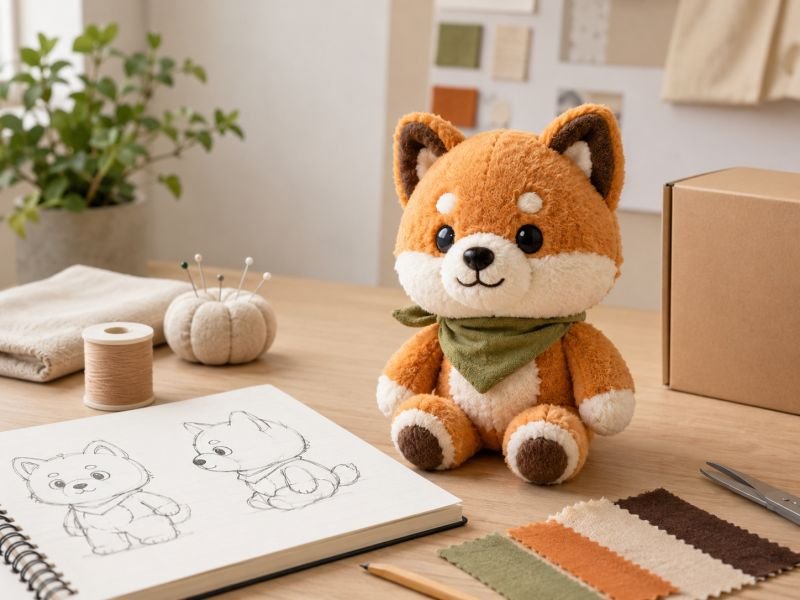
A single plush toy can mean very different things depending on who is asking. For one person, it may mean a birthday gift made from a child’s drawing, a pet memory plush, or a soft keepsake for someone special. For a brand team, creator, artist, IP owner, retailer, or private label project, “one custom plush toy” often means something else: a first physical sample used to test the design before placing a larger order.
That difference matters. A one-off plush gift is usually made to satisfy one emotional moment. A custom plush sample is made to check whether a design can become a repeatable product.
Yes, you may be able to order one custom plush toy through a one-off plush gift service. A plush factory, however, usually treats one piece as a sample or prototype for a planned bulk project. For brands, creators, IP teams, and retailers, the useful is whether one sample can lead to clear MOQ, reliable cost, better quality control, and stable bulk production.
If you only want one finished plush as a personal gift, a one-off service may be the better fit. If you want to build a mascot plush, IP plush, artist plush doll, retail plush line, promotional plush gift, or private label plush collection, the first sample should be reviewed as the start of a production project, not the end of it.
This guide explains the difference in plain language, so you can avoid choosing the wrong path at the very beginning.
Can I Order One Custom Plush Toy?
Yes, but it depends on what you mean by “one custom plush toy.” If you need a single finished gift, look for a one-off plush service. If you are planning a brand, IP, retail, creator, or private label project, one plush is usually a sample or prototype before bulk production. A factory will review it together with MOQ, sample fee, material, craft, packaging, and production feasibility.
The phrase “one custom plush toy” sounds simple, but it creates a lot of confusion. Many people use it to describe two completely different needs.
The first need is personal. Someone wants one plush made from a drawing, pet photo, cartoon idea, or memory. The goal is emotional value. The plush only has to satisfy one person or one family.
The second need is commercial. A brand or creator wants to test whether a character can become a plush product. The goal is not only to make one plush. The goal is to make one sample that can lead to a clear production plan.
Those two paths use different pricing logic, different review standards, and different expectations.
What Does “One Custom Plush Toy” Really Mean?
It usually means one of three things.
| Meaning | Typical User | Main Goal |
|---|---|---|
| One-off plush gift | Individual, family, pet owner | One finished keepsake |
| First sample | Brand, creator, IP team | Review design before bulk order |
| Prototype | Product team, retailer, private label project | Test structure, cost, packaging, and production path |
The word “one” is the same, but the purpose is not.
A one-off gift plush can be lovely, but it is usually not built around repeatable production. A sample for a brand project must be checked more carefully because it may become the standard for hundreds or thousands of pieces later.
Is One Plush A Finished Gift Or A Pre-Production Sample?
Ask yourself this: do you want the plush to end with one piece, or do you want that one piece to start something bigger?
If it ends with one piece, you need a gift-style service. If it starts a product line, you need sample development.
A pre-production sample should help confirm size, shape, fabric, embroidery, printing, filling, accessories, packaging, label direction, target sales region, and bulk feasibility. It is not just a cute toy to approve. It is a decision tool.
Who Should Choose A One-Off Plush Service Instead?
A one-off plush service is usually better for personal gifts, pet memory plush, birthday surprises, keepsakes, and small emotional projects with no future bulk plan.
That does not make one-off services less valuable. They simply serve a different need.
A factory like Heyzizi is more suitable when the project has a bulk plan, brand use, IP value, retail channel, event purpose, private label direction, or repeat order potential. The focus is not only making one plush. The focus is helping one sample become ready for production.
One Custom Plush Toy Vs Plush Prototype

A one custom plush gift is usually made for personal use. A plush prototype is made to test whether a design can be produced in quantity. The prototype needs more review around structure, fabric, face method, filling, safety direction, packaging, and cost. For brands and creators, this difference is important because a prototype is not just a toy; it is the first step toward a repeatable product.
The word “prototype” may sound technical, but in plush work it has a very practical meaning. It is the first physical version of an idea.
A prototype shows what the artwork looks like when it becomes soft, stuffed, sewn, shaped, and handled. It reveals what a flat drawing cannot show: whether the head is too heavy, whether the eyes feel right, whether the body can sit, whether the fabric hides details, whether a keyring pulls at the seam, and whether the product can be packed safely.
A personal plush can be charming even when it is handmade and slightly different from the original design. A prototype for a brand project must be judged more strictly because it may guide future production.
What Is The Difference Between A Personal Plush And A Prototype?
A personal plush is usually judged by emotion. Does it look sweet? Does it feel personal? Does it make the owner happy?
A prototype is judged by emotion and production logic. Does it match the character? Can it be repeated? Is the fabric available? Are the face details clear? Can the cost work at the planned quantity? Can the packing protect the shape? Can inspection teams check the same details later?
That second group of checks is where serious custom plush work begins.
Why Does A Brand Sample Need More Review Than A Gift Plush?
A gift plush only needs to please one recipient. A brand sample may need to satisfy fans, retail partners, sales teams, photographers, safety reviewers, warehouse teams, and repeat order plans.
This is why brand samples should not be approved too quickly. A small face change can affect character recognition. A slightly wrong color can weaken brand consistency. A weak accessory attachment can create complaints. A poor packing method can flatten the plush before it reaches the shelf.
The sample is where these risks become visible.
Which Option Fits Artists, IP Teams, Retailers, And Private Label Projects?
Artists and creators often begin with a character drawing. They may want one plush to test fan reaction, take photos, prepare crowdfunding, or review the product before a larger run.
IP teams often need stronger character likeness. The plush must feel like the original character, not a loose interpretation.
Retailers and private label teams care about barcode labels, SKU control, carton plans, packaging, and stable restocking.
All of them may start with one sample, but they should not treat that sample as a casual gift. It is the first physical step toward a product.
Why Do Custom Plush Factories Have MOQ?
Custom plush factories have MOQ because each design requires setup work before production can become efficient. Pattern making, fabric sourcing, embroidery setup, cutting, sewing, filling, inspection, packing, and communication all take time. A single plush cannot share these costs across many units, so one piece will never be priced like bulk production. MOQ helps keep development, production, and unit cost realistic.
Many early inquiries begin with a fair request: “Can you just make one first?”
The honest reply is: yes, one sample may be possible for a planned bulk project, but it is not the same as producing one ready-made item from stock.
Custom plush work starts before sewing. The factory needs to review the artwork, understand the structure, choose fabric, make a pattern, prepare embroidery or printing, arrange accessories, sew the sample, stuff it, shape it, check it, revise it, and sometimes review packaging or labels.
That setup work exists whether you make one piece or one thousand pieces.
What Does MOQ Mean In Custom Plush Production?
MOQ means minimum order quantity. In custom plush work, it is often set per design or per SKU.
That matters because each design may need its own fabric color, pattern, embroidery file, accessories, label, packaging, and inspection reference. If one project includes five characters, each character may need its own development review.
At Heyzizi, standard MOQ starts from 500pcs per design. This keeps custom plush development aligned with brand, IP, retail, promotional, educational, private label, and long-term plush programs.
Why Can’t A Factory Price One Plush Like A Bulk Order?
Because one plush carries development work that bulk orders can spread across many pieces.
For example, if a pattern needs to be made, embroidery needs to be digitized, fabric needs to be purchased, and the sample needs handwork, those tasks do not disappear because the quantity is one. In a bulk order, the cost is distributed. In a single piece, it sits on one item.
This is why a custom plush sample may feel expensive when compared with a store-bought plush toy. You are not paying only for fabric and stuffing. You are paying for development.
How Does MOQ Affect Fabric, Embroidery, Packing, And Unit Cost?
MOQ affects almost every part of a custom plush project.
| Project Detail | Why MOQ Matters |
|---|---|
| Fabric | Lower quantity may limit material choices or increase material cost |
| Embroidery | Setup work becomes easier to absorb at higher quantity |
| Printing | Small runs may carry higher setup cost per piece |
| Accessories | Custom parts often need minimum purchase quantities |
| Packing | Retail boxes, hangtags, barcodes, and labels may have setup needs |
| Unit cost | Higher quantity usually spreads labor and setup cost more efficiently |
Low quantity can be useful for testing. Higher quantity usually supports better unit cost and smoother production planning.
Can I Make One Plush Sample Before Bulk Production?

Yes, one plush sample can be made before bulk production when the project has a clear bulk plan. The sample helps review design accuracy, fabric, face method, filling, accessories, safety direction, packaging, and cost before moving forward. It can become an approved sample if the brand and factory confirm all key details. This is the route that fits serious custom plush projects best.
This is the most important difference for Heyzizi-style projects.
If someone asks, “Can I order one custom plush toy?” and they only want one final gift, that is not the right direction for a factory project. But if they ask because they want to make one sample before bulk work, that is a much stronger fit.
One sample gives both sides something real to discuss. Photos, artwork, and mockups help at the beginning, but a soft product needs physical review.
When Is One Sample Useful For A Brand Project?
One sample is useful when the project needs proof before a larger decision.
This may include:
| Use Case | Why One Sample Helps |
|---|---|
| Brand mascot plush | Checks character likeness and brand color direction |
| IP character plush | Reviews face, body ratio, clothing, and fan appeal |
| Artist plush doll | Tests whether artwork works as a soft product |
| Plush keychain | Reviews size, hanging balance, hardware, and face clarity |
| Retail plush | Checks shelf look, tag placement, packing, and barcode planning |
| Crowdfunding plush | Helps create photos, videos, and pre-launch feedback |
| Private label plush | Confirms product style before building a repeatable line |
A good sample reduces guesswork. It also gives decision makers a physical product to review together.
What Should A Plush Sample Confirm Before Bulk Orders?
A plush sample should confirm more than the look.
It should confirm size, proportion, shape, fabric, color, handfeel, embroidery, printing, applique, filling level, seam structure, accessory attachment, logo placement, labels, packaging, target sales region, and possible safety review needs.
If the plush is for children, small parts and label direction need early attention. If it is for retail, barcode, hangtag, and carton rules matter. If it is for e-commerce, packing recovery and product photography matter.
The sample should help make these decisions clearer.
Can One Sample Become An Approved Production Standard?
Yes. A sample can become an approved standard when both sides confirm the design, material, craft, filling, accessories, labels, packaging, and key quality details.
This approved sample then guides production preparation and inspection. It does not mean every piece will be mathematically identical. Plush products are soft goods, and slight tolerance can exist. But it gives the team a clear reference.
Without an approved sample, “good quality” is too vague. With one, the project becomes easier to manage.
What Is The Minimum Order Quantity For Custom Plush Toys?
The minimum order quantity for custom plush toys depends on the factory, design, material, craft, packaging, and project plan. For Heyzizi, standard MOQ starts from 500pcs per design. MOQ is usually set per design or SKU because each custom plush may need its own pattern, fabric, embroidery, labels, packing, and quality reference. Lower quantity may increase unit cost or limit options.
MOQ is not only a sales rule. It is tied to how custom plush products are developed and produced.
A factory has to organize labor, machines, material purchasing, cutting, embroidery, sewing, filling, checking, packing, and shipment preparation. Very small quantities are usually inefficient unless the project is handled as a paid sample or prototype.
That is why it is better to ask: “What MOQ makes sense for this design and purpose?” rather than only “What is the lowest quantity?”
Why Is MOQ Usually Set Per Design Or Per SKU?
Each design has its own identity and production needs.
A red fox plush and a blue penguin plush may share the same size, but they still need different fabric, embroidery, patterns, accessories, labels, and packing rules. If one project includes many styles, each style needs clear quantity planning.
For multi-SKU plush projects, low quantity per style can make unit cost higher and production control harder. Clear SKU planning helps avoid label mix-ups, carton mistakes, and material confusion.
What Affects Custom Plush MOQ?
MOQ can be affected by fabric availability, color dyeing, embroidery complexity, special accessories, packaging type, safety review needs, product size, labor steps, and production schedule.
A simple plush keychain may have different MOQ logic from a large mascot plush, baby cloth book, plush backpack, weighted plush, or collectible plush series.
This is why project review matters before quoting. Quantity cannot be separated from structure.
Is Low MOQ Always The Best Choice?
Not always.
Low MOQ can reduce the first investment, but it may increase unit cost, limit material choices, and reduce packing efficiency. For a brand that wants to test demand, a lower first run may make sense. For a retail program or repeatable product line, a slightly higher order quantity may create better cost control and smoother restocking.
The best MOQ is not always the lowest MOQ. It is the MOQ that matches the project goal.
Why Does One Custom Plush Toy Cost More Than Expected?

One custom plush toy costs more than expected because it carries development work that cannot be spread across many pieces. Pattern making, fabric preparation, embroidery setup, sample sewing, filling, shaping, revision, and packing review all take time. A sample fee is different from a bulk unit price. The sample supports development; the bulk unit price reflects repeated production after approval.
People often compare a custom plush quote with a plush toy they see in a store. That comparison feels natural, but it misses the main difference.
A store plush was already designed, tested, sourced, produced in quantity, packed, shipped, and stocked. Its cost was spread across many units.
A custom plush begins from zero.
How Much Is It To Make A Custom Plush?
The cost depends on size, design complexity, fabric, embroidery, printing, accessories, filling, packaging, testing needs, and quantity.
A personal one-off plush service may charge based on handmade work, photo interpretation, and individual finishing. A factory sample is priced based on development work for a planned bulk project. A bulk order is priced based on repeated production after the sample is approved.
That is why there is no responsible one-line price without project details.
How Much Does A Plush Toy Cost In Bulk Custom Production?
Bulk custom plush cost depends on the approved design. Main cost factors include:
| Cost Factor | Why It Changes Price |
|---|---|
| Size | Larger plush uses more fabric, filling, and packing space |
| Fabric | Premium or special fabric can increase cost |
| Face method | Embroidery, printing, and applique have different setup needs |
| Filling | Softness, rebound, and weighted filling affect cost |
| Accessories | Keyrings, magnets, zippers, sound modules, and hardware add cost |
| Packaging | Retail boxes, blind boxes, display boxes, and labels add work |
| Testing | Safety review and third-party testing may affect planning |
| Quantity | Higher volume usually improves unit cost |
For a useful quote, send the artwork, size, quantity, material preference, craft details, packaging needs, target region, and deadline.
Why Are Pattern Making, Fabric Sourcing, And Embroidery Setup Expensive?
Because they are the bridge between artwork and real product.
Pattern making decides how flat fabric pieces become a 3D plush shape. Fabric sourcing decides the touch, color, pile direction, and product mood. Embroidery setup decides face accuracy, logo clarity, and repeatability.
These tasks require skilled people, not just machines.
If the face is wrong, the plush feels wrong. If the fabric is wrong, the product feels off. If the pattern is weak, the toy loses shape. This is why early development should not be treated as a tiny add-on.
How Is Sample Fee Different From Bulk Unit Price?
A sample fee covers development. A bulk unit price covers repeated production.
At Heyzizi, custom plush samples usually require a sample fee. The sample fee can be refunded or deducted when the single-style bulk order reaches 2,000pcs. This helps connect sample development with serious bulk planning.
If your team has artwork, size, quantity, packing needs, and a target launch plan, you can send the details to info@heyzizi.com for project review.
How Much Are Cuddle Clones Compared With Factory Plush Samples?
Services like pet memory plush or personal clone-style plush usually price around one finished item. The value is personal likeness, emotional meaning, and one-piece completion.
A factory sample is different. It is not priced only as one finished keepsake. It is priced as part of a development path that may lead to bulk production, labels, packing, quality checks, and repeat orders.
So the comparison should not be “which one is cheaper?” The better comparison is “which service fits the purpose?”
How Does One Sample Lead To A Bulk Custom Plush Order?
One sample leads to a bulk custom plush order when it is reviewed, revised, approved, and turned into a clear production reference. After approval, the factory can confirm material, pattern, embroidery, filling, accessories, labels, packaging, inspection details, and bulk schedule. The sample becomes the bridge between a creative idea and repeatable plush production.
A first sample is rarely the end of the project. It is usually the beginning of serious decision-making.
Once the sample is in hand, the team can stop guessing. The designer can review character accuracy. The product team can check size and handfeel. The retail team can think about shelf space and packing. The e-commerce team can test photo angles. The operations team can look at labels, barcodes, cartons, and delivery timing.
That is why one plush sample can be powerful when it is used correctly.
What Happens After The First Plush Sample Is Approved?
After approval, the sample details should be documented. This may include sample photos, size notes, fabric references, embroidery files, print details, filling notes, accessories, label plan, packaging method, carton rules, and any allowed tolerance.
Then the project moves into bulk preparation. Materials are arranged. Pattern and cutting details are confirmed. Embroidery or printing files are prepared. Production workflow is planned. QC checkpoints are set. Packing and carton information are reviewed.
If the product needs third-party testing, retail packing, FNSKU labels, warning labels, or multi-destination shipping, those details should be reviewed before production is too far along.
How Are Plushies Produced In Bulk After Sampling?
Bulk plush production usually follows a practical sequence:
| Stage | What Happens |
|---|---|
| Approved sample | Final sample and notes are confirmed |
| Material preparation | Fabric, filling, accessories, and labels are arranged |
| Cutting | Fabric panels are cut by pattern |
| Embroidery or printing | Face, logo, and graphic details are prepared |
| Sewing | Panels and parts are assembled |
| Filling and shaping | Plush body is stuffed and adjusted |
| In-line checking | Production issues are reviewed during work |
| Final inspection | Shape, sewing, face, accessories, and labels are checked |
| Needle detection | Applied based on project needs |
| Packing review | Polybag, box, hangtag, barcode, carton mark are checked |
| Shipment preparation | Packing list, carton details, and delivery support are prepared |
This process shows why one sample is not just one toy. It is the reference that guides every step after it.
Why Do Sample Records Matter For Repeat Orders?
Repeat orders become easier when the first sample is properly recorded.
A brand may reorder the same plush for another season. An artist may add new characters. A retailer may change packaging. An IP team may request a smaller keychain version after the full-size plush succeeds.
Without records, every repeat order becomes a new guessing game. With records, the factory can review previous pattern data, material notes, embroidery files, labels, carton marks, packing rules, and feedback.
This does not mean every repeat order is automatic. Fabric batches, material availability, packaging updates, and target delivery schedules still need review. But good sample records make the next round much smoother.
What Should Prepare Before Requesting One Plush Sample?

Before requesting one plush sample, prepare artwork, front-side-back views, target size, quantity plan, fabric preference, filling needs, face method, accessories, packaging, labels, target sales region, sales channel, and delivery deadline. These details help the factory review sampling difficulty, cost, MOQ, production feasibility, safety direction, and the best path from one sample to bulk order.
The best custom plush projects do not begin with “How much?” They begin with enough details for a responsible review.
That does not mean every file must be perfect. Many strong projects begin with a sketch, character file, mascot artwork, pet photo, reference product, or early concept. But the more context you provide, the more accurate the review can be.
A custom plush sample should not be built on vague assumptions if the final goal is bulk production.
What Artwork, Views, And Size Details Should Be Sent?
Send the clearest artwork you have. This may include a character file, mascot design, logo file, sketch, drawing, pet photo, reference photo, or product idea.
Front, side, and back views are very helpful. If the design includes clothing, ears, tails, wings, shoes, hats, accessories, printed details, or logos, detail views can reduce misunderstanding.
Size should be more specific than “small” or “medium.” Share the target height, width, thickness, or reference size. If the plush needs to fit a gift box, blind box, retail shelf, backpack, keyring, display hook, shipping carton, or warehouse rule, mention that early.
Which Fabric, Filling, Craft, And Accessory Details Help Review Cost?
Fabric affects appearance, touch, cost, safety direction, and repeat order planning. If you have a preferred fabric, color reference, softness level, or handfeel direction, share it.
Filling affects shape and experience. PP cotton, high-resilience fiber, weighted beads, or other special filling needs should be discussed before sampling.
Craft details may include embroidery, printing, applique, woven labels, patches, heat transfer, logo placement, or decorative stitching.
Accessories may include keyrings, hooks, zippers, magnets, sound modules, LED parts, removable pieces, bows, clothing, hats, or tags. Some accessories look simple but can affect safety, seam strength, and packing.
What Target, Sales Channel, And Deadline Information Matters?
Target sales region matters because different regions and age groups may require different label planning, warning information, material review, or third-party testing support.
Sales channel matters because a plush toy for a retail shelf is not packed the same way as a plush toy for e-commerce, FBA, a theme park shop, a museum store, an event giveaway, or a crowdfunding campaign.
Deadline matters because sampling, revision, bulk production, checking, packing, and shipping all need time. If the plush is tied to a launch date, holiday season, event, or retail window, start the sample review early.
Personal Custom Plush Vs Bulk Custom Plush Production
Personal custom plush is best for one finished gift, pet memory plush, or a keepsake with no bulk plan. Bulk custom plush production is better for brands, IP projects, creators, retailers, events, and private label lines that need samples, MOQ planning, quality control, packaging, labels, and repeatable production. The right path depends on purpose, not only quantity.
This is where many early searches get confusing.
A person searching “Can I order one custom plush toy?” may be looking for a pet plush. A creator may be testing fan demand. A retailer may be building a product line. These needs should not be treated the same way.
A personal plush is usually about memory. A bulk custom plush project is about product development.
Both are valid. They just need different partners.
Which Service Is Better For A Gift, Pet Plush, Or Memory Toy?
If your goal is one pet plush, one child’s drawing plush, one birthday gift, or one memory toy, a personal one-off plush service is usually the better choice.
These services are designed for single-piece emotional value. They often focus on likeness, handmade charm, gifting, and direct-to-consumer delivery.
A factory project may feel too structured for this need because it usually involves sample fees, MOQ, production planning, packing review, and bulk order discussion.
Is 25 Too Old For Stuffed Animals, Or Is Plush Now A Lifestyle Product?
No, 25 is not too old for stuffed animals. Adults collect plush toys, decorate rooms with them, use them for emotional comfort, support favorite characters, and enjoy limited-edition designs.
For brands, this matters. Plush is no longer only a children’s toy category. It can be a lifestyle product, fan product, wellness gift, travel souvenir, desk companion, collectible item, or brand mascot.
This is one reason creators and brands often want to start with one plush sample. They are not always testing a toy. They may be testing an emotional product.
Which Service Is Better For Brand Mascots, IP Merch, And Retail Lines?
For brand mascot plush, IP merch, retail plush, creator plush, school plush, museum plush, tourism plush, and private label plush, a custom plush factory is the better fit.
These projects need more than a cute sample. They need review for material, face method, accessories, labels, packaging, order quantity, delivery timing, quality checks, and repeat orders.
A brand plush must survive more than one hug. It must survive production, packing, shipping, display, feedback, and reordering.
How Can Early Avoid Choosing The Wrong Custom Plush Path?
Start with the end goal.
If the end goal is one emotional gift, choose a one-off plush service.
If the end goal is a product launch, brand campaign, IP release, retail line, event program, crowdfunding project, or repeat order, choose a factory sample path.
This simple difference can save time, money, and frustration.
Can I Make A Custom Plush From My Drawing?
Yes, a drawing can be used to start a custom plush project. The factory will review whether the artwork can become a soft 3D product by checking size, shape, proportion, fabric, face method, sewing structure, accessories, and production feasibility. A strong drawing helps, but front, side, back, and detail views make sampling more accurate.
Many plush projects begin with a drawing. It may be a polished digital file, a mascot sketch, a childlike character, an artist design, a pet-inspired idea, or a rough concept.
The important thing is to understand that a drawing is not a pattern yet. It is the starting language. The factory still needs to translate it into fabric panels, embroidery files, sewing structure, filling shape, and production steps.
What Kind Of Artwork Can Be Used For Plush Development?
Useful artwork may include:
| Artwork Type | How It Helps |
|---|---|
| Character drawing | Shows personality and shape |
| Mascot file | Shows brand identity and colors |
| Logo file | Helps with embroidery, tag, or label planning |
| Pet photo | Helps review color, face, and body traits |
| Reference plush | Shows preferred structure or handfeel |
| Product sketch | Shows early product direction |
| Front-side-back views | Reduces shape misunderstanding |
Even if the artwork is not complete, it can still begin a project review. But the more complete the visual reference, the better the sample discussion.
Why Do Front, Side, And Back Views Help Sampling?
A front view can show the face, but it cannot fully show thickness, tail position, head depth, side profile, clothing layers, or back details.
Side and back views help the pattern team understand structure. They also reduce revision rounds caused by missing information.
For example, a character may have a hood, backpack, wings, hair, cape, tail, shoes, or special side shape. If those are not shown clearly, the first sample may rely on assumptions.
How Does A Drawing Change When It Becomes A Soft 3D Plush?
A drawing becomes softer, rounder, and more physical when converted into plush.
Thin lines may become embroidery. Flat shapes may become padded panels. Sharp corners may become rounded seams. Tiny details may need simplification. Long limbs may need support. Large heads may need balance review.
This does not mean the design is being weakened. It means the design is being adapted into a product that can be touched, packed, shipped, and repeated.
Custom Plush Sample Vs Mockup
A mockup shows the idea, but a physical plush sample confirms the product. A mockup can help preview color, logo placement, or general appearance, but it cannot test fabric, handfeel, stuffing, sewing structure, embroidery depth, accessory strength, packing recovery, or bulk feasibility. Brands should use mockups for discussion, not as the only basis for bulk approval.
Mockups are useful. They help teams discuss ideas early and quickly.
But a mockup is still a picture. It does not have weight, texture, seam tension, stuffing, pile direction, or real accessories. It cannot tell you if a plush sits correctly, hangs evenly, feels premium, or survives packing.
For serious custom plush projects, a mockup can start the conversation. A sample should confirm the decision.
What Can A Mockup Show?
A mockup can show rough color direction, logo placement, character concept, packaging idea, and visual style. It can help teams align before paying for a physical sample.
For early internal presentations, this can be helpful.
But approving bulk production from a mockup alone is risky because plush products are soft goods. Their final look depends on material and construction, not only artwork.
What Can Only A Physical Plush Sample Confirm?
Only a physical sample can confirm real fabric, touch, filling, face details, shape, balance, accessory attachment, sewing quality, packing recovery, and product feel.
It also helps teams notice problems that do not appear in flat visuals: a mouth that looks too low, a body that leans backward, a tail that twists, a bow that gets crushed, or a keyring that pulls the plush unevenly.
These details matter because they affect how people react when they hold the product.
Why Should Brands Avoid Approving Bulk Orders From Mockups Alone?
Because a mockup cannot protect a bulk order from physical surprises.
If the project is simple and the team accepts risk, a mockup may help move things faster at the idea stage. But for character plush, brand mascot plush, retail plush, children’s plush, plush keychains, or collectible plush, a physical sample is much safer.
The more the product depends on expression, touch, structure, and packing, the more important the sample becomes.
From One Plush Sample To A Real Product Line
One plush sample can become the start of a real product line when it proves the character, size, handfeel, cost direction, packaging, and audience response. Creators and brands can use one sample for internal review, photography, crowdfunding, retail discussion, fan feedback, or launch planning. Once the direction is confirmed, the project can move into MOQ planning and bulk production.
Many successful plush ideas begin small.
One character. One sample. One photo session. One round of feedback. One pre-launch test.
The key is to treat the first sample as a stepping stone, not a shortcut. If the plan is to grow, the sample should be reviewed with future production in mind.
Can One Plush Sample Be Used For Crowdfunding Or Internal Review?
Yes, one sample can be useful for crowdfunding photos, presentation decks, internal decision meetings, influencer seeding plans, retail discussions, or fan testing.
But if the sample will be shown publicly, be careful. The displayed sample can set expectations. If the bulk product later changes, fans or retail partners may notice.
That is why the sample should be close to the planned production direction before being used for promotion.
How Can A Sample Help Test Fan Interest Or Retail Potential?
A sample helps people react to something real.
Fans can see the face. Retail teams can hold the size. Photographers can test how it looks in images. Product teams can judge perceived value. Packing teams can check whether the plush can be displayed, shipped, or stored properly.
This feedback can help decide whether to adjust the design, simplify details, improve packing, change size, or plan a different quantity.
When Should A Creator Or Brand Move From Sample To Bulk Order?
Move from sample to bulk order when the product direction is clear.
The design should be approved. The sample should be reviewed. The quantity should be planned. The packaging and labels should be confirmed. The target sales region and deadline should be understood. The cost should work for the intended channel.
Do not move forward only because the sample is cute. Move forward because the sample is ready to become a product.
Start Your Custom Plush Sample Review With Heyzizi
Heyzizi is a Guangdong-based custom plush products factory serving brand projects, IP programs, retailers, e-commerce plush lines, promotional projects, educational product teams, private label plans, and long-term plush collections. Heyzizi is better suited for custom plush sample development and bulk production planning than one-off personal gift plush. If your goal is a product line, one sample can be the right starting.
Heyzizi supports OEM, ODM, private label, and custom plush production with 600+ staff, around 18,000㎡ factory space, 20+ years of plush project experience, 35+ pattern makers, 300+ pieces of equipment, 80 QC inspectors, and 30+ production lines.
The team can support project review, pattern development, sampling, revision, approved sample control, bulk production, QC, needle detection, packing, labeling, and shipment preparation.
What Type Of Plush Projects Fit Heyzizi Best?
Heyzizi is a good fit for:
| Project Type | Why It Fits |
|---|---|
| Brand mascot plush | Needs brand color, expression, logo, and event planning |
| IP character plush | Needs likeness, sample revision, confidentiality, and series planning |
| Retail plush | Needs SKU, hangtag, barcode, packing, and restocking control |
| Plush keychains | Needs small detail control, hardware strength, and packing review |
| Educational plush | Needs material, durability, age direction, and safety planning |
| Private label plush | Needs repeatable style, packaging, label, and long-term records |
| Creator plush | Needs sample testing, fan response, and bulk planning |
| Multi-SKU plush series | Needs project records, SKU control, labels, and carton planning |
If you only need one personal gift plush, a one-off plush service may be more suitable. If you need one sample before a planned bulk project, Heyzizi can review the project path.
What Project Details Help Heyzizi Review Sampling Feasibility?
Helpful project details include:
| Detail | What To Send |
|---|---|
| Product type | Plush toy, mascot plush, keychain, bag charm, backpack, cloth book, weighted plush |
| Artwork | Sketch, character file, mascot file, logo file, pet photo, reference image |
| Views | Front, side, back, and detail views if available |
| Size | Target height, width, thickness, or reference size |
| Quantity | Quantity per design, per SKU, or total order plan |
| Fabric | Preferred fabric, color reference, softness direction |
| Filling | PP cotton, high-resilience fiber, weighted beads, or special needs |
| Craft | Embroidery, printing, applique, woven label, patch, heat transfer |
| Accessories | Keyring, hook, zipper, magnet, sound module, LED, removable part |
| Packing | Polybag, hangtag, retail box, gift box, blind box, display box |
| Labels | Care label, warning label, barcode, SKU, FNSKU |
| Region | USA, EU, UK, Canada, Australia, Asia, or other destination |
| Deadline | Launch date, event date, warehouse date, or shipping plan |
Clear project details help reduce guessing and make the sample review more useful.
How Heyzizi Supports Sampling, MOQ Planning, QC, Packing, And Bulk Production
Heyzizi can review whether a custom plush idea is suitable for sample development and bulk production. The review may include product type, artwork, structure, target size, fabric, filling, face method, accessories, packaging, labels, target sales region, schedule, and order quantity.
Standard MOQ starts from 500pcs per design. Custom plush samples usually require a sample fee, and the sample fee can be refunded or deducted when the single-style bulk order reaches 2,000pcs.
If your team is preparing a brand mascot plush, IP plush, artist plush doll, plush keychain, educational plush, retail plush, or private label plush project, send your artwork, target size, quantity, packaging needs, target sales region, and deadline to info@heyzizi.com for project review.
One custom plush toy can be a gift. It can also be the first serious step toward a product line. The difference is the plan behind it.
FAQs About Ordering One Custom Plush Toy
1. Can I order just one custom plush toy from a factory?
Yes, but one custom plush toy from a factory is usually treated as a sample or prototype for a planned bulk project, not as a single finished gift. If you only want one plush for a birthday, pet memory, or personal keepsake, a one-off plush service may fit better. If your plan is to develop a brand mascot, IP character, retail plush, artist doll, or private label plush line, one sample is a smart first step. It helps review size, fabric, face details, filling, accessories, packaging, and production feasibility before moving into a larger order.
2. What is the difference between one custom plush toy and a plush sample?
Certainly, the difference is purpose. One custom plush toy for personal use is usually made as a finished keepsake. A plush sample is made to test whether a design can become a repeatable product. A sample should be checked for character accuracy, fabric, handfeel, embroidery, printing, filling, sewing, accessories, labels, packaging, and future production stability. For brands and creators, the sample is not only a cute item. It becomes the physical reference for pricing, revision, approved sample control, QC checks, packaging planning, and possible repeat orders.
3. Why does one custom plush toy cost more than a store plush?
Of course, one custom plush costs more because it starts from development work, not ready stock. A store plush has already been designed, sampled, produced in quantity, packed, shipped, and stocked. A custom plush sample may require artwork review, pattern making, fabric sourcing, embroidery setup, hand sewing, filling, shaping, checking, and revision. These steps happen even when the quantity is only one. In bulk production, setup work is spread across many pieces. For one sample, most of that development work sits inside one project.
4. What is Heyzizi’s MOQ for custom plush toys?
Definitely, Heyzizi’s standard MOQ starts from 500pcs per design. This fits brand mascot plush, IP plush, plush keychains, retail plush, educational plush, promotional plush, private label plush, and long-term plush programs. MOQ is usually planned per design or per SKU because each style may need its own pattern, fabric, embroidery file, label, packaging rule, and inspection reference. If your project includes several characters, colors, or sizes, each one should be reviewed separately so the final plan is realistic for cost, timing, and production control.
5. Can I make one plush sample before ordering 500pcs?
Absolutely, one plush sample can be developed before a planned 500pcs order. This is often the correct path for serious custom plush projects. The sample helps confirm whether your artwork works as a soft 3D product. It also helps review fabric, color, face expression, filling, accessories, logo position, packaging, and possible safety direction. Once the sample is approved, it can guide bulk production. The important part is to treat the first piece as a project sample, not as a personal one-off order with no future quantity plan.
6. Is the sample fee refundable?
Usually, custom plush samples require a sample fee because the process includes pattern work, material preparation, embroidery or printing setup, sewing, filling, shaping, checking, and communication. At Heyzizi, the sample fee can be refunded or deducted when the single-style bulk order reaches 2,000pcs. This helps connect sample development with a serious production plan. Sample cost still depends on the design, size, fabric, craft, accessories, packaging, revision difficulty, and schedule. A simple plush keychain and a detailed mascot doll will not have the same sample workload.
7. How much does a custom plush sample cost?
It depends on the product details, so a responsible factory should review the design before giving a meaningful price. The main cost factors include size, fabric, filling, embroidery, printing, applique, clothing, accessories, hardware, labels, packaging, safety needs, and revision complexity. Tiny plush keychains can be costly if the face details are very small. Large plush dolls can cost more because they use more material and filling. To get a useful quotation, send artwork, target size, quantity, material preference, packaging needs, target sales region, and deadline.
8. Can I turn my drawing into a custom plush toy?
Sure, a drawing can be used to start a custom plush project. A factory will review how the flat artwork can become a soft 3D plush product. Front, side, and back views are very helpful because they show thickness, posture, tail shape, clothing, hair, accessories, and back details. Some parts may need adjustment because plush fabric, filling, and sewing curves behave differently from flat artwork. The goal is not to copy every line blindly, but to keep the character feeling while making the product stable enough for sampling and bulk production.
9. Should I choose a one-off plush service or a plush factory?
Not always the same choice. A one-off plush service is better for one pet plush, one child’s drawing plush, one memory toy, or one personal gift. A plush factory is better for brand mascots, IP merchandise, artist plush dolls, retail collections, e-commerce products, event giveaways, school programs, tourism gifts, and private label plush lines. Use this simple test: if the project ends with one piece, choose a personal service. If one piece is the beginning of a larger product plan, choose a factory sample path.
10. What should I send to Heyzizi for a custom plush sample review?
Please send the details that help the team understand the product, not only a short message asking for price. Helpful information includes product type, artwork, front-side-back views, target size, quantity per design, fabric preference, filling needs, embroidery or printing details, accessories, packaging, labels, target sales region, sales channel, and deadline. If you already have a launch date, retail window, event date, or repeat order plan, include that too. You can send your project details to info@heyzizi.com for custom plush sample review.