 Skip to content
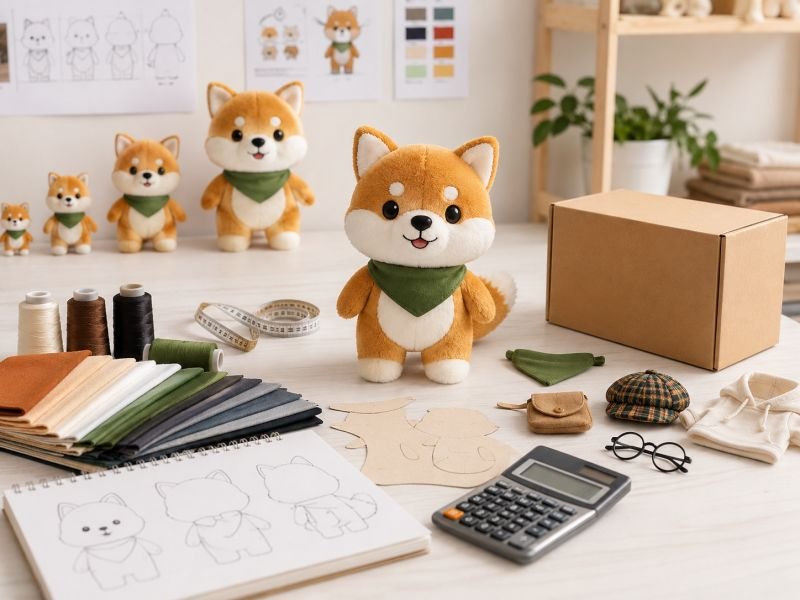
Two plush toys can both be 20 cm tall, but their prices may be completely different. One may be a simple animal with two embroidered eyes. Another may be a licensed character with a shaped head, special fabric, small outfit pieces, printed details, custom hangtag, barcode labels, and retail packing. From the outside, both are “custom plush.” Inside the project, they are not the same at all.
Custom plush pricing is affected by product size, design complexity, fabric choice, filling, embroidery, printing, accessories, sample development, order quantity, packaging, labels, safety review, lead time, and shipping plan. A reliable quote should review the full project, not only the plush toy itself, because small design details can change cost, production difficulty, and bulk stability.
For brand teams, IP projects, retailers, event programs, education products, and private label plush lines, the best price is not always the lowest number on a quote sheet. The better is: does the price support the product you want to deliver? A cheaper plush that loses its face expression, feels too thin, arrives crushed, or uses the wrong label can cost more than a well-planned project.
Heyzizi is a Guangdong-based custom plush products factory serving global brands, IP programs, retailers, e-commerce brands, promotional projects, educational product teams, private label, and long-term custom plush product programs. With 600+ staff, around 18,000㎡ factory space, 35+ pattern makers, 80 QC inspectors, 30+ production lines, and 20+ years of OEM / ODM plush project experience, Heyzizi reviews plush projects from artwork, material, sampling, bulk production, packing, and delivery needs.
What Affects Custom Plush Pricing Most?
Custom plush pricing is mainly affected by size, design complexity, fabric, filling, craft details, order quantity, sample development, packing, labels, safety needs, lead time, and shipping plan. The same design can also price differently when the use scene changes. A retail plush, mascot gift, plush keychain, children’s product, and private label collection may need different materials, labels, packing, and checks.
Many people ask for “a price” before the project is clear. That is understandable. Budget matters. But plush pricing is not like picking a ready-made item from a shelf. A custom plush project starts with a design that needs to become a soft, repeatable product.
A quote is more reliable when the factory understands what the plush must do. Will it be sold in a store? Given away at an event? Used as an IP product? Packed for e-commerce? Designed for children? Added to a bag as a charm? Each use changes the review path.
A serious price review should not only count fabric and labor. It should also consider whether the product can be made consistently in bulk, whether the face details are stable, whether the package protects the shape, and whether labels and safety needs are clear.
How Much Does It Cost To Get A Custom Plush Made?
The cost to get a custom plush made depends on the design, size, quantity, fabric, filling, craft, accessories, packing, labels, safety needs, and delivery plan. A simple plush in bulk may cost much less per piece than a complex character plush with detailed embroidery, multiple fabrics, custom outfit parts, retail box, and testing support.
A single number without project details is usually not helpful. For example, a 15 cm plush keychain may use less fabric than a 30 cm stuffed animal, but it may still need tiny embroidery, hardware, hangtag, individual packing, and careful shaping. A larger plush may use more material, but if its structure is simple, it may be easier to produce than a small character with many details.
That is why a good quote starts with the design, not with a guess.
Why Is There No One Fixed Plush Price?
There is no one fixed plush price because custom plush products are built from many choices. Size changes fabric use. Shape changes pattern work. Face details change embroidery or printing time. Material choice changes hand feel and cost. Quantity changes how setup work is shared across the order.
Even small choices can move the price. A simple stitched smile is different from a multi-color embroidered face. A plain body is different from a character wearing a jacket, hat, shoes, and logo patch. A polybag is different from a retail box with barcode labels and carton rules.
The right way to think about plush pricing is not “How much is one plush?” It is “What does this plush need to become ready for its real use?”
Which Cost Factors Matter Most For Brand Projects?
For brand projects, the most important cost factors are usually design complexity, face accuracy, material choice, quantity, packing, labels, safety direction, and bulk quality control. These details affect not only price, but also how the final product looks, feels, ships, and sells.
For IP plush and mascot plush, expression matters a lot. If the eyes, mouth, head shape, or body proportion are wrong, the product may not feel like the character. For retail plush, packing and labels are more important. For private label plush, repeat order records matter. For educational plush, safety review and label planning may need earlier attention.
A low quote that ignores these details may look attractive at first, but it may not support the final product goal.
What Information Does A Factory Need For Accurate Pricing?
A factory needs artwork or reference photos, target size, quantity per design, fabric preference, filling direction, face method, accessories, packing, labels, target country, use scene, deadline, and shipping plan. These details help the team review structure, sample difficulty, material needs, production steps, QC checks, and delivery preparation.
If you only send one image, the factory can only make assumptions. If you send a clear project brief, the quote becomes more useful.
Useful information includes:
| Project Detail | Why It Affects Price |
|---|---|
| Artwork | Shows shape, character, and detail level |
| Size | Affects fabric, filling, packing, and shipping |
| Quantity | Affects setup sharing and production planning |
| Fabric | Affects hand feel, color look, and unit cost |
| Face method | Affects expression, craft time, and stability |
| Accessories | Affects material, safety, and assembly work |
| Packing | Affects presentation, protection, and carton plan |
| Target country | Affects label and safety review direction |
| Deadline | Affects schedule and delivery planning |
To receive a more accurate custom plush quote, send your artwork, target size, quantity, packing needs, target country, and delivery deadline to info@heyzizi.com for project review.
How Does Plush Size Affect Price?

Plush size affects price because it changes fabric usage, filling amount, cutting layout, sewing time, packing size, carton volume, and shipping cost. Larger plush products often cost more, but size is not the only rule. A small plush with complex embroidery, hardware, and tight shape control can cost more than a larger simple stuffed animal.
Size is one of the first things people mention when asking for a quote, but it is only one part of the price. A 10 cm plush keychain, a 25 cm mascot, a 40 cm stuffed animal, and a plush backpack all have different cost structures.
A bigger plush uses more fabric and filling. It also needs more carton space. But a small plush can be difficult because details become tighter. Tiny eyes, small logos, mini outfits, and short seam lines can require more careful work.
When comparing prices, do not compare height alone. Compare size together with shape, craft, accessories, and packing.
Is A Larger Plush Always More Expensive?
A larger plush is often more expensive because it uses more fabric, more filling, and larger packing. However, a larger plush with a simple shape may still be easier to make than a small detailed character. Complexity can outweigh size.
For example, a 30 cm simple bear may have a smooth body, basic embroidery, and simple packing. A 12 cm character keychain may need tiny facial embroidery, several fabric colors, a metal keyring, a woven label, and accurate shape control. The smaller product may look cheaper at first, but its craft density is higher.
A better pricing review looks at both size and difficulty.
Why Small Plush Can Still Be Costly
Small plush products can be costly because the work area is limited. There is less room for embroidery, seam allowance, applique, logo placement, and stuffing. Small mistakes are more visible because each detail sits closer together.
This matters for plush keychains, plush bag charms, mini mascot plush, blind box plush, and collectible plush. A small face can change quickly if the eyes move by only a few millimeters. A tiny logo may need to be simplified. A small accessory may need strength review.
In many small plush projects, the cost is not driven by fabric volume. It is driven by precision.
How Size Affects Packing And Shipping Cost
Size affects packing and shipping because plush products are soft but bulky. A larger plush may fill cartons quickly, even if it is lightweight. Packing style also matters. Vacuum compression, loose polybag packing, gift boxes, retail boxes, and display boxes all create different carton volume and recovery results.
For retail plush, the package may need to protect shape and presentation. For event gifts, carton quantity and distribution speed may matter. For e-commerce plush, carton strength and shape recovery after delivery are important.
A low unit price can lose its advantage if the plush is oversized, packed inefficiently, or shipped in cartons that waste space.
Why Does Design Complexity Change Cost?
Design complexity changes cost because complex plush products need more pattern work, more sample adjustments, more fabric types, more sewing steps, more embroidery or printing, more accessories, and more QC attention. A simple animal plush may move smoothly into bulk work, while a character plush with clothing, small parts, and detailed expression requires more development and control.
Plush design is not only an illustration. A flat character must become a soft 3D object. Some designs look simple on screen but become complicated in fabric. Large heads, tiny limbs, asymmetrical hair, layered outfits, unusual eyes, wings, tails, hats, and props can all increase work.
The more complex the design, the more time is needed to decide how to construct it. Should the eyes be embroidered or printed? Should a logo be woven, embroidered, or made as a patch? Should a tiny accessory be sewn, stuffed, printed, or simplified? These choices change both cost and production stability.
A good factory does not just say “yes” to every detail. It reviews which details help the final plush and which details may create avoidable cost or risk.
Simple Animal Plush Vs Character Plush
A simple animal plush usually has fewer parts, fewer colors, and easier body structure. A character plush may need special head shape, facial expression, hair, outfit, brand colors, printed panels, applique, accessories, and exact proportion.
That is why two plush toys with the same height can have very different prices. The character plush may need more pattern development, more sampling, more embroidery setup, more handwork, and more QC comparison against the approved sample.
For IP projects, the face and silhouette are especially important. If the plush does not look like the character, the lower price does not help.
How Face Details Affect Labor And Sampling
Face details affect labor and sampling because they carry the personality of the plush. Eyes, mouth, eyebrows, cheeks, nose, blush, and small markings may need embroidery, printing, applique, or mixed craft. Each method has different cost, safety, texture, and bulk consistency results.
Embroidery is durable and premium, but thread colors, stitch density, and fabric pile need review. Printing can show color details, but the fabric surface and print durability should be checked. Applique can add dimension, but it adds sewing work.
For mascots, dolls, and character plush, face development often takes more attention than the body. The body may be technically correct, but the face decides whether the product feels alive.
When Do Small Parts Increase Production Risk?
Small parts increase cost and risk when they are hard to sew, hard to attach, easy to lose, difficult to pass strength review, or not suitable for the intended age group. Tiny bows, buttons, horns, glasses, wings, tags, charms, or loose accessories may look cute in artwork but need practical review.
For child-related plush, small parts need extra care. For retail plush, loose or fragile parts may affect shelf damage and complaints. For event plush, small parts may slow production and packing.
Sometimes the best cost decision is not to remove a detail, but to simplify it in a smarter way. A printed detail, embroidered shape, or sewn fabric piece may replace a fragile accessory while keeping the character feeling.
Which Fabric And Filling Choices Affect Price?

Fabric and filling affect price because they decide hand feel, color look, plush texture, shape recovery, durability, and production difficulty. Short plush, long plush, minky, fleece, velboa, and super soft fabrics do not cost or behave the same. Filling type and amount also change softness, structure, weight, and shipping volume.
Material choice is one of the clearest places where price and perceived quality meet. A cheaper fabric may reduce unit cost, but it may also change the hand feel and visual result. A premium fabric may improve the product, but it may not always be necessary for every use.
The right fabric should match the product purpose. A soft retail stuffed animal may need a better hand feel. A promotional plush keychain may need durability and clean detail. A mascot plush may need color accuracy. A weighted plush needs safe filling distribution and strong seams.
Filling also affects the product more than many teams expect. Too little filling makes the plush look weak. Too much filling makes it hard or distorted. The right balance supports both appearance and touch.
Short Plush, Long Plush, Minky, Fleece, And Velboa
Different fabrics create different cost and visual results. Short plush is useful for clean details and smaller products. Long plush creates a fluffy look but may cover embroidery or small face lines. Minky feels soft and premium. Fleece gives a warmer handmade feeling. Velboa can work well for smooth surfaces and certain character styles.
Fabric choice affects:
- Material cost
- Cutting direction
- Color appearance
- Embroidery clarity
- Hand feel
- Shape definition
- Bulk consistency
- Cleaning and handling
For brand colors, physical fabric review is better than screen judgment. Plush pile direction and lighting can change how color appears.
How Filling Level Changes Shape And Hand Feel
Filling level changes how the plush looks, feels, sits, stands, and recovers after packing. A softer plush may feel more comfortable but may not hold structure well. A firmer plush may hold shape but may feel less cuddly.
For plush dolls and mascot plush, filling helps keep the head, body, arms, and legs in the right proportion. For plush backpacks, filling cannot interfere with function. For weighted plush, filling type, weight distribution, seam strength, and leakage control need careful review.
Filling is not just “more or less cotton.” It is part of the product design.
Do Premium Materials Always Make Sense?
Premium materials make sense when they support the product goal. They may be worth it for retail plush, collector plush, IP merchandise, premium gifts, and products where hand feel drives value. They may not be necessary for every event giveaway or budget-sensitive campaign.
The best material is not always the most expensive. It is the one that matches the design, use scene, quantity, target country, packing, and expected price position.
Heyzizi can review fabric direction, filling, hand feel, color expectation, and production feasibility based on your design and project use.
How Do Craft Details Affect Plush Cost?
Craft details affect plush cost because embroidery, printing, applique, patches, woven labels, trims, hardware, and accessories add setup work, labor, machine time, and QC needs. Details that look small on artwork may become difficult in bulk, especially on tiny plush faces, plush keychains, mini dolls, and multi-SKU character programs.
Craft is where the product gains personality. It is also where costs can quietly rise. A simple face may be low risk. A multi-color embroidered face with tiny highlights, blush, logo, clothing details, and patches adds more steps.
The is not whether details are good or bad. The is whether each detail helps the final product enough to justify the cost and production attention.
For brand plush, some details are essential. A mascot’s eyes cannot be “almost right.” A logo may need to be clean. A uniform color may need to be recognizable. Other details may be simplified without harming the product.
Embroidery Vs Printing Vs Applique
Embroidery is often used for eyes, mouths, logos, and durable face details. It gives texture and can feel premium. Printing can show gradients, small color areas, or flat graphic details. Applique uses fabric pieces sewn onto the plush for layered visual effect.
| Craft Method | Best For | Cost Consideration |
|---|---|---|
| Embroidery | Faces, logos, durable lines | Stitch count, size, colors, density |
| Printing | Flat graphics, color areas, small markings | Fabric surface, print size, durability |
| Applique | Layered shapes, clothing, patches | Cutting, placement, sewing time |
| Woven label | Brand tags, small identity marks | Label setup and placement |
| Patch | Logo or decorative element | Material, shape, attachment method |
A professional review should consider appearance, safety, durability, and bulk repeatability.
Logo, Patch, Woven Label, And Hangtag Cost
Logo and branding details can affect both product cost and project value. A plush toy may need embroidered logo, woven label, printed patch, rubber patch, leather-style tag, hangtag, care label, barcode label, SKU label, or FNSKU label.
Each item has its own setup, material, placement, and packing requirement. If the plush is for retail or e-commerce, these items may not be optional. They help with branding, scanning, storage, compliance, and receiving.
Planning these details early prevents surprise costs later.
Why Tiny Details Can Be Expensive In Bulk
Tiny details can be expensive because they are harder to control. A small embroidered eye, mini logo, narrow stripe, tiny accessory, or small applique piece may require extra sampling, tighter placement, slower sewing, and more inspection.
Small does not always mean cheap. In plush work, small can mean precise.
If a detail is too small to remain stable in bulk, the factory may suggest enlarging it, simplifying it, changing the craft method, or moving it to a hangtag or package.
Why Does MOQ Affect Unit Price?

MOQ affects unit price because custom plush projects include fixed development and setup work before bulk production begins. Pattern making, sample work, material sourcing, embroidery files, cutting preparation, packing setup, and project management must be shared across the order quantity. When quantity is low, each piece carries more of that fixed cost.
MOQ is often misunderstood. It is not only a factory rule. It is connected to how custom plush production works.
Before bulk production starts, the project needs review, sampling, material preparation, pattern confirmation, production planning, and packing setup. These steps take time whether the order is 500 pieces or 5,000 pieces. Larger quantities can spread that work more efficiently.
Heyzizi’s standard MOQ starts from 500pcs per design. This keeps the project more realistic for custom development, material preparation, and bulk production control.
Why 500pcs Per Design Is A Common Starting
500pcs per design is a practical starting for many custom plush projects because it allows development work, material sourcing, cutting, production setup, QC, and packing preparation to be organized more efficiently than very small runs.
For brand projects, 500pcs also gives enough quantity for a proper launch, event, retail test, or first private label run. It is not too small to make production unstable, and not too large for many teams starting a new plush program.
How Quantity Spreads Setup And Development Cost
Quantity spreads fixed cost across more pieces. If pattern work, sampling, embroidery setup, material preparation, and packing setup are shared across 500 pieces, the per-piece impact is higher. If shared across 2,000 or 5,000 pieces, the per-piece impact is usually lower.
This is why small quantity plush orders often feel expensive. The factory is not only making “a few toys.” It is still doing the project setup work needed to make those toys correctly.
When Does A Higher Quantity Help Pricing?
A higher quantity may help pricing when the design, material, packing, and production plan are stable. It can improve material purchasing efficiency, production arrangement, and setup sharing. However, higher quantity also needs stronger planning for material batches, QC, packing, storage, and delivery.
For multi-SKU projects, the quantity per design matters as much as total quantity. 5,000 pieces across 10 styles is not the same as 5,000 pieces of one design.
What Is Included In A Plush Sample Fee?
A plush sample fee usually covers project review, pattern work, material search, embroidery or printing setup, hand sample work, filling adjustment, detail correction, and communication before bulk production. It is not priced like one finished toy from a store. It is part of custom development, especially for new designs, mascots, IP characters, plush dolls, and special structures.
Sample fee is one of the most common areas of confusion. A sample is not just one plush toy. It is the physical test of whether the design can become a real product.
During sampling, the factory may need to review artwork, create pattern parts, search for fabric, test face method, prepare embroidery files, sew the first version, adjust filling, correct shape, and revise details. This work is slow compared with bulk production because the product is still being figured out.
A good sample reduces future risk. It helps decide what the product should look like before fabric is cut in bulk.
Why A Sample Is Not Priced Like One Toy
A store plush is already developed. The pattern exists. The fabric is chosen. The production line is ready. A custom sample starts from an idea, drawing, mascot file, or reference photo.
That means the sample includes development time, not just material and sewing. For complex plush, the sample may require several rounds of adjustment before it is ready to become an approved standard.
This is why comparing a custom sample fee with a retail plush price is not fair. They are different things.
Pattern Making, Material Search, And Prototype Work
The sample fee may include pattern making, fabric matching, color direction review, embroidery digitizing, printing test, accessory sourcing, sewing, filling, shaping, and internal checking.
For character plush, pattern work is especially important. A flat image must become a 3D soft product. The head, body, limbs, face, and accessories need to work together. If the shape is wrong in the sample stage, bulk production will not fix it automatically.
When Can Sample Fees Be Refunded Or Deducted?
Heyzizi’s custom plush samples usually require a sample fee. The sample fee can be refunded or deducted when the single-style bulk order reaches 2,000pcs. This helps support serious custom projects while keeping the development process practical for both sides.
The exact sample path still depends on product complexity, material preparation, craft details, packaging, and revision needs. For a smoother review, send artwork, target size, quantity, fabric preference, packing needs, and delivery timing before sampling begins.
FAQs About Custom Plush Pricing
1. How much does it cost to get a custom plush made?
Certainly, custom plush cost depends on size, design difficulty, fabric, filling, craft details, quantity, packing, and delivery needs. A simple plush shape with basic embroidery will usually cost less than a character plush with multiple fabrics, tiny face details, outfit parts, accessories, retail labels, and custom boxes. For bulk projects, the unit price is also strongly affected by quantity because pattern work, sampling, material preparation, and production setup must be shared across the order.
A useful first review should include:
| Detail | Why It Changes Cost |
|---|---|
| Size | Fabric, filling, carton space |
| Design | Pattern work, sewing steps |
| Quantity | Setup cost sharing |
| Packing | Labeling, carton, retail display |
| Safety needs | Testing direction and labels |
For a clearer quote, send artwork, target size, quantity, packing needs, and deadline.
2. Why are two custom plush quotes so different?
Absolutely, two quotes can be very different because they may not include the same project scope. One quote may include better fabric, sample development, embroidery setup, hangtags, barcode labels, carton marks, QC review, and packing support. Another may only include a very basic plush item. On the surface, both look like “custom plush,” but they are not priced from the same standard.
Before comparing quotes, check whether each quote includes:
- Sample fee
- Bulk unit price
- Fabric quality
- Embroidery or printing setup
- Accessories
- Labels and packing
- Safety review
- Carton marks
- Shipping terms
A lower number is useful only when the product scope is clear. Otherwise, the cheaper quote may become more expensive later through missing labels, weak packing, extra revision, or quality risk.
3. Why does MOQ affect custom plush pricing?
Of course, MOQ affects pricing because custom plush projects require fixed work before bulk production begins. Pattern making, fabric sourcing, sample development, embroidery files, cutting preparation, packing setup, and project follow-up all take time whether the order is small or large. When the quantity is low, each piece carries more of that preparation cost.
Heyzizi’s standard MOQ starts from 500pcs per design. This is a practical starting level for custom plush development because it supports material preparation, production setup, QC planning, and packing control more realistically than very small runs.
Higher quantity may help unit pricing when the design, fabric, and packing are stable. However, total quantity is not the only factor. Quantity per design matters too. A 5,000-piece order across 10 styles is different from 5,000 pieces of one style.
4. What is included in a custom plush sample fee?
Sure, a custom plush sample fee usually covers much more than one finished toy. It may include artwork review, pattern making, material search, embroidery or printing setup, hand sample sewing, filling adjustment, shaping, internal checking, and revision communication. A sample is the development step that helps decide whether your idea can become a stable bulk product.
A retail plush already has an existing pattern and production process. A custom sample starts from a new idea, character file, sketch, mascot, or reference photo. That is why the cost is different.
Heyzizi custom plush samples usually require a sample fee. The sample fee can be refunded or deducted when the single-style bulk order reaches 2,000pcs. This makes sample development more practical for serious brand, IP, retail, and private label plush projects.
5. Does plush size always decide the price?
Definitely, size matters, but it does not decide everything. Larger plush products usually use more fabric, more filling, larger cartons, and higher shipping volume. However, a small plush keychain or mini character plush can still cost more than expected if it has tiny embroidery, several colors, hardware, small accessories, hangtags, or strict shape control.
A 30 cm simple bear may be easier to produce than a 12 cm mascot keychain with detailed eyes, a small logo, a mini outfit, and a metal keyring. In plush production, “small” often means “precise,” not always “cheap.”
For accurate pricing, size should be reviewed together with structure, craft, material, quantity, and packing. Height alone is never enough to judge cost.
6. How do fabric and filling affect custom plush cost?
Certainly, fabric and filling directly affect cost, hand feel, appearance, shape, and perceived value. Short plush, long plush, minky, fleece, velboa, and super soft fabrics have different prices and production behavior. Long plush may look fluffy but can hide tiny embroidery. Short plush can keep details cleaner. Premium soft fabrics may improve retail appeal, but they are not always necessary for every project.
Filling also changes the result. Softer filling may feel more huggable but may not hold shape well. Firmer filling may support a mascot head or display plush better, but it may feel less cuddly.
The best choice depends on use. A retail plush, event gift, plush keychain, weighted plush, and educational plush should not always use the same material plan.
7. Do embroidery, printing, and small details increase the price?
Yes, craft details can raise the price because they add setup, machine time, labor, and checking work. Embroidery may need digitizing, thread color review, stitch density testing, and placement control. Printing needs fabric surface review and durability checking. Applique adds cutting and sewing steps. Small parts such as bows, horns, patches, glasses, charms, or mini logos may also slow bulk production.
Tiny details often cost more than people expect because they are hard to control consistently. A small eye, mouth, logo, or accessory may look simple in artwork, but in bulk production it needs accurate placement and repeatable results.
For cost control, the goal is not to remove all details. It is to keep the details that protect the character, brand look, and product value.
8. How do packaging and labels affect the final cost?
Of course, packaging and labels can affect the final cost a lot, especially for retail, e-commerce, gifts, blind boxes, and multi-SKU plush programs. A simple polybag costs less than a retail box, gift box, display box, or blind box. Labels such as care labels, warning labels, barcode stickers, SKU labels, FNSKU labels, and carton marks also need files, printing, placement, and checking.
Packing is not only about appearance. It affects warehouse receiving, shelf display, shipment sorting, and product protection. A wrong barcode or mixed carton can create more trouble than the label cost itself.
Plan packing before bulk production. It helps reduce rework, carton waste, delays, and last-minute surprises.
9. Can I reduce custom plush cost without making the product look cheap?
Absolutely, cost can often be reduced without damaging the product if the design is reviewed early. A factory can help simplify overly complex structure, adjust tiny details, choose a more suitable fabric, reduce difficult accessories, combine small panels, or plan smarter packing while keeping the character feeling.
Good cost control protects the important parts:
| Keep Strong | Can Often Be Optimized |
|---|---|
| Face expression | Hidden structure |
| Main color look | Tiny low-value details |
| Safe construction | Fragile accessories |
| Brand label accuracy | Over-complex packing |
| Shape stability | Too many small panels |
The wrong way is to cut fabric quality, filling, QC, or packing blindly. The better way is to decide which details truly matter before sampling.
10. What should I send to get a more accurate custom plush quote?
Sure, a more accurate custom plush quote starts with clear project details. Please send artwork or reference photos, front / side / back views if available, target size, quantity per design, fabric preference, filling direction, face method, accessories, packing needs, labels, target country, deadline, and shipping plan.
The most helpful first message usually includes:
- Product type
- Artwork or reference photo
- Target size
- Quantity per design
- Fabric or hand-feel direction
- Embroidery, printing, or applique needs
- Accessories
- Packing and label request
- Target country
- Delivery deadline
If some details are not ready, that is fine. Send what you have to info@heyzizi.com. Heyzizi can review product structure, sampling path, material direction, production feasibility, packing, and cost factors before the next step.