 Skip to content
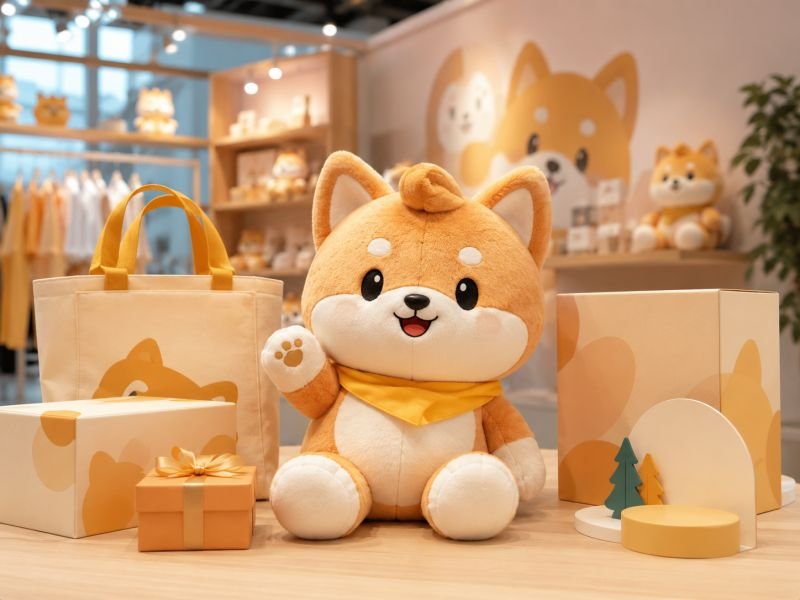
Most brand messages disappear quickly. A poster is glanced at, a short video is skipped, an event flyer is left behind, and a logo on a tote bag may blend into the background. A mascot plush behaves differently because it turns a visual identity into something physical. People can hold it, place it on a desk, give it to a child, keep it on a shelf, carry it on a bag, or photograph it after the event is over.
Custom brand mascot plush toys improve brand recall because they combine character design, soft touch, emotional attachment, repeated exposure, and physical ownership. A mascot plush does not only show a logo. It gives the brand a face, shape, texture, and memory trigger that can stay in daily spaces long after the first campaign moment.
The strongest mascot plush is not simply cute. It has to be recognizable. The face must feel right. The color must stay close to the brand system. The body shape should carry the mascot’s personality. The fabric should match the intended feeling. The packaging should support the use scene. If those details are controlled well, a mascot plush can move from “event gift” to “kept item.” That is where recall starts: someone sees the plush months later and still remembers where it came from.
Why Do Mascot Plush Toys Improve Recall?
Mascot plush toys improve recall because they turn a visual identity into a physical object people can touch, keep, display, carry, photograph, and connect with a real moment. A logo may be seen once and forgotten. A plush mascot can stay on a desk, shelf, bag, bed, counter, or event display, creating repeated memory cues long after the first contact.
A mascot works because it gives a brand a face. A plush version goes one step further: it gives that face a body, texture, weight, softness, and place in daily life. This is why mascot plush has stronger staying power than many short-lived promotional items. It does not need to interrupt people repeatedly. It remains visible quietly.
Recall grows when three things happen together:
The character is easy to recognize.
The object is pleasant enough to keep.
The use scene creates a memory worth repeating.
A mascot plush can support all three. It can carry a familiar face, brand color, uniform, scarf, logo tag, or signature prop. It can feel soft, warm, and approachable. It can be linked to a trade show, school event, sports game, retail launch, fan campaign, employee kit, tourism gift, or anniversary celebration.
This is also why a poor mascot plush does not create the same effect. If the face is wrong, the color feels off, the fabric looks cheap, or the logo appears forced, the connection weakens. People may keep a plush because it feels meaningful. They rarely keep one only because it has a logo.
A strong mascot plush should be designed around memory, not decoration. The goal is not to add every detail from the artwork. The goal is to keep the details that people remember first: face, color, silhouette, outfit, accessory, and mood.
| Recall Driver | How Mascot Plush Supports It | What Must Be Controlled |
|---|---|---|
| Visual Memory | Repeats mascot face, color, outfit, and logo cue | Face accuracy, color match, silhouette |
| Touch Memory | Adds softness, weight, texture, and hand feel | Fabric, filling, stitching, shape |
| Emotional Memory | Turns the brand into something warmer and more personal | Expression, pose, gift value |
| Place Memory | Stays in offices, homes, stores, bags, or collections | Size, durability, packaging |
| Social Memory | Appears in photos, unboxing, fan posts, and displays | Photo effect, clean finish, recognizable shape |
| Event Memory | Connects the mascot to a specific moment or experience | Delivery timing, event packing, tag message |
The strongest recall does not come from one big impression. It comes from many small reminders. A person receives a mascot plush at an event. It sits beside a laptop. A colleague asks about it. It appears in a photo. It moves home. A child plays with it. Weeks later, the brand is still present through the character.
What Makes A Mascot Memorable?
A memorable mascot is easy to identify, easy to describe, and easy to connect with one organization, team, product, place, or story. It should not rely on too many small details. In most cases, people remember the broad shape, face, color, and one signature feature first.
Good mascot memory often comes from a few clear signals:
Round or distinctive head shape
Large readable eyes
Simple mouth expression
One or two strong colors
Recognizable ears, horns, hair, tail, or body outline
A clear outfit, scarf, jersey, hat, apron, badge, or prop
Natural logo placement
A personality that fits the brand tone
A mascot plush should pass a simple recognition test: can someone identify it from across a room, in a photo, or without reading the tag? If not, the design may depend too much on small details.
In soft product form, clarity becomes even more important. Plush fabric softens edges. Filling changes shape. Embroidery has minimum line width. Long pile can hide tiny features. Small accessories may twist or shift. A mascot that looks sharp in digital art may need simplification before it becomes a strong plush.
The most memorable plush mascots usually have a “memory code.” This is the small set of details that must never be lost:
| Mascot Type | Memory Code Often Includes |
|---|---|
| School Mascot | Animal type, school color, scarf or uniform, friendly face |
| Sports Mascot | Team color, jersey, strong expression, action-ready pose |
| Food Mascot | Food shape, smile, color, chef hat or product prop |
| App Mascot | Simple face, icon color, clean body shape |
| Tourism Mascot | Local animal, cultural detail, landmark accessory |
| Retail Character | Face, outfit, signature color, shelf-friendly posture |
| Game / IP Character | Eyes, hair, outfit, prop, exact expression |
A plush mascot should protect this memory code before adding decorative extras. A tiny chest symbol may matter less than the eye shape. A complicated shoe detail may matter less than the body ratio. A small printed pattern may matter less than the color block people remember.
This approach keeps the plush clear, lovable, and easier to repeat in bulk. The mascot should feel familiar at first glance, not after explanation.
Brand Recall vs Brand Recognition
Brand recognition means people can identify a brand when they see a visual cue. Brand recall means they can remember the brand without being shown the cue first. Mascot plush can help both, but in different ways.
Recognition happens when someone sees the mascot plush and thinks, “I know this character.” The face, colors, outfit, logo tag, packaging, or body shape triggers the connection.
Recall happens later, when the person remembers the brand because the plush has become linked to a moment, place, emotion, or habit. Maybe the plush came from a sports game. Maybe it was inside a launch kit. Maybe it sits near a computer. Maybe it became a child’s favorite item. The brand is no longer only a visual mark; it becomes part of a memory.
| Memory Type | What It Looks Like | Plush Role |
|---|---|---|
| Recognition | “I recognize that mascot when I see it.” | Repeats face, color, outfit, tag, and packaging |
| Recall | “I remember that brand because of the mascot.” | Connects the character with touch, place, and experience |
| Emotional Recall | “That plush reminds me of a nice moment.” | Links softness, gift value, and character warmth |
| Group Recall | “That mascot belongs to our school/team/company/event.” | Builds shared identity through a physical object |
| Repeat Recall | “I keep seeing it, so I remember it.” | Stays visible after the event or purchase |
A logo often works best for recognition. A mascot plush can move toward recall because it creates more sensory and emotional hooks. People do not only see it; they interact with it.
A simple example: a visitor receives a branded postcard at an event. It may be useful for a day. Another visitor receives a small mascot plush keychain. It may stay on a bag for months. The second item gives the brand more chances to reappear in daily life.
This does not mean every plush item will create recall. The plush must be worth keeping. The mascot should look accurate, feel good, and fit the situation. A rushed design with poor expression may be forgotten quickly. A well-made mascot plush can become a lasting cue.
Why Does Touch Build Memory?
Touch makes memory stronger because it adds physical experience to visual identity. People remember objects differently when they hold them, squeeze them, carry them, or place them in a personal space. A mascot plush is not just looked at; it is handled.
Softness is important because it creates a warmer emotional response. Plush texture suggests comfort, friendliness, and closeness. This matters for brands that want to feel approachable, human, playful, caring, or community-driven.
Touch also increases interaction time. A person may glance at a poster for two seconds, but hold a plush for ten, twenty, or thirty seconds. They may turn it around, feel the fabric, check the face, read the tag, take a photo, or show someone nearby. Each action gives the mascot more time to settle in memory.
The physical design decides how strong this effect becomes:
| Touch Detail | Memory Impact |
|---|---|
| Soft Fabric | Encourages holding and keeping |
| Balanced Filling | Makes the plush feel full, not flat or hollow |
| Clean Embroidery | Makes the face feel intentional and expressive |
| Smooth Seams | Improves perceived quality |
| Good Weight | Helps the plush feel more substantial |
| Proper Size | Makes it easy to carry, display, or gift |
| Good Recovery | Keeps shape after shipping or storage |
| Safe Accessories | Allows more comfortable use and handling |
Different fabric choices create different emotional signals. Short plush can look clean and neat. Minky or smooth plush can feel modern and gentle. Long pile can feel cute and warm. Sherpa or teddy texture can feel cozy. A mascot plush for a school may need friendly softness. A sports mascot may need stronger shape and bold expression. A premium gift may need denser fabric and more careful finishing.
Touch also helps turn a brand into a relationship. A mascot plush on a desk is not shouting a message. It is simply present. That quiet presence is often more welcome than constant promotion.
How Do Plush Toys Extend Exposure?
Mascot plush toys extend exposure because they are more likely to be kept, displayed, gifted, carried, photographed, or collected. Unlike paper items or short-use giveaways, a plush object can stay visible in real spaces for a long time.
Common places where mascot plush keeps creating exposure include:
Office desks
Reception areas
Retail counters
Children’s rooms
School lockers
Sports fan shelves
Tourism gift displays
Employee welcome boxes
Conference bags
Cars
Bookcases
Gaming setups
Dorm rooms
Event booths
Social photos
Unboxing content
A mascot plush can also travel between people. It may be received at a booth, taken home, given to a child, placed on a shelf, shared in a photo, or carried on a bag. This movement gives the mascot more touchpoints than a single-use item.
The exposure becomes stronger when the plush has a clear role:
| Use Role | Exposure Pattern | Best Plush Format |
|---|---|---|
| Event Gift | Carried away after the event | 10–15cm mini plush or keychain |
| Desk Item | Seen daily at work | 15–25cm sitting plush |
| Retail Item | Displayed and sold | 20–30cm plush with hangtag or box |
| Fan Item | Collected or photographed | Accurate character plush with strong expression |
| School Spirit Item | Used for memory and belonging | Soft animal mascot with school colors |
| Sports Item | Connected to games and team loyalty | Mascot plush with jersey or scarf |
| Tourism Gift | Linked to place memory | Local character plush with cultural detail |
The product must be good enough to earn a place in someone’s environment. If it feels cheap, looks off, or loses shape, it may not survive beyond the event bag. If it feels charming and well made, it can stay visible for months.
Exposure also depends on packaging. A clean hangtag, gift box, retail box, or event card can explain the mascot’s role and make the plush feel more intentional. Packaging can also carry the logo, QR code, care details, story note, or campaign message without forcing everything onto the plush body.
A mascot plush continues working when it becomes part of a room, bag, shelf, photo, or collection. That is the difference between a temporary item and a lasting memory object.
How Do Mascot Plush Toys Create Emotional Links?
Mascot plush toys create emotional links because they turn a brand symbol into something that feels alive, warm, and personal. People may like a logo, but they can form affection toward a character. When that character becomes soft and touchable, the emotional effect becomes stronger.
A plush mascot can represent:
A team someone supports
A school someone attended
A game or character someone loves
A brand event someone enjoyed
A place someone visited
A company culture someone belongs to
A campaign message someone wants to remember
A gift from a person or organization
This emotional value is the reason mascot plush often stays longer than many other branded objects. People may keep it not because they need it, but because it makes them feel connected.
The emotional link depends heavily on expression and body language. A friendly smile, calm eyes, confident eyebrows, playful pose, or tiny outfit can change how the plush feels. A flat face can make the mascot forgettable. A well-balanced expression can make it feel familiar.
Emotional strength also grows when the mascot plush has a story. A hangtag can explain the mascot name, event, team, mission, anniversary, or limited edition meaning. A school mascot plush can mark graduation. A sports mascot plush can mark a championship season. A tourism mascot plush can hold the memory of a trip. A company mascot plush can welcome new employees or celebrate a milestone.
A plush mascot does not need many words to carry emotion. The product itself should tell the story through face, color, touch, and use scene. When the feeling is clear, recall becomes more natural.
Which Mascot Types Work Best?

Mascot types that work best as plush have a clear outline, a readable face, stable colors, enough body volume, and one strong memory feature. Animal mascots, school mascots, sports mascots, food characters, tourism characters, app characters, and original IP characters can all work well when the design can be softened without losing recognition.
A mascot may look strong in digital artwork, but plush is a different language. Fabric has thickness. Filling changes curves. Seams create shape lines. Embroidery needs enough space. Accessories need secure placement. A design that depends on thin lines, tiny text, sharp corners, narrow limbs, or complex gradients may need adjustment before it becomes a soft product.
The best mascot plush usually looks simple at first glance but carries strong identity. People can recognize it by the head shape, color, eyes, outfit, or signature item before they read the tag. That instant recognition is what makes the plush useful for recall, events, retail, fan programs, school spirit, and long-term character use.
A helpful way to judge a mascot is to look at five areas:
| Review Area | Strong Plush Potential | Risk To Review |
|---|---|---|
| Silhouette | Clear head, ears, body, tail, outfit, or prop | Shape depends on tiny details |
| Face | Large eyes, readable mouth, clear emotion | Thin lines or very small expression details |
| Color | One or two dominant colors | Too many small color blocks |
| Body Structure | Enough thickness for stuffing | Very thin limbs, flat body, sharp points |
| Signature Feature | Scarf, jersey, hat, cup, badge, tail, ears | Small loose accessories or hard-to-fix parts |
A mascot plush should not be judged only by cuteness. It should also be practical: easy to sample, clear in photos, stable in bulk, suitable for the use scene, and strong enough to represent the character again in future runs.
Does A Brand Need A Mascot?
A brand does not always need a mascot. Some identities work well with a strong logo, packaging style, product shape, founder story, or visual system. A mascot becomes useful when a brand wants a more human, friendly, emotional, or story-driven way to be remembered.
A mascot is especially helpful when the product or service is abstract. A software tool, school program, finance service, healthcare project, tourism campaign, sports club, or education platform may be hard to remember through a logo alone. A mascot gives the idea a face, mood, and personality.
A mascot can also help when the brand needs repeated interaction. A character can appear in social content, event displays, packaging, stickers, retail products, employee gifts, fan items, and plush merchandise. Once the mascot becomes familiar, the plush version turns that familiarity into a physical keepsake.
A mascot is worth considering when the brand needs to:
Make a serious topic feel easier to approach
Build a character-led campaign
Create an event item with longer life
Support school, sports, tourism, or family-friendly programs
Turn an original IP into physical products
Create a collectible or seasonal plush series
Build stronger connection with fans, students, members, or employees
Add a warmer face to a digital or service-based brand
A mascot should not be created only because it looks cute. It should have a job. Before turning it into plush, the role should be clear:
Will it be used at events?
Will it be sold in retail?
Will it be part of a welcome kit?
Will it become fan merchandise?
Will it appear in campaigns more than once?
Will it help explain the brand personality?
Will it support seasonal or limited-edition versions later?
If the mascot has no clear role, the plush may feel like a random gift. If the mascot already carries meaning, a plush version can make that meaning easier to keep, share, and remember.
What Type Of Mascot Fits Plush?
Mascots that fit plush usually have rounded forms, expressive faces, simple color areas, and enough thickness for sewing and filling. Soft fabric needs space. A flat icon made of thin lines may need redesign before it can become a stable plush item.
Animal mascots often work well because people quickly understand them. Bears, rabbits, dogs, cats, lions, tigers, foxes, owls, frogs, penguins, pandas, dinosaurs, and elephants all have familiar shapes. Ears, tails, noses, paws, wings, or horns can create instant recognition.
Food mascots can also work well when the shape is simple. A smiling strawberry, coffee cup, donut, ice cream, dumpling, milk carton, or snack character can become a playful plush if the color blocks are clean and the face is large enough.
Sports and school mascots often benefit from plush because they carry group identity. A tiger with a school scarf, an eagle with a team jersey, or a bear with a cap can connect to pride, memory, and belonging.
Original IP characters and app mascots can also be strong plush candidates when they have consistent design files. The face, body ratio, signature color, and outfit should stay stable across artwork, packaging, and plush.
| Mascot Type | Why It Works | Detail To Protect |
|---|---|---|
| Animal Mascot | Familiar and easy to recognize | Ears, face, tail, body shape |
| Food Character | Fun and simple visual memory | Shape, color, smile |
| Sports Mascot | Strong emotional identity | Team colors, jersey, expression |
| School Mascot | Belonging and long-term use | School colors, friendly face |
| Tourism Character | Place memory and gift value | Local feature, cultural detail |
| App Character | Simple and modern identity | Icon color, face, body ratio |
| IP Character | Fan recognition | Eyes, outfit, prop, expression |
Mascot types that need more care include:
Characters with very thin arms or legs
Characters with many sharp spikes
Characters with tiny facial lines
Characters with complicated printed patterns
Characters with lots of small text
Characters with floating props
Characters with extremely flat bodies
Characters with detailed shoes, fingers, or layered clothing
These can still become plush, but they need smart simplification. The goal is to keep the character recognizable while making it soft, safe, stable, and repeatable.
What Is A Brand Mascot Example?
A brand mascot can be an animal, person, object, food character, fantasy creature, sports figure, school symbol, or original character that represents a brand’s personality. It may stand for friendliness, strength, speed, care, humor, creativity, learning, safety, adventure, or local culture.
A useful example is a school tiger mascot. In artwork, the tiger may have sharp stripes, a strong pose, a school sweater, and a logo on the chest. In plush form, the stripes may need to be simplified, the paws may become rounder, the sweater may need cleaner seams, and the logo may move to a woven label or hangtag if it is too small for embroidery. The memory code remains: tiger face, school colors, scarf or sweater, friendly strength.
Another example is a coffee shop bear. The bear may wear an apron and hold a cup. In plush form, the apron should fit the body naturally, the cup may need to be fixed securely or changed into embroidery, and the fabric color should feel warm. The most important features are the bear face, apron, cup cue, and cozy feeling.
A sports eagle mascot may need bold eyebrows, a strong beak shape, team color jersey, and stable wings. The wings should be thick enough to sew and fill. The jersey number or logo should be placed where it stays readable.
A tourism panda mascot may need a local hat, scarf, or landmark detail. If the accessory is too small, it may become a printed hangtag or larger sewn element. The plush should feel photo-friendly because tourism gifts often live through photos and souvenirs.
| Example | Key Memory Code | Plush Adjustment |
|---|---|---|
| School Tiger | Animal face, school color, scarf | Softer paws, simplified stripes |
| Coffee Bear | Warm color, apron, cup | Fixed cup or embroidered cup cue |
| Sports Eagle | Beak, eyebrows, jersey | Thicker wings, clear team colors |
| Tourism Panda | Local accessory, cute face | Larger accessory, photo-friendly shape |
| App Robot | Simple face, icon color | Rounded corners, soft body |
| Food Mascot | Food shape, smile, bright color | Larger face, cleaner color blocks |
The best mascot examples are not always the most detailed. They are the ones where people can name the character after one glance.
Which Shapes Are Easier To Remember?
Shapes that are bold, simple, and readable are easier to remember. In plush form, silhouette matters because fabric softens hard edges and filling changes proportions. A strong outline helps the mascot remain recognizable from the front, side, and even in small photos.
Easy-to-remember plush shapes often include:
Round head
Large eyes
Short body
Distinct ears
Signature tail
Simple sitting posture
One clear prop
Strong color contrast
Oversized head-to-body ratio
Clear hat, scarf, jersey, or apron
A mascot should not depend only on a printed logo. If the logo were removed, the character should still have enough shape and personality to be recognized. That is why animals, food shapes, sports mascots, and bold IP characters often translate well into plush.
Size also affects memory. A small keychain mascot needs stronger simplification. Details must be larger and fewer. A 20–25cm plush can carry more expression, outfit structure, and accessories. A large display plush can hold even more detail, but it increases material, filling, packing, and freight pressure.
| Plush Size | Shape Strategy | Detail Level |
|---|---|---|
| 8–12cm | Very simple silhouette | Large eyes, simple mouth, no tiny text |
| 13–18cm | Clear body and face | Small accessory possible if fixed well |
| 20–25cm | Strong gift or retail size | More outfit and embroidery detail |
| 30–40cm | Display and premium gift use | More shaping and accessory space |
| 50cm+ | Visual impact | Requires stronger packing and shape control |
A readable mascot should work in three situations:
Seen from a distance
Seen in a photo
Held in the hand
If the mascot becomes confusing in any of these situations, the shape may need simplification. A good plush mascot has enough personality to be remembered without needing a long explanation.
When Does A Mascot Need Simplifying?
A mascot needs simplifying when the original artwork has details that fabric cannot show cleanly or safely. Simplification is not about making the mascot less special. It is about protecting the features that matter most while removing details that create cost, risk, or confusion.
Common details that may need simplification include:
Tiny text
Thin outlines
Small fingers
Sharp hair tips
Narrow tails
Very thin horns
Detailed shoes
Complex clothing seams
Gradient shadows
Tiny accessories
Dense printed patterns
Floating props
The plush version should keep the mascot’s core identity: face, color, body shape, outfit, accessory, and mood. Smaller details can be adjusted if they do not change recognition.
| Original Detail | Plush Risk | Better Direction |
|---|---|---|
| Tiny chest text | Hard to embroider clearly | Use a larger patch, woven label, or hangtag |
| Thin fingers | Difficult to sew and fill | Use rounded mitten-style hands |
| Sharp spikes | May twist or collapse | Make them thicker and softer |
| Gradient color | Hard to match through fabric | Use solid fabric plus print or embroidery accents |
| Detailed shoes | More sewing steps, bulky look | Keep main color and simplify panel lines |
| Small loose prop | Safety and packing concern | Make it larger, fixed, or embroidered |
| Long thin tail | Easy to twist or deform | Increase thickness or change angle |
| Complex pattern | Costly and hard to align | Keep key color blocks only |
A useful method is to divide details into three levels:
Must keep: face, main color, body shape, signature accessory
Can simplify: clothing seams, small markings, minor shadows
Can move: tiny logos, small text, complex messages, QR code, detailed story notes
Details that are hard to place on the plush body can often move to packaging. A hangtag, story card, care label, box, or display card can carry small logos, character names, campaign messages, and barcode information without making the plush itself messy.
Good simplification should feel intentional. The plush should not look like a cheaper copy. It should look like the character was naturally adapted into a soft, touchable form.
Which Mascots Are Harder To Turn Into Plush?
Some mascots are harder to turn into plush because their identity depends on details that soft fabric does not handle well. This does not mean they cannot be made. It means the design needs more review before sampling.
Harder mascot types often include:
Flat logo characters with no body thickness
Characters with very thin arms, legs, or tails
Characters with many sharp spikes
Characters with complex armor or mechanical parts
Characters with tiny face details
Characters with many color gradients
Characters with delicate line art
Characters with transparent or glowing effects
Characters with oversized flat wings
Characters with floating accessories
These designs may need a plush adaptation plan. For example, a flat app icon may need a rounded body. A robot mascot may need softer corners. A food character may need more thickness. A dragon with sharp horns may need wider, softer horns. A character with tiny text may need that text moved to a tag.
| Difficult Feature | Plush Challenge | Possible Fix |
|---|---|---|
| Flat icon | No natural thickness | Add soft body depth |
| Mechanical limbs | Too rigid or narrow | Use rounded simplified limbs |
| Sharp armor | Hard edges collapse | Convert into soft panel shapes |
| Glow effect | Cannot be sewn as light | Use fabric color contrast or embroidery |
| Gradient shading | Difficult in fabric | Use solid color blocks |
| Tiny facial lines | May disappear | Enlarge embroidery details |
| Floating object | Cannot float in plush | Attach, embroider, or move to packaging |
The earlier these issues are reviewed, the easier the sample process becomes. A difficult mascot can still become a strong plush if the memory code is clear and the adaptation is done with purpose.
Which Mascot Type Fits Each Use Scene?
The best mascot type depends on where the plush will be used. A plush for a sports shop, school event, tourism gift, employee kit, or retail shelf should not follow the same design logic.
Use scene can guide shape, size, fabric, packaging, and detail level:
| Use Scene | Mascot Type That Often Works | Product Direction |
|---|---|---|
| Trade Show | Simple mascot, app character, animal mascot | Small plush or keychain, easy carrying |
| School Program | Animal mascot, learning character | Soft, safe, friendly, school colors |
| Sports Team | Animal or team figure | Jersey, bold expression, fan-ready size |
| Tourism Gift | Local animal, food, landmark character | Photo-friendly, gift packaging |
| Retail Shelf | Strong IP or character mascot | Better finishing, hangtag, barcode |
| Employee Kit | Company mascot, soft character | Premium fabric, welcome-card packaging |
| Kids Program | Friendly animal or rounded character | Soft materials, embroidered face |
| Fan Merchandise | IP character, game mascot | Accurate face, strong series potential |
A mascot plush works best when design and use scene support each other. A keychain mascot should be compact and durable. A retail mascot should look good on shelf and in photos. A sports mascot should feel energetic. A school mascot should feel friendly and safe. A tourism mascot should capture place memory.
When the use scene is clear, the design becomes easier to control. The mascot does not need to do everything. It only needs to do the right job well.
How Should A Mascot Become Plush?
A mascot should become plush through a controlled translation process: artwork review, shape planning, fabric choice, face craft, color matching, accessory review, sample making, correction, and approval before bulk work starts. The goal is not to copy every line from the artwork, but to protect the mascot’s face, color, silhouette, expression, outfit, and character feeling in soft form.
A mascot drawn on screen can be perfectly flat, sharp, and detailed. Plush cannot behave the same way. Fabric has pile direction. Filling adds volume. Seams change curves. Embroidery has minimum thickness. Printing behaves differently on smooth fabric and long pile fabric. Small accessories need secure placement. A thin tail, sharp horn, tiny hand, or detailed shoe may need to become thicker, softer, or simpler to work well.
The best plush version feels familiar at first glance. It should look like the mascot people already know, while still feeling natural as a soft product. This requires choosing which details must stay and which details can be adapted.
A mascot-to-plush plan should usually review these areas first:
| Review Area | What To Confirm | Why It Matters |
|---|---|---|
| Artwork Files | Front, side, back, detail views | Shows shape, thickness, posture, and hidden details |
| Core Identity | Face, colors, silhouette, outfit, prop | Protects recognition |
| Target Size | Keychain, mini plush, retail size, display size | Decides how much detail can be kept |
| Fabric | Texture, pile length, softness, color | Affects touch, photo effect, and detail clarity |
| Face Craft | Embroidery, printing, applique, thread colors | Controls expression and character likeness |
| Accessories | Hat, scarf, jersey, badge, keyring, prop | Adds identity but needs attachment review |
| Packaging | Polybag, hangtag, retail box, gift box, blind box | Affects presentation, carton volume, and use scene |
| Sample Review | Shape, face, color, softness, logo, packing | Prevents bulk issues before production |
| Approval Sample | Final reference for bulk work | Keeps shape, craft, and quality direction consistent |
The plush version should be designed as a real object, not only a cute mockup. It has to be held, packed, shipped, inspected, photographed, displayed, and sometimes reordered. A good plush mascot keeps the character alive while making the design practical for stable bulk work.
What Details Protect Brand Identity?
Brand identity in a mascot plush is protected by the details people notice first. These are usually the face, main color, body shape, outfit, accessory, and overall mood. Small decorations matter only if they support these core signals.
A mascot plush can lose identity in many small ways. The eyes may be too high. The mouth may look flat. The head may become too narrow after stuffing. The fabric may shift the color tone. A logo may be too small to read. A scarf may cover an important body shape. These details may seem minor during production, but they can change how people recognize the character.
The most important identity details often include:
Eye shape, size, and position
Mouth curve and expression
Eyebrow angle
Head-to-body ratio
Ear, horn, tail, hair, or wing shape
Main fabric color
Secondary color placement
Outfit, scarf, jersey, apron, hat, or badge
Logo position
Signature prop
Sitting, standing, or hanging posture
A useful identity check is to divide mascot details into three groups:
| Detail Level | Examples | How To Handle It |
|---|---|---|
| Must Keep | Face, body shape, main color, signature outfit, key prop | Protect during sample and QC |
| Can Simplify | Small lines, minor shadows, fine clothing seams | Adjust for fabric and scale |
| Can Move | Tiny text, QR code, detailed story, small logo | Place on hangtag, care label, box, or card |
Face and color usually deserve the strongest control. People often remember a mascot by its eyes and color before reading any logo. If the face feels wrong, the plush may become a generic toy. If the color shifts too far, the link to the original identity becomes weaker.
Logo placement should also feel natural. A logo does not always need to be forced onto the plush body. It may work better on a jersey, scarf, woven side label, hangtag, box, or display card. A clear logo on packaging can be more valuable than a tiny unreadable logo on curved fabric.
A plush mascot should protect recognition first and decoration second.
How Do Colors Affect Recognition?
Color affects recognition because people often connect a mascot with its main color before they notice small details. A school mascot, sports mascot, app character, food character, tourism figure, or IP character may rely heavily on color memory. If the plush color is too far from the original identity, the character can feel unfamiliar even when the shape is correct.
Color control in plush is different from color control on paper or screen. Plush fabric has pile, texture, thickness, reflection, and direction. A fabric can look brighter from one angle and darker from another. Long pile fabric may create shadows. Sherpa or teddy texture may soften color. Smooth short plush may show cleaner color blocks. Embroidery thread may not match fabric perfectly unless reviewed with real samples.
Important color checks include:
Main body fabric under natural light
Main body fabric under indoor light
Pile direction color shift
Embroidery thread color
Accessory color
Outfit or scarf color
Logo color
Color contrast between face and body
Color match across multiple styles
Color consistency for repeat orders
| Color Situation | Possible Issue | Safer Direction |
|---|---|---|
| Digital color only | Real fabric may look different | Use fabric swatches or approved material sample |
| Long pile fabric | Light and dark shift by direction | Confirm cutting direction before bulk work |
| Multiple brand colors | Some colors may not match equally well | Prioritize the most recognizable colors |
| Tiny color blocks | Hard to cut or sew cleanly | Use embroidery, applique, or simplify |
| Repeat project | New material batch may vary | Keep approved sample and fabric notes |
| Dark face details on long pile | Details may disappear | Enlarge embroidery or use shorter pile area |
Perfect color matching is not always realistic with plush fabric, but visual recognition must be protected. The main color should feel close enough that people immediately connect the plush with the mascot. If a secondary color shifts slightly but does not affect recognition, it may be acceptable. If the main color changes the mascot’s identity, it should be corrected before approval.
For multi-style mascot programs, color control becomes even more important. Different characters may share one brand color family. If each style uses slightly different fabric tones, the set can look uneven. Material records, approved samples, and clear color references help keep the collection visually consistent.
Why Does Face Expression Matter?
Face expression is the emotional center of a mascot plush. People may forgive a small seam or simplified shoe detail, but they notice a wrong face immediately. Eyes, mouth, eyebrows, cheeks, nose, and head shape decide whether the mascot feels friendly, funny, brave, calm, premium, silly, energetic, or cute.
A few millimeters can change the expression. Eyes placed too high may create a surprised look. Eyes placed too far apart may feel unfocused. A mouth line that is too straight can remove warmth. Eyebrows that are too thick can make the mascot look angry. A nose that sits too low can change the whole character balance.
Flat artwork cannot fully predict how the face will look after stuffing. Plush has curved surfaces. Embroidery sits on fabric and changes with tension. Long pile can hide small mouth lines. Small sizes make details harder to read. This is why face sampling must be reviewed carefully.
Key face details to check:
Eye size
Eye spacing
Eye height
Pupil direction
Eyebrow angle
Mouth curve
Nose position
Cheek shape
Blush position
Embroidery thickness
Thread color
Face panel shape
Head fullness
A face review should be specific. Instead of saying “make it cuter,” clearer notes work better:
Move both eyes 3mm lower.
Increase pupil size by 10%.
Reduce mouth width by 5mm.
Soften the eyebrow angle.
Make the cheeks rounder.
Use darker thread for the mouth.
Make the head fuller on both sides.
Raise the nose slightly.
For mascot plush, expression is closely tied to recall. If the mascot is known for a playful smile, the smile must be protected. If it is known for a brave sports attitude, the eyes and eyebrows must carry energy. If it is a children’s education character, the face should feel safe, friendly, and warm.
The plush face should not only match the artwork; it should match the feeling people expect from the mascot.
How Does A Factory Make Samples?
Sample making starts by reviewing the mascot artwork and deciding how the flat design can become a soft 3D product. The process usually includes artwork review, pattern making, material selection, embroidery or printing setup, cutting, sewing, stuffing, shaping, accessory placement, packaging check, and sample correction.
A strong sample needs clear reference files. Front view shows the face, but side and back views show body thickness, tail direction, ear depth, clothing, posture, and hidden details. Detail views are useful for eyes, logo, accessories, embroidery, and packaging. Without those views, the first sample may rely on assumptions, which often leads to more revision.
A practical sample flow:
| Step | What Happens | What It Prevents |
|---|---|---|
| Artwork Review | Mascot files, size, colors, details, use scene are checked | Missing information before sampling |
| Pattern Making | Flat fabric panels are built for the head, body, limbs, clothing | Wrong shape or poor proportion |
| Fabric Selection | Material, color, pile length, hand feel are reviewed | Color and texture mismatch |
| Craft Setup | Embroidery, printing, applique, patch, label details are prepared | Unclear face or logo |
| First Sample | Plush is cut, sewn, stuffed, shaped, and finished | Tests real structure and appearance |
| Sample Review | Face, color, size, softness, accessories, packing are checked | Finds issues before bulk work |
| Revision Sample | Key corrections are applied | Improves identity and usability |
| Approval Sample | Final sample becomes the production reference | Reduces mismatch during bulk work |
Custom plush samples usually require a fee because this stage uses real development work: pattern, material, embroidery or printing, cutting, sewing, stuffing, shaping, accessories, packaging review, and revision. The sample is not only a preview. It is the control tool for appearance, size, material, craft, packaging, and bulk consistency.
For a mascot plush, sample review should focus on more than general cuteness:
Does the plush still look like the mascot?
Is the main color close enough?
Are the eyes expressive?
Is the mouth readable?
Does the body shape feel right?
Is the logo clear or better placed on a tag?
Do accessories stay stable?
Does the plush sit, stand, or hang correctly?
Does the packaging protect the shape?
Can this design be repeated in bulk?
A well-approved sample reduces uncertainty before larger production starts. It gives a physical reference for shape, face, fabric, softness, accessory placement, label position, and packing direction.
How Should Artwork Be Prepared?
Artwork should be prepared with enough detail to remove guesswork. A single front-facing image may be enough for a rough idea, but it is rarely enough for an accurate mascot plush. The more complete the file set, the smoother the sample stage becomes.
A useful artwork package includes:
Mascot front view
Side view
Back view
Close-up face view
Logo file
Color reference
Outfit details
Accessory details
Pose reference
Target size
Preferred fabric feel
Packaging direction
Event date or launch date
If the mascot has different expressions, the preferred expression should be marked clearly. If the mascot has a signature accessory, its size and placement should be shown. If the plush must match a brand color, physical reference or color card direction is helpful. If the plush will be used in retail or events, packaging should be discussed early, not after the sample is complete.
Common artwork gaps that create revision:
No side view
No back view
No body thickness guide
No fabric direction
No clear color reference
Logo too small for embroidery
Face expression not marked
Accessories shown only from one angle
No packaging plan
No target size
The artwork does not need to be perfect, but it should show the decisions that affect shape, cost, and sample accuracy. A clear file package can reduce back-and-forth, shorten the sample path, and make the mascot plush closer to the intended result from the first round.
Which Details Should Move To Packaging?
Not every brand detail needs to be placed on the plush body. Some details work better on packaging, tags, labels, or cards. This is especially true for tiny logos, small text, QR codes, campaign messages, product information, care details, age warnings, barcode labels, and story content.
A plush body is soft, curved, and limited by fabric. Packaging is flat, readable, and better for detailed information. Moving the right details to packaging can make the plush cleaner while still protecting brand identity.
Details that often work better on packaging:
Small logo text
QR code
Campaign slogan
Mascot name
Character story
Social handle
Barcode
SKU label
Care information
Warning text
Limited edition note
Event message
Gift message
| Detail | Better Location | Reason |
|---|---|---|
| Tiny logo | Hangtag, woven label, scarf, box | More readable than small body embroidery |
| QR code | Hangtag or printed card | Needs flat surface for scanning |
| Character story | Hangtag or box insert | Keeps plush clean |
| Warning text | Care label or packaging | Needs accuracy and readability |
| Barcode | Sticker, hangtag, box, carton | Supports retail or warehouse handling |
| Campaign message | Gift card or box sleeve | Better space for words |
| Small decorative text | Tag or packaging | Avoids unclear embroidery |
The plush should carry the mascot’s emotional and visual identity. Packaging can carry the information. When both are used properly, the product feels cleaner, more professional, and easier to understand.
What Should Be Approved Before Bulk Work?
Before bulk work starts, the approval sample and all related files should be clear. This reduces the risk of color changes, wrong embroidery, packaging delays, label errors, or inconsistent shape.
The approval should cover:
Final plush size
Final fabric
Main color and secondary colors
Embroidery file
Printing file if used
Face expression
Body shape
Stuffing level
Accessory placement
Logo placement
Hangtag design
Care label
Warning label if needed
Barcode or SKU label if needed
Packaging structure
Carton mark
Quantity per style
Delivery schedule
Special inspection notes
A simple approval checklist:
| Approval Item | Why It Matters |
|---|---|
| Physical Sample | Main reference for shape, face, softness, and finish |
| Fabric Notes | Supports color and hand-feel consistency |
| Embroidery File | Keeps face and logo details stable |
| Accessory Reference | Controls placement and attachment |
| Packaging File | Prevents late packing changes |
| Label File | Supports retail and warehouse needs |
| Carton Rules | Helps avoid packing and delivery mistakes |
| QC Notes | Guides checks during bulk work |
Bulk work should follow the approved sample as closely as possible. Soft products still have reasonable tolerance, but the approved sample gives everyone a shared standard. Without that standard, small differences can become hard to control.
A mascot plush project becomes smoother when approval is not only verbal. Photos, sample notes, fabric records, packaging files, and label files should be organized before production begins. This helps the first order and also supports future repeat runs.
Where Do Mascot Plush Toys Create Value?

Mascot plush toys create value anywhere a brand needs memory, emotion, interaction, gift value, display value, or repeat contact. They work well in events, retail programs, sports teams, schools, tourism gifts, employee kits, fan merchandise, seasonal campaigns, and character collections because they turn a visual identity into something people can keep, photograph, display, and share.
A mascot plush is different from a flyer, sticker, or simple giveaway. It has a longer physical life. A flyer may be useful for one moment. A sticker may stay on a laptop if the design is strong. A plush mascot can stay on a desk, shelf, bed, counter, locker, store display, or collection wall for much longer. That extended presence is where value begins.
The value is not only emotional. It can be commercial, social, and operational. A mascot plush can help a booth feel more approachable, make a retail shelf warmer, give a sports fan something collectible, make a school mascot more tangible, or turn a character into a product line.
The best use scene depends on size, fabric, detail level, packaging, label needs, quantity, and delivery timing.
| Use Scene | Main Value | Suitable Plush Direction | Details To Plan Early |
|---|---|---|---|
| Events | Interaction and memory after the event | 10–20cm plush, keychain, mini mascot | Event date, packing method, easy carrying |
| Retail | Shelf appeal and product sales | 20–30cm plush, hangtag, barcode | Packaging, care label, SKU, carton mark |
| Sports Teams | Fan loyalty and collectible value | Mascot with jersey, scarf, team colors | Logo position, uniform detail, bulk consistency |
| Schools | Spirit, belonging, student gifts | Friendly animal plush, safe soft material | Age group, warning label, delivery date |
| Tourism | Souvenir and place memory | Local animal, food, landmark character | Cultural detail, gift packaging, photo effect |
| Employee Kits | Welcome and internal culture | Premium-feel mascot plush | Box insert, logo tag, stable quality |
| IP Programs | Character merchandise | Accurate face, outfit, prop, series planning | Approved sample, packaging, repeat records |
| Seasonal Campaigns | Limited-time value | Holiday outfit, special color, gift box | Schedule, packaging lead time, carton volume |
A mascot plush creates the strongest value when it belongs to a clear moment. A sports team plush after a big match, a school mascot for graduation, a tourism mascot from a famous destination, or a character plush from a product launch all carry more meaning than a random soft item.
The product should also match the way people will use it. A small plush keychain works when the goal is daily visibility. A 20–25cm plush works when the goal is gifting or shelf presence. A larger plush works when visual impact matters. A blind box or mini series works when collectibility is important.
How Do Events Use Mascot Plush?
Events use mascot plush toys to make interaction easier and memory longer. At a booth, launch, conference, school fair, sports game, retail opening, or anniversary celebration, people are surrounded by screens, signs, cards, and samples. A soft mascot gives them something physical to hold and take away.
A mascot plush can work as:
A booth gift after a meeting
A prize for games or sign-ups
A VIP welcome item
A photo prop
A product launch gift
A school fair reward
A sports game giveaway
A fan meetup keepsake
A staff celebration item
A conference bag insert
The strongest event plush items are easy to notice and easy to carry. If the plush is too large, it may be inconvenient for attendees. If it is too small, the face and brand details may be unclear. A 10–15cm mini plush or keychain often works well for larger event quantities. A 20–25cm mascot plush works better for VIP gifts, prize draws, booth displays, or limited sets.
Event plush planning should focus on timing. The event date cannot wait for late sample changes, delayed packaging, or shipping problems. A practical event plan should include:
Mascot artwork and logo file
Target quantity
Event date
Destination
Packing method
Gift bag size if needed
Hangtag or event card
Shipping buffer
Backup time for sample revision
For events, packaging can be simple but should not look careless. A clean polybag, hangtag, event card, or small branded insert can help the plush feel connected to the event. If the plush will be handed out at a booth, the packaging should be easy to open, easy to carry, and easy to store.
A useful planning table:
| Event Goal | Better Plush Format | Why It Works |
|---|---|---|
| High-volume booth gift | 8–12cm keychain plush | Easy to carry, lower carton pressure |
| VIP gift | 20–25cm plush with hangtag | Higher perceived value |
| Photo interaction | Larger display plush | Strong visual presence |
| School or kids event | Soft animal mascot | Friendly and easy to understand |
| Product launch | Mascot plush with story tag | Links character to launch message |
| Prize draw | Medium plush in gift packaging | Feels more special |
The best event plush does not end when the event ends. It goes home, sits somewhere visible, and keeps the memory alive.
Why Do Retail Programs Use Plush?
Retail programs use mascot plush because plush can work as both a product and a brand memory object. A mascot plush on a shelf can attract attention, communicate personality, support gift sales, and turn a character into something people can own.
Retail plush needs more control than simple event gifts. It must look good on display, feel good in hand, carry the right labels, scan correctly, pack safely, and remain consistent across cartons. A retail-ready mascot plush usually needs more than the plush body.
Retail details may include:
Hangtag
Care label
Warning label when needed
Barcode label
SKU label
Retail box
Gift box
Display tray
Carton mark
Packing list
Photo-friendly sample
Shelf-ready carton plan
A mascot plush meant for retail should also be strong enough to stand beside other merchandise. The face should be accurate. The fabric should feel pleasant. The filling should not look flat. The hangtag should support the product story. The barcode should be readable. The carton should be easy for store teams or warehouse teams to handle.
Retail plush value often comes from repeatability. If one mascot performs well, it can lead to additional formats:
Core mascot plush
Mini keychain version
Holiday version
Limited outfit version
Blind box mini series
Larger gift version
Collector edition
Gift-box version
However, retail programs should avoid launching too many versions without clear planning. Every new style needs its own sample, pattern, fabric notes, label rules, packing plan, and QC focus. Starting with one strong core plush and one smaller companion item is often easier to control than launching a large collection too early.
A practical retail planning view:
| Retail Need | Plush Detail To Control | Reason |
|---|---|---|
| Shelf appeal | Face, posture, color, packaging | Helps product stand out |
| Scan and stock | Barcode, SKU, carton mark | Supports store and warehouse handling |
| Gift value | Fabric, hangtag, box | Improves perceived quality |
| Repeat sales | Approved sample records | Supports future runs |
| Returns reduction | QC, stitching, packing | Protects product condition |
| Online photos | Shape, face, recovery after shipping | Helps product look good after delivery |
Retail plush should not feel like a giveaway placed on a shelf. It should feel like a finished product with character, quality, and a clear reason to be purchased, gifted, or collected.
How Do Sports Teams Use Mascots?
Sports teams use mascot plush toys to turn fan identity into a physical object. A team mascot already carries emotion: loyalty, pride, competition, community, and memory. Plush makes that identity easier to hold, gift, display, and collect.
A sports mascot plush can appear in:
Team stores
Game-day gift programs
Fan membership kits
Youth club packs
Sponsor boxes
VIP seating gifts
Championship celebrations
Holiday merchandise
Mascot meet-and-greet events
School partnership programs
Stadium retail displays
For sports teams, accuracy matters. Fans know the mascot. They notice wrong colors, weak expressions, missing uniform details, or poor logo placement. A sports mascot plush should feel energetic, loyal to the team identity, and strong enough to become part of fan culture.
Important sports mascot details include:
Team color match
Jersey or uniform accuracy
Mascot expression
Eyebrow and eye shape
Logo placement
Scarf, cap, or jersey number
Sitting or standing posture
Stitch strength
Hangtag or retail card
Carton sorting for multiple styles
Sports mascot plush often works well in size layers:
| Size | Use | Detail Direction |
|---|---|---|
| 8–12cm | Keychains, bag charms, stadium gifts | Simplified face, strong team color |
| 15–20cm | Fan packs, kids gifts, event giveaways | Clear mascot face, scarf or jersey |
| 20–30cm | Team store retail | Stronger outfit detail, hangtag, barcode |
| 30cm+ | VIP gifts, display, limited editions | Better shaping, premium packaging |
Sports plush can also support seasonal or milestone programs. A playoff edition, anniversary jersey, holiday scarf, championship tag, or limited color version can create collectible interest. These versions should still keep the core mascot recognizable.
For sports teams, the plush does not just represent a character. It represents belonging. A fan may keep it on a shelf, bring it to a game, give it to a child, or collect different seasons. That emotional layer is why mascot plush works especially well in sports settings.
When Can Plush Become Merchandise?
A mascot plush can become merchandise when the character has enough recognition, emotional appeal, quality, and product structure to be sold, collected, gifted, or repeated. Not every mascot plush should become a sellable item immediately. Some work better as event gifts first. Others are ready for retail because the audience already knows the character.
Plush has merchandise potential when:
The mascot is recognizable without long explanation.
The face and expression are clear.
The size fits a reasonable price position.
The fabric feels worth keeping.
Packaging supports gifting or retail.
The plush photographs well.
The character has fan, school, event, tourism, or collection value.
Future styles can be developed without losing identity.
The product can be repeated with stable records.
A mascot plush can grow in stages:
| Stage | Product Role | Useful Format |
|---|---|---|
| First Event Gift | Create first physical contact | Mini plush or keychain |
| Core Plush Item | Build regular recognition | 20–25cm mascot plush |
| Retail Version | Support sales and gifting | Hangtag, barcode, retail box |
| Collectible Line | Encourage repeat interest | Multiple characters or outfits |
| Limited Edition | Add seasonal or event value | Holiday outfit, special tag |
| Premium Gift | Create higher perceived value | Larger plush, gift box, refined fabric |
Merchandise planning should balance excitement with control. A mascot plush line can become expensive and difficult if too many colors, outfits, sizes, and packaging styles are added at once. A stronger approach is often to start with the most recognizable version, then expand after the product proves its appeal.
Things to control before turning plush into merchandise:
Style count
Size plan
Packaging format
Barcode and SKU rules
Label content
Carton sorting
Retail display needs
Photo sample
Repeat order records
QC reference
Merchandise success depends on more than cuteness. The plush must feel like something people want to own. That means the face should be accurate, the fabric should feel good, the filling should hold shape, and the packaging should support the product’s value.
How Do Schools And Education Programs Use Plush?
Schools and education programs use mascot plush toys to build belonging, reward participation, support events, and create keepsakes. A school mascot already carries identity. A plush version turns that identity into something students, families, teachers, and alumni can keep.
School mascot plush can be used for:
Enrollment gifts
Graduation gifts
Sports days
Reading programs
Fundraising
Student rewards
Alumni gifts
Campus stores
Teacher appreciation
School anniversary events
Education-related plush should feel friendly, safe, and easy to understand. Animal mascots often work well because they are familiar and emotionally warm. Bears, lions, tigers, owls, eagles, rabbits, foxes, and pandas are common directions because they are easy to recognize and can carry school colors through scarves, sweaters, badges, or tags.
For younger age groups, safety planning matters. Face details often work better with embroidery instead of small hard parts. Accessories should be attached securely or simplified. Labels and warning information should be reviewed according to the intended use and destination.
A school mascot plush should usually protect:
School colors
Mascot face
Friendly expression
Scarf or sweater
Logo or initials
Soft hand feel
Safe structure
Durable stitching
Gift-ready packing
School plush value often lasts longer than the event itself. A graduation plush may stay as a memory for years. A reading reward plush may become a child’s favorite. A campus store plush may become part of school pride. This long emotional life is why the product should feel careful, not generic.
How Do Tourism And Cultural Gifts Use Plush?
Tourism and cultural programs use mascot plush toys to turn a place, landmark, museum, festival, or local story into a souvenir. A plush mascot can carry place memory in a soft and giftable form.
Tourism plush works well when the character includes one recognizable local detail:
Native animal
Local food
Famous landmark
Traditional clothing
Festival symbol
Museum character
Regional color
Cultural pattern
Nature feature
Travel memory depends heavily on photography and gifting. A tourism mascot plush should look good in photos, feel easy to pack in luggage, and carry enough local identity to remind people where it came from.
Useful tourism plush formats include:
Mini plush keychain
Local animal plush
Museum mascot plush
Festival character plush
Gift shop plush
Boxed souvenir plush
Limited seasonal plush
Cultural character series
Tourism plush should avoid overly complicated details that make the product hard to produce or expensive to ship. A small local hat, scarf, embroidered landmark, or story tag can be enough to make the character memorable.
Packaging is especially useful in tourism programs. A hangtag or box can explain the story, location, character name, or cultural meaning without overloading the plush body with tiny details.
A tourism mascot plush becomes valuable when it feels like a memory of a place, not just a soft toy from a shelf.
How Do Employee And Corporate Gifts Use Plush?
Employee and corporate mascot plush gifts can make internal culture feel warmer and more personal. A mascot plush can be used in welcome kits, anniversary gifts, team milestones, office displays, holiday packages, and company events.
The value comes from emotional connection. A logo on a notebook may be useful, but a mascot plush can make the organization feel more human. It can sit on a desk, appear in office photos, travel in onboarding kits, or become a small symbol of belonging.
Common uses include:
New employee welcome kits
Company anniversary gifts
Holiday gift boxes
Internal campaign items
Team achievement gifts
Office desk mascots
Remote team packages
Conference welcome sets
Corporate mascot plush should feel polished rather than childish unless the brand tone is playful. Material, stitching, logo placement, hangtag, and gift packaging matter. A small woven label, embroidered outfit logo, or clean gift box may look more refined than a large logo placed directly on the plush body.
A practical corporate plush plan:
| Program | Plush Direction | Key Detail |
|---|---|---|
| Welcome Kit | 15–20cm mascot plush | Gift box or card insert |
| Anniversary Gift | Premium fabric mascot | Date tag or limited-edition label |
| Internal Campaign | Mini mascot or keychain | Easy distribution |
| Office Display | 25–40cm plush | Stable sitting posture |
| Remote Team Gift | Compact plush with box | Shipping protection |
A mascot plush can turn an internal message into something visible and lasting. When the product feels thoughtful, it becomes part of the workspace rather than another disposable item.
How To Plan A Mascot Plush Project?

A mascot plush project should be planned around use scene, recognition, size, fabric, face detail, quantity per design, sample approval, packaging, labels, safety needs, delivery timing, and future repeat potential. The stronger the early planning, the easier it becomes to keep the mascot recognizable, control cost, avoid late changes, and prepare stable bulk goods.
A mascot plush is not just a soft toy with a logo attached. It is a physical version of a character that may appear at events, in retail programs, in school stores, in sports fan kits, in employee gifts, in tourism shops, or as part of an IP product line. Each use scene changes the right size, fabric, packing method, label needs, cost structure, and delivery plan.
A good plan begins with a clear file package. Mascot artwork, logo file, brand color reference, front view, side view, back view, size target, quantity, event date or launch date, and packaging needs should be reviewed before sampling. Missing details may seem small at the start, but they often lead to repeated sample changes, unclear cost, or late packing adjustments.
A practical mascot plush plan should cover these areas:
| Planning Area | What To Prepare | Why It Matters |
|---|---|---|
| Mascot Identity | Face, color, silhouette, outfit, prop, logo cue | Keeps the plush recognizable |
| Artwork Files | Front, side, back, detail views, logo file | Reduces guesswork in pattern and sample work |
| Use Scene | Event, retail, sports, school, tourism, gift, IP product | Decides size, material, packing, and detail level |
| Target Size | Keychain, mini plush, gift size, retail size, display size | Affects cost, detail clarity, carton volume |
| Material Feel | Smooth, fluffy, cozy, premium, durable | Controls touch and perceived value |
| Craft Details | Embroidery, printing, applique, woven label, patch | Controls face, logo, and decorative clarity |
| Accessories | Scarf, jersey, cap, keyring, zipper, prop, tag | Adds identity but needs attachment review |
| Packaging | Polybag, hangtag, gift box, retail box, blind box, display box | Affects presentation, labels, carton space |
| Labels | Care label, warning label, barcode, SKU, FNSKU, carton mark | Supports retail, warehouse, and delivery needs |
| Quantity | Per design, per SKU, total quantity | Affects price logic and production planning |
| Timing | Sample review, bulk work, packing, shipping deadline | Protects event date or launch date |
| Repeat Plan | One-time run, seasonal version, ongoing collection | Helps keep records for future runs |
The strongest plan does not try to decide everything by instinct. It looks at the mascot as a product: how it will be held, where it will be seen, how it will be packed, how it will arrive, and whether the same design may be needed again later.
What Size Works Best?
The best size depends on how the mascot plush will be used. Small sizes work well for portability and higher-volume event programs. Medium sizes work well for gifting, retail, and fan items. Larger sizes create stronger display value but increase material, filling, carton volume, and freight pressure.
Size should be chosen after reviewing the mascot’s face, body shape, detail level, and use scene. A small mascot keychain cannot carry the same embroidery detail as a 25cm plush. A large mascot plush can show more expression, but it may be harder to store, ship, and distribute.
| Size Direction | Common Use | Strength | Cost And Detail Watch |
|---|---|---|---|
| 8–12cm | Keychains, bag charms, small event gifts | Easy to carry, visible in daily use | Face must be simplified; tiny logos may not work |
| 13–18cm | Mini plush, conference gifts, school rewards | Compact but still expressive | Accessories need careful placement |
| 20–25cm | Retail plush, fan gifts, mascot merchandise | Good balance of detail, touch, and value | Carton volume starts to matter |
| 30–40cm | Premium gifts, office display, VIP kits | Strong visual presence, photo-friendly | Higher fabric, filling, packing, freight cost |
| 50cm+ | Showroom display, event props, limited gifts | High impact and strong visibility | Needs special packing and shape protection |
A useful size decision starts with three checks:
Will the face still be clear at this size?
Can the body shape be filled and shaped well?
Will the plush be easy to carry, display, store, or ship?
For event programs, 10–15cm may work well when many pieces need to be distributed. For retail or fan merchandise, 20–25cm often gives a stronger gift feeling. For VIP gifts or display use, 30cm and above may feel more impressive, but the packing and delivery plan should be reviewed early.
Logo placement should also change with size. On a small plush, a tiny embroidered logo may become unreadable. A woven side label, hangtag, or packaging card may work better. On a larger plush, a logo can appear on a scarf, jersey, apron, patch, or accessory if the placement feels natural.
A mascot plush should be large enough to protect recognition and small enough to fit the real use scene.
Which Material Feels Right?
The right material should match the mascot’s personality, touch expectation, detail needs, safety direction, and use scene. A sports mascot may need bold colors and strong shape. A school mascot may need soft, friendly fabric. A premium employee gift may need a denser, refined touch. A tourism mascot may need fabric that photographs well and feels giftable.
Fabric affects more than softness. It changes color appearance, embroidery clarity, seam visibility, shape recovery, and repeat consistency. A mascot with detailed eyes and mouth may need short plush or a smoother surface. A cute animal mascot may look warmer in longer pile fabric. A clean app mascot may work better with smooth plush and simple embroidery.
Common material directions:
| Material Direction | Best For | What To Review |
|---|---|---|
| Short Plush | Clear face embroidery, logo detail, mascot likeness | Less fluffy, but cleaner lines |
| Minky / Smooth Plush | Soft modern characters, baby-like mascots, clean shapes | Seam control and color accuracy |
| Velboa-Style Surface | Simple mascots, event plush, smooth finish | Hand feel and fabric density |
| Long Pile Plush | Animal mascots, cozy characters, gift plush | Small details may disappear in fibers |
| Sherpa / Teddy Texture | Warm lifestyle mascots, cozy gift sets | Face details need larger size |
| Faux Fur Style | Premium animal mascots | Pile direction and shedding review |
| Recycled Plush Fabric | Sustainability-led programs | Availability and batch consistency |
Material should be selected with the mascot’s memory features in mind. If the mascot is remembered mainly by its eyes and smile, the face area needs enough clarity. If the mascot is remembered by a fluffy animal feel, a longer pile may work better. If the mascot is used in school or child-related programs, embroidery may be preferred over small hard parts for face details.
Color should be checked through real fabric references when possible. Plush material may look different under daylight, indoor lighting, and camera lighting. Pile direction can also create visible shade differences. For repeat programs, fabric notes and approved sample records should be kept because new material batches may vary.
A good material decision balances:
Recognition
Touch
Color
Craft clarity
Safety
Cost
Availability
Repeat consistency
The softest fabric is not always the best choice. The right fabric is the one that keeps the mascot recognizable and pleasant to keep.
How Do Price And MOQ Work?
Price depends on size, fabric, filling, structure, embroidery, printing, accessories, packaging, testing, quantity, and lead time. MOQ is usually calculated per design because each mascot style may need its own pattern, sample, fabric notes, embroidery file, label plan, packing rule, and QC focus.
Standard MOQ starts from 500pcs per design. This quantity is more practical for custom plush work because the project may include artwork review, pattern making, sample development, material preparation, cutting, embroidery or printing, sewing, stuffing, shaping, inspection, packing, and shipment preparation.
Price can change when any of these details change:
| Price Factor | Lower-Cost Direction | Higher-Cost Direction |
|---|---|---|
| Size | Small, compact body | Larger body, oversized head, thick shape |
| Fabric | Standard available material | Long pile, specialty texture, custom color |
| Filling | Standard PP cotton | Weighted filling, mixed filling, extra shaping |
| Structure | Simple sitting or standing body | Horns, wings, tail, outfit, complex pose |
| Face | Basic embroidery | Dense multi-color embroidery or tiny details |
| Accessories | No extra part or simple sewn item | Keyring, zipper, magnet, sound module, removable part |
| Packaging | Polybag or hangtag | Gift box, retail box, blind box, display box |
| Quantity | One style at practical quantity | Many styles with low quantity per style |
| Timing | Normal schedule | Rush sample, rush production, faster shipping |
MOQ per design is an important detail. A total of 2,000pcs split across four mascot styles is not the same as 2,000pcs of one style. Each design may need its own sample, pattern, embroidery file, fabric color, accessory reference, label setup, and packing control.
Sample cost should also be included in planning. Custom plush samples usually require a sample fee because sample development includes pattern work, materials, craft setup, sewing, stuffing, shaping, accessories, and revisions. For a clear bulk plan, the sample fee can be refunded or deducted when the single-style bulk order reaches 2,000pcs.
For a more accurate cost review, prepare:
Mascot artwork
Logo file
Front, side, and back views
Target size
Quantity per design
Fabric direction
Embroidery or printing details
Accessory list
Packaging needs
Destination country or region
Delivery deadline
A one-image estimate can only be rough. Cost becomes clearer when the mascot is reviewed as a real plush product with shape, material, packing, timing, and delivery needs.
What Should QC Check?
QC should check whether the bulk goods stay close to the approved sample in face, color, shape, softness, sewing, accessories, labels, packaging, carton marks, and overall cleanliness. Mascot plush needs careful checking because small changes can weaken recognition.
For mascot plush, the face is not just a decoration. A shifted eye, crooked mouth, wrong eyebrow angle, uneven stuffing, or off-color fabric can make the character feel different. The approved sample should guide the bulk run as closely as possible.
Important QC areas include:
| QC Area | What To Check | Why It Matters |
|---|---|---|
| Fabric | Color, texture, pile direction, stains, shade consistency | Protects look and hand feel |
| Face | Eye position, mouth curve, embroidery clarity, thread color | Protects character expression |
| Shape | Head, body, ears, tail, posture, symmetry | Protects mascot identity |
| Filling | Softness, fullness, balance, recovery | Protects touch and display quality |
| Sewing | Seam strength, loose threads, panel alignment | Protects durability |
| Accessories | Keyring, scarf, jersey, hat, prop, zipper, magnet | Protects use and appearance |
| Logo | Position, readability, size, color | Protects identity |
| Labels | Care label, warning label, barcode, SKU, FNSKU | Supports retail or warehouse needs |
| Packaging | Polybag, hangtag, box, carton mark | Protects presentation and delivery |
| Needle Detection | Safety-related check before final packing | Helps reduce broken needle risk |
| Carton Data | Quantity, style code, mark, packing list | Reduces shipping and receiving issues |
QC should not wait until every item is finished. Material, embroidery, sewing, stuffing, and packing should be checked at different stages. Early checks reduce rework. Late checks often only reveal the problem after time has already been spent.
For repeat runs, records matter. Pattern version, fabric notes, embroidery file, accessory reference, packaging file, label rule, and approved sample photos can help future production stay closer to the first approved version.
The goal is not to claim every piece is identical without tolerance. Plush is soft, and soft products naturally have small variation. The goal is controlled consistency, so the mascot remains recognizable and suitable for its use scene.
Is There A Company That Makes Custom Stuffed Animals?
Yes. There are companies that develop custom stuffed animals, mascot plush, character plush, plush keychains, plush bag charms, weighted plush, baby cloth books, blind box plush, collectible plush, and private label plush items from artwork, mascot files, character files, pet photos, or reference samples.
The right fit depends on the project. A one-off personal gift is very different from a mascot plush program for events, retail, school stores, sports teams, IP merchandise, tourism gifts, or long-term character collections. A serious mascot plush project needs more than a simple sample maker. It needs artwork review, pattern development, fabric selection, sampling, correction, approval sample control, production planning, QC, packaging, labels, and shipment preparation.
A suitable custom plush partner should be able to review:
Can the mascot shape be translated into plush?
Which size fits the use scene?
Which fabric protects both touch and recognition?
Should the face use embroidery, printing, applique, or mixed craft?
Can the logo be placed clearly?
Do accessories need attachment or safety review?
What packaging format fits the program?
Which labels or carton marks are needed?
What timeline is realistic from sample to shipment?
What records should be kept for repeat runs?
Heyzizi is a Guangdong-based custom plush products factory supporting mascot plush, character plush, IP plush, plush keychains, plush bag charms, baby cloth books, weighted plush, blind box plush, collectible plush, and private label plush collections. Standard MOQ starts from 500pcs per design. Project review is based on artwork, size, quantity, fabric, craft details, accessories, packaging, target destination, and delivery schedule.
For a mascot plush project, send the mascot artwork, logo file, brand color reference, target size, quantity, event date or launch date, and packaging needs to info@heyzizi.com for review.
How To Choose The Right Plush Partner?
The right plush partner should help turn a mascot into a recognizable, touchable, repeatable product. Price matters, but the more important question is whether the team can protect mascot identity while making the product practical for sampling, bulk work, packing, and delivery.
Strong signs include:
Front, side, and back views are requested when needed.
The face and expression are reviewed carefully.
Fabric choice is connected to color, touch, and detail clarity.
Embroidery and printing limits are checked before sampling.
Accessories are reviewed for attachment, safety, and packing.
Sample fee and revision logic are clear.
MOQ is stated per design.
Packaging, labels, and carton marks are discussed early.
Destination and use scene are reviewed when safety or label needs may apply.
QC checks cover fabric, face, sewing, filling, accessories, packing, and shipment preparation.
Repeat records can be kept for future runs.
Risk signs include:
A final price is given from one image only.
Every detail is accepted without review.
Material descriptions are vague.
No one discusses fabric pile direction or color shift.
Face embroidery limits are ignored.
Sample revision rules are unclear.
Packaging is left until the end.
Labels and carton marks are not discussed.
No one asks about event date, launch date, or delivery deadline.
No inspection process is explained.
A mascot plush carries memory. It should not look like a generic toy with a logo attached. It should look like the mascot belongs in soft form. That requires careful control of face, color, shape, material, craft, accessories, packaging, labels, QC, and timing.
What Files Should Be Ready Before Sampling?
Before sampling starts, the file package should make the mascot clear from every important angle. Better files reduce guessing, shorten revision time, and make the first sample closer to the intended result.
Useful files and notes include:
Mascot artwork
Logo file
Front view
Side view
Back view
Detail views
Brand color reference
Target size
Quantity per design
Fabric or hand-feel direction
Face craft direction
Outfit details
Accessory notes
Packaging plan
Label needs
Destination country or region
Event date, launch date, or warehouse deadline
Repeat plan if available
A simple preparation table:
| File Or Note | Why It Helps |
|---|---|
| Front View | Shows face, body ratio, logo position |
| Side View | Shows thickness, nose, belly, tail, posture |
| Back View | Shows back color, clothing, seams, tail, hidden details |
| Logo File | Helps review embroidery, woven label, or packaging placement |
| Color Reference | Helps match fabric, thread, print, and accessories |
| Size Target | Controls detail level, cost, and carton volume |
| Packaging Plan | Prevents late label, tag, or carton changes |
| Delivery Date | Helps plan sampling, bulk work, packing, and shipping |
| Use Scene | Guides material, size, durability, and presentation |
A clear file package does not need to be complicated. It needs to show the decisions that affect the plush. Missing views, unclear colors, and vague accessories are the main reasons sample work becomes slower than expected.
The better the preparation, the smoother the project becomes from first sample to bulk shipment.