 Skip to content
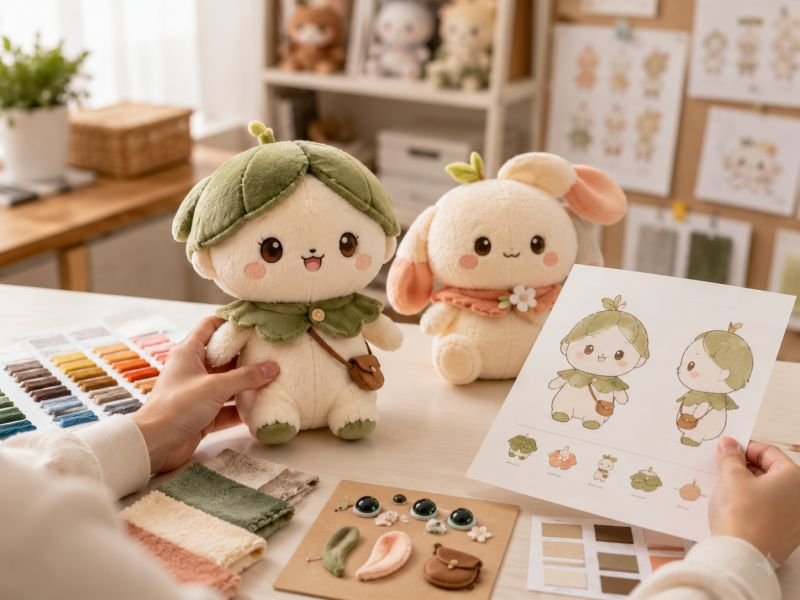
The first plush sample is often the moment when an IP project becomes real. Until then, the character lives in artwork, style guides, campaign plans, product lists, and launch discussions. Once the sample arrives, every detail becomes visible: the eyes, the smile, the head shape, the fabric, the stitching, the body ratio, the color, the softness, even the way the ears stand after packing. A sample can create confidence quickly, but it can also reveal problems that were hidden in flat artwork.
For IP owners, custom character plush sampling is the stage where artwork is tested as a soft product. A strong sample should protect the character’s face, silhouette, color, expression, fabric choice, safety details, and repeatability. The sample should not only look close in one photo; it should become a reliable physical reference for later bulk production.
The hidden cost of poor sampling is rarely limited to one sample fee. A wrong face may require a new embroidery file. A flat side profile may require a pattern change. A fabric choice that hides the mouth line may delay approval. A small accessory that looks cute may raise safety concerns. A packing method that flattens the plush may hurt the first impression after delivery.
This is why sampling should be treated as product risk control, not just a creative preview. A good sample protects the character before larger production begins. A weak sample simply moves the problem forward.
What Should IP Owners Know Before Sampling?
IP owners should know that plush sampling is not a simple copy of artwork. It is the first physical test of whether a character can keep its face, shape, color, mood, softness, safety, and repeatability in plush form. The sample should prove that the design can move from illustration into a real product without losing the character’s identity.
A character may look perfect in a drawing, but fabric changes many things. A thin mouth line can disappear in plush pile. A sharp hairstyle may become soft after sewing. Small pupils may look uneven after embroidery. A color that looks correct on screen may look warmer or darker on fabric. A tiny accessory may look beautiful in artwork but become risky, expensive, or unstable at small size.
Before sampling, the most important task is to decide what makes the character recognizable. The face usually comes first: eyes, mouth, nose, cheeks, eyebrows, and head shape. Then come the body ratio, main color, silhouette, outfit, and signature details. Once these features are clear, the sample can be developed with stronger direction.
A good sample should not only look attractive in one photo. It should work from the front, side, back, and close-up view. It should feel right in hand. It should sit, stand, hang, or display as intended. It should also give the production team a stable reference for later bulk work.
For IP owners, sampling is where early choices become visible. The clearer the artwork, views, color references, size target, safety direction, and review notes are, the easier it is to avoid repeated revisions.
What Is Character Plush Sampling?
Character plush sampling is the process of turning a mascot, licensed character, original IP, game figure, animation character, comic creature, brand icon, or illustrated design into a physical plush sample. It usually includes artwork review, pattern creation, fabric selection, embroidery or printing, cutting, sewing, stuffing, shaping, finishing, and revision.
The sample shows whether the character can survive the move from flat artwork to soft form. Some details may transfer well. Others need adjustment. A tiny cheek mark may need to become larger. A thin tail may need more width. A sharp crown may need a softer shape. A detailed outfit may need fewer layers if the plush size is small.
Sampling also tests scale. A 10cm keychain, a 20cm sitting plush, and a 35cm collectible plush do not carry detail in the same way. The smaller the plush, the more selective the design must be. The larger the plush, the more attention is needed for stuffing balance, side volume, weight, carton space, and display posture.
| Sample Area | What It Tests | Why It Matters |
|---|---|---|
| Face | Eyes, mouth, cheeks, nose, mood | Main character recognition |
| Pattern | Head, body, limbs, side profile | Physical shape and silhouette |
| Fabric | Pile, hand feel, texture, stretch | Detail clarity and touch |
| Color | Fabric, thread, print, patches | Character identity |
| Craft | Embroidery, print, applique, sewing | Detail execution |
| Filling | Softness, body volume, recovery | Shape stability |
| Accessories | Size, attachment, safety | Visual richness and durability |
| Packing | Compression and recovery | Arrival appearance |
A sample is useful because it turns a discussion into something measurable. Instead of saying “the character feels wrong,” the review can identify the issue: eyes too high, head too narrow, mouth too thick, fabric pile too long, body too flat, or ears too soft.
The best samples reduce uncertainty. After each revision, fewer details should remain open. By the time the approved sample is confirmed, the face, fabric, color, pattern, filling, accessories, labels, and packing direction should be clear enough to repeat.
Why Does Sampling Matter For IP Plush?
Sampling matters because IP plush is judged against a known character. A generic plush can be accepted if it feels soft and neat. A character plush must carry a specific identity. People already know the face, color, posture, outfit, or symbol. If the plush misses those details, it may look like a different character.
The first sample often reveals problems that are invisible in artwork. A body that looks balanced in a drawing may become too long after stuffing. A face that looks expressive on paper may look blank after embroidery. A bright color may become dull on plush fabric. A small accessory may not hold its shape. A hairpiece may bend during packing.
This is why sampling protects time and cost. Early changes are easier than late changes. At sample stage, the pattern can be adjusted, fabric can be changed, embroidery files can be revised, and accessories can be reviewed. Once bulk fabric is cut or embroidery begins in quantity, every change becomes more difficult.
For IP projects, sampling also protects internal approval. Creative teams, licensing teams, retail planners, event teams, and product teams may all review the sample. If the sample clearly shows the right direction, feedback becomes more specific. If the sample is far from the character, comments often become emotional and hard to act on.
| Sampling Risk | What Usually Causes It | Better Early Control |
|---|---|---|
| Face does not look right | Eye or mouth placement unclear | Close-up face reference and marked notes |
| Body shape feels wrong | Missing side view | Front, side, back, and top structure views |
| Color feels different | Screen color used only | Fabric swatch and thread reference |
| Small details disappear | Plush pile too long | Material test before approval |
| Accessories feel unsafe | Small detachable parts | Attachment and age-use review |
| Sample looks good once but cannot repeat | Pattern relies on hand shaping | Clear pattern and sample records |
| Packed plush arrives flat | Tight bag or carton pressure | Packing recovery check |
A sample should therefore be reviewed as a future production standard, not only as a single nice-looking piece. The real question is not only “Do we like it?” It is also “Can this be repeated cleanly, safely, and consistently?”
What Is The History Of IP Plush Sampling?
Plush sampling used to be more focused on general softness, sewing quality, and overall appearance. Many stuffed animals were simple bears, rabbits, puppies, dolls, or friendly mascots. A sample only needed to prove that the product looked cute, felt soft, and could be sewn properly.
As animation, games, comics, cultural museums, sports teams, designer characters, creator brands, and mascot programs grew, plush became more specific. People were no longer asking for just a soft animal. They wanted a known character in soft form. That changed the role of sampling.
The sample now has to protect identity. A character’s eyes, body ratio, color, outfit, hair, ears, tail, and expression may already have meaning for fans or internal teams. A plush that changes those details too much may fail even if the sewing is clean.
Collectible culture has also made sampling stricter. Many IP plush projects are now developed as series: different sizes, outfits, keychains, bag charms, blind box styles, pillows, seasonal editions, or event versions. In these projects, the first approved sample may influence a whole product line. If the first sample is not stable, later styles may drift.
Modern plush sampling also includes more practical checks than before. A sample may need to consider age-related safety, care labels, warning labels, barcode labels, packaging, carton compression, warehouse requirements, photography, and repeat orders. The plush must look right, but it must also work as a product.
| Earlier Plush Sampling | Modern IP Plush Sampling |
|---|---|
| General shape and softness | Character accuracy and recognition |
| Simple animal forms | Specific IP features and style rules |
| Fewer approval layers | Creative, licensing, retail, and safety review |
| Basic packaging | Display, gift, barcode, SKU, and carton planning |
| One-time product focus | Repeat orders and multi-style collections |
| Broad visual tolerance | Stricter face, color, and silhouette control |
This shift means the sample is no longer just an early trial. It is the first physical expression of the character’s commercial future. If it is handled carefully, the whole project becomes easier to approve, repeat, and expand.
Custom Plush vs Licensed Character Plush
Custom plush and licensed character plush can follow similar production steps, but they carry different levels of flexibility. Custom plush may be based on an original mascot, pet character, creator design, product idea, or brand icon. Licensed character plush usually follows stricter visual rules because the character already has defined ownership, approved artwork, and usage limits.
For custom plush, the design can often be adjusted more freely. The head can be made cuter, the body can be softened, and some details can be simplified if the project direction allows it. For licensed character plush, changes may need closer review. Eye shape, body ratio, color, costume, logo placement, tag wording, and packaging may need to follow an approved style guide.
This difference affects sampling. A custom mascot sample may focus on emotional fit and product use. A licensed character sample may need to match official references more closely. The revision process may also be different because licensed projects can involve several approval layers.
| Project Type | Flexibility | Sample Review Focus |
|---|---|---|
| Original mascot plush | Medium to high | Brand feeling, face, color, event use |
| Creator IP plush | Medium | Character appeal, fan expectation, cost control |
| Licensed character plush | Lower | Style guide match and approval accuracy |
| Collectible plush | Medium | Display quality, detail richness, consistency |
| Plush keychain | Medium | Mini face clarity and attachment strength |
| Child-focused plush | Lower | Safety, seam strength, labels, material review |
The biggest difference is not only legal ownership. It is visual discipline. A licensed character may not allow casual changes to eye angle, color, logo, or outfit style. If a detail must be simplified for plush production, the reason should be practical and visible: fabric limitation, safety concern, small-size constraint, or bulk stability.
Original IP owners can also use the same discipline. Even when no external licensor is involved, a clear visual standard helps protect the character’s long-term value. Without that standard, each sample round may move the design in a different direction.
Which Type Of Character Needs Extra Review?
Some characters need extra review before sampling because their identity depends on details that are difficult to reproduce in plush. These include characters with detailed faces, unusual proportions, complex hair, strong silhouettes, layered outfits, small accessories, special colors, printed patterns, or fan-sensitive visual traits.
Characters with detailed faces need the most careful review. Small pupils, eyelids, eyebrows, eyelashes, teeth, cheek marks, blush, nose shape, or mouth curves can change the mood quickly. On a 10–20cm plush face, even a small shift can be visible. If the character’s expression is shy, mischievous, gentle, serious, sleepy, or proud, the face should be treated as the first priority.
Characters with special silhouettes also need close review. Long ears, horns, wings, tails, hair spikes, crowns, bows, antennae, or oversized accessories may look strong in artwork but become soft or unstable in fabric. These parts may need wider pattern pieces, better filling support, stronger attachment, or careful packing.
Small plush sizes need special attention. A mini plush or plush keychain may seem simple, but it has less room for embroidery and fewer safe options for small parts. The design may need larger eyes, clearer color blocks, simplified clothing, and fewer tiny accessories.
| Character Feature | Why It Needs Extra Review | Sample Focus |
|---|---|---|
| Tiny facial details | Mood changes easily | Eye, mouth, cheek, nose placement |
| Strong silhouette | Raised parts may bend | Hair, ears, horns, wings, tail support |
| Layered clothing | Alignment can shift | Sewing order and color blocks |
| Special color | Fabric shade may vary | Swatch and thread comparison |
| Printed patterns | Detail may blur on fabric | Print test on actual material |
| Small accessories | Safety and durability risk | Size, material, attachment |
| Mini plush size | Detail space is limited | Simplification and face clarity |
| Multi-style series | Styles must stay visually related | Shared body base and records |
A good early review should identify what is risky before the first sample is made. This can prevent avoidable sample rounds. If a hairpiece is likely to collapse, solve the structure early. If a small printed mark may blur, test the material first. If an accessory is too small for safety or durability, adjust it before approval.
Characters with strong fan recognition should also be handled carefully. Fans may notice small differences faster than expected. The more familiar the character is, the less room there is for loose interpretation.
What Files Should Be Prepared First?

Before character plush sampling begins, the project files should make the character easy to understand from every angle. The most useful package includes front, side, back, and face close-up views, color references, target size, fabric direction, accessory details, packaging needs, safety notes, delivery timing, and ownership or license confirmation. Clear files reduce guesswork and help the first sample move closer to the intended character.
A plush sample is built from information. If the file package only includes one front image, many important details must be interpreted: head thickness, side profile, back design, tail angle, ear depth, hair volume, fabric texture, color standard, accessory size, and label needs. Even a skilled sample team can make a reasonable interpretation that still does not match the IP owner’s expectation.
The goal is not to prepare a complicated document. The goal is to remove uncertainty before pattern work starts. Every missing detail becomes a decision someone else must make. If the character has a strict face, special color, delicate outfit, or launch deadline, those details should be stated early.
A strong file package usually covers three areas:
Creative files: artwork, views, expression, colors, style guide, detail notes.
Product files: target size, quantity, fabric preference, craft method, accessories, packaging.
Project files: sales region, safety needs, delivery date, license or ownership notes, confidentiality rules.
| File Type | What It Helps Control | Risk If Missing |
|---|---|---|
| Front view | Face, expression, body ratio | Main look may be guessed |
| Side view | Thickness, snout, posture, tail, hair | Plush may become too flat |
| Back view | Rear details, tail, outfit, seam direction | Back may look unfinished |
| Face close-up | Eyes, mouth, cheeks, nose, eyebrows | Expression may drift |
| Color reference | Fabric, thread, print, applique | Color may feel wrong on plush |
| Target size | Detail level, pattern, cost, packing | Tiny details may not work |
| Accessory notes | Size, material, placement, safety | Parts may look wrong or loosen |
| Packaging plan | Shape protection and display effect | Plush may arrive flattened |
| Sales region | Labels, warnings, testing direction | Compliance planning may be late |
| Delivery date | Sampling and bulk timing | Launch schedule may become tight |
The clearer the file package is, the less the first sample depends on guessing. That often means fewer revision rounds, better face accuracy, and a more stable approved sample.
What Artwork Should Be Included?
The best artwork package includes a clean front view, side view, back view, close-up face view, color reference, outfit details, accessory notes, logo files, and any official character guide if available. If the character has several moods, the preferred plush expression should be selected before sampling.
The front view controls first impression. It shows face shape, eye distance, mouth mood, body ratio, main color blocks, outfit position, and overall character feeling. But it does not show thickness. A plush has volume, so a front view alone cannot explain whether the head should be flat, round, wide, deep, soft, or structured.
The side view is extremely important for character plush. It shows snout length, belly depth, tail angle, hair volume, ear thickness, wing position, sitting posture, and how the plush should feel in hand. Without side information, the sample may look correct from the front but strange when turned.
The back view protects product completeness. Many plush samples look polished from the front but unfinished from the back. For retail, gift, collectible, and fan products, the back view matters because people turn the plush around, photograph it, display it, and compare it with artwork.
Close-up face artwork should be treated as a key file. The face often causes the most revisions. Eye height, eye tilt, eyelid shape, mouth curve, eyebrow angle, blush marks, teeth, nose size, and cheek shape all change the character’s personality.
| Artwork File | Best Use | Practical Note |
|---|---|---|
| Front artwork | Main recognition and face review | Must be clean and high enough resolution |
| Side artwork | Pattern thickness and posture | Even a rough side sketch is helpful |
| Back artwork | Tail, outfit, rear color blocks | Prevents unfinished back design |
| Face close-up | Expression control | Mark eye and mouth details clearly |
| Outfit detail | Layer planning and sewing order | Separate complex clothing if possible |
| Accessory detail | Size and attachment review | Show position and preferred material |
| Logo file | Embroidery, print, label, hangtag | Vector format is best when available |
| Style guide | Official visual rules | Useful for licensed or long-term IP programs |
Artwork should also show what cannot change. A note such as “eyes must remain oval,” “mouth should not show teeth,” “ears must stand upright,” or “scarf color must stay close to approved red” gives the sample team a clearer target.
Which Views Help Pattern Making?
Front, side, back, top, and detail views help pattern making because plush is a three-dimensional product. Pattern work decides how the character will be shaped through fabric panels, seams, stuffing, and hand finishing. Good views help the pattern maker understand volume, not only outline.
The front view supports face proportion and body width. The side view supports thickness and balance. The back view supports tail placement, rear panels, outfit closure, and seam planning. The top view helps with head roundness, ears, horns, hair, bows, crowns, antennae, or other raised parts. Detail views help with paws, shoes, gloves, badges, pockets, wings, scarves, props, and keychain loops.
For character plush, the side view is often where hidden problems appear. A sample can look charming from the front but feel too thin from the side. A head may need more forehead volume. A snout may need to be shorter. A belly may need more roundness. A tail may need a stronger upward curve. These decisions cannot be made accurately from a front image alone.
If official side or back views do not exist, simple structure notes are still useful. The sketches do not need to be polished. A rough drawing with arrows can explain the intended shape better than a long written description.
Useful structure notes include:
The head should be large and rounded.
The body should sit upright, not lean backward.
The snout should be short and soft.
The tail should curve upward and remain visible from the side.
The ears should stand firmly, not flop outward.
The legs should be short and slightly forward.
The plush should hang from a keyring without the face tilting down.
| View | What It Controls | Common Issue Without It |
|---|---|---|
| Front | Face, width, body ratio | Character looks different at first glance |
| Side | Depth, posture, snout, belly | Plush looks flat or bulky |
| Back | Tail, rear outfit, seam planning | Back view feels unfinished |
| Top | Head roundness, ears, horns, hair | Raised parts twist or misalign |
| Face detail | Eye and mouth placement | Expression becomes wrong |
| Accessory detail | Attachment and scale | Prop looks oversized or unsafe |
A good view package reduces sample revisions because the structure is clearer before the first pattern is made.
How Do Color References Reduce Risk?
Color references reduce risk because plush fabric does not behave like a flat digital color. The same color can look different depending on pile height, pile direction, lighting, fabric texture, embroidery thread, print method, and viewing angle. A color that looks correct on a screen may look warmer, darker, duller, or brighter on real fabric.
For IP plush, color is often part of recognition. A mascot’s blue body, red scarf, yellow belly, pink cheeks, black ears, or green outfit may be remembered as strongly as the face. If the color feels wrong, the plush may still be well made but visually weaker.
The best color references are physical. Pantone codes can help, but fabric swatches, approved product samples, thread cards, printed proofs, or brand color cards are often more useful because plush material has surface behavior. Thread color should be checked separately because embroidery can look shinier or darker than the fabric around it.
Color matching should also be reviewed by area. The body color, face color, embroidery thread, outfit color, printed pattern, accessory color, hangtag color, and packaging color may all need different control.
| Color Area | Why It Matters | Best Reference |
|---|---|---|
| Main body | Strong visual identity | Fabric swatch or approved sample |
| Face area | Affects softness and expression | Short-pile fabric swatch if used |
| Eye embroidery | Defines mood and focus | Thread card or stitch test |
| Mouth line | Controls expression | Thread sample on actual fabric |
| Outfit blocks | Supports character story | Style guide or fabric swatch |
| Printed pattern | Carries fine graphics | Print test on selected material |
| Accessories | Completes final look | Physical part sample |
| Packaging | Shelf and gift presentation | Print proof or color card |
Lighting matters too. A plush may be reviewed in a factory office, photographed in a studio, displayed under retail lights, or opened at home. If a color is critical, it is safer to check it under more than one lighting condition.
Clear color notes help avoid later disagreement:
Main body blue should stay close to approved swatch.
Face cream can be slightly warmer but not yellow.
Eye embroidery should look matte, not shiny.
Cheek pink should remain soft, not neon.
Outfit red should match the printed packaging color as closely as material allows.
These notes make color review more practical and reduce the chance that the first sample looks visually disconnected from the character.
Do Style Guides Help Sampling?
Style guides help sampling because they define the character’s visual rules before the sample is made. A good guide does not need to be long. It should tell the sample team what must remain unchanged, what may be adapted, and what should never be used.
For licensed character plush, a style guide can prevent costly sample errors. It may define official colors, approved expressions, body ratio, logo placement, outfit rules, character poses, prohibited changes, packaging usage, and tag requirements. If the eyes must always be oval, the guide should say so. If the character should never smile with teeth, that should be stated before embroidery begins.
Original IP projects can also benefit from a simple guide. Many character teams do not have a formal license book, but a one- or two-sheet reference can still be very effective. It keeps creative review, product development, and sample feedback aligned.
A practical plush style guide may include:
Front, side, back, and face views.
Approved expression for the plush.
Main colors and closest acceptable color direction.
Must-keep recognition details.
Details that can be simplified for plush.
Forbidden changes.
Preferred fabric direction.
Size and posture target.
Accessory rules.
Packing and label needs.
Approval steps.
| Style Guide Section | Why It Helps |
|---|---|
| Official colors | Reduces fabric and thread disagreement |
| Face rules | Protects mood and recognition |
| Body ratio | Keeps plush close to character style |
| Outfit rules | Helps plan sewing layers |
| Logo rules | Prevents wrong size or placement |
| Simplification notes | Allows practical plush adjustment |
| Forbidden changes | Prevents approval rejection |
| Packaging direction | Connects sample and final presentation |
A style guide should be practical, not restrictive for no reason. Plush requires translation. Some details may need to become larger, softer, simpler, or more stable. The guide should protect identity while allowing smart adjustments for fabric, safety, size, and repeatability.
When Should NDA Rules Be Confirmed?
NDA rules should be confirmed before sharing unreleased artwork, licensed files, confidential style guides, product plans, sample photos, packaging files, SKU lists, or launch schedules. Sampling often requires sensitive materials, and file-handling expectations should be clear before development begins.
A plush sample can reveal more than the product itself. It may reveal a new character, a coming collection, a retail plan, a campaign date, a gift set, a packaging concept, or a style that has not been released. If sample photos are shared publicly too early, the final design may be judged before approval.
A simple confidentiality discussion should cover what files are private, who can access them, whether sample photos may be published, whether the product can be shown after release, how unused designs are handled, and whether packaging or SKU details must remain confidential.
| Sensitive Material | Why It Needs Care | Suggested Handling |
|---|---|---|
| Character artwork | Core creative asset | Share only with project-related team members |
| Style guide | Official design rules | Keep within approved use |
| Sample photos | May show unreleased product | Do not publish without permission |
| Pattern files | Support repeat production | Store with version records |
| Embroidery files | Contain face and logo details | Keep tied to approved project |
| Packaging artwork | May reveal launch plan | Keep private before release |
| SKU list | Shows collection structure | Use only for project preparation |
| Delivery schedule | May reveal campaign timing | Limit access where needed |
Confidentiality planning should not slow sampling. It simply creates a safer environment for sharing the files needed to make an accurate sample. When file rules are agreed early, artwork review, sample development, revision, approval, and repeat production can move with less uncertainty.
For IP owners, this also protects creative value. The first sample may not be final. Keeping it private until approval helps avoid confusion and protects the launch story.
How Is The First Sample Reviewed?

The first sample should be reviewed as a physical test of character accuracy, structure, fabric, safety, and repeatability. It should not be approved only because it looks cute in one photo. The review should check face expression, head shape, body ratio, side thickness, color, embroidery, accessories, filling, hand feel, packing recovery, and whether the plush can guide later bulk work.
A first sample often reveals details that artwork cannot show. A character may look balanced in a drawing, but the plush head may become too round after filling. The eyes may look correct in the embroidery file but feel too high on the finished face. A mouth line may disappear into long-pile fabric. A tail may twist after stuffing. A hair piece may look strong from the front but weak from the side. These are not small cosmetic issues. They can change how the character feels.
The first review should start with recognition. If the character is not recognizable within a few seconds, smaller decoration should wait. A neat seam, soft fabric, or pretty accessory cannot save a weak face. The review should first ask whether the plush still carries the original mood: gentle, playful, serious, shy, mischievous, calm, cute, bold, or premium.
After recognition, the review should move to structure. A plush is touched, held, turned, displayed, packed, shipped, and photographed. It must work from multiple angles. A front-only review is risky because many problems appear from the side or back. Side thickness, belly volume, snout length, ear angle, tail placement, and sitting balance all affect the final impression.
The first sample does not need to be perfect. It should clearly show whether the project is moving in the right direction and what needs to be corrected before approval.
How Long Does Sampling Take?
Sampling time depends on artwork clarity, character complexity, size, fabric choice, embroidery or printing, accessory structure, packing needs, safety review, and revision rounds. A simple rounded mascot may move faster, while a detailed IP plush with hair, horns, wings, layered clothing, small props, printed fabric, or several colors usually needs more development time.
A first sample usually passes through several steps: artwork review, structure discussion, pattern creation, fabric matching, embroidery or print setup, cutting, sewing, stuffing, shaping, finishing, internal checking, and photo or video review. If artwork is incomplete or color references are unclear, the sample may pause before sewing starts.
Small plush is not always faster. A 10cm plush keychain uses less fabric, but tiny face details are harder to control. There is less space for eyes, mouth, cheeks, logo, accessories, and sewing allowance. A 20cm plush often allows better balance between detail, hand feel, and cost. A 30cm or larger plush can show richer details but needs more attention to body balance, filling level, packing volume, and freight space.
| Sample Situation | Main Time Driver | Review Focus |
|---|---|---|
| Simple mascot plush | Basic pattern and face placement | Face mood and body ratio |
| Mini plush keychain | Tiny embroidery and metal fitting | Detail simplification and attachment strength |
| Character with outfit | Layered sewing and color blocks | Alignment and seam thickness |
| Character with hair or horns | Shape support and packing behavior | Raised part stability |
| Printed fabric design | Print test on actual material | Clarity, color, and durability direction |
| Multi-style series | Shared body and style control | Consistency across styles |
| Child-related plush | Safety, labels, seams, small parts | Use scene and age-related review |
A realistic timeline is safer than a rushed one. A rushed first sample may look fast at the beginning but create more revision time later. If the face, fabric, or pattern direction is wrong, the project may need deeper correction.
Internal review time should also be considered. If several teams must check the sample, feedback should be collected in one clear round instead of scattered comments. Mixed or late feedback can slow progress more than sewing time itself.
What Should Be Checked First?
The first check should be character recognition. Before checking small seams or decoration, compare the sample with the artwork and ask whether it feels like the same character. The face, head outline, body ratio, main color, posture, and signature detail should be reviewed before minor trims or hidden details.
Start with the front view. Look at the eyes, mouth, nose, cheeks, eyebrows, forehead, ear position, head width, body size, and overall expression. The sample does not need to copy every drawing line exactly, but the mood should match. A cute sample is not enough if the original character is calm, clever, bold, sleepy, or mysterious.
Then check the side view. Many plush samples fail from the side. The head may be too flat, the snout too long, the belly too thin, the tail too low, or the body too stiff. Side volume affects how the plush feels in real life. A character that looks correct in a front photo may feel weak when held.
Next, check the back view and top view. The back should not feel unfinished. Tail placement, wing attachment, outfit closure, rear color blocks, and seam direction should be reviewed. The top view helps check head roundness, ears, hair, horns, crowns, bows, and symmetry.
| Review Order | Check Area | What To Look For |
|---|---|---|
| 1 | Face | Eye spacing, mouth mood, cheek shape, nose position |
| 2 | Head | Width, depth, forehead, side volume |
| 3 | Body | Ratio, posture, belly, limb position |
| 4 | Silhouette | Ears, hair, horns, wings, tail, bow |
| 5 | Color | Body, face, outfit, thread, patches |
| 6 | Fabric | Pile length, hand feel, stretch, texture |
| 7 | Craft | Embroidery, printing, applique, seam finish |
| 8 | Accessories | Size, placement, strength, safety |
| 9 | Filling | Softness, shape recovery, balance |
| 10 | Packing | Compression, recovery, display condition |
The sample should also be handled. Hold it, turn it, squeeze the head lightly, move the ears gently, check whether the body sits as intended, and see whether the face wrinkles under light pressure. Plush is not a flat display item. It needs to hold its character through normal handling.
A useful first review separates serious issues from small improvements. Serious issues include wrong face, weak silhouette, wrong fabric, unsafe accessory, unstable structure, or poor packing recovery. Small improvements may include minor thread trimming, slight surface cleaning, or small decorative refinements.
Which Face Details Matter Most?
Face details matter most because they decide whether the character feels familiar. Eyes, mouth, cheeks, nose, eyebrows, forehead, and head shape work together. A small shift can change the character from happy to blank, gentle to angry, sleepy to confused, or premium to childish.
Eye placement should be checked first. Eye distance, height, tilt, shape, highlight size, thread color, and stitch density all affect expression. On a 10–20cm plush, a few millimeters can make a visible difference. Eyes placed too high may make the character look surprised. Eyes placed too far apart may make the face look empty. Eyes placed too low may make the character feel younger or softer.
The mouth should be reviewed next. A mouth line that is too thick can look heavy. A line that is too thin may disappear in plush pile. A curve that is too wide can change the character’s mood. A mouth placed too low may make the face look tired. If the character has a shy, calm, playful, or proud personality, the mouth curve must be carefully controlled.
Cheeks and nose also affect the face. A head may expand after filling, making cheeks wider than expected. A nose may look larger once sewn. A face patch may shift during assembly. If the character depends on a small snout, centered face patch, rounded cheek, or soft blush, these areas need close review.
| Face Detail | Common Issue | Better Revision Direction |
|---|---|---|
| Eye distance | Face looks blank or too wide | Move eyes closer or adjust placement marks |
| Eye height | Mood changes quickly | Move eyes up or down with marked amount |
| Eye tilt | Character looks angry or sleepy | Soften tilt or revise embroidery angle |
| Eye highlight | Face looks dull | Adjust highlight size or thread color |
| Mouth curve | Expression feels wrong | Raise, lower, shorten, or soften the curve |
| Mouth thickness | Line looks heavy or hidden | Change stitch density or line width |
| Nose size | Face feels too strong | Reduce size or adjust position |
| Cheek shape | Head looks too round or uneven | Adjust pattern, filling, or patch placement |
| Eyebrow | Mood feels harsh | Change angle or line weight |
| Face patch | Character loses balance | Add clearer cutting and sewing guides |
Marked photos are the best way to give face feedback. Instead of saying “the face is wrong,” it is better to mark the exact area: move the eyes 2mm lower, shorten the mouth, reduce cheek width, raise the nose slightly, or make the eyebrow angle softer.
Fabric should be considered during face review. Long-pile fabric may hide small embroidery. Short-pile fabric usually keeps the face clearer. For some characters, using shorter pile fabric on the face and softer fabric on the body can protect both recognition and hand feel.
Sample vs Golden Sample
A first sample is a development piece. A golden sample is the approved physical reference for later bulk work. The first sample may still need correction. The golden sample should already confirm the final face, body shape, fabric, color, embroidery, filling, accessories, labels, and packing direction.
This difference matters because bulk production needs a fixed standard. If the approved piece is unclear, later work may drift. The eyes may shift slightly. The ears may lean outward. The filling may become firmer. The fabric pile may run in a different direction. A golden sample helps everyone compare finished pieces against the same physical target.
A golden sample should not be approved from one front photo alone. It should be reviewed from front, side, back, top, and close-up views. It should also be checked in hand. Does the body sit correctly? Does the plush hang properly if it is a keychain? Do the ears hold shape? Does the mouth remain visible? Does the sample recover after light compression? Does the packing method protect the approved look?
| Item | First Sample | Golden Sample |
|---|---|---|
| Main role | Reveal issues and direction | Set final physical standard |
| Face | May need revision | Approved expression |
| Pattern | May still change | Final pattern direction |
| Fabric | May be trial material | Approved material direction |
| Color | May need matching | Approved color direction |
| Embroidery | May need placement changes | Approved file and position |
| Filling | May need softness adjustment | Approved filling level |
| Accessories | May need size or strength review | Approved size and attachment |
| Packing | May be untested | Confirmed packing method |
| Repeat value | Limited | High |
Golden sample records are as important as the sample itself. Useful records include photos from all angles, size measurements, fabric notes, thread colors, embroidery version, pattern version, accessory position, filling level, label files, packing photos, and review comments.
For repeat orders, these records help protect consistency. A reorder months later should not depend on memory. The approved sample and records help keep the same face, same body shape, same fabric direction, same softness, and same packing style.
How Should Revision Notes Be Given?
Revision notes should be clear, visual, and linked to action. The best notes explain what should change, where it should change, and how much it should change. Vague comments often lead to extra sample rounds because the sample team must interpret feelings instead of following exact direction.
Marked photos are highly useful. Use arrows, circles, lines, and short notes. For example: move eyes 2mm lower, make mouth shorter, reduce cheek width, make ears stand straighter, increase side depth, use shorter pile fabric on face, or reduce bow size. These notes are easier to follow than a long message with general comments.
Revision notes should separate recognition issues from finish issues. Recognition issues affect whether the plush looks like the character. Finish issues affect neatness. Both matter, but they may require different solutions.
| Feedback Type | Example Note | Likely Action |
|---|---|---|
| Pattern issue | Head too wide from front | Adjust head panel |
| Side profile issue | Body too flat | Add depth to pattern |
| Embroidery issue | Eyes too high | Revise embroidery position |
| Fabric issue | Mouth line hidden | Change pile length or line weight |
| Filling issue | Head too round | Adjust filling amount |
| Sewing issue | Ear angle uneven | Adjust attachment position |
| Accessory issue | Bow too large | Revise size or placement |
| Packing issue | Ears bend in bag | Change bag size or carton plan |
| Color issue | Body color too warm | Review fabric swatch again |
Good revision feedback should also say what should stay the same. If the fabric feel is approved, mark it as fixed. If the body softness is good, keep it unchanged. If the thread color works, do not revise it by accident. This prevents one correction from damaging another approved detail.
It is also better to group comments by priority:
Must revise before approval.
Should improve if practical.
Accepted as is.
Need further review with cost or safety impact.
This helps the sample team understand which changes are essential and which are optional. It also keeps the review from becoming endless.
When Is The First Sample Good Enough To Move Forward?
A first sample is good enough to move forward when the main direction is correct, even if some details still need revision. It should show that the character can work in plush form, the size is suitable, the face can be corrected through clear changes, and the structure does not need a full restart.
A sample may be ready for revision rather than approval if the face is close but needs adjustment, the fabric is acceptable but embroidery needs correction, or the body shape works but accessories need review. This is normal. The first sample is often a learning piece.
A sample may need deeper rework if the character is not recognizable, the pattern is far from the intended body shape, the size cannot support the needed detail, the fabric hides important features, or the accessory structure creates safety or durability problems. In these cases, small edits may not solve the root issue.
| First Sample Result | Meaning | Suggested Next Step |
|---|---|---|
| Face close, small changes needed | Direction is good | Mark revisions clearly |
| Body shape close, side needs depth | Pattern can be adjusted | Revise side profile |
| Fabric hides face details | Material choice may be wrong | Test shorter pile or line weight |
| Color far from reference | Fabric needs review | Check swatches again |
| Accessories unstable | Structure risk | Revise attachment or size |
| Character not recognizable | Direction is weak | Rework face and pattern |
| Packing damages shape | Delivery risk | Change packing method |
The first sample should create a path, not confusion. If the main direction is correct, the next revision can focus on specific corrections. If the sample raises too many basic problems, it is better to pause and review the design brief, size, fabric, and pattern before making another version.
A good first sample does not have to be final. It has to be useful. It should reveal what works, what does not, and what must change before the plush becomes an approved standard.
How Are Price, Safety And Approval Controlled?
Price, safety, and approval are controlled by reviewing the sample as a real product, not only as a visual prototype. Size, fabric, pattern difficulty, embroidery, printing, accessories, filling, packaging, labels, testing needs, quantity, and delivery timing all affect the final direction. A sample should move forward only when the character looks right, the structure is stable, the cost logic is clear, and the safety path matches the intended use.
For IP plush, cost control does not mean removing every special detail. It means spending effort on the details that protect recognition first. The eyes, mouth, head shape, body ratio, main color, and signature accessories usually matter more than hidden decoration. If the face is wrong, saving money on embroidery does not help the project. If the ears define the character, poor packing may damage the whole impression.
Safety should also be reviewed early. A sample can look attractive but still include risks: loose small parts, weak seams, sharp accessories, long cords, unsuitable magnets, sound modules, weighted filling leakage, or missing warning labels. These issues become harder to correct after approval.
Approval should close open decisions. Before a sample is accepted, the project team should know what fabric is used, which craft method is fixed, how accessories are attached, what labels are needed, how the plush will be packed, and whether extra safety review is required for the sales region or age group.
What Affects Sample Price?
Sample price is affected by development work, not only the size of the plush. A custom character sample may require pattern drawing, fabric sourcing, embroidery setup, print testing, cutting, sewing, stuffing, shaping, accessory placement, packing trial, and one or more rounds of revision. Each step uses time and materials before the first finished piece is ready.
Pattern difficulty is one of the biggest cost drivers. A simple round mascot with a clean face may need fewer pattern pieces. A character with horns, hair spikes, wings, layered clothing, shoes, tail, special posture, or an unusual head shape needs more pattern work. More pattern pieces mean more cutting, sewing, alignment, and checking.
Size also affects cost, but not always in a simple way. A small plush uses less fabric, yet tiny details can be harder to control. A 10cm keychain may need careful embroidery because there is little room for eye spacing, mouth curve, cheek marks, and accessories. A 20cm plush may allow clearer detail and easier face control. A large plush uses more material and filling, and packing volume can increase quickly.
Fabric sourcing can also change the sample fee. Standard plush fabrics are easier to prepare. Special pile height, custom color, textured fabric, metallic fabric, printed fabric, mixed fabrics, or premium hand feel may need extra matching or testing. If an IP color is strict, swatch review should happen before the sample is approved.
| Cost Factor | Why It Affects The Sample |
|---|---|
| Pattern difficulty | More panels and special shapes need more development time |
| Target size | Changes fabric use, detail level, filling, and packing volume |
| Fabric type | Special materials may require sourcing or testing |
| Face embroidery | Dense stitches, many colors, and tiny details add setup time |
| Printing | Needs testing on actual fabric surface |
| Accessories | Each part needs size, placement, and attachment review |
| Outfit structure | Layered clothing adds sewing and alignment work |
| Special filling | Weighted beads or special fibers need extra review |
| Packaging trial | Gift boxes, display boxes, or inserts need structure checks |
| Revision rounds | Each version uses extra labor, material, and review time |
A sample fee should be seen as development work. It helps check whether the character can become a stable plush before larger quantities begin. A low-cost sample that skips key checks may look cheaper at first, but it can create more expense later if the face, fabric, or structure must be rebuilt.
Which Details Increase Cost?
Details increase cost when they add more pattern pieces, more sewing steps, more machine setup, more handwork, more inspection, or more packing space. This does not mean detailed plush should be avoided. It means each detail should have a clear reason.
Face embroidery often deserves priority because it protects recognition. Eye shape, mouth curve, eyebrow angle, cheek marks, nose detail, and logo embroidery can make the plush feel much closer to the character. However, dense embroidery, many thread colors, tiny highlights, or multiple embroidery positions can increase setup and production time.
Layered outfits also increase cost. Jackets, skirts, shoes, scarves, hats, hoods, capes, belts, pockets, and small trims require extra material and sewing. If the outfit is important to the character, it may be worth keeping. If the detail is not visible from normal viewing distance, it may be simplified.
Accessories need special attention. Bows, bells, metal charms, plastic parts, keyrings, magnets, sound modules, zippers, removable clothing, and props can improve story value, but they also require attachment review and safety checks. If the plush is intended for younger users, some decorative parts may need to become embroidery or sewn fabric details.
| Detail Type | Visual Value | Cost Pressure | Practical Direction |
|---|---|---|---|
| Eye embroidery | Very high | Medium | Keep accurate and stable |
| Mouth curve | Very high | Low to medium | Protect expression first |
| Head pattern | Very high | Medium to high | Invest in correct shape |
| Main color fabric | Very high | Medium | Confirm swatch early |
| Hair spikes or horns | High | Medium to high | Review shape support |
| Layered outfit | Medium to high | High | Keep main silhouette, simplify tiny trim |
| Small accessories | Medium | Medium to high | Check safety and attachment |
| Printed patterns | Medium | Medium to high | Test on real fabric |
| Gift box | Medium to high | High | Use when display value matters |
| Sound module | Project-dependent | High | Use only when it adds clear value |
The strongest cost plan protects the details people recognize first. A plush with accurate eyes, clean face fabric, correct head shape, and stable color usually feels stronger than a plush filled with tiny details that do not affect identity. Good development is selective. It keeps the character strong while avoiding details that add risk without adding real value.
Are Small Parts Safe For Plush?
Small parts can be safe or risky depending on the plush size, attachment method, intended age group, sales region, and how the product will be used. Plastic eyes, buttons, beads, bells, chains, charms, keyrings, magnets, zippers, removable accessories, sound modules, and battery parts all need review before approval.
The first safety concern is detachment. If a part can be pulled off, it may create risk, especially for younger age groups. Embroidered eyes are often a safer option than hard plastic eyes for child-focused plush. A sewn-on bow may be more stable than a loose ribbon. A soft fabric crown may be more suitable than a hard plastic one.
The second concern is sharpness or friction. Metal rings, plastic clips, badge edges, zipper pulls, or decorative parts may scratch fabric or press into the face during packing. For plush keychains and bag charms, the attachment loop should be reinforced because the product may be pulled, swung, clipped, and carried daily.
The third concern is inner structure. Sound modules, magnets, weighted filling, and battery parts require careful placement. The inner pocket must be secure. Seams should prevent leakage or shifting. Care instructions should match the structure because washing may damage electronics or cause weighted filling problems.
| Small Part | Main Risk | Safer Direction |
|---|---|---|
| Plastic eyes | May detach | Use embroidery for younger age groups |
| Button or bead | Small-part concern | Check size and pull strength |
| Bell or charm | Detachment and noise issue | Review attachment and use scene |
| Metal keyring | Pulling and abrasion | Reinforce loop and keep away from face |
| Magnet | Inner structure risk | Secure pocket and label review |
| Sound module | Water and battery concern | Add clear care instruction |
| Zipper | Scratch or sharp edge risk | Use suitable size and placement |
| Removable clothing | Loose part and fit issue | Review age group and use scene |
| Weighted beads | Leakage and drying risk | Use secure inner bag and seam control |
Small parts should be reviewed before final sample approval. A late change may affect the pattern, embroidery, packing, care label, or cost. A safer design does not have to look plain. Many risky parts can be changed into embroidery, applique, soft fabric, sewn-on details, or larger stable shapes.
What Tests May Be Needed?
Testing needs depend on the destination region, age group, product structure, materials, accessories, filling, labels, and sales channel. A collectible plush for older fans may not need the same review as a plush intended for young children. A plush keychain, weighted plush, baby cloth item, sound plush, or mascot gift may each need a different safety path.
Common review areas include physical and mechanical safety, seam strength, small parts, sharp edges, flammability, chemical content, fabric performance, filling security, labeling, and age warnings. If the plush includes magnets, batteries, sound modules, weighted beads, long cords, or removable parts, more careful review may be needed.
Testing should be discussed before approval because it can affect design choices. If a small plastic accessory creates risk, it may need to become embroidery. If a long cord is not suitable, it may need to be shortened or removed. If weighted filling is used, seam strength and inner bag structure become more important. If the plush is washable, the care label must match the material and structure.
| Review Area | What May Be Checked |
|---|---|
| Small parts | Detachment, size, pull strength |
| Seam strength | Filling leakage and stress areas |
| Sharp edges | Hard accessories, plastic parts, zipper pulls |
| Flammability | Fabric and finished product behavior |
| Chemical safety | Material, dye, coating, accessory content |
| Fabric quality | Shedding, surface finish, colorfastness direction |
| Special components | Sound module, magnet, battery, weighted filling |
| Labeling | Care instruction, warning, age, origin, tracking |
| Packing | Warning labels, barcode, SKU, carton marks |
The exact test plan should match the actual plush. It is risky to assume every plush needs the same tests or that one past test covers every future design. Material, size, accessories, age group, and region can change the requirements.
Testing review should happen before bulk work begins. If safety changes are required after the sample is approved, the project may need a new sample, new label, new accessory, or new pattern adjustment. Early review protects both schedule and product reliability.
When Is The Sample Ready For Approval?
A sample is ready for approval when the character is recognizable, the face feels correct, the body shape is stable, the fabric and color are accepted, the embroidery or print is clear, accessories are suitable, safety concerns are reviewed, labels are planned, packing is workable, and the sample can guide later production.
Approval should not be based only on one good photo. The sample should be checked in hand and from several angles. The front view should protect expression. The side view should show correct thickness. The back view should look finished. The top view should confirm ears, hair, horns, bows, or other raised parts. The plush should also be gently squeezed to check recovery and filling stability.
Before approval, the team should confirm which details are fixed and which remain open. If the eyes may still change later, the sample is not ready. If fabric color is not accepted, the sample is not ready. If packing has not been checked for a strict silhouette, the sample may not be ready. Approval should reduce uncertainty, not push it into the next stage.
| Approval Area | Ready When |
|---|---|
| Face | Expression matches the character |
| Head and body | Shape and ratio are stable |
| Side view | Thickness and posture feel correct |
| Fabric | Texture, pile, and color are accepted |
| Craft | Embroidery, print, applique, and seams are clear |
| Accessories | Parts are secure and suitable for use |
| Filling | Softness, volume, and recovery match the goal |
| Safety | Age group, small parts, and labels are reviewed |
| Packing | Shape can be protected during transport |
| Records | Pattern, fabric, craft, and sample notes are clear |
Approval should also create records. Useful records include final sample photos, measurement notes, fabric swatches, thread colors, embroidery files, pattern version, accessory notes, care label files, packing photos, and inspection focus. These records protect the approved look during bulk work and future repeat orders.
A sample does not need to be perfect in every decorative detail to move forward. It must be stable where it matters: face, silhouette, color, structure, safety, and repeatability. If those areas are clear, the sample can become a strong physical standard.
How Does A Factory Keep Bulk Consistent?

A factory keeps bulk plush consistent by turning the approved sample into a controlled working standard. The face, pattern, fabric, embroidery, filling, accessories, labels, packing, and inspection focus should all follow the approved sample records. Consistency is not created at the end. It starts with material checking, continues through each sewing stage, and finishes only after packing review.
Once the sample is approved, the project moves from creative correction into controlled repetition. This stage is where character plush can quietly drift. One plush may look close to the sample, but when hundreds or thousands are made, small differences become easier to see. Eyes may move slightly higher, ears may lean outward, the head may become wider, the body may feel firmer, or the fabric direction may make the color look uneven.
For IP owners, bulk consistency is not only about neat sewing. The key concern is whether every finished plush still feels like the same character. A clean seam does not help if the expression is wrong. A soft body does not help if the silhouette is lost. A nice fabric does not help if the face no longer matches the approved sample.
A reliable bulk plan should control the details that carry recognition first:
Face embroidery and placement.
Head shape and body ratio.
Main fabric color and pile direction.
Side thickness and posture.
Ear, horn, wing, hair, bow, or tail position.
Accessory size and attachment.
Filling level and hand feel.
Packing pressure and shape recovery.
The approved sample should be treated as the physical reference, not just a nice piece for photos. If the approved sample is clear, recorded, and used during material review, sewing, filling, trimming, inspection, and packing, the bulk result has a much better chance of staying close to the character.
What Happens After Sample Approval?
After sample approval, all final files and physical references should be locked before bulk work begins. This includes the approved sample, final pattern, fabric notes, thread colors, embroidery files, print files, accessory details, label files, packing method, carton plan, and inspection focus. Older sample versions should be separated so they do not create confusion.
This step is important because many sample projects go through several revisions. The first sample may have a wrong eye position. The second may improve the face but still use trial fabric. The third may fix the pattern and filling. If the team does not clearly mark the approved version, someone may accidentally follow an older file or photo.
A good approval handoff should create one clean reference set:
Approved sample photos from front, side, back, top, and close-up face.
Confirmed sample measurements.
Final pattern version.
Approved fabric and pile direction.
Thread color and embroidery file version.
Print file version if fabric printing or surface printing is used.
Accessory size, material, placement, and attachment method.
Filling level and softness notes.
Care label, warning label, barcode, SKU, or FNSKU files if needed.
Packing photo and carton loading direction.
Inspection focus for face, shape, seams, accessories, labels, and packing.
| Approval Record | What It Protects | Risk If Unclear |
|---|---|---|
| Final sample photos | Overall face, body, and side view | Workers may follow the wrong version |
| Pattern file | Head shape, body ratio, posture | Shape may drift during bulk work |
| Fabric note | Color, texture, pile direction | Plush may look uneven or different |
| Embroidery file | Eyes, mouth, logo, small marks | Expression may change |
| Thread color record | Face detail and logo clarity | Face may look too dark or too shiny |
| Accessory record | Bows, tails, wings, keyrings, props | Parts may shift or loosen |
| Filling note | Softness, body volume, recovery | Plush may feel too hard or collapse |
| Packing photo | Shape after transport | Ears, face, or body may deform |
| Label file | Care, warning, barcode, SKU | Packing or retail setup may be delayed |
The first bulk pieces should be reviewed before the full order continues. These early pieces show whether the working setup matches the approved sample. If the eyes are already shifting, the ear angle is unstable, or filling feels different, correction should happen immediately.
This early check is especially useful for character plush with detailed faces, mini sizes, strong silhouettes, layered outfits, or strict color standards. A small correction at the beginning can prevent the same problem from spreading through the full quantity.
How Does QC Protect The Character?
QC protects the character by checking both general workmanship and visual identity. For custom character plush, inspection should not stop at loose threads, stains, open seams, or missing labels. It should also check whether the face, shape, color, fabric direction, and accessories remain close to the approved sample.
The first stage is material review. Fabric should be checked for color, pile height, pile direction, texture, stretch, surface cleanliness, and shade consistency. If material is accepted too loosely, the finished plush may look different even when sewing is clean. For character plush, fabric direction is especially important because pile can change how color appears under light.
The next stage is embroidery or print review. The eyes, mouth, eyebrows, cheeks, nose, logo, and small marks should be compared with the approved sample. Face embroidery should be checked before the plush body is fully sewn, because a face error is easier to fix before assembly. If the mouth line is too thick or the eyes shift, the final expression changes.
Sewing review should focus on symmetry and placement. Ears, limbs, tails, wings, horns, hair, bows, face patches, belly patches, and outfit panels should sit correctly. A small alignment issue may not look serious in one piece, but repeated across many pieces it can weaken the whole series.
Filling review is also essential. Filling changes the body. Too much filling can make the head rounder than approved. Too little filling can make the face collapse. Uneven filling can twist the posture or create lumpy areas. For sitting plush, the body should keep balance. For hanging plush, the face should not tilt downward too much after the keyring is attached.
| QC Stage | Character Check | Practical Detail |
|---|---|---|
| Material arrival | Color, pile, texture, shade | Compare with approved fabric direction |
| Cutting | Panel shape and pile direction | Keep face and body panels consistent |
| Embroidery | Eye, mouth, logo, small marks | Check placement before assembly |
| Sewing | Symmetry, ear angle, tail, patches | Compare with approved sample photos |
| Filling | Head volume, softness, body balance | Avoid overstuffing or flat areas |
| Trimming | Face clarity and surface neatness | Do not trim away important detail |
| Needle detection | Safety support where required | Especially useful before packing |
| Labeling | Care, warning, barcode, SKU | Match the approved files |
| Packing | Shape protection and carton loading | Avoid compression damage |
A useful inspection plan can include measurement checks for important areas. For example, facial placement may use millimeter-level control for small plush, while overall height and width can be checked against the approved sample and agreed tolerance. The exact tolerance should fit the product size and structure. A 10cm keychain cannot use the same visual allowance as a 35cm display plush.
Final inspection should include sample comparison. Put finished pieces beside the approved sample and look at them as a person would see them: front view first, then side and back. Does the face feel right? Are the eyes balanced? Is the mouth clear? Do the ears keep their angle? Does the body sit or hang correctly? Is the fabric direction consistent? Are the labels and packing correct?
For IP plush, a piece can pass basic sewing checks and still fail visually. Strong QC catches both.
Which Packing Protects The Sample Look?
Packing protects the sample look by reducing compression, bending, friction, dust, moisture exposure, and shape damage during storage and transport. Character plush should not be packed only to save space. The packing method should protect the face, silhouette, fabric surface, accessories, and display condition.
The best packing choice depends on plush size, fabric type, raised parts, accessories, shipping method, retail setup, and gift value. A simple polybag may work for a basic plush with no strict silhouette. A collectible character with tall ears, horns, wings, hair, a bow, or a shaped face may need more support.
A tight bag can flatten the face. A loose bag can allow friction and movement. Metal fittings on plush keychains can press into the face or scratch fabric if they are not positioned properly. For bag charms, keyrings should be placed so they do not damage embroidery or create marks during transport.
Gift boxes, display boxes, backing cards, inner trays, or dividers can improve shape protection and presentation. These options may increase packing volume, but they can help protect high-value IP plush, limited editions, retail sets, or collector items.
| Packing Method | Best Use | Shape Protection | Watch Area |
|---|---|---|---|
| Individual polybag | Simple plush, event plush | Basic | Bag should not squeeze face |
| Polybag with hangtag | Retail plush, mascot plush | Basic to medium | Hangtag should not cover expression |
| Backing card | Keychains, bag charms | Medium | Metal fitting position |
| Gift box | Premium plush, gift sets | Medium to high | Box size and inner support |
| Display box | Collectible or licensed series | High | Window pressure and barcode area |
| Inner divider | Multi-style sets | Medium to high | Reduces rubbing and bending |
| Carton layer control | Larger quantities | High | Prevents lower layer compression |
| Vacuum packing | Select simple large plush only | Low for strict character shape | Not ideal for firm ears, face, hair, wings |
A packing recovery check is useful before bulk packing. Place the plush in the planned bag and carton, leave it under similar pressure, then open it and check shape recovery. Look at the face, ears, horns, hair, wings, tail, outfit, fabric pile, and overall hand feel. If the plush needs too much manual reshaping, the packing method may need adjustment.
Carton loading should also be checked. Too many pieces in one carton can flatten the lower layer. Heavy stacking can affect the head and body. If the character has raised parts, the loading direction should avoid bending them. For strict retail presentation, carton marks and inner packing photos should be recorded.
Good packing is not always the most expensive option. It is the option that protects the weak areas of the specific character. If the ears carry recognition, protect the ears. If the face is the strongest feature, protect the face. If the product has metal parts, prevent scratching. If the plush is a gift set, keep each piece in place.
Who Is The Best Factory For IP Plush?
The best factory for IP plush is one that can keep the character recognizable from sample approval through bulk completion. It should understand artwork translation, pattern control, fabric behavior, face embroidery, filling balance, accessory attachment, safety needs, label setup, packing recovery, and repeat-order records.
A strong factory does not rush straight from approval to bulk work without checking the details. It should confirm the final sample version, pattern files, material direction, craft details, and inspection focus. It should also know which character features matter most, because not every detail has the same value.
For IP owners, the best fit is a team that asks useful project questions:
Which face details must remain unchanged?
Which size is planned?
Will the plush sit, stand, hang, or be displayed in a box?
Is the character original, owned, or licensed?
Will the plush be used by children, collectors, fans, schools, events, or retail teams?
Which labels, barcodes, SKU files, or carton marks are needed?
Will there be future repeats or a multi-style series?
| Capability | Why It Matters For IP Plush |
|---|---|
| Artwork review | Finds unclear views and risky details early |
| Pattern development | Protects head shape, body ratio, and posture |
| Sample correction | Improves face and silhouette before bulk work |
| Fabric review | Protects color, pile, softness, and detail clarity |
| Embroidery setup | Controls eyes, mouth, logo, and small marks |
| Sewing control | Keeps patches, ears, limbs, and outfit aligned |
| Filling control | Protects softness, volume, balance, and recovery |
| QC stages | Catches drift before it spreads |
| Needle detection | Adds safety support where needed |
| Label support | Helps care, warning, barcode, and SKU accuracy |
| Packing planning | Protects shape after transport |
| Record keeping | Helps future repeats stay consistent |
| NDA support | Helps protect unreleased artwork and samples |
A lower-cost option may look attractive at first, but IP plush carries creative value, timing pressure, and long-term product value. If the sample is weak, revision time increases. If bulk records are poor, repeats may look different. If packing is too tight, the plush may arrive with a damaged face or bent ears. If small parts are not reviewed, safety concerns may appear late.
A good factory should make the plush look right, feel right, and remain repeatable. For an IP project, that combination is often more valuable than saving a small amount at the wrong stage.
How Can Repeat Orders Keep The Same Style?
Repeat orders keep the same style through approved samples, stored records, fabric swatches, embroidery files, pattern versions, filling notes, accessory records, label files, packing photos, and feedback from earlier shipments. Without these records, a repeat order may slowly move away from the original approved sample.
Soft products can change over time. A fabric batch may have a slightly different shade. A replacement fabric may have a different pile height. Sewing tension may vary. Filling may feel softer or firmer. A keyring, bow, scarf, badge, or zipper may be replaced with a similar part that does not look exactly the same. Packing may change if carton size is adjusted.
A repeat order should start by reviewing the approved sample and current materials. If the original fabric is still available, compare it with the stored swatch. If a replacement is needed, review it before bulk work. If embroidery files are updated, compare the finished face with the approved sample. If packing changes, test whether the plush still recovers well.
| Repeat Record | What It Protects |
|---|---|
| Approved sample | Overall face, body, softness, and style |
| Pattern version | Head, limbs, body, tail, and posture |
| Fabric swatch | Color, pile direction, texture, hand feel |
| Embroidery file | Eyes, mouth, expression, logo details |
| Thread color card | Face clarity and logo consistency |
| Filling note | Volume, softness, and recovery |
| Accessory record | Bow, scarf, keyring, badge, props |
| Label file | Care, warning, barcode, SKU, FNSKU accuracy |
| Packing photo | Shape protection and carton consistency |
| Feedback record | Controlled improvement for future runs |
For multi-style IP series, repeat consistency is even more important. Different characters may share one body base but use different faces, outfits, colors, and accessories. If the shared body base changes, the whole series may feel uneven. If one style uses a different fabric texture without review, the collection may lose visual harmony.
Repeat orders should also allow controlled improvement. If the earlier run had slight carton compression, the next run can improve packing. If ears were too soft, internal support or filling can be adjusted. If retail photos showed a color issue, fabric review can be stricter. The goal is to improve the product without losing the approved character style.
For IP owners, repeat consistency protects more than one order. It protects the character’s long-term product identity. When fans, retailers, event teams, or collectors see the plush again, it should feel like the same character they already recognize.