 Skip to content
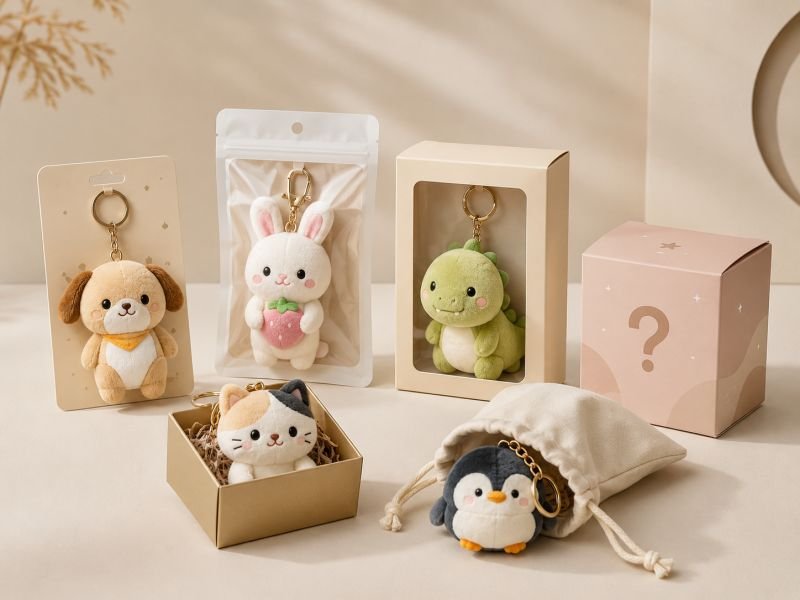
A plush keychain is small, but the package around it can decide whether it feels like a loose accessory or a finished gift. For brand teams, IP teams, retailers, museums, theme parks, event planners, and online stores, packaging is not just decoration. It affects shelf appeal, gift value, barcode scanning, warehouse sorting, shipping volume, and repeat order control.
That is why custom plush keychain packaging should be planned early. A cute animal face can lose value if the box presses the nose flat. A nice gift set can create trouble if the barcode is wrong. A blind box can build strong collectible value, but only when style codes, carton rules, and packing checks are clear.
A custom plush keychain can be packed with a hangtag, backing card, OPP bag, header bag, window box, gift box, blind box, drawstring pouch, display box, or multi-piece gift set. The right choice depends on the sales channel, target price, character shape, label needs, barcode rules, packing speed, and carton plan. For gift sales, packaging should make the plush keychain easier to display, easier to scan, easier to give, and easier to reorder.
What Packaging Works Best for Custom Plush Keychains?

The best packaging for custom plush keychains depends on how the product will be sold, stored, displayed, and delivered. Hangtags and backing cards work well for retail racks. OPP bags and header bags help protect the item at lower cost. Window boxes, gift boxes, blind boxes, and drawstring pouches create stronger gift value. For bulk work, packaging must also support SKU labels, barcodes, carton marks, and final inspection.
A good package should not only look pleasant in photos. It should hold the plush keychain in the right direction, protect soft parts, keep metal hardware away from the face, and give enough space for brand and sales information.
Plush keychains are different from metal or acrylic keychains because they have filling, fabric pile, embroidery, soft ears, tails, clothing, bows, chains, hooks, or other details. A package that works for a flat keychain may not work for a plush one.
Packaging Type Comparison
| Packaging Type | Best For | Main Value | Risk To Check |
|---|---|---|---|
| Hangtag | Simple retail, events, brand gifts | Low weight, easy hanging, logo space | Limited protection |
| Backing card | Gift shops, IP products, rack display | Better front view and brand story | Card size and fixing position |
| OPP bag | Basic protection, online orders, large events | Keeps product clean and easy to pack | May look too plain alone |
| Header bag | Budget gift programs, fast packing | Combines protection and printed branding | Seal strength and header size |
| Window box | Retail gifts, character products | Shows the plush clearly | Box fit and shipping volume |
| Gift box | Holiday gifts, brand gifts, premium sets | Strong gift feeling | Cost and manual packing time |
| Blind box | IP series, collectible gifts | Surprise and repeat sales value | Style control and carton ratio |
| Drawstring pouch | Soft gift sets, reusable packing | Lightweight and gift-ready | Weak shelf structure |
| Display box | Store counters, multi-piece sets | Strong retail presentation | Larger carton volume |
How to Pack a Keychain as a Gift?
To pack a keychain as a gift, start with the experience you want the receiver to have. Should the product look cheerful, premium, collectible, seasonal, or brand-focused?
For simple gifts, a clear bag with a printed card and branded sticker may be enough. For retail gifts, a backing card or window box can make the product easier to display. For seasonal gifts, a paper sleeve, small gift box, or drawstring pouch can add a warmer feeling without changing the plush itself.
The keyring should not scratch the fabric. The plush face should face forward. Ears, bows, tails, hair, or small accessories should not be pressed flat. If the gift pack includes stickers, cards, coupons, pins, or small inserts, these parts should not rub against embroidery or long plush fabric.
What Makes Plush Keychain Packaging Different?
Plush keychains have volume. They are soft, filled, and flexible. That makes them more sensitive to package size and pressure.
A box that looks fine in a flat layout may press the plush face after stuffing. A clear bag that looks neat on a hard keychain may allow a soft plush keychain to twist sideways. A metal chain may scratch the fabric if it is not fixed in the right place.
For small plush keychains, face embroidery, stitch density, fabric pile direction, hardware position, hangtag hole, and box space should be reviewed before the first sample is approved. This prevents repeated changes later.
How Should Brands Compare Basic and Premium Packaging?
Basic packaging is useful when cost, packing speed, and distribution matter. Premium packaging is useful when retail value, gift feeling, and photo appeal matter.
A simple hangtag may be right for an event giveaway. A window box may be better for a gift shop. A blind box may work well for an IP character series. A drawstring pouch may suit corporate gifts or soft gift sets.
Before choosing, compare five details:
| Check Item | Why It Matters |
|---|---|
| Product visibility | The character should be seen clearly |
| Plush protection | Soft parts should not be crushed |
| Label space | Barcode, SKU, and warning text need room |
| Packing speed | Bulk packing should be repeatable |
| Shipping volume | Large packaging may raise delivery cost |
The best packaging is not always the most expensive one. It is the one that fits the product, channel, price level, and delivery plan.
Why Does Packaging Matter for Gift Sales?

Packaging matters for gift sales because small plush keychains need presentation. A plain loose item can feel like a small add-on. A well-packed item can feel like a finished gift. Packaging frames the character, carries brand information, protects the plush shape, supports barcode scanning, and helps the product look ready for retail shelves, online photos, event kits, holiday sets, and IP collections.
Gift sales are emotional, but the execution is practical. The item must look good, scan correctly, ship safely, and stay easy to manage.
A plush keychain may only be 8–12 cm, but its package may carry the story, logo, price label, barcode, series name, safety text, and display format. That small package often does more commercial work than people expect.
How Packaging Raises Gift Value
Gift value comes from readiness. A plush keychain in a loose bag may look unfinished. The same item with a backing card, character name, story card, logo sticker, or small gift box feels more intentional.
For IP projects, packaging can show character name, collection title, style number, or limited edition detail. For brand gifts, it can show campaign wording, event date, brand logo, or thank-you message. For retail, it can hold barcode and product information.
The plush itself may not have room for all this. The package becomes the voice of the product.
Why Small Plush Keychains Need Strong Presentation
Small products can disappear on shelves if they are not framed well. This is why backing cards, display boxes, and window boxes are useful.
They help the product face forward. They create a clear outline around a soft item. They also make product photos cleaner for online stores.
For plush keychains with animal faces, mascot heads, food characters, holiday themes, or IP figures, front-facing display matters. If the face turns sideways inside the bag, the product loses much of its charm.
How to Wrap a Plushie as a Gift Without Damaging Its Shape?
To wrap a plushie as a gift, avoid tight pressure on the face, ears, body, and accessories. Soft tissue, a loose pouch, a roomy gift box, or a paper insert works better than tight wrapping around the plush body.
For plush keychains, this rule becomes even more important because the product is small. A small box with little clearance can press the face. A tight bag can flatten the fabric pile. A metal ring can leave marks if it presses into the plush surface.
For gift sets, use a divider or insert when the plush is packed with cards, pins, stickers, or other small parts. The goal is simple: the item should still look fresh when opened.
What Notice Before They Touch the Product
People notice the face, color, package cleanliness, product direction, and whether the item looks complete.
A plush keychain placed straight in a window box feels more prepared than one floating loosely in a bag. A backing card with matching color makes the product easier to understand. A barcode placed cleanly on the back gives a more retail-ready feeling.
These small details also help internal review. Product teams can see how the item will look in real use, not only in a sample photo.
Which Packaging Type Should You Choose?
Choose packaging by matching product purpose with channel needs. Hangtags and backing cards suit rack display. Polybags suit basic protection and cost control. Retail boxes create stronger shelf presence. Gift boxes and drawstring pouches suit gifting. Blind boxes suit collectible series. The right choice should balance visual value, unit cost, packing time, label needs, carton volume, and repeat order control.
If the package is too simple, the product may look low-value. If it is too complex, it may slow packing and increase total cost. The right middle ground depends on product position.
Hangtag vs Backing Card
Hangtags are light, flexible, and cost-friendly. They work well when the plush keychain already looks strong on its own and only needs brand information.
Backing cards give more structure. They help the plush face forward and create more room for artwork, character name, barcode, and story text.
Choose a hangtag for simple gifts or large quantity programs. Choose a backing card when retail display and visual storytelling matter.
Polybag vs Retail Box
A polybag protects the product from dust and handling. It is fast to pack and useful for online orders, event gifts, or bulk distribution.
A retail box adds shape and shelf value. A window box can show the character while protecting it. It can also carry printed artwork, barcode area, and collection information.
Polybag is practical. Retail box is stronger for sales presentation. The choice depends on price level and sales channel.
Gift Box vs Display Box
A gift box is designed for giving. It may hide the product until opened and create a stronger unboxing feeling.
A display box is designed for selling. It should help the product hang, stand, stack, or face forward in a store.
If the plush keychain will be given in a corporate kit, holiday gift, or VIP pack, a gift box may work well. If it will sit on a shelf or counter, a display box may be better.
Blind Box vs Clear Window Box
Blind boxes add surprise. They suit collectible IP series, mystery gifts, and multi-character programs. They can help create repeat purchase behavior when the series is attractive.
Clear window boxes show exactly what is inside. They are better for museum gifts, mascot products, retail shops, and situations where people want to choose a specific character.
Blind boxes need stronger control. The project should define style ratio, carton ratio, barcode rule, and whether each style is tracked separately.
Which Packaging Is Best for Soft Plush Keychain Gifts?
For soft plush keychain gifts, backing cards, window boxes, gift boxes, and drawstring pouches are usually strong choices.
Use backing cards when display matters.
Use window boxes when the character should be visible.
Use gift boxes when the product is part of a seasonal or premium program.
Use drawstring pouches when light weight and soft gift feeling matter.
Avoid tight structures that flatten the plush face or bend small accessories.
How Do Sales Channels Change Packaging Choices?

Sales channels change packaging because each channel has different needs. Gift shops need clear display. Online stores need photo appeal and safe delivery. Events need fast distribution. IP projects need story and series control. Retail chains need barcode and carton accuracy. Before choosing packaging, decide where the plush keychain will be sold, stored, scanned, displayed, packed, and shipped.
A package that works well for one channel may fail in another. A luxury box may be too slow for a large event. A simple polybag may not be strong enough for gift shop display. A blind box may be exciting for fans but risky without clear assortment rules.
Channel-Based Packaging Map
| Sales Channel | Suitable Packaging | Main Need | Detail To Confirm |
|---|---|---|---|
| Gift shop | Backing card, window box, display box | Shelf appeal | Barcode and front view |
| Online store | OPP bag, branded card, small box | Photo appeal and delivery protection | SKU label and packing list |
| Event giveaway | Hangtag, OPP bag, header bag | Fast distribution | Carton mark and quantity |
| IP merchandise | Blind box, window box, story card | Collectible value | Style ratio and series code |
| Corporate gift | Gift box, pouch, thank-you card | Brand impression | Logo and message placement |
| Museum or theme park | Backing card, window box | Souvenir value | Location or theme artwork |
| Holiday program | Gift box, sleeve, pouch | Seasonal feeling | Launch date and packing speed |
Best Packaging for Gift Shops
Gift shops need products that are easy to understand at first glance. Backing cards and window boxes work well because they show the character and create a clean retail shape.
For museum, zoo, theme park, or destination shops, packaging can carry location names, attraction themes, animal facts, or collection titles. This turns a small plush keychain into a souvenir with memory value.
Barcode placement should be planned early. Small gift shops often manage many small items, so clean scanning helps daily sales work.
Best Packaging for E-Commerce Sales
Online stores need packaging that photographs well and ships well.
A simple branded bag with a card may be enough for low-weight products. A small box can improve photo quality and gift value if the unit price supports it. SKU labels, barcode stickers, and packing lists are especially useful when many styles are sold together.
Shipping protection matters. Test whether the plush face, ears, bow, tail, or ring stays in good shape after packing and carton movement.
Best Packaging for Events and Giveaways
Events need speed and accuracy.
Packaging should be easy to count, hand out, separate by style, and move by carton. OPP bags, header bags, hangtags, and simple backing cards often work well.
Avoid packaging that requires too much manual work if the schedule is tight. A beautiful package that slows packing can create late delivery risk.
For fixed event dates, send artwork, quantity, packaging needs, delivery country, and deadline early to info@heyzizi.com so the packing plan can be checked together with the sample direction.
Best Packaging for IP Merchandise
IP merchandise needs character recognition, series identity, and emotional value.
Packaging can include character name, collection name, version number, story card, limited mark, or QR code. Blind boxes and window boxes are both useful, but they serve different purposes.
Use blind boxes for mystery and collection. Use window boxes when fans want to choose a specific character.
For multi-character IP programs, style code and carton ratio should be clear before bulk packing starts.
How to Make Custom Plushies to Sell in Different Channels?
To make custom plushies to sell, start with the channel. The channel affects size, fabric, face method, safety review, packaging, label content, and carton plan.
Gift shop products need display strength.
Online products need clean photos and delivery protection.
Event gifts need fast packing and easy distribution.
IP products need character accuracy and collection structure.
Retail products need barcode and label control.
A plush keychain is often a smart starter product because it is small, easy to carry, and gift-friendly. But it still needs a complete plan: artwork, size, fabric, embroidery, filling, hardware, packaging, label, barcode, carton, and delivery schedule.
What Labels and Barcodes Should Be Planned?
Labels and barcodes should be planned before packaging materials are ordered. Custom plush keychains may need hangtags, sewn-in labels, barcode stickers, SKU stickers, age labels, warning text, material labels, FBA labels, or carton marks. Correct labeling affects scanning, storage, shelf placement, warehouse receiving, and repeat order accuracy.
A package is not ready for bulk production until the label path is clear.
Many projects run into trouble after the plush itself looks good. The barcode is wrong. The SKU sticker is on the wrong color. The carton mark does not match the packing list. For multi-style gift items, label mistakes can create bigger delays than small sewing issues.
Label Planning Checklist
| Label Item | Needed For | Confirm Before Bulk |
|---|---|---|
| Hangtag | Brand, character, barcode, story | Artwork, size, hole position |
| Sewn-in label | Material, care, brand information | Text, placement, region needs |
| Barcode sticker | Retail scanning | Code, size, print clarity |
| SKU sticker | Multi-style control | Style name, color, version |
| Warning label | Children’s products, retail programs | Text and target region |
| FBA label | Warehouse receiving | File and placement |
| Carton mark | Shipping and sorting | SKU, quantity, destination |
What Should Go on Hangtags?
A hangtag can include product name, brand logo, character name, series name, barcode, QR code, age label, material information, care text, warning text, and short story copy.
For a small plush keychain, the tag should not be too large. It should support the product, not overpower it.
If the item is for children, label content should be checked carefully. If it is for retail, barcode space should be reserved from the beginning.
Do Plush Keychains Need SKU Labels?
SKU labels are useful when the project includes different characters, colors, sizes, packages, or sales channels.
For a single event style, a simple tag may be enough. For a five-character retail series, SKU labels are very helpful. They reduce confusion during packing, storage, online listing, and repeat orders.
A SKU system also helps if the first order expands into new versions later.
Are Barcode Stickers Needed for Retail?
Retail programs usually need barcodes. Barcodes help stores scan, receive, price, and manage products.
The barcode can be printed on the hangtag, backing card, box, or sticker. It should be easy to scan but placed where it does not harm the visual presentation.
For multi-style projects, each code should match the correct character, color, size, and package version.
How To Avoid Wrong Labeling in Multi-SKU Orders
The best way to avoid wrong labeling is to connect every style with one clear code.
That code should appear in the sample record, hangtag file, barcode file, package file, packing list, and carton mark. For similar colors or similar characters, use photo references during packing checks.
Multi-SKU Packing Control Table
| Control Step | What To Check |
|---|---|
| Style code | Character, color, size, version |
| Package version | Bag, card, box, or pouch |
| Barcode | Correct code for each style |
| Inner pack | Product and label match |
| Carton pack | Quantity and ratio match plan |
| Final check | Product, tag, barcode, carton mark match |
This is where clear factory control saves time. A cute product still needs clean data behind it.
How Does Packaging Affect Price?
Packaging affects price through material, printing, structure, inserts, labor, carton volume, and quantity. Hangtags and OPP bags are usually more cost-friendly. Window boxes and gift boxes add presentation but may raise packing cost and shipping volume. Blind boxes can support collectible sales, but they require stronger artwork, style ratio, and packing control. The right packaging balances gift value, unit cost, speed, and delivery efficiency.
Price should not be judged by package type alone. A simple card can look strong if the design is clean. A premium box can waste money if the plush keychain is too small for it or the channel does not need it.
Packaging Cost Factor Table
| Cost Factor | What It Affects | How To Control It |
|---|---|---|
| Paper material | Box feel and strength | Match weight to sales value |
| Printing | Brand look | Limit unnecessary effects |
| Window film | Product visibility | Use only when visibility matters |
| Insert tray | Product position | Keep structure simple |
| Manual packing | Labor time | Reduce complex steps |
| SKU sorting | Packing speed | Use clear style codes |
| Carton volume | Shipping cost | Test units per carton |
| Quantity | Unit cost | Plan repeat styles early |
What Packaging Details Add Cost?
Printed boxes, rigid structures, window film, insert trays, foil stamping, embossing, special paper, story cards, stickers, multi-SKU sorting, and large carton volume can all add cost.
Some details create real value. Others only add decoration. The best choice depends on the product’s target price and sales channel.
Which Packaging Is Better for Budget Control?
For budget control, consider hangtags, OPP bags, header bags, backing cards, and simple sleeves.
These options can still look clean if the artwork, product position, and sealing are handled well. A low-cost package does not need to look careless.
For large event or promotion programs, simple packaging often performs better because it is faster to pack and easier to distribute.
How To Balance Gift Look and Unit Cost
Spend packaging budget where it changes the product’s first impression.
A backing card can give a small plush keychain more retail value. A printed sleeve can make a plain box feel seasonal. A small story card can make an IP character feel collectible. A drawstring pouch can add gift feeling without too much carton volume.
Avoid spending on details that the receiver will not notice or the sales channel does not need.
When Should You Upgrade to Custom Boxes?
Upgrade to custom boxes when the plush keychain is sold as a gift item, part of an IP collection, placed in gift shops, used for holiday sales, included in a set, or positioned above basic giveaway level.
Before finalizing the box, test it with the real plush sample. Check the face view, ring position, product removal, barcode location, and carton quantity.
How Should Packaging Be Reviewed Before Sample Approval?

Packaging should be reviewed during the sample stage because it affects shape, cost, label placement, packing time, carton size, and final presentation. The first sample should be checked with the proposed hangtag, card, bag, box, or pouch whenever possible. The approved sample should include product and packaging details so bulk production has a clear standard.
A plush keychain sample without packaging only tells half the story. The item may look good on a desk, but will it still look good inside a box or bag?
Packaging Review Flow
| Step | Review Action | Why It Matters |
|---|---|---|
| 1 | Send artwork and use scene | Helps define product and packing path |
| 2 | Review size and plush structure | Prevents face and hardware issues |
| 3 | Choose packaging direction | Matches channel and target price |
| 4 | Make plush sample | Checks shape, fabric, embroidery |
| 5 | Test package fit | Checks pressure, view, label space |
| 6 | Confirm label and barcode | Reduces retail and warehouse errors |
| 7 | Approve final sample | Creates bulk reference |
| 8 | Prepare bulk packing rule | Helps packing team follow one standard |
What To Check on the First Sample
Check the product inside its proposed package, not only the plush itself.
Look at face direction, fabric pile, ear shape, keyring position, hangtag hole, bag size, box window, barcode area, and carton fit.
The real test is simple: pack it, move it, open it, and check whether it still looks gift-ready.
How Long Does Packaging Sampling Take?
Simple hangtags or backing cards usually move faster than printed boxes or blind box systems. A custom box may need structure checking, artwork proofing, printing review, folding review, and packing test.
If the plush sample changes size after revision, the packaging may need revision too. This is why packaging should not wait until the end.
When Should Packaging Be Confirmed?
Packaging should be confirmed after the plush sample shape is approved and before bulk materials are ordered.
At that stage, product size, package size, label placement, barcode file, carton quantity, and packing method can be fixed. Late changes may affect cost, timing, and packing setup.
Why Approved Sample Control Matters
The approved sample should become the bulk reference. For plush keychains, that reference should include the plush body, face embroidery, fabric, filling, hardware, hangtag, label, package, barcode position, and packing method.
Without this standard, bulk work may look inconsistent even when the product itself is correct.
How To Test Gift Packaging Before Bulk Orders?
Test gift packaging with four checks:
| Test | What To Check |
|---|---|
| Visual test | Does it look gift-ready? |
| Fit test | Does it protect the plush shape? |
| Scan test | Is the barcode readable? |
| Packing test | Can workers pack it quickly and consistently? |
For multi-SKU programs, add a sorting test. Workers should be able to match product, label, package, and carton without guessing.
What Are Common Packaging Mistakes?
Common mistakes include boxes that press the plush face, metal keyrings that scratch fabric, weak label planning, wrong barcode stickers, unclear SKU control, and gift packaging that increases shipping volume too much. Many of these issues can be avoided by testing the package with the real sample, confirming label files early, and setting a clear bulk packing rule.
Good packaging planning is not only about beauty. It is about preventing problems before goods are packed.
Common Mistakes Table
| Mistake | What Happens | How To Prevent It |
|---|---|---|
| Tight box | Plush face or ears flatten | Test box with filled sample |
| Loose bag | Product turns sideways | Adjust bag size or add card |
| Free metal ring | Fabric gets scratched | Fix ring position |
| Wrong barcode | Retail or warehouse issue | Match code with style table |
| Unclear SKU | Mixed styles in cartons | Use SKU list and carton marks |
| Large gift box | Shipping volume rises | Check carton quantity early |
| Complex packing | Packing speed slows | Test packing time |
| Missing warning text | Retail approval risk | Confirm label needs early |
Boxes That Press the Plush Face
This often happens when the box is designed from artwork only. A plush keychain becomes thicker after filling. If the box has no extra space, the nose, eyes, ears, or bow may press against the window.
Use the filled sample to test the box. For characters with hats, glasses, bows, hair, or big ears, allow more space.
Keyrings That Scratch the Fabric
Metal hardware can damage plush fabric if it moves freely inside the package.
The ring, chain, hook, or clasp should sit away from the embroidered face and soft body. A card slot, paper tie, or small fixing method can help hold the hardware in place.
Wrong Barcode or SKU Stickers
A wrong barcode can create trouble even if the product is perfect.
This is common in multi-style plush keychain programs. Similar colors, similar animals, or different package versions can be mixed if the code system is weak.
Each style should connect to one barcode, one label file, one package file, and one carton rule.
Gift Packaging That Increases Shipping Volume
Some gift boxes look attractive but take too much carton space. For small plush keychains, shipping volume can become a real cost issue.
Before choosing a large box, check how many units fit in one carton and whether the price level supports the packaging.
Packaging That Looks Good But Slows Packing Work
A package may look great in photos but take too long to assemble.
If each unit needs folding, tying, inserting, sticker placement, ring fixing, and style sorting, bulk packing time increases. For large orders, this may affect the delivery schedule.
A strong package should look good and be repeatable.
Who Needs Custom Plush Keychain Gift Packaging?
Custom plush keychain gift packaging is useful for brand gift programs, IP merchandise, retail gift shops, museums, theme parks, events, school programs, holiday gifts, and online stores. These projects need packaging that supports display, gifting, labeling, carton sorting, and repeat orders. Although the product is small, the project may involve character control, safety information, SKU planning, and sales channel needs.
A plush keychain can work as a mascot gift, fan collectible, souvenir, retail add-on, event item, school gift, or holiday set. The package should fit that role.
Project Type Matching Table
| Project Type | Product Focus | Packaging Focus |
|---|---|---|
| Brand gift | Logo and clean message | Pouch, card, gift box |
| IP series | Character identity | Blind box, window box, story card |
| Gift shop | Shelf display | Backing card, display box |
| Event giveaway | Quantity and speed | OPP bag, header card |
| Online store | Photo and delivery | Branded bag, small box, SKU label |
| Museum or theme park | Memory value | Location card, window box |
| Holiday gift | Seasonal emotion | Sleeve, gift box, set pack |
Brand Gift Programs
Brand gift programs need a clean logo, clear message, and easy distribution. Packaging can be simple if it feels neat and intentional.
A mascot plush keychain in a branded pouch or small box can work well for events, staff gifts, welcome kits, and loyalty programs.
IP and Fan Merchandise
IP and fan products need strong character recognition. Packaging can include character names, collection titles, version numbers, story cards, or limited release marks.
Blind boxes, window boxes, and printed backing cards are strong choices when the series has visual appeal.
Retail Gift Shops
Retail gift shops need items that shoppers understand quickly. The plush face should be visible, the barcode should scan easily, and the product should hang, stand, or stack well.
A clean backing card or window box can make a small plush keychain feel more complete.
Museums, Theme Parks, and Events
Museums and theme parks often sell memory-based gifts. Packaging can show animal names, exhibit themes, attraction names, event dates, or location artwork.
Events need faster packing and clear carton marks. The package should make on-site distribution easier, not harder.
Online Store Product Lines
Online stores need items that look good in photos and arrive in good condition. A branded card, clean bag, or small box can make the product look ready for gifting.
If the product is part of a set, the package should also help reduce missing-item complaints.
What Stuffed Animal Themes Are Popular for Gift Sales?
Popular plush themes change, but several directions stay strong for gift sales:
Animal mascots
Mini bears and bunnies
Cats, dogs, pandas, frogs, ducks, and capybara-style animals
Food-inspired characters
Holiday characters
Fantasy creatures
Soft emotional characters
Original IP characters
Collectible multi-style series
For plush keychains, the theme should be simple enough for small-size production. Strong outlines, clear faces, simple color blocks, and easy-to-recognize accessories usually work better than tiny details.
How Can A Plush Keychain Factory Support Packaging?
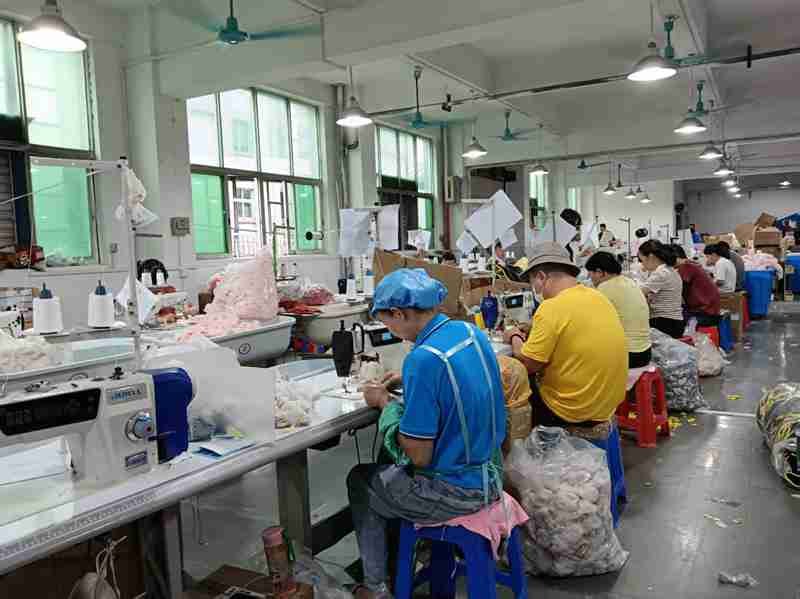
A plush keychain factory can support packaging by reviewing product size, plush shape, embroidery detail, hardware position, packaging fit, label content, barcode placement, carton rules, and final inspection. For gift sales, this support should start before sampling. The product, package, labels, and carton plan should work together before bulk production begins.
Heyzizi is based in Guangdong and supports custom plush projects with pattern development, sample making, production coordination, quality checks, needle detection, packing, labeling, and shipment preparation. For plush keychain projects, packaging can be reviewed together with character structure, fabric choice, face method, hardware, hangtags, barcodes, and carton marks.
Custom Sample Review
Sample review should cover both the plush and the package.
For plush keychains, check:
Character shape
Face embroidery
Fabric direction
Filling balance
Hardware attachment
Hangtag position
Package fit
Barcode space
Packing method
If the sample is reviewed without packaging, some problems may appear too late.
Packaging Size and Structure Check
A small plush keychain is not flat. Even a few millimeters can change how it sits in a box, bag, or card.
A structure check helps prevent tilted hanging, hidden faces, pressed ears, tight pouches, or poor barcode placement.
Label, Barcode, and Carton Mark Support
For retail, online, and multi-style orders, labels are part of the product system.
Hangtags, sewn-in labels, barcode stickers, SKU labels, warning labels, FBA labels, and carton marks should be checked before bulk packing. The goal is to make sure the product, tag, package, and carton all match.
Bulk Packing and Final Inspection
Bulk packing should follow one clear standard.
During final inspection, the team should check product appearance, face direction, hardware placement, tag correctness, barcode match, package condition, carton quantity, and carton marks.
For multi-style gift programs, a SKU table and packing list should guide the packing team.
How A Factory Helps Turn Plush Ideas Into Sellable Products
A plush idea becomes sellable when it can be sampled, costed, packed, labeled, inspected, shipped, and reordered.
For plush keychains, this may include adjusting the design for small size, choosing fabric, checking embroidery size, selecting hardware, matching packaging to price level, adding barcode labels, planning cartons, and keeping records for repeat orders.
Heyzizi can review artwork, target size, quantity, packaging needs, and delivery plan before sampling. Project details can be sent to info@heyzizi.com.
What Should You Send for Packaging Review?
For packaging review, send artwork or reference photo, target size, quantity, sales channel, target price, preferred packaging, label needs, barcode files, delivery country, and deadline. If the project includes multiple characters or package versions, send the SKU list and packing rule early. Clear information helps the team review sample direction, package fit, cost factors, carton plan, and bulk packing risk.
You do not need perfect files to start. A clear reference image, rough size, target quantity, and use scene can begin the first review.
Inquiry Information Checklist
| Information To Send | Why It Helps |
|---|---|
| Artwork or reference photo | Reviews character shape and detail |
| Target size | Affects pattern, embroidery, packing, cost |
| Quantity | Affects unit cost and material planning |
| Sales channel | Helps choose packaging type |
| Target price | Helps balance gift look and cost |
| Package request | Guides hangtag, box, bag, pouch, or blind box |
| Label needs | Plans barcode, SKU, warning text, carton marks |
| Delivery country | Affects labels and shipment planning |
| Deadline | Affects sample, bulk packing, and shipment timing |
| SKU list | Prevents mixed-style packing errors |
Product Artwork or Reference Photo
Send the character artwork, mascot image, product sketch, or sample photo. Front, side, and back views are useful if available.
For small plush keychains, some tiny details may need simplification so the product stays clear and stable in bulk production.
Target Size and Quantity
Size affects pattern, fabric use, embroidery detail, filling, hardware, packaging, carton quantity, and price. Quantity affects material planning, packing setup, and unit cost.
For plush keychains, a very small size may reduce material use but can limit facial detail. The best size should match the character and sales use.
Sales Channel and Target Price
Tell the factory whether the product is for gift shops, online stores, brand events, museums, theme parks, fan stores, retail chains, school programs, or holiday sets.
Target price helps the team choose packaging that fits the project instead of overbuilding it.
Packaging Style, Label, and Barcode Needs
Share whether you need hangtags, backing cards, OPP bags, header bags, window boxes, blind boxes, gift boxes, drawstring pouches, barcode stickers, SKU labels, warning labels, FBA labels, or carton marks.
If barcode files are ready, send them early. If not, at least reserve space in the package design.
Delivery Country and Deadline
Delivery country affects label planning, carton marks, and shipping route. Deadline affects sample timing, package production, packing checks, and shipment preparation.
For holiday, event, or launch projects, packaging should be reviewed early because printed boxes, cards, or multi-version packages may need more time.
Sales Plan for Custom Plushies or Plush Keychain Gifts
Share whether the product is a single item, series, gift set, seasonal version, online product, event item, or retail line.
This helps the team plan packaging not only for the first order, but also for future versions and repeat orders.
A strong custom plush keychain gift project starts before the first sample. Clear artwork, size, quantity, sales channel, packaging style, label needs, barcode rules, delivery country, and deadline help the factory review cost, structure, sample direction, packing method, and bulk risks more accurately.
To start a packaging review, send your artwork, target size, quantity, sales channel, package request, and delivery plan to info@heyzizi.com. Heyzizi can review plush keychain structure, packaging direction, label details, and bulk packing needs before sampling.
FAQs About Custom Plush Keychains Packaging for Gift Sales
1. What is the best packaging for custom plush keychains used as gifts?
Certainly, the best packaging for custom plush keychains used as gifts is the one that matches the sales channel, product value, and presentation goal, not simply the most expensive option. For simple event gifts or large quantity programs, a hangtag, backing card, or clear bag with a printed card can look clean and keep costs under control. For retail gift shops, a backing card or window box usually works better because it lets the plush character face forward and gives space for barcode, SKU, and brand information. For IP collections, blind boxes, window boxes, and story cards can make the product feel more collectible. For holiday gifts or brand gift sets, a small gift box or drawstring pouch can create a warmer giving experience.
A useful way to choose is to ask: does the package show the character clearly, protect the plush shape, allow label placement, support barcode scanning, and fit the planned carton quantity? If it does, it is likely a strong packaging direction. For plush keychains, packaging should never press the face, bend the ears, hide the keyring, or make the product look smaller than it is. The right package makes a small plush item feel complete, gift-ready, and easier to manage in bulk.
2. How do I pack a plush keychain as a gift without making it look cheap?
Sure, a plush keychain can look gift-ready without using a costly rigid box. The key is to make the package feel intentional. A clear bag alone may look basic, but a clear bag with a printed backing card, branded sticker, hangtag, character name, or small gift message can look much more complete. A drawstring pouch can also create a soft gift feeling while staying lightweight. If the item is for retail sale, a backing card with clean colors and a clear front view often gives better value than an oversized box.
The main mistake is thinking that “cheap” only comes from low-cost materials. In many cases, poor layout makes the product look cheap. A plush keychain turned sideways in a loose bag looks careless. A hangtag that is too large can overpower the toy. A barcode placed across the front view can damage shelf appeal. A gift box that is too big can make the product look small and underwhelming.
For a better result, keep the plush facing forward, use neat sealing, place the keyring above or behind the character, and keep label areas clean. A simple package with good structure often feels more professional than an expensive package that does not fit the toy.
3. Which is better for plush keychain gift sales: backing card, window box, or blind box?
Absolutely, each option works well in a different situation. A backing card is usually the most flexible choice for plush keychains sold in gift shops, event stores, museum shops, school programs, and simple retail displays. It gives the toy a neat background, keeps the face visible, and leaves room for barcode, character name, and brand artwork. A window box is better when the item needs a stronger gift look or shelf presence. It protects the plush while still showing the character. A blind box is best for IP series, collectible animals, mystery gifts, and fan products where surprise adds value.
Here is a simple comparison:
| Packaging Type | Best Use | Main Strength | Main Caution |
|---|---|---|---|
| Backing Card | Gift shops, rack display, small retail items | Clear front view, lower cost, easy barcode area | Less protection than a box |
| Window Box | Retail gifts, premium small plush, mascot gifts | Strong shelf presence, visible product | Higher cost and larger carton size |
| Blind Box | IP series, collectibles, surprise gifts | Repeat interest and series value | Needs strict style and carton control |
For one or two simple designs, backing cards may be enough. For higher-value gift sales, window boxes can lift the product image. For multi-character collections, blind boxes can work very well if SKU rules and assortment ratios are set before bulk packing.
4. Do custom plush keychains need barcode labels, SKU stickers, and warning labels?
Definitely, many custom plush keychains need barcode labels, SKU stickers, and warning labels, especially when they are sold through retail stores, online channels, gift shops, museums, theme parks, or multi-style product lines. A single event giveaway may only need a simple hangtag, but a retail plush keychain program usually needs more organized labeling. Barcodes help stores scan and track products. SKU labels help separate different characters, colors, sizes, or package versions. Warning labels may be needed when the product includes small parts, metal rings, chains, plastic eyes, or other attachments.
For plush keychains, label planning should happen before packaging files are finalized. The hangtag, backing card, box, clear bag, or carton label should have a clear place for the right information. If barcode placement is added too late, it may cover artwork or make scanning difficult. If SKU labels are not matched correctly, different characters may be mixed during packing.
A practical label set may include:
| Label Item | Where It Can Go | Why It Matters |
|---|---|---|
| Barcode | Hangtag, backing card, box, sticker | Retail scanning |
| SKU Sticker | Bag, box, carton | Style control |
| Warning Text | Hangtag, label, box | Safety communication |
| Carton Mark | Outer carton | Shipping and sorting |
| Product Code | Packing list and carton | Repeat order control |
Correct labels make the product easier to sell, store, ship, and reorder.
5. How does packaging affect the price of custom plush keychains?
Of course, packaging can affect the final price more than many teams expect. A simple hangtag or clear bag has a very different cost structure from a window box, blind box, gift box, insert tray, printed sleeve, barcode sticker, or display carton. The plush keychain itself may be small, but packaging adds material, printing, cutting, folding, manual packing, label checking, and carton volume. These details affect both unit cost and shipping efficiency.
A basic package is usually better for event gifts, school programs, large quantity giveaways, or low target price projects. A stronger package is worth considering when the plush keychain will be sold as a gift, displayed in a retail store, used for IP merchandise, or included in a holiday set.
Cost is not only about the package material. A complex gift box may take more time to pack. A larger box may reduce how many units fit into one carton. A blind box series may need stricter sorting and carton ratio control. These hidden details can affect the total project cost.
The best way to control price is to choose packaging based on the channel. Spend on the parts that improve the first impression, label accuracy, and protection. Avoid decorative details that do not help the product sell, ship, or stay organized.
6. When should packaging be confirmed during a custom plush keychain project?
Yes, packaging should be confirmed before bulk production starts, not after the plush keychain has already been produced. The best timing is usually after the plush sample shape is close to approval, but before packaging materials are ordered. At that stage, the team can check product size, face direction, keyring position, box space, hangtag hole, barcode area, and carton quantity together.
If packaging is planned too late, small changes can become expensive. For example, if the plush body becomes thicker after sample revision, the original box may be too tight. If the backing card hole is placed too low, the toy may hang badly. If the barcode area is not reserved, label placement may damage the front view. If the package is too large, the carton quantity may drop and delivery cost may rise.
A good confirmation process usually includes:
- Review plush size and shape.
- Choose package direction.
- Test package fit with the sample.
- Confirm hangtag, label, barcode, and SKU files.
- Check carton quantity and packing method.
- Approve the final sample with packaging details.
This process helps the final goods follow one clear standard.
7. How can brands avoid packaging mistakes in multi-SKU plush keychain orders?
Certainly, multi-SKU plush keychain orders need a clear code system from the beginning. The most common mistakes come from similar characters, similar colors, similar boxes, wrong barcode stickers, mixed cartons, or unclear packing lists. These problems are easy to miss when the first sample looks good, but they can create serious trouble during packing, warehouse receiving, online listing, and repeat orders.
Each plush keychain style should have one clear code. That code should connect the product photo, artwork file, embroidery file, hangtag, barcode, package version, carton mark, and packing list. If there are five characters and two package styles, that is already ten possible combinations. Without a clear system, the packing team may mix styles even when the product quality is acceptable.
A useful multi-SKU control table can include:
| Control Area | What To Match |
|---|---|
| Product | Character, color, size |
| Package | Bag, card, box, pouch |
| Label | Barcode, SKU, warning text |
| Carton | Quantity, ratio, destination |
| Photo Record | Final approved sample |
| Repeat Order File | Product and packaging version |
For larger programs, sample photos should be placed near the packing line. Final checks should compare product, label, package, and carton mark before sealing cartons.
8. What packaging works best for IP plush keychains and collectible series?
Absolutely, IP plush keychains and collectible series usually need packaging that supports character value, not just protection. Fans care about character accuracy, facial expression, series identity, color matching, and whether the item feels official. This means packaging should show the character clearly or create a strong collectible experience. Window boxes, blind boxes, printed backing cards, story cards, and series cards are common choices.
For a character that needs to be seen before purchase, a window box or backing card is safer. The fan can choose the exact character and check the face. For a mystery series, blind boxes can create surprise and repeat interest. However, blind boxes require stronger control. The team should define how many styles are in the series, whether there are rare versions, how styles are mixed per carton, and how barcode or style tracking will work.
Packaging can also carry story details that the plush keychain itself cannot show. Character name, collection title, scene name, version number, QR code, and short story copy can all add value. For IP programs, packaging should protect the plush while making the character feel more collectible, memorable, and ready for retail display.
9. What should we send to get a packaging review for custom plush keychains?
Sure, the best starting files are simple but specific: artwork or reference photo, target size, quantity, sales channel, preferred packaging style, label needs, barcode rules, delivery country, and deadline. If the project includes multiple characters, send a style list or SKU sheet as early as possible. If the packaging artwork is not ready yet, a reference image is enough to begin the first review.
The reason these details matter is simple. A plush keychain for a gift shop does not need the same package as one for an event giveaway. A blind box series needs different planning from a simple hangtag item. A product shipped to multiple locations needs clearer carton marks than a single-destination order.
A helpful project brief can look like this:
| Information | Example |
|---|---|
| Product Type | Mini plush keychain |
| Character File | Front artwork, side view, color reference |
| Target Size | 8 cm, 10 cm, or 12 cm |
| Quantity | Per style and total quantity |
| Sales Channel | Gift shop, event, online store, IP collection |
| Packaging Need | Backing card, window box, blind box, pouch |
| Label Need | Barcode, SKU, warning text, carton mark |
| Delivery Plan | Country, deadline, shipment split |
With this information, Heyzizi can review product structure, packaging direction, sample path, label planning, and bulk packing needs before sampling. Project details can be sent to info@heyzizi.com.
10. Can Heyzizi support plush keychains with custom gift packaging for bulk orders?
Definitely, Heyzizi can support custom plush keychain projects with gift packaging, label planning, sample review, packing checks, and bulk order preparation. The work is not only about making the plush keychain. A complete project also includes character structure review, fabric selection, face embroidery, filling balance, hardware position, hangtag design, barcode placement, carton marks, and final inspection.
Heyzizi is based in Guangdong and supports custom plush projects with pattern development, sample making, production coordination, quality checks, needle detection, packing, labeling, and shipment preparation. For plush keychains, the team can review whether the design is suitable for small-size production, whether face details need simplification, whether the package protects the plush shape, and whether labels match the sales channel.
For bulk projects, consistency matters. The approved sample should include both the plush keychain and the packaging standard. This helps keep the face direction, tag position, barcode, package style, and carton rule consistent across the order. It also makes repeat orders easier because the product file, packaging file, and label file can be kept as a reference.
If your team is preparing plush keychains for gift shops, IP merchandise, brand gifts, online stores, events, or holiday sets, Heyzizi can review artwork, size, quantity, package style, and delivery plan before sampling.