 Skip to content
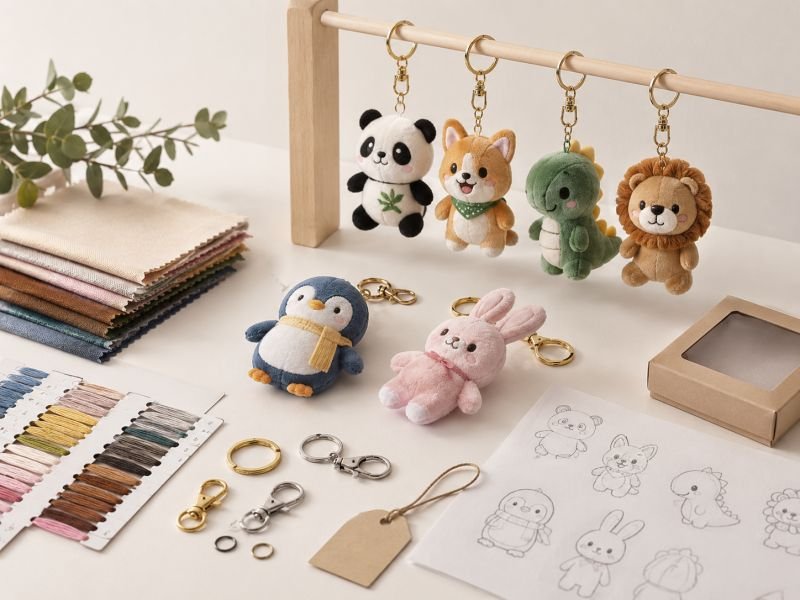
A custom plush keychain looks small on a desk, in a gift box, or hanging from a backpack. But behind that small product, there may be a full development path: character shaping, pattern work, fabric selection, embroidery, printing, filling control, hardware choice, pull strength review, labels, barcode stickers, packing rules, and carton planning.
That is why bulk plush keychain pricing can feel confusing at first. One quote may look low. Another may look higher. A third may include a sample, hangtag, barcode, testing support, and retail packing. On the surface, all three may sound like “custom plush keychains.” In practice, they may not cover the same work.
Custom plush keychains cost more or less depending on size, character complexity, fabric choice, embroidery or printing method, hardware, MOQ, sample work, packaging, safety requirements, and bulk order management. For brand, retail, event, and IP projects, the lowest unit price is not always the safest choice. A clear cost review helps prevent weak attachments, unclear facial details, packing mistakes, delayed samples, and bulk production differences.
For brand teams, the better starting is not “How cheap can this be?” It is “What needs to be controlled so this small plush item looks right, arrives on time, passes the needed checks, and can be reordered later without starting over?”
What Affects Custom Plush Keychain Cost?
Custom plush keychain cost is affected by the product size, character shape, fabric, filling, face method, logo detail, hardware, quantity, sample work, packaging, labels, safety review, and delivery plan. Small plush keychains may look simple, but fine embroidery, tiny accessories, firm attachment, and multi-SKU packing can add real production work.
A plush keychain is not priced like a flat acrylic keychain or a printed metal charm. It has a soft body, internal filling, sewn panels, surface details, and a hanging structure. Each one needs to survive handling, shipping, display, and repeated use.
For simple mascot shapes, the cost may stay more controlled. For IP characters, complex faces, small clothing pieces, printed fabric, special textures, or custom retail packaging, the cost can rise because more work is needed before bulk production can run smoothly.
How Much Does It Cost To Have A Custom Plush Made?
The cost to have a custom plush made depends on two main parts: development cost and bulk unit cost.
Development cost usually covers pattern work, sample making, fabric sourcing, embroidery setup, printing trials, hardware review, and revisions. Bulk unit cost covers material, labor, filling, sewing, inspection, packing, and order management.
For plush keychains, the final price cannot be judged only by size. A 10 cm keychain with a simple animal face may cost less than an 8 cm character keychain with tiny eyes, printed clothing, multiple colors, and a custom hook. Smaller does not always mean easier.
At Heyzizi, the usual standard MOQ is 500 pcs per style. For simpler structures and common materials, 200–300 pcs may be reviewed case by case. The most accurate cost review starts with artwork, size, quantity, fabric direction, face method, hardware, packing request, target region, and delivery date.
Which Product Details Change The Unit Price?
The details that usually change the unit price include:
| Cost Detail | Why It Changes Price |
|---|---|
| Size | Affects fabric use, filling, packing volume, and display result |
| Shape | Round, standing, sitting, flat, or 3D shapes need different pattern work |
| Face method | Embroidery, printing, and applique have different setup and labor needs |
| Fabric | Short plush, minky, velboa, felt, fleece, and special fabrics price differently |
| Hardware | Keyring, ball chain, lobster clasp, cord loop, and reinforced tabs add cost |
| Packaging | Polybag, hangtag, barcode, header card, gift box, or display box change cost |
| Quantity | Larger orders spread setup and development work across more pieces |
| Testing | Children’s products and retail programs may need extra review or third-party support |
A useful quote should tell you what is included. If one quote includes only the plush body and another includes hangtag, barcode, packing, needle detection, and carton marks, those are not equal quotes.
Why Small Plush Keychains Are Not Always Simple
Small plush keychains create a special challenge: every detail has less space.
A character eye that looks clear on a 25 cm plush may become too small on an 8 cm keychain. A mouth line may need fewer stitches. A logo may need to move to a tag instead of the body. A tiny accessory may look cute in artwork but become weak in bulk production.
This is why a good factory review happens before sampling. The team should check whether facial features can stay clear, whether the fabric pile hides small details, whether the keyring position pulls the product off balance, and whether small parts create extra safety risk.
How Design Complexity Changes Bulk Cost
Design complexity affects cost because it changes the number of panels, stitches, colors, processes, and inspections.
A simple round animal face may need a few fabric parts and one embroidery file. A character keychain with hair, ears, tail, scarf, clothes, printed pattern, and metal hook may need many separate steps.
More complexity can still be worth it if the product carries strong brand value or IP recognition. The goal is not to remove every detail. The goal is to keep the details that matter most and adjust the parts that create cost without adding visible value.
For example, if a tiny jacket zipper cannot be stable at keychain size, embroidery or printed detail may show the look better with less risk. This type of early adjustment can protect both cost and appearance.
How Does MOQ Affect Bulk Plush Keychain Price?
MOQ affects plush keychain price because pattern work, material sourcing, embroidery setup, cutting, sewing, inspection, packing preparation, and order management happen even when the quantity is small. Larger orders spread those fixed steps across more units, while small orders carry a higher share of setup work per piece.
For plush keychains, MOQ is not just a sales rule. It is connected to how soft goods are produced. Fabric may have minimum sourcing quantities. Embroidery needs setup. Cutting and sewing need line planning. Packing materials may also need a minimum print quantity.
A very low MOQ can be useful for testing, but it rarely gives the best unit cost. A larger order often gives a cleaner cost structure, especially when the style will be used for retail, events, member gifts, or repeat programs.
Why Does A 500-Piece Order Price Differ From 1,000 Pieces?
A 500-piece order and a 1,000-piece order may use similar development steps, but the cost is spread differently.
Pattern work, sample review, embroidery setup, fabric sourcing, carton mark planning, and packing setup do not double when the order changes from 500 to 1,000 pcs. That means the per-piece share of those tasks becomes lower at 1,000 pcs.
However, the price will not always drop sharply. If the design uses expensive fabric, complex embroidery, many accessories, or individual retail packaging, the material and labor cost still stay inside every unit. Quantity helps, but it does not erase product complexity.
When Does A Low MOQ Make Sense?
A low MOQ can make sense when a brand team is testing a new character, preparing a limited event gift, checking fan response, or starting a small retail trial.
It works best when the design is simple, the material is common, the hardware is standard, and the packing request is not too complex. It may not work well for a multi-character IP series with custom fabric, printed boxes, separate barcodes, and strict delivery dates.
Heyzizi can review simple plush keychain projects at 200–300 pcs when structure and material allow it. For most custom plush projects, 500 pcs per style is a more stable starting level.
How Quantity Helps Spread Sample And Setup Cost
Sample and setup work often carry a fixed effort. The factory still needs to read artwork, make a pattern, source fabric, create embroidery, sew the sample, attach hardware, revise details, and document the confirmed version.
When the bulk quantity is higher, this early work is spread across more pieces. This is why a larger order can feel more reasonable from a unit-price view.
For long-term projects, quantity planning should also consider future reorder needs. If the first order is only a small test, the team should still save pattern files, embroidery files, fabric references, packing rules, and inspection notes. These records make future bulk runs easier to repeat.
Which Size And Shape Choices Affect Cost Most?
Size and shape affect cost through fabric use, filling volume, pattern work, sewing difficulty, packing size, and visual accuracy. A small plush keychain may reduce material use, but complex shapes, tiny parts, or unstable proportions can increase labor and revision time.
For keychains, the most common size is often small enough to hang from bags, keys, gift sets, or retail displays. But “small” must still be large enough to hold the main character features. If the face, logo, or costume details become unclear, the product may lose the reason it was created.
What Size Works Best For Brand Keychains?
Many brand plush keychains work well between 8 cm and 15 cm, depending on the character and use scene.
For event giveaways, smaller and lighter items may be easier to hand out. For retail gift shops, a slightly larger plush keychain can feel more giftable. For IP characters, the size should protect facial expression and body proportion.
If the product has many details, choosing a slightly larger size may reduce revision time and help the final piece look closer to the artwork. If the product is for mass giveaway, a simpler shape and lighter filling may help control cost.
How Shape, Standing Parts, And Tiny Details Add Work
Shape affects cost because every protruding part must be patterned, cut, sewn, filled, placed, and checked.
Ears, tails, wings, hair, horns, hats, bags, scarves, and clothing all add work. Some are simple. Others are hard to keep symmetrical in bulk production.
A flat plush charm may be easier than a fully rounded mascot. A sitting animal may be more stable than a standing mini doll. A keychain with a big head and tiny body may need careful balance, or it may hang at an odd angle.
Why Character Proportion Matters In Small Plush Items
Character proportion matters more at small size because there is less room to correct mistakes.
A face placed 3 mm too high may look strange on a mini keychain. A small mouth can disappear into long pile fabric. A body that is too narrow may not hold enough filling. A head that is too heavy may pull the product forward when hanging.
This is why pattern review and sample revision matter. The goal is to keep the character recognizable while making the shape practical for bulk production.
Which Fabric Type Is Best For Plush Keychains?

The best fabric for plush keychains depends on the character style, target use, detail level, color needs, and cost goal. Short plush, minky, velboa, felt, fleece, and special textures can all work, but each fabric affects handfeel, color appearance, embroidery clarity, sewing difficulty, and bulk stability.
Fabric is not just a touch decision. It affects how the character looks in photos, how embroidery sits on the surface, how colors match the artwork, and how the product recovers after packing.
A soft fabric may feel premium but hide small embroidered lines. A short-pile fabric may show small details better. Felt may work well for tiny accessories. Printed fabric may support complex patterns but needs careful color review.
How Short Plush, Minky, Velboa, And Felt Affect Price
Short plush is often practical for small character shapes because it can show embroidery more clearly. Minky feels soft and smooth, often used when the product needs a warmer handfeel. Velboa can give a clean surface for simple forms. Felt works well for flat accessories or small decorative parts.
Special fabrics can raise cost if they require extra sourcing, higher minimum material quantity, or slower sewing.
The right fabric is not always the most expensive one. It is the fabric that supports the character, cost goal, use scene, and bulk consistency.
Which Fabric Works Better For Small Character Details?
For small facial features and tiny logos, shorter pile fabrics usually work better because the surface does not cover the stitch lines as much.
If the design includes a small embroidered eye, a thin mouth, or a tiny chest logo, the team should check embroidery size, stitch density, fabric pile direction, and thread color before sampling.
If the detail is too small for embroidery, printing, applique, or a tag placement may work better.
Why Fabric Color Matching Can Change The Development Time
Fabric color matching can take time because plush material does not always look the same as a flat artwork file.
Pile direction, lighting, texture, dye lot, and fabric type can all change the visible color. A brand red on paper may look darker on minky. A light cream may look warmer under soft pile. A printed color may shift after heat or washing review.
For brand projects, early color discussion helps avoid late changes. If a color is strict, send a Pantone reference or approved color sample when possible.
Embroidery Vs Printing Vs Applique: Which Costs More?
Embroidery, printing, and applique cost differently because each method uses different setup, labor, material, and inspection steps. Embroidery is often stronger for small faces and logos, printing can show fine artwork or gradients, and applique can add shape and texture but may require more sewing work.
The best face method depends on what the design needs to show. A plush keychain face must stay clear even when the product is small, soft, and slightly rounded after filling.
When Is Embroidery Better For Plush Keychain Faces?
Embroidery often works well for eyes, mouths, eyebrows, simple logos, and small character details that need clean lines.
It is durable, consistent, and suitable for many plush products. It also helps avoid loose plastic parts when the product is intended for young users.
However, embroidery has limits. If the detail is too tiny, the stitches may merge. If the design has gradient shading, embroidery may not show it well. If the fabric pile is too long, the lines may become hidden.
When Does Printing Save Cost Or Improve Detail?
Printing may help when artwork has gradients, small patterns, repeated fabric designs, or color effects that embroidery cannot show cleanly.
For example, printed clothing patterns, small icons, character marks, or background textures may work better as printing than as dense embroidery.
Printing is not automatically cheaper. Setup, material compatibility, color testing, and durability review still matter. For plush keychains, printing also needs to be checked after cutting, sewing, and filling because the shape may distort the printed area.
Why Applique Can Improve Shape But Add Labor
Applique uses cut fabric pieces sewn onto the plush surface. It can create a layered look, support bold shapes, and make some design areas stand out.
It is useful for patches, clothing panels, ears, belly shapes, badges, or simple graphic blocks. But applique adds cutting, placement, sewing, and inspection work. If the shape is small or curved, placement must be controlled carefully.
For premium retail plush keychains, applique can be worth the extra work. For budget event giveaways, embroidery or printing may be more practical.
How Do Hardware And Attachment Details Affect Price?
Hardware and attachment details affect plush keychain price because the product must hang securely, feel right in use, and avoid weak connection risks. Keyrings, ball chains, lobster clasps, hooks, cord loops, and reinforced fabric tabs each have different costs, strengths, and visual effects.
This is one of the biggest differences between a plush keychain and a standard plush toy. A keychain will be pulled, clipped, swung, carried, and handled more often than a shelf plush.
If the attachment is weak, the product can fail even when the plush body looks good.
Which Keychain Hardware Options Are Common?
Common hardware options include:
| Hardware Option | Best Fit |
|---|---|
| Split keyring | Strong, common, practical for key use |
| Ball chain | Light, simple, often used for small charms |
| Lobster clasp | Easy to clip onto bags and zippers |
| Metal hook | Good for stronger hanging use |
| Plastic clip | Lightweight, child-friendly feel in some cases |
| Cord loop | Soft look, good for plush texture matching |
| Webbing loop | Strong connection for heavier plush keychains |
The right option depends on product weight, use scene, target user, safety needs, and brand style.
Why Attachment Reinforcement Matters In Bulk Orders
The hanging part should not be treated as an afterthought.
The attachment area may need webbing, reinforced stitching, a fabric loop, an internal seam anchor, or a stronger panel structure. If the plush body is too soft or the loop is attached only to a weak surface, the product may fail after repeated pulling.
During review, Heyzizi looks at the attachment position, product weight, seam strength, hardware type, and possible pull direction. This helps reduce the risk of loose chains, broken loops, tilted hanging, or returned goods.
How Weak Hardware Can Create Return Risks
Weak hardware can damage both the product and the brand experience.
A broken keychain does not feel like a small issue to the person who receives it. If the item is sold in a retail shop, it can lead to complaints. If it is given out at an event, it can make the gift feel cheap. If it is part of an IP launch, fans may notice quality problems quickly.
The hardware may look like a small cost line, but it can carry a large part of the product’s use risk.
How Much Does A Custom Plush Keychain Sample Cost?
A custom plush keychain sample cost usually covers development work, not just one finished piece. It may include pattern making, fabric search, embroidery setup, printing test, cutting, sewing, filling, hardware attachment, revision work, and sample documentation. This is why sample cost is different from bulk unit price.
Sampling is where the product becomes real. Artwork may look perfect on screen, but soft fabric, filling pressure, stitch density, and hardware balance can change the final look.
For serious brand projects, skipping the sample is risky. The sample helps confirm the shape, face, fabric, filling, hardware, label, and packing direction before bulk production.
What Is Included In Sample Development?
A custom plush keychain sample may include:
| Sample Work | Purpose |
|---|---|
| Artwork review | Checks whether the design can become a small plush item |
| Pattern work | Builds the shape and panel structure |
| Fabric sourcing | Matches texture, color, and cost direction |
| Embroidery setup | Tests face detail, logo, and stitch density |
| Printing trial | Reviews color, detail, and placement |
| Cutting and sewing | Makes the first physical sample |
| Filling and shaping | Controls handfeel and appearance |
| Hardware review | Checks hanging position and connection strength |
| Revision notes | Records changes before the next version |
This is why a sample is not the same as a stock item.
Why Sample Cost Is Different From Bulk Unit Price
Sample cost is higher because it is made one by one. It includes development time, handwork, material trials, and setup. Bulk unit price is calculated after the product structure is confirmed and the production path becomes clearer.
At Heyzizi, sample fees are normally charged. When a single-style bulk order reaches 2,000 pcs, the sample fee for that style can be refunded or deducted from the order.
This approach keeps sample work serious. It also supports brand teams that plan real bulk orders and long-term product lines.
How Long Does Plush Keychain Sampling Usually Take?
Sampling time depends on the design.
A simple plush keychain may move faster. A character with detailed embroidery, clothing, special fabric, custom hardware, or multiple versions may need more review time.
As a practical planning habit, leave enough time for first sample, review, revision, and final confirmation. Many delays happen not because sewing is slow, but because details were unclear before sampling.
How Much Should A Plush Cost At The Sample Stage?
Sample-stage cost should be judged by development value, not by retail price.
A sample may cost much more than a bulk unit because it includes one-off work. If the project needs accurate character expression, special fabric, custom embroidery, or retail packaging, sample cost protects the project from bigger mistakes later.
A cheap sample that does not solve shape, face, hardware, and packing details may become expensive during bulk production.
What Packaging And Label Costs Should Brands Plan For?

Brands should plan for packaging and label costs such as polybags, hangtags, woven labels, care labels, barcode stickers, SKU stickers, header cards, display boxes, gift boxes, FBA-related labels, carton marks, and mixed packing rules. These details affect retail display, warehouse handling, event distribution, and reorder accuracy.
For plush keychains, packaging is not just protection. It can decide how the item is displayed, scanned, gifted, sorted, shipped, and reordered.
A simple event giveaway may only need individual polybags and carton marks. A retail product may need hangtags, barcode labels, display-ready packing, and SKU control. An online store item may need protective packing and clear item labels.
Which Packaging Types Fit Retail, Events, And Online Sales?
Retail programs often need hangtags, barcode stickers, header cards, display boxes, or gift boxes. Event gifts often need easy distribution packing, simple polybags, and clear carton labels. Online store products may need packing that protects shape while keeping shipping volume under control.
The best packing choice depends on how the plush keychain will be handled after shipment.
If it will hang on a store rack, the hangtag and hole position matter. If it will be shipped one by one, compression and shape recovery matter. If it will be handed out at an event, fast sorting and carton marks matter.
How Hangtags, Barcodes, And SKU Stickers Affect Cost
Hangtags, barcodes, and SKU stickers add cost because they require design files, printing, checking, placement, and packing control.
For a single style, this may be simple. For a 12-character series, it becomes much more detailed. Each style may need a separate barcode, product name, warning text, color code, carton mark, and packing rule.
A label error can be more damaging than a small sewing issue. If the product cannot enter the warehouse, scan correctly, or match the packing list, the whole shipment may be delayed.
Why Multi-SKU Packing Needs Clear Rules
Multi-SKU packing needs clear rules because plush keychains are often produced as character sets.
The team should confirm:
| Packing Detail | What To Confirm |
|---|---|
| SKU code | Each character, color, or size should have a clear code |
| Barcode | Each sellable unit needs the correct barcode |
| Inner packing | Confirm polybag, hangtag, card, or box |
| Mixed carton | Confirm whether styles are mixed or packed separately |
| Carton mark | Confirm item name, quantity, SKU, and destination |
| Photo record | Save packing reference for repeat orders |
Clear packing rules protect both the first order and future reorders.
Are Safety Checks Needed For Plush Keychains?
Safety checks may be needed for plush keychains when the product is intended for children, retail programs, school use, gift sets, European or North American sales, or brand review. Needle detection, small parts review, attachment strength, material safety, care labels, and warning text can affect both cost and timeline.
Even when a plush keychain is small, it may still be handled by children or sold through channels that require clear safety documentation. The keyring, chain, plastic parts, eyes, nose, decorations, and seams should be reviewed based on the target user and sales region.
When Do EN71, ASTM, CPSIA, Or Other Tests Matter?
Safety standards matter when the product is sold or distributed in regulated regions, especially when children may use it.
EN71 is commonly discussed for Europe. ASTM F963 and CPSIA are common for the United States. Other regions may require other documents or checks.
Not every plush keychain needs the same test plan. A corporate giveaway for adults may have different needs than a children’s retail product. The smart move is to discuss target region, age grade, use scene, and sales channel early.
Why Needle Detection And Small Parts Review Matter
Needle detection matters because plush products pass through cutting, sewing, filling, and finishing. A proper needle detection process helps reduce metal contamination risk before shipment.
Small parts review matters because tiny accessories can detach, scratch, or create choking risk. For plush keychains, hardware attachment should also be reviewed because the hanging part receives more pull than many other plush items.
Heyzizi supports quality inspection and needle detection as part of plush order control. For projects with target safety requirements, the team can also support third-party testing preparation.
How Safety Requirements Affect Cost And Timeline
Safety requirements can affect cost through material selection, accessory choice, test preparation, label content, documentation, and inspection time.
They can also affect timeline. If a design uses hard plastic parts, tiny decorations, metal chains, or loose accessories, extra review may be needed before sampling or before shipment.
Safety review is not a burden when planned early. It becomes costly when the issue is found after sample approval or after packing has already started.
How Do Multi-SKU Bulk Orders Change Cost Control?
Multi-SKU bulk orders change cost control because every character, color, size, label, barcode, packing rule, and carton mark must be managed separately. The product cost is not only in sewing. It is also in version control, documentation, inspection, sorting, packing, and reorder consistency.
Many strong plush keychain programs are not single items. They are sets: five characters, three facial expressions, seasonal versions, different hangtags, or different retail channels.
This is where project management becomes more valuable than a low quote.
Why Multiple Characters Need Better Version Control
Multiple characters need better version control because one wrong file can affect the whole series.
Each character may have its own artwork, pattern, embroidery file, fabric color, hardware position, hangtag, barcode, and packing rule. If these records are mixed, the result may be wrong labels, wrong faces, wrong colors, or wrong carton marks.
Heyzizi uses project records such as approved samples, material references, embroidery files, packing references, and QC notes to help repeat orders stay more consistent.
How Labels, Carton Marks, And Mixed Packing Add Work
Labels and carton marks add work because they must match the actual product inside.
For a simple single-style order, carton marking may be direct. For a mixed series, the team must confirm which styles go into which cartons, how many pieces per carton, how each SKU is labeled, and whether each destination needs different outer marks.
This may sound like a small admin task, but in real shipments it can decide whether the order moves smoothly.
What Helps Repeat Orders Stay Consistent?
Repeat orders stay consistent when the original project records are saved properly.
Useful records include:
| Record | Why It Matters Later |
|---|---|
| Approved sample photos | Protects appearance standard |
| Pattern files | Keeps shape consistent |
| Embroidery files | Keeps face and logo stable |
| Fabric references | Helps match color and texture |
| Hardware details | Keeps attachment method the same |
| Packing rule | Prevents label and carton errors |
| QC notes | Keeps inspection focus clear |
A repeat order should not feel like starting from zero. The more records are saved, the easier the next run becomes.
Factory Vs Promotion Platform: Which Is Better For Bulk Projects?
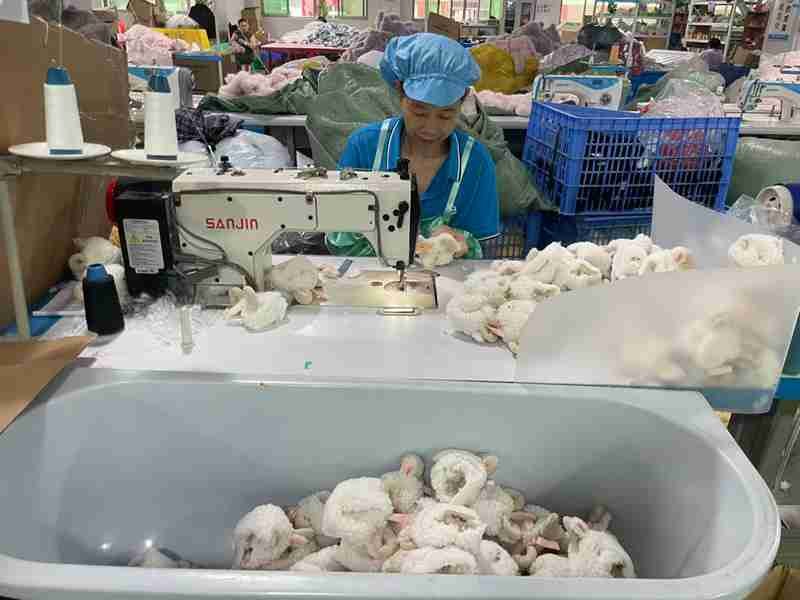
A factory is often better for bulk plush keychain projects when the design needs custom shaping, character accuracy, fabric review, sample revision, hardware strength, safety checks, packaging control, barcode support, or multi-SKU management. Promotion platforms may be useful for simple items, but complex plush projects need deeper production review.
A platform price can be convenient for early comparison. But plush keychains often need more than a quick online option.
If the design carries brand identity, IP value, retail packaging, or child-related use, the production path should be reviewed carefully before bulk work begins.
When Is A Factory Better For Custom Plush Keychains?
A factory is better when your project needs:
| Project Need | Why A Factory Helps |
|---|---|
| Character accuracy | Pattern and embroidery can be reviewed before sampling |
| Complex shape | Sewing structure can be adjusted for stability |
| Custom fabric | Material can be sourced and compared |
| Custom hardware | Attachment method can be checked |
| Retail packing | Hangtags, barcode, and display needs can be managed |
| Multi-SKU series | Labels, carton marks, and version control can be organized |
| Safety planning | Needle detection and test preparation can be built into the process |
| Repeat orders | Approved standards can be saved for future runs |
For simple low-value giveaways, a standard option may be enough. For brand assets, retail programs, and IP merchandise, factory review usually gives better control.
Why Platform Prices May Not Show Full Project Cost
A platform price may not show the full project cost because it may exclude sample work, revision time, custom fabric, complex embroidery, branded packaging, labels, barcodes, safety review, carton marks, or special shipping needs.
That does not mean platform prices are always wrong. It means the scope must be checked.
When comparing quotes, ask what is included, what is optional, what happens after sample revision, and whether the quote covers packing and label requirements.
How A Factory Reviews Risk Before Bulk Production
A good factory does not only say “yes.” It reviews risk before bulk production.
For a plush keychain, that review may include:
| Risk Area | Review Focus |
|---|---|
| Face detail | Can embroidery stay clear at small size? |
| Shape | Will the product hang straight? |
| Hardware | Is the attachment strong enough? |
| Fabric | Does the pile hide details? |
| Filling | Does the body stay balanced? |
| Packing | Will the shape recover after shipping? |
| Labels | Are SKU and barcode rules clear? |
| Timeline | Is there enough time for sample revision? |
This type of review helps reduce expensive surprises later.
Is 30 Dollars Expensive For A Plushie In Custom Bulk Projects?
Thirty dollars may be expensive or reasonable depending on what the price refers to.
If it is a retail price for a larger plush item, it may be normal. If it is a sample-stage cost, it may be low for a true custom plush product. If it is a bulk unit price for a small plush keychain, it may be high unless the product has complex structure, premium materials, retail packaging, or special requirements.
The key is context. Retail price, sample cost, and bulk factory cost are different pricing systems. They should not be compared as if they are the same.
What Should You Send For An Accurate Plush Keychain Quote?

For an accurate plush keychain quote, send artwork or reference photos, target size, quantity, fabric preference, face method, hardware choice, logo needs, packaging request, safety region, delivery date, and destination country. These details help the factory review structure, cost, sampling difficulty, packing needs, and bulk production risk more accurately.
A quote without details is usually only a rough direction. It may change after artwork review, sample development, or packing confirmation.
The clearer the starting information, the faster the factory can review the project.
Which Files And Specs Help The Factory Price Faster?
Send these details when possible:
| What To Send | Why It Helps |
|---|---|
| Artwork or reference photo | Helps review shape and character details |
| Front, side, and back views | Helps pattern and structure review |
| Target size | Affects cost, detail clarity, and packing |
| Quantity per style | Affects MOQ and unit price |
| Fabric preference | Affects handfeel, color, and cost |
| Face method | Embroidery, printing, or applique changes production path |
| Hardware type | Keyring, clasp, ball chain, hook, or cord loop affects cost |
| Logo needs | Helps review placement and clarity |
| Packaging request | Affects quote and delivery preparation |
| Target region | Helps review safety and label needs |
| Delivery date | Helps judge sample and bulk schedule |
If your project is still early, a character image, size idea, quantity target, and use scene are enough to start the first review.
What Should Brands Review Before Sampling?
Before sampling, brand teams should review:
- What is the main use: retail, event, gift, online store, or IP merchandise?
- Which character details must stay?
- Which details can be simplified?
- Is the product for children or adults?
- Does it need hangtags, barcodes, or retail packing?
- Will there be multiple characters or only one style?
- Is the delivery date fixed?
- Is this a one-time order or a repeat program?
These details help avoid sample revisions caused by unclear goals.
How Heyzizi Reviews Cost, Sample Path, And Bulk Details
Heyzizi reviews custom plush keychain projects from both product and project angles.
The team looks at character structure, size, fabric, face method, hardware, logo details, labels, barcode stickers, packing, safety needs, sample path, and bulk production details. For larger or multi-SKU projects, Heyzizi also reviews version records, packing rules, carton marks, and reorder support.
Heyzizi is based in Guangdong and supports custom plush projects with in-house pattern and sampling work, 600+ employees, about 18,000㎡ factory space, 35+ professional pattern makers, 80 QC inspectors, 30+ production lines, and over 20 years of OEM/ODM plush project experience.
To start a project review, send your artwork, target size, quantity, packaging request, target region, and delivery plan to info@heyzizi.com.
FAQ About Custom Plush Keychain Cost
Is A Smaller Plush Keychain Always Cheaper?
No. A smaller plush keychain may use less fabric and filling, but it can still cost more than expected if the design has tiny embroidery, complex shape, custom hardware, multi-color fabric, or retail packaging.
Small size leaves less room for detail. If the character face, logo, or accessory needs high accuracy, the sample may require more adjustment.
For budget control, simplify the shape first, then protect the details that people notice most.
Do Custom Plush Keychains Need A Sample Before Bulk Production?
Yes, custom plush keychains should have a sample before bulk production.
The sample confirms shape, size, fabric, face expression, embroidery, filling, hardware, label, and packing direction. It also helps the team find issues before the order moves into larger production.
For brand and IP projects, the sample becomes the visual and technical standard for the bulk run.
Are Embroidered Plush Keychains More Expensive Than Printed Ones?
Not always. Embroidery may cost more for dense stitch areas or multi-color details, but it can be more stable for eyes, mouths, and simple logos. Printing may help with gradients, small patterns, or large color areas, but it also needs setup and material review.
The better choice depends on artwork size, fabric type, durability needs, and final look.
Can A Factory Make Several Character Keychains In One Bulk Order?
Yes, a factory can produce several character keychains in one bulk order if the details are managed clearly.
Each character should have its own artwork, size, fabric, embroidery file, hardware placement, label, barcode, packing rule, and carton mark. Multi-character orders need stronger record control because the risk of mix-ups is higher.
How Can Brands Reduce Cost Without Making The Product Look Cheap?
Brands can reduce cost by simplifying hidden details, choosing practical fabric, reducing tiny accessories, using a standard hardware option, keeping the key face details clear, and planning packaging early.
Do not remove the details that make the character recognizable. Remove the details that add labor but do not improve the final look.
A good cost review protects both budget and brand image.
What Is A Good Price For A Stuffed Animal At A Garage Sale, And Why Is It Not A Bulk Custom Pricing Standard?
A garage sale stuffed animal price is usually based on secondhand condition, local demand, and quick resale. It does not reflect custom plush development, pattern work, fabric sourcing, embroidery setup, hardware review, safety checks, packing, labels, or bulk production control.
For custom plush keychains, the price must be reviewed as a new product project, not as a used item. Retail price, secondhand price, sample cost, and bulk unit cost are four different pricing systems.
Closing
Custom plush keychain cost is not decided by size alone. It is shaped by the whole product path: artwork, structure, fabric, embroidery, printing, hardware, sample work, MOQ, packing, safety review, labels, and bulk order control.
For brand teams, the safest quote is not always the lowest one. It is the quote that clearly explains what is included, what needs review, what may affect cost, and what must be confirmed before sampling.
If your team is planning custom plush keychains for retail, IP merchandise, events, gifts, online stores, or long-term product lines, prepare the artwork, size, quantity, hardware idea, packing needs, target region, and delivery date. Heyzizi can review the structure, sample direction, cost factors, and bulk production details before the first sample.
FAQ About Custom Plush Keychains Cost for Bulk Orders
1. How much does it cost to make custom plush keychains in bulk?
Certainly — custom plush keychain cost depends on size, design complexity, fabric, face details, hardware, packaging, quantity, and safety needs, so a serious quote should be based on real project details rather than a flat guess. A simple 8–10 cm animal keychain with standard fabric, basic embroidery, and simple polybag packing will usually sit in a different cost level than an IP character keychain with several fabric colors, tiny facial embroidery, clothing parts, custom metal hardware, hangtags, barcode stickers, and retail-ready packing.
For most plush keychain programs, the starting review should include the target size, quantity per style, artwork, face method, fabric direction, keyring type, label needs, packing style, destination country, and delivery plan. Without these details, a price can only be a rough direction.
Heyzizi usually reviews standard custom plush projects from 500 pcs per style. For simpler designs, 200–300 pcs may be reviewed case by case. Larger quantities often give a more stable unit cost because pattern work, embroidery setup, sampling, packing setup, and order preparation are spread across more pieces.
A helpful way to think about cost is this:
| Cost Area | What It Covers |
|---|---|
| Development | Pattern, sample, embroidery file, fabric review, revisions |
| Product Body | Fabric, filling, cutting, sewing, shaping |
| Details | Embroidery, printing, applique, logo, accessories |
| Hardware | Keyring, clasp, ball chain, hook, cord loop, reinforced tab |
| Packing | Hangtag, barcode, polybag, card, box, carton mark |
| Quality Work | Inspection, needle detection, label checking, packing review |
If your team wants a more accurate review, send artwork, size, quantity, and packing needs to info@heyzizi.com. That allows the factory team to review the cost path instead of giving a weak estimate.
2. Why do small plush keychains sometimes cost more than expected?
Absolutely — small plush keychains can cost more than expected because smaller size does not remove the work. It only gives the factory less space to control each detail. A mini plush keychain still needs pattern work, fabric cutting, embroidery or printing, sewing, filling, shaping, hardware attachment, checking, and packing. The body may be small, but the process is still complete.
In fact, small plush items can be harder than larger plush toys in some ways. A tiny embroidered eye can lose shape if the stitch density is too high. A small mouth can disappear into long-pile fabric. A logo may be too small to stitch clearly. A small ear, tail, scarf, bow, or charm may need extra sewing control so it does not twist, detach, or look uneven in bulk production.
For character keychains, proportion matters a lot. A 2–3 mm shift in eye placement may not matter much on a large plush doll, but on an 8 cm keychain it can change the whole expression. This is why serious plush keychain projects often need sample review before bulk production.
A lower-cost plan may still be possible, but it should be built through smart design choices. For example, keep the most recognizable facial features, simplify hidden accessories, use a stable short-pile fabric, choose standard hardware, and move tiny logos to hangtags when needed. This protects the look without adding unnecessary labor.
3. Is 500 pcs enough for a custom plush keychain order?
Sure — 500 pcs per style is often a practical starting quantity for custom plush keychains because it gives the factory enough volume to organize materials, pattern work, embroidery setup, sewing, inspection, packing, and carton preparation more efficiently. It also gives brand teams a useful balance between testing risk and unit cost.
A 500 pcs order is especially suitable when the design is already clear, the material is not too special, and the product has one main style. It can work well for brand mascot gifts, retail test runs, event merchandise, school programs, fan products, or online store launches.
That said, 500 pcs is not always the same level of difficulty. A simple plush animal keychain at 500 pcs is very different from a 500 pcs order that includes five characters, custom fabric, printed clothing, unique barcodes, and separate carton marks. The second project carries more setup and management work even if the total quantity looks the same.
Heyzizi’s standard MOQ is usually 500 pcs per style. For simple structures and common materials, 200–300 pcs may be reviewed. For complex IP characters, custom fabric, many small accessories, or printed retail boxes, a higher quantity may make the cost and production setup more reasonable.
The key is not only “Can we make 500 pcs?” The better review is: “Does 500 pcs fit the design, budget, timeline, and future reorder plan?”
4. Why does a 1,000 pcs plush keychain order usually get a better unit price than 300 pcs?
Of course — a 1,000 pcs plush keychain order often gets a better unit price because many early costs are shared across more pieces. Pattern work, sample development, embroidery setup, material sourcing, production preparation, label checking, and carton planning all take time even when the order quantity is small. When the quantity rises, each piece carries a smaller share of those fixed steps.
For example, an embroidery file needs to be prepared whether the order is 300 pcs or 1,000 pcs. A sample still needs to be made. Materials still need to be sourced. Hardware still needs to be reviewed. Packing rules still need to be confirmed. These steps do not disappear in a small order.
Here is a simple way to compare:
| Quantity Level | Typical Cost Behavior |
|---|---|
| 200–300 pcs | Useful for simple tests, but unit cost is usually higher |
| 500 pcs | More practical for many custom plush keychain projects |
| 1,000 pcs | Better cost sharing and smoother production planning |
| 3,000 pcs+ | More suitable for retail, events, large campaigns, or repeat programs |
A larger order will not make a very complex design suddenly cheap. If the plush keychain has special fabric, dense embroidery, multiple accessories, retail packing, or safety review needs, those costs remain inside each unit. But quantity can still improve the unit cost because the setup burden is spread better.
5. Which details increase plush keychain cost the fastest?
Definitely — the details that usually increase plush keychain cost fastest are complex character shape, tiny embroidery, many color panels, special fabric, custom hardware, retail packaging, and multi-SKU handling. These are the areas that add extra material, labor, setup time, checking work, and project management.
A plain round plush keychain with two embroidered eyes, one mouth, standard fabric, and a simple keyring is easier to control. A mascot keychain with hair, ears, tail, clothing, printed pattern, embroidered logo, custom clasp, hangtag, barcode sticker, and individual packing is a different project.
The fastest cost drivers often include:
| Detail | Why It Adds Cost |
|---|---|
| Tiny face embroidery | Needs careful stitch control and sample review |
| Multiple fabric colors | Adds sourcing, cutting, and sewing complexity |
| Small accessories | Adds labor and attachment risk |
| Custom hardware | May need sourcing, testing, and stronger attachment |
| Retail hangtag or box | Adds printing, checking, and packing work |
| Multi-SKU series | Adds version control, labels, barcodes, carton rules |
| Safety needs | May affect material, parts, labels, and timing |
A smart cost plan does not simply remove details. It protects the parts that create recognition and reduces details that create cost without adding much visible value. For plush keychains, the face, silhouette, color feeling, and hanging quality usually matter more than tiny hidden parts.
6. Is embroidery more expensive than printing for custom plush keychains?
Certainly — embroidery can be more expensive than printing in some cases, but not always. The cost depends on stitch area, color count, detail size, fabric type, and the final look required. Embroidery is often a strong choice for eyes, mouths, eyebrows, simple logos, and clean character features. It is durable, stable, and works well for many soft toy items.
Printing may work better when the artwork includes gradients, small patterns, repeated fabric graphics, or color effects that are difficult to stitch. For example, printed clothing patterns, fine character marks, or large colorful areas may look cleaner with printing than with dense embroidery.
The real decision should not be “Which one is cheaper?” It should be “Which method keeps the design clear at this size?”
For an 8–12 cm plush keychain, details can become very small. A tiny embroidered logo may turn into a thick block if the stitch area is too small. A printed detail may look good on flat fabric but shift after cutting and sewing. Applique can add shape and texture, but it also adds cutting, placement, stitching, and inspection work.
A factory review should compare three things: visual clarity, durability, and production consistency. The lowest process cost is not helpful if the final expression looks wrong in bulk.
7. Do plush keychains need safety checks before bulk production?
Absolutely — plush keychains may need safety checks when they are intended for children, retail sales, school programs, gift sets, licensed character projects, or distribution in regions with stricter soft toy rules. Even when a plush keychain is small, it may still include fabric, filling, embroidery, plastic parts, metal chains, hooks, tags, and packaging that should be reviewed before shipment.
The main areas to review include needle detection, small parts, seam strength, hardware attachment, material safety, label content, and age-related warnings. If the plush keychain has a metal keyring, ball chain, plastic hook, charm, bell, button, or other detachable part, the attachment method should be checked carefully.
For projects entering Europe, the United States, or similar regulated regions, teams may need to consider EN71, ASTM F963, CPSIA, or other relevant requirements depending on the product use and sales channel. Not every project needs the same testing path, but the target country and target user should be discussed early.
Safety planning can affect both cost and timing. If safety needs are reviewed before sampling, the factory can choose better materials and avoid risky details. If the issue is found after sample approval, changes become slower and more expensive.
Heyzizi includes quality inspection and needle detection in plush order control, and can support third-party test preparation when a project requires it.
8. How can brands reduce plush keychain cost without making the product look cheap?
Sure — brands can reduce plush keychain cost by simplifying low-value details while protecting the details people notice first. A cost-saving design should still keep the character recognizable, the face clear, the fabric suitable, the hardware strong, and the packaging clean.
The best areas to review are usually hidden accessories, too many fabric colors, tiny embroidery, complex clothing panels, special hardware, and over-designed packaging. For example, a small zipper on a mini jacket may add labor but may not be easy to see. A printed clothing line may show the look more clearly than a tiny sewn part. A standard lobster clasp may work better than a custom metal piece if the product is for wide distribution.
Cost control can be simple when the team reviews the design in layers:
| Keep | Review Carefully |
|---|---|
| Main face expression | Tiny hidden accessories |
| Key color identity | Too many fabric panels |
| Strong hanging point | Decorative parts with weak attachment |
| Clear logo or tag | Logos too small for body embroidery |
| Practical packing | Boxes that add cost but little use value |
The goal is not to make the product plain. The goal is to make the cost work harder. When a plush keychain keeps its face, shape, color, and use quality, it can still feel well made even with a cleaner structure.
9. Can one bulk order include several plush keychain characters or designs?
Definitely — one bulk order can include several plush keychain characters or designs, but the project needs clear version control. Multi-character plush keychain programs are common for IP merchandise, retail series, fan collections, school mascots, event themes, and seasonal gift sets.
The main risk is not whether several styles can be made. The real risk is mixing files, fabrics, labels, barcodes, packing rules, or carton marks. Each character needs its own artwork, approved sample, fabric reference, embroidery file, hardware position, hangtag, barcode, packing rule, and carton label.
For example, a five-character series may look simple on a product board. In production, it may involve five embroidery files, five face standards, five hangtags, five barcode stickers, and separate carton quantities. If the records are not clear, one small mix-up can create packing errors or warehouse delays.
Multi-SKU projects should be planned with a clear table before bulk production:
| Item | Why It Matters |
|---|---|
| Style number | Prevents design mix-ups |
| Approved sample photo | Protects appearance standard |
| Barcode | Supports retail or warehouse handling |
| Packing rule | Prevents wrong sets or mixed cartons |
| Carton mark | Helps sorting and delivery |
| Reorder record | Keeps future production consistent |
Heyzizi supports multi-style plush projects with sample records, material references, packing rules, and QC checks, which helps repeat orders stay more predictable.
10. What should we send to get an accurate quote for bulk plush keychains?
Of course — to get an accurate plush keychain quote, send the artwork or reference photo, target size, quantity per style, fabric preference, face method, hardware choice, logo needs, packaging request, target country, safety needs, and delivery date. These details help the factory review the product as a real project instead of guessing from a picture.
A quote based only on “How much for a plush keychain?” will not be reliable. The factory needs to know whether the keychain is a simple animal, a brand mascot, an IP character, a retail item, an event gift, or part of a multi-character series. Each path has different cost factors.
A useful quote request can be simple:
| Detail To Send | Example |
|---|---|
| Product type | Plush keychain, plush bag charm, mascot keychain |
| Size | 8 cm, 10 cm, 12 cm, or custom size |
| Quantity | 500 pcs, 1,000 pcs, 3,000 pcs per style |
| Design file | Front view, side view, back view, logo file |
| Face method | Embroidery, printing, applique, or unsure |
| Hardware | Keyring, ball chain, lobster clasp, hook |
| Packing | Polybag, hangtag, barcode, box, mixed carton |
| Target region | United States, Europe, Japan, Australia, etc. |
| Delivery need | Event date, launch date, warehouse date |
If the project is still early, that is fine. A reference image, target size, quantity idea, and use scene are enough to start the first review. Heyzizi can help review structure, sample path, cost factors, and bulk production details before the first sample.