 Skip to content
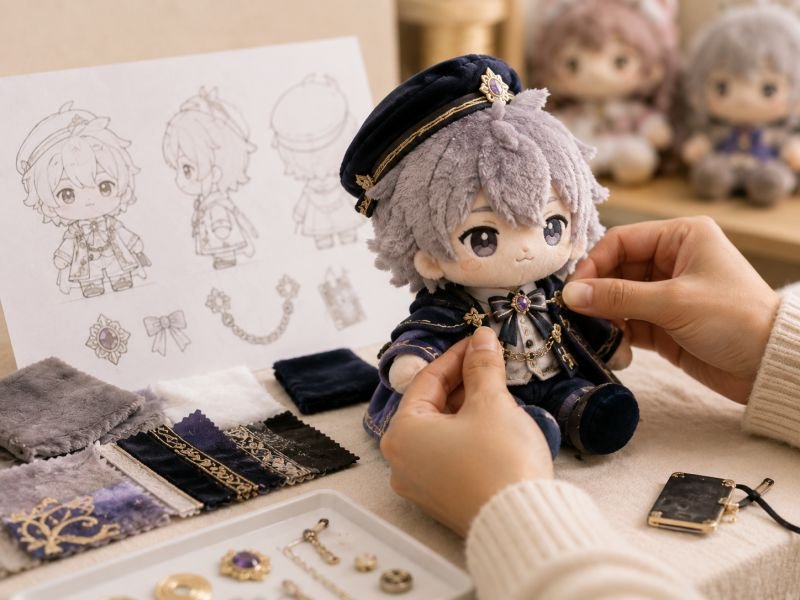
How to Add Premium Details to Collectible Plush Toys? A Custom Plush Guide
A collectible plush toy is not judged only by softness. People notice the face first, then the fabric, the weight, the tiny stitches, the tag, the way it sits, and the feeling of opening the package. A plush can be simple and still feel valuable if every detail has a reason. Another plush can use many costly add-ons and still feel ordinary if the face is weak, the material is wrong, or the packaging looks disconnected from the character.
To add premium details to collectible plush toys, start with the character’s strongest feature, then choose fabric, filling, embroidery, applique, clothing, accessories, labels, and packaging that support that identity. Strong details improve recognition, touch, display value, series consistency, and repeat quality. Every added detail should be tested through sampling before bulk production begins.
Premium does not mean “add everything.” It means choosing the few details that collectors can see, touch, remember, and keep. A small embroidered symbol on the back, a numbered card, a soft minky face, or a better sitting posture can sometimes do more than a large decorative accessory. The strongest collectible plush usually feels planned from front to back, from the first photo to the moment it is placed on a shelf.
Why Do Premium Details Matter?
Premium details matter because they change how a collectible plush is seen, touched, displayed, remembered, and kept. The right fabric, face craft, filling, accessories, labels, story cards, and packaging can make a plush feel more complete. These details support character recognition, shelf presence, gift value, series consistency, and repeat production quality.
A collectible plush is not judged in one second. The first reaction usually comes from the face. The second comes from touch. Then comes posture, tag design, packaging, hidden details, and whether the product feels like part of a larger collection. A plush with a weak face, thin filling, poor tag placement, or careless box fit can lose value even if the basic idea is strong.
Good details do not need to be loud. A clean embroidered eye, a soft face fabric, a small woven label, a balanced sitting pose, or a story card tucked inside the box can feel more valuable than too many decorations. The aim is to make the plush feel planned, not crowded.
For collectible plush programs, details usually work in five ways:
| Detail Role | What It Improves | Practical Example |
|---|---|---|
| Recognition | Character identity | Accurate eyes, mouth curve, color blocks, outfit symbol |
| Touch | Physical quality | Softer fabric, fuller filling, smoother seams |
| Display | Shelf and photo value | Sitting posture, clean front view, window box |
| Story | Emotional value | Character card, hidden mark, release message |
| Control | Repeat consistency | Approved sample records, material notes, SKU labels |
Premium details should be chosen by purpose. If the face is the selling feature, invest in face craft. If the product is for display, focus on posture and packaging. If the plush is part of a series, size, tag system, and box logic may matter more than adding extra accessories. If it is a limited release, numbering, special color, or a story card can create a stronger keepsake feeling.
A useful planning rule is to select three to five high-impact details rather than adding everything. For many collectible plush toys, the strongest value comes from:
- Accurate face embroidery
- Suitable fabric for the character
- Balanced filling and posture
- One meaningful accessory or hidden detail
- Packaging that protects and presents the product well
Premium details are not decoration for decoration’s sake. They are small decisions that help the plush feel worth keeping.
What Makes A Plush Collectible?
A plush becomes collectible when it has a clear identity, controlled quality, series logic, display value, and small details that invite people to keep it. The strongest collectible plush toys are easy to recognize, pleasant to touch, simple to display, and connected to a character, story, place, event, or release.
Collectibility often starts with one memorable feature. It may be a sleepy face, unusual color, signature outfit, special tail, tiny symbol, or limited card. If the plush cannot be remembered easily, extra craft details may not help much. The character idea should be clear before costly upgrades are added.
| Collectible Factor | What It Looks Like In Plush |
|---|---|
| Distinct identity | Recognizable face, silhouette, pose, color, or outfit |
| Physical quality | Soft fabric, balanced filling, clean seams |
| Series logic | Shared size, tag style, packaging, or hidden code |
| Limited value | Numbered card, event tag, exclusive color, rare version |
| Display value | Stable sitting pose, strong front view, good box fit |
| Discovery | Hidden embroidery, back-side mark, story card, inner label |
A collectible plush should feel intentional from the first look to the final touch. The face attracts attention. The fabric keeps attention. The tag, box, or hidden symbol gives people a reason to remember it. When these details work together, the plush becomes more than a soft object.
Collectible Plush Vs Regular Plush
A regular plush can succeed with softness, a cute shape, and simple packing. A collectible plush needs stronger identity, tighter detail control, and better presentation. The difference is not always price. It is the level of planning behind the face, fabric, filling, labels, packaging, and series system.
A regular plush may be used as a general gift. A collectible plush often represents a character, release, place, fandom, game, museum, or brand mascot. That means small details carry more weight. Eye position, color accuracy, tag design, posture, and packaging all affect how complete the product feels.
| Area | Regular Plush | Collectible Plush |
|---|---|---|
| Main value | Softness and general cuteness | Character identity and keepsake value |
| Face detail | More flexible | More precise |
| Fabric choice | Comfort-focused | Comfort plus character fit |
| Filling | Softness-first | Softness, posture, recovery |
| Accessories | Optional | Often tied to identity |
| Labels | Basic product information | Product, style, series, barcode, or release detail |
| Packaging | Protection-focused | Protection plus display and story |
| Sample review | Appearance and feel | Appearance, feel, repeatability, packing, records |
A collectible plush can still be simple. In fact, clean designs often work better than complicated ones. The difference is that every visible choice should feel deliberate. A small plush with accurate embroidery, neat seams, good filling, and a strong tag can feel more collectible than a larger plush with random decoration.
What Is The History Of Plush Collectibles?
Plush collectibles grew as character culture, game merchandise, animation, tourism gifts, museum shops, blind box releases, and fan communities became more active. Plush toys moved from comfort items into physical keepsakes that carry memory, identity, and release value.
In the past, many plush toys were valued mainly for softness and comfort. Over time, plush became tied to stories and characters. People began keeping plush toys because they represented a favorite mascot, a game character, a holiday event, a museum visit, a fandom moment, or a limited drop. The product became part toy, part souvenir, part display item.
Modern collectible plush often contains several connected layers:
| Layer | Example |
|---|---|
| Character layer | Mascot, animal, IP figure, game character |
| Material layer | Minky, short plush, faux fur, sherpa, special texture |
| Craft layer | Embroidery, applique, clothing, woven label |
| Story layer | Character card, museum note, event message |
| Release layer | Limited edition, rare color, seasonal version |
| Packaging layer | Blind box, window box, gift box, display box |
| Control layer | Style code, barcode, carton mark, approved sample record |
This history explains why detail planning matters today. A collectible plush is rarely just one item. It often sits inside a larger release plan: multiple characters, color variants, packaging versions, style codes, and repeat orders. Without strong detail control, a collection can look uneven.
The best collectible plush combines emotional appeal with production discipline. It should feel personal, but it should also be repeatable.
Which Details Raise Perceived Value?
Perceived value rises when details improve the areas people see, touch, and keep. The most effective upgrades are usually face embroidery, suitable fabric, balanced filling, clean seams, subtle labels, meaningful accessories, story cards, limited numbering, and packaging that protects the plush while improving display.
Not every detail adds real value. A heavy metal tag may work on a 25 cm display plush but feel awkward on a 10 cm mini plush. A detailed embroidered logo may look sharp on short plush but disappear into faux fur. A complex box may look beautiful but increase carton volume and damage the plush if the fit is too tight.
| Detail | Value Added | Best Fit |
|---|---|---|
| Face embroidery | Stronger expression and identity | Character plush, mascot plush, game plush |
| Short-pile face panel | Clearer small details | Mini plush, blind box plush |
| Minky body | Smooth, soft hand feel | Lifestyle plush, cute characters |
| Faux fur area | Rich texture | Animal plush, fantasy creatures |
| Applique patch | Layered color and tactile detail | Belly marks, paw pads, outfit panels |
| Woven side label | Subtle identity | Series plush, private label plush |
| Metal tag | Limited release feeling | Larger collectible plush |
| Story card | Character background | Museum, tourism, fandom, IP-related plush |
| Numbered card | Release identity | Limited editions |
| Window box | Display value | Retail plush, museum plush |
| Blind box | Surprise and series interest | Mini collectible lines |
A practical detail plan can be divided into three levels:
| Level | Detail Type | Purpose |
|---|---|---|
| Essential | Face, body shape, main fabric, filling | Makes the plush work |
| Value-building | Embroidery upgrade, label, accessory, story card | Makes the plush feel more refined |
| Release-related | Numbering, rare color, blind box, display box | Makes the plush feel collectible |
For most projects, fix the essential details first. Then add value-building details. Release-related details should come after the plush itself already feels strong.
Who Needs Premium Plush Details?
Premium plush details are useful for collectible releases, character merchandise, mascot plush, museum souvenirs, game plush, blind box series, fan products, private label plush, seasonal gifts, and retail display programs. These products need more than softness; they need identity, consistency, presentation, and a reason to be kept.
Different product types need different detail priorities. A museum animal plush may need accurate markings, educational tags, and natural texture. A game character plush may need precise face craft and outfit details. A blind box plush may need consistent size, style codes, hidden features, and sealed packaging. A mascot plush may need color accuracy, logo clarity, and repeat stability.
| Product Type | Detail Priority |
|---|---|
| IP character plush | Face accuracy, color matching, outfit details |
| Game plush | Expression, props, pose, symbols |
| Museum plush | Texture, species detail, educational card |
| Mascot plush | Main color, logo clarity, repeat shape |
| Blind box plush | Size control, hidden detail, packaging system |
| Fan merchandise | Limited tag, story card, collector mark |
| Retail plush | Shelf display, barcode, carton control |
| Private label plush | Material record, care label, repeat consistency |
| Event plush | Date mark, event tag, special color |
| Tourism plush | Local symbol, destination story, souvenir box |
Premium details are most valuable when the plush carries meaning. A simple giveaway may not need many upgrades. A plush tied to a character, exhibition, game, event, fandom, or limited release benefits more from thoughtful detail planning.
The right detail makes the plush feel more complete. The wrong detail only adds clutter, cost, or production risk.
Do Premium Details Always Increase Price?
Premium details can increase price, but not every upgrade is expensive. Price changes depend on fabric type, embroidery size, stitch density, applique layers, clothing structure, accessories, labels, packaging, sample rounds, testing direction, order quantity, and production difficulty.
Some small changes have strong value. Better thread color, corrected eye placement, improved filling, a woven side label, or better tag position can noticeably improve the final product. Other details, such as removable outfits, sound modules, metal accessories, complex display boxes, or multi-material construction, require more sample work and production control.
| Detail Upgrade | Price Impact | Value Impact |
|---|---|---|
| Better thread color | Low | Medium |
| Filling adjustment | Low | Medium |
| Woven side label | Low to medium | Medium |
| Face embroidery upgrade | Medium | High |
| Applique detail | Medium | Medium to high |
| Special fabric | Medium to high | High when visible and touchable |
| Fixed small accessory | Medium | Medium to high |
| Metal tag | Medium | High for limited releases |
| Removable clothing | High | High if central to the character |
| Blind box packaging | Medium to high | High for series launches |
| Window box | Medium to high | High for display value |
| Sound module | High | Strong only when it fits the concept |
Before adding an upgrade, use a simple filter:
| Detail Filter | What To Check |
|---|---|
| Visible | Will people notice it in photos or on shelf? |
| Touchable | Does it improve hand feel or interaction? |
| Meaningful | Does it support the character or release idea? |
| Repeatable | Can it stay consistent in bulk production? |
| Packable | Will it survive packing and shipping? |
| Worth it | Does the value justify the added work? |
A plush does not need the most expensive details. It needs details that matter.
How Do Details Affect Collector Interest?
Details affect collector interest by creating recognition, emotional connection, display value, and discovery. A collectible plush should look appealing at first glance, feel good in hand, and reward closer inspection with a story card, hidden embroidery, special tag, rare color, or numbered release detail.
Interest usually builds in layers. The first layer is instant recognition: face, color, shape, and outfit. The second layer is physical feel: softness, weight, filling, and surface finish. The third layer is discovery: a secret symbol, inner tag, back embroidery, special card, or style code. The fourth layer is trust: clean seams, good packing, and consistent style quality.
| Collector Trigger | Plush Detail Example |
|---|---|
| Recognition | Accurate face, outfit, symbol, color |
| Touch | Soft fabric, balanced filling, smooth seams |
| Display | Stable sitting posture, clean front view, window box |
| Rarity | Numbered card, rare color, event tag |
| Story | Character bio, museum note, place-based detail |
| Discovery | Hidden embroidery, secret label, small back symbol |
| Series logic | Matching boxes, style codes, shared tag system |
| Trust | Good sample record, clean QC, safe packing |
The strongest details are often connected. A hidden mark is more interesting when the story card hints at it. A numbered card feels stronger when the packaging looks worth keeping. A rare color feels more valuable when the rest of the series is consistent.
Collector interest grows when the plush feels easy to recognize, pleasant to handle, and rewarding to revisit.
How To Make Your Own Marketable Plushie?
To make a plushie with strong commercial appeal, begin with a clear character idea, define the use scene, choose a practical size, simplify details for sewing, select fabric that supports the design, plan face craft, decide packaging early, and test the first sample before bulk production.
The plush should have one strong memory hook. That hook may be a face shape, color, outfit, hat, tail, pose, symbol, or story. Avoid adding details only because they look interesting in artwork. Every detail should help the plush become easier to recognize, easier to photograph, or more enjoyable to keep.
| Step | Key Decision | Practical Check |
|---|---|---|
| Character idea | What makes it memorable? | Can it be described in one sentence? |
| Use scene | Collectible, gift, keychain, blind box, event | Does the size fit the purpose? |
| Size | Mini, mid-size, display, oversized | Can details fit this scale? |
| Fabric | Short plush, minky, faux fur, sherpa | Does it support face clarity and touch? |
| Face craft | Embroidery, printing, applique | Is the expression clear at actual size? |
| Accessories | Fixed, removable, decorative, functional | Are they stable and useful? |
| Packaging | Hangtag, box, blind box, display box | Does it support display and shipping? |
| Sample review | Shape, face, fabric, filling, labels | Can this become a bulk standard? |
| Record control | Photos, specs, material list, QC focus | Can the same product be repeated later? |
A product with commercial appeal does not need to be complex. It needs clear identity, pleasant touch, stable structure, and presentation that feels finished. If the plush looks good from the front, feels good in hand, and arrives in packaging that supports the release idea, it has a stronger chance of being kept, photographed, shared, and reordered.
Which Materials Feel Premium?

Premium-feeling plush materials are soft, stable, clean, suitable for the character, and consistent enough for bulk production. Minky, short plush, faux fur, sherpa, crystal velvet, velboa, recycled plush fabric, and mixed materials can all feel high-value when matched with the right size, face detail, filling, stitching, packaging, and product use.
Material is one of the fastest ways to change how a collectible plush is perceived. The same character can feel cute, cozy, luxury, playful, vintage, animal-like, or display-ready depending on fabric and filling. But softness alone is not enough. A fabric must also support embroidery clarity, color accuracy, shape recovery, seam quality, and long-term repeat orders.
A collectible plush material should do five things well:
| Material Requirement | Why It Matters |
|---|---|
| Soft touch | Creates the first hand-feel impression |
| Clear detail support | Keeps eyes, mouth, logo, and small marks visible |
| Shape stability | Helps the plush hold posture after filling |
| Color reliability | Supports character and brand color direction |
| Bulk consistency | Reduces sample-to-bulk differences |
For collectible plush, fabric should be chosen around the product’s most important feature. If the face carries most of the value, use a fabric that keeps embroidery clean. If the body texture is the star, a richer fabric may work, while the face can use a shorter pile. If the plush is small, avoid thick fabrics that make seams bulky. If the plush is for display, consider posture, filling support, and packaging recovery.
A useful material decision starts with three simple checks:
| Decision Check | What To Ask |
|---|---|
| Visual check | Does the fabric make the character look better? |
| Touch check | Does it feel good at the intended size? |
| Production check | Can the material stay stable across the planned quantity? |
The best material is not always the most expensive one. It is the one that makes the plush easier to love, easier to photograph, easier to display, and easier to repeat.
What Type Of Plush Fabric Works Best?
The best plush fabric depends on character style, product size, detail level, target hand feel, color needs, age direction, sales route, and packaging. Short plush works well for clean facial details. Minky gives a smooth, gentle touch. Faux fur creates rich animal texture. Sherpa adds warmth and coziness. Crystal velvet brings a soft surface with a brighter visual effect.
Material choice should begin with the product’s strongest visual feature. If the character has delicate eyes, small mouth embroidery, or logo detail, shorter pile fabric is usually safer. If the product is an animal plush with a fluffy body, faux fur may be suitable, but the face area may need a shorter fabric panel to keep expression clear.
| Fabric Type | Best Use | Watch Carefully |
|---|---|---|
| Short plush | Mascots, mini plush, clean face craft | Pile direction, density, color consistency |
| Minky | Smooth collectible plush, soft character styles | Stretch, surface marks, embroidery tension |
| Faux fur | Animal plush, fantasy creatures, rich texture | Shedding, trimming, hidden small details |
| Sherpa | Cozy plush, seasonal gifts, lifestyle characters | Bulkiness, detail clarity, seam thickness |
| Crystal velvet | Smooth body, bright soft look | Shine and color shift under light |
| Velboa | Cost-controlled plush styles | Density, softness, surface finish |
| Recycled plush fabric | Eco-related collections | Touch, color stability, availability |
Fabric should also be checked by size. A detail that works on a 25 cm plush may fail on a 10 cm mini plush.
| Plush Size | Safer Material Direction | Main Risk |
|---|---|---|
| 8–12 cm | Short plush, smooth minky, low pile | Small details may disappear |
| 12–18 cm | Short plush, minky, light texture mix | Embroidery density and seam bulk |
| 20–25 cm | Minky, short plush, faux fur mix | Filling balance and color control |
| 30 cm+ | Faux fur, minky, sherpa, mixed fabric | Freight volume and shape support |
A collectible plush often benefits from mixed fabric. For example, a short plush face can keep embroidery clear, while a faux fur body creates richer texture. This can raise perceived quality without making every part complex.
Minky Vs Faux Fur Vs Short Plush
Minky, faux fur, and short plush each create a different kind of quality feeling. Minky feels smooth, soft, and gentle. Faux fur feels rich, fluffy, and animal-like. Short plush gives cleaner detail and stronger control for face embroidery, small symbols, mini plush, and mascot products.
There is no universal best choice. The right fabric depends on the character, size, and intended use. A soft lifestyle character may look more refined in minky. A wolf, bear, lion, monster, or fantasy animal may need faux fur for texture. A blind box mini plush often works better with short plush because small details remain visible.
| Fabric | Strong Advantage | Common Limitation |
|---|---|---|
| Minky | Smooth touch, soft look, strong comfort value | Stretch may affect embroidery and body shape |
| Faux fur | Rich texture, strong shelf presence, animal effect | Can hide face details and needs trimming |
| Short plush | Clean craft detail, stable pattern control | Less fluffy than faux fur |
| Mixed fabric | Better contrast and richer look | Needs more sample testing |
A smart material layout often uses different fabrics by area:
| Plush Area | Recommended Direction |
|---|---|
| Face | Short plush or smooth minky for clear embroidery |
| Body | Minky, faux fur, sherpa, or short plush depending on style |
| Belly patch | Short plush, applique fabric, or contrast material |
| Ears | Minky, short plush, or inner contrast fabric |
| Clothing | Woven fabric, felt-like fabric, or applique panels |
| Paw pads | Short plush, minky, or embroidered applique |
| Hidden detail | Embroidery, woven label, or small contrast patch |
The sample should prove that these fabrics work together. Different fabric thickness can affect seams, body shape, stuffing balance, and packing. A rich material mix can look high-value, but only when the sample remains clean after sewing and filling.
Which Filling Adds Better Hand Feel?
Filling affects the way a plush feels when held, squeezed, displayed, packed, and unpacked. It controls softness, rebound, fullness, weight, posture, and recovery. A collectible plush should not feel empty, lumpy, overly stiff, or unstable. It should match the intended role: huggable, display-ready, mini, weighted, or gift-focused.
Standard PP cotton is widely used in plush toys because it provides soft volume and flexible hand feel. Higher-rebound fiber can improve recovery after compression. Firmer filling may help a display plush sit better. Weighted beads create a more comforting feel but need inner containment and seam review. Foam or structured inserts can help special shapes hold form.
| Filling Direction | Best For | What To Check |
|---|---|---|
| Soft PP cotton | General plush, gifts, character plush | Evenness, softness, rebound |
| Higher-rebound fiber | Better recovery and fuller feel | Cost and consistency |
| Firmer filling | Sitting plush, display plush, mascot posture | Avoid overly hard touch |
| Weighted beads | Comfort plush, sensory-style products | Inner bag, seam strength, balance |
| Mixed filling | Head support, special body shape | Placement control |
| Foam insert | Structured parts or flat body support | Comfort and sewing fit |
Hand feel should be checked through real actions, not only photos:
| Test | What It Reveals |
|---|---|
| Squeeze test | Softness and rebound |
| Sitting test | Balance and posture |
| Hanging test | Shape under gravity |
| Compression test | Recovery after packing |
| Head support check | Whether large heads lean forward |
| Limb check | Whether arms, legs, ears, and tails hold form |
| Weight check | Whether the plush feels balanced |
For collectible plush, filling should also support photos and display. A face may look excellent, but weak filling can make the body collapse. A large head may look cute, but without enough neck or body support, it may lean forward. A plush meant for shelf display needs different filling logic from a soft cuddle plush.
Can Sustainable Materials Feel Premium?
Sustainable materials can feel premium when they are selected for touch, color, stability, and design fit. Recycled plush fabric, recycled filling, paper hangtags, kraft boxes, reduced-plastic packing, and recyclable outer cartons can support a higher-value release when the physical product still feels soft, clean, and well-made.
A responsible material story can strengthen a plush collection, especially for museum shops, lifestyle lines, educational products, nature-themed characters, tourism items, and mission-led campaigns. But the material story should not be stronger than the product itself. If the fabric feels rough, the color is unstable, or the stuffing recovers poorly, the plush may feel less refined even if the material message is good.
| Sustainable Direction | Value Added | Watch Carefully |
|---|---|---|
| Recycled plush fabric | Adds material story and responsible positioning | Touch, color, availability |
| Recycled filling | Supports eco-related messaging | Rebound, softness, consistency |
| Paper hangtag | Clean, natural presentation | Print quality and durability |
| Kraft box | Warm gift feel and simple display | Strength and color matching |
| Reduced-plastic packing | Cleaner packing direction | Protection and warehouse rules |
| Recyclable carton | Better logistics story | Strength during shipping |
Sample testing matters. A recycled fabric should be checked for softness, pile density, color accuracy, embroidery support, shedding, and recovery after packing. A paper-based package should be checked for strength, ink quality, folding, barcode readability, and carton fit.
A strong sustainable plush should feel good before the material story is even explained. The story should add value, not excuse weaker touch or unstable quality.
What Fabric Certifications Matter?
Fabric and product documentation depends on destination region, age group, material choice, accessory structure, sales channel, and product use. Plush toys entering the U.S. or EU may need review around toy safety standards, chemical restrictions, flammability, age labeling, small-part risks, tracking labels, and third-party testing where applicable.
Not every collectible plush follows the same path. A plush for young children, an adult collectible, a plush keychain, a sound plush, a weighted plush, and a museum souvenir may have different review needs. Hard parts, magnets, electronic modules, plastic eyes, printed fabric, weighted beads, and removable accessories can all change what needs to be checked.
| Product Detail | Why It Matters |
|---|---|
| Age group | Small parts, warning labels, and test direction may change |
| Fabric type | Flammability and chemical review may apply |
| Filling | Leakage, seam strength, and material review may be needed |
| Plastic eyes or nose | Attachment strength and small-part concern |
| Magnets | Extra caution for toy use |
| Sound module | Battery access, label planning, and structure review |
| Printed fabric | Ink and fabric compatibility |
| Weighted beads | Inner containment and seam strength |
| Removable accessories | Loose-part and packing review |
| Packaging | Polybag warning, barcode, product information |
For planning, destination and age direction should be shared before sampling. A simple note such as “U.S. retail, ages 3+” or “EU museum shop, adult collectible” helps guide material, labels, packaging, and sample decisions.
Documentation should be discussed early because late compliance-related changes can affect fabric, accessories, warning labels, packaging, and test samples. For collectible plush with special details, it is safer to review risk areas before the golden sample is approved.
Can A Factory Match Pantone Colors?
A factory can use Pantone colors as a reference for fabric, embroidery thread, printing, and packaging, but plush color matching is affected by fabric texture, pile length, dye lot, brushing direction, lighting, camera settings, and material availability. Pantone gives color direction; physical swatches and sample review give a more realistic final check.
Fabric color behaves differently from printed paper. Long pile creates shadow and highlight. Faux fur may look darker when brushed one way and lighter the other way. Minky can look soft and muted. Crystal velvet may reflect light more strongly. Embroidery thread may appear darker or brighter than nearby fabric.
| Color Factor | What Can Change |
|---|---|
| Fabric texture | Light reflection and surface depth |
| Pile length | Shadow and highlight |
| Pile direction | Color shifts after brushing |
| Dye lot | Batch-to-batch difference |
| Lighting | Daylight and indoor light may differ |
| Camera | Photos may not show true color |
| Thread | Embroidery may look darker or brighter |
| Printing | Ink may react differently on fabric |
| Packaging | Printed box color may not match fabric exactly |
For strict colors, mark the most important areas first. Main body color, face markings, logo thread, and box artwork may need tighter control. Less visible inner-ear shades or tiny accessory colors may allow more tolerance.
A practical color approval method:
| Step | What To Do |
|---|---|
| 1 | Send Pantone or physical color reference |
| 2 | Identify strict colors and flexible colors |
| 3 | Review fabric swatch when color is critical |
| 4 | Compare fabric, thread, print, and packaging together |
| 5 | Approve the color direction before bulk material preparation |
Color approval should not rely only on screen images. For important plush collections, a physical sample gives a much safer basis for approval.
Which Material Mistakes Reduce Value?
Material mistakes reduce value when the fabric hides details, color looks unstable, filling feels uneven, seams appear rough, accessories distort the shape, or packaging compresses the plush. Even a strong character design can feel low-value when the materials do not support the final use.
Common mistakes include choosing long fur for a tiny face, using shiny fabric for a character that needs matte color, selecting fabric only from photos, using too little filling for a display plush, mixing thick and thin fabrics without testing, or selecting a box that squeezes special parts.
| Material Mistake | Result |
|---|---|
| Long pile on detailed face | Eyes, mouth, and logo become unclear |
| Fabric too thin | Plush feels weak or collapses |
| Fabric too thick | Small parts look bulky |
| Shiny surface mismatch | Color changes under different light |
| Weak filling | Body loses shape and shelf value |
| Over-firm filling | Plush feels stiff and less comforting |
| Mixed fabric without testing | Seams become uneven |
| Poor color planning | Bulk may not match character expectation |
| Dense fabric on small size | Details look heavy |
| Tight packaging | Ears, hair, clothing, or accessories deform |
Material should always be checked together with craft and packaging. A beautiful fabric can still fail if embroidery sinks into the pile. A soft filling can still fail if the plush cannot sit. A premium box can still fail if it crushes the shape.
A strong material decision should pass these checks:
| Check | Pass Standard |
|---|---|
| Touch | Feels pleasant for the intended product type |
| Detail clarity | Face, logo, and small marks remain visible |
| Shape support | Plush holds its posture after filling |
| Color direction | Matches the intended character closely enough |
| Seam quality | Fabric thickness does not create rough edges |
| Packing recovery | Shape returns after packing |
| Repeat stability | Material can support the planned quantity |
Materials create the foundation of premium plush value. When the fabric, filling, craft, and packaging work together, the plush feels more complete before any story card or limited tag is added.
How To Add Premium Craft Details?
Premium craft details should make a collectible plush easier to recognize, nicer to touch, stronger in use, and more enjoyable to keep. The most useful choices include accurate embroidery, clean applique, layered fabrics, fixed clothing, small accessories, woven labels, hidden symbols, and well-tested finishing. A detail is worth adding only when it improves the character and can be repeated clearly in bulk production.
Craft is where a plush begins to feel intentional. A good fabric creates the first touch, but craft gives the character personality. Eye placement, mouth curve, stitch density, applique edge, clothing fit, accessory position, and label placement can all change the final feeling. These details may look small, yet they often decide whether a plush feels ordinary or collectible.
The goal is not to add as many decorations as possible. Too many craft elements can make a plush crowded, expensive, hard to approve, and difficult to repeat. A stronger route is to choose craft details by purpose.
| Craft Purpose | Useful Detail | What It Improves |
|---|---|---|
| Character expression | Eye embroidery, mouth curve, eyebrow angle | Emotion and recognition |
| Visual identity | Logo patch, color block, outfit symbol | Character memory |
| Texture | Applique, fabric layering, faux fur contrast | Touch and visual richness |
| Interaction | Keyring, fixed scarf, zipper, small charm | Handling value |
| Collection value | Hidden embroidery, numbered label, inner mark | Discovery and keepsake feeling |
| Retail readiness | Hangtag, woven label, barcode label | Product organization |
| Durability | Reinforced loops, stronger seams, fixed parts | Use and handling strength |
For collectible plush, craft details should be checked at the actual size. A detail that looks elegant in artwork may become too thick, too small, too heavy, or too hard to sew. The safest approach is to test craft details in the first sample and confirm them before golden sample approval.
How Does Embroidery Upgrade Face Details?
Embroidery upgrades face details by giving eyes, mouths, noses, eyebrows, logos, and small symbols a cleaner, more durable, and more controlled finish. For collectible plush, embroidery is often one of the highest-impact upgrades because the face usually decides whether the character feels correct.
Embroidery can create sharp lines, soft expressions, glossy eye highlights, tiny smiles, paw marks, outfit logos, and hidden collector symbols. It works especially well on short plush and smooth fabrics. On long-pile materials, embroidery may be hidden unless the area is trimmed or changed to a shorter fabric.
| Embroidery Area | Value Added | What To Check |
|---|---|---|
| Eyes | Character emotion and identity | Size, spacing, angle, symmetry |
| Mouth | Mood and cuteness | Curve, width, thread thickness |
| Nose | Face focus | Shape, height, stitch density |
| Eyebrows | Personality | Angle and position |
| Logo | Brand or character mark | Readability at real size |
| Paw pads | Extra touch detail | Placement and thread color |
| Hidden symbol | Collector discovery | Meaning and location |
Small changes matter. Moving eyes 2–3 mm lower can make a character softer. Changing black thread to dark brown can make the face warmer. Reducing stitch density can make a small plush face less stiff. During sample review, the face should be checked from normal viewing distance and close-up.
Useful embroidery files should include size, location, thread color, stitch style, and artwork reference. If the plush is small, simplify thin lines. If the fabric is fluffy, test whether the stitching remains visible.
How To Sew Details Onto A Plushie?
Details can be sewn onto a plushie through applique panels, fabric patches, embroidered badges, woven labels, felt shapes, fixed scarves, bows, clothing pieces, ear inserts, paw pads, tails, wings, or small decorative elements. The right method depends on size, fabric thickness, placement, and whether the detail is decorative or functional.
Sewn details can make a plush feel richer because they add depth. A belly patch, paw pad, collar, outfit panel, or character badge gives a tactile layer that printing alone cannot create. However, sewn details must be planned before sampling because they can change pattern structure, seam lines, filling balance, and packaging fit.
| Sewn Detail | Best Use | Risk To Check |
|---|---|---|
| Applique panel | Belly mark, face patch, outfit part | Edge thickness, curve distortion |
| Embroidered badge | Logo, emblem, release mark | Attachment strength and scale |
| Woven label | Side identity or series mark | Size and placement |
| Felt shape | Simple decoration | Edge neatness and durability |
| Fixed scarf | Character outfit | Covering face or logo |
| Bow | Cute detail | Loose part and packing pressure |
| Ear insert | Inner-ear contrast | Seam bulk and symmetry |
| Paw pad | Animal plush detail | Stitch neatness and size |
Sewn details should be checked after stuffing, not only before sewing. A patch can look perfect when flat but shift after the plush body expands. Rounded areas such as belly, cheeks, paws, and heads need extra attention because flat pieces can wrinkle on curved surfaces.
A good sewn detail should pass three checks: correct placement, clean edge, and secure attachment.
Printing Vs Embroidery
Printing and embroidery serve different purposes. Printing is better for soft gradients, blush, flat graphics, tiny clothing patterns, and details that need a smooth surface. Embroidery is better for durable lines, eyes, mouths, logos, and tactile details. Many collectible plush toys use both methods to balance clarity, texture, and cost.
Embroidery feels more raised and durable, but it can become thick on small plush. Printing can keep fine graphics lighter, but it depends heavily on fabric compatibility. Applique can add texture and color blocks but adds seam thickness. The best result often comes from choosing the right method for each area instead of using one method everywhere.
| Craft Method | Best Use | Watch Carefully |
|---|---|---|
| Embroidery | Eyes, mouth, logo, small symbols | Thickness, placement, fabric pile |
| Printing | Blush, gradients, flat graphics | Color shift, edge clarity |
| Applique | Large color panels, belly marks | Edge thickness and sewing accuracy |
| Patch | Badges, outfit marks | Attachment and scale |
| Woven label | Subtle identity | Limited detail space |
A simple decision rule works well:
| Detail Need | Better Choice |
|---|---|
| Clear eyes | Embroidery |
| Soft cheek color | Printing |
| Large belly patch | Applique |
| Tiny outfit pattern | Printing or simplified embroidery |
| Durable logo | Embroidery, woven label, or patch |
| Hidden collector mark | Embroidery or woven label |
| Textured color block | Applique or mixed fabric |
For mini plush, keep craft simple. For larger collectible plush, more embroidery and applique detail can be used, but still needs sample testing.
Which Applique Details Work Best?
Applique works best for plush details that need layered color, fabric contrast, tactile texture, and a clean shape. It is useful for belly patches, paw pads, animal markings, clothing panels, wings, ears, cheeks, badges, and character symbols.
Applique can make a plush feel more refined because it creates visible depth. A soft belly panel, contrast ear insert, or stitched character badge can be more valuable than a flat printed area. Still, applique should be designed with sewing limits in mind. Too many tiny corners or narrow curves can create uneven edges, especially on small plush.
| Applique Detail | Strong Use | Common Issue |
|---|---|---|
| Belly patch | Animal plush, mascot plush | Wrinkling after stuffing |
| Paw pad | Bears, cats, dogs, fantasy animals | Small edges may look rough |
| Clothing panel | Jackets, uniforms, capes | Misalignment after sewing |
| Face patch | Muzzle, cheeks, eye area | Expression may change |
| Character symbol | Game or mascot plush | Must stay centered and readable |
| Wing or fin | Fantasy or animal plush | Edge strength and shape control |
| Ear insert | Inner-ear detail | Symmetry and seam bulk |
Applique is strongest when the shape is clean and meaningful. A few well-placed panels can add more value than many tiny patches. For curved areas, the shape should be tested in the first sample. If the edge lifts, wrinkles, or distorts the body, the applique shape or fabric thickness may need adjustment.
How To Personalize A Plushie?
A plushie can be personalized through embroidered names, custom colors, woven labels, story cards, hangtags, limited tags, outfit details, accessories, hidden symbols, numbered inserts, and special packaging. Personalization works best when it strengthens the character without making bulk work unstable.
There are two main types of personalization. Product-level personalization means the full plush line has custom colorways, outfits, packaging, or release details. Individual personalization means each piece may have a name, number, or unique detail. Product-level personalization is usually easier to manage for larger orders. Individual personalization needs stronger file control, packing control, and labor planning.
| Personalization Type | Best Use | Watch Carefully |
|---|---|---|
| Custom colorway | Seasonal release, rare version | Fabric availability and color control |
| Embroidered name | Event gift, premium gift set | File handling and labor time |
| Woven label | Series identity | Size and placement |
| Custom outfit | Character plush | Pattern and sewing complexity |
| Accessory set | Collectible value | Attachment and packing |
| Story card | Museum, tourism, fandom plush | Print quality and size |
| Numbered card | Limited edition | Packing sequence and tracking |
| Hidden mark | Collector discovery | Location and meaning |
Personalization should be planned with quantity and timing. A woven side label is easy to repeat. A unique embroidered name for each plush requires more careful production control. A numbered card system needs correct packing and checking. A color variant needs fabric planning before sampling.
A personalized detail should feel connected to the character or release. Random personalization can make the plush look busy.
How To Use Clothing And Accessories?
Clothing and accessories can make a collectible plush feel more complete when they support the character identity. Scarves, hats, capes, jackets, collars, badges, tiny bags, bows, props, keyrings, charms, zippers, and straps can add value if they are correctly scaled, secure, and packable.
Accessories should be defined clearly before sampling. Each part should be marked as fixed, removable, decorative, or functional. This affects sewing, safety direction, packaging, and QC.
| Accessory Type | Example | Main Check |
|---|---|---|
| Fixed clothing | Sewn scarf, cape, collar | Placement and seam strength |
| Removable clothing | Tiny coat, hat, outfit set | Fit and loose parts |
| Decorative part | Bow, ribbon, patch, charm | Visual balance and attachment |
| Functional part | Keyring, zipper, strap | Pull strength and durability |
| Hard part | Button, plastic eye, metal tag | Fixing method and safety direction |
| Story prop | Mini book, badge, plush food | Scale and meaning |
Accessories should not block the face, logo, or main silhouette. A scarf may cover the mouth. A hat may crush ears during packing. A charm may scratch a window box. A cape may twist during shipping. These are sample-stage issues and should be checked before final approval.
For collectible plush, one meaningful accessory is often better than several weak ones. Choose the item that helps people recognize the character faster.
Are Metal Tags Worth It?
Metal tags can be worth using when they support a limited edition, mascot identity, premium release, or display-focused plush. They add weight, shine, and a keepsake feeling. But they should be used carefully because they can affect comfort, safety direction, packing, and cost.
Metal tags usually fit medium or larger plush better than tiny plush. On small plush, the tag may feel heavy or oversized. On cuddle plush, hard metal may reduce softness. On products intended for young children, hard parts need extra review. For collectible display plush, a metal tag can work well if it has clear meaning.
| Metal Tag Use | Good Fit | Watch Carefully |
|---|---|---|
| Limited edition mark | Numbered or special release | Tracking and placement |
| Mascot emblem | Brand or character identity | Weight and visual balance |
| Display plush | Shelf or desk collectible | Surface scratching |
| Premium hang detail | Tag or accessory area | Attachment strength |
| Mini plush | Only if very small and light | Scale and comfort |
Alternatives may work better in some cases:
| Alternative | When It Works Better |
|---|---|
| Woven label | Softer and lighter |
| Embroidered mark | Fully soft and durable |
| PU patch | Premium look with less metal weight |
| Printed card | Better for numbering or story |
| Rubber patch | Tactile but softer than metal |
Metal should add meaning, not only shine. If it connects to a release, story, or character symbol, it can feel special. If it is random, it may add cost without improving value.
How To Add Hidden Collector Details?
Hidden collector details can be added through tiny embroidery, inner labels, back-side symbols, under-paw marks, secret woven tags, numbered cards, special thread colors, packaging clues, or small symbols placed on clothing or accessories. These details create discovery after the first look.
A hidden detail works because it rewards attention. It can make the plush feel more personal and collectible. This is especially useful for fandom goods, blind box plush, mascot series, game characters, museum souvenirs, and limited releases.
| Hidden Detail | Best Placement |
|---|---|
| Tiny embroidery | Paw, back, ear, tail, outfit edge |
| Secret woven label | Side seam, inner cape, clothing seam |
| Numbered card | Box insert or hangtag |
| Rare thread color | Small symbol or back mark |
| Inner message | Card, tag, box flap |
| Style code | Bottom label or blind box insert |
| Special fabric patch | Paw pad, belly, ear lining |
Hidden details should be easy to repeat and meaningful to the product. If they are too tiny, they may not be visible. If they are placed in a high-stress area, they may distort. If they need exact numbering, packing control becomes important.
A good hidden detail should pass two checks: it should connect to the character, and it should be repeatable without slowing production too much.
What Details Work For Mini Plush?
Mini plush works best with clean, high-impact details. Small plush usually needs shorter pile fabric, simplified embroidery, strong attachment, controlled filling, clear color blocks, lightweight accessories, and compact packaging. Overly complex details may become unclear or bulky.
Mini plush often has strong collectible potential because it is easy to display, ship, collect, and build into a series. The challenge is scale. A face that works at 25 cm may be too crowded at 10 cm. A removable outfit may be difficult. A large tag may hide the product.
| Mini Plush Detail | Good Direction |
|---|---|
| Face | Simplified embroidery, clear eye spacing |
| Fabric | Short pile or smooth fabric |
| Filling | Controlled firmness, not overstuffed |
| Accessory | Small fixed bow, loop, tiny patch |
| Logo | Woven label or simplified embroidery |
| Packaging | Blind box, small hangtag, compact display |
| Hidden detail | One small symbol or card |
| Series system | Shared size, color logic, SKU code |
For 8–12 cm mini plush, details should be bold rather than tiny. A clear eye shape, one strong color contrast, and a small hidden symbol can work better than multiple micro-details. For bag charms, attachment strength and hanging angle are essential. For blind box plush, every style should feel different while staying the same size and quality level.
Mini plush should feel clean, not crowded.
Which Details Need Sample Testing?
Craft details that affect shape, durability, safety direction, cost, packing, or repeatability should be sample-tested. This includes face embroidery, applique, mixed fabrics, removable clothing, metal tags, keyrings, magnets, sound modules, weighted filling, blind box packaging, display boxes, and any detail placed on curved or high-stress areas.
Some details look simple in artwork but behave differently in real material. A metal tag may pull the plush to one side. A dense embroidery file may make fabric pucker. A scarf may cover the face. A blind box may compress the ears. A patch may wrinkle after stuffing.
| Detail To Test | What To Check |
|---|---|
| Face embroidery | Expression, stitch density, symmetry |
| Applique | Edge quality and placement after stuffing |
| Mixed fabrics | Seam smoothness and thickness balance |
| Long-pile fabric | Detail visibility and trimming |
| Removable clothing | Fit, loose parts, packing |
| Metal tag | Weight, attachment, comfort |
| Keyring | Pull strength and hanging angle |
| Magnet | Placement and safety direction |
| Sound module | Bulk, access, label planning |
| Weighted filling | Inner bag and seam strength |
| Blind box | Fit, style code, compression |
| Display box | Shelf look and carton packing |
Sample testing should ask more than “Can this be made?” It should ask: “Does this detail still improve the plush after sewing, stuffing, packing, and handling?” If the value is not clear, simplify the detail before bulk production.
How Do Packaging And Limited Details Add Value?

Packaging and limited details add value by improving presentation, protection, release identity, series control, and collecting behavior. A plush with the right box, hangtag, story card, style code, numbered card, or hidden detail feels more complete. These elements help the product look giftable, displayable, organized, and worth keeping beyond the first touch.
Collectible plush value does not stop at the toy itself. The first contact may happen through a blind box, window box, hangtag, display tray, online product photo, or retail shelf. If the packaging feels weak, the plush may feel less special before anyone touches it. If the packaging feels connected to the character, the whole release feels more intentional.
Limited details also matter because collectible products often need a reason to be remembered. A numbered card, rare color, event tag, hidden symbol, or story insert can give the plush a stronger release identity. These details do not need to be expensive, but they must be organized. A numbered card that is packed randomly, a blind box without style control, or a hangtag that covers the face can reduce value instead of raising it.
Packaging should do five jobs well:
| Packaging Role | What It Supports | Practical Example |
|---|---|---|
| Protection | Shape, fabric, accessories, cleanliness | Polybag, inner support, carton rule |
| Display | Shelf, event booth, online photos | Window box, display tray, stable sitting pose |
| Story | Character, place, release theme | Story card, museum note, printed inner flap |
| Series control | Multi-style organization | SKU code, barcode, style label, carton mark |
| Collectible value | Limited identity | Numbered card, hidden symbol, rare edition tag |
The strongest packaging plan is built around product use. A 10 cm blind box plush needs compact sealed packaging and style tracking. A 25 cm character plush may need a window box that shows the face clearly. A museum plush may need a story card with a clean hangtag. A premium mascot plush may need a gift box or display-ready carton. Packaging should not be chosen only because it looks fancy. It should fit the plush, the release plan, and the way the item will be handled.
Which Packaging Looks More Collectible?
Collectible packaging looks stronger when it protects the plush, shows the character clearly, supports the story, and feels worth keeping. Window boxes, blind boxes, display boxes, gift boxes, story cards, hangtags, and shaped inserts can all work well when they match product size, release purpose, and retail or event use.
A small plush does not need a huge box. A large display plush should not be squeezed into tight packing. A blind box should create surprise without causing style confusion. A window box should show the face, not press against the nose or ears. A hangtag should add identity without hiding the main expression.
| Packaging Type | Best Use | Value Added | Risk To Check |
|---|---|---|---|
| Polybag | Basic protection | Cleanliness and packing efficiency | Low display value |
| Hangtag | Simple collectible plush | Story, barcode, logo, character name | May cover face or logo |
| Story card | Museum, IP, tourism, fan plush | Adds meaning and keepsake value | Card size and print quality |
| Window box | Character plush, gift plush, shelf display | Shows the plush before opening | Compression and box depth |
| Blind box | Mini series, mystery drops | Surprise and collection behavior | Style code and carton ratio |
| Gift box | Premium release, seasonal set | Strong gift value | Higher volume and packing cost |
| Display box | Retail shelf or event booth | Group presentation | Carton size and box strength |
A collectible package should look good from three distances: from far away on a shelf, from hand distance during unboxing, and close up when details are inspected. The plush, tag, card, and box should feel like one connected product.
Blind Box Vs Window Box
Blind boxes and window boxes create different collecting experiences. A blind box builds surprise and series interest. A window box builds trust by showing the plush immediately. The better choice depends on product size, series plan, display need, style count, rarity design, and how the plush will be sold or presented.
Blind boxes work well when the project has several styles, clear character variation, secret versions, or a set-collection goal. They are especially suitable for mini plush, plush keychains, mascot mini series, and fandom drops. Window boxes work better when the plush face, fabric, outfit, or accessory detail should be seen before purchase. They are suitable for museum plush, larger character plush, premium gifts, and display-focused releases.
| Choice | Best Fit | Main Strength | Main Risk |
|---|---|---|---|
| Blind box | Multi-style mini plush | Mystery and repeat collecting | Style control and expectation management |
| Window box | Display plush and gift plush | Shows quality before opening | Box depth and shipping volume |
| Gift box | Premium plush set | Strong presentation | Higher packing and freight volume |
| Display tray | Shelf launch or event setup | Group visibility | Carton planning |
| Hangtag only | Simple retail plush | Lower cost and faster packing | Less display impact |
A blind box needs hidden operational control. Each style should have a code, quantity plan, barcode rule, carton grouping, and packing method. A window box needs physical fit testing. Ears, tails, hair, hats, capes, and metal tags should not be crushed against the window.
The key decision is simple: choose blind box when surprise drives the release; choose window box when visible quality drives confidence.
How To Display Collectable Plushies?
Collectable plushies display best when the face is visible, the posture is stable, the filling supports the shape, the tag does not block key details, and the packaging keeps the product clean and presentable. Display planning should begin during sampling, not after bulk production is finished.
Display can happen in many places: retail shelves, museum shops, event booths, online product photos, collector cabinets, desks, bookshelves, and gift sets. Each place needs different support. A plush keychain should hang at a natural angle. A sitting plush should not lean forward. A window-box plush should not press against plastic. A blind box series should show a clear set identity.
| Display Scene | Plush Or Packaging Detail Needed |
|---|---|
| Retail shelf | Stable sitting pose, readable hangtag, barcode |
| Museum shop | Story card, neat tag, clean front view |
| Event booth | Strong silhouette, easy handling, visible logo |
| Online listing | Clean face, clear color, strong front photo |
| Collector shelf | Balanced posture, hidden detail, display box |
| Gift set | Box presentation, card placement, accessory protection |
| Blind box set | Matching box size, style map, series code |
| Plush keychain rack | Strong loop, good hanging angle, small tag |
Display problems often come from filling, tag placement, and box fit. A plush may need firmer bottom filling to sit properly. Long ears may need more inner support or a deeper box. A hangtag may need to move to the side so it does not cover the face. A boxed plush may need a window shape that shows the character’s strongest feature.
A collectible plush should look good without constant hand adjustment. If it needs to be reshaped every time it is placed on a shelf, the display value is weaker.
How To Use Story Cards?
Story cards add value by giving the plush a name, background, character trait, release theme, museum fact, location note, care note, or limited edition context. They help turn a soft product into a keepsake with meaning.
A story card should be short, clear, and visually connected to the plush. It should not feel like random printed paper. The card can explain why the character exists, what the collection theme is, what the hidden detail means, or why this version is special. For museum plush, it may include an animal or cultural note. For tourism plush, it may connect to a landmark. For game or fandom plush, it may reference a character role or item. For blind box plush, it may show the style name and series map.
| Story Card Type | Best Use | Content Direction |
|---|---|---|
| Character card | IP plush, mascot plush | Name, personality, short story |
| Museum card | Animal, culture, exhibit plush | Educational note or species fact |
| Tourism card | Landmark or city plush | Place story or souvenir meaning |
| Series card | Blind box or multi-style plush | Style names, full set view |
| Limited card | Event or rare edition plush | Release date, edition note, number |
| Gift card | Seasonal or campaign plush | Warm message or theme line |
Card size and material matter. A card that is too large may bend inside the box. A thin card may feel cheap. A glossy card may look good but show scratches easily. A matte card may feel more refined for museum or lifestyle products. Placement should also be checked: inside box, attached by string, inserted into polybag, or packed separately.
A strong story card deepens value, but it should not compensate for a weak plush. The toy must feel good first; the card makes it more memorable.
Do Numbered Editions Help?
Numbered editions can help when the plush is part of a limited release, museum program, event drop, fandom collection, or premium gift set. Numbering gives the product a clearer release identity and can make it feel more special, especially when the total quantity is shown and the numbering is packed correctly.
Numbering is not only a design choice. It is also a packing-control task. If a release has 500 pieces, each numbered card, tag, or sticker must be printed, checked, matched, and packed without confusion. For larger quantities, a separate numbered card is often easier to manage than numbering directly on the plush body.
| Numbering Method | Best Use | Control Need |
|---|---|---|
| Numbered card | Limited edition plush | Card count and packing order |
| Numbered hangtag | Display plush, retail release | Tag attachment and sequence |
| Box sticker | Blind box or boxed plush | Placement and barcode spacing |
| Certificate card | Premium gift or IP release | Print quality and protection |
| Woven label | Small limited mark | Less suitable for individual numbering |
A clear format looks stronger than vague wording. For example, “No. 025/500” feels more concrete than simply saying “limited edition.” If the release includes rare versions, the system should define how rare styles are packed, labeled, and tracked.
Numbering helps only when it feels believable and organized. Poor printing, random packing, or unclear edition quantity can weaken trust.
Which Hangtag Details Matter?
Hangtag details matter because the tag is often the first printed element attached to the plush. It can carry product name, character name, logo, barcode, SKU, care note, warning information, story line, edition mark, and visual identity. A good hangtag adds value without covering the face or making the plush hard to display.
The hangtag should match the product’s role. A cute animal plush may use a rounded tag with soft colors. A museum plush may need a cleaner educational tag. A limited edition plush may use thicker card, special finish, or a numbered insert. A blind box plush may use an inner card rather than a large outside tag.
| Hangtag Detail | Why It Matters |
|---|---|
| Size | Too large may cover the plush |
| Shape | Should match the character style |
| Material | Thicker card can feel more premium |
| Logo | Supports product identity |
| Character name | Helps recognition |
| Short story line | Adds meaning |
| Barcode | Supports scanning |
| SKU code | Supports style control |
| Warning or age note | Needed for certain routes |
| Attachment method | Should stay secure without damaging fabric |
Placement should be checked on the sample. A tag near the ear may look cute in artwork but cover the face when hanging. A side seam tag may be cleaner. For boxed plush, tag position should not interfere with box fit. For mini plush, a small tag may work better than a large card.
A hangtag should help the plush look complete, not make it visually messy.
How Do SKU Labels Support Series?
SKU labels support plush series by keeping styles, colors, editions, barcodes, cartons, and packing groups organized. They are especially important for blind box plush, multi-character collections, color variants, limited releases, retail shelves, and e-commerce fulfillment.
A plush series may include several characters that are similar in size and packing. Without clear style codes, products can be mixed, mislabeled, packed in the wrong ratio, or sent to the wrong destination. SKU planning protects both presentation and operations.
| SKU Detail | What It Controls |
|---|---|
| Style code | Separates each character or design |
| Color code | Separates color variants |
| Barcode | Supports scanning and stock handling |
| FNSKU | Supports certain e-commerce fulfillment routes |
| Carton mark | Helps receiving and sorting |
| Inner label | Helps hidden style control |
| Packing list | Confirms quantity by style |
| Blind box code | Supports mystery-series handling |
| Edition code | Separates limited or rare versions |
For collectible series, SKU planning should begin before packaging approval. Each style should have a name, code, quantity, barcode need, carton grouping, and label position. A blind box series also needs style ratio, inner packing rule, and carton structure.
SKU labels do not make the plush more emotional, but they protect the release from avoidable mistakes. A beautiful series can lose value quickly if styles are mixed or cartons are unclear.
Which Packaging Details Affect Price?
Packaging details affect price through structure, material, size, printing method, surface finish, inserts, labels, cards, packing labor, carton volume, and shipping space. A simple polybag costs less. A window box, blind box, gift box, display tray, numbered card, or special finish can add value but also adds setup and handling work.
Packaging cost should be compared with visible value. A box that improves display, protects accessories, and supports gifting may be worth the extra cost. A large box that only looks impressive but increases carton volume and crushes the plush is not a good trade.
| Packaging Detail | Price Impact | Value Added |
|---|---|---|
| Polybag | Low | Basic cleanliness and protection |
| Hangtag | Low to medium | Identity, barcode, story |
| Story card | Low to medium | Keepsake value |
| Blind box | Medium | Surprise and series value |
| Window box | Medium to high | Display and gift value |
| Gift box | Medium to high | Premium presentation |
| Display box | Medium to high | Shelf grouping |
| Inner support | Medium | Shape protection |
| Special finish | Medium | Stronger visual feel |
| Numbered card | Medium | Limited release identity |
| Larger carton | Higher freight impact | More space but higher volume |
Packaging can also affect sample time. A custom box may need artwork, structure proofing, print approval, fit testing, and carton planning. If packaging is added late, it can delay packing even when the plush itself is ready.
A practical cost-control method is to keep the box structure shared across several styles while changing artwork, cards, or labels. This keeps the series visually connected without creating too many separate packaging systems.
How To Protect Plush During Shipping?
Plush can be protected during shipping through correct polybag size, compression control, inner support, accessory protection, moisture prevention, carton strength, style labeling, and packing ratio. Protection should be tested during sample approval because packaging can change the final appearance of the plush.
Soft toys can recover from some compression, but not all details recover well. Long ears, hats, bows, capes, metal tags, delicate embroidery, and structured accessories may deform if packed too tightly. A premium boxed plush may need more space, while a mini plush series may need compact but controlled packing.
| Shipping Risk | Protection Method |
|---|---|
| Bent ears | Deeper box, better folding direction, inner support |
| Flattened face | Avoid tight pressure against hard edges |
| Fabric dust | Individual polybag |
| Accessory scratch | Protective wrap or separated position |
| Metal tag damage | Cover or fixed safe placement |
| Moisture | Clean inner packing and proper carton |
| Style mix-up | SKU label and carton mark |
| Shape loss | Compression and recovery check |
| Box damage | Stronger outer carton |
| Barcode issue | Label position and scan check |
Before final approval, place the plush into the planned package and check what happens after removal. Does the face recover? Are the ears bent? Is the tag still neat? Is the card protected? Does the box close without forcing the plush? For collectible products, arrival condition matters as much as the original sample.
A plush should not only look premium before packing. It should still feel premium when opened.
How Should A Factory Control Premium Details?

A factory should control premium plush details through clear sample records, approved materials, pattern control, craft files, in-line checks, final inspection, label review, packaging tests, and comparison with the golden sample. Premium details should not depend on memory or hand adjustment alone. They need written standards, photos, tolerances, and focused QC checks before bulk production begins.
Premium details can make a collectible plush feel valuable, but they also create more control work. Embroidery needs placement accuracy. Applique needs clean edges. Fabric contrast needs seam balance. Metal tags need secure fixing. Clothing needs shape control. Story cards, barcodes, and numbered inserts need correct packing. Packaging needs to protect the toy without damaging the shape.
The main risk is not that premium details are difficult. The risk is that they are approved visually but not recorded technically. A sample may look excellent, yet bulk production may drift if the pattern version, fabric code, embroidery file, thread color, accessory position, label artwork, or box size is unclear.
| Premium Detail | Control Needed |
|---|---|
| Face embroidery | Stitch file, placement, thread color, density check |
| Applique | Pattern shape, edge stitching, fabric thickness, placement |
| Mixed fabrics | Fabric direction, seam tension, color match |
| Clothing | Separate pattern, fit, seam strength, packing method |
| Keyring or charm | Pull strength, hanging angle, attachment area |
| Metal tag | Weight, fixing method, scratch protection |
| Hidden symbol | Exact location and size |
| Story card | Artwork, print quality, placement, count |
| Numbered edition | Number tracking and packing sequence |
| Box packaging | Fit, compression, barcode, carton arrangement |
A strong control plan should make one thing clear: every premium detail has a standard. If the standard cannot be written, photographed, measured, or checked, it may become unstable later.
What Should The Sample Process Check?
The sample process should check whether every premium detail improves the plush and can be repeated in bulk production. The first sample should review shape, face craft, fabric, filling, applique, accessories, labels, packaging, hand feel, photo effect, safety direction, and production difficulty.
Sampling is where good ideas meet real material. A fabric may look perfect in a reference photo but hide embroidery after sewing. A tiny accessory may look cute in artwork but become hard to attach. A story card may feel premium, but if it is too large, it may bend inside the box. The sample process should catch these issues early.
A practical sample review should include these checks:
| Sample Check | What To Review |
|---|---|
| Overall shape | Does the plush match the intended silhouette? |
| Face expression | Do the eyes, mouth, nose, cheeks, and eyebrows feel right? |
| Fabric choice | Does the material support touch, color, and detail clarity? |
| Filling | Does the plush feel full, balanced, and suitable for display or handling? |
| Embroidery | Is the stitch clean, centered, and visible at actual size? |
| Applique | Are the edges clean after stuffing? |
| Accessories | Are parts fixed well and placed correctly? |
| Labels | Are care label, warning label, barcode, and SKU needs clear? |
| Packaging | Does the product fit without being crushed? |
| Photo effect | Does the plush look strong in release images or product listings? |
| Repeatability | Can the detail be repeated across the planned quantity? |
Sample review should not only ask, “Does this look nice?” It should also ask:
- Does this detail still look good after packing?
- Will this part stay secure during handling?
- Can this embroidery be repeated at this size?
- Does the fabric support the character face?
- Will the packaging protect the special details?
- Does the added detail justify the extra time and cost?
For collectible plush, the sample should be reviewed from front, side, back, close-up, in-hand, and inside packaging. A short video is helpful for checking softness, balance, sitting posture, hanging angle, zipper function, and recovery after compression.
The sample stage should end with a clear decision list:
| Decision Type | Meaning |
|---|---|
| Approved | Detail can move forward |
| Revise | Detail needs correction before approval |
| Replace | Detail is not suitable and needs another method |
| Remove | Detail adds cost or risk without enough value |
| Hold | Detail depends on packaging, label, or sales route decision |
This keeps the project from adding details without control.
How To Review A Golden Sample?
A golden sample should be reviewed as the final physical standard for bulk production. It should confirm shape, face, fabric, filling, embroidery, applique, accessories, labels, packaging, photo appearance, and repeatability. Approval should be based on the full product, not only one attractive front-view photo.
A golden sample is the where creative adjustment stops and production control begins. If the sample is still changing in major ways, it is not ready. If fabric, craft, accessories, labels, or packaging are still open, the sample may be visually nice but not safe to repeat.
Before approval, check the sample using this table:
| Golden Sample Area | Approval Check |
|---|---|
| Size | Height, width, thickness, posture confirmed |
| Shape | Front, side, back, ears, tail, limbs, body balance accepted |
| Face | Expression, embroidery, thread colors, symmetry approved |
| Fabric | Material type, texture, pile length, and color direction confirmed |
| Filling | Softness, firmness, rebound, and support approved |
| Applique | Edge quality, position, and fabric contrast accepted |
| Clothing | Fit, seam strength, shape, and packing effect checked |
| Accessories | Attachment, function, position, and safety direction reviewed |
| Hidden details | Size, placement, meaning, and visibility confirmed |
| Labels | Care label, warning label, barcode, SKU, or FNSKU checked |
| Packaging | Polybag, hangtag, box, card, carton rule approved |
| QC focus | Key risk areas listed for checking |
A golden sample should have supporting records. These records help keep later work aligned with the approved version.
| Record Type | What To Save |
|---|---|
| Product photos | Front, side, back, close-up face, accessories, label, packaging |
| Material notes | Fabric type, color reference, pile direction, filling type |
| Craft files | Embroidery file, print file, applique pattern, logo file |
| Accessory notes | Size, color, fixing method, placement |
| Packaging files | Hangtag, card, box, barcode, carton mark |
| QC notes | Face placement, seam strength, filling, accessory checks |
| Approval notes | Final comments and accepted tolerance |
For collectible plush lines, one golden sample record is not enough if there are multiple styles. Each character, colorway, or rare version should have its own approved photos, material notes, craft files, label files, and packing rule. This avoids confusion when a series contains many similar designs.
The golden sample should be stored and referenced carefully. During bulk work, it becomes the comparison standard for face, fabric, filling, seam quality, accessories, labels, and packaging.
Which QC Checks Protect Details?
QC checks protect premium plush details by inspecting materials, cutting, embroidery, printing, sewing, stuffing, accessories, labels, packaging, and final goods against the approved sample. The most important details should be checked during production, not only at the end.
Premium details often fail in small ways. Eyes may shift slightly. A patch may sit off-center. A metal tag may scratch the fabric. A story card may be packed in the wrong style. A box may be too tight. These issues are easier to correct when found early.
A strong QC plan should include staged checks:
| QC Stage | What To Check |
|---|---|
| Incoming materials | Fabric texture, color, filling, accessories, labels, packaging |
| Cutting | Pattern version, fabric direction, panel accuracy |
| Embroidery or printing | Position, thread color, density, logo clarity |
| Sewing | Seam quality, applique edge, clothing fit, symmetry |
| Stuffing | Fullness, softness, balance, recovery |
| Accessory fixing | Keyring, charm, bow, scarf, metal tag, zipper |
| Label placement | Care label, warning label, barcode, SKU, FNSKU |
| Packaging | Polybag, hangtag, card, box, carton, style code |
| Final goods | Compare with golden sample and approval photos |
| Shipment preparation | Carton marks, packing list, final condition |
Premium details should also have risk-focused checks. Not every area needs the same attention. If the face is the main value, face placement should receive more checking. If the plush is a keychain, attachment strength matters more. If the item is a boxed collectible, packaging fit and display angle are critical.
| Product Type | QC Focus |
|---|---|
| Character plush | Face embroidery, color, body proportion |
| Mini plush | Small detail clarity, attachment, stuffing control |
| Blind box plush | Style code, size consistency, inner packing |
| Mascot plush | Logo, brand color, repeat shape |
| Museum plush | Accurate markings, tag content, display condition |
| Plush keychain | Pull strength, hanging angle, accessory fixing |
| Plush backpack | Strap strength, zipper, lining, seam durability |
| Weighted plush | Inner bag, seam strength, weight balance |
For plush products requiring needle detection according to project and production needs, detection should be planned before final packing or shipment preparation. It supports safety control alongside sewing management and final inspection.
QC should protect the details people notice and the details people depend on.
How Long Do Premium Details Take?
Premium details can add time to sampling and bulk preparation depending on fabric sourcing, embroidery setup, applique work, accessories, clothing, packaging, labels, test needs, and revision rounds. Simple embroidery or label changes may be quick, while special fabric, removable clothing, blind boxes, sound modules, or numbered inserts may require more planning.
A collectible plush with premium details should not be scheduled like a plain plush. Extra details need time for review. The first sample may reveal that the fabric hides the face, the applique edge is too thick, the card does not fit the box, or the metal tag pulls the product to one side. These are not failures; they are exactly why sampling exists.
Project timing depends on complexity, but the time impact usually comes from these areas:
| Detail | Time Impact | Why |
|---|---|---|
| Face embroidery | Low to medium | Stitch file, placement, thread color review |
| Fabric change | Medium | Material sourcing and sample rebuilding |
| Applique | Medium | Extra pattern and edge sewing |
| Fixed clothing | Medium to high | Separate pattern and fit review |
| Removable clothing | High | Fit, loose parts, packing, extra labor |
| Metal tag | Medium | Part sourcing, attachment, scratch review |
| Sound module | High | Structure, access, label, and safety direction |
| Weighted filling | Medium to high | Inner bag, weight balance, seam check |
| Blind box | Medium to high | Artwork, style code, packing control |
| Window box | Medium to high | Box size, sample, fit test, carton planning |
| Numbered card | Medium | Print control and packing sequence |
A practical planning rule is to divide details into three groups:
| Detail Group | Planning Advice |
|---|---|
| Core details | Face, fabric, filling, body shape: confirm first |
| Value details | Applique, clothing, accessories, labels: sample-test early |
| Release details | Numbered cards, boxes, rare versions: lock before packing |
Premium details take longer when decisions arrive late. If packaging is added after sample approval, a new fit test may be needed. If an accessory is changed after the pattern is approved, the sewing route may change. If color references arrive after fabric sourcing, matching may need another round.
The fastest route is clear preparation: design files, size, material direction, craft notes, accessories, labels, packaging, quantity per style, destination region, and deadline should be shared at the beginning.
How To Balance Price And Quality?
Price and quality can be balanced by choosing details that are visible, touchable, story-connected, and repeatable. The best collectible plush does not need every premium option. It needs the right details in the right places: strong face craft, suitable fabric, balanced filling, clean finishing, and packaging that protects and presents the item well.
A common mistake is spending too much on details that people barely notice while underfunding the face, fabric, or filling. For most collectible plush, the best value comes from improving the areas that people see and touch first.
A practical priority order:
| Priority | Detail Area | Reason |
|---|---|---|
| 1 | Face expression | Most important for character recognition |
| 2 | Fabric and hand feel | Strongly affects perceived value |
| 3 | Filling and posture | Affects display, touch, and photos |
| 4 | Seams and finishing | Supports durability and neatness |
| 5 | Key accessories | Helps identity when used selectively |
| 6 | Labels and tags | Supports story and retail handling |
| 7 | Packaging | Adds display and gift value |
| 8 | Limited details | Adds release value when the product is already strong |
Use a simple scoring method before adding upgrades:
| Detail | Visible? | Touchable? | Supports Story? | Easy To Repeat? | Worth Testing? |
|---|---|---|---|---|---|
| Face embroidery upgrade | High | Medium | High | High | Yes |
| Hidden back mark | Medium | Low | High | High | Yes |
| Metal tag | Medium | Medium | Medium | Medium | Depends |
| Removable outfit | High | High | High | Lower | Sample first |
| Complex box | High | Medium | High | Medium | Sample first |
| Extra tiny print | Low | Low | Low | Medium | Often not needed |
Good cost control does not mean removing all premium details. It means keeping the ones that do real work. A better embroidered face may matter more than a complicated box. A stronger fabric may matter more than a decorative charm. A clean woven label may be better than a heavy metal part on a small plush.
For multi-style collectible lines, shared parts can also control cost. The same fabric base, same hangtag system, same box size, and same inner packing rule can create a premium series while keeping development manageable.
| Cost-Control Choice | Value Preserved |
|---|---|
| Shared box structure | Series consistency and lower setup complexity |
| Shared fabric base | Better material control |
| Shared label system | Clean identity across styles |
| Different embroidery only | Character variation without full structure changes |
| One accessory per style | Distinct look without overcomplication |
| Fixed size across series | Easier packing, display, and carton planning |
The goal is not the lowest price. The goal is the best value for the final product.
What Makes A Custom Plush Factory Reliable?
A reliable custom plush factory should understand design translation, pattern development, material selection, sample testing, craft control, QC, labels, packaging, and shipment preparation. It should help turn a collectible idea into a repeatable product, not only make a sample that looks good once.
For collectible plush, reliability means more than production capacity. It means the factory can discuss whether a detail is practical, whether a fabric will hide embroidery, whether a metal tag is too heavy, whether a box will crush the ears, and whether a hidden detail can be repeated.
Look for these capabilities:
| Capability | Why It Matters |
|---|---|
| Pattern development | Turns flat artwork into soft 3D shape |
| Sample review | Finds issues before bulk work |
| Material suggestion | Matches touch, appearance, and cost direction |
| Craft support | Handles embroidery, applique, print, labels, accessories |
| Packaging support | Helps with hangtags, boxes, blind boxes, display boxes |
| QC system | Checks key details during and after production |
| Needle detection support | Adds safety control when project requirements call for it |
| Label handling | Supports care labels, warning labels, barcode, SKU, FNSKU |
| Record keeping | Helps repeat orders and series consistency |
| Communication clarity | Reduces sample revisions and late surprises |
A reliable factory should also know when to push back. If a 10 cm plush has too many tiny embroidered details, the factory should suggest simplification. If a fabric is too long for face clarity, it should recommend another material. If a box is too tight, it should flag the issue before bulk packing.
For premium collectible plush, the best partner is not the one that says yes to every detail. It is the one that helps choose details that can actually work.
How To Start A Collectible Plush Project?
Start a collectible plush project by preparing artwork, front/side/back views, target size, quantity per style, material direction, face craft preference, accessories, labels, packaging concept, destination region, age group, deadline, and any series or limited edition plan. These details help the factory review feasibility, sample cost, timing, and bulk risk before development begins.
A strong project brief does not need to be complicated, but it should be complete enough to reduce guessing.
| Project Detail | What To Prepare |
|---|---|
| Artwork | Character design, color layout, logo, reference images |
| Views | Front, side, back, face close-up, accessory close-up |
| Size | Height, width, thickness, posture |
| Quantity | Pieces per style and total quantity |
| Material direction | Plush fabric, minky, faux fur, sherpa, recycled options |
| Filling direction | Soft, firm, weighted, display-ready, huggable |
| Craft | Embroidery, printing, applique, woven label, patch |
| Accessories | Clothing, keyring, charm, scarf, tag, prop |
| Packaging | Polybag, hangtag, blind box, window box, gift box |
| Series plan | Style names, rare version, numbered card, SKU list |
| Destination | Region, age group, label or testing direction |
| Schedule | Sample deadline, bulk timing, shipping plan |
If the project is still early, start with the character’s strongest feature and the intended product role. Is it a mini blind box plush? A larger display plush? A mascot gift? A museum souvenir? A game character? A limited edition plush keychain? Each route needs different details.
A practical early decision table:
| Product Route | First Details To Confirm |
|---|---|
| Mini blind box plush | Size, face simplification, series code, blind box |
| Display collectible plush | Posture, fabric, embroidery, window box |
| Mascot plush | Logo, brand colors, repeat pattern, tag |
| Museum plush | Texture, markings, story card, label content |
| Plush keychain | Attachment strength, mini face detail, compact packaging |
| Weighted plush | Inner bag, filling weight, seam strength, packing |
| Limited edition plush | Numbered card, special tag, release packaging |
Heyzizi supports custom plush projects from artwork review, pattern development, sampling, and sample revision to bulk production, QC, needle detection, labels, packaging, and shipment preparation. For a collectible plush project, send artwork, size, quantity, material direction, packaging idea, and target schedule to info@heyzizi.com for review.