 Skip to content
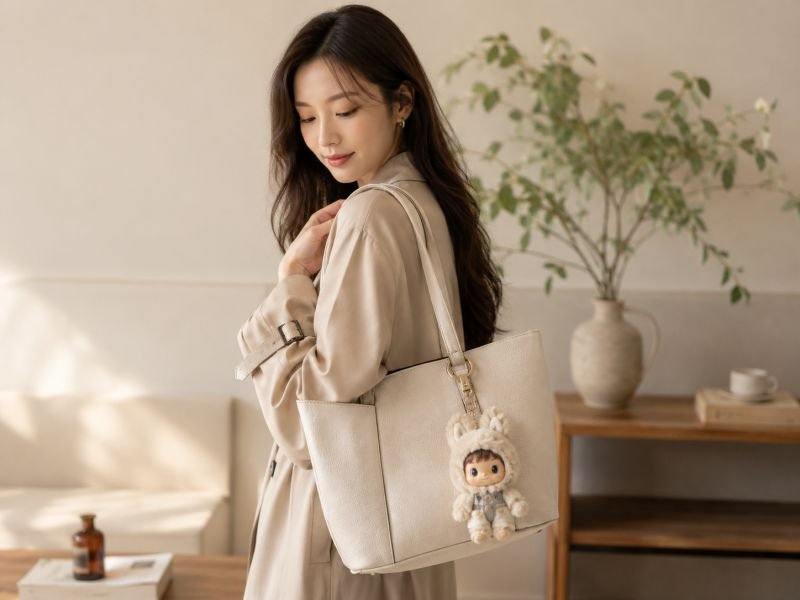
A bag used to be finished when the designer chose the leather, shape, color, strap, and hardware. Now, for many younger shoppers, the bag is only the starting canvas.
A small plush charm can make a black tote feel playful. A mascot can turn a simple backpack into a brand touchpoint. A limited character charm can make a retail drop feel more collectible. A soft animal charm can make a luxury handbag look less serious and more personal.
That is why custom plush bag charms are no longer only cute extras. They sit at the crossing of fashion styling, fan culture, social sharing, brand storytelling, and small product development.
Custom plush bag charms are trending in fashion because they turn ordinary bags into personal style statements. They combine soft texture, character design, nostalgia, social media appeal, and visible brand identity in one small accessory. For fashion labels, IP owners, retailers, and event teams, plush bag charms can become collectible merchandise, retail add-ons, campaign gifts, mascot products, or seasonal accessories when size, fabric, face method, attachment strength, labeling, packing, and bulk consistency are reviewed before sampling.
For a brand team, the real opportunity is not only “making a cute charm.” The deeper value is turning a small soft product into something people carry, photograph, collect, gift, and remember.
What Are Custom Plush Bag Charms?
Custom plush bag charms are small soft accessories designed to hang from handbags, totes, backpacks, crossbody bags, travel bags, event bags, or key sets. They can be shaped as mascots, animals, logos, IP characters, seasonal icons, mini plush toys, or branded soft accessories. Unlike standard keychains, they need plush structure, fabric selection, filling balance, face details, attachment strength, labels, and packing planning.
What Is The Plush Bag Charm Trend?
The plush bag charm trend is the move from plain bags to decorated, personal, story-rich bags. People are adding soft characters, animals, mini plushies, charms, ribbons, initials, lip balm holders, and small objects to their bags to make them feel more like their own.
The plush version has a special pull because it feels warm, emotional, and character-driven. A metal charm can look polished. A leather charm can look refined. A plush charm feels more alive.
That is why plush bag charms work so well for brand mascots and character projects. They give a flat design a soft body, a face, a touchable surface, and a daily-use scene.
What Makes Them Different From Normal Keychains?
A normal keychain is often flat, hard, or simple. A plush bag charm is more like a mini soft product.
It needs decisions about:
| Detail | Why It Matters |
|---|---|
| Size | Affects detail, cost, visibility, packing, and safety review |
| Shape | Affects character accuracy and bulk stability |
| Fabric | Affects handfeel, color look, texture, and final style |
| Filling | Affects softness, body shape, and recovery after packing |
| Face method | Affects expression, cost, safety, and repeat consistency |
| Attachment | Affects daily use, pull strength, and perceived quality |
| Label and tag | Affects retail, brand identity, barcode use, and channel needs |
This is why a plush charm project should not be treated as “just a keychain with fur.” If the charm carries a character, logo, or retail identity, it needs early review before the first sample.
Which Projects Use Plush Bag Charms?
Plush bag charms fit many project types:
Fashion accessory drops
IP character merchandise
Brand mascot gifts
Retail gift shop items
Theme park and museum products
Event giveaways
School and club souvenirs
Pet brand accessories
Sports mascot products
Holiday and seasonal collections
Online store add-ons
Gift box inserts
Member rewards
The best projects usually have one thing in common: the charm has a reason to exist. It may carry a character, a mood, a brand color, a campaign message, or a collector idea.
Are They Fashion Accessories Or Brand Merchandise?
They can be both.
For a fashion label, a plush bag charm can be a styling accessory. For an IP team, it can be character merchandise. For a retailer, it can be a low-ticket add-on. For an event team, it can be a memorable giveaway. For a brand mascot project, it can turn a logo or character into a portable soft item.
This flexible identity is part of the reason plush bag charms are growing. They do not need to sit in only one product category.
Why Are Plush Bag Charms Trending Now?

Plush bag charms are trending because they match how people dress and share style now. Shoppers want small items that feel personal, fun, visible, and easy to change. Plush charms also bring nostalgia, softness, character design, and playful contrast to bags that may otherwise feel too serious. For brands, they offer a small product with strong emotional and visual value.
Are Bag Charms Still Trending?
Yes, bag charms are still trending, but the style has changed.
Earlier bag charm styling often leaned into random decoration: ribbons, initials, beads, little pouches, or metal trinkets. Now the stronger direction is more personal and character-led. Plushies, mascot charms, soft animals, mini objects, and collectible figures are being used to make bags look more individual.
This matters for brand teams because the trend is not only about decoration. It is about identity. People are using small objects to say something about taste, humor, nostalgia, fandom, mood, or lifestyle.
Are Bag Charms Still Trendy In 2026?
Bag charms are still visible in 2026, but the better is: which bag charms still feel fresh?
The trend is moving away from random clutter and toward charms with clearer meaning. A charm that connects to a character, a brand story, a limited release, a seasonal theme, or a collector set has more staying power than a generic accessory.
That is why custom plush bag charms still have room to grow. They can carry a mascot, a brand animal, a logo shape, an event symbol, a holiday concept, or a fan-favorite character. When the design has meaning, the charm feels less like a passing decoration and more like a small identity item.
Why Do Younger Consumers Love Them?
Younger consumers often use accessories to make everyday items feel more personal. A bag can be expensive, plain, vintage, thrifted, sporty, or simple. A charm changes the mood right away.
Plush charms also bring a softer kind of style. They are not trying too hard. They can be cute, strange, funny, nostalgic, ironic, luxurious, or childish in a deliberate way. That mix is very powerful.
A small plush charm says, “This is my bag, my taste, my joke, my character, my mood.” That is a lot of expression for one small item.
Why Are Plush Keychains So Popular?
Plush keychains are popular because they are easy to carry, easy to gift, easy to collect, and easy to display. They are also small enough to feel accessible but visible enough to change the look of a bag.
For brands, plush keychains have another advantage: they can turn a character into a lower-risk product format. A full-size plush toy may need more shelf space, higher shipping volume, and more detailed size planning. A plush keychain or bag charm can work as an entry product, a gift-with-purchase item, a retail add-on, or the first step in a larger character line.
If your team already has a mascot, logo character, animal icon, or campaign figure, a plush keychain can be a practical first format to test before developing larger plush products.
How Did TikTok And Street Style Push The Trend?
Social platforms reward items that are easy to see and quick to understand. A plush charm hanging from a bag does both.
It appears in mirror selfies, outfit videos, “what’s in my bag” clips, street-style photos, event content, and unboxing posts. The charm does not need a long explanation. Viewers can see the character, color, texture, and personality within seconds.
This is why plush charms can work well for campaign teams. They travel with the user. They appear in daily photos. They turn into small visual signals without needing extra ad space.
Why Do They Work On Luxury Bags And Daily Totes?
The contrast is part of the fun.
A plush charm can soften a structured leather bag. It can make a designer handbag feel more personal. It can make a canvas tote feel more styled. It can make a backpack feel less plain. It can also add a playful layer to travel bags, school bags, and event bags.
For fashion brands, this contrast matters. A well-designed plush charm can add humor and warmth without replacing the core product. It decorates the bag, but it also gives the owner a way to restyle it.
Who Should Use Custom Plush Bag Charms?
Custom plush bag charms are useful for brands that want small, visible, character-rich products. They are especially suitable for fashion labels, IP owners, retailers, museums, theme parks, gift programs, event teams, education brands, pet brands, and lifestyle brands. The product works best when the charm connects to a clear character, story, campaign, color system, or retail purpose.
Are They Right For Fashion Brands?
Yes, when the charm supports the brand mood.
A fashion brand may not want a standard plush toy. But a small charm can feel like part of a styling system. It can match a bag collection, a seasonal capsule, a fabric story, a color palette, or a playful campaign.
The charm can also act as an entry item. Not every shopper can purchase a higher-priced bag, but many can connect with a smaller accessory. That makes plush bag charms useful for gift sets, pop-ups, seasonal launches, and fan engagement.
Can IP Owners Turn Characters Into Charms?
IP owners are one of the strongest fit groups.
Characters already have faces, emotions, colors, stories, and fans. A plush bag charm makes the character portable. It can be clipped to a bag, displayed in photos, gifted to fans, sold in sets, or released in limited versions.
The challenge is accuracy. A small charm has less space for face details, clothing, hair, ears, tails, accessories, and body shape. The factory should review what can stay, what should be simplified, and which face method will stay stable in bulk.
Do Retail And Gift Programs Benefit?
Retail and gift programs benefit when the charm is planned as a sellable or giftable item, not just a cheap add-on.
For retail, think about display hooks, barcode labels, hangtags, shelf presentation, SKU rules, and repeat order records. For gift programs, think about event timing, packing method, carton marks, quick sorting, and brand logo position.
A plush charm can look simple from the outside, but a strong retail result often depends on the boring details: correct labels, clean packing, matching colors, stable stitching, and clear carton information.
Which Plush Bag Charm Types Work Best?

The best plush bag charm type depends on the project goal. Mascot charms are strong for brand identity. Character and animal charms are strong for fan appeal. Logo charms are useful for simple brand visibility. Seasonal charms support limited drops. Plush keychains can overlap with bag charms, but the attachment, size, and styling purpose should be reviewed before sampling.
Mascot Plush Bag Charms
Mascot plush bag charms work well when a company, school, event, or sports team already has a recognizable character.
The key is recognition. The charm does not need every detail from the original drawing, but it must keep the parts people remember: face shape, color, eyes, mouth, ears, outfit, or symbol.
For smaller mascots, some details may need to be simplified. Tiny printed lines, very narrow clothing parts, small glasses, thin tails, and complex hair may look good on a screen but become unstable in a 10–15 cm soft charm.
Character And Animal Plush Charms
Character and animal charms are strong for retail, IP, pet brands, theme stores, and gift shops.
Animals are easy to understand and often work across age groups. Characters can build stronger emotional connection. Both need careful work on face expression. A small change in eye size, mouth angle, stitch color, or head proportion can change the whole feeling.
For brand teams, this is where sample review becomes serious. Do not only ask, “Is it cute?” Ask, “Does this look like our character? Will fans recognize it? Can this face stay consistent in bulk?”
Logo Plush Charms
Logo plush charms can work when the logo shape is simple enough to become soft and dimensional.
They are useful for fashion labels, lifestyle brands, events, and membership gifts. But not every logo is suitable for plush. Very thin lines, small text, sharp corners, and complex gradients may not transfer well.
A better option is often to use the logo as part of the charm rather than the full charm shape. For example, the plush item can be a mascot, animal, or soft icon with a woven label, small embroidery, or branded hangtag.
Plush Keychains Vs Plush Bag Charms
A plush keychain is usually designed for keys, bags, pouches, backpacks, and casual daily use. A plush bag charm is more focused on styling bags and adding visible personality.
The two can overlap, but the design logic may differ.
| Format | Better For | Design Focus |
|---|---|---|
| Plush keychain | Gifts, events, retail add-ons, school items | Durability, portability, cost control |
| Plush bag charm | Fashion styling, IP drops, bag accessories | Look, proportion, attachment, visual impact |
| Dual-use charm | Brands needing flexible use | Balanced size, strong hardware, clear packing |
For many projects, dual-use is practical. The charm can work on keys, handbags, backpacks, and gift sets if size and hardware are planned well.
Seasonal And Limited-Edition Charms
Seasonal charms are strong because they create timing. A holiday version, birthday version, summer version, event version, or anniversary version gives shoppers a reason to act now.
Limited-edition plush bag charms can also support repeat interest. One mascot can become a winter outfit charm, a sports event charm, a festival charm, a school season charm, or a city souvenir charm.
For larger programs, keep records from the first version. Pattern files, fabric notes, face method, color standards, hangtag design, barcode rules, and carton details will make future versions much easier.
How Do Plush Bag Charms Build Brand Value?
Plush bag charms build brand value by turning a small accessory into a visible daily touchpoint. They can travel on bags, appear in photos, support fan culture, add emotion to product lines, and create lower-entry merchandise. When designed well, they can connect fashion styling with brand memory, IP recognition, and retail repeat potential.
Daily Visibility On Bags
A plush bag charm moves with the user. It goes to school, work, travel, events, stores, and social spaces. That daily visibility is different from a product that stays on a shelf.
For a brand, this creates quiet exposure. The charm is not a large ad. It is a small companion. That makes it easier for people to accept and keep using.
Strong IP And Fan Appeal
Fans like items that let them carry a piece of a character without wearing a full costume or carrying a large plush toy. A plush charm does this well.
It is small, expressive, collectible, and easy to display. Fans can clip it to bags, arrange it on shelves, trade versions, or collect a full character set.
For IP owners, the charm format can support several product ideas:
| IP Use | Plush Charm Idea |
|---|---|
| Main character | Standard charm |
| Side characters | Multi-character set |
| Holiday release | Seasonal outfit charm |
| Fan event | Limited charm |
| Online store | Add-on product |
| Retail partner | Exclusive color version |
Retail Add-On And Gift Set Value
Plush bag charms are easy to add to retail sets. They can pair with bags, apparel, stationery, cosmetics, toys, drinkware, school products, pet products, or travel accessories.
They also work as gift-with-purchase items because they feel more personal than a flat coupon or generic item. When the design is good, the recipient may keep using it long after the campaign ends.
For retail planning, the charm should not be treated as loose decoration. It needs barcode planning, hangtag placement, packing method, and SKU control.
What Can Brands Customize?
Brands can customize almost every visible and functional part of a plush bag charm, including size, shape, fabric, filling, face method, logo, clothing, accessories, keyring, hook, chain, cord, label, barcode, hangtag, retail card, polybag, gift box, and carton mark. Each choice affects cost, style, safety, sample difficulty, bulk stability, and how the charm will be sold or given.
Size, Shape, And Character Proportion
Size is one of the first decisions.
A very small charm is cute and portable, but fine details may be lost. A larger charm has stronger visual impact, but it costs more, uses more packing space, and may feel heavy on smaller bags.
For most bag charm projects, the better size is not the smallest possible size. It is the size where the character still looks right, the face is readable, and the attachment feels balanced.
Fabric, Filling, And Handfeel
Fabric controls the first impression.
Short plush can make small details cleaner. Longer plush can feel warmer and more playful, but it may hide tiny embroidery. Minky, velboa, fleece, crystal super soft fabric, and other materials all create different effects.
Filling controls body shape. Too little filling makes the charm look weak. Too much filling can distort the shape or make seams look stressed. For small charms, balance is more important than extreme softness.
Embroidery Vs Printing
Embroidery is often better for small eyes, mouths, logos, and durable face details. It gives a cleaner, longer-lasting look. But when the artwork has gradients, soft shading, or many colors, printing may work better.
Applique can also help when a detail needs a fabric patch effect.
| Face Method | Good For | Watch Out For |
|---|---|---|
| Embroidery | Eyes, mouth, small logos, stable details | Stitch density, line thickness, thread color |
| Printing | Gradients, flat artwork, complex color | Fabric texture, color durability, placement |
| Applique | Patches, clothing parts, bold shapes | Edge finish, sewing accuracy |
For small plush charms, face method should be reviewed before sampling. A tiny face can change a lot in bulk if stitch size, placement, or fabric direction is not controlled.
Keyring, Hook, Chain, And Cord
Attachment is not just hardware. It affects how the charm is used.
A metal keyring may feel classic. A lobster hook is easy to clip onto bags. A ball chain can feel casual and light. A cord loop can look softer. A woven strap can create a more fashion-focused style.
The attachment must match the product weight. If the charm is heavy, weak hardware can create returns, complaints, or safety risk. If the charm is very small, oversized hardware may look awkward.
Hangtags, Labels, Barcodes, And Packaging
For retail and brand projects, the packing details matter more than many teams expect.
A hangtag can tell the brand story. A woven label can add perceived value. A barcode sticker can support retail scanning. A warning label may be needed for some channels. A gift box can raise the presentation level. A simple polybag may work better for event sorting.
If you already know the selling channel, share it before sampling. A charm for a boutique display and a charm for event giveaway packing may need different tag, card, barcode, and carton planning.
How To Choose The Right Charm Type?

The right plush bag charm type depends on the target audience, brand identity, sales channel, budget, deadline, and design complexity. Fashion brands may need cleaner styling and better materials. IP teams may need stronger character accuracy. Event programs may need cost control and fast sorting. Retail programs may need barcode, hangtag, display, and repeat order consistency.
Best Type For Fashion Brands
Fashion brands often need a charm that feels intentional, not childish by accident.
The design should match the bag style, color palette, and brand tone. A soft animal, logo icon, mini mascot, or fabric-matched charm may work better than a busy character with too many colors.
For fashion projects, consider:
Clean shape
Tactile fabric
Controlled color
Refined hardware
Subtle label
Compact packing
Photo-friendly proportion
The charm should feel like part of the outfit, not an afterthought.
Best Type For IP And Mascot Projects
IP and mascot projects should protect recognition first.
Ask:
Does the face look right?
Is the head shape close enough?
Are the main colors correct?
Can the outfit be simplified without losing the character?
Will fans recognize it from a quick glance?
Can the same style be repeated for future versions?
For IP projects, a charm series may be more valuable than one charm. Consider planning the first charm with future versions in mind.
Best Type For Events And Giveaways
Event charms need clear brand exposure, manageable cost, and simple distribution.
The product should be light, easy to pack, easy to hand out, and easy to connect to the event theme. If the deadline is fixed, avoid overly complex structures, too many fabric types, or hard-to-source accessories.
A good event plush charm is not the most complex one. It is the one that arrives on time, looks consistent, carries the brand clearly, and is easy for people to use after the event.
Best Type For Cost Control
Cost control does not mean making the charm look cheap.
Better cost control often comes from smart simplification:
Reduce tiny parts
Use fewer fabric types
Choose stable embroidery size
Avoid oversized hardware
Keep the shape clean
Use standard packing when possible
Plan one tag system for several versions
If your team has a target cost, send it early. A good factory can review which details support the product and which details add cost without adding much value.
What Affects Plush Bag Charm Price?
Plush bag charm price is affected by size, pattern complexity, fabric choice, face method, number of colors, filling, accessories, attachment hardware, labels, packing, inspection needs, order quantity, and deadline. Two charms may look similar in photos but cost differently if one needs more embroidery, more fabric parts, special hardware, retail packing, or multi-SKU sorting.
Size And Structure
A larger charm usually uses more material and filling, but structure can matter even more than size.
A simple 14 cm animal charm may be easier than a 10 cm character with hair, clothes, wings, glasses, and several fabric colors. Complex structure creates more pattern pieces, more sewing steps, and more places where bulk variation can happen.
Face Method And Detail Level
Small face details are often the hidden cost driver.
Tiny eyes, mouth curves, blush marks, eyebrow lines, teeth, logo text, and expression changes all need careful placement. Embroidery may require custom files and testing. Printing may need color review and fabric compatibility checks.
When the face is the most important part of the design, do not choose only by the lowest price. A weak face can make the whole charm fail.
Hardware And Attachment
Hardware changes both cost and perceived value.
A standard keyring may be cost-friendly. A better metal hook may improve use. A custom color chain may look stronger for fashion projects. A branded charm tag may add retail value but also adds cost and lead time.
The goal is not always to choose the most expensive hardware. It is to choose hardware that matches the product weight, brand tone, and use scene.
Labels, Packaging, And Order Quantity
Packing and labels can change the project more than expected.
Retail card, barcode sticker, warning label, hangtag, individual polybag, display box, gift box, and carton mark all add work. Multi-SKU projects also need sorting rules and packing checks.
Order quantity affects unit cost because pattern work, sample development, material preparation, setup, and management time are spread across the order. Smaller trial orders may be useful, but the unit cost is usually higher because the process does not become smaller in the same proportion.
How Does The Sample Process Work?

The custom plush bag charm sample process usually starts with artwork, reference images, target size, quantity, fabric direction, face method, attachment style, packing needs, target country, and delivery plan. The factory reviews structure, pattern feasibility, material choices, face details, hardware, cost direction, and possible risks before making the first sample. The approved sample should become the standard for bulk production.
What Files Should You Send?
A strong project review usually starts with these details:
| What To Send | Why It Helps |
|---|---|
| Character artwork or reference photo | Shows the intended look |
| Target size | Helps review detail and cost |
| Quantity | Helps estimate production path |
| Fabric preference | Guides handfeel and appearance |
| Face method | Affects expression and consistency |
| Attachment style | Affects use and strength |
| Label and packing needs | Supports retail or event planning |
| Target country | Helps review safety and label direction |
| Delivery deadline | Helps judge schedule risk |
If you do not have everything ready, send what you have. A good review can start with artwork, size idea, quantity, use scene, and deadline.
How Long Does Sampling Take?
Sampling time depends on design complexity, fabric availability, face method, accessories, and revision needs.
A simple plush bag charm may move faster. A character charm with clothing, special fabric, small embroidery, custom hardware, or retail packing may take longer. Revision time should also be included, because the first sample is often used to find what needs adjusting.
For serious projects, do not plan the timeline as if the first sample will be perfect. Plan time for review, comments, revision, and final approval.
What Should You Check On The Sample?
A good sample review should cover more than cuteness.
Check:
Character likeness
Face expression
Size and proportion
Fabric feel and color
Filling balance
Sewing accuracy
Attachment position
Hardware strength
Logo clarity
Hangtag and label placement
Packing method
Bulk production feasibility
The sample should help the team decide whether the design is ready for production or still needs adjustment.
Why Approved Samples Matter For Bulk Orders
An approved sample is not only a nice-looking piece. It becomes the reference for later production.
It helps align pattern, fabric, embroidery, sewing, filling, attachment, packing, and inspection. Without a clear approved sample, bulk goods can drift away from the original idea.
At Heyzizi, sample review is connected with pattern development, material confirmation, bulk preparation, inspection focus, packing details, and later repeat order records. If you are planning a branded plush charm project, you can send artwork, target size, quantity, packing request, and deadline to info@heyzizi.com for a project review.
What Quality Details Matter?
Quality details for plush bag charms include attachment strength, sewing accuracy, filling balance, face placement, fabric color, small parts, metal hardware, label accuracy, needle detection, packing condition, and carton marking. Since these products are carried daily and often used as fashion or retail items, weak attachments, crooked faces, loose parts, poor stitching, or wrong labels can damage brand trust.
Attachment Strength
A bag charm is pulled, swung, clipped, unclipped, packed, shipped, and used outdoors. Attachment strength is not a minor detail.
The connection between the plush body and hardware should be reviewed carefully. If the hook is strong but the fabric loop is weak, the charm can still fail. If the chain is too stiff or too heavy, it may pull the body out of shape.
Small Parts And Safety Review
Small plush charms may include beads, eyes, noses, buttons, chains, bows, glasses, ribbons, bells, or decorative parts. These details can improve appearance, but they can also create risk.
For items connected to children, education projects, retail channels, or public events, small parts should be reviewed early. In some cases, embroidery or applique may be safer than attached plastic parts.
Sewing, Filling, And Shape Control
Small products can be harder to control than large ones because every tiny shift is visible.
If the head tilts, the face moves, the ear placement changes, or the filling is uneven, the whole charm can look different. This matters for mascot and IP projects where recognition is the main value.
Quality control should include shape, symmetry, seam strength, filling balance, face placement, and accessory position.
Needle Detection And Final Inspection
Needle detection is especially relevant for plush products because sewing is part of the process. Final inspection should also check labels, hangtags, packing, carton marks, and mixed-SKU accuracy.
For a brand project, inspection should not happen only at the end. Better control starts earlier: fabric check, cutting accuracy, embroidery position, sewing review, filling balance, attachment check, label review, and packing check.
Factory Vs Promo Platform: Which Should You Choose?

A promo platform can work for simple ready-made items or basic logo gifts. A plush factory is a better choice when the project involves original characters, mascot accuracy, pattern making, sample revision, custom fabric, face embroidery, attachment review, quality control, label planning, packing rules, multi-SKU orders, or repeat production. The more the charm needs to represent a brand, the more factory review matters.
What A Factory Reviews Before Sampling
A plush factory should review more than the artwork.
It should review:
Can the shape become a stable soft product?
Which details are too small?
Which fabric fits the look?
Which face method is better?
Where should the hardware attach?
Will the charm hang straight?
Can the design be packed without damage?
Can the same result be repeated in bulk?
This review can prevent many common problems before the first sample is made.
Why Pattern Making Matters
Pattern making is the bridge between a flat idea and a soft object.
A plush charm has volume. It has seams, curves, filling, balance, and fabric direction. A small change in pattern can change the face, body, and hanging angle.
This is why pattern skill matters. Heyzizi has an in-house pattern and sampling team, with 35+ professional pattern makers supporting custom plush projects. For character charms, this helps connect design, sample, revision, and bulk standards.
How Factories Control Bulk Consistency
Bulk consistency comes from records and checkpoints.
A factory should control:
Pattern version
Fabric type
Fabric color
Embroidery file
Thread color
Print placement
Sewing method
Filling amount
Attachment position
Label content
Packing method
Carton rules
For a single charm, this may sound detailed. For a multi-character or repeat project, it becomes necessary. Without records, the second order may not match the first one.
When A Platform Is Not Enough
A platform may be enough if the product is simple, the design is standard, and brand risk is low.
A factory is better when:
The character must look accurate
The project needs sample changes
The order has several styles
Labels and barcodes must be correct
Packing affects retail or event use
Attachment strength matters
The project may repeat later
The brand cannot afford messy results
This does not mean every project needs a complex process. It means the process should match the risk.
How Can Brands Build A Charm Series?
Brands can build a plush bag charm series by starting with one approved character style, then creating different sizes, expressions, outfits, colors, seasonal versions, channel versions, or gift set combinations. A series works best when pattern files, fabric standards, face details, label rules, packing methods, SKU names, and quality notes are saved from the first order.
One Mascot, Multiple Versions
A mascot can become many charm versions.
Examples:
Standard mascot charm
Holiday outfit charm
Mini charm
Sports version
City version
Birthday version
Limited color version
Event-only charm
Gift box version
This approach gives the brand more flexibility. Instead of developing a completely new item each time, the team can build from a known base.
Multi-SKU Control
Multi-SKU charm projects can become messy if the details are not controlled.
Common risks include mixed labels, wrong barcode stickers, incorrect colors, misplaced hangtags, mixed carton quantities, and mismatched packing lists.
The solution is clear project data. Each style should have its own image, name, size, fabric note, face file, attachment rule, label file, barcode, packing method, and carton quantity.
Seasonal Drops And Repeat Orders
Seasonal drops work well for plush bag charms because the product is small, collectible, and easy to refresh.
A fashion brand may release a charm with a new bag collection. An IP team may release holiday versions. A museum may release city-themed animals. An event team may create annual mascot charms. A retailer may test one style, then add colors or characters if the first run performs well.
Heyzizi supports long-term plush product development through pattern records, sample confirmation notes, material standards, packing files, label rules, SKU management, and quality standards. This helps brands move from one charm to a more stable product line.
How To Start A Custom Plush Bag Charm Project?
To start a custom plush bag charm project, send the product idea, artwork or reference image, target size, quantity, fabric direction, face method, attachment preference, packing needs, target country, delivery deadline, and destination. A factory can then review structure, sampling difficulty, cost direction, safety details, label needs, and bulk production planning before quotation and sampling.
What To Send For Review
The best starting package includes:
Product type or reference photo
Character artwork or logo file
Target size
Expected quantity
Fabric preference
Face method idea
Accessory or hardware needs
Packing request
Target country
Delivery deadline
Destination country or region
If your team is still early, send the artwork, target size, quantity, and use scene first. That is enough for an initial review.
How Heyzizi Reviews The Project
Heyzizi reviews custom plush charm projects from several angles:
Character structure
Size feasibility
Fabric direction
Face method
Attachment strength
Pattern difficulty
Cost direction
Sample path
Quality checkpoints
Packing and label needs
Bulk consistency
The goal is not only to make a sample. The goal is to help the project become clearer, easier to review, easier to produce, and easier to repeat later.
What Happens Before Quotation
Before quotation, some details may need confirmation.
For example, a 12 cm charm with simple embroidery and standard hook will have a different cost from a 15 cm charm with long plush, clothing, custom hardware, retail card, barcode sticker, and gift box packing.
Good quotation starts with clear product information. If the project is not clear yet, Heyzizi can help review the missing details and suggest a practical direction before sampling. Project details can be sent to info@heyzizi.com.
Closing Note
Custom plush bag charms are trending because they do something few small products can do. They add emotion to fashion. They turn bags into personal statements. They let IP characters travel through daily life. They give brands a soft, visible, collectible item that people can carry and share.
For serious brand projects, the charm should not be treated as a simple decoration. The right size, fabric, face method, attachment, label, packing, and sample standard can decide whether it feels like a forgettable giveaway or a product people want to keep.
A small charm may hang from a bag, but the project behind it needs clear thinking. When trend value, character design, factory review, and bulk control work together, a custom plush bag charm can become much more than a cute accessory. It can become a small product with real brand memory.
FAQs About Custom Plush Bag Charms
1. Are custom plush bag charms still a strong product idea for fashion brands in 2026?
Definitely. Custom plush bag charms are still a strong product idea in 2026 because they match three things fashion and lifestyle brands care about: personal styling, small collectible products, and visible daily use. A plush charm can sit on a handbag, tote, backpack, travel bag, or crossbody bag, so it is seen outside the store, not only after purchase.
The stronger trend is not “more random decoration.” It is more thoughtful decoration. Brands are using charms to show mascots, IP characters, soft animals, seasonal icons, brand colors, or playful symbols. This gives the product more meaning and longer use value.
For fashion labels, plush bag charms can work as capsule accessories, pop-up gifts, limited drops, or add-on items. For IP teams, they can turn a character into something fans carry every day. For retailers, they can support low-ticket add-ons and gift sets.
The key is to avoid making a generic plush trinket. The charm should have a clear role: style accent, character item, fan product, gift item, or retail accessory. Before sampling, review size, fabric, face method, attachment, label, and packing so the charm feels intentional rather than rushed.
2. What is the best size for a custom plush bag charm?
Sure. The best size for a custom plush bag charm is usually the smallest size that can still keep the character clear, the face readable, and the attachment balanced. Many plush charms work well around 8–15 cm, but the right size depends on the design, use scene, and brand positioning.
A very small charm may be cute and easy to carry, but tiny eyes, mouth lines, logo text, clothing parts, ears, tails, or accessories may become hard to control. A larger charm has stronger visual impact, but it may feel heavy on small bags and may increase packing volume.
A good size decision should consider:
| Size Factor | Why It Matters |
|---|---|
| Face detail | Small faces need stable embroidery or printing |
| Bag type | Large totes can carry bigger charms than mini bags |
| Product weight | Heavy charms need stronger hardware |
| Packing method | Larger charms may need more space or shape protection |
| Retail display | Larger charms are easier to see on shelves |
| Cost direction | Bigger size usually adds fabric, filling, and labor |
For mascot and IP projects, do not choose size only by cost. If the charm is too small to show the character properly, the saving may hurt the product result. The better target is a size that feels portable but still protects recognition.
3. Can our mascot or IP character be turned into a plush bag charm?
Absolutely. Most mascots and IP characters can be developed into plush bag charms, but not every artwork detail should be copied exactly. A flat character drawing often needs adjustment before it becomes a small soft charm. The goal is to keep the parts people remember most: face shape, main colors, eyes, mouth, ears, hair, clothing, symbol, or pose.
For small plush charms, the biggest challenge is detail control. Thin lines, tiny accessories, complex clothing, very small text, sharp corners, and gradient artwork may need to be simplified. This does not mean the design becomes weaker. In many cases, smart simplification makes the charm cleaner, easier to recognize, and more stable in repeat orders.
A factory review should cover:
| Review Area | What To Check |
|---|---|
| Character likeness | Does it still look like the original role? |
| Face method | Should eyes and mouth be embroidered, printed, or appliqued? |
| Structure | Can the head, body, ears, tail, or accessories stay balanced? |
| Hardware position | Will the charm hang straight on a bag? |
| Safety | Are small parts suitable for the intended audience? |
| Repeat control | Can the same look be kept in bulk runs? |
If your team has artwork, a logo character, a mascot guide, or reference images, send them with target size and quantity. A good first review can show which details should stay, which should be adjusted, and which process is more practical.
4. What materials work best for plush bag charms?
Certainly. The best material depends on the look, handfeel, detail level, and target use. Short plush, velboa, minky, fleece, crystal super soft fabric, felt, and mixed fabric structures can all work for plush bag charms, but each one gives a different result.
Shorter pile fabrics are often better when the design has small facial details or clean edges. Longer pile fabrics can feel warmer and more playful, but they may hide embroidery or make small shapes look less sharp. Felt or applique fabric may help for bold shapes, clothing parts, or logo patches.
For brands, material choice should not only be about softness. It should support the product purpose.
| Material Direction | Good For | Watch Out For |
|---|---|---|
| Short plush | Small faces, clean character shapes | May feel less fluffy |
| Long plush | Cute animals, playful fashion charms | Can hide small details |
| Minky | Soft premium handfeel | Needs color and pile review |
| Felt/applique | Bold graphic details | Edge quality matters |
| Mixed fabrics | Clothing, ears, accessories | Adds sewing steps and cost |
Filling also matters. Too little filling makes the charm look weak. Too much filling can distort small shapes. For bag charms, balanced filling is usually better than extreme puffiness. The charm should look soft, but still keep its shape after packing and daily use.
5. Is embroidery or printing better for plush bag charm faces?
Of course. Embroidery is often better for small plush bag charm faces when the design needs clean eyes, mouths, eyebrows, or simple logo details. It is durable, stable, and gives a neat raised effect. Printing can be better when the artwork includes gradients, soft shading, many colors, or flat graphic details that are difficult to stitch.
The decision should be made before sampling, not after the sample looks wrong. Small face details can change the whole character. A mouth that moves 2 mm, an eye that is too large, or thread color that is slightly off can make a mascot look unfamiliar.
Here is a practical comparison:
| Face Method | Best Use | Main Risk |
|---|---|---|
| Embroidery | Eyes, mouth, small logo, simple expression | Thick lines may look heavy on tiny faces |
| Printing | Gradients, many colors, flat graphic art | Color may change on textured fabric |
| Applique | Bold patches, clothing parts, graphic shapes | Edge sewing must stay clean |
| Mixed method | Character designs with several detail types | More steps and higher control needs |
For many charm projects, a mixed method works best. For example, eyes and mouth can be embroidered, while clothing graphics or blush details may be printed. The right choice should protect the character’s expression while keeping bulk production stable.
6. What affects the price of custom plush bag charms?
Definitely. Plush bag charm price is affected by size, shape complexity, fabric, face method, number of parts, hardware, labels, packing, order quantity, and inspection needs. Two charms may look similar in photos but have very different cost structures if one includes complex embroidery, several fabrics, custom hooks, retail cards, barcodes, or gift-box packing.
Common price drivers include:
| Cost Factor | Why It Changes Price |
|---|---|
| Size | Larger pieces use more fabric, filling, and packing space |
| Pattern complexity | More shapes mean more cutting and sewing steps |
| Face details | Embroidery, printing, and applique need separate preparation |
| Accessories | Clothes, bows, tails, ears, wings, or small parts add labor |
| Hardware | Keyrings, hooks, chains, cords, and custom parts vary in cost |
| Packing | Polybags, hangtags, cards, boxes, and barcode labels add work |
| Quantity | Smaller runs carry higher setup and material allocation cost |
Small quantity projects are useful for testing, but the unit price is often higher because the core steps do not disappear. Pattern development, sample work, material sourcing, cutting, sewing, filling, checking, labeling, and packing still need to happen.
A practical approach is to share your target use and quantity early. If the target price is strict, a factory can suggest where to simplify without making the charm look cheap.
7. How long does custom plush bag charm sampling take?
In most cases, custom plush bag charm sampling takes several working days to a few weeks, depending on design complexity, material availability, face method, hardware, packing needs, and revision rounds. A simple logo or animal charm may move faster. A detailed IP character with clothing, custom fabric, special embroidery, or retail packing usually needs more time.
Sampling should not be treated as a one-step process. The first sample helps the team see whether the size, face, fabric, shape, filling, attachment, and packing direction are correct. After that, the charm may need adjustment.
A practical sample path looks like this:
| Stage | What Happens |
|---|---|
| Artwork review | Structure, size, fabric, face method, and hardware are checked |
| Pattern making | Flat design is converted into plush structure |
| First sample | Shape, face, fabric, filling, and attachment are tested |
| Revision | Details are adjusted based on review comments |
| Approved sample | Final sample becomes the reference for bulk production |
For serious brand projects, plan time for review and revision. Rushing the sample may save a few days at the start, but it can create larger problems later if the approved standard is not clear.
8. What quality checks matter most before shipping plush bag charms?
Absolutely. The most important quality checks for plush bag charms include character likeness, fabric color, face placement, sewing strength, filling balance, attachment strength, label accuracy, needle detection, packing condition, and carton marking. These products are small, but they are handled often, clipped to bags, pulled, photographed, gifted, and displayed.
A weak attachment can cause returns. A crooked face can damage character recognition. Wrong barcode stickers can affect retail receiving. Poor packing can flatten the product before it reaches the shelf.
Key checks should include:
| Check Item | Why It Matters |
|---|---|
| Face position | Protects character expression |
| Sewing | Keeps seams clean and durable |
| Filling | Controls shape and softness |
| Hardware | Keeps the charm usable on bags |
| Pull area | Helps reduce detachment risk |
| Label and barcode | Supports retail or warehouse handling |
| Needle detection | Supports safer plush production control |
| Packing | Protects shape during transport |
For brand projects, inspection should not only happen at the end. Better control starts from fabric review, cutting, embroidery, sewing, filling, hardware attachment, and packing confirmation. Heyzizi works with 80 QC inspectors and complete plush project checks, which helps reduce avoidable mistakes before shipment.
9. Can plush bag charms be made as a series instead of one single style?
Certainly. Plush bag charms are very suitable for series development. One mascot or IP character can become several charm versions, such as standard version, mini version, holiday outfit version, color version, event version, city souvenir version, limited version, or gift-box version.
Series planning is especially useful for brands that want seasonal drops, fan products, retail sets, campaign gifts, or long-term character lines. The first style can become the base for later versions if the pattern, fabric, face method, hardware, label, and packing rules are recorded properly.
A strong series plan may include:
| Series Idea | Example |
|---|---|
| Same mascot, different outfits | Winter, summer, sports, birthday |
| Same character, different sizes | Mini charm, standard charm, larger plush |
| Same theme, different animals | Bear, bunny, puppy, cat |
| Same product, different channels | Retail version, event version, online version |
| Same charm, different packing | Polybag, hangtag card, gift box |
The main risk in series projects is confusion. Wrong labels, mixed colors, mismatched barcodes, and unclear packing rules can create trouble. Clear SKU records, sample photos, material notes, and carton rules help keep the series organized.
10. What should we send to start a custom plush bag charm project?
Sure. To start a custom plush bag charm project, send your artwork or reference image, target size, expected quantity, fabric idea, face method preference, attachment style, packing needs, target country, deadline, and destination. These details help the factory review feasibility, cost direction, sampling difficulty, safety needs, and bulk production planning before quotation.
You do not need to have every detail perfectly prepared at the beginning. Many strong projects start with a character picture, rough size idea, quantity target, and use scene. The factory can then help identify the missing details.
A practical starting checklist:
| What To Send | Helpful Detail |
|---|---|
| Artwork or reference | Front view, side view, logo file, or mascot guide |
| Target size | Example: 8 cm, 10 cm, 12 cm, 15 cm |
| Quantity | Trial order or planned bulk run |
| Use scene | Retail, event, gift, IP merch, fashion accessory |
| Fabric direction | Short plush, long plush, soft fabric, mixed material |
| Face method | Embroidery, printing, applique, or not sure yet |
| Hardware | Keyring, hook, chain, cord, strap |
| Packing | Polybag, hangtag, card, barcode, gift box |
| Deadline and destination | Helps review schedule and shipping plan |
For project review, details can be sent to info@heyzizi.com. Clear starting information helps match the right size, fabric, structure, hardware, packing, and production path.