 Skip to content
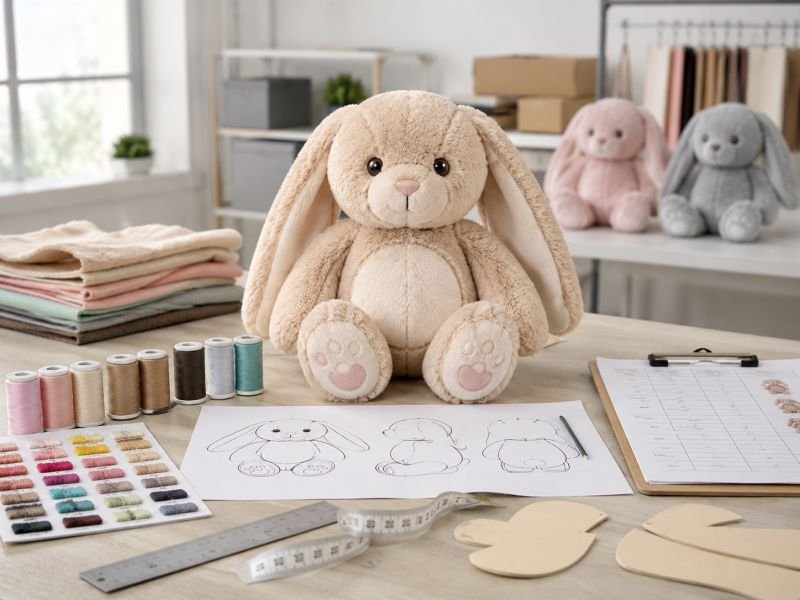
A plush toy can look simple from the outside. Soft fabric. Cute face. Comfortable handfeel. A friendly character that people want to hold. But before a brand places a bulk order, that small soft product carries many hidden decisions: size, shape, face expression, fabric pile, embroidery density, filling balance, accessory safety, labels, packing, and how well the final product can be repeated across hundreds or thousands of pieces.
That is why a plush sample is not just a “first look.” It is the first real test of whether a plush idea can become a stable product.
A plush toy sample matters before bulk production because it turns artwork into a real product standard. Brands can check size, shape, fabric, face details, filling, accessories, safety direction, packing, and production feasibility before bulk work begins. A well-approved sample helps reduce mistakes, clarify quality expectations, and create a clearer standard for production and inspection.
For brand teams, IP programs, retailers, event planners, and private label plush projects, the sample stage is often where the most important decisions happen. A drawing can show personality, but a sample reveals reality. It shows whether the eyes feel friendly, whether the head is too heavy, whether the fabric changes the character mood, whether the stuffing gives the right posture, and whether the packing will protect the product during delivery.
At Heyzizi, plush sampling is treated as a project review stage, not a casual preview. The goal is simple: help move from idea to sample, from sample to approved standard, and from approved standard to repeatable bulk production with fewer surprises.
Why Do Plush Toy Samples Matter Before Bulk Production?
A plush toy sample matters because it allows brands to check the real product before approving bulk production. It helps confirm character accuracy, fabric choice, size, filling, face method, sewing structure, accessories, safety direction, packing, and inspection standards. Without a sample, a bulk plush order depends too much on assumptions, and assumptions become expensive when multiplied across many units.
The biggest misunderstanding about plush samples is that they are only used to see whether the toy is “cute.” Cuteness matters, of course. A plush toy without emotional appeal is hard to sell, gift, or collect. But for serious brand projects, cuteness is only one part of sample approval.
A strong sample helps several practical at the same time. Can this flat artwork become a balanced 3D plush shape? Does the selected fabric match the character mood? Are the embroidery details visible at the chosen size? Will the toy sit, stand, hang, or compress as expected? Can the design be repeated in bulk without constant hand correction?
This is especially important for brand mascot plush, IP character plush, plush keychains, bag charms, collectible plush, educational plush, event gifts, and retail plush lines. These products are not judged only by softness. They are judged by brand fit, shelf appearance, fan reaction, safety planning, packing quality, and repeat order stability.
What Does A Plush Sample Confirm Before Mass Production?
A plush sample confirms the real-world version of a design. It checks whether the product size, head-body ratio, face expression, fabric texture, color direction, filling level, accessory position, sewing structure, and packing plan work together.
For example, a 20cm mascot plush may look balanced in a digital file, but the physical sample may show that the head is too large, the legs are too thin, or the embroidery is too small to read clearly. A plush keychain may look charming in artwork, but the sample may reveal that the metal ring pulls too much weight on one seam. A plush doll with clothing may need extra review around tiny sleeves, hats, shoes, or layered fabric details.
Good sampling prevents the project from moving forward based on imagination alone.
Why Is Sampling More Than A Visual Approval?
A visual approval only asks, “Does it look right?” A professional sample review asks, “Can this product be produced, packed, checked, shipped, and reordered with reasonable consistency?”
That is a much better.
A plush sample should be reviewed from different angles: front, side, back, bottom, seam lines, face placement, filling balance, accessory attachment, label position, and packing recovery. Photos are helpful, but video and clear notes can also help teams check movement, softness, shape, and handfeel.
For larger projects, one sample often becomes the shared language between design teams, sourcing teams, factory teams, QC staff, and sales channels. It reduces arguments because people are no longer discussing only drawings or opinions. They are reviewing a physical reference.
Who Needs A Plush Sample Most: Brands, IP Teams, Retail , Or Gen Z-Focused Plush Lines?
Any custom plush project benefits from sampling, but some projects need it even more.
IP teams need samples because fans notice character details quickly. If the eyes, mouth, ears, body ratio, or outfit feels wrong, the product may feel “off” even when the materials are good.
Retail teams need samples because shelf appearance, barcode labels, hangtags, packing size, carton quantity, and repeat order records affect daily operations.
Gen Z-focused plush lines need samples because this audience often responds to personality, emotional comfort, collectibility, and photo-friendly details. A plush toy may become popular not only because it is soft, but because its expression, size, color, pose, and story feel shareable.
Brand teams need samples because a plush toy is not just merchandise. It becomes a physical version of the brand.
What Can Go Wrong If You Skip Plush Toy Sampling?
Skipping plush toy sampling can lead to wrong proportions, weak character expression, unsuitable fabric, poor filling balance, loose accessories, unclear embroidery, packing damage, safety concerns, and bulk quality disputes. What looks acceptable on a screen may fail as a physical plush product. Sampling gives teams a chance to find problems early, when they are still easier to fix.
The cost of a sample can feel inconvenient at the beginning. The cost of a wrong bulk order feels much worse at the end.
This is why experienced rarely treat sampling as an optional step. They know that plush toys are soft products with many variables. Unlike a flat printed card or a simple hard plastic part, plush changes with fabric pile, stuffing pressure, sewing curve, hand shaping, and packing compression.
A skipped sample means the first real test happens during bulk production. That is the riskiest time to discover problems.
Why Artwork Alone Cannot Control Bulk Plush Results
Artwork shows intention. A plush sample shows execution.
A designer may draw perfect round cheeks, tiny eyebrows, narrow shoes, delicate clothing lines, and detailed accessories. But a plush toy has physical limits. Thread has thickness. Fabric has pile direction. Small parts need strength. Stuffing expands the body. Sewing turns flat panels into curved forms.
That means the factory must translate artwork into pattern pieces, fabric cuts, embroidery files, filling plans, and sewing steps. Every translation can slightly change the result.
Sampling is where those changes become visible.
How Small Sample Mistakes Become Large Bulk Problems
A 2mm embroidery shift may look minor on one toy. Across a bulk order, it can make the whole face feel uneven.
A slightly weak seam may not fail during a quick look. But after shipping, handling, and use, it may become a complaint.
A fabric that looks close under one light may appear different in retail photos or online product images.
A carton packing method that seems fine for one sample may flatten ears, tails, bows, or arms when many pieces are stacked for transport.
Plush production is full of small details that only become serious when repeated. Sampling helps catch them before repetition begins.
Which Risks Affect Cost, Timeline, Reviews, And Brand Reputation?
The main risks are not only technical. They are commercial.
If the sample is unclear, the production team may not have a stable reference. If material decisions are not confirmed, cost may change later. If packing is ignored, the product may arrive misshapen. If labels are missing, warehouse or retail handling may slow down. If safety direction is not discussed early, testing or label changes may delay launch plans.
For brand projects, the final risk is not just product loss. It is trust loss.
A plush toy is often used for campaigns, fan merchandise, retail shelves, school programs, museum shops, tourism gifts, or corporate gifts. When the product represents a brand, poor execution travels faster than people expect.
What Should Brands Check In A Plush Toy Sample?

Brands should check more than the overall look. A plush sample should be reviewed for size, shape, proportion, face expression, fabric color, handfeel, filling balance, embroidery or print quality, seam strength, accessory attachment, label placement, packing method, safety direction, and bulk production feasibility. A clear sample review helps avoid vague approval and later disputes.
A practical way to review a sample is to separate emotional checks from technical checks.
The emotional check asks: Does this plush feel right for the character, brand, audience, and sales channel?
The technical check asks: Can this plush be made repeatedly, inspected clearly, packed safely, and delivered according to the project plan?
Both matter.
A plush toy that is technically strong but emotionally flat may not sell. A plush toy that looks adorable but cannot be produced consistently may create trouble later. The best sample is not always the fanciest sample. It is the sample that balances design appeal with production stability.
What Size, Shape, And Proportion Details Should Be Reviewed?
Size affects nearly everything: cost, pattern, fabric use, stuffing volume, packing, shipping, shelf display, and handfeel.
When reviewing a plush sample, check the total height, width, thickness, head-body ratio, arm length, leg length, ear shape, tail shape, and posture. If the plush is meant to sit, it should sit naturally. If it is meant to hang as a keychain or bag charm, the hanging should be balanced. If it is meant for a retail shelf, it should look good from the front and not collapse after packing.
A sample should also be compared with the original design. Some characters need small proportion adjustments when moving from artwork to plush form. That does not mean the design failed. It means the product is becoming real.
How Should Face Embroidery, Printing, Or Applique Be Checked?
The face is usually the first thing people notice.
For plush samples, face review should include eye size, eye distance, mouth shape, eyebrow angle, cheek position, thread color, stitch density, print clarity, applique edge, and left-right balance. A tiny face detail can change the personality of the toy.
Embroidery is often used for durable face details, especially on brand mascot plush, baby-related plush, educational plush, and IP plush. Printing can work well for gradients, small graphics, or detailed artwork, but it must be reviewed with fabric type and pile height. Applique can add texture, but edge quality and sewing stability need attention.
If the face is not right, do not rush approval. A plush toy can survive many small imperfections, but a wrong expression is hard to ignore.
Which Fabric, Filling, And Handfeel Details Matter Most?
Fabric changes the character mood.
Short plush can make details cleaner. Longer plush can feel warmer and more premium, but may hide tiny embroidery. Minky, velboa, fleece, sherpa, faux fur, and other materials each create a different look and touch. Even the same color may appear different depending on pile height, direction, and lighting.
Filling also changes the product. Too little filling can make the toy look tired. Too much filling can distort the face or body. Weighted filling requires extra planning around distribution, seam strength, and leakage control.
Brands should not approve a sample only by photo if handfeel matters. A plush toy is meant to be touched. The handfeel is part of the product experience.
Are Accessories, Labels, And Small Parts Safe For The Target ?
Accessories can make a plush toy more attractive, but they also add responsibility.
Eyes, noses, buttons, zippers, magnets, keyrings, hooks, bows, sound modules, LED parts, and removable pieces should be reviewed based on age group, use scene, and target sales region. For children’s products, small parts, pull strength, seam strength, warning labels, and third-party testing direction should be considered early.
Labels also matter. Care labels, warning labels, barcode labels, SKU labels, FNSKU labels, hangtags, and carton marks can affect retail, e-commerce, warehouse, and export handling.
A sample is the best time to review these details because changes are still manageable.
How Does A Sample Become A Bulk Production Standard?
A plush sample becomes a bulk production standard when the company and factory approve its size, shape, material, craft, filling, accessories, labels, packing, and key quality details. The approved sample then guides pattern records, material sourcing, embroidery files, sewing checks, filling control, final inspection, packing review, and repeat order reference.
This is where many projects become more professional.
A sample is not only a product to approve. It becomes a control tool. Once approved, the factory should know what to follow. The client should know what to expect. The QC team should know what to check. The packing team should know how the product should be protected.
Without this shared standard, “good quality” becomes a vague phrase. With a clear approved sample, quality becomes easier to discuss.
What Is An Approved Sample Or Golden Sample?
An approved sample, often called a golden sample in plush production, is the final confirmed physical version used as the reference for bulk work.
It represents the agreed product direction: size, shape, fabric, color, embroidery, accessories, filling, labels, and packing. It does not mean every bulk piece will be mathematically identical. Plush products are soft goods, and small tolerances can exist. But it gives both sides a clear reference for what the finished product should follow.
This is why approval notes matter. The sample itself is important, but the notes attached to it are also important.
How Are Plushies Mass Produced After Sample Approval?
After sample approval, the project usually moves through production preparation, material purchasing, cutting, embroidery or printing, sewing, filling, shaping, in-line checks, final inspection, needle detection when required, packing review, carton marking, and shipment preparation.
For multi-SKU projects, each style may need its own approved sample, material notes, embroidery files, label plan, barcode rules, and carton instructions. This helps prevent mixed styles, wrong labels, wrong packing, or inconsistent details.
At Heyzizi, the team supports custom plush projects from review to sampling, bulk production, QC, needle detection, packing, labeling, and shipment preparation. Standard MOQ starts from 500pcs per design, and sample details should be reviewed based on product complexity, target size, materials, crafts, packing needs, target region, and schedule.
How Do Factories Use Samples For Pattern, Material, And QC Control?
A professional plush factory uses the approved sample as a practical reference.
Pattern makers use it to confirm structure. Material teams use it to match fabric direction and approved material notes. Sewing teams use it to understand shape and construction. QC teams use it to compare size, face placement, seam quality, filling balance, accessories, labels, and packing.
This does not remove every possible variation. Plush is not a metal part. It is soft, flexible, and shaped by material behavior. But a good sample gives the team a stable target.
Why Sample Records Matter For Repeat Plush Orders
Repeat orders depend on memory, but memory should not live only in someone’s head.
Useful sample records may include artwork files, pattern data, fabric references, embroidery files, print files, filling notes, accessory details, label files, barcode rules, packing method, carton mark format, inspection notes, and client feedback.
These records help when a brand returns for another season, another SKU, another size, or another sales channel. They also help reduce repeated discussion and make the next order smoother.
For long-term plush programs, sample records are not paperwork. They are product assets.
Why Do Plush Samples Sometimes Look Different From Artwork?

Plush samples may look different from artwork because flat designs must be converted into soft 3D shapes. Fabric pile, filling pressure, sewing curves, embroidery limits, body balance, and accessory placement can all change the final look. A sample reveals these differences early, so the design can be adjusted before bulk production begins.
This is one of the most common emotional moments in custom plush development.
A brand team sends a beautiful character file. The first sample arrives. It is close, but not perfect. Maybe the cheeks feel wider. Maybe the eyes look too serious. Maybe the ears lean differently. Maybe the clothing looks bulkier than expected.
This does not always mean poor work. It often means the product is going through translation from illustration to soft sculpture.
The key is not to panic. The key is to review the sample with clear notes.
How Do Fabric Pile, Filling Pressure, And Sewing Shape Change The Look?
Fabric pile can hide or soften details. Long pile may make a character look warmer, but it can cover small embroidery or change color appearance when brushed in different directions. Short pile may show details better but may feel less fluffy.
Filling pressure affects the body shape. More filling can make a plush stand stronger, but it may round out sharp features. Less filling can make the toy softer, but it may lose posture.
Sewing shape also changes the artwork. A curve on paper becomes a seam. A seam pulls fabric. Fabric creates volume. Volume changes the face.
That is why sample review should include both design taste and physical understanding.
Why Do Character Faces Need Extra Sampling Attention?
Character faces carry identity.
For IP plush, mascot plush, collectible plush, and artist plush dolls, a small face change can change the entire product feeling. Eye height, mouth curve, nose size, cheek angle, and eyebrow position can make a character look happy, shy, tired, angry, younger, older, cheaper, or more premium.
Face details should be reviewed slowly. It is better to spend more time here than to approve too quickly and regret it later.
A practical tip: review the sample from the distance where the product will actually be seen. A retail plush may need strong face recognition from a shelf. A plush keychain may need clear expression at a smaller size. A large mascot plush may need balance from both front and side views.
When Should A Design Be Adjusted For Better Bulk Consistency?
A design should be adjusted when small details are too fragile, too tiny, too difficult to sew, too hard to inspect, or too unstable for repeated production.
For example, extremely thin limbs may twist. Tiny embroidery may lose clarity. Too many small clothing layers may increase labor and inconsistency. Oversized heads may need posture support. Small accessories may need safety review or attachment changes.
Good design adjustment does not weaken creativity. It protects the product from bulk problems.
How Long Does Custom Plush Toy Sampling Take?
Custom plush sampling time depends on design complexity, size, fabric sourcing, embroidery or printing details, accessories, packaging, revision rounds, and project schedule. Simple plush styles may move faster, while detailed character plush, mascot plush, multi-SKU collections, safety-focused products, or retail packing projects need more review before bulk production can begin.
Timing is one of the first things teams ask about, and rightly so. Launch dates, campaign dates, retail windows, holiday seasons, and event deadlines are real.
But plush sampling is not only about speed. It is about getting enough decisions right before the order moves forward. A rushed sample can save days at the beginning and cost weeks later.
The better approach is to prepare clear project information at the start: artwork, views, size, quantity, fabric preference, face method, accessories, packing needs, target sales region, and delivery deadline.
What Affects Plush Toy Sample Lead Time?
The main factors are design complexity, material availability, pattern difficulty, embroidery file preparation, print testing, accessory sourcing, packing sample needs, and revision notes.
A simple animal plush with common fabric and basic embroidery may be easier to sample. A detailed mascot with clothing, logo embroidery, special fabric, keyring attachment, retail box, and multiple labels needs more coordination.
If the product needs safety direction for children, material and accessory decisions should be discussed early.
How Many Sample Revisions Are Normal?
One revision can be enough for simple projects. More detailed plush projects may need two or more rounds, especially when character accuracy matters.
Common revision areas include face expression, head shape, body ratio, fabric choice, color adjustment, embroidery size, clothing details, accessory position, stuffing level, and packing format.
A revision is not a failure when it moves the product closer to a better standard. The real problem is approving too soon without checking what matters.
When Should Brands Start Sampling Before A Launch Date?
Brands should start sampling as early as possible when the plush product is tied to a launch date, holiday season, event, retail program, crowdfunding plan, or IP release.
Sampling, revision, bulk production, inspection, packing, and shipping all need time. If a team waits until the deadline is close, every small change becomes stressful.
If you already have artwork, size direction, quantity, target use, and packing ideas, send them to info@heyzizi.com for early project review. Early review helps identify possible sampling risks before the timeline becomes too tight.
What Affects Plush Toy Sample Price?
Plush toy sample price is affected by product size, pattern difficulty, fabric choice, embroidery or printing details, accessories, filling, packaging, safety review needs, and revision complexity. A custom sample is not the same as a ready-made item. It requires design review, pattern work, material preparation, hand sewing, shaping, checking, and communication before bulk pricing can be confirmed.
Many teams compare the sample fee with the final unit price and wonder why the sample costs more. That is understandable, but the two numbers are built differently.
A bulk unit price spreads work across hundreds or thousands of pieces. A sample price carries the early development work for one design. The factory may need to make a new pattern, prepare a small amount of material, test embroidery, adjust shape, sew by hand, and communicate several details before the product is ready for review.
A good sample fee is not just the cost of one plush toy. It is the cost of reducing uncertainty.
At Heyzizi, custom plush samples usually require a sample fee. The standard MOQ starts from 500pcs per design, and the sample fee can be refunded or deducted when the single-style bulk order reaches 2,000pcs. Final sample cost and timeline should be reviewed by project details, because every plush design has its own structure, material, craft, and packing needs.
Why Do Custom Plush Samples Usually Require A Sample Fee?
A custom plush sample is created from scratch. Even when the design looks simple, the factory still needs to turn artwork into real production steps.
The work may include:
| Sample Work | Why It Matters |
|---|---|
| Design review | Checks whether the idea can become a plush product |
| Pattern making | Turns 2D artwork into 3D fabric panels |
| Fabric preparation | Confirms texture, color direction, and handfeel |
| Embroidery or print setup | Tests face accuracy and logo details |
| Sewing and filling | Builds the physical product shape |
| Revision notes | Helps improve the sample before approval |
| Packing review | Checks product protection and retail needs |
This is why “free sample for every custom project” is often not realistic for serious plush development. A professional sample takes time, skill, and project attention.
Which Details Increase Sampling Cost?
Details that increase sampling cost usually include complex character shapes, multiple fabrics, tiny embroidery, special accessories, clothing, removable parts, sound modules, LED parts, weighted filling, special packing, or multi-SKU development.
Small plush products can also be difficult. A tiny plush keychain may use less fabric, but it may require very precise embroidery, small seam control, and strong hardware attachment. A large plush may use more material and filling, but a small detailed plush may use more development time.
The sample cost is not only about size. It is about complexity.
Is The Sample Fee Different From Bulk Unit Price?
Yes. A sample fee and a bulk unit price serve different purposes.
The sample fee covers early development. The bulk unit price covers repeated production under an approved standard. Once a sample is confirmed, the factory can review material quantity, production steps, labor time, packing method, testing needs, order quantity, and schedule more accurately.
This is why a sample can also improve quotation accuracy. Without a real sample, the price is often based on assumptions. With a sample, more details become visible.
Are Plush Toys Profitable After Sampling, Tooling, Packaging, And Bulk Production?
Plush toys can be profitable when the product has strong character appeal, clear sales use, controlled material choices, stable bulk quality, suitable packing, and a planned order quantity. Profit does not come from making the cheapest plush. It comes from making the right plush for the right channel.
A retail plush, fan plush, mascot plush, event plush, or collectible plush can carry brand value beyond material cost. But the project still needs careful cost control. Overly complex embroidery, too many fabric types, heavy packing, low quantity, and repeated late changes can reduce margin.
Sampling helps teams find the balance before committing to bulk work. It allows the brand to decide where to spend more and where to simplify.
How Do Samples Reduce Bulk Production Risk?

Samples reduce bulk production risk by revealing problems before they are repeated. They help teams check material behavior, color direction, sewing structure, filling balance, face accuracy, accessory strength, label placement, packing method, and inspection standards. A good sample gives both the brand and factory a clearer reference for quality, cost, timing, and repeatability.
Risk in plush projects rarely comes from one big mistake. It usually comes from several small decisions that were not checked early enough.
The fabric looked close, but not close enough. The face was approved from one photo, but looked different from the side. The stuffing felt fine in one sample, but bulk pieces became uneven. The hangtag was designed later and did not fit the packing. The carton mark missed an SKU. The plush recovered poorly after compression.
These are not dramatic problems at the beginning. They become dramatic when the shipment is ready and the deadline is near.
How Samples Help Control Material And Color Risk
Plush fabric can behave differently depending on pile height, pile direction, dye batch, lighting, and camera settings. A color that looks correct on screen may look warmer, cooler, lighter, or darker in real fabric.
Sample review helps confirm whether the fabric direction matches the character style. It also helps brands decide if a close available fabric is acceptable or if a more specific material needs sourcing.
For repeat orders, material records are important because fabric availability and batch differences should be reviewed again. A previous sample helps, but repeat consistency still needs material confirmation.
How Samples Help Review Sewing, Filling, And Shape Stability
Sewing and filling create the final body language of a plush toy.
A plush may look friendly because the head leans slightly forward. It may look premium because the body feels full but not stiff. It may look cheap if the filling is uneven or the seams twist. These things are hard to judge from artwork.
A sample reveals whether the product has enough structure. It helps check whether arms, legs, ears, tails, clothing, or accessories stay in place. It also shows whether the toy can recover after packing.
How Samples Support QC, Needle Detection, And Packing Review
Quality control becomes more useful when there is a clear reference.
During bulk work, inspection may cover incoming materials, embroidery or printing, sewing quality, filling balance, finished product shape, accessory attachment, needle detection, label checks, packing review, and carton preparation.
For plush products, needle detection is especially important because sewing work uses needles throughout production. Heyzizi supports quality checks across production and packing stages, including needle detection based on project needs.
A sample also helps define what the packing team should protect. Ears, bows, tails, clothing, keyrings, and display packaging may need special attention.
Factory Vs Promotional Platform: Why Does Sampling Support Differ?
A plush factory reviews sampling from product structure, material behavior, pattern development, sewing method, filling balance, safety direction, packing, and bulk feasibility. A promotional platform may focus more on quick sourcing or surface customization. For serious custom plush projects, factory-level sampling support helps create a more stable product standard before bulk production.
This difference matters because plush toys are not only logo products.
A printed pen, notebook, or simple tote may depend mainly on artwork placement. A plush toy depends on shape, softness, expression, material, stitching, stuffing, handfeel, balance, and emotional appeal. It is closer to product development than simple decoration.
That is why the sample stage should not be reduced to a quick mockup.
What Should A Real Plush Toy Factory Review Before Sampling?
Before sampling, a real plush factory should review the artwork, product type, target size, front-side-back views, fabric direction, face method, accessories, age group, packing needs, target region, quantity, deadline, and possible production risks.
For example, a plush backpack needs structure review for lining, zipper, straps, and load. A baby cloth book needs material, stitching, edge, label, and safety planning. A weighted plush needs filling distribution, seam strength, and leakage control. A plush keychain needs hanging balance and hardware strength.
Different plush products need different sample thinking.
Why B2B Need More Than A Quick Mockup
A mockup can help show an idea. It cannot replace a physical plush sample.
A mockup will not show real fabric pile, stuffing pressure, seam shape, embroidery depth, handfeel, accessory strength, packing recovery, or inspection details. It is useful at the design stage, but it is not enough for bulk approval.
For brands with retail, e-commerce, event, IP, or private label plans, the sample is where product reality begins.
How Factory Sampling Helps Bulk Orders Become More Repeatable
Factory sampling helps repeatability because it creates records.
The pattern can be saved. Fabric notes can be stored. Embroidery files can be confirmed. Label and packing rules can be organized. QC notes can be reused. Feedback can be linked to the next order.
This is especially valuable for seasonal plush, multi-SKU collections, character families, museum gift lines, tourism shops, school programs, and brand mascot campaigns.
Repeatability is not luck. It is built through records.
What Should Prepare Before Plush Toy Sampling?
Before plush toy sampling, should prepare artwork, reference images, front-side-back views, target size, quantity, fabric preference, filling needs, face method, accessories, logo files, packing request, label requirements, target region, delivery deadline, and repeat order plan. Clear information helps the factory review cost, structure, sampling risk, and bulk feasibility faster.
The better the starting information, the better the sample discussion.
That does not mean every brand needs perfect files from day one. Many projects begin with a sketch, character file, mascot design, pet photo, reference plush, or product idea. But the more details a team can share, the fewer assumptions the factory has to make.
Sampling should not begin with guesswork when the project has a serious launch plan.
What Artwork, Views, And Size Details Should Be Sent?
Useful artwork may include a digital character file, mascot file, sketch, logo file, pet photo, reference photo, or product drawing.
Front, side, and back views are very helpful. Detail views are even better when the design includes clothing, accessories, shoes, hats, tails, wings, facial features, printed details, or logo areas.
Target size should include height, width, thickness, or reference size. If the plush needs to fit a shelf, bag, hand, display box, blind box, shipping carton, or retail hook, those details should also be shared.
Which Material, Craft, And Packaging Details Help The Factory Quote?
Material choices affect price, handfeel, appearance, and delivery planning. If the brand has a fabric preference, color reference, plush texture, softness requirement, or safety direction, it should be shared early.
Craft details may include embroidery, printing, applique, woven label, patch, heat transfer, keyring, hook, zipper, magnet, sound module, LED part, or removable accessory.
Packing details may include polybag, hangtag, care label, warning label, barcode label, SKU label, FNSKU label, retail box, gift box, blind box, display box, carton mark, or mixed carton rule.
These details help the factory quote more responsibly.
What Target, Sales Channel, And Deadline Information Should Be Confirmed?
Target sales region affects safety planning, label direction, testing discussion, and packaging needs. A plush toy for children in North America or Europe may require different attention than a plush toy for adult collectors, event giveaways, or decorative brand gifts.
Sales channel also matters. Retail shelves, e-commerce, FBA, theme parks, museums, tourism shops, school programs, and corporate gifting all have different packing and labeling expectations.
Deadline matters because sampling, revision, production, inspection, packing, and shipping all need time.
Final Sample Approval Checklist Before Bulk Production
Before bulk production, the final plush sample should be checked for design accuracy, size, proportion, face expression, fabric, color, filling, sewing, accessories, labels, safety direction, packing, carton rules, and inspection reference. Approval should be written clearly, with notes, photos, files, and any allowed tolerance or required change confirmed before production begins.
Sample approval should never be a casual “looks good.”
It should be a clear decision. This is especially true when the order includes multiple styles, multiple sizes, retail packaging, barcode labels, or a fixed launch date.
A simple approval checklist can save many later conversations.
| Approval Area | What To Check Before Bulk Work |
|---|---|
| Design | Character accuracy, expression, proportion |
| Size | Height, width, thickness, posture |
| Fabric | Color, pile, handfeel, material direction |
| Face | Embroidery, print, applique, placement |
| Filling | Softness, fullness, balance, recovery |
| Sewing | Seam strength, shape, symmetry |
| Accessories | Attachment, function, safety direction |
| Labels | Care label, warning label, barcode, SKU |
| Packing | Polybag, box, hangtag, display, carton plan |
| QC Reference | Photos, notes, sample record, key checkpoints |
Is The Plush Sample Ready For Bulk Production?
A sample is ready for bulk production when both the emotional and technical checks are acceptable.
It should look right, feel right, match the product purpose, fit the sales channel, and have clear production notes. Any required changes should be written down before approval. Any unresolved issue should be solved before bulk work begins.
If the team says, “We will fix that during production,” be careful. Some issues can be adjusted during production preparation. Others need a revised sample.
What Should Be Written Down Before Approval?
Before approval, teams should record sample version, date, size, fabric, color, filling, embroidery files, print files, accessories, labels, packing method, carton rule, revision notes, and any confirmed differences from the original artwork.
Photos should show front, side, back, details, and packing. For complex products, short videos may also help.
This record protects both sides. It helps the brand remember what was approved, and it helps the factory train production and inspection teams.
Why Do Some Stuffed Toys Become Highly Sought After After Sample And Product Planning?
Some stuffed toys become highly sought after because they combine strong character identity, emotional appeal, good touch, limited edition planning, display-friendly size, clear packaging, and consistent quality.
The sample stage helps shape these factors. It is where a flat character gains personality. It is where the face becomes more lovable. It is where the product becomes easier to photograph, hold, display, gift, and collect.
A plush toy does not become desirable by accident every time. Many strong plush products are carefully refined during sampling.
What Should Ask The Factory Before Moving Forward?
Before moving from sample to bulk work, ask practical :
Can this sample be repeated in bulk with reasonable consistency?
Are the fabric and accessories available for the planned quantity?
Are there any production risks we should simplify before approval?
What QC checks will be used during production?
How will labels, barcodes, packing, and carton marks be controlled?
Does the product need safety or third-party testing support for the target sales region?
These are not difficult, but they prevent vague approval.
Start Your Plush Sampling Review With Heyzizi

A good plush sample does more than show a cute toy. It helps a brand confirm whether the product is ready for real production. It connects artwork, material, structure, face details, filling, safety planning, packing, QC, and delivery needs into one physical reference. For serious custom plush projects, that reference is where better decisions begin.
Heyzizi is a Guangdong-based custom plush products factory serving brand projects, IP programs, retailers, e-commerce plush lines, promotional projects, educational product teams, private label plans, and long-term plush collections.
With 600+ staff, around 18,000㎡ factory space, 20+ years of OEM / ODM plush project experience, 35+ pattern makers, 300+ pieces of equipment, 80 QC inspectors, and 30+ production lines, Heyzizi supports custom plush projects from early review to sampling, bulk production, QC, needle detection, packing, labeling, and shipment preparation.
What Project Details Help Heyzizi Review Sampling Feasibility?
To review a custom plush sample project, helpful details include:
| Project Detail | What To Send |
|---|---|
| Product type | Plush toy, mascot plush, keychain, bag charm, backpack, cloth book, weighted plush |
| Artwork | Sketch, character file, mascot file, logo file, pet photo, reference image |
| Views | Front, side, back, and detail views if available |
| Size | Target height, width, thickness, or reference size |
| Quantity | Quantity per design, per SKU, or total order plan |
| Fabric | Preferred fabric, color reference, softness direction |
| Filling | PP cotton, high-resilience fiber, weighted beads, or special needs |
| Craft | Embroidery, printing, applique, woven label, patch, heat transfer |
| Accessories | Keyring, hook, zipper, magnet, sound module, LED, removable part |
| Packing | Polybag, hangtag, retail box, gift box, blind box, display box |
| Labels | Care label, warning label, barcode, SKU, FNSKU |
| Region | USA, EU, UK, Canada, Australia, Asia, or other destination |
| Deadline | Launch date, event date, warehouse date, or shipping plan |
The clearer the project details, the more useful the sample review will be.
How Heyzizi Supports Artwork, Sampling, QC, Packaging, And Bulk Production
Heyzizi helps review plush project feasibility before sampling. The team can look at character structure, target size, face method, fabric choice, filling needs, accessory risks, packaging plan, and bulk production direction.
After sampling, the approved sample can guide production preparation, QC checks, needle detection, label review, packing control, and shipment preparation. For repeat projects, sample records and project notes can support future orders, although material availability and batch differences should always be reviewed again.
If your team is preparing a brand mascot plush, IP character plush, plush keychain, collectible plush, educational plush, retail plush, or private label plush line, send your artwork, target size, quantity, packaging needs, target region, and delivery deadline to info@heyzizi.com for project review.
A strong plush sample is not an extra step. It is the step that helps a soft idea become a product your team can approve, produce, deliver, and bring back again.