 Skip to content
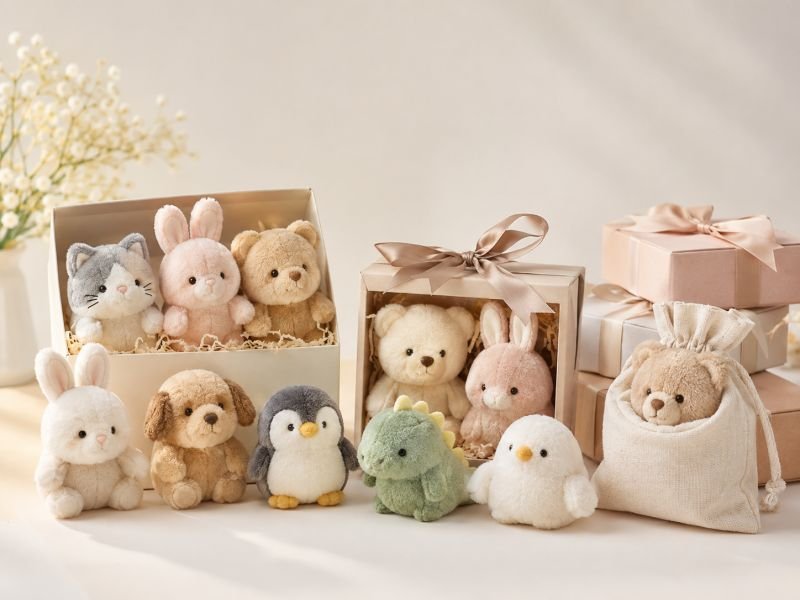
A small plush toy can do something many practical gifts cannot do: it makes people pause, smile, touch it, and keep it. That is why mini plush toys keep showing up in event packs, retail bundles, school rewards, fan drops, mascot campaigns, loyalty gifts, and holiday sets. A notebook gets used and forgotten. A sticker may stay on a laptop. A mini plush can sit on a desk, hang from a backpack, travel inside a gift box, or become part of someone’s daily space. It carries a softer feeling than ordinary promotional items, yet it can still be planned with controlled size, packing volume, and cost.
Custom mini plush toys sell well in small gift programs because they bring together emotional value, easy handling, compact packing, strong character expression, and flexible design options. A mini plush can turn a mascot, pet, campaign icon, product character, or original IP into a gift that feels personal rather than disposable. When size, fabric, embroidery, filling, attachment, packaging, safety, quantity, and delivery timing are reviewed early, the product becomes easier to produce, easier to distribute, and more likely to be kept.
The most effective mini plush gifts often start with a simple scene: someone opens a parcel, finds a soft character inside, and says, “This is cute.” That moment is small, but it has value. It can create photos, repeat sharing, brand recall, and a warmer connection after the first purchase or event. The key is not just making something small. The real work is making something small that still feels finished, safe, recognizable, and worth keeping.
What Makes Mini Plush Toys Good Gifts?
Mini plush toys work well as gifts because they combine three things that are hard to achieve in one small item: a soft emotional reaction, easy physical handling, and clear visual memory. They are small enough to fit inside event bags, retail sets, mailer boxes, welcome kits, and school reward packs, yet they still feel more personal than flat printed items or hard plastic giveaways. A good mini plush is not only “cute.” It has a face, texture, shape, and story that people can touch and keep.
For a small gift program, the real challenge is not simply finding something inexpensive. The gift needs to feel worth receiving, easy to distribute, safe to handle, and connected to the occasion. Mini plush fits this need because it can be designed around a mascot, pet, character, product icon, school animal, event theme, fan symbol, or seasonal story. It gives the program a soft object that can stay visible after the first moment of contact.
A strong mini plush gift usually performs across five practical areas: emotional pull, compact size, easy recognition, repeat exposure, and controlled presentation. If one of these areas is weak, the gift may feel ordinary. If all five are planned well, even a small plush can feel like a carefully made keepsake.
| Gift Need | How Mini Plush Helps | Planning Detail To Review |
|---|---|---|
| Fast emotional reaction | Soft texture and a friendly face create instant warmth | Face expression, fabric touch, body shape |
| Easy distribution | Small size fits bags, boxes, parcels, and event counters | Final height, thickness, packing method |
| Strong memory | Mascot, pet, character, or theme shape is easy to remember | Silhouette, color blocks, signature feature |
| Longer visibility | Can sit on desks, shelves, bags, keys, or car mirrors | Sitting balance, loop strength, attachment style |
| Better presentation | Hangtag, card, box, or sleeve can turn it into a finished gift | Tag, label, barcode, card, box size |
| Series potential | One design can grow into colors, outfits, or related styles | Character system, SKU plan, repeat record |
A mini plush gift also has a practical advantage: it can carry identity without needing a large product size. A mascot can be simplified into a 10–15 cm plush. A pet face can become a small bag charm. A campaign symbol can become a soft animal, fruit, object, or fantasy character. The product remains compact, but the feeling can be strong.
The best mini plush gifts are usually not overloaded with tiny decorations. They often have one clear center: a memorable face, a special body shape, a soft color, a small outfit detail, or a meaningful tag. That is what makes the plush easy to recognize and easier to produce with stable results.
Why Are Plush Toys So Popular?
Plush toys remain popular because they feel familiar, gentle, and easy to like. People do not need to understand a complicated message before they react to a soft toy. A round face, a small smile, a fluffy ear, or a warm color can create a positive feeling in seconds. That is why plush works across many settings: retail gifts, school rewards, fan sets, event packs, product launches, charity programs, holiday promotions, and mascot campaigns.
Softness is a major reason. Many gift items are useful but cold. A pen writes. A card explains. A plastic keychain decorates. A plush toy invites touch. The moment someone squeezes it, the item feels more personal. This physical interaction helps the gift stand out in a crowded bag or parcel.
Plush also carries nostalgia. Many adults grew up with soft toys, so a small plush can feel comforting without feeling childish. A mini mascot on a work desk may become a small mood booster. A plush charm on a backpack may become part of someone’s personal style. A small character inside a gift box may turn a simple purchase into a warmer experience.
Another reason is flexibility. Plush can be cute, funny, premium, cozy, sporty, seasonal, educational, collectible, pet-inspired, or story-led. It can be designed as an animal, food item, object, mascot, fantasy creature, pet replica, or character. This makes it easier to match different campaigns without forcing the same gift format every time.
A well-made plush also has photo value. People naturally take photos of cute items, especially when the gift is linked to an event, limited release, fan story, or attractive package. A mini plush does not need to shout. Its charm can encourage organic sharing because it feels light, warm, and visually easy to understand.
Why Do Small Sizes Work?
Small sizes work because most gift programs must deal with space, time, packing, storage, and shipping limits. A full-size plush may look impressive, but it can quickly become harder to pack, store, move, and hand out. Mini plush keeps the emotional value of a soft product while reducing many of these practical pressures.
A smaller plush usually takes up less carton space, fits more easily into gift boxes, and works better for event tables or parcel inserts. For example, a 10–12 cm sitting plush may fit into many gift sets where a 20–25 cm plush would force a larger box. That size difference can affect carton quantity, warehouse handling, freight volume, and final packing labor.
Small size also helps when the gift needs to travel. A mini plush can be included in a mailer, a subscription box, a retail bag, a student reward pack, or a welcome kit without taking over the whole package. It can act as a surprise item rather than the main product. This is useful when the program wants warmth and memory, but not heavy logistics.
However, small size brings its own design rules. A mini plush cannot hold unlimited details. Tiny embroidery may lose clarity. Thin limbs may be hard to stuff. Small accessories may need careful review. Long fabric pile can hide facial details. A sharp illustrated shape may become rounded after sewing and filling. These are not problems if planned early; they are simply part of turning a flat idea into a soft item.
A good mini plush size should be chosen by use, not guesswork.
| Use Scene | Suitable Size Direction | Main Concern |
|---|---|---|
| Parcel insert | Compact and not too thick | Must fit mailer or gift box |
| Event handout | Easy to hold and carry | Must be fast to distribute |
| Desk mascot | Stable sitting body | Should not fall over easily |
| Bag charm | Light with firm attachment | Loop and ring need strength |
| Retail add-on | Visible but space-saving | Needs tag, barcode, or display plan |
| School reward | Soft, simple, safe structure | Avoid fragile small parts |
| Fan collectible | Enough detail for recognition | Face and outfit need clarity |
Small size also makes a first launch easier to test. A brand can begin with one mascot or one character, then expand later into larger plush, keychains, bag charms, seasonal colors, blind-style sets, pillows, or retail plush. The first mini version can become the starting piece of a larger soft product family.
Who Uses Mini Plush Gifts?
Mini plush gifts are used by many groups because they can adapt to different goals. Retail teams may add them to holiday sets, loyalty packs, store opening gifts, limited bundles, or counter displays. IP teams may use them for fan merchandise, character drops, convention gifts, and collectible series. Schools, camps, education groups, and children’s programs may use them as rewards, mascots, reading gifts, activity prizes, or welcome items.
Sports clubs and event teams often use mini plush because mascot gifts are easy to understand. A small bear, lion, bird, dog, dragon, or fantasy creature can represent a team or campaign without a long explanation. Tourism, museum, and cultural programs can also use mini plush to turn a location, animal, landmark, or local story into a portable souvenir.
E-commerce brands may use mini plush inside parcels to improve the unboxing moment. A small soft item can make a shipment feel more thoughtful. If the plush links to the product story, brand color, mascot, or pet theme, it can become a reason for photos and repeat mentions. The gift may be small, but the emotional effect can be larger than its size.
Mini plush is also useful for membership and loyalty programs. A soft character can make a reward feel less transactional. Instead of only sending a discount code, a brand can send a physical keepsake. This matters when the goal is not only one purchase, but a warmer relationship with the recipient.
Different programs need different plush forms.
| Program Type | Better Plush Direction | Why It Works |
|---|---|---|
| Retail gift set | Mini sitting plush with hangtag | Feels complete and giftable |
| Fan event | Character plush or plush charm | Easy to collect and share |
| School program | Mascot plush with simple structure | Friendly and easy to recognize |
| E-commerce parcel | Compact plush insert | Adds surprise without large volume |
| Charity campaign | Animal plush with story card | Connects emotion and meaning |
| Store opening | Mascot plush with event tag | Turns the date into a keepsake |
| Subscription box | Small themed plush | Adds seasonal or limited value |
| Sports activity | Team animal or mascot charm | Builds group identity |
The most important part is matching the plush to the recipient’s real life. A desk plush suits office and retail gifts. A keychain suits students and fans who carry bags. A boxed mini plush suits gift sets. A simple soft animal suits family or charity programs. A character plush suits people who already know the story.
When Do Brands Choose Mini Plush?
Mini plush is often chosen when a program needs a gift that feels warm, memorable, and practical at the same time. The most common moments include product launches, store openings, trade fairs, school seasons, fan events, charity activities, membership rewards, seasonal campaigns, subscription box updates, and mascot introductions.
A mini plush is especially useful when the gift needs to create a stronger emotional impression than a printed item. A card can explain the message, but a plush gives the message a face. A coupon may be used once, but a plush can stay visible. A sticker may decorate a surface, but a plush can be held, moved, photographed, and kept.
Mini plush is also chosen when a team wants to test a character or mascot before creating a larger product line. A compact version can show whether people respond to the character. If the reaction is strong, the same idea can grow into other items: larger plush toys, plush keychains, bag charms, blind-style sets, seasonal outfits, pillows, or plush bags.
Timing matters more than many people expect. Even a small plush needs artwork review, pattern development, sample work, possible revision, bulk sewing, filling, shaping, checking, packing, and shipping preparation. If the program includes special packaging, warning labels, barcodes, carton marks, or third-party testing, those steps need to be built into the schedule.
A useful planning habit is to work backward from the launch date. The plush should arrive early enough for internal checking, repacking if needed, gift set assembly, warehouse receiving, venue delivery, or photography. A last-minute plush project may force rushed decisions, such as simpler fabric, fewer revisions, basic packing, or expensive urgent shipping.
| Project Moment | Why Mini Plush Fits | Detail To Prepare Early |
|---|---|---|
| Product launch | Gives the launch a soft symbol | Artwork, size, package fit |
| Store opening | Creates a keepsake from the date | Mascot, tag, event label |
| Holiday set | Adds warmth and gifting value | Seasonal color, box size, carton plan |
| School season | Supports identity and rewards | Age group, safety review, warning label |
| Fan activity | Makes the character collectible | Expression, outfit, SKU plan |
| Charity event | Adds emotion and story | Story card, animal shape, hangtag |
| Online parcel gift | Improves unboxing | Mailer fit, compression recovery |
| Membership reward | Feels more personal than a code | Gift level, packaging, repeat plan |
Mini plush works best when the design is not treated as an afterthought. It should be planned as part of the gift experience from the start: what people see first, how they receive it, how they hold it, where they keep it, and what they remember after the program ends.
Which Type Of Mini Plush Works Best?

The best mini plush type depends on how the gift will be used after it is received. A desk-style mini plush works well when the goal is a soft keepsake. A plush keychain works better when the item should travel on a bag, keyring, or lanyard. Mascot plush is strong for identity and recognition. Character plush fits story-led releases, fan programs, and collectible sets.
A mini plush should never be chosen only because it looks cute in a drawing. The final type affects pattern difficulty, sewing time, material use, attachment strength, packing size, safety review, display method, and repeat potential. A 10 cm sitting animal, a 12 cm mascot, an 8 cm plush charm, and a 15 cm character plush may all look “small,” but they behave very differently in production and daily use.
The right choice starts with the final scene. Will the item sit on a desk? Hang from a backpack? Stay inside a gift box? Work as a retail add-on? Support an event? Become part of a collectible series? Each scene needs a different structure.
A desk plush needs a stable sitting base and balanced stuffing. A plush keychain needs a strong loop and suitable hardware. A mascot plush needs clear color and shape recognition. A character plush needs expression accuracy. A retail mini plush needs tags, labels, barcode planning, and clean display. A mailer insert needs shape recovery after compression.
When a small plush program performs well, it usually has a clear match between type, size, use, and presentation. The plush does not try to do everything. It does one job very well.
| Mini Plush Type | Strong Use Scene | Main Benefit | Detail To Control |
|---|---|---|---|
| Sitting mini plush | Gift boxes, desks, shelves, welcome kits | Feels complete and soft | Sitting balance, stuffing, bottom shape |
| Standing mini plush | Mascot gifts, character display, photos | Strong visual presence | Foot size, body center, stability |
| Plush keychain | Bags, keys, school packs, lanyards | Daily visibility | Loop strength, hardware weight |
| Plush bag charm | Lifestyle gifts, fan goods, fashion add-ons | Decorative and portable | Size, attachment style, outer fabric |
| Mascot plush | Schools, teams, events, company campaigns | Fast recognition | Color, logo placement, body shape |
| Character plush | IP, games, animation, creators, collectibles | Strong emotional pull | Face, outfit, side view, details |
| Animal mini plush | Family events, charity, education, seasonal gifts | Wide acceptance | Safety, softness, simple structure |
| Blind-style mini plush | Collectible releases, mystery sets, fan drops | Repeat interest | SKU control, packing mix, labels |
A simple way to choose the right type is to connect the plush to the recipient’s next action:
| After Receiving The Gift | Better Plush Direction |
|---|---|
| Put it on a desk or shelf | Sitting mini plush |
| Carry it every day | Plush keychain or bag charm |
| Remember an event mascot | Mascot plush |
| Collect several styles | Character plush or blind-style mini plush |
| Add warmth to a parcel | Compact soft plush insert |
| Display near a checkout counter | Mini plush with hangtag or small box |
| Use as a school reward | Simple mascot or animal plush |
| Support a pet, charity, or cause theme | Animal plush with story card |
The most common mistake is choosing the most detailed design before confirming the product type. A mini plush does not have much space. If a small character includes shoes, clothing, tiny pockets, printed graphics, hair pieces, tail, metal hook, and special box all at once, cost and production difficulty can rise quickly. A stronger approach is to protect the features people notice first: face, body shape, main color, signature detail, and how the item will be used.
Custom Mini Plush Toys Vs Plush Keychains
Custom mini plush toys and plush keychains are often grouped together, but they serve different purposes. A standard mini plush feels more like a small soft gift. It is made to be held, displayed, placed inside a box, used as a desk item, or added to a themed set. A plush keychain is made to move with the recipient. It can attach to a backpack, handbag, suitcase, keyring, badge lanyard, or zipper pull.
This difference affects the whole design. A standard mini plush can focus more on softness, body fullness, face expression, and display shape. It does not always need hardware. It can be made rounder, thicker, and more gift-like. A plush keychain needs an attachment system, so the top seam, loop placement, hardware weight, and pull direction need more attention.
For a mini plush toy, the body should feel complete from several angles. If it sits, the bottom should be stable. If it stands, the feet may need enough surface area. If it is packed in a gift box, the size should match the box cavity or insert. For a keychain, the plush should not be too large or heavy. If it pulls down on a bag or keys, it may feel inconvenient. If it is too tiny, face details may disappear.
A plush keychain can create stronger daily exposure because it travels with the recipient. This is useful for school programs, fan merchandise, lifestyle gifts, sports events, and brand mascots. However, the hardware adds extra review. Metal rings, plastic hooks, ball chains, and fabric loops all have different cost, look, weight, and durability.
A standard mini plush is better when the goal is a more complete gift feeling. It works well in holiday boxes, event sets, welcome packs, desk gifts, charity gifts, and retail add-ons. The recipient can keep it as a small object rather than a functional accessory.
| Comparison Item | Custom Mini Plush Toy | Plush Keychain |
|---|---|---|
| Main use | Display, gift set, desk, shelf, parcel insert | Bag, keyring, zipper, lanyard, school pack |
| Feeling | Softer, fuller, more gift-like | Portable, playful, visible in daily use |
| Structure focus | Body shape, sitting balance, stuffing | Loop, hardware, pull strength, weight |
| Packing | Box, polybag, hangtag, gift set | Card, hangtag, polybag, display strip |
| Best size direction | Large enough for clear face and hand feel | Light enough to carry comfortably |
| Cost sensitivity | Fabric, filling, face craft, packaging | Hardware, loop reinforcement, compact detail |
| Common risk | Looks flat if stuffing is weak | Loop tears or head tilts if placement is poor |
| Better for | Gift boxes, retail sets, mascot keepsakes | Events, school bags, fan charms, daily carry |
A practical selection rule:
Choose a custom mini plush toy when the product should feel like a keepsake.
Choose a plush keychain when the product should travel with the recipient.
Choose a bag charm when the product should feel more decorative or lifestyle-oriented.
Choose both if the character has long-term potential: a sitting mini plush for gift sets and a keychain version for daily use. The same character can be adapted into two product types, but each version should have its own pattern review. A keychain should not simply be a smaller copy of a sitting plush. The attachment, balance, and body shape need to be designed for movement.
Mascot Plush Vs Character Plush
Mascot plush and character plush both work well in small gift programs, but their value comes from different places. A mascot plush is usually built around recognition. It represents a school, team, company, event, app, service, museum, charity, or campaign. The recipient should see it and quickly connect it with the organization or activity behind it.
A character plush is usually built around story and personality. It may come from original IP, animation, games, books, comics, social media characters, fan communities, or product universes. People care about expression, costume, mood, proportion, and small signature details. If the eyes are wrong, the mouth feels different, or the outfit loses its personality, fans may notice.
Mascot plush usually needs stronger focus on color, silhouette, and logo use. It should be easy to recognize even when simplified. For example, a school lion mascot may need a strong mane shape and school color scarf. A food brand mascot may need a product-related color or small accessory. A sports animal may need a jersey, scarf, or embroidered team mark.
Character plush usually needs more attention to translation from flat art to soft form. A character drawing may include sharp hair, thin fingers, floating accessories, tiny shoes, gradients, or complex clothing. These details may need to be simplified so the plush can be sewn, stuffed, and checked properly. The goal is not to remove personality. The goal is to keep the parts that matter most.
| Design Focus | Mascot Plush | Character Plush |
|---|---|---|
| Main purpose | Recognition and identity | Story, emotion, fan attachment |
| Strongest feature | Color, shape, logo, simple pose | Face, outfit, expression, personality |
| Better use scene | Events, schools, teams, company gifts | IP drops, fan sets, collectible releases |
| Artwork need | Clear mascot image, color guide, logo file | Front, side, back views, expression details |
| Design risk | Too generic if shape is weak | Too complex if details are not simplified |
| Production focus | Stable color, logo craft, simple body | Pattern accuracy, face craft, outfit structure |
| Extension potential | Keychains, larger plush, event gifts | Blind-style sets, multiple outfits, limited styles |
| Packaging style | Event tag, team card, simple gift pack | Story card, collectible box, series label |
For mascot plush, simplicity often helps. A mascot should not need ten details to be recognized. One strong silhouette, one clear color story, and one meaningful detail may be enough. If the mascot is used in a school or event setting, durability and safety may matter more than delicate decoration.
For character plush, selective detail is important. The face may deserve the most attention. The body pose may need to show the character’s attitude. The outfit may need simplified seams. A tiny accessory may be changed into embroidery or applique. A printed gradient may become a solid fabric color. These choices help protect both appearance and production stability.
Front, side, and back views are especially useful for both types. Plush is not a flat image. A front drawing does not show body depth, tail angle, side thickness, ear placement, or how clothing wraps around the body. Missing views often lead to extra sample revisions.
A mascot plush is the better choice when the goal is group identity.
A character plush is the better choice when the goal is emotional connection and collectibility.
Some programs combine both. A company mascot may become a character over time if it has a name, personality, expression set, seasonal outfits, and story cards. In that case, the first mini plush should be designed with future versions in mind.
Best Type For Events
For events, the best mini plush type is the one that is easy to understand, easy to carry, and easy to distribute. Event gifts are often received quickly. People may be walking, talking, holding bags, scanning booths, or moving through lines. The plush needs to communicate its value fast.
A mascot mini plush is one of the strongest event options because it gives the event a face. It can represent a store opening, school fair, fan day, sports activity, conference, charity event, or launch party. The mascot does not need to be large. It needs to be clear, friendly, and connected to the occasion.
A plush keychain works well when people are likely to carry bags, badges, lanyards, or backpacks. It is especially useful for school events, travel-related promotions, youth programs, conventions, fan gatherings, and sports events. Since the plush can be attached immediately, it becomes part of the day instead of staying inside a bag.
A small sitting plush works better when the event gift is part of a set. For example, a welcome box may include a mini plush, card, sticker, product sample, coupon, and packaging sleeve. In this case, the plush does not need hardware. It needs to look good when the box is opened.
For events with children or family participation, simple animal plush often performs well. Animals are easy to understand and do not require people to know a backstory. Bears, dogs, cats, rabbits, lions, pandas, birds, dragons, and sea animals can all be adapted into event themes. If the plush is for a younger group, small parts and loose accessories should be reviewed carefully.
| Event Type | Better Mini Plush Type | Reason |
|---|---|---|
| Store opening | Mascot plush with event tag | Creates a date-specific keepsake |
| School fair | Simple mascot or animal plush | Easy for students to understand |
| Sports event | Team mascot charm or mini plush | Supports group identity |
| Fan convention | Character plush or plush keychain | Easy to collect and share |
| Charity activity | Animal plush with story card | Builds emotional meaning |
| Trade event | Compact mascot plush or desk plush | More memorable than flat items |
| Travel event | Plush keychain or bag charm | Fits luggage and backpacks |
| Product launch | Mini plush inside gift set | Adds surprise to the reveal |
| Membership event | Limited mascot style | Makes the gift feel special |
| Holiday activity | Seasonal mini plush | Connects with gifting mood |
Event mini plush should be designed for speed. Staff should be able to count, pack, move, and hand out the gifts without confusion. Individual polybags, carton marks, style labels, and simple packing rules can prevent delays. If there are several styles, style ratio and carton organization need to be clear.
Another event detail is photo use. A plush with a strong face and color reads better in photos. Overly tiny details may disappear in event lighting. A clean mascot, bold color, clear expression, and simple tag often photograph better than a cluttered mini design.
Durability matters too. Event gifts may be squeezed, dropped, carried, and passed around. Thin ears, delicate chains, tiny glued parts, or weak seams can cause problems. A slightly simplified design with stronger sewing may be a better event choice than a fragile mini plush with too many decorations.
Which Size Feels Valuable?
A mini plush feels valuable when its size gives enough room for expression, touch, and display while still staying easy to pack and distribute. The most valuable size is not always the largest. It is the size that fits the use scene and still keeps the design clear.
If the plush is too small, several problems may appear. The face may lose expression. Embroidery may become crowded. The body may feel flat. Thin arms and ears may not hold shape. The product may feel more like a trinket than a gift. This can work for keychains, but not always for desk gifts or retail sets.
If the plush is too large, other issues appear. The carton volume increases. The gift box may need to be bigger. Event distribution becomes less convenient. Shipping cost may rise. Storage needs grow. For a small gift program, a large plush can create pressure that the budget and logistics were not meant to handle.
A good mini plush size should be reviewed through five practical checks:
| Size Check | What To Review | Why It Matters |
|---|---|---|
| Face clarity | Can eyes, mouth, and expression be seen clearly? | Keeps the plush emotionally readable |
| Hand feel | Does it feel full enough when held? | Prevents a cheap or flat feeling |
| Packing fit | Does it fit the planned bag, box, mailer, or display? | Controls volume and packing time |
| Use comfort | Is it easy to carry, hang, or display? | Supports real daily use |
| Detail space | Can key design details be made cleanly? | Reduces messy craft results |
For desk plush, a size that allows stable sitting and a full body usually feels better. A flat body may look weak even if the face is cute. For keychains, a lighter and smaller size is usually more comfortable. The hardware should not feel heavier than the plush itself. For retail add-ons, the size needs enough visibility on a shelf or counter. For parcel inserts, the size should not force the outer package to change too much.
Thickness is just as important as height. A 10 cm plush with good body depth may feel more valuable than a 13 cm plush that feels flat. Stuffing level also matters. Too little filling makes the plush collapse. Too much filling can distort the face, stretch seams, or make the body stiff. The goal is soft fullness, not hard pressure.
Face size should be planned early. In mini plush, the face often carries most of the emotional value. If the head is too small, eyes and mouth lose clarity. If the head is too large, the body may feel unbalanced. Many successful mini plush designs use a slightly larger head, rounded body, and simplified limbs because this supports cuteness and production stability.
Packaging can also change perceived size. A 10 cm plush in a well-designed box with a story card may feel more finished than a larger plush in plain packing. A hangtag can add identity. A small display box can make the item feel collectible. A simple card can explain the character. The plush size and package should be planned together rather than separately.
| Product Form | Better Size Direction | Value Driver |
|---|---|---|
| Desk mini plush | Enough height and thickness to sit well | Full body, clear face, stable base |
| Plush keychain | Small and light enough to carry | Strong loop, clean face, comfortable weight |
| Bag charm | Slightly decorative but not bulky | Texture, color, attachment style |
| Mascot gift | Large enough for recognition | Shape, color, logo, expression |
| Character collectible | Enough room for face and outfit | Personality, detail clarity, packaging |
| Parcel insert | Compact and recoverable after packing | Surprise, softness, box fit |
| Retail add-on | Visible but space-efficient | Hangtag, display, barcode planning |
The safest size decision comes from a physical sample. Digital artwork cannot show exact hand feel, body thickness, sitting balance, embroidery clarity, or packing recovery. Once the sample is made, the size can be judged more accurately: does it look cute in hand, fit the package, show the character clearly, and feel worth keeping?
When those four conditions are met, the mini plush size is likely working.
Why Do People Like Custom Plush?

People like custom plush because it turns a simple idea into something they can hold, keep, and remember. A small soft character can carry a mascot, pet, event theme, campaign color, school spirit, fan story, or product personality in a way that feels warmer than a printed card or hard giveaway. It does not need to explain itself for long. The face, shape, texture, and size create an immediate feeling.
For a small gift program, this emotional reaction matters. The item may be received inside a box, handed out at an event, placed in a welcome kit, attached to a bag, or offered as a limited reward. In all these moments, the plush has only a few seconds to make an impression. If the design is clear and the hand feel is pleasant, people are more likely to keep it instead of treating it as a disposable extra.
Custom plush also feels more personal because it is not a random soft toy. It can be made from a real character, mascot, pet, story, community symbol, product icon, or seasonal idea. That connection gives the plush a reason to exist. A generic bear may be cute, but a bear wearing a school scarf, a tiny dog based on a pet brand, or a soft mascot from a launch event feels tied to a memory.
A good custom plush usually works on four levels at once:
| Value Layer | What It Adds | Practical Example |
|---|---|---|
| Emotional value | Makes the gift feel warm and personal | Soft face, gentle expression, huggable texture |
| Visual memory | Makes the design easy to recognize later | Mascot shape, color blocks, signature detail |
| Daily visibility | Keeps the item around after the event | Desk plush, bag charm, keychain, shelf item |
| Story connection | Links the gift to a theme or moment | Event tag, character card, school color, pet feature |
| Repeat potential | Allows future versions without starting over | Seasonal outfits, new colors, different sizes |
The key is not adding every possible detail. A strong plush often has one clear feature people remember first: a face, a color, a body shape, a small outfit, a soft tail, or a meaningful tag. When the design is too crowded, the feeling becomes weaker. When the identity is focused, even a small plush can feel special.
Why Is Personalizing A Stuffed Toy Meaningful?
Personalizing a stuffed toy is meaningful because it changes the item from “a soft toy” into “our soft toy.” That difference is powerful. A plush based on a mascot, pet, character, school animal, fan icon, charity symbol, or event theme carries a specific relationship. People are not only receiving an object; they are receiving a small version of something they recognize.
Recognition is one of the strongest reasons people keep personalized plush. A student may keep a school mascot because it reminds them of a team or class event. A fan may keep a character plush because it represents a story they love. A pet owner may enjoy a plush that captures a familiar face or color pattern. A team member may place a mascot on a desk because it represents a shared launch, event, or campaign.
Personalization also gives the plush emotional timing. The same soft toy feels different depending on when and how it is given. A mascot inside a welcome kit can feel like an invitation. A plush charm at a fan event can feel like a badge of belonging. A mini animal with a story card at a charity event can feel connected to care and support. The meaning comes from the plush and the context together.
For a mini size, personalization should be selective. A compact plush does not have enough space for every small design mark. The most important features should come first:
| Design Feature | Why It Matters At Mini Size |
|---|---|
| Face shape | Creates the first emotional reaction |
| Main body color | Helps recognition from a distance |
| Signature detail | Makes the plush feel unique |
| Fabric touch | Decides whether the item feels pleasant |
| Small outfit or tag | Connects the plush to the occasion |
| Packaging card | Explains the story without crowding the plush |
A personalized stuffed toy becomes more meaningful when the details feel intentional. A scarf in the right color, a tiny embroidered smile, a tag with the character name, or a box that matches the theme can make the item feel complete without making it complicated.
How Does Custom Design Build Memory?
Custom design builds memory by giving the gift a clear visual identity. People remember shapes and faces faster than general messages. A mini plush with a distinct expression, color, or silhouette can stay in someone’s mind because it has a character-like presence. It feels alive enough to be remembered, even when it is small.
Memory also grows through repeated contact. A plush placed near a computer may be seen every day. A bag charm may travel to school, work, events, or trips. A small character on a shelf may remind someone of the day it was received. This kind of repeated visibility is valuable because the gift continues working quietly after the original moment is over.
The most memorable custom plush designs are usually easy to describe. “The blue sleepy bear,” “the little lion with the scarf,” “the round pink mascot,” “the dog with one black ear,” “the tiny dragon with yellow wings.” If someone can describe the plush in one short phrase, the design is probably clear enough.
A practical memory check can be done before sampling:
| Memory Check | Strong Sign | Weak Sign |
|---|---|---|
| Three-second recognition | The character is clear at first glance | People need explanation |
| Simple description | One phrase can describe the design | Too many details compete |
| Strong face | Expression feels clear and consistent | Eyes or mouth feel lost |
| Distinct silhouette | Shape is recognizable without text | Looks like a generic animal |
| Color control | Colors support the theme | Colors feel random or too busy |
| Daily placement | Plush has a natural place to live | No clear use after receiving |
For mini plush, memory should not depend on tiny details. A small printed symbol or narrow accessory may not be noticed. Larger visual choices work better: face proportion, body shape, color contrast, ear shape, outfit color, or a clear tag. These details can be made more consistently and seen more easily.
A custom design also needs consistency across the full order. If the first sample has a sweet expression but the later pieces have uneven eyes or loose stuffing, the memory changes. Good results depend on stable embroidery files, clear pattern notes, material records, color references, stuffing direction, and packing instructions. These details help protect the feeling people liked in the first place.
Do Mini Plush Toys Support Brand Stories?
Mini plush toys support brand stories because they make abstract ideas feel physical. A story about care, fun, comfort, adventure, school pride, pet love, fan culture, or community becomes easier to understand when it appears as a small soft character. People can touch it, photograph it, carry it, and keep it.
A brand story does not always need a long paragraph. Sometimes a plush can say more with one clear feature. A tiny fox can suggest cleverness. A soft dog can suggest loyalty. A bear in a scarf can feel warm and friendly. A space-themed character can suggest imagination. A fruit-shaped plush can make a food brand feel playful. These design choices help the story move from words into a physical gift.
Mini plush also works well because it is easy to place inside a larger experience. It can sit in a gift box with a card. It can hang from a bag during an event. It can come with a product sample. It can appear as part of a limited set. It can be photographed with packaging. The plush becomes one piece of a wider moment, not just a standalone item.
Strong story-led plush design usually focuses on three areas:
| Story Area | Plush Detail That Helps |
|---|---|
| Character personality | Face, pose, body shape, outfit |
| Occasion | Hangtag, event date, seasonal color, card |
| Group identity | Mascot color, school scarf, team animal, emblem |
| Product link | Shape inspired by product, ingredient, pet, tool, icon |
| Collectible feeling | Series name, numbered style, color variation |
| Gift value | Box, sleeve, ribbon, card, clean packing |
A mini plush can also become the first step toward a larger product family. One small mascot can later become a keychain, larger stuffed animal, holiday outfit, blind-style series, pillow, bag charm, or retail set. That is why the first design should not only look good for one program. It should also have enough flexibility for future versions.
The biggest risk is forcing too much story into the plush itself. A tiny plush cannot hold a full campaign message, five logos, several accessories, and complex packaging without becoming crowded. The story should be divided wisely: the plush carries the face and feeling; the tag or card carries the explanation; the package carries the occasion.
How Can Packaging Add Value?
Packaging adds value by changing how the plush is received. A loose plush may feel casual. A plush with a clean hangtag, story card, small box, sleeve, or display pack feels more complete. Packaging tells people that the item was made for a specific moment, not thrown in as an afterthought.
For mini plush, packaging is especially important because the product is compact. The right presentation can make a small item feel more finished. A 10 cm plush in a well-sized box with a simple card may feel more valuable than a larger plush in plain packing. The package does not need to be expensive. It needs to fit the purpose.
Different uses need different packing choices:
| Packaging Style | Best For | What To Watch |
|---|---|---|
| Individual polybag | Event handouts, simple gift packs | Practical but less premium |
| Hangtag | Mascot gifts, retail add-ons, school rewards | Tag size, string strength, label space |
| Story card | Charity, pet, IP, school, fan themes | Card should add meaning without clutter |
| Small printed box | Gift sets, limited releases, retail shelves | Box size affects carton volume |
| Window box | Character display and collectible gifts | Window shape, plush position, protection |
| Blind-style box | Mystery sets and repeat interest | Style mix, SKU label, carton control |
| Display tray | Counter sales and event booths | Stability, packing direction, tray strength |
Packaging also protects the plush during movement. Soft toys can be compressed, especially in cartons or mailers. If the face is pressed too hard, the expression may look flattened when opened. If long-pile fabric is packed tightly, the surface may need time to recover. If a keyring is pressed against the face, it may leave marks. These details should be reviewed before final packing.
The package should also match the handoff moment. For event giveaways, fast distribution matters. Simple individual packing and clear carton marks may be better than complex boxes. For retail sets, presentation and barcode planning matter more. For mailer inserts, thickness and recovery matter. For fan releases, collectible cards or series boxes may add excitement.
A good mini plush package should pass four practical checks:
| Check | Why It Matters |
|---|---|
| Does the plush fit without being crushed? | Protects face and body shape |
| Can the recipient understand the theme quickly? | Makes the gift feel intentional |
| Is the label space enough? | Supports care, warning, barcode, or SKU needs |
| Is the carton plan efficient? | Helps storage, transport, and delivery |
| Does the package match the occasion? | Makes the gift feel more complete |
Packaging should not be treated as decoration only. It affects cost, schedule, carton volume, retail handling, event speed, and how the plush looks when it reaches the recipient. When the plush and package are planned together, the gift feels more polished and easier to deliver.
The strongest custom plush programs usually do not rely on one single feature. They combine a clear character, soft material, suitable size, thoughtful packaging, and a use scene that feels natural. That is why people like custom plush: it feels made for a real moment, not pulled from a generic gift pile.
How Does Price Affect Gift Programs?
Price affects gift programs through more than the size of the plush. A mini plush may look simple, but the final cost is shaped by structure, fabric, filling, embroidery, printing, accessories, packaging, quantity, inspection needs, delivery timing, and repeat plans. A compact plush can help control fabric use and carton volume, yet a small item with complex details can still become costly.
The smartest way to manage cost is not to make the plush as plain as possible. It is to spend on the details people actually notice: a clear face, good hand feel, balanced shape, strong color recognition, safe attachment, and suitable packaging. A tiny plush with clean embroidery and a neat hangtag can feel more valuable than a larger plush with weak stuffing, messy seams, or unclear expression.
For small gift programs, the price should be reviewed together with the role of the plush. Is it a low-pressure event handout, a gift box insert, a mascot keepsake, a retail add-on, a fan collectible, or a loyalty reward? Each use has a different cost logic. A parcel insert may need compact size and simple packing. A retail item may need barcode labels, hangtags, and display-ready packaging. A fan item may need stronger expression accuracy, outfit details, and series planning.
Cost control becomes easier when the plush is designed with limits from the beginning. If the design starts with too many tiny parts, several fabrics, detailed clothes, metal accessories, and printed packaging, the budget will rise before the first sample is even made. If the design starts with one strong face, one main fabric, one clear body shape, and one meaningful package detail, the result is usually easier to produce, inspect, pack, and repeat.
| Cost Area | Lower-Cost Direction | Higher-Cost Direction | What To Decide Early |
|---|---|---|---|
| Size | Compact body with simple thickness | Larger body or extra-full shape | Target height and package fit |
| Body shape | Rounded form, simple sitting pose | Thin limbs, wings, horns, long tail | Pattern complexity |
| Fabric | Common plush fabric in available colors | Mixed fabrics, special pile, custom texture | Touch level and color reference |
| Face craft | Simple embroidery with fewer colors | Large embroidery, applique, detailed printing | Eye, mouth, and expression method |
| Accessories | One sewn detail or simple tag | Clothes, metal parts, magnets, sound module | Safety, strength, and purpose |
| Packaging | Polybag, hangtag, simple card | Gift box, display box, blind-style box | Gift level and carton volume |
| Quantity | 500pcs per design and above | Very small custom runs carry more shared setup work | Quantity per style |
| Timing | Planned sample and bulk schedule | Rush work and faster shipping | Launch date and delivery route |
A mini plush price is most stable when design, quantity, and packaging are planned together. A plush that looks affordable at first can become expensive after adding a box, custom label, keyring, special fabric, and urgent shipping. On the other hand, a slightly higher product cost may be worthwhile if the plush feels more giftable, stays visible longer, and supports future repeat styles.
What Drives Mini Plush Price?
Mini plush price is driven by the amount of custom work required to turn an idea into a repeatable soft product. Size matters, but it is only one part. Two plush toys with the same height can have very different costs if one has a simple rounded body and the other has clothing, several fabric colors, detailed embroidery, a keychain loop, and printed box packaging.
Structure is one of the first cost drivers. A round animal body is usually easier to pattern, cut, sew, stuff, and shape. A character with thin arms, narrow legs, sharp ears, layered hair, wings, or a long tail needs more pattern pieces and more sewing attention. If the plush must sit or stand in a certain pose, body balance and stuffing also require more care.
Fabric affects both look and cost. Short plush can show facial embroidery more clearly. Longer pile can feel softer but may hide small details. Mixed fabrics can make a design richer, but each fabric change adds cutting, matching, and inspection work. Special colors may need extra sourcing time, especially when the project requires a close match to a brand color or character reference.
Craft details can quickly change the budget. Embroidery is common for eyes, mouth, nose, and small features because it is clean and durable. Larger embroidery areas, several thread colors, applique layers, patches, woven labels, printed clothing, or heat transfer details all add cost and checking steps. Printing can work for some details, but plush pile and texture affect clarity, so it should be reviewed before final approval.
Accessories are another major factor. A small scarf, sewn shirt, keyring, hook, magnet, sound module, zipper, removable part, or tiny prop may improve the design, but each one adds materials, labor, and inspection. For compact plush, accessories should earn their place. If a detail does not improve recognition, function, story, or gift value, it may not be worth the added budget.
| Price Driver | Why It Adds Cost | Practical Cost Control |
|---|---|---|
| More pattern pieces | More cutting and sewing work | Simplify body shape where possible |
| Several fabric types | More material handling and color matching | Use one main fabric plus one accent fabric |
| Large embroidery | More machine time and thread use | Keep face clear but not oversized |
| Clothing | Adds pattern, sewing, and fit checks | Use scarf, label, or printed detail instead |
| Metal hardware | Adds material cost and strength review | Choose hardware only for carry-use items |
| Special packaging | Adds printing, packing, and carton volume | Match package level to the gift role |
| Multiple styles | Adds SKU control and material planning | Use shared base patterns when suitable |
| Tight deadline | May limit material options or raise shipping cost | Start sample review earlier |
The best price planning starts from the visible value. Spend first on face, shape, hand feel, and the detail that makes the plush recognizable. Reduce parts that are hard to see, hard to sew, or easy to damage.
How Does MOQ Change Cost?
MOQ changes cost because custom plush development includes shared work before bulk production begins. Pattern making, material preparation, embroidery files, sample sewing, revision, bulk setup, inspection planning, packaging review, and carton preparation all require time and labor. When the quantity is too low, those shared costs are divided across fewer pieces, so each unit carries more burden.
For many custom plush projects, 500pcs per design is a practical starting level. This quantity gives enough room to arrange materials, cutting, embroidery, sewing, stuffing, shaping, inspection, packing, and shipment preparation in a more organized way. It also helps avoid the very high unit cost that often appears in tiny custom runs.
A single design at 500pcs and five designs at 100pcs each are not the same. Even if the total quantity is 500pcs, each design still needs its own pattern review, material allocation, embroidery setup, sample check, production notes, and packing control. This is why quantity per style matters as much as total order quantity.
When the single-style order reaches 2,000pcs, sample fee refund or deduction can usually be reviewed under Heyzizi’s project rules. This is useful for programs that begin with a clear plan and later move into stronger volume. It also shows why one strong style may be more efficient than many tiny styles in the first run.
| Quantity Plan | Cost Behavior | Suitable Use |
|---|---|---|
| Below 500pcs per design | Custom setup cost is harder to spread | Usually not ideal for full custom plush |
| 500pcs per design | More practical starting level | Mascot gifts, event plush, compact launch programs |
| 1,000pcs per design | Better room for material and packing planning | Retail add-ons, school rewards, parcel gifts |
| 2,000pcs per design | Stronger bulk efficiency | Gift campaigns, repeat programs, sample fee deduction review |
| 5,000pcs+ per design | Better for larger rollouts | Wider distribution, seasonal plans, multi-channel gift sets |
| Several designs in one program | More SKU control needed | Character sets, color series, collectible styles |
MOQ also affects design choice. For a first program, one carefully made design may be smarter than several underfunded styles. A single mascot with strong packaging may feel more polished than four weak designs with thin details and rushed sampling. Once the first item works, future colors, outfits, or keychain versions can be added with a clearer direction.
The goal is not simply to order more. The goal is to match quantity with design complexity, use scene, package level, and timing. A simple mini plush at 500pcs may be practical. A complex multi-style collection may need higher quantity per style to make the cost structure healthier.
Which Details Increase Budget?
Details increase budget when they add extra development work, extra materials, extra labor, extra checking, or extra packaging steps. Some details are worth the cost because they make the plush more recognizable or useful. Others look attractive in artwork but add little value after the product is made.
The most common budget-increasing details are clothing, mixed materials, multiple embroidery colors, tiny accessories, metal hardware, sound modules, magnets, printed boxes, display trays, blind-style packaging, special labels, and multiple SKU versions. None of these are wrong. The key is deciding which details support the gift purpose.
For mini plush, over-detailing is one of the fastest ways to lose cost control. A small body has limited space. Tiny shoes, small pockets, thin ribbons, little badges, and narrow printed marks may become hard to sew, hard to align, and hard to notice. They can increase cost without improving the recipient’s first impression.
A better approach is to group details by value:
| Detail Type | Usually Worth Keeping | Can Be Simplified | Often Removable |
|---|---|---|---|
| Face details | Eyes, mouth, nose, expression | Fewer thread colors | Tiny facial lines |
| Identity details | Main color, mascot shape, signature feature | Smaller accessory | Extra small marks |
| Clothing | Scarf, simple shirt, cape | Printed detail instead of sewn item | Tiny pockets or buttons |
| Hardware | Keyring or hook when function matters | Standard ring or loop | Decorative metal parts with no use |
| Packaging | Hangtag, card, simple box | Fewer print finishes | Oversized box for a small item |
| Labels | Care label, warning label, barcode when needed | Shared label system | Decorative-only labels |
A strong cost decision should pass four checks:
Does the detail help people recognize the plush?
Does it improve the way the plush feels or works?
Does it support the gift story?
Can it be produced and checked consistently?
If the detail fails most of these checks, it may be better to remove it or move it to packaging. For example, a tiny printed symbol on the plush body may be hard to see, but the same story can be placed on a hangtag or card more clearly. A small removable accessory may raise safety and durability concerns, while embroidery can deliver a similar visual cue in a cleaner way.
Packaging details should also be reviewed carefully. A printed box can raise perceived value, but it increases carton volume. A display tray can help retail presentation, but it adds packing work. A blind-style box can create excitement, but style ratio and label control become more important. A hangtag may be the most efficient option when the plush itself is already strong.
Cost control is not about making the plush look cheap. It is about putting the budget where people will see it, touch it, and remember it.
How Long Should Teams Plan?
Mini plush planning should begin early because even a small plush needs a full development path. Artwork review, pattern work, material selection, sample making, revision, approval, bulk production, inspection, packing, and shipping preparation all take time. Special packaging, testing, labels, or multiple styles add more steps.
A simple mini plush with common fabric, embroidered face, basic hangtag, and individual packing is easier to arrange than a character plush with clothing, several fabrics, printed retail box, metal keyring, and multiple styles. The design may still be small, but every added detail needs review.
Sample revisions should be expected. The first sample may show that the head needs to be rounder, the eyes larger, the body thicker, the fabric softer, the tail shorter, the loop stronger, or the package roomier. These changes are normal and useful because they reduce risk before bulk production.
A practical schedule should include time for the product to arrive before the event or launch. The plush may need internal checking, gift set assembly, warehouse receiving, photography, repacking, or venue delivery. Waiting until the final weeks often leads to rushed decisions and higher shipping pressure.
| Planning Stage | What Happens | Common Delay Cause |
|---|---|---|
| Design review | Artwork, size, fabric, craft, and use scene are checked | Missing side/back views or unclear size |
| First sample | Pattern, material, face craft, sewing, and filling are tested | Complex shape or special fabric |
| Revision | Face, body, color, stuffing, accessory, or packaging adjusted | Several teams reviewing the sample |
| Approval | Final sample becomes the bulk reference | Unclear confirmation or late changes |
| Bulk preparation | Materials, embroidery files, cutting, sewing plan arranged | Color change or accessory update |
| Bulk production | Cutting, embroidery, sewing, stuffing, shaping | Multiple styles or tight schedule |
| Checking and packing | Finished plush, labels, needle detection, carton rules | Label files or carton marks not ready |
| Shipping preparation | Carton data, documents, forwarder coordination | Late warehouse or delivery instructions |
A smoother schedule starts with complete project details. The most useful information includes artwork, front/side/back views, target size, quantity per design, fabric preference, face craft, accessories, packaging, label needs, destination region, launch date, and shipping preference.
For event programs, planning backward from the date is safer:
| Deadline Type | What To Protect |
|---|---|
| Event date | Allow time for venue delivery and on-site sorting |
| Retail launch | Allow time for labeling, barcode review, and shelf preparation |
| Parcel insert | Allow time for mailer fit test and packing trial |
| School season | Allow time for safety and warning label review |
| Fan release | Allow time for sample approval and photo preparation |
| Holiday set | Allow time for box printing, gift assembly, and freight |
The earlier the plush is planned, the more choices remain available. There is more time to adjust the sample, select better fabric, improve packaging, review labels, and choose a cost-effective shipping method. Late projects often have fewer choices: use available fabric, reduce details, simplify packaging, or pay more for faster transport.
A mini plush may be small, but the timeline should not be treated as small. Good planning protects cost, quality, and the final gift experience.
How Does Price Affect Gift Programs?
Price affects a mini plush gift program through design choices, material use, craft difficulty, quantity per design, packing style, safety needs, delivery timing, and repeat potential. A small plush may seem simple at first glance, but every custom part needs to be developed, tested in sample form, produced, checked, packed, and shipped. The final cost is not decided by height alone.
A compact plush can help control fabric use, filling volume, carton space, and shipping pressure. That is why mini plush often works well for event gifts, retail add-ons, school rewards, parcel inserts, and loyalty packs. But a mini plush with complex clothing, several fabrics, tiny accessories, metal hardware, detailed embroidery, and printed box packing can still carry a higher cost than a larger but simpler plush.
The better way to manage cost is to spend on the details people notice first: face expression, body shape, softness, color recognition, safe structure, and suitable presentation. A clean 10–12 cm plush with clear embroidery and a neat hangtag can feel more valuable than a 16 cm plush with weak stuffing, messy seams, and unclear features.
For small gift programs, price should be connected to the role of the plush. A simple handout does not need the same finish as a collectible retail item. A mascot gift for a store opening may need a strong face and event tag, while a fan plush may need better expression control and outfit accuracy. A parcel insert may need compact packing and good shape recovery after shipping. Once the role is clear, cost decisions become easier.
| Cost Area | Practical Choice | Higher-Cost Choice | What To Confirm Early |
|---|---|---|---|
| Size | Compact height with moderate thickness | Larger body or extra-full shape | Target height, width, and package fit |
| Body structure | Rounded body, simple limbs | Thin arms, wings, horns, long tail | Shape difficulty and sewing path |
| Fabric | One main plush fabric | Mixed pile, special texture, several fabrics | Touch level and color reference |
| Face craft | Clean embroidery with limited colors | Large embroidery, applique, layered detail | Eye, mouth, nose, expression style |
| Accessories | One useful detail | Clothing, metal parts, magnets, sound module | Purpose, strength, safety |
| Packing | Polybag, hangtag, simple card | Gift box, display box, blind-style box | Gift level and carton volume |
| Quantity | 500pcs per design and above | Very small custom runs | Quantity per design |
| Timing | Planned schedule | Urgent work and faster freight | Launch date and delivery route |
A well-planned plush gift does not need to feel expensive to feel thoughtful. The real goal is to avoid hidden waste: details nobody sees, parts that slow production, packing that creates too much volume, or late changes that increase cost without improving the final experience.
What Drives Mini Plush Price?
Mini plush price is driven by the amount of work needed to turn a design into a stable soft product. Size matters, but structure and detail often matter more. Two 12 cm plush toys can have very different costs if one has a simple round body and the other has a hoodie, scarf, tail, mixed fabrics, keyring, and printed box.
Body structure is usually one of the first cost drivers. A simple seated animal with a rounded body may need fewer pattern pieces and less sewing time. A character with narrow legs, sharp ears, layered hair, wings, horns, long tail, or complicated side profile needs more pattern work and more careful sewing. If the plush must sit without falling forward, the filling level and bottom shape also need extra attention.
Fabric affects both appearance and cost. Short plush can show embroidery more clearly, which is useful for small faces. Longer pile may feel warmer and softer, but it can hide tiny details. Special fabric, mixed textures, or close color matching can raise material preparation time. If the plush has a face, belly, inner ears, clothing, and tail in different materials, every fabric change adds cutting, matching, and checking work.
Craft details also change cost quickly. Embroidery is common for eyes, mouth, nose, and simple marks because it is clean and durable. But large embroidery areas, many thread colors, applique, patches, woven labels, heat transfer, and printing all add steps. A small face with three clean embroidered features may be more efficient than a tiny face crowded with several effects.
Accessories should be treated carefully. A scarf, small shirt, metal keyring, plastic hook, magnet, sound module, zipper, or removable part can improve the plush, but each one adds cost and inspection needs. For mini plush, accessories should support recognition, use, or story. If an accessory does not help the product feel better, look clearer, or work better, it may not deserve the extra budget.
| Price Driver | Why It Changes Cost | Practical Cost Control |
|---|---|---|
| More pattern pieces | More cutting, matching, and sewing | Simplify thin parts and complex shapes |
| Special fabric | More sourcing and material control | Use one main fabric with one accent |
| Large embroidery | More machine time and thread | Keep the face clear, not oversized |
| Several thread colors | More setup and checking | Limit colors to key facial details |
| Clothing | Extra pattern, fabric, sewing, fit review | Use scarf, patch, or printed detail when suitable |
| Metal hardware | Adds material and strength review | Use only when carry function matters |
| Printed box | Adds artwork, printing, packing volume | Match box level to gift purpose |
| Multiple styles | More SKU and material control | Share base body when possible |
The strongest price plan starts with visible value. The face, body shape, softness, and one signature feature usually matter more than hidden complexity. A plush should feel charming in the hand before extra decoration is added.
How Does MOQ Change Cost?
MOQ changes cost because custom plush requires setup work before bulk production begins. Pattern making, material selection, embroidery file preparation, sample work, revision, cutting setup, sewing arrangement, inspection planning, and packing review all happen before the full order is ready. When quantity is too low, these shared costs are divided across fewer pieces, so each unit becomes more expensive.
For Heyzizi projects, standard MOQ starts from 500pcs per design. This level is more practical for most custom mini plush programs because the production flow includes a complete process: pattern, material, cutting, embroidery or printing, sewing, stuffing, shaping, checking, packing, and shipment preparation.
Quantity per design matters more than total quantity alone. For example, 1,000pcs of one mascot is different from 1,000pcs split across five styles. Five styles require five sets of artwork review, pattern work, sample notes, material allocation, craft control, packing rules, and carton organization. Even when total quantity looks the same, the workload is not the same.
When a single-style bulk order reaches 2,000pcs, Heyzizi’s sample fee can be refunded or deducted based on the confirmed project rule. This is useful for programs with a clear growth plan. It also shows why one strong style can sometimes be more efficient than several tiny styles in the first run.
| Quantity Level | Cost Behavior | Suitable Use |
|---|---|---|
| Below 500pcs per design | Setup cost is harder to spread | Usually not ideal for full custom plush |
| 500pcs per design | More practical custom starting level | Event gifts, mascot tests, compact programs |
| 1,000pcs per design | Better material and packing efficiency | Retail add-ons, school rewards, parcel gifts |
| 2,000pcs per design | Stronger bulk efficiency | Gift campaigns, repeat programs, sample fee deduction review |
| 5,000pcs+ per design | Better for wider distribution | Seasonal gifts, larger events, multi-channel use |
| Multiple styles | More control needed | Character sets, colors, expressions, collectible drops |
MOQ also affects design strategy. A first launch with one carefully developed mini plush may feel stronger than four underfunded styles. If the first design performs well, future versions can add color changes, outfits, keychain formats, or larger sizes with better direction.
A practical first-run plan often works like this:
| Program Goal | Smarter Quantity Strategy |
|---|---|
| Test a mascot | One main style at 500–1,000pcs |
| Create a school reward | One simple mascot with stable packing |
| Launch a retail add-on | One to two styles with hangtags and labels |
| Build fan interest | One main character plus one limited color |
| Prepare a series | Shared base body with controlled changes |
| Plan repeat use | Keep pattern, fabric, embroidery, and packing records |
The goal is not simply to produce more pieces. The goal is to match quantity with design detail, use scene, packing level, and delivery timing. When quantity and complexity fit each other, cost becomes easier to manage.
Which Details Increase Budget?
Details increase budget when they add material, labor, sample time, checking difficulty, or packing work. Some details are worth the cost because they make the plush more recognizable, more useful, or more giftable. Others may look attractive in artwork but add little value once the product is sewn and stuffed.
Common budget-raising details include mixed fabrics, complex clothing, large embroidery, many thread colors, applique, patches, keyring hardware, magnets, sound modules, removable parts, printed boxes, display trays, blind-style packaging, barcode systems, and multiple SKU versions. These details are not bad. They simply need a clear reason.
For mini plush, over-detailing is a common problem. A small body gives limited space. Tiny shoes, narrow belts, small pockets, little badges, thin ribbons, or tiny printed marks may become hard to sew, hard to align, and hard to notice. They increase cost without always improving the first impression.
A better method is to decide which details belong on the plush and which can move to the package. For example, a small story symbol may not read clearly on plush fabric, but it can work beautifully on a hangtag. A tiny clothing label may be hard to sew neatly, while a printed card can explain the character more clearly. A removable accessory may create durability concerns, while embroidery can give a similar visual effect.
| Detail Type | Usually Worth Keeping | Can Be Simplified | Often Better To Remove |
|---|---|---|---|
| Face | Eyes, mouth, nose, main expression | Fewer thread colors | Tiny facial lines |
| Body identity | Main color, silhouette, signature feature | Fewer small color blocks | Hidden detail under arms or tail |
| Clothing | Scarf, simple shirt, cape | Printed detail instead of full sewn piece | Tiny buttons, pockets, belts |
| Hardware | Keyring or hook when needed | Standard ring or woven loop | Decorative metal with no function |
| Story detail | Hangtag, card, character name | Simple one-card design | Too many printed inserts |
| Packing | Polybag, hangtag, small box | Fewer finishes | Oversized box for a small plush |
| Labels | Care, warning, barcode, SKU if needed | Shared label system | Decorative-only labels |
Before keeping any detail, it should pass four checks:
Does it help people recognize the plush?
Does it improve the way the plush feels, works, or displays?
Does it support the story or occasion?
Can it be produced and checked consistently?
If the detail does not pass most of these checks, it may be better to simplify it. A clean plush with one strong detail is often better than a crowded plush with many weak details.
Packaging deserves the same discipline. A gift box can raise perceived value, but it also raises printing cost and carton volume. A display tray can help counter placement, but it adds packing steps. Blind-style packaging can create excitement, but style mix, labels, and carton sorting must be controlled. A hangtag may be the most efficient option when the plush itself already has strong identity.
Cost control is not about making the product plain. It is about putting the budget where people will see, touch, and remember it.
How Long Should Teams Plan?
Mini plush programs need early planning because the product goes through more steps than many simple gifts. Artwork review, pattern work, material selection, sample making, revision, approval, bulk production, inspection, packing, and shipment preparation all require time. Special packaging, label review, safety testing, or multiple styles can add more time.
A simple mini plush with common fabric, embroidered face, basic hangtag, and individual packing is easier to arrange than a character plush with clothing, several fabrics, printed box, keyring hardware, and multiple expressions. The item may still be small, but each added detail needs review.
Sample revisions should be expected. The first sample may reveal that the head needs to be rounder, eyes need to be larger, body needs more stuffing, tail should be shorter, fabric should be softer, keyring loop needs reinforcement, or package size should change. These revisions are normal because a soft product cannot be judged fully from artwork alone.
A better schedule includes time after arrival. The plush may need internal checking, gift set assembly, warehouse receiving, repacking, product photography, or venue delivery. If the product arrives right before the launch, there is almost no room to handle surprises.
| Planning Stage | What Happens | Common Delay Cause |
|---|---|---|
| Design review | Artwork, size, fabric, craft, and use are checked | Missing side/back views or unclear size |
| First sample | Pattern, material, face craft, sewing, and filling are tested | Complex shape or special fabric |
| Revision | Face, body, color, stuffing, accessory, or packing adjusted | Several review teams involved |
| Approval | Final sample becomes the bulk reference | Late design changes |
| Bulk preparation | Materials, embroidery files, cutting, and sewing plan arranged | Color change or accessory update |
| Bulk production | Cutting, embroidery, sewing, stuffing, shaping | Several styles or tight deadline |
| Checking and packing | Finished plush, labels, needle detection, carton rules | Label files or carton marks not ready |
| Shipment preparation | Carton data, documents, forwarder coordination | Late warehouse or delivery instructions |
For launch-driven programs, it helps to work backward from the final arrival date.
| Deadline Type | Time To Protect |
|---|---|
| Event date | Venue delivery, staff sorting, backup time |
| Retail launch | Barcode, label, display, and shelf preparation |
| Parcel insert | Mailer fit test and packing trial |
| School season | Safety review and warning label confirmation |
| Fan release | Sample approval and product photography |
| Holiday set | Box printing, set assembly, and freight timing |
| Repeat program | Material availability and batch consistency review |
The most useful project details to prepare early include artwork, front/side/back views, target size, quantity per design, fabric preference, face craft, accessories, packaging, label needs, destination region, launch date, and preferred freight method.
The earlier the plush is planned, the more choices remain available. There is more time to improve the sample, adjust fabric, refine packing, review labels, and choose a calmer delivery route. Late projects often leave fewer options: use available fabric, remove details, simplify packaging, or pay more for faster freight.
A mini plush may fit in one hand, but its price is shaped by many decisions. Good cost planning protects the final gift from feeling cheap, rushed, or unfinished.
How Does A Factory Develop Mini Plush?

A mini plush starts with artwork, but it becomes a real product through pattern work, material selection, sample making, revision, approval, bulk production, inspection, packing, and shipment preparation. The small size does not make the process simple. It only makes every detail more concentrated.
A plush product is different from a flat printed item. A drawing can look perfect on screen, but fabric has thickness, pile direction, stretch, seam allowance, filling pressure, and shape limits. A small face may need embroidery adjustment. Thin arms may need to be widened. A tail may need to move slightly so the plush can sit properly. A tiny accessory may need to be replaced with embroidery for safety or durability.
This is why the first development stage matters so much. The goal is not to copy every line from the artwork without thinking. The goal is to keep the character feeling, shape, color, and expression while making the product suitable for cutting, sewing, stuffing, checking, packing, and repeated production.
A strong mini plush development flow usually covers these steps:
| Stage | What Happens | Why It Matters |
|---|---|---|
| Artwork review | Shape, size, views, fabric, craft, and use scene are checked | Helps find production risks early |
| Pattern work | Flat artwork is turned into fabric pieces | Controls body shape, thickness, pose, and proportion |
| Material selection | Plush fabric, filling, thread, labels, and accessories are reviewed | Affects touch, color, cost, safety, and repeat consistency |
| First sample | A physical sample is made for review | Shows real size, face, body fullness, and craft effect |
| Revision | Shape, face, color, stuffing, accessories, or packing may be adjusted | Improves the product before bulk work |
| Approved sample | Final sample becomes the reference | Guides production, checking, and packing |
| Bulk production | Materials, cutting, embroidery, sewing, stuffing, shaping, and packing are arranged | Turns the design into a full order |
| Inspection | Materials, in-line work, finished plush, needle detection, and packing are checked | Reduces visible defects and packing mistakes |
| Shipment prep | Carton details, documents, photos, and forwarder coordination are prepared | Helps the order move smoothly |
For mini plush, the most common development risks are face distortion, weak body fullness, unclear embroidery, poor sitting balance, thin limbs, mismatched colors, loose accessories, and packaging that compresses the shape too much. These problems are easier to correct at sample stage than after bulk production has started.
A well-developed mini plush should look good from more than one angle. Front view matters, but side thickness and back details also affect the final product. This is why front, side, and back artwork can save time. If only a front view is provided, the production team must interpret hidden areas, which may lead to extra revisions.
How To Make Custom Plushies To Sell?
Custom plushies made for sale need a stronger plan than simple giveaway items. They must look attractive, feel good in hand, hold their shape, meet packaging needs, support repeat orders, and match the sales channel. A product that looks cute in one sample still needs to work across hundreds or thousands of pieces.
The first step is to decide what the plush must do. Is it a retail add-on, mascot gift, fan collectible, school reward, blind-style product, bag charm, or holiday set item? Each use requires different decisions. A retail plush may need barcode labels, hangtags, shelf-ready packing, and carton rules. A fan plush may need stronger character accuracy. A school reward may need safer structure and clearer warning labels. A bag charm may need a reinforced attachment loop.
The second step is to simplify the design without losing identity. A mini plush has limited space. The face, silhouette, and signature detail should be protected first. Very small printed marks, narrow ribbons, tiny pockets, delicate shoes, or loose extras may look impressive in artwork but become difficult in production.
The third step is to prepare sales-related details early:
| Item To Prepare | Why It Helps |
|---|---|
| Front, side, and back views | Reduces guessing during pattern work |
| Target size | Controls cost, detail clarity, packing, and hand feel |
| Quantity per style | Affects material planning and unit cost |
| Fabric direction | Controls softness, shine, and color appearance |
| Face craft | Embroidery, printing, applique, or mixed method |
| Packaging type | Polybag, hangtag, box, gift set, or display solution |
| Label needs | Care label, warning label, barcode, SKU label, FNSKU label |
| Destination country | Helps review testing and label needs |
| Launch date | Helps plan sample, revision, production, and shipping |
A plush made for sale also needs repeat thinking. If the first run performs well, can the same design return later? Are pattern files, material notes, embroidery files, packaging artwork, and carton rules recorded? Can the character expand into another color, outfit, larger size, keychain, or bag charm? Good planning keeps future programs easier.
What Is The Sample Process?
The sample process turns an idea into a physical product that can be touched, measured, photographed, revised, and approved. For mini plush, sampling is where most important decisions become visible: face size, fabric texture, body thickness, stuffing level, seam position, accessory strength, and packing fit.
A sample usually begins after the design file, reference image, size, quantity, fabric direction, craft details, accessories, and packaging needs are reviewed. Then pattern work starts. The paper pattern decides how the plush will become three-dimensional. Even a simple mini plush may need several pattern pieces to create the right body shape.
After pattern work, materials are prepared. Fabric choice is not just about color. Pile height, softness, stretch, direction, and thickness all affect the final look. A light color may look different under different light. A long-pile fabric may hide small embroidery. A short-pile fabric may show details more clearly but feel different in hand.
The first sample should be reviewed in a practical way:
| Sample Review Area | What To Check |
|---|---|
| Size | Height, width, thickness, and overall proportion |
| Face | Eye shape, mouth position, expression, embroidery clarity |
| Body | Sitting balance, stuffing level, seam smoothness |
| Fabric | Color, pile direction, softness, hand feel |
| Accessories | Position, strength, safety, visual balance |
| Craft | Embroidery, printing, applique, label, patch |
| Packaging | Fit, compression, tag position, carton effect |
| Use scene | Desk, bag, gift box, shelf, event handout, parcel insert |
Sample revisions are normal. A mini plush may need a larger face, rounder body, shorter limb, firmer stuffing, cleaner embroidery, softer fabric, or simpler accessory. These revisions are not delays without value. They are how risk is reduced before a full run.
For Heyzizi projects, custom plush samples usually require a sample fee because the work involves pattern making, material preparation, craft testing, sewing, stuffing, shaping, accessories, and revision work. For clear bulk plans, the sample fee can be refunded or deducted when the single-style order reaches 2,000pcs.
How Does A Production Team Review Artwork?
Artwork review is the stage where a design is checked for plush feasibility. A beautiful drawing is not always ready for fabric. The production team must look at shape, thickness, sewing lines, fabric changes, color blocks, embroidery size, small parts, accessories, safety needs, and packing method.
A flat character may have very thin arms, sharp hair, tiny shoes, floating details, complex gradients, or small printed marks. These may work in illustration but not in soft product form. Plush needs seam allowance and stuffing volume. Sharp edges become rounded. Thin parts may become weak. Very small face details may blur after embroidery or printing.
A practical artwork review usually asks:
| Review Area | Main Concern | Possible Adjustment |
|---|---|---|
| Silhouette | Can the character be recognized quickly? | Enlarge signature shape |
| Face | Can eyes and mouth stay clear at small size? | Use embroidery or simplify lines |
| Body thickness | Will the plush feel full or flat? | Add side depth and stuffing plan |
| Limbs | Are arms, legs, ears, or tail too thin? | Widen or shorten small parts |
| Color blocks | Are there too many tiny fabric areas? | Combine colors or use embroidery |
| Accessories | Are extras safe and durable? | Replace with stitched detail or soft part |
| Packing | Will the plush recover after compression? | Adjust size, filling, or packing style |
Artwork should also include the planned use. A plush for a retail shelf may be reviewed differently from a plush keychain. A mascot gift may need clean logo placement. A plush for children’s programs may require more attention to small parts and labels. A collectible plush may need stronger expression control.
Good artwork review protects the original idea. It does not weaken it. By adjusting details before sampling, the final plush can look cleaner, feel better, and move through production with fewer surprises.
What Should Teams Confirm First?
Before development starts, several details should be confirmed. Without these, even a simple mini plush may move slowly because every decision affects the next one. The most important items are product type, artwork, views, size, quantity, fabric, filling, craft, accessories, packaging, labels, destination country, use scene, deadline, shipping method, and repeat plan.
A clean project brief does not need to be complicated. It only needs to be clear. For example, “10 cm seated mascot plush, 1,000pcs, short plush fabric, embroidered face, woven label, hangtag, individual polybag, for a school event in the USA, needed before September” gives far more direction than “Can you make this cute character?”
The first confirmation list may include:
| Detail | What To Provide |
|---|---|
| Product type | Mini plush, plush keychain, bag charm, mascot plush, character plush |
| Artwork | Sketch, digital file, mascot file, pet photo, or reference photo |
| Views | Front, side, back, and close-up details if available |
| Size | Target height, width, thickness, or reference object |
| Quantity | Quantity per style and total order quantity |
| Fabric | Preferred touch, color reference, material level |
| Filling | PP cotton, high-resilience fiber, weighted filling, or special request |
| Craft | Embroidery, printing, applique, patch, woven label, heat transfer |
| Accessories | Keyring, hook, magnet, sound module, removable parts, clothing |
| Packaging | Polybag, hangtag, gift box, retail box, blind box, display box |
| Labels | Care label, warning label, barcode, SKU label, FNSKU label |
| Destination | USA, EU, UK, Canada, Australia, Asia, or other region |
| Use scene | Retail, event, education, e-commerce, gift set, IP product |
| Deadline | Launch date, event date, warehouse date, shipping schedule |
| Shipping | Express, air, sea, forwarder, FOB, CIF, DDP review |
| Repeat plan | One-time program, seasonal return, long-term collection |
Clear information makes pricing, sampling, packaging, testing, and production review more accurate. It also helps avoid weak early decisions, such as choosing the wrong size before packaging is known or adding accessories before safety needs are reviewed.
Why Choose A Custom Plush Production Partner?
A custom plush production partner matters because mini plush is not just a cute object. It involves product review, pattern work, fabric selection, sample revision, bulk production, quality control, packaging, labels, safety planning, shipment support, and repeat-order records. The right partner helps turn a soft idea into a finished product that can be made again.
For small gift programs, it may be tempting to focus only on the lowest unit cost. That can work for very simple items, but plush products carry more hidden risks than many flat gifts. A weak pattern can ruin the character shape. Poor embroidery can change the expression. Loose attachments can create safety problems. Unclear labels can delay retail or warehouse handling. Poor packing can flatten the product before it reaches the recipient.
A strong production partner does not only say “yes.” It reviews whether the idea can be made well, what should be simplified, which fabric fits the use, how the face should be crafted, whether accessories are safe, how packing should be planned, and how the approved sample will guide the full order.
Heyzizi is positioned as a Guangdong-based custom plush products factory with 600+ staff, around 18,000㎡ factory space, 35+ pattern makers, 300+ pieces of equipment, 80 QC inspectors, 30+ production lines, and 20+ years of OEM / ODM plush project experience. Monthly capacity can reach 500,000+ pcs depending on product size, structure, material, packaging, order mix, and production schedule.
Those numbers matter only when they support better project control. For mini plush, control means clear sample records, material notes, embroidery files, QC focus, packing rules, carton information, and shipment preparation. This is what helps a small gift program move from a nice sample to a stable bulk order.
Factory Vs Trading Company
A factory and a trading company may both arrange plush products, but the working depth can be very different. A trading company may help with communication and order coordination, while a factory with development and production resources can often review structure, pattern, material, sample changes, production details, inspection, packing, and shipment preparation more directly.
For mini plush, this difference becomes important when the design needs adjustment. If the face is too small, the body is too flat, the keyring loop pulls the head forward, or the packaging compresses the plush too much, the solution may require pattern changes, material review, embroidery adjustment, or packing revision. Direct access to pattern makers, sample staff, production lines, and QC teams can make those corrections clearer.
A trading route may work for simple standard items, but custom mini plush often needs more than order forwarding. It needs development thinking. A cute design must become a product that can be repeated across 500pcs, 1,000pcs, 2,000pcs, or more. That requires files, samples, material records, and checking standards.
| Area | Trading Route Risk | Factory Route Advantage |
|---|---|---|
| Artwork review | May pass files without technical review | Can review structure, pattern, fabric, and craft earlier |
| Sample changes | More communication layers | Direct sample version control |
| Material choice | May focus mainly on availability | Can review touch, color, pile, cost, and repeat use |
| Bulk control | Harder to monitor process details | Incoming, in-line, finished, needle, packing checks |
| Multi-style orders | Higher risk of label or carton confusion | SKU, label, packing, and carton rules can be managed |
| Repeat orders | Records may be scattered | Pattern, material, embroidery, packaging, and QC notes can be saved |
The goal is not to reject every trading path. The goal is to understand the difference. For a small gift program with custom artwork, fixed launch time, special packaging, and repeat potential, deeper production control usually matters.
What Makes A Reliable Partner?
A reliable plush production partner does not only make the product look cute. Reliability shows up in how the project is reviewed, how risks are explained, how samples are improved, how bulk production follows the approved sample, how inspection is handled, and how packing details are controlled.
Several signs are worth checking before moving forward:
| Reliability Sign | Why It Matters |
|---|---|
| Clear MOQ and sample rules | Prevents later confusion on cost and order planning |
| Real sample review | Shows how artwork becomes a physical plush |
| Pattern capability | Controls shape, thickness, and character accuracy |
| Material guidance | Helps balance hand feel, color, cost, and repeat use |
| Craft advice | Helps choose embroidery, printing, applique, or label method |
| QC process | Reduces issues in materials, sewing, filling, labels, and packing |
| Needle detection | Important for plush safety control before packing and shipment |
| Testing support | Helps align product with destination requirements |
| Packaging control | Reduces retail, e-commerce, event, and SKU mistakes |
| Project records | Helps future repeat orders stay closer to the approved version |
Reliability also includes honesty about limits. Not every design detail should be kept. Not every deadline is realistic. Not every test applies to every product. Not every fabric can match a digital color perfectly. A strong partner explains these issues before they become expensive.
For mini plush, the most valuable partner is often the one who protects both the creative idea and the production reality. A soft product should look charming, but it also needs to be sewable, checkable, packable, and repeatable.
Do Small Gift Programs Need Testing?
Small gift programs may still need testing, especially when the plush is used for children, education, retail, online sales, or regions with strict toy and textile rules. The quantity may be small compared with a large retail launch, but safety expectations do not disappear because the plush is compact.
Testing needs depend on destination country, age group, product structure, materials, accessories, labels, packaging, and sales channel. A mini plush with embroidered eyes may be reviewed differently from one with plastic parts, metal keychain hardware, magnets, sound modules, or removable accessories. A classroom reward may need different review from a desk decoration for adults.
Common safety-related areas include:
| Area | Why It Matters |
|---|---|
| Small parts | Loose or detachable parts may create risk |
| Stitch strength | Seams should hold filling and accessories properly |
| Needle detection | Helps reduce metal contamination risk before packing |
| Fabric safety | Material selection may affect required testing |
| Filling control | Filling should stay clean and contained |
| Label wording | Warning, care, and age-related labels may be needed |
| Packaging | Bags, boxes, and labels should match the use scene |
| Destination rules | USA, EU, UK, Canada, Australia, and other regions may differ |
Heyzizi can support third-party testing and document preparation based on destination region, age group, product structure, materials, accessories, and sales channel. Testing and certificates should be confirmed by project rather than assumed for every plush item.
This is especially important for mini plush because small size can tempt teams to add tiny parts. If the plush is for children, small accessories, loose pieces, plastic eyes, bells, chains, or removable decorations should be reviewed carefully. Sometimes embroidery is safer and cleaner than a separate part.
How Should A Project Start?
A mini plush project should start with the clearest possible product brief. The brief does not need to be beautiful, but it should be useful. It should explain what the plush is, where it will be used, what size is expected, how many pieces are needed, what craft details matter, what packaging is planned, where it will be delivered, and when it must arrive.
A good starting email may include:
| Information | Example |
|---|---|
| Product idea | 12 cm seated mascot mini plush |
| Artwork | Front, side, and back view files attached |
| Quantity | 1,000pcs for first run |
| Fabric | Short soft plush, close to Pantone color reference |
| Face craft | Embroidered eyes and mouth |
| Details | Small scarf with printed logo |
| Packaging | Hangtag and individual polybag |
| Use scene | Store opening gift |
| Destination | USA warehouse |
| Deadline | Need arrival before campaign launch date |
| Next plan | Possible repeat order with two more colors |
This kind of brief helps the project move from idea to review faster. It also makes quotation and sampling discussion more accurate. If only a photo is sent with no size, quantity, use scene, or packaging plan, the first discussion will stay too general.
For Heyzizi, standard MOQ starts from 500pcs per design. If the project is ready for review, the most useful next step is to share artwork, target size, quantity, packaging needs, destination region, and deadline. For direct project review, files can be sent to info@heyzizi.com.
A mini plush gift may look simple when held in the hand, but a successful one is built from many careful decisions: design simplification, fabric choice, face craft, attachment, packing, label, safety, quantity, schedule, and repeat potential. When those decisions are made early, the final product has a better chance to feel cute, finished, and worth keeping.
A small plush can become the first thing people remember from an event, the softest part of a retail package, the most shared item in a fan kit, or the mascot that turns a campaign into something people can hold. That is why custom mini plush toys keep working in small gift programs: they are compact enough to manage, but emotional enough to matter.
The full blog content has now been completely output.