 Skip to content

How to Build a Reliable Plush Toy Supply Chain?
A plush toy may look soft and simple, but a strong plush program is never simple behind the scenes. Every finished piece carries dozens of decisions: character proportion, fabric pile, embroidery position, seam strength, stuffing density, label placement, carton size, launch timing, and reorder consistency. When these details are not controlled, the product may still look “close” in a photo, but close is often not enough for a mascot launch, retail shelf, fan collection, school program, or private label line.
A reliable plush toy supply chain is built by controlling every stage from idea to reorder. It starts with complete product files, practical artwork review, sample development, approved sample standards, material records, quality checks, safety planning, packaging control, and delivery tracking. The goal is not only to create one attractive plush sample, but to keep the same look, touch, structure, and presentation stable across bulk orders and repeat runs.
The true test comes later, when one design becomes a full collection, or when the first order sells well and the next order must match the first. That is where a plush supply chain either protects growth—or quietly creates problems that cost more than anyone expected.
What Is A Reliable Plush Toy Supply Chain?
A reliable plush toy supply chain is a connected production path that keeps design accuracy, product feel, cost, timing, safety planning, packaging, and repeat orders under control. It is built through clear product files, sample standards, material records, stage checks, label review, shipment preparation, and reorder notes. The goal is simple: fewer surprises from first sketch to final carton.
What Does Reliability Mean?
Reliability means the plush product can move from artwork to sample, from sample to bulk, and from first run to reorder without losing the details that made it approved in the first place. For plush toys, those details are not only technical. They are emotional. A mascot needs the right face. A collectible plush needs the right expression. A private label plush needs the right fabric touch. A school or event plush needs the right delivery date. A retail plush needs the right barcode, label, carton, and shelf-ready presentation.
A reliable chain protects four things at the same time: appearance, feel, timing, and records.
Appearance means the head shape, eyes, mouth, body ratio, color, logo, clothing, and accessories stay close to the approved sample. Feel means the plush softness, stuffing volume, fabric pile, weight, and recovery after packing remain stable. Timing means the project does not depend on last-minute luck. Records mean the same product can be repeated later without rebuilding everything from memory.
For example, a 20 cm mascot plush may pass internal review because the sample looks cute. But bulk production still needs to match the same head width, body thickness, embroidery position, seam finish, and stuffing level across hundreds or thousands of pieces. If each carton looks slightly different, the chain is not reliable, even if the first sample was attractive.
A reliable plush chain should make these details visible:
| Reliability Area | What Should Be Controlled | Why It Matters |
|---|---|---|
| Design accuracy | Face, shape, size, logo, colors | Protects character recognition |
| Material stability | Fabric, pile, hand feel, filling | Protects touch and perceived value |
| Bulk consistency | Pattern, sewing, stuffing, shaping | Reduces variation across cartons |
| Safety planning | Age use, small parts, labels, testing needs | Reduces late product risk |
| Packaging control | Hangtag, care label, barcode, carton mark | Supports retail and warehouse handling |
| Delivery planning | Sample, bulk, packing, shipping dates | Protects launch timing |
| Reorder records | Pattern, material, sample, feedback files | Keeps future runs consistent |
Reliability does not mean every project is easy. It means the chain has enough control to identify risk before it becomes a shipment problem.
Why Is Plush Different?
Plush is different because it is soft, flexible, and judged by feeling. A plastic item may be measured mainly by dimensions. A plush toy is judged by charm, hand feel, face balance, softness, shape, and how it looks after being handled, packed, shipped, and unpacked.
Fabric pile direction can change color. Stuffing pressure can change face shape. Sewing curves can shift body balance. Embroidery placement can change personality. A small mouth curve can make a character look happy, tired, strange, or unlike the artwork. These details may sound small, but they decide whether the final plush feels right.
A flat drawing also does not tell the whole story. A front-facing mascot image may show the face clearly, but it may not show side thickness, back shape, tail structure, ear angle, or how the plush should sit. If these details are not reviewed before sampling, the first sample may require avoidable revisions.
Plush also changes during packing. A product that looks full on the table may become flat if the carton is too tight. Long ears may bend. A face may be pressed by a retail box. A plush pillow may need recovery time after compression. These are not afterthoughts. They belong inside the supply chain plan.
| Plush Feature | Why It Needs Special Control | Possible Issue |
|---|---|---|
| Pile fabric | Direction affects color and shine | Product looks patchy or off-color |
| Stuffing | Controls softness and body shape | Plush becomes flat, hard, or uneven |
| Curved panels | Shape depends on sewing accuracy | Head or body becomes twisted |
| Embroidery | Expression depends on placement | Face looks different from artwork |
| Accessories | Small parts need attachment review | Loose parts or durability issues |
| Packaging | Soft goods can compress | Poor unboxing and shelf appearance |
Because plush products are soft, the chain must control both measurable details and sensory details. A ruler alone is not enough. Physical samples, side-view photos, material swatches, stuffing references, and packing tests are all part of serious plush planning.
Who Needs A Strong Chain?
A strong plush toy supply chain is most important when the product represents a brand, character, story, event, or long-term product line. The higher the visibility of the plush, the less room there is for unstable production.
Mascot plush needs strong face and shape control because it carries a recognizable identity. IP character plush needs careful artwork handling, sample approval, and confidentiality. Retail plush needs label, barcode, packaging, and carton control. Educational plush and baby cloth books need material, seam, small-part, and safety planning. Plush keychains and bag charms need small-detail clarity and hardware strength. Weighted plush needs filling distribution, seam review, and leakage control.
A one-time giveaway may accept a simpler process. A product that enters retail stores, online platforms, school programs, fan communities, or licensed collections needs a stronger chain because mistakes travel further. A wrong barcode can delay receiving. A weak seam can create complaints. A slightly changed character face can disappoint fans. A late shipment can miss an event date.
The need becomes even stronger when a single product expands into a series. One plush style may be managed through careful attention. A 6-style or 12-style plush collection needs style-by-style records: artwork, fabric, embroidery file, label, barcode, carton rule, and quality notes. Without that structure, mixed labels, wrong accessories, uneven stuffing, and style confusion can appear quickly.
| Plush Program Type | Main Chain Need |
|---|---|
| Mascot plush | Character shape, face, color, delivery date |
| IP character plush | Artwork accuracy, confidentiality, expression control |
| Retail plush | Label, barcode, packaging, carton accuracy |
| Fan merchandise | Consistent expression and release timing |
| Educational plush | Material, seam, age-use, safety planning |
| Plush keychains | Small detail, loop strength, hardware control |
| Weighted plush | Filling balance, seam strength, leakage prevention |
| Multi-style collection | Style separation, label matching, repeat records |
A strong chain is not only for large orders. It is for any plush project where accuracy, timing, and repeat value matter.
How To Start A Plush Toy Company?
Starting a plush toy company should begin with one clear product direction instead of a wide catalog. The first decision is not “How many plush styles can we launch?” The better starting question is: “Which plush product can we control well enough to sample, produce, deliver, and reorder?”
A new plush company may choose mascot plush, character plush, collectible plush, pet plush, plush keychains, educational plush, baby cloth books, weighted plush, or private label plush. Each path needs different planning. A plush keychain focuses on small detail and hardware strength. A weighted plush focuses on filling and seam control. A retail plush focuses on packaging, labels, barcode, and shelf presentation. An IP character plush focuses on expression accuracy and artwork protection.
For the first product, it is safer to keep the project focused. One well-developed plush in one or two sizes is usually easier to control than five styles with different fabrics, accessories, and packaging. A focused start helps the team learn sampling, material selection, cost structure, timing, and quality review without creating too many moving parts.
A strong first project file should include:
Artwork or character reference.
Front, side, and back views if available.
Target height, width, and thickness.
Expected quantity per design.
Fabric feel and color direction.
Embroidery, printing, or appliqué needs.
Accessories, keyrings, zippers, clothing, or special parts.
Packaging type, such as polybag, hangtag, retail box, or blind box.
Selling region and age-use direction.
Delivery deadline or launch date.
A clear first project also builds the foundation for future products. The first pattern, sample photos, fabric notes, label files, carton rules, and feedback records can become the base for later styles. This is how a plush company moves from one product to a stable product line.
| Starting Decision | Safer Direction | Risky Direction |
|---|---|---|
| Product focus | Start with one clear style | Launch too many styles at once |
| Artwork | Provide full views and details | Send only one front image |
| Quantity | Plan a realistic first run | Split quantity into too many variants |
| Material | Choose available, repeatable fabric | Use rare material without backup |
| Packaging | Keep files ready early | Decide packaging after production |
| Timeline | Plan sample, revision, bulk, shipping | Work only from launch date |
| Reorder plan | Save records from the first run | Treat the first order as one-time work |
A plush company becomes stronger when the first order is treated as the beginning of a system, not just a product purchase.
What Risks Break The Chain?
A plush supply chain usually breaks at handoff moments. The design is approved, but the pattern does not capture the side view. The sample looks good, but bulk pieces do not follow the approved standard. The fabric is selected, but a replacement is used without review. The toy is finished, but labels are wrong. The order is packed, but carton marks do not match the receiving requirement.
These issues often begin as small gaps. A missing side view seems minor until the sample shape is wrong. A vague “soft filling” note seems fine until half the bulk order feels too flat. A late barcode file seems manageable until finished cartons need to be reopened. A material substitution seems harmless until the repeat order looks different from the first one.
The most common chain-breaking risks include:
Unclear product files.
Missing size and thickness details.
Sampling based only on front artwork.
No approved sample record.
Fabric or trim changes without approval.
Embroidery placement not locked.
Stuffing level not defined.
Weak seam and stress-area checks.
Small accessories reviewed too late.
Labels and barcodes prepared after packing starts.
Packing method not tested.
Shipping planned without carton data.
No saved records for reorders.
| Risk Type | Early Signal | Later Damage |
|---|---|---|
| Artwork gap | Only one view provided | Wrong shape or posture |
| Sample gap | Approval based on photos only | Hand feel or thickness mismatch |
| Material gap | “Similar fabric” accepted too quickly | Color, touch, or repeat drift |
| Craft gap | Face details not measured | Expression changes in bulk |
| QC gap | Defects found only at final stage | Rework, sorting, shipment delay |
| Packing gap | Labels checked too late | Warehouse or retail issues |
| Timing gap | No stage schedule | Rush freight or missed launch |
| Record gap | No files saved | Reorder becomes unstable |
The real danger is not one problem. It is how one loose step pushes risk into the next step. A vague sample creates bulk risk. Late packaging creates delivery risk. Missing records create reorder risk. A reliable chain closes these gaps before they become expensive.
Is Low Price Enough?
Low price is never enough on its own. Cost matters, but a low number can hide decisions that weaken the product: thinner fabric, lighter filling, reduced embroidery density, simplified accessories, limited inspection, excluded packaging, or unrealistic timing. These shortcuts may not be obvious during quotation, but they often appear later in sample revisions, bulk defects, late packing, urgent freight, or poor product reviews.
A plush quote should be read together with the product standard. What fabric is included? Is the filling level close to the sample? Are embroidery details fully counted? Are accessories and labels included? Is the packaging a simple polybag or a retail box? Are barcode labels, carton marks, and packing rules included? Is the timeline realistic for the chosen shipping method?
A lower cost can be reasonable when the design is simplified intentionally. For example, embroidery may replace a small hard part, a standard fabric may replace a custom-dyed fabric, or a simple hangtag may replace a gift box. These choices can work well when they are clear and approved. The risk appears when cost is reduced silently and the final plush no longer matches the expected level.
| Cost Area | What A Low Price May Hide | Better Review |
|---|---|---|
| Fabric | Lower density, shorter pile, different touch | Review swatch before approval |
| Filling | Less stuffing or weaker recovery | Confirm weight and hand feel |
| Embroidery | Lower stitch density | Check face and logo clarity |
| Accessories | Cheaper hardware or weak attachment | Review material and pull areas |
| Labels | Not included or handled late | Confirm label list early |
| Packaging | Basic packing only | Check retail or channel needs |
| QC | Fewer stage checks | Define inspection stages |
| Delivery | Unrealistic timeline | Review schedule by stage |
| Reorder support | No records saved | Confirm files to keep |
A reliable plush toy supply chain is built by knowing where to save cost and where not to compromise. The lowest price may help one invoice look better. A stable chain protects the product, timing, and repeat value across many orders.
Which Plush Manufacturer Type Works Best?
The best plush production type depends on the product’s complexity, order size, safety needs, packaging format, and future reorder plan. A simple plush gift may work with a smaller team, while mascot plush, IP character plush, weighted plush, baby plush, retail plush, and multi-style collections usually need a direct factory with strong sampling, material control, stage checks, packing review, and stable records.
Factory Vs Trading Company
A trading company can be useful when the product is simple, the order is small in complexity, and the main task is coordination. Some trading teams have strong communication skills and access to different production resources. For basic plush gifts, simple stuffed animals, or projects with flexible standards, this route may work when the team can clearly manage timing, materials, samples, and inspection.
The risk appears when the plush product needs technical correction. Custom plush is not just a purchasing task. It often involves pattern adjustment, fabric behavior, embroidery placement, stuffing pressure, seam structure, accessory attachment, label matching, and packing fit. When these decisions pass through too many layers, small details can be delayed, misunderstood, or softened into vague messages.
A direct plush factory can usually respond faster on technical issues because the sample room, pattern team, sewing team, filling team, QC team, and packing team are closer to the actual product. If the head looks too flat, the issue may come from pattern curve, seam position, fabric stretch, or stuffing level. A direct team can often test the cause more quickly instead of only passing comments back and forth.
The decision should not be based only on title. It should be based on visibility. A reliable route should make it clear who reviews artwork, who makes the pattern, who keeps the approved sample, who confirms fabric, who checks embroidery, who controls labels, and who handles packing.
| Decision Area | Direct Factory Strength | Trading Company Risk |
|---|---|---|
| Artwork review | Faster technical feedback from sample and pattern teams | Details may be simplified before reaching production |
| Pattern changes | Easier to adjust structure and test shape | Correction may require multiple communication layers |
| Fabric review | Direct discussion on pile, stretch, color, hand feel | Replacement fabric may not be explained clearly |
| Sample revision | Faster review of face, body, filling, and seams | Revision notes may lose precision |
| Bulk control | Closer access to cutting, sewing, filling, and QC | Root cause can be harder to trace |
| Packing review | Easier to test label, box, and carton fit | Label or carton issues may appear late |
| Repeat orders | Pattern, material, and sample records stay close to production | Records may be scattered across different parties |
For a low-complexity plush item, both routes can work if the team is responsible. For character-driven, retail-ready, safety-sensitive, or repeat-order plush, direct production control is usually safer because there are fewer blind spots.
Small Workshop Vs Large Factory
A small workshop may be flexible during early concept exploration. One skilled sample maker can sometimes create a charming plush prototype with personality. This can be useful for testing a very early idea or making a simple product with loose requirements.
The challenge begins when the product needs stable output. A workshop may depend heavily on a few experienced people. If the order grows, if several styles run together, or if retail packing and labels are involved, control becomes harder. Shape consistency, style separation, barcode matching, carton rules, and final inspection all need process, not only skill.
A larger plush factory usually has clearer division of work. Pattern making, sample development, material preparation, embroidery or printing, sewing, filling, QC, packing, and shipment preparation can be handled by dedicated teams. This does not mean every large factory is automatically better. Size only matters when it is connected to discipline, records, and communication.
For plush toys, the risk is not just whether the goods can be produced. The risk is whether 500 pcs, 2,000 pcs, 10,000 pcs, or a multi-style order can stay close to the approved sample. A small workshop may produce a beautiful single sample, but a structured factory is usually better for repeated bulk orders, especially when the product carries a character identity or retail expectation.
| Project Situation | Small Workshop May Fit | Larger Factory Usually Fits Better |
|---|---|---|
| Early concept test | Simple sample exploration | Not always necessary |
| One simple plush gift | Possible if quality standard is flexible | Useful when timing and checking matter |
| Mascot plush | Risk if shape depends on one maker | Stronger pattern and sample records |
| IP character plush | Risk in accuracy and confidentiality control | Better file, sample, and stage management |
| Multi-style collection | High style-mixing risk | Style-by-style tracking and packing control |
| Plush keychain | Small parts may vary | Better loop, hardware, and label checking |
| Weighted plush | Filling and seam risk | Stronger inner structure and QC review |
| Retail plush | Label and carton risk | Better barcode, carton, and packing process |
| Repeat orders | Details may drift | Stronger records and reorder support |
The safer choice is not always the biggest facility. It is the team that can keep the approved standard stable when the order becomes real.
Which Type Fits Custom Plush?
Custom plush needs a production team that understands both the creative side and the production side. A plush design may start as an illustration, mascot, pet photo, game character, brand icon, or private label concept. The right team should know how to turn that idea into fabric panels, soft structure, embroidery, filling, accessories, labels, packaging, and cartons.
Different custom plush types need different strengths. A mascot plush needs strong character recognition. A fan merchandise plush needs accurate expression and good release timing. A plush keychain needs detail clarity at a small size. A weighted plush needs filling balance and seam protection. A baby cloth book needs soft material, seam control, and safety planning. A plush backpack needs straps, zipper, lining, and load areas to work together.
The first step is to match the product with the right capability. A team that can produce a simple teddy bear may not be the right choice for a 12-style blind box plush series. A team that can make a cute plush pillow may not be ready for a retail plush backpack with zippers, straps, inner lining, care label, hangtag, barcode, and outer carton requirements.
| Custom Plush Type | Main Difficulty | Needed Capability |
|---|---|---|
| Mascot plush | Character shape and face recognition | Pattern skill, embroidery control, shaping |
| IP character plush | Expression accuracy and file protection | Careful sample review and confidentiality |
| Plush keychain | Tiny details and hanging strength | Small-scale sewing and reinforced loop |
| Weighted plush | Filling safety and body balance | Inner bag, seam review, filling control |
| Baby cloth book | Softness and age-use planning | Material, seam, label, and structure review |
| Plush backpack | Function plus soft appearance | Straps, zipper, lining, load-area checks |
| Blind box plush | Multi-style consistency | Style separation, label control, packaging |
| Pet plush | Fur pattern and emotional likeness | Color matching, face shaping, detail review |
| Retail plush | Presentation and logistics accuracy | Barcode, carton marks, shelf-ready packing |
A strong custom plush team should also know when to suggest changes. Some artwork details need to be enlarged. Some sharp angles need to become softer. Some hard parts may be better as embroidery. Some fabric choices may look good but create cost or timing risk. This kind of practical advice protects the final product without destroying the original idea.
What Makes A Factory Reliable?
A reliable plush factory does not simply accept every request quickly. It asks the right before the project moves too far. That may feel slower at first, but it usually saves time later.
A serious review should cover product type, artwork, target size, quantity, fabric direction, filling feel, embroidery or printing, accessories, packaging, selling region, age-use direction, deadline, and reorder plan. If a team quotes too quickly without checking these details, the price and schedule may change later.
Reliability also shows in the way records are managed. Plush quality depends on saved standards. The factory should be able to keep approved sample photos, pattern versions, fabric references, embroidery files, filling notes, accessory lists, label files, carton marks, and inspection notes. These records reduce the chance that a reorder will look different from the first run.
A reliable factory should show control in the following areas:
Artwork and structure review.
Pattern and sample development.
Material and trim confirmation.
Embroidery or print setup.
Approved sample management.
Bulk production planning.
Incoming, in-line, and final checks.
Needle detection when required.
Label and packing review.
Shipment preparation.
Reorder file control.
| Reliability Signal | What It Shows | Why It Matters |
|---|---|---|
| Asks detailed project | Reviews product before promising | Reduces later price and timing changes |
| Gives sample improvement notes | Understands plush structure | Protects shape and expression |
| Confirms fabric before use | Controls touch and color | Reduces material drift |
| Keeps approved sample records | Has a production reference | Protects bulk consistency |
| Checks during production | Does not wait until the end | Finds defects early |
| Reviews labels before packing | Understands channel needs | Prevents receiving or inventory issues |
| Saves reorder files | Supports future orders | Keeps product stable over time |
Scale can support reliability when it is connected with strong process. A factory with experienced sample makers, multiple sewing lines, dedicated QC staff, and enough equipment can handle more complex plush programs when the schedule and details are managed properly. Still, the proof is not only in numbers. The real proof is whether the team can protect a product standard from sample to carton.
How To Check Real Capacity?
Real capacity is not only monthly output. It is the ability to handle the exact product type, order structure, quality level, packaging plan, and deadline without losing control.
A factory may produce a high volume of simple plush toys but struggle with complex character plush. Another factory may be good at premium small-batch mascot plush but not suitable for a large multi-style retail program. Capacity must be judged by fit, not just scale.
A practical review should cover four areas: people, process, equipment, and record control.
People means whether the factory has enough pattern makers, sample makers, sewing workers, QC staff, packing staff, and project coordinators. Process means whether each stage has clear checks. Equipment means whether the factory can support embroidery, cutting, sewing, filling, finishing, and packing needs. Records mean whether product details can be repeated months later.
Useful include:
How many styles can be handled at the same time?
How are approved samples stored and used?
How are fabric and filling references recorded?
How are embroidery files and thread colors controlled?
How are accessories matched to each style?
How are sewing and stuffing issues caught during production?
How are labels and barcodes checked before packing?
How is carton quantity confirmed?
How is peak-season timing reviewed?
How are reorder files saved?
| Capacity Check | Strong Sign | Weak Sign |
|---|---|---|
| Sample ability | Can explain pattern, fabric, and filling choices | Only says the design can be made |
| Bulk planning | Gives stage timing and key risks | Only gives one delivery date |
| Style control | Separates files, labels, and packing by style | Uses mixed file names or vague lists |
| QC setup | Checks materials, sewing, filling, packing | Only final quick review |
| Packaging control | Tests labels, cartons, and product fit | Packaging discussed after production |
| Reorder support | Saves pattern, fabric, sample, and QC records | Asks for all details again next time |
| Peak-season planning | Reviews workload before confirming timing | Promises fast delivery without checking |
It is also important to understand that output changes by product. A 10 cm plush keychain, a 25 cm mascot plush, a 40 cm weighted plush, and a plush backpack do not use the same amount of fabric, sewing time, filling time, packing space, or checking effort. A quoted monthly capacity is only meaningful when product size, complexity, quantity per style, packaging, and schedule are known.
Real capacity is the ability to keep quality stable while the order grows. That is the type of capacity that protects custom plush programs over time.
How Does The Sample Process Control Risk?
The sample process controls risk by turning artwork, size targets, fabric ideas, and product details into a physical standard before bulk work begins. It checks shape, face expression, material feel, filling level, sewing structure, accessories, labels, and packing fit. A strong sample process reduces sample-to-bulk differences and gives every later step a clear product reference.
Why Start With Artwork Review?
Artwork review is the first real filter in a plush project. A character drawing, mascot guide, pet photo, logo sketch, or product concept may look complete on screen, but soft fabric changes how the design behaves. Plush has pile height, stretch, seam thickness, stuffing pressure, and curved panel limits. A detail that looks clean in a flat drawing may become too small, too sharp, too bulky, or too fragile after sewing and filling.
This step protects both design accuracy and production stability. It helps decide which details should stay exactly as drawn, which details need slight enlargement, and which details should change craft method. For example, a thin mouth line may need denser embroidery. A tiny eyebrow may need to be simplified. A sharp ear corner may need a softer curve. A hard plastic part may be better as embroidery for child-related use. A long tail may need internal structure or a wider base to avoid twisting.
Good artwork review should cover:
Front, side, and back view.
Target height, width, and thickness.
Head-to-body proportion.
Face expression and key recognition details.
Fabric color and pile direction.
Embroidery, printing, appliqué, or patch needs.
Accessories, clothing, keyrings, zippers, or special parts.
Sitting, standing, hanging, hugging, or display posture.
Label and packaging direction.
Selling region and age-use direction.
Delivery deadline and expected quantity.
The most common mistake is starting from one front image only. A front image may show the face, but it does not explain side thickness, tail shape, back seam, ear angle, body depth, or clothing finish. When these details are guessed, the first sample often needs avoidable revision.
| Artwork Detail | Risk If Not Reviewed | Safer Direction |
|---|---|---|
| One front view only | Side and back shape may be guessed | Add side and back notes or reference photos |
| Tiny facial lines | Embroidery may blur | Enlarge or simplify stitch path |
| Thin arms or legs | Difficult to sew and fill evenly | Slightly widen or reshape |
| Sharp corners | Weak shape after stuffing | Use softer curves |
| Complex outfit | Bulky seams and slow production | Keep visible details, simplify hidden parts |
| Small hard parts | Detachment or safety concern | Review soft fabric or embroidery option |
| Exact brand color | Digital color may not match fabric | Compare physical swatches |
A good artwork review does not weaken the creative idea. It helps the design survive the move from flat artwork to real plush.
How Is A Pattern Made?
A pattern is the hidden structure behind a plush toy. It decides how flat fabric panels become a three-dimensional product with volume, balance, softness, and character. The pattern controls head shape, body size, side thickness, ear position, limb symmetry, tail angle, sitting posture, seam placement, and stuffing behavior.
Pattern work starts by reading the artwork as a soft object. The pattern maker studies which parts need roundness, which parts need firmness, where seams can be hidden, where stuffing should enter, and how fabric direction affects the final look. For a mascot or IP character, the face shape is usually the most sensitive area. A small change in cheek curve, forehead height, eye distance, or mouth position can change the personality of the whole plush.
Fabric choice also affects pattern decisions. Long-pile plush fabric can hide seams but may reduce small-detail clarity. Short-pile fabric shows shape and embroidery more clearly but may reveal panel lines. Stretchy fabric can distort when filled. Thick fabric can make tiny limbs bulky. A good pattern must work with the chosen material, not fight it.
A practical pattern process should consider:
Panel count.
Seam allowance.
Fabric grain and pile direction.
Embroidery position before sewing.
Stuffing opening and closing seam.
Accessory attachment areas.
Body balance.
Sitting or hanging posture.
Ease of bulk sewing.
Future reorder consistency.
| Pattern Area | What It Controls | Risk If Weak |
|---|---|---|
| Head panels | Face volume and recognition | Flat, swollen, or wrong expression |
| Body panels | Posture and proportion | Twisted body or poor balance |
| Limb panels | Arm and leg symmetry | Uneven or lumpy limbs |
| Ear / tail panels | Position and strength | Crooked or unstable parts |
| Seam allowance | Strength and shape | Open seams or distorted edges |
| Fabric direction | Color and surface consistency | Patchy look under light |
| Closing seam | Final appearance | Messy back or bottom finish |
| Stuffing access | Filling control | Uneven body fullness |
For simple plush toys, pattern work may be short. For character plush, pet plush, mascot plush, weighted plush, plush backpacks, or blind box series, pattern work needs more care. The pattern is not only for one sample. It is the foundation for bulk consistency.
What Should A Sample Confirm?
A plush sample should confirm the full product standard, not only whether the toy looks cute. A strong sample review checks appearance, structure, material, hand feel, filling, craft, accessories, labels, and packing fit. The sample should show whether the product can be repeated in bulk without losing its approved look.
Front photos are useful, but they are not enough. Many plush problems hide outside the front view. The side may be too thin. The back seam may be messy. The toy may not sit well. The ears may lean. The tail may twist. The body may feel too hard or too empty. The retail box may press the face. A hanging plush may tilt after the keyring is attached.
A useful sample review should include:
Front, side, and back photos.
Face close-up.
Actual measurements.
Body thickness.
Fabric touch and pile direction.
Embroidery or print clarity.
Stuffing softness and body volume.
Seam finish.
Accessory strength and position.
Label position.
Packaging fit.
Compression recovery when needed.
For brand teams, the sample stage is where opinions should become specific notes. Instead of saying “make it more premium,” the review should say what needs to change: denser fabric, fuller stuffing, cleaner mouth embroidery, wider body, stronger loop, better hangtag position, or larger box space. Clear notes reduce repeated sample rounds.
| Sample Check | Why It Matters | What To Look For |
|---|---|---|
| Front view | Character recognition | Face, head shape, body ratio |
| Side view | Real volume | Thickness, posture, tail, hair, clothing |
| Back view | Structure and finish | Seams, label, tail, back details |
| Face close-up | Emotional value | Eye spacing, mouth curve, stitch density |
| Hand feel | Perceived quality | Softness, firmness, recovery |
| Size | Product fit | Height, width, thickness |
| Accessories | Durability and presentation | Placement, pulling area, attachment |
| Packaging | Delivery and display | Box fit, compression, barcode, label |
A sample should also expose cost and timing reality. If the design needs too many fabrics, special trims, dense embroidery, or complex packing, the sample stage helps show where cost or lead time may increase. This is much safer than discovering those limits after bulk materials are prepared.
When Is A Golden Sample Ready?
A golden sample is ready when the product is clear enough to guide bulk work. It should define the approved look, size, fabric, filling, face, accessories, labels, packing method, and key checking standards. It should not leave important details open for “later adjustment.”
A strong approved sample record should include:
Front, side, and back photos.
Close-up face photos.
Size measurements.
Fabric reference.
Filling note.
Embroidery or print file.
Thread colors.
Accessory material and placement.
Label position.
Packaging method.
Carton or packing notes.
Allowed tolerance notes.
Special checking needs.
For plush toys, a physical approved sample is extremely valuable because photos cannot fully show hand feel, pile direction, stuffing level, recovery, or weight. Photos support comparison, but the physical piece remains the best reference when checking bulk output.
A golden sample should also be practical. Sometimes a beautiful sample is too difficult or too slow to repeat in bulk. Before approval, the production team should review whether the fabric is stable, whether embroidery is repeatable, whether the shape can be sewn consistently, whether accessories can be attached securely, and whether packaging can protect the product.
| Golden Sample Item | Why It Should Be Locked |
|---|---|
| Pattern version | Keeps shape and proportion consistent |
| Fabric reference | Protects color, pile, and hand feel |
| Filling level | Controls softness and body volume |
| Embroidery file | Protects face and logo accuracy |
| Thread color | Keeps expression and brand color stable |
| Accessory placement | Prevents crooked or missing parts |
| Label position | Reduces packing mistakes |
| Packaging fit | Prevents compression and display issues |
| QC notes | Guides bulk checking |
The approved sample should be visible during production. Cutting, embroidery, sewing, filling, shaping, QC, and packing teams all need a clear reference. If the sample is approved but not used on the line, the standard can drift.
A golden sample is not just a nice finished piece. It is a control tool.
How Long Should Sampling Take?
Sampling time depends on product complexity, material availability, pattern difficulty, embroidery or print details, accessories, packaging, and revision rounds. A simple plush shape may move faster, while a mascot plush, IP character plush, weighted plush, plush backpack, baby cloth book, or blind box series usually needs more time because each detail has to be checked.
For many custom plush projects, a first sample often takes about 7–14 days after key details are clear. A simple design may sometimes move faster. More complex designs may need longer, especially when they include special fabric, clothing, accessories, sound modules, weighted filling, retail boxes, or several styles. Revision time depends on the change. Moving an eye slightly is much easier than rebuilding the head pattern or changing fabric.
Sampling should not be judged only by speed. A rushed sample can create hidden risk. If shape, filling, fabric, embroidery, or packing is unclear, bulk production may face quality drift. A slightly longer sample stage is often cheaper than bulk rework.
| Project Type | Sample Focus | Timing Sensitivity |
|---|---|---|
| Simple plush | Shape, fabric, filling | Lower |
| Mascot plush | Face, body ratio, color | Medium to high |
| IP character plush | Expression, detail, file protection | High |
| Plush keychain | Small detail and loop strength | Medium |
| Weighted plush | Filling balance and seam control | High |
| Plush backpack | Straps, zipper, lining, function | High |
| Baby cloth book | Material, seams, labels | High |
| Blind box series | Style consistency and packing | High |
A realistic sampling plan should include time for review, revision, and physical confirmation when needed. If a launch date is fixed, the project should work backward from delivery, leaving enough time for sample approval, material preparation, bulk work, QC, packing, and shipping.
The fastest path is not always the safest path. The safest path is the one that creates a clear, repeatable standard before bulk work starts.
How Do Sample Revisions Reduce Bulk Risk?
Sample revisions are not a sign that the project is going badly. In custom plush work, revisions are often the step that protects bulk production. The key is whether each revision becomes more precise.
A good revision note should identify the problem, location, and expected change. “The face looks wrong” is hard to act on. “Move the eyes 3 mm lower, reduce the mouth curve, add filling to the cheeks, and make the head 8 mm wider from side view” gives the sample team something useful to correct.
Revision records are especially helpful when several people review the sample. Design, product, licensing, retail, and quality teams may each notice different details. Without a clean record, feedback can become scattered. A single revision list with photos, marks, and priority levels keeps the process controlled.
Useful revision categories include:
Shape and proportion.
Face expression.
Fabric and color.
Stuffing level.
Embroidery or print clarity.
Seam position.
Accessory placement.
Label position.
Packaging fit.
| Weak Revision Note | Better Revision Note |
|---|---|
| Make it cuter | Lower eyes slightly and soften mouth curve |
| Looks too flat | Increase side thickness and cheek filling |
| Color is off | Compare with approved fabric swatch under natural light |
| Logo not clear | Increase embroidery density and adjust thread color |
| Ears look wrong | Move ears outward and add filling near the base |
| Packaging feels tight | Increase box depth or adjust folding position |
Every revision should move the sample closer to a repeatable production standard. If a revision only improves the sample maker’s one handmade piece but cannot be repeated in bulk, it still needs review.
How Should Sample Approval Be Recorded?
Sample approval should be recorded in a way that protects everyone later. A casual “approved” message is not enough for custom plush, especially when the product has important face details, labels, packing rules, or reorder potential.
A good approval record should show exactly which version is approved and what still needs attention. If some small change is allowed in bulk, it should be written clearly. If no changes are allowed, that should also be clear. This prevents confusion when production starts.
The approval record should include:
Approved sample version number.
Approval date.
Photos from key angles.
Measurement notes.
Fabric and filling confirmation.
Face detail confirmation.
Accessory confirmation.
Label confirmation.
Packing confirmation.
Known tolerance notes.
Final open items, if any.
For multi-style plush collections, each style needs its own approval record. A series may share the same fabric or packing method, but each character has its own face, shape, label, barcode, and carton information. Mixing approval notes between styles creates risk.
| Approval Record | Why It Matters |
|---|---|
| Version number | Prevents using the wrong sample |
| Photos | Supports visual comparison |
| Measurements | Controls size and proportion |
| Fabric note | Reduces color and touch drift |
| Filling note | Keeps softness consistent |
| Craft file | Protects embroidery or print |
| Label note | Prevents packing errors |
| Packing note | Protects final presentation |
| Open item list | Prevents forgotten details |
Sample approval is the handoff from development to bulk work. The cleaner this handoff is, the lower the risk during production.
How Should Quality And Compliance Be Built In?
Quality and compliance should be planned before bulk production begins, not checked only at the end. A safe plush program connects material review, sample approval, sewing control, filling checks, small-part review, label accuracy, packaging, testing direction, and final inspection. When these steps are built into the process early, the product is easier to approve, easier to ship, and easier to repeat.
What QC Steps Matter?
Quality control for plush toys works best when it follows the product from materials to final packing. A single final check is too late for many plush defects because the same issue may already have spread across hundreds or thousands of pieces. Stage checks help catch problems while they are still small enough to correct.
The first stage is material review. Fabric, filling, thread, trims, labels, and accessories should be checked before production starts. Plush fabric can shift in color, pile height, stretch, shine, and hand feel. Filling can affect softness, shape, and recovery. Accessories can affect durability and safety direction. If these items are wrong at the start, later inspection cannot fully solve the problem.
The second stage is cutting and craft preparation. Fabric direction matters because pile direction affects surface color and touch. Embroidery or printing should be checked before panels are sewn into the body. If a face embroidery file is positioned incorrectly, the issue should be found before assembly.
The third stage is in-line review. Sewing, seam allowance, panel alignment, filling, shaping, and accessory attachment should be checked while the order is moving through the line. This protects consistency and reduces late rework.
The fourth stage is final review and packing control. Finished plush pieces should be checked for appearance, cleanliness, loose threads, seam strength, body shape, labels, hangtags, barcodes, polybags, boxes, and carton marks.
| QC Stage | Main Check | What It Prevents |
|---|---|---|
| Material arrival | Fabric, filling, trims, thread, labels | Wrong touch, color, stretch, or parts |
| Cutting | Pattern version, pile direction, style separation | Shape drift, color patches, style mix-ups |
| Embroidery / print | File, position, color, clarity | Face or logo mismatch |
| Sewing | Seam allowance, alignment, stitch strength | Open seams, twisted body, poor symmetry |
| Filling | Softness, volume, weight, balance | Flat, hard, lumpy, or uneven plush |
| Shaping | Face, posture, body curve | Weak shelf look or wrong character feeling |
| Accessory check | Keyring, bow, clothing, zipper, sound module | Loose parts, weak attachment, poor function |
| Final review | Appearance, cleanliness, measurements | Defects reaching cartons |
| Packing review | Labels, barcode, box fit, carton marks | Warehouse delay or retail issue |
| Needle detection | Metal contamination control when required | Higher safety control before shipment |
A strong QC plan should also define defect types. This helps the team separate major problems from small cosmetic issues. For example, an open seam, loose eye, wrong label, sharp edge, broken zipper, or missing barcode may require stronger action than a tiny thread end that can be trimmed.
| Defect Type | Example | Action Direction |
|---|---|---|
| Critical safety concern | Loose small part on child-related plush | Stop, review, correct before shipment |
| Major appearance issue | Wrong face expression or visible fabric stain | Sort, rework, or remake |
| Functional issue | Weak keyring, broken zipper, poor strap strength | Repair or reject affected pieces |
| Packing issue | Wrong barcode, mixed SKU, tight box | Correct before cartons leave |
| Minor finish issue | Loose thread, slight fiber mark | Trim, clean, or improve finishing |
Quality control should not feel like a separate department at the end. It should be part of how the plush is built.
Do Plush Toys Need Testing?
Plush toys may need testing or document preparation depending on the selling region, age group, product type, material, structure, and sales channel. A collectible plush for adult fans, a baby cloth book, a weighted plush, a plush keychain, and a retail mascot plush may have different review needs.
The safest approach is to discuss testing direction before the sample is locked. If testing is considered only after bulk goods are finished, the project may face late redesign, repacking, relabeling, or shipment delay. Some risks can be reduced during design: hard parts can become embroidery, sharp parts can be removed, small decorations can be enlarged or secured, and labels can be planned earlier.
Common factors that may affect testing include:
Target selling region.
Intended age group.
Product use scene.
Fabric composition.
Filling type.
Small hard parts.
Detachable accessories.
Magnets, bells, beads, sound modules, batteries, or lights.
Flame-related requirements for textile items.
Label and warning needs.
Retail or platform requirements.
Some plush projects may need third-party testing support, especially for child-related products, educational items, retail plush, baby cloth books, or international sales. Common review paths may involve standards or regulations such as EN71, ASTM F963, CPSIA, REACH, UKCA, or other region-specific requirements. The exact direction should be confirmed according to the real product and selling region.
| Product Feature | Why It Matters |
|---|---|
| Plastic eyes or nose | Attachment and small-part review |
| Embroidered face | Often reduces hard-part risk |
| Sound module | Structure, battery area, label direction |
| Weighted filling | Leakage, seam strength, filling containment |
| Metal keyring | Pull strength and use scene |
| Baby or toddler use | Higher sensitivity for material and small parts |
| Retail packaging | Warning label and product information |
| Multi-material product | Chemical and material record needs |
A responsible compliance plan does not assume every plush follows the same path. It starts by defining product use, age direction, structure, and selling region, then plans materials, labels, samples, and documents around that reality.
Which Labels Are Needed?
Labels are part of product control, not just decoration. A plush toy can be well made but still face delivery trouble if the label is wrong, the barcode does not scan, the hangtag is mixed between styles, or the carton mark does not match warehouse instructions.
Label needs depend on product type, selling region, age group, sales channel, packaging method, and inventory process. Plush projects may include care labels, warning labels, hangtags, barcode labels, SKU labels, FNSKU labels, retail box labels, inner carton labels, and outer carton marks.
Labels should be reviewed before mass packing starts. Waiting until goods are finished creates unnecessary risk. If labels arrive late, cartons may need to be opened again. If barcodes are mixed, receiving teams may reject or delay stock. If warning labels are missing, the product may need repacking.
| Label Type | Where It Appears | Main Use |
|---|---|---|
| Care label | Sewn into plush seam | Product information and care direction |
| Warning label | Hangtag, label, or package | Age-use and safety communication |
| Hangtag | Attached to plush | Retail presentation and product details |
| Barcode label | Hangtag, box, polybag, or carton | Scanning and inventory control |
| SKU label | Package or carton | Style identification |
| FNSKU label | Polybag or package | Platform warehouse receiving |
| Retail box label | Box surface | Product, barcode, and shelf handling |
| Carton mark | Outer carton | Destination, style, quantity, and sorting |
Multi-style plush collections need extra care. A six-style plush series may look simple, but each style may have its own barcode, name, color, item code, package file, and carton rule. One mixed label can create inventory confusion later.
A strong label review should confirm:
Correct artwork version.
Correct style name.
Correct barcode or item code.
Scan readability.
Label size and material.
Placement on toy or package.
Language requirements.
Care and warning content.
Carton mark format.
Packing ratio by style.
| Common Label Problem | Likely Cause | Better Control |
|---|---|---|
| Wrong barcode on style | Files not separated clearly | Style-by-style label sheet |
| Hangtag placed badly | Position not approved in sample | Confirm hangtag location early |
| Care label too large | Label size ignored during design | Review size before sewing |
| Carton mark mismatch | Packing list and carton file not aligned | Check carton file before sealing |
| Barcode cannot scan | Poor print size or contrast | Scan test before mass packing |
Label accuracy protects more than paperwork. It protects delivery, retail flow, warehouse handling, and the product’s professional appearance.
How Are Small Parts Checked?
Small parts should be reviewed before sampling because they affect safety, durability, cost, and production method. In plush products, small parts may include plastic eyes, noses, buttons, bells, magnets, beads, zippers, hooks, keyrings, bows, patches, clothing trims, sound modules, LED parts, weighted filling, or removable accessories.
The first step is deciding whether the part is necessary. Some details look good in artwork but create risk in real use. A tiny hard eye may look cute, but embroidery may be safer and more durable for a child-related plush. A small button may be better as fabric appliqué. A metal keyring may be suitable for a plush bag charm, but it needs a reinforced loop.
Small-part review should cover:
Size.
Material.
Shape.
Edge condition.
Attachment method.
Pull strength.
Normal handling.
Age-use direction.
Detachment risk.
Packing pressure.
Testing impact.
Production repeatability.
| Small Part | Main Risk | Better Control |
|---|---|---|
| Plastic eye / nose | Detachment or small-part concern | Secure attachment or embroidery |
| Button | Pull-off risk | Strong stitching or fabric detail |
| Keyring / hook | Loop tearing | Reinforced fabric loop |
| Magnet / bell | Internal movement or small-part concern | Secure inner placement |
| Zipper | Broken puller or weak seam | Functional test and seam review |
| Bow / clothing | Loose attachment | Position and pull-area check |
| Weighted beads | Leakage | Inner bag and seam review |
| Sound module | Structure and label needs | Early cavity and access review |
| LED or battery part | Function and safety direction | Early structure planning |
Small parts should also be checked after packing tests. A part that is secure on the table may bend, press into the fabric, scratch packaging, or distort the plush when packed tightly. This is especially important for plush keychains, bag charms, sound plush, weighted plush, and retail boxed plush.
Accessory control should not be left to the final stage. Once accessories are sewn into bulk products, correction becomes slower and more expensive.
Are Records Important?
Records are essential because plush quality depends on repeatable details. Without records, the next order may rely on memory, and memory is not stable enough for custom plush. Staff may change, fabric lots may change, embroidery settings may change, packaging files may change, and the product may slowly drift from the approved version.
Good records should begin during sample development and continue through bulk production, packing, shipment, and feedback. These files help future orders match the original standard.
Useful records include:
Approved sample photos.
Physical approved sample when available.
Pattern version.
Fabric swatch or reference.
Filling note.
Finished weight if useful.
Embroidery or print file.
Thread color reference.
Accessory list.
Label files.
Barcode files.
Packaging method.
Carton size and packing ratio.
Inspection notes.
Needle detection record when required.
Shipment photos.
Feedback notes after delivery.
| Record Type | What It Protects |
|---|---|
| Pattern version | Shape and body proportion |
| Fabric reference | Color, pile, and hand feel |
| Filling note | Softness and body volume |
| Embroidery file | Face and logo accuracy |
| Thread color | Expression and color consistency |
| Accessory list | Correct trims and placement |
| Label files | Retail and warehouse accuracy |
| Packaging file | Final presentation and delivery flow |
| QC notes | Defect prevention |
| Feedback notes | Future improvement |
Records are especially important for mascot plush, IP character plush, retail plush, fan merchandise, blind box plush, private label plush, educational plush, plush keychains, and repeat programs. When the same plush returns after several months, the team should know exactly what was approved before.
A strong record system also helps improve the product. If the first run arrived slightly compressed, packing can be adjusted next time. If a seam area was weak, that area can receive extra review. If barcode placement slowed receiving, it can be corrected before the next run.
How Should Quality And Compliance Work Together?
Quality and compliance should not be treated as two separate topics. A plush product can have neat sewing but still carry safety risk if small parts are weak. It can have correct test documents but still disappoint users if the face shape, fabric feel, or packing result is poor. A serious plush program needs both.
Quality protects what people see and feel: face expression, softness, stitching, cleanliness, shape, and packing presentation. Compliance protects product use, age direction, material choices, label clarity, small parts, and document readiness. When both are reviewed early, the final product becomes easier to approve and easier to trust.
| Project Decision | Quality Impact | Compliance Impact |
|---|---|---|
| Plastic eyes vs embroidery | Changes face look | Changes small-part risk |
| Fabric choice | Changes touch and color | May affect material review |
| Filling level | Changes softness and shape | May affect seam stress |
| Accessories | Adds detail and value | May affect pull strength or warnings |
| Retail box | Improves shelf look | May require labels or warnings |
| Age-use direction | Affects design choices | Affects testing and label planning |
The best time to connect these decisions is before the sample is approved. Once the approved sample, material record, label file, and packing method are aligned, bulk production has a clearer path.
A reliable plush supply chain does not leave quality and compliance to chance. It builds them into the product from the first review.
How Do Price, Production And Delivery Stay Stable?
Price, production, and delivery stay stable when plush details are confirmed before bulk work begins. Size, fabric, filling, embroidery, accessories, labels, packaging, quantity, testing direction, and deadline all affect cost and timing. A stable plan connects quotation, sample approval, material preparation, stage checks, packing review, and shipping data so the final order does not rely on last-minute fixes.
How Much Does A Plush Toy Cost To Make?
The cost of making a plush toy depends on product structure, not only height or order quantity. Two plush toys can both be 20 cm tall, but one may use simple fabric and one embroidered face, while the other may include custom fabric, clothing, accessories, dense embroidery, a sound module, retail packaging, and multiple labels. Their costs will not be close because they do not use the same amount of material, labor, checking time, or packing space.
A practical plush quote should be based on the full product file. The most important details include target size, finished thickness, fabric type, stuffing level, embroidery or printing area, accessory list, label needs, packaging format, quantity per design, delivery deadline, and selling region. If these details are unclear, the price may look attractive at first but change after sampling.
The main cost areas usually include:
Product size and body volume.
Fabric type, pile height, density, and color availability.
Filling amount and body firmness.
Pattern complexity.
Embroidery, printing, appliqué, or patch work.
Clothing, accessories, keyrings, zippers, magnets, or sound parts.
Inner structure for weighted plush or functional plush.
Care labels, warning labels, hangtags, barcodes, or SKU labels.
Retail box, gift box, blind box, display box, or carton needs.
Testing or inspection preparation.
Quantity per design.
Schedule pressure and shipping plan.
| Cost Factor | Lower-Cost Direction | Higher-Cost Direction |
|---|---|---|
| Size | Small body, simple shape | Large body, thick volume, special posture |
| Fabric | Available standard plush fabric | Custom color, special pile, premium hand feel |
| Filling | Basic PP cotton level | Higher fullness, weighted filling, special structure |
| Face detail | Simple embroidery | Dense embroidery, many thread colors, appliqué |
| Structure | Few body panels | Clothes, wings, hair, tail, sitting structure |
| Accessories | No added hardware | Keyring, zipper, sound module, magnet, bell |
| Packaging | Polybag and hangtag | Retail box, blind box, gift box, display box |
| Quantity | Higher quantity in fewer designs | Low quantity split across many designs |
| Timing | Normal development and delivery plan | Urgent launch or compressed schedule |
For better price control, simplify details with intention rather than cutting hidden quality. For example, embroidery can replace small hard parts, standard fabric can reduce custom-dye risk, a strong hangtag can replace a complex box for certain promotional uses, and one shared carton rule can reduce packing confusion in a multi-style plush series.
A good price is not only a number. It is a controlled agreement about product quality, material level, workmanship, packaging, and delivery expectation. When those details are clear, cost becomes easier to protect.
How To Mass Produce Plush Toys?
Mass producing plush toys means turning the approved sample into stable bulk output. It is not simply copying one sample many times. The production team must prepare materials, cut panels, control fabric direction, complete embroidery or printing, sew body parts, fill and shape each piece, attach accessories, check quality, pack correctly, and prepare shipping data.
The approved sample is the center of the process. Bulk work should follow the approved sample’s shape, softness, fabric touch, face position, accessory placement, label location, and packing method. If the approved standard is not visible during production, the order may slowly drift. The first carton may look close, while later cartons may feel softer, flatter, or slightly different.
A practical bulk process usually includes:
Project file review.
Approved sample record.
Material and trim preparation.
Fabric cutting.
Embroidery, printing, appliqué, or patch work.
Sewing and assembly.
Filling and shaping.
Accessory attachment.
In-line checks.
Final inspection.
Needle detection when required.
Label and packaging review.
Carton packing and shipping preparation.
| Bulk Stage | Main Control Need | Risk If Weak |
|---|---|---|
| Project file review | Confirm size, quantity, craft, packing, timeline | Wrong assumptions before production |
| Material preparation | Fabric, filling, trims, labels | Wrong touch, color, or accessory |
| Cutting | Pattern version and pile direction | Shape drift or surface color difference |
| Embroidery / print | Position, thread color, clarity | Face or logo mismatch |
| Sewing | Seam allowance, panel alignment | Open seams or twisted body |
| Filling | Weight, softness, symmetry | Flat, hard, or uneven plush |
| Shaping | Face, posture, body curve | Poor display effect |
| Accessory attachment | Loop, bow, zipper, sound part | Loose part or weak function |
| Final check | Appearance, size, cleanliness | Defects reaching cartons |
| Packing | Label, barcode, carton rule | Receiving or inventory issue |
For multi-style plush orders, style separation is critical. Each design should have its own artwork, pattern record, embroidery file, label file, packing ratio, and carton rule. A 10,000-piece order in one design is very different from 10,000 pieces split into 20 characters. The total quantity may look the same, but the second project requires more file control, more label checking, more packing attention, and more communication.
| Order Structure | Main Challenge | Control Method |
|---|---|---|
| One design, high quantity | Bulk consistency | Approved sample and stage checks |
| Many designs, small split | Style mixing | Separate files, labels, and cartons |
| Character collection | Expression consistency | Face close-up records and embroidery checks |
| Plush keychains | Small parts and loops | Hardware and attachment review |
| Weighted plush | Filling movement | Inner bag and seam inspection |
| Retail plush | Labels and presentation | Packing sample and barcode test |
Mass production becomes stable when each stage has a clear standard and a visible check. Without this, the team may only discover problems after goods are finished, which usually costs more time than preventing the issue earlier.
When Do Delays Happen?
Delays usually happen when important decisions are left open too long. Plush production depends on many connected items: artwork, sample approval, fabric availability, embroidery files, accessories, packaging, labels, testing direction, carton details, and shipping route. If one part is late, the next part may also slow down.
A common delay starts with unclear artwork. A front image may look complete, but the sample team may still need side view, back view, size, thickness, tail shape, ear angle, clothing detail, or accessory placement. Missing details can create extra sample rounds.
Another common delay comes from materials. A fabric color may need sourcing. A special pile may not be available in the required quantity. A replacement fabric may need approval. Custom-dyed fabric may take longer than available stock fabric. If the fabric decision is not made early, cutting cannot start on time.
Packaging is also a frequent source of delay. Hangtags, care labels, warning labels, barcodes, retail boxes, FNSKU labels, and carton marks are often prepared too late. Finished plush toys may sit waiting because labels are not approved or carton rules are unclear.
| Delay Source | Early Signal | Better Control |
|---|---|---|
| Artwork | Missing side or back details | Confirm full product view before sampling |
| Sampling | Revisions are vague | Use marked photos and measurable notes |
| Fabric | Color or hand feel not approved | Review swatches early |
| Embroidery | Face or logo not locked | Approve file and placement before bulk |
| Accessories | Special parts not available | Confirm sourcing before sample approval |
| Labels | Barcode or hangtag files arrive late | Prepare label files before packing starts |
| Packaging | Box size not tested | Run a packing sample before mass packing |
| Testing | Requirements discussed late | Review age use and selling region early |
| Shipping | Arrival date unclear | Work backward from required delivery date |
A stable timeline should include separate time for artwork review, first sample, revision, approval, material preparation, production, checking, packing, and shipping. One promised finish date is not enough for a serious plush project.
For reference, many custom plush samples need about 7–14 days after key details are clear, while simple designs may move faster. Bulk timing depends on product size, quantity, design count, material, packaging, and season. A safe plan should leave room for sample revision and packing review rather than using every available day for production.
| Timeline Stage | Why It Needs Time |
|---|---|
| Artwork review | Confirms what can be made cleanly |
| Sampling | Turns design into a physical standard |
| Revision | Corrects shape, face, fabric, or packing |
| Material preparation | Secures fabric, filling, trims, labels |
| Bulk work | Completes cutting, sewing, filling, shaping |
| Quality checks | Finds defects before shipment |
| Packing | Confirms label, barcode, carton rules |
| Shipping | Moves goods to the destination safely |
Delays are easier to prevent when the plan is built backward from the required arrival date, not forward from the day the order is placed.
How Should Packaging Be Controlled?
Packaging should be controlled as part of the product. A plush toy can be well made but still fail its final presentation if the packaging is too tight, the barcode is wrong, the hangtag is placed badly, or the carton mark does not match the receiving instruction.
Plush products are soft and easy to compress. This can help reduce carton volume, but too much compression may flatten the face, bend ears, wrinkle clothing, deform a tail, or weaken the unboxing experience. A retail plush needs better shape protection than a basic giveaway. A collectible plush may need packaging that supports display. A blind box plush needs strict style and code control. A plush keychain may need loop placement that keeps the toy facing forward.
Packaging review should start before mass packing. The team should confirm polybag size, hangtag position, care label, warning label, barcode, SKU label, FNSKU label, box size, carton quantity, packing ratio, and outer carton mark.
| Packaging Item | What To Check | Why It Matters |
|---|---|---|
| Polybag | Size, sealing, compression | Protects cleanliness and shape |
| Hangtag | Artwork, string, position | Supports retail presentation |
| Care label | Content, size, seam position | Keeps product information clear |
| Warning label | Wording and placement | Supports age-use communication |
| Barcode | Scan readability and style match | Protects inventory flow |
| FNSKU label | Correct file and placement | Supports platform warehouse receiving |
| Retail box | Fit, window, inner space | Protects shelf and unboxing effect |
| Blind box | Style code and sealed identity | Reduces mix-up risk |
| Carton mark | Style, quantity, destination | Helps warehouse sorting |
| Packing ratio | Units per carton and style split | Reduces receiving errors |
A packing sample is useful before full packing begins. It shows whether the plush fits comfortably, whether the face is compressed, whether labels are placed correctly, whether barcodes scan, and whether the carton quantity is practical.
For multi-style orders, packing should be checked by style. Each character may have a different barcode, box file, hangtag, SKU, carton ratio, or destination. Mixing these details can create serious trouble even if the plush itself is excellent.
Packaging affects cost and delivery too. Larger boxes may improve presentation but increase freight volume. Tighter packing may save space but hurt product shape. The right choice depends on the product’s use, retail needs, shipping method, and final presentation goal.
What Shipping Details Matter?
Shipping details matter because plush toys are often bulky, soft, and time-sensitive. They may not be heavy, but carton volume can strongly affect freight cost. The packing method, carton size, quantity, destination, required arrival date, and warehouse rules all influence the final delivery plan.
The shipping plan should not wait until production is finished. Carton size, gross weight, net weight, carton quantity, packing list, carton marks, and destination details should be reviewed before pickup. If the goods need to arrive for a launch, event, retail delivery, school program, or fan release, the arrival date should guide the full plan.
Important shipping information includes:
Carton size.
Gross weight and net weight.
Carton quantity.
Packing list.
Commercial invoice.
Carton marks.
Product photos before packing.
Packed carton photos.
Forwarder details.
Required arrival date.
Warehouse receiving rules.
Shipping method.
Different shipping methods suit different needs. Express is fast but costly and usually better for samples or urgent small shipments. Air freight can help time-sensitive bulk orders. Sea freight is usually more suitable for larger volume when there is enough lead time. Some brands use their own forwarders, especially for larger or repeated shipments.
| Shipping Detail | Why It Matters |
|---|---|
| Carton size | Affects freight volume and cost |
| Carton weight | Needed for shipping documents |
| Carton quantity | Confirms total shipment size |
| Carton mark | Helps sorting and receiving |
| Packing list | Shows style and quantity breakdown |
| Product photos | Confirms final goods before shipment |
| Packed carton photos | Confirms packing method |
| Forwarder contact | Prevents pickup delays |
| Required arrival date | Protects launch or event timing |
| Warehouse rules | Reduces receiving problems |
For plush, compression should be handled carefully. Some plush items recover well after normal packing. Others, especially large mascot plush, long-pile plush, plush pillows, shaped plush, or boxed collectibles, need more space. A smaller carton can save freight cost but may reduce presentation quality.
| Packing Choice | Cost Impact | Product Impact |
|---|---|---|
| Tight compression | Lower carton volume | Risk of flattened shape |
| Standard polybag packing | Balanced cost and protection | Suitable for many plush items |
| Larger carton | Higher freight volume | Better shape protection |
| Retail box | Higher packing and freight cost | Better shelf and gift presentation |
| Vacuum packing | Space saving for select items | May affect recovery and appearance |
Stable delivery comes from planning the last step early. The plush project is not complete when sewing ends. It is complete when the product reaches the intended destination in the right quantity, with the right labels, packing, and condition.
How Can Cost, Time And Quality Be Balanced?
Cost, time, and quality are connected. Improving one area often affects another. A lower price may require simpler fabric, less complex embroidery, or basic packaging. Faster delivery may require available materials, fewer revision rounds, or a faster shipping method. Higher quality may require better fabric, more filling, denser embroidery, stronger accessories, more inspection, or better packaging.
The safest approach is to decide which parts are not negotiable. For a mascot plush, face accuracy may be the top priority. For a plush keychain, loop strength and small-detail clarity may matter most. For a retail plush, packaging and barcode accuracy may be critical. For weighted plush, filling containment and seam strength cannot be weakened.
| Priority | What To Protect | Where To Adjust |
|---|---|---|
| Lower cost | Core look and safety direction | Simplify packaging or reduce accessory complexity |
| Faster delivery | Approved sample standard | Use available fabric and avoid rare trims |
| Premium feel | Fabric, filling, embroidery | Plan longer timeline and higher cost |
| Retail readiness | Labels, barcode, carton marks | Confirm packaging early |
| Multi-style launch | Style separation and records | Reduce unnecessary design variation |
A stable plush program does not try to make every area cheaper, faster, and more complex at the same time. It makes clear trade-offs early. That is how price, production, and delivery stay under control without damaging the final product.
How Can Repeat Orders Stay Consistent?
Repeat orders stay consistent when the first production run leaves a complete product record. Approved samples, pattern versions, fabric references, filling notes, embroidery files, labels, packaging files, carton rules, inspection notes, and delivery feedback help the next order match the original. Without these records, even a familiar plush design can slowly change in color, shape, softness, packaging, and overall feeling.
Why Keep Product Records?
Product records protect plush consistency because soft products are easy to change without anyone noticing at first. A fabric lot may look slightly different. Filling may feel softer. A face embroidery file may shift. A seam curve may be adjusted by a different worker. A hangtag may move to another position. These small changes can make the second order feel different from the first one.
For character plush, mascot plush, fan merchandise, private label plush, and retail plush, consistency is part of product trust. The next batch should not surprise the team receiving it. If the first run had a round face, full body, soft hand feel, clean embroidery, and good packing recovery, the next run should follow the same standard.
Good records make this possible. They turn a finished plush into a repeatable product, not a one-time handmade result. Records also reduce repeated discussion. When size, fabric, filling, label, and packing details are saved, the next order can move faster and with fewer avoidable .
Useful records include:
Approved physical sample.
Front, side, back, and detail photos.
Pattern version.
Fabric swatch or material code.
Filling type and filling level note.
Embroidery or print files.
Thread colors.
Accessory list.
Care label and hangtag files.
Barcode or item label files.
Packing method.
Carton size and carton marks.
Inspection notes.
Feedback after delivery.
| Record Type | What It Protects | Risk If Missing |
|---|---|---|
| Physical approved sample | Shape, touch, volume, expression | Reorder feels different |
| Pattern version | Body structure and proportion | Head or body shape drifts |
| Fabric swatch | Color, pile, hand feel | Material mismatch |
| Filling note | Softness and fullness | Plush becomes flat or too firm |
| Embroidery file | Face and logo accuracy | Expression changes |
| Label file | Product and channel readiness | Wrong label or barcode |
| Packing record | Final presentation | Compression or carton issue |
| QC notes | Defect prevention | Old problems repeat |
A repeat order should feel familiar, not like a new development project. Records are what make that possible.
How To Manage Multi-SKU Orders?
Multi-SKU plush orders need stronger control because every style carries its own details. A six-style plush collection may share the same theme, but each character can have a different pattern, embroidery file, thread color, fabric combination, accessory, label, barcode, packing ratio, and carton mark. If these details are mixed, the whole order becomes difficult to receive, sort, and sell.
The most common risk is assuming that “same series” means “same process.” In real production, every style needs its own file trail. A blue character cannot share the red character’s barcode. A plush keychain style cannot use the same carton rule as a larger seated plush. A blind box series needs strict style control before sealing. A retail plush set needs clear item codes and packing ratios.
A practical multi-SKU order should have one master sheet and separate style sheets. The master sheet controls the full order: total quantity, delivery date, shipping method, carton rule, and packing plan. Each style sheet controls its own artwork, approved sample photos, fabric, embroidery, label, packaging, and quantity.
| Multi-SKU Detail | What To Separate | Why It Matters |
|---|---|---|
| Artwork | Style name and version | Prevents wrong character details |
| Pattern | Pattern file by style | Protects shape accuracy |
| Fabric | Color and material per style | Prevents fabric mix-ups |
| Embroidery | Face file and thread color | Protects expression |
| Accessories | Trim list by style | Prevents missing parts |
| Labels | Barcode, SKU, hangtag | Protects inventory handling |
| Packing | Units per carton and style mix | Reduces receiving errors |
| Carton mark | Style, quantity, destination | Speeds warehouse sorting |
For repeat multi-SKU orders, labels and packing deserve extra attention. A plush can be made correctly, but if the label is wrong, the product may still create inventory problems. Style separation should continue until the cartons are sealed.
What Should Be Saved For Reorders?
A reorder file should be complete enough for the product to be made again without guessing. The best file is not only a folder of artwork. It is a production memory that includes what was approved, what was changed, what worked, and what should be improved next time.
The most important item is the approved sample. A physical approved sample is valuable because photos cannot fully show softness, filling volume, fabric pile, body weight, or hand feel. If a physical sample cannot be kept on both sides, detailed photos and notes should be saved carefully.
Measurements should also be saved. For plush toys, height alone is not enough. Width, side thickness, head size, limb length, ear height, tail length, sitting depth, and hanging length may all matter depending on the product. For plush keychains, loop length and hardware position should be saved. For plush backpacks, strap length, zipper placement, and lining details should be saved.
A strong reorder file may include:
Approved sample photos from all angles.
Actual measurements.
Pattern file or version number.
Fabric swatch, color note, and pile direction.
Filling type and finished hand feel.
Embroidery files and thread colors.
Accessory material and position.
Sewn label position.
Hangtag and barcode files.
Polybag, box, or carton packing method.
Carton size, weight, and quantity.
Inspection notes.
Past issues and corrections.
| Reorder File | Detail To Save | Future Use |
|---|---|---|
| Sample photos | Front, side, back, face close-up | Visual comparison |
| Measurements | Height, width, thickness, key parts | Size control |
| Fabric note | Swatch, pile, color, touch | Material matching |
| Filling note | Softness, fullness, weight if useful | Body consistency |
| Embroidery file | Stitch path, thread color, position | Face and logo control |
| Accessories | Material, size, placement | Correct trim repeat |
| Label files | Care label, hangtag, barcode | Packing accuracy |
| Carton data | Size, quantity, marks | Delivery planning |
A reorder should begin with these records before any new quote, sample, or material work starts. This prevents small missing details from becoming large production.
How To Handle Material And Color Drift?
Material and color drift are common repeat-order risks. Even when the same fabric name is used, different lots can vary in pile, shade, stretch, density, and hand feel. Lighting also changes how plush fabric appears. A color that looks close under factory lights may look warmer, cooler, brighter, or duller under retail lights or natural daylight.
The safest approach is to save physical swatches from the approved run. Photos are helpful, but they are not enough for fabric. Plush fabric has depth, shine, pile direction, and touch that a photo cannot fully capture. If an exact fabric is no longer available, the replacement should be reviewed and approved before cutting.
Material drift can also affect structure. A stretchier fabric may make the head wider after stuffing. A thicker fabric may make small ears bulky. A longer pile may blur small embroidery details. A softer fabric may look premium but may need pattern or filling adjustment.
| Drift Area | What May Change | Control Method |
|---|---|---|
| Color | Shade, warmth, brightness | Compare swatches under consistent light |
| Pile | Length and direction | Check surface before cutting |
| Density | Thickness and firmness | Compare hand feel and weight |
| Stretch | Body shape after filling | Review sample or first pieces |
| Filling | Softness and recovery | Compare finished plush feel |
| Thread color | Face and logo detail | Keep thread reference |
| Accessory finish | Shine, color, texture | Save trim sample |
For repeat orders, material review should happen before bulk cutting. Once fabric is cut, correction becomes difficult. When material changes are unavoidable, they should be visible, recorded, and approved.
How To Improve After Feedback?
Feedback after the first run is valuable because it shows how the plush performs in real use. A product can pass sample review and still reveal useful improvement areas after packing, shipping, unpacking, warehouse handling, retail display, or end-user use.
Feedback should be translated into production notes. A comment like “the plush looked flat after arrival” may point to filling level, carton compression, or fabric recovery. “The face looked different in photos” may involve embroidery placement, stuffing pressure, or shaping. “The label caused receiving trouble” may relate to barcode position, carton marks, or SKU matching.
Useful feedback categories include:
Appearance after unpacking.
Face expression.
Softness and body fullness.
Seam strength.
Accessory strength.
Packing recovery.
Label accuracy.
Barcode scanning.
Carton condition.
Warehouse comments.
Product reviews.
| Feedback From First Run | Possible Cause | Next Run Action |
|---|---|---|
| Body looked flat | Low filling or tight packing | Adjust filling and carton method |
| Face looked different | Embroidery shift or shaping issue | Review face file and first pieces |
| Fabric felt different | Material lot change | Confirm swatch before cutting |
| Seams opened | Stress area or sewing issue | Strengthen seam review |
| Keyring detached | Loop not reinforced enough | Improve loop structure |
| Box compressed toy | Box depth too tight | Adjust box or inner space |
| Barcode issue | File, print, or position error | Test scan before packing |
| Carton confusion | Marking or packing ratio issue | Update carton rule |
Feedback should not be treated as blame. It is the easiest way to make the next order cleaner. The best repeat programs improve quietly with each run because every issue becomes a saved note.
How To Keep Packaging The Same?
Packaging consistency is as important as product consistency. A plush toy can match the approved sample but still feel different if the hangtag changes, box fit is tighter, polybag is smaller, barcode moves, or carton quantity changes. Packaging affects first impression, shelf appearance, freight cost, and warehouse handling.
For repeat orders, packaging files should be saved with the same care as product files. This includes care label artwork, hangtag artwork, barcode files, polybag size, retail box file, blind box code, carton mark, packing ratio, and carton dimensions.
A small packaging change can create big effects. A tighter polybag may wrinkle the plush. A smaller retail box may press the face. A different carton arrangement may bend ears or tails. A different barcode position may slow warehouse receiving.
| Packaging Item | What To Save | Why It Matters |
|---|---|---|
| Polybag | Size, material, sealing style | Protects cleanliness and shape |
| Hangtag | Artwork, size, string, position | Keeps retail appearance consistent |
| Care label | Material, size, seam placement | Keeps product information stable |
| Barcode | File, size, scan test, position | Protects inventory flow |
| Retail box | Artwork, size, insert, fit | Protects display and unboxing |
| Carton | Size, quantity, mark | Controls shipping and receiving |
| Packing photo | Product position in package | Reduces packing variation |
Before mass packing a repeat order, one packed sample should be reviewed. This simple step can prevent relabeling, repacking, compression, and carton errors.
What Is The Best Long-Term Process?
The best long-term process keeps design, sample, material, production, packing, delivery, and feedback connected. Every order should add useful information to the next order. Over time, this creates a product history that makes repeat orders faster, safer, and more consistent.
A strong long-term process usually works like this:
Confirm the approved product record before reorder.
Review fabric and trim availability.
Compare current material to the approved reference.
Check whether any labels or barcodes changed.
Review past QC notes.
Confirm any feedback-based improvements.
Prepare first pieces or pre-production check when needed.
Run bulk work against the approved sample.
Check packing before full carton sealing.
Save new production and delivery records.
For growing plush lines, this process protects brand identity. A mascot can remain recognizable across seasons. A collectible series can add new characters without losing its style. A private label plush line can add colors or sizes while staying consistent. A retail program can reorder without repeating old packing or label mistakes.
| Long-Term Step | What It Protects |
|---|---|
| Product record review | Prevents old details from being forgotten |
| Material check | Reduces color and hand-feel drift |
| Sample comparison | Keeps shape and expression stable |
| QC note review | Prevents repeated defects |
| Label review | Protects channel and warehouse handling |
| Packing test | Protects final presentation |
| Feedback update | Improves the next run |
| Reorder file saving | Makes future production easier |
Consistency does not happen because a product was made once before. It happens because the approved details are saved, checked, and used again. A reliable repeat-order process turns a successful plush design into a stable product line.
Let's work together
With over 20 years of OEM/ODM plush toys industry experience, I would be happy to share with you the valuable knowledge related to plush products from the perspective of a leading supplier in China.

Factory catalogue
Table of Contents
Latest blogs

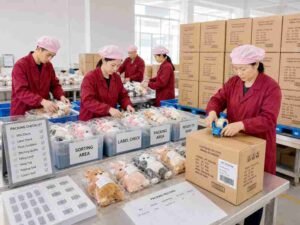

Make A Sample First?
If you have your own artwork, logo design files, or just an idea, please provide details about your project requirements, including preferred fabric, color, and customization options, we’re excited to assist you in bringing your custom plush designs to life through our sample production process.